Rethinking Pain, Movement, Fascia, and the Nervous System with Morgan Rojas
Most of us were taught to think about the body in fairly simple terms.
If a muscle feels tight, stretch it. If something feels weak, strengthen it. If it hurts, rest it. If your mobility is limited, work on flexibility.
Sometimes those things do indeed help. But for any of you out there who are like me, and have dealt with recurring tightness, old injuries, stubborn pain, or a movement that just never feels quite right knows that the body doesn’t always behave that neatly.
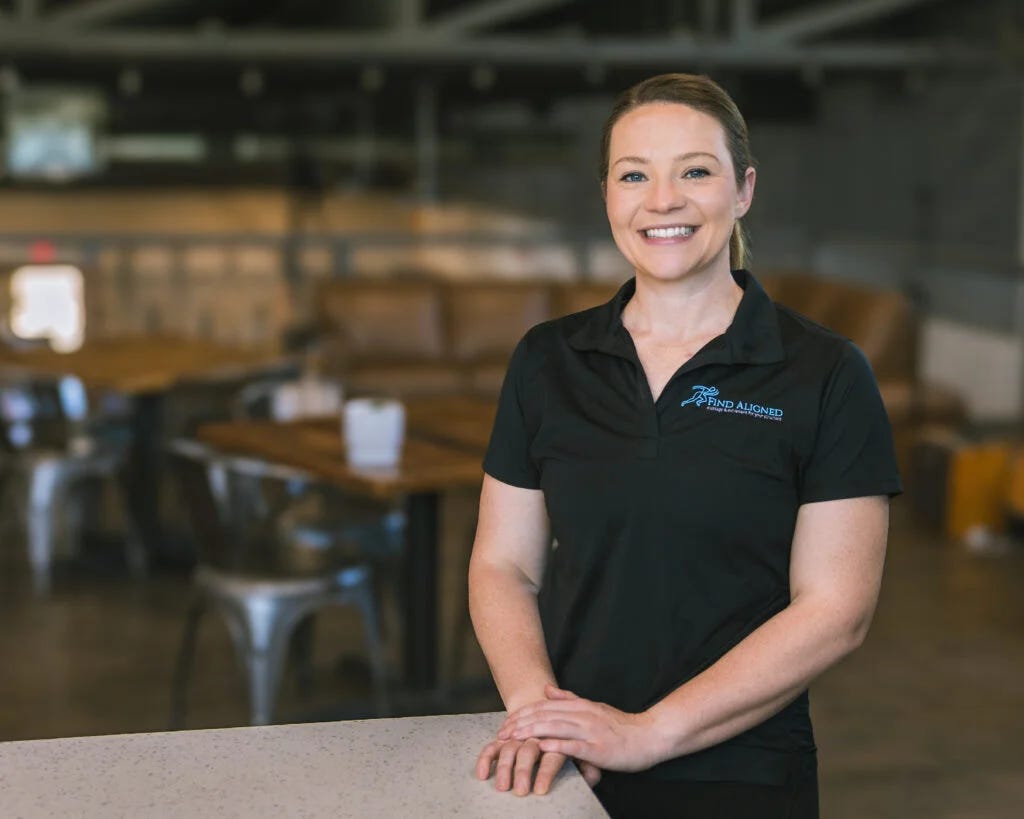
That is part of what drew me to the work of Morgan Rojas, a Licensed Massage Therapist with a master’s degree in Sport & Exercise Science and the founder of Find Aligned.
Morgan’s work asks us to look beyond isolated muscles and start thinking about the larger system: muscle, fascia, the nervous system, sensory information, previous injuries, movement patterns, and (perhaps most importantly) adaptation.
In her book, Align What Your Body Misunderstands, she writes:
“The body is not reacting randomly. It is adapting based on previous experiences, learned patterns, and the expectations it has developed over time.”
That idea immediately clicked for me because we talk about adaptation constantly when discussing metabolism.
If someone chronically diets, drastically restricts calories, or repeatedly exposes the body to the same stressor, the body responds. It adjusts to the environment it has been given.
Movement is no different.
Your body is continually learning from what you do repeatedly: how you sit, walk, lift, train, compensate after an injury, carry tension, favor one side, or avoid movements that once hurt.
Morgan continues:
“Something within the system—whether structural, neurological, or perceptual—is shaping how that moment is processed. While these responses may initially feel unpredictable, they begin to make sense when viewed through the lens of adaptation. What once seemed random becomes patterned, and what felt out of control becomes something that can be observed, understood, and eventually changed.”
That changes the question.
Instead of only asking, “What is wrong with this muscle?”, we can start asking:
“What has my body adapted to?”
Adaptation is not the same thing as optimal function
The body is remarkably good at finding ways to accomplish what we ask of it.
But that doesn’t necessarily mean it has found the most efficient strategy.
Morgan puts it simply:
“The body will always adapt to the demands placed on it, but adaptation does not guarantee optimal function. It simply reflects what the system has been repeatedly exposed to. Without awareness, those adaptations may reinforce patterns that are inefficient or incomplete.”
That distinction matters.
An old ankle injury may change how you load one leg. A painful shoulder may teach you to move your shoulder blade differently. Years of sitting may influence how you organize movement through the hips and pelvis.
The original reason for an adaptation may even be long gone while the movement strategy remains.
That doesn’t mean the body has failed.
It means the body learned.
And something that can be learned can potentially be reorganized.
Pain and movement involve more than muscles
One of the most fascinating parts of Morgan’s work is her use of sensory input.
We rarely think about vision, smell, touch, pressure, balance, or body position when talking about knee pain or mobility. But the nervous system is constantly gathering information from the environment and the body and deciding how to respond.
Morgan sometimes changes a sensory input (such as visual information or smell) and then retests someone’s movement or symptoms.
The interesting question isn’t simply whether someone feels different.
It is: Why would changing seemingly unrelated information change the experience of pain or movement at all?
That opens a much larger conversation about how the nervous system interprets information, how movement is organized, and why pain is not always a simple measurement of tissue damage.
“I should be able to do this”
Most people have experienced a movement that technically should be possible but somehow feels wrong.
Maybe one side feels coordinated and the other feels clumsy.
Maybe your squat feels restricted until you warm up.
Maybe you have enough strength to perform an exercise, but the movement still feels unstable.
Morgan describes movement as something that is not defined solely by how it looks but by how it is organized.
That means strength and flexibility are only pieces of the puzzle.
How the nervous system is processing information, how force is being distributed, and whether the body is relying more heavily on certain tissues or strategies can all influence the experience.
Where fascia fits in
Fascia has become one of the trendiest words in the fitness and wellness world, sometimes to the point that it starts sounding mystical.
Morgan’s framework offers a more practical way to understand it.
Rather than treating fascia and muscle as completely separate systems, her work explores how different bodies may rely on them differently when creating movement, stability, and force.
That can help explain why two people performing the same exercise may experience it completely differently.
It also raises an interesting question many of us have probably never considered:
Are you trying to force your body to move according to a strategy that doesn’t actually match how your body tends to organize itself?
Becoming curious instead of immediately trying to “fix” yourself
The point of this conversation isn’t to teach everyone to diagnose their own pain.
It is almost the opposite.
It is an invitation to become more observant.
When something repeatedly feels tight, painful, unstable, or restricted, instead of immediately attacking that area with stretching, foam rolling, or strengthening, we might first get curious.
When does it happen?
Does it change after warming up?
Is one side different from the other?
Does the movement feel different depending on position, speed, load, or environment?
What previous injuries or habits might have shaped the way the body is approaching that task?
Patterns become much easier to understand when we stop treating every symptom as an isolated event.
In this episode of Taste0fTruth Tuesdays, Morgan and I explore sensory input, fascia and muscle, movement organization, chronic pain, old injuries, and the many ways our bodies adapt to what we repeatedly ask of them.
Because sometimes what feels like a body behaving unpredictably may actually be a body doing exactly what it has learned to do. Looking forward to hearing your thoughts, feedback and questions!
A conversation with Jay Feldman on bioenergetic health, stress physiology, and what mainstream fitness culture misses
This week I have a really exciting interview for you with Jay Feldman of Jay Feldman Wellness, and this conversation felt like such a natural continuation of everything we’ve been unpacking lately around calories, metabolism, stress, food, fitness culture, and what happens when the body finally says, enough.
If you listened to the episode I dropped a couple weeks ago, Calories In, Common Sense Out, this conversation with Jay is the perfect next step.
That episode laid the groundwork for something I keep coming back to: the body is not a calculator. Yes, calories matter. But the way modern fitness culture talks about calories often strips the body of important context: stress, hormones, thyroid function, energy production, sleep, recovery, nervous system load, and years of restriction.
Jay and I both come from backgrounds where we have done restrictive dieting, pushed hard, and learned the hard way that the body eventually keeps the score. That shared history is part of what made this conversation so good. We’re not talking about metabolism from a detached, abstract place. We’re talking about what happens when people spend years under-eating, overtraining, living on caffeine, pushing through exhaustion, and then wondering why their body no longer responds the way it used to.
In this episode, we talk about Jay’s approach to bioenergetic health, which starts with cellular energy rather than just calories, macros, or “discipline.” Instead of asking only, “How do I lose weight?” we ask a deeper question:
Does the body have enough energy to do what we keep demanding from it?
A lot of my audience includes current or former athletes, military and veteran types, fitness-minded people, chronic dieters, and folks who are used to pushing through pain. Many have spent years being praised for discipline while quietly feeling cold, exhausted, anxious, inflamed, underfed, over-caffeinated, and metabolically stuck.
We get into the difference between looking fit and actually being healthy. Can someone look lean, disciplined, or high-performing while internally running on stress hormones? How can you tell the difference between real energy and survival energy? Are cold hands and feet, waking at night, cravings, low libido, anxiety, or needing caffeine just to function clues that something deeper is going on?
We also talk about one of the most frustrating places people end up:
“If I eat more than 1,500 calories, I gain weight.”
That is such a common fear, especially for people who have dieted for years. And this is where the conversation gets really practical. We talk about metabolic adaptation, why the body may resist weight loss after long periods of restriction, and why eating more can feel terrifying even when it may be part of the long-term solution.
This also ties into something I’ve talked about before in my Earn Your Right to Diet episode: sometimes the next step is not another fat-loss phase. Sometimes the next step is rebuilding. That can mean a slow, strategic reverse diet—gradually adding calories back in, supporting thyroid and metabolic function, reducing stress load, and spending time at maintenance before asking the body to diet again.
Reverse dieting is not “just eat everything and hope for the best.” It is a methodical process of giving the body more energy while watching biofeedback: temperature, sleep, digestion, mood, training recovery, hunger, cravings, cycle health, libido, and overall energy.
Toward the end of the episode, Jay gives tangible advice on how people can start making sure they are eating enough food.
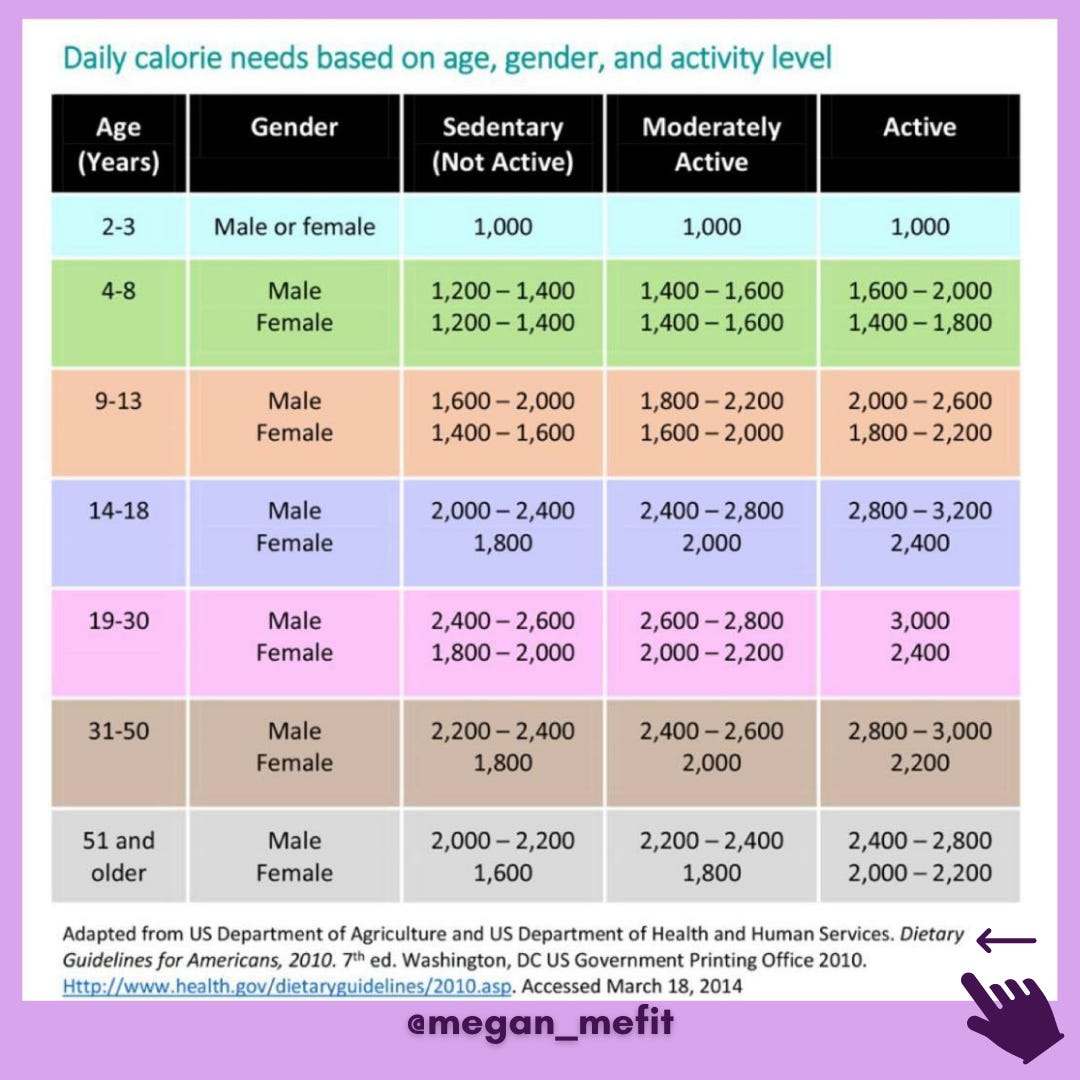
We talk about using basic calorie-needs charts as a starting point, especially because many adults are eating amounts that are closer to what a child or sedentary teenager might need… then wondering why they feel awful.
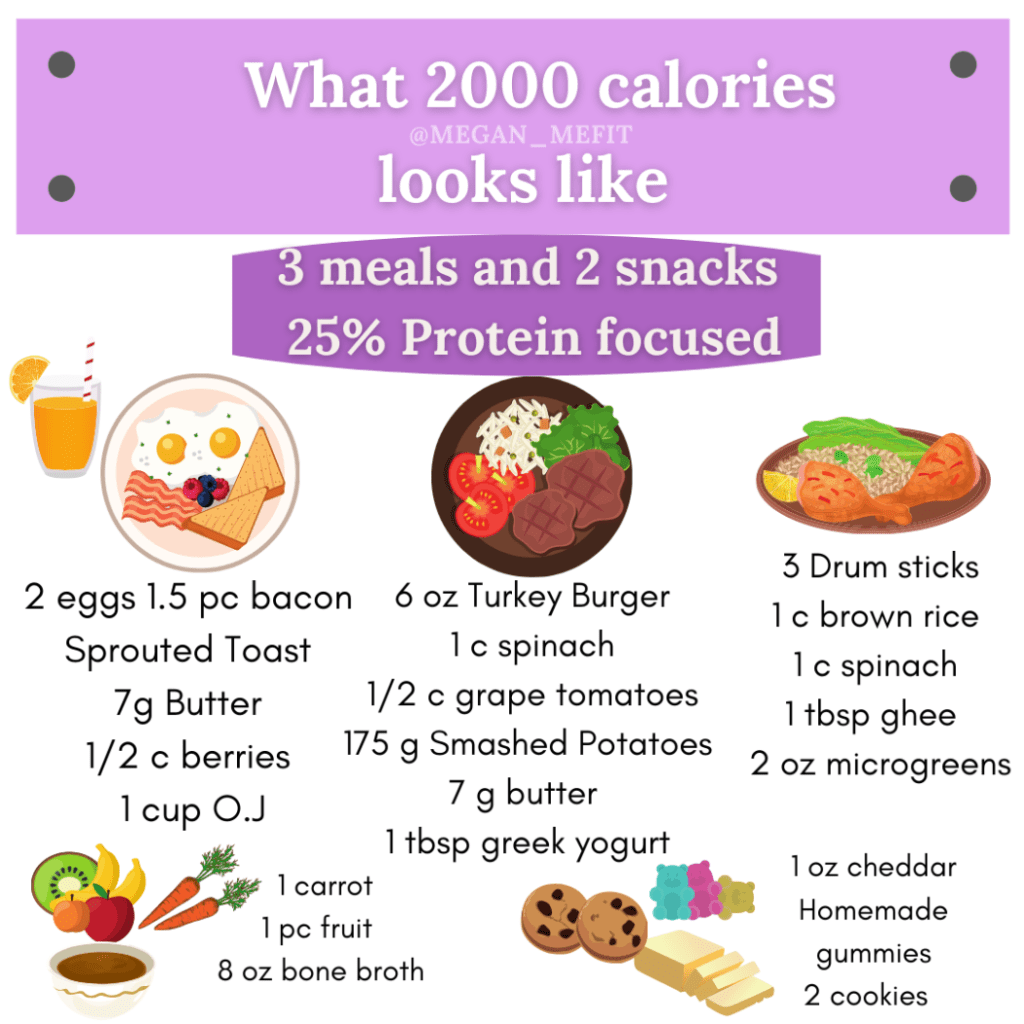
I also share some visuals during the episode, including examples of what 1,800, 2,000, and 2,200 calories can actually look like across three meals and two snacks. Because sometimes people hear those numbers and assume it means massive amounts of food, when in reality it can look pretty normal, nourishing, and manageable.
This episode is for anyone who feels like their body is betraying them after years of trying to do everything “right.”
We talk about:
bioenergetic health and cellular energy
the limits of “eat less, move more” advice
chronic dieting and weight-loss resistance
stress physiology and caffeine-driven energy
the difference between discipline and health
former athletes, veterans, and burned-out high-achievers
reverse dieting and rebuilding metabolic capacity
why the body may need more food before it can safely lose fat again
This is not a conversation about abandoning personal responsibility or pretending calories do not matter. It is a conversation about restoring much needed nuance and context.
Because sometimes the problem is not that you need more willpower.
Sometimes the problem is that your body has been running on fumes for far too long.
And that’s all I have for you folks, I’d love to hear your thoughts, leave me a comment or shoot me a private message to share them. If you appreciate this kind of work, please share and subscribe—that would mean a lot to me!
On metabolism, nourishment, food reverence, and the systems that shape what feeds us
Welcome back to Taste0fTruth Tuesdays. Today, we are mixing things up with a subject that is very near and dear to my heart: nutrition, metabolism, and our increasingly distorted relationship with food in our modern world.
This episode covers a lot of ground. We are moving from diet culture and my own history with restriction into metabolism, morality, industrial food, local agriculture, and the growing technological control of our food systems. It may sound like several different conversations, but they are all part of the same story.
This episode will also lay some of the groundwork for an upcoming interview at the end of the month with Jay Feldman Wellness.
Jay is a health coach, independent health researcher, and host of The Energy Balance Podcast. His work explores bioenergetic health and nutrition, including ideas influenced by biologist Ray Peat—principles I have found myself returning to, on and off, for the last several years.
But before we get there, I need to explain why this conversation is so personal for me.
As many of you know, I have spent more than 20 years in the health and fitness world. I have also written openly about how intense and complicated that journey has been.
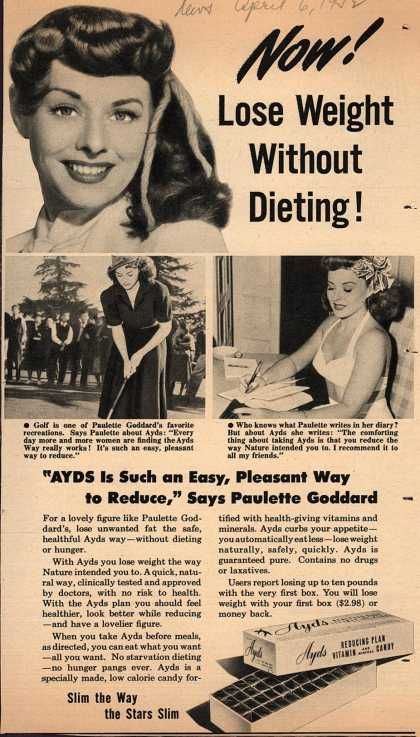
I came of age during the late 1990s and early 2000s, an era saturated with diet magazines, celebrity weight-loss stories, low-fat everything, Special K commercials, “bikini body” workouts, and television programs that treated shrinking the body as both entertainment and moral achievement.
And those cultural messages did not exist in isolation.
I grew up in a household where my body was not simply noticed. It was scrutinized, compared, and commented on.
Those kinds of comments do not disappear with time. They become part of the architecture of how you see yourself. They follow you into mirrors, fitting rooms, photographs, swimming pools, doctors’ offices, and every room where you become aware that other people can see your body.
They teach you that the body must be managed and monitored.
They plant the belief that remaining small is the price of safety.
I grew up believing that if I could control my body well enough, I could avoid humiliation. I could avoid becoming the punchline. I could avoid being seen in the wrong way.
For a while, I turned that fear into something our culture rewards: discipline.
But fear does not stop being fear simply because it learns the vocabulary of health and fitness.
In high school, I followed plans like the Special K diet. I relied on Carnation Instant Breakfast instead of complete meals. I skipped classes to work out before heading to my afterschool job. My protein intake was low. My fear of gaining weight was high.
Restriction became familiar.
And because restriction was praised as willpower, I did not always recognize it as deprivation.
That is the background I bring into this conversation. I am not critiquing calorie culture because I have never understood its appeal. I understand it intimately.
Numbers can feel safe.
Numbers feel objective. They offer the illusion that if you calculate carefully enough, track consistently enough, and exert enough control, the body will become predictable. Calories give food a score. The scale gives the body a verdict. And when you have learned to fear your own appetite, arithmetic can feel more trustworthy than sensation.
I have lived through periods in which weight loss looked like success from the outside while my body was becoming increasingly undernourished, stressed, depleted, and disconnected from its own signals.
So when I say that weight loss and health are not synonymous, trust me: I learned that lesson the hard way.
That is why I am interested in the bioenergetic perspective. Rather than asking only, “How little can I eat to make the number on the scale decrease?” it asks a more useful question:
How well is the body actually producing and using energy?
This episode is not intended to settle every claim made within bioenergetic nutrition. That is part of what I want to explore with Jay during our upcoming conversation.
Today, I want to lay the groundwork by examining the difference between consuming calories and producing usable cellular energy; between losing weight and becoming healthy; and between treating food as a number and understanding it as biological information, ecological relationship, and participation in a living system.
Because the body is not simply a furnace. Food is not merely a number.
And losing weight is definitely not proof that a person is nourished or healthy while doing so.
Modern nutrition has flattened food into arithmetic while removing almost everything that makes it meaningful.
SAD is the perfect acronym for the Standard American Diet because, whew, it really is sad what modern food culture has become.
And I do not just mean sad in the obvious “everyone is eating ultra-processed food and wondering why they feel terrible” kind of way. I mean sad in the deeper sense.
Sad as in spiritually impoverished.
Sad as in disconnected from land, animals, seasons, labor, gratitude, death, and actual nourishment.
Sad as in we have managed to turn food (one of the most intimate relationships a human being has with the living world) into a bland, plastic-wrapped transaction between a lonely person and a microwave, or a vehicle going to a fast food drive thru window.
That sounds dramatic.
But is it really?
We live in a culture that calls ultra-processed food “good enough,” celebrates weight loss regardless of how it was achieved, and then treats anyone who questions that framework as judgmental, elitist, or unnecessarily intense.
But that is exactly the problem.
Our culture has reduced food to numbers while stripping it of meaning. Calories. Macros. Points. Deficits. Cheat meals. Protein hacks. Low-cal swaps. “If It Fits Your Macros.” (I lived and breathed that lifestyle) We talk about food like it is accounting, not relationship. Like the human body is a calculator.
Of course, calories matter. I am not pretending energy balance is fake. But if your entire health philosophy begins and ends with calorie math, you are missing the human being attached to the equation.
Food is not only fuel. Food is information. Food sends a signal. Food affects insulin, thyroid output, leptin, ghrelin, cortisol, digestion, gut signaling, inflammation, mitochondrial function, cell communication, mood, cravings, satiety, sleep, fertility, and gene expression. A Hot Pocket and a grass-fed steak may both contain calories, but they do not speak the same biological language once they enter the body.
The lie of “calories in, calories out” must die.
Not because energy does not matter. It does. But because reducing food to calorie math is one of the dumbest things modern nutrition culture has done to the human body.
A calorie is a unit of energy, but the number printed on a label cannot tell us how effectively a food will be digested, absorbed, converted into ATP, or allocated among the body’s competing demands. That process requires minerals, vitamins, enzymes, hormones, functioning mitochondria, adequate protein, and a body that is not constantly underfed, inflamed, stressed, or depleted.
This is where the “just eat less” crowd loses the plot.
Most people are not building truly nutrient-dense meals, even when they think they are. They may be tracking protein, counting calories, or hitting some macro target, while still missing the deeper nourishment their body needs to actually turn food into energy. If someone is living on refined grains, muscle meats only, no seafood, low mineral intake, low variety, and almost no traditional foods, they can be “hitting their calories” while still undersupplying some of the micronutrients and cofactors involved in energy metabolism, tissue repair, and hormonal function.
But producing energy is only part of the story.
The body must also decide where that energy goes.
Mitochondrial psychobiologist Martin Picard and his colleagues have proposed an emerging framework called the Energy Constraint model. Their central idea is that the body operates with a limited but dynamic energy budget that must continually be allocated across cells, organs, systems, and behaviors.
Everything costs energy.
Neurons firing costs energy. Producing proteins costs energy. Mounting an immune response costs energy. Digestion, movement, cognition, reproduction, tissue repair, and communication between cells all carry energetic costs.
Nothing is free in biology.
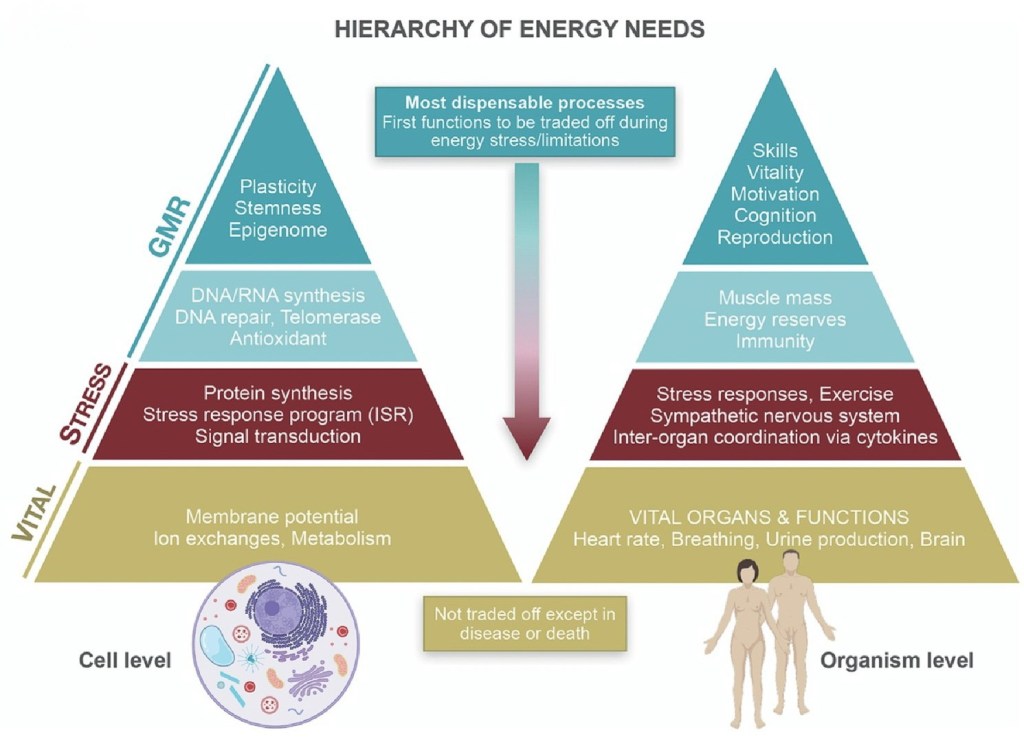
Hierarchy of Energy Needs. From @martinpicard, “Energy Constraint on Health,” based on the Energy Constraint framework developed by Alexander Behnke, Evan Shaulson, Herman Pontzer, Chris Kempes, Martin Picard, and colleagues. Reproduced with permission from Martin Picard. Original article and primary paper linked here.
In their framework, the body’s energetic demands can be divided into three broad categories: vital functions; stress responses; and growth, maintenance, and repair.
At the base are the vital functions necessary to sustain life in the immediate term: breathing, heart activity, brain function, membrane potential, ion exchange, and basic metabolism. These processes receive priority because they are necessary for survival over minutes, hours, and days.
The next category includes stress-related demands. Exercise is a stressor. So are infection, inflammation, toxins, psychological distress, injury, sleep loss, and activation of the sympathetic nervous system. All of these require the body to spend energy responding and adapting.
At the top are growth, maintenance, and repair. These processes may not be essential for surviving the next several minutes, but they are essential for healing, resilience, muscle maintenance, reproduction, cognition, motivation, vitality, and long-term health.
When the body’s total demands become difficult to sustain, energy is not distributed evenly. More urgent vital and stress-related processes may be prioritized while investment in growth, maintenance, and repair becomes compressed.
In other words, the body may preserve what is necessary to keep you alive while reducing what is available to help you recover, reproduce, think clearly, maintain muscle, and feel fully alive.
This does not mean these higher functions simply switch off in a rigid order. It means the body makes trade-offs.
And duration matters.
Not every stressor is harmful. Exercise itself temporarily redirects energy, but when it is appropriately dosed and followed by sufficient nourishment, sleep, and recovery, the body can adapt and become more resilient.
The deeper problem is stress that becomes excessive, chronic, or inescapable.
When energetic demands continue for weeks, months, or years—whether from illness, infection, psychological stress, overtraining, sleep disruption, undernourishment, or some combination of pressures—the body may repeatedly postpone the repair work that was supposed to happen later.
This framework helps explain how someone can technically be eating enough calories (or even losing weight successfully) while experiencing fatigue, poor recovery, low libido, disrupted cycles, reduced motivation, brain fog, loss of muscle, or declining resilience.
It does not mean every one of those symptoms has a single energetic cause. But it gives us a much richer way of understanding health than simply asking whether someone stayed within a calorie target.
The body is not failing to obey an equation.
It is adapting to competing demands.
Nutrient status is only one part of this energetic landscape, but it is an important one. The body’s ability to produce, allocate, and use energy is also shaped by sleep, illness, stress, activity, mitochondrial function, recovery, and the cumulative demands being placed upon it.
This is why vitamins and minerals matter so much. They are not little bonus points sprinkled on top of a diet. They are part of the machinery that turns food into usable energy. They help build hormones and neurotransmitters, repair tissue, maintain immune function, support the liver, regulate the nervous system, and keep the organs doing their jobs.
Or said more simply: macronutrients burn on the flame of micronutrients.
That is the part calorie math misses. A Hot Pocket and a mineral-rich, protein-rich, whole-food meal may both contain calories, but they do not offer the body the same tools. One delivers energy potential wrapped in industrial convenience. The other provides the raw materials the body needs to actually build, repair, signal, regulate, and produce real cellular energy.
So when people say “it’s just calories in, calories out,” what I hear is a worldview that has confused potential with function.
A body is not helped by potential alone. It needs conversion. It needs nourishment. It needs signal. It needs minerals, protein, fats, carbohydrates, vitamins, salt, sunlight, rest, and rhythm.
Food is not just a number entering a furnace. Food is a set of instructions entering a living system. And if the instructions are poor, incomplete, synthetic, depleted, or chaotic, the body will respond accordingly.
This is where the lazy appeal to “thermodynamics” becomes almost comical. Yes, the laws of thermodynamics exist. Congratulations. But the human body is not a closed metal box in a lab. It is a living, adaptive, self-regulating organism. Inputs change outputs. Food changes appetite, energy expenditure, hormones, cravings, sleep, mood, metabolic rate, and behavior. The “calories out” side is not fixed. It responds to the quality, timing, and composition of what we eat.
Rupert Sheldrake has criticized the way modern science can harden living systems into dead-mechanistic models, and that critique fits here. The calorie model treats the body like a machine. But we are not machines. We are organisms. Food is not merely burned. It is received, interpreted, metabolized, stored, signaled, and woven into the body.
So yes, calories matter. But “calories in, calories out” as a complete theory of health is basically nutritional kindergarten, and it’s time to grow out of that.
But calorie reductionism is only one way modern food culture disconnects us from the complexity of nourishment.
We also have a tendency to turn eating into a moral identity. Foods become clean or dirty, virtuous or shameful. Diets promise not only better health, but innocence: a way to eat without exploitation, suffering, contradiction, or death.
I understand the appeal of that promise because I lived inside it.
I was vegetarian for years. At the time, I genuinely believed it was both the healthier and more ethical choice. I cared about animals. I still do—deeply. I did not want to participate in harm if I could avoid it.
But eventually, health-wise, vegetarianism stopped working for me. My body was not thriving. Practitioners I trusted encouraged me to reconsider whether I was receiving enough protein and nourishment, and over time I began incorporating animal foods again. That transition gradually led me toward a more pro-metabolic, ancestral approach to food.
I am not as critical of vegetarianism as I am of veganism because vegetarian diets can still include many traditional, deeply nourishing foods: eggs, butter, cheese, milk, yogurt, cream, and honey. These foods can still connect us to animals, farms, fermentation, older foodways, and the forms of nourishment on which human communities have relied for generations.
Veganism is different. I understand the moral impulse behind it. But modern veganism often depends heavily on the very industrial food system it imagines itself resisting.
It often depends upon global supply chains, fortified products, industrial monocrops, protein isolates, seed oils, and laboratory-like replacements for foods that once came directly from local land, animals, kitchens, and communities.
That does not describe every vegan meal or every person who avoids animal foods. But veganism as a widely accessible modern lifestyle has been made possible, in large part, by the industrialization and globalization of food. It became easier to imagine a diet detached from local ecology only after the modern food system detached nearly everyone from local ecology.
Before supermarket abundance, refrigerated transport, synthetic supplementation, and year-round imports, diets were far more directly shaped by region, climate, labor, animals, seasons, preservation, and survival.
This is what troubles me about the moral certainty that can surround veganism. Morality can bind us around compassion, but it can also blind us to costs outside the frame we have chosen. A person may avoid animal foods while remaining dependent upon monocropping, habitat loss, exploited labor, heavily processed substitutes, and corporations with no meaningful relationship to the land being depleted.
The suffering has not necessarily disappeared.
It has moved out of sight.
An ethical identity can become so focused on the visible animal that it loses sight of soil, insects, wildlife, farmers, rural communities, and the ecological relationships required to sustain human life.
This is why I keep thinking about survival programs like Alone. You do not typically see people in genuine survival conditions adhering to rigid dietary identities made possible by modern abundance. They eat the carbohydrates they can gather. They fish, hunt, forage, trap, and preserve whatever food the environment makes available.
A television program does not settle the ethical debate. But it does expose how much our modern food identities depend upon stability, infrastructure, supplements, supermarkets, and global abundance.
Most of us have no idea what we would actually eat if supermarkets, refrigeration, restaurants, and global supply chains disappeared.
It is easy to construct an identity around dietary purity while standing beneath fluorescent lights in a store containing food from every climate on Earth.
Survival has a way of stripping ideology down to appetite, ecology, and availability.
The point I’m trying to make here, is the deeper problem is not simply meat. It is our total disconnection from food itself.
The Standard American Diet is not built around reverence. It is built around convenience, profit, shelf life, hyper-palatability, and perpetual consumption. It is often high in refined carbohydrates and industrial fats, low in nutrient density, easy to overeat, and engineered to override the body’s natural signals.
It keeps people fed but not nourished.
Full but not satisfied. Stimulated but depleted.
I do not blame meat itself for the sickness of modern food culture. I blame the collapse of small and local food systems. I blame industrial agriculture and the consolidation of food production. I blame ultra-processed convenience food. I blame the severing of people from land, seasons, animals, kitchens, skills, and community.
I blame a culture in which people no longer know where their food comes from, what it took to produce it, or what kind of life and death made it possible.
Because that is the uncomfortable truth: death is always involved in food.
Neither vegetarianism nor veganism remove death from the food system. Fields are cleared. Habitats are displaced. Soil life is disrupted. Insects, birds, rodents, snakes, rabbits, and countless unseen creatures are killed through large-scale crop production. Farm workers are exploited. Water is diverted. Communities are transformed to serve distant markets.
Even a plate composed entirely of plants carries a cost.
That does not mean all dietary choices are morally equivalent. It means purity is not available to us. The moral task is not to imagine that we have escaped the web of life and death. It is to become more conscious of how we participate in it.
Nature is a total system, and within that totality it is not morally tidy.
We often use the word “natural” as if it means good, pure, balanced, or morally clean. But nature does not produce constant perfection. Nature produces totality. Beauty and monstrosity. Strength and weakness. Flourishing and failure. Healthy forms, botched forms, failed adaptations, extinction, decay, renewal.
Food belongs to that same uncomfortable order. There is no pure way to eat outside of life, death, appetite, cost, and consequence. The fantasy of a morally spotless diet is just another modern escape hatch from reality.
Morality works in a similar way. It is not merely a list of rules imposed from above. It is an energy-management system. It curbs violence, lust, greed, vengeance, ambition, and appetite so a group can maintain some version of peace. Morality contains the passions so they do not destroy the social body.
At both the personal and social level, morality determines which appetites may be expressed, which must be restrained, and which costs remain visible.
And maybe this is why modern food culture feels so spiritually sick. It has stopped containing appetite. It does not discipline desire. It engineers it. It stimulates it. It tells us we can eat industrially manufactured, hyper-palatable food and reduce the whole thing to calorie math, as if the body is not receiving signals, adapting, craving, storing, resisting, inflaming, and remembering.
Food is energy, yes. But not in the dead mechanical sense. Food is energy moving through a living moral and biological system.
That is why “calories in, calories out” feels so thin. It treats food as if it enters a furnace. But food enters a body. And bodies are not furnaces. Bodies are fields of signal, memory, hunger, restraint, ancestry, hormone, and meaning.
I completely understand the discomfort around eating conscious animals. I have read so many stories from first-time farmers who raise animals with love and then struggle deeply when it is time for slaughter. That pain means something. I respect it. Honestly, I trust that pain more than the numbness of the average grocery store shopper tossing factory-farmed meat into a cart with no thought at all.
The pain shows there is still reverence there.
And maybe that is what we have lost most.
We have been removed from the reality of food for so long that we tend to swing between two false extremes. On one side, we sentimentalize animals from a distance and pretend we can opt out of the death cycle entirely. On the other hand, we consume without thought, without gratitude, without responsibility, without even a pause. Both are forms of disconnection.
The more honest path, at least for me, is not pretending death can be removed from food. It is learning to approach food with more gratitude, humility, and responsibility.
That means caring about how animals are raised. It means caring about soil. It means caring about farmers. It means caring about local food systems. It means asking whether our food builds health or slowly drains it from us. It means understanding that “cheap” food often has hidden costs paid somewhere else, by animals, by land, by farm workers, by our own bodies, by our children, and by our communities.
And yes, it also means having higher standards.
I am tired of the cultural pressure to pretend that all food choices are basically the same as long as the calories work out. They are not. A calorie deficit may lead to weight loss, but weight loss is not the same as nourishment. You can lose weight while eating foods that do very little to support your metabolism, hormones, digestion, mood, or long-term health. You can shrink a body while starving it of what it actually needs.
Real nourishment asks more of us.
It asks us to pay attention. It asks us to recover old skills. It asks us to cook, to preserve, to source better when we can, and to know the difference between food shaped by land, animals, microbes, seasons, and human hands—and food assembled in a factory to survive for months in a freezer.
This is where food becomes spiritual for me.
Not spiritual in the vague influencer sense. Not “raise your vibes with an açai smoothie bowl” nonsense.
I mean spiritual in the older, more connected to earth sense: eating is an act of dependence, participation, and transformation.
Rudolf Steiner once approached nutrition through the idea that eating is never merely mechanical. Whatever one makes of his more esoteric language, I think there is something valuable in the underlying insight: food does not simply enter the body and disappear into a calorie ledger. The body must meet it, break it down, transform it, and incorporate it into the self.
What was once sunlight, soil, rain, grass, grain, fruit, milk, muscle, mineral, or microbial life becomes blood, tissue, hormone, neurotransmitter, heat, thought, movement, and memory.
Eating is one of the most literal ways the world becomes us.
That alone should make the act feel less trivial.
We are not floating minds temporarily renting bodies. We are dependent creatures. We require soil, water, sunlight, animals, plants, microbes, farmers, bees, rain, death, decay, and renewal. Every meal places us inside a web of relationships whether we acknowledge them or not.
And this means that food may shape more than our body weight.
What we eat can influence energy, mood, cognition, resilience, inflammation, digestion, and the clarity with which we move through the world. I do not mean that one perfect diet produces spiritual enlightenment, or that illness reflects moral or spiritual failure. Food is not a purity test.
But neither is it neutral.
The quality of what we repeatedly take into the body helps shape the material conditions through which we think, feel, recover, create, and relate to others.
Modern food culture wants us to forget all of this.
It wants food to be easy, cheap, fast, addictive, and morally weightless. It wants us to believe that a frozen pocket of refined flour, industrial oils, modified starches, sodium, flavoring agents, and processed ham is simply another option.
Just calories.
Just convenience.
Just people doing their best.
But I do not believe “doing our best” means lowering our standards until nothing matters. Nor do I believe the answer is to shame ordinary people for choosing the foods that our economic and agricultural systems have made cheap, available, familiar, and nearly effortless.
It is easy to preach ancestral nourishment from a well-stocked kitchen.
A serious food ethic must also account for price, time, disability, geography, cooking knowledge, working conditions, and access. Reverence that only the wealthy can afford is not reverence.
That does not mean pretending a Hot Pocket and a nutrient-dense meal are biologically or spiritually interchangeable. They are not.
It means directing our anger beyond the individual shopper and toward a system that has made industrial convenience easier to obtain than genuine nourishment—and then taught us to call that arrangement freedom.
But reverence cannot remain an individual lifestyle choice.
Our relationship with food is shaped by the systems surrounding us: what is affordable, what is available, what is subsidized, what is processed, what is imported, and what people realistically have the time and energy to prepare.
It is one thing to tell people to eat closer to the land. It is another to live inside an economy that has made industrial food cheaper, faster, and more accessible than the local, nutrient-dense food we claim to value.
So, this is not only a question of personal responsibility.
It is also a question of access, power, and who controls the conditions under which nourishment is produced and distributed.
As of May 2026, grocery prices were 2.7 percent higher than they had been one year earlier. Fruits and vegetables were up 6.1 percent. Food away from home was up 3.5 percent. Meanwhile, overall energy prices had risen 23.5 percent over the same period. These increases are layered on top of years of cumulative inflation, and they shape what families can realistically put on the table. U.S. Bureau of Labor Statistics. “Consumer Price Index Summary—May 2026.” June 10, 2026.
At the same time, the infrastructure surrounding American agriculture is becoming increasingly centralized and digitized.
In February 2026, the USDA announced its “One Farmer, One File” initiative, which is intended to create a single record following each farmer across the Farm Service Agency, Natural Resources Conservation Service, and Risk Management Agency. The department says the system will reduce duplicated paperwork, retire outdated technology, improve program delivery, and be completed in 2028.
“Protecting America’s farmland is protecting America itself, and this work gives USDA the visibility and speed needed to safeguard our food supply,” said USDA Chief Information Officer Sam Berry.
The government presents this as modernization: faster services, stronger cybersecurity, reduced fraud, better disaster response, and greater protection of American farmland and the food supply. Some of those goals are understandable. Farmers should not have to enter the same information into a dozen broken government systems. Disaster assistance should not be trapped behind obsolete technology. Modernization is not inherently sinister.
But neither is it irrational to ask questions when enormous amounts of agricultural information are consolidated through a company deeply involved in defense, intelligence, surveillance, and government analytics.
Who controls the data? Who is permitted to access it? How is that access audited?
Can information gathered for one purpose later be used for another?
What happens when one private contractor becomes embedded deeply enough in public infrastructure that removing it becomes nearly impossible?
How are farmers protected from political misuse, commercial exploitation, cybersecurity failures, or policies imposed by people who understand data models far better than they understand soil, weather, livestock, and living ecosystems?
Food is not merely another sector to be optimized.
Agriculture is biological, regional, unpredictable, and rooted in relationships that cannot be fully represented on a dashboard. Technology may assist farmers. Data may make government programs more efficient. But efficiency and resilience are not the same thing, and greater visibility from the top does not automatically create greater security on the ground.
A resilient food system requires more than centralized information.
It requires independent farmers, healthy soil, regional processing facilities, seed diversity, local knowledge, accessible markets, functioning supply chains, and communities that retain some capacity to feed themselves. It requires people who know how to grow something, preserve something, cook something, and recognize nourishment before a corporation packages and markets it back to them.
That is why the spiritual, biological, economic, and political dimensions of food cannot be separated.
The same reductionist worldview that treats the body as a furnace can treat the farm as a data point.
The same culture that reduces nourishment to calories can reduce agriculture to output.
The same system that tells us a calorie is a calorie can tell us that control is merely efficiency and dependence is merely convenience.
I reject both forms of reductionism.
A body is not a furnace to be calculated.
A farm is not a monocrop to be optimized or a data file to be controlled.
Food is not merely fuel, inventory, content, or data.
It is soil transformed by sunlight. It is water, labor, death, digestion, memory, culture, and life passing into life. To control food is to touch the most intimate point of contact between the individual body, the community, and the living world.
So, the question is no longer only whether we can eat without forgetting.
It is whether we can remember soon enough to reclaim some agency over what feeds us.
What Women Were Never Told About Weight, Aging, and Control
The Science They Never Told Us
This is the first episode of 2026, and I wanted to start the year by slowing things down, getting a bit personal instead of chasing the latest talking points.
At the end of last year, I spent time reading a few books that genuinely stopped me in my tracks. Not because they offered a new diet or a new protocol, but because they challenged something much deeper: the story we’ve been told about discipline, control, and women’s bodies.
There is a reason women’s bodies change across the lifespan. And it has very little to do with willpower, discipline, or personal failure.
In Why Women Need Fat, evolutionary biologists William Lassek and Steven Gaulin make the case that most modern conversations about women’s weight are fundamentally misinformed. Not because women are doing something wrong, but because we’ve built our expectations on a misunderstanding of what female bodies are actually designed to do.
A major part of their argument focuses on how industrialization radically altered the balance of omega-6 to omega-3 fatty acids in the modern food supply, particularly through seed oils and ultra-processed foods. They make a compelling case that this shift plays a role in rising obesity and metabolic dysfunction at the population level.
I agree that this imbalance matters, and it’s a topic that deserves its own full episode. At the same time, it does not explain every woman’s story. Diet composition can influence metabolism, but it cannot override prolonged stress, illness, hormonal disruption, nervous system dysregulation, or years of restriction. In my own case, omega-6 intake outside of naturally occurring sources is relatively low and does not account for the changes I’ve experienced. That matters, because it reminds us that biology is layered. No single variable explains a complex adaptive system.
One of the most important ideas in the book is that fat distribution matters more than fat quantity.
Women do not store fat the same way men do. A significant portion of female body fat is stored in the hips and thighs, known as gluteofemoral fat. This fat is metabolically distinct from abdominal or visceral fat. It is more stable, less inflammatory, and relatively enriched in long-chain fatty acids, including DHA, which plays a key role in fetal brain development.
From an evolutionary standpoint, this makes sense. Human infants are born with unusually large, energy-hungry brains. Women evolved to carry nutritional reserves that could support pregnancy and lactation, even during times of scarcity. In that context, having fat on your lower body was not a flaw or a failure. It was insurance.
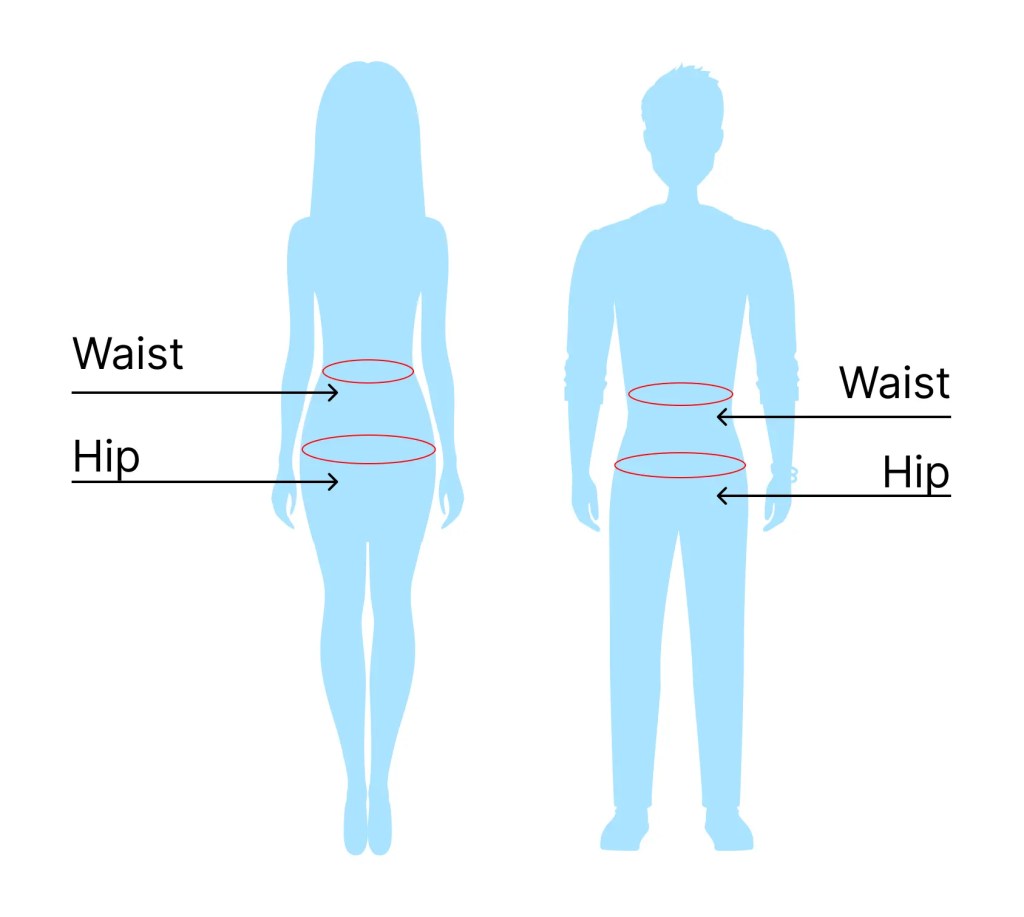
From this perspective, fat is not excess energy. It is deferred intelligence, stored in anticipation of future need. This is where waist-to-hip ratio enters the conversation.
Across cultures and historical periods, a lower waist-to-hip ratio in women has been associated with reproductive health, metabolic resilience, and successful pregnancies. This is not about thinness, aesthetics, or moral worth. It is about fat function, not fat fear, and about how different tissues behave metabolically inside the body. It is about where fat is stored and how it functions.
And in today’s modern culture we have lost that distinction.
Instead of asking what kind of fat a woman carries, we became obsessed with how much. Instead of understanding fat as tissue with purpose, we turned it into a moral scoreboard. Hips became a problem. Thighs became something to shrink. Curves became something to discipline.
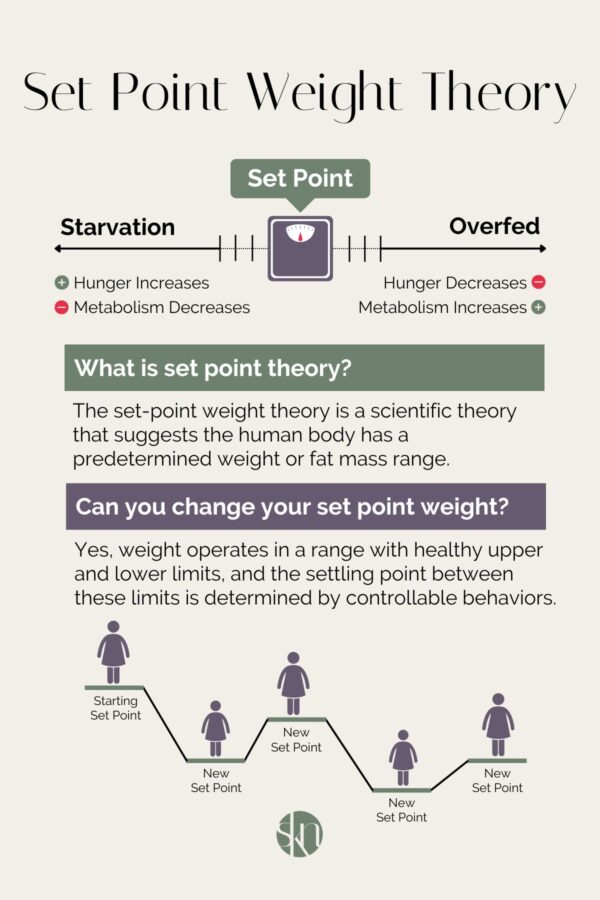
Another central idea in Why Women Need Fat is biological set point.
The authors argue that women’s bodies tend to defend a natural weight range when adequately nourished and not under chronic stress. When women remain below that range through restriction, over-exercise, or prolonged under-fueling, the body does not interpret that as success. It interprets it as threat.
Over time, the body adapts, not out of defiance, but out of protection.
Metabolism slows. Hunger and fullness cues become unreliable. Hormonal systems compensate. When the pressure finally eases, weight often rebounds, sometimes beyond where it started, because the body is trying to restore safety.
From this perspective, midlife weight gain, post-illness weight gain, or weight gain after years of restriction is not mysterious. It is not rebellion. It is regulation.
None of this is taught to women.
Instead, we are told that if our bodies change, we failed. That aging is optional. That discipline and botox should override biology. That the number on the scale tells the whole story.
So, before we talk about culture, family, trauma, or personal experience, this matters:
Women’s bodies are not designed to stay static. They are designed to adapt.
Once you understand that, everything else in this conversation changes.
Why the Body Became the Battlefield
This is where historian Joan Jacobs Brumberg’s work in The Body Project: An Intimate History of American Girls, provides essential context, but it requires some precision.
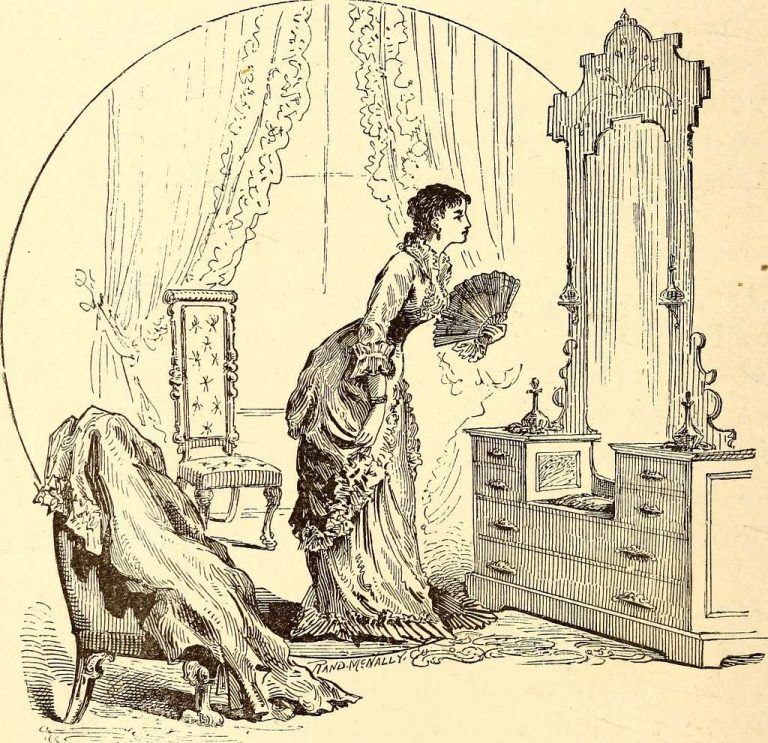
Girls have not always been free from shame. Shame itself is not new. What has changed is what women are taught to be ashamed of, and how that shame operates in daily life.
Brumberg asks a question that still feels unresolved today: Why is the body still a girl’s nemesis? Shouldn’t sexually liberated girls feel better about themselves than their corseted counterparts a century ago?
Based on extensive historical research, including diaries written by American girls from the 1830s through the 1990s, Brumberg shows that although girls today enjoy more formal freedoms and opportunities, they are also under more pressure and at greater psychological risk. This is due to a unique convergence of biological vulnerability and cultural forces that turned the adolescent female body into a central site of social meaning during the twentieth century.
In the late nineteenth and early twentieth centuries, girls did not typically grow up fixated on thinness, calorie control, or constant appearance monitoring. Their diaries were not filled with measurements or food rules. Instead, they wrote primarily about character, self-restraint, moral development, relationships, and their roles within family and community.
One 1892 diary entry reads:
“Resolved, not to talk about myself or feelings. To think before speaking. To work seriously. To be self-restrained in conversation and in actions. Not to let my thoughts wander. To be dignified. Interest myself more in others.”
In earlier eras, female shame was more often tied to behavior, sexuality, obedience, and virtue. The body mattered, but primarily as a moral symbol rather than an aesthetic project requiring constant surveillance and correction.
That changed dramatically in the twentieth century.
Brumberg documents how the mother-daughter connection loosened, particularly around menstruation, sexuality, and bodily knowledge. Where female relatives and mentors once guided girls through these transitions, doctors, advertisers, popular media, and scientific authority increasingly stepped in to fill that role.
At the same time, mass media, advertising, film, and medicalized beauty standards created a new and increasingly exacting ideal of physical perfection. Changing norms around intimacy and sexuality also shifted the meaning of virginity, turning it from a central moral value into an outdated or irrelevant one. What replaced it was not freedom from scrutiny, but a different kind of pressure altogether.
By the late twentieth century, girls were increasingly taught that their bodies were not merely something they inhabited, but something they were responsible for perfecting.
A 1982 diary entry captures this shift starkly:
“I will try to make myself better in any way I possibly can with the help of my budget and baby-sitting money. I will lose weight, get new lenses, already got a new haircut, good makeup, new clothes and accessories.”
What changed was not the presence of shame, but its location. Shame moved inward.
Rather than being externally enforced through rules and prohibitions, it became self-policed. Girls were taught to monitor themselves constantly, to evaluate their bodies from the outside, and to treat appearance as the primary expression of identity and worth.
Brumberg is explicit on this point. The fact that American girls now make their bodies their central project is not an accident or a cultural curiosity. It is a symptom of historical changes that are only beginning to be fully understood.
This is where more recent work, such as Louise Perry’s The Case Against the Sexual Revolution, helps extend Brumberg’s analysis into the present moment. Perry argues that while sexual liberation promised autonomy and empowerment, it often left young women navigating powerful biological and emotional realities without the social structures that once offered protection, guidance, or meaning. In that vacuum, the body became one of the few remaining sites where control still seemed possible.
The result is a paradox. Girls are freer in theory, yet more burdened in practice. The body, once shaped by communal norms and shared female knowledge, becomes a solitary project, managed under intense cultural pressure and constant comparison.
For many girls, this self-surveillance does not begin with magazines or social media. It begins at home, absorbed through tone, comments, and modeling from the women closest to them.
Brumberg argues that body dissatisfaction is often transmitted from mother to daughter, not out of cruelty, but because those mothers inherited the same aesthetic anxieties. Over time, body shame becomes a family inheritance, passed down quietly and persistently.
Some mothers transmit it subtly.
Others do it bluntly.
This matters not because my experience is unique, but because it illustrates what happens when a body shaped by restriction, stress, and cultural pressure is asked to perform indefinitely. Personal stories are often dismissed as anecdotal, but they are where biological theory meets lived reality.
I grew up in a household where my body was not simply noticed. It was scrutinized, compared, and commented on. Comments like that do not fade with time. They shape how you see yourself in mirrors and photographs. They teach you that your body must be managed and monitored. They plant the belief that staying small is the price of safety.
So, I grew up believing that if I could control my body well enough, I could avoid humiliation. I could avoid becoming the punchline. I could avoid being seen in the wrong way.
For a while, I turned that fear into discipline.
The Years Before the Collapse: A Lifetime of Restriction and Survival
Food never felt simple for me. Long before bodybuilding, chronic pain, or COVID, I carried a strained relationship with eating. Growing up in a near constant state of anxiety meant that hunger cues often felt unpredictable. Eating was something to plan around or push through. It rarely felt intuitive or easy.
Because of this, I experimented with diets that replaced real meals with cereal or shakes. I followed plans like the Special K diet. I relied on Carnation Instant Breakfast instead of full meals. My protein intake was low. My fear of gaining weight was high. Restriction became familiar.
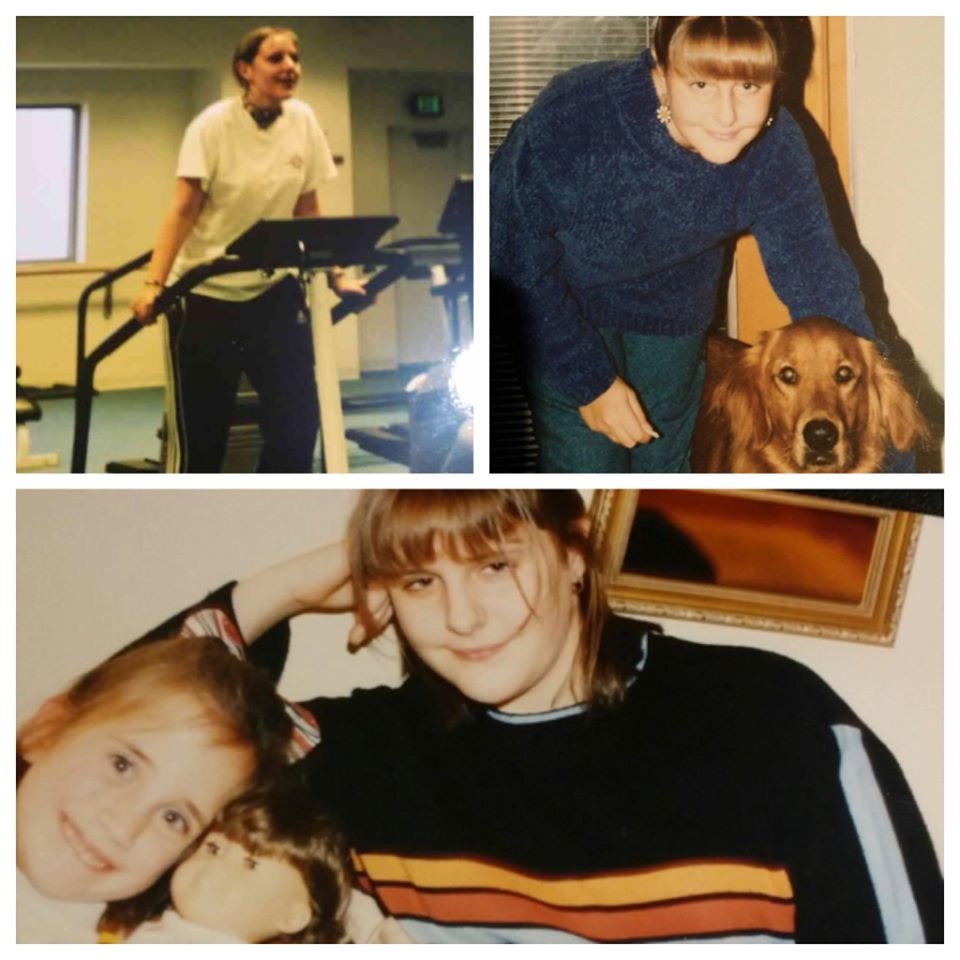
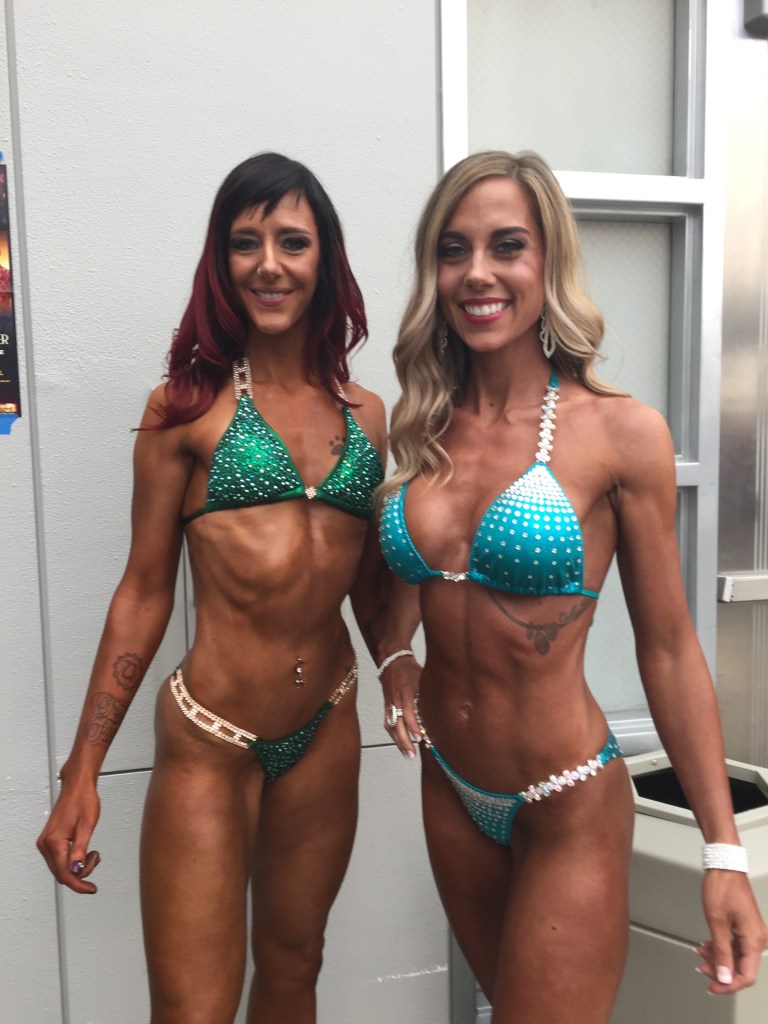
Top left is when I started working out obsessively at age 16, top right and bottom photo are from middle school when I was at my “heaviest” that drove the disordered behaviors.
In college, I became a strict vegetarian out of compassion for animals, but I did not understand how to meet my nutritional needs. I was studying dietetics and earning personal training certifications while running frequently and using exercise as a way to maintain control. From the outside, I looked disciplined. Internally, my relationship with food and exercise remained tense and inconsistent.
Later, I became involved in a meal-replacement program through an MLM. I replaced two meals a day with shakes and practiced intermittent fasting framed as “cleanse days.” In hindsight, this was structured under-eating presented as wellness. It fit seamlessly into patterns I had lived in for years.
Eating often felt overwhelming. Cooking felt like a hurdle. Certain textures bothered me. My appetite felt fragile and unreliable. This sensory sensitivity existed long before the parosmia that would come years later. From early on, food was shaped by stress rather than nourishment.
During this entire period, I was also on hormonal birth control, first the NuvaRing and later the Mirena IUD, for nearly a decade. Long-term hormonal modulation can influence mood, inflammation, appetite, and weight distribution. It added another layer of complexity to a system already under strain.
Looking back, I can see that my teens and twenties were marked by near constant restriction. Restriction felt normal. Thriving did not.
The book Why Women Need Fat discusses the idea of a biological weight “set point,” the range a body tends to return to when conditions are stable and adequately nourished. I now understand that I remained below my natural set point for years through force rather than balance. My biology never experienced consistency or safety.
This was the landscape I carried into my thirties.
The Body I Built and the Body That Broke
By the time I entered the bodybuilding world in 2017 and 2018, I already had years of chronic under-eating, over-exercising, and nutrient gaps behind me. Bodybuilding did not create my issues. It amplified them.
I competed in four shows. People admired the discipline and the physique. Internally, my body was weakening. I was overtraining and undereating. By 2019, my immune system began to fail. I developed severe canker sores, sometimes twenty or more at once. I started noticing weight-loss resistance. Everything I had done in the past, was no longer working. On my thirty-fifth birthday, I got shingles. My energy crashed. My emotional bandwidth narrowed. My body was asking for rest, but I did not know how to slow down.
Around this time, I was also navigating eating disorder recovery. Learning how to eat without panic or rigid control was emotionally exhausting even under ideal circumstances… but little did I know things were about to take a massive turn for the worst.
COVID, Sensory Loss, and the Unraveling of Appetite
After getting sick with the ‘vid late 2020, everything shifted again. I developed parosmia, a smell and taste distortion that made many foods taste rotten or chemical. Protein and cooked foods often tasted spoiled. Herbs smelled like artificial chemical. Eating became distressing and, at times, impossible.
My appetite dropped significantly. There were periods where my intake was very low, yet my weight continued to rise. This is not uncommon following illness or prolonged stress. The body often shifts into energy conservation, prioritizing survival overweight regulation.
Weight gain became another source of grief. Roughly thirty pounds over the next five years. I feel embarrassed and avoid photographs. I often worry about how others will perceive me.
If this experience resonates, it is important to say this clearly: your body is not betraying you. It is responding to stress, illness, and prolonged strain in the way bodies are designed to respond.
When years of restriction, intense exercise, chronic stress, illness, hormonal shifts, and emotional trauma accumulate, the body often enters a protective state. Metabolism slows. Hormonal signaling shifts. Hunger cues become unreliable. Weight gain or resistance to weight loss can occur even during periods of low intake, because energy regulation is being driven by survival physiology rather than simple calorie balance.
This is not failure. It is physiology.
The calories-in, calories-out model does not account for thyroid suppression, nervous system activation, sleep disruption, pain, trauma, or metabolic adaptation. It reduces a complex biological system to arithmetic.
Women are not machines. We are adaptive systems built for survival. Sometimes resilience looks like holding onto energy when the body does not feel safe.
Despite this biological reality, we live in a culture that ties women’s value to discipline and appearance. When women gain weight, even under extreme circumstances, we blame ourselves before questioning the system.
Diet culture frames shrinking as virtue.
Toxic positivity encourages acceptance without context.
Industrial food environments differ radically from those our ancestors evolved in.
Medical systems often dismiss women’s pain and metabolic complexity.
Social media amplifies comparison and moralizes body size.
None of this is your fault. And all of it shapes your experience.
This is why understanding the science matters. This is why telling the truth matters. This is why sharing stories matters.
In the book, More Than a Body, Lindsay and Lexie Kite describe how women are taught to relate to themselves through constant self-monitoring. Instead of living inside our bodies, we learn to watch ourselves from the outside. We assess how we look, how we are perceived, and whether our bodies are acceptable in a given moment.
This constant self-surveillance does real harm. It pulls attention away from hunger, pain, fatigue, and intuition. It trains women to override bodily signals in favor of appearance management. And over time, it creates a split where the body is treated as a project to control rather than a system to understand or care for.
When you layer this kind of self-objectification on top of chronic stress, restriction, illness, and trauma, the result is not empowerment. It is disconnection. And disconnection makes it even harder to hear what the body needs when something is wrong.
Weight gain is not just a biological response. It becomes a moral verdict. And that is how women end up fighting bodies that are already struggling to keep them alive.
The Inheritance Ends Here
For a long time, I believed that breaking generational cycles only applied to mothers and daughters. I do not have children, so I assumed what I inherited would simply end with me, unchanged.
Brumberg’s work helped me see this differently.
What we inherit is not passed down only through parenting. It moves through tone, silence, and self-talk. It appears in how women speak about their bodies in front of others. It lives in the way shame is normalized.
I inherited a legacy of body shame. Even on the days when I still feel its weight, I am choosing not to repeat it.
For me, the inheritance ends with telling the truth about this journey and refusing to speak to my body with the same cruelty I absorbed growing up. It ends here.
Closing the Circle: Your Body Is Not Broken
I wish I could end this with a simple story of resolution. I cannot. I am still in the middle of this. I still grieve. I still struggle with eating and movement. I am still learning how to inhabit a body that feels unfamiliar.
But I know this: my body is not my enemy. She is not malfunctioning. She is adapting to a lifetime of stress, illness, restriction, and emotional weight.
If you are in a similar place, I hope this offers permission to stop fighting yourself and start understanding the patterns your body is following. Not because everything will suddenly improve, but because clarity is often the first form of compassion.
Your body is not betraying you. She is trying to keep you here.
And sometimes the most honest thing we can do is admit that we are still finding our way.
References
Brumberg, J. J. (1997). The Body Project: An Intimate History of American Girls. Random House.
Lassek, W. D., & Gaulin, S. J. C. (2011). Why Women Need Fat: How “Healthy” Food Makes Us Gain Excess Weight and the Surprising Solution to Losing It Forever. Hudson Street Press.
Kite, L., & Kite, L. (2020). More Than a Body: Your Body Is an Instrument, Not an Ornament. Houghton Mifflin Harcourt.
Scientific and academic sources
Lassek, W. D., & Gaulin, S. J. C. (2006). Changes in body fat distribution in relation to parity in American women. Evolution and Human Behavior, 27(3), 173–185.
Lassek, W. D., & Gaulin, S. J. C. (2008). Waist–hip ratio and cognitive ability. Proceedings of the Royal Society B, 275(1644), 193–199.
Dulloo, A. G., Jacquet, J., & Montani, J. P. (2015). Adaptive thermogenesis in human body-weight regulation. Obesity Reviews, 16(S1), 33–43.
Fothergill, E., et al. (2016). Persistent metabolic adaptation after weight loss. Obesity, 24(8), 1612–1619.
Kyle, U. G., et al. (2004). Body composition interpretation. American Journal of Clinical Nutrition, 79(6), 955–962.
Simopoulos, A. P. (2016). Omega-6/omega-3 balance and obesity risk. Nutrients, 8(3), 128.
Trauma, stress, and nervous system context
Sapolsky, R. M. (2004). Why Zebras Don’t Get Ulcers. Henry Holt and Company.
Walker, P. (2013). Complex PTSD: From Surviving to Thriving. Azure Coyote Books.
How Suppression Shapes Our Bodies, Minds, and the World We Live In
Hey hey, Welcome back! Today’s episode connects beautifully to something many of you resonated with in my earlier show, Science or Stagnation? The Risk of Unquestioned Paradigms. In that episode, we talked about scientism… not science itself, but the dogma that forms around certain scientific ideas.
That’s why voices like Rupert Sheldrake have always fascinated me. Sheldrake, for those unfamiliar, isn’t a fringe crank. He’s a Cambridge-trained biologist who dared to question what he calls the “ten dogmas of modern science”: that nature is mechanical, that the mind is only the brain, that the laws of nature are fixed, that free will is an illusion, and so on.
When he presented these questions in a TED Talk, it struck such a nerve that the talk was quietly taken down. And that raised an obvious question: If the ideas are so wrong… why not let them stand and fall on their own? Why censor them unless they hit something tender? All of this sets the stage for today’s conversation.
Because the theory we’re exploring, Social Miasm Theory, fits right inside that tension between mainstream assumptions and the alternative frameworks we often dismiss too quickly.
My friend Stephinity Salazar just published a fascinating piece of research arguing that suppression (of toxins, trauma, emotion, and truth) is the root pattern underlying both chronic illness and our wider social dysfunction. It’s a theory that steps outside the materialist worldview and challenges the mechanistic lens we’ve all been taught to see through.
Dr. Stephinity Salazar
Hoop Camp Retreat
Yarmony Grass 2008
You don’t have to agree with everything…that’s not the goal here.
What I love is the chance to explore, to ask good questions, and to stay grounded while examining ideas that stretch our understanding.
This blog is your guide to the episode, so you can track the concepts, explore the references, and dive deeper while you listen.
So, with that, let’s dive into Social Miasm Theory: what it is, where it comes from, why it matters, and what it might reveal about the world we’re living in today.
What Are Miasms, Anyway?
To anchor our conversation, Stephinity starts by grounding the concept of “miasms” in its homeopathic roots. Historically, Samuel Hahnemann (founder of homeopathy) described three primary miasms:
Psora, linked to scabies or skin conditions
Syphilis, associated with destructive disease
Sycosis, with overgrowth and tissue proliferation
Since then, the theory has expanded. Many modern homeopaths now talk about five chronic miasms, adding:
Tubercular (linked to tuberculosis, respiratory issues) Homeopathy 360
Psychological suppression: denial, cognitive dissonance, fear-driven attachment to ideology
Truth suppression: propaganda, censorship, disinformation, scientific dogma
When these forms of suppression accumulate, she argues, they create a “social miasm”: a pathological field that shapes everything from public health to political polarization.
Even if you don’t buy every mechanism she proposes, the metaphor works. And the patterns are hard to ignore.
Evidence, Epistemology, and Skeptics: What Counts as “Real”?
This is the part my skeptical listeners will perk up for.
In the interview, I asked her the question I knew many of you were thinking: “How do you define evidence within this framework? What would you want skeptical listeners to understand before judging it?”
Stephinity argues that the modern scientific lens is too narrow. Not wrong—but incomplete. She sees value in:
case studies
pattern recognition
field effects
resonance models
historical cycles
experiential knowledge
Whether or not you agree, her challenge to mechanistic materialism echoes thinkers like Rupert Sheldrake, IONS researchers, and even physicists questioning entropic cosmology.
And she’s not claiming this replaces science. She’s asking what science misses when it refuses to look beyond the physical.
Suppression: What It Looks Like in Real Life
Stephinity’s paper covers how suppression shows up on multiple levels. Here are a few examples she explores:
Overuse of symptom-suppressive medications
Emotional avoidance that pushes trauma deeper
Social pressure to conform
Institutional censorship
Environmental toxins that overwhelm the microbiome
Radiation and electromagnetic exposures
She frames suppression as a terrain problem: when the body or society becomes too acidic, stressed, toxic, or disconnected, the miasm takes root.
This is where we start to cross into the biological, psychological, and social layers—which brings us to one of my favorite parts of her theory.
Neuroparasitology: When Parasites Change Behavior
The concept of a new branch of science of neuroparasitology. Study of the influence of parasites on the activity of the brain.
This is the section I teased in the podcast because it’s both wild and backed by real research.
Stephinity references studies showing that parasites can alter host behavior not just in insects or rodents, but potentially in humans too. Her paper cites examples like helminths, nematodes, mycotoxins, and other microorganisms (McAuliffe, 2016; Colaiacovo, 2021). These organisms are everywhere, not just in “developing countries” (Yu, 2010).
Researchers have documented parasites that:
influence mood
shift risk-taking
modify sexual attraction
impair impulse control
change social patterns
This is what Dawkins called the extended phenotype (1982): the parasite’s genes expressing themselves through the host’s behavior. Neuroparasitologists Hughes & Libersat (2019) and Johnson (2020) have shown how certain infections can shift personality traits in specific, predictable ways.
Stephinity ties this into terrain: parasites tend to thrive in acidic, low-oxygen, stressed, radiative environments (Clark, 1995; Tennant, 2013; Cerecedes, 2015). In her view, chronic suppression creates exactly that kind of internal ecosystem.
But there’s another layer here. One that isn’t biological at all.
This is where philosopher Daniel Dennett enters the chat.
In Breaking the Spell, Dennett describes “parasites of the mind”: ideas that spread not because they’re true, but because they’re incredibly good at hijacking human psychology. These mental parasites latch onto our cognitive wiring the same way biological one’s latch onto the nervous system. They survive by exploiting:
fear
moral impulses
tribal loyalty
the desire for certainty
social pressure
existential insecurity
According to Dennett, religious dogmas, conspiracy theories, and ideological extremes act like memetic parasites: they replicate by using us, encouraging us to host them and then pass them on.
In other words: not all parasites live in the gut. Some live in the mind.
And…..we even discussed how billionaire Les Wexner once publicly described having a “dybbuk spirit” a kind of parasitic entity in Jewish folklore known for influencing personality. Whether symbolic or literal, the analogy fits. 🫨😮
Her point is simple: When the terrain is weak, something else will fill the space.
Whether that “something” is trauma, ideology, toxicity, or a literal parasite… the mechanism rhymes.
Collective Delusion and Mass Psychosis
Drawing on Jung and Dostoevsky, Stephinity explores the idea that societies can enter “psychic epidemics.”
You’ve seen this. We all have…
The last decade has been a masterclass in how fear, propaganda, and emotional suppression create predictable patterns:
polarization
tribal thinking
moral panics
ideological possession
scapegoating
censorship
intolerance of nuance
She argues these are symptoms of a cultural miasm—not failures of individual character.
Whether you lean left, right, or somewhere out in the wilderness, you’ve likely felt this rising tension. And it’s hard not to see how unresolved collective trauma feeds it.
COVID as a Catalyst: What the Pandemic Revealed
Another part of her paper dives into how the pandemic brought hidden patterns to the surface.
Some of her claims are controversial, especially around EMFs and environmental co-factors. In the episode, we unpack these with curiosity, not blind acceptance.
Her larger point is that COVID exposed:
institutional fragility
scientific gatekeeping
public distrust
trauma-based responses
authoritarian overreach
the psychological toll of suppression
Whether you agree with the specific mechanisms or not, the last decade made one thing undeniable: something in our social terrain is deeply dysregulated.
8. Healing Forward: What Do We Do With All This?
If suppression drives miasms, then healing means unsuppressing. Gently, not chaotically.
Stephinity suggests practices like:
emotional honesty
reconnecting with nature
releasing stored trauma
nutritional and detoxification support
reducing exposure to chronic stressors
restoring community and meaning
opening space for spiritual or intuitive insight
She’s not prescribing a protocol. She’s offering a map.
The destination is what the Greeks called sophrosyne: a state of balance between wisdom and sanity. Not blissful ignorance, not paranoid awakening. Just grounded clarity.
And I think we could all use a bit more of that.
Key Evidence and Arguments
Stephinity critiques materialist science, calling out what she terms “entropic cosmology.” She argues that by assuming nature is strictly mechanistic, mainstream science misses field-based phenomena, non-local consciousness, and deeper systemic patterns.
She draws on historical and homeopathic sources (Hahnemann, Kent) to build her theoretical foundation but also argues for newer forms of evidence: resonance, case studies, and pattern detection in social systems.
On the environmental front, she explores links between toxins, EMF / 5G, biotech, and chronic disease, not just as correlation, but as evidence of suppression dynamics.
Psychologically, she invokes mass delusion or collective repression (drawing from Jung, Dostoevsky) seeing societal crises as expressions of buried collective shadow.
Ultimately, her call to action isn’t just for individual healing, but for systemic awakening: more transparency, alternative medical paradigms, and restored connection with nature.
Why This Matters for You
Even if homeopathy isn’t your jam, Social Miasm Theory offers a metaphor (and potentially a map) for understanding how inner repression becomes external crisis. If this episode does anything, I hope it gives you permission to look a little closer and question the stuff we’re told not to touch.
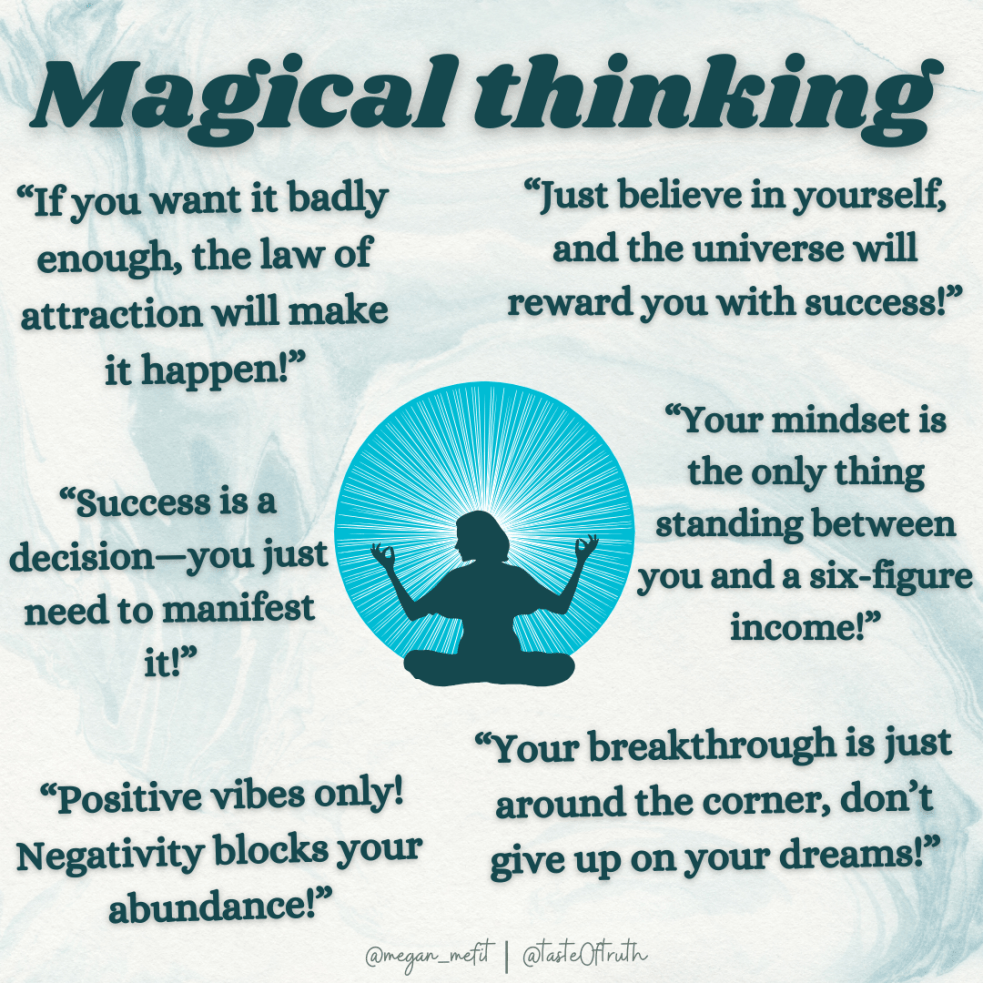
In recent decades, the Law of Attraction has become one of the most influential belief systems in wellness, self-help, and multilevel marketing (MLM) circles. Its premise is seductively simple: your thoughts shape your reality. Think positively, and abundance will flow; dwell on negativity, and you’ll attract misfortune.
We have discussed the pitfalls of Law of attraction in a previous episode, you can find here.
🎙️ Another throwback episode is linked below, where I unpack my journey from wellness fanatic within MLM into a high-control religion. Together, we explore the wild “crunchy hippie to alt-right pipeline.” 🌿➡️🛑 social media, influencers, and wellness hype quietly nudge people toward extreme ideas, and in this episode, we break down exactly how. 🎧🔥
This modern doctrine of “mind over matter” is often traced to The Secret (2006) by Rhonda Byrne, but its genealogy is much older. It reaches back to New Thought philosophy of the 19th century, where figures like Ralph Waldo Emerson, Phineas Quimby, and later Mary Baker Eddy (founder of Christian Science) claimed that divine thought itself was the engine of reality. These Mind Cure and faith healing movements linked spirt and matter together. Disease, poverty, and suffering were seen as products of “wrong or stinking thinking.” Salvation was not just spiritual but cognitive: change your thinking, change your life.
and so again I say: It is shockingly right instead of shockingly wrong of you to be prosperous. Obviously, you cannot be very happy if you are poor and you need not be poor. It is a sin. –Catherine Ponder (The Dynamic Laws of Prosperity)
In fact, it is the search for spiritual healing of the body that led to what is known today as prosperity consciousness or in Christian evangelism, it’s prosperity theology.
That intellectual lineage matters because it shows how the Law of Attraction has always been more than a harmless pep talk. It represents a cosmology of control, one that locates all responsibility (and blame) within the individual mind. As we have discussed many times before, Jonathan Haidt observes in The Righteous Mind, belief systems serve a dual function: they bind communities together and blind them to alternative explanations.
In this sense, the Law of Attraction doesn’t just inspire positive thinking; it narrows. By framing success and failure as purely mental vibrations, it obscures structural realities like economic inequality, physical health and genetic limitations, racism, or corporate exploitation.
And that narrowing is precisely what makes it the perfect handmaiden to MLM culture.
When Positive Thinking Becomes a Business Model
Robert L. FitzPatrick, in False Profits and Ponzinomics, describes MLMs as “endless chain” recruitment schemes. What sustains them isn’t product sales but the constant influx of hopeful recruits. Yet these schemes require something more than numbers: they require belief.
Here, the Law of Attraction becomes the MLM’s best salesman. Distributors are told:
Failure isn’t about the structure of the business; it’s about your mindset.
Doubt is “negative energy” that will block your success.
Quitting is not just a business choice but a moral failing.
In the Amway training program, the “ABCs of Success” are “Attitude, Belief and Commitment.” Attitude was the key which must be guarded. Don’t let anyone steal your attitude. Negative was defined as “whatever influence weakens your belief and commitment in the business” -False Profits
This is where Norman Vincent Peale’s “positive thinking” gospel dovetails with MLM. In his 1948 book Positive Thinking for a Time Like This, Peale popularized the phrase
“Let go and let God. Let Him take over your life and run it. He knows how.”
While originally a call to spiritual surrender, the phrase has since been weaponized in countless contexts from Holiness movements to Alcoholics Anonymous to prosperity preaching. At its worst, it functions as a silencer: don’t question, don’t resist, don’t think critically. Just “let go,” and trust that outcomes (or uplines) will provide.
Eastern Orthodox Christianity has a word for this: prelest. It’s the belief that human beings are so easily deceived that any private sense of spiritual progress — a feeling of clarity, joy, empowerment, even a mystical experience — can’t be trusted on its own. Without humility and the guidance of a spiritual father, you’re told it may just be pride, delusion, or the devil in disguise.
That’s the trap: you can’t trust your own mind, heart, or gut. The only “safe” option is obedience to the system. Which is exactly how MLMs and other high-control groups operate — undermining self-trust to keep you dependent.
Nietzsche would have called this a kind of slave morality, a belief system that encourages resignation to suffering rather than rebellion against unjust structures. The Law of Attraction, framed in this way, doesn’t challenge MLM exploitation; it sanctifies it.
More powerful than any product, charismatic leader, or compensation plan, the MLM mindset materials (the tapes, courses, and “personal development” kits) are the prime tools used to recruit and control distributors. Once you’re in the system, you’re encouraged to buy these materials week after week, keeping you invested emotionally and financially while feeding the company’s bottom line.
I went back through my Facebook to find some goodies for you! 😜This photo says “My energy creates my reality. What I focus on is what I will Manifest.” Here is the original caption so you can hear how brainwashed I was. “💥🙌🏼Belief is a feeling of certainty about something, driven by emotion. Feeling certain means that it feels true to you and therefore it is your reality. 💥🙌🏼 💪🏼 What you focus on you find 💪🏼 👀 You’ve got to believe it, to see it 👀”
Flashback to my first corporate event Aug 2016. My upline purchased my flight basically forcing me to go.
My caption at the time: 🤮
🔥IGNITE YOUR VISION! 🔥 ⚡Attended an event that changed my life. Showed me the massive vision of this company. 🤗Join our passionate, growing team of 18-35-year-olds striving for extraordinary lives and ownership of health, dreams, and contributions. 🤩Returning to this LIFE CHANGING event soon! Nashville, TN—let’s learn, grow, and celebrate!
Sounds inspiring, right? Except what they’re really selling is mandatory product purchases, endless hype, and a community that keeps you chasing the next status milestone. That “massive vision” isn’t about your health or dreams—it’s about the company’s bottom line.
Words like passionate, extraordinary, innovators, ownership are carefully chosen psychological nudges, making you feel like life itself is on the line if you’re not on board. And the countdown to the next “life-changing” event? Keeps you spending, attending, and emotionally hooked.
This is exactly what FitzPatrick calls out in Ponzinomics: the sales rep is the best customer. Only a tiny fraction of participants earn anything; the rest are paying to stay inspired.
More flashback images from my cult days….
The Psychological Toll
When these elements collide the New Thought inheritance of “mind over matter,” Peale’s positive thinking, religious community networks and MLM compensation plans… the result is a high-control environment dressed in empowerment language.
The outcomes are rarely empowering:
Blame and guilt when inevitable losses occur.
Anxiety from the demand to maintain “high vibrations.”
Suppression of doubt, lest skepticism be mistaken for weakness.
Financial harm disguised as personal failure.
In wellness communities, this logic extends beyond money. If essential oils don’t heal your illness, it’s because your mindset was wrong. If the diet doesn’t work, it’s because you didn’t “believe” enough. Structural realities (biology, medicine, inequality) are flattened into personal responsibility.
As Haidt warns, morality (and by extension ideology) can both bind and blind. The Law of Attraction, when paired with MLM, binds participants into a shared culture of hope and positivity while blinding them to exploitation.
Connecting the Dots: Bodybuilding, Metabolism & Team Isagenix
A couple weeks ago on the podcast, I shared about my bodybuilding years and the metabolic fallout I still live with today. I had forgotten how much of that season was actually entangled with my Isagenix obsession. My upline (the couple who enrolled me) were a part of Team Isagenix®, and I craved the validation of being “seen” as a successful athlete inside that community.
The requirements were brutal: placing in the top three of multiple competitions in a short span of time. So, between May 2017 and October 2018, I crammed in four shows in just 18 months. No off-season. No recovery. Just constant prep cycles. My metabolism never had a chance to stabilize, and I pushed myself past healthy limits. I wrecked my body and I’m still paying the price.
This is why I push back so hard when people insist that success is all about having a “positive enough” attitude to manifest it. My mindset was ironclad. What I lacked the conscious awareness that valued human health over recruitment and body image. That drive wasn’t just about stage lights and trophies. It was about proving my worth to an MLM culture that dangled prestige as the price of belonging. Team Isagenix® made the bar steep, and I was determined to clear it, no matter the cost.
And if you need proof of how deep this “mindset over matter” indoctrination goes, look no further than my old upline…now rebranded as a Manifestation Coach. Picture the classic boss-babe felt hat, paired with a website promising “signature mindset tools for rapid results.” According to her, if fear or doubt was “shrinking your dreams,” this was your moment to “flip it.” She name-drops 8-figure companies, influencers, and visionaries (the usual credibility glitter) while selling memberships, live events, and 7-day challenges.
It’s the same pitch recycled: your struggle isn’t systemic, it’s your mindset. If you’re not living your “life you truly love,” it’s because you haven’t invested enough in flipping the script (with her paid framework, of course). The MLM grind culture just got a new coat of “manifesting” paint.
🧠 Isagenix Programs & Their Psychological Impact
Healthy Mind and Body Program: A 60-day “mindset” initiative framed as holistic wellness. In practice, it ties product use to personal development, creating behavioral conditioning and binding members into a sense of shared identity and belonging. 🚩
IsaBody Challenge: A 16-week transformation contest requiring regular Isagenix product purchases. Completion comes with swag and vouchers; finalists are paraded as “success stories,” gamifying loyalty and dangling prestige as bait. The grand prize winner earns $25,000 but most participants earn only deeper entanglement. 🚩
Team Isagenix: Marketed as a prestige group for elite athletes with current national certifications, offering exclusivity and aspirational branding. This elevates certain members as “proof” of the products’ legitimacy, fueling both loyalty and recruitment. 🚩
Product Consumption: Isagenix requires 100 PV every 30 days just to remain “active.” This equates to about $150/month you HAVE to spend. On paper, bonuses and ranks promise unlimited potential. In reality, most associates struggle to recoup even their monthly product costs. Personal development rhetoric and community belonging often eclipse these financial realities, keeping participants cycling through hope, debt, and blame. 🚩
🤮🐦🔥 “Transform Your Life with Isagenix | Empowering Wellness and Wealth” 🐦🔥 🤮
Watch closely, because this is where the magic happens: the company paints a picture of limitless opportunity, but as Robert L. FitzPatrick lays out in Ponzinomics, the secret is that the sales rep is the best customer. That’s right… the real profits aren’t coming from your vague dreams of financial freedom; they’re coming from the people who are already buying the products and trying to climb the ranks.
The numbers don’t lie. According to Isagenix’s own disclosure: the overall average annual income for associates is $892. Among those who actually earned anything, the average jumps to $3,994. Do the math: $892 ÷ $3,994 ≈ 0.223 — meaning only about 22% of associates earn anything at all. The other 78%? Zero. Nada. Zilch.
And before you start fantasizing about that $3,994, remember: that’s before expenses. Let’s run a realistic scenario based on actual product spend:
$150/month on products or promotional materials = $1,800/year → net ≈ $2,194 − $1,800 = $1,194 before other costs.
Factor in travel, events, or socials? That $1,194 could easily drop to near zero…or negative.
The point: the so-called “income potential” evaporates fast when you account for the mandatory spending MLMs require. The only thing truly transformed is the company’s bottom line, not yours.
No wonder the comments are turned off.
Apparently, nobody actually crunches the numbers while the marketing spiel promises energy, strength, and vitality as if a shake could fix financial exploitation, metabolic burnout, and guilt-tripping at the same time.
My story is just one case study of how these tactics play out in real lives: I was recruited through trusted connections, emotionally manipulated with promises of transformation, pressured into relentless product use, and left with financial strain and long-lasting health consequences. That’s the “empowerment” MLMs sell and it’s why scrutiny matters.
Cultural Ecosystems That Enable MLMs
MLMs don’t operate in a vacuum. They flourish where belief structures already normalize submission to authority, truth-claims, and tightly networked communities. Evangelicals and the LDS Church provide striking examples: tight-knit congregations, missionary training in persuasion, and a cultural emphasis on self-reliance and communal obligation create fertile ground for recruitment.
Companies like Nu Skin, Young Living, doTERRA, and Melaleuca have disproportionately strong followings in Utah and among Mormon communities. FitzPatrick notes that MLMs thrive where trust networks and shared values make persuasion easier. The kind of environment where aspirational marketing and “prestige” teams can latch onto pre-existing social structures.
In short, it’s not just the products or the promises of positive thinking; it’s where belief, community, and culture all collide… that allows MLMs to hook people and keep them chasing elusive success.
Beyond Magical Thinking
The critique, then, is not of hope or positivity per se, but of weaponized optimism. When mantras like let go and let God or just thinking positive to manifest it are used to shut down discernment, discourage action, or excuse exploitation, they cease to be spiritual tools and become instruments of control.
Nietzsche challenged us to look beyond systems that sanctify passivity, urging instead a confrontation with reality even when it is brutal. FitzPatrick’s work extends this challenge to the world of commerce: if we truly care about empowerment, we must be willing to see how belief systems can be manipulated for profit.
That’s why MLMs and the Law of Attraction deserve scrutiny. Not because they promise too much, but because they redirect responsibility away from unjust structures and onto the very people they exploit.
Coming Up: A Deeper Dive
Next week on the podcast, I’ll be speaking with Robert L. FitzPatrick, author of False Profits and one of the world’s leading experts on MLMs. With decades of research, FitzPatrick has testified in court cases exposing fraudulent MLM schemes and helped unravel the mechanisms behind these multi-billion-dollar operations. He’s seen firsthand how MLMs manipulate culture, co-opt spirituality, and turn belief itself into a product.
Stay tuned. This is a conversation about more than scams, it’s about the machinery of belief, and how it shapes our lives in ways we rarely see.
Byrne, Rhonda. The Secret. New York: Atria Books, 2006.
Eddy, Mary Baker. Science and Health with Key to the Scriptures. Boston: The Christian Science Publishing Society, 1875.
Emerson, Ralph Waldo. The Essential Writings of Ralph Waldo Emerson. Edited by Brooks Atkinson. New York: Modern Library, 2000.
FitzPatrick, Robert L. False Profits: Seeking Financial and Spiritual Deliverance in Multi-Level Marketing and Pyramid Schemes. Charlotte, NC: Herald Press, 1997.
FitzPatrick, Robert L. Ponzinomics: The Untold Story of Multi-Level Marketing. Charlotte, NC: Skyhorse Publishing, 2020.
Haidt, Jonathan. The Righteous Mind: Why Good People Are Divided by Politics and Religion. New York: Vintage Books, 2012.
Nietzsche, Friedrich. On the Genealogy of Morals. Edited by Walter Kaufmann. New York: Vintage Books, 1989 (originally published 1887).
Peale, Norman Vincent. Positive Thinking for a Time Like This. New York: Prentice-Hall, 1948.
Quimby, Phineas P. The Quimby Manuscripts. Edited by Horatio W. Dresser. New York: Thomas Y. Crowell, 1921.
Wallace, David Foster. “Consider the Lobster.” In Consider the Lobster and Other Essays. New York: Little, Brown, 2005. (Useful on consumer culture critique, if you want a modern edge.)
When Willpower Isn’t Enough: Media, Metabolism, and the Myth of Transformation
You’re listening to Taste Test Thursdays–a space for the deep dives, the passion projects, and the stories that didn’t quite fit the main course. Today, we’re hitting pause on the intense spiritual and political conversations we usually have to focus on something just as powerful: how technology shapes our bodies, minds, and behaviors. We’ll be unpacking a recent Netflix documentary that highlights research and concepts we’ve explored before, shining a light on the subtle ways screens and media program us and why it matters more than ever.
I have a confession: I watched The Biggest Loser. Yep. Cringe, right? Back in 2008, when I was just starting to seriously focus on personal training (I got my first certification in 2006 but really leaned in around 2008), this show was everywhere. It was intense, dramatic, and promised transformation—a visual fairy tale of sweat, willpower, and discipline.
Looking back now, it’s so painfully cringe, but I wasn’t alone. Millions of people were glued to the screens, absorbing what the show told us about health, fat loss, and success. And the new Netflix documentary Fit for TV doesn’t hold back. It exposes the extreme, sometimes illegal methods used to push contestants: caffeine pills given by Jillian Michaels, emotional manipulation, extreme exercise protocols, and food as a weapon. Watching it now, I can see how this programming shaped not just contestants, but an entire generation of viewers—including me.
Screens Aren’t Just Entertainment
Laura Dodsworth nails it in Free Your Mind:
“Television is relaxing, but it also is a source of direct and indirect propaganda. It shapes your perception of reality. What’s more, you’re more likely to be ‘programmed’ by the programming when you are relaxed.”
This is key. Television isn’t just a casual distraction. It teaches, it socializes, and it normalizes behavior. A study by Lowery & DeFleur (Milestones in Mass Communication Research, 1988) called TV a “major source of observational learning.” Millions of people aren’t just entertained—they’re learning what’s normal, acceptable, and desirable.
Dodsworth also warns:
“Screens do not show the world; they obscure. The television screen erects visual screens in our mind and constructs a fake reality that obscures the truth.”
And that’s exactly what reality diet shows did. They created a distorted narrative: extreme restriction and punishment equals success. If you just try harder, work longer, and push further, your body will cooperate. Except, biology doesn’t work like that.
The Metabolic Reality
Let’s dig into the science. The Netflix documentary Fit for TV references the infamous Biggest Loser study, which tracked contestants years after the show ended. Here’s what happened:
Contestants followed extreme protocols: ~1,200 calories a day, 90–120 minutes of intense daily exercise (sometimes up to 5–8 hours), and “Franken-foods” like fat-free cheese or energy drinks.
They lost massive amounts of weight on TV. Dramatic, visible transformations. Ratings gold.
Six years later, researchers checked back: most regained ~70% of the weight. But the real kicker? Their resting metabolic rate (RMR) was still burning 700 fewer calories per day than baseline—500 calories less than expected based on regained body weight.
In everyday terms? Imagine you used to burn 2,000 calories a day just by living. After extreme dieting, your body was burning only 1,300–1,500 calories a day, even though you weighed almost the same. That’s like your body suddenly deciding it needs to hold on to every calorie, making it much harder to lose weight—or even maintain it—no matter how “good” you eat or how much you exercise.
This is huge. It shows extreme dieting doesn’t just fail long-term; it fundamentally rewires your metabolism.
Why?
Leptin crash: The hormone that tells your brain you’re full plummeted during the show. After weight regain, leptin rebounded, but RMR didn’t. Normally, these rise and fall together—but the link was broken.
Loss of lean mass: Contestants lost ~25 pounds of muscle. Regaining some of it didn’t restore metabolic function.
Hormonal havoc: Chronic calorie deficits and overtraining disrupted thyroid, reproductive, and adrenal hormones. Weight loss resistance, missed periods, hair loss, and constant cold are all part of the aftermath.
Put bluntly: your body is not passive. Extreme dieting triggers survival mode, conserving energy, increasing hunger, and slowing metabolism.
I know this from my own experience. Between May 2017 and October 2018, I competed in four bodybuilding competitions. I didn’t prioritize recovery or hormone balance, and I pushed my body way too hard. The metabolic consequences? Echoes of the Biggest Loser study:
Slowed metabolism after prep phases.
Hormonal swings that made maintaining progress harder.
Mental fatigue and burnout from extreme restriction and exercise.
Diet culture and TV had me convinced that suffering = transformation. But biology doesn’t care about your willpower. Extreme restriction is coercion, not empowerment.
This isn’t just a TV problem. The same mechanisms appear in social media fitness culture, or “fitspiration.” In a previous podcast and blog, From Diary Entries to Digital Screens: How Beauty Ideals and Sexualization Have Transformed Over Time, we discussed the dangerous myth: hard work guarantees results.
Fitness influencers, trainers, and the “no excuses” culture sell the illusion that discipline alone equals success. Consistency and proper nutrition matter—but genetics set the foundation. Ignoring this truth fuels:
Unrealistic expectations: People blame themselves when they don’t achieve Instagram-worthy physiques.
Overtraining & injury: Chasing impossible ideals leads to chronic injuries and burnout.
Disordered eating & supplement abuse: Extreme diets, excessive protein, or PEDs are often used to push past natural limits.
The industry keeps genetics under wraps because the truth doesn’t sell. Expensive programs, supplement stacks, and influencer promises rely on people believing they can “buy” someone else’s results. Many extreme physiques are genetically gifted and often enhanced, yet presented as sheer willpower. The result? A culture of self-blame and impossible standards.
Fitspiration and Self-Objectification
The 2023 study in Computers in Human Behavior found that exposure to fitspiration content increases body dissatisfaction, especially among women who already struggle with self-image. Fitspo encourages the internalized gaze that John Berger described in Ways of Seeing:
“A woman must continually watch herself. She is almost continually accompanied by her own image of herself… she comes to consider the surveyor and the surveyed within her as the two constituent yet always distinct elements of her identity as a woman.”
One part of a woman is constantly judging her body; the other exists as a reflection of an ideal. Fitness becomes performative, not functional. Anxiety, depression, disordered eating, and self-objectification follow. Fitness culture no longer focuses on strength or health—it’s about performing an idealized body for an audience.
The Dangerous Pipeline: Fitspo to Porn Culture
This extends further. Fitspiration primes women to see themselves as objects, which feeds directly into broader sexualization. Porn culture and the sex industry reinforce the same dynamic: self-worth tied to appearance, desire, and external validation. Consider these stats:
Over 134,000 porn site visits per minute globally.
88% of porn scenes contain physical aggression, 49% verbal aggression, with women overwhelmingly targeted (Bridges et al., 2010).
Most youth are exposed to pornography between ages 11–13 (Wright et al., 2021).
91.5% of men and 60.2% of women report watching porn monthly (Solano, Eaton, & O’Leary, 2020).
Fitspiration teaches the same objectification: value is appearance-dependent. Social media and reality TV prime us to obsess over performance and image, extending beyond fitness into sexualization and body commodification.
Contestants were given illegal caffeine pills to keep energy up.
Trainers manipulated emotions for drama—heightened stress, shame, and competitiveness.
Food was weaponized—rationed, withheld, or turned into rewards/punishments.
Exercise protocols weren’t just intense—they were unsafe, designed to produce dramatic visuals for the camera.
The documentary also makes it clear: these methods weren’t isolated incidents. They were systemic, part of a machine that broadcasts propaganda as entertainment.
The Bigger Picture: Propaganda, Screens, and Social Conditioning
Dodsworth again:
“Watching TV encourages normative behavior.”
Shows like The Biggest Loser don’t just affect contestants—they socialize an audience. Millions of viewers internalize: “Success = willpower + suffering + restriction.” Social media amplifies this further, nudging us constantly toward behaviors dictated by advertisers, algorithms, and curated narratives.
George Orwell imagined a world of compulsory screens in 1984. We aren’t there yet—but screens still shape behavior, expectations, and self-perception.
The good news? Unlike Orwell’s telescreens, we can turn off our TVs. We can watch critically. We can question the values being sold to us. Dodsworth reminds us:
“Fortunately for us, we can turn off our television and we should.”
Breaking Free
Here’s the takeaway for me—and for anyone navigating diet culture and fitness media:
Watch critically: Ask, “What is this really teaching me?”
Respect biology: Your body fights extreme restriction—it’s not lazy or weak.
Pause before you absorb: Screens are powerful teachers, but you have the final say.
The bigger question isn’t just “What should I eat?” or “How should I train?” It’s:
Who’s controlling the story my mind is telling me, and who benefits from it?
Reality shows like The Biggest Loser and even social media feeds are not neutral. They are propaganda machines—wrapped in entertainment, designed to manipulate perception, reward suffering, and sell ideals that are biologically unsafe.
I’ve lived some of those lessons firsthand. The scars aren’t just physical—they’re mental, hormonal, and metabolic. But the first step to freedom is seeing the screen for what it really is, turning it off, and reclaiming control over your body, mind, and reality.
Thank you for taking the time to read/listen!
🙏 Please help this podcast reach a larger audience in hope to edify & encourage others! To do so: leave a 5⭐️ review and send it to a friend! Thank you for listening! I’d love to hear from you, find me on Instagram! @taste0ftruth , @megan_mefit , Pinterest! Substack and on X!
Until then, maintain your curiosity, embrace skepticism, and keep tuning in! 🎙️🔒
We like to believe science is self-correcting—that data drives discovery, that good ideas rise, and bad ones fall. But when it comes to mental health, modern society is still tethered to a deeply flawed framework—one that pathologizes human experience, medicalizes distress, and often does more harm than good.
Psychiatry has long promised progress, yet history tells a different story. From outdated treatments like bloodletting to today’s overprescription of SSRIs, we’ve traded one form of blind faith for another. These drugs—still experimental in many respects—carry serious risks, yet are handed out at staggering rates. And rather than healing root causes, they often reinforce a narrative of victimhood and chronic dysfunction.
The pharmaceutical industry now drives diagnosis rates, shaping public perception and clinical practice in ways that few understand. What’s marketed as care is often a system of control. In this episode, we revisit the dangers of consensus-driven science—how it silences dissent and rewards conformity.
Because science, like religion or politics, can become dogma. Paradigms harden. Institutions protect their power. And the costs are human lives.
But beneath this entire structure lies a deeper, more uncomfortable question—one we rarely ask:
What does it mean to be a person?
Are we just bodies and brains—repairable, programmable, replaceable? Or is there something more?
Is consciousness a glitch of chemistry, or is it a window into the soul?
Modern psychiatry doesn’t just treat symptoms—it defines the boundaries of personhood. It tells us who counts, who’s disordered, who can be trusted with autonomy—and who can’t.
But what if those definitions are wrong?
We’ve talked before about the risks of unquestioned paradigms—how ideas become dogma, and dogma becomes control. In a past episode,How Dogma Limits Progress in Fitness, Nutrition, and Spirituality, we explored Rupert Sheldrake’s challenge to the dominant scientific worldview—his argument that science itself had become a belief system, closing itself off to dissent. TED removed that talk, calling it “pseudoscience.” But many saw it as an attempt to protect the status quo—the high priests of data and empiricism silencing heresy in the name of progress. We will revisit his work later on in our conversation.
We’ve also discussed how science, more than politics or religion, is often weaponized to control behavior, shape belief, and reinforce social hierarchies. And in a recent Taste Test Thursday episode, we dug into how the industrial food system was shaped not just by profit but by ideology—driven by a merger of science and faith.
This framework—that science is never truly neutral—becomes especially chilling when you look at the history of psychiatry.
To begin this conversation, we’re going back—not to Freud or Prozac, but further. To the roots of American psychiatry. To two early figures—John Galt and Benjamin Rush—whose ideas helped define the trajectory of an entire field. What we find there presents a choice: a path toward genuine hope, or a legacy of continued harm.
This story takes us into the forgotten corners of that history, a place where “normal” and “abnormal” were declared not by discovery, but by decree.
Clinical psychiatrist Paul Minot put it plainly:
“Psychiatry is so ashamed of its history that it has deleted much of it.”
And for good reason.
Psychiatry’s early roots weren’t just tangled with bad science—they were soaked in ideology. What passed for “treatment” was often social control, justified through a veneer of medical language. Institutions were built not to heal, but to hide. Lives were labeled defective.
We would like to think that medicine is objective, that the white coat stands for healing. But behind those coats was a mission to save society from the so-called “abnormal.” But who defined normal? And who paid the price?
The Forgotten Legacy of Dr. John Galt
Lithograph, “Virginia Lunatic Asylum at Williamsburg, Va.” by Thomas Charles Millington, ca.1845. Block & Building Files – Public Hospital, Block 04, Box 07. Image citation: D2018-COPY-1104-001. Special Collections.
Long before DSM codes and Big Pharma, the first freestanding mental hospital in America called Eastern Lunatic Asylum opened its doors in 1773—just down the road from where I live, in Williamsburg, Virginia. Though officially declared a hospital, it was commonly known as “The Madhouse.” For most who entered, institutionalization meant isolation, dehumanization, and often treatment worse than what was afforded to livestock. Mental illness was framed as a threat to the social order—those deemed “abnormal” were removed from society and punished in the name of care.
But one man dared to imagine something different.
Dr. John Galt II, appointed as the first medical superintendent of the hospital (later known as Eastern State), came from a family of alienists—an old-fashioned term for early psychiatrists. The word comes from the Latin alienus, meaning “other” or “stranger,” and referred to those considered mentally “alienated” from themselves or society. Today, of course, the word alien has taken on very different connotations—especially in the heated political debates over immigration. It’s worth clarifying: the historical use of alienist had nothing to do with immigration or nationality. It was a clinical label tied to 19th-century psychiatry, not race or citizenship. But like many terms, it’s often misunderstood or manipulated in modern discourse.
Galt, notably, broke with the harsh legacy of many alienists of his time. Inspired by French psychiatrist Philippe Pinel—often credited as the first true psychiatrist—Galt embraced a radically compassionate model known as moral therapy. Where others saw madness as a threat to be controlled, Galt saw suffering that could be soothed. He believed the mentally ill deserved dignity, freedom, and individualized care—not chains or punishment. He refused to segregate patients by race. He treated enslaved people alongside the free. And he opposed the rising belief—already popular among his fellow psychiatrists—that madness was simply inherited, and the mad were unworthy of full personhood.
Credit:The Valentine Original Author: Cook Collection Created: Late nineteenth to early twentieth century
Rather than seeing madness as a biological defect to be subdued or “cured,” Galt and Pinel viewed it as a crisis of the soul. Their methods rejected medical manipulation and instead focused on restoring dignity. They believed that those struggling with mental affliction should be treated not as deviants but as ordinary people, worthy of love, freedom, and respect.
Dr. Marshall Ledger, founder and editor of Penn Medicine, once quoted historian Nancy Tomes to summarize this period:
“Medical science in this period contributed to the understanding of mental illness, but patient care improved less because of any medical advance than because of one simple factor: Christian charity and common sense.”
Galt’s asylum was one of the only institutions in the United States to treat enslaved people and free Black patients equally—and even to employ them as caregivers. He insisted that every person, regardless of race, had a soul of equal moral worth. His belief in equality and metaphysical healing put him at odds with nearly every other psychiatrist of his time.
And he paid the price.
The psychiatric establishment, closely allied with state power and emerging medical-industrial interests, rejected his human-centered model. Most psychiatrists of the era endorsed slavery and upheld racist pseudoscience. The prevailing consensus was rooted in hereditary determinism—that madness and criminality were genetically transmitted, particularly among the “unfit.”
This growing belief—that mental illness was a biological flaw to be medically managed—was not just a scientific view, but an ideological one. Had Galt’s model of moral therapy been embraced more broadly, it would have undermined the growing assumption that biology and state-run institutions offered the only path to sanity. It would have challenged the idea that human suffering could—and should—be controlled by external authorities.
Instead, psychiatry aligned with power.
Moral therapy was quietly abandoned. And the field moved steadily toward the medicalized, racialized, and state-controlled version of mental health that would pave the way for both eugenics and the modern pharmaceutical regime.
“The Father of American Psychiatry”
Long before Auschwitz. Long before the Eugenics Record Office. Long before sterilization laws and IQ tests, there was Dr. Benjamin Rush—signer of the Declaration of Independence, founder of the first American medical school, and the man still honored as the “father of American psychiatry.” His portrait hangs today in the headquarters of the American Psychiatric Association.
Though many historians point to Francis Galton as the father of eugenics, it was Rush—nearly a century earlier—who laid much of the ideological groundwork. He argued that mental illness was biologically determined and hereditary. And he didn’t stop there.
Rush infamously diagnosed Blackness itself as a form of disease—what he called “negritude.” He theorized that Black people suffered from a kind of leprosy, and that their skin color and behavior could, in theory, be “cured.” He also tied criminality, alcoholism, and madness to inherited degeneracy, particularly among poor and non-white populations.
These ideas found a troubling ally in Charles Darwin’s emerging theories of evolution and heredity. While Darwin’s work revolutionized biology, it was often misused to justify racist notions of racial hierarchy and biological determinism.
Rush’s medical theories were mainstream and deeply influential, shaping generations of physicians and psychiatrists. Together, these ideas reinforced the belief that social deviance and mental illness were rooted in faulty bloodlines—pseudoscientific reasoning that provided a veneer of legitimacy to racism and social control within medicine and psychiatry.
The tragic irony? While Rush advocated for the humane treatment of the mentally ill in certain respects, his racial theories helped pave the way for the pathologizing of entire populations—a mindset that would fuel both American and European eugenics movements in the next century.
American Eugenics: The Soil Psychiatry Grew From
Before Hitler, there was Cold Spring Harbor. Founded in 1910, the Eugenics Record Office (ERO) operated out of Cold Spring Harbor Laboratory in New York with major funding from the Carnegie Institution, later joined by Rockefeller Foundation money. It became the central hub for American eugenic research, gathering family pedigrees to trace so-called hereditary defects like “feeblemindedness,” “criminality,” and “pauperism.”
Between the early 1900s and 1970s, over 30 U.S. states passed forced sterilization laws targeting tens of thousands of people deemed unfit to reproduce. The justification? Traits like alcoholism, poverty, promiscuity, deafness, blindness, low IQ, and mental illness were cast as genetic liabilities that threatened the health of the nation.
The practice was upheld by the U.S. Supreme Court in 1927 in the infamous case of Buck v. Bell. In an 8–1 decision, Justice Oliver Wendell Holmes Jr. wrote, “Three generations of imbeciles are enough,” greenlighting the sterilization of 18-year-old Carrie Buck, a young woman institutionalized for being “feebleminded”—a label also applied to her mother and child. The ruling led to an estimated 60,000+ sterilizations across the U.S.
And yes—those sterilizations disproportionately targeted African American, Native American, and Latina women, often without informed consent. In North Carolina alone, Black women made up nearly 65% of sterilizations by the 1960s, despite being a much smaller share of the population.
Eugenics wasn’t a fringe pseudoscience. It was mainstream policy—supported by elite universities, philanthropists, politicians, and the medical establishment.
And psychiatry was its institutional partner.
The American Journal of Psychiatry published favorable discussions of sterilization and even euthanasia for the mentally ill as early as the 1930s. American psychiatrists traveled to Nazi Germany to observe and advise, and German doctors openly cited U.S. laws and scholarship as inspiration for their own racial hygiene programs.
In some cases, the United States led—and Nazi Germany followed.
The International Congress of Eugenics’ Logo 1921
This isn’t conspiracy. It’s history. Documented, peer-reviewed, and disturbingly overlooked.
From Ideology to Institution
By the early 20th century, the groundwork had been laid. Psychiatry had evolved from a fringe field rooted in speculation and racial ideology into a powerful institutional force—backed by universities, governments, and the courts. But its foundation was still deeply compromised. What had begun with Benjamin Rush’s biologically deterministic theories and America’s eugenic policies now matured into a formalized doctrine—one that treated human suffering not as a relational or spiritual crisis, but as a defect to be categorized, corrected, or eliminated.
This is where the five core doctrines of modern psychiatry emerge.
The Five Doctrines That Shaped Modern Psychiatry
These five doctrines weren’t abandoned after World War II. They were rebranded, exported, and quietly absorbed into the foundations of American psychiatry.
1. The Elimination of Subjectivity
Patients were no longer seen as people with stories, pain, or meaning—they were seen as bundles of symptoms. Suffering was abstracted into clinical checklists. The Diagnostic and Statistical Manual of Mental Disorders (DSM) became the gold standard, not because it offered clear science, but because it offered utility: a standardized language that served pharmaceutical companies, insurance billing, and bureaucratic control. If you could name it, you could code it—and medicate it.
2. The Eradication of Spiritual and Moral Meaning
Struggles once understood through relational, existential, or moral frameworks were stripped of depth. Grief became depression. Anger became oppositional defiance. Existential despair was reduced to a neurotransmitter imbalance. The soul was erased from the conversation. As Berger notes, suffering was no longer something to be witnessed or explored—it became something to be treated, as quickly and quietly as possible.
3. Biological Determinism
Mental illness was redefined as the inevitable result of faulty genes or broken brain chemistry—even though no consistent biological markers have ever been found. The “chemical imbalance” theory, aggressively marketed throughout the late 20th century, was never scientifically validated. Yet it persists, in part because it sells. Selective serotonin reuptake inhibitors (SSRIs)—still widely prescribed—were promoted on this flawed premise, despite studies showing they often perform no better than placebo and come with serious side effects, including emotional blunting, dependence, and sexual dysfunction.
4. Population Control and Racial Hygiene
In Germany, this meant sterilizing and exterminating those labeled “life unworthy of life.” In the U.S., it meant forced sterilizations of African-American and Native American women, institutionalizing the poor, the disabled, and the nonconforming. These weren’t fringe policies—they were mainstream, upheld by law and supported by leading psychiatrists and journals. Even today, disproportionate diagnoses in communities of color, coercive treatments in prisons and state hospitals, and medicalization of poverty reflect these same logics of control.
5. The Use of Institutions for Social Order
Hospitals became tools for enforcing conformity. Psychiatry wasn’t just about healing—it was about managing the unmanageable, quieting the inconvenient, and keeping society orderly. From lobotomies to electroshock therapy to modern-day involuntary holds, psychiatry has long straddled the line between medicine and discipline. Coercive treatment continues under new names: community treatment orders, chemical restraints, and state-mandated compliance.
These doctrines weren’t discarded after the fall of Nazi Germany. They were imported. Adopted. Rebranded under the guise of “evidence-based medicine” and “public health.” But the same logic persists: reduce the person, erase the context, medicalize the soul, and reinforce the system.
Letchworth Village: The Human Cost
I didn’t simply read this in a textbook. I stood there—on the edge of those woods—next to rows of numbered graves.
In 2020, while waiting to close on our New York house, my husband and I were staying in an Airbnb in Rockland County. We were walking the dogs one morning nearing the end of Call Hollow Road, there is a wide path dividing thick woodland when we came across a memorial stone:
“THOSE WHO SHALL NOT BE FORGOTTEN.”
We had stumbled upon the entrance to Old Letchworth Village Cemetery, and we instantly felt it’s somber history. Beyond it, rows of T-shaped markers each one a muted testament to the hundreds of nameless victims who perished at Letchworth. Situated just half a mile from the institution, these weathered grave markers reveal only the numbers that were once assigned to forgotten souls—a stark reminder that families once refused to let their names be known. This omission serves as a silent indictment of a system that institutionalized, dehumanized, and ultimately discarded these individuals.
When we researched the history, the truth was staggering.
Letchworth was supposed to be a progressive alternative to the horrors of 19th-century asylums. Instead, it became one of them. By the 1920s, reports described children and adults left unclothed, unbathed, overmedicated, and raped. Staff abused residents—and each other. The dormitories were overcrowded. Funding dried up. Buildings decayed.
The facility was severely overcrowded. Many residents lived in filth, unfed and unattended. Children were restrained for hours. Some were used in vaccine trials without consent. And when they died, they were buried behind the trees—nameless, marked only by small concrete stakes.
I stood among those graves. Over 900 of them. A long row of numbered markers, each representing a life once deemed unworthy of attention, of love, of dignity.
But the deeper horror is what Letchworth symbolized: the idea that certain people were better off warehoused than welcomed, that abnormality was a disease to be eradicated—not a difference to be understood.
This is the real history of psychiatric care in America.
The Problem of Purpose
But this history didn’t unfold in a vacuum. It was built on something deeper—an idea so foundational, it often goes unquestioned: that nature has no purpose. That life has no inherent meaning. That humans are complex machines—repairable, discardable, programmable.
This mechanistic worldview didn’t just shape medicine. It has shaped what we call reality itself.
As Dr. Rupert Sheldrake explains in Science Set Free, the denial of purpose in biology isn’t a scientific conclusion—it’s a philosophical assumption. Beginning in the 17th century, science removed soul and purpose from nature. Plants, animals, and human bodies were understood as nothing more than matter in motion, governed by fixed laws. No pull toward the good. No inner meaning.
By the time Darwin’s Origin of Species arrived in the 19th century 1859, this mechanistic lens was fully established. Evolution wasn’t creative—it was random. Life wasn’t guided—it was accidental.
Psychiatry, emerging in this same cultural moment, absorbed this worldview. Suffering was pathologized, difference diagnosed, and the soul reduced to faulty genetics and broken wiring.
Today, that mindset is alive in the DSM’s ever-expanding labels, in the belief that trauma is a chemical imbalance, that identity issues must be solved with hormones and surgery, and in the reflex to medicate children who don’t conform.
But what if suffering isn’t a bug in the system?
What if it’s a signal?
What if these so-called “disorders” are cries for meaning in a world that pretends meaning doesn’t exist?
The graves at Letchworth aren’t just a warning about medical abuse. They are a mirror—reflecting what happens when we forget that people are not problems to be solved, but souls to be seen.
Sheldrake writes, “The materialist denial of purpose in evolution is not based on evidence, but is an assumption.” Modern science insists all change results from random mutations and blind forces—chance and necessity. But these claims are not just about biology. They influence how we see human beings: as broken machines to be repaired or discarded.
As we said, in the 17th century, the mechanistic revolution abolished soul and purpose from nature—except in humans. But as atheism and materialism rose in the 19th century, even divine and human purpose were dismissed, replaced by the ideal of scientific “progress.” Psychiatry emerged from this philosophical soup, fueled not by reverence for the human soul but by the desire to categorize, control, and “correct” behavior—by any mechanical means necessary.
What if that assumption is wrong? What if the people we label “disordered” are responding to something real? What if our suffering has meaning—and our biology is not destiny?
“Genetics” as the New Eugenics
Today, psychiatry no longer speaks in the language of race hygiene.
It speaks in the language of genes.
But the message is largely the same:
You are broken at the root.
Your biology is flawed.
And the only solution is lifelong medication—or medical intervention.
We now tell people their suffering is rooted in faulty wiring, inherited defects, or bad brain chemistry—despite decades of inconclusive or contradictory evidence.
We still medicalize behaviors that don’t conform.
We still pathologize pain that stems from trauma, poverty, or social disconnection.
We still market drugs for “chemical imbalances” that have never been biologically verified.
And we still pretend this is science—not ideology.
But as Dr. Rupert Sheldrake argues in Science Set Free, even the field of genetics rests on a fragile and often overstated foundation. In Chapter 6, he challenges one of modern biology’s core assumptions: that all heredity is purely material—that our traits, tendencies, and identities are completely locked in by our genes.
But this isn’t how people have understood inheritance for most of human history.
Long before Darwin or Mendel, breeders, farmers, and herders knew how to pass on traits. Proverbs like “like father, like son” weren’t based on lab results—they were based on generations of observation. Dogs were bred into dozens of varieties. Wild cabbage became broccoli, kale, and cauliflower. The principles of heredity weren’t discovered by science; they were named by science. They were already in practice across the world.
What Sheldrake points out is that modern biology took this folk knowledge, stripped it of its nuance, and then centralized it—until genes became the sole explanation for almost everything.
And that’s a problem.
Because genetics has been crowned the ultimate cause of everything from depression to addiction, from ADHD to schizophrenia. When the outcomes aren’t clear-cut, the answer is simply: “We haven’t mapped the genome enough yet.”
But what if the model is wrong?
What if suffering isn’t locked in our DNA?
What if genes are only part of the story—and not even the most important part?
By insisting that people are genetically flawed, psychiatry sidesteps the deeper questions:
What happened to you?
What story are you carrying?
What environments shaped your experience of the world?
It pathologizes people—and exonerates systems.
Instead of exploring trauma, we prescribe pills.
Instead of restoring dignity, we reduce people to diagnoses.
Instead of healing souls, we treat symptoms.
Modern genetics, like eugenics before it, promises answers. But too often, it delivers a verdict: you were born broken.
We can do better.
We must do better.
Because healing doesn’t come from blaming bloodlines or rebranding biology.
It comes from listening, loving, and refusing to reduce people to a diagnosis or a gene sequence.
The Hidden Truth About Trauma and Diagnosis
As Pete Walker references Dr. John Briere’s poignant observation: if Complex PTSD and the role of early trauma were fully acknowledged by psychiatry, the Diagnostic and Statistical Manual of Mental Disorders (DSM) could shrink from a massive textbook to something no larger than a simple pamphlet.
We’ve previously explored the crucial difference between PTSD and complex PTSD—topics like trauma, identity, neuroplasticity, stress, survival, and what it truly means to come home to yourself. This deeper understanding exposes a vast gap between real human experience and how mental health is often diagnosed and treated today.
Instead of addressing trauma with truth and compassion, the system expands diagnostic categories, medicalizes pain, and silences those who suffer.
The Cost of Our Silence
Many of us know someone who’s been diagnosed, hospitalized, or medicated into submission.
Some of us have been that person.
And we’re told this is progress. That this is compassion. That this is care.
But when I stood at the edge of those graves in Rockland County—row after row of anonymous markers—nothing about this history felt compassionate.
It felt buried. On purpose.
We must unearth it.
Not to deny mental suffering—but to reclaim the right to define it for ourselves.
To reimagine what healing could look like, if we dared to value dignity over diagnosis.
Because psychiatry hasn’t “saved” the abnormal.
It has often silenced, sterilized, and sacrificed them.
It has named pain as disorder.
Difference as defect.
Trauma as pathology.
The DSM is not a Bible.
The white coat is not a priesthood.
And genetics is not destiny.
We need better language, better questions, and better ways of relating to each other’s pain.
And that brings us full circle—to a man most people have never heard of: Dr. John Galt II.
Nearly 200 years ago, in Williamsburg, Virginia, Galt ran the first freestanding mental hospital in America. But unlike many of his peers, he rejected chains, cruelty, and coercion. He embraced what he called moral treatment—an approach rooted in truth, love, and human dignity. Galt didn’t see the “insane” as dangerous or defective. He saw them as souls.
He was influenced by Philippe Pinel, the French physician who famously removed shackles from asylum patients in Paris. Together, these early reformers dared to believe that healing began not with force, but with presence. With relationship. With care.
Galt refused to segregate patients by race. He treated enslaved people alongside the free. And he opposed the rising belief—already popular among his fellow psychiatrists—that madness was simply inherited, and the mad were unworthy of full personhood.
But what does it mean to recognize someone’s personhood?
Personhood is more than just being alive or having a body. It’s about being seen as a full human being with inherent dignity, moral worth, and rights—someone whose inner life, choices, and experiences matter. Recognizing personhood means acknowledging the whole person beyond any diagnosis, disability, or social status.
This question isn’t just philosophical—it’s deeply practical and contested. It’s at the heart of debates over mental health care, disability rights, euthanasia and even abortion. When does a baby become a person? When does someone with a mental illness or cognitive difference gain full moral consideration? These debates all circle back to how we define humanity itself.
In Losing Our Dignity: How Secularized Medicine Is Undermining Fundamental Human Equality, Charles C. Camosy warns that secular, mechanistic medicine can strip people down to biological parts—genes, symptoms, behaviors—rather than seeing them as full persons. This reduction risks denying people their dignity and the respect that comes with being more than the sum of their medical conditions.
Galt’s approach stood against this reduction. He saw patients as complex individuals with stories and struggles, deserving compassion and respect—not just as “cases” to be categorized or “disorders” to be fixed.
To truly recognize personhood is to honor that complexity and to affirm that every individual, regardless of race, mental health, or social status, has an equal claim to dignity and care.
But… Galt’s approach was pushed aside.
Why?
Because it didn’t serve the state.
Because it didn’t serve power.
Because it didn’t make money.
Today, we see a similar rejection of truth and compassion.
When a child in distress is told they were “born in the wrong body,” we call it gender-affirming care.
When a woman, desperate to be understood, is handed a borderline personality disorder label instead.
When medications with severe side effects are pushed as the only solution, we call it science.
But are we healing the person—or managing the symptoms?
Are we meeting the soul—or erasing it?
We’ve medicalized the human condition—and too often, we’ve called that progress.
We’ve spoken before about the damage done by Biblical counseling programs when therapy is replaced with doctrine—how evangelical frameworks often dismiss pain as rebellion, frame anger as sin, and pressure survivors into premature forgiveness.
But the secular system is often no better. A model that sees people as nothing more than biology and brain chemistry may wear a lab coat instead of a collar—but it still demands submission.
Both systems can bypass the human being in front of them.
Both can serve control over compassion.
Both can silence pain in the name of order.
What we truly need is something deeper.
To be seen.
To be heard.
To be honored in our complexity—not reduced to a diagnosis or a moral failing.
It’s time to stop.
It’s time to remember that human suffering is not a clinical flaw. It’s time to remember the metaphysical soul/psyche.
Our emotional pain is not a chemical defect.
That being different, distressed, or deeply wounded is not a disease.
It’s time to recover the wisdom of Dr. John Galt II.
To treat those in pain—not as problems to be solved—but as people to be seen.
To offer truth and love, not labels, not sterilizing surgeries and lifelong prescriptions.
Because if we don’t, the graves will keep multiplying—quietly, behind institutions, beneath a silence we dare not disturb.
But we must disturb it.
Because they mattered.
And truth matters.
And the most powerful medicine has never been compliance or chemistry.
It’s being met with real humanity.
Being listened to. Believed.
Not pathologized. Not preached at. Not controlled.
But loved—in the deepest, most grounded sense of the word.
The kind of love that doesn’t look away.
The kind that tells the truth, even when it’s costly.
The kind that says: you are not broken—you are worth staying with.
Because to love someone like that…
is to recognize their personhood.
And maybe that’s the most radical act of all.
SOURCES:
“Director of the Kaiser Wilhelm Institute for Anthropology, Human Heredity, and Eugenics from 1927 to 1942, [Eugen] Fischer authored a 1913 study of the Mischlinge (racially mixed) children of Dutch men and Hottentot women in German southwest Africa. Fischer opposed ‘racial mixing, arguing that “negro blood” was of ‘lesser value and that mixing it with ‘white blood’ would bring about the demise of European culture” (United States Holocaust Memorial Museum, “Deadly Medicine: Creating the Master Race,” HMM Online: https://www.ushmm.org/exhibition/deadly-medicine/ profiles/). See also, Richard C. Lewontin, Steven Rose, and Leon J. Kamin, Not in Our Genes: Biology, Ideology, and Human Nature 2nd edition (Chicago: Haymarket Books, 2017), 207.
Gonaver, The Making of Modern Psychiatry
Saving Abnormal-The Disorder of Psychiatric Genetics-Daneil R Berger II
📘 General History of American Eugenics Lombardo, Paul A. Three Generations, No Imbeciles: Eugenics, the Supreme Court, and Buck v. Bell (2008) This book is the definitive account of Buck v. Bell and American eugenics law. It documents how widespread sterilizations were and provides legal and historical context. Black, Edwin. War Against the Weak: Eugenics and America’s Campaign to Create a Master Race (2003) Covers the U.S. eugenics movement in depth, including funding by Carnegie and Rockefeller, Cold Spring Harbor, and connections to Nazi Germany. Kevles, Daniel J. In the Name of Eugenics: Genetics and the Uses of Human Heredity (1985) A foundational academic history detailing how early American psychiatry and genetics were interwoven with eugenic ideology.
🧬 Institutions & Funding Cold Spring Harbor Laboratory Archives https://www.cshl.edu Documents the history of the Eugenics Record Office (1910–1939), its funding by the Carnegie Institution, and its influence on U.S. and international eugenics. The Rockefeller Foundation Archives https://rockarch.org Shows how the foundation funded eugenics research both in the U.S. and abroad, including programs that influenced German racial hygiene policies.
⚖️ Sterilization Policies & Buck v. Bell Supreme Court Decision: Buck v. Bell, 274 U.S. 200 (1927) https://supreme.justia.com/cases/federal/us/274/200/ Includes Justice Holmes’ infamous quote and the legal justification for forced sterilization. North Carolina Justice for Sterilization Victims Foundation https://www.ncdhhs.gov Reports the disproportionate targeting of Black women in 20th-century sterilization programs. Stern, Alexandra Minna. Eugenic Nation: Faults and Frontiers of Better Breeding in Modern America (2005) Explores race, sterilization, and medical ethics in eugenics programs, with data from states like California and North Carolina.
🧠 Psychiatry’s Role & Nazi Connections Lifton, Robert Jay. The Nazi Doctors: Medical Killing and the Psychology of Genocide (1986) Shows how American eugenics—including psychiatric writings—helped shape Nazi ideology and policies like Aktion T-4 (the euthanasia program). Wahl, Otto F. “Eugenics, Genetics, and the Minority Group Mentality” in American Journal of Psychiatry, 1985. Traces how psychiatric institutions were complicit in promoting eugenic ideas. American Journal of Psychiatry Archives 1920s–1930s issues include articles in support of sterilization and early euthanasia rhetoric. Available via https://ajp.psychiatryonline.org
If you’re a woman in midlife witnessing changes in your body, let’s be honest—hearing one more expert say “just move more and eat less” might make you scream. That tired, oversimplified advice ignores the very real ways our bodies change—and the decades of life we’ve already lived in them.
Midlife, generally defined as the ages between 37 and 65, isn’t just a calendar phase. It’s a biological, emotional, and identity-shifting chapter. For women, it often marks the beginning of perimenopause—the transitional period leading up to menopause, when the ovaries gradually produce less estrogen. Menopause itself is defined as the 12-month mark after your final menstrual period, but the hormonal fluctuations and symptoms often begin years before and can last well beyond that point.
To really understand what’s happening in our bodies now, we have to rewind the clock.
From puberty, our bodies have been shaped by an elegant hormonal dance. Estrogen, progesterone, and to a lesser extent testosterone, govern everything from our cycle to our skin, from our energy to our emotional responses. These hormones rise and fall in predictable patterns until they don’t. And when they don’t, you feel it.
Hot flashes. Sleep disruptions. Brain fog. Mood swings. Slower recovery from workouts. A scale that doesn’t seem to budge no matter what you do. And the silent undercurrents like the gradual loss of bone density—osteopenia—that often go unnoticed until it’s too late.
These aren’t random annoyances. They’re signals. And they deserve to be understood.
In this post and in today’s podcast episode, I talk with registered dietitian and research wizard Maryann Jacobsen about what actually helps us thrive during perimenopause and menopause. We get into why muscle is metabolic gold, why cardio isn’t always the answer, and how biofeedback your body’s own cues like hunger, energy, sleep, and mood can tell you more about what’s working than any calorie tracker or influencer’s reel ever could.
We also challenge the idea that your bathroom scale is the best measure of health. Spoiler alert: it’s not. Tools like DEXA scans provide deeper insight into your bone density and lean mass—two things that matter more than “weight” ever could in this stage of life. And while your smart scale using bioelectrical impedance might not be as accurate, it can still help you track general trends if you know how to interpret it.
One part of our conversation that hit me hard was Maryann’s mention of the body fat research around fertility. Scientists have found that a minimum of 17% body fat is required just to get a menstrual cycle, and about 22% is needed to maintain ovulation. But here’s the real shocker: in mature women, regular ovulatory cycles are often supported best at 26–28% body fat. (PMID: 3117838, 2282736) That means what many of us have been taught to chase ultra-lean physiques (around 17 BF% or so), chronic calorie restriction, or overtraining can actually backfire on our reproductive health, bone health, and overall vitality.
In populations where food is scarce or physical demands are high, we see patterns: delayed first periods, longer gaps between births, earlier menopause. It’s the body adapting for survival. But in modern life, we sometimes impose these same conditions on ourselves in the name of “fitness.”
And while estrogen usually gets the spotlight in menopause care often treated as the main character it’s progesterone that deserves a standing ovation. Many women are told they “need progesterone” just to protect themselves from estrogen’s effects, as if it’s merely a buffer. But that undersells its brilliance.
The name progesterone literally means “pro-gestation,” but its impact goes far beyond fertility. Progesterone is a master regulator. It stabilizes tissues, supports metabolic balance, calms inflammation, protects against stress, and even plays a role in brain health. While estrogen stimulates, progesterone shields. While estrogen builds, progesterone restores.
Fascinatingly, our bodies produce far more progesterone than estrogen especially after ovulation and during pregnancy. That’s not a fluke. It reflects just how critical progesterone is to our overall well-being.
So when ovulation slows or disappears in midlife, it’s not just your period going quiet. It’s this entire downstream network of hormonal resilience especially progesterone that starts to fade. And that’s when symptoms ramp up.
Understanding this isn’t just about managing menopause. It’s about honoring your biology, updating your strategy, and supporting your body like the powerful, responsive system it actually is.
If we want to balance and optimize our hormones in midlife, we have to re-evaluate our goals. This isn’t about grinding harder it’s about getting smarter. And to get smarter, we need to zoom out.
Ovulation isn’t just some fertility footnote-it’s the main event of your cycle. But many of us were taught that the bleed is the cycle. Nope. That’s just the after-party. The headliner? Ovulation.
Why does this matter in midlife?
Because ovulation is what triggers the production of progesterone a hormone that plays a critical role in metabolism, mood, sleep, brain function, and bone health. And spoiler: progesterone is the first to dip off the radar as we enter perimenopause. That’s why your energy feels off, your sleep gets weird, and your tolerance for stress tanks. Your body isn’t broken—it’s adapting.
Here’s where things click into place: your body will only ovulate consistently if it feels safe and nourished. That means you’re eating enough, not overtraining, and not living in a cortisol-fueled chaos spiral.
Ovulation isn’t just about reproduction it’s a vital sign of health. And the two hormones that anchor your entire cycle, estrogen and progesterone, do so much more than regulate periods.
From bone density to brain function, from insulin sensitivity to mitochondrial health, these hormones influence nearly every system in your body. So, when they fluctuate…. or flatline… you feel it. Not just in your body, but in your entire day to day experience.
So, let’s break the rules, rewrite the midlife playbook, and finally start listening to the wisdom our bodies have been whispering all along.
Hey friends, and welcome to another Taste Test Thursday—where we’re serving up the scraps, the side dishes, and the stories that didn’t quite make it to the main course over on Taste of Truth Tuesdays. I’m your host, Megan Leigh, and today I’m inviting you into the behind-the-scenes mess and magic of how each episode comes to life.
No Master Plan—Just a Gut Feeling
Honestly? Each season starts as a complete blank slate. Sure, I usually have a few themes I know I’ll circle back to—nutrition, fitness, body image, spirituality—but there’s no rigid map. It’s more like I’m following a scent trail. And yeah, that might sound a little woo, but if you’ve been here for a while, you know I’m not afraid to blend the practical with the mystical.
There’s this intuitive flow to it. I don’t always know where we’re going—but I trust we’ll end up somewhere honest.
Where I Find My Guests
Most of my guests? I stumble across them in the wild—on Substack, Instagram, someone else’s podcast, or even real-life circles. Before I ever hit “invite,” I try to go deep with their work. I read their writing, binge their interviews, scroll their posts, and ask myself:
What do they really stand for?
Does their voice contribute to the kind of dialogue I want to host here?
I take platforming seriously. I know I’m not responsible for a guest’s entire body of work, but I do feel responsible for curating voices that align with the space we’re building together. That doesn’t mean I have to agree with every single word they say—but there needs to be a shared thread of integrity.
That said… sometimes I get it wrong. There’ve been moments when I jumped into an interview too quickly—maybe I skimmed their stuff or got pulled in by one compelling take—and mid-recording I realized: “Oh no. This isn’t a fit.” It’s uncomfortable, but it’s part of the process. And I’m learning from it every time.
Following the Rabbit Trails
The books I recommend? They usually come from the same rabbit holes I fall down—reading essays, following threads across Substacks, or chasing a quote from one podcast to the next. My brain is basically a conspiracy board with red yarn connecting ideas. Tracking how I get from point A to Z? A mystery even to me.
Writing Questions with Curiosity
Developing questions for guests is an evolving art form. I anchor myself in two core questions:
What’s my main intention with this guest?
What’s the one big takeaway I want the listener to walk away with?
Once I’ve roughed out my ideas, I bring in ChatGPT to help shape and sharpen them—tightening the language and helping me spot blind spots. I send the final questions to guests about a week ahead of time so they can feel prepared and grounded when we hit record.
Editing Isn’t Glamorous—But I Love the Creative Bits
For editing, I use an AI tool that balances audio levels and trims awkward pauses. Nothing fancy. But the parts I love? Coming up with episode titles, designing the cover art, and writing these blog posts.
Sometimes the blog expands on an episode’s theme. Other times, it’s short and sweet. Either way—if you’ve got a preference, I’d love to know. Seriously. I want this to feel like a conversation, not a monologue.
How Themes Find Me (Not the Other Way Around)
One of the most fascinating things about this whole creative process? Every season finds its own theme—even though I never plan it that way.
In Season Two, the theme that emerged was control—and the dopamine hit we chase in high-control environments, whether that’s strict diets or rigid religious rules.
In Season Three, the big thread was the cost of certainty—how much we sacrifice when we demand black-and-white answers in a beautifully grey world.
I don’t map this stuff out in advance. It just… happens. And honestly? That’s been one of the most surprising and affirming parts of hosting this podcast. Watching these ideas thread themselves together like they’ve been waiting for a home.
Your Turn
So that’s the scoop—how the sausage gets made, or maybe how the plates get stacked before the main course hits the table.
If you’ve got questions about the process—or ideas for what you’d love to hear on a future Taste Test Thursday—don’t be shy. Hit reply, send a DM, or drop a comment. I’m always listening.
Until next time— Maintain your curiosity, embrace skepticism, and keep tuning in. 🎙️🔒