“Truth can be both our shield and sword in the battle of life.”
There are people who influence us not only through what they teach, but through the manner in which they live what they teach.
Over the last several months, my friend Torna Braggison has offered me a remarkable degree of openness, patience, friendship, and spiritual guidance. He has answered my many questions, challenged me to think more deeply, and helped me better understand a Heathen worldview that cannot be reduced to symbolism, abstract belief, or solitary spiritual consumption.
Torna is the author of Power Through Truth, an exploration of the relationship between sacred breath, truthful speech, oath-keeping, honor, and spiritual power within the Heathen tradition.
His guidance has continually returned me to something more demanding: conduct.
How do we speak?
What do we promise?
Do our actions uphold our words?
Can the people closest to us trust what comes out of our mouths?
What happens to us (personally, socially, and spiritually) when they cannot?
What if truth is not merely something we believe, but something we breathe, speak, promise, remember, and live?
Ask and Embla, Robert Engels, 1919. Odin’s gift of Ond—the sacred breath that gives life and carries the spoken word.
Truth Is Not Merely an Idea
Modern people are accustomed to treating truth primarily as a matter of intellectual agreement.
We ask whether a proposition is correct, whether a doctrine is factual, or whether someone possesses the proper beliefs. Religion often becomes a matter of assenting to particular claims. Politics becomes a competition between competing narratives. Online identity becomes a collection of publicly declared values.
But declaring a value is not the same as embodying it.
A person can speak endlessly about compassion while behaving cruelly. Someone can build an identity around authenticity while lying to the people closest to them. A spiritual leader can speak of love, healing, transcendence, and divine truth while refusing accountability for the damage caused by their conduct.
Words alone do not prove character.
Within the framework Torna presents, however, words are not inconsequential. They are not merely sounds, opinions, or disposable expressions. They are carried upon the sacred breath and given force through the character and intention of the speaker.
Torna describes Ond as the sacred breath of life, the divine spark gifted by Odin. Our words ride upon that breath, and when we speak, we give those words a kind of life. Their quality is connected to the truth, intention, and honor of the person speaking them.
Speech therefore becomes more than communication.
It becomes participation.
We breathe something of ourselves into the world.
The Breath Behind the Word
In Völuspá, Odin’s gift to Ask and Embla includes Ond—the animating breath without which they do not yet fully possess life. Torna connects this sacred breath to speech, creativity, ecstatic power, ritual, galdr, and the ability to shape reality through will and expression.
This does not mean that every passing sentence is a magical incantation in the theatrical or New Age sense.
It means that speech carries consequences.
Words can establish trust or destroy it. They can bind people together, orient a community, transmit memory, establish obligation, inspire courage, or leave another person spiritually and emotionally disoriented. A truthful word spoken at the right moment can restore someone’s sense of reality. A deliberate lie can make another person doubt their own perception.
Our words affect the world because other people must live inside the reality those words help create.
This is one reason truth matters so deeply to me.
I do not want truth to remain an attractive principle I discuss in essays or podcasts. I want the people in my life to know that my word means something. I want to follow through when I make a commitment. I want to be honest even when honesty is uncomfortable. I want to recognize when my conduct contradicts what I have claimed and accept the responsibility of repairing what I can.
That is not always easy.
Truth as lived accountability demands more than being “right.” It demands self-examination, restraint, memory, courage, and humility. It may require us to admit that we have behaved dishonorably. It may force us to stop protecting the version of ourselves we would prefer others to believe.
Truth can defend us, but it can also cut through our own self-deception.
It is both shield and sword.
Words in the Well
One of the most compelling ideas in Torna’s article is that some words carry more weight than others.
He distinguishes between common or everyday speech, words placed “in the well” through intimate or sacred relationships, and the giving of formal oaths. Each carries a different degree of personal, communal, and spiritual consequence.
We all understand this intuitively.
Telling a cashier that we are “fine” when we are having a terrible day does not carry the same moral weight as lying to a spouse, deceiving a close friend, betraying a confidant, or breaking a solemn vow.
The closer the relationship, the more of ourselves we place behind the word.
Words spoken to those who trust us become part of a shared memory. They shape how another person understands us, themselves, and the relationship between us. Words spoken during ritual enter the memory of the group. Stories told by the skald or bard help shape a people’s understanding of their ancestors, heroes, virtues, and obligations.
These are words placed into the well.
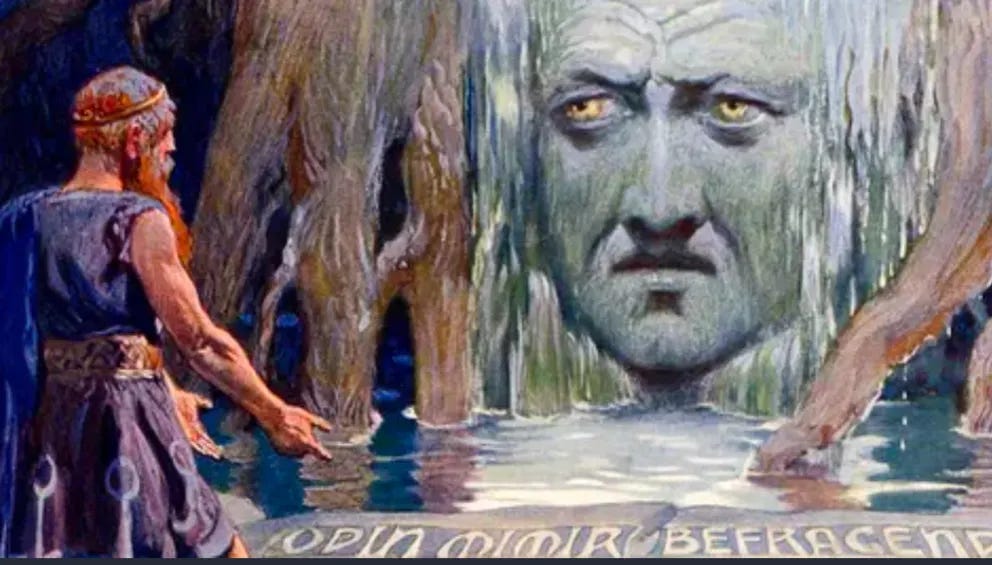
The well can be understood as Mímir’s well, ancestral memory, cultural memory, or the accumulated memory of the community. What is spoken does not simply disappear after the vibration leaves the air. It continues through consequence, reputation, story, recollection, and relationship.
A truthful word can strengthen the speaker and those who hear it.
A dishonest word can poison the well.
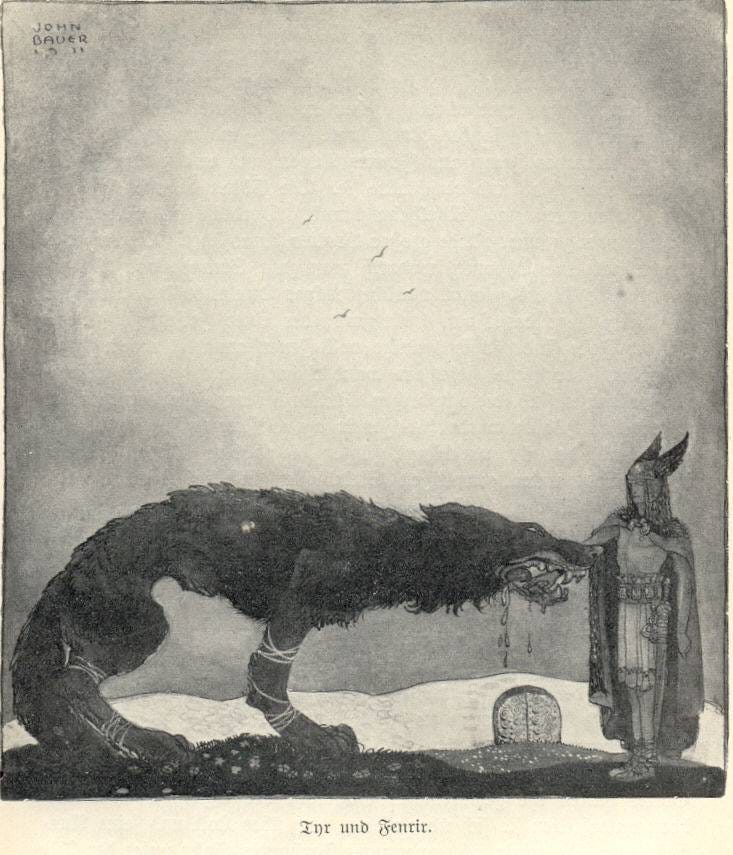
“The Spiritual Weight of an Oath”: John Bauer, Tyr and Fenrir
The Spiritual Weight of an Oath
An oath carries the greatest weight because an oath is not merely a prediction about what we hope to do.
It is an act of binding.
Torna describes an oath as something given life through sacred breath and powered by the will. The oath involves not only the person who gives it, but the recipient, the witnesses, the place, and the spiritual powers invoked or present. Until it is fulfilled or broken, the oath continues to possess force.
This is almost incomprehensible within a culture of casual promises.
We say, “I’ll call you tomorrow,” “I’ll always be there,” “You can trust me,” or “I swear I’ll change,” often with little awareness of the weight those statements carry for the person receiving them.
Our society encourages constant speech while teaching very little discipline of speech.
We post immediate reactions. We make dramatic declarations. We promise more than we can deliver. We publicly perform virtues we have not yet cultivated privately. We use language to manage how others perceive us, then become resentful when we are held accountable to the identity we presented.
A Heathen understanding of oath asks us to become more careful.
Do not promise lightly.
Do not offer your word merely to relieve the discomfort of the present moment.
Do not invoke trust when you are unwilling to behave in a trustworthy manner.
The answer is not to become silent, emotionally unavailable, or terrified of commitment. It is to understand that a promise contains part of the self. When we repeatedly keep our word, we become someone whose speech possesses weight. When we continually break it, our words become thin and useless.
Eventually, no one believes us… and that isn’t because they are cruel, but because we have taught them not to.
Honor Is Accumulated
Torna connects the keeping of oaths with Hamingja, a concept often translated as luck but also associated with honor, power, fortune, and the accumulated strength of the self.
This is not luck imagined as random cosmic favor.
It is closer to luck that has been cultivated.
A person who consistently acts with integrity develops trusted relationships, a dependable reputation, communal support, and an internal sense of coherence. Their words and actions reinforce each other. They become spiritually and socially substantial.
Keeping one’s word strengthens the whole self, while dishonorable conduct weakens it.
We might recognize this even without using explicitly spiritual language.
A trustworthy person is often surrounded by people willing to help them because they have proven that help will not be wasted. Their reputation opens doors. Their community remembers their conduct. When hardship comes, they are not entirely alone.
This is not always fair or perfectly reciprocal. Honorable people can still be betrayed, harmed, or abandoned. But the larger principle remains: character accumulates.
So does dishonor.
Every promise kept or broken becomes part of the person we are becoming.
Truth as Communal Participation
Truth is often framed as an individual possession: my truth, my beliefs, my authenticity.
But Torna’s article presents truth as profoundly relational.
As a bard and skald, he writes that believing in the moral truth of a story allows the teller to connect with those listening. Honest words can create a communal experience in which teller, listener, folk, hero, deity, moral teaching, place, and ancestral memory are brought into relationship.
Truth does not merely sit inside the mind.
It passes between people.
It is sung, remembered, witnessed, and enacted.
This is where the concept becomes essential to The Wisdom of Participation. Traditional cultures did not generally understand humans as isolated consumers of spiritual information. People gathered. They sang. They told stories. They made vows before witnesses. They remembered their dead. They carried inherited obligations. They participated in the maintenance of a shared moral world.
The skald did not simply deliver “content.”
The community did not merely observe.
Everyone present became part of the remembering.
This is radically different from a spirituality centered on private revelation, personal vibration, or self-created metaphysical truth. The well does not belong to the isolated ego. It contains the memory of relationships—between the living, the dead, the Gods, the land, and those yet to come.
What we place into that well matters.
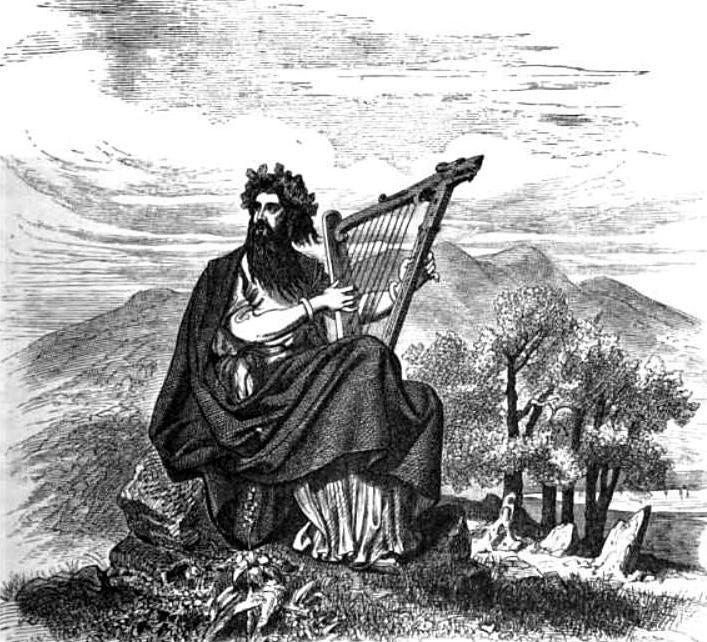
Bragi, Carl Emil Doepler, 1882. Bragi, the Norse god of poetry and eloquence, represents speech as sacred craft: words shaped through memory, rhythm, truth, and responsibility. The skald does not merely entertain, but gives voice to the stories and values through which a people remembers itself. Public domain.
No One Can Embody Truth on Our Behalf
Christianity famously places the words “I am the way, the truth, and the life” into the mouth of Jesus.
In that worldview, truth is ultimately embodied in and accessed through a singular salvific figure. The believer is asked to place faith in that figure and the theological claims made about him.
The Heathen framework explored here places the emphasis elsewhere.
Truth is not merely a person to profess belief in. It is a standard we must demonstrate through conduct.
No savior can keep our promises for us.
No doctrine can repair the trust we have broken.
No spiritual identity can substitute for honest speech.
No declaration of belief can transform dishonorable behavior into honorable behavior.
Truth must be renewed each time we speak carefully, fulfill a commitment, admit a wrong, make recompense, resist convenient deception, or allow our actions to bear the weight of what we have claimed.
It must be breathed and lived.
The Question Before Us
My upcoming conversation with Torna Braggison will explore the relationship between Ond, speech, oath, honor, memory, galdr, storytelling, and spiritual power.
But beneath the terminology lies a deeply human question.
What kind of person does my speech reveal me to be?
Do my words give life, orientation, and trust to the people around me?
Do I make promises carelessly?
Have I confused saying the right things with becoming an honorable person?
Have I demanded truth from others while excusing dishonesty in myself?
And when I fail, am I willing to make recompense rather than simply inventing a more flattering story about what happened?
Truth is not merely the absence of false information.
It is the alignment of breath, speech, memory, promise, and deed.
It is the weight accumulated when we repeatedly prove that our words can be trusted.
It is what we place into the well.
It is what others will remember.
And it is what remains when every attractive spiritual claim has been stripped away and only our conduct is left to speak for us.
The Lessons of Asgard– WorldTree Publications, 36pgs. Completely revised, with original kennings to the Gods by Torna Braggison. An introductory study of the principle Gods & Goddesses in the lore.
How Suppression Shapes Our Bodies, Minds, and the World We Live In
Hey hey, Welcome back! Today’s episode connects beautifully to something many of you resonated with in my earlier show, Science or Stagnation? The Risk of Unquestioned Paradigms. In that episode, we talked about scientism… not science itself, but the dogma that forms around certain scientific ideas.
That’s why voices like Rupert Sheldrake have always fascinated me. Sheldrake, for those unfamiliar, isn’t a fringe crank. He’s a Cambridge-trained biologist who dared to question what he calls the “ten dogmas of modern science”: that nature is mechanical, that the mind is only the brain, that the laws of nature are fixed, that free will is an illusion, and so on.
When he presented these questions in a TED Talk, it struck such a nerve that the talk was quietly taken down. And that raised an obvious question: If the ideas are so wrong… why not let them stand and fall on their own? Why censor them unless they hit something tender? All of this sets the stage for today’s conversation.
Because the theory we’re exploring, Social Miasm Theory, fits right inside that tension between mainstream assumptions and the alternative frameworks we often dismiss too quickly.
My friend Stephinity Salazar just published a fascinating piece of research arguing that suppression (of toxins, trauma, emotion, and truth) is the root pattern underlying both chronic illness and our wider social dysfunction. It’s a theory that steps outside the materialist worldview and challenges the mechanistic lens we’ve all been taught to see through.
Dr. Stephinity Salazar
Hoop Camp Retreat
Yarmony Grass 2008
You don’t have to agree with everything…that’s not the goal here.
What I love is the chance to explore, to ask good questions, and to stay grounded while examining ideas that stretch our understanding.
This blog is your guide to the episode, so you can track the concepts, explore the references, and dive deeper while you listen.
So, with that, let’s dive into Social Miasm Theory: what it is, where it comes from, why it matters, and what it might reveal about the world we’re living in today.
What Are Miasms, Anyway?
To anchor our conversation, Stephinity starts by grounding the concept of “miasms” in its homeopathic roots. Historically, Samuel Hahnemann (founder of homeopathy) described three primary miasms:
Psora, linked to scabies or skin conditions
Syphilis, associated with destructive disease
Sycosis, with overgrowth and tissue proliferation
Since then, the theory has expanded. Many modern homeopaths now talk about five chronic miasms, adding:
Tubercular (linked to tuberculosis, respiratory issues) Homeopathy 360
Psychological suppression: denial, cognitive dissonance, fear-driven attachment to ideology
Truth suppression: propaganda, censorship, disinformation, scientific dogma
When these forms of suppression accumulate, she argues, they create a “social miasm”: a pathological field that shapes everything from public health to political polarization.
Even if you don’t buy every mechanism she proposes, the metaphor works. And the patterns are hard to ignore.
Evidence, Epistemology, and Skeptics: What Counts as “Real”?
This is the part my skeptical listeners will perk up for.
In the interview, I asked her the question I knew many of you were thinking: “How do you define evidence within this framework? What would you want skeptical listeners to understand before judging it?”
Stephinity argues that the modern scientific lens is too narrow. Not wrong—but incomplete. She sees value in:
case studies
pattern recognition
field effects
resonance models
historical cycles
experiential knowledge
Whether or not you agree, her challenge to mechanistic materialism echoes thinkers like Rupert Sheldrake, IONS researchers, and even physicists questioning entropic cosmology.
And she’s not claiming this replaces science. She’s asking what science misses when it refuses to look beyond the physical.
Suppression: What It Looks Like in Real Life
Stephinity’s paper covers how suppression shows up on multiple levels. Here are a few examples she explores:
Overuse of symptom-suppressive medications
Emotional avoidance that pushes trauma deeper
Social pressure to conform
Institutional censorship
Environmental toxins that overwhelm the microbiome
Radiation and electromagnetic exposures
She frames suppression as a terrain problem: when the body or society becomes too acidic, stressed, toxic, or disconnected, the miasm takes root.
This is where we start to cross into the biological, psychological, and social layers—which brings us to one of my favorite parts of her theory.
Neuroparasitology: When Parasites Change Behavior
The concept of a new branch of science of neuroparasitology. Study of the influence of parasites on the activity of the brain.
This is the section I teased in the podcast because it’s both wild and backed by real research.
Stephinity references studies showing that parasites can alter host behavior not just in insects or rodents, but potentially in humans too. Her paper cites examples like helminths, nematodes, mycotoxins, and other microorganisms (McAuliffe, 2016; Colaiacovo, 2021). These organisms are everywhere, not just in “developing countries” (Yu, 2010).
Researchers have documented parasites that:
influence mood
shift risk-taking
modify sexual attraction
impair impulse control
change social patterns
This is what Dawkins called the extended phenotype (1982): the parasite’s genes expressing themselves through the host’s behavior. Neuroparasitologists Hughes & Libersat (2019) and Johnson (2020) have shown how certain infections can shift personality traits in specific, predictable ways.
Stephinity ties this into terrain: parasites tend to thrive in acidic, low-oxygen, stressed, radiative environments (Clark, 1995; Tennant, 2013; Cerecedes, 2015). In her view, chronic suppression creates exactly that kind of internal ecosystem.
But there’s another layer here. One that isn’t biological at all.
This is where philosopher Daniel Dennett enters the chat.
In Breaking the Spell, Dennett describes “parasites of the mind”: ideas that spread not because they’re true, but because they’re incredibly good at hijacking human psychology. These mental parasites latch onto our cognitive wiring the same way biological one’s latch onto the nervous system. They survive by exploiting:
fear
moral impulses
tribal loyalty
the desire for certainty
social pressure
existential insecurity
According to Dennett, religious dogmas, conspiracy theories, and ideological extremes act like memetic parasites: they replicate by using us, encouraging us to host them and then pass them on.
In other words: not all parasites live in the gut. Some live in the mind.
And…..we even discussed how billionaire Les Wexner once publicly described having a “dybbuk spirit” a kind of parasitic entity in Jewish folklore known for influencing personality. Whether symbolic or literal, the analogy fits. 🫨😮
Her point is simple: When the terrain is weak, something else will fill the space.
Whether that “something” is trauma, ideology, toxicity, or a literal parasite… the mechanism rhymes.
Collective Delusion and Mass Psychosis
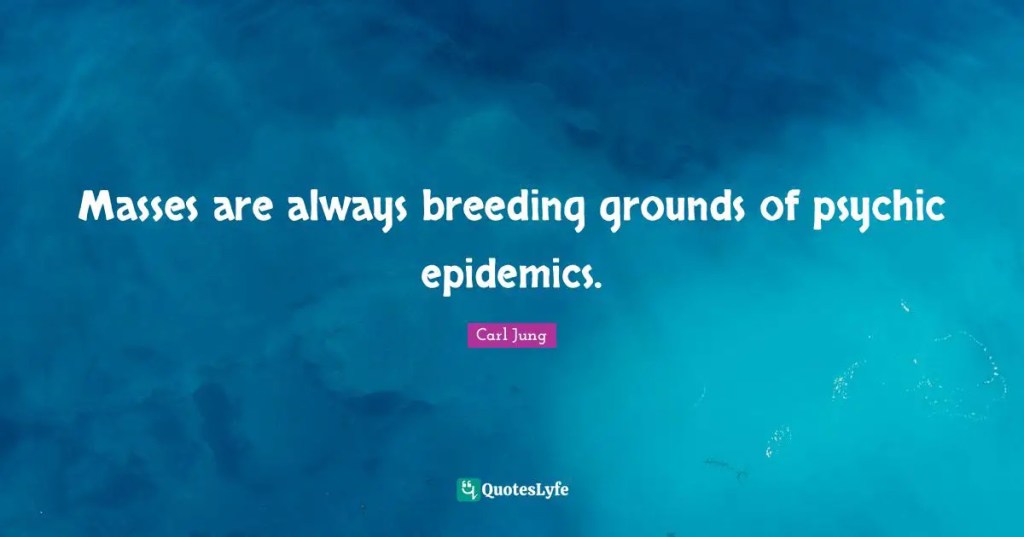
Drawing on Jung and Dostoevsky, Stephinity explores the idea that societies can enter “psychic epidemics.”
You’ve seen this. We all have…
The last decade has been a masterclass in how fear, propaganda, and emotional suppression create predictable patterns:
polarization
tribal thinking
moral panics
ideological possession
scapegoating
censorship
intolerance of nuance
She argues these are symptoms of a cultural miasm—not failures of individual character.
Whether you lean left, right, or somewhere out in the wilderness, you’ve likely felt this rising tension. And it’s hard not to see how unresolved collective trauma feeds it.
COVID as a Catalyst: What the Pandemic Revealed
Another part of her paper dives into how the pandemic brought hidden patterns to the surface.
Some of her claims are controversial, especially around EMFs and environmental co-factors. In the episode, we unpack these with curiosity, not blind acceptance.
Her larger point is that COVID exposed:
institutional fragility
scientific gatekeeping
public distrust
trauma-based responses
authoritarian overreach
the psychological toll of suppression
Whether you agree with the specific mechanisms or not, the last decade made one thing undeniable: something in our social terrain is deeply dysregulated.
8. Healing Forward: What Do We Do With All This?
If suppression drives miasms, then healing means unsuppressing. Gently, not chaotically.
Stephinity suggests practices like:
emotional honesty
reconnecting with nature
releasing stored trauma
nutritional and detoxification support
reducing exposure to chronic stressors
restoring community and meaning
opening space for spiritual or intuitive insight
She’s not prescribing a protocol. She’s offering a map.
The destination is what the Greeks called sophrosyne: a state of balance between wisdom and sanity. Not blissful ignorance, not paranoid awakening. Just grounded clarity.
And I think we could all use a bit more of that.
Key Evidence and Arguments
Stephinity critiques materialist science, calling out what she terms “entropic cosmology.” She argues that by assuming nature is strictly mechanistic, mainstream science misses field-based phenomena, non-local consciousness, and deeper systemic patterns.
She draws on historical and homeopathic sources (Hahnemann, Kent) to build her theoretical foundation but also argues for newer forms of evidence: resonance, case studies, and pattern detection in social systems.
On the environmental front, she explores links between toxins, EMF / 5G, biotech, and chronic disease, not just as correlation, but as evidence of suppression dynamics.
Psychologically, she invokes mass delusion or collective repression (drawing from Jung, Dostoevsky) seeing societal crises as expressions of buried collective shadow.
Ultimately, her call to action isn’t just for individual healing, but for systemic awakening: more transparency, alternative medical paradigms, and restored connection with nature.
Why This Matters for You
Even if homeopathy isn’t your jam, Social Miasm Theory offers a metaphor (and potentially a map) for understanding how inner repression becomes external crisis. If this episode does anything, I hope it gives you permission to look a little closer and question the stuff we’re told not to touch.





 Taste0ftruth Tuesdays