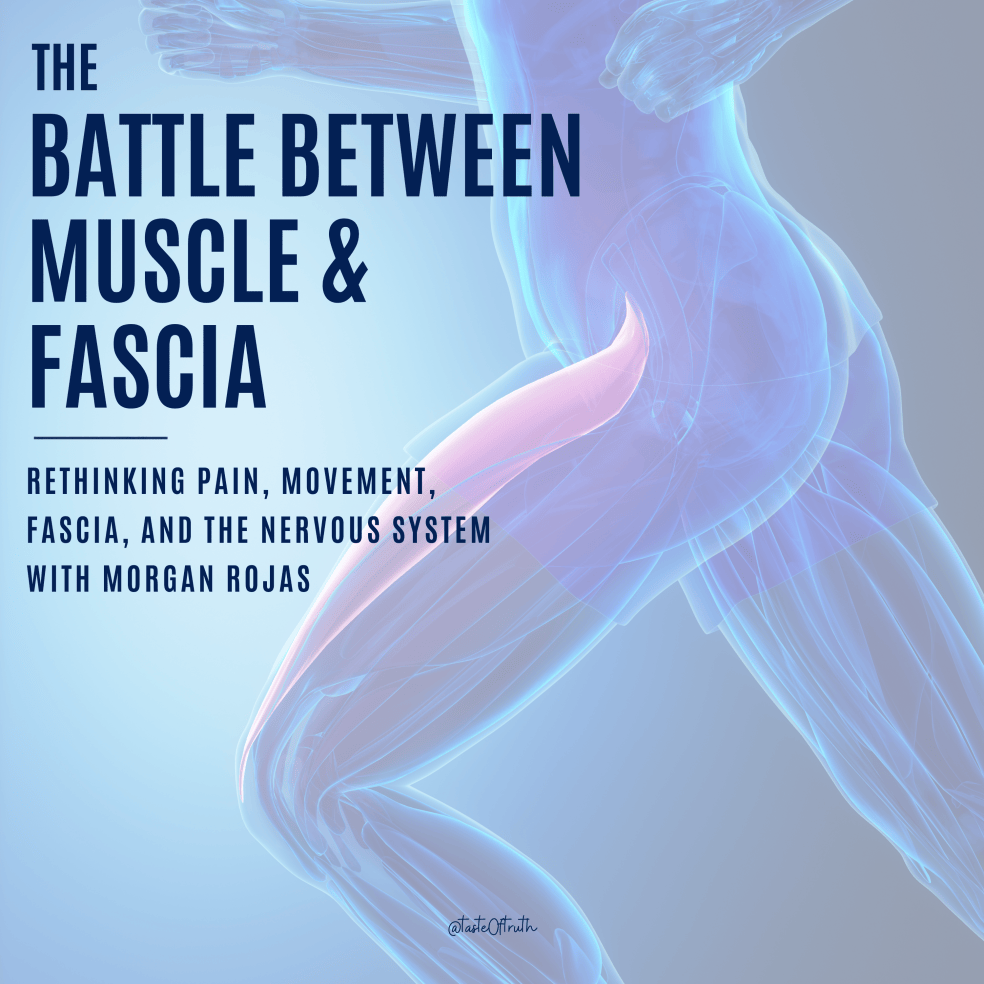
Rethinking Pain, Movement, Fascia, and the Nervous System with Morgan Rojas
Most of us were taught to think about the body in fairly simple terms.
If a muscle feels tight, stretch it.
If something feels weak, strengthen it.
If it hurts, rest it.
If your mobility is limited, work on flexibility.
Sometimes those things do indeed help. But for any of you out there who are like me, and have dealt with recurring tightness, old injuries, stubborn pain, or a movement that just never feels quite right knows that the body doesn’t always behave that neatly.
That is part of what drew me to the work of Morgan Rojas, a Licensed Massage Therapist with a master’s degree in Sport & Exercise Science and the founder of Find Aligned.
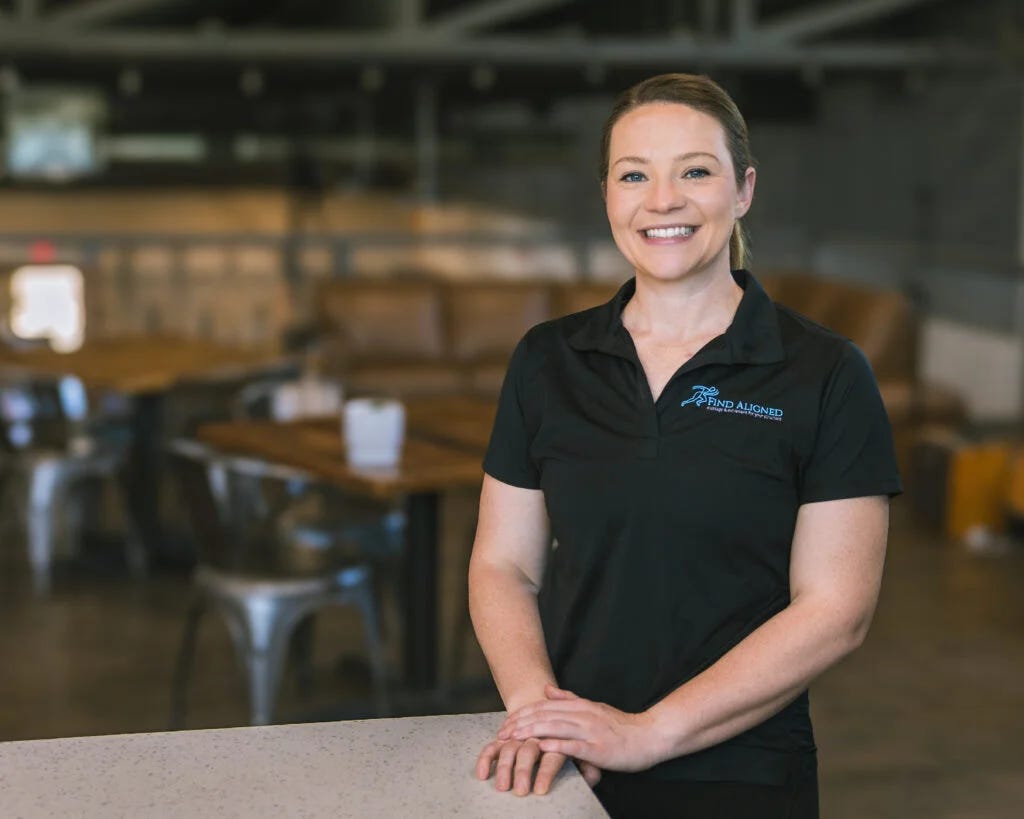
Morgan’s work asks us to look beyond isolated muscles and start thinking about the larger system: muscle, fascia, the nervous system, sensory information, previous injuries, movement patterns, and (perhaps most importantly) adaptation.
In her book, Align What Your Body Misunderstands, she writes:
“The body is not reacting randomly. It is adapting based on previous experiences, learned patterns, and the expectations it has developed over time.”
That idea immediately clicked for me because we talk about adaptation constantly when discussing metabolism.
If someone chronically diets, drastically restricts calories, or repeatedly exposes the body to the same stressor, the body responds. It adjusts to the environment it has been given.
Movement is no different.
Your body is continually learning from what you do repeatedly: how you sit, walk, lift, train, compensate after an injury, carry tension, favor one side, or avoid movements that once hurt.
Morgan continues:
“Something within the system—whether structural, neurological, or perceptual—is shaping how that moment is processed. While these responses may initially feel unpredictable, they begin to make sense when viewed through the lens of adaptation. What once seemed random becomes patterned, and what felt out of control becomes something that can be observed, understood, and eventually changed.”
That changes the question.
Instead of only asking, “What is wrong with this muscle?”, we can start asking:
“What has my body adapted to?”
Adaptation is not the same thing as optimal function
The body is remarkably good at finding ways to accomplish what we ask of it.
But that doesn’t necessarily mean it has found the most efficient strategy.
Morgan puts it simply:
“The body will always adapt to the demands placed on it, but adaptation does not guarantee optimal function. It simply reflects what the system has been repeatedly exposed to. Without awareness, those adaptations may reinforce patterns that are inefficient or incomplete.”
That distinction matters.
An old ankle injury may change how you load one leg. A painful shoulder may teach you to move your shoulder blade differently. Years of sitting may influence how you organize movement through the hips and pelvis.
The original reason for an adaptation may even be long gone while the movement strategy remains.
That doesn’t mean the body has failed.
It means the body learned.
And something that can be learned can potentially be reorganized.
Pain and movement involve more than muscles
One of the most fascinating parts of Morgan’s work is her use of sensory input.
We rarely think about vision, smell, touch, pressure, balance, or body position when talking about knee pain or mobility. But the nervous system is constantly gathering information from the environment and the body and deciding how to respond.
Morgan sometimes changes a sensory input (such as visual information or smell) and then retests someone’s movement or symptoms.
The interesting question isn’t simply whether someone feels different.
It is: Why would changing seemingly unrelated information change the experience of pain or movement at all?
That opens a much larger conversation about how the nervous system interprets information, how movement is organized, and why pain is not always a simple measurement of tissue damage.
“I should be able to do this”
Most people have experienced a movement that technically should be possible but somehow feels wrong.
Maybe one side feels coordinated and the other feels clumsy.
Maybe your squat feels restricted until you warm up.
Maybe you have enough strength to perform an exercise, but the movement still feels unstable.
Morgan describes movement as something that is not defined solely by how it looks but by how it is organized.
That means strength and flexibility are only pieces of the puzzle.
How the nervous system is processing information, how force is being distributed, and whether the body is relying more heavily on certain tissues or strategies can all influence the experience.
Where fascia fits in
Fascia has become one of the trendiest words in the fitness and wellness world, sometimes to the point that it starts sounding mystical.
Morgan’s framework offers a more practical way to understand it.
Rather than treating fascia and muscle as completely separate systems, her work explores how different bodies may rely on them differently when creating movement, stability, and force.
That can help explain why two people performing the same exercise may experience it completely differently.
It also raises an interesting question many of us have probably never considered:
Are you trying to force your body to move according to a strategy that doesn’t actually match how your body tends to organize itself?
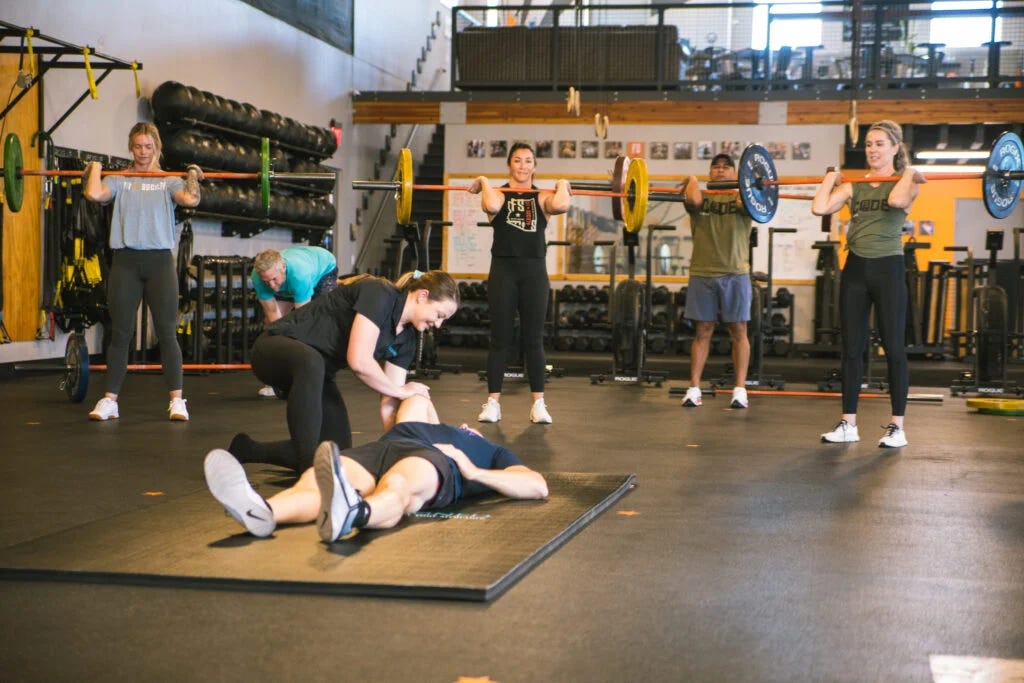
Becoming curious instead of immediately trying to “fix” yourself
The point of this conversation isn’t to teach everyone to diagnose their own pain.
It is almost the opposite.
It is an invitation to become more observant.
When something repeatedly feels tight, painful, unstable, or restricted, instead of immediately attacking that area with stretching, foam rolling, or strengthening, we might first get curious.
- When does it happen?
- Does it change after warming up?
- Is one side different from the other?
- Does the movement feel different depending on position, speed, load, or environment?
- What previous injuries or habits might have shaped the way the body is approaching that task?
Patterns become much easier to understand when we stop treating every symptom as an isolated event.
In this episode of Taste0fTruth Tuesdays, Morgan and I explore sensory input, fascia and muscle, movement organization, chronic pain, old injuries, and the many ways our bodies adapt to what we repeatedly ask of them.
Because sometimes what feels like a body behaving unpredictably may actually be a body doing exactly what it has learned to do. Looking forward to hearing your thoughts, feedback and questions!
Important Links:
Book a Free 30 min Assessment with Morgan here!
Insta: https://www.instagram.com/morgan.findaligned/
Buy her book! https://a.co/d/0dbtRAK3
Her website: https://findaligned.com/