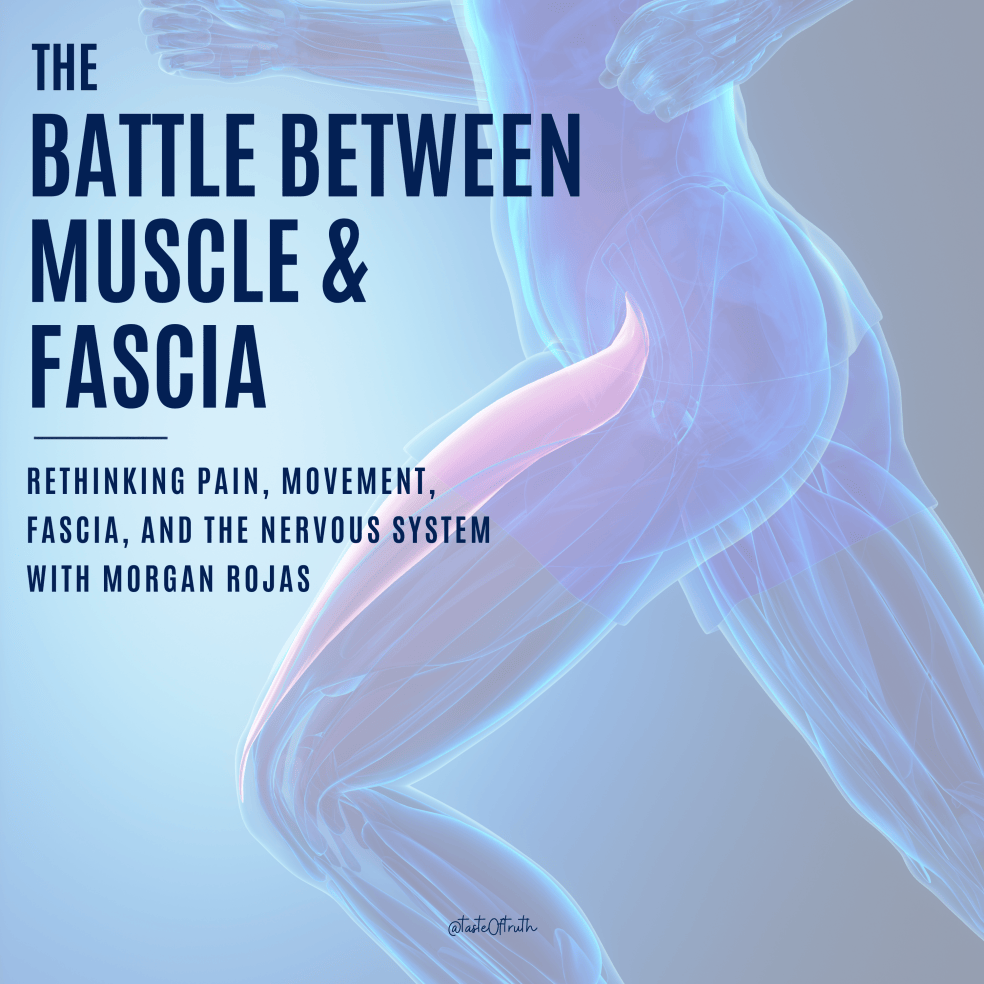
The Battle between Muscle and Fascia

Rethinking Pain, Movement, Fascia, and the Nervous System with Morgan Rojas

Most of us were taught to think about the body in fairly simple terms.

If a muscle feels tight, stretch it.
If something feels weak, strengthen it.
If it hurts, rest it.
If your mobility is limited, work on flexibility.

Sometimes those things do indeed help. But for any of you out there who are like me, and have dealt with recurring tightness, old injuries, stubborn pain, or a movement that just never feels quite right knows that the body doesn’t always behave that neatly.

That is part of what drew me to the work of Morgan Rojas, a Licensed Massage Therapist with a master’s degree in Sport & Exercise Science and the founder of Find Aligned.

Morgan’s work asks us to look beyond isolated muscles and start thinking about the larger system: muscle, fascia, the nervous system, sensory information, previous injuries, movement patterns, and (perhaps most importantly) adaptation.

In her book, Align What Your Body Misunderstands, she writes:

“The body is not reacting randomly. It is adapting based on previous experiences, learned patterns, and the expectations it has developed over time.”

That idea immediately clicked for me because we talk about adaptation constantly when discussing metabolism.

If someone chronically diets, drastically restricts calories, or repeatedly exposes the body to the same stressor, the body responds. It adjusts to the environment it has been given.

Movement is no different.

Your body is continually learning from what you do repeatedly: how you sit, walk, lift, train, compensate after an injury, carry tension, favor one side, or avoid movements that once hurt.

Morgan continues:

“Something within the system—whether structural, neurological, or perceptual—is shaping how that moment is processed. While these responses may initially feel unpredictable, they begin to make sense when viewed through the lens of adaptation. What once seemed random becomes patterned, and what felt out of control becomes something that can be observed, understood, and eventually changed.”

That changes the question.

Instead of only asking, “What is wrong with this muscle?”, we can start asking:

“What has my body adapted to?”

Adaptation is not the same thing as optimal function

The body is remarkably good at finding ways to accomplish what we ask of it.

But that doesn’t necessarily mean it has found the most efficient strategy.

Morgan puts it simply:

“The body will always adapt to the demands placed on it, but adaptation does not guarantee optimal function. It simply reflects what the system has been repeatedly exposed to. Without awareness, those adaptations may reinforce patterns that are inefficient or incomplete.”

That distinction matters.

An old ankle injury may change how you load one leg. A painful shoulder may teach you to move your shoulder blade differently. Years of sitting may influence how you organize movement through the hips and pelvis.

The original reason for an adaptation may even be long gone while the movement strategy remains.

That doesn’t mean the body has failed.

It means the body learned.

And something that can be learned can potentially be reorganized.

Pain and movement involve more than muscles

One of the most fascinating parts of Morgan’s work is her use of sensory input.

We rarely think about vision, smell, touch, pressure, balance, or body position when talking about knee pain or mobility. But the nervous system is constantly gathering information from the environment and the body and deciding how to respond.

Morgan sometimes changes a sensory input (such as visual information or smell) and then retests someone’s movement or symptoms.

The interesting question isn’t simply whether someone feels different.

It is: Why would changing seemingly unrelated information change the experience of pain or movement at all?

That opens a much larger conversation about how the nervous system interprets information, how movement is organized, and why pain is not always a simple measurement of tissue damage.

“I should be able to do this”

Most people have experienced a movement that technically should be possible but somehow feels wrong.

Maybe one side feels coordinated and the other feels clumsy.

Maybe your squat feels restricted until you warm up.

Maybe you have enough strength to perform an exercise, but the movement still feels unstable.

Morgan describes movement as something that is not defined solely by how it looks but by how it is organized.

That means strength and flexibility are only pieces of the puzzle.

How the nervous system is processing information, how force is being distributed, and whether the body is relying more heavily on certain tissues or strategies can all influence the experience.

Where fascia fits in

Fascia has become one of the trendiest words in the fitness and wellness world, sometimes to the point that it starts sounding mystical.

Morgan’s framework offers a more practical way to understand it.

Rather than treating fascia and muscle as completely separate systems, her work explores how different bodies may rely on them differently when creating movement, stability, and force.

That can help explain why two people performing the same exercise may experience it completely differently.

It also raises an interesting question many of us have probably never considered:

Are you trying to force your body to move according to a strategy that doesn’t actually match how your body tends to organize itself?
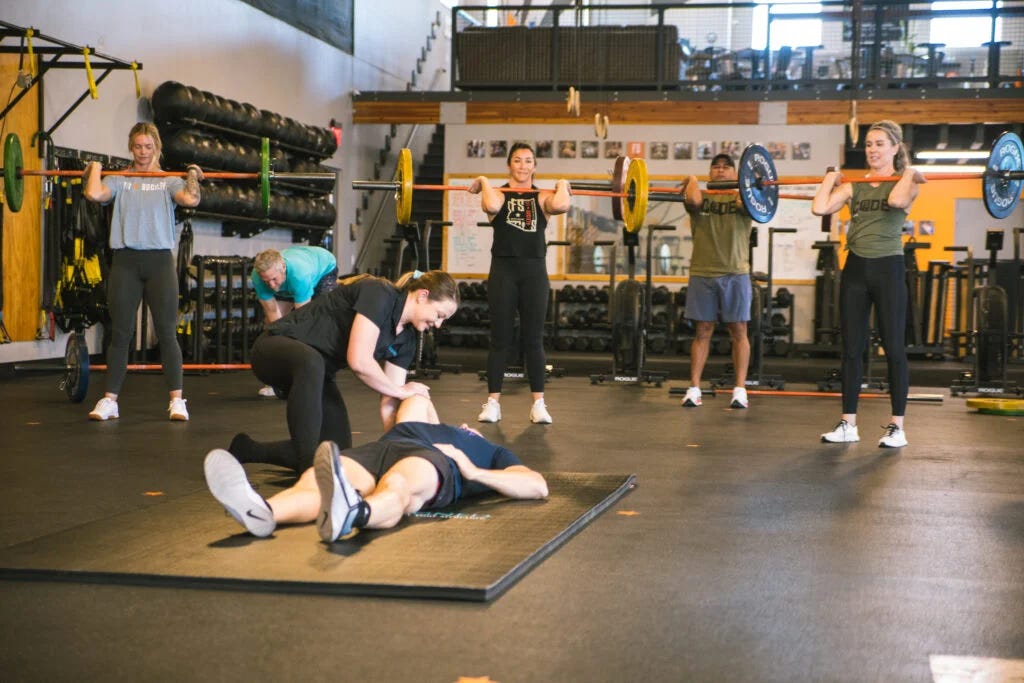
Becoming curious instead of immediately trying to “fix” yourself

The point of this conversation isn’t to teach everyone to diagnose their own pain.

It is almost the opposite.

It is an invitation to become more observant.

When something repeatedly feels tight, painful, unstable, or restricted, instead of immediately attacking that area with stretching, foam rolling, or strengthening, we might first get curious.

  • When does it happen?
  • Does it change after warming up?
  • Is one side different from the other?
  • Does the movement feel different depending on position, speed, load, or environment?
  • What previous injuries or habits might have shaped the way the body is approaching that task?

Patterns become much easier to understand when we stop treating every symptom as an isolated event.

In this episode of Taste0fTruth Tuesdays, Morgan and I explore sensory input, fascia and muscle, movement organization, chronic pain, old injuries, and the many ways our bodies adapt to what we repeatedly ask of them.

Because sometimes what feels like a body behaving unpredictably may actually be a body doing exactly what it has learned to do. Looking forward to hearing your thoughts, feedback and questions!

Important Links:

Book a Free 30 min Assessment with Morgan here!

Insta: https://www.instagram.com/morgan.findaligned/

Buy her book! https://a.co/d/0dbtRAK3

Her website: https://findaligned.com/

Untangling the Threads of Chronic Pain, Trauma, and Healing

How Emotional Trauma Contributes to Chronic Pain

If you had asked me a year ago why my body hurt so much—why my hips ached, my calves tightened with every step, or why even walking on the treadmill felt like a chore—I would have said it was from overtraining or poor posture. What I couldn’t articulate then was that my pain wasn’t just physical. It was a complex dance involving my nervous system, my fascia, and my body’s attempt to protect itself after years of unresolved trauma.

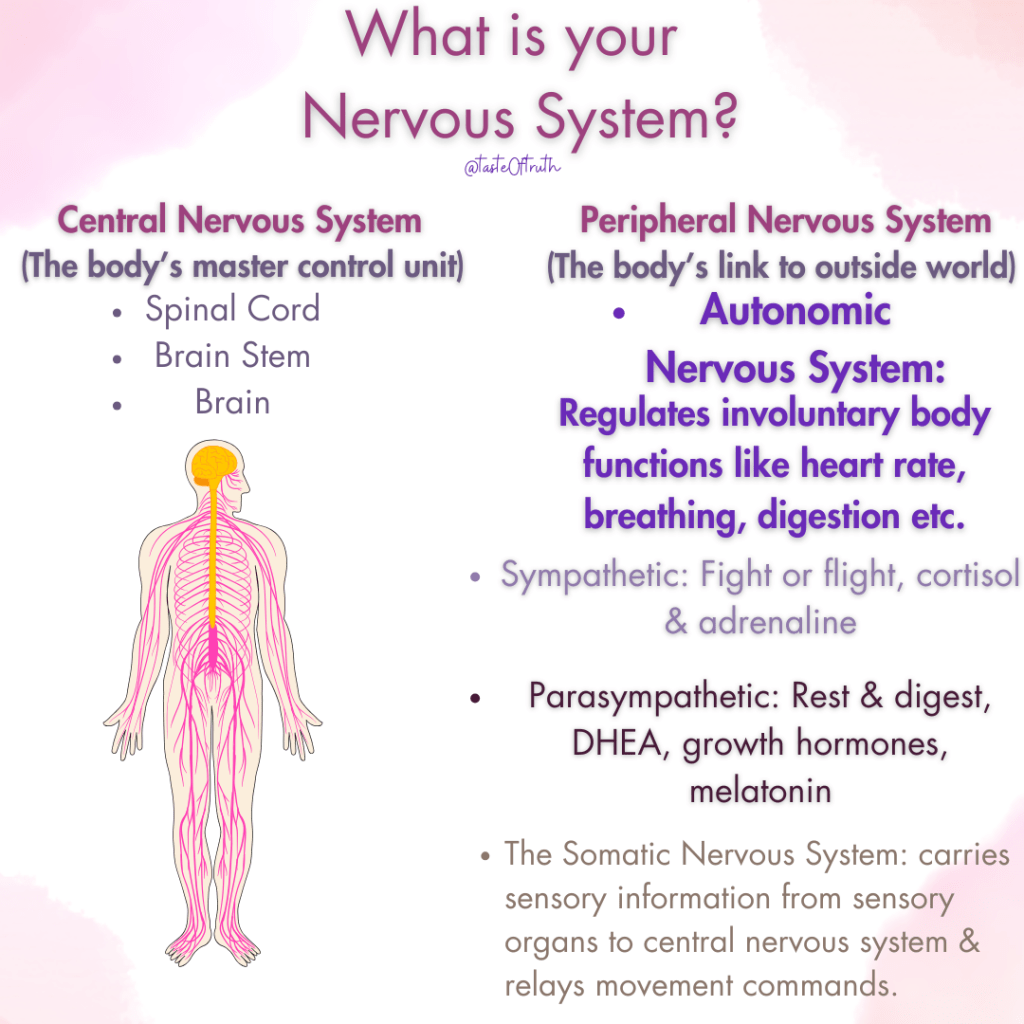
Our nervous system plays a fundamental role in chronic pain. When we experience physical or emotional trauma, our body reacts by creating a heightened state of alertness. Over time, these experiences are encoded in the nervous system as neurotags—clusters of physical, emotional, and cognitive memories that influence how we react to stress and pain. Chronic pain, I’ve learned, is often an echo of this activation. It’s not just about tight muscles or structural imbalances—it’s a survival mechanism trying to make sense of and respond to past trauma.

This is the story of how I’ve started to untangle it all, and how chronic pain, emotional wounds, and trauma are all intricately tied together in ways I never imagined.

The Connection Between Chronic Pain and Trauma

For years, I treated my body like a machine. During my bodybuilding days, I pushed through discomfort, ignored signs of overtraining, and celebrated soreness as a badge of honor. But what I didn’t understand then was how my nervous system was quietly keeping score.

Chronic pain, I’ve learned, isn’t just about tight muscles or structural imbalances—it’s a survival strategy. When we experience trauma, whether from overtraining, stress, or emotional wounds, our nervous system can get stuck in a heightened state of alertness. It’s like a smoke alarm that keeps going off, long after the fire has been extinguished.

Fascia, the connective tissue that surrounds every muscle and organ in our body, plays a fascinating role in this process. Fascia isn’t just structural—it’s sensory. It’s packed with nerve endings that communicate directly with the brain. When the body perceives danger (even subconsciously), the fascia can tighten, creating patterns of tension that mirror emotional or physical trauma. In my case, that tension showed up in my psoas muscles, my calves, and my lower back—all areas associated with safety and movement.

The more I explored these connections, the more I began to see that pain wasn’t random—it was a message from my body. And it was asking me to listen.


The Power of Neurotags: How Pain and Trauma Intersect

One of the most eye-opening concepts I’ve come across in my journey is the idea of neurotags—a term used to describe the brain’s way of organizing and processing sensory, emotional, and cognitive information. Neurotags are like maps of experiences that are built over time, creating an interconnected network of physical sensations, emotions, and thoughts that work together to form a response to stimuli.

Here’s the kicker: Chronic pain is often stored in these neurotags. When trauma occurs—whether physical, emotional, or psychological—it gets encoded in the nervous system as a pattern. These patterns are not just about the physical experience of pain, but also the emotions and thoughts tied to that experience.

When trauma is stored in the nervous system, it doesn’t just affect how we feel physically; it affects our entire emotional and cognitive landscape. For example, someone who has experienced physical trauma may also experience emotional flashbacks or cognitive distortions that are linked to that experience. These flashbacks are like sudden replays of past trauma, but they don’t just exist in the mind—they can show up physically in the body.


Neurotags, Emotional Flashbacks, and Chronic Pain

Think about it this way: When we experience a traumatic event, our nervous system reacts by encoding that event into a neurotag. This neurotag includes not only the physical sensations (like tightness, pain, or discomfort), but also the emotions (fear, anger, sadness) and cognitive patterns (thoughts like “I am unsafe” or “I am weak”).

Emotional flashbacks happen when the brain reactivates these neurotags, causing the body to respond as if the trauma is happening again. This is why someone with chronic pain may experience intense emotions that seem disproportionate to the physical sensations they’re feeling. The pain can trigger a flashback—a sudden, overwhelming re-experience of trauma that isn’t just mental but is felt deeply in the body.

In my case, the tension I experienced in my hips and lower back was a reflection of both the physical trauma of overtraining and the emotional trauma I had internalized from years of pushing myself too hard and ignoring my body’s signals. When my nervous system encountered stress, it activated these neurotags, making the tension and pain feel more intense and more pervasive. The more I resisted this pain or ignored the emotional connection to it, the worse it became.


How I’m Healing: Creating New Neurotags and Engaging the Vagus Nerve

Understanding neurotags has been revolutionary in how I approach my healing process. The key to healing, I’ve learned, is not simply “fixing” the physical pain but reprogramming the neurotags. This involves creating new patterns that support healing, safety, and relaxation.

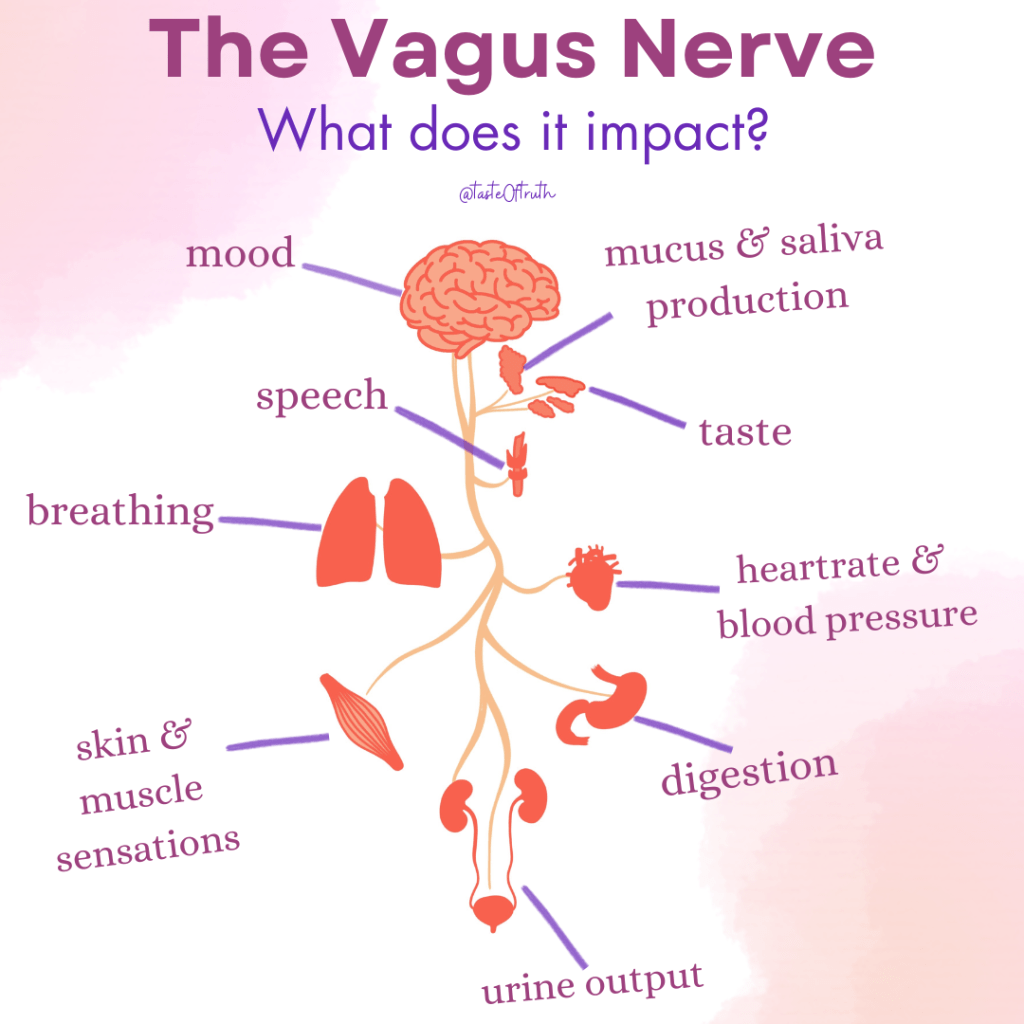
One powerful way I’m rewiring my nervous system is by engaging the vagus nerve, the longest cranial nerve that plays a critical role in regulating the parasympathetic nervous system. The vagus nerve is like the body’s “brakes,” helping to turn off the fight-or-flight response and return the body to a state of calm. When activated, it encourages relaxation, emotional regulation, and recovery—exactly what my body needs as I untangle the tension stored in my fascia and nervous system.

Here’s how I’m starting to rewire my system:

Reconnecting with Joyful Movement:
I’ve reintroduced activities that make me feel alive, like walking in the garden or playing with my pets. These moments remind me that movement isn’t just about strength—it’s about freedom. By incorporating joyful, non-stressful activities, I’m helping to reinforce new neurotags that associate movement with pleasure and ease.

Reclaiming Safety Through Movement:
Instead of high-intensity workouts, I’ve shifted to gentle, functional exercises that strengthen my core and glutes while supporting my nervous system. Slow, mindful movements like glute bridges, bird dogs, and pelvic tilts have become my new best friends. These exercises not only build strength but signal to my nervous system that it’s safe to move.

Releasing Fascia with Love:
I’ve embraced somatic practices like gentle rocking, diaphragmatic breathing, and fascia-focused stretches to help release tension. These practices aren’t just physical—they’re a way of telling my body, “You’re safe now.” They help reprogram the neurotags associated with stress and trauma by sending a message of relaxation and calm.

Vagus Nerve Activation:
To support my nervous system’s recovery, I’ve incorporated practices that stimulate the vagus nerve, such as slow, deep belly breathing and humming. Breathing deeply into my diaphragm (focusing on long exhales) has been especially helpful in calming my body and signaling to my nervous system that it’s okay to relax. By consciously engaging my vagus nerve, I’m helping shift from the fight-or-flight response into a restorative state.

Rewriting Emotional Patterns:
Rewiring my nervous system also means rewriting my emotional patterns. This involves acknowledging the emotional flashbacks that arise when pain triggers old neurotags and consciously choosing to respond with compassion and self-care. Instead of reacting with fear or frustration, I’m learning to pause, breathe, and remind myself that I’m safe now.

What Chronic Pain Has Taught Me

Chronic pain has been a tough teacher, but it’s taught me lessons I wouldn’t trade for anything:

  • Your body is always on your side. Pain is a signal, not a punishment.
  • Healing isn’t linear. Some days, progress looks like resting instead of pushing.
  • Movement is medicine, but only when done with intention and love.

I share this journey because I know I’m not alone. So many of us carry the weight of trauma—both emotional and physical—in our bodies. And while the road to healing isn’t easy, it’s worth it.

If you’re navigating chronic pain, I want you to know this: Your body isn’t broken, and you don’t have to fight it. With the right tools, patience, and self-compassion, you can create safety, release tension, and rediscover the joy of movement.

I’m still on this journey, and I’d love to hear about yours. What has chronic pain taught you? How are you learning to trust your body again? Let’s keep this conversation going—because healing happens when we feel safe enough to share.