Calories In, Common Sense Out

On metabolism, nourishment, food reverence, and the systems that shape what feeds us

Welcome back to Taste0fTruth Tuesdays. Today, we are mixing things up with a subject that is very near and dear to my heart: nutrition, metabolism, and our increasingly distorted relationship with food in our modern world.

This episode covers a lot of ground. We are moving from diet culture and my own history with restriction into metabolism, morality, industrial food, local agriculture, and the growing technological control of our food systems. It may sound like several different conversations, but they are all part of the same story.

This episode will also lay some of the groundwork for an upcoming interview at the end of the month with Jay Feldman Wellness.

Jay is a health coach, independent health researcher, and host of The Energy Balance Podcast. His work explores bioenergetic health and nutrition, including ideas influenced by biologist Ray Peat—principles I have found myself returning to, on and off, for the last several years.

But before we get there, I need to explain why this conversation is so personal for me.

As many of you know, I have spent more than 20 years in the health and fitness world. I have also written openly about how intense and complicated that journey has been.

I came of age during the late 1990s and early 2000s, an era saturated with diet magazines, celebrity weight-loss stories, low-fat everything, Special K commercials, “bikini body” workouts, and television programs that treated shrinking the body as both entertainment and moral achievement.

And those cultural messages did not exist in isolation.

I grew up in a household where my body was not simply noticed. It was scrutinized, compared, and commented on.

Those kinds of comments do not disappear with time. They become part of the architecture of how you see yourself. They follow you into mirrors, fitting rooms, photographs, swimming pools, doctors’ offices, and every room where you become aware that other people can see your body.

They teach you that the body must be managed and monitored.

They plant the belief that remaining small is the price of safety.

I grew up believing that if I could control my body well enough, I could avoid humiliation. I could avoid becoming the punchline. I could avoid being seen in the wrong way.

For a while, I turned that fear into something our culture rewards: discipline.

But fear does not stop being fear simply because it learns the vocabulary of health and fitness.

In high school, I followed plans like the Special K diet. I relied on Carnation Instant Breakfast instead of complete meals. I skipped classes to work out before heading to my afterschool job. My protein intake was low. My fear of gaining weight was high.

Restriction became familiar.

And because restriction was praised as willpower, I did not always recognize it as deprivation.

That is the background I bring into this conversation. I am not critiquing calorie culture because I have never understood its appeal. I understand it intimately.

Numbers can feel safe.

Numbers feel objective. They offer the illusion that if you calculate carefully enough, track consistently enough, and exert enough control, the body will become predictable. Calories give food a score. The scale gives the body a verdict. And when you have learned to fear your own appetite, arithmetic can feel more trustworthy than sensation.

I have lived through periods in which weight loss looked like success from the outside while my body was becoming increasingly undernourished, stressed, depleted, and disconnected from its own signals.

So when I say that weight loss and health are not synonymous, trust me: I learned that lesson the hard way.
When Discipline Stops Working

When Discipline Stops Working

Taste0ftruth

·

Jan 20

Listen now

That is why I am interested in the bioenergetic perspective. Rather than asking only, “How little can I eat to make the number on the scale decrease?” it asks a more useful question:

How well is the body actually producing and using energy?

This episode is not intended to settle every claim made within bioenergetic nutrition. That is part of what I want to explore with Jay during our upcoming conversation.

Today, I want to lay the groundwork by examining the difference between consuming calories and producing usable cellular energy; between losing weight and becoming healthy; and between treating food as a number and understanding it as biological information, ecological relationship, and participation in a living system.

Because the body is not simply a furnace. Food is not merely a number.

And losing weight is definitely not proof that a person is nourished or healthy while doing so.

Modern nutrition has flattened food into arithmetic while removing almost everything that makes it meaningful.

SAD is the perfect acronym for the Standard American Diet because, whew, it really is sad what modern food culture has become.

And I do not just mean sad in the obvious “everyone is eating ultra-processed food and wondering why they feel terrible” kind of way. I mean sad in the deeper sense.

Sad as in spiritually impoverished.

Sad as in disconnected from land, animals, seasons, labor, gratitude, death, and actual nourishment.

Sad as in we have managed to turn food (one of the most intimate relationships a human being has with the living world) into a bland, plastic-wrapped transaction between a lonely person and a microwave, or a vehicle going to a fast food drive thru window.

That sounds dramatic.

But is it really?

We live in a culture that calls ultra-processed food “good enough,” celebrates weight loss regardless of how it was achieved, and then treats anyone who questions that framework as judgmental, elitist, or unnecessarily intense.

But that is exactly the problem.

Our culture has reduced food to numbers while stripping it of meaning. Calories. Macros. Points. Deficits. Cheat meals. Protein hacks. Low-cal swaps. “If It Fits Your Macros.” (I lived and breathed that lifestyle) We talk about food like it is accounting, not relationship. Like the human body is a calculator.

Of course, calories matter. I am not pretending energy balance is fake. But if your entire health philosophy begins and ends with calorie math, you are missing the human being attached to the equation.

Food is not only fuel. Food is information. Food sends a signal. Food affects insulin, thyroid output, leptin, ghrelin, cortisol, digestion, gut signaling, inflammation, mitochondrial function, cell communication, mood, cravings, satiety, sleep, fertility, and gene expression. A Hot Pocket and a grass-fed steak may both contain calories, but they do not speak the same biological language once they enter the body.

The lie of “calories in, calories out” must die.

Not because energy does not matter. It does. But because reducing food to calorie math is one of the dumbest things modern nutrition culture has done to the human body.

A calorie is a unit of energy, but the number printed on a label cannot tell us how effectively a food will be digested, absorbed, converted into ATP, or allocated among the body’s competing demands. That process requires minerals, vitamins, enzymes, hormones, functioning mitochondria, adequate protein, and a body that is not constantly underfed, inflamed, stressed, or depleted.

This is where the “just eat less” crowd loses the plot.

Most people are not building truly nutrient-dense meals, even when they think they are. They may be tracking protein, counting calories, or hitting some macro target, while still missing the deeper nourishment their body needs to actually turn food into energy. If someone is living on refined grains, muscle meats only, no seafood, low mineral intake, low variety, and almost no traditional foods, they can be “hitting their calories” while still undersupplying some of the micronutrients and cofactors involved in energy metabolism, tissue repair, and hormonal function.

But producing energy is only part of the story.

The body must also decide where that energy goes.

Mitochondrial psychobiologist Martin Picard and his colleagues have proposed an emerging framework called the Energy Constraint model. Their central idea is that the body operates with a limited but dynamic energy budget that must continually be allocated across cells, organs, systems, and behaviors.

Everything costs energy.

Neurons firing costs energy. Producing proteins costs energy. Mounting an immune response costs energy. Digestion, movement, cognition, reproduction, tissue repair, and communication between cells all carry energetic costs.

Nothing is free in biology.
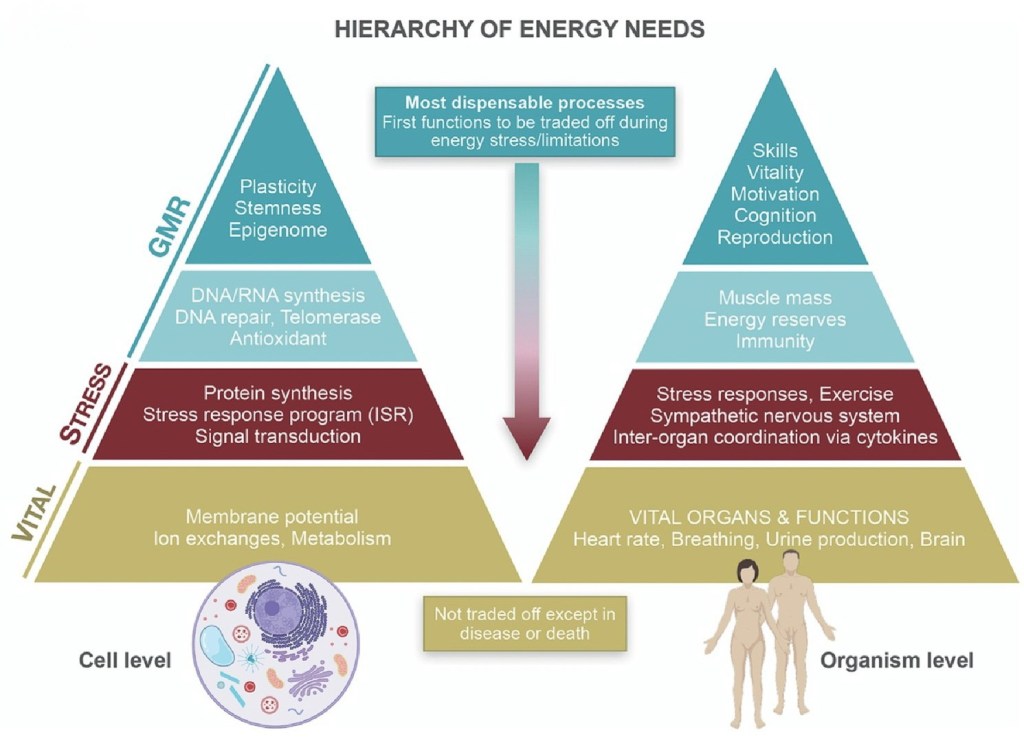
Hierarchy of Energy Needs. From @martinpicard, “Energy Constraint on Health,” based on the Energy Constraint framework developed by Alexander Behnke, Evan Shaulson, Herman Pontzer, Chris Kempes, Martin Picard, and colleagues. Reproduced with permission from Martin Picard. Original article and primary paper linked here.

In their framework, the body’s energetic demands can be divided into three broad categories: vital functions; stress responses; and growth, maintenance, and repair.

At the base are the vital functions necessary to sustain life in the immediate term: breathing, heart activity, brain function, membrane potential, ion exchange, and basic metabolism. These processes receive priority because they are necessary for survival over minutes, hours, and days.

The next category includes stress-related demands. Exercise is a stressor. So are infection, inflammation, toxins, psychological distress, injury, sleep loss, and activation of the sympathetic nervous system. All of these require the body to spend energy responding and adapting.

At the top are growth, maintenance, and repair. These processes may not be essential for surviving the next several minutes, but they are essential for healing, resilience, muscle maintenance, reproduction, cognition, motivation, vitality, and long-term health.

When the body’s total demands become difficult to sustain, energy is not distributed evenly. More urgent vital and stress-related processes may be prioritized while investment in growth, maintenance, and repair becomes compressed.

In other words, the body may preserve what is necessary to keep you alive while reducing what is available to help you recover, reproduce, think clearly, maintain muscle, and feel fully alive.

This does not mean these higher functions simply switch off in a rigid order. It means the body makes trade-offs.

And duration matters.

Not every stressor is harmful. Exercise itself temporarily redirects energy, but when it is appropriately dosed and followed by sufficient nourishment, sleep, and recovery, the body can adapt and become more resilient.

The deeper problem is stress that becomes excessive, chronic, or inescapable.

When energetic demands continue for weeks, months, or years—whether from illness, infection, psychological stress, overtraining, sleep disruption, undernourishment, or some combination of pressures—the body may repeatedly postpone the repair work that was supposed to happen later.

This framework helps explain how someone can technically be eating enough calories (or even losing weight successfully) while experiencing fatigue, poor recovery, low libido, disrupted cycles, reduced motivation, brain fog, loss of muscle, or declining resilience.

It does not mean every one of those symptoms has a single energetic cause. But it gives us a much richer way of understanding health than simply asking whether someone stayed within a calorie target.

The body is not failing to obey an equation.

It is adapting to competing demands.

Nutrient status is only one part of this energetic landscape, but it is an important one. The body’s ability to produce, allocate, and use energy is also shaped by sleep, illness, stress, activity, mitochondrial function, recovery, and the cumulative demands being placed upon it.

This is why vitamins and minerals matter so much. They are not little bonus points sprinkled on top of a diet. They are part of the machinery that turns food into usable energy. They help build hormones and neurotransmitters, repair tissue, maintain immune function, support the liver, regulate the nervous system, and keep the organs doing their jobs.

Or said more simply: macronutrients burn on the flame of micronutrients.

That is the part calorie math misses. A Hot Pocket and a mineral-rich, protein-rich, whole-food meal may both contain calories, but they do not offer the body the same tools. One delivers energy potential wrapped in industrial convenience. The other provides the raw materials the body needs to actually build, repair, signal, regulate, and produce real cellular energy.

So when people say “it’s just calories in, calories out,” what I hear is a worldview that has confused potential with function.

A body is not helped by potential alone. It needs conversion. It needs nourishment. It needs signal. It needs minerals, protein, fats, carbohydrates, vitamins, salt, sunlight, rest, and rhythm.

Food is not just a number entering a furnace. Food is a set of instructions entering a living system. And if the instructions are poor, incomplete, synthetic, depleted, or chaotic, the body will respond accordingly.

This is where the lazy appeal to “thermodynamics” becomes almost comical. Yes, the laws of thermodynamics exist. Congratulations. But the human body is not a closed metal box in a lab. It is a living, adaptive, self-regulating organism. Inputs change outputs. Food changes appetite, energy expenditure, hormones, cravings, sleep, mood, metabolic rate, and behavior. The “calories out” side is not fixed. It responds to the quality, timing, and composition of what we eat.

Rupert Sheldrake has criticized the way modern science can harden living systems into dead-mechanistic models, and that critique fits here. The calorie model treats the body like a machine. But we are not machines. We are organisms. Food is not merely burned. It is received, interpreted, metabolized, stored, signaled, and woven into the body.

So yes, calories matter. But “calories in, calories out” as a complete theory of health is basically nutritional kindergarten, and it’s time to grow out of that.


But calorie reductionism is only one way modern food culture disconnects us from the complexity of nourishment.

We also have a tendency to turn eating into a moral identity. Foods become clean or dirty, virtuous or shameful. Diets promise not only better health, but innocence: a way to eat without exploitation, suffering, contradiction, or death.

I understand the appeal of that promise because I lived inside it.

I was vegetarian for years. At the time, I genuinely believed it was both the healthier and more ethical choice. I cared about animals. I still do—deeply. I did not want to participate in harm if I could avoid it.

But eventually, health-wise, vegetarianism stopped working for me. My body was not thriving. Practitioners I trusted encouraged me to reconsider whether I was receiving enough protein and nourishment, and over time I began incorporating animal foods again. That transition gradually led me toward a more pro-metabolic, ancestral approach to food.

I am not as critical of vegetarianism as I am of veganism because vegetarian diets can still include many traditional, deeply nourishing foods: eggs, butter, cheese, milk, yogurt, cream, and honey. These foods can still connect us to animals, farms, fermentation, older foodways, and the forms of nourishment on which human communities have relied for generations.

Veganism is different. I understand the moral impulse behind it. But modern veganism often depends heavily on the very industrial food system it imagines itself resisting.

It often depends upon global supply chains, fortified products, industrial monocrops, protein isolates, seed oils, and laboratory-like replacements for foods that once came directly from local land, animals, kitchens, and communities.

That does not describe every vegan meal or every person who avoids animal foods. But veganism as a widely accessible modern lifestyle has been made possible, in large part, by the industrialization and globalization of food. It became easier to imagine a diet detached from local ecology only after the modern food system detached nearly everyone from local ecology.

Before supermarket abundance, refrigerated transport, synthetic supplementation, and year-round imports, diets were far more directly shaped by region, climate, labor, animals, seasons, preservation, and survival.

This is what troubles me about the moral certainty that can surround veganism. Morality can bind us around compassion, but it can also blind us to costs outside the frame we have chosen. A person may avoid animal foods while remaining dependent upon monocropping, habitat loss, exploited labor, heavily processed substitutes, and corporations with no meaningful relationship to the land being depleted.

The suffering has not necessarily disappeared.

It has moved out of sight.

An ethical identity can become so focused on the visible animal that it loses sight of soil, insects, wildlife, farmers, rural communities, and the ecological relationships required to sustain human life.

This is why I keep thinking about survival programs like Alone. You do not typically see people in genuine survival conditions adhering to rigid dietary identities made possible by modern abundance. They eat the carbohydrates they can gather. They fish, hunt, forage, trap, and preserve whatever food the environment makes available.

A television program does not settle the ethical debate. But it does expose how much our modern food identities depend upon stability, infrastructure, supplements, supermarkets, and global abundance.

Most of us have no idea what we would actually eat if supermarkets, refrigeration, restaurants, and global supply chains disappeared.

It is easy to construct an identity around dietary purity while standing beneath fluorescent lights in a store containing food from every climate on Earth.

Survival has a way of stripping ideology down to appetite, ecology, and availability.

The point I’m trying to make here, is the deeper problem is not simply meat. It is our total disconnection from food itself.

The Standard American Diet is not built around reverence. It is built around convenience, profit, shelf life, hyper-palatability, and perpetual consumption. It is often high in refined carbohydrates and industrial fats, low in nutrient density, easy to overeat, and engineered to override the body’s natural signals.

It keeps people fed but not nourished.

Full but not satisfied. Stimulated but depleted.

I do not blame meat itself for the sickness of modern food culture. I blame the collapse of small and local food systems. I blame industrial agriculture and the consolidation of food production. I blame ultra-processed convenience food. I blame the severing of people from land, seasons, animals, kitchens, skills, and community.

I blame a culture in which people no longer know where their food comes from, what it took to produce it, or what kind of life and death made it possible.

Because that is the uncomfortable truth: death is always involved in food.

Neither vegetarianism nor veganism remove death from the food system. Fields are cleared. Habitats are displaced. Soil life is disrupted. Insects, birds, rodents, snakes, rabbits, and countless unseen creatures are killed through large-scale crop production. Farm workers are exploited. Water is diverted. Communities are transformed to serve distant markets.

Even a plate composed entirely of plants carries a cost.

That does not mean all dietary choices are morally equivalent. It means purity is not available to us. The moral task is not to imagine that we have escaped the web of life and death. It is to become more conscious of how we participate in it.

Nature is a total system, and within that totality it is not morally tidy.

We often use the word “natural” as if it means good, pure, balanced, or morally clean. But nature does not produce constant perfection. Nature produces totality. Beauty and monstrosity. Strength and weakness. Flourishing and failure. Healthy forms, botched forms, failed adaptations, extinction, decay, renewal.

Food belongs to that same uncomfortable order. There is no pure way to eat outside of life, death, appetite, cost, and consequence. The fantasy of a morally spotless diet is just another modern escape hatch from reality.

Morality works in a similar way. It is not merely a list of rules imposed from above. It is an energy-management system. It curbs violence, lust, greed, vengeance, ambition, and appetite so a group can maintain some version of peace. Morality contains the passions so they do not destroy the social body.

At both the personal and social level, morality determines which appetites may be expressed, which must be restrained, and which costs remain visible.

And maybe this is why modern food culture feels so spiritually sick. It has stopped containing appetite. It does not discipline desire. It engineers it. It stimulates it. It tells us we can eat industrially manufactured, hyper-palatable food and reduce the whole thing to calorie math, as if the body is not receiving signals, adapting, craving, storing, resisting, inflaming, and remembering.

Food is energy, yes. But not in the dead mechanical sense. Food is energy moving through a living moral and biological system.

That is why “calories in, calories out” feels so thin. It treats food as if it enters a furnace. But food enters a body. And bodies are not furnaces. Bodies are fields of signal, memory, hunger, restraint, ancestry, hormone, and meaning.

I completely understand the discomfort around eating conscious animals. I have read so many stories from first-time farmers who raise animals with love and then struggle deeply when it is time for slaughter. That pain means something. I respect it. Honestly, I trust that pain more than the numbness of the average grocery store shopper tossing factory-farmed meat into a cart with no thought at all.

The pain shows there is still reverence there.

And maybe that is what we have lost most.

We have been removed from the reality of food for so long that we tend to swing between two false extremes. On one side, we sentimentalize animals from a distance and pretend we can opt out of the death cycle entirely. On the other hand, we consume without thought, without gratitude, without responsibility, without even a pause. Both are forms of disconnection.

The more honest path, at least for me, is not pretending death can be removed from food. It is learning to approach food with more gratitude, humility, and responsibility.

That means caring about how animals are raised. It means caring about soil. It means caring about farmers. It means caring about local food systems. It means asking whether our food builds health or slowly drains it from us. It means understanding that “cheap” food often has hidden costs paid somewhere else, by animals, by land, by farm workers, by our own bodies, by our children, and by our communities.

And yes, it also means having higher standards.

I am tired of the cultural pressure to pretend that all food choices are basically the same as long as the calories work out. They are not. A calorie deficit may lead to weight loss, but weight loss is not the same as nourishment. You can lose weight while eating foods that do very little to support your metabolism, hormones, digestion, mood, or long-term health. You can shrink a body while starving it of what it actually needs.


Real nourishment asks more of us.

It asks us to pay attention. It asks us to recover old skills. It asks us to cook, to preserve, to source better when we can, and to know the difference between food shaped by land, animals, microbes, seasons, and human hands—and food assembled in a factory to survive for months in a freezer.

This is where food becomes spiritual for me.

Not spiritual in the vague influencer sense. Not “raise your vibes with an açai smoothie bowl” nonsense.

I mean spiritual in the older, more connected to earth sense: eating is an act of dependence, participation, and transformation.

Rudolf Steiner once approached nutrition through the idea that eating is never merely mechanical. Whatever one makes of his more esoteric language, I think there is something valuable in the underlying insight: food does not simply enter the body and disappear into a calorie ledger. The body must meet it, break it down, transform it, and incorporate it into the self.

What was once sunlight, soil, rain, grass, grain, fruit, milk, muscle, mineral, or microbial life becomes blood, tissue, hormone, neurotransmitter, heat, thought, movement, and memory.

Eating is one of the most literal ways the world becomes us.

That alone should make the act feel less trivial.

We are not floating minds temporarily renting bodies. We are dependent creatures. We require soil, water, sunlight, animals, plants, microbes, farmers, bees, rain, death, decay, and renewal. Every meal places us inside a web of relationships whether we acknowledge them or not.

And this means that food may shape more than our body weight.

What we eat can influence energy, mood, cognition, resilience, inflammation, digestion, and the clarity with which we move through the world. I do not mean that one perfect diet produces spiritual enlightenment, or that illness reflects moral or spiritual failure. Food is not a purity test.

But neither is it neutral.

The quality of what we repeatedly take into the body helps shape the material conditions through which we think, feel, recover, create, and relate to others.

Modern food culture wants us to forget all of this.

It wants food to be easy, cheap, fast, addictive, and morally weightless. It wants us to believe that a frozen pocket of refined flour, industrial oils, modified starches, sodium, flavoring agents, and processed ham is simply another option.

Just calories.

Just convenience.

Just people doing their best.

But I do not believe “doing our best” means lowering our standards until nothing matters. Nor do I believe the answer is to shame ordinary people for choosing the foods that our economic and agricultural systems have made cheap, available, familiar, and nearly effortless.

It is easy to preach ancestral nourishment from a well-stocked kitchen.

A serious food ethic must also account for price, time, disability, geography, cooking knowledge, working conditions, and access. Reverence that only the wealthy can afford is not reverence.

That does not mean pretending a Hot Pocket and a nutrient-dense meal are biologically or spiritually interchangeable. They are not.

It means directing our anger beyond the individual shopper and toward a system that has made industrial convenience easier to obtain than genuine nourishment—and then taught us to call that arrangement freedom.

But reverence cannot remain an individual lifestyle choice.

Our relationship with food is shaped by the systems surrounding us: what is affordable, what is available, what is subsidized, what is processed, what is imported, and what people realistically have the time and energy to prepare.

It is one thing to tell people to eat closer to the land. It is another to live inside an economy that has made industrial food cheaper, faster, and more accessible than the local, nutrient-dense food we claim to value.

So, this is not only a question of personal responsibility.

It is also a question of access, power, and who controls the conditions under which nourishment is produced and distributed.

As of May 2026, grocery prices were 2.7 percent higher than they had been one year earlier. Fruits and vegetables were up 6.1 percent. Food away from home was up 3.5 percent. Meanwhile, overall energy prices had risen 23.5 percent over the same period. These increases are layered on top of years of cumulative inflation, and they shape what families can realistically put on the table. U.S. Bureau of Labor Statistics. “Consumer Price Index Summary—May 2026.” June 10, 2026.

At the same time, the infrastructure surrounding American agriculture is becoming increasingly centralized and digitized.

In February 2026, the USDA announced its “One Farmer, One File” initiative, which is intended to create a single record following each farmer across the Farm Service Agency, Natural Resources Conservation Service, and Risk Management Agency. The department says the system will reduce duplicated paperwork, retire outdated technology, improve program delivery, and be completed in 2028.

Then, on April 22, the USDA and Palantir Technologies announced a $300 million multi-year blanket purchase agreement supporting that initiative and the National Farm Security Action Plan.

Protecting America’s farmland ​is protecting America itself, ​and ⁠this work gives USDA the visibility and speed needed to safeguard our ⁠food ​supply,” said USDA ​Chief Information Officer Sam Berry.

The government presents this as modernization: faster services, stronger cybersecurity, reduced fraud, better disaster response, and greater protection of American farmland and the food supply. Some of those goals are understandable. Farmers should not have to enter the same information into a dozen broken government systems. Disaster assistance should not be trapped behind obsolete technology. Modernization is not inherently sinister.

But neither is it irrational to ask questions when enormous amounts of agricultural information are consolidated through a company deeply involved in defense, intelligence, surveillance, and government analytics.

Who controls the data? Who is permitted to access it? How is that access audited?

Can information gathered for one purpose later be used for another?

What happens when one private contractor becomes embedded deeply enough in public infrastructure that removing it becomes nearly impossible?

How are farmers protected from political misuse, commercial exploitation, cybersecurity failures, or policies imposed by people who understand data models far better than they understand soil, weather, livestock, and living ecosystems?

Food is not merely another sector to be optimized.

Agriculture is biological, regional, unpredictable, and rooted in relationships that cannot be fully represented on a dashboard. Technology may assist farmers. Data may make government programs more efficient. But efficiency and resilience are not the same thing, and greater visibility from the top does not automatically create greater security on the ground.

A resilient food system requires more than centralized information.

It requires independent farmers, healthy soil, regional processing facilities, seed diversity, local knowledge, accessible markets, functioning supply chains, and communities that retain some capacity to feed themselves. It requires people who know how to grow something, preserve something, cook something, and recognize nourishment before a corporation packages and markets it back to them.

That is why the spiritual, biological, economic, and political dimensions of food cannot be separated.

The same reductionist worldview that treats the body as a furnace can treat the farm as a data point.

The same culture that reduces nourishment to calories can reduce agriculture to output.

The same system that tells us a calorie is a calorie can tell us that control is merely efficiency and dependence is merely convenience.

I reject both forms of reductionism.

A body is not a furnace to be calculated.

A farm is not a monocrop to be optimized or a data file to be controlled.

Food is not merely fuel, inventory, content, or data.

It is soil transformed by sunlight. It is water, labor, death, digestion, memory, culture, and life passing into life. To control food is to touch the most intimate point of contact between the individual body, the community, and the living world.

So, the question is no longer only whether we can eat without forgetting.

It is whether we can remember soon enough to reclaim some agency over what feeds us.

Our Hügelkultur keyhole garden beds 2026

Your Body Is the Scoreboard

From Heart to Brain: The Neuroscience Behind Connection and Calm

Welcome back to Taste of Truth Tuesdays, where we maintain our curiosity, embrace skepticism, and never stop asking what’s really going on beneath the surface. Last week, I prepared you for this episode, so if you missed out, please check it out! It’s short and sweet.

Now, for today’s episode….

Let me ask you something:

Why does your body feel like it’s on high alert… even when nothing “bad” is happening?
Why do you either trust too quickly or not at all and end up anxious, burned out, and ashamed?
Why is it so damn hard to regulate your emotions, especially when you’re great at controlling everything else?

If those questions hit a little too close to home… this episode is for you.

Last season, we dove deep into complex trauma through Pete Walker’s From Surviving to Thriving, unpacking how childhood neglect, emotional abuse, and developmental trauma shape adult patterns.

And today? We’re going even deeper — through the lens of neuroscience.

Because what if these aren’t personality quirks or moral failings? What if your brain and body are actually doing their best to protect you, using adaptations wired by Complex PTSD?

My guest today is Cody Isabel | Neuroscience, a neuroscience researcher and writer whose work has become a game-changer in trauma conversations. He holds a degree in Cognitive Behavioral Neuroscience, has training in Internal Family Systems psychotherapy, and specializes in the emerging field of Psychoneuroimmunology — the study of how your thoughts, brain, and immune system interact.

His Substack article, “PTSD & Complex PTSD Are NOT the Same Thing,” has been one of the clearest, most validating reads on this topic I’ve found.

So, if you’ve ever felt stuck, shut down, reactive, misunderstood, or like your nervous system has a mind of its own…. stay with me.

Because today we’re not just talking trauma.
We’re talking nervous system intelligence.
We’re talking identity repair.
We’re talking real, embodied healing.

And before we get into that, I want to bring a few threads together from past episodes—because they’re all woven into this conversation.

We’ve talked about fawning, the lesser-known trauma response that shows up as chronic people-pleasing, self-abandonment, and conflict avoidance—especially common in those who’ve survived high-control environments. In this episode with Theresa, we also explore the stress cycle. According to Selye’s General Adaptation Syndrome, your body moves through three stages when facing ongoing stress: Alarm, Resistance, and eventually, Exhaustion. And fawning, while behavioral, can easily become your nervous system’s go-to tactic—especially during prolonged stress or in the presence of power dynamics that feel threatening.

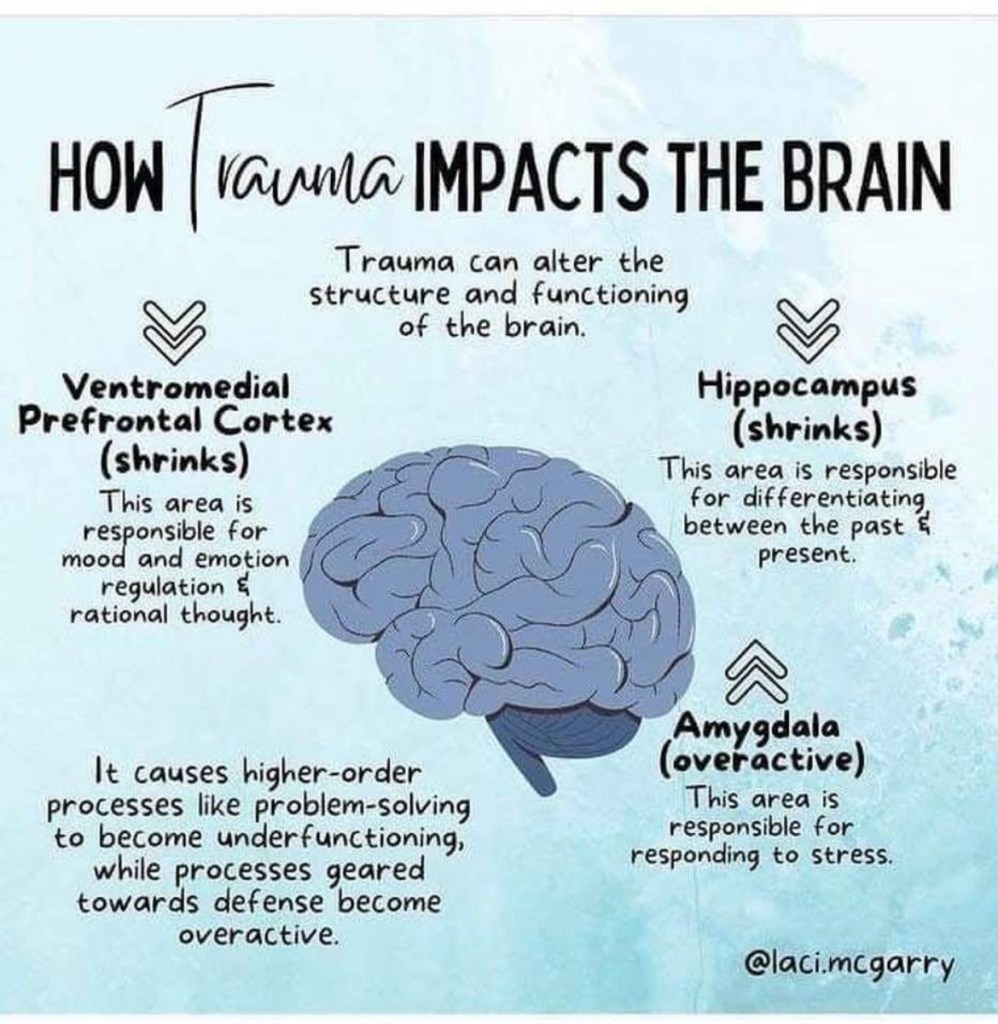
We have talked about the Emotional Hijack and how trauma impacts the brain in this episode.

We’ve also referenced the vagus nerve, but not specifically Polyvagal Theory—but today, we’re going deeper. Instead of seeing your stress responses as “malfunctions,” it reframes them as adaptive survival strategies. Your nervous system isn’t betraying you—it’s trying to protect you. It’s just working off old wiring.

Think of it like this:

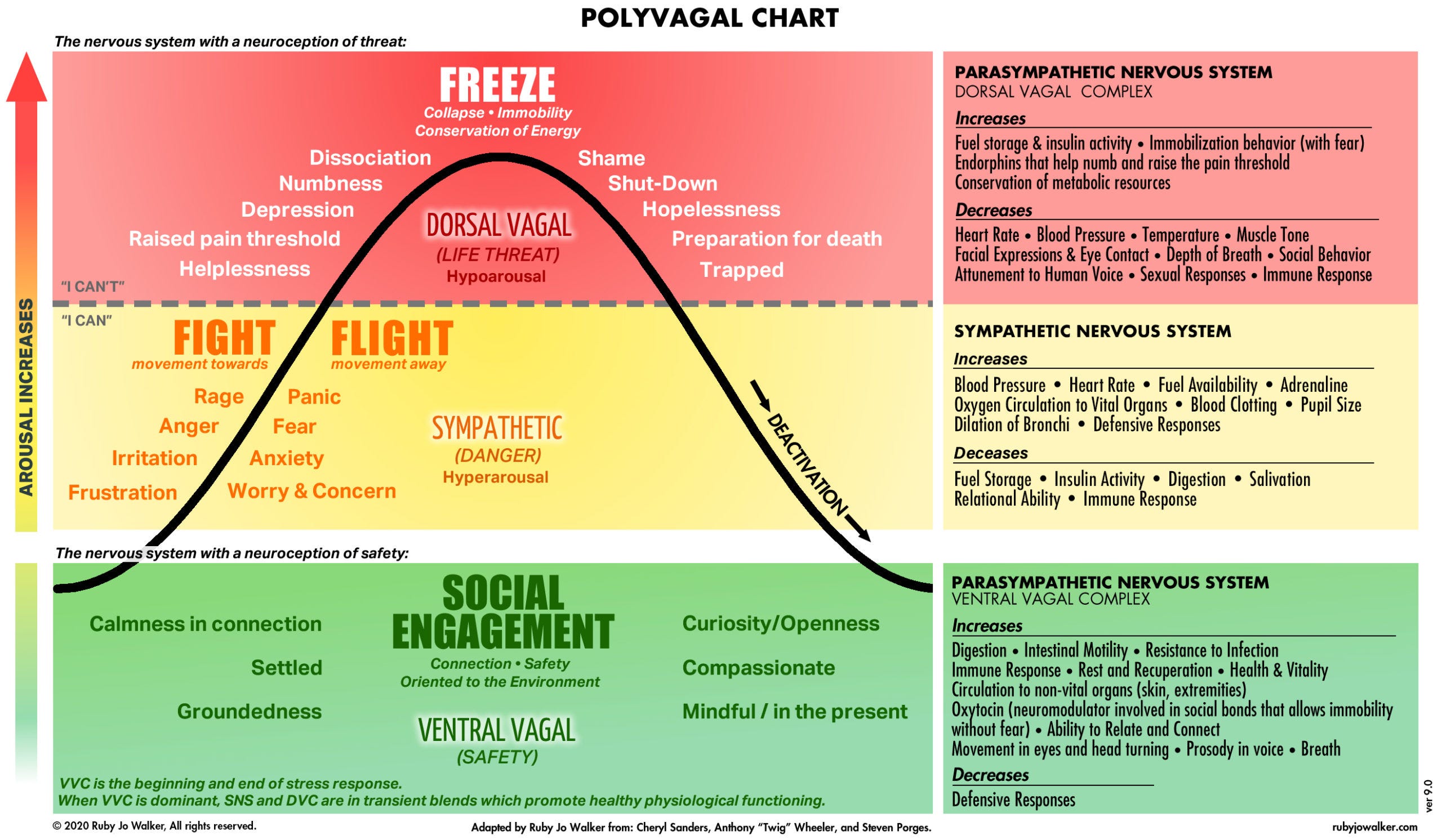
Your nervous system is constantly scanning for cues of safety or threat—this is called neuroception. And based on what it detects, your body shifts into different states—each with a biological purpose.

The Polyvagal Chart breaks this down into three major states:

1. 🟢 Ventral Vagal – Social Engagement (Safety)

This is your “rest-and-connect” zone. You feel grounded, calm, curious, and open. You can be present with yourself and with others. Your body prioritizes digestion, immune function, and bonding hormones like oxytocin. You’re regulated.

This is the state we’re meant to live in most of the time—but trauma, chronic stress, or inconsistent caregiving can knock us out of it.

2. 🟡 Sympathetic – Fight or Flight (Danger)

When your system detects danger, it flips into high alert. Blood rushes to your limbs, your heart races, your digestion shuts down. You either fight (rage, irritation) or flee (anxiety, panic). This is survival mode. It’s not rational—it’s reactive.

And if that still doesn’t resolve the threat?

3. 🔴 Dorsal Vagal – Freeze (Life Threat)

This is the deepest shutdown. Your system says: “This is too much. I can’t.” You go numb. You collapse. You may dissociate, feel hopeless, or emotionally flatline. It’s not weakness—it’s your nervous system pulling the emergency brake to conserve energy and protect you.

Here’s what’s crucial to understand: these responses aren’t choices. They’re biological defaults. And many of us are stuck in loops of fight, flight, or freeze because our systems never got a chance to complete the stress cycle and return to safety.

So instead of shaming yourself for overreacting or shutting down, what if you asked:

“What is my nervous system trying to do for me right now?”
“What does it need to feel safe again?”

That shift—from judgment to curiosity—is the beginning of healing.

And we’ll connect this to another major thread—attachment systems, which we haven’t unpacked in depth yet, but absolutely need to.

Your attachment system is the biological and psychological mechanism that drives you to seek safety, closeness, and emotional connection—especially when you’re under stress. It develops in early childhood through repeated interactions with your caregivers, shaping how you regulate your emotions, perceive threats, and relate to others. If those caregivers were emotionally attuned, predictable, and responsive, you likely formed a secure attachment. But if they were inconsistent, neglectful, controlling, or chaotic… your attachment system learned to adapt in ways that may have kept you safe then—but cost you connection now.

In The Happiness Hypothesis, Jonathan Haidt points to a disturbing moment in psychological history that disrupted the natural development of secure attachment: the rise of behaviorism in the early 20th century.

John B. Watson, a founding figure of behaviorism, famously applied the same rigid, mechanistic principles he used on rats to raising human children. In his 1928 bestseller The Psychological Care of Infant and Child, he urged parents not to kiss their children, not to comfort them when they cried, and to withhold affection—believing emotional bonding would produce weak, dependent adults.

By the mid-20th century, attachment theory began to challenge these behaviorist claims. John Bowlby, in the 1950s, argued that infants form emotional bonds with caregivers as an innate survival mechanism—not merely as conditioned responses to rewards, as behaviorism suggested. His work, drawing from ethology, psychoanalysis, and control systems theory, moved beyond behaviorism’s narrow stimulus-response framework. Mary Ainsworth’s empirical research in the 1960s and ’70s, through her Strange Situation study, confirmed that attachment styles stem from caregiver sensitivity and infant security needs, rather than simple conditioning.

Yet, ironically, during the 1970s and ’80s, Christian parenting teachings—particularly those popularized by figures like Dobson—adopted and amplified the very behaviorist ideas that attachment research was already disproving. These teachings emphasized strict discipline and emotional control, often citing Scripture to justify practices rooted in outdated psychological theories rather than theology.

Let that sink in.

For decades, dominant parenting advice discouraged emotional responsiveness, treating affection not as a necessity but as a liability.

This wasn’t just bad advice—it was the psychological equivalent of nutritional starvation. Instead of missing vitamins, children missed attunement, safety, and connection. As attachment research has since shown, those early emotional experiences shape nervous system development, stress regulation, and whether someone grows up trusting or fearing closeness.

So, when we talk about stress responses like fawning… or chronic over-functioning… or emotional dysregulation… we’re often seeing the adult expression of a nervous system that never learned what safety feels like in the presence of other people.

And that’s why today’s conversation matters. Because healing isn’t just about rewiring thought patterns. It’s about rebuilding your felt sense of safety—in your body, in your relationships, and in your life.

And if you are anything like me and have found yourself wondering… why your nervous system reacts the way it does… or why regulating your emotions feels impossible even when you “know better” … this episode will connect the dots in ways that are both validating and eye-opening.

We’re talking trauma, identity, neuroplasticity, stress, survival, and what it really means to come home to yourself.

The topics we explore:

  • The critical differences between PTSD and Complex PTSD — and how each impacts the brain and body
  • Why CPTSD isn’t just a fear response, but a full-body survival adaptation that reshapes your identity
  • What it means to heal “from the bottom up,” and why insight alone isn’t enough
  • How books and language can validate our experience — without replacing the need for somatic work
  • The push-pull of relational safety: why CPTSD makes connection feel risky, even when we crave it
  • How trauma affects the Default Mode Network, and why healing often feels like rediscovering who you are

Whether you’re navigating relational triggers, spiritual disorientation, or the long road of recovery, this conversation offers clarity, compassion, and a grounded path forward.

Please enjoy the interview!

Subscribe now on Substack!

LINKS:

Check out Cody’s work! About – The Mind, Brain, Body Digest

The Top 5 Childhood Core Wounds in Overachievers 🧠

No Bad Parts | IFS Institute | Schwartz

Transcending Trauma Healing Complex PTSD with Internal Family Systems Therapy

Untangling the Threads of Chronic Pain, Trauma, and Healing

How Emotional Trauma Contributes to Chronic Pain

If you had asked me a year ago why my body hurt so much—why my hips ached, my calves tightened with every step, or why even walking on the treadmill felt like a chore—I would have said it was from overtraining or poor posture. What I couldn’t articulate then was that my pain wasn’t just physical. It was a complex dance involving my nervous system, my fascia, and my body’s attempt to protect itself after years of unresolved trauma.

Our nervous system plays a fundamental role in chronic pain. When we experience physical or emotional trauma, our body reacts by creating a heightened state of alertness. Over time, these experiences are encoded in the nervous system as neurotags—clusters of physical, emotional, and cognitive memories that influence how we react to stress and pain. Chronic pain, I’ve learned, is often an echo of this activation. It’s not just about tight muscles or structural imbalances—it’s a survival mechanism trying to make sense of and respond to past trauma.

This is the story of how I’ve started to untangle it all, and how chronic pain, emotional wounds, and trauma are all intricately tied together in ways I never imagined.

The Connection Between Chronic Pain and Trauma

For years, I treated my body like a machine. During my bodybuilding days, I pushed through discomfort, ignored signs of overtraining, and celebrated soreness as a badge of honor. But what I didn’t understand then was how my nervous system was quietly keeping score.

Chronic pain, I’ve learned, isn’t just about tight muscles or structural imbalances—it’s a survival strategy. When we experience trauma, whether from overtraining, stress, or emotional wounds, our nervous system can get stuck in a heightened state of alertness. It’s like a smoke alarm that keeps going off, long after the fire has been extinguished.

Fascia, the connective tissue that surrounds every muscle and organ in our body, plays a fascinating role in this process. Fascia isn’t just structural—it’s sensory. It’s packed with nerve endings that communicate directly with the brain. When the body perceives danger (even subconsciously), the fascia can tighten, creating patterns of tension that mirror emotional or physical trauma. In my case, that tension showed up in my psoas muscles, my calves, and my lower back—all areas associated with safety and movement.

The more I explored these connections, the more I began to see that pain wasn’t random—it was a message from my body. And it was asking me to listen.


The Power of Neurotags: How Pain and Trauma Intersect

One of the most eye-opening concepts I’ve come across in my journey is the idea of neurotags—a term used to describe the brain’s way of organizing and processing sensory, emotional, and cognitive information. Neurotags are like maps of experiences that are built over time, creating an interconnected network of physical sensations, emotions, and thoughts that work together to form a response to stimuli.

Here’s the kicker: Chronic pain is often stored in these neurotags. When trauma occurs—whether physical, emotional, or psychological—it gets encoded in the nervous system as a pattern. These patterns are not just about the physical experience of pain, but also the emotions and thoughts tied to that experience.

When trauma is stored in the nervous system, it doesn’t just affect how we feel physically; it affects our entire emotional and cognitive landscape. For example, someone who has experienced physical trauma may also experience emotional flashbacks or cognitive distortions that are linked to that experience. These flashbacks are like sudden replays of past trauma, but they don’t just exist in the mind—they can show up physically in the body.


Neurotags, Emotional Flashbacks, and Chronic Pain

Think about it this way: When we experience a traumatic event, our nervous system reacts by encoding that event into a neurotag. This neurotag includes not only the physical sensations (like tightness, pain, or discomfort), but also the emotions (fear, anger, sadness) and cognitive patterns (thoughts like “I am unsafe” or “I am weak”).

Emotional flashbacks happen when the brain reactivates these neurotags, causing the body to respond as if the trauma is happening again. This is why someone with chronic pain may experience intense emotions that seem disproportionate to the physical sensations they’re feeling. The pain can trigger a flashback—a sudden, overwhelming re-experience of trauma that isn’t just mental but is felt deeply in the body.

In my case, the tension I experienced in my hips and lower back was a reflection of both the physical trauma of overtraining and the emotional trauma I had internalized from years of pushing myself too hard and ignoring my body’s signals. When my nervous system encountered stress, it activated these neurotags, making the tension and pain feel more intense and more pervasive. The more I resisted this pain or ignored the emotional connection to it, the worse it became.


How I’m Healing: Creating New Neurotags and Engaging the Vagus Nerve

Understanding neurotags has been revolutionary in how I approach my healing process. The key to healing, I’ve learned, is not simply “fixing” the physical pain but reprogramming the neurotags. This involves creating new patterns that support healing, safety, and relaxation.

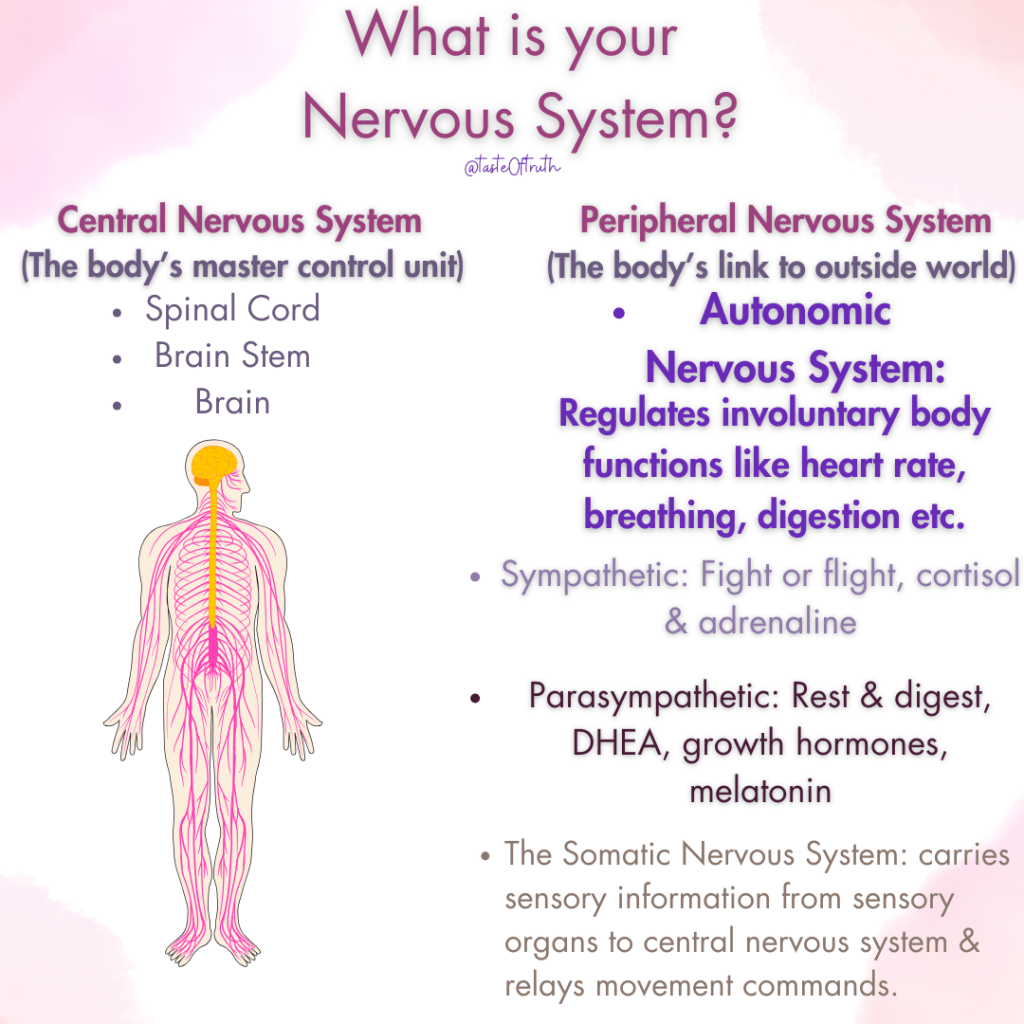
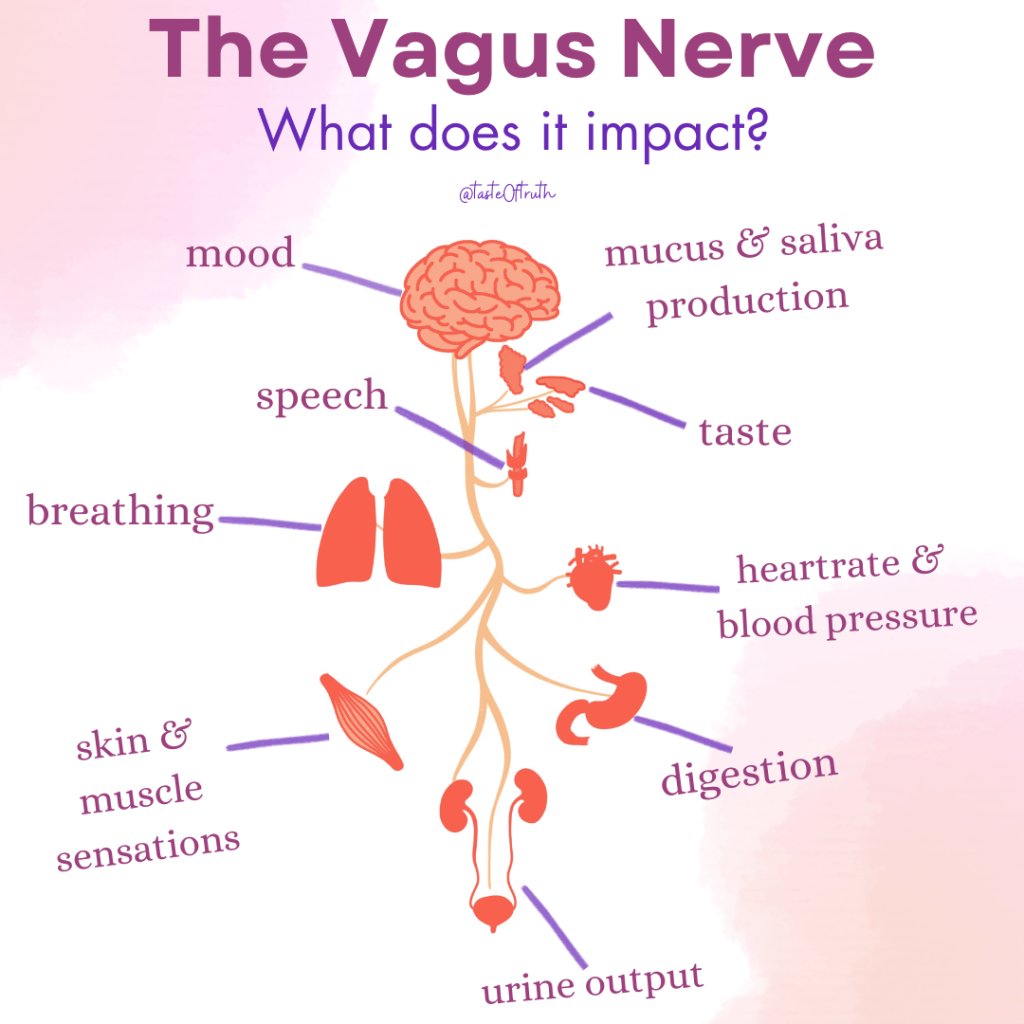
One powerful way I’m rewiring my nervous system is by engaging the vagus nerve, the longest cranial nerve that plays a critical role in regulating the parasympathetic nervous system. The vagus nerve is like the body’s “brakes,” helping to turn off the fight-or-flight response and return the body to a state of calm. When activated, it encourages relaxation, emotional regulation, and recovery—exactly what my body needs as I untangle the tension stored in my fascia and nervous system.

Here’s how I’m starting to rewire my system:

Reconnecting with Joyful Movement:
I’ve reintroduced activities that make me feel alive, like walking in the garden or playing with my pets. These moments remind me that movement isn’t just about strength—it’s about freedom. By incorporating joyful, non-stressful activities, I’m helping to reinforce new neurotags that associate movement with pleasure and ease.

Reclaiming Safety Through Movement:
Instead of high-intensity workouts, I’ve shifted to gentle, functional exercises that strengthen my core and glutes while supporting my nervous system. Slow, mindful movements like glute bridges, bird dogs, and pelvic tilts have become my new best friends. These exercises not only build strength but signal to my nervous system that it’s safe to move.

Releasing Fascia with Love:
I’ve embraced somatic practices like gentle rocking, diaphragmatic breathing, and fascia-focused stretches to help release tension. These practices aren’t just physical—they’re a way of telling my body, “You’re safe now.” They help reprogram the neurotags associated with stress and trauma by sending a message of relaxation and calm.

Vagus Nerve Activation:
To support my nervous system’s recovery, I’ve incorporated practices that stimulate the vagus nerve, such as slow, deep belly breathing and humming. Breathing deeply into my diaphragm (focusing on long exhales) has been especially helpful in calming my body and signaling to my nervous system that it’s okay to relax. By consciously engaging my vagus nerve, I’m helping shift from the fight-or-flight response into a restorative state.

Rewriting Emotional Patterns:
Rewiring my nervous system also means rewriting my emotional patterns. This involves acknowledging the emotional flashbacks that arise when pain triggers old neurotags and consciously choosing to respond with compassion and self-care. Instead of reacting with fear or frustration, I’m learning to pause, breathe, and remind myself that I’m safe now.

What Chronic Pain Has Taught Me

Chronic pain has been a tough teacher, but it’s taught me lessons I wouldn’t trade for anything:

  • Your body is always on your side. Pain is a signal, not a punishment.
  • Healing isn’t linear. Some days, progress looks like resting instead of pushing.
  • Movement is medicine, but only when done with intention and love.

I share this journey because I know I’m not alone. So many of us carry the weight of trauma—both emotional and physical—in our bodies. And while the road to healing isn’t easy, it’s worth it.

If you’re navigating chronic pain, I want you to know this: Your body isn’t broken, and you don’t have to fight it. With the right tools, patience, and self-compassion, you can create safety, release tension, and rediscover the joy of movement.

I’m still on this journey, and I’d love to hear about yours. What has chronic pain taught you? How are you learning to trust your body again? Let’s keep this conversation going—because healing happens when we feel safe enough to share.

Mastering Stress Management for a Balanced Life

Let’s talk about stress, baby! The holiday season is here, and so is the pressure—family obligations, shopping, cooking, and don’t even get me started on the aftermath of an election year. It feels like stress is at an all-time high, right? But guess what? It doesn’t have to wreck your health goals or derail your progress in 2025.

Forget extreme diets, gimmicky regimens, and complicated rules. In 2025, we’re mastering the basics and building a lifestyle that lasts. The key to handling the chaos of life, including holiday stress and beyond, is learning how to manage it effectively. That’s where stress management fits into the 365 Easy Challenge—your simple, sustainable plan for the new year.

Stress is the silent killer of self-control and health. It doesn’t just disrupt your mind—it messes with your body, too. And when stress builds up, it pulls your energy away from what matters most: your health, your relationships, and your goals. That’s why stress management isn’t just about “chill vibes”—it’s about learning to recognize, manage, and even reframe how we handle stress.

2025 is the year we crush the basics—here’s how to make stress a manageable part of your journey, not a roadblock.


What Is Stress, Really?

Stress is your body’s natural response to change. Whether it’s positive (like getting married or landing a new job) or negative (like losing a loved one or dealing with financial pressure), your body reacts in a similar way. Your nervous system goes into high gear, releasing hormones like adrenaline and cortisol to help you react to the situation.

At a basic level, stress is a mechanism for survival—your body prepares to fight or flee from danger. But in today’s world, the “danger” is more likely to be a heavy workload, relationship problems, or feeling overwhelmed by societal issues. It’s no longer a saber-toothed tiger lurking around the corner, but your body responds with the same intense, sometimes overwhelming, force.


The Stress Response: Fight or Flight, or Freeze?

When stress triggers your fight-or-flight system, your body shifts into survival mode. This state is designed for short bursts of energy—like running away from danger or facing an immediate threat. However, in today’s world, this system is often activated for prolonged periods, even when the “danger” isn’t physical but emotional or mental.

This prolonged state of stress can lead to:

  • Chronic inflammation: Your immune system is on constant alert, which can cause inflammation in your body. Over time, chronic inflammation is linked to conditions like heart disease, diabetes, and autoimmune disorders.
  • Cortisol imbalances: Cortisol is your body’s primary stress hormone. It’s helpful in small amounts, but if cortisol levels stay elevated for too long, it can affect your metabolism, immune function, and even your mood.
  • Digestive issues: Chronic stress slows down digestion, leading to issues like bloating, indigestion, and constipation. Your body diverts energy away from digestion to focus on “surviving,” which means your gut doesn’t get the attention it needs. Check out this post for more!
  • Sleep disturbances: Stress can interfere with your sleep cycle, either by making it difficult to fall asleep or by causing you to wake up in the middle of the night. Inadequate sleep further exacerbates stress, creating a vicious cycle.

We dive deep into the cycles of stress and their impact on the body here–>Unraveling the Impact of Stress on Chronic Health with Theresa Piela-In this powerful episode, I sit down with holistic healing expert Theresa Piela to explore the deep connection between chronic stress and health.


The Chronic Stress Cascade: How Your Body Reacts Over Time

When stress becomes chronic, your body begins to break down. This is where it gets tricky. Initially, stress is adaptive—it helps you meet deadlines, take care of important matters, or perform in high-stakes situations. But when stress persists without relief, your body’s systems start to degrade. Here’s what can happen over time:

  1. The Brain’s Reaction: Your brain uses a part called the hypothalamus to detect stress. The hypothalamus signals the pituitary gland to release ACTH (adrenocorticotropic hormone), which triggers the adrenal glands to produce cortisol. This is your body’s way of priming itself for action. But when cortisol levels remain elevated, it can impair cognitive function, causing issues with memory, focus, and decision-making.
  2. Metabolic and Hormonal Disruptions: Prolonged stress can disrupt your body’s metabolic rate and hormonal balance. Elevated cortisol levels encourage your body to store fat, particularly around the abdominal area, leading to weight gain. It also suppresses the production of thyroid hormones, slowing down your metabolism and making it harder to lose weight.
  3. Impact on Digestion: Under stress, the digestive system gets “shut down” as blood is redirected to muscles and the brain. This leads to slower digestion, poor nutrient absorption, and can worsen symptoms like bloating, constipation, or acid reflux. Over time, these digestive issues can lead to more serious conditions like irritable bowel syndrome (IBS) or leaky gut syndrome.
  4. Sleep and Recovery: The relationship between stress and sleep is a two-way street. High cortisol levels can make it difficult to fall asleep, and poor sleep further heightens stress. Sleep is a critical time for recovery and repair, and without it, your body cannot recover from the physical or mental toll of stress.

Stress Triggers: What’s Really Affecting You?

Now that we understand how stress works, let’s take a deeper look at the factors that are increasing your stress levels. In today’s fast-paced world, many of us are chronically stressed without even realizing it. Some of the most common stress triggers include:

  • Work: The pressure to perform, meet deadlines, and juggle multiple tasks can create a constant state of stress. Add in the current economic uncertainty, and the pressure can skyrocket.
  • Family and Social Expectations: From holiday gatherings to social media pressures, the weight of fulfilling expectations can cause significant stress. Feeling obligated to meet everyone’s needs can drain your mental and emotional reserves.
  • Politics and Global Events: In an election year, especially with heightened tensions and divided opinions, political issues can contribute to a constant feeling of unease and anxiety.
  • Financial Strain: Worrying about money, whether it’s paying bills, managing debt, or planning for the future, is a significant stressor for many people.

Managing Stress: Key Educational Insights for a Healthier Life

While stress is inevitable, there are clear strategies you can adopt to keep it from sabotaging your health. Let’s break down effective stress management into actionable steps.

1. Reframe Your Perception of Stress

Research shows that how you perceive stress matters. When you view stress as something that harms you, your body responds in a negative way. However, when you view stress as a challenge—something to overcome—it actually helps improve your body’s response. It’s not about eliminating stress, but rather about adjusting your mindset.

2. Practice Mindful Stress Reduction

Mindfulness techniques, such as meditation, deep breathing, or progressive muscle relaxation, can help lower your stress levels by activating your parasympathetic nervous system. This is the “rest and digest” system, which counters the “fight or flight” response. Even just 5–10 minutes a day can significantly lower your stress levels.

3. Physical Activity as a Stress Reliever

Exercise is one of the best ways to manage stress. When you engage in physical activity, your body releases endorphins—those “feel-good” chemicals that elevate mood and decrease stress. It doesn’t have to be an intense workout; even a walk, yoga session, or light stretching can help.

4. Nutrition and Hydration: Fueling Your Stress Management

Adequate nutrition and hydration are crucial for your body to handle stress. Dehydration can make you feel more stressed, and poor nutrition can exacerbate your body’s physical stress responses. Eating a balanced diet, with plenty of protein, healthy fats, and fiber, helps maintain stable blood sugar levels and keeps your hormones balanced.

5. Sleep Hygiene: Prioritize Rest

As mentioned earlier, sleep is foundational to stress management. Without quality sleep, your body doesn’t have the opportunity to repair itself. Implementing good sleep hygiene practices—such as avoiding blue light before bed, keeping a regular sleep schedule, and creating a restful environment—will help you get the restorative rest you need.


Conclusion: Stress is Manageable, Not Inevitable

The bottom line is that stress doesn’t have to control your life. By understanding the science behind it, recognizing your triggers, and taking proactive steps to manage it, you can reduce its harmful impact on your health.

As you embark on the 365 Easy Challenge for 2025, managing stress is one of the foundational steps toward living a balanced, sustainable life. Focus on building resilience and consistency, and remember: stress is a challenge you can conquer, not something to fear.

By addressing stress and its impact head-on, you’ll create a lifestyle that nurtures your health, happiness, and long-term success.

Stay calm, stay consistent, and take control of your stress in 2025. You’ve got this! 💪✨

Check out previous blog posts or podcast episodes for more insights on stress!

🔥 365 Easy Challenge: MASTER THE BASICS for 2025 🔥

Forget extreme diets, gimmicky regimens, and complicated rules. 2025 is the year we master the basics and build a lifestyle that actually lasts. All you need? A simple plan, a sprinkle of consistency, and a whole lotta patience. Here are the 6 core habits you’ll need to crush 2025:

1. Brain Reframe 🧠
Your body doesn’t need a “reset” — your brain does! Shift the focus to what you’re adding, not subtracting. More protein, more fruits & veggies, more movement. It’s all about progress, not perfection.

2. Stress Management (and your mindset around stress) 😤
Stress is the silent killer of self-control and health. Managing stress isn’t just about chill vibes, it’s about understanding your stress and handling it like the boss you are.

3. Sleep Consistently 😴
The most underrated (yet most important) aspect of health? SLEEP. If you’re aiming for aesthetic goals, consistent sleep should be at the top of your priority list.

4. Digestive Health 🥦
Your body doesn’t thrive off what you eat, but off what you can digest and absorb. So, let’s get those healthy poops on track and optimize your digestion for real transformation.

5. Adequate Nutrition 🍏
Under-eating doesn’t get you anywhere good. Let’s focus on fueling your metabolism, building muscle, and living your life — so when the time comes for fat loss, it’s smoother and healthier than ever.

6. Gratitude Practice 🙏
Meditation, prayer, and focusing on gratitude are more than just buzzwords. Science shows they can actually help you stay on track with your diet and exercise goals. Yes, really!


💥 The First Step: Awareness 💥

Before you can make any changes, you’ve got to know what needs changing. You can’t improve what you don’t know needs improvement. Motivation? It’s a tricky beast. And we’ll talk more about that in an upcoming podcast episode (stay tuned!) where we’ll get into intrinsic vs. extrinsic motivation and why neither is enough on its own.

But here’s the TL;DR: Motivation is a lot like a campfire. You have to keep stoking the fire to keep it burning. Don’t wait for external motivation to light you up — take control!


The REAL Problem: Unrealistic Goals 🚫

Challenges like 75 Hard or Whole 30 aren’t the issue. It’s the unrealistic expectations that trip us up. Discipline isn’t about being lazy; it’s about setting goals that actually fit your life and personality. Instead of following what others are doing, ask yourself: What do I need?

Let’s be real: consistency and routine are the game-changers. They build habits, and habits lead to long-lasting results. So let’s ditch the all-or-nothing mentality and start building a routine that works for YOU.


Let’s be clear: Motivation is unreliable. We need to normalize the idea that motivation doesn’t last forever. The secret is: keep the fire alive and keep working on your goals, even when motivation flickers.

As a personal trainer, I’d tailor every plan to fit each person’s season of life — newly married, starting a new job, planning for a baby — because that’s how real results happen. It’s about what works for YOU.

So, let’s leave the restrictive diets and quick fixes behind and focus on mastering the basics for 2025. Who’s in?


Ready to start your journey? Let’s get it, 365 Easy Challenge style! 🔥

Understanding the Impact of Diet on Thyroid Health

When clients come to me saying they have a “slow metabolism” or a “broken” metabolism, often they think they need to eat even less or cut carbs to jumpstart weight loss. But let me flip the script: in many cases, it’s actually chronic under-eating and restrictive dieting that’s slowing down their metabolism. Chronic dieting, especially with very low calories, can lead to impaired thyroid function and ultimately disrupt how the body uses energy. Here’s how it happens and what you can do to restore balance.


What is the Thyroid and Why Does It Matter?

Your thyroid is a small gland in your neck that plays a massive role in regulating your body’s metabolism. Often called the “controller” of metabolic function, the thyroid works closely with the hypothalamus and pituitary glands in the brain to maintain your metabolic rate. This system allows your body to increase or decrease energy production based on its needs, influencing everything from how you process food to your body temperature.

The thyroid primarily produces two hormones:

  • T3 (Triiodothyronine) – the active hormone that your cells use.
  • T4 (Thyroxine) – the inactive hormone that must be converted into T3 before your body can use it.

The production and conversion of these hormones depend on a feedback loop that begins with TSH (Thyroid Stimulating Hormone), which signals the thyroid to produce and release T4. But when the body is stressed—especially due to chronic under-eating or extreme calorie restriction—this whole process can become disrupted.

How Chronic Dieting Wrecks Your Thyroid

Under-eating is a significant source of stress for the body. Dieting or calorie restriction triggers the HPA axis (Hypothalamic-Pituitary-Adrenal axis), leading to an increase in CRH (Corticotropin-Releasing Hormone) and cortisol, our primary stress hormone. High cortisol levels can interfere with thyroid function in the following ways:

  • Reduces TSH Production: Elevated cortisol inhibits TSH, lowering T4 production and decreasing the amount of thyroid hormone available for energy use.
  • Impairs T4-to-T3 Conversion: Chronic stress slows down the conversion of T4 (inactive) into T3 (active), reducing your body’s energy production.
  • Increases rT3 Levels: Instead of converting into T3, some T4 becomes reverse T3 (rT3), a hormone that blocks T3 from being used. This, in turn, reduces the sensitivity of your cells to thyroid hormones, further lowering metabolic function.

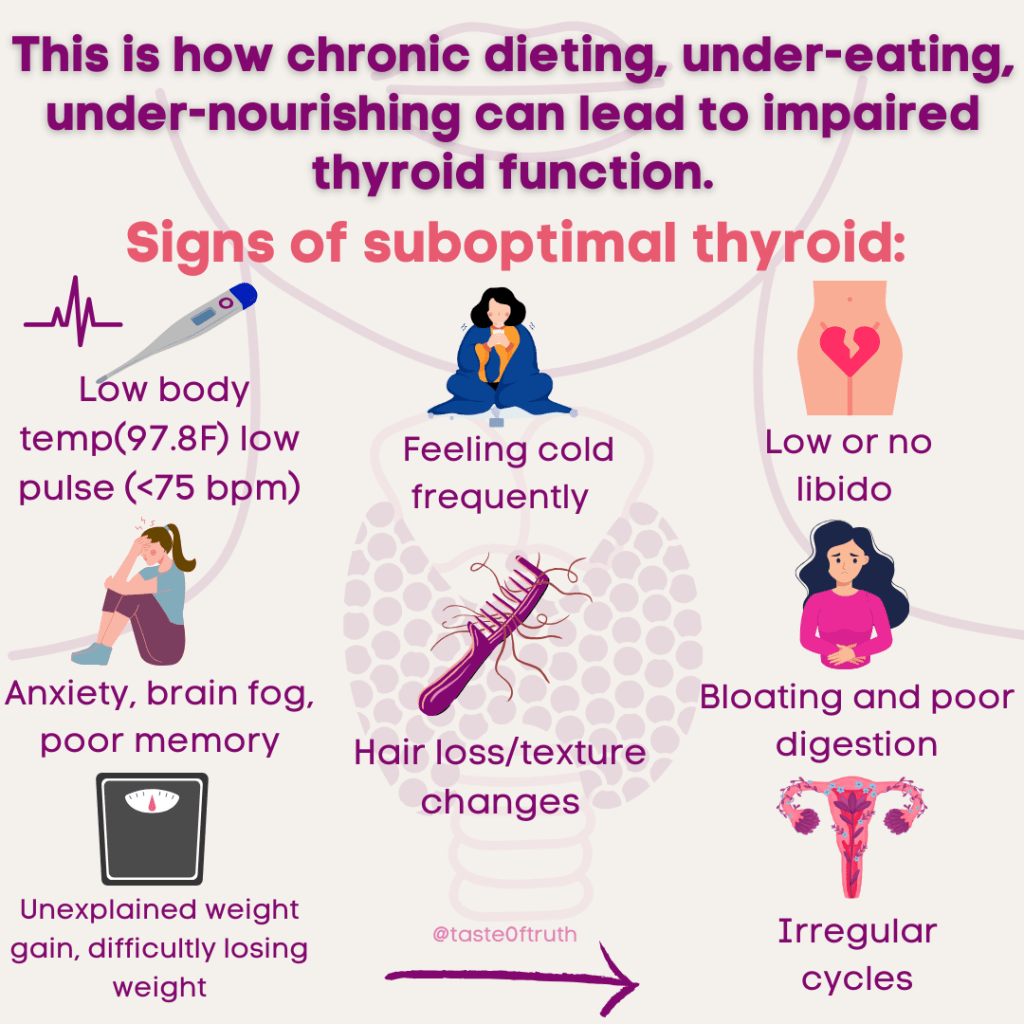
This is why individuals who chronically under-eat or yo-yo diet often experience symptoms of hypothyroidism, even without an official diagnosis.


Symptoms of Suboptimal Thyroid Function

If your thyroid isn’t functioning optimally, you may notice some of the following symptoms:

  • Low body temperature (below 97.8°F)
  • Frequent feelings of cold, regardless of weather
  • Low or no libido
  • Anxiety, brain fog, or poor memory
  • Unexplained weight gain or difficulty losing weight
  • Bloating, poor digestion
  • Changes in hair texture or hair loss

Many clients experiencing these symptoms have been stuck in a calorie-deficit mindset for years, keeping their bodies in a constant state of stress. As a result, they’re often dealing with adrenal dysfunction, hypothyroidism, or even reproductive health issues, like extreme PMS, cycle loss, or low testosterone.


Restoring Your Thyroid Health—The First Steps

To begin improving thyroid health, our initial goal is to support both psychological and physiological balance, moving away from restrictive dieting and focusing on nourishment. Here’s a breakdown of the steps:

  1. Stabilize Blood Sugar: Balanced blood sugar supports thyroid health and reduces stress on the body.
  2. Maximize Nutrient Density: Prioritize whole, nutrient-rich foods to ensure your body receives adequate vitamins and minerals, especially selenium, zinc, and iodine, which are crucial for thyroid function.
  3. Reduce Inflammation: Chronic inflammation can further stress the thyroid. Anti-inflammatory foods and lifestyle practices can help.
  4. Incorporate Breathwork: Simple breathwork techniques can stimulate the vagus nerve, helping to regulate the HPA axis and reduce stress.
  5. Avoid Dietary Triggers: Reduce foods that promote “leaky gut,” such as highly processed foods, sugar, and gluten, if sensitive. This protects your immune and thyroid health.
  6. Manage Stress Proactively: Yoga, meditation, journaling, or spending time in nature can help keep cortisol in check.
  7. Reduce Toxins and Pollutants: Environmental toxins can interfere with hormone health, so minimizing exposure can be a powerful step.
  8. Prioritize Rest and Sleep: Quality sleep allows the body to recover and reset, which is essential for thyroid health.

The Bottom Line

Restrictive dieting isn’t the solution to a slow metabolism; it’s often the root cause. Chronic under-eating can lead to imbalances in your thyroid and adrenal glands, ultimately slowing down your metabolic rate and making it harder to achieve your fitness goals. Rebuilding a balanced, nourished body will not only help you feel better but will also lay the foundation for sustainable health.

This week, we’re talking all things thyroid health, and this post breaks down why breaking free from the dietary dogma of diet culture is crucial! Ever feel like your energy’s tanked, your minds in a fog, or your metabolism’s stuck in slow motion? 🧠✨ You’re not alone, and it could be your thyroid talking.

On this week’s Taste of Truth Tuesdays, we’re joined by Nicole, a holistic health advocate who’s here to shed light on how diet culture’s obsession with restriction can wreak havoc on your thyroid. From her own experience facing an autoimmune diagnosis to her advocacy for individualized nutrition, Nicole breaks down how restrictive dieting not only slows your metabolism but also impacts hormone balance, brain clarity, and overall well-being. Join us to learn how making friends with food (yes, even carbs!) might be the best way to support your thyroid and reclaim your energy.

Ways to support your body during stress

Feeling stressed? 😩 Chronic stress can drain your energy, disrupt your sleep, and even increase the risk of serious health issues like cancer. This week on the podcast, we are diving deep into how stress impacts your body—and sharing real tips to fight back! 👊🏼 💥

In this powerful episode, I sit down with holistic healing expert Theresa Piela, @livingrootswellness to explore the deep connection between chronic stress and health. Theresa shares her personal story of hitting rock bottom in 2019, when chronic illness nearly led to organ failure. We dive into the guilt and exhaustion that comes with being chronically ill in a toxic world, and how healing techniques like Emotional Freedom Techniques (EFT) tapping can offer relief. 🌱✨

The Impact of Stress on the Body

Understanding Stress: Theresa breaks down the three stages of stress and how they manifest in our daily lives, leading to digestive issues and chronic illnesses. She sheds light on the silent havoc that prolonged stress wreaks on our gut health and overall bodily functions. Please review our earlier blog for more details!

Fuel & Nutrition: Supporting Your Body’s Adaptive Stress Response

Just as important as shifting your mindset is fueling your body with the right nutrients. A starved or inflamed system will struggle to adapt to stress, especially when trying to balance internal chaos. Proper nutrition is key to supporting the body’s stress response.

When the body isn’t fueled properly, persistent stress leads to harmful effects, such as blood sugar swings, hormonal dysregulation, and weakened immunity. To counteract this, we need to provide the body with the building blocks it needs to recover.

Here’s a high-level look at what your body requires for optimal function:

  • Proteins: Anti-inflammatory sources like grass-fed beef, broths, shellfish, and dairy.
  • Carbohydrates: Glucose and fructose from fruits, honey, maple syrup, and root vegetables.
  • Fats: Saturated fats are essential.
  • Vitamins & Minerals: Vitamin C, D, E, B1, B6, B12, calcium, magnesium, copper, sodium, potassium, selenium, and zinc.

I wanted to expand a BIT MORE on nutritional tips we may or may not have mentioned in this week’s discussion that are for sure helpful along your healing journey!

1️⃣Adrenal Elixirs-It’s a combination of sodium, potassium, and vitamin C—a perfect blend for your adrenals. Click here for recipes!

2️⃣Magnesium: During stressful times, your body burns through magnesium faster! Supplementing orally and using topical magnesium is helpful all the time, & increasing during times of stress can avoid future deficiency. Click here for a guide to Magnesium supplements!

3️⃣Boosting mineral-rich foods: Coconut water-rich in potassium. Potatoes, squash, fruit—also rich in
potassium, Brewer’s yeast-rich in potassium, B vitamins, and many more nutrients (if you can handle the taste!) Cacao powder-rich in magnesium, Citrus & vitamin C rich foods-support adrenals and copper balance.

4️⃣Consistent timing for meals & snacks with proteins carbs and fats to help support blood sugar. Meal tips here!

5️⃣Prioritize Daily Routines with your non-negotiables like: Reading, meditation, walks, eating, movement, winding down time. Stay consistent! Research shows that it can take anywhere from 18 to 254 days for someone to form a new habit. Let’s talk more about morning and bedtime routines!

Morning Routine:

☀️ Morning person or not, having a set routine can be beneficial. First, a good morning starts the night before-am I right? Be sure to prioritize getting to bed at a decent time to support incorporating the new routine. ⏰ A great morning routine is the one that works for you. Not everyone will be able to have a lengthy routine due to time constraints or family obligations and that’s okay.

Here are some ideas:

  • Don’t pick up your phone right away: Scrolling Instagram and reading emails can wait. When you reach for your phone right after you wake up, you put yourself directly into reactive mode. This can cause you to lose focus and get stressed before you’ve even made it out of bed.
  • Making your bed takes about two minutes and it gives you a quick, easy sense of accomplishment right off the bat. Plus, it makes your room look neat and tidy even if the rest of your space is messy.
  • Eat Something Even if you’re not a big breakfast person, getting some nutrients in your body can really turn on your brain. Having a balanced meal can go a long way toward improving your mood and energy levels right off the bat. Whatever constitutes breakfast for you, just get some food into your body.
  • Do something for yourself each morning. Even if you just have five minutes, you can stretch, do a quick meditation, journal or work on a crossword puzzle while you drink your morning coffee. (Catching up on social media can also count as self care if this activity truly brings you joy. )
  • Write—or review—your daily to-do list and calendar
    Check over what’s on deck for the day so you don’t run into any surprises. You might even block off ten minutes or so to look over emails and address any messages that need to be taken care of right away. 📧

Bedtime Routine:

Sleep is consistently the most underrated aspect of any health & wellness journey. Creating & maintaining a bedtime routine is the best way to prioritize a good night’s sleep.

  • It’s best to be consistent with the time- set an alarm or notification on your phone. It will be a help signal that it’s time to unplug and start your bedtime routine.
  • The circadian rhythm regulates the body’s temperature, lowering the thermostat to 65 degrees is a good temperature for sleep. The body will adapt to the lower room temperature and you will begin to feel drowsy. Turning off or lowering bright lights can help with the process. As we know with screen time, exposure to bright lights before bedtime affects the circadian rhythm.
  • Screens from TVs, smartphones and laptops emit blue light that stimulates the body’s internal clock (circadian rhythm), keeping you buzzing long after it’s time to hibernate for the night. Sleep studies have shown that exposure to high amounts of blue light before bed can lower melatonin levels, resulting in sleeplessness and delayed REM sleep.
  • Journaling is good for mental health by reducing stress and helping you remember good ideas before sleep.
  • Using foam rolling and yoga for sleep will help relax your muscles and ground your mind before bed. They decelerate the mind and body, relieve tension and improve sleep quality.
  • Aromatherapy are used to help with stress management.
  • ❔HOW LONG should my bedtime routine be? About 30 to 60 minutes. This will give you enough time to unwind without feeling rushed.

Okay back to the final aspect of today’s post for supporting your body during stressful times:

6️⃣TOXINS – Specific chemicals called halogens (bromine, chlorine, and fluorine) compete with iodine and bind to thyroid receptors, preventing thyroid hormones from working properly. Filtering fluoride and chloride out of your drinking and bath/shower water helps those with thyroid dysfunction. More Information here

Research says about 90% of cancers are a result of a lifetime of dysfunction: stress, poor nutrition, toxin exposure, chronic hormone imbalance etc. It is estimated that it takes up to 10 years for cancer to develop in the body. Every day our environment and personal choices provide information to cells, in a constant feedback loop. Research has shown us many factors that cause cancer cell development—we can use this information to optimize our environments, nutrition, hormones, etc, create a healthy terrain, and mitigate cancer risk. The body is always responding to us, and healing is possible! One of my favorite resources is here! Leigh Erin Connealy, M.D.

In summary

Addressing intestinal permeability, blood sugar imbalances, and other stress-induced dysfunctions through proper nutrition will help rebuild resilience. For those with severe gut issues, a nutrient-dense, elimination-style diet—like carnivore plus easy-to-digest carbs—may be necessary short-term to restore balance. In the end, listening to your body is critical. Experiment with what makes you feel good, trust yourself, and remember: you know best.

By shifting your mindset and supporting your body with proper fuel, you can navigate life’s stressors with resilience and strength.

🎙️ Tune in now to learn how to take control of your stress before it takes control of you!

#TasteOfTruthTuesdays#StressRelief#EFT#BurnoutRecovery#AdrenalSupport#podcastersofinstagram#podcast#holistichealth#nutritionist#nutritiontips#stressrelief#stressmanagement#deconstruction#deconstructingfaith#healthjourney#magnesium#adrenals#thyroidhealing

Unraveling the Impact of Stress on Chronic Health with Theresa Piela

In this week’s episode, we dive into the power of Emotional Freedom Techniques (EFT) tapping — a unique blend of traditional Chinese medicine and modern psychology. By tapping on specific meridian points while addressing emotional struggles, EFT helps release energy blockages, reducing stress, anxiety, and even trauma. 🌱✨

In this powerful episode, I sit down with holistic healing expert Theresa Piela to explore the deep connection between chronic stress and health. Theresa shares her personal story of hitting rock bottom in 2019, when chronic illness nearly led to organ failure. We dive into the guilt and exhaustion that comes with being chronically ill in a toxic world, and how healing techniques like Emotional Freedom Techniques (EFT) tapping can offer relief. 🌱✨

We’ll explore how EFT has shown promising results in mental health, from lowering cortisol levels to easing PTSD symptoms in veterans. However, with its roots in spiritual and energetic practices, EFT has sparked controversy in some Christian communities. Join us as we unpack these perspectives and discuss how EFT can be a powerful tool for both emotional and physical healing.

The Impact of Stress on the Body

Understanding Stress: Theresa breaks down the three stages of stress and how they manifest in our daily lives, leading to digestive issues and chronic illnesses. She sheds light on the silent havoc that prolonged stress wreaks on our gut health and overall bodily functions.

The Three Stages of Stress and the Fawning Response: Understanding How High-Control Religions Impact Emotional Well-Being

Stress is an inevitable part of life, but how our bodies and minds respond to it can vary significantly depending on the intensity and duration of the stressor. Hans Selye, a pioneering endocrinologist, developed the General Adaptation Syndrome (GAS) to describe the body’s physiological response to stress. This model helps explain how prolonged stress affects overall health and well-being. While the three stages of stress capture the body’s core reactions, the behavioral response known as fawning—especially common among individuals who have come out of high-control environments like fundamentalist religions—adds another layer to this discussion.

The Three Stages of Stress: General Adaptation Syndrome

Selye’s General Adaptation Syndrome describes how the body responds to stress over time, detailing three distinct stages:

1. Alarm Stage

This is the initial, immediate response to a stressor. When faced with a perceived threat, the body goes into “fight or flight” mode, releasing adrenaline and cortisol. These stress hormones increase heart rate, sharpen focus, and provide a surge of energy to prepare you to either confront the threat or escape it. In modern life, this could be triggered by anything from a work deadline to an argument with a loved one.

2. Resistance Stage

If the stressor continues beyond the initial shock, the body enters the resistance stage. While the outward signs of the fight-or-flight response might fade, internally, the body is still on high alert. Stress hormones like cortisol remain elevated, and the body tries to adapt and cope. However, this stage can’t last forever. Prolonged exposure to stress at this level takes a toll on the body, potentially leading to mental and physical exhaustion.

3. Exhaustion Stage

When stress continues for a prolonged period without adequate recovery, the body eventually reaches the exhaustion stage. Here, the body’s resources are depleted, and it can no longer function normally. Symptoms such as fatigue, depression, anxiety, and even burnout may manifest. The immune system weakens, making the individual more vulnerable to illness and disease.

Understanding these stages is crucial for recognizing when stress becomes chronic and dangerous. But there’s more to the picture when considering how stress affects behavior—especially in people who have experienced trauma or high-control environments.

Enter the Fawning Response: A Behavioral Reaction to Trauma

Fawning doesn’t fit neatly into the General Adaptation Syndrome model because it’s a behavioral rather than a purely physiological response. Still, it’s crucial to understanding how certain people cope with chronic stress or trauma, particularly in interpersonal or high-control environments.

The “Four Fs” of trauma responses—Fight, Flight, Freeze, and Fawn—describe various ways people react when they feel threatened. While fighting, fleeing, or freezing are instinctive survival responses, fawning is a more subtle and less discussed way of coping, often rooted in a need to appease the threat to maintain safety.

What Is Fawning?

Fawning involves appeasing or placating others to avoid conflict or harm. People who fawn try to please or appease the person or situation causing the stress in order to de-escalate the threat. Instead of confronting the stressor (fight), avoiding it (flight), or becoming immobilized (freeze), a person who fawns seeks to reduce the danger by submitting, people-pleasing, or over-accommodating.

This behavior often develops in individuals who have experienced prolonged stress or trauma, especially in abusive, manipulative, or high-control environments like toxic relationships or fundamentalist religions.

How Fawning Fits into the General Adaptation Syndrome Model

Although fawning isn’t a stage of stress, we can still see how it might manifest within the GAS framework:

  • Alarm Stage: Fawning could be an immediate response to the initial stressor. Rather than fleeing or fighting, someone might instinctively try to placate the threat. For instance, in a high-control religion, a person might conform instantly to avoid punishment or conflict.
  • Resistance Stage: If the stress persists, fawning can become a habitual response during the resistance stage. The person continues engaging in appeasement behaviors, attempting to manage the ongoing stressor while sacrificing their own needs and well-being in the process.
  • Exhaustion Stage: Over time, relying on fawning as a coping mechanism can lead to emotional and physical exhaustion. Constantly trying to meet others’ demands, avoiding conflict, and suppressing one’s own needs results in burnout and emotional depletion.

Fawning and High-Control Religions: The Long-Lasting Impact

People who come out of high-control religions often exhibit the fawning response as they attempt to navigate new environments and relationships. These religions typically operate with strict rules, strong hierarchies, and harsh consequences for dissent. As a result, members often suppress their own needs and opinions to avoid punishment or ostracism.

Even after leaving these environments, the pattern of fawning often persists. The deeply ingrained survival mechanism of appeasing authority figures to avoid conflict becomes habitual. This behavior may manifest in various ways:

  • People-pleasing: Going out of their way to accommodate others, even at the expense of their own well-being.
  • Difficulty asserting boundaries: Struggling to say no or express personal needs and preferences, often feeling guilty for doing so.
  • Fear of conflict: Avoiding disagreements or confrontations out of fear of rejection or punishment.
  • Self-silencing: Suppressing thoughts, feelings, and opinions in order to maintain harmony and avoid disapproval.

For those deconstructing from high-control religions, the fawning response can be particularly challenging to recognize and unlearn. Many may not even realize that their behaviors are rooted in a trauma response. Helping individuals understand and break these patterns is essential for their emotional recovery.

Moving Forward: Unlearning Fawning and Rebuilding Self-Worth

Breaking the cycle of fawning involves learning to assert boundaries, rebuild self-worth, and reclaim personal autonomy. This is not an easy process, especially for those who have spent years in environments where appeasement was essential for survival. Therapy, support groups, and self-compassion can be powerful tools in helping people regain their sense of self after leaving high-control environments.

By recognizing fawning as a response to trauma and stress, individuals can begin to unlearn these behaviors, reclaim their identity, and create healthier relationships—both with others and with themselves.

Understanding stress responses, both physiological and behavioral, is key to supporting individuals who are recovering from trauma. Recognizing the fawning response and how it fits into the broader stress picture can open the door to healing for those emerging from high-control situations like fundamentalist religions.

Mindset & Thought Shifting: Changing How We React to Stress

We must first accept that stress is a normal and natural part of life. Short-term stress, when followed by ample recovery, can enhance cognition and boost our capabilities. It’s like strength training: with proper recovery, the stress we place on our muscles leads to gains. However, persistent stress, if not managed properly, can be damaging. This is why we must shift our relationship with stress.

In times of severe depletion and exhaustion, recovery takes time and commitment. Start by meeting yourself where you are. Shift your mindset by deliberately choosing thoughts that signal to your body that everything is okay. Surround yourself with calming influences—whether it’s people, sounds, colors, or landscapes—that make you feel safe and hopeful. This isn’t a luxury; it’s a requirement for healing. Equally important is removing stimuli that drain you and recognizing that your body has an incredible capacity to heal when given the right tools.

As the Dalai Lama once said, “If a problem is fixable, if a situation is such that you can do something about it, then there is no need to worry. If it’s not fixable, then there is no help in worrying. There is no benefit in worrying whatsoever.”


Fuel & Nutrition: Supporting Your Body’s Adaptive Stress Response

Just as important as shifting your mindset is fueling your body with the right nutrients. A starved or inflamed system will struggle to adapt to stress, especially when trying to balance internal chaos. Proper nutrition is key to supporting the body’s stress response.

When the body isn’t fueled properly, persistent stress leads to harmful effects, such as blood sugar swings, hormonal dysregulation, and weakened immunity. To counteract this, we need to provide the body with the building blocks it needs to recover.

Here’s a high-level look at what your body requires for optimal function:

  • Proteins: Anti-inflammatory sources like grass-fed beef, broths, shellfish, and dairy.
  • Carbohydrates: Glucose and fructose from fruits, honey, maple syrup, and root vegetables.
  • Fats: Saturated fats are essential.
  • Vitamins & Minerals: Vitamin C, D, E, B1, B6, B12, calcium, magnesium, copper, sodium, potassium, selenium, and zinc.

Addressing intestinal permeability, blood sugar imbalances, and other stress-induced dysfunctions through proper nutrition will help rebuild resilience. For those with severe gut issues, a nutrient-dense, elimination-style diet—like carnivore plus easy-to-digest carbs—may be necessary short-term to restore balance.

In the end, listening to your body is critical. Experiment with what makes you feel good, trust yourself, and remember: you know best.

By shifting your mindset and supporting your body with proper fuel, you can navigate life’s stressors with resilience and strength.

Ever wonder why stress keeps you up at night?

Sleep Disruption and Hormones: How Stress, Trauma, and Hormonal Imbalances Impact Sleep Quality

Sleep is one of the most critical factors for overall health, and yet, it’s often disrupted by stress and hormonal imbalances. In this section, we’ll dive into how stress hormones like cortisol and adrenaline interfere with sleep, explore the impact of early life trauma on sleep quality, and discuss how the menstrual cycle and hormonal imbalances can further complicate our ability to achieve restful sleep.

Stress Hormones and Sleep Disruption

Stress hormones such as cortisol and adrenaline play significant roles in the body’s response to stress, but when they’re constantly elevated, they can wreak havoc on our sleep.

  1. Cortisol: Often referred to as the “stress hormone,” cortisol follows a natural rhythm called the circadian rhythm. In healthy individuals, cortisol levels are highest in the morning to help us wake up and get ready for the day, and they naturally decline in the evening to prepare the body for rest. However, when we are under chronic stress, cortisol can become dysregulated. Instead of dropping at night, elevated cortisol levels can keep us in a state of alertness, making it difficult to fall asleep or stay asleep. This leads to frequent waking, shallow sleep, and feeling unrefreshed in the morning.
  2. Adrenaline (Epinephrine): Adrenaline is the hormone responsible for the fight-or-flight response, which prepares the body to face a threat by increasing heart rate, blood flow, and energy levels. If adrenaline surges before bed—due to stress, anxiety, or even unresolved trauma—it can make falling asleep nearly impossible. You might feel restless, agitated, or have racing thoughts, all of which disturb the calm necessary for a good night’s sleep.

Practical Strategies for Managing Stress Hormones for Better Sleep

  • Create a Wind-Down Routine: Establishing a relaxing pre-sleep routine helps signal to your body that it’s time to rest. This can include dimming lights, turning off electronic devices (which emit blue light and can increase cortisol), and engaging in calming activities like reading, gentle stretching, or meditation.
  • Balance Blood Sugar: Blood sugar spikes and crashes can trigger cortisol release. Eating a well-balanced meal with protein, healthy fats, and complex carbohydrates before bed can stabilize blood sugar levels and prevent cortisol surges during the night.
  • Supplement Support: Some supplements, such as magnesium, have been shown to help reduce cortisol levels and promote relaxation. Herbal adaptogens like ashwagandha and holy basil can also support the body’s stress response and reduce cortisol.
  • Mind-Body Techniques: Practices like yoga, deep breathing exercises, and progressive muscle relaxation can help lower cortisol and calm the nervous system before sleep.

The Impact of Early Life Trauma and Adverse Events on Sleep

Early life trauma or Adverse Childhood Experiences (ACEs) have profound effects on the body’s stress response systems, which can manifest later in life as sleep disturbances. Research shows that people who have experienced trauma, particularly in early development, often have overactive sympathetic nervous systems and altered cortisol levels, leading to difficulty achieving deep, restorative sleep.

  • Hypervigilance: Trauma survivors often experience hypervigilance, a heightened state of awareness where the body is constantly scanning for potential threats, even during sleep. This state of heightened arousal makes it hard to relax, and the individual may have trouble entering deeper stages of sleep like REM (Rapid Eye Movement) or slow-wave sleep.
  • Fragmented Sleep: Those with a history of trauma may wake frequently during the night, as their bodies remain on high alert. This fragmentation prevents the deep, uninterrupted sleep necessary for physical and emotional recovery.
  • Nightmares and Flashbacks: Trauma-related nightmares are common and can disrupt sleep, causing the individual to wake in distress. Flashbacks, even during waking hours, can trigger the body’s stress response, elevating cortisol and adrenaline and making sleep difficult.

Strategies to Address Sleep Disruption in Trauma Survivors

  • Trauma-Informed Therapy: Engaging in trauma therapy, such as Cognitive Behavioral Therapy for Insomnia (CBT-I) or Eye Movement Desensitization and Reprocessing (EMDR), can help individuals process traumatic memories and regulate their nervous system responses, ultimately improving sleep.
  • Grounding Techniques: Practicing grounding exercises, such as focusing on your breath or engaging your five senses, can help bring your body back into the present moment, reducing hypervigilance and promoting relaxation before bed.
  • Sleep-Friendly Environment: Creating a sleep environment that feels safe and secure is crucial for trauma survivors. Using weighted blankets, soothing sounds, and minimizing noise or light disturbances can enhance feelings of safety during sleep.

The Role of Menstrual Cycles and Hormonal Imbalances in Sleep Disruption

For many women, sleep disturbances can be closely tied to the fluctuations in estrogen, progesterone, and other hormones that occur throughout the menstrual cycle. Hormonal imbalances, especially during perimenopause or menopause, can further exacerbate sleep issues.

  1. Estrogen and Progesterone: These hormones play vital roles in regulating sleep. Estrogen promotes sleep by increasing serotonin, a neurotransmitter that helps regulate mood and sleep patterns. Progesterone has a calming, sedative effect on the brain and helps prepare the body for sleep. However, imbalances in these hormones—whether due to the menstrual cycle, pregnancy, or menopause—can lead to insomnia, night sweats, and difficulty staying asleep.
    • Premenstrual Sleep Disruption: Many women experience disrupted sleep in the luteal phase of their cycle (the days leading up to menstruation), when progesterone levels spike and then rapidly drop. This sudden shift can lead to insomnia or restless sleep, often accompanied by PMS symptoms like bloating, mood swings, and cramps.
    • Perimenopause and Menopause: As women approach menopause, declining estrogen and progesterone levels can lead to hot flashes, night sweats, and other symptoms that interfere with sleep. The lack of estrogen can also cause vaginal dryness and discomfort, further disrupting rest.
  2. Cortisol and Menstrual Cycles: High cortisol levels, often due to stress, can also impact the menstrual cycle by suppressing the release of sex hormones, leading to irregular periods or exacerbating PMS symptoms, which in turn disrupt sleep.

Practical Strategies for Hormonal Sleep Issues

  • Track Your Cycle: By tracking your menstrual cycle, you can become more aware of patterns in sleep disturbances and adjust your habits accordingly. For instance, you might prioritize stress management techniques and good sleep hygiene during the luteal phase.
  • Herbal Support: Certain herbs like chasteberry (Vitex), black cohosh, and red clover can help balance estrogen and progesterone levels, potentially reducing sleep issues related to PMS or menopause.
  • Hormone Replacement Therapy (HRT): For women in perimenopause or menopause, bioidentical hormone replacement therapy (BHRT) can help restore hormone balance, improving sleep quality. Consulting a healthcare provider about HRT options may be helpful.

Takeaway: Supporting Hormonal Balance for Better Sleep

Stress, trauma, and hormonal imbalances each play a major role in sleep disruption, but by managing stress hormones, addressing trauma, and supporting hormonal health, you can improve your ability to achieve deep, restorative sleep. Prioritizing sleep hygiene, engaging in calming practices, balancing blood sugar, and supporting hormone levels with natural or medical interventions are key strategies in restoring balance and reclaiming restful nights.

Nutritional and Lifestyle Adjustments: Theresa shares actionable tips on how to nourish your body for better sleep. From balancing blood sugar to enjoying nutritionally dense meals, she emphasizes the importance of tuning into what your body needs, rather than following rigid dietary rules. We also explore the benefits of bedtime snacks like fructose, carbs, and chamomile tea to promote restful sleep.

Emotional Resilience and Self-Compassion: In a world that demands so much from us, Theresa encourages us to meet ourselves with curiosity and compassion. She reminds us that it’s okay to feel frustrated, angry, or tired—these emotions are part of being human. Through self-experimentation and treating ourselves with the kindness we would offer a child, we can navigate the healing journey with more grace.

Tune in to this episode for a heartfelt and insightful discussion that will leave you with practical tools and a renewed sense of hope on your path to healing. Whether you’re struggling with insomnia, chronic stress, or just trying to find balance in a chaotic world, Theresa’s wisdom is not to be missed.

For helpful tapping videos, be sure to check out TappingwithT.com, where you can explore a variety of free resources without needing to sign up. You can also take advantage of a 7-day free trial to the membership and app! Additionally, if you’re interested in personalized support, 30-minute discovery calls are available for those considering 1:1 sessions.

About Us — Living Roots Wellness

The Trauma-Brain-Gut Connection — Living Roots Wellness

Stress, Adaptation, & Repair — Living Roots Wellness

EFT Tapping — Living Roots Wellness

#EFTTapping #ChronicStress #HolisticHealing #Spirituality #deconstruction

Combatting Amygdala Hijack: Strategies for Emotional Control and Recovery

What is Amygdala Hijacking?

Amygdala hijacking refers to an emotional response where the amygdala, a part of the brain responsible for processing emotions like fear and anger, overrides the more rational prefrontal cortex. This results in an immediate, intense emotional reaction that may not align with the actual situation or its demands. It’s a term popularized by Daniel Goleman in his book Emotional Intelligence.

The Science Behind It

  • Amygdala Activation: When we perceive a threat, the amygdala activates and triggers the “fight-or-flight” response. This can lead to rapid and intense emotional reactions.
  • Cortex Override: The prefrontal cortex, responsible for higher-order thinking and decision-making, is temporarily bypassed during this process. This can result in impulsive actions or responses that we later regret.
  • Biological Basis: This mechanism is rooted in our evolutionary past, where quick reactions to potential dangers were crucial for survival.

The amygdala is the part of the brain responsible for processing emotions like fear and anger, and it can override the more rational prefrontal cortex. This results in an immediate, intense emotional reaction that may not align with the actual situation or its demands.

Interesting Facts

  • Evolutionary Perspective: Amygdala hijacking is an adaptive response from our ancestors who needed to react swiftly to threats. However, in modern contexts, it can lead to overreactions in situations where a calm, rational response would be more appropriate.
  • Stress Impact: Chronic stress can heighten the likelihood of amygdala hijacking, leading to more frequent emotional outbursts and difficulty managing stress effectively.

Amygdala Hijack in Dogmatic Communities

  • Fear-Based Teachings: Constant fear in these environments keeps people in a perpetual state of alertness, reducing rational thought.
  • Groupthink: Heightened emotions can suppress dissent and reinforce dogmatic beliefs.
  • Manipulation: Leaders might exploit these reactions to maintain control and keep members emotionally aroused and manipulable.

Understanding Emotional Hijacking & Complex PTSD

In the book📘Complex PTSD: From Surviving to Thriving by Pete Walker, it sheds light on what Goleman refers to as “amygdala hijacking”—an intense, overwhelming emotional regression that pulls us back to the states of fear, shame, and depression we experienced in childhood.

How Do You Know If You’re in an Amygdala Hijack? 🤔

Here are some signs that you’re in the midst of one:

  1. Intense Emotional Response: If you’re feeling an overwhelming emotion like rage, panic, or intense frustration, that seems to come out of nowhere, this could be a sign of an amygdala hijack.
  2. Tunnel Vision: When your focus narrows, and it feels like all you can see or think about is the source of your stress or anger, your brain’s rational thinking process is being overridden.
  3. Physical Reactions: Notice if your body is responding—heart racing, palms sweating, muscles tensing. These physical signs often accompany an amygdala hijack as your body prepares for ‘fight or flight.’
  4. Impulsive Behavior: Acting without thinking, like shouting, making rash decisions, or storming out of a room, can be a clear indicator that your amygdala has taken over.
  5. Regret or Embarrassment Later: If you find yourself feeling regretful or embarrassed about your reaction after the fact, it’s likely that your prefrontal cortex (responsible for reasoning) was bypassed during the moment.

Recognizing these signs in the moment can be challenging, but it’s the first step toward managing and mitigating their impact.

How this impacts you:

While in a stressed out, sympathetic state, our decision making will be impulsive, emotional and geared towards instant gratification.

In this state, the vagus nerve (our body’s master control switch) can impact everything from immune function to gut health, all the way to how we behave in social settings.

Research: It takes time for your brain to recover from this stress response, but mindfulness and cognitive strategies can help manage it.

Want 13 Tips for Managing Amygdala Hijacks?

We all experience these intense emotional responses, but the good news is there are strategies to help you regain control and respond more calmly.

In this week’s podcast episode, we break down these 13 actionable tips to help you navigate these moments with greater awareness and poise. Whether it’s learning how to pause before reacting or practicing mindfulness techniques, we’ve got you covered.

The amygdala hijack is a powerful brain response that can override our rational thinking, especially in high-stress or dogmatic environments. However, understanding its mechanisms and the role of nutrition in emotional regulation can help us manage our responses more effectively.

RESOURCES: