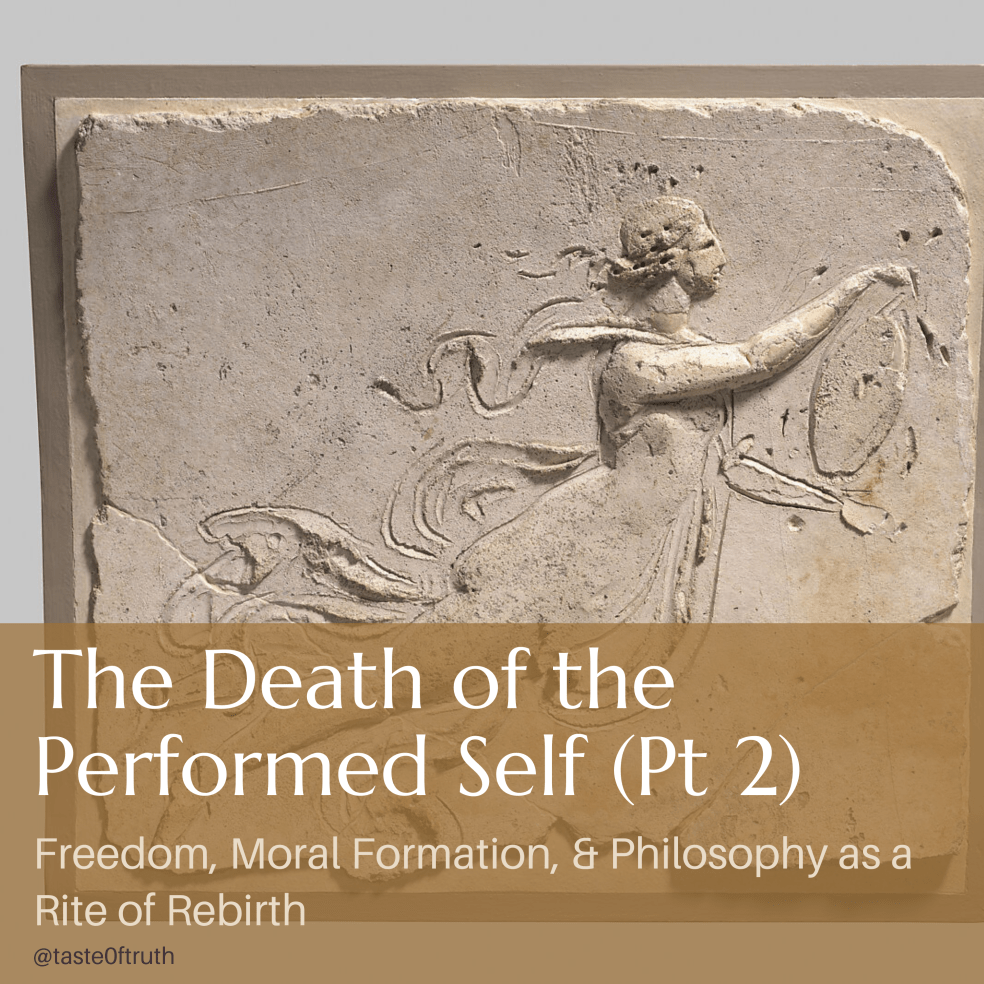
The Death of the Performed Self (Pt 2)

Freedom, Moral Formation, and Philosophy as a Rite of Rebirth

This is Part Two of The Ancient Hunger Beneath Modern Life, a series about participation, belonging, embodied wisdom, and what modern life has taught us to forget. Please note, this post will be truncated in some emails, please click “Read more” to access the entire essay.

When the Circle Closes

There is something unsettling about returning to a version of your life that once felt permanent.

Going back through these old photographs and blog posts, I could almost step inside that world again: the music, the movement, the friendships, the long drives, and the feeling of being recognized across a crowded field. For years, these people and places had helped me understand who I was. They were not simply hobbies or acquaintances orbiting an otherwise separate life. They were part of the world in which I had learned what freedom, community, individuality, and belonging were supposed to feel like.

That is what made revisiting it unexpectedly tender.

But memory changes when you know what came later.

Many of the same people I had associated with self-expression and the freedom to live differently would eventually turn on me when I expressed convictions they did not share. The upheavals of 2020 exposed something I had not wanted to see: there was tremendous room to be eccentric, spiritual, sexual, artistic, and unconventional, but considerably less room to question the moral and political assumptions holding the group together.

I first felt the circle closing while sitting on the couch in our military housing at Camp Zama in Japan, watching events unfold back home from the other side of the world.

I watched people tear down and destroy historical monuments in Richmond, Virginia, not far from where I grew up. By then I was living inside a military community, surrounded by a very different language of service, duty, order, and sacrifice. I was geographically removed from the social atmosphere many of my old friends still inhabited, and perhaps that distance allowed me to see what was happening differently.
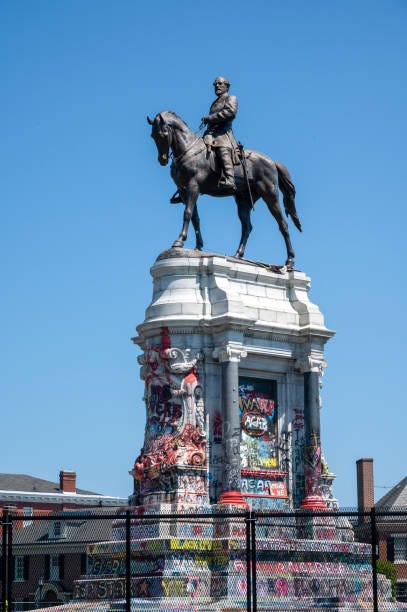
I remember the reaction in my body before I had fully worked out the argument in my head. My stomach tightened. My palms began to sweat. I felt disgust and a strange embarrassment that this was happening so close to the place I still considered home.

My old communities began demanding allegiance to what increasingly felt like a single political script. I no longer recognized the friends and so called “tribe” which I had built so much of my identity around.

And by this point, social media was not incidental to my life.

Becoming a military spouse had physically separated me from many of the friends and communities I had accumulated over the years. Facebook and Instagram were how I stayed connected to people scattered across different cities and states. They were also where I worked. I had built my career as an online personal trainer and coach there, and my multilevel marketing business depended heavily on the same platforms. Friendship, professional identity, income, visibility, and reputation had all become strangely entangled inside the same digital space.

So what people thought of me online mattered more than I would like to admit now. These apps were not simply places I went to waste time scrolling. They had become the room where much of my social and professional life still existed.

You may think my initial reaction to being bullied online sounded absurd…and maybe it would be if you’re thinking of these as merely apps.

To me, they were not.

They were where years of photographs and memories lived, and where a public identity I had spent years constructing was suddenly being turned against me. A space that had once connected me to music, travel, friendship, and community had become somewhere I entered expecting humiliation.

The disagreement itself was not what hurt most. It was watching people who knew me join in so easily, as if my dignity stopped mattering the moment I landed on the wrong side of an issue.

The dogpile confirmed something I had felt for years: maybe I had never been held as securely inside these communities as I wanted to believe. Even during my years in Portland, I often hovered near the edges of friendship circles instead of living at their center. I remember lonely days off, knowing people were heading to the coast, the hot springs, or some other adventure I had not been invited to join.

The community gave me real friendship, joy, beauty, and belonging. I refuse to rewrite those years as though none of it mattered. I can also still admit how often I adjusted myself to remain acceptable.

Once I admitted that, I had a choice. I could stay quiet, repeat what I was expected to believe, and let other people decide the boundaries of acceptable thought. Or I could accept what might happen if I refused to perform agreement.

I chose the loneliness.

At first, it felt almost like social suicide. It also created tension in my closest relationships. The people who loved me wanted to protect me from what seemed to happen every time I spoke publicly about something controversial. From their perspective, the solution was simple: stay quiet. If no one knew what I believed, I would stop giving people reasons to turn against me.

But silence did not feel neutral to me. It felt like one more way to abandon myself.

I do not regret speaking. When I imagine looking back on my life as an old woman, I know I will be grateful that I said something when I believed it mattered.

Still, there was a cost.
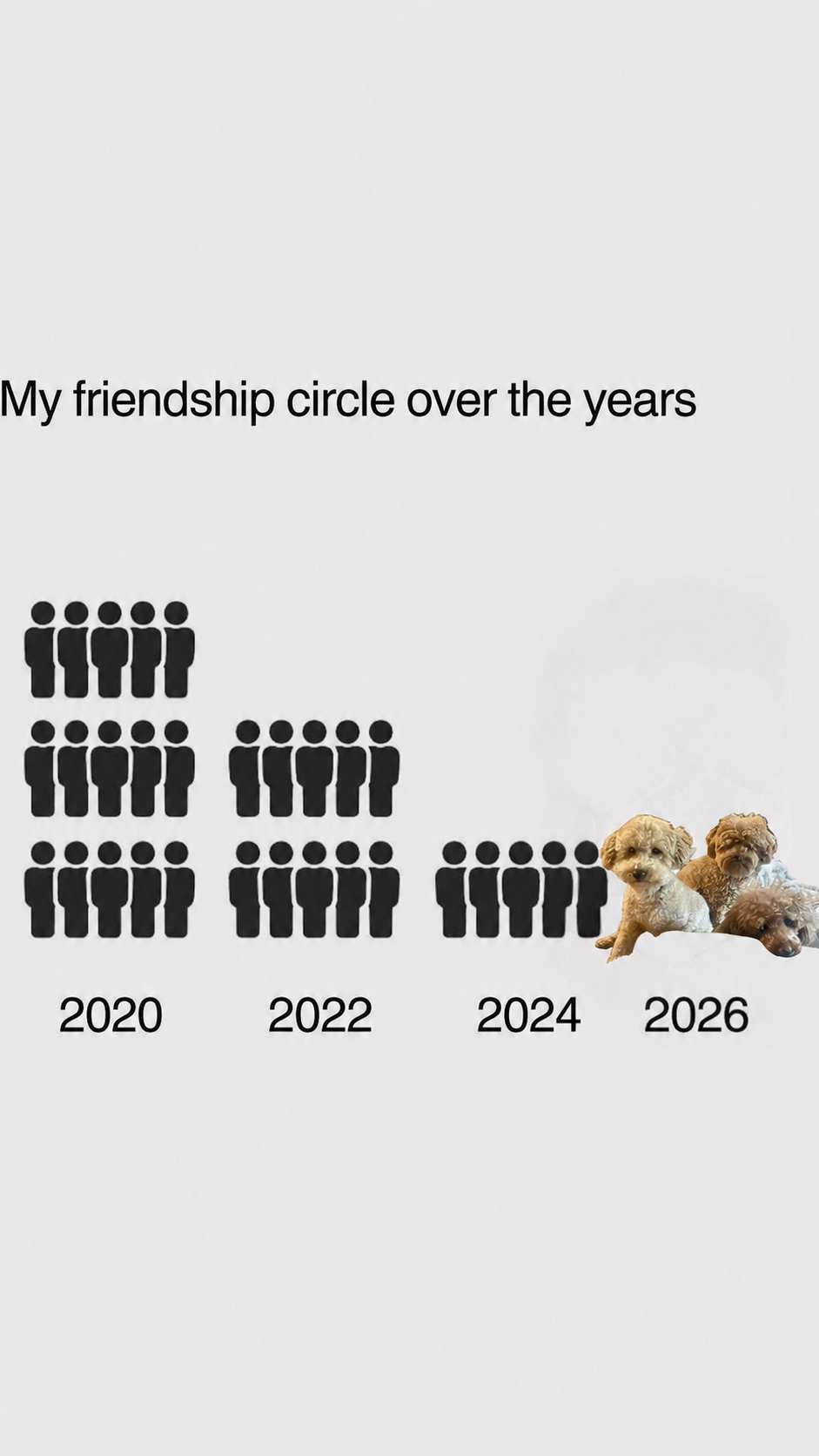
These photographs remind me how many people were once in my life and how much smaller my social world has become. I know what a community can give us. I also know what happens when belonging depends upon hiding the parts of ourselves a group has decided not to tolerate.

I am no longer willing to purchase belonging that way.


If your sense of belonging depends on one-sided ideological conformity, with no room for nuance or freedom of thought, you are not part of a community. You are a cog in a crude machine—and that machine will discard you the moment you fall outside its range of tolerance. —Olympia Mahr


Festival culture was not the only place where I encountered this pattern. Around the same time, I began recognizing how much of my identity had been tied to Isagenix and the multilevel-marketing world. That community had given me encouragement, certainty, recognition, and the feeling that many people knew my name. When I spoke openly about the ways I believed the system had exploited me, plenty of people did not want to hear it. Some seemed unable to understand why I could not just admit that I knew better now and move on.

Leaving one system does not automatically heal the hunger that drew us into it.

The loss left an enormous hole, and Christianity entered through it.

At first, Christianity seemed to offer everything I had been craving: forgiveness, certainty, moral order, love, healing, and the promise that all the chaos of my life could finally be gathered into one coherent story. I wanted to do it correctly. I studied theology intensely and moved deeper into Reformed doctrine because I believed one of those competing systems had to be right. I just needed to find it and submit myself fully enough.

Then I encountered doctrinal triage, the sorting of beliefs into matters Christians could disagree about and matters that determined whether someone remained fully acceptable inside the community.

I had originally been baptized in the name of Jesus alone by a Oneness Pentecostal group. After joining a Reformed church, I was told that my baptism did not count because it had not been Trinitarian. I could no longer receive the Lord’s Supper, even though I had already taken it during my first weeks there.

The message felt familiar: belonging had conditions I had not understood when I entered.
When I lined up these chapters of my life—festival culture, Portland progressivism, multilevel marketing, diet culture, bodybuilding, and Christianity—I saw the same needs being met again and again: identity, certainty, recognition, moral language, and belonging. The worlds themselves were radically different. The risk of questioning their boundaries felt familiar.

I am not looking for a community without convictions. I do not believe every moral disagreement is trivial, and I have no interest in manufacturing intimacy with people whose vision of life is fundamentally incompatible with my own. I want like-minded people around me. I want enough shared moral ground that we can actually build something together.

I also need room for hard questions, intellectual honesty, and disagreement without humiliation. A community can have boundaries without coercing or degrading people who ask difficult questions. I want to be around people with convictions who do not immediately turn disagreement into dogpiling. And I will not betray myself just to remain welcome.

Ancient ideas have always fascinated me, of course, but curiosity was not the only reason I turned toward the old understanding of philosophy as a rite of rebirth. I was trying to figure out what parts of me remained after an entire social, spiritual, and moral identity collapsed. How was I supposed to rebuild without handing my conscience over to another system?


Freedom Without Formation
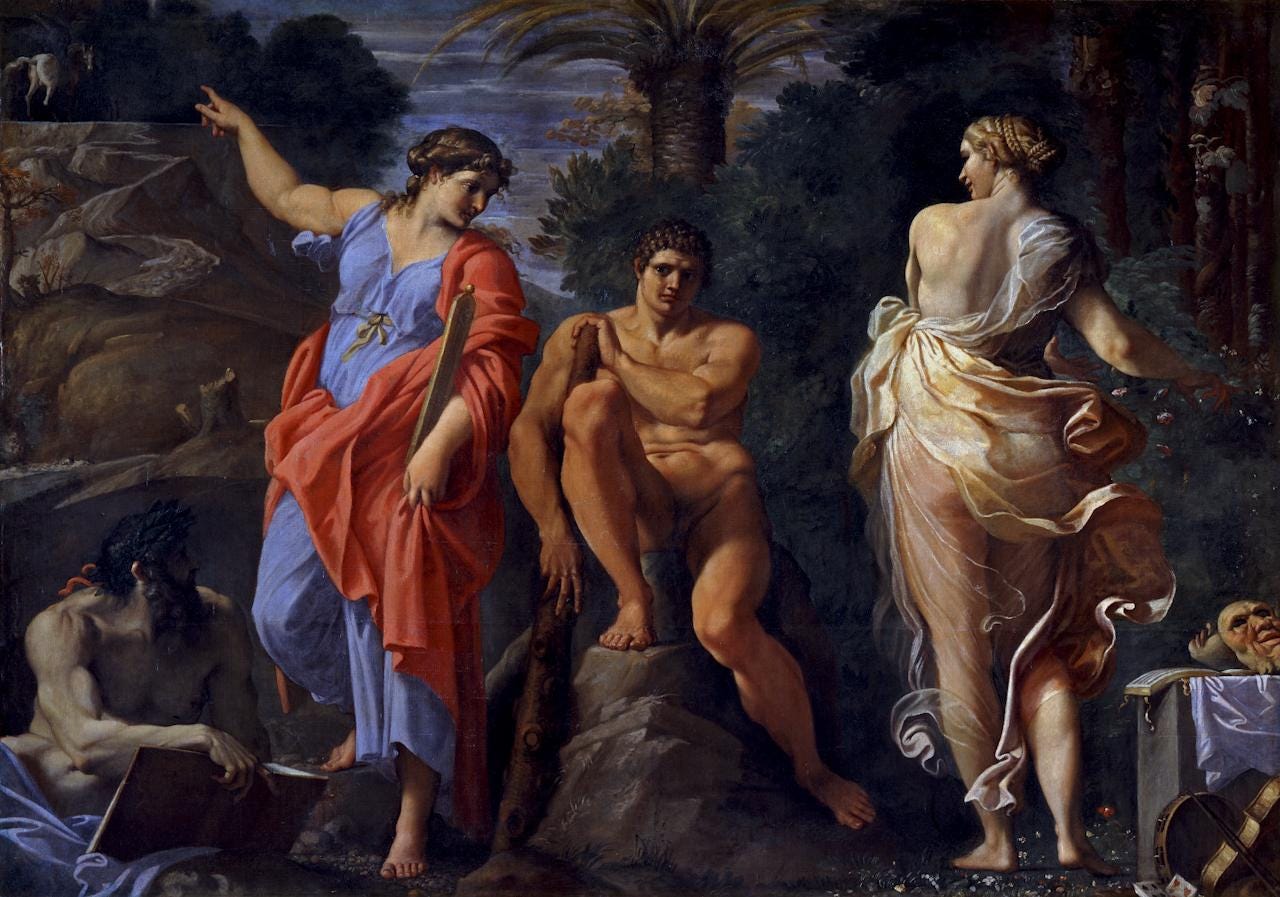
Hercules at the Crossroads Freedom is not merely the existence of choice, but the formation of character capable of choosing well.

After so many systems had promised to transform me, I began asking what transformation even meant.

I had changed my body, diet, politics, spiritual language, beliefs, and social circles. I kept entering new worlds hoping this one might finally make me whole. Each came with its own authorities, practices, taboos, vocabulary, and picture of who I could become if I followed the program correctly.

I eventually had to admit how easy it is to change identities without changing the pattern underneath. We can carry the same wounds, compulsions, and hunger for approval into a completely different community, learn all the right words, and mistake the intensity of conversion for wisdom because everything feels new.

That forced me to reconsider one of the most persistent moral slogans of modern life:

You do you.

For years, those words sounded compassionate and enlightened to me. I believed refusing judgment was the same thing as kindness. What someone did with their body, sexuality, money, health, or private life was presumed to be no one else’s concern as long as everyone involved consented and no immediate harm could be demonstrated.

Freedom meant removing constraints. The individual was sovereign, self-defining, and entitled to follow whatever desires arose from within.

I no longer believe any of us are that isolated.

Our desires do not appear in a vacuum. Families, wounds, friendships, industries, technologies, institutions, incentives, and the surrounding moral atmosphere all help shape them. We imitate what is modeled. We learn what is normal from what receives approval. Long before we have the judgment to examine any of it, we are absorbing ideas about liberation, beauty, sexuality, success, and fulfillment.

Even the self we call “authentic” has a history.

Culture does more than permit behavior. It helps form people. When an industry profits from a particular vision of empowerment, its financial incentives can disappear behind the language of individual choice. Once a behavior is publicly celebrated as liberation, questioning it begins to look like cruelty. Enough supposedly private decisions can change expectations, relationships, and the moral imagination of an entire society.

My own life makes it impossible for me to keep this argument abstract.

I once understood sex work almost entirely through the language of autonomy and empowerment. The people around me treated it as normal, even enviable. My mother told me she wished she had done it when she was younger. My sister was successful at it. My friends offered no meaningful resistance. Portland handed me an entire vocabulary through which commodifying sexuality could be framed as bold, liberated, and transgressive.

I made those choices. I own that.

I also know the person making them had been shaped by her family, her need for approval, her relationship with her body, the promise of money, and a culture that treated freedom as overcoming shame and refusing restraint. Owning my decisions does not require me to lie about the conditions surrounding them.

Years later, as a wife trying to build an enduring life with another person, I understood the consequences differently. Choices once praised as empowering had left marks on my ability to trust, attach, and understand intimacy. The language available to me at the time had plenty to say about my freedom to choose. It said very little about the person those choices might slowly form me into.

That question followed me through bodybuilding, multilevel marketing, New Age spirituality, and Christianity. Did the practices I submitted to actually make me freer? Bodybuilding fed my compulsions. The MLM world exploited my need to be seen. Other teachings encouraged me to treat struggle as evidence that I had not surrendered enough. Christianity gave me moral certainty for a while, but it also trained me to distrust my own questions.

Simply choosing something does not mean it increases our freedom.

The slogan assumes the self already knows what is good. Desire is treated as trustworthy because it feels personal. Yet desire can be trained by injury, appetite, commercial manipulation, social pressure, and the desperate need to belong. Sometimes the choice that feels most authentic is an old wound repeating itself in a new form.

This brought me back to the argument I explored in The Fragility of Freedom. A free society cannot survive through laws and procedures alone. It needs people capable of judgment, restraint, responsibility, courage, loyalty, and concern for something beyond immediate appetite. A republic can guarantee rights and limit government. It cannot legislate the character required to use freedom well.

So the political question cannot end with, What should people be legally permitted to do? We also have to ask what kind of person is capable of exercising that freedom without being ruled by appetite, compulsion, resentment, propaganda, commercial incentives, or the approval of the crowd.

Aristotle understood virtue as a capacity formed through repeated practice. Courage, temperance, generosity, responsibility, and sound judgment become part of us through habit. Anything that can be cultivated can also be neglected, distorted, or lost.

Political disagreements can therefore reach far beneath policy. People draw upon care, fairness, loyalty, authority, liberty, and the sacred, but we do not all weigh those concerns the same way. Sometimes we are not merely reaching different conclusions. We are measuring reality with different moral frameworks.

A culture organized almost entirely around liberation from constraint eventually loses the language to explain why restraint can be good. Discipline begins to look like repression. Every limit starts to resemble oppression, and we stop asking what the limit was meant to protect in the first place.

“The ancients held that there is nothing that cannot be cured by philosophy and theurgy.”

Philosophy as a Rite of Rebirth by Algis Uždavinys

The Older Purpose of Philosophy
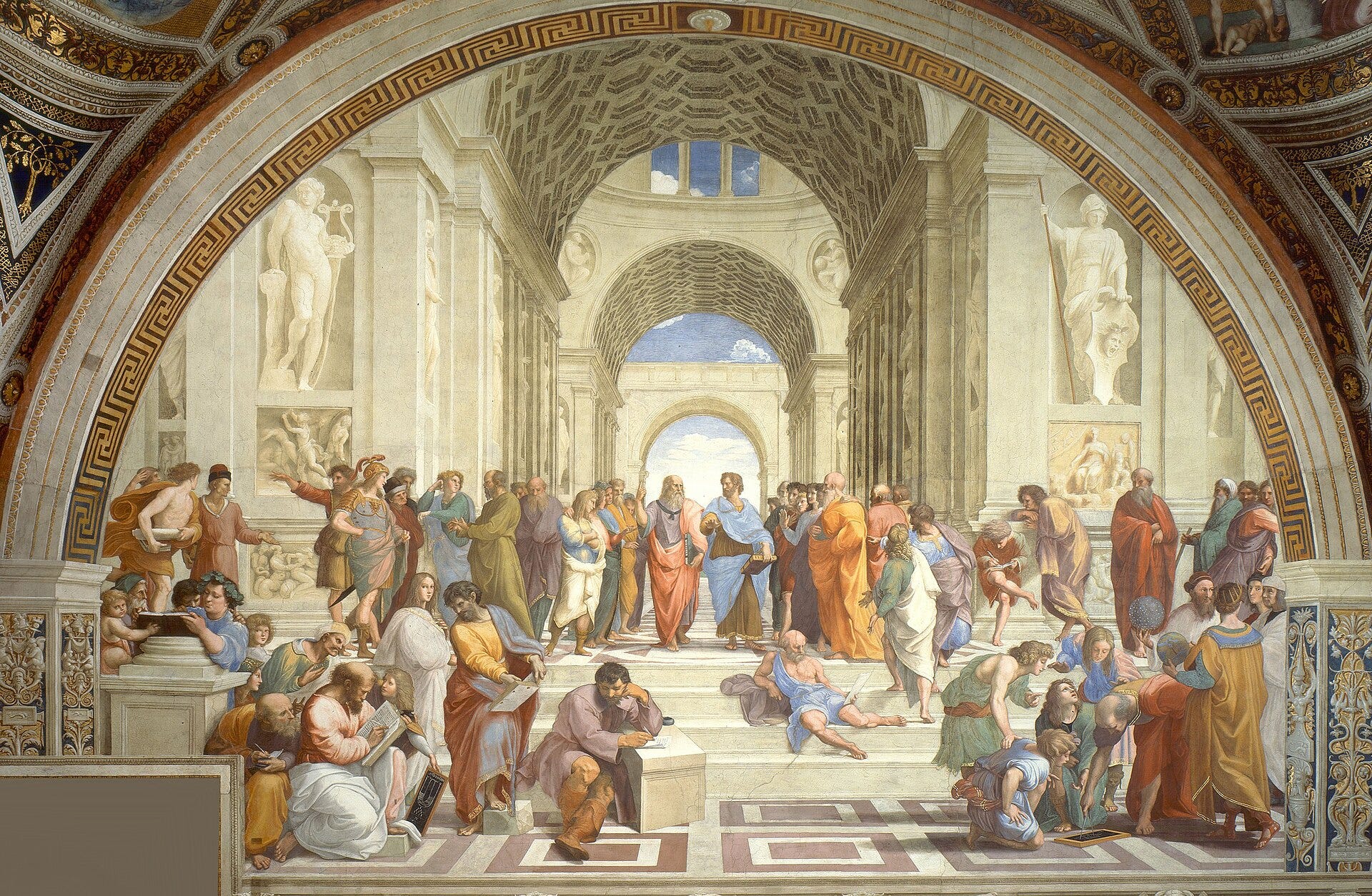
Raphael’s School of Athens.

That question of formation sent me looking for an older understanding of philosophy.

After Christianity, the last thing I wanted was another belief system demanding my allegiance. What I found in the work of Algis Uždavinys was a completely different account of what philosophy had once been for.

Uždavinys argues that the modern world has largely lost the participatory understanding of reality found in ancient philosophy. In his account, the Protestant legacy and the emergence of modernity helped move truth into the isolated individual mind. Philosophy became preoccupied with the solitary thinker questioning, doubting, analyzing, and trying to establish with certainty that anything outside the mind existed at all.

For Plato, Plotinus, Iamblichus, and the traditions that followed them, philosophy was concerned with what the pursuit of wisdom did to the soul. Reality was sacred, ordered, hierarchical, and meaningful. The soul was not sealed inside a private psychological world. It could participate in realities beyond its immediate appetites, opinions, fears, and social conditioning.

Philosophy involved contemplation, purification, discipline, initiation, sacred rites, and a change in one’s entire way of living. Knowing more was not enough. The philosopher was supposed to become capable of seeing and living differently.

My friend Brado approaches this through the concept of mediation: everything that stands between us and direct experience. Words, explanations, arguments, and even the thoughts inside our own heads can communicate something real, but they are still representations of an experience.

As he writes:

“This type of knowledge then, as it cannot be verbalized, it similarly cannot be rationalized either. As existence is surely affected by this type of knowledge rather than the other type we discussed—the knowledge mediated by discursive intellect—it can be jarring to consider that the knowing we attain from reading a word on a page or thinking a thought in our head is not the same as the knowing [we] receive from experience.”

This does not make reason useless. Discursive thought allows us to analyze, compare, question, build, and communicate. It simply cannot deliver every kind of knowing by itself.

Brado distinguishes between wisdom acquired as information and wisdom that must be received through encounter. We may prepare through study, discipline, and reflection. At some point, however, the idea has to become lived reality.

That was the philosophical form of something my body had already taught me through music, injury, repetition, and movement. Certain things cannot be transferred intact from one mind to another. They have to be entered.


Philo-sophia (the love of wisdom) was an art of seeing, loving, understanding, and living. Its purpose was not merely to construct arguments, master technical language, or accumulate information about what earlier philosophers had believed. It was a discipline of transformation that shaped perception, character, conduct, and one’s relationship with death. Wisdom had to be practiced until it became embodied. The measure of philosophy was the kind of life it produced.


Uždavinys describes its telos as a radical transformation of thought and existence in pursuit of wisdom.

The Platonic and Aristotelian traditions did not assume every desire represented the authentic self. They asked whether our desires were ordered toward what was genuinely good, beautiful, and life-giving. Freedom included liberation from confusion, compulsion, false appearances, and domination by the lower parts of ourselves.

That is far more demanding than telling me to express myself. It asks what kind of self I am becoming. Are my desires making me more lucid, courageous, capable of love, and responsible to the living world around me? A choice can be legal and sincerely felt and still lead me away from wisdom.

Adopting one more ideology could never answer that question for me. I did not need a new identity to perform or a collection of ancient ideas decorating the same unexamined life. I needed practices capable of changing how I perceived, desired, judged, and lived.

“Therefore, a philosophical journey is the mimetic and ritual-like journey of the hero, like Heracles and Orpheus, to the Netherworld, the Egyptian Duat, where all the opposites meet. This is the process of ‘dying before death’ and resurrection.”

—Algis Uždavinys, Philosophy as a Rite of Rebirth

What Must Die
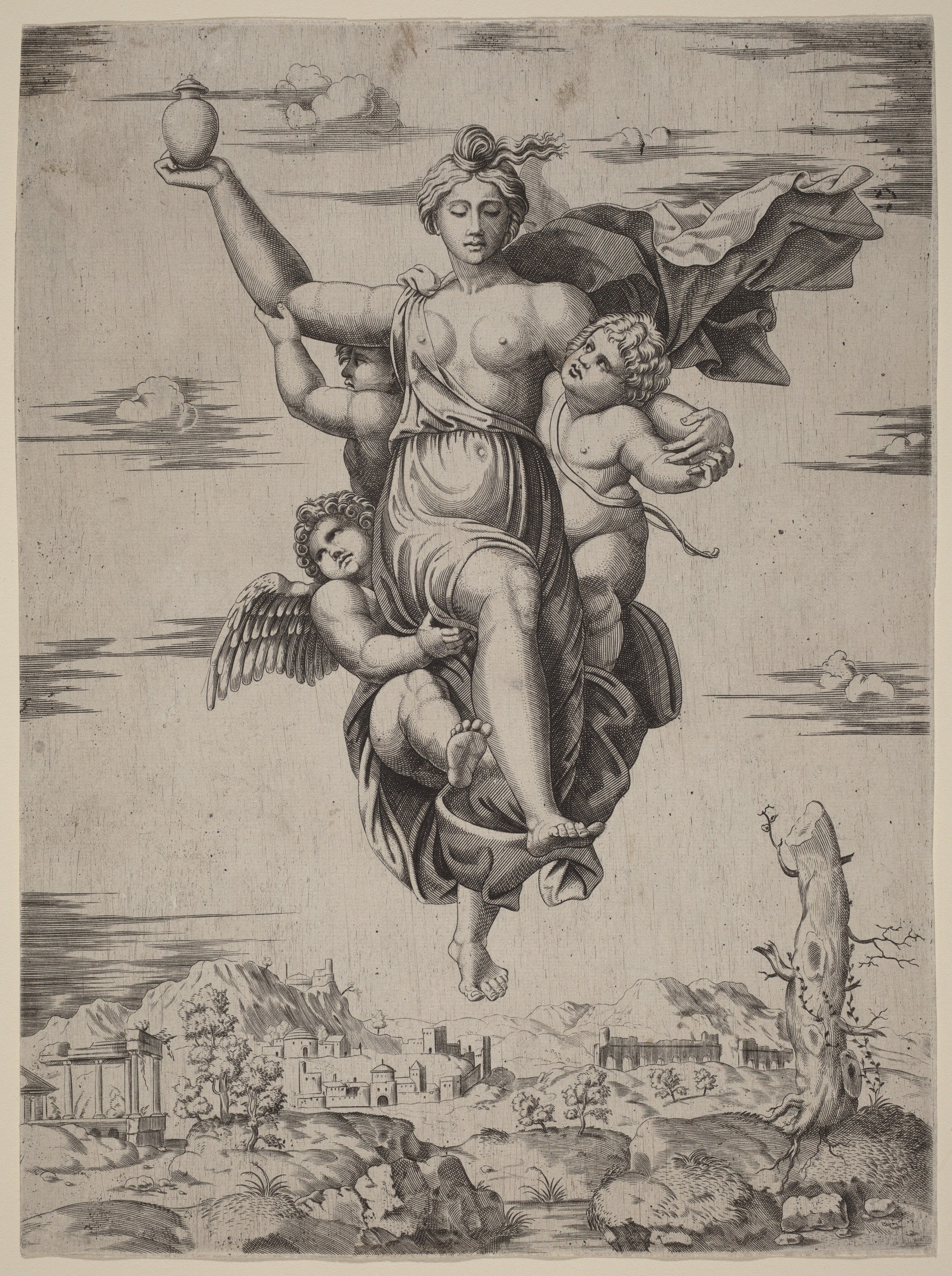
Psyche Carried to Olympus Follower of Marcantonio Raimondi after Raphael

When I think about rebirth in my own life, I do not imagine becoming an entirely different person. I think about the gradual death of the person I constructed in order to survive.

Growing up inside an authoritarian household, I learned early that parental love could be conditional, discipline could mean pain, and trust could leave me exposed. I became self-reliant because I had to. That kind of self-reliance has a cost.

“I believe, toxic shame is a type of emotional flashback in which we view ourselves with the same disgust we saw reflected in our parents’ faces whenever they acted as if they were repulsed by us. Toxic shame freezes us in the fear, mortification, and hopelessness of our most traumatic times in childhood. To the degree, that our parents acted as if they couldn’t stand the side of us, to that same degree are we prone to toxic shame, attacks of feeling bad, worthless, and ugly. Parents routinely use toxic shame to dismiss children’s needs and to extinguish their ability to assert themselves and protest (or even notice) abuse and neglect.” —Pete Walker, The Tao of Fully Feeling—Harvesting forgiveness out of blame

The need for control, the drive for perfection, the desperate desire to become good enough to earn love—these were not random personality traits. They were ways of navigating a world in which I never felt securely seen, safe, or understood.

They followed me into adulthood. I tried to control my body through eating disorders and bodybuilding. I tried to control how other people perceived me through achievement, performance, and reinvention. Certainty felt like safety, so I entered communities that promised it. Again and again, I hoped that if I became the right kind of person, the old feeling of not being securely loved might finally disappear.

And so what I have learned… is my intensity does not have to die. Neither does my capacity to feel deeply or my desire for beauty, discipline, belonging, and meaning. I need to let go of the fantasy that I can fill that old absence by becoming impressive enough, obedient enough, beautiful enough, spiritually correct enough, politically acceptable enough, or perfectly understood.

There is a useful name for another illusion wrapped up in this: the end-of-history illusion. We can look backward and recognize how profoundly we have changed while imagining that the person we are now is somehow the finished version.

I can see it all through my own life. Each new world felt like an arrival. This is it. The right body. The right community. The right politics. The right spiritual vocabulary. The explanation that would finally gather every scattered piece of my life together.

I knew I had changed dramatically before arriving there. Somehow I still believed this newest self was the one I had been moving toward all along.

Of course she was not finished. I am not finished now either.

That does not mean every change is positive growth or that our values should be endlessly disposable. It means the direction of our formation matters because we are never standing still.

I can now see a difference between conversion and transformation. Conversion can change our vocabulary very quickly. Transformation is slower, less glamorous, and much harder to perform for an audience.

It shows up in steadier values, discernment, self-command, courage, and the ability to remain rooted when someone disagrees. It allows me to listen without disappearing and stand firmly without needing everyone around me to confirm that I am standing in exactly the right place.

I no longer imagine the performed self dying in one grand initiatory moment. It dies in small decisions: when I refuse to punish myself, trust what I have actually observed, remain honest despite the possibility of rejection, or stay in relationship without abandoning myself inside it.

In the Platonic language that has helped me understand this, rebirth changes perception. The frightened, grasping, passion-bound self loses its absolute claim over us, making room for something more lucid to participate in a greater order of reality.

For me, philosophy is the work of becoming able to see.

I went into the inner death and saw that outer dying is better than inner death. And I decided to die outside and live within.

– C.G. Jung, The Red Book

Divine Madness
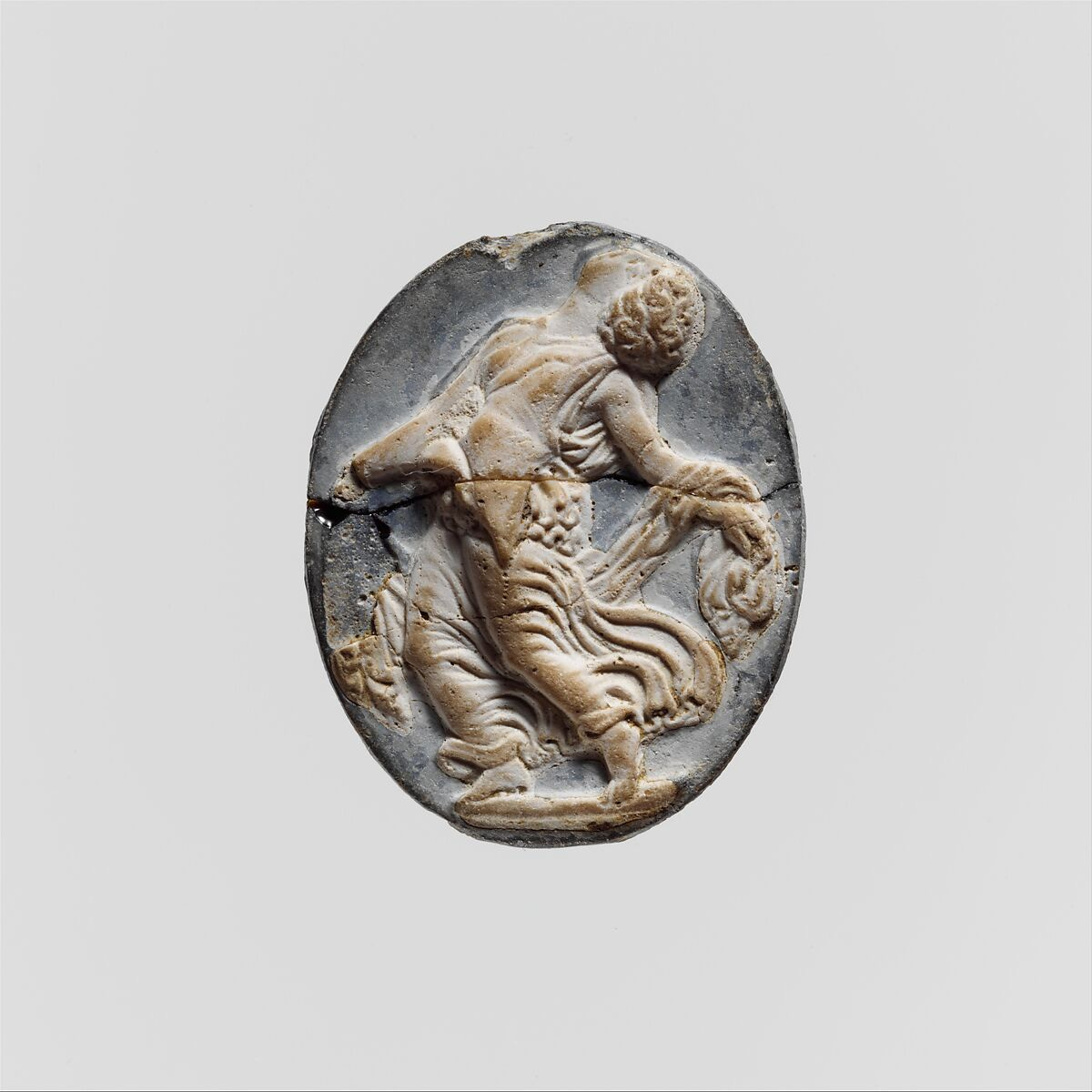
“Divine Madness”: Roman cameo of a dancing maenad, 1st century CE.

In Part One, I wrote about learning through the body—about the moment a hula hoop stops being something you are consciously controlling and becomes something your body simply knows how to move with.

For years, ecstatic dance gave me access to another kind of knowing. The ritual container could create the conditions for something to happen, but it could not guarantee that it would. Music, ceremony, movement, and community could prepare the ground. Some Sundays remained simply joyful afternoons of dancing. Others opened into something I still struggle to describe.

Participation is not a vending machine for transcendence. Ritual can orient us toward an experience without forcing the experience to occur.

I could go week after week and have a beautiful time dancing, sweating, moving, seeing friends, and being carried by good music. Then there were certain Sundays when something else happened.

I still cannot fully explain what made the difference.

Sometimes it seemed to be the DJ or the particular arc of the music. Sometimes it was the combination of people who gathered that day. Anyone who has spent enough time in spaces like this knows the people in the room change the room. The energy could build on itself until I could no longer separate my individual experience from whatever was happening collectively.

Sociology gives us the term collective effervescence for the heightened energy that can emerge when people gather in shared ritual, movement, rhythm, and attention.

From a Heathen perspective, I also think about megin: power or vitality that does not belong only to an isolated individual, but can gather and move through relationship and communal participation.

Whatever language I use, I know the difference between having a wonderful time and entering a genuinely ecstatic state.

In those moments, ordinary self-consciousness fell away. I stopped experiencing music as something coming toward me from outside. My body was no longer selecting a sequence of movements. At a certain point, I was not listening to the music anymore. I was inside it.

My body knew what to do before I could think about it.

Those experiences come closest to what Plato described as divinely inspired madness.
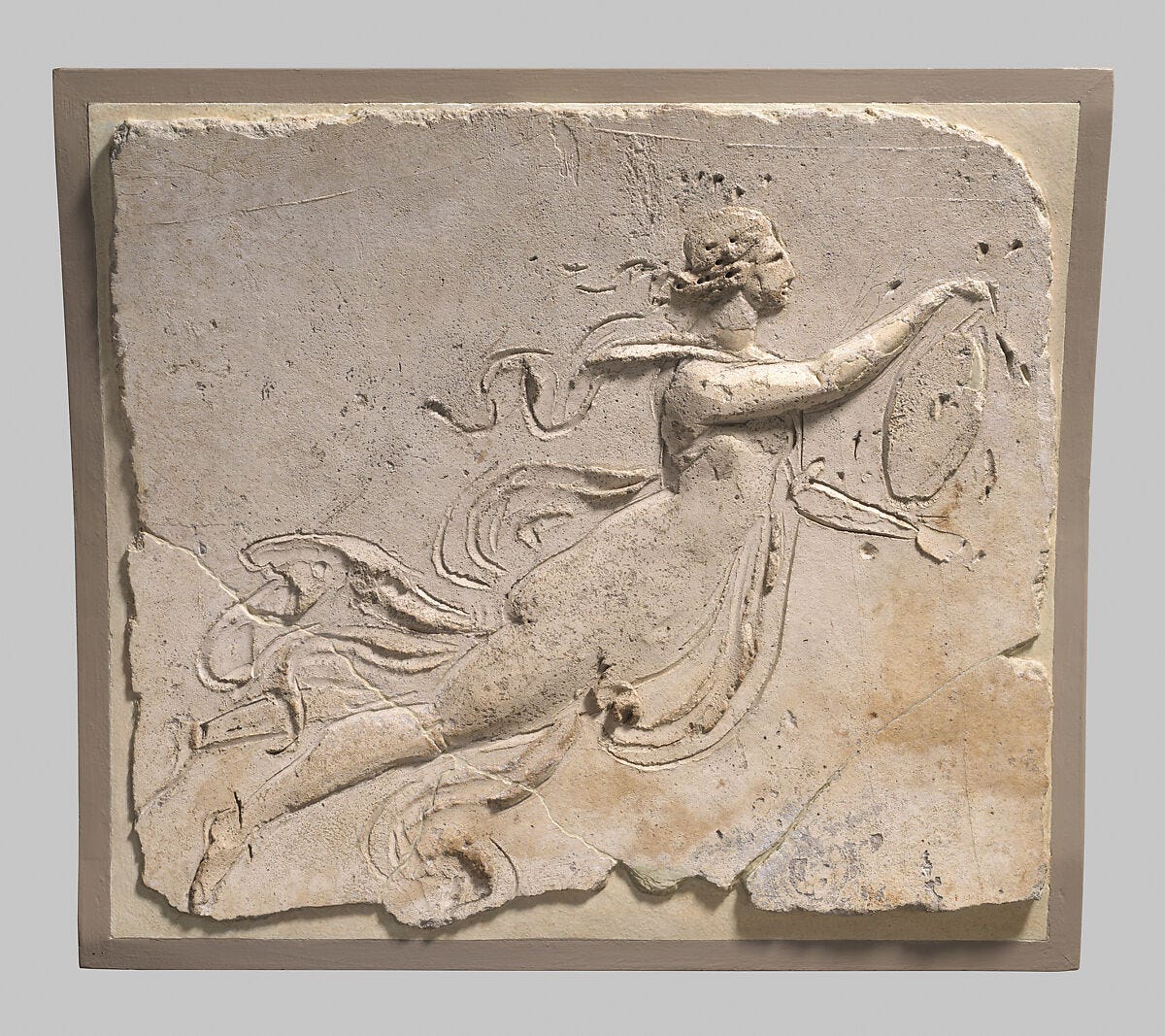
Roman stucco relief of a maenad with a tympanum.

By madness, I am not talking about chaos for its own sake or the idea that anything erupting spontaneously from within us must be authentic and sacred. Plato was describing a state in which the ordinary calculating mind loosens its grip and another way of knowing becomes possible.

The ritual container mattered.

We opened together.

We danced together.

We closed together.

The room, the music, the people, the repetition of returning Sunday after Sunday, and the shared expectation that we had gathered to move instead of watch gave form to something I could not have produced alone.

Sometimes afterward I took the microphone and tried to describe what had happened. I can see now that part of that impulse came from my lifelong desire to be seen and understood. I have always had big feelings and a powerful need to give those feelings somewhere to go.

But that was not all of it.

I was trying to bring something back.

Something had happened through participation, and I wanted words for it. The words always came second.


What the Word Can Carry
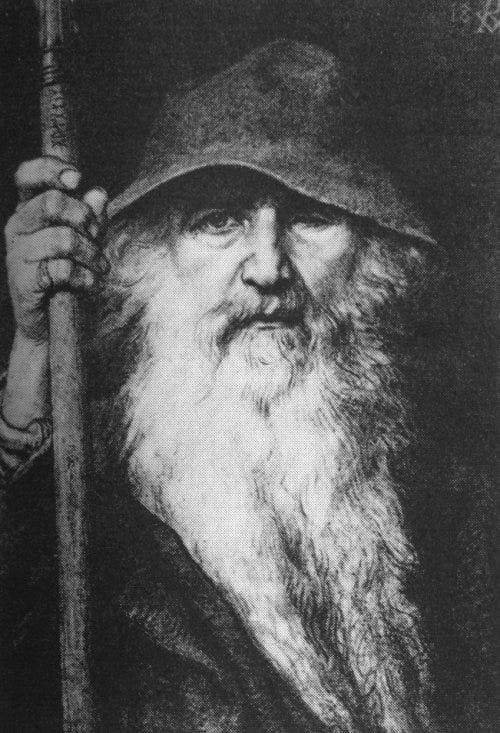
Georg von Rosen, Odin as Wanderer (1886).

Writing has become one of the primary ways I make sense of my life. It takes something living as memory, sensation, grief, confusion, or half-formed insight and gives it enough shape for me to encounter it from another angle. It creates distance without necessarily cutting me off from what happened.

The writing is still not the experience.

Recently, a friend reminded me that writing does not have to be merely confessional or testimonial. It can function as external memory, a way of placing meaning outside ourselves so we can meet it again later and discover that we have changed.

The story of Odin and the runes captures something similar. Odin is not simply handed information. He hangs for nine nights upon the tree, wounded by a spear, “myself to myself,” without food or drink. Only through the ordeal does he perceive and take up the runes.

“Then I began to quicken and be wise,
and to grow and to prosper;
one word from another word found a word for me,
one deed from another deed found a deed for me.”

Hávamál, stanza 141, in The Poetic Edda, translated by Carolyne Larrington (2nd ed., Oxford University Press, 2014), p. 32.

The marks themselves can be inscribed. They can exist outside the person, carried across distance and time. But the story does not confuse possession of the symbol with possession of wisdom. Odin has to become capable of knowing what the symbol contains.

At this point of the essay, I must say it is a little ridiculous to be writing an essay on forms of knowledge that cannot be contained inside of it.

I can tell you about ecstatic dance. I can describe the DJ, the sweat, the ceremony, the people moving beside me, and those strange days when something emerged from the group that no single person brought into the room.

I cannot put that experience inside your body.

Anyone I have ever taught to hoop eventually reaches the limit of my instructions. I can demonstrate, adjust their stance, point to their feet, and explain how to shift their weight. Eventually their body has to find it.

And then, suddenly, the hoop stays up.

They know.

That is the wisdom of participation I was reaching toward in Part One. Some things become knowable only from inside the act itself.

This is also why I continue to write. I can preserve memory, notice patterns between experiences that happened decades apart, and leave markers for myself. I can return later and understand the same words differently because I am different.

Good writing may even point another person toward an experience they have to enter for themselves.

Maybe it’s that the best words can do, is to show us where to look.

“If we cannot give a true account of ourselves and our doings it will mean that our actions have been ‘as you like it’, reckless and informal rather than to the point and in good form.” *

Becoming More Alive
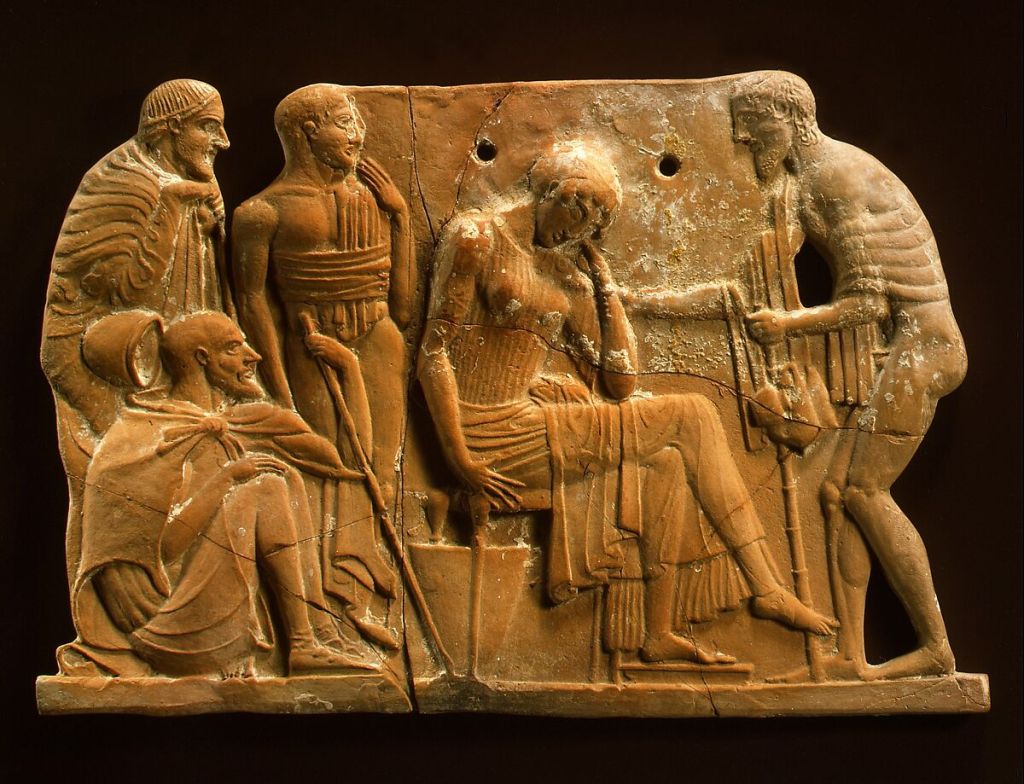
Odysseus returning to Penelope, Greek terracotta plaque, ca. 460–450 BCE — after ordeal and wandering, the final movement is not escape but return.

If becoming more alive is the goal, then I still have to ask what kind of life is worth building.

If I no longer believe you do you is an adequate moral philosophy, but I also refuse to surrender my conscience to another authority simply because it promises certainty, how do I decide what is good?

An older understanding of wisdom makes that question more demanding. In much of classical philosophy, to know was to be. Wisdom was not something one simply possessed because one had encountered the correct argument, read the correct book, or even undergone an extraordinary experience. The knower had to be changed.

That shifts the question. It is not only, What do I know? It is, What kind of person am I becoming through what I claim to know?

I keep returning to this particular distinction: a life shaped merely by preference versus a life given form.

Freedom cannot mean that I never have to account for what I choose. If anything, freedom places a greater responsibility on me to ask whether my actions have direction, coherence, and some relationship to what is actually good.

So now I ask what a belief, practice, or way of living does to a person over time. Does it agree with biological and material reality, or does it ask me to deny what is plainly there? What happens when it is repeated for years instead of experienced for an afternoon? What kind of relationships does it produce? Who bears the consequences? Does it cultivate courage, responsibility, reciprocity, restraint, loyalty, honesty, and care for something beyond immediate appetite?

I have also started to value tradition. That does not make everything inherited good. It means I no longer assume one isolated mind can reconstruct a wise way of life from scratch. Traditions can carry generations of observation about human nature, family, obligation, reciprocity, sex, death, community, and meaning. We should understand what they are protecting before we casually discard them.

Tradition is not an infallible oracle either. I look toward biology, history, anthropology, sociology, lived consequences, virtue, and human flourishing. None can relieve me of judgment. Together, they demand far more than asking whether something feels authentic in the moment.

Lately, becoming more alive has looked almost embarrassingly ordinary. It means doing the dishes while actually inhabiting the moment instead of treating the task as an obstacle between me and whatever comes next. Walking slowly enough to notice what is around me. Preparing food with gratitude. Tending living things. Keeping a promise. Paying attention to the season. Putting my hands into the earth. Moving my body. Writing something true.

It also means learning what my body needs when I am overwhelmed. Sometimes I do not need another explanation. It’s somatic engagement like pressure, warmth, touch, or breathwork. I am learning how to remain honorable in relationship when it would be easier to punish, manipulate, withdraw, or perform.

There was a time when I searched for transformation through intensity. A new body. A new community. A new spiritual identity. A new doctrine. A new explanation that could make everything that hurt finally make sense.

I also found aliveness somewhere else too. As I wrote in Part One:

“We planned entire summers around gathering beneath stages and temporary tents. We drove for days to arrive somewhere that would exist for only a weekend, then disappear almost as quickly as it had formed.”

Those temporary worlds gave me music, movement, friendship, collective energy, and a kind of belonging I often struggled to find elsewhere. All of that was real. I would never diminish it.

There was an escapist edge to it too.

If the place where I felt most at home existed only for a weekend, what did that make the rest of my life?

Normal life could become the grind between festivals. Work, chores, obligations, and ordinary days were things to get through so I could afford the next tour, the next gathering, the next temporary return to myself.

What startled me while rereading my old blogs was finding a younger version of myself already wrestling with this exact problem. In 2010, after writing about staying sober at festivals, struggling with hip pain, and realizing how much I loved my work and routine, I blurted out:

“I realized that I am happier after having a great workout than I am at a music festival. whoa-wait-WHAT? I am happier living my normal routine of working as a personal trainer and teaching Hoop Classes?? How blessed am I? My real life is so incredible, i don’t need to run away for 4-5 days, indulge in drug consumption to feel happy?! wow.”

Reading that now almost made me laugh. I was already saying this back then! A younger me could feel this in her body before I had the philosophical language to explain it.

Knowing something once does not mean we know how to build an entire life around it. I lost and rediscovered that lesson through bodybuilding, multilevel marketing, Christianity, illness, political rupture, and every other identity I tried to make into a permanent home.

Now I think rebirth may be much less dramatic than another conversion. It may be the slow formation of a life I can actually inhabit.

I do not want to organize my life around the next escape. I want to bring participation, beauty, ritual, and aliveness into the days I once thought I had to get through. I want to return to my body and ordinary life, perceive what is already sacred here, and participate in relationship without abandoning myself.

That brings me back to the hunger underneath this entire series.

I thought I was writing about hooping. Then it was writing about festivals, ritual, community, religion, philosophy, and the strange succession of selves I have inhabited.

Underneath all of it was the same question:

How do we become fully present participants in our own lives?

I am no longer looking for a system that will tell me exactly who I must become. I am trying to become capable of meeting life, in all of its beauty, obligations, grief, mystery, pleasure, limits, and loss, with enough discernment and courage to participate in it fully.

Maybe rebirth has nothing to do with leaving this world for another one. Maybe it means returning to this one more alive.


Thank you so much for reading or listening! The audio always includes a few extra nuggets that aren’t in the written version, so give it a listen when you can. I’d love to hear your thoughts in the comments!

Taste of Truth is a reader-supported publication. To receive new posts and support my work, consider becoming a free or paid subscriber.

*Ananda K. Coomaraswamy Atmayajna: Self-Sacrifice: Selected Papers. Metaphysics, ed. Roger Lipsey, Princeton: Princeton University Press, 1987, p.137

Articles mentioned or that influenced this series:

From Conspiracy to Cult

Beyond the Crunchy-to-Alt-Right Pipeline

What Consenting Adults Do Is Our Concern

The Fragility of Freedom

Consent is not enough: The Harsh Realities of Sex Work

From Diary Entries to Digital Screens

The Way of the Gods: Clarifying Paganism

Power Through Truth

Modality and Media

First Principles: Distinction and Differentiation

Mediation, Myth and Mystery

The Ancient Hunger Beneath Modern Life

Flow Arts, Festival Ritual, and the Lost Wisdom of Participation

Hey hey, welcome back to Taste of Truth, this essay is much different than what I normally write, I hope you enjoy this trip down memory lane with me.


For years, strangers would see me walking through an airport, across a college campus, or into a music venue carrying an enormous circle of plastic and ask the same question:

“Is that a hula hoop? What do you do with that thing?”

I usually smiled.

There was no quick way to explain what the hoop had already done with me.

By then, it had bruised my hips, taken over my living room, earned me the nickname “hula-hoop girl” around my college campus, and sent me driving and flying across the country in search of music, teachers, festivals, and other people who understood why it was impossible to put the thing down.

It had carried me onto stages I was terrified to enter. It had introduced me to women I first knew only by their YouTube names and later came to know as teachers, collaborators, friends, and soul sisters. It had given me a language for my body at a time when I was still deeply self-conscious inside it.

At the time, I thought I was learning tricks.

I was learning how to float the hoop from my waist above my head. How to reverse its current. How to move in both directions. How to toss, pause, break, roll, and recover. How to follow a drum solo until movement and music stopped feeling like separate things.

All of that was true.

But something much deeper was happening


This is the first part of a series I have been circling around for a long time, though I didn’t fully realize it at first.

I thought I was writing about hoop dance, festival culture and the importance of ritual.

Then philosophy.

Then paganism.

Then neuroscience.

The deeper I followed the thread, the more I realized they were all pointing toward the same question:

What happens to human beings when participation is replaced by spectatorship?

I keep returning to the difference between knowing about life and actually participating in life.

Modern people are drowning in information about health, spirituality, community, nervous system regulation, trauma, meaning, embodiment, and connection. We have the podcasts, the books, the frameworks, and an ever-expanding vocabulary. We can analyze our attachment styles, map our trauma responses, name our nervous system states, and explain exactly why we feel disconnected.

And yet, so many of us are still lonely….

Still disembodied.

Still watching life through glass.

Still trying to think our way into something the body may only truly recover through embodiment, through rhythm, movement, expression, shared presence, and practice.

This piece is about that hunger.

The ancient hunger beneath modern life.

Not merely the hunger to believe something, but the hunger to belong to a living world again.

For a long time, I thought my years in flow arts were simply a chapter of my life—a beautiful one, but ultimately behind me. Looking back now, I see something different.

Long before I studied philosophy, mythology, neuroscience, religion, or ancestral traditions, my body was already being introduced to a way of knowing that none of those books could have given me.

It had to be practiced. Repeated. Failed. Felt. Shared.

It had to be participated in.

Before philosophy gave me language for participation, my body had already spent years practicing it.

Long before I studied mythology, ritual, paganism, or the neuroscience of embodiment, I had already encountered something those traditions were trying to describe.

I knew it through music. Through movement. Through repetition. And most importantly through community.

By the simple act of showing up, again and again, until something inside me changed.

I no longer interpret every part of those years the way I did in my twenties.

But I trust the experience more than I trust all the language I once wrapped around it.

And that is where this story really begins.

Long before I studied heathenry/paganism,

I danced it.


The First Forms of Participation

Before there was a circle of plastic spinning around my waist, there were trees to climb, horses to ride, ponds to swim in, and twenty-six acres that gave my body somewhere to go. Some of my earliest memories are not of sitting still and thinking about the world, but of moving through it—crossing the dam, wandering the property, climbing high enough to see everything differently.

There was one enormous oak tree that had fallen and become something like a fort. I would retreat there after arguments with my mother, disappearing into its branches and hollows until I felt like myself again. I would not have called that nervous-system regulation. I would not have called it ritual, grounding, or communion with place. I only knew that the tree could hold something I did not yet know how to carry.

Movement was also part of my life in more formal ways. I took ballet, tap, and jazz, although jazz was the form I loved most. Ballet often made me painfully aware of my body—how tall I was, how much space I occupied, how unlike the smaller girls I sometimes felt. Jazz gave me more room. There was something about the music, the costumes, and the freedom of the movement that allowed me to step outside that self-consciousness for a while.

Music offered another kind of participation. I played piano and violin, but orchestra was where something larger began to reveal itself. Practicing alone mattered, but it was never the whole point. The real experience happened when everyone entered together: dozens of separate parts becoming one piece of music that none of us could have made alone.

I did not have words for why that felt so powerful. I only knew the difference between playing a part by myself and feeling it take its place inside a living whole.

The tree was not merely scenery.

The orchestra was not merely a collection of individuals.

Movement was not merely exercise.

Each required me to enter into a relationship—with a place, a rhythm, a group of people, or the limits of my own body. I could not understand any of them from the outside. I had to climb the branches, learn the music, miss the step, lose my place, and begin again.

Looking back, I can see that I was learning the same lesson in different forms: the world became more alive when I participated in it.

I did not yet know that this was a kind of knowledge. I only knew that I felt most like myself when I was moving, making, playing, or contributing one small part to something larger.

The hoop would eventually gather all of this into a single practice—movement, rhythm, repetition, music, play, place, and community.

It did not create the longing.

It gave the longing a shape.


The Circle Opens

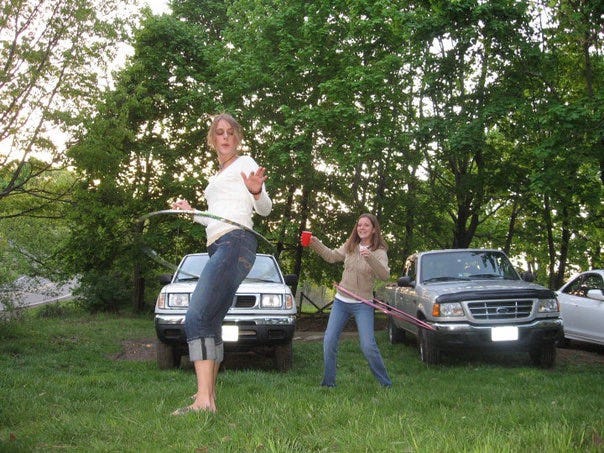
One of my roommates and I, playing around with those rinky-dink store-bought hula hoops.

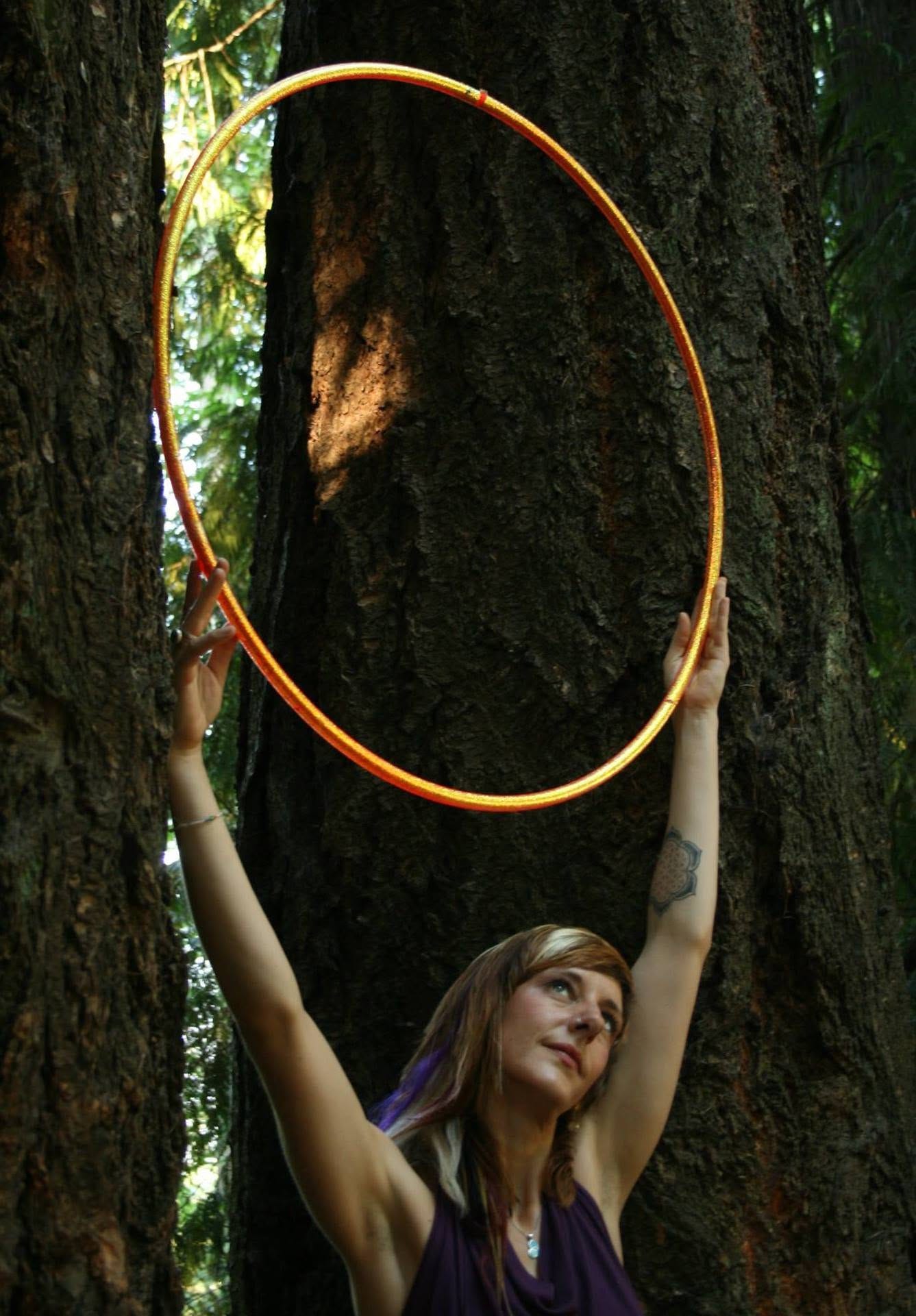
That shape arrived rather unceremoniously in the winter of 2005: a cheap, store-bought hula hoop that I could barely keep spinning around my waist.

At first, it was mostly frustrating. The hoop fell almost as quickly as I could lift it, clattering against the floor while I tried again. Eventually, though, my body found the rhythm. I carried it back to college, where I practiced in the living room while my roommates laughed, none of us realizing what had begun.

That first hoop was a toy. The real initiation came the following summer at Smilefest, a music festival held at Deerfields in North Carolina.

There, I picked up what hoopers called a “real” hoop—large, heavy, handmade, and nothing like the lightweight plastic circle I had been struggling with. I could feel the difference immediately. Its weight slowed the movement enough for my body to follow. For the first time, the hoop did not seem like an object I was trying to control. It felt like something I could enter into conversation with.

I practiced until dark bruises spread across both hips.

Then I strapped the enormous hoop to the roof of the car and brought it home.

Something had taken hold of me.

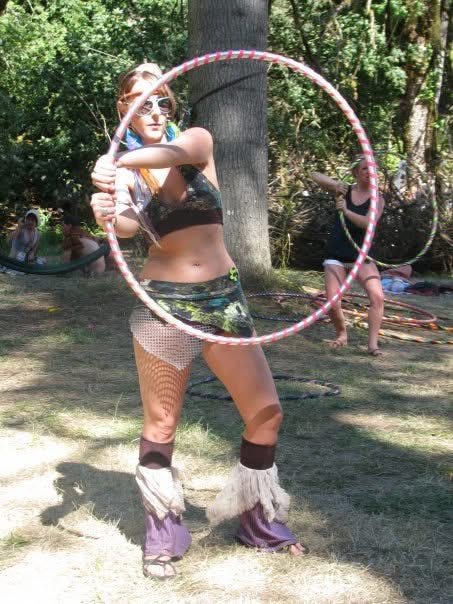
I began carrying the hoop everywhere. I practiced alone in backyards and parking lots, using my car stereo for music. I watched early YouTube videos of hoopers like Hoopalicious, Spiral, Christabel Zamor, and the Hoopnotica dancers, calling my roommates into the room whenever someone performed a movement I could not imagine being possible.

“Look at this. How does she do that?”

There were tutorials, but no explanation could place the movement inside my body. I could watch someone perform a trick dozens of times. I could study the position of her hands, the angle of the hoop, and the direction of its current. None of that meant I could do it. The knowledge had to travel another route.

I had to pick up the hoop.

I had to drop it.

I had to feel where the movement broke down, make some tiny adjustment I could barely name, and try again.

One of the clearest memories I have from that period is standing in the front yard during my junior year of college, listening to the same music over and over while trying to raise the hoop from my knees back toward my waist. I had watched other people do it. I understood, in theory, what was supposed to happen.

But my body did not know yet.

Then, after what felt like endless repetition, something shifted. The hoop caught. My knees and hips found the pulse. The circle began to rise.

I could not have explained what I had done differently.

My body simply understood.

That moment opened a door. Once I felt the movement happen, I knew the other tricks were possible too because I had experienced the difference between knowing what a movement looked like and then knowing it from within.


The Circle Widens

That question did not remain private for long.

In March 2007, only about a year after I first began seriously hooping, I found myself waiting beside a stage in Boulder, Colorado, preparing to perform with EOTO for the first time.

For weeks, I had told everyone how excited I was. I was going to hoop onstage with Jason Hann and Micheal Travis—two musicians from String Cheese Incident (the jam band I had spent the previous summer following across the country.) Until that moment, the whole thing had felt thrilling and almost unreal.

Then it was time to walk onto the stage.

The excitement dropped straight into the pit of my stomach.

Holy shit. I’m really getting up there.

At that very moment, Jamie Janover, one of the other musicians came over, he had noticed how nervous I was and gave me a piece of advice I have never forgotten:

“Just go up there when you’re feeling the groove and get off when you’re done. It’s simple.”

He was right, although it did not feel simple while I was standing there.

There was no choreography to memorize and no fixed sequence waiting for me. EOTO was an improv jam band. The musicians were listening and responding to one another in real time. The audience was responding to the music. To join them, I had to stop thinking about how I looked, listen with my entire body, and enter the moment already unfolding.

I could not calculate my way into it.

I had to feel when to step forward.

For the first time, I was no longer simply hooping to music.

I was moving inside it.


Inside the Music

Once I crossed that threshold, the road opened quickly.

Music was not something playing quietly in the background while life happened elsewhere. It organized our movements, our travel, our friendships, and our sense of time. We planned entire summers around gathering beneath stages and temporary tents. We drove for days to arrive somewhere that would exist for only a weekend, then disappear almost as quickly as it had formed.

For those few days, however, we were not merely an audience.

People danced, cooked, camped, taught, performed, built installations, traded food, shared supplies, carried one another’s equipment, and stayed awake until sunrise. Musicians improvised with one another onstage while dancers responded from the crowd. The boundary between performer and participant was more porous than it appeared.

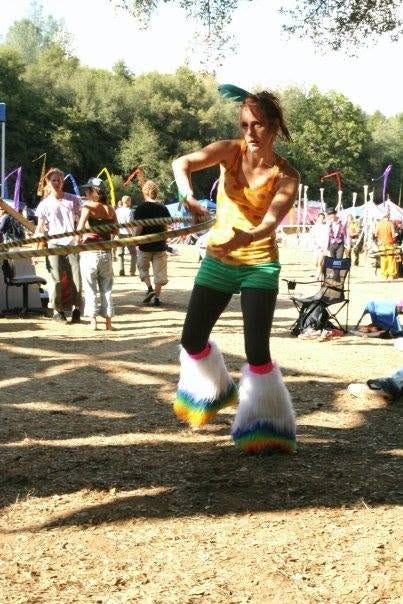
Symbiosis Music Festival 2007

When there was room, I stepped onto the stage with my hoop. Other times, I danced in the field among everyone else. Both experiences were deeply impactful in my dance practice. Whether hundreds of people were watching me or no one was, I was learning to respond to rhythm rather than impose myself upon it.

The music moved, so I moved.

The hoop changed direction, so I followed.

The crowd surged, softened, shouted, or fell quiet, and the whole atmosphere changed with it.

At its best, it felt less like a performance than a conversation occurring through bodies.

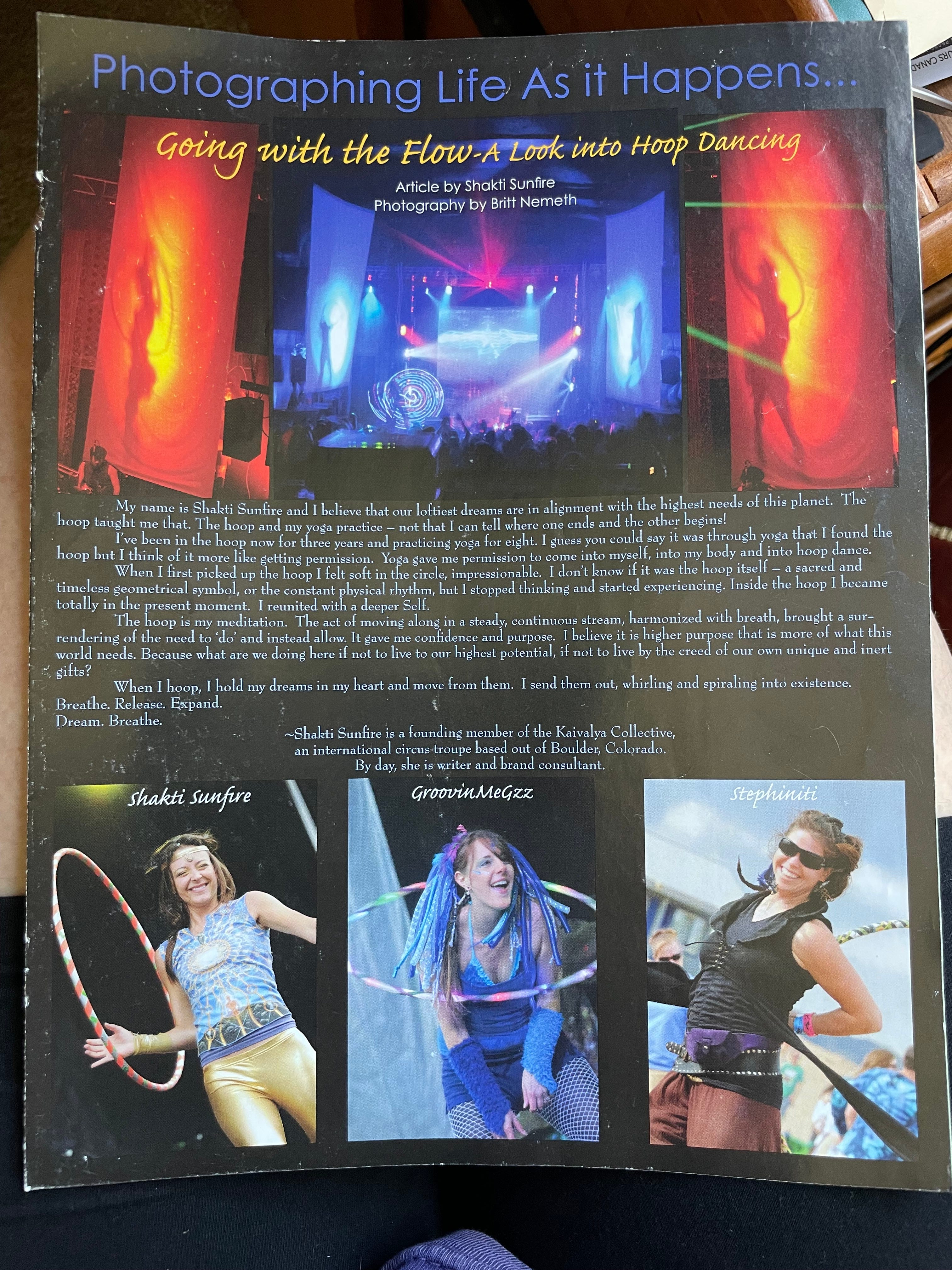
Over time, the women I had once watched with awe became people I practiced beside. Some became teachers, troupe members, collaborators, and friends. I moved to Portland at the end of 2007 and joined Kaivalya Hoop Dancers, entering a community that took the practice seriously while still preserving its sense of play.

I spent Portland’s rainy season obsessively practicing reverse currents. I wanted to move comfortably in both directions, even though one side initially felt completely unnatural. I repeated barrel rolls, breaks, pauses, and reversals until the awkward side slowly became less foreign.

Then severe back pain forced the practice to change again.

At twenty-three, there were days when preparing food or standing for longer than twenty minutes felt nearly impossible. I worried that I would lose the thing that had given my life so much momentum. I could no longer rely on constant waist hooping or the larger, more physically demanding movements that had once filled my practice.

But limitation created another kind of education.

I began exploring pauses, tosses, reversals, off-body movement, and smaller gestures that did not aggravate my back as severely. What initially felt like an interruption became a new creative vocabulary. The hoop was still teaching me, but now the lesson was adaptation.

Participation did not mean forcing myself through pain. It meant listening closely enough to remain in relationship with the practice as my body changed.

Hoop Dance Workshops from all over the country

Eventually, I began teaching more.

At festivals and community gatherings, I watched people pick up hoops with the same awkward uncertainty I had once felt. Some were convinced they could not do it. Others laughed the moment the hoop dropped. I learned that teaching movement required more than explaining where to place the feet or how to push the hips.

Sometimes I demonstrated.

Sometimes I offered a small correction.

Sometimes the most useful thing I could do was give someone enough room to fail without feeling embarrassed.

The moment when a movement finally entered another person’s body was unmistakable. Their face changed. The effort briefly disappeared. What had seemed impossible became available to them from the inside.

At EmergNsee Music Gathering (2008) in Oregon, I taught a HoopYoga and hoop-dance workshop attended by Meghan the Kat, one of the performers who had inspired me during my earliest years following String Cheese Incident. There was something beautifully disorienting about teaching a person I had once watched from a distance.

The hierarchy I had imagined between teacher and student dissolved.

She had given something to me through her movement. I had taken it into my own body, practiced it, altered it, combined it with what I had learned elsewhere, and now I was returning something to her.

Knowledge moved in a circle.

As I wrote at the time:

“It’s so beautiful how we all learn from each other, one hooper heart to the next.”

That sentence is covered in the earnestness of my early twenties, but I still believe what I was trying to say.

The practice did not belong to any one teacher, performer, or school. It passed between us. We learned through watching, imitating, experimenting, teaching, and being corrected. Every person carried the movement differently because every body was different. What one person offered was never reproduced perfectly; it was received, transformed, and passed onward.

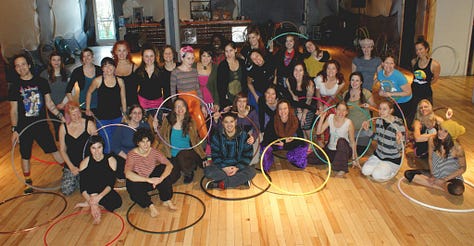
By the time I attended Hoop Camp in California in 2008, that circulating exchange had become a culture of its own.

Hoop Camp Retreat 2008

For years, I had known many hoopers primarily through grainy online videos, usernames, festival sightings, and brief encounters on tour. (I can’t help but to hear “This one time…at Band Camp”, if you grew up in the early 2000s, you’ll get this. )

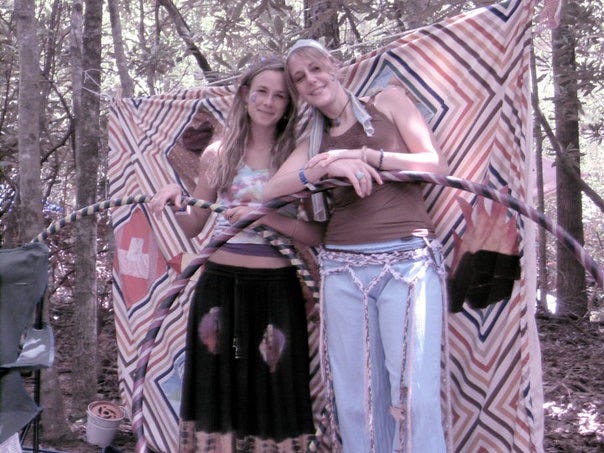
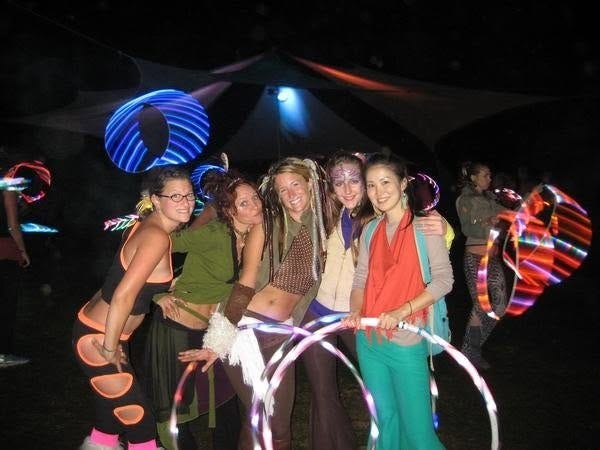
The people I had admired from across the country were suddenly gathered in one place. We practiced together during the day, exchanged ideas in workshops, ate together, laughed together, and filled the darkness with glowing hoops at night.

I was surrounded by women who had shaped my imagination before they ever knew my name, alongside childhood friends, college friends, troupe members, and the people who had become my chosen family on the road.

I described myself afterward as channeling “true Unicorn energy”—nonstop hooping, smiling, laughing, and learning. The language makes me laugh now, but the joy was real.

So was the sense that something larger than individual skill was taking place.

During the opening ceremony, we gathered around a prayer hoop and placed our intentions inside it. One by one, people spoke about what the hoop had done in their lives: the confidence it had restored, the friendships it had created, the grief it had carried, the joy it had unlocked, and the selves it had allowed them to discover.

In my blog afterward, I wrote:

“All of us have been changed by the hoop. It’s impacted our lives, brought us together, shown us ourselves, given us bliss, given us confidence…”

I would describe some of those experiences differently today. I no longer interpret every ecstatic weekend, meaningful coincidence, or intense connection through the same spiritual vocabulary I used then.

But I do not dismiss what happened simply because my language has changed.

We gathered around a shared practice.

We moved together.

We taught one another.

We placed hopes and prayers inside a circle.

And through repetition, rhythm, attention, and communal presence, many of us experienced real transformation.

What had begun as a cheap plastic toy had become a language through which we recognized one another.

A movement became a practice.

A practice became a community.

And somewhere along the way, community began to resemble ritual.


The Hunger We Keep Trying to Name

A movement became a practice.

A practice became a community.

And somewhere along the way, community began to resemble ritual.

I did not yet know the language of moral psychology or sociology. I had never heard Émile Durkheim’s phrase collective effervescence: the strange charge that can arise when people gather, move, sing, mourn, celebrate, and direct their attention toward something together.

I did not know Jonathan Haidt’s idea of the “hive switch”—the human capacity to loosen, temporarily, the boundaries of the individual self and become part of an emergent whole. Haidt has suggested that people sometimes need precisely these experiences of self-transcendence, and that music, dancing, communal worship, and local festivals can offer places where isolated individuals become participants in something larger.

I only knew what it felt like.

I knew the sensation of entering a field where hundreds of people were responding to the same rhythm. I knew what happened when musicians improvised, dancers answered, and the distance between performer and audience became briefly porous. I knew the feeling of looking across a dark campground and seeing circles of light moving through the trees.

I knew what it was to become less preoccupied with myself without disappearing entirely.

The experience was not one of erasing the individual. It was the experience of becoming an individual in relationship—one moving body inside a larger pattern.

Research on communal music and movement suggests that this feeling is not merely sentimental. Singing together can accelerate feelings of closeness among people who begin as strangers, while synchronized and physically demanding dance can deepen social bonding.

None of that proves that every festival is sacred, every crowd is healthy, or every ecstatic experience is transformative. Collective energy can be commercialized, manipulated, and turned toward destructive ends just as easily as generous ones. The same human capacity that allows people to lose themselves in music can also make groups tribal, conformist, or cruel.

But the possibility of misuse does not erase the underlying need.

We are creatures shaped for more than private thought.

We learn through imitation. We regulate one another through voice, expression, touch, and presence. We create attachment through repeated encounters. We remember through songs, meals, places, stories, gestures, and practices carried from one body into another.

And yet modern life increasingly offers us the image of these things without requiring our participation in them.

We can stream concerts without entering a crowd.

Watch other people dance without moving.

Order food without cooking or eating with anyone.

Read about ritual without belonging to a ritual community.

Listen to conversations about friendship while sitting alone.

Learn the vocabulary of embodiment while barely inhabiting our bodies.

We are connected to more people than previous generations could have imagined, yet much of that connection asks almost nothing of us beyond attention.

And attention is not the same as belonging.

Recognition is not reciprocity.

Watching is not participating.

A feed is not a feast.

The distinction matters because loneliness is not simply the absence of people. It can also be the absence of roles, obligations, shared places, repeated practices, and the experience of being meaningfully woven into other lives.

We have become very skilled at diagnosing the resulting ache.

We speak of trauma responses, dopamine, attachment styles, nervous-system dysregulation, depression, social anxiety, and burnout. These frameworks can be genuinely helpful. Naming an experience can make it less frightening and give us a place to begin.

But sometimes I wonder whether we are still trying to think our way out of conditions that cannot be changed through thought alone.

A widely shared passage attributed to Jay LeSoleil puts the mismatch much more sharply:

“You feel depressed and crazy because in every historical human culture known to anthropology, people sang together, danced together, and ate food together—and you don’t sing, you don’t dance, and you eat alone in the dark.

You are a singing ape, and you are meant to know fifty dances by heart, which hilltops are sacred, and the names of every plant it is possible to eat.”

The passage is deliberately sweeping. Depression cannot be reduced to a lack of communal dancing, and no single poetic statement can represent every historical culture.

But it lands because it names something our clinical language often misses.

The problem may not be only what is happening inside the isolated individual.

The problem may also be the world in which the individual is being asked to live.

A world where community has become optional, ritual has become content, food has become fuel, music has become background noise, and places are valued primarily for what can be extracted or built upon them.

A world in which we are encouraged to construct an identity but given fewer durable ways to belong.

Perhaps that is why our hunger attaches itself so easily to substitutes.

We mistake stimulation for aliveness.

Visibility for intimacy.

Agreement for community.

Intermittent attention for belonging.

We search for the feeling of being carried beyond ourselves through fandoms, online movements, romantic fixation, political tribes, spiritual consumerism, and endless streams of other people’s lives. Some of these can produce real relationships and genuine meaning. But they can also leave the body sitting in the same room, staring through the same glass, still longing to be somewhere it is needed.

When I look back now, I do not think I miss only the performances, the festivals, or the person I was at twenty-three.

I miss having a practice that placed me inside a living network of people, music, places, responsibilities, and shared memory.

I knew which songs could shift the energy of an entire field.

I knew who would help me carry my hoops.

I knew where people gathered after the music ended.

I had teachers, students, collaborators, and friends.

I had something to offer the gathering, and the gathering had something to ask of me.

That is different from being observed.

It is different from being liked.

It is different from being included in a group chat.

It is participation.

In 2014, I tried to describe this in a short poem:

Grateful for Dance

Portal to divine connection
A form of sacred expression
Of outward shining expansion
Here I am, calling to attention

It’s time to move
It’s time to be free
It’s time to prove
Your non-complacency

So please follow me
Down this path of dance divinity
It’s time we realize
It’s not you and me, it’s we.

Some of the language makes me smile now. But that final line contains an intuition I still trust. It was never only about what happened to me inside the hoop.

It was about what became possible between us.

This does not mean we need to recreate the past, abandon technology, or spend our lives at music festivals. Nor does it mean every older community was nurturing. Communities can constrain, exclude, punish, and demand conformity. Nostalgia can make us forget that belonging has often come at a cost.

The question is not how to return to an imaginary golden age.

The question is what forms of participation human beings still need—and how we might create them honestly now.

Where can we sing without needing to be singers?

Dance without needing to perform?

Prepare food that will be eaten by more than one person?

Learn the names of the plants and animals around us?

Create rituals that give grief, gratitude, transition, and memory somewhere to live outside our private minds?

Practice something regularly enough that it changes us?

Modern people are drowning in information about how to become healthier, happier, more regulated, more spiritual, and more connected. But information cannot substitute for the meal, the chorus, the dance, the garden, the ceremony, the friendship, or the repeated practice.

Some wisdom can only be received through participation.

And perhaps some forms of loneliness cannot be solved by understanding ourselves more perfectly. Perhaps they require becoming part of something that does not begin and end with the self.

That is the ancient hunger beneath modern life.

Not merely the hunger to believe something.

The hunger to belong to a living world again.

And we may not be able to think our way back into that world.

We may have to participate our way home.


Subscribe now

Articles that influenced this series:

The Way of the Gods: Clarifying Paganism

Power Through Truth

Mediation, Myth and Mystery

the World of GroovinMeGzz: Is That a Hula-HoOp?? (A story of a hooper…)

Projection, Power, and the Pagan Revival

When Belief Becomes Control

This episode isn’t about religion versus religion.
It’s about power, fear, and what happens inside belief systems when conformity becomes more important than honesty.

In this conversation, I’m joined by Sigrin, founder of Universal Pagan Temple.

She’s a practicing Pagan, a witch, a public educator, and someone who speaks openly about leaving Christianity after experiencing fear-based theology, spiritual control, and shame. I want to pause here, because even as an agnostic, when I hear the word witch, my brain still flashes to the cartoon villain version. Green. Ugly. Evil. That image didn’t come from nowhere. It was taught.

One of the things we get into in this conversation is how morality actually functions in Pagan traditions, and how different that framework is from what most people assume.

She describes leaving Christianity not as rebellion, but as self-preservation. And what pushed her out wasn’t God. It was other Christians.

For many people, Christianity isn’t learned from scripture.
It’s learned from other Christians.

The judgment.
The constant monitoring.
The fear of being seen as wrong, dangerous, or spiritually compromised.

In high-control Christian environments, conformity equals safety. Questioning creates anxiety. And the fear of social punishment often becomes stronger than belief itself.

When belonging is conditional, faith turns into survival.


What We Cover in This Conversation:

Paganism Beyond Aesthetics

A lot of people hear “Paganism” and immediately picture vibes, trends, or cosplay. We spend time breaking that assumption apart.

  • Sigrin explains that many beginners jump straight into ritual without actually invoking or dedicating to the divine.
  • She talks about the difference between aesthetic practice and intentional practice.
  • For people who don’t yet feel connected to a specific god or goddess, she offers grounded guidance on how to approach devotion without forcing it.
  • We talk about the transition she experienced moving from Christianity, to atheism, to polytheism.
  • We explore the role of myth, story, and symbolism in spiritual life.
  • She shares her experience of feeling an energy she couldn’t deny, even after rejecting belief entirely.
  • We touch on the wide range of ways Pagans relate to pantheons, including devotional, symbolic, ancestral, and experiential approaches.

The takeaway here isn’t “believe this.”
It’s that Paganism isn’t shallow, trendy, or uniform. It’s relational.


No Holy Book, No Central Authority

One of the most misunderstood aspects of Paganism is the absence of a single text or governing authority.

  • Sigrin references a line she often uses: “If you get 20 witches in a room, you’ll have 40 different beliefs.”
  • We talk about how Pagan traditions don’t operate under enforced doctrine or centralized belief.
  • She brings up the 42 Negative Confessions from ancient Egyptian tradition as an example of ethical self-statements rather than commandments.
  • These function more like reflections on character than laws imposed from above.
  • We compare this to moral storytelling across different myth traditions rather than rigid rule-following.
  • She emphasizes intuition and empathy as core tools for ethical decision-making.
  • I add the role of self-reflection and introspection in systems without external enforcement.

This raises an important question: without a script, responsibility shifts inward.

Why This Can Be Hard After Christianity

We also talk honestly about why this freedom can be uncomfortable, especially for people leaving authoritarian religion.

  • Sigrin notes how difficult it can be to release belief in hell, even after leaving Christianity.
  • Fear doesn’t disappear just because belief changes.
  • When morality was once externally enforced, internal trust has to be rebuilt.
  • Pagan paths often require learning how to sit with uncertainty rather than replacing one authority with another.

This isn’t easier.
It’s quieter.
And it asks more of the individual.

That backdrop matters, because it shapes how Paganism gets misunderstood, misrepresented, and framed as dangerous.


The “Pagan Threat” Narrative

One of the reasons Pagan Threat has gained attention and sparked controversy is not just its content, but whose voice it carries and how it’s framed at the outset.

  • The book was written by Pastor Lucas Miles, a senior director with Turning Point USA Faith and author of other conservative religious critiques. The project is positioned as a warning about what Miles sees as threats to the church and American society. The foreword was written by Charlie Kirk, founder of Turning Point USA. His introduction positions the book as urgent for Christians to read.

From there, the book makes a striking claim:

  • It describes Christianity as a religion of freedom, while framing Paganism as operating under a hive mind or collective groupthink.
A key problem is which Paganism the book is actually engaging.

  • The examples Miles focuses on overwhelmingly reflect liberal, online, or activist-adjacent Pagan spaces, particularly those aligned with progressive identity politics.
  • That narrow focus gets treated as representative of Paganism as a whole.
  • Conservative Pagans, reconstructionist traditions, land-based practices, and sovereignty-focused communities are largely ignored.

As a result, “wokeness” becomes a kind of explanatory shortcut.

  • Modern political anxieties get mapped onto Paganism.
  • Gender ideology, progressive activism, and left-leaning culture get blamed on an ancient and diverse spiritual category.
  • Paganism becomes a convenient container for everything the author already opposes.

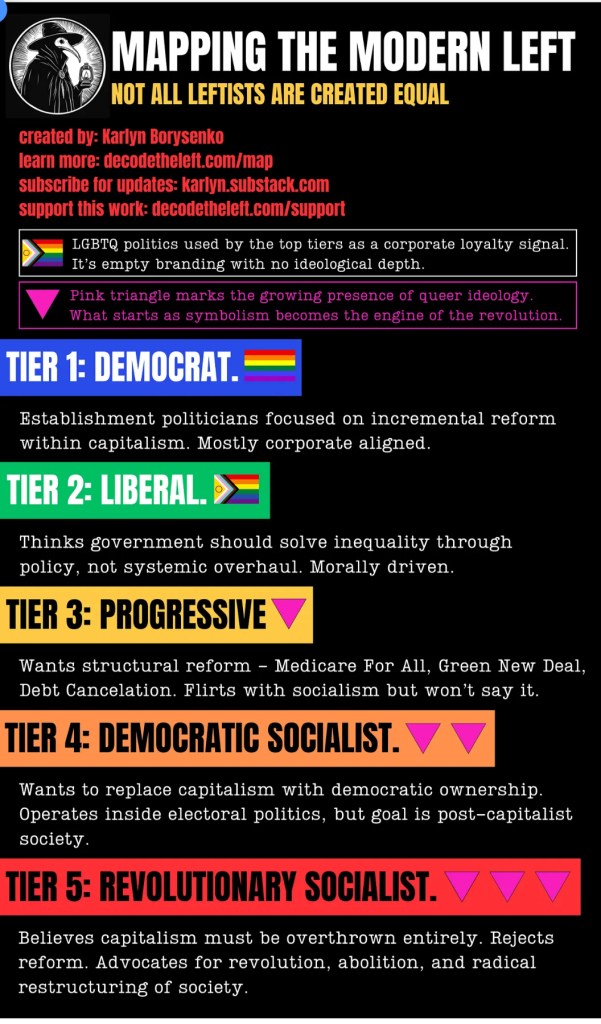
We also talk openly about political realignment, and why neither of us fits cleanly into the right/left binary anymore. I raise the importance of actually understanding Queer Theory, rather than using “queer” as a vague identity umbrella.

To help visualize this, I reference a chart breaking down five tiers of the far left, which I’ll include here for listeners who want context.

Next, in our conversation, Sigrin explains why the groupthink accusation feels completely inverted to anyone who has actually practiced Paganism.

  • Pagan traditions lack central authority, universal doctrine, or an enforcement mechanism.
  • Diversity of belief isn’t a flaw. It’s a defining feature.
  • Pagan communities often openly disagree, practice differently, and resist uniformity by design.

The “hive mind” label ignores that reality and instead relies on a caricature built from a narrow and selective sample.

 “Trotter and Le Bon concluded that the group mind does not think in the restricted sense of the word. In place of thoughts, it has impulses, habits, and emotions. Lacking an independent mind, its first impulse is usually to follow the example of a trusted leader. This is one of the most firmly established principles of mass psychology.”  Propaganda by Edward L. Bernays

We contrast this with Christian systems that rely on shared creeds, orthodoxy, and social enforcement to maintain cohesion.

Accusations of groupthink, in that context, often function as projection from environments where conformity is tied to spiritual safety.

In those systems, agreement is often equated with faithfulness and deviation with danger.

Globalism, Centralization, and Historical Irony

We end the conversation by stepping back and looking at the bigger historical picture.

  • The book positions Christianity as the antidote to globalism.
  • At the same time, it advocates coordinated religious unification, political mobilization, and cultural enforcement.
  • That contradiction becomes hard to ignore once you zoom out historically.

Sigrin points out that pre-Christian Pagan worlds were not monolithic.

  • Ancient polytheist societies were highly localized.
  • City-states and regions had their own gods, rituals, myths, and customs.
  • Religious life varied widely from place to place, even within the same broader culture.

I reference The Darkening Age by Catherine Nixey, which documents this diversity in detail.

  • Pagan societies weren’t unified under a single doctrine.
  • There was no universal creed to enforce across regions.
  • Difference wasn’t a problem to be solved. It was normal.

Christianity, by contrast, became one of the first truly globalizing religious systems.

  • A single truth claim.
  • A centralized authority structure.
  • A mandate to replace local traditions rather than coexist with them.

That history makes the book’s framing ironic.

  • Paganism gets labeled “globalist,” despite being inherently local and decentralized.
  • Christianity gets framed as anti-globalist, while proposing further consolidation of belief, power, and authority.

What This Is Actually About

This isn’t about attacking Christians as people.
And it’s not about defending Paganism as a brand.

It is a critique of how certain forms of Christianity function when belief hardens into certainty and certainty turns into control.

Fear-based religion and fear-based ideology share the same problem.
They promise safety.
They demand conformity.
And they struggle with humility.

That doesn’t describe every Christian.
But it does describe systems that rely on fear, surveillance, and moral enforcement to survive.

What I appreciate about this conversation is the reminder that spirituality doesn’t have to look like domination, hierarchy, or a battle plan.

It can be rooted. Local. Embodied.

It can ask something of you without erasing you.

And whether someone lands in Paganism, Christianity, or somewhere else entirely, the question isn’t “Which side are you on?”

It’s whether your beliefs make you more honest, more grounded, and more responsible for how you live.

That’s what I hope people sit with after listening.

Ways to Support Universal Pagan Temple 

Every bit of support helps keep the temple lights on, create more free content, and maintain our community altar. Thank you from the bottom of my heart! 

🖤
☕

 Buy me a coffee (one-time support)  
https://www.buymeacoffee.com/UniversalPaganTemple

💝

 Make a direct donation to the temple  
https://www.paypal.com/donate?hosted_button_id=6TMJ4KYHXB36U

🌟

 Become a Patreon/Subscribestar member (monthly perks & exclusive content)  
https://www.patreon.com/universalpagantemple
https://www.subscribestar.com/the-pagan-prepper

📜

 Join our Substack community (articles, rituals & updates)  
https://universalpagantemple.substack.com

🔮

 Book a Rune or Tarot reading (Etsy)  
https://www.etsy.com/shop/RunicGifts

📚

Grab our books on Amazon  
 •Wicca & Magick: Complete Beginner’s Guide  
https://www.amazon.com/Wicca-Magick-Complete-Beginners-Guide-ebook/dp/B019MZN8LQ

* Runes: Healing and Diet by Sigrún and Freya Aswynn
https://www.amazon.com/dp/B08FP25KH4#averageCustomerReviewsAnchor

• The Egyptian Gods and Goddesses for Beginners  
https://www.amazon.com/Egyptian-Gods-Goddesses-Beginners-Worshiping/dp/1537100092

Even just watching, liking, commenting, and sharing is a huge help!  
Blessed be 

🌀

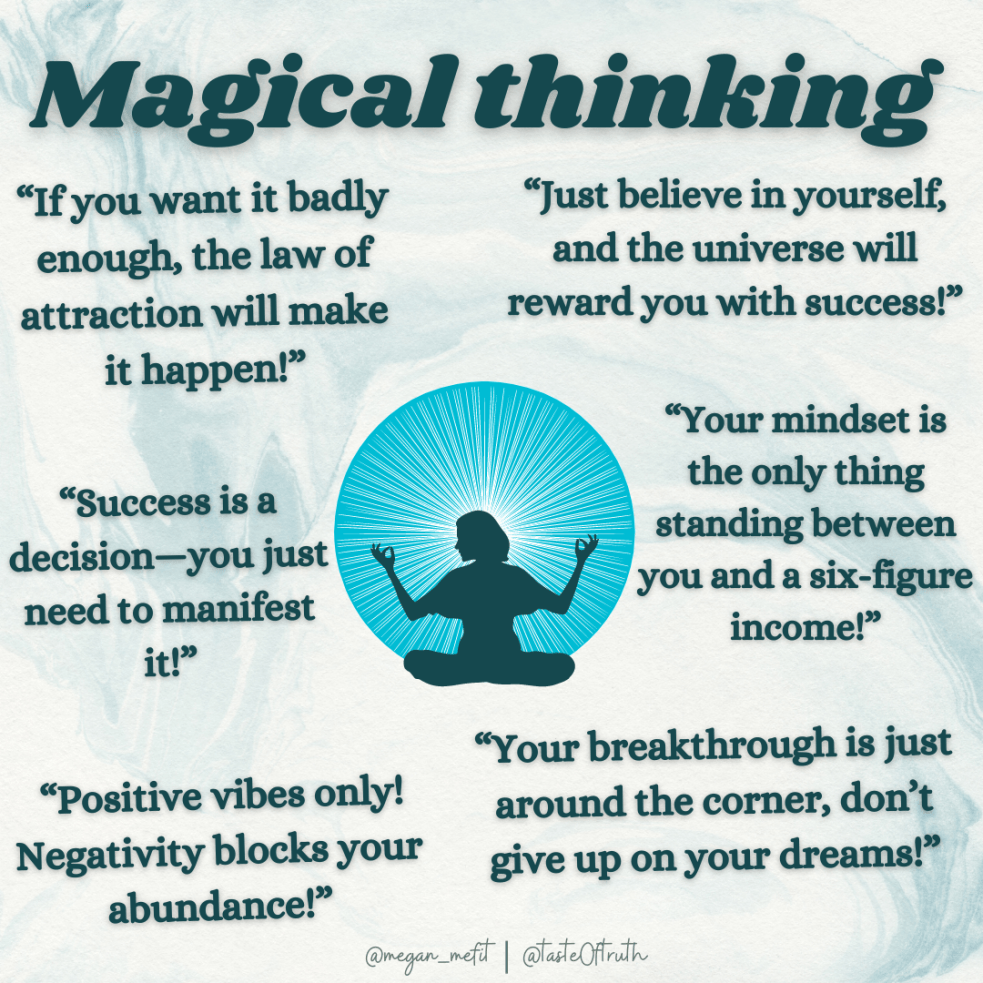
The Dark Side of Manifestation and MLMs

✨Let’s talk Manifestation & MLMs✨

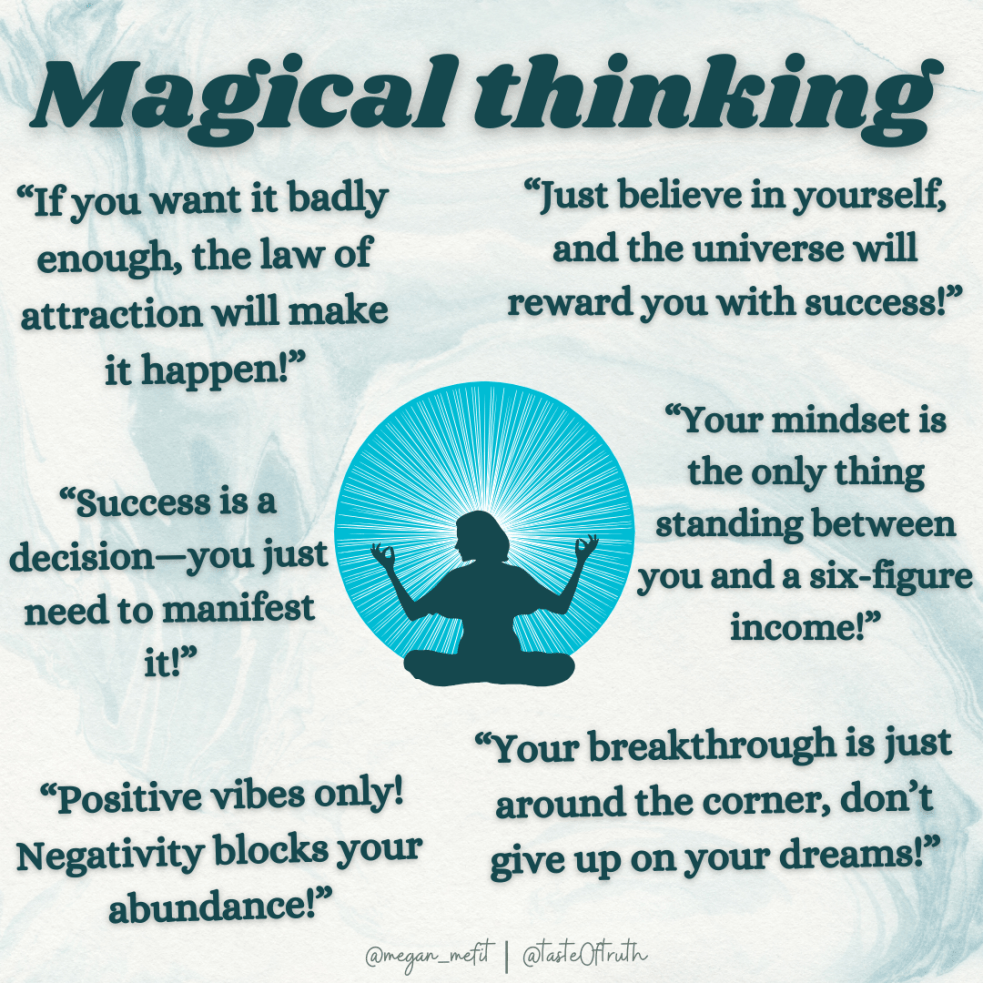
In recent decades, the Law of Attraction has become one of the most influential belief systems in wellness, self-help, and multilevel marketing (MLM) circles. Its premise is seductively simple: your thoughts shape your reality. Think positively, and abundance will flow; dwell on negativity, and you’ll attract misfortune.

We have discussed the pitfalls of Law of attraction in a previous episode, you can find here.

🎙️ Another throwback episode is linked below, where I unpack my journey from wellness fanatic within MLM into a high-control religion. Together, we explore the wild “crunchy hippie to alt-right pipeline.” 🌿➡️🛑 social media, influencers, and wellness hype quietly nudge people toward extreme ideas, and in this episode, we break down exactly how. 🎧🔥

This modern doctrine of “mind over matter” is often traced to The Secret (2006) by Rhonda Byrne, but its genealogy is much older. It reaches back to New Thought philosophy of the 19th century, where figures like Ralph Waldo Emerson, Phineas Quimby, and later Mary Baker Eddy (founder of Christian Science) claimed that divine thought itself was the engine of reality. These Mind Cure and faith healing movements linked spirt and matter together. Disease, poverty, and suffering were seen as products of “wrong or stinking thinking.” Salvation was not just spiritual but cognitive: change your thinking, change your life.

and so again I say: It is shockingly right instead of shockingly wrong of you to be prosperous. Obviously, you cannot be very happy if you are poor and you need not be poor. It is a sin. –Catherine Ponder (The Dynamic Laws of Prosperity)

In fact, it is the search for spiritual healing of the body that led to what is known today as prosperity consciousness or in Christian evangelism, it’s prosperity theology.

That intellectual lineage matters because it shows how the Law of Attraction has always been more than a harmless pep talk. It represents a cosmology of control, one that locates all responsibility (and blame) within the individual mind. As we have discussed many times before, Jonathan Haidt observes in The Righteous Mind, belief systems serve a dual function: they bind communities together and blind them to alternative explanations.

In this sense, the Law of Attraction doesn’t just inspire positive thinking; it narrows. By framing success and failure as purely mental vibrations, it obscures structural realities like economic inequality, physical health and genetic limitations, racism, or corporate exploitation.

And that narrowing is precisely what makes it the perfect handmaiden to MLM culture.


When Positive Thinking Becomes a Business Model

Robert L. FitzPatrick, in False Profits and Ponzinomics, describes MLMs as “endless chain” recruitment schemes. What sustains them isn’t product sales but the constant influx of hopeful recruits. Yet these schemes require something more than numbers: they require belief.

Here, the Law of Attraction becomes the MLM’s best salesman. Distributors are told:

  • Failure isn’t about the structure of the business; it’s about your mindset.
  • Doubt is “negative energy” that will block your success.
  • Quitting is not just a business choice but a moral failing.

In the Amway training program, the “ABCs of Success” are “Attitude, Belief and Commitment.” Attitude was the key which must be guarded. Don’t let anyone steal your attitude. Negative was defined as “whatever influence weakens your belief and commitment in the business” -False Profits

This is where Norman Vincent Peale’s “positive thinking” gospel dovetails with MLM. In his 1948 book Positive Thinking for a Time Like This, Peale popularized the phrase

“Let go and let God. Let Him take over your life and run it. He knows how.”

While originally a call to spiritual surrender, the phrase has since been weaponized in countless contexts from Holiness movements to Alcoholics Anonymous to prosperity preaching. At its worst, it functions as a silencer: don’t question, don’t resist, don’t think critically. Just “let go,” and trust that outcomes (or uplines) will provide.

Eastern Orthodox Christianity has a word for this: prelest. It’s the belief that human beings are so easily deceived that any private sense of spiritual progress — a feeling of clarity, joy, empowerment, even a mystical experience — can’t be trusted on its own. Without humility and the guidance of a spiritual father, you’re told it may just be pride, delusion, or the devil in disguise.

That’s the trap: you can’t trust your own mind, heart, or gut. The only “safe” option is obedience to the system. Which is exactly how MLMs and other high-control groups operate — undermining self-trust to keep you dependent.

Nietzsche would have called this a kind of slave morality, a belief system that encourages resignation to suffering rather than rebellion against unjust structures. The Law of Attraction, framed in this way, doesn’t challenge MLM exploitation; it sanctifies it.

More powerful than any product, charismatic leader, or compensation plan, the MLM mindset materials (the tapes, courses, and “personal development” kits) are the prime tools used to recruit and control distributors. Once you’re in the system, you’re encouraged to buy these materials week after week, keeping you invested emotionally and financially while feeding the company’s bottom line.

I went back through my Facebook to find some goodies for you! 😜This photo says “My energy creates my reality. What I focus on is what I will Manifest.” Here is the original caption so you can hear how brainwashed I was. “💥🙌🏼Belief is a feeling of certainty about something, driven by emotion. Feeling certain means that it feels true to you and therefore it is your reality. 💥🙌🏼 💪🏼 What you focus on you find 💪🏼 👀 You’ve got to believe it, to see it 👀”

Flashback to my first corporate event Aug 2016. My upline purchased my flight basically forcing me to go.

My caption at the time: 🤮

🔥IGNITE YOUR VISION! 🔥
⚡Attended an event that changed my life. Showed me the massive vision of this company.
🤗Join our passionate, growing team of 18-35-year-olds striving for extraordinary lives and ownership of health, dreams, and contributions.
🤩Returning to this LIFE CHANGING event soon! Nashville, TN—let’s learn, grow, and celebrate!

Sounds inspiring, right? Except what they’re really selling is mandatory product purchases, endless hype, and a community that keeps you chasing the next status milestone. That “massive vision” isn’t about your health or dreams—it’s about the company’s bottom line.

Words like passionate, extraordinary, innovators, ownership are carefully chosen psychological nudges, making you feel like life itself is on the line if you’re not on board. And the countdown to the next “life-changing” event? Keeps you spending, attending, and emotionally hooked.

This is exactly what FitzPatrick calls out in Ponzinomics: the sales rep is the best customer. Only a tiny fraction of participants earn anything; the rest are paying to stay inspired.

More flashback images from my cult days….


The Psychological Toll

When these elements collide the New Thought inheritance of “mind over matter,” Peale’s positive thinking, religious community networks and MLM compensation plans… the result is a high-control environment dressed in empowerment language.

The outcomes are rarely empowering:

  • Blame and guilt when inevitable losses occur.
  • Anxiety from the demand to maintain “high vibrations.”
  • Suppression of doubt, lest skepticism be mistaken for weakness.
  • Financial harm disguised as personal failure.

In wellness communities, this logic extends beyond money. If essential oils don’t heal your illness, it’s because your mindset was wrong. If the diet doesn’t work, it’s because you didn’t “believe” enough. Structural realities (biology, medicine, inequality) are flattened into personal responsibility.

As Haidt warns, morality (and by extension ideology) can both bind and blind. The Law of Attraction, when paired with MLM, binds participants into a shared culture of hope and positivity while blinding them to exploitation.


Connecting the Dots: Bodybuilding, Metabolism & Team Isagenix

A couple weeks ago on the podcast, I shared about my bodybuilding years and the metabolic fallout I still live with today. I had forgotten how much of that season was actually entangled with my Isagenix obsession. My upline (the couple who enrolled me) were a part of Team Isagenix®, and I craved the validation of being “seen” as a successful athlete inside that community.

The requirements were brutal: placing in the top three of multiple competitions in a short span of time. So, between May 2017 and October 2018, I crammed in four shows in just 18 months. No off-season. No recovery. Just constant prep cycles. My metabolism never had a chance to stabilize, and I pushed myself past healthy limits. I wrecked my body and I’m still paying the price.

This is why I push back so hard when people insist that success is all about having a “positive enough” attitude to manifest it. My mindset was ironclad. What I lacked the conscious awareness that valued human health over recruitment and body image. That drive wasn’t just about stage lights and trophies. It was about proving my worth to an MLM culture that dangled prestige as the price of belonging. Team Isagenix® made the bar steep, and I was determined to clear it, no matter the cost.

And if you need proof of how deep this “mindset over matter” indoctrination goes, look no further than my old upline…now rebranded as a Manifestation Coach. Picture the classic boss-babe felt hat, paired with a website promising “signature mindset tools for rapid results.” According to her, if fear or doubt was “shrinking your dreams,” this was your moment to “flip it.” She name-drops 8-figure companies, influencers, and visionaries (the usual credibility glitter) while selling memberships, live events, and 7-day challenges.

It’s the same pitch recycled: your struggle isn’t systemic, it’s your mindset. If you’re not living your “life you truly love,” it’s because you haven’t invested enough in flipping the script (with her paid framework, of course). The MLM grind culture just got a new coat of “manifesting” paint.


🧠 Isagenix Programs & Their Psychological Impact

  • Healthy Mind and Body Program: A 60-day “mindset” initiative framed as holistic wellness. In practice, it ties product use to personal development, creating behavioral conditioning and binding members into a sense of shared identity and belonging. 🚩
  • IsaBody Challenge: A 16-week transformation contest requiring regular Isagenix product purchases. Completion comes with swag and vouchers; finalists are paraded as “success stories,” gamifying loyalty and dangling prestige as bait. The grand prize winner earns $25,000 but most participants earn only deeper entanglement. 🚩
  • Team Isagenix: Marketed as a prestige group for elite athletes with current national certifications, offering exclusivity and aspirational branding. This elevates certain members as “proof” of the products’ legitimacy, fueling both loyalty and recruitment. 🚩
  • Product Consumption: Isagenix requires 100 PV every 30 days just to remain “active.” This equates to about $150/month you HAVE to spend. On paper, bonuses and ranks promise unlimited potential. In reality, most associates struggle to recoup even their monthly product costs. Personal development rhetoric and community belonging often eclipse these financial realities, keeping participants cycling through hope, debt, and blame. 🚩

🤮🐦‍🔥 “Transform Your Life with Isagenix | Empowering Wellness and Wealth” 🐦‍🔥 🤮

Watch closely, because this is where the magic happens: the company paints a picture of limitless opportunity, but as Robert L. FitzPatrick lays out in Ponzinomics, the secret is that the sales rep is the best customer. That’s right… the real profits aren’t coming from your vague dreams of financial freedom; they’re coming from the people who are already buying the products and trying to climb the ranks.

The numbers don’t lie. According to Isagenix’s own disclosure: the overall average annual income for associates is $892. Among those who actually earned anything, the average jumps to $3,994. Do the math: $892 ÷ $3,994 ≈ 0.223 — meaning only about 22% of associates earn anything at all. The other 78%? Zero. Nada. Zilch.

And before you start fantasizing about that $3,994, remember: that’s before expenses. Let’s run a realistic scenario based on actual product spend:

  • $150/month on products or promotional materials = $1,800/year → net ≈ $2,194 − $1,800 = $1,194 before other costs.
  • Factor in travel, events, or socials? That $1,194 could easily drop to near zero…or negative.

The point: the so-called “income potential” evaporates fast when you account for the mandatory spending MLMs require. The only thing truly transformed is the company’s bottom line, not yours.

No wonder the comments are turned off.

Apparently, nobody actually crunches the numbers while the marketing spiel promises energy, strength, and vitality as if a shake could fix financial exploitation, metabolic burnout, and guilt-tripping at the same time.

My story is just one case study of how these tactics play out in real lives: I was recruited through trusted connections, emotionally manipulated with promises of transformation, pressured into relentless product use, and left with financial strain and long-lasting health consequences. That’s the “empowerment” MLMs sell and it’s why scrutiny matters.


Cultural Ecosystems That Enable MLMs


MLMs don’t operate in a vacuum. They flourish where belief structures already normalize submission to authority, truth-claims, and tightly networked communities. Evangelicals and the LDS Church provide striking examples: tight-knit congregations, missionary training in persuasion, and a cultural emphasis on self-reliance and communal obligation create fertile ground for recruitment.

Companies like Nu Skin, Young Living, doTERRA, and Melaleuca have disproportionately strong followings in Utah and among Mormon communities. FitzPatrick notes that MLMs thrive where trust networks and shared values make persuasion easier. The kind of environment where aspirational marketing and “prestige” teams can latch onto pre-existing social structures.

In short, it’s not just the products or the promises of positive thinking; it’s where belief, community, and culture all collide… that allows MLMs to hook people and keep them chasing elusive success.


Beyond Magical Thinking

The critique, then, is not of hope or positivity per se, but of weaponized optimism. When mantras like let go and let God or just thinking positive to manifest it are used to shut down discernment, discourage action, or excuse exploitation, they cease to be spiritual tools and become instruments of control.

Nietzsche challenged us to look beyond systems that sanctify passivity, urging instead a confrontation with reality even when it is brutal. FitzPatrick’s work extends this challenge to the world of commerce: if we truly care about empowerment, we must be willing to see how belief systems can be manipulated for profit.

That’s why MLMs and the Law of Attraction deserve scrutiny. Not because they promise too much, but because they redirect responsibility away from unjust structures and onto the very people they exploit.


Coming Up: A Deeper Dive

Next week on the podcast, I’ll be speaking with Robert L. FitzPatrick, author of False Profits and one of the world’s leading experts on MLMs. With decades of research, FitzPatrick has testified in court cases exposing fraudulent MLM schemes and helped unravel the mechanisms behind these multi-billion-dollar operations. He’s seen firsthand how MLMs manipulate culture, co-opt spirituality, and turn belief itself into a product.

Stay tuned. This is a conversation about more than scams, it’s about the machinery of belief, and how it shapes our lives in ways we rarely see.

Taste0ftruth Tuesdays Previous blogs on MLMs

The MLM Illusion: Selling a Dream or a Trap?

Why MLMs Exploit Magical Thinking

Uncover how MLMs and high-control religions exploit narratives to control and isolate you

Lottery Odds vs MLM: Which Poses a Higher Financial Risk?

Previous Interviews:

Deconstructing Deception: MLMs, Exploitation & Online Influencers

From Serendipity to Scrutiny: The Truth Behind MLMs and Coercive Control

References/Suggested Reading

  • Byrne, Rhonda. The Secret. New York: Atria Books, 2006.
  • Eddy, Mary Baker. Science and Health with Key to the Scriptures. Boston: The Christian Science Publishing Society, 1875.
  • Emerson, Ralph Waldo. The Essential Writings of Ralph Waldo Emerson. Edited by Brooks Atkinson. New York: Modern Library, 2000.
  • FitzPatrick, Robert L. False Profits: Seeking Financial and Spiritual Deliverance in Multi-Level Marketing and Pyramid Schemes. Charlotte, NC: Herald Press, 1997.
  • FitzPatrick, Robert L. Ponzinomics: The Untold Story of Multi-Level Marketing. Charlotte, NC: Skyhorse Publishing, 2020.
  • Haidt, Jonathan. The Righteous Mind: Why Good People Are Divided by Politics and Religion. New York: Vintage Books, 2012.
  • Nietzsche, Friedrich. On the Genealogy of Morals. Edited by Walter Kaufmann. New York: Vintage Books, 1989 (originally published 1887).
  • Peale, Norman Vincent. Positive Thinking for a Time Like This. New York: Prentice-Hall, 1948.
  • Quimby, Phineas P. The Quimby Manuscripts. Edited by Horatio W. Dresser. New York: Thomas Y. Crowell, 1921.
  • Wallace, David Foster. “Consider the Lobster.” In Consider the Lobster and Other Essays. New York: Little, Brown, 2005. (Useful on consumer culture critique, if you want a modern edge.)

Understanding the Evolution of Witch Hunts

Welcome to Taste of Truth Tuesdays, where we unravel the strange, the mysterious, and today—the terrifying. This post delves into one of history’s darkest chapters: the witch hunts. We’ll explore how fear, superstition, and control shaped centuries of persecution and how these patterns are still evident in the modern world. Witch hunts aren’t just a thing of the past—they’ve evolved.

The European Witch Hunts – Early Modern Europe

Let’s start in early modern Europe. Scholar Peter Maxwell-Stuart illuminates the rise of demonology, where the fear of magic and the devil became a weapon of control for those in power. Beginning in the 1500s, political and religious leaders manipulated entire populations by tapping into their deep-rooted fears of ‘evil forces.’ The Church, in particular, weaponized these beliefs, positioning itself as the protector against witches—women (and sometimes men) believed to consort with devils or conjure dark forces. As the idea took hold that witches could be behind every famine, illness, or death, this created a perfect storm of paranoia.

Stuart argues that demonology texts—many sanctioned by the Church—fueled mass hysteria, feeding the narrative that witches were not just local troublemakers but cosmic agents of Satan, hell-bent on destroying Christendom. Ordinary people lived in constant fear of betrayal by their neighbors, leading to accusations that could swiftly escalate into brutal trials, with the accused often tortured into confessing their ‘diabolical’ crimes.

To understand how demonology in Europe gained such traction, we need to go back to Augustine of Hippo. We have mentioned him before in previous episodes, whose writings in the 4th and 5th centuries laid the foundation for Christian perceptions of the devil and demons. Augustine’s ideas, especially in City of God, emphasized the constant spiritual warfare between good and evil, casting demons as agents of Satan working tirelessly to undermine God’s plan. He argued that humans were caught in this cosmic battle, susceptible to the devil’s temptations and tricks.

‘Augustine before a group of demons’, from ‘De civitate Dei’ by Augustine, trans. by Raoul de Presles, late 15th Century

Augustine’s Doctrine of Demons

According to Augustine, demons were fallen angels who had rebelled and now sought to deceive and destroy humanity. While Augustine didn’t explicitly discuss witches, his interpretation of demons helped fuel the belief that humans could be manipulated by evil spirits—whether through pacts, possession, or magical practices. This idea later influenced medieval and early modern European demonology.

Augustine’s views on original sin—that humanity is inherently flawed and in need of salvation—also intensified fears that people, especially women (who were seen as ‘weaker’ spiritually), were more vulnerable to the devil’s influence.

SIDE NOTE: We have discussed the theological concept of original sin in previous episodes: Franciscan wisdom navigating spiritual growth and challenges with Carrie Moore, we specifically spun the doctrine of original sin on its head and then also Unpacking Religious Trauma: Navigating the Dynamics of Faith Deconstruction with Doctor Mark Karris.

In the centuries that followed, these ideas were weaponized to justify witch hunts. Augustine’s legacy is evident in how later theologians and demonologists, such as Heinrich Kramer (author of the infamous Malleus Maleficarum), built upon his ideas of demonic interference to condemn witchcraft as a real, existential threat to Christian society.

Maxwell-Stuart reveals that the creation of demonology wasn’t just religious but deeply political. Kings and clergy alike realized they could consolidate power by stoking the flames of fear, casting witches and sorcerers as a common enemy. The trials served a dual purpose: they reinforced the Church’s supremacy over the spiritual realm and gave ruling elites a tool for maintaining social order. Accusing someone of witchcraft was an effective way to silence dissent or settle personal scores.

Fear as a Tool of Control

Fear wasn’t just manufactured by rulers—it was deeply ingrained in the societal, religious, and legal systems of the time. Scholar Sophie Page reveals how beliefs in magic and the supernatural were not fringe ideas but core components of medieval and early modern life. Magic wasn’t merely a mysterious force; it was a pervasive explanation for any calamity. Failed harvests, plagues, or unexplained illnesses were often attributed to witches or the devil, creating a society constantly on edge, where supernatural forces were believed to lurk behind every misfortune.

By embedding these beliefs into legal codes, authorities could target suspected witches or sorcerers under the guise of protecting the community. Page’s work illustrates how rituals once seen as protective or healing gradually became demonized. Harmless folk practices and herbal remedies, used for centuries, began to be recast as witchcraft, especially when things went wrong. People, particularly those in rural areas, were vulnerable to this thinking because religion and superstition were inseparable from daily life.

Partisan scholars have long debated whether Catholics or Protestants were the “real” witch hunters, but they’ve made little headway. One important change in Christian morality, as discussed by John Bossie, occurred between the 14th and 16th centuries. The moral focus shifted from the Seven Deadly Sins—pride, greed, lust, envy, gluttony, anger, and sloth—to the Ten Commandments. This change, influenced by reform movements that shaped the Protestant Reformation, prioritized sins against God over those against the community. Idolatry and the worship of false gods became viewed as the gravest offenses.

This redefinition of witchcraft followed suit. Instead of being seen as harmful actions toward neighbors, witchcraft was now linked directly to devil worship and regarded as serious heresy. Scholars and church leaders began merging various forms of folk magic and healing into this new narrative, suggesting that practitioners were either knowingly or unknowingly making deals with the devil. Confessions of pacts or attendance at “witch gatherings” were shaped to highlight community failings, like envy and resentment. Consequently, educated society began to see witchcraft as a real threat rather than mere superstition. While traditional beliefs about magic still existed, they were overshadowed by fears of violent backlash from reformers.

The Power of Dualistic Thinking

This dualistic thinking, influenced by St. Augustine, gave rise to a semi-Manichean worldview, where the struggle between good and evil became more pronounced. Manichaeism, an ancient belief system, viewed the world as a battleground between equal forces of good and evil. Although orthodox Christianity rejected this dualism, the focus on the devil’s role in everyday life blurred those lines for many people. By emphasizing the devil’s pervasive influence, religious leaders inadvertently created a belief system in which evil seemed as powerful as good.

In this semi-Manichean view, the devil was not just a tempter of individuals but a corrupting force within communities and even within political and religious practices deemed heretical. Fears of devil-worshipping conspiracies became intertwined with anxieties about witchcraft and moral decay. Reformers, particularly in Protestant movements, fueled these fears by branding idolatry, Catholic rituals, and even folk healing as dangerous openings for the devil’s influence. This perspective transformed witchcraft from a local issue into a broader threat against God and society.

The result was a potent mix of dualistic thinking and an intense focus on spiritual warfare. This not only intensified the persecution of supposed witches but also reinforced the obsession with eliminating anything considered “satanic.” The ideological shift redefined witchcraft as a communal danger, turning innocent healing practices into accusations of demonic pacts.

Every village had its own ‘cunning folk’—individuals skilled in healing and folk magic—yet these very people could easily become scapegoats when something went wrong. The legal structures played a vital role in perpetuating this cycle of fear. Church courts, bolstered by theologians and demonologists, were empowered to try individuals accused of witchcraft, and the accusations quickly spiraled into mass hysteria. Trials often relied on tortured confessions, reinforcing the belief that witches and the devil were real and tangible threats to society. This institutionalized paranoia was a perfect storm of religion, fear, and control.

The Rise of Organized Witch Hunts

Beginning in the late 15th century, witch trials escalated into full-blown hunts, particularly after the publication of the Malleus Maleficarum in 1487. This infamous witch-hunting manual, written by Heinrich Kramer and endorsed by the Pope, offered legal and theological justifications for hunting down witches. It encouraged harsh interrogations and set guidelines for identifying witches based on superficial evidence like birthmarks, behaviors, and confessions extracted under torture. The legal system, which had already started to turn against folk healers, now had a codified method for persecuting them.

In regions like Germany, Scotland, and Switzerland, these legal trials turned into widespread witch hunts. Hundreds, even thousands, of individuals—predominantly women—were accused and executed. What’s particularly fascinating is that these witch hunts often peaked during periods of societal or economic instability when fear and uncertainty made people more susceptible to attributing their misfortunes to external, supernatural forces.

By institutionalizing the persecution of witches, rulers and religious leaders could manage social unrest and solidify their authority. The trials often reinforced the power structures by demonstrating that anyone perceived as a threat to societal order—whether through suspected witchcraft or merely social nonconformity—could be eradicated.

Witch Hunts and Gender

The scapegoating of women played a crucial role in these witch hunts. Owen Davies’ work reveals how the demonization of witches intersected with misogyny, turning the hunts into a gendered form of control. Midwives, healers, or outspoken women were more likely to be targeted, reinforcing patriarchal authority. The very skills that had once been valued, such as healing and midwifery, were redefined as dangerous and linked to dark powers.

As witch hunts spread, the legal frameworks across Europe became more refined and institutionalized, creating a climate where fear of witches and demonic possession became the norm. The trials’ obsession with confessions—often coerced under brutal conditions—further fueled public paranoia, as the more people confessed to witchcraft, the more tangible the ‘threat’ seemed.

The Modern Echoes of Witch Hunts

Fast forward to today, and we find that the legacy of witch hunts lingers. The tactics of fear-mongering, scapegoating, and social control can still be observed in modern contexts. Contemporary movements often mirror historical witch hunts, targeting marginalized groups through accusations and public shaming. Just as witch hunts flourished in times of societal uncertainty, modern societies can succumb to similar dynamics.

In the age of social media, legal accusations spread like wildfire, and the court of public opinion often acts faster than the courts themselves. Political enemies are dragged through the mud with allegations that may or may not have a basis in fact.

The case of Michael Jackson serves as a poignant example of how media narratives can distort reality. The beloved pop icon faced multiple allegations of child molestation, with the most notable case occurring in 2005 during a highly publicized trial. Accusers claimed that Jackson had abused them, yet the defense presented compelling counterarguments, including challenges to the credibility of the witnesses and highlighting inconsistencies in their testimonies. After a lengthy trial, Jackson was acquitted of all charges, but the media frenzy surrounding the case fueled public debate and sensationalism, earning him the derogatory nickname “Wacko Jacko.” This smear campaign perpetuated false narratives about his character and actions. Behind the scenes, Jackson was embroiled in a lawsuit against Sony Music, a battle he was reportedly winning at the time of these allegations. Furthermore, his controversial doctor, Conrad Murray, who administered drugs to Jackson, faced serious legal consequences for his role in the singer’s death, including manslaughter charges. The intersection of these legal battles and the media frenzy created a complex narrative that ultimately tarnished Jackson’s legacy, and that’s what truly breaks my heart.

By the time these individuals have the chance to clear their names, their reputations—and often their careers—are already in ruins. Davies’ research shows us that while modern witch hunts don’t involve burning at the stake, they do involve trial by media and mob justice.

And we can’t talk about modern-day witch hunts without bringing the CIA into the conversation. Since its inception, the CIA has been at the heart of international political manipulations—using covert methods to shape public perception, interfere in foreign governments, and even influence elections here in the United States. In the 1960s, the agency coined the term ‘conspiracy theorist’ to discredit anyone who questioned the official narratives surrounding events like the assassination of JFK. Those who didn’t toe the line were labeled as ‘paranoid’ or ‘dangerous.’ It was the modern version of labeling someone a witch—turning them into a social outcast, not to be trusted.

Fast forward to today: we see similar tactics used against whistleblowers, journalists, and activists who challenge the powerful. Think about Edward Snowden, Julian Assange, and even political figures targeted by intelligence communities. The second they start exposing uncomfortable truths, they are vilified. Whether through leaks, smear campaigns, or selective legal action, these modern-day ‘witches’ face an onslaught of accusations, designed to discredit them before they can fully tell their story.

In many cases, the evidence behind these accusations is shaky at best. The CIA’s involvement in manipulating public perception goes all the way back to Operation Mockingbird, a secret program to influence media narratives, which showed that controlling information was one of the most powerful tools they had. During the Cold War, the United States engaged in a concerted effort to influence and control media narratives to align with its interests, which involved recruiting journalists and establishing relationships with major media outlets.

Edward Bernays, often referred to as the father of public relations, played a pivotal role in these discussions on media manipulation. Working with several major companies, including Procter & Gamble, General Electric, and the American Tobacco Company, Bernays was instrumental in promoting the cigarette brand Lucky Strike, famously linking it to the women’s liberation movement. His connections extend to notable figures like Sigmund Freud, who was Bernays’ uncle, Freud’s psychoanalytic theories significantly shaped Bernays’ PR strategies. Throughout his career, Bernays leveraged media to influence public perception and political leaders, raising profound questions about the power dynamics of media and its capacity to shape societal narratives. (If you’re intrigued by the intricate interplay of media and propaganda, this is a rabbit hole worth exploring!)

Today, that same fear-mongering tactic is played out on a much larger scale. Accusations, whether of conspiracy, treason, or subversion, become tools to silence anyone questioning the status quo. Just as witches in the past were seen as ‘different’ and thus dangerous, today’s targets are often people who challenge the system.

And while throughout the 1300-1600s, there was no due process for the accused witches, today, we see something similar in the digital realm. There’s no real accountability or fairness in the court of public opinion. All it takes is a viral accusation—a tweet, a blog post, or a video—and the person’s career, family, and mental health can be obliterated overnight. No evidence required, no trial, no defense.

So, what can we learn from this history? From the witch hunts of early modern Europe to today’s viral accusations and political fearmongering, there’s one key lesson: fear remains one of the most dangerous tools of control. When we allow fear to dictate our actions—whether it’s fear of witches, outsiders, or anyone who doesn’t fit into the mold—we lose sight of reason and humanity.

In closing, I’d like to examine the phenomenon of witch hunts through the lens of amygdala hijacking, a topic we discussed in a previous episode. This term refers to the brain’s immediate response to perceived threats, where the amygdala—the emotional center of the brain—takes control, often resulting in irrational and impulsive actions.

During the witch hunts, communities gripped by fear of the unknown succumbed to a mob mentality whenever someone fell ill or misfortune struck. The amygdala triggered a fight-or-flight response, compelling individuals to find scapegoats, with cunning folk and those deviating from societal norms becoming prime targets. As accusations spiraled, fear dominated decision-making instead of rational thought. Today, we observe similar patterns in how social media can incite panic, leading to modern witch hunts. When fear takes over, reason often fades, resulting in unjust vilification—echoing the dark lessons of history.

As we navigate our modern world, let’s remain vigilant against the echoes of this history, seeking truth and questioning the narratives that shape our beliefs. Fear may be powerful, but curiosity and critical thinking are our greatest allies in maintaining our autonomy and humanity.

Resources:

Briggs, Robin. Witches and Neighbors: The Social and Cultural Context of European Witchcraft. Oxford University Press, 1996.

  • This book provides a comprehensive exploration of the social dynamics surrounding witch hunts in early modern Europe, highlighting the interplay of fear, community, and cultural beliefs.

Maxwell-Stuart, Peter G.Witchcraft in Europe, 1100-1700: A Sourcebook. Palgrave Macmillan, 2010.

  • This sourcebook compiles essential documents related to the history of witchcraft in Europe, providing insights into how fear and persecution were constructed and justified.

Page, Sophie.Magic in the Middle Ages. Cambridge University Press, 2005.

  • This book offers an analysis of the cultural and religious practices surrounding magic during the medieval period, emphasizing how these beliefs shaped societal attitudes toward witchcraft.

Bossy, John.Christianity in the West, 1400-1700. Oxford University Press, 1985.

  • Bossy examines the transformation of Christian morality during the Reformation, providing context for the changing perceptions of witchcraft and heresy.

Davies, Owen. Popular Magic: Cunning Folk in English History. Continuum, 2007.

  • This work explores the role of cunning folk—those who practiced folk magic—and how their practices were perceived within the broader context of witchcraft accusations.

Baroja, J. C. Witches and Witchcraft. University of California Press, 1990.

  • Baroja’s work examines the historical and cultural significance of witchcraft, providing insights into the social conditions that fueled witch hunts and the cultural implications of these beliefs.

The first use of the term “conspiracy theory” is much earlier — and more interesting — than historians have thought.

Why MLMs Exploit Magical Thinking

Magical thinking is often presented as something harmless, quirky, or even empowering: believe hard enough, visualize the outcome, raise your vibration, and somehow reality will reorganize itself around your desires.

The right thoughts will attract the right life.
The right energy will attract money.
The right mindset will make the business work.
And if it still isn’t working? Well, apparently you need to believe harder.

This is where magical thinking stops being an innocent coping mechanism and becomes something far more manipulative.

There is nothing inherently wrong with imagination, hope, ritual, goal-setting, or trying to orient your mind toward possibility. The problem begins when thoughts are treated as though they possess direct causal power over circumstances—and when that belief is used to excuse exploitative systems, deny material reality, and blame people for outcomes they cannot fully control.

Multi-level marketing companies thrive inside this framework.

They rarely sell only skincare, supplements, leggings, essential oils, or some mysterious powdered substance promising to fix your hormones. They sell a total worldview: success is available to anyone, financial freedom is right around the corner, and your mindset is the only meaningful obstacle standing between you and the life you deserve.

It sounds liberating.

In practice, it becomes a remarkably effective form of narrative control.

The Manifestation-to-MLM Pipeline

Manifestation culture and MLM culture speak remarkably similar languages.

Both frequently suggest that your external circumstances are a reflection of your internal state. Wealth signals alignment. Success proves belief. Failure reveals fear, negativity, laziness, or some hidden subconscious block.

Within this worldview, structural explanations disappear.

The compensation plan is not the problem. Market saturation is not the problem. Recruitment-based growth is not the problem. The cost of inventory, conferences, subscriptions, samples, coaching, and social-media advertising is not the problem.

You are the problem.

You did not show up consistently enough.
You entertained doubt.
You listened to “negative people.”
You failed to embody your future self.
You did not want it badly enough.

This is one of the reasons magical thinking is so useful to high-pressure groups: it turns legitimate criticism into evidence of personal or spiritual deficiency.

The system never has to prove itself because its members are taught to endlessly prove themselves to the system.

Why Magical Thinking Becomes Dangerous

1. It Creates a False Sense of Control

Magical thinking offers certainty in an uncertain world. That is part of its appeal.

It tells people that they can control outcomes through the correct combination of intention, visualization, emotional regulation, disciplined optimism, and personal belief. In an MLM, that message becomes attached to a business opportunity: anyone can succeed as long as they follow the system and maintain the right mindset.

But real outcomes are shaped by countless factors: timing, money, health, geography, existing social networks, market conditions, family responsibilities, luck, and the structure of the business itself.

A person can work hard and still fail inside a bad system.

That truth is uncomfortable, especially for companies that need a constant stream of hopeful recruits. It is much more convenient to teach people that their thoughts determine their results.

The illusion of total control can actually make people less capable of evaluating reality. Instead of asking whether the opportunity is financially sound, they are taught to examine whether they have been sufficiently positive.

2. It Keeps People Spending Money

MLMs routinely frame additional spending as an investment in your future identity.

Buy the starter kit.
Purchase enough inventory to qualify for the next rank.
Attend the conference.
Pay for the leadership retreat.
Subscribe to the training platform.
Order samples for potential customers.
Invest in yourself.

And because magical thinking encourages people to interpret persistence as proof of faith, each new expense can feel like the final energetic or financial commitment required before the breakthrough arrives.

Success is always one more month away.

One more recruit.
One more product launch.
One more mindset shift.
One more payment on the credit card.

The vast majority of MLM participants do not earn a meaningful profit after expenses are considered. But individual success stories are repeatedly elevated as proof that the opportunity works for anyone.

The person at the top of the pyramid becomes a living vision board.

Her house, vacations, body, marriage, car, and carefully curated morning routine are presented as evidence of what is available to everyone—provided they remain loyal enough to the process.

3. It Spiritualizes Shame

This may be the most psychologically damaging part of the entire system.

When success is attributed to mindset, failure becomes a moral judgment.

You were too negative.
You doubted the process.
You allowed fear to win.
You did not protect your energy.
You lacked discipline.
You secretly did not believe you deserved success.

Instead of recognizing that they were recruited into an unsustainable model, people begin searching themselves for defects.

They feel ashamed of their bank account, embarrassed by their lack of progress, and guilty for disappointing the person who recruited them. They may hide losses from their spouse, distance themselves from skeptical friends, and become even more dependent on the MLM community for reassurance.

The emotional burden is transferred entirely onto the individual while the company remains untouched.

This is authority without accountability: the system claims the right to interpret your life, demand your loyalty, and define your failures, while accepting no responsibility for the harm it causes.

4. It Encourages Detachment from Reality

“Protecting your mindset” can sound like healthy emotional hygiene. Inside a high-control environment, however, it often means avoiding information that might interrupt belief.

Critical articles are dismissed as negativity. Former members are called bitter. Concerned family members are accused of having a scarcity mindset. Financial evidence is treated as less meaningful than testimonials, intuition, or the leader’s personal story.

Members may be encouraged to behave as though their desired reality already exists—even while debt increases, relationships fracture, and emotional exhaustion sets in.

This is not optimism. It is spiritual escapism.

Reality becomes something to override rather than something to examine.

And when acknowledging the truth threatens your identity, friendships, income fantasy, and sense of belonging all at once, leaving becomes much harder than simply quitting a side business.

Why MLMs Depend on Magical Thinking

It Produces Loyalty

MLMs create communities organized around shared belief.

Members are given a new vocabulary, a new vision for their future, new mentors, new rituals, and sometimes an entirely new social circle. Group calls, conventions, recognition ceremonies, rank advancements, and motivational speeches reinforce the feeling that participants are part of something larger than themselves.

The group is not merely selling products. It is changing lives.

Once that identity takes hold, criticism can feel deeply personal. Questioning the company becomes indistinguishable from questioning the friendships, dreams, and transformation attached to it.

Leaving may mean admitting financial loss, disappointing an upline, and losing an entire community.

This is why “just walk away” is rarely as simple as it sounds.

It Protects the Business Model from Criticism

Magical thinking provides an almost perfect shield against accountability.

When someone succeeds, the system gets the credit.

When someone fails, the individual gets the blame.

Success proves the opportunity works. Failure proves the participant did not work it correctly.

This makes the central claim effectively unfalsifiable. No amount of personal loss can disprove the system because loss itself is reinterpreted as evidence that the person lacked belief, effort, consistency, or alignment.

That is not a legitimate business evaluation. It is a closed belief system.

It Fuels Recruitment

“You can do this too” is one of the most powerful promises in MLM culture.

Recruitment depends on convincing ordinary people that extraordinary wealth is available without extraordinary privilege, timing, experience, or luck. The dream must appear universally accessible.

Manifestation language helps close the gap between fantasy and evidence.

You do not need to understand the compensation plan.
You need to trust your intuition.

You do not need to examine average earnings.
You need to stop limiting yourself.

You do not need to ask whether the market is saturated.
You need to believe there is abundance for everyone.

This reframing transforms reasonable skepticism into a character flaw. The recruit is not being cautious; she is “playing small.”

Red Flags to Watch For

Slogans That Replace Evidence

Be cautious when complicated financial or personal outcomes are reduced to phrases such as:

  • “Believe and achieve.”
  • “Your vibe attracts your tribe.”
  • “If you can see it, you can create it.”
  • “The only limits are the ones in your mind.”
  • “Other people’s negativity is blocking your success.”

A slogan is not a business plan. An affirmation is not an income disclosure.

Exceptional Stories Presented as Typical Outcomes

MLMs love personal testimony because stories are emotionally powerful.

The single mother who retired her husband.
The teacher who became a millionaire.
The woman who paid off all her debt from her phone.
The cancer survivor who found purpose through the product.

These stories may be real, embellished, incomplete, or financially misleading. But even when they are accurate, they do not reveal what usually happens.

A few highly visible winners cannot tell you whether the opportunity is financially viable for the average participant.

Pressure to Remain Relentlessly Positive

Healthy communities allow questions, disappointment, disagreement, and honest discussion of failure.

High-control communities interpret those things as contamination.

When people are expected to perform positivity at all times, the group is not protecting morale. It is protecting the narrative.

Watch what happens when someone asks about debt, low earnings, product claims, attrition, or the compensation structure. Are those questions answered directly, or is the person accused of lacking faith?

Anecdotes Treated as More Important Than Evidence

Personal experience can be meaningful, but it is not a substitute for reliable data.

MLMs often rely on transformation photos, testimonials, dramatic origin stories, and claims about what “worked for me.” The emotional impact of those stories can distract from questions about evidence, typical outcomes, expenses, health claims, and financial risk.

When facts threaten the fantasy, the facts are often dismissed as negative energy.

That should tell you everything.

The Difference Between Hope and Manipulation

Hope is not the enemy.

Neither are imagination, spiritual practice, ambition, or the desire to create a better life.

But genuine hope can survive contact with reality.

It does not require you to ignore evidence. It does not demand that you blame yourself for every disappointment. It does not isolate you from people who ask reasonable questions. And it does not insist that an exploitative system would work perfectly if only its victims were more spiritually disciplined.

That is not empowerment.

It is blame wearing a vision-board costume.

Magical thinking becomes dangerous when it teaches people that thoughts are more important than circumstances, that criticism is more dangerous than exploitation, and that every failure reveals a defect in the believer rather than a flaw in the belief system.

This is the thread connecting so much fake spirituality with MLM culture: both can turn uncertainty into certainty, desire into doctrine, and personal vulnerability into profit.

So when someone promises that the universe will reward you—as long as you purchase the starter kit, join the team, follow the mentor, raise your vibration, and stop listening to the “negative” people in your life—it is worth pausing.

Ask for the evidence.

Look at the actual numbers.

Listen to the people who left.

And pay very close attention to any system that promises you complete control over your destiny while taking absolutely no responsibility for the outcome.

The Convergence of Science, Religion, and Society: A Look at the Late 19th and Early 20th Centuries

The late 19th and early 20th centuries were a time of profound change, a period when the boundaries between science, religion, and society were continually reshaped. This era saw the emergence of groundbreaking technological innovations, the rise of new belief systems, and the popularization of ideas that were once considered fringe. These developments didn’t just redefine technological progress—they also deeply influenced the way people understood the world and their place in it. Let’s explore some of the key transformations that marked this fascinating period.

🏭 An Era of Transformation

The Second Industrial Revolution: Shaping the Modern World

The Second Industrial Revolution, which spanned from the late 19th to the early 20th century, was a time of explosive growth and innovation. The advent of new technologies and processes fundamentally changed industries and daily life. Key advancements included:

  • Steel Production: The Bessemer process revolutionized steel production, making it faster and more cost-effective. This development laid the groundwork for the expansion of railways, the construction of skyscrapers, and the growth of cities.
  • Electric Power: The introduction of electric lighting and power systems transformed urban landscapes, extending work hours and improving the quality of life in cities. Innovations in electrical engineering also paved the way for the modern electronics industry.
  • Mechanized Production: The rise of large-scale factories and mechanized production processes changed the face of manufacturing. These innovations increased productivity and lowered costs, contributing to the mass production of goods and the rise of consumer culture.

The Second Great Awakening: A Religious Revival with Social Impact

Running parallel to technological advancements was the Second Great Awakening, a religious revival movement that swept across the United States in the early 19th century. This movement was characterized by fervent enthusiasm, emotional sermons, and mass conversions. Key aspects include:

  • Personal Salvation: Leaders like Charles Finney emphasized personal salvation and a direct, emotional connection with God. This focus on individual spirituality led to the growth of various Christian denominations and movements.
  • Social Reform: The revivalist spirit of the Second Great Awakening also fueled social reform movements, including abolitionism, temperance, and women’s rights. Religious fervor became a driving force behind efforts to reshape society according to Christian principles.

The Intersection of Science and Religion

The Birth of the Scientist: A New Approach to Understanding the World

The term “scientist” was first coined by philosopher William Whewell in 1833, marking a significant shift in how knowledge was pursued. This period saw the establishment of scientific societies and the professionalization of research, laying the foundation for modern science. Key developments included:

  • Systematic Inquiry: The emergence of the “scientist” as a distinct profession reflected a growing commitment to systematic, empirical methods for understanding the natural world. This approach contrasted with earlier, more philosophical or speculative methods of inquiry.
  • Scientific Societies: The formation of scientific societies provided a platform for the exchange of ideas and the dissemination of research. These organizations played a crucial role in advancing scientific knowledge and fostering collaboration among researchers.

Charles Darwin’s Evolutionary Theory: A Paradigm Shift

One of the most significant scientific developments of this era was the publication of Charles Darwin’s On the Origin of Species in 1859. Darwin’s theory of natural selection revolutionized biology and had profound implications for religion and society. Key points include:

  • Natural Selection: Darwin proposed that species evolve over time through a process of natural selection, where organisms better adapted to their environment are more likely to survive and reproduce. This theory challenged traditional creationist views and sparked intense debate.
  • Impact on Religion: Darwin’s work provoked significant controversy, particularly among religious communities. The idea that life could evolve without direct divine intervention challenged established religious doctrines and forced a reevaluation of the relationship between science and faith.

A Period of Dynamic Change

The late 19th and early 20th centuries were a time of dynamic change, where the interplay between technological progress, religious revival, and scientific discovery reshaped society in profound ways. The advancements and debates of this era laid the groundwork for many of the intellectual and cultural developments that continue to influence us today. As we reflect on this period, it’s clear that the convergence of science, religion, and society was not just a backdrop to history—it was a driving force that shaped the modern world.

Crisco and the Industrialization of Food: A Public Health Dilemma

David Wesson’s Innovations: Paving the Way for Processed Fats

Before Crisco became a household name, a critical innovation by chemist David Wesson set the stage for the transformation of cottonseed oil into a viable commercial product. Wesson developed industrial bleaching and deodorizing techniques that removed impurities and odors from cottonseed oil, making it suitable for consumption. These innovations turned what was once considered a waste byproduct of the cotton industry into a popular ingredient in processed foods.

  • The Transformation of Cottonseed Oil: Prior to Wesson’s advancements, cottonseed oil was largely discarded due to its unpleasant taste and smell. However, his techniques made it possible to produce a neutral-tasting oil, paving the way for its widespread use in cooking and food manufacturing. This not only provided a new revenue stream for the cotton industry but also introduced a new type of fat into the American diet.
  • Setting the Stage for Crisco: Wesson’s innovations in refining cottonseed oil directly influenced the creation of Crisco. In 1911, Procter & Gamble capitalized on this now-viable oil by using it as the base for their new product, Crisco, the first hydrogenated vegetable oil. Crisco was marketed as a cleaner, healthier alternative to traditional animal fats, further embedding processed fats into the American diet.

of nutrition.

The Flexner Report: Redefining Medical Education and Marginalizing Nutrition

The Medicalization of Health

In 1910, Abraham Flexner, an educator commissioned by the Carnegie Foundation, published a report that would fundamentally reshape medical education in the United States. The Flexner Report criticized the state of medical schools at the time, advocating for a more scientific and rigorous approach to medical training. While this led to significant improvements in the quality of medical education, it also had unintended consequences that continue to affect the healthcare system today.

  • Pharmaceutical Focus: One of the key outcomes of the Flexner Report was the shift towards a model of medical education that heavily emphasized pharmaceutical treatments and the biomedical approach to disease. This focus on treating symptoms with drugs often sidelined other aspects of health, such as nutrition, lifestyle, and preventive care.
  • Marginalization of Nutrition: As medical education became more specialized and disease-focused, the role of nutrition in maintaining health was increasingly neglected. The curriculum in medical schools began to prioritize pharmacology and surgery over dietary interventions and holistic approaches to health. This trend has persisted, contributing to a healthcare system that often overlooks the importance of nutrition in preventing and managing chronic diseases.
  • Lasting Impact: The legacy of the Flexner Report is still evident in today’s healthcare system, where physicians receive minimal training in nutrition and preventive care. This has led to a disconnect between the medical profession and the growing body of evidence supporting the role of diet and lifestyle in health. Patients often find that their doctors are more likely to prescribe medication than to offer dietary advice, perpetuating a cycle where symptoms are treated rather than underlying causes.

Rockefeller’s Indirect Role in Crisco’s Creation

One of Rockefeller’s lesser-known ventures was cottonseed oil. Standard Oil was involved in refining oil, and as the company expanded, it ventured into agricultural byproducts like cottonseed oil, which had ties to industrial processes similar to those used in petroleum refining. Rockefeller’s influence in the oil refining industry paved the way for technologies that would later be used in the food industry, such as hydrogenation. Hydrogenation is a process that was originally developed in the oil industry—primarily petroleum.

Crisco and the Industrialization of Food: A Public Health Dilemma

The Rise of Crisco: From Industry to Kitchen

Just a year after the publication of the Flexner Report, Procter & Gamble introduced Crisco, a revolutionary new product that would transform the American diet. Crisco was the first hydrogenated vegetable oil, created through a process that turned cottonseed oil—a byproduct of the cotton industry—into a solid, shelf-stable fat. Marketed as a cleaner, healthier alternative to animal fats like lard and butter, Crisco quickly became a staple in kitchens across the country.

  • Industrialization of Food: Crisco’s success marked a significant step in the industrialization of the food supply. It was one of the first mass-produced food products that relied on industrial processes to create something entirely new, rather than simply refining or preserving traditional foods. This innovation paved the way for the widespread use of processed foods, which today dominate the American diet.
  • The Introduction of Trans Fats: The hydrogenation process that created Crisco also produced trans fats, which were largely unknown to the public at the time. For decades, trans fats were used extensively in processed foods due to their stability and low cost. However, research eventually revealed that trans fats are highly detrimental to health, significantly increasing the risk of heart disease, stroke, and other chronic conditions.
  • Public Health Consequences: The widespread adoption of Crisco and other hydrogenated oils contributed to a dramatic shift in the American diet, away from natural fats and towards processed, industrially produced fats. This shift has been linked to the rise in obesity, cardiovascular disease, and other diet-related health issues that continue to plague the population today.

The intersection of industry, medicine, and nutrition in the early 20th century had profound and lasting impacts on public health. Two significant events—the publication of the Flexner Report in 1910 and the introduction of Crisco in 1911—played pivotal roles in shaping the way we approach food, health, and medicine. These influences continue to resonate in modern healthcare and nutrition science, often to the detriment of public health. Let’s explore how these developments unfolded and the lasting effects they’ve had on our understanding of nutrition.

The Impact of Historical Influences on Nutrition: How the Flexner Report and Crisco Reshaped Public Health

The intersection of industry, medicine, and nutrition in the early 20th century had profound and lasting impacts on public health. Two significant events—the publication of the Flexner Report in 1910 and the introduction of Crisco in 1911—played pivotal roles in shaping the way we approach food, health, and medicine. These influences continue to resonate in modern healthcare and nutrition science, often to the detriment of public health.

The Influence of Religious Movements on Nutrition

Seventh-Day Adventism and Nutritional Reform

The Seventh-Day Adventist Church, founded in the mid-19th century, had a profound impact on American dietary practices. Ellen G. White, a key figure in the church, advocated for dietary restrictions based on her religious beliefs. Her recommendations included vegetarianism, the avoidance of stimulants like caffeine and alcohol, and a focus on holistic health. These recommendations were driven by religious beliefs rather than scientific evidence, leading to misleading dietary practices and a restrictive diet culture rather than genuinely beneficial health habits.

Her health reforms, which emphasized vegetarianism and whole foods, were institutionalized through health institutions like the Battle Creek Sanitarium and figures like Dr. John Harvey Kellogg. The sanitarium’s success and the dissemination of these dietary principles led to the establishment of the American Dietetic Association in 1917, which originally promoted many of these plant-based, whole-food principles. The Adventist emphasis on preventive health care and diet principles laid the groundwork for many modern dietary guidelines and continue to influence discussions around veganism.

Sylvester Graham and the Health Food Movement: A Critical Perspective

Sylvester Graham, a key figure in early American health reform, is often remembered for his influence on the health food movement and the creation of the Graham cracker. However, his dietary principles were deeply intertwined with his moral and religious views, particularly his beliefs about suppressing sexual urges.

The Man Behind the Movement

Sylvester Graham (1794–1851) was a Presbyterian minister whose health reform efforts were driven by more than just a desire for better nutrition. His dietary recommendations were rooted in his belief that physical health was closely linked to moral and spiritual purity. Graham’s ideas were based on the notion that a simpler diet, free from stimulants like caffeine and alcohol, would not only improve physical health but also help suppress sexual desires, which he and his contemporaries saw as a moral failing.

Dietary Principles and Moral Agenda

Graham’s health principles included:

  • Vegetarianism: He promoted a diet free from meat, believing it would enhance both physical health and moral restraint.
  • Avoidance of Stimulants: He advised against consuming caffeine and alcohol, which he associated with negative moral and physical effects.
  • Simplicity and Moderation: His diet emphasized plain, unprocessed foods and self-restraint.

Graham’s dietary reforms were part of a broader attempt to control what he saw as unhealthy and immoral behavior. He believed that a disciplined diet would help curb sexual urges, which he viewed as a major threat to individual and societal purity.

The Graham Cracker: A Tool for Reform

The Graham cracker, a product of Graham’s dietary reform, was created with the intention of supporting digestive health and satisfying cravings in a morally acceptable way. While it has become a popular snack, its creation was driven by Graham’s broader health and moral agenda. The cracker was designed to be a healthful alternative to more stimulating and indulgent foods.

Graham’s dietary principles were part of a larger movement that sought to reform not just food habits but also moral behavior. His ideas reflected a concern with maintaining moral purity through dietary control, a concept that influenced various health reform efforts of the time. However, it’s important to recognize that many of Graham’s claims were not based on rigorous scientific evidence but rather on his own beliefs and the prevailing moral attitudes of his era.

While Graham’s advocacy for dietary reform contributed to the development of health foods and the broader health movement, his ideas were also deeply entwined with his attempts to control sexual behavior. This connection reflects a historical context where dietary practices were often used as a means of enforcing moral and social norms.

The Graham cracker, though still a common snack, serves as a reminder of the complex interplay between health reform and moral ideologies. Today, it’s essential to approach such historical figures with a critical understanding of how their personal beliefs influenced their recommendations.

Sylvester Graham’s impact on the health food movement was significant, but it was also rooted in a broader moral agenda that sought to suppress sexual urges through dietary control. While his ideas helped shape dietary practices and health food development, they were not always grounded in scientific evidence. By understanding the historical context of Graham’s work, we can better appreciate the evolution of dietary reform and the need for evidence-based approaches to health.

Learning from History: Integrating Nutrition into Modern Health Practices

The historical narratives of the Flexner Report, Crisco, and influential dietary movements like Seventh-Day Adventism reveal the intricate connections between industry, religion, and health. The Flexner Report’s emphasis on pharmaceuticals and Crisco’s promotion of processed fats underscores significant shifts in health practices that have had lasting impacts on public health.

A Shift in Priorities: The Flexner Report’s focus on pharmaceuticals often came at the expense of a more holistic understanding of health, one that includes nutrition and lifestyle as key components. Similarly, the industrialization of food, exemplified by Crisco, introduced dietary patterns that are now recognized as harmful.

Learning from History: As we continue to navigate challenges in nutrition and healthcare, it’s crucial to reintegrate a holistic approach to health that includes both nutrition and preventive care. Recognizing the historical impacts of these developments helps us advocate for a healthcare system that values comprehensive care and a food industry that prioritizes public health over profit.

Reclaiming Health Through Nutrition

Ellen G. White’s health reforms, emphasizing vegetarianism and whole foods, were institutionalized by the Battle Creek Sanitarium and figures like Dr. John Harvey Kellogg. This led to the 1917 founding of the American Dietetic Association, initially promoting these principles. Meanwhile, the Flexner Report and Crisco’s introduction highlight historical forces shaping health and nutrition. These events underscore the need for a holistic health approach that integrates nutrition and addresses industrialization’s impacts. Moving forward, it’s crucial to advocate for a healthcare system focused on preventive care and a food industry that prioritizes public health.

As we wrap up our exploration of conspiracy chronicles this week, we’ve uncovered how the 20th century marked a pivotal shift in the rise of political paranoia and corporate influence. Powerful corporations, fueled by rapid technological and social changes during the Second Industrial Revolution, began to wield unprecedented control. From the Fletcher Report to the invention of Crisco and Ancel Keys’ flawed dietary research, lobbying and payoffs set the stage for policies that still impact public health today.

In fact, a 2020 study revealed that 95% of members on the Dietary Guidelines Advisory Committee have conflicts of interest with industry giants like Kellogg, General Mills, Kraft, and Dannon. These ties, whether through research funding or board memberships, call into question the impartiality of public health recommendations. With corporate agendas deeply embedded in sectors like food and pharmaceuticals, the guidelines shaping what we eat are under scrutiny, reminding us that the influence of these forces remains a pressing issue. Read more here.

📚 Further Reading

Dive deeper into these captivating topics with these resources:

Explore these intriguing developments and see how they continue to shape our understanding of health, religion, and science today. 🌟

If you’re looking to explore the topic of conflicts of interest in the U.S. food system, including the influence of corporate lobbying on dietary guidelines and public health, here are some credible resources:

  1. Marion Nestle’s Work
    Marion Nestle, a renowned nutritionist and public health advocate, has extensively written about the politics of food and how corporate interests shape food policies. Her book “Food Politics: How the Food Industry Influences Nutrition and Health” is a foundational resource that explores conflicts of interest in detail. She has also published several articles and blog posts that can be found on her website, Food Politics.
  2. The Center for Science in the Public Interest (CSPI)
    CSPI is a non-profit organization that advocates for public health and transparency in the food industry. They regularly publish reports and articles on how industry lobbyists influence dietary guidelines and public health policies. Visit their site for comprehensive resources: CSPI.
  3. The Journal of the American Medical Association (JAMA)
    JAMA has published several peer-reviewed articles on the conflicts of interest within the committees that develop dietary guidelines. You can access these studies through JAMA.
  4. The Union of Concerned Scientists (UCS)
    UCS focuses on the intersection of science, policy, and industry influence, and they have published reports on the food industry’s role in shaping guidelines. You can find their reports here: UCS Food System Work.
  5. Robert F. Kennedy Jr.’s Health Freedom Platform
    RFK Jr.’s organization, Children’s Health Defense, provides reports and articles on corporate influence in healthcare and the food system. While this source may reflect RFK Jr.’s specific views, it offers insights into his arguments and data regarding industry control. Children’s Health Defense.

🏷️ Tags

#saturatedfat #nutrition #podcast #fitness #conspiracies #nutritionhistory #historylesson #funfacts

Conspiracy Chronicles: From Ancient Plots to Modern Mind Games 🕵️‍♂️

Hey there, truth seekers! Welcome back to “Taste of Truth Tuesdays.” I’m Megan Leigh, and today, we’re diving deep into the intricate web of conspiracies surrounding one of the most impactful dates in modern history—September 11th.

As we mark the anniversary of 9/11, it’s a poignant time for reflection. The events of that day not only changed the course of history but also ignited a flurry of conspiracy theories that continue to captivate and divide us. From questions about how the attacks unfolded to speculations about who might have had a hand in orchestrating them, 9/11 has become a focal point for debates about truth, power, and hidden motives.

But why focus on conspiracies now? As we unravel these theories, we’ll also explore the broader context—how and why such theories emerge, their impact on public perception, and what they reveal about our quest for truth in a complex world.

Let’s embark on this journey by traveling back in time, where conspiracies were as intriguing and dangerous as they are today.

Ancient Conspiracies: Drama in the Palace and the Senate

Ancient Egypt, 12th Century BCE
One of the earliest documented conspiracies took place in Ancient Egypt: the plot against Pharaoh Ramesses III, infamously known as the “Harem Conspiracy.” Members of the royal court, including one of his wives, orchestrated an assassination attempt to place her son on the throne. Palace intrigue at its finest!

Ancient Rome, 44 BCE
Conspiracies became almost a sport in Ancient Rome. The Ides of March, March 15, 44 BCE, saw the assassination of Julius Caesar, orchestrated by Roman senators including Brutus and Cassius. Motivated by personal grievances and political concerns, they believed killing Caesar would restore the Roman Republic. Instead, it led to the rise of the Roman Empire and became a symbol of betrayal and political intrigue.

These early examples remind us that the fear of hidden plots and secret agendas has been deeply embedded in human societies for millennia.

18th Century: The Dawn of Modern Conspiracies

Fast forward to the 18th century, where conspiracies continued to shape historical events. In 1774, mesmerism—a practice of hypnosis popularized by Franz Mesmer—captivated European society. Mesmer’s techniques, which involved using “animal magnetism” to cure ailments, were scrutinized in a high-profile examination before the French king. This scrutiny led to the development of clinical trials, reflecting society’s deep fascination with the supernatural and emerging experimental science.

Another noteworthy example is the Bavarian Illuminati, founded in 1776. Although short-lived, the Illuminati’s existence and the fears surrounding its potential influence contributed to later conspiracy theories about secret societies controlling global events. The suspicion surrounding such groups highlights historical anxieties about covert power and influence.

19th Century: Spiritualism, Cults, and Social Upheaval

As we move into the 19th century, spiritism and occultism gained popularity. Figures like Allan Kardec and movements like Spiritualism influenced both spiritual and scientific discussions. This period also saw the rise of new religious cults like Jehovah’s Witnesses, Mormonism, and Seventh-day Adventism. These movements arose during significant social and spiritual upheaval, often accompanied by conspiracy theories about divine revelations and hidden truths.

20th Century: The Era of Political Paranoia and Corporate Influence

The 20th century saw conspiracies evolve with significant impact. The Second Industrial Revolution brought rapid technological and social changes, but also laid the groundwork for modern conspiracies. Events like the Fletcher Report, the invention of Crisco, and the flawed research by Ancel Keys on dietary fat and heart disease were all influenced by corporate interests, payoffs, and lobbying efforts. These events shaped public health policies that continue to affect us today.

The era of McCarthyism in the 1950s set a precedent for political paranoia. Led by Senator Joseph McCarthy, this period was marked by aggressive investigations and accusations against alleged communists within the US government and other institutions. The intense anti-communist sentiment of the time foreshadowed the broader conspiracies of the Cold War and reflects current political polarization.

Operation Mindfuck and the CIA: Blurring the Lines Between Reality and Absurdity

Let’s take a detour and explore the absurd yet thought-provoking world of Operation Mindfuck and the infamous shenanigans of the CIA. Get ready to have your minds blown!

Operation Mindfuck, a philosophy associated with the Discordian movement, aimed to challenge conventional thinking and societal norms through humor, satire, and unconventional means. The Discordians created elaborate and absurd narratives, sometimes mixing them with elements of truth, to highlight the gullibility of people and the sensationalism of the media. Their goal was to provoke critical thinking and make people question the validity of the information presented to them.

Some of their greatest hits? Oh, you’re going to love these:

  1. The “JFK was killed by a rogue banana” theory: Yep, you heard that right. According to this theory, President John F. Kennedy was assassinated by a cabal of bananas seeking revenge for their brethren being consumed by humans.
  2. The “Moon landing was staged on a soundstage” theory: This one claimed that the Apollo moon landings were elaborate hoaxes filmed on Earth to deceive the public. Sounds familiar, right?
  3. The “Illuminati control the world through mind-controlling cheese” theory: Picture a secret society of cheese-loving elites manipulating global events using mind-altering dairy products.
  4. The “Paul is dead” conspiracy: This classic alleged that Paul McCartney of The Beatles had died and been replaced by a lookalike.

These theories were never meant to be taken seriously. They were crafted to challenge conventional thinking and highlight the absurdity of some widely believed conspiracy theories. And get this – they even placed articles in Playboy magazine.

Switching gears, the CIA has been involved in some seriously shady activities over the years. For example, the agency explored the idea that the human brain and body might function as a “liquid crystal,” capable of generating and controlling biofields. Research such as G. Sergeyev’s The Magic Crystal suggested that the brain’s dynamic structure could create electromagnetic fields, potentially leading to phenomena like superconductivity. This reflects the deep interest of both the US and the Soviet Union in exploring and potentially weaponizing psychic phenomena.

While mainstream science has largely dismissed these ideas, there remains a niche interest in psychic phenomena and fringe science. This is evident in popular media and speculative research, showing an ongoing quest to harness advanced technologies for strategic and experimental purposes.

This is evident in popular media and speculative research, showing an ongoing quest to harness advanced technologies for strategic and experimental purposes.

But that’s just the tip of the iceberg. The CIA’s history is full of documented instances of wrongdoing. Here are a few gems:

  1. MKUltra: This covert program in the 1950s and 1960s involved experimenting with techniques to manipulate human behavior, including drug administration, often without the subjects’ knowledge or consent.
  2. Assassination attempts: The CIA has been implicated in several attempted assassinations of foreign leaders, including Fidel Castro of Cuba and Patrice Lumumba of the Democratic Republic of the Congo.
  3. Overthrowing governments: The CIA has been involved in orchestrating coups or supporting regime change operations in various countries, such as Iran in 1953 and Chile in 1973.
  4. Illegal surveillance: The CIA has engaged in domestic surveillance activities that have sometimes exceeded its legal authority, leading to controversies over violations of civil liberties.

These are just a few examples, but there have been plenty of other instances where the CIA’s actions have been criticized for overstepping legal and ethical boundaries, and I feel like I can’t move on without a quick tangent on the Watergate Scandal….

Watergate, Hunter Biden’s Laptop, and the Ongoing Battle for Truth

The Watergate scandal of the 1970s fundamentally altered public trust in government and set a precedent for investigating political corruption and misconduct. It highlighted the lengths to which those in power might go to maintain their authority and manipulate information.

Fast forward to the controversy surrounding Hunter Biden’s laptop during the 2020 U.S. presidential election. Meta’s Censorship:

Meta and other social media platforms justified their actions by citing concerns over misinformation and the potential for the spread of unverified or misleading content. The situation highlighted ongoing debates about the role of social media in moderating content and the impact of such moderation on public discourse and election integrity.

During the 2020 election cycle, there were claims that social media platforms, particularly Facebook (now Meta), censored or restricted the dissemination of information related to Hunter Biden’s laptop. The platform’s moderation policies and actions drew criticism from various political figures and commentators, who argued that the suppression was politically motivated and aimed at influencing the election outcome.

The parallels between these events highlight the persistent challenges in managing and understanding political information in a rapidly evolving media landscape.

Circling Back to 9/11: Theories and Questions That Still Linger

Let’s circle back to 9/11, an event that has spawned numerous conspiracy theories.

Key Issues Surrounding 9/11

  1. Intelligence Failures:
    • Significant lapses in intelligence-sharing and coordination between agencies like the CIA and FBI contributed to the inability to prevent the attacks. This led to major reforms aimed at improving intelligence operations.
  2. Pre-9/11 Warnings:
    • There were several warnings and intelligence reports about potential terrorist activities that were not acted upon effectively, highlighting gaps in preventive measures.
  3. Security Lapses:
    • Major security failures at airports and within the airline industry allowed the hijackers to board the planes. This prompted extensive changes in aviation security procedures.
  4. Collapse of WTC 7:
    • The collapse of World Trade Center Building 7 (WTC 7), not directly hit by an aircraft, has been investigated and attributed to fire damage. The National Institute of Standards and Technology (NIST) provided a detailed explanation to address concerns.
  5. Financial Transactions:
    • Unusual financial activity, such as increased put options on airline stocks before the attacks, led to speculation. Investigations found no evidence of insider trading related to the attacks.

Summary

These issues reveal real shortcomings in intelligence, security, and emergency response that were exposed by the 9/11 attacks. While many conspiracy theories have been debunked, the acknowledged problems led to significant policy changes and reforms.

The proven aspects of Russian interference in the Brexit referendum and the 2016 U.S. presidential election highlight the role of social media manipulation, hacking, and attempts at political influence. 

These events of the past have led to heightened awareness and scrutiny of the integrity of democratic processes and the need for improved measures to combat foreign interference and safeguard election security which I’m very concerned about for this upcoming election process. 

And OUR FINAL TOPIC OF THE DAY is:

COVID-19 Pandemic Conspiracy Theories

The COVID-19 pandemic has been marked by a surge in conspiracy theories concerning the virus’s origins, vaccine safety, and governmental responses. (Refer back to episode 5 for more!)

Key Theories and Issues:

  • Lab Leak Theory: One prominent theory suggests that the virus may have accidentally escaped from a laboratory rather than originating naturally, with ongoing investigations and debates about its validity.
  • Vaccine Safety: Doubts have been raised about the safety and efficacy of COVID-19 vaccines, with some questioning whether they were as thoroughly tested as initially claimed, we unpacked this a bit more when we discussed Dr. Stanley Plotkin, a prominent figure in vaccinology, and some of his colleagues recently published an article that has drawn significant attention. The article acknowledges that vaccines are not as thoroughly studied as previously claimed, particularly in terms of safety, both before and after they are licensed. This has raised concerns among critics, who argue that for decades, the public was assured that vaccines underwent rigorous safety testing. 
  • Lockdowns and Economic Impact: The effectiveness of lockdown measures has been questioned, with critiques focusing on their impact on the economy and their ability to prevent virus transmission.

These theories have deeply influenced public behavior and trust in scientific and governmental institutions, highlighting the challenges in navigating misinformation and its effects on pandemic management.

From ancient plots to modern-day schemes, these secretive plans have shaped our history and continue to influence our world.

Discerning whether a conspiracy theory has any basis in reality can be challenging. Here are some key signs and red flags to watch out for:

  • 1. Lack of Evidence: Genuine conspiracies are typically backed by verifiable evidence. Conspiracy theories often lack concrete evidence and rely on speculative connections or anecdotal information.
  • 2. Over-reliance on Secrecy: Theories that depend heavily on the idea that a small group of people are able to keep massive secrets from the general public are often dubious. Large-scale secrets are difficult to maintain over time without leaks or whistleblowers.
  • 3. Complex Explanations for Simple Events: Conspiracy theories often provide overly complex and far-reaching explanations for events that have simpler, more straightforward causes.
  • 4. Appeals to Emotion: These theories frequently use fear, anger, or distrust to persuade people rather than logical argumentation and factual evidence.
  • 5. Unfalsifiable Claims: If a theory is structured in such a way that it cannot be disproven, no matter what evidence is presented, it’s a sign of a conspiracy theory. Genuine claims can be tested and potentially disproven.
  • 6. Mistrust of Authorities and Experts: While healthy skepticism is important, outright rejection of all official accounts, expert opinions, and credible sources in favor of unverified or dubious sources is a hallmark of conspiracy theories.
  • 7. Pattern Recognition: Conspiracy theories often rely on seeing patterns or connections where none exist. This is sometimes referred to as “apophenia” or “patternicity.”
  • 8. Cognitive Dissonance: If the theory insists on holding onto beliefs despite contradictory evidence, it’s likely a conspiracy theory. The theory should adapt or be abandoned in the face of new, credible information.
  • 9. Ideological Bias: Many conspiracy theories align closely with specific ideological or political viewpoints, suggesting they may be driven by bias rather than objective truth-seeking.
  • 10. Echo Chambers: These theories often proliferate in closed communities where dissenting opinions are not tolerated, and the same ideas are repeatedly reinforced without critical examination.

Overall, conspiracies have played a significant role in shaping modern history, influencing events, public perception, and institutional trust in profound ways. And as we peel back the layers of these narratives, we must scrutinize the evidence and examine what they tell us about our collective anxieties and the pursuit of hidden truths.

So, truth seekers, stay curious, embrace skepticism, and keep tuning in!

FOR FURTHER TRUTHSEEKING:

1. Ancient and Historical Conspiracies

  • Books:
    • The Assassination of Julius Caesar: A People’s History of Ancient Rome by Michael Parenti – A deep dive into the political machinations of Ancient Rome and the conspiracy behind Caesar’s death.
    • The Secret History of the World by Mark Booth – This book provides a comprehensive look at secret societies and conspiracies throughout history.
  • Documentaries:
    • The Men Who Killed Kennedy (1988) – Though focused on the JFK assassination, it provides insight into the role of conspiracies in shaping historical narratives.
  • Articles:
    • The Harem Conspiracy Against Ramses III – A detailed exploration available on JSTOR or various Egyptology journals.
    • The Illuminati: Facts & Fiction – An informative article from Live Science that separates myth from reality regarding secret societies.

2. 18th & 19th Century Occultism and Spiritualism

  • Books:
    • Occult America: The Secret History of How Mysticism Shaped Our Nation by Mitch Horowitz – This book traces the origins of various occult movements in the U.S.
    • The Spirits Book by Allan Kardec – A foundational text of Spiritism, available for free online.
  • Podcasts:
    • The History of Spiritualism – A series that explores the rise of spiritualist movements in the 19th century.
  • Documentaries:
    • Séance: Spiritualism, Science and the Afterlife – A BBC documentary that dives into the rise of spiritualism during the 19th century.

3. 20th Century Corporate Influence and Political Conspiracies

  • Books:
    • The Big Fat Surprise by Nina Teicholz – Investigates the flawed research and corporate influence that shaped dietary guidelines, including Ancel Keys’ role.
    • All the President’s Men by Bob Woodward and Carl Bernstein – A classic account of the Watergate scandal and the investigative journalism that uncovered it.
  • Podcasts:
    • American Scandal – This podcast covers various political scandals, including Watergate, and provides in-depth analysis.
    • Freakonomics Radio – Offers episodes that discuss the intersections of corporate influence, government, and public health.
  • Documentaries:
    • The Men Who Built America – Chronicles the rise of industrial giants and the corporate influence over politics and society.
    • The Social Dilemma – Explores modern-day corporate influence on information and public perception.
  • Other:

4. Operation Mindfuck and CIA Psychic Research

  • Books:
    • The Men Who Stare at Goats by Jon Ronson – A humorous yet insightful look into the U.S. military’s exploration of psychic phenomena.
    • The Stargate Chronicles by Joseph McMoneagle – Chronicles the U.S. government’s remote viewing program and its implications.
  • Articles:
    • CIA’s Psychic Spying Efforts – Available through the National Security Archive, this collection of declassified documents provides a deep dive into the CIA’s psychic research.
    • Operation Mindfuck: Discordianism and the Conspiratorial Absurd – Available on JSTOR, this article explores the roots and impact of Operation Mindfuck.
  • Documentaries:
    • Third Eye Spies – A documentary that delves into the history of psychic spying and the CIA’s involvement.
    • The Phenomenon – A broader exploration of fringe science and paranormal research, touching on themes explored by the CIA.

5. 9/11 Conspiracies and Investigations

  • Books:
    • The 9/11 Commission Report: Final Report of the National Commission on Terrorist Attacks Upon the United States – The official government report, useful for understanding the official narrative.
    • The Looming Tower: Al-Qaeda and the Road to 9/11 by Lawrence Wright – A Pulitzer Prize-winning account of the events leading up to 9/11.
    • The New Pearl Harbor by David Ray Griffin – A detailed exploration of the many conspiracy theories surrounding 9/11.
  • Podcasts:
    • Blowback – A series that explores the political fallout of 9/11 and the subsequent wars.
    • Truth and Lies: 9/11 – A podcast series dedicated to unraveling the complex narratives around 9/11.
  • Documentaries:
    • 9/11: Press for Truth – A documentary focused on the questions and inconsistencies raised by the families of 9/11 victims.
    • Loose Change – A widely viewed but controversial documentary that presents an alternative perspective on the events of 9/11.
  • Websites:
    • Architects & Engineers for 9/11 Truth – A non-profit organization of building professionals that challenges the official explanations of 9/11.
    • The 9/11 Consensus Panel – Provides peer-reviewed research and analysis of the 9/11 attacks.

6. Hunter Biden’s Laptop Controversy

  • Books:
    • Laptop from Hell: Hunter Biden, Big Tech, and the Dirty Secrets the President Tried to Hide by Miranda Devine – A detailed exploration of the laptop controversy.
  • Podcasts:
    • The Joe Rogan Experience – Includes episodes discussing the media’s role in the laptop controversy and broader implications.
    • Breaking Points – Hosted by Krystal Ball and Saagar Enjeti, the show often covers political controversies like Hunter Biden’s laptop.
  • Articles:
    • The Hunter Biden Laptop and Media Misinformation – Articles in The New York Times and Politico explore the controversy and its media implications.
  • Documentaries:
    • The Real Story Behind Hunter Biden’s Laptop – A documentary-style investigation available on streaming platforms that covers the allegations and media coverage.

Here are some valuable resources on the dangers of conspiracy theories and their historical context:
Books

  • “A Culture of Conspiracy: Apocalyptic Visions in Contemporary America” by Michael Barkun
  • Explores the history and impact of conspiracy theories in American culture.
  • “Conspiracy Theories and the People Who Believe Them” edited by Joseph E. Uscinski
  • A comprehensive collection of essays by experts examining the causes, consequences, and contexts of conspiracy theories.
  • “Voodoo Histories: The Role of the Conspiracy Theory in Shaping Modern History” by David Aaronovitch
  • Investigates various conspiracy theories throughout history and their influence on society.
  • “The Paranoid Style in American Politics” by Richard Hofstadter
  • A classic work that analyzes the impact of conspiracy theories on American politics.


Articles

  • “The Psychology of Conspiracy Theories” by Karen M. Douglas, Robbie M. Sutton, and Aleksandra Cichocka
  • Published in Current Directions in Psychological Science, this article explores the psychological mechanisms behind conspiracy belief.
  • “How Conspiracy Theories Emerge—and How Their Storylines Fall Apart” by Sara Gorman and Jack Gorman
  • Published in Scientific American, this piece discusses the development and debunking of conspiracy theories.
  • “The Real Dangers of Fake News” by Maria Konnikova
  • Published in The New Yorker, this article delves into how conspiracy theories and fake news can influence public opinion and behavior.

For a deeper understanding of brainwashing and related psychological manipulation techniques, you can explore a variety of resources spanning books, academic papers, and credible online articles. Here are some notable recommendations:

Books

  • 1. “Thought Reform and the Psychology of Totalism” by Robert Jay Lifton: This seminal work offers a detailed examination of brainwashing techniques used during the Chinese thought reform programs.
  • 2. “Cults in Our Midst: The Hidden Menace in Our Everyday Lives” by Margaret Thaler Singer and Janja Lalich**: This book provides insights into the psychological mechanisms of cults and brainwashing.
  • 3. “Influence: The Psychology of Persuasion” by Robert B. Cialdini**: While not exclusively about brainwashing, this book explores the principles of influence and manipulation.
  • 4. “Combatting Cult Mind Control” by Steven Hassan: This book by a former cult member and mental health counselor offers practical advice and personal insights into the process of mind control and how to counter it.

Academic Articles

  • 1. “Brainwashing: The Science of Thought Control” by Kathleen Taylor: This article, and the book of the same name, delve into the scientific basis of brainwashing and its effects on the brain.
  • 2. “Psychological Coercion and Human Rights: Exploring the Notion of Brainwashing”: Various academic journals explore the intersection of psychological coercion and human rights, providing theoretical and empirical insights.

Online Resources

  • 1. The International Cultic Studies Association (ICSA): Their website offers a wealth of articles, research papers, and resources on brainwashing, mind control, and cultic studies.
  • 2. APA PsycNet: The American Psychological Association’s database provides access to numerous scholarly articles on brainwashing and related topics.
  • 3. TED Talks and Documentaries: Several TED Talks and documentaries explore the impact of psychological manipulation and brainwashing, offering both expert insights and personal stories.

By exploring these resources, you can gain a comprehensive understanding of the mechanisms, effects, and countermeasures related to brainwashing.

Ethical Challenges of Mormon Influencers in Network Marketing

In recent years, social media has revolutionized the way individuals and organizations promote their values and products. For the Church of Jesus Christ of Latter-day Saints (LDS Church), commonly known as the Mormon Church, this digital age presents both opportunities and challenges. Mormon influencers leverage their social media platforms not only to promote their faith but also to engage in network marketing and endorse various products. This post explores how these influencers operate, the intersection of faith and commerce, and the ethical implications of their strategies.

The Rise of Mormon Influencers

Mormon influencers utilize their platforms to promote a range of products, often integrating their religious values into their marketing strategies. Here’s how they do it:

1. Selling Products

Network Marketing: Influencers often participate in network marketing companies like Young Living, doTERRA, and Monat. These companies thrive on personal networks for sales and recruitment, which aligns with the close-knit nature of the Mormon community.

Brand Partnerships: Many influencers collaborate with brands to promote products such as health supplements, fashion items, and home goods. Their content typically reflects a wholesome, family-oriented lifestyle that resonates with their followers.

Homemade and Handcrafted Goods: Some influencers sell their own creations, such as crafts, clothing, or digital products. Their personal brand often emphasizes values like family, self-reliance, and creativity.

2. Recruiting into Their Religion

Personal Testimonies: Sharing personal faith stories is a common tactic. Influencers discuss how their beliefs positively affect their lives, making their faith appealing to potential followers.

Showcasing Lifestyle: By highlighting a family-centric and clean-living lifestyle, influencers subtly promote the benefits of their faith. This can attract those seeking community and moral guidance.

Incorporating Faith into Content: Faith is often woven into daily content, making religious practices and values a natural part of the influencer’s brand.

Service and Community Involvement: Influencers highlight their community service projects, showcasing the active and supportive nature of the Mormon community.

Network Marketing and the LDS Church

Amway and the LDS Church

The blog post “Amway and the Mormon Church” explores the historical connections between Amway, a prominent network marketing company, and the LDS Church. Many Mormons have been involved in Amway’s business model, which relies on personal networks for sales and recruitment. The Mormon community’s strong emphasis on personal relationships and trust makes it a fertile ground for such network marketing ventures.

Key Points from the Article:

  • Historical Connections: The LDS Church has had historical ties with network marketing companies like Amway, with many members participating in their business models.
  • Community and Trust: The close-knit nature of the Mormon community fosters an environment where network marketing can thrive, as trust and personal connections play a significant role in sales and recruitment.

Melaleuca and its Relationship with LDS Influencers

Melaleuca, Inc., a wellness product company based in Idaho, was founded by Frank L. VanderSloot, an LDS Church member. While Melaleuca is not officially affiliated with the LDS Church, its founder’s faith influences its business practices and marketing strategies.

Melaleuca’s Key Points:

  • Product Marketing: Distributors often promote Melaleuca’s products within their personal and community networks, including religious communities.
  • Health Claims: Some distributors may make exaggerated health claims about Melaleuca’s products, which can veer into sensationalism and conspiracy theories about conventional medicine.

The Trad Wife Controversy and Traditional Values

In the ongoing conversation about traditional values and gender roles, the Ballerina Farm controversy provides a significant example of how these ideals are presented and critiqued. Ballerina Farm, a popular social media presence, showcases a vision of traditional domestic life that aligns with the “trad wife” movement. This movement emphasizes traditional roles and domestic fulfillment, which some individuals see as empowering personal choices.

Houseinhabit’s Perspective: Houseinhabit’s analysis of Ballerina Farm shared her perspective on this issue. According to Houseinhabit, “Hannah’s story isn’t about regression; it’s about choice. She embodies a version of success not measured by corporate titles but by personal contentment and family harmony that is, at the core, rooted in her faith in God. Ultimately, the real goal of feminism should recognize and respect the diverse paths women take. Critique should foster understanding rather than perpetuating division.” Houseinhabit argues that Ballerina Farm presents traditional roles as voluntary and desirable, rather than acknowledging their roots in patriarchal structures.

Patriarchal Norms and Cultural Context: This perspective is important, but it’s also crucial to consider the role of patriarchal norms within such movements. Consequently, practices that may seem problematic to outsiders—such as Daniel’s rushed engagement and his control over Hannah’s education—are often normalized within their cultural context. These actions reflect a broader adherence to patriarchal values, including homeschooling with a Christian Mormon syllabus, which underscores their commitment to traditional gender roles.

The LDS Church’s Use of Social Media Influencers

Adding another layer to this discussion, recent research into Mormon influencers reveals how the LDS Church is using social media to attract new recruits. Influencers, particularly families, are employed to promote Mormonism through platforms like Instagram and YouTube. This strategy capitalizes on the appeal of traditional family values and domestic harmony to attract a broader audience. The church’s use of social media influencers can be seen as a recruitment tool that highlights the appealing aspects of traditional lifestyles while potentially overshadowing the complexities and criticisms associated with these roles.

Ethical Considerations and Transparency

The use of social media for religious and commercial purposes raises several ethical questions:

Commercial vs. Faith Promotion: Influencers must navigate the fine line between promoting their faith and commercial interests. Transparency about religious intentions behind promotions is crucial.

Sensationalism and Conspiracy Theories: Some network marketing practices, particularly in the wellness sector, involve sensationalizing health benefits or promoting anti-mainstream narratives. This can lead to misinformation and mislead consumers.

Regulatory Concerns: Companies like Melaleuca are subject to Federal Trade Commission (FTC) regulations that aim to prevent deceptive marketing practices. Ensuring compliance and transparency is essential to maintaining consumer trust.

Conclusion

The intersection of social media, faith, and network marketing presents both opportunities and challenges for LDS influencers. While they effectively use their platforms to promote products and their faith, ethical considerations about transparency, sensationalism, and the blending of commercial and religious messages remain significant. The Ballerina Farm controversy and the LDS Church’s social media strategies illustrate a broader societal pattern where traditional values and modern media intersect, raising important questions about how these dynamics influence perceptions of gender roles and faith.

Books and Articles

  1. “Mormonism and the Politics of Gender: Gender, Family, and Identity” by Anne C. Lovell
    • Explores the role of gender within Mormon culture and how it impacts family and identity dynamics.
    • Find it on Amazon
  2. “The Book of Mormon: A Biography” by Paul C. Gutjahr
    • Provides a comprehensive history and analysis of the Book of Mormon and its influence on LDS culture.
    • Find it on Amazon
  3. “The Mormon Image in the American Mind: 1950 to the Present” by J. Spencer Fluhman
    • Discusses the evolution of the public perception of Mormons and how media representations have changed over time.
    • Find it on Amazon
  4. “Mormonism in the Media: A Study of Influence and Representation” by Peter A. K. Starks
    • Analyzes the portrayal of Mormonism in various media forms and its implications for public perception.
    • Find it on Google Books

Research Studies and Reports

  1. “Social Media Influencers in Religious Recruitment: A Case Study of the LDS Church” by Emily M. Schilling
    • Investigates the role of social media influencers in religious recruitment, with a focus on the LDS Church.
    • Access the study here
  2. “Digital Evangelism: The Impact of Social Media on Religious Practices” by Michael J. Smith
    • Examines how digital platforms are used for religious outreach and the effectiveness of these methods.
    • Read the study here
  3. “The Role of Social Media in Shaping Religious Identity: A Comparative Study” by Laura J. Stewart

Online Articles and Blog Posts

  1. “How the LDS Church Uses Social Media to Grow Its Congregation” – A detailed article discussing the strategies employed by the LDS Church to use social media for growth.
  2. “Influencers and Religion: How Social Media is Changing Faith” – An article exploring the intersection of social media and religious practices.
  3. “The Rise of the Faith-Based Influencer: Case Studies and Trends” – Provides case studies and trends related to faith-based influencers.

Podcasts

  1. “LDS Influencers: The Modern Missionary” – A podcast episode discussing how LDS influencers are shaping perceptions of Mormonism.
  2. “Social Media and Faith: A New Era of Religious Engagement” – Explores the impact of social media on religious practices and engagement.
  3. “The Digital Mission: Religious Outreach in the Age of Social Media” – Discusses how various religious groups use digital platforms for outreach.

These resources should provide a solid foundation for understanding the LDS Church’s use of social media influencers and the broader implications for religious outreach and media influence.

Breaking down the Power Play:  Women’s Suffrage, Christian patriarchy, and Trad Wife Propaganda

This week, I’m diving headfirst into the turbulent intersection of women’s suffrage, the resurgence of Christian patriarchy, and the trendy ‘trad wife’ movement. Buckle up as we unravel how these historical battles and modern movements collide, revealing their surprising connections—from the ongoing struggle for gender equality to the modern reinvention of traditional roles. Prepare for a journey through past and present that challenges conventional wisdom and ignites critical conversations.

🎧Listen here!

My Deconstruction Journey

In recent months, I’ve explored how radicalization, conspiracies, and religion have shaped my life. In Episode 5 of my podcast, we tackled the “crunchy hippie to alt-right pipeline,” but now it’s time to shine a light on the radicalization of the left—a topic often overlooked. Why did I go from progressive circles to mingling with Trump supporters and Christians? This shift was marked by a range of events and trends reflecting broader changes within progressive movements and their impact on American politics and culture.

Black Lives Matter Protests and Social Justice Movements

The murder of George Floyd ignited the Black Lives Matter (BLM) movement, but what often goes undiscussed is the scrutiny BLM faced over fund management. Allegations of financial mismanagement emerged in 2021, raising questions about how substantial donations were handled. The movement also brought the call to “defund the police” into the spotlight, advocating for reallocating funds to social services and community programs. However, cities like San Francisco, which initially reduced police funding, faced rising crime rates and eventually reinstated funding in 2022, acknowledging that some defunding measures had not achieved their intended outcomes.

Increased Political Activism and the Role of Cancel Culture

The 2020s saw a rise in intersectionality and identity politics, aiming to address overlapping forms of oppression. However, this sometimes led to contentious debates over ideological purity and inclusivity, particularly in online activism. Cancel culture became prominent, with debates over holding public figures accountable for perceived offenses. While some view it as necessary for social justice, others argue it suppresses free speech and stifles constructive dialogue.

Vaccine Hesitancy and the Crunchy-to-Patriarchy Pipeline

My reluctance to receive an experimental vaccine led to severe ostracism, as those hesitant about COVID-19 vaccines often faced dehumanization and cancel culture. This harsh treatment highlighted how cancel culture can suppress nuanced debate and alienate individuals with genuine concerns.

Dr. Stanley Plotkin, a prominent figure in vaccinology, and some of his colleagues recently published an article that has drawn significant attention. The article acknowledges that vaccines are not as thoroughly studied as previously claimed, particularly in terms of safety, both before and after they are licensed. This has raised concerns among critics, who argue that for decades, the public was assured that vaccines underwent rigorous safety testing.

Key points from the article include the admission that prelicensure clinical trials often have limited sample sizes and short follow-up periods, which may not fully capture long-term safety data. Additionally, there are currently no dedicated resources for post-authorization safety studies, relying instead on annual appropriations approved by Congress. This lack of resources for ongoing safety monitoring has been criticized as inadequate, particularly given the widespread use of vaccines.

This revelation has been met with strong reactions, especially from those who have long questioned the rigor of vaccine safety studies. They argue that these acknowledgments confirm their concerns that vaccine safety has not been as thoroughly investigated as it should be.

Read the paper here

In a previous episode, we scratched the surface of the Trad Wife and Stay-at-Home Girlfriend Movements. These movements, advocating traditional gender roles, see them as spiritually fulfilling and empowering, rejecting modern feminism while embracing modern cultural influences. We discussed the fear tactics within this online content that manipulates users by promoting apocalyptic scenarios and moral decay. Today, we’re diving deeper into this topic.

Historical Context and Kitchen Design

Before delving into the 19th Amendment, let’s explore the evolution of kitchen design as a reflection of changing gender roles and societal expectations:

  • Post-Civil War to Early 20th Century (1865-1930s): Kitchens transitioned from being managed by enslaved people to paid workers, with labor-saving appliances emerging and the housewife ideal taking shape.
  • Mid-20th Century (1930s-1960s): The post-WWII era emphasized suburban living and reinforced the housewife’s role as a symbol of the American dream, driven by economic prosperity and suburban expansion.
  • 1974 Bill on Women’s Financial Independence: The Equal Credit Opportunity Act granted women the right to open bank accounts and obtain credit cards in their names, a significant step towards financial equality.

Today’s ‘trad wife’ movement glamorizes the mid-century housewife as a personal choice, not a patriarchal trap. But let’s be real—this nostalgic comeback is less about empowerment and more about rolling back feminist progress, cherry-picking conservative values to fit a romanticized narrative. It’s time to call out the toxicity and acknowledge that the nuclear family ideal doesn’t have to be a patriarchal prison.

Connecting Women’s Suffrage and Christian Nationalism

This week marks the anniversary of the 19th Amendment, a milestone for women’s rights. However, despite granting voting rights, many women of color continued to face disenfranchisement. The rise of ideologies challenging this progress, such as Nancy Pearcey’s claim that women’s suffrage was a net loss, reflects a broader trend of dominionism and Christian nationalism. Pearcey’s book, The Toxic War on Masculinity, embraced by right-wing fundamentalist figures, has been criticized for its logical fallacies and misrepresentation of research.

A Critique of Nancy Pearcey’s The Toxic War on Masculinity

Pearcey argues that the expansion of women’s roles and rights has led to a “war on masculinity,” promoting binary gender stereotypes and overlooking intersectional perspectives. Critics point out that Pearcey’s use of John Gottman’s research is misleading. Gottman’s studies indicate that emotionally intelligent husbands succeed in both egalitarian and hierarchical marriages, but Pearcey omits that her argument falls apart when complementarian men abandon hierarchical behaviors, exposing a significant ideological bias in her work.

Contextualizing These Views

These views reflect a broader conversation within conservative Christian circles about gender roles. Figures like Joel Webbon and Doug Wilson argue against women’s suffrage from a theological standpoint, emphasizing traditional gender roles and critiquing the expansion of women’s public and political presence as contrary to biblical principles. The Southern Baptist Convention’s conservative shift and the rise of New Calvinism further illustrate this trend, as these movements emphasize male-led church governance and promote traditional gender roles.

Motivations Behind the Movements

Supporters of traditional values aim to uphold stability and traditional family roles, rejecting modern feminism and valuing a nurturing home environment. Fear tactics are prevalent in online content that merges wellness with extreme ideologies, manipulating users by promoting fear of worldly dangers, apocalyptic scenarios, or spiritual consequences.

Historical Precedents: Satanic Panic and Moral Panics

Movements like the Satanic Panic of the 1980s and ’90s stoked fears of occult influences, leading to widespread moral panic. Similarly, today’s online narratives can exaggerate or fabricate threats to bolster ideological adherence, using fears of societal collapse or moral decay to urge followers towards conservative values.

Personal Reflections: Manipulation and Belonging

I remember the day I was first drawn into evangelical Christianity. It wasn’t through logic or a carefully reasoned argument; it was through the power of a story—a testimony, to be exact. The speaker shared a dramatic tale of transformation, from the depths of despair and darkness into the light of salvation. Her voice trembled with emotion, and tears glistened in her eyes as she described the overwhelming peace and joy she found in Christ. I was captivated. It wasn’t just a story; it was a call, a plea for me to experience the same miraculous change.

The manipulation was subtle but powerful. The emotions stirred within me were intense, almost overwhelming. I felt a sense of urgency, as if my own life depended on making the same decision she had. It was as though I could feel the darkness closing in on me, and the only escape was to step into the light she described so vividly. Fear played a significant role in this manipulation. I was warned of the dire consequences of rejecting this path, of the eternal damnation that awaited those who turned away. This fear was not just for my soul but for my life here and now. I was told that without Jesus, I would continue to live in confusion, loneliness, and despair.

What made it all the more compelling was the promise of belonging. I had always felt somewhat out of place, disconnected from those around me. But here was a community that promised acceptance, a family where I would always belong. The concept of biblical femininity and submission was introduced as a path to fulfillment, as a way to finally fit into a role that had been designed specifically for me by God. I was told that by embracing my role as a submissive wife and mother, I would find true happiness and purpose.

But looking back, I realize how these tactics exploited my vulnerabilities. The emotional manipulation, the fear-based messaging, and the promise of belonging were all tools used to mold me into someone I wasn’t. They weren’t concerned with my true self; they wanted to shape me into their image of the ideal Christian woman—submissive, obedient, and unquestioning.

What’s more disturbing is how these tactics aren’t unique to evangelical Christianity. I’ve since learned that similar strategies are employed in other religions, such as Islam. I’m sure you’re like me, and have heard that it is the fastest growing religion, but have you looked into the pew research into why? There’s a growing pressure on women within some Islamic communities to recruit other women. They shower potential converts with love, bombarding them with messages of acceptance and sisterhood. It’s all designed to draw them in, to make them feel special and chosen. Once they’re in, the pressure to marry and fulfill their role as a wife and mother can be intense. Just as I was drawn into a community that promised to complete me, these women are often led to believe that their worth is tied to their role within the family and the broader religious community.

The parallels are striking. Both exploit the human need for connection and purpose. Both use emotional manipulation and fear to control and convert. And both can lead to a loss of self, where the individual’s identity is subsumed by the demands of the group.

Reflecting on my experience has been painful, but it’s also been empowering. I now see how I was manipulated, how my fears and desires were used against me. And I’m committed to helping others recognize these tactics for what they are—tools of control, not pathways to truth.

Delving into Christian Interpretations of Morals and Values

As we wrap up today’s discussion, let’s delve into the complexities surrounding Christian interpretations of morals and values, particularly through the lens of historical and cultural relativism. Critics of biblical revelation question the reliability and authenticity of the biblical manuscripts, highlighting the human elements that have shaped the text’s transmission and interpretation.

Read more here on why I think Biblical Inerrancy is harmful.

When it comes to contentious issues like abortion, the selective interpretations of scripture used by some pro-life Christians illustrate a broader trend of reconciling faith with personal and societal values. Historically, Christian views on abortion were more diverse and often more permissive, with significant shifts occurring in the 1970s with the rise of the Religious Right.

Reflecting on these issues, Niel Van Lewen pointed out an intriguing observation: the pro-life stance might often function more as a signaling mechanism than a genuine, consistent commitment to protecting life. This dichotomy suggests that pro-life evangelicals might seek to pass laws protecting unborn embryos while avoiding practical measures—like universal daycare—that could significantly reduce the number of abortions.

This illustrates the ethical and scriptural inconsistencies surrounding the pro-life stance. By examining these discrepancies, we gain a clearer understanding of the challenges inherent in reconciling pro-life advocacy with practical, compassionate approaches to supporting life.

The Trad Wife Controversy: Unpacking Traditional Values in Modern Contexts

The discussion around traditional values and gender roles is gaining momentum, and the “trad wife” movement sits at the heart of this debate. One prime example that brings these ideals to light is the Ballerina Farm controversy, a social media phenomenon showcasing a curated version of traditional domestic life. This aligns closely with the trad wife ideals, which have faced criticism for romanticizing a regressive view on gender roles.

The Ballerina Farm Controversy: Empowerment or Regression?

Ballerina Farm presents a vision of traditional domestic life that resonates with many who see it as an empowering choice. However, it also faces criticism for glamorizing roles that are deeply rooted in patriarchal norms. Houseinhabit, a popular commentator, argues that Ballerina Farm isn’t about regression but about choice. She suggests that Hannah Neeleman, the face behind Ballerina Farm, embodies success measured not by corporate titles but by personal contentment and family harmony, grounded in her faith. This perspective emphasizes that true feminism should respect the diverse paths women take, fostering understanding rather than division.

The Patriarchal Norms Behind the Ideal

While Houseinhabit’s perspective is important, it’s crucial to examine the patriarchal underpinnings of such movements. Practices that might seem problematic to outsiders—like Daniel’s rushed engagement and control over Hannah’s education—are often normalized within their cultural context. These actions reflect broader adherence to patriarchal values, including homeschooling with a Christian Mormon syllabus, underscoring a commitment to traditional gender roles.

Mormon Influencers: A New Recruitment Strategy?

Adding another layer to this discussion is the role of Mormon influencers in social media recruitment. Recent research reveals how the LDS Church uses social media to attract new recruits, with influencers, particularly families, promoting Mormonism on platforms like Instagram and YouTube. This strategy leverages the appeal of traditional family values and domestic harmony to attract a broader audience. The Church’s use of influencers as a recruitment tool highlights the appealing aspects of traditional lifestyles while potentially overshadowing the complexities and criticisms associated with these roles.

Media, Tradition, and Patriarchy

This interplay between traditional values and modern media illustrates a broader societal pattern where the presentation of traditional roles can obscure their roots in patriarchal structures. Media portrayals, while sometimes uncomfortable, are not about dehumanizing individuals but about revealing systemic issues. Often, patriarchal norms are defended as personal choices, overlooking the deep societal influences at play. If gender roles were reversed, these issues might become more apparent, prompting a need for more nuanced discussions on how traditional values intersect with contemporary gender dynamics.

My Experience with Patriarchal Ideologies

Critically evaluating such content is essential, as these narratives can have far-reaching implications for personal beliefs and societal attitudes. From my own experience with evangelical Christianity, I was involved in a biblical counseling program that reinforced patriarchal control, severely limiting my autonomy. In one workbook, I was given an excerpt from The Excellent Wife by Martha Peace, which outlined ways a wife should glorify her husband. The expectations included:

  1. Asking your husband about his goals for the week.
  2. Organizing household duties meticulously, prioritizing your husband’s needs over everything else.
  3. Talking about him positively to others, regardless of the truth.

These teachings were not just fringe ideas but central resources within Biblical Counseling, the Southern Baptist Convention, and many non-denominational churches. This ideology, deeply woven into church communities, perpetuates a system where a wife’s identity and value are entirely subdued under her husband’s goals and image.

The Harmful Implications of Patriarchal Ideologies

  1. Idolatry of the Husband: Obeying a husband is equated with obeying God, placing the husband in the position of an idol. This subordinates divine will to a human figure, distorting spiritual faith and leaving no room for a wife’s autonomy or moral agency.
  2. A Warped View of Womanhood: Women are seen as more susceptible to deception, and their rightful place is akin to a ‘slave’ who should expect no recognition. Basic human desires, like wanting to be treated with kindness, are labeled as ‘idolatrous.’
  3. Enabling Abuse: The book glorifies suffering within marriage as a form of righteousness, encouraging women to endure cruelty and manipulation. This traps women in dangerous, often life-threatening, situations by positioning divorce as rebellion and making church discipline the first recourse instead of contacting authorities.
  4. Stigmatizing Mental Health Care: Seeking professional help is equated with a lack of faith, alienating women from essential support systems that could help them navigate emotional and psychological challenges.

These ideas, while well-intentioned, perpetuate a system where the wife’s identity and value are entirely subdued under her husband’s goals and image. The dangerous implications of this ideology are not confined to overtly religious communities. Similar themes of female submission are found in movements rejecting modern egalitarian values in favor of a constructed ideal of natural order, which often masks deeply patriarchal and oppressive beliefs.

The Bigger Picture: Understanding the Trad Wife Trend

The trad wife trend isn’t just a nostalgic yearning for the past; it’s a deliberate effort to reinstate rigid gender roles that diminish women’s rights and freedoms. By critically examining resources like The Excellent Wife and drawing connections to broader social and cultural trends, we can better understand and challenge the insidious nature of this propaganda.

For those still in the church, it’s crucial to stand up against these harmful teachings. From my own experience, gender norms that emphasize tenderness over assertiveness hinder a woman’s ability to address unfair treatment effectively. Women submitting to their husbands is a dangerous ideology. Research shows that conservative, highly religious men are far more likely to perpetrate intimate partner violence. Hypermasculinity is one of the most powerful predictors of men’s likelihood to commit assault, and couples where the husband dominates decision-making processes are more likely to experience lower marital satisfaction.

Liberation and Progress

The liberation of women from oppression is crucial for fostering a more equitable and just society. When women are fully liberated, they can contribute their talents, perspectives, and skills to all aspects of life, including politics, economics, and culture. This liberation not only benefits women individually but also leads to societal progress by dismantling systemic barriers and promoting inclusivity.

Conclusion: Opening the Dialogue

I invite you to join the dialogue about gender, family, and cultural norms. Have you observed or encountered these dynamics? As a collective, we cannot ignore the role of algorithms and social media in amplifying compelling narratives and creating echo chambers. Understanding the motivations behind these movements allows us to engage in meaningful dialogue and advocate for continued advancements in gender equality.

Through my journey of deconstructing abuse within the church, I’ve realized that complementarianism, often presented as a theological stance, is fundamentally patriarchal and a root cause of oppression and abuse. Navigating these dynamics helps us grapple with the complexities of today’s ideological landscapes and invites us to critically evaluate how historical precedents and technological influences continue to shape our beliefs and societal structures.

Thank you for joining me in this exploration of faith, ideology, and societal change. Let’s continue to question, reflect, and engage with the world around us. And as always, maintain your curiosity, embrace skepticism, and keep tuning in.

https://www.forbes.com/sites/traversmark/2024/01/06/a-psychologist-explains-the-dangers-of-the-tradwife-movement/?sh=42f211f79c3b

19th Amendment to the U.S. Constitution: Women’s Right to Vote (1920) | National Archives

19th Amendment ‑ Definition, Passage & Summary | HISTORY

Women’s Equality Day: Celebrating the 19th Amendment’s Impact on Reproductive Health and Rights – Center for American Progress

Overview of the Nineteenth Amendment, Women’s Suffrage | U.S. Constitution Annotated | US Law | LII / Legal Information Institute (cornell.edu)

Women’s Suffrage Was a Net… LOSS?! | The New Evangelicals (youtube.com)

https://bethallisonbarr.substack.com/p/maybe-i-agree-with-pearcey-after

https://www.pewresearch.org/religion/2015/04/02/religious-projections-2010-2050/