The Christian Inheritance of the West

What Christianity Absorbed, Built, and Left Behind

Listen as you read here!

People say this all the time.

That the West got its ideas about pluralism, tolerance, and liberty from Christianity. That without it, there would be no concept of human dignity, no rights, no freedom in the modern sense. And that if those things feel unstable now, the solution is simple: return to the source.

The claim that pluralism, tolerance, and liberty are direct inheritances of Christianity is not just oversimplified. It reverses the historical pattern.

In Part 1, I pushed back on the idea that Christianity “founded the West” in any clean or singular sense, or that returning to it offers an obvious path forward. In Part 2, I stepped back and looked at something more fundamental: the fragility of freedom itself. Not as an abstract ideal, but as a social order that depends on limits, restraint, and a population capable of sustaining it. More importantly, I looked at how quickly that order begins to break down when those conditions are no longer present.

Across the responses to both pieces, there was a shared sense that something is not working. Not just politically, not just culturally, but at a deeper level that is harder to name.

One way to make sense of that is to stop looking for a single cause and start looking at how the whole inheritance fits together.

Western civilization did not develop along one track. It emerged through multiple layers operating at the same time. At a minimum, those layers include institutions, culture, and psychology.

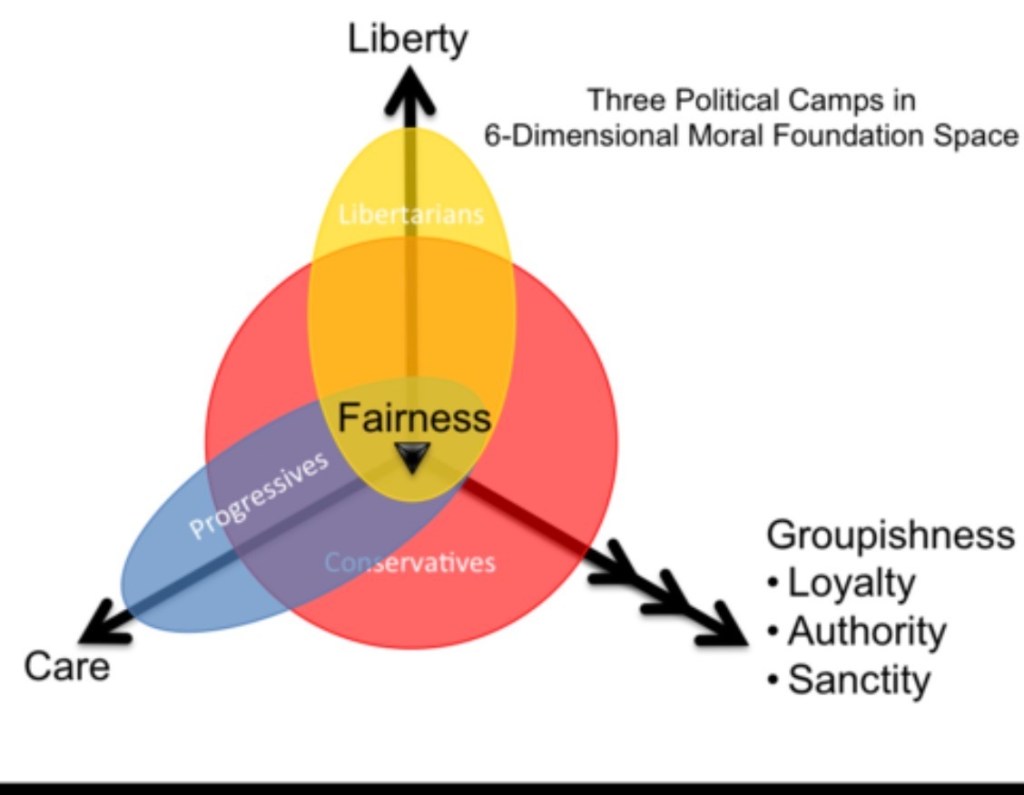
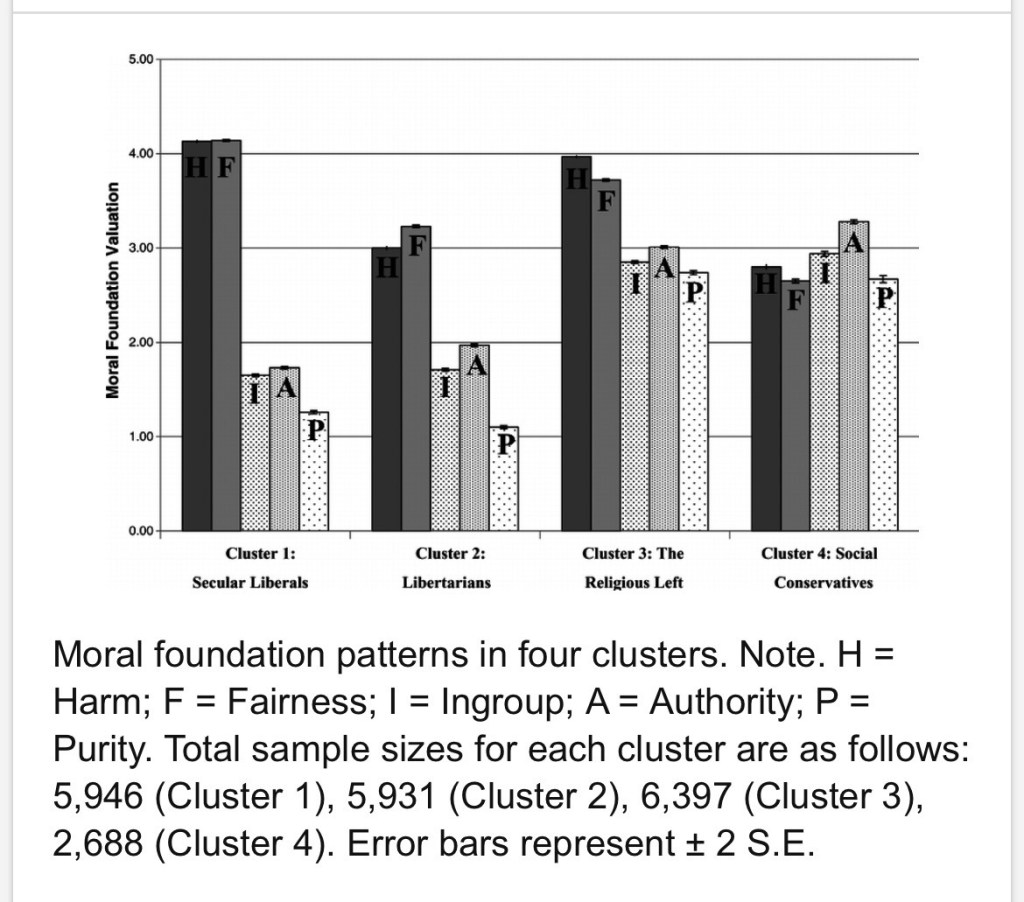
Institutions include law, political authority, and the distribution of power. Culture includes religion, tradition, identity, and shared meaning. Psychology includes the moral instincts people use to interpret the world: instincts tied to fairness, loyalty, authority, purity, harm, belonging, and threat.

For long stretches of time, those layers reinforced one another. Institutions reflected shared values. Cultural traditions gave meaning to authority. Moral instincts were channeled through forms of life that provided both order and legitimacy.

But that fit was never permanent.

When those layers begin to pull apart, the result is not merely disagreement. It is instability.

That is the backdrop for this final piece.

The goal here is not to argue that Christianity caused the West, or that it deserves credit for everything people now associate with Western civilization. It is also not to reduce Christianity to a purely destructive force. Both approaches distort the picture in different ways.

The same problem appears in the phrase “Judeo-Christian values.” This often creates the impression of a smooth and unified inheritance, when the actual history is far more fractured. Judaism and Christianity are related, but they are not interchangeable. Christianity did not simply preserve Jewish covenantal thought. It reinterpreted it, universalized it, and claimed fulfillment over it. A tradition rooted in a particular people, law, land, and covenant was recast as a universal message for all mankind.

This repositioning changed the role of religion entirely. It no longer sits alongside other domains. It began to judge them.

It loosened religion from peoplehood and place. It made belief itself the primary marker of belonging. And once belief becomes the primary boundary, disagreement takes on a different moral weight.

Today’s article will address the harder question:

What did Christianity reorganize, what did it scale, and what did it leave unstable?

Because Christianity’s real inheritance was not simply compassion, liberty, or dignity. It reshaped how belief, authority, identity, and moral obligation functioned at a civilizational level. It expanded moral language in ways that could operate across large populations, but it also introduced sharper boundaries between true and false belief, salvation and error, belonging and exclusion.

That combination, expansion on one side and constraint on the other, is where the inheritance becomes complicated.
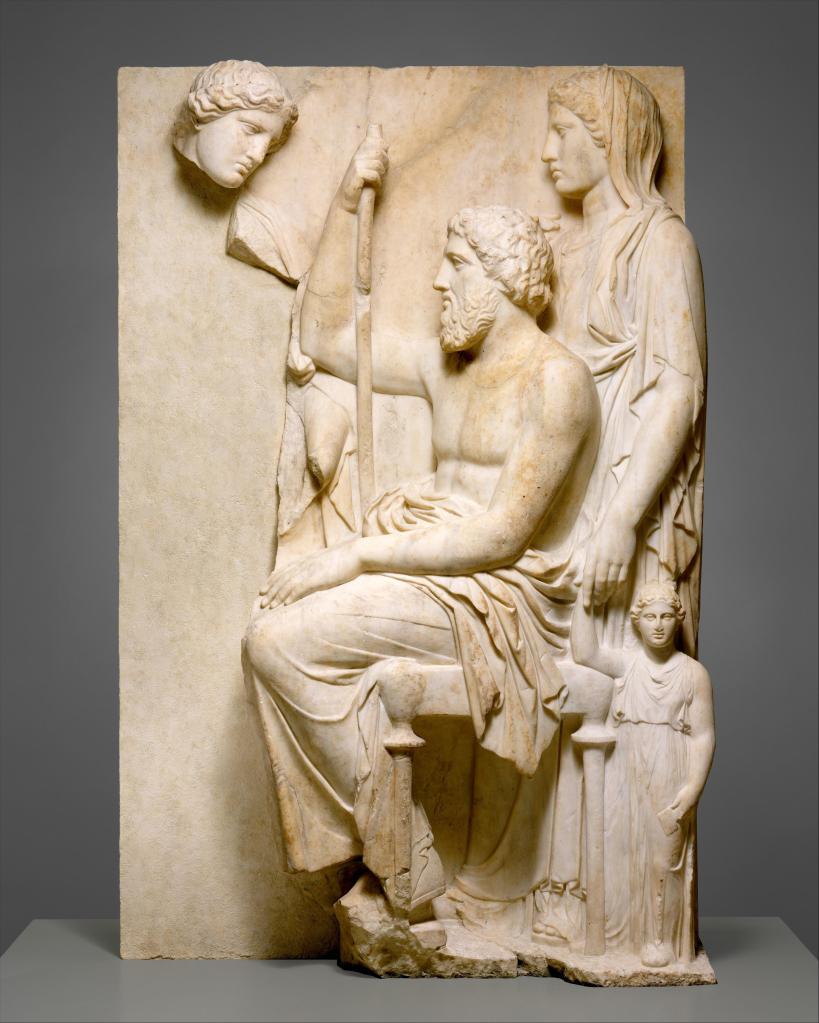

McClees, Helen and Christine Alexander. 1933. The Daily Life of the Greeks and Romans: As Illustrated in the Classical Collections, 5th ed. pp. 131, 133, fig. 159, New York: The Metropolitan Museum of Art.

SECTION I: THE GOOD
What Christianity Absorbed and Reorganized

Before getting into what Christianity actually contributed, it’s worth being clear about what is usually attributed to it.

A moral framework. Stable family structures. The unification of fragmented tribal societies into something resembling a shared civilization. A sense of cohesion strong enough to hold large populations together.

Those developments did happen. The question is where they came from…

Because none of those things begin with Christianity. They depend on something older: stability across generations, shared practices, inherited obligations, and a way of life that binds people before it explains itself.

That is what tradition is.

The word itself comes from the Latin traditio: a handing over, a passing down, something delivered across generations. But that definition only gets you so far. Tradition is not just a set of ideas preserved in texts or doctrines. It is lived. It shows up in habits, rituals, inherited gestures, seasonal rhythms, family patterns, and the quiet repetition of things people do not always stop to explain but continue to do anyway.

It exists in the structure of daily life.

You see it most clearly in how societies deal with death.

Long before Christianity became dominant in Europe, burial practices already reflected a deep sense of connection between the living and the dead. In the Stone Age, communities used mass graves in caves or pits. Later, megalithic cultures constructed communal tombs that anchored memory to specific places. Indo-European groups developed barrows and cremation practices that changed over time while preserving the same underlying logic.

The dead were not discarded. They were placed, remembered, and integrated into the ongoing life of the community.

Tradition, in that sense, is not something invented at a particular moment. It is something carried forward, shaped and reshaped over time without losing its original intention.

Christianity enters into that world rather than creating it from scratch.

What changes is not the existence of tradition, but its scale and its organizing thought.

Earlier religious life was largely tied to local identity: tribe, land, household, ancestry, city, and people. Christianity expands beyond that. It speaks in universal terms and builds a shared symbolic order that can operate across regions and populations that do not share the same lineage, gods, rituals, or customs.

That increases the reach of the moral imagination.

Concern no longer stops at the boundary of immediate belonging. It extends outward, attaching value to individuals beyond their role within a specific family, tribe, or city. Over time, that broader vision feeds into developments people now associate with the Western inheritance: ideas about dignity, education, care for the poor, moral responsibility, and obligation toward those outside one’s immediate circle.

But this is typically where the story gets oversimplified.

Those impulses did not originate with Christianity. Traditions within the Greco-Roman world had already developed forms of civic responsibility, philanthropy, patronage, public works, and mutual obligation. Grain distributions, civic benefaction, philosophical ethics, and local forms of duty were not Christian inventions.

But even the Greco-Roman world was not self-contained. It had already absorbed influences from older and neighboring civilizations (Egyptian, Mesopotamian, Anatolian, and Phoenician) through trade, conquest, and cultural exchange. As scholars like Martin L. West and Walter Burkert have shown, Greek thought itself was shaped in part by these eastern traditions.

The ancient world was not morally empty before the church arrived. It was already layered, interconnected, and carrying forward inherited forms of order, obligation, and meaning.

You can see this clearly in Stoic thought. Christianity is often treated as if it introduced universal human concern into a cruel and indifferent ancient world. Stoicism already spoke in universal terms. It could describe human beings as participants in a shared moral order and extend concern beyond tribe, city, or immediate kinship.

But the structure was different.
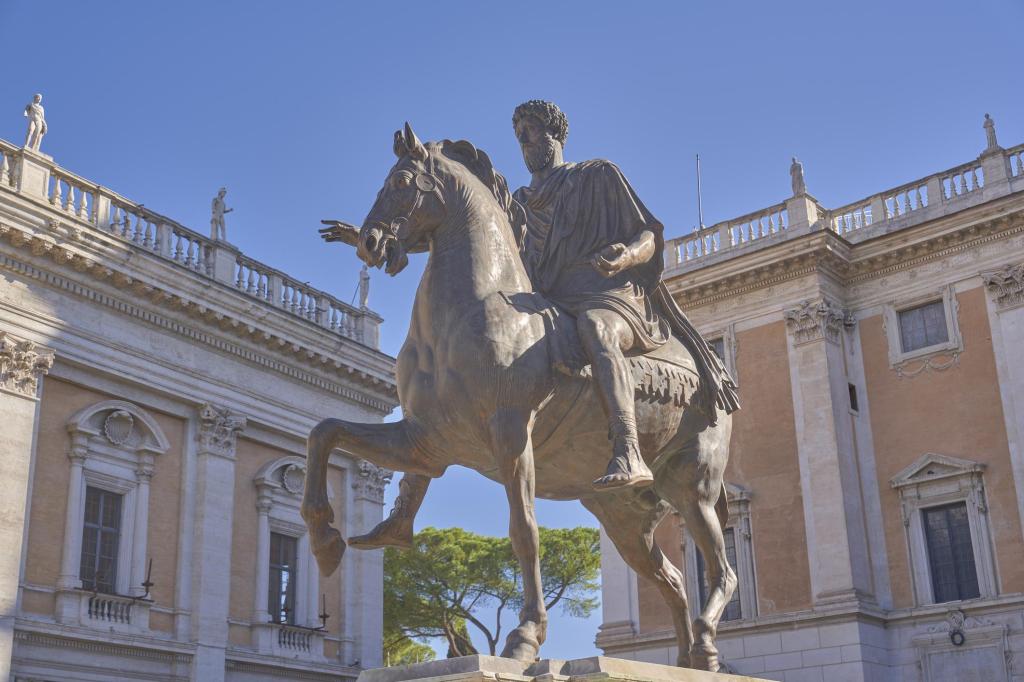
The bronze Equestrian Statue of Marcus Aurelius, Capitoline Hill, Rome.

Runar Thorsteinsson’s comparison of Roman Christianity and Roman Stoicism helps clarify the distinction. Stoicism could speak of universal humanity without making moral belonging depend on conversion to a saving truth. Early Christianity, by contrast, carried a universal message while also drawing a sharper boundary around religious adherence. Its moral vision expanded outward, but it did so through a division between those inside and outside the saving order.

Christianity did not invent universal concern but it did reorganize it.

It took older moral instincts, philosophical ideas, Jewish inheritance, Roman scale, and local traditions, then bound them into a universal religious narrative. It gave those instincts a broader scope, a more unified story, and a more durable institutional form.

But expansion alone does not explain why a civilization holds together.

A social order lasts when it fits the way people already experience the world.

People do not move through life as detached rational observers. They respond through instinct: loyalty and betrayal, fairness and injustice, authority and rebellion, purity and contamination, belonging and threat. These instincts do not operate on their own. They cluster.

In more traditional societies, moral intuitions tend to reinforce one another. Care, fairness, loyalty, authority, and a sense of the sacred operate together rather than pulling apart. Even when people disagree, they often draw from the same underlying moral vocabulary when interpreting what is happening around them.

That shared moral vocabulary gives a society stability.

Christianity operated at that level.

It did not simply present moral rules. It gave instinct narrative form and placed it inside a larger story about meaning, suffering, hierarchy, obligation, sin, redemption, and ultimate reality. It offered a way of interpreting the world itself.

For people living in unstable conditions, where political authority could be inconsistent and survival uncertain, that kind of story organized experience. It offered coherence in a world that might otherwise feel random. It placed individuals inside a larger order and gave meaning to suffering, duty, death, and loss.

Once that fit took hold between cultural meaning, institutional power, and moral instinct, it became difficult to dislodge.

At the same time, Christianity did not remain completely closed off to innovative thought. Even within a religious order that emphasized authority and inherited truth, there were moments where that inheritance was tested from within.

Peter Abelard represents one of those moments.

His importance lies less in the drama of his life and more in the method he applied to truth itself. The intellectual world he entered was structured around inherited authority. Figures like Augustine were treated as settled voices, and the role of the student was often to understand, organize, and transmit what had already been established.


Peter Abelard with Book Giclee

Reasoning had a place, but it operated within limits. It was expected to clarify, not destabilize.

Abelard did not reject the tradition from the outside. He worked within it and exposed its internal tensions. In Sic et Non, he placed authoritative statements side by side in a way that made contradiction difficult to ignore.

If these sources were meant to provide certainty, why did they diverge so sharply?

If truth had already been handed down in a unified form, why did it fracture under comparison?

He treated those questions as a starting point rather than a threat to avoid.

“For it is from doubt that we arrive at questioning, and in questioning we arrive at truth.”

That quote represents the change in intellectual posture.

Instead of beginning with certainty and using reason to defend it, Abelard begins with tension and uses reason to work through it. Authority alone no longer settles the issue. Claims must be examined, language clarified, and assumptions tested.

Once questioning becomes legitimate, authority can no longer rely on transmission alone. It now has to also persuade.

Abelard pushed beyond accepted limits. He applied reason to doctrines often treated as beyond rational explanation and placed greater emphasis on intention in moral evaluation. In doing so, he opened space for a more nuanced understanding of ethics, one not entirely bound to inherited categories.

The response to him was what you would expect from institutional power.

He was condemned. His works were burned. He was brought before councils that were less interested in exploring his arguments and more so in containing their implications. The reaction showed what was at stake. A religious order grounded in authority does not easily absorb a method that legitimizes doubt.

And yet the method persisted.

Even when his specific conclusions were rejected, the habit of inquiry he modeled proved difficult to suppress. The practice of setting opposing views side by side and working through contradiction became central to scholasticism. The intellectual tradition that later shaped medieval universities carried forward elements of an approach once treated as dangerous.

Abelard does not stand alone as the cause of a broader intellectual reopening. The recovery of classical texts, the reintroduction of Aristotle, contact with Islamic and Jewish scholarship, and the growth of educational institutions all played a role.

What his story represents is the shift in attitude.

Inherited knowledge no longer functions as a sealed inheritance. It became something that can be examined, refined, and, within limits, challenged.

Of course, those constraints never fully disappeared.

Abelard was allowed to question, but not indefinitely. He was permitted to reason, but not without consequence. The same religious culture that made his work possible also defined where it had to stop.

That tension between authority and inquiry did not remain confined to intellectual life. It also carried forward into the institutions that developed over time.
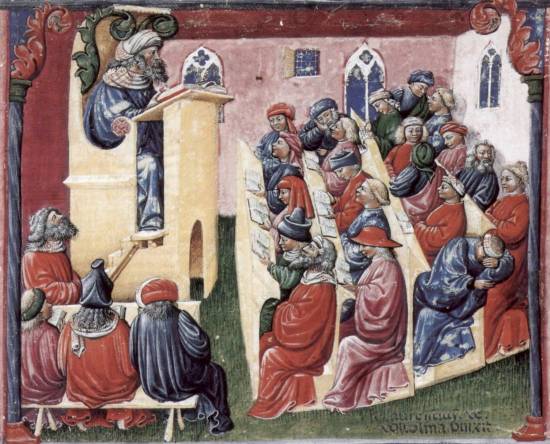
A university lecture (an illustration from the second half of the 14th century).

The medieval university is one of the clearest places to see this pattern at work. Often treated as a distinctly Christian achievement, it grew out of a much broader mix of influences.

In Spain, Baghdad, and Cairo, Islamic schools, libraries, and observatories held resources far beyond anything available in much of Europe at the time. Arab, Jewish, and Christian scholars shared intellectual interests through expanding trade networks and translation movements. After the Christian capture of Toledo in 1085, that city became one of the key places where these worlds met, allowing texts to move across languages, traditions, and religious boundaries.

The Western reopening of inquiry did not happen because Europe simply looked inward and rediscovered itself.

It happened because knowledge traveled.

Averroes’ commentaries on Aristotle, translated into Latin, became essential sources for thirteenth-century Christian intellectuals, including Thomas Aquinas. That alone should complicate any idea that Christian scholarship developed in isolation. The university absorbed, translated, debated, and reorganized knowledge that had already passed through Greek, Arabic, Jewish, and Latin traditions.
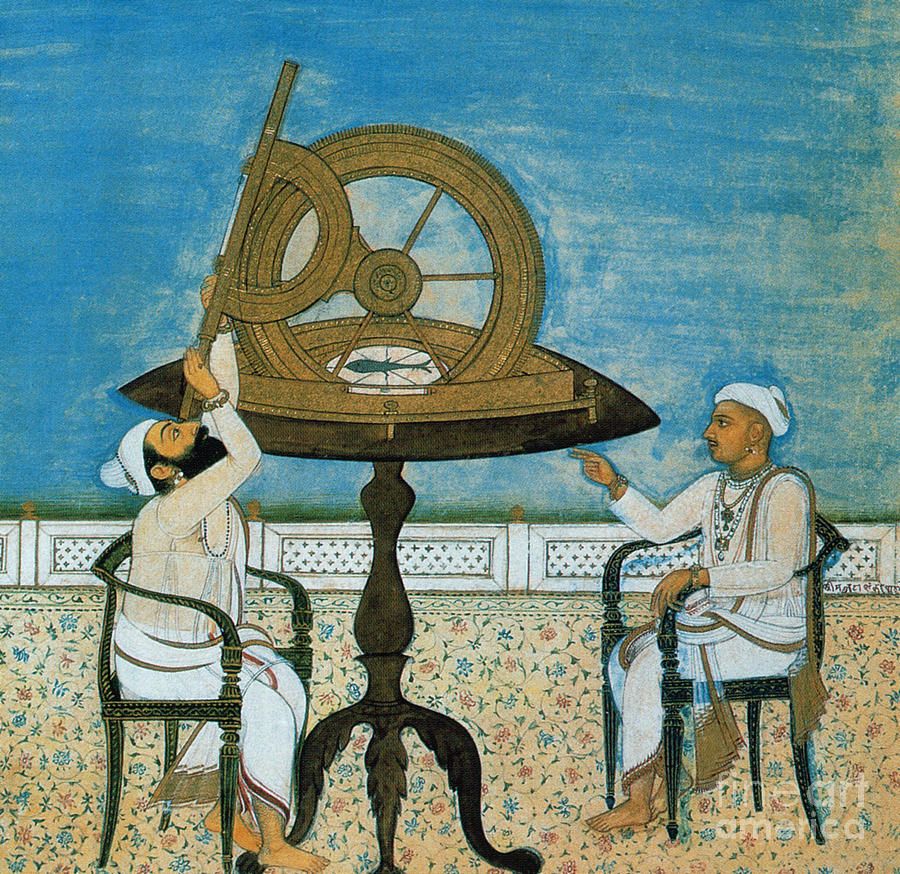
Islamic Astronomers #1 is a photograph by Science Source

Even the structure of medieval universities reflects that broader inheritance. They developed their own corporate identities, governed collectively by masters, with distinct curricula and examination systems. By the late thirteenth century, Master of Arts could vastly outnumber Master of Theology. Historian Charles Freeman notes one example where 120 teachers of the arts were listed against only 15 Masters of Theology. That imbalance tells you what mattered most. The curriculum leaned heavily on classical texts, not purely Christian foundations.

Christian Europe helped institutionalize learning, but the material being organized was older, broader, and more cosmopolitan than the church-centered story suggests. The university becomes another example of Christianity’s larger pattern: it absorbed existing goods, gave them institutional form, and placed them inside its own theological horizon.

But the results did not move in one direction.

The same religious vision that could support care and dignity could also justify hierarchy and control. Because the tradition depended on scriptural interpretation, and interpretation depended on authority, very different conclusions could emerge from the same source material.

That instability is not only a matter of later interpretation. It is already present in the texts themselves.

The Gospels do not present a single, unified account. They offer overlapping portraits that do not fully align.

In Gospel of Matthew and Gospel of Mark, Jesus cries out, “My God, my God, why have you forsaken me?” while in Gospel of John, he concludes, “It is finished.” The tone shifts from abandonment to completion.

The timeline shifts as well, with the Synoptic Gospels placing the final meal at Passover, while John places the crucifixion before it begins.

Even the ethical posture is not entirely consistent: in Matthew, Jesus teaches “turn the other cheek,” while in Luke, he tells his followers, “Let the one who has no sword sell his cloak and buy one.”

Taken together, these are not minor discrepancies. They open space for fundamentally different readings of what the tradition demands.

Christianity persists not as a fixed form, but as a tradition capable of producing multiple, competing forms while still claiming continuity.

This becomes especially clear in debates over slavery.

Christians were involved in abolition movements, and that history is part of the record. The language of universal moral equality played a real role in mobilizing opposition to slavery and reshaping moral expectations.

But that is not the whole story.

The same texts were also used to defend slavery, reinforce it, and argue that existing social orders were divinely sanctioned.

That contradiction is not incidental. It reveals something important about the Christian inheritance itself.

A religious order that combines universal moral language with authoritative texts creates the conditions for both expansion and constraint. It can push moral concern outward, but it can also bind that concern within approved categories. The outcome depends on who interprets the texts, which authorities prevail, and what social pressures shape the reading.
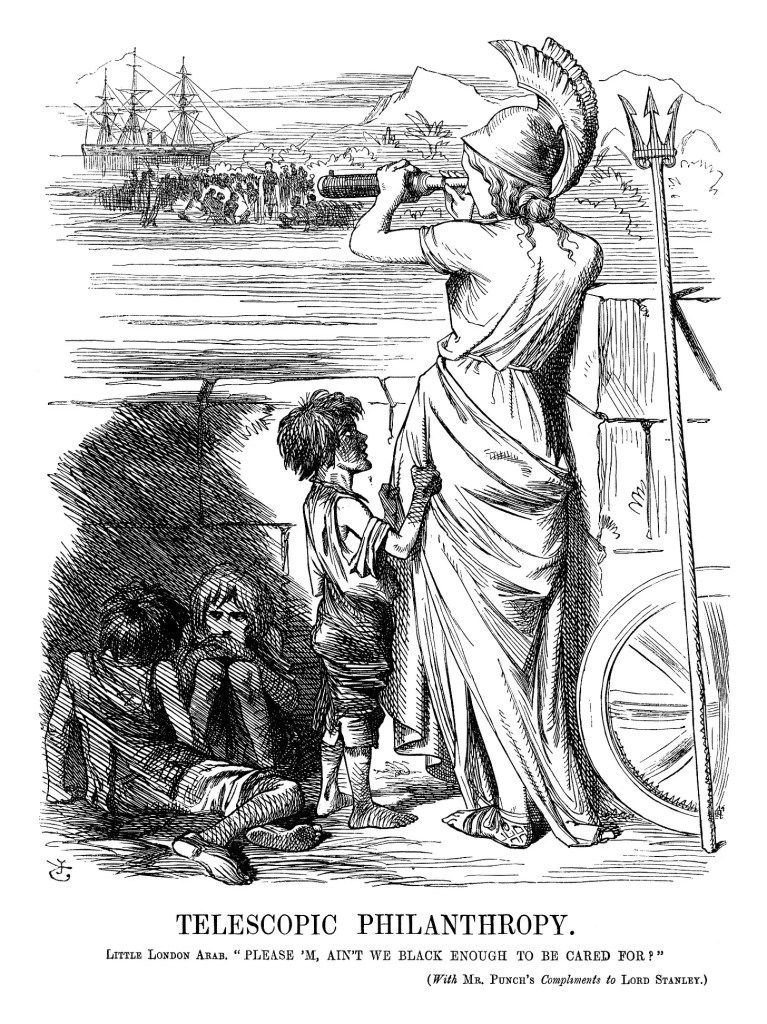
Critics of abolitionist movements, including Thomas Carlyle, argued that what they saw as abstract humanitarian concern could override more immediate obligations or practical realities. A contemporary political cartoon captured this dynamic under the phrase “telescopic philanthropy”—a tendency to focus moral concern at a distance while neglecting what is closer at hand.

The point I’m trying to make here is not that concern beyond one’s own group is inherently false or wrong.

The point is that moral expansion creates distance.

The farther a concern stretches, the easier it becomes to neglect concrete obligations close at hand: family, neighbors, local order, inherited duties, and the people one is actually responsible for. Abstract compassion can become morally flattering precisely because it asks less of the person expressing it.

Whether one agrees with those criticisms or not, they point to something very real.

A moral order that expands obligation beyond local belonging gains reach, but it also risks losing proportion. It can elevate the stranger while forgetting the neighbor. It can speak beautifully about mankind while failing the people right in front of it.

Christianity extended moral concern beyond tribe and built institutions that carried that vision forward. But it also introduced pressures around authority, interpretation, exclusion, and the limits of acceptable thought.

The good is real, but…so is the tension inside it.

Christianity’s inheritance was not simply compassion, dignity, or education. It was a moral architecture: universal in scope, institutional in form, inward in psychology, and unstable once detached from the cultural world that had once held it together.

That brings us to our next inquiry.

Not just what Christianity gave the West, but what kind of order made those outcomes possible.


SECTION II — THE BAD

Truth, Authority, and the Limits of Inquiry

At this point, the issue is not simply what happened when Christianity moved from the margins to power. I’ve explored that elsewhere: the suppression of rival systems, the narrowing of acceptable thought, and the long habit of treating competing worldviews not as alternatives to debate, but as errors to contain.

The deeper question here is more structural.

What kind of religious order produces those outcomes in the first place?

Because the shift was a reorganization of how truth operated, how disagreement was handled, and how legitimacy was defined.

Earlier Greco-Roman religious and philosophical life was not tolerant in the modern sense, but it was more comfortable with multiplicity. Rival schools, local cults, household gods, civic rituals, and philosophical traditions could coexist without requiring one totalizing creed to absorb or eliminate the rest. That did not make the ancient world peaceful or morally pure. It did mean that truth was not always treated as one fragile object that had to be protected from every rival.

The Abrahamic worldview introduced something different, often called the “Mosaic distinction.”
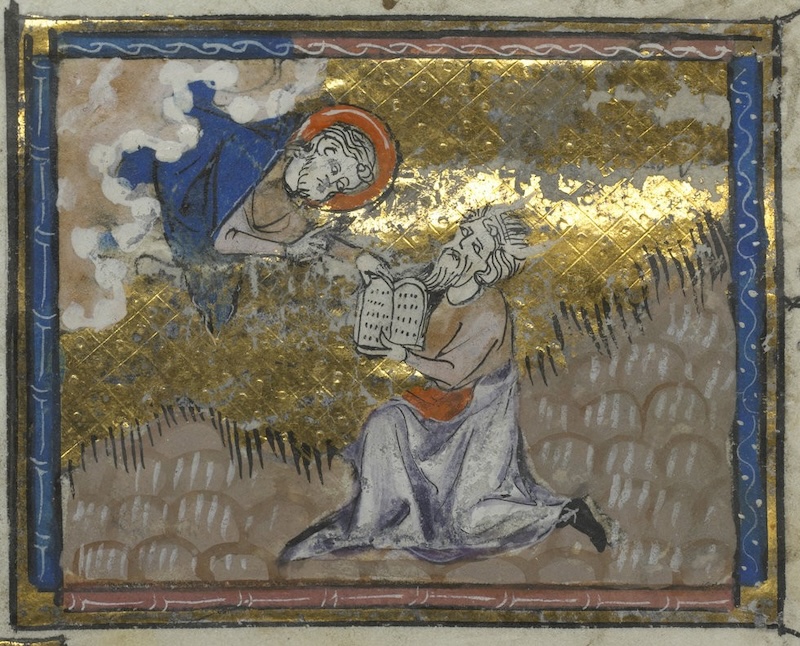
God giving the Tablets of the Law to Moses, from a manuscript attributed to Chrétien Legouais, 1325 CE. Image source: gallica.bnf.fr / Bibliothèque municipal de Rouen

It drew a sharper line between true and false in a way that changed the stakes of disagreement. Belief was no longer simply one option among many. It became a dividing line. Once that line was drawn, alternative ways of seeing the world did not remain neutral. They became errors, and error began to carry drastic consequences beyond private belief.

If truth is singular and binding, then the religious order has to decide what to do with everything outside of it. Some ideas are absorbed. Some are tolerated for a time. Others are pushed out entirely. But none of them sit comfortably alongside it anymore. They exist in tension with the claim that one truth must govern above all others.

As we previously discussed, Christianity is often credited with preserving learning and building universities, and that claim is not false. Medieval universities became important institutions for intellectual training, debate, law, theology, medicine, and philosophy. They helped organize knowledge and gave scholastic inquiry a durable form.

But that achievement has to be kept in proportion.

The medieval university was an achievement, but it was not a recovery of classical freedom. It was classical inheritance under theological supervision.

Ancient philosophy could be studied, but it had to be reconciled with Christian doctrine. Aristotle could return, but not as Aristotle alone. He had to be interpreted through Christian categories, corrected where necessary, and placed beneath revealed truth. Reason was permitted, even sharpened, but it was not sovereign.

The medieval university did not represent inquiry on open ground. It represented inquiry inside boundaries. Reason could clarify doctrine, defend doctrine, organize doctrine, and reconcile contradictions within inherited authorities. But when reason pressed too far against the architecture of belief, the limits became quite visible.

That does not make medieval learning worthless. It makes it conditional.

And that conditionality is the point.

Christian Europe did not simply preserve the classical world. It received it, edited it, baptized it, and constrained it. What could be made useful to the Christian order survived more easily. What threatened that order did not.

This is the kind of intellectual narrowing later critics would recognize in Christianity’s relationship to philosophy. Heidegger’s critique of onto-theology is not aimed at Christianity alone, but it helps name the pattern: open-ended questioning becomes absorbed into a prior explanatory order. Instead of wonder remaining primary, inquiry is routed through established claims about creation, causality, divine order, sin, and salvation.

The question is no longer allowed to remain fully open.

It has to be answered inside the architecture of doctrine.

Once orthodoxy is established it operates within boundaries that have already been set, and stepping outside those boundaries starts to carry not just intellectual consequences, but social ones. Access to authority, education, and influence becomes tied, at least in part, to alignment.

At that point, belief is no longer just something people hold. It becomes something that moves outward, seeking to correct and expand.

SECTION III: THE UGLY

Universalism, Power, and the Moral Afterlife

By the time you reach the modern West, the question is no longer whether Christianity shaped it. That much is obvious. The deeper issue is what, exactly, it left behind, and what happens when the conditions that once sustained that inheritance begin to unravel.

Christianity did not simply introduce a set of beliefs and then fade as those beliefs weakened. It reorganized moral life at a level that persists long after doctrine loses its authority. It changed how individuals understood themselves, how they related to others, where moral responsibility resided, and how truth was expected to move through the world.

The ugly side of the Christian inheritance is not merely universalism. It is universalism with a missionary engine.

Christianity does not simply say, “This is true.” It says truth must be spread. Error must be corrected. The world must be brought into submission to the saving order. That structure changes the meaning of difference. A rival worldview is not merely foreign, local, or ancestral. It becomes spiritually demonic.

And once a difference becomes an error, correction can be justified as mercy.

The religious world Christianity emerges from was already in tension with the surrounding Greek and Roman order. Second Temple Judaism didn’t simply blend into Hellenistic life. Again and again, it resisted it—politically, culturally, religiously.

D. H. Lawrence saw this tendency clearly. In Apocalypse, he describes a fear-driven impulse within Christianity—a refusal to leave other ways of understanding the world intact. Not just disagreement, but the drive to overcome, absorb, or eliminate what stands outside the truth.

That instinct is already embedded in the apocalyptic world Christianity emerges from. Second Temple Judaism carries expectations of final judgment, cosmic conflict, and the ultimate victory of a single, rightful order-the coming of the Moshiach/Messiah.) Christianity inherits that framework and gives it a wider reach.

That is where Christianity’s relationship to Rome becomes essential. Christian universalism did not spread on its own. It moved through the late imperial Roman systems: roads, cities, law, administration, literacy, political centralization, and habits of governance already trained toward scale. The faith did not merely conquer Rome. It also inherited Rome’s machinery.

Rome gave Christianity infrastructure. Christianity gave Rome a sacred moral horizon. Together, they helped produce a form of power that could move across peoples, lands, languages, and customs while claiming to operate in the name of truth rather than mere domination.

This is also why Christianity receives too much credit for goods it did not invent.

One reason it’s treated as the source of Western morality is that it became dominant enough to absorb older goods and narrate them backward as Christian achievements. Care for the poor, philosophical inquiry, civic duty, moral discipline, education, and concern for the common good did not appear out of nowhere when Christianity entered history. Many of these were already present in Greek, Roman, Jewish, and local European worlds. Christianity reorganized them inside its own story.

That reorganization gave them reach.

But it also gave them a new master narrative.

Older traditions were often embedded in particular peoples, places, households, ancestors, cities, gods, calendars, and sacred landscapes. Religion was not just a private belief system. It was woven into the life of a people. Christianity altered that relationship by making belief portable. It could cross borders, override local cults, and create a community defined less by blood, land, or inherited custom than by shared confession.

That is one of the most consequential shifts in Western history.

Christianity weakened the older link between people, place, ancestors, and gods. It did not erase those attachments overnight, and in practice it often absorbed local festivals, sacred sites, and folk customs. But the deeper logic changed. The highest belonging was no longer rooted primarily in the local or ancestral. It was relocated into a universal religious identity.

Conversion, then, was not merely persuasion. It was the remaking of belonging.

A people could be separated from their gods, their rituals, their inherited calendar, their sacred places, and their ancestral memory, then folded into a new universal story that claimed to redeem them while also replacing the world that formed them.

Not every conversion was violent. That would be too simple. Some conversions were gradual, political, strategic, sincere, blended, or partial. But once that universal truth claim became tied to salvation, rival traditions do not remain equal neighbors. They become obstacles to be overcome, errors to be corrected, or remnants to be absorbed.
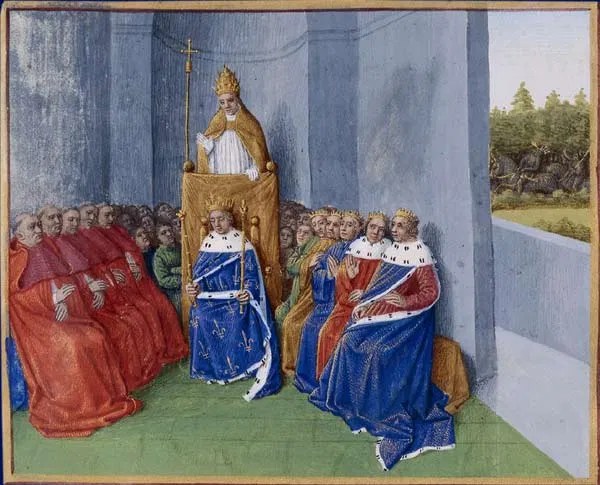
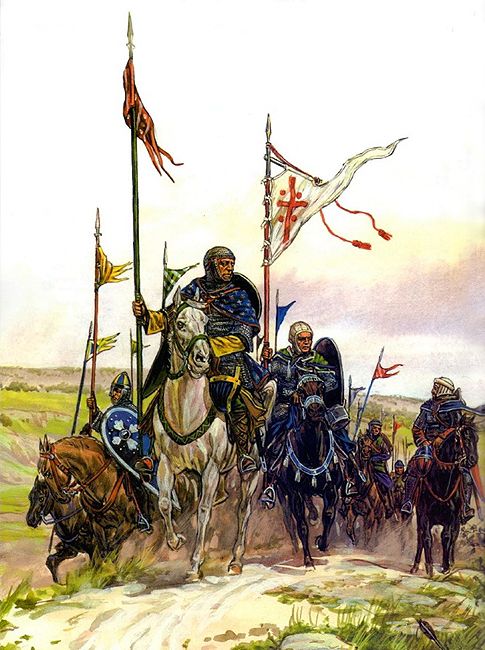
The First Crusade: Pope Urban II and Jerusalem vs. Diplomatic Unification

The crusades make this structure visible in its most explicit and militarized form.

They were not only political wars. They were religious wars shaped by sacred geography, penitential promise, and the belief that violence could be folded into a redemptive order.

The Crusades did not simply mobilize Europe—they redirected it toward Jerusalem, a sacred center that was not its own.

That does not mean every participant had the same motive, and it does not mean politics, land, wealth, status, and military ambition were irrelevant. Of course they mattered. But the crusading imagination reveals something specific: once warfare is placed inside a sacred story, conquest can be interpreted as obedience, purification, defense, or salvation.

That is the danger of missionary structure joined to power.

It sanctifies expansion.

And this is not confined to medieval history. The same basic pattern can reappear whenever politics inherits religious moral intensity. The opponent is no longer merely wrong about policy. He becomes a threat to truth, justice, salvation, progress, safety, democracy, equality, or whatever sacred term now carries the old theological weight.

At that point, disagreement becomes harder to contain.

The modern West inherited this moral intensity even as explicit Christian authority declined. Most people inherited a world in which Christianity had already begun to lose its grip, but nothing fully replaced it. The rituals became optional. The authority fractured. Yet many of the underlying assumptions remained intact.

What had once been explicitly theological was gradually translated into secular terms.

At the center of that structure is a form of universalism Christianity helped entrench: the idea that all people stand beneath one moral order, that identity is secondary to a broader human category, and that truth applies universally rather than locally. That assumption did not disappear with religious decline. It migrated.

Liberalism, in many of its modern forms, carries that template forward: the individual abstracted from place, lineage, inherited duty, and thick communal belonging, then positioned inside a universal framework of rights, equality, and moral expectation.

The language changes. The structure does not.

The West moved from Christian universalism to liberal universalism without seriously interrogating the universalism itself. It replaced theological justification with philosophical or political justification, but it retained the assumption that the highest moral order transcends particular identities rather than emerging from them.

And what carries forward is not only universal morality, but missionary mentality.

Salvation becomes progress. Sin becomes injustice. Heresy becomes hate. Evangelism becomes activism. The world must still be corrected. The morally backward must still be brought into line.

And the irony is hard to miss. The same people who pride themselves on rejecting religious dogma often reproduce its structure almost perfectly—moral certainty, heresy-hunting, and the impulse to correct and convert, just without calling it religion.

You can see this most clearly in the modern left, especially in its activist and radical edges. What presents itself as political theory often behaves like secularized salvation mythology. The infrastructure is unchanged: the world is broken and the masses need liberation. God is removed, but everything else remains. The heretics still need correction. Sin becomes hierarchy. Salvation becomes self-rule. The missionary doesn’t disappear—he just changes form.

It still sorts people into the righteous and the condemned. It still creates moral taboos. It still treats disagreement as contamination. It still imagines that the world can be redeemed if only the right moral order is imposed—with enough force, shame, education, policy, or institutional pressure.

That is not the absence of Christianity.

It is part of its afterlife.

Later European expansion, and even modern geopolitical projects, often operate within the same structure—intervention framed as liberation, reform, or progress.

Whenever universal moral claims are aligned with power and tied to the belief that truth must spread, action begins to feel necessary rather than optional.

To understand why it persists, and why it adapts so easily across different historical contexts, you have to look at what is happening at a deeper level. Not just in institutions or empires, but within the individual.

Because the most enduring change Christianity introduces is not only institutional.

It is psychological. It altered where morality is located.

In earlier classical traditions, especially in Aristotle, the moral life is oriented outward. The Greek conception of eudaimonia assumes that human beings can develop toward excellence. Flourishing is cultivated through practice, discipline, rational activity, and participation in the world. Character is formed through what one does, and the moral life is outward, embodied, and lived over time within a shared civic and social context.

Christianity, especially through Augustine of Hippo, redirects that focus inward.

The problem is no longer simply what a person does, but what a person is. Human nature itself becomes suspect, marked from the beginning. The doctrine of original sin reframes the individual not as someone developing toward excellence, but as someone starting already compromised. This is not just about isolated wrongdoing. It is about a baseline disorder built into human existence, transmitted across generations, shaping inclination before any conscious choice is made.

From that premise, morality reorganizes itself accordingly. If the problem lies within, then moral evaluation cannot remain limited to outward behavior. It extends inward, into thought, desire, intention, and impulse—the parts of life no one else sees but are still treated as morally significant.
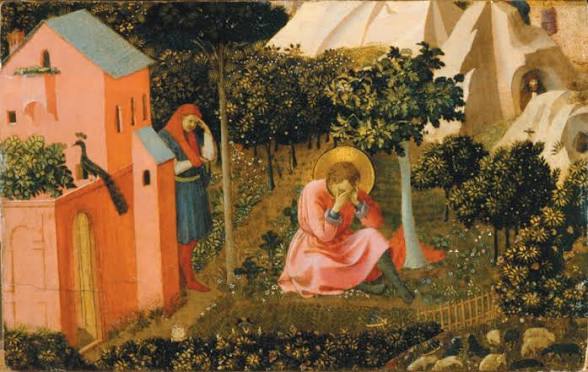
Fra Angelico, The Conversion of St. Augustine (c. 14301435)

This becomes structured into daily practice. Monastic traditions classify internal states (temptation, pride, doubt, desire) as if they were items that could be named, tracked, and corrected. Authority expands beyond regulating behavior into defining what counts as acceptable thought, shaping not just action but the boundaries of the inner life itself.

Once it relocates inward, the primary site of regulation is no longer only the community. It is the individual mind, where conscience, guilt, confession, fear, and self-regulation operate continuously, often without any visible external enforcement.

You can see the implications of this in the conflict between Augustine and Pelagius. Pelagius emphasizes human capacity: the ability to choose, improve, and take responsibility for moral development. Augustine rejects that position, insisting on dependence—on God’s grace, on divine intervention, on something beyond human effort.

This is not only a theological disagreement.

It is also a question about agency.

If the individual cannot fully rely on their own capacity to move toward the good, then moral development becomes entangled with God’s authority. Responsibility does not disappear, but it no longer stands on its own. It becomes mediated, conditioned, and in some cases limited, as the individual is situated within a framework that places ultimate transformation outside of purely human reach.

Over time, that tension begins to shape intellectual life as well. Historians like Charles Freeman do not argue that inquiry simply disappeared, but that the conditions surrounding it changed. When belief becomes tied to salvation, and when error carries not only intellectual but spiritual consequences, curiosity itself begins to look different. Questions are no longer neutral exercises. They take on moral weight, and in certain contexts, they begin to carry risk.

Writers like Thomas Paine noticed this and pushed directly against the idea that truth can rest on inherited authority. In The Age of Reason, Paine argues that revelation, once it passes through human hands, can no longer function as unquestionable truth. What begins as divine claim becomes human interpretation, and therefore something that must be examined rather than simply accepted. That move cuts directly against the structure that treats questioning as risk. It reopens the possibility that belief itself should be subject to the same scrutiny as anything else.

Mark A. Noll describes a similar pattern in later Christian intellectual culture: a tendency to preserve belief rather than extend it. Questioning is not always welcomed as curiosity. It can be interpreted as disloyalty, a sign that alignment is weakening rather than deepening. The safest position, in that environment, becomes one of conformity rather than exploration.

The obedient mind is the secure mind.

This is not new. It is already visible earlier in the tradition. The same system that could produce figures like Abelard (where questioning began to reopen) also produces the conditions Noll is describing, where belief becomes something to preserve rather than extend.

The instinct to monitor thought, to moralize disagreement, to treat deviation as more than error—those habits do not emerge in a vacuum. They develop within specific historical conditions, and they persist even as the surrounding language changes.

This is why the internal reorganization matters.

It is not only about doctrine.

It is about how individuals learn to relate to themselves.

If Augustine relocates morality inward, Protestantism amplifies and personalizes that shift. The individual is placed in more direct relation to truth, expected to read, interpret, examine, and align himself without the same mediating structures that once guided that process. Authority does not vanish. It becomes more diffuse and more demanding.

The church hierarchy may weaken in some places, but new pressures emerge through scripture, sermon, household discipline, community surveillance, literacy, and conscience. The individual is made more responsible before God, but also more exposed.

The burden of interpretation moves further into the self.

Over time, that inward structure detaches from the communal and cultural worlds that once gave it shape. What remains is a society of individuals expected to interpret, justify, and regulate themselves inside a universal moral order, but without a shared culture capable of holding that process together.

That misalignment becomes visible in how people interpret conflict, identity, history, and political life.

In modern America, this can still be seen in forms of biblical literalism, dispensationalism, and end-times prophecy that shape how many Christians understand Israel, war, nationhood, and world events. These beliefs do not remain private. They influence political imagination. They affect how people interpret history, alliances, enemies, and what they believe is inevitable or divinely sanctioned.

In this context, belief stops being just belief. It starts shaping how everything else is seen.

That is the same mechanism operating in another key. The pattern that once defined orthodoxy and constrained variation does not disappear. It adapts as the cultural environment shifts. The language evolves, but the underlying habit remains… truth is singular, error is dangerous, and those outside the moral order must be corrected, converted, contained, or cast out.

What this reveals is not a simple story of progress or decline.

Christianity did not leave behind a stable moral foundation that the West either followed or abandoned. It left behind a set of interacting pressures: universalism and particular identity, internalized morality and external authority, individual responsibility and collective order, compassion and conquest, salvation and exclusion.

For a time, those pressures could be held in relative balance, but this fit no longer holds.

The institutions remain, but they no longer command the same trust. The moral instincts remain, but they are no longer guided by a shared tradition. The universal language remains, but it floats above increasingly fractured peoples, places, and loyalties.

Conflict becomes more moralized. Disagreement becomes harder to contain.

This is why the modern West feels both thin and volatile.

Thin, because inherited forms of continuity have weakened.

Volatile, because the moral pressure embedded in the inheritance remains, now operating without the older structures that once gave it proportion.

That is the condition the modern West has inherited.


CONCLUSION: Why the West Still Cannot Escape the Problem

The Christian inheritance of the West cannot be reduced to either gratitude or resentment.

It gave moral concern, meaning to suffering, durable institutions, and the preservation and transmission of knowledge, even as that knowledge was filtered through doctrine. It created a shared moral vocabulary capable of binding large populations together.

But it also changed the terms of belonging.

It loosened religion from peoplehood, place, ancestry, and local custom. It made belief portable. It turned truth into something singular and binding, making disagreement morally charged. Once rival traditions became errors rather than neighbors, the pressure to absorb, correct, or suppress them followed naturally.

The West did not abandon Christianity so much as carry its habits forward. The missionary impulse remained. The abstract individual remained. The suspicion of rooted identity remained. Social Justice became their new end times.

That is why a return to Christianity does not solve the problem. It would not restore a stable foundation but reassert one layer of the inheritance while leaving its tensions unresolved.

Secular liberalism does not solve it either. It often preserves the universalism while stripping away the cultural limits that once gave it proportion, asking people to live as abstract individuals inside a moral framework detached from place, memory, and inherited obligation.

What remains is not a coherent worldview, but a contradictory one.

From the beginning, the inheritance carried competing impulses. Early Christianity emerged from an apocalyptic environment while also developing moral and institutional frameworks for life within the world. Over time, those tensions were not resolved but reworked and emphasized in different ways.

Within Protestantism alone, some strands treated the world as something to be ordered and reformed, energizing movements like abolition, while others emphasized its corruption and eventual end, orienting life toward endurance and escape. The divergence is not a break from the tradition, but a difference in emphasis within it.

The result is a system that can point in opposite directions while still claiming the same foundation.

This is not a foundation a civilization can stand on.

A civilization needs moral scale, but also proportion. Compassion, but not so abstract that it forgets its own people. Rights, but not detached from duty. Inquiry, but not subordinated to sacred certainty. Space for disagreement, but enough shared identity to keep it from becoming civilizational warfare.

Above all, it needs rooted obligations.

A civilization cannot survive on abstract principles alone. It needs loyalty, shared memory, boundaries, place, and a people capable of recognizing what is theirs to preserve.

Because removing structure does not remove power. It removes the forms that make power visible and accountable. And when that happens, power does not disappear. It shifts—into forms that are harder to see and harder to resist.

We are not standing outside this inheritance.

We are still working within it.

And the task is not to romanticize Christianity, completely demonize it, or pretend we have escaped it, but to understand what it absorbed, what it built, what it destabilized, and what it left behind clearly enough to stop repeating its most destructive patterns.


Sources

Abelard, Peter. Sic et Non.

Aristotle. Nicomachean Ethics.

Aristotle. Politics.

Arktos Journal and Laurent Guyénot, The Crusading Civilisation: From the Middle Ages to the Middle East” (Substack, April 3, 2026).

Atkinson, Kenneth. “Judean Piracy, Judea and Parthia, and the Roman Annexation of Judea: The Evidence of Pompeius Trogus.” Electrum 29 (2022): 127–145. https://doi.org/10.4467/20800909EL.22.009.15779

Augustine. Confessions.

Augustine. The City of God.

Brown, Peter. Augustine of Hippo: A Biography. Berkeley: University of California Press, 2000

Burkert, Walter. The Orientalizing Revolution: Near Eastern Influence on Greek Culture in the Early Archaic Age. Cambridge, MA: Harvard University Press, 1992.

Carlyle, Thomas. “Occasional Discourse on the Negro Question.”

Doner, Colonel V. “Cognitive Dissonance of Political Activists, Or Whatever Happened to the Religious Right?” Chalcedon, July 1, 1999.

Freeman, Charles. The Closing of the Western Mind: The Rise of Faith and the Fall of Reason. London: Heinemann, 2002.

Freeman, Charles. The Reopening of the Western Mind: The Resurgence of Intellectual Life from the End of Antiquity to the Dawn of the Enlightenment. London: Head of Zeus, 2023.

Lawrence, D. H. Apocalypse. 1931.

Locke, John. A Letter Concerning Toleration. 1689.

MacCulloch, Diarmaid. Reformation: Europe’s House Divided, 1490–1700. London: Allen Lane, 2003.

MacMhaolain, Aodhan. The Transmission of Fire: How To Keep Tradition Burning. The Enchiridion, April 9, 2026.

Montesquieu, Charles de Secondat. The Spirit of the Laws. 1748.

Noll, Mark A. The Scandal of the Evangelical Mind. Grand Rapids: Eerdmans, 1994.

Paine, Thomas. The Age of Reason. 1794–1807.

Paine, Thomas. Common Sense. 1776.

Thorsteinsson, Runar M. Roman Christianity and Roman Stoicism: A Comparative Study of Ancient Morality. Oxford: Oxford University Press, 2010.

West, Martin L. The East Face of Helicon: West Asiatic Elements in Greek Poetry and Myth. Oxford: Clarendon Press, 1997.
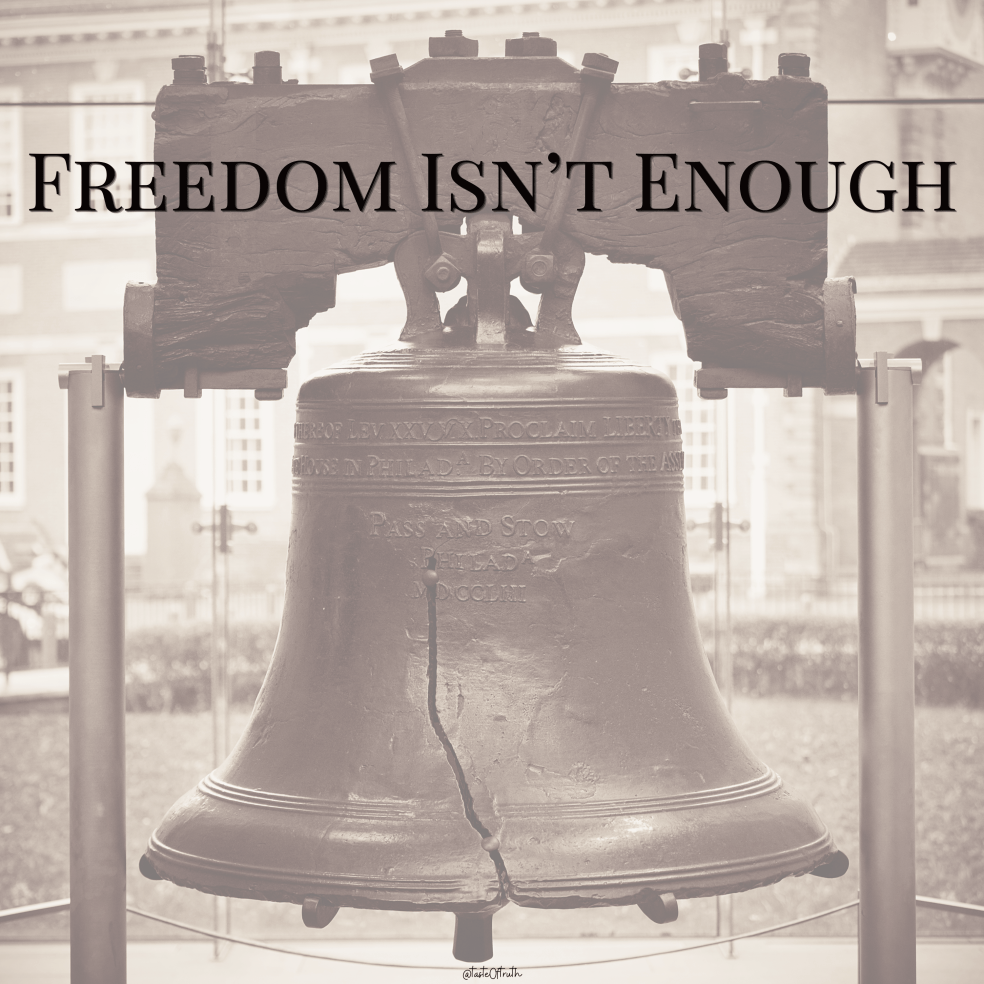

The Fragility of Freedom

What Liberty Actually Depends On

Hey hey, welcome back to Taste of Truth Tuesdays. Today’s episode is where we dig into philosophy, culture, history, and the ideas that have shaped the world we’re living in—everything from classical texts to the American founding documents that are still very much relevant to how we should think about freedom today.

Listen here:

There’s a growing sense that something isn’t working.

You see it in the fragmentation of identity, the erosion of shared norms, and the breakdown of trust across institutions.

You don’t have to look very hard to notice it.

People don’t trust elections, medicine, or the media—sometimes all at once, and often for completely different reasons.

Dating is “freer” than it’s ever been, and yet it feels more unstable, more transactional, and more confusing than most people expected.

Corporations speak like moral authorities, issuing statements about justice and truth, while operating through incentives that have nothing to do with either.

Everything is still functioning. But less of it feels legitimate.

In my last piece, I traced one part of this problem back to a common assumption, that Christianity built the foundations of the West. But when you actually follow the development of those ideas, much of what we associate with Western thought—natural law, reason, and the structure of political life—has deeper roots in the Greco-Roman philosophical tradition.

That matters, because the frameworks we inherit shape what we think freedom is, and what we expect it to do.

This piece is a continuation of that question. Not only about where those ideas came from, but about what they require to hold together.

Because a free society doesn’t sustain itself on freedom alone. It depends on discipline, restraint, and a shared understanding of limits—conditions that the system itself cannot produce.

And when those begin to erode, the system doesn’t just break. It follows a pattern that’s been observed for a very long time.

Jefferson intentionally designed the Virginia Capitol in Richmond directly after the Roman temple Maison Carrée~16 CE

I. The Fear Beneath the Founding

This isn’t a new problem.

The relationship between freedom and instability shows up wherever societies try to govern themselves.

The American founding emerged out of that concern. The people designing the system weren’t just thinking about how to create liberty, they were trying to understand why it collapses.

The colonists weren’t casually referencing Rome. English translations of Vertot’s Revolutions that Happened in the Government of the Roman Republic (1720) were in almost every library, private or institutional, in British North America. They studied how free societies decay, how power shifts from shared trust into something self-serving, and how internal corruption (not just external threat) brings systems down.

They believed they were watching it happen in real time.

What they took from antiquity was not blind optimism about freedom, but caution.

And this wasn’t limited to classical history. As Bernard Bailyn observed, the colonists were immersed in dense and serious political literature, shaped by philosophy, and sustained reflection on the problem of power.

Part of what they were working with was an older line of thought running through Greek and Roman philosophy.

The idea that human life is not directionless. That there are patterns to how people live, and that some ways of living lead to stability and flourishing, while others lead to breakdown.

You can already see the foundation of this in Aristotle. He didn’t use the term “natural law,” but the structure is there. Human beings have a nature, and flourishing comes from living in alignment with it—not whatever we happen to want in the moment, but a way of life shaped by discipline, balance, and the cultivation of virtue over time.

The Stoics make this more explicit. They describe the world as ordered by reason—logos—and argue that human beings can come to understand that order.

From that perspective, moral truth isn’t something we invent. It’s something we discover. And law, at its best, should reflect that underlying structure rather than contradict it.

By the time you get to Rome, this idea is articulated more directly. Cicero describes a true law grounded in right reason and in agreement with nature—something universal, not dependent on custom or preference, but rooted in reality itself.

These ideas don’t disappear. They are carried forward and developed.

Christian thinkers later absorb and expand them, especially through Thomas Aquinas, who integrates Greek philosophy and Roman legal thought into a more explicit framework of natural law. And that influence is real. It’s part of the Western story whether we like it or not.

But that’s not the point of this piece.

What matters here is that by the time you reach the early modern period, this idea of a structured moral order—something that places limits on behavior and grounds freedom in discipline—is already well established.

You can see that continuity clearly in how the Founders and colonists read earlier political thought. Returning to those earlier sources, Plato describes how political systems degrade over time, arguing that excessive and undisciplined freedom can produce disorder, which eventually leads people to accept tyranny in the search for stability. Aristotle traces how democracies collapse when law gives way to persuasion and personality. Polybius maps the recurring cycle through which governments rise and decay.

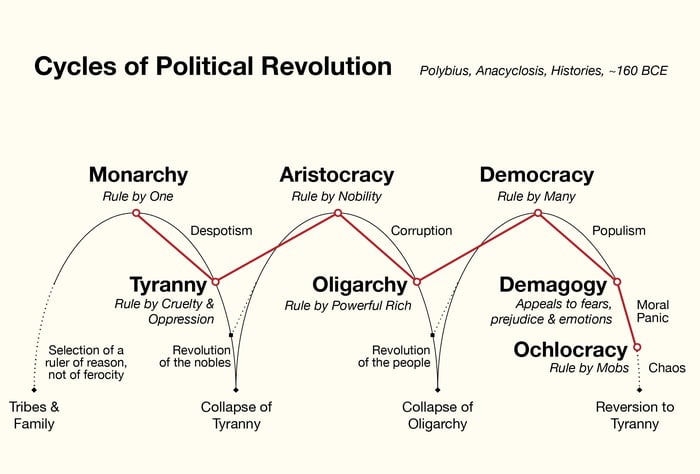
What he described was called anacyclosis, a recurring cycle of political systems. Governments begin in relatively stable forms, rule by one, by a few, or by many, but over time they degrade. Kingship becomes tyranny. Aristocracy becomes oligarchy. Democracy, when it loses discipline, collapses into what he called ochlocracy, rule by the mob.

This wasn’t abstract to the colonists, like I said,  they believed they were watching this pattern unfold in real time. And it shows up just as clearly in the political language of the founding era itself.


As Bailyn explains, monarchy, aristocracy, and democracy were each seen as capable of producing human happiness. But left unchecked, each would inevitably collapse into its corrupt form: tyranny, oligarchy, or mob rule.


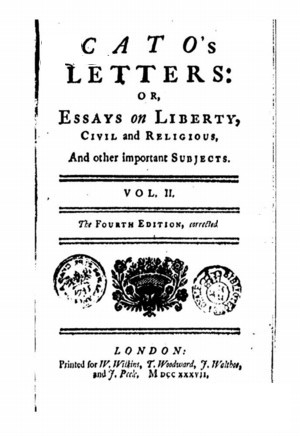
Writings like Cato’s Letters were widely read in the colonies and helped shape how ordinary people understood government, power, and liberty.

What’s striking when you read Cato more closely is how little confidence they placed in moral restraint alone. It doesn’t describe freedom as unlimited expression or personal autonomy. The idea that belief, fear of God, or good intentions would keep power in check is treated as dangerously naive. Power is not self-regulating, and it is not made safe by the character or beliefs of those who hold it. It has to be exposed, limited, and actively resisted—because even institutions and ideas meant to restrain it, including religion, can be repurposed to justify its expansion.

It describes government more as a trust—one that exists to protect the conditions that make ordinary life possible.

As Cato writes:

“Power is like fire; it warms, it burns, it destroys. It is a dangerous servant and a fearful master”

And more directly:

“What is government, but a trust committed…that everyone may, with the more security, attend upon his own?”

The assumption is clear. Power must be restrained. Freedom depends on it.

But in Cato’s framing, that restraint doesn’t come from structure alone. It depends on constant exposure and resistance. Freedom of speech and a free press aren’t treated as abstract rights, but as active safeguards—tools for uncovering corruption and preventing power from consolidating unchecked. The logic is simple but demanding: power does not correct itself. It expands, protects its own interests, and, if left unchallenged, begins to operate beyond the limits it was given.

The point of understanding the political cycles of revolution wasn’t to say that any one system was uniquely flawed. It was that all systems are vulnerable to the same underlying problem:

Human nature.

Self-interest eventually creeps in. Restraint erodes. Power shifts from a trust into something personal and extractive.

And once that shift happens, the form of government matters less than the character of the people within it. That thread runs directly into the founding.

The American system wasn’t designed as a pure democracy. It was an attempt to stabilize a problem earlier thinkers had already identified.

Rather than choosing a single form of government, the founders built a mixed system, blending elements of rule by one, rule by a few, and rule by many. An executive to act with decisiveness. A Senate to provide deliberation and continuity. A House to represent the people more directly.

This wasn’t accidental.

It reflected an awareness that each form of government carries its own risks, and that concentrating power in any one place tends to accelerate its corruption.

By distributing power across different institutions, the goal was to create tension within the system itself. Ambition would check ambition. Competing interests would slow the consolidation of power.

From my understanding, they weren’t trying to escape the cycle Polybius described. They were trying to manage it.

They weren’t designing a perfect system. They were attempting to design one built to withstand imperfect people.

But even that depended on something it could not guarantee.

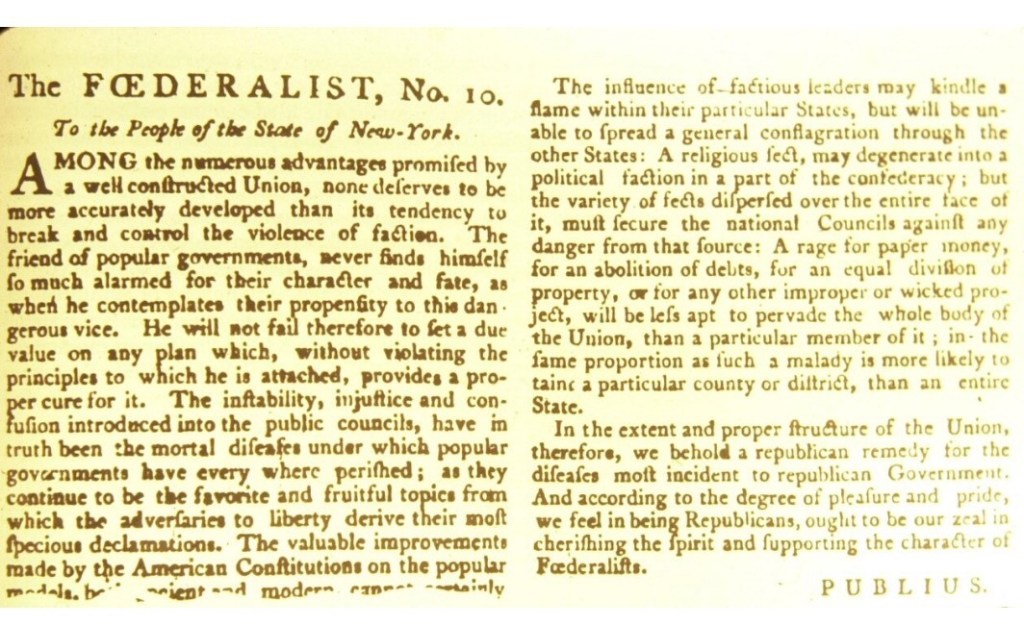
In Federalist No. 10, James Madison writes:

“The latent causes of faction are thus sown in the nature of man.”

He’s not describing a temporary problem. He’s describing a permanent one.

Differences in opinion, interests, wealth, and temperament don’t disappear. They organize. They form groups. And those groups will sometimes pursue aims that are at odds with the rights of others or the stability of the system itself.

Madison’s conclusion is straightforward:

“The causes of faction cannot be removed… relief is only to be sought in the means of controlling its effects.”

That distinction is crucial. He doesn’t try to eliminate conflict or force unity. He assumes conflict is inevitable and builds a system around that reality.

Instead of requiring perfect discipline from individuals, the structure disperses power, multiplies interests, and forces negotiation. Representation slows decision-making. Scale makes domination more difficult.

Freedom is preserved not by removing conflict, but by structuring it.


They looked ahead with anxiety, not confidence. Because they believed liberty was collapsing everywhere. New tyrannies had spread like plagues. The world had become, in their words, “a slaughterhouse.” Across the globe:  Rulers of the East were almost universally absolute tyrants…Africa was described as scenes of tyranny, barbarism, confusion and violence. France ruled by arbitrary authority. Prussia under absolute government. Sweden and Denmark had “sold their liberties.” Rome burdened by civil and religious control. Germany is a hundred-headed hydra. Poland consumed by chaos. Only Britain (and the colonies) were believed to still hold onto liberty. And even there… barely. From revolutionary-era political writings, as compiled by Bernard Bailyn


University of Virginia Rotunda-Modeled after the Roman Pantheon

II. Ordered Liberty and the Kind of Person It Requires

The founders believed in liberty, but not as an unlimited good. They believed in ordered liberty. Freedom that exists within a framework of responsibility, discipline, and civic virtue. The system they designed assumed a certain kind of person, one capable of self-governance, restraint, and participation in a shared moral world.

That assumption was not optional. It was structural. It’s easy to miss how much is built into that.

And this is where the modern tension and the current understanding of freedom begins to diverge from its origins.

Classical Liberalism, in its earlier form, was not about as Deneen states in Why Liberalism Failed, detaching individuals from all institutions, identities, or relationships. But it was about protecting individuals from tyranny while preserving the conditions necessary for a functioning society. It assumed the continued existence of family, community, religious frameworks, and shared norms.

But where Deneen is right, early liberal thought did introduce something new. 

John Locke, for example, reframed institutions like marriage as voluntary associations rather than fixed, inherited structures. That didn’t mean early liberal political philosophy was designed to erode the family. But it did change how those institutions were understood. It placed individual choice alongside social stability in a way that could be expanded over time.

To understand where this expansion comes from, you have to look at what came before it


Without freedom of thought, there can be no such thing as wisdom; and no such thing as publick liberty, without freedom of speech: Which is the right of every man, as far as by it he does not hurt and control the right of another; and this is the only check which it ought to suffer, the only bounds which it ought to know. Cato’s letters No.15


III. The Moral Inheritance of the West

The Lia Fail Inauguration Stone on the Hill of Tara in County Meath Ireland

In many pre-Christian societies, moral life wasn’t organized primarily around abstract rules or universal doctrines, but around continuity. Identity was tied to lineage, family, and inherited roles. Authority came not from individual preference, but from what had been passed down—customs, obligations, and expectations shaped over generations. To live well wasn’t just a personal project. It meant upholding something larger than yourself: maintaining the reputation of your family, fulfilling your role within a community, and carrying forward a way of life that you didn’t create but were responsible for preserving.

You can see how this played out in places like Anglo-Saxon England, where social structure and legal life were more embedded in family and local custom than in centralized doctrine. Women, for example, could own property, inherit land, appear in legal proceedings, and in some cases exercise real economic and political influence. These weren’t modern equality frameworks, but they complicate the assumption that agency and rights only emerge through later “progress.”

That structure did more than organize society. It created cohesion. It gave people a shared reference point for what mattered, what was expected, and what should be restrained—even when no one was watching. Authority wasn’t something constantly renegotiated. It was inherited, lived, and reinforced through participation in a shared way of life.

Greek and Roman life was also structured around civic duty, hierarchy, and inherited roles.

Their moral frameworks reflected that structure. Thinkers like Aristotle emphasized virtue as balance, habits cultivated over time within a community, oriented toward harmony and the common good.

As Christianity spread, moral authority became less tied to lineage and local custom, and more anchored in universal doctrine—rules that applied across communities, not just within them. Obligation didn’t vanish, but it was increasingly reframed. Less about inherited roles within a specific people, more about the individual’s relationship to a broader moral order.

That shift didn’t happen all at once, and it’s not a simple story. The development of early Christianity, its integration into the Roman Empire, and the ways it reshaped intellectual life and authority are far more complex than a few paragraphs can capture here. I’ve gone into that in more detail elsewhere, particularly around the Constantinian period and the rise of revelation and fall of reason.

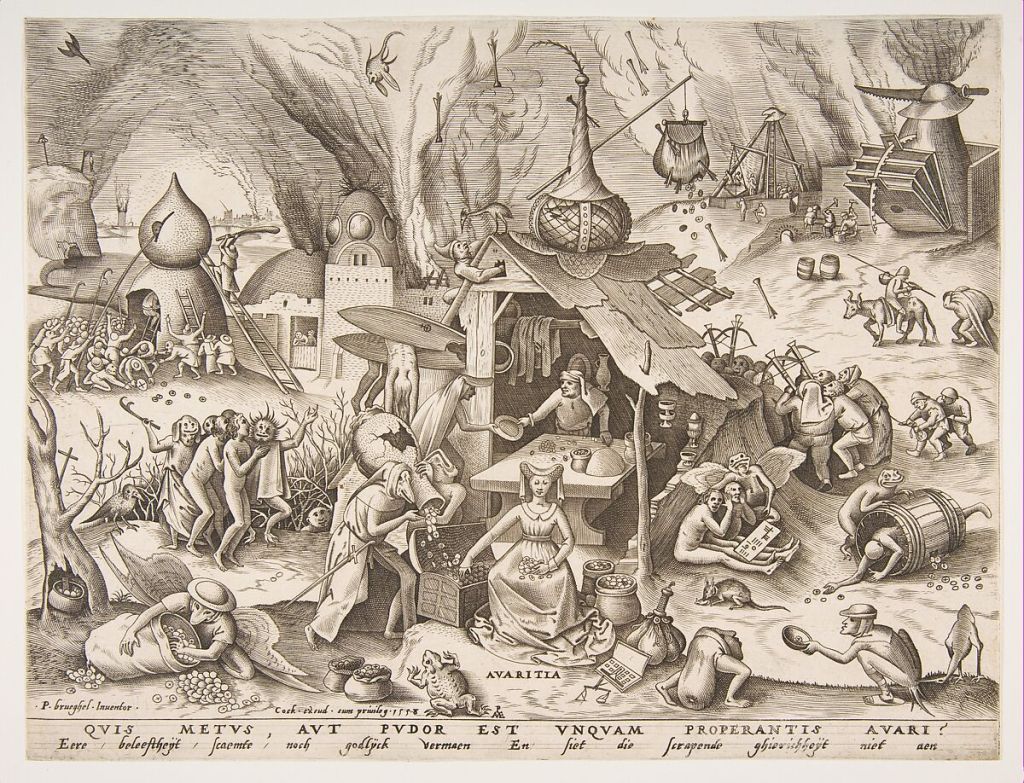
This development intensifies further with the rise of Protestantism, where that reframing of obligation becomes even more explicit.The movement from the Seven Deadly Sins to the Ten Commandments as a dominant moral framework.

Avarice (Avaritia), from “The Seven Deadly Sins”
Pieter van der Heyden Netherlandish
After Pieter Bruegel the Elder Netherlandish
Publisher Hieronymus Cock Netherlandish
1558

The Seven Deadly Sins, pride, greed, lust, envy, gluttony, wrath, and sloth, are not rules in the strict sense. They describe internal dispositions, patterns of character that distort judgment and pull a person out of balance. They are concerned with formation, with who you are becoming.

The Ten Commandments, by contrast, are structured as prohibitions. You shall not. They define boundaries, obedience, and transgression in relation to divine authority.

Both frameworks aim at moral order. But they operate differently. One is oriented toward the cultivation of character within a shared moral world. The other emphasizes compliance, law, and accountability before God.

The Protestant Reformation further reduced the role of mediating institutions, emphasizing personal conscience, direct access to scripture, and an individual relationship to truth. Authority became less external and more internalized, but also more individualized and less uniformly shared.

The emphasis is unmistakable. Moral responsibility is no longer primarily inherited or communal, but individual and direct.

This did not dissolve the community. But it did begin to relocate the moral center of gravity, from the maintenance of balance within a community, to the accountability of the individual before God.

A political system built on individual rights and self-governance emerged from a cultural framework that had already begun to center moral responsibility at the level of the individual.

At the same time, Christianity reshaped how the natural world was understood. Earlier traditions often treated nature as infused with meaning, order, or even divinity. Christianity maintained that the world was ordered, but no longer sacred in itself. It was created, not divine.

That distinction introduced a kind of distance. A world that is no longer sacred in itself becomes, over time, easier to treat as something external, something to study, measure, and ultimately use.

None of these shifts were inherently destabilizing on their own. But they altered the underlying framework.

Over time, they contributed to a gradual reorientation, one that made it easier to conceive of the individual as separate, autonomous, and capable of standing apart from inherited structures.

That development would later be expanded and amplified through liberal thought.

But the point is not that Protestant Christianity caused modern individualism. It is that it helped make it thinkable.

By the time you reach the Enlightenment and the American founding, those earlier shifts had not disappeared. They had been carried forward and reworked into a new framework—one increasingly shaped by reason, not as a rejection of religion entirely, but as a refusal to let authority go unquestioned simply because it claims moral or divine legitimacy.


The state of nature has a law of nature to govern it, which obliges every one: and reason, which is that law, teaches all mankind, who will but consult it, that being all equal and independent, no one ought to harm another in his life, health, liberty, or possessions… (and) when his own preservation comes not in competition, ought he, as much as he can, to preserve the rest of mankind, and may not, unless it be to do justice on an offender, take away, or impair the life, or what tends to the preservation of the life, the liberty, health, limb, or goods of another.

-John Locke on the rights to life, liberty, and property of ourselves and others


IV. When Freedom Loses Its Structure

Over the next two centuries, that framework continued to expand. Early expansions focused on political participation—who could vote, who counted as a citizen, and who could take part in public life.

By the mid-20th century, that expansion accelerated through civil rights movements, which pushed the language of equality and access further into law, culture, and institutions.

In the 1960s into the 1970s, the focus widened into personal life. Questions of family, marriage, sexuality, and individual identity were increasingly reframed in terms of autonomy and personal choice.

The sexual revolution, in particular, was widely understood as an expansion of personal freedom: loosening traditional constraints around sex, marriage, and family life. But over time, some of the assumptions underlying that shift have come under renewed scrutiny. The idea that women can navigate complete sexual and relational autonomy without significant cost appears increasingly fragile, especially in the absence of the social structures that once provided stability and direction.

Expanding rights changes the system, not just access to it.

What’s often assumed is that this expansion is self-justifying—that extending rights is always a net good, and that the system can absorb that expansion without consequence. But that assumption is rarely examined.

As the scope of participation widens, so does the demand placed on the system and on the people within it.

A political system built on equal participation assumes a level of judgment, responsibility, and long-term thinking that is not evenly distributed. It assumes that individuals, given more freedom, will be able to navigate it without undermining the conditions that make it possible in the first place.

What we also see in modern times is the cultural and institutional structures that once shaped behavior—family expectations, community standards, shared moral frameworks have become much weaker, more contested, or easier to reject.

For most of known human history, moral behavior wasn’t just a matter of personal conviction. It was embedded in small, stable, reputation-based communities where actions were visible, remembered, and judged over time. Behavior carried consequences because it was tied to relationships that endured.

That community system relied on three conditions: shared standards, stable enforcement, and long-term relationships. As those weaken, accountability becomes less consistent or non existent. Not because human nature has changed, but because the structures that made behavior visible and tied to consequences have broken down.

Part of that shift is tied to the broader move toward secularism. As religious frameworks lose authority, the shared narratives that once provided cohesion, meaning, and moral orientation begin to fragment. This doesn’t eliminate the human need for structure—it shifts where people look for it. It disperses into competing sources of identity, morality, and meaning.

In The Republic, Plato makes a similar observation about belief itself. What matters is not just what people claim to believe, but whether those beliefs hold under pressure. “We must test them… to see whether they will hold to their convictions when they are subjected to fear, pleasure, or pain.”

Without shared structures reinforcing those convictions, belief becomes more reactive, more situational, and more easily reshaped by external forces.

We are left with a society of multiple, incompatible systems of belief—each with its own values, demands, and claims to legitimacy, but no widely accepted structure holding them together. 

What was once a shared moral world becomes a contested one.

In Propaganda, Edward Bernays makes a blunt observation: the conscious and intelligent manipulation of the masses is not only possible, but essential to managing modern society. That insight becomes more relevant, not less, in the absence of a shared framework.

Because when a society loses the unifying structures that once held it together, the vacuum doesn’t stay empty. New ideologies rush in (secular, political, cultural) offering belonging, morality, and meaning, often with more intensity than the systems they replaced.

More autonomy. Less formation. More fragmentation. Less agreement on what freedom even demands.

This raises a harder question: whether removing earlier constraints produced the kind of freedom it promised, or simply replaced one set of pressures with another.

As that imbalance deepens, people don’t simply become more independent. They look for stability elsewhere.

This is where Deneen’s observation becomes useful, even if I don’t fully agree with his framing. As traditional institutions weaken, dependence doesn’t disappear—it shifts. From local, relational structures to larger, more abstract systems like the state and the market.

Another way to see this is that societies don’t just rely on formal institutions. They rely on something less visible—a kind of cultural immune system. Shared norms, expectations, and informal boundaries that regulate behavior without constant enforcement.

When those weaken, systems don’t become freer. They become easier to exploit.

One of the clearest examples of that vulnerability is the modern corporation.

The American system was designed in deep suspicion of concentrated power, yet over time it has extended expansive protections to corporate entities, allowing large institutions, backed by wealth, media, and legal abstraction, to shape public life in ways the founding framework was poorly equipped to restrain. 

The founders were wary of concentrated power, but they were not designing a system for multinational corporations with vast economic and informational reach. Over time, constitutional doctrine expanded in ways that made these entities increasingly difficult to limit, culminating in decisions like Citizens United, where the Court held that independent political spending by corporations and unions could not be restricted under the First Amendment.

This is part of the same pattern. A system built to preserve liberty becomes easier to exploit when power no longer appears as a king, a church, or a visible ruling class, but as diffuse institutions operating through law, markets, and media.

And as we have seen that happen, trust has eroded, cooperation breaks down, and the very conditions that made freedom possible have begun to unravel.

But I don’t think that was the original aim of classical liberalism.

It’s not that it set out to dismantle the community. It’s that over time, through cultural, economic, and technological changes, the balance between freedom and structure eroded. And now we’re dealing with the consequences of that imbalance.

The more I read, the harder it is to ignore the tension at the heart of the American Revolution itself.

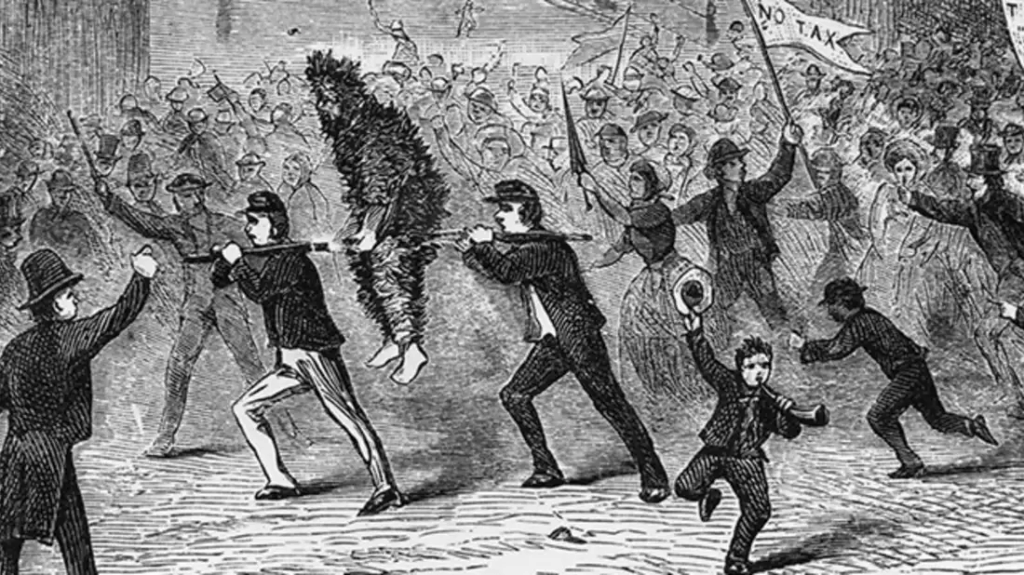
It speaks the language of liberty, but often operated through pressure, surveillance, and social enforcement. Groups like the Sons of Liberty didn’t just resist authority—they replaced it with their own forms of coercion, loyalty tests, and public punishment.

The sons of liberty regularly tar and feathered anyone who offended them or were officers of the British government.

I am not saying the ideals were wrong. It means liberty, on its own, doesn’t sustain itself.When formal authority is rejected, power doesn’t disappear. It simply relocates.

And without shared discipline or internal restraint, it often reappears in more fragmented, less accountable forms.

Liberty is not the absence of power.

It’s a problem of how power is structured, restrained, and lived.

There’s another reaction to this tension that’s worth acknowledging, even if it goes too far.

Thinkers like Mencken argued that the real problem isn’t the system, but the people—that democracy inevitably lowers the standard because it reflects the average citizen. 

And I understand the sentiment; but that framing misses something important.

The issue isn’t that people are inherently incapable of self-government.

It’s that self-government requires habits, discipline, and formation that a system alone cannot produce.

What makes this moment particularly interesting is that the unease people feel doesn’t map neatly onto political categories.

Across both the left and the right, there’s a growing intuition that something isn’t functioning the way it should.

You see it in the rare points of agreement. Public frustration over the lack of transparency in the Epstein files cuts across political lines, with overwhelming majorities convinced that key information is still being withheld and justice is yet to be served. 

You see it in foreign policy as well. Even in a deeply divided country, there is broad skepticism toward escalating conflicts like the war involving Iran, with many of us questioning the purpose, cost, and direction of involvement. 

That concern isn’t new. It shows up clearly in Cato’s Letters, where distrust of power wasn’t abstract—it was grounded in history. The Roman Empire was a constant reference point, especially in how standing armies, once established, could be turned inward, gradually eroding liberty and consolidating control.

They weren’t against defense. But they were deeply wary of permanent military power and foreign entanglements that primarily served those in control, not the public. War wasn’t just protection. It was one of the fastest ways power could expand.

And it’s hard not to wonder how they would look at what we now call the military-industrial complex—how permanent it’s become, how embedded it is, and how easily it justifies its own expansion. 

Power attracts interests that seek to influence it through money, proximity, and favor and over time those interests become embedded within the system itself, shaping decisions in ways that are no longer aligned with the public.

How this shows up today in modern times points to the fact that governmental power no longer feels like a trust. We The People who want to put America and her people’s needs First, are witnessing an occupied government like never before. And that our institutions are no longer held accountable. They have become self-protective and disconnected from the very people they’re meant to serve.


“Power, in proportion to its extent, is ever prone to wantonness.” — Josiah Quincy Jr., Observations on the Boston Port-Bill (1774)

“The supreme power is ever possessed by those who have arms in their hands.” (colonial political writing, mid-18th century)

Standing armies, they warned, could become “the means, in the hands of a wicked and oppressive sovereign, of overturning the constitution… and establishing the most intolerable despotism.” — Simeon Howard, sermon (c. 1773–1775)

Which is why Jefferson insisted on keeping “the military… subject to the civil power,” not the other way around (1774).


There’s also empirical evidence from over a decade ago pointing in that direction. 

Sometimes known as “the oligarchy study” published in 2014 by Martin Gilens and Benjamin Page analyzed nearly 1,800 policy decisions in the United States and found that economic elites and organized business interests have a substantial independent influence on policy outcomes, while average citizens have little to no independent impact.

Policies favored by the majority tend to pass only when they align with the preferences of the wealthy. When they don’t, public opinion has almost no measurable effect.

This one study doesn’t prove that the system has fully collapsed into oligarchy.

But it does reinforce our intuition that something has shifted, that power is no longer functioning as it should and that representation is much more limited than we assume.

What I’ve learned from putting this together is that this concern is not new. It’s ancient.

It’s the same fear that appears in the Greek philosophers, carries through Rome, reemerges in the founding era, and is now unfolding again in modern society.

This is the same dynamic Madison was pointing to in Federalist No. 10. When legitimacy starts to weaken, people don’t simply disengage.

They form groups around competing explanations for what’s gone wrong—different interests, different priorities, different visions of what should replace it.

Within the modern left, those responses are not all the same.

Establishment Democrats still operate within existing systems. Liberals tend to push for reform through policy. Progressives begin to question the structure itself. And further out, democratic socialists and revolutionary groups are not aiming to fix the system, but to replace it entirely.

That distinction matters. Because once you move from reform to replacement, you’re no longer arguing about how to use a system.

You’re arguing about whether it should exist at all. At the far end of that spectrum, some movements push toward dismantling foundational structures entirely, treating them as irredeemably corrupt.

You can see this in specific, coordinated efforts.

Large-scale protest movements like the recent “No Kings” demonstrations, like on March 28th, 2026, bringing 8 million people into the streets across the United States. With more than 3,300 coordinated events spanning all 50 states, the mobilization set a record for the largest single day of protest in U.S. history.

They have planned actions like May Day strikes, where activists are calling for mass labor disruption and economic shutdown. And organized noncooperation campaigns designed to train people in how to resist, overwhelm, or halt existing systems altogether.

Their logic is that the system of capitalism is no longer seen as something to work within, but something to resist, bypass, or bring to a stop.

Not reform. But disruption and replacement.

I’ve spent enough time around these spaces to understand the appeal. When institutions feel captured or unresponsive, the instinct is not to reform them—but to burn them down to the ground.

Freedom is not collapsing because people have rejected it. It’s becoming unstable because we can no longer agree on what it is, what it requires, or what its limits should be.

And as more of the burden falls on individuals while leadership fails to model it, people start to feel both responsible and powerless. And that’s where apathy begins to take hold——when it no longer feels like it matters, especially to the people at the top.

United States Capitol Rotunda — The Dome Painting “The Apotheosis of Washington” Painted by Constantino Brumidi in 1865

V. The Human Problem at the Center of Freedom

A republic doesn’t survive on laws alone.

It survives on citizens who can exercise restraint, who understand limits, who see freedom not just as permission, but as responsibility.

One way to understand this shift more clearly is through moral psychology. Human beings don’t arrive at morality purely through reasoning. We rely on a set of underlying intuitions (care, fairness, loyalty, authority, and a sense of the sacred) that shape how we judge right and wrong before we ever explain why.

In more conservative or traditional societies, these moral intuitions tend to operate together rather than in isolation. Care, fairness, loyalty, authority, and a sense of the sacred reinforce one another, creating a more unified moral framework. People may still disagree, but they are drawing from a shared moral language, with expectations around family, roles, restraint, and what should or should not be done.

But that kind of shared moral framework doesn’t hold evenly across modern society.

The second way to see this is by looking at how these moral intuitions organize into distinct patterns cluster across different groups. In the chart, you can see three broad orientations: progressives, conservatives, and libertarians. Progressives tend to cluster around care and fairness. Conservatives draw from a wider range, incorporating loyalty, authority, and a sense of the sacred alongside those concerns. Libertarians center heavily on liberty, placing less weight on the others. What looks like a disagreement about politics is often a difference in moral orientation—people emphasizing entirely different parts of the same moral landscape.

And the differences don’t just show up in orientation, but in intensity.

This bar graph illustrates this pattern more clearly when we look at how different groups actually prioritize these moral intuitions. 

Secular liberals and the religious left tend to emphasize care and fairness most strongly, focusing on reducing harm and promoting equality. By contrast, more traditional or socially conservative groups draw more evenly across a broader set of values, including loyalty, authority, and a sense of the sacred alongside care and fairness. Libertarians tend to narrow even further, prioritizing individual liberty while placing less emphasis on collective or traditional moral structures. 

The result isn’t just disagreement over morality—it’s a difference in what people are even measuring in the first place, which makes shared judgment harder to sustain.

You can see the split in how people respond to the same breakdown in trust.

For those on the left, freedom means removing constraint entirely and that leads to a push to dismantle systems they see as corrupt or oppressive. 

For those on the right, it produces deep suspicion: distrust of elections, media, public health authority, and government itself, along with a desire to restore order, stability, and clearer boundaries. In some cases, that turns into nostalgia for earlier structures: family roles, gender norms, and forms of religious authority that are seen as more stable, even if that restoration comes with its own trade-offs.

These aren’t just different political positions. 

They reflect different instincts about what matters most and different assumptions about what freedom is for.

And both risk missing the deeper question.

Not just: what system creates freedom?

But what kind of people can sustain it?

This is where Aristotle’s framework becomes difficult to ignore. In that sense, his may be closer to the truth than many modern assumptions. It starts from the premise that people are not equal in their capacity for judgment or self-governance—and builds from there, rather than pretending those differences don’t matter.

It shows up in how people live, how they make decisions, and how they exercise restraint. That’s where his framework of virtue comes in—not as an ideal, but as a way of describing what it actually takes to live well and participate in a functioning society.

He didn’t think virtue was about perfection. He thought of it as balance. Courage sits between cowardice and recklessness.

Self-control between indulgence and insensibility.

Generosity between stinginess and excess.

Virtue is not automatic. It is cultivated. And it can be lost.

He applied that same logic to political systems. A government can exist in a healthy form, oriented toward the common good, or in a corrupted form, serving only a faction. At that point, the difference isn’t just structural. It comes down to character.

One tension that keeps resurfacing in political thought is the gap between equality in principle and inequality in capacity.

You can see this play out in small, everyday ways. Give ten people the same freedom, the same opportunity, the same set of rules—and you don’t get the same outcomes. Some plan ahead. Some act impulsively. Some take responsibility. Others look for ways around it. The structure is equal, but the response isn’t. 

Because human beings are not identical in judgment, discipline, or temperament. Some are more capable of long-term thinking, self-restraint, and navigating complexity than others.

A free society doesn’t eliminate those differences. It has to operate in spite of them. And that creates the real challenge.

A system built on self-government depends on habits it cannot enforce, on restraint it cannot require, and on a shared understanding of limits it cannot guarantee.

Which raises a difficult question:

What happens when a system built on equal freedom depends on unequal capacities to sustain it?

Freedom is not self-sustaining. The more we treat it like it is, the more fragile it becomes. 

When those conditions weaken, the structure doesn’t collapse all at once. It loosens, then drifts, and eventually begins to follow the same pattern that earlier thinkers warned about. 

Not because the idea of freedom was flawed, but because it was always contingent on something more demanding than we like to admit.

And that’s what makes the older warnings so difficult to ignore. The concerns that show up in Greek philosophy, carry through Rome, and reappear in the founding era weren’t tied to one moment in history. They’re describing something recurring. Power doesn’t stay put. It accumulates. It protects itself. And without pressure against it, it shifts (often quietly) into something more self-serving than it was at the start.

The documents and letters from the founding era weren’t written for a stable world. They were written by people who assumed this drift was inevitable. That’s why they were obsessed over things like faction, corruption, and the abuse of power. Not just as political problems, but as moral ones. Because once corruption sets in, it doesn’t just distort institutions. It reshapes the people within them. A corrupt government cannot be a just government. That’s why they treated free speech, free press and an informed public less like ideals and more like important tools—ways of forcing power into the open before it had the chance to consolidate.

Cato’s letters, in particular, were relentless on this point. They knew that a society that becomes consumed with wealth, status, and self-interest doesn’t just become unequal. It becomes easier to manipulate, easier to divide, and eventually less capable of governing itself at all. Civic virtue wasn’t a side note. It was the condition that made freedom possible in the first place.

And when you look at it from that angle, it doesn’t feel like you’re reading writings from the 18th century. It feels familiar, much closer to home. 

Of course, the scale is different now. The mechanisms are different. But the tension is very much the same. Governments and corporations operate with a level of reach the founders never could have imagined with technology. Information is filtered, behavior is shaped, and power often moves through systems that don’t look like power at all. You don’t always see it directly. But you feel the effects of it.

So the responsibility doesn’t go away. It never did.

If anything, it becomes less obvious and more necessary at the same time.

A system like this doesn’t hold because it was designed well. It holds, when it does, because enough people are still paying attention. Still pushing back. Still unwilling to let power define its own limits.

And once that slips…once that expectation fades, the structure doesn’t fail all at once. It just stops holding in the way it used to. And the pattern continues.

United States Capitol Rotunda — The Dome Painting “The Apotheosis of Washington” Painted by Constantino Brumidi in 1865

Resources: 

This piece pulls from a mix of ancient sources, founding-era writing, and modern critiques. Not because I agree with all of them, but because each one sharpens a different part of the problem. If you want to work through it yourself, these are the ones that shaped how I’m thinking about it:

Corporate Rights and the Most Absurd Legal Fiction: A Reactionary History and Analysis of Corporate Personhood

Bernard Bailyn — The Ideological Origins of the American Revolution
Less about what the founders built, more about what they were reacting to—especially the collapse of earlier republics.

Alexander Hamilton, James Madison, John Jay — The Federalist Papers
A direct look at how they thought about human nature, power, and why freedom needs structure to hold.

Patrick Deneen — Why Liberalism Failed
I don’t agree with all of it, but the critique of modern individualism and the erosion of shared norms is worth taking seriously.

Plato — The Republic
Still one of the clearest descriptions of how excessive freedom destabilizes a society.

Aristotle — Politics
Helpful for understanding how democracies drift when law loses authority and personality takes over.

Polybius — Histories
His framework for how governments rise and decay is hard to unsee once you see it.

Louise Perry — The Case Against the Sexual Revolution
A modern example of how expanded freedom doesn’t always produce the outcomes people expect.

Jonathan Haidt — The Righteous Mind
Useful for understanding why reason alone doesn’t hold societies together—and why people experience morality so differently.

Charles Freeman — The Closing of the Western Mind
Explores how early Christianity reshaped intellectual life in the West.
Also recommended: The Opening of the Western Mind

Roger E. Olson — The Story of Christian Theology
A clear overview of how Christian thought developed over time and how its internal tensions evolved.

Judith Bennett — Women in the Medieval English Countryside
Insight into everyday life, structure, and roles in pre-modern society.

Christine Fell — Women in Anglo-Saxon England
A look at social organization and cultural norms in early English society.

When “Helping the Homeless” Becomes a Trojan Horse

Why Trump’s new executive order deserves close scrutiny

President Trump signed an executive order on July 24, 2025, calling on states and cities to clear homeless encampments and expand involuntary psychiatric treatment, framed as a move to improve public safety and compassion

At first glance, it seems reasoned: address the homelessness crisis in many progressive cities, restore order, & help those with severe mental illness. But when I read it closely, and the language….phrases like “untreated mental illness,” “public nuisance,” and “at risk of harm”is vague enough, subjective enough, and feels ripe for misuse 😳

This goes beyond homelessness. It marks a shift toward normalizing forced institutionalization, a trend with deep roots in American psychiatric history.

We explored this dark legacy in a recent episode, Beneath the White Coats 🥼 and if you listened to that episode, you’ll know that

compulsory commitment isn’t new.

Historically, psychiatric institutions in the U.S. served not just medical needs but social control. Early 20th-century asylums housed the poor, the racially marginalized, and anyone deemed “unfit.”

The International Congress of Eugenics’ Logo 1921

The eugenics movement wasn’t a fringe ideology….it was supported by mainstream medical groups, state law, and psychiatry. Forced sterilization, indefinite confinement, and ambiguous diagnoses like “moral defectiveness” were justified under the guise of public health.

Now, an executive order gives local governments incentives (and of course funding 💰 is always tied to compliance) to loosen involuntary commitment laws and redirect funding to those enforcing anti-camping and drug-use ordinances instead of harm reduction programs

Once states rewrite their laws to align with the order’s push toward involuntary treatment and if “public nuisance” or “mental instability” are to be interpreted broadly…

Now, you don’t have to be homeless to be at risk. A public disturbance, a call from a neighbor, even a refusal to comply with treatment may trigger involuntary confinement.

Is it just me, or does this feel like history is repeating?

We’ve seen where badly defined psychiatric authority leads: disproportionate targeting, loss of civil rights, and institutionalization justified as compassion. Today’s executive order could enable a similar expansion of psychiatric control.

So.. what do you think? Is this just a homelessness policy? or is it another slippery slope?

Tier by Tier: How the Left Radicalizes Its Own

A conversation with Karlyn Borysenko on why understanding the Left’s internal factions matters now more than ever.

Welcome back to Taste Test Thursday—my bonus series (or maybe just another excuse to drop a second episode mid-week 😉)

Prelude to Collapse: The War Within

Anti-ICE riots, open declarations of war, and the revolution you’re not supposed to notice….

Thanks for reading Taste of Truth! Subscribe for free to receive new posts and support my work.

Before we dive into today’s main topic, I have to share something with yall.

Here’s the tea you might have missed: Simone Biles, once the queen of female athleticism, just decided to throw female athletes under the bus. She went scorched-earth on Riley Gaines—a woman who had the nerve to say basic biology matters in sports.

Simone’s stance? Basically, “Step aside, ladies. Men who say they’re women get to play too. Deal with it.”

Yeah, that crushed a lot of dreams. Every young girl who looked up to Simone for grit and talent got served a big, ugly dose of woke betrayal instead.

But wait, the drama didn’t stop there. The comment sections exploded with some of the wildest, most ridiculous takes you’ll ever see:

People claimed things like:

  • “Trans women are actually weaker than cis women,” ignoring every major study, physiology, and real-world athletic results.
  • “You’re just obsessed with genitals,” as if biological reality is some kind of personal fetish.
  • “Stop bullying! Simone Biles was just being inclusive,” even though Simone personally attacked another female athlete and told her to “pick on someone your own size”—which was clearly a jab at men, flipping the narrative.
  • “Only one trans woman has ever medaled in the Olympics, and it was in a team sport,” using tiny sample sizes as “proof” while ignoring decades of male athletic advantage and the ongoing displacement of female athletes.
  • Claims that acknowledging biology is “bigotry” or “hate,” which is a classic deflection to avoid actual debate.

What’s striking is how none of this is about facts or fairness—it’s about protecting an ideology at all costs. That’s the Bulldozer at work: steamrolling science, reason, and women’s rights in the name of feelings and group loyalty.

This isn’t just about sports. It’s a microcosm of a larger, coordinated push to erase distinctions and rewrite reality. The same movement that’s burning flags, tearing down institutions, and pushing radical social change also demands that we deny biology and silence dissent.

If you think this sounds wild, it’s because it is.

And it’s happening everywhere.


In cities like Los Angeles, Austin, and New York, something is boiling over—but you won’t see it clearly if you rely on mainstream media. Violent riots outside ICE offices. Masked agitators throwing bricks and firebombs. American flags burned in the street while chants echo: No borders, no nations, no more deportations.

It’s not just civil unrest—it’s ideological warfare.

The Revolutionary Communists of America recently made it explicit. On their official channels, they didn’t just critique policy—they declared war on the United States. Not metaphorically. Not rhetorically. Literally.

For the radical left, capitalism isn’t just an economic system; it’s the system—the root of all oppression. The force that creates every hierarchy, every disparity, every injustice.

When they say systemic racism, they don’t mean individual prejudice or even discriminatory laws-they mean the entire capitalist structure that, in their view, was built to privilege some and exploit others.

And still, mainstream outlets call it “activism.”

These aren’t fringe events. They’re pressure points in a much larger movement: one that uses radical ideology to attack the very concept of law, order, and national identity. Immigration is just the entry wound. The deeper goal is to dissolve the nation-state, abolish prisons, defund police, and destabilize every Western institution—starting with the family, borders, and biological reality itself.

They want the system to burn.

They just want you to feel guilty for noticing.

This isn’t liberalism. It’s not even progressivism. It’s an ideological virus that blends Marxist collapse fantasies with postmodern identity theory—what some have rightly begun to call Queer Marxism. And it’s spreading, not through military coups or overt revolution, but through activist groups, academic institutions, union politics, and nonprofit networks.

We call it the Bulldozer.

Because it doesn’t just push for justice.

It erases categories, flattens distinctions, and leaves nothing but rubble behind.


🧭 Where This Started For Me

How the modern Left radicalizes through language, identity, and psychological control

Once upon a time, I considered myself a proud progressive. I believed in equality, compassion, and social justice—values I still hold. But over the years, I began to notice a shift: the language of empathy was being used to silence people. The banner of inclusion began to look more like a gatekeeping badge. The people preaching tolerance were often the least tolerant of dissent.

I entered the movement through the doorway of compassion. But I didn’t understand, at the time, that it led to a staircase. A funnel. Tier by tier, the path narrowed—not toward a better world, but toward radicalism. And once inside, the pressure to conform only grew stronger.

Today, much of what passes as “progressive” isn’t about progress at all. It’s about compliance. It’s about scripts. It’s about moral absolutism enforced by social shaming. What began as genuine concern for the marginalized has metastasized into an ideological machine—one that feeds on sincerity, weaponizes pain, and punishes nuance.

That’s why I’m excited to share this conversation with

Karlyn Borysenko, a voice that’s become indispensable in making sense of what’s really happening on the modern Left.

Karlyn is a bold, unapologetic critic of collectivist ideology. An organizational psychologist turned independent journalist, she brings sharp wit and deep psychological insight to her investigations. She’s not just analyzing theory from the outside—she’s been inside the radical inner circles. Through her work on Decode the Left, Karlyn infiltrates socialist and communist meetings, documents activist materials, and translates their coded language into something the average American can understand.

Her work has helped many—including me—see what’s been hiding in plain sight.

In our 30-minute interview, we discuss:

  • Her recent article: Democrats Are Not the Same as Communists. Know the Difference
  • What May Day organizing reveals about the Left’s summer strategy
  • How her infamous “Spy Streams” expose internal tactics and contradictions
  • Her book A Brief History of Racism, and why history matters more than ever now

But before we jump into that conversation, I want to lay a foundation. This post is both a companion and a continuation—an exploration of how well-meaning people get pulled into radical ideologies, how activism gets hijacked, and why naming this process matters.

The Bait: Branding with Virtue

Progressive branding thrives on moral urgency. It co-opts legitimate concerns—racism, sexism, homophobia—and repurposes them as litmus tests. Agree with our solutions or you’re the problem.

I began to question this during the rise of Black Lives Matter. But when I asked reasonable questions about BLM’s funding, its leadership, or its goals, I was told that even asking was racist. It wasn’t enough to be “not racist.” You had to be “anti-racist” in a very specific, approved way.

This wasn’t justice—it was dogma.


The Switch: From Inclusion to Compliance

At the same time, in the wellness and spiritual communities I trusted, I saw the language of healing twist into something coercive. Phrases like “decolonize your practice” and “center marginalized voices” began as invitations—but morphed into rules.

There was no room to push back. Questioning the narrative meant you were part of the problem. Even trauma healing became politicized. The very spaces meant for introspection and healing became echo chambers.

Instead of curiosity, we got shame. Instead of conversation, we got scripts.


The Funnel: Tier by Tier Toward Radicalism

Karlyn Borysenko’s framework Mapping the Modern Left helped make sense of something I had felt but couldn’t articulate: a tiered escalation of ideology.

From empathy to entropy: How ideological movements erase meaning and dissolve reality

The modern Left doesn’t just want change—it wants a revolution.

It isn’t about lifting up the marginalized. It’s about obliterating the boundaries that hold society together—gender, family, biology, even objective truth. In this worldview, distinction itself is oppression.

Gender is violence.
Borders are fascism.
The family is a cage.
Biology is a lie.
Truth is power, and power must be redistributed.

Language becomes fluid. Categories dissolve. Womanhood becomes a costume. Masculinity becomes pathology. Childhood becomes political property. “Liberation” now means detaching people from anything stable or inherited—be it tradition, biology, or even their own identity.

And all of this is done under a banner of inclusion.
This ideological bulldozer doesn’t advertise itself as destruction.
It wears a rainbow sticker and smiles.

But that rainbow is no longer just a symbol of tolerance. It’s become the uniform of a new moral order—one that does not believe in reforming society, but in erasing and rebuilding it from ideological rubble.

To understand how this happens, you need to understand the spectrum of the modern Left—and how it collapses into itself under the weight of its own ideology.

❝ Not all leftists are created equal. ❞
But they’re treated that way—by media, by educators, by corporations, and even by confused voters.

From Tier 1 (corporate Democrats) to Tier 5 (open revolutionary socialists), there is a clear progression:

  • The slogans get more radical.
  • The policies become less about reform and more about control.
  • The language of empathy becomes the weapon of erasure.

By the time you hit Tier 5, “equity” no longer means fairness—it means forced sameness.
“Liberation” no longer means freedom—it means obedience to the ideology.
“Compassion” no longer means understanding—it means submission to the narrative.

This is why it matters to draw clear distinctions between liberals, progressives, socialists, and revolutionaries.
Because the Bulldozer’s first move is to blur all those lines—until every rainbow flag, every DEI committee, every social justice curriculum becomes a Trojan Horse.


The Trojan Horse

Democratic Socialists and the slow march through institutions

Democratic Socialists don’t throw bricks—they shake hands, campaign politely, and quote Bernie Sanders. They reject the optics of violent revolution, but their endgame is the same: the death of capitalism, the toppling of “oppressive systems,” and the remaking of society through collective control.

Instead of storming the gates, they infiltrate. School boards, city councils, union leadership—they operate like ideological missionaries, cloaked in the language of reform. They speak of “economic justice,” “solidarity,” and “participatory democracy.” But behind the rebranded slogans is the same old Marxist blueprint: dismantle private property, weaken law enforcement, and centralize economic power under collectivist principles.

Strategy: Cultural subversion. Institutional capture.
Goal: Dismantle capitalism through political power and social engineering.
How They Show Up: Labor organizing, tenant unions, co-op movements, policy think tanks.

Example

A DSA-backed city council member campaigns on tenant rights and rent control. Once elected, they introduce proposals to defund the police, establish “people’s budgets,” and replace merit-based hiring with DEI quotas. All under the banner of “equity.”

Major Players

  • Democratic Socialists of America (DSA) – boasting over 90,000 members and growing influence in state legislatures.
  • Working Families Party – a political organization that cloaks socialism in populist rhetoric.
  • Jacobin Magazine – the glossy PR firm of soft socialism.
  • People’s Policy Project – crafting white papers that sanitize radical redistribution schemes.

These groups are the useful professionals. The respectable radicals. They are the bridge between normie liberals and revolutionary anarchists. And they often don’t even realize they’re playing that role.


The True Believers

When revolution is the only answer

Then there are the purists—the radicals who reject democratic socialism as too soft, too compromised. These are the revolutionaries who don’t want reform. They want collapse.

To them, every institution—from the police to the family to the very idea of gender—is a pillar of oppression. And those pillars must be burned to the ground.

Violence is not a last resort. It’s a moral imperative. They call it “direct action.” They organize online, use encrypted channels, and treat molotov cocktails like communion.

Strategy: Agitate. Destabilize. Destroy. Rebuild from ideological ashes.
Goal: Overthrow capitalism and traditional Western structures entirely.
How They Show Up: Riots, black bloc formations, propaganda zines, “mutual aid” front groups.

Example

The George Floyd riots were framed as peaceful protests, but cities burned, federal courthouses were firebombed, and police precincts were taken over.

This wasn’t protest. It was trial-run revolution.

Major Players

  • Revolutionary Communists of America – unflinching in their anti-Americanism and pro-collapse rhetoric.
  • Haymarket Books – publishing far-left literature on race, labor, and abolition.
  • Antifa – not a formal group, but a loosely affiliated movement of anarchists who believe violence is speech.
  • CrimethInc. – anarchist media collective advocating sabotage and social revolt.
  • It’s Going Down – a digital hub for anarchist propaganda and riot coordination.
  • Tempest Collective / Firebrand Collective / Pinko Magazine – pushing Marxist, intersectional, and abolitionist agendas under the radar.

These aren’t outliers. They set the moral tone for the entire activist ecosystem. Even mainstream liberals are afraid to publicly denounce them. Why? Because the language of revolution—phrases like “abolish the police” or “disrupt the nuclear family”—has already trickled downstream into the DEI statements of schools, nonprofits, and corporate HR departments.


Death by Distortion

What connects these factions—whether polite socialists or masked anarchists—is not just a hatred of capitalism, but a rejection of distinction itself.

They believe:

  • Truth is power
  • Gender is fiction
  • Biology is oppression
  • Order is violence

In their world, there is no such thing as “woman”—only a fluctuating identity to be claimed or discarded. There is no moral hierarchy—only power struggles between oppressors and the oppressed. There is no reality—only narrative.

And this matters, not just in theory, but in your everyday life:

  • Children are told they were “assigned” a gender.
  • Women’s sports and scholarships are being erased.
  • Therapists fear losing their licenses for affirming biology.
  • Teachers hide “gender transitions” from parents.
  • Pride parades feature kink, nudity, and communist banners.

This is what happens when Queer Theory and Marxist revolution combine: identity becomes a tool, the body becomes political, and all stable truths are dismantled in the name of liberation.

But what’s left after the bulldozer passes through?

Just rubble. Confusion.


A Chilling Parallel: Psychiatry, Eugenics, and Modern Control

We’ve been here before.

In the early 20th century, American psychiatry and genetics embraced eugenics. Under the banner of science and progress, they sterilized alcoholics, the disabled, the poor, and the “unfit.” The roots of Nazi atrocities were inspired, in part, by American policies.

What began as “science” became ideology. And then became tyranny.

Today, we see a similar pattern. Radical identity politics now overrides biological facts. Science is cherry-picked. Individual concerns are dismissed as bigotry. Dissent becomes dangerous.


A Political Religion

The modern Democratic Party doesn’t act like a political party—it functions like a religion.

Belief is required. Doubt is punished. Apostates are shunned.

Masculinity is vilified. Womanhood is politicized. Kids are taught that biology is bigotry. Therapists are scared to speak. Teachers walk on eggshells.

This isn’t about progress. It’s about power.


Real-World Consequences

  • Women’s sports are being erased.
  • Speech is being policed.
  • Gay conservatives are told they don’t count.
  • Pride Month has become a political litmus test.

Even Pride itself has been hijacked—from a movement for freedom into a vehicle for ideological conformity. As journalist Brad Polumbo put it: it’s not enough to be gay anymore—you must also be leftist.


Why I Speak Out

Some people assume I’ve “become conservative.” And maybe I have—at least compared to where I started. But to me, it’s not about labels. It’s about clarity. About being honest.

I still care about compassion, justice, and fairness. But I care about truth too. And truth doesn’t require threats.

I speak out because I’ve seen what ideological manipulation does to good people. I’ve seen friends shrink themselves, walking on eggshells, terrified to be seen as bigots.

I was there once. But I’m not anymore.


🎙️ Now, My Conversation with Karlyn Borysenko

This conversation is an eye-opener—especially if you’re just beginning to question what’s really going on behind the messaging.

Let’s get into it.

SOURCES

A Brief History of Racism – Kindle edition by Borysenko, Karlyn. Politics & Social Sciences

Karlyn Borysenko – YouTube

Democrats Are Not The Same As Communists. Know The Difference.

Her LATEST book! Debunking The Communist Manifesto: An Unapologetic Takedown of Marxist Nonsense – Kindle edition by Borysenko, Karlyn, Marx, Karl, Engels, Friedrich, Moore, Samuel. Politics & Social Sciences

BREAKING: Communist Group Declares War On America

I’m gay, but I’ll pass on Pride Month – Washington Examiner

Decode The Left with Karlyn Borysenko

What Intersectionality Means and Why Racism Means Private Property To The Left

The Real Handmaid’s Tale Isn’t in America

Between Liberation and Collapse: Why We Need to Talk About the Middle Path

Welcome back to Taste Test Thursdays, where we explore health, culture, belief, and everything in between. I’m your host, Megan Leigh and today, we’re asking a question that’s bound to make someone uncomfortable:

What if the very institutions we tore down as oppressive… were also protecting us?

We live in a time of extremes. On one side, you’ve got Quiverfull-style fundamentalists preaching hyper-fertility and wifely submission like it’s the only antidote to modern decay. On the other, we’ve got a postmodern buffet of “do what you want, gender is a vibe, all structures are violence.”

And if you’re like me—having navigated the high-control religion pipeline but also come out the other side—you might be wondering…

“Wait… does anyone believe in guardrails anymore?”

Because spoiler: freedom without form becomes chaos. And chaos isn’t empowering. It’s destabilizing.

I truly believe that structure and boundaries can actually serve a purpose—especially when it comes to sex, gender, and human flourishing.

This isn’t a call to go backward. It’s a call to pause, zoom out, and ask: what’s been lost in our so-called progress? Let’s dig in.

The Panic Playbook

This past summer, the media went full apocalyptic. You couldn’t scroll, stream, or tune in without hearing it: Christian nationalism is taking over. Project 2025 is a fascist manifesto. Trump is a theocratic threat to democracy itself. The narrative was everywhere—breathless Substacks, viral TikToks, and cable news countdowns to Gilead.

But while progressives were busy hallucinating handmaids and framing every Republican vote as the end of America, they were also helping cover up the biggest political scandal since Watergate: Biden’s cognitive decline.

This blog isn’t a right-wing defense or a leftist takedown. It’s a wake-up call. Because authoritarian creep doesn’t wear just one team’s jersey. If we’re serious about resisting tyranny, we need to stop fearmongering about theocracy and start interrogating the power grabs happening under our own banners—especially the ones cloaked in compassion, inclusion, and “equity.”


Not All “Christian Nationalism” Is the Same—Let’s Break It Down

The term “nationalism” gets thrown around a lot, but it actually has different meanings:

🔸 1. The Theocratic Extreme
This is the version everyone fears—and with good reason.

  • Belief: Government should follow biblical law.
  • Goal: A Christian theocracy where dissent is treated as rebellion.
  • Associated with: Christian Reconstructionism, Dominionism, and groups hostile to pluralism.
    📍 Reality: This is fringe. Most evangelicals don’t support this, but it’s the go-to boogeyman in media and deconstruction circles.

🔸 2. Civic or Cultural Nationalism
More common, less scary.

  • Belief: Shared culture—language, customs, even religion—can create unity.
  • Goal: Strong national identity and cohesion, not exclusion.
  • Seen in: France’s secularism, Japan’s cultural pride, and even Fourth of July BBQs.
    📍 Reality: This is where most “Christian nationalists” actually land. They believe in the U.S.’s Christian roots and want to preserve those values—not enforce a theocracy.

🔸 3. Patriotism (Often Mislabeled as Nationalism)
Here’s where it gets absurd.

  • Belief: Loving your country and its traditions.
  • Goal: A moral, thriving republic.
    📍 Reality: Critics lump this in with extremism to discredit conservatives, centrists, or people of faith.

Why It Matters

Lumping everyone—from flag-waving moderates to dominionist hardliners—into one “Christian nationalist” category fuels moral panic. It shuts down real dialogue and replaces nuance with hysteria.

You can:

✅ Love your country
✅ Value strong families
✅ Want morality in public life

…without wanting a theocracy.

Let’s Define the Terms Critics Confuse:

  • Dominionism: A fringe movement pushing for Christian control of civic life. Exists, but not mainstream.
  • Quiverfull: Ultra-niche belief in having as many kids as possible for religious reasons. Rare and extreme.
  • Christian Nationalism: Belief that the U.S. has a Christian identity that should shape culture and law. Vague, often misapplied.

And What It Isn’t:

  • Pro-natalism: A global concern over falling birth rates—not just a religious thing.
  • Conservative Feminism: Belief in empowerment through family and tradition. Dismissing it as brainwashing is anti-feminist.
  • Family Values: Often demonized, but for many, it just means prioritizing marriage, kids, and legacy.

Not all traditionalism is fascism.
Not all progressivism is liberation.
Let’s keep the conversation honest.


Hillary’s “Handmaid” Moment

Hilary Clinton🎧 “Well, first of all, don’t be a handmaiden to the patriarchy. Which kind of eliminates every woman on the other side of the aisle, except for very few. First, we have to get there, and it is obviously so much harder than it should be. So, if a woman runs who I think would be a good president, as I thought Kamala Harris would be, and as I knew I would be, I will support that woman.”

This quote from Hillary Clinton caused predictable outrage—but what’s more disturbing than the clip is the sentiment behind it.

In one breath, she managed to dismiss millions of women—mothers, caretakers, homemakers, conservative politicians, religious traditionalists—as unwitting slaves to male domination. Clinton doesn’t leave room for the idea that a woman might freely choose to prioritize home, faith, or family—not because she’s brainwashed, but because she’s pragmatic, thoughtful, and in tune with her own values.

To Clinton, there’s one legitimate type of woman in politics: the woman who governs like Hillary Clinton.

This framework—that conservative, traditional, or religious women are “handmaidens”—isn’t new. It’s a familiar talking point in progressive circles. And lately, it’s been weaponized even more boldly, as Clinton revealed in another recent statement:

“…blatant effort to basically send a message, most exemplified by Vance and Musk and others, that, you know, what we really need from you women are more children. And what that really means is you should go back to doing what you were born to do, which is to produce more children. So this is another performance about concerns they allegedly have for family life. Return to the family, the nuclear family. Return to being a Christian nation. Return to, you know, producing a lot of children, which is sort of odd because the people who produce the most children in our country are immigrants and they want to deport them, so none of this adds up.”

This is where modern feminism loses its plot. If liberation only counts when women make certain kinds of choices, it’s not about freedom then.


The Pro-Natalism Panic—and the Projection Problem

🎧 “Although the Quiverfull formal life isn’t necessarily being preached, many of the underlying theological and practical assumptions are elevated… and now, you know, they’re in the White House.”
Emily Hunter McGowin, guest on In the Church Library podcast with Kelsey Kramer McGinnis and Marissa Franks Burt

There’s a subtle but dangerous trend happening in the deconstruction space: lumping all traditional Christian views of family into the Quiverfull/Dominionist bucket.

In a recent episode of In the Church Library, the hosts and guest reflected on the rise of pro-natalist ideas and Christian influence in politics. Marissa asks whether the ideology behind the Quiverfull movement might be getting a new rebrand—and Emily responds with what sounds like a chilling observation: echoes of that movement are now in the White House.

But let’s pause.

❗ The Quiverfull movement is real—but it’s fringe. It’s not representative of all evangelicals, conservatives, or even Christian pro-family thinking.

Yet increasingly, any policy or belief that values marriage, child-rearing, or generational stability gets painted with that same extremist brush. This is where projection replaces analysis.

Take J.D. Vance, often scapegoated in these conversations. He’s frequently accused of trying to turn America into Gilead—even though he has three children, supports working-class families, and hasn’t once called for a theocracy. His concern? America’s birthrate is in freefall.

That’s not theocracy. That’s math.

Pro-natalism isn’t about forcing women to give birth. It’s about grappling with a demographic time bomb. Countries like South Korea, Hungary, and Italy are facing societal collapse because too few people are having children. This isn’t moral panic—it’s math.

Even secular thinkers are sounding the alarm:

Lyman Stone, an economist and demographer, emphasizes: “Lower fertility rates are harbingers of lower economic growth, less innovation, less entrepreneurship, a weakened global position, any number of factors… But for me, the thing I worry about most is just disappointment. That is a society where most people grow old alone with little family around them, even though they wanted a family.”

Paul Morland, a British demographer, warns: “We’ve never seen anything like this kind of population decline before. The Black Death wiped out perhaps a third of Europe, but we’ve never seen an inverted population pyramid like the one we have today. I can’t see a way out of this beyond the supposedly crazy notion that people should try to have more kids.”

We have to be able to separate structure from subjugation. There’s a world of difference between saying “families matter” and forcing women into barefoot-and-pregnant obedience.

When we flatten every traditional idea into a fundamentalist threat, we not only lose clarity—we alienate people who are genuinely seeking meaning, stability, and community in a fragmented culture.

If we want to be intellectually honest, we must distinguish:

  • Extremism vs. Order
  • Oppression vs. Structure
  • Religious Tyranny vs. Social Cohesion

And we should probably stop pretending that every road leads to the Handmaid’s Tale.


Protective Powers: What Louise Perry and Joan Brumberg Reveal About Institutions

Let’s talk about The Case Against the Sexual Revolution by Louise Perry. Perry is a secular feminist. She’s not nostalgic for 1950s housewife culture—but she is asking: what did we actually get from the sexual revolution?

Here’s her mic-drop:

“The new sexual culture didn’t liberate women. It just asked them to participate in their own objectification with a smile.”

We built an entire culture around the idea that as long as it’s consensual, it’s empowering. But Perry argues that consent—without wisdom, without boundaries, without institutional protection—leaves women wide open to harm.

She points to:

  • Porn culture
  • Casual hookups
  • The normalization of sexual aggression and coercion in dating

These aren’t signs of liberation—they’re signs of a society that privatized female suffering and told us to smile through it.

Perry doesn’t say “go full tradwife.” But she does say maybe marriage, sexual restraint, and even modesty functioned as protective constraints—not just patriarchal tools of oppression.

We traded one form of pressure (be pure, stay home) for another (be hot, work hard, never need a man). Neither version asked what women actually want.

Now flip over to The Body Project by Joan Jacobs Brumberg. This one blew my mind.

She traces how, a century ago, girls were taught to cultivate inner character: honesty, kindness, self-control.

By the late 20th century? That inner moral development had been replaced by bodily self-surveillance: thigh gaps, clear skin, flat stomachs. Girls now focus on looking good, not being good.

She writes:

“The body has become the primary expression of self for teenage girls.”

Think about that. We went from teaching virtue to teaching girls how to market themselves. We told them they were free—and then handed them Instagram and said, “Good luck.”

So again, maybe some of those “oppressive” structures were also serving as cultural scaffolding. Not perfect. Not painless. But they gave young people—especially girls—a script that wasn’t just: “Be hot, be available, and don’t catch feelings.”

Brumberg isn’t saying go back to corsets and courtship. But she is saying we’ve lost our moral imagination. We gave up teaching self-restraint and purpose and replaced it with branding. With body projects. And now we wonder why depression and anxiety are through the roof??

We dive deeper into these subjects in these two podcasts:


Why the Fear Feels Real—And Why It’s Still Misguided

Look, I get it.

If you’ve escaped religious trauma, purity culture, or spiritual abuse, the sight of a political figure talking about motherhood as a virtue can feel like a threat. Your nervous system registers it as a return to oppression. The media confirms your panic. And suddenly, a call for demographic survival starts sounding like a demand for forced birth.

But your trauma doesn’t make every policy that triggers you authoritarian. It just means you need to slow down and check the data.

Because ironically, the real threats to bodily autonomy and family structure? They might not be coming from traditionalists at all.


🏛 The Progressive Power Grab You’re Not Supposed to Question

Another frustrating comment made by Kelsey Kramer McGinnis in a recent podcast was the need to “decenter nuclear families” and the dismissal of concerns about an “attack on nuclear families” as mere panic. But here’s the thing—this fear isn’t fabricated. It’s not fringe. It’s rooted in observable cultural trends and policy shifts. You can’t just wave it away with smug academic detachment.

Whether you support the traditional family structure or not, the erosion of it has real consequences—especially for children, social stability, and intergenerational resilience. Calling that out isn’t fearmongering. It’s an invitation to discuss the stakes honestly.

Let’s set the record straight: The desire to shape culture, laws, and education systems is not the sole domain of religious conservatives. Dominionist Christians aren’t the only ones with blueprints for a theocratic society. Progressive activists also seek to remake the world in their image—one institution at a time.

This isn’t a right-wing “whataboutism.” It’s an honest observation about how ideological movements—regardless of political lean—operate when they gain influence.

Let’s take a look at what this looks like on both ends of the spectrum:

🏛 Dominionism (Far-Right Christian Nationalism)

Core Belief: Christians are mandated by God to bring every area of life—government, education, business—under biblical authority.

Tactics:

  • Homeschool curricula promoting biblical literalism and creationism.
  • Campaigns for Christian prayer in public schools or Ten Commandments monuments in courthouses.
  • Promoting the idea that America was founded as a Christian nation and must return to those roots.
  • Electing openly Christian lawmakers with the explicit goal of reshaping law and public policy to reflect “biblical values.”
  • Supporting the Quiverfull movement, which encourages large families to “outbreed the left” and raise up “arrows for God’s army.”

📘 Progressive Institutional Capture (Far-Left Activism)

Core Belief: Society must be dismantled and rebuilt to eliminate systemic oppression, centering race, gender, and identity as primary moral lenses.

Tactics:

  • Embedding DEI (Diversity, Equity, Inclusion) frameworks into public schools, universities, and corporate policy.
  • Redefining gender and sex in school curricula while often sidelining parental input or community values.
  • Elevating “lived experience” over objective standards in hiring, curriculum design, and academic research.
  • Weaponizing social media and institutional policies to punish dissenting views (labeling them as “harmful,” “unsafe,” or “hateful”).
  • Using activist lingo to obscure government overreach (“gender-affirming care” vs. irreversible medical intervention for minors).

🔄 Shared Behaviors: The Race to Capture Institutions

Despite their stark differences in values, both dominionists and far-left activists behave in eerily similar ways:

  • They seek cultural dominance through schools, law, media, and public policy.
  • They view their moral framework as not just legitimate but necessary for a just society.
  • They suppress dissent by pathologizing disagreement—branding critics as “anti-Christian,” “bigoted,” “transphobic,” “groomers,” or “domestic extremists.”

The battleground is no longer just the ballot box. It’s the school board meeting. The state legislature. The HR department. The university curriculum. The TikTok algorithm.

Colorado’s HB25-1312 — The “Kelly Loving Act”

Signed in May 2025, this law expands protections for transgender individuals. Fine on the surface. But here’s the fine print:

  • It redefines coercive control to include misgendering and deadnaming.
  • In custody cases, a parent who refuses to affirm a child’s gender identity could now be framed as abusive—even if that child is a minor in the midst of rapid-onset gender dysphoria.

Is it protecting kids? Or is it using identity to override parental rights?

Washington State’s HB 1296

This bill guts the Parents’ Bill of Rights (which was approved by voters via Initiative 2081). It:

  • Eliminates mandatory parental access to children’s health records (including mental health).
  • Enshrines gender identity and sexual orientation in a new “Student Bill of Rights.”
  • Allows state-level monitoring of school boards that don’t comply.

And the cherry on top? It was passed with an emergency clause so it would take effect immediately, bypassing normal legislative scrutiny.

This isn’t some abstract culture war. These are real laws, passed in real states, stripping real parents of their authority.


A Marxist Framework Masquerading as Compassion

Some of these changes echo critical theory more than constitutional liberty.

Historically, Marxist and Maoist ideologies viewed the family unit as an oppressive structure that needed dismantling. Parental authority was often seen as an extension of capitalist control. In its place? State-affirmed loyalty, reeducation, and ideological uniformity.

Now, it’s not happening with red stars and gulags—it’s happening through rainbow flags and DEI seminars. But the power dynamics are the same:

The family becomes secondary to the state.
Dissent becomes dangerous.
Disagreement becomes “violence.”

This is how authoritarianism creeps in—wrapped in the language of safety and inclusion.


What Real Theocracy Looks Like

If you need a reality check, read Yasmine Mohammed’s Unveiled. Raised in a fundamentalist Muslim home, where women had no autonomy, no basic rights, and no freedom. She was forced into hijab at age 9, married off to an al-Qaeda operative, and beaten for asking questions. Women cannot see a doctor without a male guardian, they are forced to cover every inch of their bodies and are denied access to education and even the right to drive. That’s theocracy. That is TRUE oppression.

Now contrast that with the freedom that women enjoy in the West today. In modern America, women have more rights and freedoms than at any point in history. Women can run around naked at Pride parades, express their sexuality however they choose, and redefine what it means to be a woman altogether. The very idea of a “dystopia” here is laughable when we consider the actual freedom women in the West enjoy.

Yet, despite these freedoms, many liberal women still cry oppression. They whine about having to pay for their student loans, birth control or endure debates over abortion restrictions. This level of cognitive dissonance—claiming victimhood while living in unprecedented freedom—is a slap in the face to women who actually suffer under real patriarchal oppression.

What’s even more Orwellian is how the left, in its quest for inclusivity and justice, is actively stripping others of their freedoms. They preach about fighting for freedom of speech while canceling anyone who disagrees with them. They claim to be champions of equality while weaponizing institutions to enforce ideological conformity.

Bottom line: If you think Elon Musk tweeting about birth rates is the same as what Yasmine went through? You’ve lost perspective.

To revisit my conversation with Yasmine:


Fear Isn’t Feminism

If your feminism can’t handle dissent, it was never liberation—it was just a prettier cage.

We have to stop mistaking fear for wisdom. We have to stop confusing criticism with violence. And we absolutely must stop handing our power over to ideologies that infantilize us in the name of compassion.

Let’s be clear: Gilead isn’t coming. But if we’re not careful, something just as destructive might.

A world where parents are powerless.
Where biology is negotiable but ideology is law.
Where compliance is the only virtue, and questions are a crime.

The Courage to Be Honest

What I’m suggesting isn’t fashionable. It doesn’t fit neatly in a progressive or conservative box. But I’m tired of those boxes.

I’ve lived in Portland’s secular utopia and inside a high-control religious environment. I’ve seen how each side distorts truth in the name of “freedom” or “righteousness.”

But what if true liberation is found in the tension between the two?

The most revolutionary thing we can do today is refuse to become an extremist.

Not because we’re afraid.
Not because we’re fence-sitters.
But because we believe there’s a better way—one that honors the past without being imprisoned by it and faces the future with clear eyes and moral courage.


Maintain your curiosity, embrace skepticism, and keep tuning in. 🎙️🔒

— Megan Leigh

📚 Source List for Blog Post

1. Hillary Clinton Quotes

  • Quote 1 (on being a “handmaiden to the patriarchy”):
    [Reference: “Defending Democracy” podcast with historian Heather Cox Richardson, May 2024]
    No official transcript published — you’re using a direct audio clip for this one.
  • Quote 2 (on pro-natalism and immigration):
    [Source: Same podcast — “Defending Democracy” with Heather Cox Richardson, 2024]
    Partial reference via The Independent article

2. Louise Perry


3. Mary Harrington


4. Demographer Paul Morland


5. Lyman Stone


6. Dominionism & Quiverfull Movement


7. Recent Legislation Affecting Parental Rights

The Ideological Capture of Mental Health: A Whistleblower’s Story

How ‘Decolonizing Healing’ Became a Weapon of Social Engineering

The other week in our episode, Escaping One Cult, Joining Another? The Trap of Ideological Echo Chambers—When ‘Cult Recovery’ Looks a Lot Like a New Cult, I first introduced this idea: people leave high-control religion thinking they’ve found freedom, only to land in another rigid belief system.

And today, we’re diving even deeper.

Why does this happen?

Because humans are tribal.

Political scientists have long found that our opinions are shaped more by group identity than by rational self-interest. As Jonathan Haidt explains in The Righteous Mind, politics is deeply tribal—we’re hardwired to align with groups, not necessarily because they offer truth, but because they provide belonging.

As I’ve been navigating the deconstruction, ex-Christian, ex-cult communities, I’ve noticed for many, the radical progressive left becomes their new “safe” community, offering a clear moral hierarchy—oppressed vs. oppressor, privileged vs. marginalized. It mirrors what they once found in their faith.

But here’s the problem: the partisan brain, already trained in “us vs. them” thinking, doesn’t become freer—it simply finds a new orthodoxy.

John McWhorter has argued that woke ideology functions like a religion:

  • Instead of original sin, there’s privilege, marking some people as morally compromised from birth.
  • Instead of prayer, there’s public confession of biases and activism as penance.
  • Instead of heaven, there’s a utopia achieved through systemic change.

This framework offers a sense of moral clarity and belonging—but like any fundamentalist movement, it cannot tolerate dissent. As McWhorter warns,

“What we’re seeing isn’t a quest for justice but a demand for unquestioning orthodoxy.”

And that’s why so much of the deconstruction space looks less like healing and more like indoctrination.

“Systemic racism.” “Oppression.” “Intersectionality.”

These words dominate the language of social justice activism, but what do they actually mean? If you take them at face value, you might think they’re about fighting discrimination or ensuring equal opportunity.

But if you really listen—if you really follow the ideology to its core—it all comes back to one thing: capitalism.

For the radical left, capitalism isn’t just an economic system; it’s the system—the root of all oppression. The force that creates every hierarchy, every disparity, every injustice.

When they say systemic racism, they don’t mean individual prejudice or even discriminatory laws—they mean the entire capitalist structure that, in their view, was built to privilege some and exploit others.

And here’s the part that’s honestly exhausting—watching the same deconstruction folks preach about “decolonizing healing” and “Christian nationalism” in the same breath while pushing trauma support for religious survivors—all while being knee-deep in Critical Race Theory.

It’s one thing to acknowledge past harms. But this ideology just piles on more depression and anxiety without offering real solutions.

Let’s get real: this isn’t healing. It’s more of the same toxic division and victimhood—repackaged as activism.

And if you think I’m exaggerating, just listen to this clip from my interview last season with the founder of Tears of Eden, a nonprofit supporting survivor of spiritual abuse:

Katherine Spearing: (Timestamp 4:32)
“Now, like, one of the things that I have committed to—who knows how long it will last—I don’t listen to white men. Like, I don’t listen to white men’s podcasts, I don’t listen to white men on TV, white men sermons, I don’t read white men’s books, and I miss ZERO things by not listening to white men. There is amazing material created by BIPOC, queer-identifying people, women—I miss ZERO things not listening to white men. And we, as a culture—especially in fundamentalist spaces—have platformed white men as voices of authority and trust.”

Now let’s take Nikki G. Speaks, who also works with Tears of Eden. Her book frames Christian nationalism as the root of systemic oppression, defining it in a way that casts anyone with conservative values or moral convictions as complicit. And it’s not just an argument—it’s being packaged as trauma recovery. Just look at how it’s marketed:

“Hearing the same controlling language in our laws that I heard in church feels like a step backward in my healing.” “It’s like my trauma has left the church and entered our government—it’s a reminder of how pervasive these beliefs can be.”

This isn’t about healing—it’s about turning political disagreement into personal trauma. And this is just one example of how therapy spaces are being used to enforce ideology rather than foster true recovery.

Let that sink in.

This is what is being promoted under the guise of “healing.”

This isn’t about liberation. It’s about swapping one dogma for another, one form of control for another. And the worst part?

It’s being fed to people who have already been deeply wounded, offering them more alienation and resentment instead of real recovery.

This is where intersectionality comes in.

Coined by Kimberlé Crenshaw in the 1980s, intersectionality originally described how different forms of discrimination—race, gender, class—could compound. But in the hands of modern activists, it’s become something much broader—a blueprint for how capitalism oppresses everyone.

Race? Capitalism’s fault.
Gender? A hierarchy created by capitalism.
Policing? A tool of capitalism to protect property and maintain order.
Disability? Even that, they argue, is socially constructed through a capitalist framework that determines who is “productive” and who isn’t.

The goal isn’t reform—it’s destruction. Private property, free markets, law enforcement, even objective truth itself—everything is viewed as an extension of capitalism’s oppressive grip. And because the U.S. Constitution protects that system, it too is labeled a racist, colonialist document that must be overturned.

This is why, no matter what progress is made, America will always be deemed a racist society by those who see racism and capitalism as inextricably linked. And if you think this sounds extreme, just wait—because the next frontier, Queer Marxism, takes it even further. This emerging ideology argues that capitalism didn’t just create economic classes but created gender itself. That masculinity and femininity aren’t just cultural norms, but capitalist inventions designed to uphold oppression.

The radical goal? Not just to redefine gender—but to abolish it entirely.

Today, I’m joined by someone who saw this ideology take over firsthand.

Suzannah Alexander is the writer behind Diogenes in Exile and a self-described whistleblower. Her journey took a sharp turn when she returned to grad school to pursue a master’s in clinical Mental Health Counseling at the University of Tennessee. Instead of a rigorous academic environment, she found a program completely entrenched in Critical Theories—one that didn’t just push radical ideas but actively rejected her Buddhist practice and raised serious ethical concerns about how future therapists were being trained. Believing the curriculum would do more harm than good, she made the difficult decision to leave.

Since then, Suzannah has dedicated herself to investigating and exposing the ideological capture of psychology, higher education, and other institutions that seem to have lost their way.

Today, we’re pulling back the curtain on what’s really happening in academia and the mental health field—how radical ideologies are shaping the next generation of therapists, and what that means for all of us.

This isn’t just about politics.

This is about the fundamental reshaping of how we think about identity, human nature, and even reality itself.

Buckle up—this conversation is going to challenge some assumptions.

Let’s get into it.


The ‘Shell Game’ of Autonomy vs. Collectivism

In the counseling profession, the ACA (American Counseling Association) Code of Ethics emphasizes autonomy as a fundamental value. Counselors are meant to respect the autonomy of their clients, allowing them to make decisions based on their own needs, values, and beliefs. However, there’s a disturbing contradiction in the way this value is applied.

Suzannah points out a glaring issue: while the ACA Code of Ethics pushes for autonomy on an individual level, the broader agenda within counselor training increasingly prioritizes societal goals—often driven by collectivist ideologies—over the well-being of the individual client. She likens this contradiction to a “shell game,” where one thing (autonomy) is promised, but what you get is something entirely different: an emphasis on societal goals and moral frameworks that favor groupthink over personal decision-making.

From Competence to Conformity: The New Standard for Counselor Training

In Suzannah’s story, she highlights how counseling programs have made a troubling shift from evaluating students based on competence—their ability to effectively help clients—to assessing whether they’re willing to “confess, comply, and conform.” This process, Suzannah describes, is what she terms “ideological purification.”

This ideological purification isn’t about developing professional skill; it’s about enforcing a prescribed set of beliefs. Under the influence of CACREP (Council for Accreditation of Counseling and Related Educational Programs) standards, students are now pressured to align their personal values and beliefs with certain ideological standards. For Suzannah, this was most evident in how multicultural counseling courses and other required coursework increasingly centered around critical race theory, intersectionality, and social justice activism.

Suzannah asks: How can this ideological shift affect students who resist, and what happens when they’re coerced into aligning with values that aren’t their own?

The danger here is twofold: students who resist this ideological conditioning may find themselves marginalized, pushed out of programs, or forced into an uncomfortable position where they feel pressured to abandon their own beliefs. This, Suzannah argues, creates a chilling atmosphere for anyone who doesn’t conform to the prescribed worldview.

Ideological Purity in Counselor Training: What’s at Stake?

Suzannah’s personal experience with CACREP’s “dispositions” exemplifies the pressure to align personal beliefs with ideological standards. She shares that this led to her being placed on a “Support Plan”—essentially a probationary period where she was expected to prove her ideological compliance. This was compounded by verbal abuse from professors who seemed intent on forcing her to adopt a specific worldview, regardless of her personal or professional integrity.

Suzannah reflects: How did this ideological enforcement affect her professional integrity? The pressure to abandon her personal beliefs and adopt prescribed values made her question whether counseling, a field that should center around helping individuals find their own path, had become more about enforcing conformity than fostering autonomy.

The Impact of Ideological Capture on Effective Therapy

Suzannah’s concerns go beyond her own experience; she warns of the long-term consequences of this ideological capture on the broader counseling profession. As the training process increasingly focuses on ideological purity rather than competence, it undermines the very foundation of therapy—trust, autonomy, and the ability to genuinely help clients.

Suzannah argues that when counselor training programs force students to abandon their personal beliefs, they create a system where the ability to genuinely help clients is compromised. Counselors may find themselves unable to offer support that reflects the true diversity of their clients’ experiences—particularly those who may not share the same ideological framework. This ideological conditioning poses a real threat to the integrity of the counseling profession as a whole.

The Long-Term Consequences: A Dangerous Path

The future of the counseling profession, as Suzannah warns, is in jeopardy if this trend of ideological conformity continues. What once was a field designed to support individuals in navigating their personal struggles is at risk of becoming another ideological tool, where practitioners are forced to conform to an orthodoxy rather than providing true, individualized care.

As Suzannah explains, the core values of counseling—such as autonomy, respect for the individual, and the ability to help clients work through their unique experiences—are being overshadowed by an agenda that prioritizes ideological purity. If this trend continues, it may lead to a future where counselors are more concerned with political correctness than the well-being of their clients.

The Final Question: Is Healing Possible in This New Environment?

Suzannah’s story raises critical questions about the future of counseling and mental health support in an increasingly ideological landscape. How do counselors maintain their professional integrity in a system that demands conformity? How can clients receive true support when the professionals meant to help them are being trained under such an ideological framework?

The answers to these questions will shape the future of mental health care. If the trend of ideological capture continues, it may very well reshape the profession into something unrecognizable—an environment where therapy becomes just another vehicle for ideological control, rather than a space for healing and personal growth.


Have thoughts on this? Join the conversation! If you’ve experienced the impact of ideological conformity in mental health training or therapy, share your story in the comments or send us a message. The more we understand the forces shaping mental health care, the better equipped we are to fight for a future where autonomy and true healing are at the center of care.

Links:

Further Reading

Detransition, Lawsuits, & Accountability: A Deep Dive with Transition Justice

When Affirmation Fails: The Fight for Justice in Gender Medicine

For years, we’ve been told that gender affirmation is the only compassionate response. Questioning it? Unthinkable. But as the dust settles, more and more individuals are coming forward with stories of regret, medical complications, and the realization that they weren’t given the full picture before making life-altering decisions.

This week on Taste of Truth Tuesdays, I sat down with Martha, co-founder of Transition Justice, an organization dedicated to helping detransitioners and their families seek legal recourse. If you’re unfamiliar, Transition Justice is one of the few organizations providing legal resources for those who feel they were misled, rushed, or even coerced into medical transition without true informed consent.

The Legal Battle Over Gender Medicine

One of the biggest takeaways from my conversation with Martha was the growing number of legal cases related to gender medicine. Detransitioners—many of whom transitioned as minors—are now speaking out, claiming that the medical community failed them. They argue they were fast-tracked into hormone therapy and surgeries without adequate psychological evaluation or a real understanding of the long-term consequences.

Transition Justice connects these individuals with legal professionals who can help them navigate potential malpractice suits and other forms of legal action. The goal? Accountability. Because when medical institutions push an ideology over evidence-based care, lives are affected—permanently.

Social & Ideological Pressures: A Personal Reflection

As someone who lived in Portland for years, I watched firsthand as gender ideology swept through my social circles. I had friends who transitioned, friends who encouraged their kids to transition, and a culture that made any dissent feel like social suicide. Parents who hesitated were accused of being unsupportive, bigoted, even abusive. Many went along with it—not because they were convinced, but because they were afraid.

Now, years later, some of those same parents are questioning everything. Some of those kids, now young adults, regret what happened. But where do they turn when their bodies have changed irreversibly? When the very institutions that promised to help them are nowhere to be found?

The Ethics of Informed Consent

One of the key issues Martha and I discussed was the tension between bodily autonomy and medical ethics. Should adults have the right to modify their bodies as they see fit? Some states limit abortion at some extent. But what about minors? What about individuals who were never properly informed of the risks? What happens when a decision made at 13 results in permanent medical complications at 25?

Medical ethics demand that patients receive full, unbiased information about risks, benefits, and alternatives before undergoing treatment. But in many cases, detransitioners say they were only given one path: affirmation or nothing. The idea that therapy, alternative treatments, or even just more time to explore could be a viable option was dismissed as “conversion therapy.” That’s not informed consent—that’s coercion.

What Comes Next?

The tide is shifting. Countries like the UK, Sweden, and Finland have already started scaling back gender-affirming treatments for minors, citing a lack of evidence and serious concerns about long-term harm. The U.S., however, remains deeply divided. But as more detransitioners come forward and more lawsuits gain traction, it’s clear this conversation isn’t going away.

Martha believes we’re on the cusp of major legal and cultural shifts. Institutions that once claimed there were “no regrets” are being forced to reckon with reality. And for those who were harmed? Transition Justice is fighting to make sure they’re heard—and that those responsible are held accountable.

Final Thoughts

This is a conversation we need to have—without fear, without labels, and without ideological blinders. If we care about bodily autonomy, medical ethics, and the well-being of future generations, we can’t afford to look away.

Want to hear the full discussion? Listen to my interview with Martha on Taste of Truth Tuesdays! And if you or someone you know has been impacted by these issues, check out Transition Justice at

Home | Transition Justice

Partners for Ethical Care | Medicalization

Detransition: a Real and Growing Phenomenon | SEGM

Home – Moms for Liberty

Protect Kids CA Launches Petition to Repeal Transgender Policies and Protect Parent Rights – California Family Council

Ban on puberty blockers to be made indefinite on experts’ advice – GOV.UK

🙏 Please help this podcast reach a larger audience in hope to edify & encourage others! To do so: leave a 5⭐️ review and send it to a friend! Thank you for listening! I’d love to hear from you, find me on Instagram!⁠⁠⁠ @taste0ftruth⁠⁠⁠ , @megan_mefit , ⁠⁠⁠ Pinterest! ⁠⁠ ⁠ Substack and on X!

Consent Isn’t Enough: The Harsh Truth About “Sex Work”

Beyond the Glamour: The Dark Reality of the Sex Industry

Welcome back to Taste of Truth Tuesdays. Today’s episode is one that I’ve both been eager and hesitant to share. While I’ve spoken about my journey through faith, fitness and personal transformation that there’s one chapter I’ve largely kept private until now….

For most of my life, I was fed a specific narrative: go to college, get a degree, build a career, and don’t worry about prioritizing marriage or family. Financial independence was the ultimate goal.

After graduating college, I moved from Virginia to Portland, Oregon, to chase my career as a personal trainer, lifestyle coach, and professional circus performer. My income relied on clientele, and while I had busy seasons, nothing was ever truly stable. But with inconsistent income and the ever-present pressure to make ends meet, I found myself in a space that many glamorize but few truly understand—the world of sugar dating.

At first, it didn’t seem that different from the casual dating I was already doing—except now, dinner was covered, and there was a financial incentive. But the deeper I got, the more I realized how unstable and unsafe it was. Most of these men didn’t care about you as a person; they just wanted no-strings-attached access to your body. And when I found myself in situations where I wasn’t in control—where boundaries were ignored, protection was negotiable, and at times, I left empty-handed even after doing my part—I started to see the cracks in the ‘empowerment’ narrative. I remember one night, sitting in my car after being verbally and physically assaulted, I realized I had no one to report it to. No way to warn the next woman. That’s when the illusion fully shattered for me.

That’s why today’s conversation is so important. I’m joined by Sloane Wilson from Exodus Cry, an organization dedicated to exposing the truth about sexual exploitation and advocating for survivors. We’re unpacking the hard truths about the sex industry, the myths that keep women trapped in it, and the cultural shifts that have normalized what should never be considered “just work.”

But we’re also diving into something deeper, faith. Both Sloane and I have gone through our own journeys of deconstruction and reconstruction. She’s seen firsthand how the church can mishandle encountering survivors and how delicate and complex these situations can be.

The Reality of “Sugar Dating”

Some nights felt harmless—like having dinner with a businessman who just wanted company and conversation. But most nights? They were anything but that. The truth is, the fantasy of sugar dating—mutually beneficial, long-term arrangements with financial stability—was just that: a fantasy. Most men weren’t offering monthly allowances or ongoing support. They wanted pay-per-meet agreements—no strings attached, no safety net, just transactional sex. And when survival depended on it, I found myself scrambling to secure the next “daddy.”

I struggled to assert myself, especially in two key areas: insisting on protection and ensuring I was paid upfront. That put me at immense risk—both for my health and my safety. One night, I was forced into acts I didn’t consent to, verbally assaulted, and then left empty-handed. Sitting in my car afterward, I realized something chilling: there was no one to report it to. No way to warn the next girl. No system to hold these men accountable.

Some men had hidden home cameras, recording our time together without my consent. Others were forceful, rough, and used sex toys in ways that crossed every boundary I had. And yet, as awful as those experiences were, I knew I was lucky—because it could have been so much worse.

Most of these men pushed to move conversations off the platform as quickly as possible, demanding explicit photos before agreeing to meet. When you’re in a financial bind, it’s hard to say no. That’s how exploitation thrives—through desperation.


The Trap of a “Luxe” Illusion

Looking back, I wonder—why didn’t I just walk away? Why couldn’t I see, from the beginning, that this wasn’t sustainable? I wasn’t like most women in the industry. I was white, college-educated, and didn’t even have student debt shackling me. My financial stress came from my own reckless spending—maxed-out credit cards and the relentless costs of bodybuilding, a sport I was pouring everything into. So why, with all the options I had, did I keep chasing this?

I think part of it was desperation. The MLM-like promise of sugar dating had me convinced that if I just worked harder, played the game right, and landed the right arrangement, I could have financial security and independence. I put more energy into curating the perfect sugar persona than I ever did into building my personal training business. And maybe, just maybe, I was chasing the mirage of someone close to me—someone who had made sugar dating “work.” I saw her succeed, and I kept believing I could, too.

But there’s another layer. One I don’t love admitting (and one my mom will absolutely deny.) My mother praised me for it. She told me, “I wish I had done this when I was your age.” That kind of validation messes with your perception of right and wrong. It made it seem like I was onto something genius, like I had cracked code other women were too scared or too moralistic to try. Was I subconsciously trying to prove something? Was I filling the void left by emotional neglect?

Or was it just my own damn fault?

That’s the thing about these choices—they never come down to just one reason. It is always more complex. It wasn’t just the financial stress. It wasn’t just my upbringing. It wasn’t just the influence of someone I admired. It was all of it, tangled together, keeping me locked in place. And it took me years to realize that no amount of effort or strategy would turn sugar dating into the safety net I desperately wanted it to be.


The Lie of “Sex Work is Work”

For a long time, I believed the mantra: “sex work is work.” It’s the rallying cry of the sex-positive movement, a phrase meant to legitimize the industry. Prostitution is often called “the oldest profession,” but historically, it has always been a last resort for survival. Women don’t enter this industry because it’s empowering. They do it because they have no better options.

The real harm in prostitution isn’t just about bad working conditions or societal stigma. It’s about dehumanization. When sex is reduced to a transaction, people become commodities. And when we treat people like products to be bought and sold, we strip them of their dignity.

Louise Perry, in The Case Against the Sexual Revolution, makes this point powerfully. She argues that the sex industry’s only real defense is a hollow, commodified version of “liberation”—one that insists, “Everyone consents, everyone is an adult, the women enjoy it, so who are you to judge?” But when consent is the only moral standard, we ignore the broader ethical issue: that people are being treated as means to an end. Consent alone does not erase coercion, exploitation, or harm.

In our postmodern culture, we’ve rejected objective morality and replaced it with a consumerist approach to sex. If both parties “agree,” then anything goes. But this is a dangerous slope—one that allows predatory men to exploit desperate women under the guise of empowerment.


Insights from Recent Research

New research exposes the blurred lines between sugar dating and traditional sex work. A study published in The Journal of Sex Research found that over one-third of sugar babies have engaged in other forms of transactional sex work, such as escorting or stripping. This challenges the narrative that sugar dating is different or “classier” than prostitution. The reality? It operates on the same fundamental exchange.

The study also found that sugar benefactors reported an average of over six arrangements, indicating a revolving door of sugar relationships. For these men, sugar dating is just another avenue for purchasing companionship and sex.

Beyond the emotional toll, sugar dating carries serious legal and personal risks. Legal experts warn that these arrangements can lead to blackmail, coercion, and threats—especially when expectations aren’t met. Many women find themselves in vulnerable situations with no real recourse. The illusion of control is just that—an illusion.


The Flawed Narrative Around Sex Work and Deconstructing Purity Culture

In the deconstruction space, there’s a growing trend of equating sexual liberation with empowerment while rejecting any critique of the sex industry as moral panic. A popular post circulating on International Sex Workers Day exemplifies this mindset, arguing that deconstructing purity culture requires deconstructing any negative views of sex work. The claim? Sex work and sex trafficking are entirely separate, and many big Christian anti-trafficking organizations wrongly conflate the two to push an agenda. The post insists that if a person is not forced, defrauded, or coerced, they are simply making a free choice to engage in sex work. But this argument is deeply flawed when examined through historical context, real-world data, and the experiences of women who have lived through it.

The Demand Problem: Why Legalizing Sex Work Doesn’t Protect Women

One of the most critical oversights in this argument is the failure to acknowledge that sex work is a demand-driven industry. As Louise Perry outlines in The Case Against the Sexual Revolution, countries that have legalized prostitution have seen an increase in trafficking. Why? Because legalizing the industry normalizes the demand for paid sex, and when there aren’t enough willing participants, traffickers step in to fill the gap. Studies show that in places like Germany and the Netherlands, where prostitution is legal, trafficking rates have skyrocketed because the market rewards pimps and exploiters. The idea that sex work can be fully separate from trafficking ignores the economic reality that supply follows demand.

Linda Lovelace’s experience in Deep Throat is a perfect example of this. The film was a massive success, grossing over $600 million, and was hailed as revolutionary at the time. But years later, Lovelace revealed that she had been coerced into performing in the film under violent and abusive conditions. Her book Ordeal exposed the hidden abuse within the industry—an industry that thrives precisely because there is a market for extreme, degrading content. This isn’t an isolated case; countless women have echoed similar stories after leaving the industry, only to be dismissed while they were still in it because they were expected to uphold the “liberation” narrative.

The Exploitation Behind the Industry

Another major flaw in the sex-work-as-liberation argument is the lack of accountability within the industry itself. MindGeek, the corporation behind the world’s largest pornography sites, has faced multiple civil lawsuits for monetizing non-consensual content—including child sexual abuse, rape, revenge pornography, and voyeuristic recordings of women showering. Reports from December 2020 revealed that the platform was infested with videos depicting abuse and that it profited from some of the darkest corners of human sexuality.

The industry thrives on the illusion that all participants are willing, yet it repeatedly fails to ensure consent. The reality is that the vast majority of those in sex work come from backgrounds of financial instability, trauma, or coercion—not from an empowered, freely chosen career path. The notion that sex work is “just another job” ignores how uniquely dangerous, exploitative, and often inescapable it can be.

The Broader Issue: Normalizing Harm Under the Guise of Liberation

This same pattern of dismissing harm under the banner of liberation isn’t exclusive to the sex industry. I recently came across another example in the deconstruction space where an account that advocates for women’s sexual empowerment was documenting her abortion experience on National Abortion Day. She filmed herself taking the abortion pill as if it were nothing—a casual, almost celebratory act. But this kind of messaging erases the medical realities and risks associated with the abortion pill. It ignores the fact that women absolutely should get an ultrasound before taking it to determine gestational age and rule out ectopic pregnancy, which can be fatal if left untreated. Reducing such a serious medical decision to a political performance trivializes the real consequences that many women face.

This connects back to the issue with sex work: the rush to de-stigmatize everything labeled as “empowerment” often leads to a dangerous lack of critical thought. If deconstruction is about questioning harmful narratives, then why aren’t we allowed to question the harm within the sex industry? Why does rejecting purity culture mean embracing an industry that, time and time again, has been built on coercion, abuse, and exploitation?

Deconstructing purity culture shouldn’t mean abandoning discernment. If anything, it should mean taking an even closer look at these industries and asking hard questions about who truly benefits from them. Because when we actually listen to the stories of women who have left sex work, the pattern is clear: what is sold as empowerment often turns out to be exploitation in disguise.

Healing & Advocacy

Looking back, my perspective has completely shifted. The journey out of the sex industry has been long and complicated, but I’m grateful for the clarity I have now. Organizations like Exodus Cry work to expose the realities of the commercial sex trade and fight for real change. And voices like Louise Perry’s are crucial in dismantling the harmful myths that keep this industry alive.

The sexual revolution promised liberation, but for many women, it delivered exploitation instead. The more we normalize the commodification of sex, the more we enable the very systems that harm us. It’s time to rethink everything we’ve been told about “sex work” and start asking: Who really benefits from this industry? Because it’s certainly not the women inside it.

If you’ve ever questioned the narrative around sex work, if you’ve been curious about the reality behind sugar dating, or if you want to hear from someone who’s been there—I invite you to tune in.

It’s time to move beyond the glamour and face the truth.

Resources:

From ‘Women’ to ‘AFAB’: The Ideological Capture of Biology and the War on Reality

Welcome back to Taste of Truth Tuesdays. Today, we’re diving into a topic I’ve wanted to explore for a while now. Earlier this month, I came across a writer on Substack who posted something that really struck me. In his piece, he used dehumanizing language ‘assigned female at birth’. While his intention may have been to be inclusive, I found it to be exclusive and downright misogynistic.

It reminded me of back in 2021, I had a few people reach out to me on Instagram, pointing out that we had shifted from using the term ‘women’ to ‘AFAB’—’assigned female at birth.’ My gut reaction was intense—what the hell is going on here? It also reminds me of when I was living in Portland, I was constantly stressed, seeking external validation, and lacked the courage to speak up against gender ideology around 2013-2015. Little did I know, it would eventually take over the world.

Now, we’re going to dive into the consequences of transgenderism and its impact on children. And here’s the thing: I’m no longer afraid of being canceled or ridiculed. Honestly, I’ve already lost all my friends. But at this point, I’ve come to appreciate who I am, and standing for truth in today’s world has never been more important. It’s worth every consequence.

How We Got Here—The Origins of Gender Ideology

To understand how we went from recognizing biological sex as reality to debating whether we can even say the word “women” in medical journals, we have to look at where gender ideology came from.

This whole mess started with psychologist John Money in the 1950s. He was one of the first people to separate “gender” from “sex,” arguing that gender was a social construct, independent of biology. Expanding on John Money’s experiments is crucial because they expose the disturbing origins of gender ideology. Money, a psychologist and sexologist, was instrumental in pushing the idea that gender identity is entirely socially constructed, separate from biological sex. However, his most infamous experiment—the case of David Reimer—reveals the dark and unethical foundation of this belief system.

David Reimer was born male, alongside his identical twin brother, Brian. After a botched circumcision, Money convinced his parents to raise David as a girl, “Brenda,” after undergoing surgery and hormone treatments. Money believed this would prove that gender identity was purely a matter of socialization. However, David never truly identified as female. He struggled with severe psychological distress, eventually rejecting the imposed identity in his teenage years and transitioning back to male. His twin brother Brian also suffered severe emotional distress, and both tragically died by suicide in their 30s—a devastating consequence of Money’s reckless experiment.

The nature vs. nurture debate is at the heart of this issue. Money’s work attempted to prove that nurture—socialization and upbringing—could completely override biological sex. Yet, the failure of the Reimer case demonstrated the opposite: biology plays an undeniable role in identity and development. Attempts to force individuals into gender identities that contradict their biology often lead to severe psychological distress.

While John Money championed the idea that gender was purely a social construct, his ideological opponent, Dr. Milton Diamond, spent decades proving otherwise. Diamond, a biologist and sexologist, conducted extensive research showing that biological sex has an innate influence on identity. He exposed the flaws in Money’s work, particularly the David Reimer case, and argued that forcing an identity contrary to one’s biology leads to immense suffering. Diamond’s work underscored the importance of acknowledging biological sex while still allowing for individual gender expression—a stance completely at odds with today’s gender ideology, which seeks to erase biological realities altogether.

Intersex conditions are often misused as a justification for erasing sex-based distinctions. While intersex individuals exist, they make up a small fraction of the population and do not negate the binary nature of human sexual reproduction. Most intersex conditions result in variations of male or female biology, not a third sex. Using intersex as a reason to eliminate sex-based language ultimately harms both intersex and non-intersex individuals by denying the reality of biological differences.

Beyond David Reimer’s case, Money’s broader work was filled with moral controversies. His therapy sessions with young children were highly controversial and ethically disturbing by today’s standards. He conducted what he called “sexual rehearsal therapy,” which involved encouraging children to engage in sexual activities with their parents or siblings as a form of treatment for various psychological issues.

These sessions were intended to help children overcome sexual anxieties or developmental disorders, but they often crossed serious ethical boundaries and caused significant harm to the children involved. The lack of informed consent, the inappropriate nature of the activities, and the potential for long-term psychological damage have led to widespread criticism of Money’s methods.

Despite this, Money’s ideas laid the foundation for modern gender ideology. His theories, though discredited by cases like David Reimer’s, were absorbed into academia and later expanded upon by activists. The result? A cultural shift where subjective identity is prioritized over biological reality, and dissent is often met with backlash.

Understanding the origins of gender ideology is crucial because it reveals the shaky foundation upon which these ideas were built. Science, ethics, and real-world consequences all point to the same conclusion: biology matters, and attempts to erase it come at a significant human cost.

His theories were later expanded by Judith Butler in the ‘90s, who pushed the idea that gender is performative and entirely detached from biology. This philosophy has now morphed into the idea that sex itself is a “social construct.”

The Trans Flag’s Creator: A Window into Gender Ideology’s Evolution

Monica Helms, born Robert Hogge, designed the trans🏳️‍⚧️ pride flag in 1999.

Genevieve Gluck wrote in Reduxx Magizine:

According to researcher Dr. Sarah Goode, CEO of StopSO (Specialist Treatment Organization for the Prevention of Sexual Offending), pedophiles who organize online have developed their own culture, language, and symbols. One common symbol used in pedophile forums incorporates the colors baby blue, pink and white. In her lecture, ‘Hidden Knowledge: What We Ought to Know About Pedophiles,’ Dr. Goode shows a slide of the image, and says, “The pink half represents ‘girl lovers’ and the blue half represents ‘boy lovers.’”

The color code system appears to predate the initial design of the transgender flag and can be traced back to at least as early as 1997, according to online pro-pedophile forums.

Areas in Europe that advertise child trafficking to pedophile sex tourists have used the color code: “blue curtains mean a boy child prostitute and pink curtains a girl.”

It is unclear whether Helms was aware of this correlation at the time, but when discussing the symbolism behind the trans flag in an interview in 2017, Helms stated that blue represented young boys and pink represented young girls.

Whatever the case may be, his personal history and writings reveal disturbing patterns that echo the unsettling dynamics of gender ideology we’ve seen in figures like Dr. John Money. Helms, who now identifies as a woman, has long been involved in controversial and fetishistic behaviors, even writing “forced feminization” and erotic short stories. His writings include disturbing themes, such as the sexualization of minors, notably in a short story where a man marries a young girl who ages slowly, reflecting a disturbing fantasy that came to him in a dream.

In his memoir, More Than Just a Flag, Helms describes his “bigender” identity, as an “enlightened” being who floats between multiple identities, switching from male to female, sometimes simultaneously, or in an instant. He recalls times of experimentation, especially as an adult, where he would wear clothing inappropriate for his age and faced consequences for doing so at work.

Adding a deeply unsettling layer to the conversation, Helms, who was 70 at the time in 2022, made headlines by claiming to have changed his age to 25. Given the logic behind these transformations, this age shift sparked a viral conversation, with some commenters pointing out that his partner, Darlene Darlington Wagner, would now be “just 16 years old.” This raises questions about how fluid identity could extend beyond gender and into age.

As gender ideology increasingly became intertwined with political movements, it found its way into the mainstream, especially within the Democratic Party. Initially, intellectual discussions around gender began with French philosophers whose ideas about the body, power, and identity influenced later iterations of gender theory. But these complex theories have since been stripped of their nuance and rebranded into a political dogma that now dominates much of the left-leaning discourse.

The Democratic Party, which once championed civil rights and social justice, now finds itself navigating a fine line between advocating for freedom and accommodating forces that seek to change the very definition of identity itself. But at what cost? The more corporate interests and industries gain traction in shaping these ideologies, the more the left’s original values of anti-corporate resistance become a distant memory.

Which brings us to today’s nightmare.

From Fringe Theory to Political Dogma—How Gender Ideology Took Over the Democratic Party

How did academic theorizing become an institutionalized belief system within mainstream politics, particularly in the Democratic Party? This transformation happened through several key developments:

  1. The Rise of Queer Theory in Academia – Universities became breeding grounds for gender ideology throughout the 1990s and 2000s. Gender studies departments, influenced by postmodernist philosophy, framed gender as entirely fluid, rejecting biological sex distinctions. As students trained in these theories graduated and took positions in media, education, and activism, they carried these ideas into broader society.
  2. Institutional Capture and Activism – Activist organizations like the Human Rights Campaign (HRC) and the American Civil Liberties Union (ACLU) began pushing gender ideology into corporate policies, legal frameworks, and public schools. Their influence, combined with the rapid spread of social media, helped mainstream these concepts far beyond the academic world.
  3. Legal and Policy Shifts – Under the Obama administration, gender ideology gained political traction, particularly through Title IX reinterpretations that mandated schools to accommodate self-declared gender identities. This was further expanded under the Biden administration, with policies requiring federally funded institutions to adopt gender-affirming policies in sports, healthcare, and education. Let’s talk about the hilarious double standards around the billionaires funding the LGBT movement. We’ve all seen the left melting down over the influence of billionaires—except, of course, when those billionaires are funding agendas they support. An article from First Things calls out some of the big names behind the LGBT movement, and guess what? It’s showcases this massive contradiction.
  4. Big Tech and Media Reinforcement – Social media platforms, major news outlets, and entertainment industries began actively promoting gender ideology while censoring dissenting views. This created a cultural environment where questioning gender ideology was framed as hateful or bigoted, further entrenching it within left-wing politics.
  5. The Redefinition of Civil Rights – Transgender identity was increasingly framed as the next major civil rights frontier, equating sex-based protections with racial and disability rights. This shifted the Democratic Party’s platform to fully embrace gender ideology, making skepticism or critique politically unacceptable within mainstream liberal discourse.

The Shift from ‘Women’ to ‘AFAB’—Erasing Women for Ideology

So why has the term “women” been replaced with “AFAB” (Assigned Female At Birth)? The justification is that saying “women” is “exclusionary” to trans-identified females. But in reality, it’s deeply misogynistic.

Jennifer Bilek, in her Dispatches from the 11th Hour essays, has done incredible work exposing how gender ideology isn’t some organic civil rights movement—it’s a well-funded social engineering project backed by billionaires and biotech companies. She points out that this linguistic shift isn’t just about “inclusion.” It’s about destabilizing categories of sex for the benefit of corporate and medical industries.

When you erase the words “women” or “woman,” you erase women’s ability to advocate for their needs. You make it harder to talk about female-specific health issues. And you make it easier for policies to prioritize ideology over science.

The Medical and Scientific Consequences of Erasing Sex

This isn’t just an abstract cultural issue. It has real, dangerous consequences for medicine and science.

Historically, women have been excluded from medical research—for decades, studies were conducted almost exclusively on male subjects, and the results were assumed to apply to women. The problem? Women are not small men. We have different hormonal cycles, different metabolic rates, and different responses to medications.

Here are just a few examples of how ignoring biological sex in medicine harms women:

  • Heart disease: Women’s symptoms are different from men’s, and because most research was done on men, women are more likely to be misdiagnosed.
  • ACL injuries: Women are at a significantly higher risk due to differences in hip structure and ligament laxity, yet training protocols are still modeled on male athletes.
  • Medication dosages: Women metabolize drugs differently, but dosages are often tested on male bodies, leading to overdoses or ineffective treatments for women.

In 2016, the NIH finally mandated that women be included in medical research, a huge step forward. But now, under gender ideology, we’re reversing that progress by saying we can’t acknowledge sex at all.

If we replace “women’s health” with “AFAB health,” how do we effectively study and treat female-specific conditions like PCOS, endometriosis, or pregnancy-related complications?

We don’t. Because that’s the point.

The Connection Between Transgenderism and Transhumanism

As the journalist, Stella Morabito, has written:

“Transgenderism is a vehicle for state power and censorship.”

It is tyranny dressed up in the clothes of what has become the carcass of the progressive left and it seeks absolute power and control over humanity and nature.

This is where things get dark.

Jennifer Bilek and other researchers have pointed out how gender ideology is just one arm of a larger movement: transhumanism—the belief that humanity should merge with technology, that our bodies are “obsolete,” and that we should ultimately move beyond biology altogether.

Think about what the transgender movement pushes:

  • The idea that our bodies are wrong and need to be medically altered
  • A reliance on synthetic hormones for life
  • The normalization of body modification to fit identity over reality

Now zoom out: Who benefits from this ideology? Pharmaceutical companies. The same billionaires pushing trans activism are also deeply invested in AI, biotech, and synthetic biology.

Oligarchs on both the political right like Peter Thiel and on the left like Jeff Bezos. JD Vance is the co-founder of Narya Capital and invested in Amplied Bio which has announced a strategic partnership RNAV8 to support MRNA therapeutic developers. Even MAHA’s hero RFK Jr has invested in Crispr technology. Financially disclosers released in Jan 2025 reveal he holds invested in Crispr therapeutics which specialists in gene editing technologies, as well as Dragon Fly Therapeutics which focuses on immunotherapies. So, despite his history of expressing concerns against gene-editing therapy. He did state he would divest from these companies if confirmed secretary of HHS. So, Mr. Secretary, we are keeping eyes on you. 👀

I haven’t even mentioned of Elon Musk with NeuraLink and who knows what else that guy has planned. I am a big fan of DODGE and the exposure of the corruption, YET I definitely keep a skeptical eye on him as well.

The goal is not just to let people “live as their authentic selves.” The goal is to dissolve sex-based reality entirely, making people dependent on medical interventions for life. This isn’t liberation—it’s medical enslavement.

Brave New World Revisited: The Synthetic Creation of Culture

Earlier this year I read Huxley’s Brave New World, and it didn’t read as fiction, it read as he had a crystal ball into the future. In his dystopia, human reproduction was industrialized, the family unit was obsolete, and people were engineered for compliance under the guise of “progress.” Sound familiar? The push for synthetic reproduction, the erasure of sex-based identity, and the growing narrative that biology itself is a problem all mirror Huxley’s warning.

Jennifer Bilek exposes how transhumanism is the real endgame. The same corporate interests promoting gender ideology are also pioneering artificial wombs, genetically modified embryos, and bioengineered organ harvesting. This is a world where human beings are no longer conceived but manufactured. Where the natural, biological family is replaced by state-sanctioned, lab-grown “life.”

Huxley warned us about a future where people would love their servitude—where the loss of freedom would be reframed as liberation. That future is unfolding now. The question is: Are we resisting dehumanization, or are we embracing it under a new name?

The Erasure of Women Illustration by Greg Groesch

Fighting Back Against the Erasure of Women

So what do we do?

  1. Refuse to comply with ideological language. Women are women—not AFABs.
  2. Call out the erasure of sex in medicine and policy. We must advocate for sex-based language in healthcare.
  3. Expose the billionaires funding this movement. This is not grassroots activism—it’s top-down social engineering.

The fight to protect reality isn’t just about ideology. It’s about protecting women, safeguarding science, and ensuring future generations don’t grow up in a world where “female” is a forbidden word.

Sources:

1984 and The Handmaid’s Tale: Misplaced Parallels and Liberal Delusion

Breaking Free: A Conversation with Yasmine Mohammed on Radical Islam, Empowerment, and the West’s Blind Spots

After finishing George Orwell’s 1984, I noticed its resurgence in popularity, especially after Trump’s election. Ironically, it’s not the conservative right but the progressive left that increasingly mirrors Orwellian themes. Similarly, Margaret Atwood’s The Handmaid’s Tale has become a rallying cry for liberals who claim to be on the brink of a dystopian theocracy. Yet, as Yasmine Muhammad pointed out in this week’s episode, this comparison is not only absurd but deeply insulting to women who live under regimes where Atwood’s fiction is a grim reality.

1984: Rewriting Language and History

The Democratic Party’s obsession with redefining language is straight out of Orwell’s playbook. They tell us biology is bigotry and that there are infinite genders, forcing people to adopt nonsensical pronouns or risk social ostracism. This is not progress—it’s the weaponization of language to control thought, eerily similar to Orwell’s Newspeak.

But it doesn’t stop there. They actively rewrite history by renaming monuments, military bases, and even schools, erasing cultural markers in the name of ideological purity. This is doublespeak in action: the manipulation of truth for political orthodoxy. Orwell’s warning that “orthodoxy is unconsciousness” feels disturbingly apt when observing the modern left.

The Handmaid’s Tale: An Insult to Women Who Actually Suffer

In our conversation, Yasmine highlighted the absurdity of liberal claims that America is The Handmaid’s Tale come to life. Yasmine, who grew up under Islamic theocracy, knows firsthand what it’s like to live in a world where women have no autonomy. These women cannot see a doctor without a male guardian, are forced to cover every inch of their bodies, and are denied basic freedoms like education or the right to drive.

Contrast this with the West, where women have more freedom than any other point in history. Liberal women can run around naked at Pride parades, freely express their sexuality, and redefine what it means to be a woman altogether. And yet, they cry oppression because they are expected to pay for their own birth control or endure debates over abortion limits. This level of cognitive dissonance—claiming victimhood while living in unprecedented freedom—is a slap in the face to women who actually suffer under real patriarchal oppression.

Liberal Orthodoxy: Lost in the Sauce

What’s truly Orwellian is how the left uses its freedom to strip others of theirs. They shout about inclusivity but cancel anyone who disagrees. They claim to fight for justice while weaponizing institutions to enforce ideological conformity. Meanwhile, they are so consumed with their own victim complex that they fail to see how absurd their comparisons to dystopian fiction really are.

Orwell and Atwood warned against unchecked power and ideological extremism. If liberals actually read these books instead of using them as aesthetic props, they might realize they’re mirroring the very authoritarianism they claim to oppose. Instead, they’re lost in the sauce, preaching oppression in a society where they have more freedom than they can handle.

As Yasmine said, “You want to see The Handmaid’s Tale? Try being a woman in Saudi Arabia, Iran, or Afghanistan.” The left would do well to remember that before playing the victim in their cosplay dystopia.