The Christian Inheritance of the West

What Christianity Absorbed, Built, and Left Behind

Listen as you read here!

People say this all the time.

That the West got its ideas about pluralism, tolerance, and liberty from Christianity. That without it, there would be no concept of human dignity, no rights, no freedom in the modern sense. And that if those things feel unstable now, the solution is simple: return to the source.

The claim that pluralism, tolerance, and liberty are direct inheritances of Christianity is not just oversimplified. It reverses the historical pattern.

In Part 1, I pushed back on the idea that Christianity “founded the West” in any clean or singular sense, or that returning to it offers an obvious path forward. In Part 2, I stepped back and looked at something more fundamental: the fragility of freedom itself. Not as an abstract ideal, but as a social order that depends on limits, restraint, and a population capable of sustaining it. More importantly, I looked at how quickly that order begins to break down when those conditions are no longer present.

Across the responses to both pieces, there was a shared sense that something is not working. Not just politically, not just culturally, but at a deeper level that is harder to name.

One way to make sense of that is to stop looking for a single cause and start looking at how the whole inheritance fits together.

Western civilization did not develop along one track. It emerged through multiple layers operating at the same time. At a minimum, those layers include institutions, culture, and psychology.

Institutions include law, political authority, and the distribution of power. Culture includes religion, tradition, identity, and shared meaning. Psychology includes the moral instincts people use to interpret the world: instincts tied to fairness, loyalty, authority, purity, harm, belonging, and threat.

For long stretches of time, those layers reinforced one another. Institutions reflected shared values. Cultural traditions gave meaning to authority. Moral instincts were channeled through forms of life that provided both order and legitimacy.

But that fit was never permanent.

When those layers begin to pull apart, the result is not merely disagreement. It is instability.

That is the backdrop for this final piece.

The goal here is not to argue that Christianity caused the West, or that it deserves credit for everything people now associate with Western civilization. It is also not to reduce Christianity to a purely destructive force. Both approaches distort the picture in different ways.

The same problem appears in the phrase “Judeo-Christian values.” This often creates the impression of a smooth and unified inheritance, when the actual history is far more fractured. Judaism and Christianity are related, but they are not interchangeable. Christianity did not simply preserve Jewish covenantal thought. It reinterpreted it, universalized it, and claimed fulfillment over it. A tradition rooted in a particular people, law, land, and covenant was recast as a universal message for all mankind.

This repositioning changed the role of religion entirely. It no longer sits alongside other domains. It began to judge them.

It loosened religion from peoplehood and place. It made belief itself the primary marker of belonging. And once belief becomes the primary boundary, disagreement takes on a different moral weight.

Today’s article will address the harder question:

What did Christianity reorganize, what did it scale, and what did it leave unstable?

Because Christianity’s real inheritance was not simply compassion, liberty, or dignity. It reshaped how belief, authority, identity, and moral obligation functioned at a civilizational level. It expanded moral language in ways that could operate across large populations, but it also introduced sharper boundaries between true and false belief, salvation and error, belonging and exclusion.

That combination, expansion on one side and constraint on the other, is where the inheritance becomes complicated.
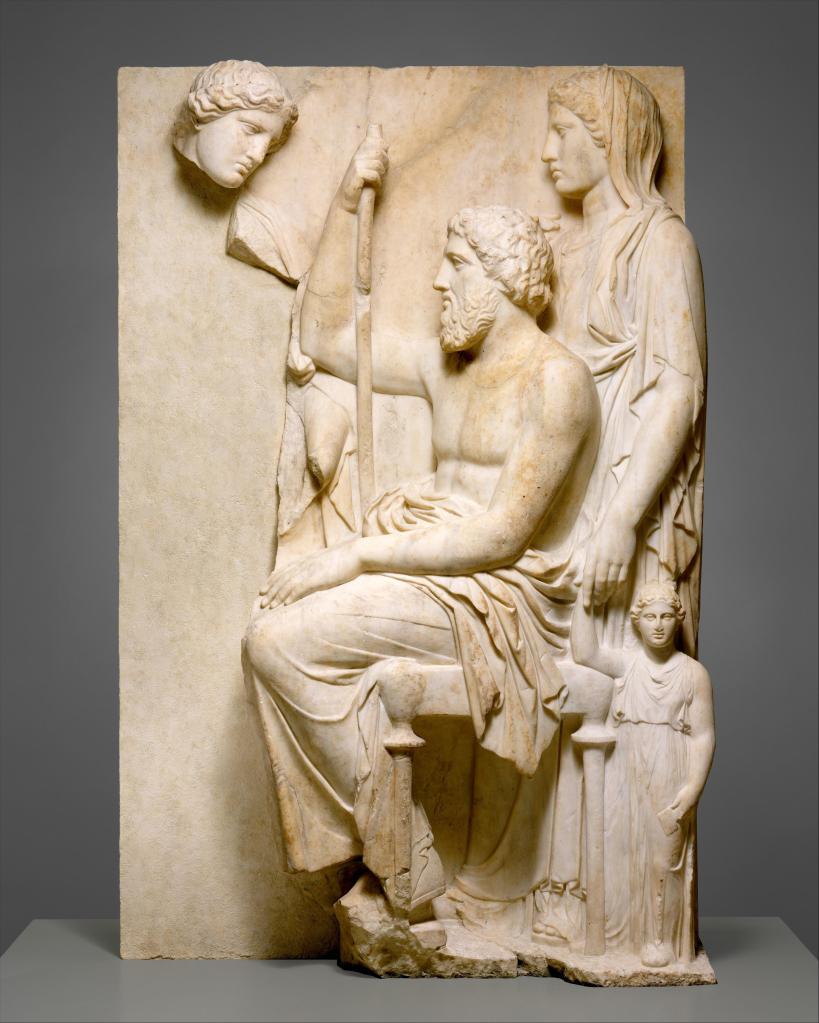

McClees, Helen and Christine Alexander. 1933. The Daily Life of the Greeks and Romans: As Illustrated in the Classical Collections, 5th ed. pp. 131, 133, fig. 159, New York: The Metropolitan Museum of Art.

SECTION I: THE GOOD
What Christianity Absorbed and Reorganized

Before getting into what Christianity actually contributed, it’s worth being clear about what is usually attributed to it.

A moral framework. Stable family structures. The unification of fragmented tribal societies into something resembling a shared civilization. A sense of cohesion strong enough to hold large populations together.

Those developments did happen. The question is where they came from…

Because none of those things begin with Christianity. They depend on something older: stability across generations, shared practices, inherited obligations, and a way of life that binds people before it explains itself.

That is what tradition is.

The word itself comes from the Latin traditio: a handing over, a passing down, something delivered across generations. But that definition only gets you so far. Tradition is not just a set of ideas preserved in texts or doctrines. It is lived. It shows up in habits, rituals, inherited gestures, seasonal rhythms, family patterns, and the quiet repetition of things people do not always stop to explain but continue to do anyway.

It exists in the structure of daily life.

You see it most clearly in how societies deal with death.

Long before Christianity became dominant in Europe, burial practices already reflected a deep sense of connection between the living and the dead. In the Stone Age, communities used mass graves in caves or pits. Later, megalithic cultures constructed communal tombs that anchored memory to specific places. Indo-European groups developed barrows and cremation practices that changed over time while preserving the same underlying logic.

The dead were not discarded. They were placed, remembered, and integrated into the ongoing life of the community.

Tradition, in that sense, is not something invented at a particular moment. It is something carried forward, shaped and reshaped over time without losing its original intention.

Christianity enters into that world rather than creating it from scratch.

What changes is not the existence of tradition, but its scale and its organizing thought.

Earlier religious life was largely tied to local identity: tribe, land, household, ancestry, city, and people. Christianity expands beyond that. It speaks in universal terms and builds a shared symbolic order that can operate across regions and populations that do not share the same lineage, gods, rituals, or customs.

That increases the reach of the moral imagination.

Concern no longer stops at the boundary of immediate belonging. It extends outward, attaching value to individuals beyond their role within a specific family, tribe, or city. Over time, that broader vision feeds into developments people now associate with the Western inheritance: ideas about dignity, education, care for the poor, moral responsibility, and obligation toward those outside one’s immediate circle.

But this is typically where the story gets oversimplified.

Those impulses did not originate with Christianity. Traditions within the Greco-Roman world had already developed forms of civic responsibility, philanthropy, patronage, public works, and mutual obligation. Grain distributions, civic benefaction, philosophical ethics, and local forms of duty were not Christian inventions.

But even the Greco-Roman world was not self-contained. It had already absorbed influences from older and neighboring civilizations (Egyptian, Mesopotamian, Anatolian, and Phoenician) through trade, conquest, and cultural exchange. As scholars like Martin L. West and Walter Burkert have shown, Greek thought itself was shaped in part by these eastern traditions.

The ancient world was not morally empty before the church arrived. It was already layered, interconnected, and carrying forward inherited forms of order, obligation, and meaning.

You can see this clearly in Stoic thought. Christianity is often treated as if it introduced universal human concern into a cruel and indifferent ancient world. Stoicism already spoke in universal terms. It could describe human beings as participants in a shared moral order and extend concern beyond tribe, city, or immediate kinship.

But the structure was different.
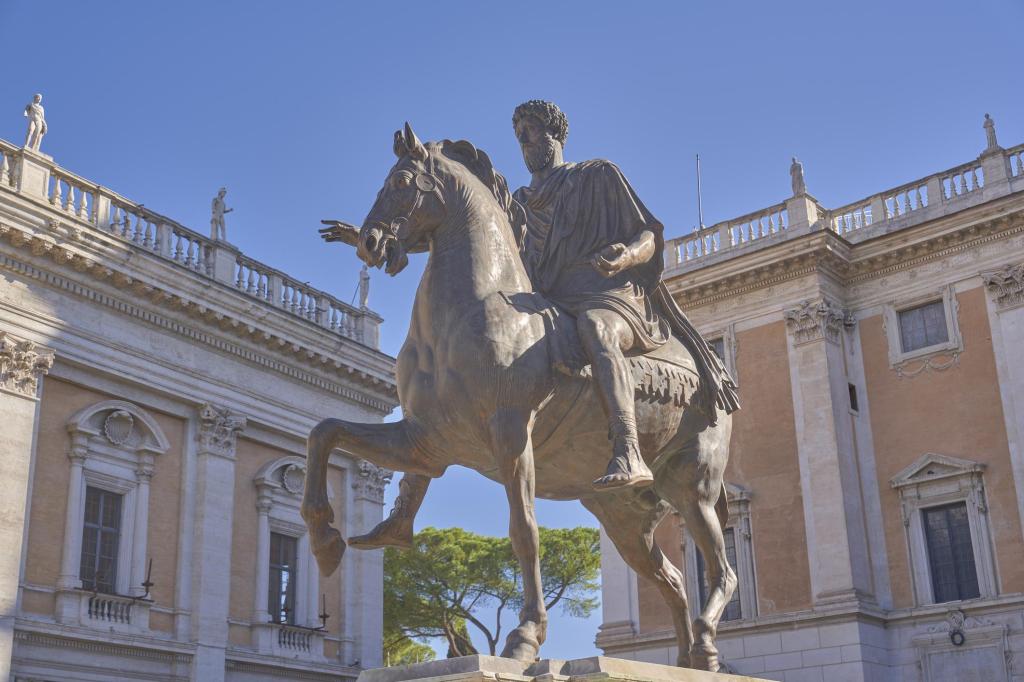
The bronze Equestrian Statue of Marcus Aurelius, Capitoline Hill, Rome.

Runar Thorsteinsson’s comparison of Roman Christianity and Roman Stoicism helps clarify the distinction. Stoicism could speak of universal humanity without making moral belonging depend on conversion to a saving truth. Early Christianity, by contrast, carried a universal message while also drawing a sharper boundary around religious adherence. Its moral vision expanded outward, but it did so through a division between those inside and outside the saving order.

Christianity did not invent universal concern but it did reorganize it.

It took older moral instincts, philosophical ideas, Jewish inheritance, Roman scale, and local traditions, then bound them into a universal religious narrative. It gave those instincts a broader scope, a more unified story, and a more durable institutional form.

But expansion alone does not explain why a civilization holds together.

A social order lasts when it fits the way people already experience the world.

People do not move through life as detached rational observers. They respond through instinct: loyalty and betrayal, fairness and injustice, authority and rebellion, purity and contamination, belonging and threat. These instincts do not operate on their own. They cluster.

In more traditional societies, moral intuitions tend to reinforce one another. Care, fairness, loyalty, authority, and a sense of the sacred operate together rather than pulling apart. Even when people disagree, they often draw from the same underlying moral vocabulary when interpreting what is happening around them.

That shared moral vocabulary gives a society stability.

Christianity operated at that level.

It did not simply present moral rules. It gave instinct narrative form and placed it inside a larger story about meaning, suffering, hierarchy, obligation, sin, redemption, and ultimate reality. It offered a way of interpreting the world itself.

For people living in unstable conditions, where political authority could be inconsistent and survival uncertain, that kind of story organized experience. It offered coherence in a world that might otherwise feel random. It placed individuals inside a larger order and gave meaning to suffering, duty, death, and loss.

Once that fit took hold between cultural meaning, institutional power, and moral instinct, it became difficult to dislodge.

At the same time, Christianity did not remain completely closed off to innovative thought. Even within a religious order that emphasized authority and inherited truth, there were moments where that inheritance was tested from within.

Peter Abelard represents one of those moments.

His importance lies less in the drama of his life and more in the method he applied to truth itself. The intellectual world he entered was structured around inherited authority. Figures like Augustine were treated as settled voices, and the role of the student was often to understand, organize, and transmit what had already been established.
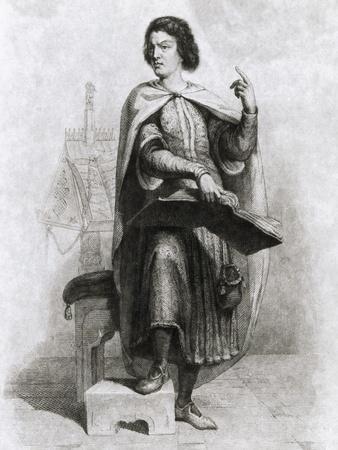

Peter Abelard with Book Giclee

Reasoning had a place, but it operated within limits. It was expected to clarify, not destabilize.

Abelard did not reject the tradition from the outside. He worked within it and exposed its internal tensions. In Sic et Non, he placed authoritative statements side by side in a way that made contradiction difficult to ignore.

If these sources were meant to provide certainty, why did they diverge so sharply?

If truth had already been handed down in a unified form, why did it fracture under comparison?

He treated those questions as a starting point rather than a threat to avoid.

“For it is from doubt that we arrive at questioning, and in questioning we arrive at truth.”

That quote represents the change in intellectual posture.

Instead of beginning with certainty and using reason to defend it, Abelard begins with tension and uses reason to work through it. Authority alone no longer settles the issue. Claims must be examined, language clarified, and assumptions tested.

Once questioning becomes legitimate, authority can no longer rely on transmission alone. It now has to also persuade.

Abelard pushed beyond accepted limits. He applied reason to doctrines often treated as beyond rational explanation and placed greater emphasis on intention in moral evaluation. In doing so, he opened space for a more nuanced understanding of ethics, one not entirely bound to inherited categories.

The response to him was what you would expect from institutional power.

He was condemned. His works were burned. He was brought before councils that were less interested in exploring his arguments and more so in containing their implications. The reaction showed what was at stake. A religious order grounded in authority does not easily absorb a method that legitimizes doubt.

And yet the method persisted.

Even when his specific conclusions were rejected, the habit of inquiry he modeled proved difficult to suppress. The practice of setting opposing views side by side and working through contradiction became central to scholasticism. The intellectual tradition that later shaped medieval universities carried forward elements of an approach once treated as dangerous.

Abelard does not stand alone as the cause of a broader intellectual reopening. The recovery of classical texts, the reintroduction of Aristotle, contact with Islamic and Jewish scholarship, and the growth of educational institutions all played a role.

What his story represents is the shift in attitude.

Inherited knowledge no longer functions as a sealed inheritance. It became something that can be examined, refined, and, within limits, challenged.

Of course, those constraints never fully disappeared.

Abelard was allowed to question, but not indefinitely. He was permitted to reason, but not without consequence. The same religious culture that made his work possible also defined where it had to stop.

That tension between authority and inquiry did not remain confined to intellectual life. It also carried forward into the institutions that developed over time.
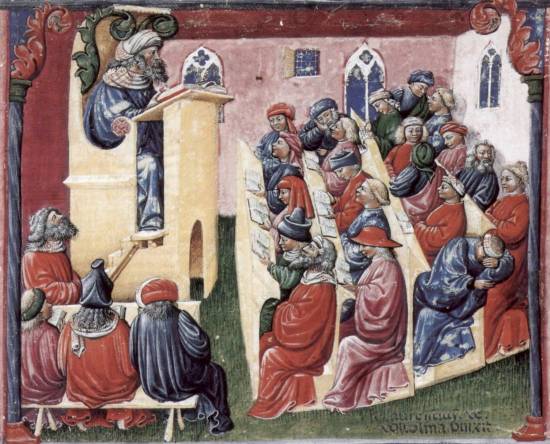
A university lecture (an illustration from the second half of the 14th century).

The medieval university is one of the clearest places to see this pattern at work. Often treated as a distinctly Christian achievement, it grew out of a much broader mix of influences.

In Spain, Baghdad, and Cairo, Islamic schools, libraries, and observatories held resources far beyond anything available in much of Europe at the time. Arab, Jewish, and Christian scholars shared intellectual interests through expanding trade networks and translation movements. After the Christian capture of Toledo in 1085, that city became one of the key places where these worlds met, allowing texts to move across languages, traditions, and religious boundaries.

The Western reopening of inquiry did not happen because Europe simply looked inward and rediscovered itself.

It happened because knowledge traveled.

Averroes’ commentaries on Aristotle, translated into Latin, became essential sources for thirteenth-century Christian intellectuals, including Thomas Aquinas. That alone should complicate any idea that Christian scholarship developed in isolation. The university absorbed, translated, debated, and reorganized knowledge that had already passed through Greek, Arabic, Jewish, and Latin traditions.
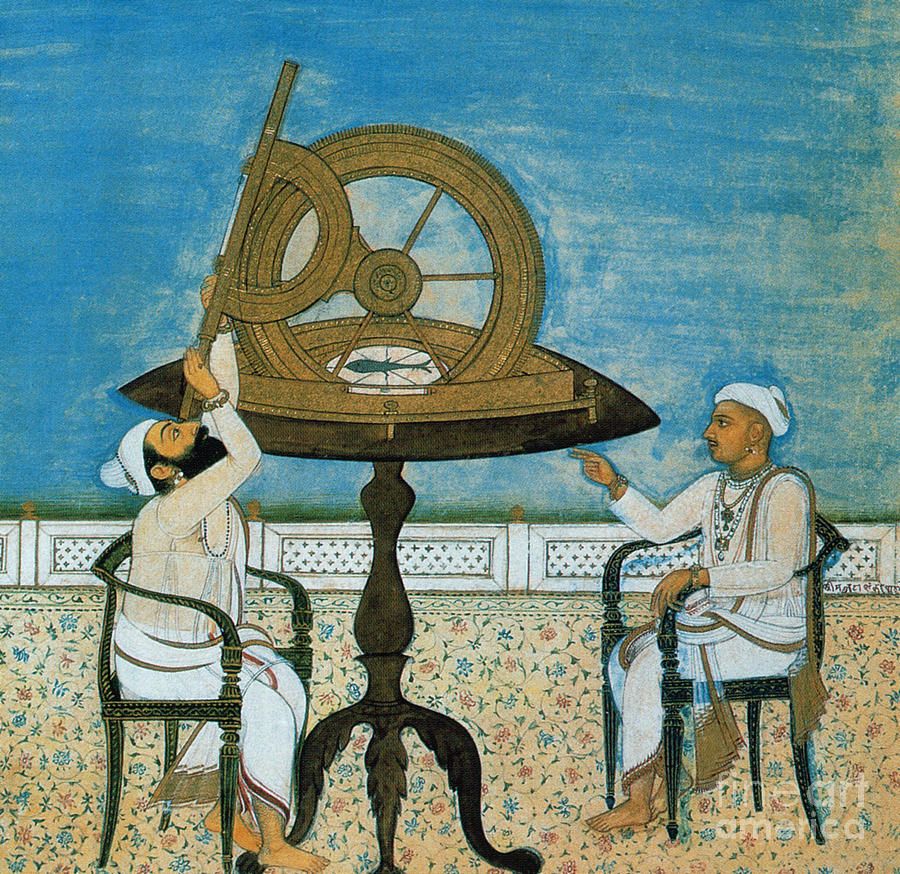
Islamic Astronomers #1 is a photograph by Science Source

Even the structure of medieval universities reflects that broader inheritance. They developed their own corporate identities, governed collectively by masters, with distinct curricula and examination systems. By the late thirteenth century, Master of Arts could vastly outnumber Master of Theology. Historian Charles Freeman notes one example where 120 teachers of the arts were listed against only 15 Masters of Theology. That imbalance tells you what mattered most. The curriculum leaned heavily on classical texts, not purely Christian foundations.

Christian Europe helped institutionalize learning, but the material being organized was older, broader, and more cosmopolitan than the church-centered story suggests. The university becomes another example of Christianity’s larger pattern: it absorbed existing goods, gave them institutional form, and placed them inside its own theological horizon.

But the results did not move in one direction.

The same religious vision that could support care and dignity could also justify hierarchy and control. Because the tradition depended on scriptural interpretation, and interpretation depended on authority, very different conclusions could emerge from the same source material.

That instability is not only a matter of later interpretation. It is already present in the texts themselves.

The Gospels do not present a single, unified account. They offer overlapping portraits that do not fully align.

In Gospel of Matthew and Gospel of Mark, Jesus cries out, “My God, my God, why have you forsaken me?” while in Gospel of John, he concludes, “It is finished.” The tone shifts from abandonment to completion.

The timeline shifts as well, with the Synoptic Gospels placing the final meal at Passover, while John places the crucifixion before it begins.

Even the ethical posture is not entirely consistent: in Matthew, Jesus teaches “turn the other cheek,” while in Luke, he tells his followers, “Let the one who has no sword sell his cloak and buy one.”

Taken together, these are not minor discrepancies. They open space for fundamentally different readings of what the tradition demands.

Christianity persists not as a fixed form, but as a tradition capable of producing multiple, competing forms while still claiming continuity.

This becomes especially clear in debates over slavery.

Christians were involved in abolition movements, and that history is part of the record. The language of universal moral equality played a real role in mobilizing opposition to slavery and reshaping moral expectations.

But that is not the whole story.

The same texts were also used to defend slavery, reinforce it, and argue that existing social orders were divinely sanctioned.

That contradiction is not incidental. It reveals something important about the Christian inheritance itself.

A religious order that combines universal moral language with authoritative texts creates the conditions for both expansion and constraint. It can push moral concern outward, but it can also bind that concern within approved categories. The outcome depends on who interprets the texts, which authorities prevail, and what social pressures shape the reading.
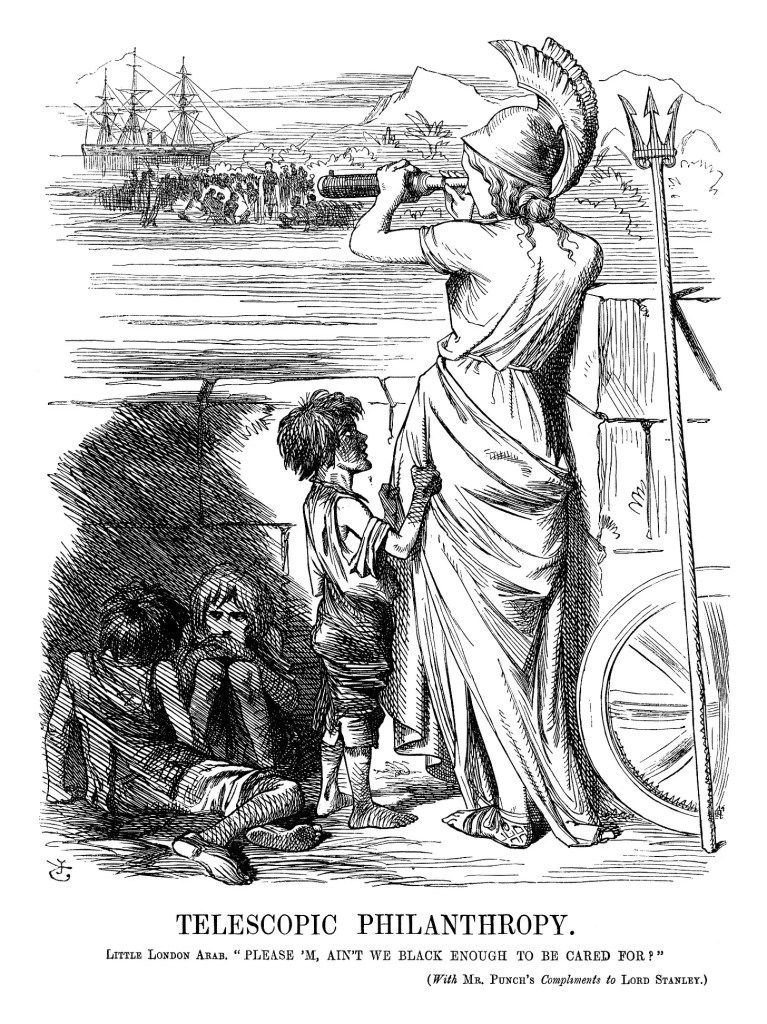
Critics of abolitionist movements, including Thomas Carlyle, argued that what they saw as abstract humanitarian concern could override more immediate obligations or practical realities. A contemporary political cartoon captured this dynamic under the phrase “telescopic philanthropy”—a tendency to focus moral concern at a distance while neglecting what is closer at hand.

The point I’m trying to make here is not that concern beyond one’s own group is inherently false or wrong.

The point is that moral expansion creates distance.

The farther a concern stretches, the easier it becomes to neglect concrete obligations close at hand: family, neighbors, local order, inherited duties, and the people one is actually responsible for. Abstract compassion can become morally flattering precisely because it asks less of the person expressing it.

Whether one agrees with those criticisms or not, they point to something very real.

A moral order that expands obligation beyond local belonging gains reach, but it also risks losing proportion. It can elevate the stranger while forgetting the neighbor. It can speak beautifully about mankind while failing the people right in front of it.

Christianity extended moral concern beyond tribe and built institutions that carried that vision forward. But it also introduced pressures around authority, interpretation, exclusion, and the limits of acceptable thought.

The good is real, but…so is the tension inside it.

Christianity’s inheritance was not simply compassion, dignity, or education. It was a moral architecture: universal in scope, institutional in form, inward in psychology, and unstable once detached from the cultural world that had once held it together.

That brings us to our next inquiry.

Not just what Christianity gave the West, but what kind of order made those outcomes possible.


SECTION II — THE BAD

Truth, Authority, and the Limits of Inquiry

At this point, the issue is not simply what happened when Christianity moved from the margins to power. I’ve explored that elsewhere: the suppression of rival systems, the narrowing of acceptable thought, and the long habit of treating competing worldviews not as alternatives to debate, but as errors to contain.

The deeper question here is more structural.

What kind of religious order produces those outcomes in the first place?

Because the shift was a reorganization of how truth operated, how disagreement was handled, and how legitimacy was defined.

Earlier Greco-Roman religious and philosophical life was not tolerant in the modern sense, but it was more comfortable with multiplicity. Rival schools, local cults, household gods, civic rituals, and philosophical traditions could coexist without requiring one totalizing creed to absorb or eliminate the rest. That did not make the ancient world peaceful or morally pure. It did mean that truth was not always treated as one fragile object that had to be protected from every rival.

The Abrahamic worldview introduced something different, often called the “Mosaic distinction.”
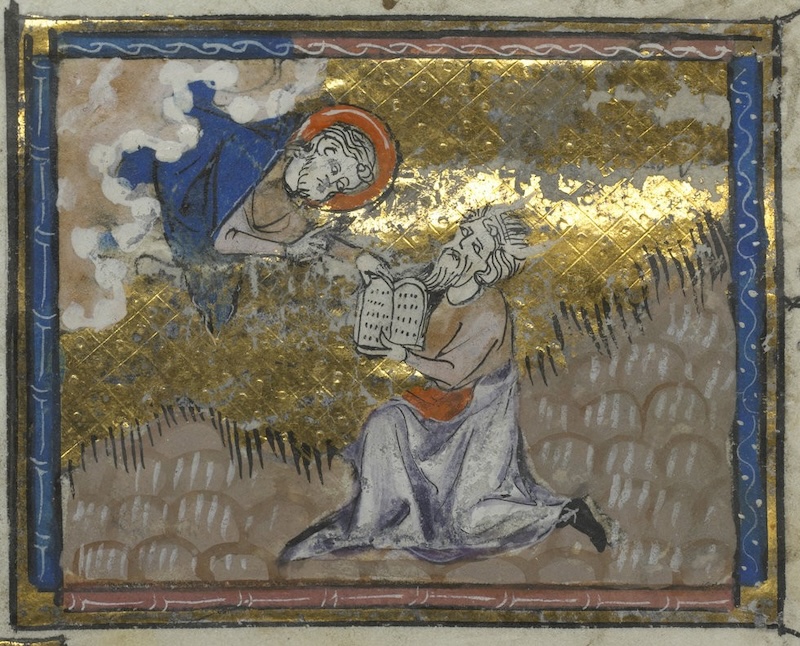
God giving the Tablets of the Law to Moses, from a manuscript attributed to Chrétien Legouais, 1325 CE. Image source: gallica.bnf.fr / Bibliothèque municipal de Rouen

It drew a sharper line between true and false in a way that changed the stakes of disagreement. Belief was no longer simply one option among many. It became a dividing line. Once that line was drawn, alternative ways of seeing the world did not remain neutral. They became errors, and error began to carry drastic consequences beyond private belief.

If truth is singular and binding, then the religious order has to decide what to do with everything outside of it. Some ideas are absorbed. Some are tolerated for a time. Others are pushed out entirely. But none of them sit comfortably alongside it anymore. They exist in tension with the claim that one truth must govern above all others.

As we previously discussed, Christianity is often credited with preserving learning and building universities, and that claim is not false. Medieval universities became important institutions for intellectual training, debate, law, theology, medicine, and philosophy. They helped organize knowledge and gave scholastic inquiry a durable form.

But that achievement has to be kept in proportion.

The medieval university was an achievement, but it was not a recovery of classical freedom. It was classical inheritance under theological supervision.

Ancient philosophy could be studied, but it had to be reconciled with Christian doctrine. Aristotle could return, but not as Aristotle alone. He had to be interpreted through Christian categories, corrected where necessary, and placed beneath revealed truth. Reason was permitted, even sharpened, but it was not sovereign.

The medieval university did not represent inquiry on open ground. It represented inquiry inside boundaries. Reason could clarify doctrine, defend doctrine, organize doctrine, and reconcile contradictions within inherited authorities. But when reason pressed too far against the architecture of belief, the limits became quite visible.

That does not make medieval learning worthless. It makes it conditional.

And that conditionality is the point.

Christian Europe did not simply preserve the classical world. It received it, edited it, baptized it, and constrained it. What could be made useful to the Christian order survived more easily. What threatened that order did not.

This is the kind of intellectual narrowing later critics would recognize in Christianity’s relationship to philosophy. Heidegger’s critique of onto-theology is not aimed at Christianity alone, but it helps name the pattern: open-ended questioning becomes absorbed into a prior explanatory order. Instead of wonder remaining primary, inquiry is routed through established claims about creation, causality, divine order, sin, and salvation.

The question is no longer allowed to remain fully open.

It has to be answered inside the architecture of doctrine.

Once orthodoxy is established it operates within boundaries that have already been set, and stepping outside those boundaries starts to carry not just intellectual consequences, but social ones. Access to authority, education, and influence becomes tied, at least in part, to alignment.

At that point, belief is no longer just something people hold. It becomes something that moves outward, seeking to correct and expand.
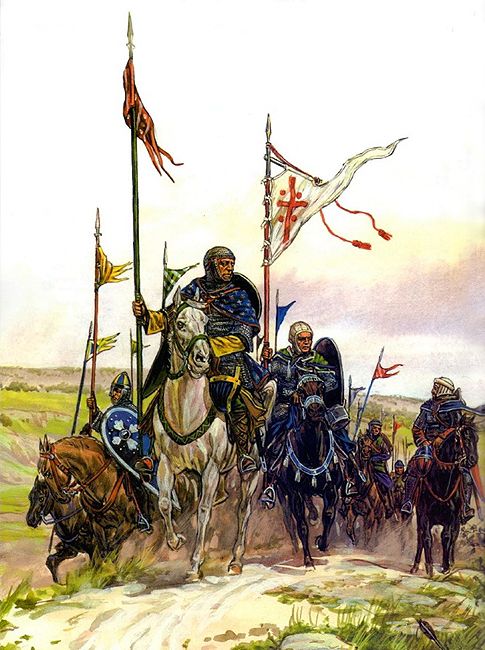

SECTION III: THE UGLY

Universalism, Power, and the Moral Afterlife

By the time you reach the modern West, the question is no longer whether Christianity shaped it. That much is obvious. The deeper issue is what, exactly, it left behind, and what happens when the conditions that once sustained that inheritance begin to unravel.

Christianity did not simply introduce a set of beliefs and then fade as those beliefs weakened. It reorganized moral life at a level that persists long after doctrine loses its authority. It changed how individuals understood themselves, how they related to others, where moral responsibility resided, and how truth was expected to move through the world.

The ugly side of the Christian inheritance is not merely universalism. It is universalism with a missionary engine.

Christianity does not simply say, “This is true.” It says truth must be spread. Error must be corrected. The world must be brought into submission to the saving order. That structure changes the meaning of difference. A rival worldview is not merely foreign, local, or ancestral. It becomes spiritually demonic.

And once a difference becomes an error, correction can be justified as mercy.

The religious world Christianity emerges from was already in tension with the surrounding Greek and Roman order. Second Temple Judaism didn’t simply blend into Hellenistic life. Again and again, it resisted it—politically, culturally, religiously.

D. H. Lawrence saw this tendency clearly. In Apocalypse, he describes a fear-driven impulse within Christianity—a refusal to leave other ways of understanding the world intact. Not just disagreement, but the drive to overcome, absorb, or eliminate what stands outside the truth.

That instinct is already embedded in the apocalyptic world Christianity emerges from. Second Temple Judaism carries expectations of final judgment, cosmic conflict, and the ultimate victory of a single, rightful order-the coming of the Moshiach/Messiah.) Christianity inherits that framework and gives it a wider reach.

That is where Christianity’s relationship to Rome becomes essential. Christian universalism did not spread on its own. It moved through the late imperial Roman systems: roads, cities, law, administration, literacy, political centralization, and habits of governance already trained toward scale. The faith did not merely conquer Rome. It also inherited Rome’s machinery.

Rome gave Christianity infrastructure. Christianity gave Rome a sacred moral horizon. Together, they helped produce a form of power that could move across peoples, lands, languages, and customs while claiming to operate in the name of truth rather than mere domination.

This is also why Christianity receives too much credit for goods it did not invent.

One reason it’s treated as the source of Western morality is that it became dominant enough to absorb older goods and narrate them backward as Christian achievements. Care for the poor, philosophical inquiry, civic duty, moral discipline, education, and concern for the common good did not appear out of nowhere when Christianity entered history. Many of these were already present in Greek, Roman, Jewish, and local European worlds. Christianity reorganized them inside its own story.

That reorganization gave them reach.

But it also gave them a new master narrative.

Older traditions were often embedded in particular peoples, places, households, ancestors, cities, gods, calendars, and sacred landscapes. Religion was not just a private belief system. It was woven into the life of a people. Christianity altered that relationship by making belief portable. It could cross borders, override local cults, and create a community defined less by blood, land, or inherited custom than by shared confession.

That is one of the most consequential shifts in Western history.

Christianity weakened the older link between people, place, ancestors, and gods. It did not erase those attachments overnight, and in practice it often absorbed local festivals, sacred sites, and folk customs. But the deeper logic changed. The highest belonging was no longer rooted primarily in the local or ancestral. It was relocated into a universal religious identity.

Conversion, then, was not merely persuasion. It was the remaking of belonging.

A people could be separated from their gods, their rituals, their inherited calendar, their sacred places, and their ancestral memory, then folded into a new universal story that claimed to redeem them while also replacing the world that formed them.

Not every conversion was violent. That would be too simple. Some conversions were gradual, political, strategic, sincere, blended, or partial. But once that universal truth claim became tied to salvation, rival traditions do not remain equal neighbors. They become obstacles to be overcome, errors to be corrected, or remnants to be absorbed.
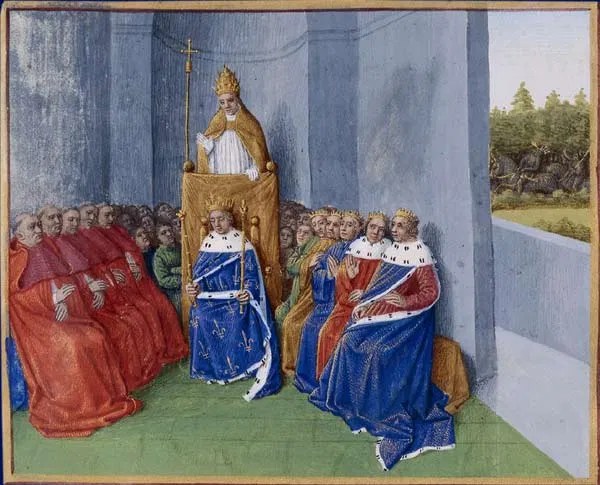
The First Crusade: Pope Urban II and Jerusalem vs. Diplomatic Unification

The crusades make this structure visible in its most explicit and militarized form.

They were not only political wars. They were religious wars shaped by sacred geography, penitential promise, and the belief that violence could be folded into a redemptive order.

The Crusades did not simply mobilize Europe—they redirected it toward Jerusalem, a sacred center that was not its own.

That does not mean every participant had the same motive, and it does not mean politics, land, wealth, status, and military ambition were irrelevant. Of course they mattered. But the crusading imagination reveals something specific: once warfare is placed inside a sacred story, conquest can be interpreted as obedience, purification, defense, or salvation.

That is the danger of missionary structure joined to power.

It sanctifies expansion.

And this is not confined to medieval history. The same basic pattern can reappear whenever politics inherits religious moral intensity. The opponent is no longer merely wrong about policy. He becomes a threat to truth, justice, salvation, progress, safety, democracy, equality, or whatever sacred term now carries the old theological weight.

At that point, disagreement becomes harder to contain.

The modern West inherited this moral intensity even as explicit Christian authority declined. Most people inherited a world in which Christianity had already begun to lose its grip, but nothing fully replaced it. The rituals became optional. The authority fractured. Yet many of the underlying assumptions remained intact.

What had once been explicitly theological was gradually translated into secular terms.

At the center of that structure is a form of universalism Christianity helped entrench: the idea that all people stand beneath one moral order, that identity is secondary to a broader human category, and that truth applies universally rather than locally. That assumption did not disappear with religious decline. It migrated.

Liberalism, in many of its modern forms, carries that template forward: the individual abstracted from place, lineage, inherited duty, and thick communal belonging, then positioned inside a universal framework of rights, equality, and moral expectation.

The language changes. The structure does not.

The West moved from Christian universalism to liberal universalism without seriously interrogating the universalism itself. It replaced theological justification with philosophical or political justification, but it retained the assumption that the highest moral order transcends particular identities rather than emerging from them.

And what carries forward is not only universal morality, but missionary mentality.

Salvation becomes progress. Sin becomes injustice. Heresy becomes hate. Evangelism becomes activism. The world must still be corrected. The morally backward must still be brought into line.

And the irony is hard to miss. The same people who pride themselves on rejecting religious dogma often reproduce its structure almost perfectly—moral certainty, heresy-hunting, and the impulse to correct and convert, just without calling it religion.

You can see this most clearly in the modern left, especially in its activist and radical edges. What presents itself as political theory often behaves like secularized salvation mythology. The infrastructure is unchanged: the world is broken and the masses need liberation. God is removed, but everything else remains. The heretics still need correction. Sin becomes hierarchy. Salvation becomes self-rule. The missionary doesn’t disappear—he just changes form.

It still sorts people into the righteous and the condemned. It still creates moral taboos. It still treats disagreement as contamination. It still imagines that the world can be redeemed if only the right moral order is imposed—with enough force, shame, education, policy, or institutional pressure.

That is not the absence of Christianity.

It is part of its afterlife.

Later European expansion, and even modern geopolitical projects, often operate within the same structure—intervention framed as liberation, reform, or progress.

Whenever universal moral claims are aligned with power and tied to the belief that truth must spread, action begins to feel necessary rather than optional.

To understand why it persists, and why it adapts so easily across different historical contexts, you have to look at what is happening at a deeper level. Not just in institutions or empires, but within the individual.

Because the most enduring change Christianity introduces is not only institutional.

It is psychological. It altered where morality is located.

In earlier classical traditions, especially in Aristotle, the moral life is oriented outward. The Greek conception of eudaimonia assumes that human beings can develop toward excellence. Flourishing is cultivated through practice, discipline, rational activity, and participation in the world. Character is formed through what one does, and the moral life is outward, embodied, and lived over time within a shared civic and social context.

Christianity, especially through Augustine of Hippo, redirects that focus inward.

The problem is no longer simply what a person does, but what a person is. Human nature itself becomes suspect, marked from the beginning. The doctrine of original sin reframes the individual not as someone developing toward excellence, but as someone starting already compromised. This is not just about isolated wrongdoing. It is about a baseline disorder built into human existence, transmitted across generations, shaping inclination before any conscious choice is made.

From that premise, morality reorganizes itself accordingly. If the problem lies within, then moral evaluation cannot remain limited to outward behavior. It extends inward, into thought, desire, intention, and impulse—the parts of life no one else sees but are still treated as morally significant.
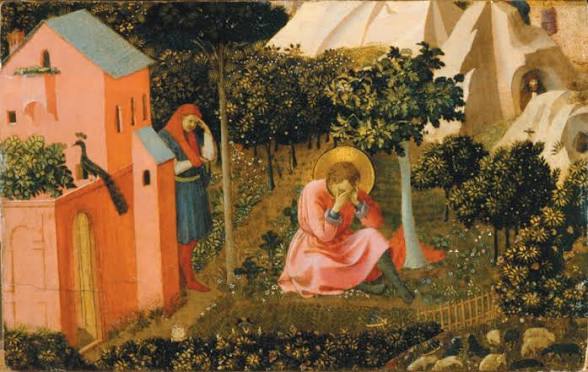
Fra Angelico, The Conversion of St. Augustine (c. 14301435)

This becomes structured into daily practice. Monastic traditions classify internal states (temptation, pride, doubt, desire) as if they were items that could be named, tracked, and corrected. Authority expands beyond regulating behavior into defining what counts as acceptable thought, shaping not just action but the boundaries of the inner life itself.

Once it relocates inward, the primary site of regulation is no longer only the community. It is the individual mind, where conscience, guilt, confession, fear, and self-regulation operate continuously, often without any visible external enforcement.

You can see the implications of this in the conflict between Augustine and Pelagius. Pelagius emphasizes human capacity: the ability to choose, improve, and take responsibility for moral development. Augustine rejects that position, insisting on dependence—on God’s grace, on divine intervention, on something beyond human effort.

This is not only a theological disagreement.

It is also a question about agency.

If the individual cannot fully rely on their own capacity to move toward the good, then moral development becomes entangled with God’s authority. Responsibility does not disappear, but it no longer stands on its own. It becomes mediated, conditioned, and in some cases limited, as the individual is situated within a framework that places ultimate transformation outside of purely human reach.

Over time, that tension begins to shape intellectual life as well. Historians like Charles Freeman do not argue that inquiry simply disappeared, but that the conditions surrounding it changed. When belief becomes tied to salvation, and when error carries not only intellectual but spiritual consequences, curiosity itself begins to look different. Questions are no longer neutral exercises. They take on moral weight, and in certain contexts, they begin to carry risk.

Writers like Thomas Paine noticed this and pushed directly against the idea that truth can rest on inherited authority. In The Age of Reason, Paine argues that revelation, once it passes through human hands, can no longer function as unquestionable truth. What begins as divine claim becomes human interpretation, and therefore something that must be examined rather than simply accepted. That move cuts directly against the structure that treats questioning as risk. It reopens the possibility that belief itself should be subject to the same scrutiny as anything else.

Mark A. Noll describes a similar pattern in later Christian intellectual culture: a tendency to preserve belief rather than extend it. Questioning is not always welcomed as curiosity. It can be interpreted as disloyalty, a sign that alignment is weakening rather than deepening. The safest position, in that environment, becomes one of conformity rather than exploration.

The obedient mind is the secure mind.

This is not new. It is already visible earlier in the tradition. The same system that could produce figures like Abelard (where questioning began to reopen) also produces the conditions Noll is describing, where belief becomes something to preserve rather than extend.

The instinct to monitor thought, to moralize disagreement, to treat deviation as more than error—those habits do not emerge in a vacuum. They develop within specific historical conditions, and they persist even as the surrounding language changes.

This is why the internal reorganization matters.

It is not only about doctrine.

It is about how individuals learn to relate to themselves.

If Augustine relocates morality inward, Protestantism amplifies and personalizes that shift. The individual is placed in more direct relation to truth, expected to read, interpret, examine, and align himself without the same mediating structures that once guided that process. Authority does not vanish. It becomes more diffuse and more demanding.

The church hierarchy may weaken in some places, but new pressures emerge through scripture, sermon, household discipline, community surveillance, literacy, and conscience. The individual is made more responsible before God, but also more exposed.

The burden of interpretation moves further into the self.

Over time, that inward structure detaches from the communal and cultural worlds that once gave it shape. What remains is a society of individuals expected to interpret, justify, and regulate themselves inside a universal moral order, but without a shared culture capable of holding that process together.

That misalignment becomes visible in how people interpret conflict, identity, history, and political life.

In modern America, this can still be seen in forms of biblical literalism, dispensationalism, and end-times prophecy that shape how many Christians understand Israel, war, nationhood, and world events. These beliefs do not remain private. They influence political imagination. They affect how people interpret history, alliances, enemies, and what they believe is inevitable or divinely sanctioned.

In this context, belief stops being just belief. It starts shaping how everything else is seen.

That is the same mechanism operating in another key. The pattern that once defined orthodoxy and constrained variation does not disappear. It adapts as the cultural environment shifts. The language evolves, but the underlying habit remains… truth is singular, error is dangerous, and those outside the moral order must be corrected, converted, contained, or cast out.

What this reveals is not a simple story of progress or decline.

Christianity did not leave behind a stable moral foundation that the West either followed or abandoned. It left behind a set of interacting pressures: universalism and particular identity, internalized morality and external authority, individual responsibility and collective order, compassion and conquest, salvation and exclusion.

For a time, those pressures could be held in relative balance, but this fit no longer holds.

The institutions remain, but they no longer command the same trust. The moral instincts remain, but they are no longer guided by a shared tradition. The universal language remains, but it floats above increasingly fractured peoples, places, and loyalties.

Conflict becomes more moralized. Disagreement becomes harder to contain.

This is why the modern West feels both thin and volatile.

Thin, because inherited forms of continuity have weakened.

Volatile, because the moral pressure embedded in the inheritance remains, now operating without the older structures that once gave it proportion.

That is the condition the modern West has inherited.


CONCLUSION: Why the West Still Cannot Escape the Problem

The Christian inheritance of the West cannot be reduced to either gratitude or resentment.

It gave moral concern, meaning to suffering, durable institutions, and the preservation and transmission of knowledge, even as that knowledge was filtered through doctrine. It created a shared moral vocabulary capable of binding large populations together.

But it also changed the terms of belonging.

It loosened religion from peoplehood, place, ancestry, and local custom. It made belief portable. It turned truth into something singular and binding, making disagreement morally charged. Once rival traditions became errors rather than neighbors, the pressure to absorb, correct, or suppress them followed naturally.

The West did not abandon Christianity so much as carry its habits forward. The missionary impulse remained. The abstract individual remained. The suspicion of rooted identity remained. Social Justice became their new end times.

That is why a return to Christianity does not solve the problem. It would not restore a stable foundation but reassert one layer of the inheritance while leaving its tensions unresolved.

Secular liberalism does not solve it either. It often preserves the universalism while stripping away the cultural limits that once gave it proportion, asking people to live as abstract individuals inside a moral framework detached from place, memory, and inherited obligation.

What remains is not a coherent worldview, but a contradictory one.

From the beginning, the inheritance carried competing impulses. Early Christianity emerged from an apocalyptic environment while also developing moral and institutional frameworks for life within the world. Over time, those tensions were not resolved but reworked and emphasized in different ways.

Within Protestantism alone, some strands treated the world as something to be ordered and reformed, energizing movements like abolition, while others emphasized its corruption and eventual end, orienting life toward endurance and escape. The divergence is not a break from the tradition, but a difference in emphasis within it.

The result is a system that can point in opposite directions while still claiming the same foundation.

This is not a foundation a civilization can stand on.

A civilization needs moral scale, but also proportion. Compassion, but not so abstract that it forgets its own people. Rights, but not detached from duty. Inquiry, but not subordinated to sacred certainty. Space for disagreement, but enough shared identity to keep it from becoming civilizational warfare.

Above all, it needs rooted obligations.

A civilization cannot survive on abstract principles alone. It needs loyalty, shared memory, boundaries, place, and a people capable of recognizing what is theirs to preserve.

Because removing structure does not remove power. It removes the forms that make power visible and accountable. And when that happens, power does not disappear. It shifts—into forms that are harder to see and harder to resist.

We are not standing outside this inheritance.

We are still working within it.

And the task is not to romanticize Christianity, completely demonize it, or pretend we have escaped it, but to understand what it absorbed, what it built, what it destabilized, and what it left behind clearly enough to stop repeating its most destructive patterns.


Sources

Abelard, Peter. Sic et Non.

Aristotle. Nicomachean Ethics.

Aristotle. Politics.

Arktos Journal and Laurent Guyénot, The Crusading Civilisation: From the Middle Ages to the Middle East” (Substack, April 3, 2026).

Atkinson, Kenneth. “Judean Piracy, Judea and Parthia, and the Roman Annexation of Judea: The Evidence of Pompeius Trogus.” Electrum 29 (2022): 127–145. https://doi.org/10.4467/20800909EL.22.009.15779

Augustine. Confessions.

Augustine. The City of God.

Brown, Peter. Augustine of Hippo: A Biography. Berkeley: University of California Press, 2000

Burkert, Walter. The Orientalizing Revolution: Near Eastern Influence on Greek Culture in the Early Archaic Age. Cambridge, MA: Harvard University Press, 1992.

Carlyle, Thomas. “Occasional Discourse on the Negro Question.”

Doner, Colonel V. “Cognitive Dissonance of Political Activists, Or Whatever Happened to the Religious Right?” Chalcedon, July 1, 1999.

Freeman, Charles. The Closing of the Western Mind: The Rise of Faith and the Fall of Reason. London: Heinemann, 2002.

Freeman, Charles. The Reopening of the Western Mind: The Resurgence of Intellectual Life from the End of Antiquity to the Dawn of the Enlightenment. London: Head of Zeus, 2023.

Lawrence, D. H. Apocalypse. 1931.

Locke, John. A Letter Concerning Toleration. 1689.

MacCulloch, Diarmaid. Reformation: Europe’s House Divided, 1490–1700. London: Allen Lane, 2003.

MacMhaolain, Aodhan. The Transmission of Fire: How To Keep Tradition Burning. The Enchiridion, April 9, 2026.

Montesquieu, Charles de Secondat. The Spirit of the Laws. 1748.

Noll, Mark A. The Scandal of the Evangelical Mind. Grand Rapids: Eerdmans, 1994.

Paine, Thomas. The Age of Reason. 1794–1807.

Paine, Thomas. Common Sense. 1776.

Thorsteinsson, Runar M. Roman Christianity and Roman Stoicism: A Comparative Study of Ancient Morality. Oxford: Oxford University Press, 2010.

West, Martin L. The East Face of Helicon: West Asiatic Elements in Greek Poetry and Myth. Oxford: Clarendon Press, 1997.

Forgiveness or Control? How Evangelical Culture Weaponizes Grief

Hey hey, welcome back to Taste of Truth Tuesdays.

Today we’re unpacking several interwoven topics I’ve explored in my writing before why people get drawn into high-control environments and how forgiveness in Christian culture is often weaponized, not as a path to healing, but as a tool to silence victims and protect institutions. This isn’t just a personal issue; it’s an institutional one.

This came into sharp focus after Erika Kirk, Charlie Kirk’s widow, said she forgives her husband’s killer. I’m not here to critique her grief, that’s her own process. What I want to explore is the cultural framework that makes this kind of forgiveness expected, celebrated, and even demanded in evangelical spaces. I have a MUCH MUCH longer blog linked here if you want to go much deeper than I plan to cover today.


Why Grief Is Ripe for Recruitment

Before even touching forgiveness, let’s pause on why this moment is so primed for revivalist recruiting. Sociologists and psychologists have long noted that people are most vulnerable to high-control groups (whether churches or MLMs) during times of disruption and emotional chaos.

Laura Dodsworth, in her book Free Your Mind, calls this a “blip.” A blip is any disruption that cracks our normal defenses: loss, illness, exhaustion, grief. Even smaller stressors (Think HALT) Hunger, anger/anxiety, loneliness or being tired can chip away at our resistance. Push long enough, and the conscious mind collapses into a state of openness, hungry for belonging and ready to absorb new narratives.

That’s exactly what makes funerals, memorials, and major crises fertile ground for recruitment. Orwell nailed it in 1984:

“Power is in tearing human minds to pieces and putting them together again in shapes of your own choosing.”

Jehovah’s Witnesses even admit to targeting what they call “ripe fruit”-the recently bereaved. In Brazil, recruiters have driven cars with loudspeakers through cemeteries on All Souls’ Day, broadcasting sermons to tens of thousands of mourners. That isn’t compassion; it’s strategic exploitation. Naomi Klein would call it the Shock Doctrine: trauma as an entry point for control.

We’re seeing the same tactics play out online right now. Someone posts about “returning to church” after years away, and within hours their feed fills with love-bombing-likes, comments, and digital hugs. It feels affirming, but it’s also classic manipulation: vulnerability plus attention equals a wide-open door into manipulation.

And so it’s no surprise that revivalist energy is surging in the wake of Kirk’s death.

Situational vulnerability + orchestrated belonging = fertile ground for expansion.


The Myth of “Christlike” Forgiveness

This brings us back to forgiveness. I want to be CLEAR HERE, obviously Erika Kirk wasn’t coerced into forgiving, but in evangelical culture forgiveness is never entirely personal, it’s baked into the ethos. The more you forgive, the more “Christlike” you appear.

Matthew 6:14–15 “For if you forgive others their trespasses, your heavenly Father will also forgive you, but if you do not forgive others their trespasses, neither will your Father forgive your trespasses.”

That expectation is dangerous. Forgiveness is sacred when it grows out of genuine healing. But when demanded prematurely, it becomes a weapon. Survivors are told to “forgive as you’ve been forgiven” before they’re ready, before their pain is acknowledged, and typically long before their abuser is held accountable.

Pete Walker, in The Tao of Fully Feeling, argues that forgiveness is not a one-time act but a continual choice and that choice only works after grief, rage, and hurt are fully processed. Skip that, and forgiveness turns into compliance, a way to silence anger and keep victims stuck.

In other words: real forgiveness empowers the survivor. Weaponized forgiveness protects the institution.


How Churches Use Forgiveness to Protect Themselves

We’ve seen this pattern across evangelical institutions:

  • The Guidepost Report (2022) exposed that SBC leadership maintained a secret list of over 700 abusive pastors, shielding them from consequences while survivors were ignored, discredited, or retaliated against.
  • Jennifer Lyell, an SBC abuse survivor, was vilified by church leadership when she came forward. Instead of support, she was publicly shamed, and her abuser faced no consequences.
  • Christa Brown, another survivor, spent years advocating for reform after being assaulted by her youth pastor. The SBC’s response? Stonewalling, gaslighting, and further silencing.
  • Jehovah’s Witnesses have a longstanding pattern of protecting sexual predators under their “two-witness rule,” which requires at least two people to witness abuse for it to be considered valid. This impossible standard allows abusers to go unpunished while victims are shunned for speaking out.

In each case, forgiveness isn’t about healing. It’s about compliance, silence, and institutional survival.


Nietzsche, Freud, and the Cycles of Guilt

This isn’t new. Nietzsche warned that Abrahamic religions hijacked older wisdom traditions, reframing them into systems of obedience rather than life-affirmation. Freud saw religion as a kind of collective neurosis, trapping people in loops of guilt and repression.

What is ironic, Freud’s own psychoanalytic model looks eerily similar to the religious structures he critiqued. As historian Bakan and others have suggested, Freud may have drawn (consciously or not) on Jewish mysticism, replacing priests with analysts, confession with therapy, sin with repressed desire. In trying to explain away religion, Freud ended up reproducing its patterns in secular form. In other words, the pattern of taking human vulnerability and channeling it into control runs deep.

And this is where Laura Dodsworth’s idea of the “blip” becomes so relevant. The blip is that moment of rupture…when you’re grieving, disoriented, exhausted, or otherwise cracked open. Your defenses are down, your critical mind isn’t firing at full strength, and the brain is searching for something to hold onto. In these liminal spaces, new ideologies rush in.

That’s why this moment is so ripe for revivalist energy. It’s not just about forgiveness…it’s about the total atmosphere of grief and disruption that can act as a blip. And high-control groups know it. It’s why political movements, religious revivals, and even MLMs wait for crisis points: job loss, divorce, a death in the family. The blip isn’t compassionately held-it’s exploited.

So when we watch something like Kirk’s memorial, we’re not just seeing personal mourning. We’re watching a social script unfold, one that revivalists know how to activate. In this script, forgiveness, obedience, and “turning your life over” aren’t neutral virtues—they become instruments of recruitment. Which means the real question isn’t should people forgive, but who benefits when forgiveness and emotional openness are demanded at the exact moment people are least able to resist?

Sources & Recommended Reading

  • Laura Dodsworth, Free Your Mind: The New World of Manipulation and How to Resist It (2023) – esp. Chapter 10, “Watch Out for the Blip.”
  • George Orwell, 1984 (1949) – “Power is in tearing human minds to pieces…”
  • Naomi Klein, The Shock Doctrine: The Rise of Disaster Capitalism (2007).
  • Pete Walker, The Tao of Fully Feeling: Harvesting Forgiveness out of Blame (1996).
  • Friedrich Nietzsche, On the Genealogy of Morals (1887); The Antichrist (1895).
  • Sigmund Freud, The Future of an Illusion (1927).
  • David Bakan, Sigmund Freud and the Jewish Mystical Tradition (1958).
  • Investigative reports on abuse cover-ups:
    • Southern Baptist Convention (SBC) scandal (Houston Chronicle, 2019).
    • Hillsong global abuse reports (various, 2020–2022).
    • Grace Community Church & John MacArthur counseling cases (Christianity Today, 2022).
  • Jehovah’s Witness recruitment practices

1984 and The Handmaid’s Tale: Misplaced Parallels and Liberal Delusion

Breaking Free: A Conversation with Yasmine Mohammed on Radical Islam, Empowerment, and the West’s Blind Spots

After finishing George Orwell’s 1984, I noticed its resurgence in popularity, especially after Trump’s election. Ironically, it’s not the conservative right but the progressive left that increasingly mirrors Orwellian themes. Similarly, Margaret Atwood’s The Handmaid’s Tale has become a rallying cry for liberals who claim to be on the brink of a dystopian theocracy. Yet, as Yasmine Muhammad pointed out in this week’s episode, this comparison is not only absurd but deeply insulting to women who live under regimes where Atwood’s fiction is a grim reality.

1984: Rewriting Language and History

The Democratic Party’s obsession with redefining language is straight out of Orwell’s playbook. They tell us biology is bigotry and that there are infinite genders, forcing people to adopt nonsensical pronouns or risk social ostracism. This is not progress—it’s the weaponization of language to control thought, eerily similar to Orwell’s Newspeak.

But it doesn’t stop there. They actively rewrite history by renaming monuments, military bases, and even schools, erasing cultural markers in the name of ideological purity. This is doublespeak in action: the manipulation of truth for political orthodoxy. Orwell’s warning that “orthodoxy is unconsciousness” feels disturbingly apt when observing the modern left.

The Handmaid’s Tale: An Insult to Women Who Actually Suffer

In our conversation, Yasmine highlighted the absurdity of liberal claims that America is The Handmaid’s Tale come to life. Yasmine, who grew up under Islamic theocracy, knows firsthand what it’s like to live in a world where women have no autonomy. These women cannot see a doctor without a male guardian, are forced to cover every inch of their bodies, and are denied basic freedoms like education or the right to drive.

Contrast this with the West, where women have more freedom than any other point in history. Liberal women can run around naked at Pride parades, freely express their sexuality, and redefine what it means to be a woman altogether. And yet, they cry oppression because they are expected to pay for their own birth control or endure debates over abortion limits. This level of cognitive dissonance—claiming victimhood while living in unprecedented freedom—is a slap in the face to women who actually suffer under real patriarchal oppression.

Liberal Orthodoxy: Lost in the Sauce

What’s truly Orwellian is how the left uses its freedom to strip others of theirs. They shout about inclusivity but cancel anyone who disagrees. They claim to fight for justice while weaponizing institutions to enforce ideological conformity. Meanwhile, they are so consumed with their own victim complex that they fail to see how absurd their comparisons to dystopian fiction really are.

Orwell and Atwood warned against unchecked power and ideological extremism. If liberals actually read these books instead of using them as aesthetic props, they might realize they’re mirroring the very authoritarianism they claim to oppose. Instead, they’re lost in the sauce, preaching oppression in a society where they have more freedom than they can handle.

As Yasmine said, “You want to see The Handmaid’s Tale? Try being a woman in Saudi Arabia, Iran, or Afghanistan.” The left would do well to remember that before playing the victim in their cosplay dystopia.

Oh, Woke Night: The New Sacred Beliefs of the Left

A Journey from Cults to Cancel Culture

What’s a racist, homophobe, sexist, bigot, or hater?
Apparently, anyone winning an argument with a liberal these days.

This year has been a wild ride. It began with me terrified of Satan, demons, and the Apocalypse, only to be ending it realizing the real danger isn’t hellfire—it’s the dogmas we create here on Earth. I didn’t grow up religious. In fact, I was raised secular, moved to Portland, OR after college, and could give you a TED Talk on progressive ideals. But then the pandemic hit, and somewhere between sourdough starters and doomscrolling, I found myself deep in the throes of fundamentalist Christianity.

That’s right—I started the year in a cult. It took months to deconstruct my faith, peel back the layers of fear-based control, and reimagine spirituality beyond the man-made monotheistic God I was sold. Yet, just as I was catching my breath, I noticed something chilling: the same patterns of zealotry I had fled were alive and well in the secular world.

Wokeness, with its sermons on systemic oppression and sacraments of allyship, has become the new secular religion. It demands unwavering faith, punishes heretics, and offers little room for redemption. And just like the fire-and-brimstone preachers I’d left behind, its most fervent believers seem less interested in dialogue and more intent on moral superiority.

Thought leaders like John McWhorter (Woke Racism), Yasmine Mohammed (Unveiled), and Douglas Murray (The Madness of Crowds) have drawn the same parallels: woke ideology mirrors religious extremism, complete with its own prophets and purges. And as someone who’s lived through both kinds of radicalism, I’m here to tell you—it’s not just unsettling; it’s dangerous.

How woke ideology mirrors religious extremism

In my podcast episode titled Faith Unbound: Navigating the Process of Disentanglement—or rather, Deconversion—I delved into my initial discovery of the Ex-evangelical Christian network. Back in February 2024, it felt like a lifeline, a safe haven for questioning my former religious beliefs. But after 6–7 months of immersion, patterns began to emerge. While the movement has been instrumental for many, I couldn’t ignore the creeping rigidity and tribalism. The hunger for certainty, the need to be on the “right side,” often replaces one dogma with another.

A striking example of this surfaced in Sexvangelicals’ episode How to Do Social Justice This Election Season Without Being a Jackass. They state:

“November’s presidential election offers a stark contrast between two types of government. One is democracy, built on the idea that many people have voices and, ideally, a government that serves a broad population. The other is autocracy, which operates on the belief that only a few have a say. Autocracies, like the 2024 Republican Party, often communicate through tactics such as blame, repression, and fear-mongering. In our latest episode, we discuss common communication strategies used by autocracies and how progressives and pro-democracy voters can avoid responding in ways that reinforce jackassdom.”

My response? “It’s not your enemies, it’s the system.” This narrative reduces a complex political landscape into a simplistic moral battle, with one side as saviors of democracy and the other as agents of autocracy. But this dichotomy misses the bigger picture. Who really shapes policy in America?

A 2014 study by Martin Gilens and Benjamin Page, often dubbed the “Oligarchy Study,” analyzed policy decisions across two decades. It revealed that elites and organized interest groups wield disproportionate influence over government decisions, while the average citizen’s impact is negligible. This stark reality transcends partisan politics and lays bare a systemic issue: power isn’t held by the left or right—it’s concentrated in the hands of those who profit from our division.

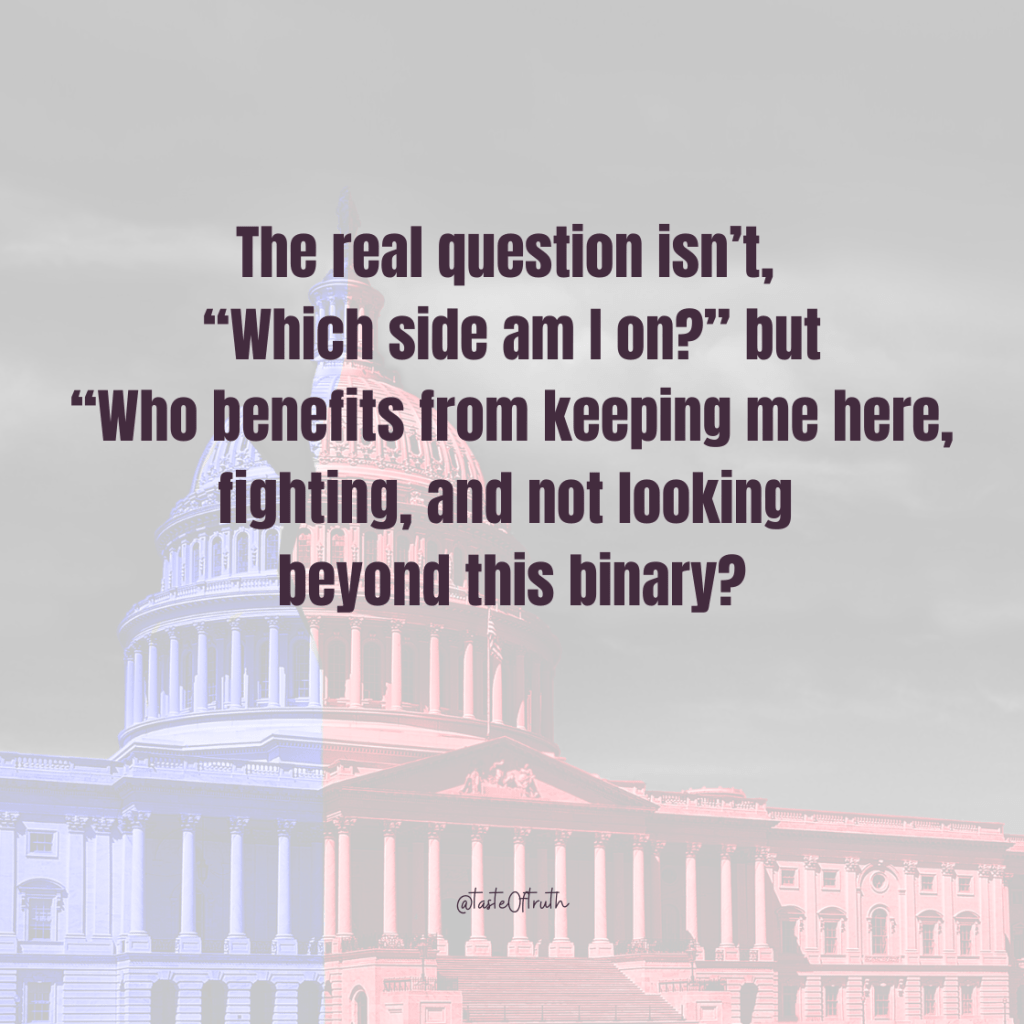
By framing every election as a battle for democracy versus tyranny, we’re falling into the trap of distraction. The real question isn’t, “Which side am I on?” but, “Who benefits from keeping me here, fighting, and not looking beyond this binary?”

The claim that the Republican Party represents an autocracy, as made by Sexvangelicals, is not just simplistic—it’s laughably disconnected from reality. To label one political party as authoritarian while ignoring the bipartisan complicity in maintaining an oligarchic system is either naïve or willfully ignorant.

Take the oligarchic nature of U.S. politics. Both major parties have long benefited from the concentration of wealth and power at the top. Consider the case of former House Speaker Nancy Pelosi, whose net worth has ballooned through stock trades that suspiciously align with her legislative influence. Or Barack Obama (Barry Soetoro), who went from public servant to multi-millionaire, cashing in on book deals, speaking engagements, and lucrative partnerships with Netflix after leaving office.

Then there’s President Joe Biden. While progressives champion him as a defender of democracy, his record is far from pristine. Most recently, questions surrounding his son Hunter Biden’s international business dealings—spanning over a decade—have drawn scrutiny. Hunter’s alleged tax evasion and unregistered foreign lobbying have raised concerns, yet he continues to receive leniency from the justice system.

This isn’t to excuse Republicans from criticism, but the suggestion that they alone embody authoritarian tendencies is absurd when Democrats have equally reaped the rewards of an oligarchic system. Both parties serve the interests of economic elites and organized lobbyists far more faithfully than they do the average voter.

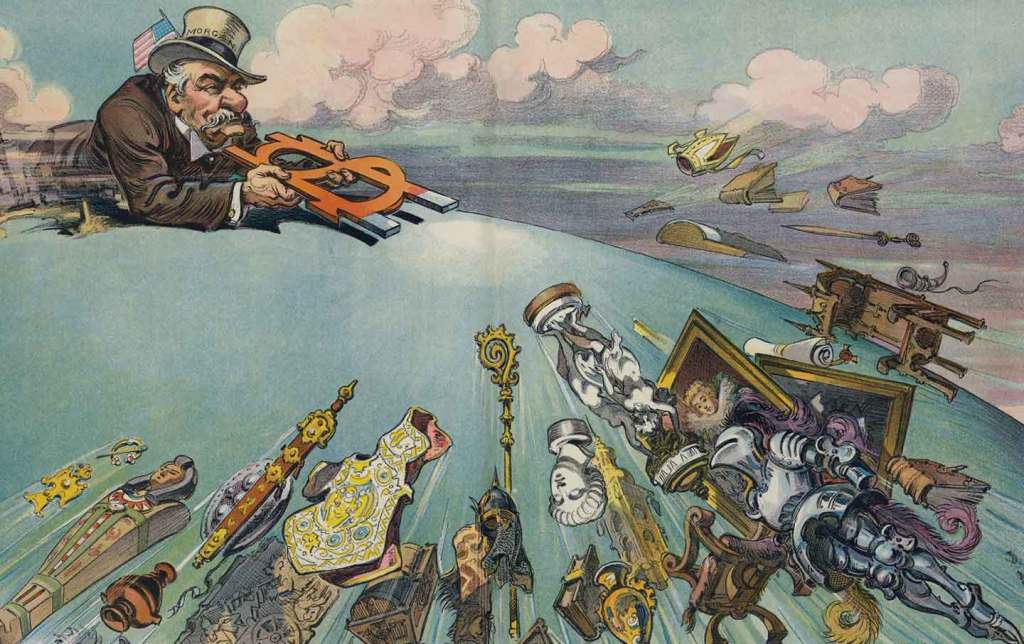
The Magnet, from Puck, 1911.(Udo J. Keppler / Library of Congress)

The bipartisan reality of the oligarchy dismantles the “democracy versus autocracy” narrative. For instance, the same Gilens and Page study cited earlier reveals that the preferences of the bottom 90% of income earners have statistically no impact on policy outcomes. Meanwhile, corporate donors and lobbying groups continue to hold sway over legislation regardless of which party is in power.

By framing Republicans as the sole villains in this story, Sexvangelicals perpetuates the kind of shallow tribalism that fuels division while leaving the real culprits—wealthy elites and corporate interests—untouched. The truth is that our democracy has been compromised for decades, and it will remain so until both sides of the aisle are held accountable for their role in preserving this oligarchic system.

Instead of directing anger at individuals or parties, we should be asking: How do we break free from a system designed to keep us pointing fingers at each other while those in power profit from the chaos?


From Crunchy Hippie to Conservative Christian Pipeline: My Journey Through the Radicalization Maze

Growing up secular, I’d have laughed at the idea that I would someday align with conservative or religious ideologies. Portland, Oregon, was my playground of progressive ideals—a city where conservatism felt like the root of every societal ill. But life has a way of challenging our convictions. Late in the pandemic, isolated and seeking meaning, I fell into an extreme version of Christianity. What I once dismissed as unthinkable became my new normal—until it wasn’t. Earlier this year, I deconstructed those beliefs, peeling back the layers of what led me there. Read/listen all about HERE!

Now, I can see the flaws and virtues of both worlds, which is why I find the frame of mind in deconstruction spaces puzzling. Many accounts misrepresent or overgeneralize conservatives—the very people they once were or grew up with—and cast the same stones they once had thrown at them.

It reminds me of this quote from the book The Righteous Mind:

“I had escaped from my prior partisan mind-set (reject first, ask rhetorical questions later) and began to think about liberal and conservative policies as manifestations of deeply conflicting but equally heartfelt visions of the good society. It felt good to be released from partisan anger. And once I was no longer angry, I was no longer committed to reaching the conclusion that righteous anger demands: we are right, they are wrong.”

Deconstructing past beliefs should be about nuance, growth, and intellectual humility—not trading one form of black-and-white thinking for another. When we fail to empathize with others’ moral frameworks, we miss out on a deeper understanding of the human experience.

Many in the ex-evangelical space now lean far left in their political views, where values like care, fairness, and empathy take center stage. Conservative values like loyalty and authority are dismissed or viewed with suspicion, fostering an “us vs. them” mentality.

This cultural shift into victimhood is explored further in The Coddling of the American Mind by Greg Lukianoff and Jonathan Haidt, who identify three “Great Untruths” that help explain these societal trends:

  • 1) “What doesn’t kill you makes you weaker,”
  • 2) “Always trust your feelings,”
  • 3) “Life is a battle between good people and evil people.”

These untruths, they argue, contribute to fragility, discourage critical thinking, and promote a tribal mentality—characteristics that are increasingly evident in both the deconstruction space and parts of the progressive left. The focus on emotional responses over rational thought and the growing divide between “us” and “them” only strengthens these dynamics. For a deeper dive into this.


Woke Ideology as a Secular Faith: A Closer Look

“What we’re seeing isn’t a quest for justice but a demand for unquestioning orthodoxy.”

John McWhorter argues that wokeism functions like a full-fledged religion. It provides a moral framework that mirrors traditional religious beliefs. Instead of concepts like original sin, wokeism offers “privilege,” positioning those with it as morally compromised. In place of rituals like prayer, adherents perform acts like confessing their biases. And, similar to the salvation promised in traditional religions, salvation in wokeism comes through activism and striving for societal change. He warns that its refusal to tolerate dissent turns it into a rigid orthodoxy rather than a genuine quest for justice. For many, including those who’ve deconstructed evangelical faith, this framework hits uncomfortably close to home.

Many of the individuals I met and conversed with who now identify as progressive or left leaning have simply exchanged the evangelical radicalism of their past for their new liberal beliefs. Social justice, in this sense, has become their new End Times—complete with the same apocalyptic fervor. And it’s painfully obvious.

Douglas Murray discusses this analysis further in The Madness of Crowds. He suggests that wokeism often serves as a substitute for religion in today’s secular world. As belief in traditional religions has waned, people have sought meaning elsewhere—and wokeism fills that void. It provides clear rules and a sense of belonging, but in doing so, it also shuts down open debate and nuanced conversation.

The New Authority: From Sky Daddy to State Agencies

A striking similarity between fundamentalist religion and woke ideology is the relentless worship of authority. For those who’ve left behind their “big sky daddy,” that void has been filled by institutions like the CDC, FDA, and government agencies. The pandemic demonstrated how blind faith can easily shift from divine to institutional.

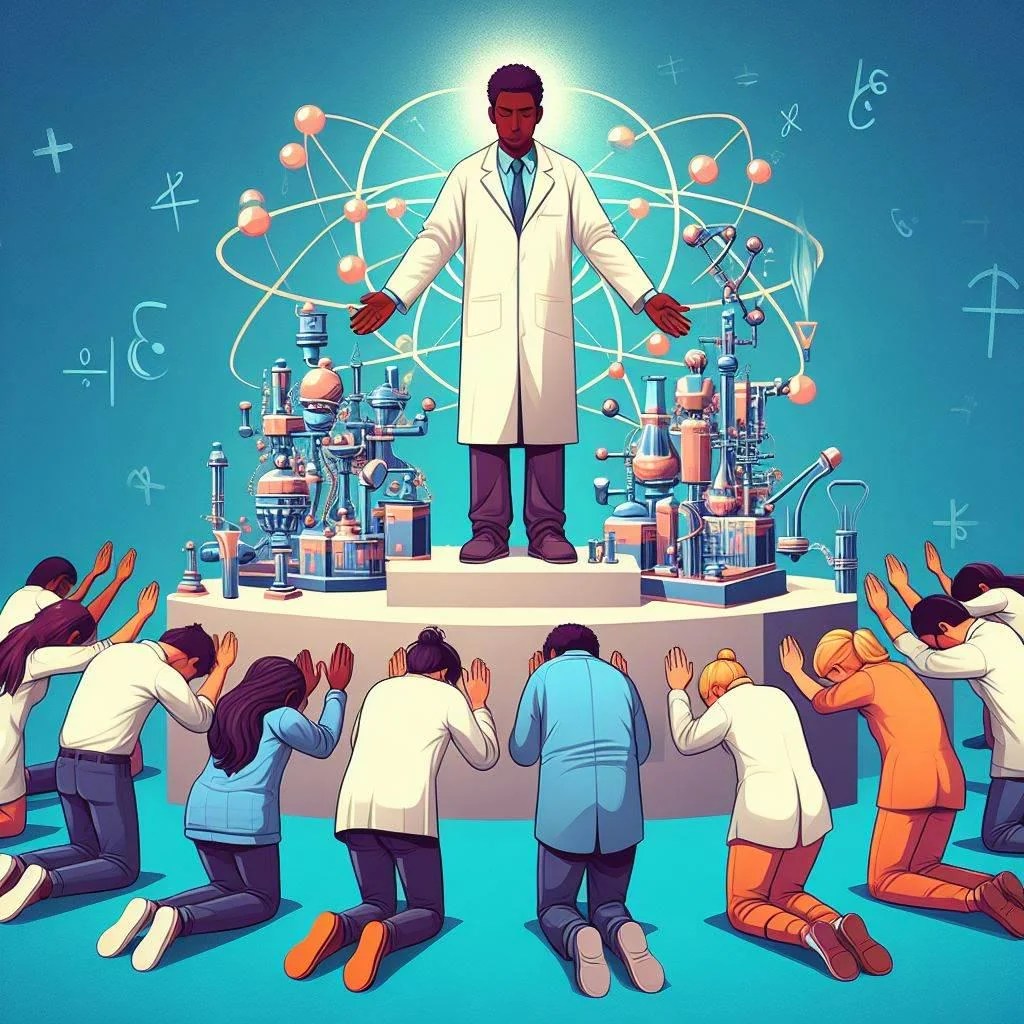
This is where the religion of scientism enters the picture—where reason and science are elevated to the status of ultimate truth. Figures who present themselves as “experts” rely on surface-level expertise and selective data to craft narratives that appear authoritative, yet fail under scrutiny. They become the “fake intellectuals,” as Franklin O’Kanu calls them, feeding the cult of expertise while often lacking real intellectual rigor. In public health, this plays out with the “revolving door” between regulatory agencies and the pharmaceutical industry, which further complicates the narrative of impartiality.

The “revolving door” describes the flow of personnel between agencies like the CDC and the pharmaceutical industry. This cycle blurs the lines between public service and corporate interest, with former regulators influencing policies that benefit the very companies they once oversaw—creating a potential conflict of interest that’s staggering.

In this new system, the scientific establishment becomes the new authority—replacing the monotheistic idea of God with the “god” of reason and data. For those in the deconstruction space, this is a new form of dogma. It stifles curiosity, dismisses dissent, and discourages critical thinking—all in the name of progress. This mirrors the rigid certainty and tribalism found in the religious structures people sought to escape.

Worshipping “science” or blindly trusting clinical trials can be misleading. While clinical trials are seen as vital for medical progress, they are often heavily influenced by the pharmaceutical industry, which funds a vast majority of these trials. This creates a conflict of interest that can skew results and delay critical information about the risks of drugs. Examples like the Vioxx scandal, where a painkiller was marketed despite internal knowledge of its dangers, and the Tamiflu case, where the effectiveness of the drug was overstated, show how corporate interests can shape clinical trial outcomes. Clinical trials, while important, are not always as objective or transparent as they seem.

Empowering Dangerous Systems

Yasmine Mohammed’s Unveiled pushes the conversation even more, explaining how wokeism can actually empower authoritarian regimes. One key point she makes is how Western progressives, in the name of cultural relativism, avoid criticizing radical Islam. This gives a platform to extremist ideologies, which harms vulnerable groups like women and minorities. She argues,

“By shielding oppressive practices from scrutiny, wokeism betrays the very people it claims to protect.”

The binary “oppressor versus oppressed” narrative has become a staple of modern discourse, particularly within the context of the Israel-Palestine conflict. This oversimplified lens reduces complex geopolitical and historical realities to a stark dichotomy, fostering a dangerous environment where nuance is lost. It’s unnerving to see college students waving the flag of Palestine while simultaneously undermining U.S. monuments and values, while spreading fear mongering lies about Project 2025, and comparing Trump to Hitler. These contradictions are not only mind-numbing but also deeply troubling, signaling a shift toward ideological extremism that dismisses the complexities of any issue in favor of emotional, binary thinking.

Antisemitism has spiked globally after the October 7 attacks on Israel, but this tragic reality has also fueled the misuse of the term “antisemitism” to suppress valid critiques of Israeli policies. Labeling critics as antisemitic conflates political criticism with hate, shutting down meaningful dialogue essential to addressing the Israel-Palestine conflict’s complexities.

This approach mirrors patterns within woke ideology, where dissent is often silenced in the name of ideological purity. The weaponization of identity politics and accusations hinders nuanced discussions and reinforces systems of power, obstructing pathways to justice and true understanding.

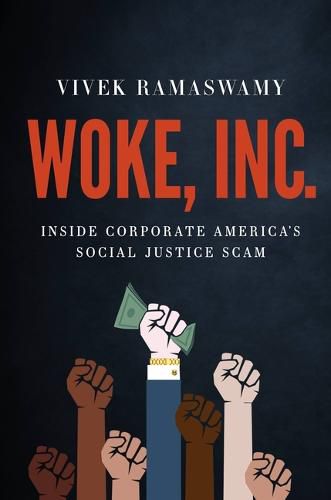
Vivek Ramaswamy, in Woke, Inc., adds another layer to this by discussing how authoritarian regimes like China’s Communist Party (CCP) take advantage of woke rhetoric. According to Ramaswamy, the CCP amplifies America’s internal divisions—often fueled by wokeism—to weaken the West. By focusing on these cultural rifts, China diverts attention from its own human rights abuses, all while strengthening its geopolitical position. This is part of China’s broader geopolitical strategy, which seeks to deflect attention from its authoritarian practices while exploiting divisions in Western societies.

This pattern can be seen as part of a broader effort to exploit the distractions created by cultural conflicts to enhance its influence in global organizations, trade, and international relations. For example, while Western nations debate internal social issues, China continues its expansive Belt and Road Initiative, which increases its influence across developing nations.

Heretics and the Price of Dissent

Religious movements and extreme ideologies, like wokeism, are often defined by their treatment of dissenters or heretics. Woke spaces, much like traditional religious communities, are quick to condemn those who question or criticize. Whether it’s TERFs (trans-exclusionary radical feminists) or former progressives like Yasmine Mohammed, those who dissent face severe backlash. This exclusionary behavior creates a stifling environment, not dissimilar to how traditional religions treat apostates. As Douglas Murray puts it, “The hatred reserved for heretics is often more intense than that directed at outsiders.”

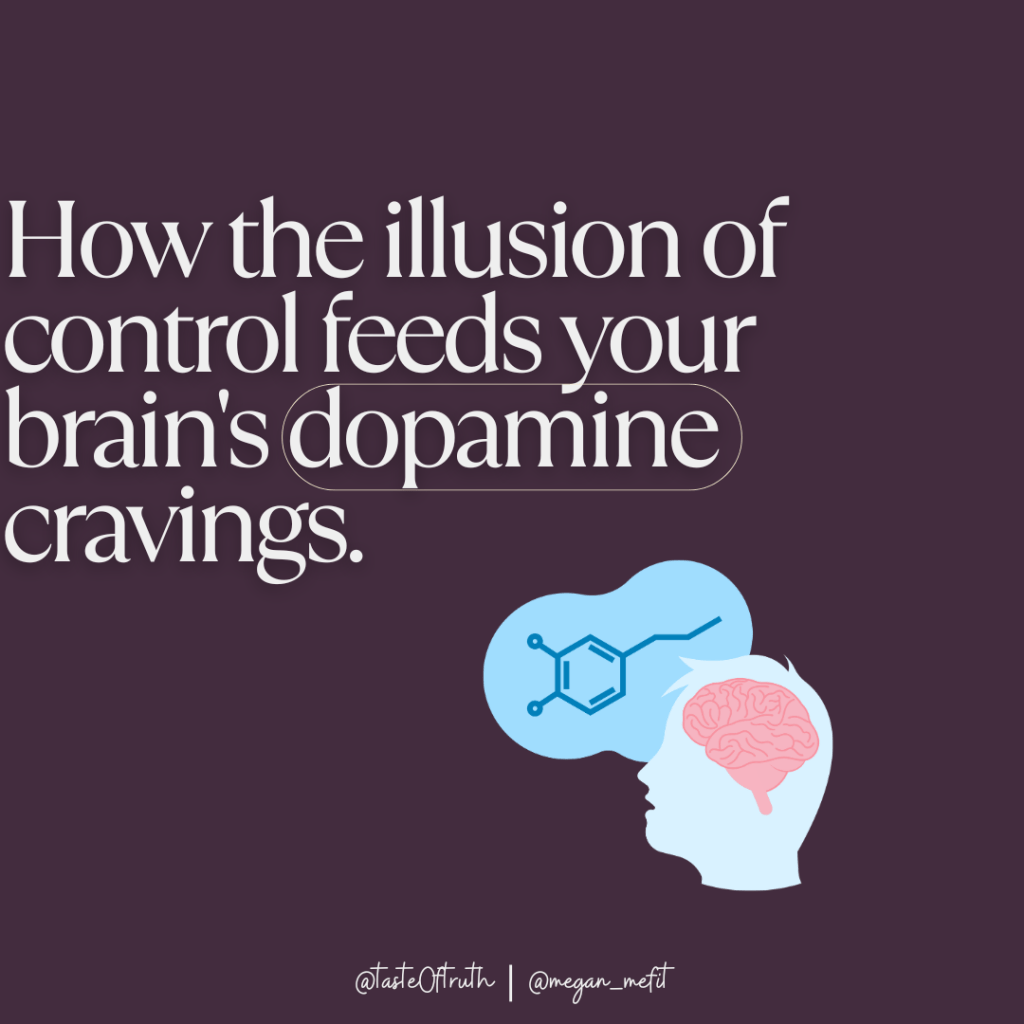
But this dynamic is about more than just ideological rigidity—it’s also rooted in human psychology. The human brain is naturally drawn to certainty. When we embrace extreme ideologies, we seek control over our environment, which provides us a sense of stability and security. Research in neuroscience shows that when our beliefs are challenged, we experience discomfort, but defending them can trigger a dopamine response, rewarding us with a sense of control. The brain gets a “hit” from maintaining a sense of certainty, even if it’s at the cost of nuance or rational discussion.

In fact, this need for certainty can become addictive. The human brain often craves certainty in the form of binary thinking—where things are either completely right or completely wrong. This type of thinking is satisfying because it shields us from the cognitive dissonance that arises when faced with complexity or ambiguity. In the case of woke ideology, the call for absolute adherence to certain beliefs or behaviors is not just about social justice—it’s a way to satisfy that neurological need for control. When we feel justified in our beliefs and actions, we receive a dopamine “reward,” reinforcing the behavior.

This addiction to certainty can also be seen in extreme partisanship. The more entrenched we become in one side, the more our brain is rewarded for defending it. It’s why many people in the deconstruction space or on the political left engage in “mental gymnastics”—creating justifications and rationalizations that protect their beliefs. This isn’t just about ideology; it’s about keeping that dopamine reward flowing, keeping the illusion of control intact, and avoiding the discomfort of uncertainty.

The problem is this pattern of thinking isn’t conducive to open dialogue or true critical thinking. The “us vs. them” mentality becomes more pronounced, and the space for nuance, disagreement, and personal growth shrinks. Instead of engaging with opposing views, individuals self-censor or double down on their beliefs, further entrenched in the addictive cycle of ideological purity.

Moving Forward: A Balanced Approach

It’s important to note that this critique isn’t meant to dismiss the noble goals of social justice movements. Addressing inequality and harm in the world is crucial. But when these movements demand absolute loyalty and punish dissent, they lose sight of the very ideals they claim to uphold.

What do you guys think? How do you balance the pursuit of justice with the need for free thought?

As I discuss on my podcast, Taste of Truth Tuesdays, this tension is something I’ll be unpacking in more detail on Season 3 and particularly with Yasmine Mohammed. We’ll explore how wokeism intersects with radical Islam, how authoritarian regimes exploit these divisions, and how we can engage with these ideologies in a way that doesn’t undermine the values of justice, free thought, and humanity.


Join the Conversation

Do you see these religious parallels in woke ideology? Are they helpful in understanding these dynamics, or do they oversimplify the issue?

I’d love to hear your thoughts. Comment below, and don’t miss my podcast episode with Yasmine Mohammed dropping 2025 for a deeper dive into these topics! 

Understanding Trump Derangement Syndrome (TDS)

Forget your zombie apocalypse fantasies — the real outbreak is Trump Derangement Syndrome (TDS), where rational thinking flies out the window the moment “Orange Man” is mentioned. TDS has become a modern-day fever that sends reasonable minds into a frenzy. If you’ve seen this around you, you’re not alone. But let me just say, I get it! I used to be there. When Trump won in 2016, I cried. I felt the devastation, the outrage, the “what’s happening to our country?!” moment that so many others experienced. I believed the media narratives without question and wore that emotional turmoil like a badge. But then, something clicked. I started researching more carefully, looking into primary sources, seeking out independent media, and asking myself what I was really feeling about the issues rather than just repeating the party line. Over time, I saw the layers of complexity, nuance, and even hypocrisy that I’d never realized before.

Now, let’s take a deeper look at each of the TDS symptoms:

Symptoms of TDS: Diagnosing the Outrage

1. “Fascist! Racist! Sexist!”

If you so much as mention Trump in a positive light, brace yourself for the onslaught: you’re suddenly a fascist, racist, sexist, homophobic, xenophobic, bigoted conspiracy theorist out to destroy democracy. The irony? This mob is so quick to throw every name in the book that the words have lost all meaning. Their logic: if you disagree, you’re evil. How convenient.

2. Family? Friends? Disposable!

TDS has reached the point where people are cutting off family members over their voting history. Imagine tossing a lifelong friendship because Uncle Joe wore a MAGA hat. For some with TDS, Thanksgiving isn’t a holiday; it’s a battleground. It’s not just about politics anymore — it’s a moral crusade where every dissenting opinion is a betrayal. Call it selective outrage syndrome.

3. Corporate Parrot Mode Activated

When TDS takes over, suddenly the most “anti-establishment” folks turn into the establishment’s biggest fans. They unironically parrot lines from Big Pharma, media conglomerates, tech giants, intelligence agencies, the military-industrial complex, and yes, even the World Economic Forum. In their minds, anything outside these sources? A dangerous conspiracy. “Think for yourself” only applies as long as you’re thinking exactly what they’re thinking.

4. Cancel Culture Gone Wild

Got a book that challenges the status quo? Banned. Statue of a historical figure? Torn down. Art that doesn’t align with the current narrative. Erased. For TDS-ers, history is only as valid as its alignment with their worldview. It’s a never-ending purge of anything that might cause them the slightest discomfort. The new motto? If it offends, it ends.

5. Segregation 2.0

In the wild world of TDS, segregation is back — but now it’s “progressive.” We’re talking division by race, medical status, and whatever category might boost moral superiority. They claim to champion equality, but at every turn, it’s “us versus them.” TDS has transformed inclusivity into a new, hyper-policed form of exclusivity.

6. Piercings, Tattoos, Hair Colors Galore

Extreme individuality, TDS-style: where everyone rebels in exactly the same way. TDS-driven defiance usually manifests in whatever new trend they’re convinced will “stick it to the man”. Just like TDS itself, this uniform has turned rebellion into a team sport. Black masks, blue hair — it’s the official TDS fashion statement. Strut your stuff with the same look as every other anti-establishment warrior on the block. For a movement obsessed with individuality, TDS sure has a strict dress code.

7. “Reproductive Justice” with Selective Amnesia

TDS champions “reproductive rights” but often glosses over the darker history of eugenics behind some early advocates. They’ll celebrate organizations without ever acknowledging where they came from. Bring up Margaret Sanger’s disturbing past, and watch them squirm — or, more likely, accuse you of “attacking reproductive freedom.”

8. Riot, Loot, and Celebrate Criminality (but Take Away the Guns)

TDS folks will tell you that looting and burning buildings are “mostly peaceful.” They cheer on criminality as “expression” but demand that law-abiding citizens be disarmed. In their perfect world, the government holds all the power, while citizens are stripped of their rights. Because nothing says “justice” like leaving the people defenseless.

9. Senile Man Isn’t Senile (and Don’t You Dare Say Otherwise)

Exhibit A of TDS reality distortion: insisting that “Senile Man” is sharp, focused, and totally not slipping. TDS defenders will rationalize every stutter, stumble, and lapse as just “endearing quirks.” They’ve become professional apologists for a guy who can barely string a sentence together without a script.

10. Open Borders Good, Secure Borders Bad

In the TDS worldview, open borders are a humanitarian triumph, and peace negotiations are…dangerous? They cheer escalating tensions and possible war, insisting it’s good for democracy. But God forbid someone suggests security at the borders. That’s “xenophobic” — unless they need walls and fences around their own neighborhoods.

11. MAGA and Russia: The Root of All Evil

To the TDS-affected, MAGA and Russia are the villains of every story. Whatever the issue, it’s their fault. Rising costs, climate disasters, bad sports scores? It’s all “MAGA” or Putin. It’s like a never-ending game of political Mad Libs, where every blank is filled with the same two villains.

12. January 6 is the New 9/11

The narrative: January 6 was on par with Pearl Harbor and 9/11. For TDS followers, a chaotic day at the Capitol has somehow become a world-altering tragedy on par with historic attacks on America. The comparison is absurd, but TDS won’t let it go. Any criticism? Clearly you’re downplaying “the darkest day in history.”

13. Blind Obedience Rebranded as “Saving Democracy”

TDS logic: the only way to “save democracy” is by silencing dissent, canceling opinions, and obeying government orders without question. It’s like a self-contradictory campaign slogan: “Destroy freedom to protect it!” And somehow, they think they’re the enlightened ones.

14. Buzzword Bingo

TDS rhetoric is powered by slogans that sound deep but are emptier than a plastic grocery bag in a windstorm. You’ll hear phrases like “destroy democracy to save it,” “compliance is justice,” and “love wins,” even when they’re trampling over their own definitions. It’s a language of feel-good contradictions — because if it sounds right, who cares if it is right?

TDS Prognosis: From Reason to Rage

Unfortunately, TDS seems to be getting worse, not better. Studies suggest that heavy doses of mainstream media, academic echo chambers, and social media influencers are turning normal folks into a rage-fueled army of identical outrage. And when you throw in teachers’ unions, college admin, and some politicians adding fuel to the fire, it’s no wonder we’re seeing otherwise smart, decent people morph into full-time outrage machines.

In the end, TDS has turned the political landscape into a circus of contradictions, hysterics, and nonsensical slogans. If you’re ready for an apocalypse, you might not need zombies — TDS has already created an army of the enraged, who follow the leader without question, convinced they’re fighting the good fight by shutting down everything they disagree with.

Treatment: A Cure for TDS?

Can you reason with someone deep in TDS? Sometimes it feels impossible, but it’s worth trying. A demoralized person is hard to reach, but most cases of TDS aren’t terminal. Many of those “80 million” Biden voters are reasonable, everyday people who just might be open to a conversation. Looking at the 2024 election landscape, Trump and the GOP have undeniably tapped into a broader, more diverse demographic. Today’s Republican candidates come from various backgrounds, with f igures like Tulsi Gabbard and Vivek Ramaswamy, representing unique perspectives, which is a first for the party on this scale. This diverse mix shows that the party’s focus is evolving—centered not just on identity but on a broader range of ideas​.POLITICO.

Let’s resist the divisive forces that are feeding TDS and bring civility back into the mix.

So, here’s the prescription:

  1. Step Away from MSM: The first step is to lower their dose of mainstream media. It’s like a detox.
  2. Upgrade the Information Diet: Guide them toward new, independent sources of information. Look for voices that don’t just echo the usual talking points.
  3. Watch The Coddling of the American Mind: This documentary challenges the ideas that have cultivated TDS and offers perspective on resilience and openness.
  4. Take a Walk Outside: Nature is good for the soul. Sometimes, the answer is as simple as fresh air, sunshine, and a reminder that the world is bigger than our screens.
  5. Hit the Gym: Physical exercise has been shown to reduce anxiety and improve mental clarity. Plus, it’s hard to hold onto bitterness when you’re in the zone.
  6. And Most Importantly, Laugh: Humor can bridge divides faster than any debate. Remember, we can disagree and still respect each other.

Let’s turn down the heat and work on genuine conversations—who knows, maybe one by one, we can cure TDS for good.

But on the real though, breaking through what’s commonly called Trump Derangement Syndrome (TDS) requires understanding why these deeply polarizing reactions arise and how to gently engage people in constructive, open-minded discussions. Here are some insightful resources and strategies to help you navigate TDS, improve communication, and potentially help those caught in it see multiple perspectives more clearly.

1. Books on Political Polarization and Media Influence

  • “The Coddling of the American Mind” by Jonathan Haidt and Greg Lukianoff
    This book explores why younger generations are more anxious and polarized, linking it to trends in education, media, and social conditioning. It discusses the impact of overprotection and “safetyism” on mental resilience, which can feed into extreme reactions to political figures like Trump.
  • “Righteous Mind: Why Good People Are Divided by Politics and Religion” by Jonathan Haidt
    Haidt’s book explains the moral psychology behind political divides, providing insight into why people demonize others for their beliefs. It’s a resource that encourages empathy and offers tools to understand why certain people feel so strongly about political figures.
  • “Hate, Inc.” by Matt Taibbi
    This book takes a deep dive into how the media creates division, rage, and fear to keep audiences engaged. Taibbi argues that both sides of the political spectrum are manipulated by media tactics, which can lead to knee-jerk reactions and a lack of critical thinking.
  • “Thinking, Fast and Slow” by Daniel Kahneman
    Kahneman’s insights into the psychology of decision-making and biases are incredibly valuable for understanding how snap judgments form. This is essential for recognizing why some people react so viscerally to certain public figures and how they might break out of these biases.

2. Documentaries and Videos

  • “The Social Dilemma”
    This documentary shows how social media platforms amplify outrage and division. It explains how algorithms reward extreme views and reinforce confirmation biases. Viewing this can help someone understand how media exposure may fuel polarized reactions.
  • Interviews and Talks by Jonathan Haidt
    Haidt’s lectures on YouTube about political polarization and moral psychology provide easily digestible explanations for why people become entrenched in their beliefs and hostile toward others. His work emphasizes empathy and understanding, which are key in bridging divides.
  • Interviews with Matt Taibbi on Media Influence
    Journalist Matt Taibbi frequently discusses media’s role in inflaming division and mistrust. Hearing his perspective on how media drives certain narratives can help someone rethink their news consumption.

3. Podcasts and Alternative Media Outlets

  • The Joe Rogan Experience
    Rogan’s podcast often features diverse viewpoints, including from figures who challenge mainstream narratives. Rogan’s open-minded, questioning style can encourage listeners to think independently.
  • Breaking Points with Krystal and Saagar
    This independent news show is known for covering both left-wing and right-wing perspectives critically, making it valuable for people seeking balanced information. Hosts Krystal Ball and Saagar Enjeti offer nuanced discussions that don’t fall into mainstream narratives.
  • The Glenn Greenwald Podcast
    Greenwald, a journalist and political commentator, is known for challenging establishment narratives. His independent reporting encourages critical thinking and skepticism, which can help break through one-sided views.

4. Online Resources

  • AllSides.com
    This news aggregator presents articles from the left, center, and right, helping people see how the same story can be framed differently depending on the outlet. Regularly reading across the spectrum can help break the habit of ideological echo chambers.
  • Media Bias/Fact Check
    This site is useful for assessing the political leanings and reliability of different media outlets. People with TDS often trust only certain sources; this tool can provide insight into the biases of those sources, helping individuals diversify their information diet.

5. Therapeutic and Self-Awareness Tools

  • Mindfulness Practices
    Practicing mindfulness or meditation can help people become more self-aware and less reactive, making it easier to engage in rational conversations without emotional bias.
  • Cognitive Behavioral Therapy (CBT) Techniques
    CBT exercises help people examine the roots of their thoughts and emotions. While this isn’t TDS-specific, understanding thought patterns and challenging automatic, often emotional, responses can reduce irrational thinking related to political issues.

6. Constructive Engagement Tips

  • Ask Open-Ended Questions
    Instead of directly challenging someone’s beliefs, ask them questions that make them think deeper: “What made you come to that conclusion?” or “Have you ever looked into other perspectives on this?”
  • Seek Common Ground
    Finding points of agreement before delving into differences can make conversations less confrontational and more constructive.
  • Limit Media Consumption Together
    If you’re close to someone who seems highly affected by TDS, suggest a “news detox” where both of you take a break from mainstream media. Instead, engage in activities like reading books, listening to long-form discussions, or spending time in nature.
  • Use Humor
    Humor can lighten intense topics and make them more approachable. It’s easier to discuss differences when the conversation doesn’t feel like a battle.
  • Encourage Journaling or Writing
    Writing can help people clarify their beliefs and analyze their emotions. It encourages self-reflection, which is helpful for overcoming rigid political opinions.

Breaking the cycle of TDS is more about cultivating open-mindedness, empathy, and critical thinking than directly trying to “change minds.” These resources and strategies can help create a space where productive conversations can happen.