A Messiah Built from Scripture

Jesus, Scripture, and the Mythmaking Machinery of the Abrahamic World

Listen here

One of the most successful ideas in modern spirituality is the belief that Jesus represented a radical break from the religious world that produced him.

The problem is not merely that modern people have misunderstood Jesus. It is that the Gospel texts themselves are capable of generating multiple, even contradictory versions of him: compassionate teacher, apocalyptic judge, mystic, revolutionary, cosmic redeemer. That textual instability is one reason Christianity has proven so endlessly adaptable. Readers can extract the Jesus they want and then present that selection as the essence.

Whether presented as an enlightened teacher, a cosmic Christ, a universal sage, or simply a wise moral reformer, Jesus is often portrayed as transcending the tribalism, judgment, and exclusivity associated with the covenantal and apocalyptic world of the Hebrew scriptures. In popular imagination, he stands opposed to the harshness of the Old Testament: a teacher of love replacing a god of wrath, compassion overcoming law, and universal brotherhood replacing ancient tribal loyalties.

Later philosophical and spiritual movements took that elasticity and pushed it even further. Nineteenth- and twentieth-century currents such as Theosophy, New Thought, Western esotericism, and Rudolf Steiner’s spiritual reinterpretations recast Christ as a universal principle rather than a figure embedded in a specifically Jewish apocalyptic and covenantal world. “Christ” becomes less a messianic title rooted in Jewish expectation and more a symbol of inner divinity, cosmic consciousness, or spiritual evolution.

I reject that rescue attempt entirely. The modern “cosmic Christ” is not a recovery of some hidden essence. It is one more extraction from a set of texts already structurally open to reinterpretation. The same flexibility that allows one reader to find a gentle moral teacher allows another to find a figure of judgment, exclusion, and cosmic authority.

And that harsher figure is not hidden in some obscure corner of the tradition. Jesus speaks of judgment. He divides humanity into the saved and the condemned. He warns of outer darkness, weeping and gnashing of teeth, eternal punishment, and destruction for those who reject his message. Paul speaks of everlasting destruction. Revelation culminates in divine wrath, cosmic warfare, and the final defeat of God’s enemies.

This is not a departure from the older scriptural framework. It is its expansion.

What if the New Testament did not abandon the worldview of the Hebrew scriptures, but carried its deepest assumptions forward in universalized form?

That is the argument I want to follow here. The New Testament did not discard the basic structure of the Hebrew scriptures. It expanded it. Covenant became salvation history. Chosenness became a global saved-versus-condemned framework. Messianic expectation became cosmic kingship. Scripture became biography. On this reading, Christianity was not a liberation from the older framework, but its Gentile-facing sequel.
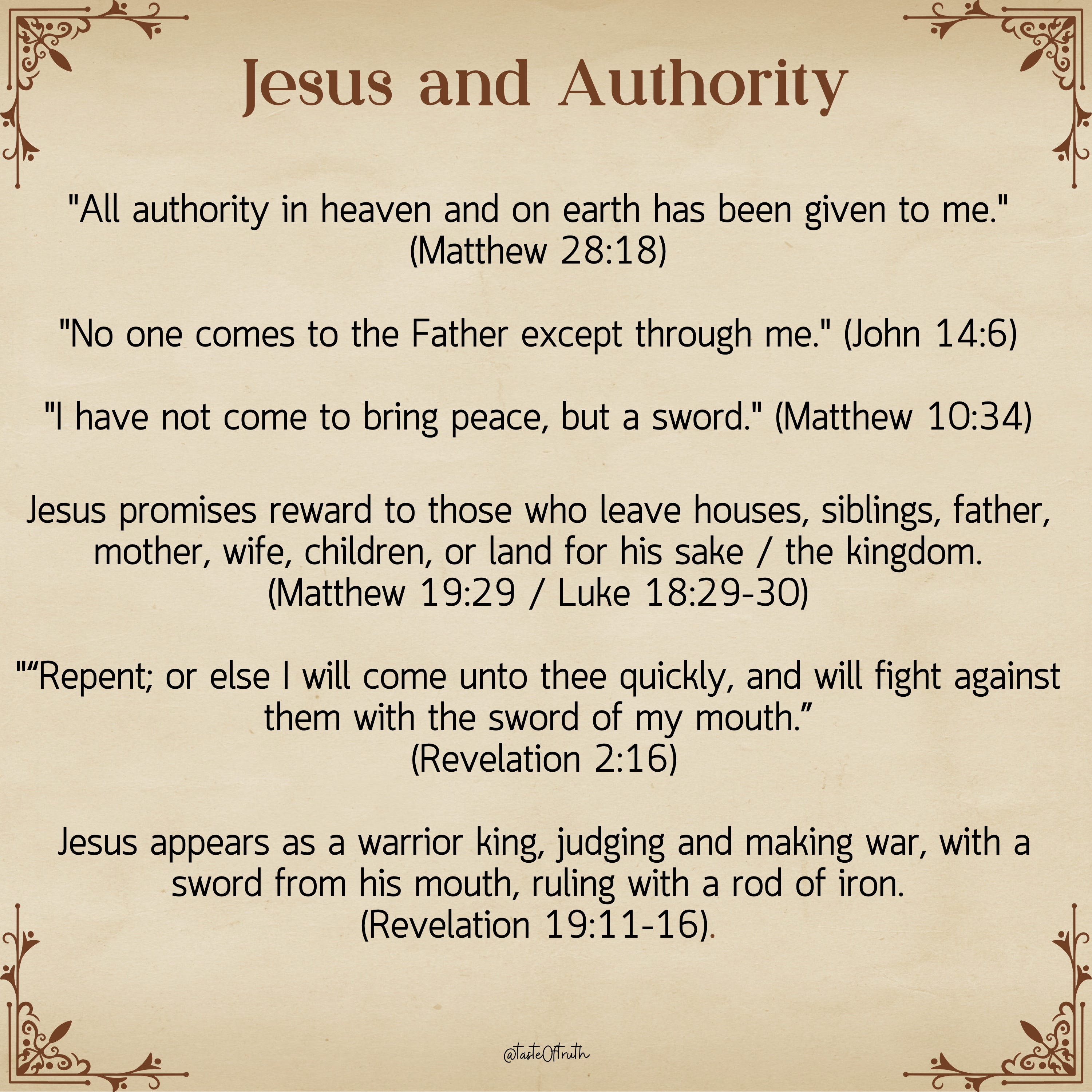
Representative examples of New Testament passages in which Jesus is portrayed not only as a moral teacher, but as a figure of exclusive authority, judgment, division, and ultimate rule.

Research from the Copenhagen School, along with scholars such as Russell Gmirkin, Jan Assmann, Yonatan Adler, and Thomas Thompson, has challenged assumptions many of us once took for granted. Their work points toward a far more dynamic process of literary construction, cultural memory, reinterpretation, and retrospective claims to antiquity behind the Hebrew scriptures. Some of that scholarship presses the issue further still, raising the unsettling possibility that Jesus himself may belong in the same larger scriptural problem-set as other biblical figures whose historicity has been asserted far more confidently than it has been demonstrated.

In previous episodes of my Jesus Myth series, I argued that the Gospels should not be treated as straightforward eyewitness biographies. Archaeology can illuminate the world of first-century Judea, but it does not confirm the Jesus of the Gospels. Paul’s letters give us a cosmic, scriptural Christ rather than a detailed memory of a recent Galilean teacher. The early Christian movement appears fragmented from the beginning, with competing visions of Christ long before later orthodoxy cleaned up the story.

This essay begins where that argument left off.

If the Gospels are not simple biography, then what are they? And if the Jesus figure is shaped so deeply by earlier scripture, then an even more unsettling question follows:

What kind of scripture was doing the shaping?

Because once we begin examining the New Testament closely, an extraordinary pattern emerges. The Jesus of the Gospels does not merely quote scripture. He is a product of it. The story begins to look less like the fulfillment of ancient history than the continuation of an ongoing literary tradition.

And if that scriptural world could generate covenant, chosenness, law, and sacred history, the possibility that it could also generate a messiah is no longer so easy to dismiss.
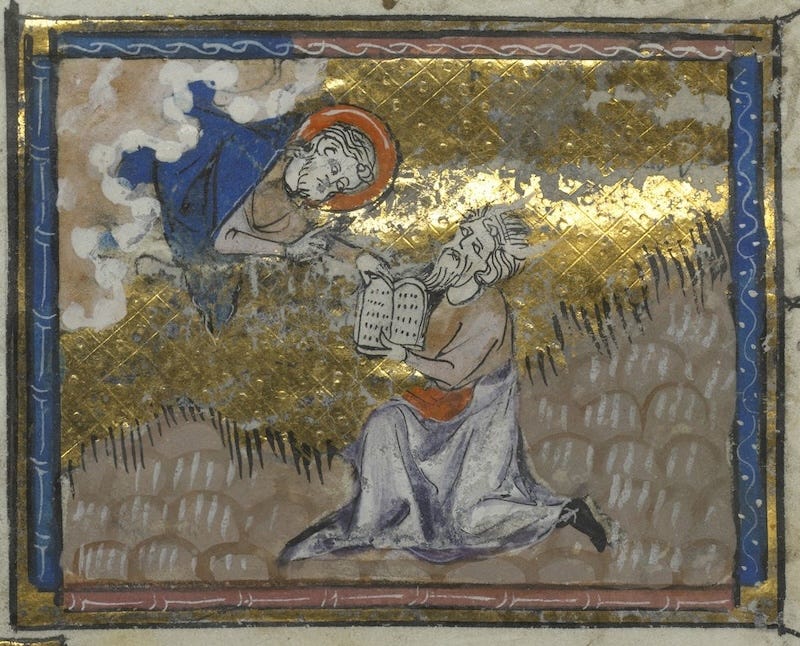

God giving the Tablets of the Law to Moses, from a manuscript attributed to Chrétien Legouais, 1325 CE. Image source: gallica.bnf.fr / Bibliothèque municipal de Rouen.

Not Influence but Scaffolding

The claim that the Gospel writers drew from Jewish scripture is not controversial. Virtually every New Testament scholar acknowledges that the evangelists quoted, interpreted, and reworked earlier biblical texts. The real question is what kind of borrowing we are dealing with.

Some modern writers argue that the Gospels are fundamentally Greek in character, shaped by Hellenistic literary conventions such as heroic archetypes, divine signs, dramatic climaxes, and narrative form recognizable to a Greek-speaking audience. There is truth in that observation. The Gospels were written in Greek, circulated in a Hellenistic world, and emerged from a culture saturated with literary adaptation and symbolic storytelling. But that framing can miss something more concrete. The density of engagement with Jewish scripture in the Gospels is not merely thematic or stylistic. It is textual, structural, and relentless.

Dozens of explicit citations appear across the texts. Beneath them lies a much larger web of allusions, echoes, narrative patterns, and character templates drawn from the Hebrew Bible. Counted conservatively, these parallels number in the dozens. Traced more fully, they run into the hundreds. Entire scenes are shaped by earlier passages. Entire narrative arcs follow scriptural precedent. By comparison, proposed parallels to Greek myth or pagan figures are usually broader, more conceptual, and far less anchored in specific texts. My aim is not to deny Greco-Roman influence, but to put it in proportion. The Gospels may speak Greek, but they think in Hebrew scripture.

This framing is not idiosyncratic; volumes such as Is This Not the Carpenter? place the question of Jesus’ historicity alongside Paul, intertextuality, and the “rewritten Bible,” showing how difficult it is to separate later “biography” from scriptural rewriting and theological construction.

One example of that scriptural-political matrix appears in the star and scepter imagery attached to messianic expectation.

Star, Scepter, and Political Theology

Long before Christianity, certain biblical oracles had already been charged with political and eschatological force. Numbers 24:17, “a star shall come out of Jacob, a scepter shall rise out of Israel,” was read in the Dead Sea Scrolls as prophecy of a coming Davidic ruler. Matthew places a star over Bethlehem. Revelation has Jesus call himself the bright Morning Star. This imagery stood at the crossroads of Jewish expectation and the wider symbolic world of antiquity, where heavenly signs marked kingship, divine favor, and world-changing rule. Early Christians did not invent that language. They seized it and redirected it toward Jesus.

Matthew tells us that the holy family’s return from Egypt fulfills Hosea’s words, “Out of Egypt I called my son.” In its original context, Hosea was speaking about Israel, not a future messiah. The passage is not simply cited. It is repurposed. And that pattern repeats across the Gospels.

The crucifixion sharpens the problem because it is often treated as the most historically secure element of the Gospel tradition. Yet when we look closely, the scene does not read like a bare report of an execution. It reads like a carefully arranged scriptural drama. Psalm 22 is especially central. “My God, my God, why have you forsaken me?” appears in the Gospels as Jesus’ cry from the cross. The mocked sufferer, the taunts of the crowd, and the casting of lots for garments all appear in the passion narrative. Isaiah 53 adds the rejected and afflicted servant who is silent before his accusers and numbered among transgressors. Psalm 69 contributes the sour wine. Zechariah supplies the struck shepherd and pierced figure. Even the Wisdom of Solomon describes a righteous man mocked for calling God his father and condemned to a shameful death. Taken one by one, these parallels can be treated as interpretation. Taken together, they stop looking incidental and start looking compositional.

At minimum, the evangelists are constructing the meaning of Jesus’ death through inherited texts. At maximum, some of the scene’s most memorable details may have been generated by those texts.

The same dynamic extends beyond individual scenes into the wider narrative structure. Joseph is betrayed by his brothers, sold for silver, stripped, cast into a pit, and later exalted. Jesus is betrayed by Judas, sold for silver, stripped, entombed, and exalted. Jonah spends three days in the belly of the fish; Jesus predicts three days in the heart of the earth. Moses escapes a ruler bent on killing Hebrew infants, emerges from exile, ascends a mountain, and mediates a covenant. Jesus follows the same symbolic arc: threatened by a murderous ruler, called out of Egypt, tested in the wilderness, teaching from a mountain, and inaugurating a renewed covenant. This is not random resemblance. It reflects a world in which earlier stories functioned as templates.

Ancient Jewish authors did not treat scripture as a static archive of facts. They treated it as a living body of tradition that could be revisited, reinterpreted, and applied to new circumstances.

One key technique is typology recognized recurring patterns across time: Moses could become a template for a future deliverer, and Israel’s exile could foreshadow restoration. Midrash explored hidden meanings, tensions, and new applications within older texts. Pesher, attested in the Dead Sea Scrolls, treated scripture as containing encoded meanings that spoke directly to the interpreter’s own time.

By the time we arrive at early Christianity, scripture is no longer functioning merely as a record of the past. It is functioning as a codebook. The first Christians did not read the Hebrew scriptures as neutral background material for a life that had already happened. They searched them for hidden patterns, veiled prophecies, typological correspondences, and Spirit-guided meanings. A passage did not have to be about Jesus in its original context in order to become about Jesus through inspired interpretation. Israel could become Jesus. The suffering righteous man could become Jesus. The rejected servant could become Jesus. A sign given to an ancient king could become Jesus. The text became a map, and Christ was the figure readers were trained to find within it.

That is crucial because it shows how scripture was actually being used. Early Jewish readers were not passively receiving texts as fixed records of the past. They were searching them, recombining them, and uncovering patterns that could be applied to their own historical moment. As Richard Carrier and others have noted, this kind of scriptural decoding was not marginal. It was widespread. The New Testament writers emerged directly out of this world. They were Jews steeped in a tradition where scripture was not treated as a flat archive of past events, but as a living body of meaning to be searched, reread, and reapplied. When early Christians portrayed Jesus, they were not simply recording a life in the modern biographical sense. They were rereading the Hebrew scriptures to interpret his life, death, mission, and cosmic significance. That is why so much of the Gospel narrative appears to fulfill older texts. The authors were not recording events and then attaching verses afterward. They were crafting a theological portrait through inherited techniques of scriptural interpretation.

This is visible even in the words attributed to Jesus. What later readers encounter as the “red-letter” sayings are not free-floating teachings dropped into history untouched by tradition. They are deeply embedded in a scriptural world. When asked about the greatest commandment, Jesus answers by quoting Deuteronomy 6 and Leviticus 19. His warning that “the stone the builders rejected has become the cornerstone” comes from Psalm 118. Even his cry from the cross is lifted from Psalm 22. He does not stand outside the tradition commenting on it from a distance. He speaks from within it.

Once the literary architecture of the Gospels becomes visible, a more difficult question comes into focus. Are the evangelists taking a real remembered life and interpreting it through scripture, or are they using scripture itself to shape the narrative they present? Those are not small variations of the same idea. They are rival explanations. One begins with a historical figure and treats scriptural patterning as interpretation. The other begins with a scriptural tradition and understands the figure as emerging from it. The more densely these patterns appear, the harder it becomes to maintain a clear boundary between the person being described and the literary tradition doing the describing.


The Foundation Is Younger Than It Appears

Most readers imagine the Hebrew scriptures as ancient deposits of sacred memory stretching deep into the past. Moses belongs to remote antiquity. The prophets stand centuries before Jesus. The New Testament then appears as the culmination of an immense and venerable arc.

But that inherited picture is much shakier than people like to admit.

Biblical minimalists associated with the Copenhagen School, including Thomas L. Thompson, Niels Peter Lemche, and Philip Davies, challenged the assumption that the Hebrew Bible gives us transparent access to early Israelite history. Their argument was not that nothing existed before the texts, but that the biblical story of Israel may be less a record of national origins than a later literary construction of those origins.


Elephantine Temple reconstruction petition, 5th century BCE. The Elephantine papyri preserve evidence of a Jewish/Judean military community in southern Egypt that worshiped Yahweh and maintained a temple outside Jerusalem — a striking challenge to the assumption that Torah-centered Judaism was already universally organized around Jerusalem by this period.

The Elephantine Problem

The Elephantine papyri make that problem hard to ignore. In the fifth century BCE, a Jewish/Judean military community in southern Egypt worshiped Yahweh, maintained its own temple, practiced sacrifice, and remained in contact with Jerusalem. Yet this community does not clearly reflect the fully formed Torah-centered Judaism later projected backward into Israel’s past. There is no obvious evidence of an exclusive Jerusalem cult, a centralized Pentateuchal legal order, or the religious system later treated as ancient and universal. That does not prove no Pentateuchal traditions existed in any form, but it does make the traditional timeline look far less secure.

Archaeology adds more pressure. The patriarchal age, the Exodus, the conquest, and the grandeur of the united monarchy have all been heavily challenged. Egyptian records do not confirm the biblical Exodus. Archaeology has not vindicated the conquest of Jericho in the form the Bible presents it. Even early Israelite religion appears messier than later monotheistic memory allows, with inscriptions invoking Yahweh alongside Asherah. The issue is not merely that the Bible contains embellishment. The issue is that some of its foundational stories may be retrospective national myths written as ancient history.

Plato, Moses, and the Making of Sacred Antiquity

This is where Russell Gmirkin pushes the argument further. He argues that the Pentateuch reached final form around 273–272 BCE, in the Alexandrian and Ptolemaic world of the third century BCE, close to the Septuagint project and the intellectual culture of the Great Library. On this model, the Torah was not merely translated into Greek at Alexandria. It may have been composed or finalized there.

Gmirkin’s argument is controversial, but it is not random. He points to literary dependence: Genesis 1–11 drawing on Berossus’ Babylonian history, Exodus engaging Manetho’s Egyptian history, and the Torah’s legal materials reflecting Greek, especially Platonic, models of law, constitution, and national foundation. Philippe Wajdenbaum develops a similar comparison, arguing that the Hebrew Bible resembles Greek literature, especially Plato’s Laws, in its construction of a people around a lawgiver, sacred land, twelve tribes, and a divinely authorized legal order.

This changes the way Moses looks. In Gmirkin’s reading, Moses is not simply a prophet. He resembles an oikist, a founder figure: the one who organizes a people, distributes land, establishes institutions, and anchors political order in a sacred origin story. The Torah, in turn, begins to look less like a loose bundle of ancient laws and more like a charter myth. It tells a people who they are, where they came from, why their laws are sacred, and why obedience to that order is obedience to God.

That is where the real trick lies. Once law is placed in the mouth of Moses and projected backward into sacred antiquity, it stops looking like legislation and begins to look like revelation.

This also helps explain later apologetic reversals. By the time we reach writers such as Philo and Josephus, the direction of influence has been flipped. Greek thinkers are now said to have borrowed from Moses, not the other way around. The issue was never merely content. It was priority. The Bible’s authority depended not only on what it said, but on when people believed it had been said. The Letter of Aristeas belongs to the same machinery of sacred self-presentation: Jewish antiquity staged for the Greek world as though ancient wisdom were simply being translated, rather than emerging from a competitive Hellenistic culture of literary production and historical self-invention.

Yonatan Adler adds one final complication. The question is not only when these texts were written, but when they became socially real. Adler argues that widespread Torah observance becomes clearly visible much later than tradition claims, especially in the Hasmonean period. A text can exist before it rules. A law can be written before it governs a people.
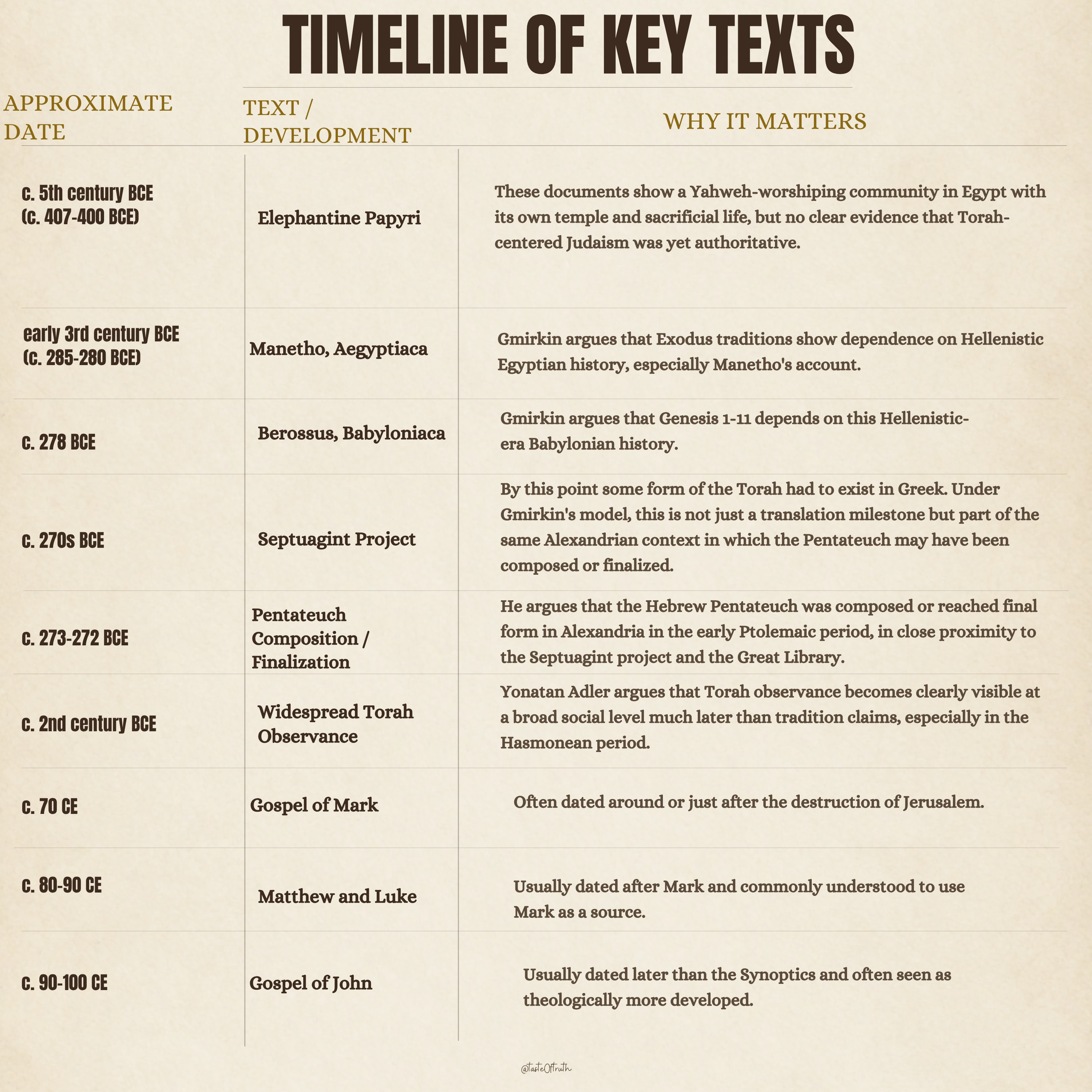
The implications of that compressed timeline are enormous.

The implications are enormous. If the Pentateuch reached final form around 273–272 BCE, and the Gospels were written between roughly 70 and 100 CE, then the scriptures supposedly being “fulfilled” by the Gospel writers may be only three or four centuries older than the Gospels themselves.

That does not make the connection less Jewish. It makes it look less like the unfolding of immemorial revelation and more like literary tradition building on literary tradition.

And once that compressed timeline is taken seriously, the next question is no longer simply how old the tradition was supposed to be. It is how sacred antiquity itself was made.
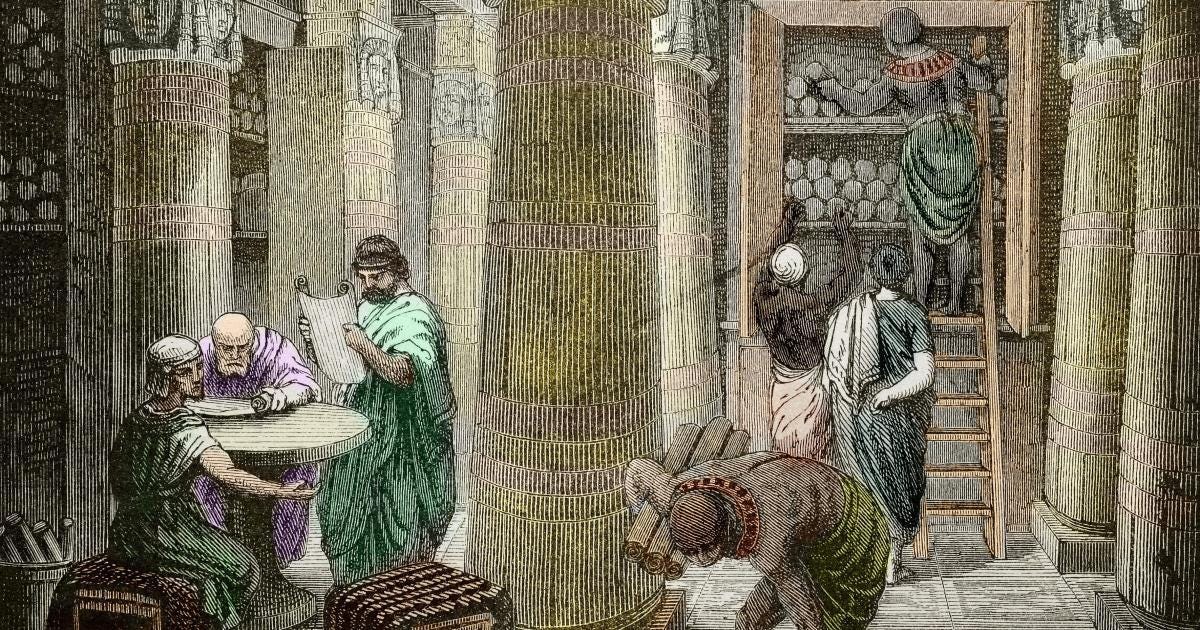

The Library of Alexandria in Egypt: the intellectual crossroads of the Hellenistic world, where texts were collected, translated, and rewritten. Building on comparative studies and source criticism, Russell Gmirkin argues that the Pentateuch may have taken shape in this environment in the third century BCE, drawing on Greek histories, legal traditions, and philosophical works.

From Failed Kingdom to Spiritual Messiah

This is the missing hinge. Jewish messianic hope did not arise in a vacuum. It was forged in the long shadow of conquest, exile, humiliation, and imperial domination. From Assyria and Babylon to the Greeks and Romans, Jewish life was repeatedly shaped by foreign rule. It is not difficult to see why restoration, divine justice, and the dream of an anointed deliverer became so central. A people under pressure will search its own sacred memory for the pattern of rescue.

By the first century, that hope had become unstable. Second Temple Judaism was not a unified religion serenely awaiting fulfillment. It was a fractured landscape of rival sects, competing scriptural interpretations, anti-Temple resentment, apocalyptic expectation, and bitter disagreement about where Israel had gone wrong. Some blamed foreign occupation on sin. Some blamed corrupt elites. Some rejected the legitimacy of the Temple leadership altogether. In that environment, scripture was not merely read. It was mined for survival strategies.

This is where Carrier’s point becomes useful. As he writes, “The traditional messianic hope (of a conclusive military victory over all of Israel’s neighbors) was a doomed hope, and that would have been obvious to at least some Jews.” A warrior-king who would visibly crush Rome was precisely the kind of messiah history kept refusing to produce. A spiritual messiah, by contrast, could not be falsified so easily. He could conquer Satan rather than Caesar, the heavens rather than the earth, sin rather than empire. Defeat could be reinterpreted as hidden victory. Political disappointment could be absorbed into myth.

That shift matters. A suffering, dying, or heavenly messiah fits prolonged subjugation far better than a triumphant Davidic conqueror who never arrives. Christianity did not solve the Roman problem by overthrowing Rome. It solved it by changing the terms of victory. The kingdom became “not of this world.” The struggle moved from flesh and blood to cosmic powers. The messiah no longer needed to raise an army from Jerusalem if he could instead be enthroned in heaven.

And that made Christianity exportable. The movement that emerged did not require Gentiles to become Jews in the full covenantal sense. It offered a way for Gentiles to worship the God of Israel without circumcision, kosher law, or full Torah observance. Acts 15 is the obvious flashpoint. The Jerusalem leadership approves Gentile inclusion through a reduced set of obligations, allowing the biblical framework to expand beyond ethnic Judaism without dissolving its theological core. The God remains the God of Israel. The scriptures remain Jewish scriptures. The messiah remains the Jewish messiah. What changes is access.

That is one of the most important transformations in religious history. Christianity became, in effect, Judaism for Gentiles: a way of universalizing Israel’s God, Israel’s scriptures, Israel’s messianic story, and Israel’s eschatological framework without requiring the nations to become Jews. The old covenantal architecture was not abandoned. It was scaled.

And once that is clear, the next question presses harder than ever. If this new messiah emerged from scriptural reinterpretation, apocalyptic disappointment, sectarian fragmentation, and theological adaptation to empire, then the issue is no longer merely what early Christians believed about him.

It is whether there was ever a stable historical figure there in the first place.

The Last Firewall: “But Surely Jesus Was Historical”

By this point in the argument, a familiar fallback usually appears. The miracles may be myth. The resurrection may be theology. The birth stories may be literary invention. The passion narrative may be scriptural construction. The speeches may be later compositions. The chronology may be artificial. Fine. Grant all that, people say. But surely there was still a man underneath it all.

I no longer accept that assumption, and I do not think it deserves to be treated as intellectually safe merely because it is familiar.

Once literary and theological construction has been conceded at nearly every level of the tradition, the so-called “historical Jesus” begins to look less like a demonstrated figure than like a residue, a placeholder left standing after everything obviously mythic has been stripped away. The problem is not that a historical core has been disproved in some crude, absolute sense. The problem is that it is constantly assumed, while the evidence for it remains astonishingly thin.

Where, exactly, is this man supposed to be found?

There is no contemporary, independent, non-Christian evidence for Jesus as a historical person. There is no inscription, no administrative record, no eyewitness account, no Roman report from his lifetime, no Jewish source from his lifetime, no archaeological evidence identifying him, no surviving text from anyone who actually met him. What we possess are Christian theological writings.

And our earliest source, Paul, does not give us a remembered Galilean teacher wandering around first-century Judea. He gives us a revealed, cosmic, scriptural Christ known through visions, revelation, scripture, death, resurrection, and heavenly significance. Paul does not preserve a stable earthly biography. He does not narrate Bethlehem, Nazareth, Galilee, Judas, Mary Magdalene at the tomb, Pilate’s trial scene, or the sermon material that later becomes central to the Gospel portrait. That absence is not a trivial inconvenience. It is a structural problem.

Even 2 Peter is revealing on this point. “For we did not follow cleverly devised myths when we made known to you the power and coming of our Lord Jesus Christ, but we were eyewitnesses of his majesty.” The denial is telling. It does not prove invention by itself, but it does show that early Christian claims could be heard as mythic, visionary, or constructed. And the response is instructive. The author does not answer by providing a grounded earthly biography. He answers with prophecy, revelation, glory, and Spirit-soaked authority.

The Gospels themselves do not rescue the situation. They are anonymous literary-theological compositions written decades after the alleged events, in Greek, through dense scriptural patterning. They do not read like independent eyewitness memory. They read like sacred narrative built from older texts, typology, apocalyptic expectation, and theological necessity.

The supposed external witnesses do not solve the problem. Josephus is late, textually disputed, and preserved through Christian transmission. Tacitus is later still and tells us, at most, what Christians in his own time believed about their origins. These are not contemporary confirmations of Jesus’ life. They are later references to a movement that already existed. They tell us Christianity happened. They do not securely tell us that the Gospel figure at its center was historical in the way readers are encouraged to imagine.

The same goes for the phrases in Paul that are endlessly hauled out as if they settle the matter. “Born of a woman,” “seed of David,” “brother of the Lord” — these are not granite biographical anchors. They can function as incarnation language, messianic credentialing, or intra-community title. They do not give us a recoverable historical Jesus standing solidly behind the later narratives. They give us phrases. The heavy lifting is done by prior belief.

This is why I reject the polite compromise that says, “Of course the Gospel Jesus is mythologized, but there must have been a real preacher behind him.” Must there? Why? Because modern scholars feel more respectable keeping one sandal planted on the ground? Because the imagination panics at the thought that the whole figure may be literary from the start? Because once the miracles, fulfillment scenes, speeches, chronology, passion details, and resurrection appearances are recognized as constructed, people still want one final reassuring object left?

To me, this often functions less like an argument than a psychological reflex.

And this is precisely where Gmirkin’s work ceases to be merely interesting and becomes a consistency test.

If we are willing to follow biblical minimalism when it exposes the Pentateuch as a late literary-theological construction, why should the inquiry suddenly stop at Christianity? If the Hebrew scriptures can be composed, adapted, borrowed, and projected backward into sacred antiquity, why is Jesus protected from the same analysis? Why is the critique allowed to dismantle Moses, law, covenant, and national memory, only to halt politely at the Messiah as if some invisible velvet rope had been lowered around him?

That exemption makes no sense.

Christianity does not escape the biblical matrix. It depends on it. It preserves the God of Israel, the prophets, the covenants, the messianic framework, the chosen-people logic, and the eschatological expectation that history moves toward divine judgment and final rule. Its dispute with Judaism is not over the structure. It is over who gets to occupy the central role within it. Christianity is not the grand liberation from the older framework that its admirers like to imagine. It is the sequel.

And once that is admitted, the next step is not radical at all. It is obvious.

If scripture can generate Moses, covenant, law, land, chosenness, and sacred national memory, then scripture can also generate Jesus, fulfillment, cross, resurrection, judgment, and cosmic kingship. If a literary-theological tradition can manufacture sacred antiquity, why should it suddenly lose that power when it reaches the first century? If the old stories can produce a founder, a people, a law, and a history, why should they not also produce a messiah?

Christianity does not begin, in our earliest sources, with a stable man later decorated with myth. It begins with a revealed Christ known through scripture and visions. The earthly biography comes later, and when it appears, it arrives already saturated with literary design.

If that is true, then the task is no longer to keep exhausting ink and paper trying to peel a “real Jesus” out of layers of literary construction. The more urgent question becomes: what were the earliest apostles, visionaries, and authors actually doing? What experiences did they think they were having? What apocalyptic expectations drove them? What rhetorical and mythical work were the later stories performing? Once the data about Jesus comes to us primarily through scripture, revelation, and literary invention rather than recent biography, the center of gravity shifts. The real subject is no longer a recoverable Galilean teacher hiding behind the text, but the motives, methods, and imaginative world of the people who produced the text.

The Gospel Jesus is not history remembered and then embellished. He is scripture personified, given narrative form, furnished with a recent setting, and made to walk through a world already prepared for him by text. At that point, Christianity begins to look less like a movement built around a misremembered man and more like a movement built around visionary claims, apocalyptic expectation, scriptural decoding, and later literary elaboration. What demands explanation is not how a historical teacher was gradually mythologized, but how a mythic and scriptural Christ was gradually narrativized.

That is the last firewall. Once readers are willing to concede literary construction everywhere else, Jesus becomes the one figure they are still expected to protect. Not because the evidence suddenly improves, but because the emotional and institutional cost of following the argument any further becomes too high. And if that protection finally collapses, then a great deal of Jesus studies will have to admit that it has been spending enormous effort on the wrong pursuit. The real work would no longer be reconstructing a man behind the myths, but reconstructing the interpretive practices, sectarian motives, visionary experiences, and literary intentions that produced the myth in the first place.

And that is exactly where Jan Assmann becomes useful.

The resistance here is not just intellectual. It is civilizational. By the time people reach Jesus, they are no longer defending one ancient figure among others. They are defending a memory-world: a moral vocabulary, a theory of suffering, a structure of hope, a story about history, and often the emotional architecture through which they understand themselves. That is why the argument suddenly feels so charged. It is no longer just about evidence. It is about what happens when literature hardens into memory and memory hardens into reality.


Mnemohistory: When Literature Becomes Memory

“Mnemohistory,” a term coined by Jan Assmann, refers not simply to the past, but to the way societies remember the past. That sounds academic. In practice, it is far more destabilizing than it first appears.

I was first introduced to Assmann’s work through my friend Brado, and once the idea clicked, a great deal of human behavior stopped looking mysterious. One of the hardest things to swallow is realizing how much of what people confidently call “history” is not history in the plain sense at all, but mnemohistory: emotionally charged civilizational storytelling repeated so often that it hardens into something psychologically untouchable.

A society does not merely pass down facts. It passes down stories about origins, suffering, enemies, rescue, chosenness, betrayal, exile, return, and destiny. Those stories do not simply describe the past. They train perception. They teach people what to love, what to fear, whom to trust, whom to blame, and what future to desire. After a while, people are no longer defending a memory. They are defending the world that memory built for them.

That is why historical arguments go feral so quickly. You are never just disputing an event. You are touching the memory structure through which a group recognizes itself. The Exodus is one of the clearest examples. It is not merely a story to be remembered, but a story about remembering: bondage, liberation, divine rescue, covenant, promised land. It turns memory into identity and identity into destiny. The past is ritualized so that it can keep governing the present.

This is also where Neil Van Leeuwen’s distinction between factual belief and religious credence becomes clarifying. A factual belief is supposed to track reality across contexts. Religious credence works differently. It behaves less like stable fact-tracking and more like an imaginative, identity-bound commitment activated in specific social and ritual settings. A church can gather in a gymnasium and everyone still knows they are sitting on bleachers under fluorescent lights. Yet within that setting, the space becomes sacred. The credence does not erase ordinary reality. It overlays it and reorganizes meaning.

That helps explain why apologetics so often feels impervious to evidence. It is not primarily a truth-seeking enterprise, but a credence-maintenance system. Doubt is framed as danger, questions are met with prefabricated responses, and rituals, narratives, and authorities work together to protect identity rather than expose it to risk. As Van Leeuwen argues, when an attitude is rooted in group identity, truth can easily take a back seat.

Once you see that, a great deal of Christian apologetics becomes easier to understand. Its stubbornness is not a bug. It is the design. It is not really trying to investigate whether the historical Jesus can bear the weight placed on him. It is trying to prevent the collapse of the cognitive and social world built around him.

That is why arguments about Jesus’ historicity so often feel like Groundhog Day. One side keeps asking what the evidence can actually support. The other keeps reasserting the figure as though familiarity itself were proof. By the time people reach Jesus, they are no longer just defending one ancient claim among others. They are defending a moral universe, a structure of consolation, a theory of suffering, a promise of justice, a spiritual identity, and often an entire social world.
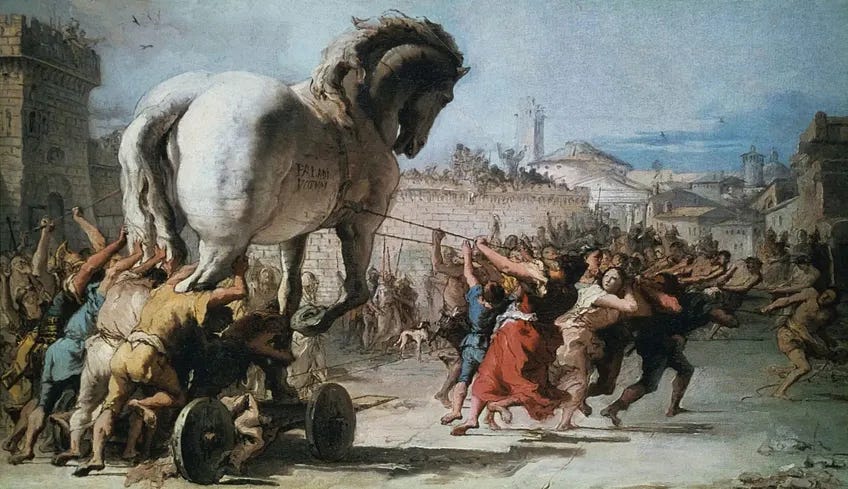
This is how Christianity became one of history’s most successful Trojan horses. It entered the Roman world clothed in humility, forgiveness, self-denial, and the sanctification of suffering. But that moral vocabulary was tailor-made for rule. A religion that teaches obedience, glorifies submission, and casts suffering as meaningful does not merely coexist with empire. It serves it. Constantine did not have to distort Christianity into something authoritarian. Its authoritarian potential was already there, waiting to be scaled.

The reason this matters is not that ancient people wrote sacred stories. Humans have always done that. The reason it matters is that some sacred stories do not stay on the page. They become political grammar. They teach civilizations how to imagine enemies, destiny, land, obedience, suffering, and war.

Modern Consequences: When Sacred Story Becomes Political Machinery

And this is where the conversation is no longer academic or safely trapped in antiquity.

In the modern West, and especially in the United States, support for Israel is often presented not merely as a strategic choice but as a moral and even spiritual duty. For millions of Christians, conflict in the Middle East is not simply geopolitics. It is part of a sacred script. Apocalyptic language has not remained tucked away in pulpits and prophecy conferences. It has drifted upward into policy, media, lobbying, diplomacy, and war.

And the problem is larger than American evangelicalism.

What is now sold as “Judeo-Christian friendship” increasingly functions as a transnational political package. Israel is marketed not simply as a nation-state but as a symbol of “the West,” biblical truth, anti-communism, anti-Islamism, anti-woke moral order, technological modernity, and civilizational resolve. That is why gatherings such as the JNS International Policy Summit in Jerusalem and the Judeo-Christian Zionist Congress matter. They are not quaint interfaith exercises. They are strategy rooms in which theology, media, diplomacy, philanthropy, and security discourse are braided together and sent back out as political messaging.
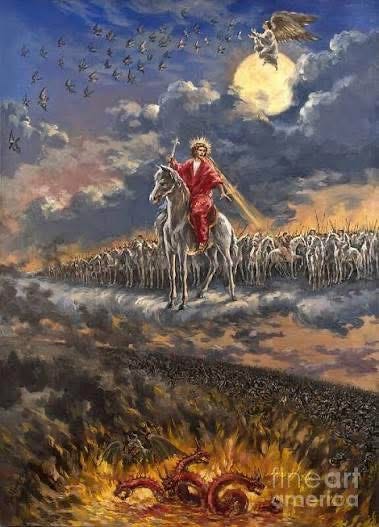
Latin America makes the pattern especially visible. As evangelical and Pentecostal Christianity grows as a political force, Israel is increasingly recoded as a sacred-political emblem of order, family values, anti-left resistance, and biblical destiny. The Isaac Accords are a perfect example. They are presented in the language of democratic values, innovation, security, and cooperation, but the emotional engine underneath them is older and hotter than that. Israel becomes a proof-text. Foreign policy becomes catechism by other means. The old Abrahamic machinery has simply evolved to speak the language of diplomacy, branding, and strategic partnership.

This is why the usual dismissals fail. We are not dealing with private religious sentiment lingering harmlessly at the margins. We are dealing with inherited apocalyptic structures that shape how nations imagine enemies, allies, legitimacy, time, and destiny. When political leaders, religious institutions, military personnel, media ecosystems, and ordinary citizens inherit stories about Israel, Iran, final battles, messiahs, Armageddon, and divine destiny, the line between prophecy and policy begins to blur. Conflict stops looking contingent. It starts looking prewritten.

The Cybernetic Culture Research Unit coined the term hyperstition for ideas that bring themselves into existence because people believe them strongly enough to act on them. That concept belongs here. A prophecy does not have to be true to become dangerous. It only has to recruit enough believers willing to organize behavior around it. Once that happens, old stories stop functioning as symbolic expectation and begin operating as strategic motivation.

Judaism, Christianity, and Islam all carry end-times narratives organized around the same theological lore: messianic figures, final conflict, cosmic judgment, and the Middle East.

A revealing example appears in the Qur’an’s treatment of Jesus. In Surah 3:45, Jesus is called al-Masīḥ — the Messiah. Islam does not use that title in the Christian sense: Jesus is not divine, not the Son of God, and not a crucified savior. But the messianic category remains.

The traditions are not identical, and their details often conflict sharply. But they share enough inherited narrative architecture to be significant here.

Maimonides makes the continuity unusually explicit, and his wording matters because he was no fringe oddball. He was one of the most important Jewish legal and philosophical authorities in history. In Mishneh Torah, Laws of Kings 11:4, frames Jesus and Muhammad as figures who, within divine providence, helped spread knowledge of messianic expectation and the God of Israel among the nations.

That is the blueprint: a shared body of theological lore, a transmitted narrative architecture that persists even as details are revised. Its logic is self-reinforcing. Prophecy validates scripture, scripture is reread as fulfilled prophecy, and each new crisis is folded back into the old frame as confirmation. The game works not because the texts reliably predict history, but because they are endlessly reinterpreted, retrofitted, and made to certify one another.

And that is why literary origins matter. If sacred histories are constructed, revised, projected backward, and then defended as untouchable truth, they do not remain harmless. They shape borders, justify wars, license alliances, sanctify violence, and train populations to see obedience as virtue and confrontation as destiny. The danger is not simply that people believe old stories. The danger is that these stories still command institutions, budgets, media systems, electorates, intelligence networks, and weapons.

Entire populations become characters in someone else’s sacred drama. Human beings become pieces on an apocalyptic chessboard. War ceases to be merely war. It becomes fulfillment.

Voltaire’s warning still bites: those who can make you believe absurdities can make you commit atrocities.

This is why I do what I do with such fierce passion. I believe the Abrahamic traditions are built on layers of fabrication, borrowed myths, retroactive claims to antiquity, and sacred stories whose origins are rarely examined with the seriousness they deserve. To me, it is an insult to wisdom, curiosity, and the pursuit of knowledge that so much of our culture remains shaped by narratives that are historically unstable, morally suspect, and fiercely defended as untouchable truth.

Questioning these stories is not hatred. It is not divisive. It is intellectual self-defense. It is spiritual self-defense. It is the work of reclaiming the human mind from inherited scripts that have too often taught people to sanctify obedience, suffering, conquest, and fear.

If sacred stories can shape civilizations, then examining them is not a niche academic exercise. It is necessary work.

Resources and Further Reading

Laurent Guyénot — “Russell Gmirkin and the Biblical Con” (Substack series)
Jan Assmann: Moses the Egyptian: The Memory of Egypt in Western Monotheism
Jan Assmann: Cultural Memory and Early Civilization
Richard B. Hays: Echoes of Scripture in the Gospels
Dale C. Allison Jr.: The New Moses: A Matthean Typology
E.P. Sanders: The Historical Figure of Jesus
Geza Vermes: Jesus the Jew
Bart D. Ehrman: Did Jesus Exist?
Yonatan Adler: The Origins of Judaism: An Archaeological-Historical Reappraisal
Russell Gmirkin: Berossus and Genesis, Manetho and Exodus
Russell Gmirkin: Plato and the Creation of the Hebrew Bible
Philippe Wajdenbaum: Argonauts of the Desert
Thomas L. Thompson: The Mythic Past
Philip R. Davies: In Search of “Ancient Israel”
Ze’ev Herzog: “Deconstructing the Walls of Jericho” (Haaretz, 1999)
David Skrbina: The Jesus Hoax
Richard Carrier: On the Historicity of Jesus, The Obsolete Paradigm of a Historical Jesus
Thomas L. Thompson and Thomas S. Verenna, eds., Is This Not the Carpenter? The Question of the Historicity of the Figure of Jesus

Adam Green: The Jesus Deception

Plato: Laws
Berossus: Babyloniaca (fragments)
Manetho: Aegyptiaca (fragments)
Oh, Woke Night: The New Sacred Beliefs of the Left

A Journey from Cults to Cancel Culture

What’s a racist, homophobe, sexist, bigot, or hater?
Apparently, anyone winning an argument with a liberal these days.

This year has been a wild ride. It began with me terrified of Satan, demons, and the Apocalypse, only to be ending it realizing the real danger isn’t hellfire—it’s the dogmas we create here on Earth. I didn’t grow up religious. In fact, I was raised secular, moved to Portland, OR after college, and could give you a TED Talk on progressive ideals. But then the pandemic hit, and somewhere between sourdough starters and doomscrolling, I found myself deep in the throes of fundamentalist Christianity.

That’s right—I started the year in a cult. It took months to deconstruct my faith, peel back the layers of fear-based control, and reimagine spirituality beyond the man-made monotheistic God I was sold. Yet, just as I was catching my breath, I noticed something chilling: the same patterns of zealotry I had fled were alive and well in the secular world.

Wokeness, with its sermons on systemic oppression and sacraments of allyship, has become the new secular religion. It demands unwavering faith, punishes heretics, and offers little room for redemption. And just like the fire-and-brimstone preachers I’d left behind, its most fervent believers seem less interested in dialogue and more intent on moral superiority.

Thought leaders like John McWhorter (Woke Racism), Yasmine Mohammed (Unveiled), and Douglas Murray (The Madness of Crowds) have drawn the same parallels: woke ideology mirrors religious extremism, complete with its own prophets and purges. And as someone who’s lived through both kinds of radicalism, I’m here to tell you—it’s not just unsettling; it’s dangerous.

How woke ideology mirrors religious extremism

In my podcast episode titled Faith Unbound: Navigating the Process of Disentanglement—or rather, Deconversion—I delved into my initial discovery of the Ex-evangelical Christian network. Back in February 2024, it felt like a lifeline, a safe haven for questioning my former religious beliefs. But after 6–7 months of immersion, patterns began to emerge. While the movement has been instrumental for many, I couldn’t ignore the creeping rigidity and tribalism. The hunger for certainty, the need to be on the “right side,” often replaces one dogma with another.

A striking example of this surfaced in Sexvangelicals’ episode How to Do Social Justice This Election Season Without Being a Jackass. They state:

“November’s presidential election offers a stark contrast between two types of government. One is democracy, built on the idea that many people have voices and, ideally, a government that serves a broad population. The other is autocracy, which operates on the belief that only a few have a say. Autocracies, like the 2024 Republican Party, often communicate through tactics such as blame, repression, and fear-mongering. In our latest episode, we discuss common communication strategies used by autocracies and how progressives and pro-democracy voters can avoid responding in ways that reinforce jackassdom.”

My response? “It’s not your enemies, it’s the system.” This narrative reduces a complex political landscape into a simplistic moral battle, with one side as saviors of democracy and the other as agents of autocracy. But this dichotomy misses the bigger picture. Who really shapes policy in America?

A 2014 study by Martin Gilens and Benjamin Page, often dubbed the “Oligarchy Study,” analyzed policy decisions across two decades. It revealed that elites and organized interest groups wield disproportionate influence over government decisions, while the average citizen’s impact is negligible. This stark reality transcends partisan politics and lays bare a systemic issue: power isn’t held by the left or right—it’s concentrated in the hands of those who profit from our division.

By framing every election as a battle for democracy versus tyranny, we’re falling into the trap of distraction. The real question isn’t, “Which side am I on?” but, “Who benefits from keeping me here, fighting, and not looking beyond this binary?”

The claim that the Republican Party represents an autocracy, as made by Sexvangelicals, is not just simplistic—it’s laughably disconnected from reality. To label one political party as authoritarian while ignoring the bipartisan complicity in maintaining an oligarchic system is either naïve or willfully ignorant.

Take the oligarchic nature of U.S. politics. Both major parties have long benefited from the concentration of wealth and power at the top. Consider the case of former House Speaker Nancy Pelosi, whose net worth has ballooned through stock trades that suspiciously align with her legislative influence. Or Barack Obama (Barry Soetoro), who went from public servant to multi-millionaire, cashing in on book deals, speaking engagements, and lucrative partnerships with Netflix after leaving office.

Then there’s President Joe Biden. While progressives champion him as a defender of democracy, his record is far from pristine. Most recently, questions surrounding his son Hunter Biden’s international business dealings—spanning over a decade—have drawn scrutiny. Hunter’s alleged tax evasion and unregistered foreign lobbying have raised concerns, yet he continues to receive leniency from the justice system.

This isn’t to excuse Republicans from criticism, but the suggestion that they alone embody authoritarian tendencies is absurd when Democrats have equally reaped the rewards of an oligarchic system. Both parties serve the interests of economic elites and organized lobbyists far more faithfully than they do the average voter.

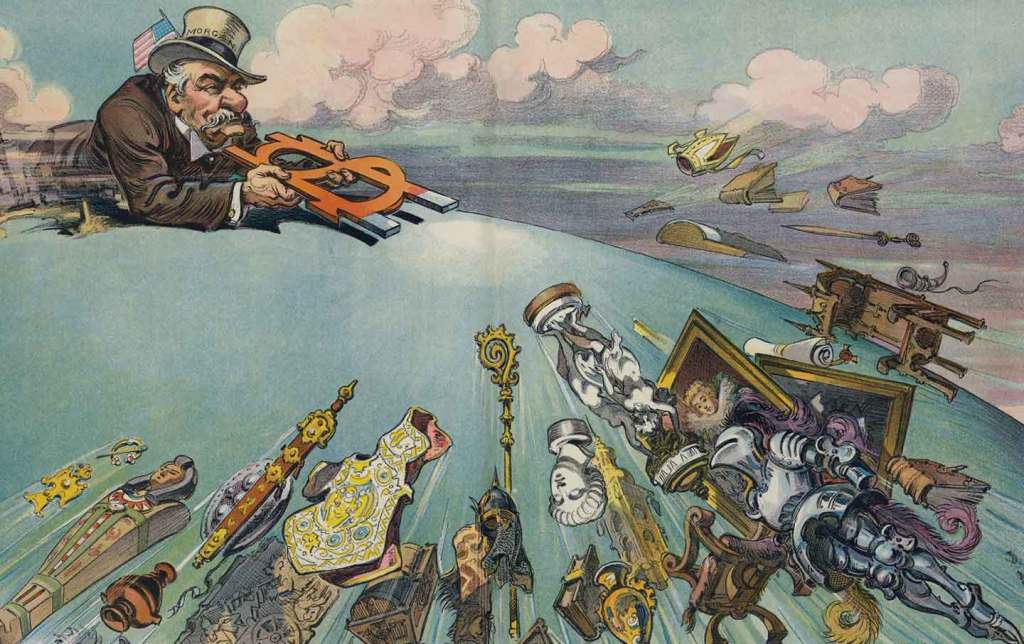
The Magnet, from Puck, 1911.(Udo J. Keppler / Library of Congress)

The bipartisan reality of the oligarchy dismantles the “democracy versus autocracy” narrative. For instance, the same Gilens and Page study cited earlier reveals that the preferences of the bottom 90% of income earners have statistically no impact on policy outcomes. Meanwhile, corporate donors and lobbying groups continue to hold sway over legislation regardless of which party is in power.

By framing Republicans as the sole villains in this story, Sexvangelicals perpetuates the kind of shallow tribalism that fuels division while leaving the real culprits—wealthy elites and corporate interests—untouched. The truth is that our democracy has been compromised for decades, and it will remain so until both sides of the aisle are held accountable for their role in preserving this oligarchic system.

Instead of directing anger at individuals or parties, we should be asking: How do we break free from a system designed to keep us pointing fingers at each other while those in power profit from the chaos?


From Crunchy Hippie to Conservative Christian Pipeline: My Journey Through the Radicalization Maze

Growing up secular, I’d have laughed at the idea that I would someday align with conservative or religious ideologies. Portland, Oregon, was my playground of progressive ideals—a city where conservatism felt like the root of every societal ill. But life has a way of challenging our convictions. Late in the pandemic, isolated and seeking meaning, I fell into an extreme version of Christianity. What I once dismissed as unthinkable became my new normal—until it wasn’t. Earlier this year, I deconstructed those beliefs, peeling back the layers of what led me there. Read/listen all about HERE!

Now, I can see the flaws and virtues of both worlds, which is why I find the frame of mind in deconstruction spaces puzzling. Many accounts misrepresent or overgeneralize conservatives—the very people they once were or grew up with—and cast the same stones they once had thrown at them.

It reminds me of this quote from the book The Righteous Mind:

“I had escaped from my prior partisan mind-set (reject first, ask rhetorical questions later) and began to think about liberal and conservative policies as manifestations of deeply conflicting but equally heartfelt visions of the good society. It felt good to be released from partisan anger. And once I was no longer angry, I was no longer committed to reaching the conclusion that righteous anger demands: we are right, they are wrong.”

Deconstructing past beliefs should be about nuance, growth, and intellectual humility—not trading one form of black-and-white thinking for another. When we fail to empathize with others’ moral frameworks, we miss out on a deeper understanding of the human experience.

Many in the ex-evangelical space now lean far left in their political views, where values like care, fairness, and empathy take center stage. Conservative values like loyalty and authority are dismissed or viewed with suspicion, fostering an “us vs. them” mentality.

This cultural shift into victimhood is explored further in The Coddling of the American Mind by Greg Lukianoff and Jonathan Haidt, who identify three “Great Untruths” that help explain these societal trends:

  • 1) “What doesn’t kill you makes you weaker,”
  • 2) “Always trust your feelings,”
  • 3) “Life is a battle between good people and evil people.”

These untruths, they argue, contribute to fragility, discourage critical thinking, and promote a tribal mentality—characteristics that are increasingly evident in both the deconstruction space and parts of the progressive left. The focus on emotional responses over rational thought and the growing divide between “us” and “them” only strengthens these dynamics. For a deeper dive into this.


Woke Ideology as a Secular Faith: A Closer Look

“What we’re seeing isn’t a quest for justice but a demand for unquestioning orthodoxy.”

John McWhorter argues that wokeism functions like a full-fledged religion. It provides a moral framework that mirrors traditional religious beliefs. Instead of concepts like original sin, wokeism offers “privilege,” positioning those with it as morally compromised. In place of rituals like prayer, adherents perform acts like confessing their biases. And, similar to the salvation promised in traditional religions, salvation in wokeism comes through activism and striving for societal change. He warns that its refusal to tolerate dissent turns it into a rigid orthodoxy rather than a genuine quest for justice. For many, including those who’ve deconstructed evangelical faith, this framework hits uncomfortably close to home.

Many of the individuals I met and conversed with who now identify as progressive or left leaning have simply exchanged the evangelical radicalism of their past for their new liberal beliefs. Social justice, in this sense, has become their new End Times—complete with the same apocalyptic fervor. And it’s painfully obvious.

Douglas Murray discusses this analysis further in The Madness of Crowds. He suggests that wokeism often serves as a substitute for religion in today’s secular world. As belief in traditional religions has waned, people have sought meaning elsewhere—and wokeism fills that void. It provides clear rules and a sense of belonging, but in doing so, it also shuts down open debate and nuanced conversation.

The New Authority: From Sky Daddy to State Agencies

A striking similarity between fundamentalist religion and woke ideology is the relentless worship of authority. For those who’ve left behind their “big sky daddy,” that void has been filled by institutions like the CDC, FDA, and government agencies. The pandemic demonstrated how blind faith can easily shift from divine to institutional.

This is where the religion of scientism enters the picture—where reason and science are elevated to the status of ultimate truth. Figures who present themselves as “experts” rely on surface-level expertise and selective data to craft narratives that appear authoritative, yet fail under scrutiny. They become the “fake intellectuals,” as Franklin O’Kanu calls them, feeding the cult of expertise while often lacking real intellectual rigor. In public health, this plays out with the “revolving door” between regulatory agencies and the pharmaceutical industry, which further complicates the narrative of impartiality.

The “revolving door” describes the flow of personnel between agencies like the CDC and the pharmaceutical industry. This cycle blurs the lines between public service and corporate interest, with former regulators influencing policies that benefit the very companies they once oversaw—creating a potential conflict of interest that’s staggering.

In this new system, the scientific establishment becomes the new authority—replacing the monotheistic idea of God with the “god” of reason and data. For those in the deconstruction space, this is a new form of dogma. It stifles curiosity, dismisses dissent, and discourages critical thinking—all in the name of progress. This mirrors the rigid certainty and tribalism found in the religious structures people sought to escape.

Worshipping “science” or blindly trusting clinical trials can be misleading. While clinical trials are seen as vital for medical progress, they are often heavily influenced by the pharmaceutical industry, which funds a vast majority of these trials. This creates a conflict of interest that can skew results and delay critical information about the risks of drugs. Examples like the Vioxx scandal, where a painkiller was marketed despite internal knowledge of its dangers, and the Tamiflu case, where the effectiveness of the drug was overstated, show how corporate interests can shape clinical trial outcomes. Clinical trials, while important, are not always as objective or transparent as they seem.

Empowering Dangerous Systems

Yasmine Mohammed’s Unveiled pushes the conversation even more, explaining how wokeism can actually empower authoritarian regimes. One key point she makes is how Western progressives, in the name of cultural relativism, avoid criticizing radical Islam. This gives a platform to extremist ideologies, which harms vulnerable groups like women and minorities. She argues,

“By shielding oppressive practices from scrutiny, wokeism betrays the very people it claims to protect.”

The binary “oppressor versus oppressed” narrative has become a staple of modern discourse, particularly within the context of the Israel-Palestine conflict. This oversimplified lens reduces complex geopolitical and historical realities to a stark dichotomy, fostering a dangerous environment where nuance is lost. It’s unnerving to see college students waving the flag of Palestine while simultaneously undermining U.S. monuments and values, while spreading fear mongering lies about Project 2025, and comparing Trump to Hitler. These contradictions are not only mind-numbing but also deeply troubling, signaling a shift toward ideological extremism that dismisses the complexities of any issue in favor of emotional, binary thinking.

Antisemitism has spiked globally after the October 7 attacks on Israel, but this tragic reality has also fueled the misuse of the term “antisemitism” to suppress valid critiques of Israeli policies. Labeling critics as antisemitic conflates political criticism with hate, shutting down meaningful dialogue essential to addressing the Israel-Palestine conflict’s complexities.

This approach mirrors patterns within woke ideology, where dissent is often silenced in the name of ideological purity. The weaponization of identity politics and accusations hinders nuanced discussions and reinforces systems of power, obstructing pathways to justice and true understanding.

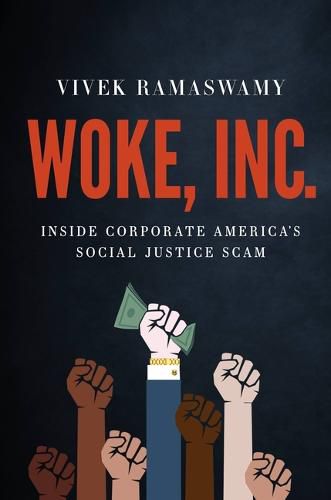
Vivek Ramaswamy, in Woke, Inc., adds another layer to this by discussing how authoritarian regimes like China’s Communist Party (CCP) take advantage of woke rhetoric. According to Ramaswamy, the CCP amplifies America’s internal divisions—often fueled by wokeism—to weaken the West. By focusing on these cultural rifts, China diverts attention from its own human rights abuses, all while strengthening its geopolitical position. This is part of China’s broader geopolitical strategy, which seeks to deflect attention from its authoritarian practices while exploiting divisions in Western societies.

This pattern can be seen as part of a broader effort to exploit the distractions created by cultural conflicts to enhance its influence in global organizations, trade, and international relations. For example, while Western nations debate internal social issues, China continues its expansive Belt and Road Initiative, which increases its influence across developing nations.

Heretics and the Price of Dissent

Religious movements and extreme ideologies, like wokeism, are often defined by their treatment of dissenters or heretics. Woke spaces, much like traditional religious communities, are quick to condemn those who question or criticize. Whether it’s TERFs (trans-exclusionary radical feminists) or former progressives like Yasmine Mohammed, those who dissent face severe backlash. This exclusionary behavior creates a stifling environment, not dissimilar to how traditional religions treat apostates. As Douglas Murray puts it, “The hatred reserved for heretics is often more intense than that directed at outsiders.”

But this dynamic is about more than just ideological rigidity—it’s also rooted in human psychology. The human brain is naturally drawn to certainty. When we embrace extreme ideologies, we seek control over our environment, which provides us a sense of stability and security. Research in neuroscience shows that when our beliefs are challenged, we experience discomfort, but defending them can trigger a dopamine response, rewarding us with a sense of control. The brain gets a “hit” from maintaining a sense of certainty, even if it’s at the cost of nuance or rational discussion.

In fact, this need for certainty can become addictive. The human brain often craves certainty in the form of binary thinking—where things are either completely right or completely wrong. This type of thinking is satisfying because it shields us from the cognitive dissonance that arises when faced with complexity or ambiguity. In the case of woke ideology, the call for absolute adherence to certain beliefs or behaviors is not just about social justice—it’s a way to satisfy that neurological need for control. When we feel justified in our beliefs and actions, we receive a dopamine “reward,” reinforcing the behavior.

This addiction to certainty can also be seen in extreme partisanship. The more entrenched we become in one side, the more our brain is rewarded for defending it. It’s why many people in the deconstruction space or on the political left engage in “mental gymnastics”—creating justifications and rationalizations that protect their beliefs. This isn’t just about ideology; it’s about keeping that dopamine reward flowing, keeping the illusion of control intact, and avoiding the discomfort of uncertainty.

The problem is this pattern of thinking isn’t conducive to open dialogue or true critical thinking. The “us vs. them” mentality becomes more pronounced, and the space for nuance, disagreement, and personal growth shrinks. Instead of engaging with opposing views, individuals self-censor or double down on their beliefs, further entrenched in the addictive cycle of ideological purity.

Moving Forward: A Balanced Approach

It’s important to note that this critique isn’t meant to dismiss the noble goals of social justice movements. Addressing inequality and harm in the world is crucial. But when these movements demand absolute loyalty and punish dissent, they lose sight of the very ideals they claim to uphold.

What do you guys think? How do you balance the pursuit of justice with the need for free thought?

As I discuss on my podcast, Taste of Truth Tuesdays, this tension is something I’ll be unpacking in more detail on Season 3 and particularly with Yasmine Mohammed. We’ll explore how wokeism intersects with radical Islam, how authoritarian regimes exploit these divisions, and how we can engage with these ideologies in a way that doesn’t undermine the values of justice, free thought, and humanity.


Join the Conversation

Do you see these religious parallels in woke ideology? Are they helpful in understanding these dynamics, or do they oversimplify the issue?

I’d love to hear your thoughts. Comment below, and don’t miss my podcast episode with Yasmine Mohammed dropping 2025 for a deeper dive into these topics! 

Exploring the Influence of Wellness and New Age Practices on Radicalization: Social Media’s Role Unveiled

🎙️ Welcome back to Taste0ftruth Tuesdays! Today, we’re hopping back on the wild ride through my personal journey of radicalization into high control religion and some eye-opening trends in today’s world. 🎢 Have you heard about the “crunchy hippie to alt-right pipeline”?

It’s this wild phenomenon where people who start off into alternative wellness and New Age practices slowly get exposed to far-right ideologies. Thanks to social media algorithms and some pretty persuasive influencers who mix wellness content with conspiracy theories and extreme views, this shift happens without you even noticing. 🌿➡️🛑

(Wellness box influencers 📦 anybody? 🤦🏻‍♀️)

So, what are the key points of this pipeline? How does social media fit into all this? 📱🤳We’re breaking it down in today’s episode, and trust me, you don’t want to miss it. Grab your headphones and let’s get into it! 🎧🔥

More info here! ⬇️

#podcast #cultawareness #brainwashing #crunchy #crunchymama #mlmbusiness #mlm #wellnessbox #scamalert #naturalremedies #holisitc #holisitchealth #integrativemedicine #christianity #endtimesprophecy #endtimes #deconstruction #deconstructingfaith #faith #spirituality #lawofattraction

From Conspiracy to Cult–How I was recruited into high control religion.

Hey hey Truth seekers! Welcome back to Taste of Truth Tuesdays. It’s Megan Leigh here, your host, and today we’re mixing up our usual bite-sized conversations on fitness, nutrition, mindset, and spirituality with something a little different. Buckle up, because we’re diving headfirst into the fascinating (and sometimes unsettling) world of end-times obsession and its connection to conspiracy theories.

This season, we’re all about unpacking trends, debunking myths, and delivering practical tips for living a healthier, more balanced life. But today, we’re taking a detour. Have you ever found yourself tumbling down the rabbit hole of radical ideologies or swept up in the fervor of religious conversion? If so, you’re not alone. In fact, during the pandemic, I saw firsthand how deeply conspiracies and religious movements can intertwine, drawing people in with promises of belonging, purpose, and empowerment.

Picture this: it’s the height of the pandemic. Isolation, uncertainty, and fear are at an all-time high. Suddenly, conspiracy theories start to feel less like fringe ideas and more like a secret society offering answers and clarity. For many, including myself, this seductive pull can lead straight into the arms of cult-like dynamics. Let’s rewind a bit so I can share my journey.

From 2016 to 2020, I was caught in the grip of multi-level marketing (MLM) schemes. You know the ones—alluring promises of financial freedom and community, flashy products that claim to change your life but often come with unrealistic body standards and toxic relationships with food. At the time, I was searching for connection and a sense of control, but instead, I found myself hooked like a fish on a line, reeled into a world that felt more like a trap the deeper I went.

Now it’s 2020, the beginning of the pandemic, and I found myself knee-deep in conspiracy theories faster than you can say “tin foil hat.” Before I knew it, I was lured into the clutches of a high-control religion, complete with charismatic leaders and an intense “us versus them” mentality. Are you buckled up, folks? Good, because we’re about to embark on a wild ride through the intriguing world of religious prophecy, biblical interpretations, and the end-times obsession that has everyone talking.

Imagine modern American culture—a melting pot of beliefs and ideologies—stirred up with a hefty dose of religious prophecy. For centuries, Christians have been captivated by the idea of the apocalypse, with theological discussions diving deep into the mysterious realms of biblical prophecy. But hold onto your hats, because things have kicked into high gear in recent times. By “recent,” I mean the last 100-200 years. Evangelical Christians, in particular, have cranked their confidence levels to 11, interpreting every hiccup in current events as a surefire sign that the end is near.

Let’s rewind a little to the 19th century. This was a time of upheaval and change, where discoveries in science and historical criticism were turning the world on its head. This era sparked a renewed fervor for interpreting religious texts through a literal lens—a trend that still echoes today. Critics of the literal hermeneutic argue that it can be overly simplistic and fails to account for the complexities and nuances of ancient texts. They contend that a purely literal interpretation can overlook metaphorical or symbolic meanings, cultural contexts, and the evolving nature of language over time. Additionally, critics suggest that such an approach may lead to fundamentalism and rigid dogmatism rather than a deeper understanding of the text.

The lie of Biblical Inerrancy

And let’s not forget about the false doctrine of biblical inerrancy, another shiny new invention from the 19th century. Rogers and McKim argued that the Princeton theologians of the 19th and early 20th centuries, most notably B.B. Warfield, created the doctrine of inerrancy, which teaches that the Bible is entirely without error in all that it affirms. This little gem teaches that the Bible is without error—a claim that’s got more holes than a block of Swiss cheese. By focusing so heavily on inerrancy, proponents often miss the deeper, more nuanced messages these texts are trying to convey. 🚩🚩Read my blog: Rethinking biblical inerrancy.

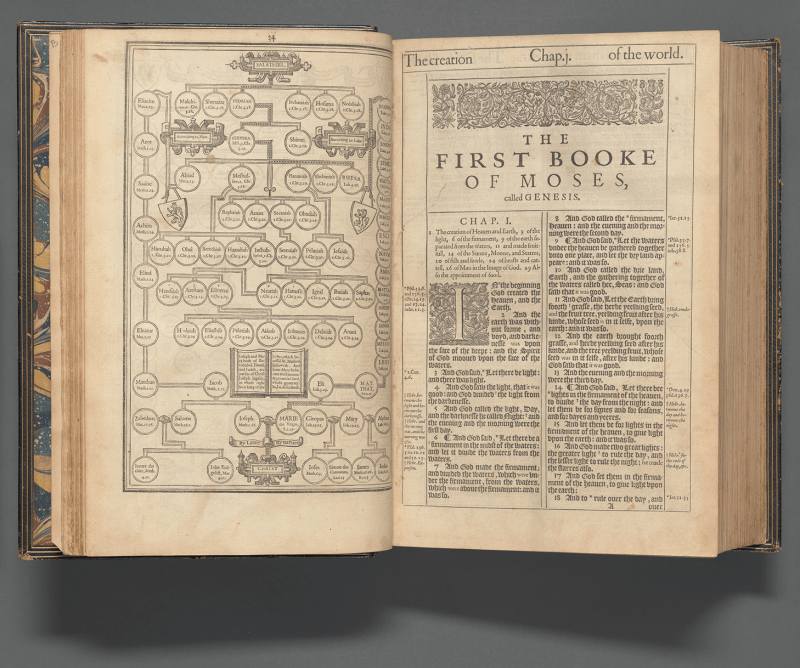
Since the publication of C.I. Scofield’s edition of the King James Version in 1909, premillennial dispensationalism came to dominate evangelical thought. Premillennial Dispensationalism is a Christian theological perspective that combines premillennialism with dispensationalism. Here’s a breakdown of the components:

Premillennialism: This is the belief that Jesus Christ will return to Earth before (pre-) a thousand-year period of peace and righteousness known as the Millennium. According to premillennialists, the Second Coming of Christ will precede this millennial reign, during which Christ will physically rule on Earth.

Dispensationalism: This is a framework for interpreting the Bible that divides history into distinct periods or “dispensations.” Each dispensation is seen as a specific way in which God interacts with humanity. Dispensationalists typically identify seven such periods, ranging from the time of innocence in the Garden of Eden to the millennial kingdom and beyond.

When combined, Premillennial Dispensationalism holds that:

  • We are currently living in a dispensation known as the “Church Age,” which will end with the rapture of the church, where believers are taken up to meet Christ in the air.
  • This event will be followed by a seven-year period of tribulation, characterized by widespread suffering and the rise of the Antichrist.
  • At the end of the tribulation, Christ will return to Earth to defeat the forces of evil in the Battle of Armageddon.
  • Following this, Christ will establish His millennial kingdom, reigning for a thousand years of peace and justice.
  • After the Millennium, there will be a final rebellion, followed by the last judgment and the creation of a new heaven and a new earth.

Influence on Evangelical and Fundamentalist Thought

Widespread Adoption: The Scofield Reference Bible became a staple in many evangelical and fundamentalist seminaries, churches, and homes, solidifying dispensationalism’s dominance in American evangelicalism.

Theological Education: Institutions such as Dallas Theological Seminary, including prominent figures like Dwight Pentecost and John F. Walvoord, and Moody Bible Institute became centers for dispensationalist teaching, training generations of pastors, theologians, and missionaries.

Popular Culture: Dispensationalist ideas have permeated popular culture, particularly through books like Hal Lindsey’s “The Late Great Planet Earth” and the “Left Behind” series by Tim LaHaye and Jerry B. Jenkins, which present fictionalized accounts of the rapture and tribulation period.

Political Influence: Dispensationalist beliefs have influenced the political views of many evangelicals, particularly regarding support for the state of Israel, which is seen as a fulfillment of biblical prophecy.

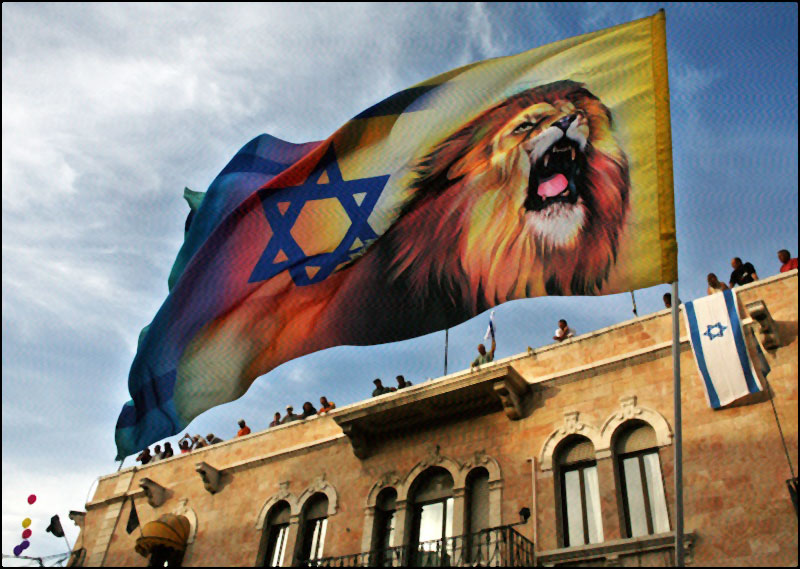
Dispensationalist beliefs have significantly influenced the political views of many evangelicals, particularly regarding support for the state of Israel, which is seen as a fulfillment of biblical prophecy. This theological perspective interprets the establishment of Israel in 1948 as a pivotal event in God’s prophetic timeline, intensifying evangelical support for Israel in both religious and political spheres.

Historical Context and Political Engagement

The late 20th century marked a shift from evangelical separatism to active political engagement, notably through the emergence of the Christian Right. Influential figures like Jerry Falwell, founder of the Moral Majority in 1979, emphasized unwavering support for Israel, viewing its existence as central to divine prophecy. Falwell’s trips to Israel, sponsored by the Israeli government, underscored this commitment, and he became a prominent advocate for pro-Israel U.S. foreign policy.

This period also saw the rise of dispensationalist literature, such as Hal Lindsey’s “The Late Great Planet Earth,” which linked contemporary events to biblical prophecies, further galvanizing evangelical support for Israel. Such works suggested that geopolitical developments involving Israel were direct fulfillments of scripture, reinforcing the theological imperative to support the Jewish state.

Contemporary Political Influence

In recent years, dispensationalist beliefs continue to shape evangelical political perspectives. Support for Israel remains a pivotal issue, often influencing voting patterns and policy advocacy. For instance, during the 2024 U.S. presidential election, evangelical leaders emphasized the importance of backing Israel, equating it with other core issues like pro-life advocacy. Ralph Reed, founder of the Faith and Freedom Coalition, stated that support for Israel rivals pro-life issues in evangelical importance, highlighting the enduring impact of dispensationalist theology on political priorities.

Furthermore, political figures have recognized and appealed to this demographic. Former President Donald Trump, for example, acknowledged the strong support for Israel among evangelical Christians, noting that “Christians love Israel more than Jews.” This statement reflects the deep-seated theological convictions that drive evangelical support for Israel, rooted in dispensationalist interpretations of biblical prophecy.

Critiques and Considerations

While dispensationalist-driven support for Israel is significant, it is not without controversy. My concern here is that such theological perspectives can lead to uncritical political alliances, potentially overlooking complex geopolitical realities and ethical considerations. The intertwining of religious prophecy with foreign policy raises questions about the implications of basing political decisions on specific theological interpretations.

Dispensationalist beliefs have profoundly influenced evangelical political views, particularly regarding support for Israel. This theological framework interprets the modern state of Israel as a fulfillment of biblical prophecy, driving political engagement and shaping policy advocacy among evangelicals.

One of the telltale signs of this belief is the date-setting historicism of figures like Hal Lindsey (which I mentioned on my testimony podcast episode, if you remember) who identify current events as the fulfillment of biblical prophecies. Here are a few more examples to watch out for! 🚩

  • David Jeremiah: Senior pastor of Shadow Mountain Community Church and author of several books on prophecy and end times, Jeremiah is a well-known contemporary dispensationalist preacher.
  • Chuck Missler: Chuck Missler (1934-2018) was a prominent figure in evangelical Christian circles, known for his deep and often controversial insights into biblical prophecy and end times. He was the founder of Koinonia House, a ministry dedicated to providing biblical teaching through various media.
    • Key Points about Chuck Missler:
      • Biblical Prophecy and Eschatology: Missler was well-known for his detailed studies on the book of Revelation and other prophetic scriptures.
      • Integration of Science and Scripture: He often discussed topics like quantum physics, extraterrestrial life, and the technological advancements in relation to biblical texts, aiming to show that modern science supports the Bible. 🚩
      • Controversial Views: His unconventional perspectives sometimes placed him on the fringes of mainstream evangelical thought, making him a figure of interest in conspiracy theory circles.
      • Promoted by Conspiracy Pages: Missler’s work has found a following among conspiracy theorist communities, including social media accounts like kingkat2.0.
  • Thomas Ice: Executive Director of the Pre-Trib Research Center, Ice is a prominent scholar and proponent of dispensational premillennialism.
  • Dave Hunt: Known for his critical works on Catholicism, mysticism, and New Age practices, Hunt was an influential figure in evangelical circles. His books often weave biblical prophecy with contemporary events, painting a picture of a world on the brink of divine judgment. 🚩 Hunt’s tendency to overemphasize conspiratorial themes, such as connections between the Vatican and global control, exemplifies the merging of theological and speculative narratives.

So, what’s the bottom line?

These ideologies offer a simplistic worldview where believers feel part of an exclusive group with hidden knowledge and a righteous mission from the big guy upstairs. Conspiracies can provide a framework for interpreting the world and understanding perceived injustices or challenges. They often exploit feelings of fear, uncertainty, and distrust, portraying religious or ideological adversaries as sinister forces working against the believer’s values.

As someone who has walked this path, I want to shed light on how these patterns develop and how we can break free from their grip. In today’s episode, we’ll explore the tactics that draw people into these worlds, the warning signs to watch for, and most importantly, how to reclaim your sense of self and create a balanced, fulfilling life beyond the allure of quick fixes and easy answers.

So, whether you’re curious about the psychology behind these phenomena or looking to make sense of your own experiences, this episode is for you. Together, we’ll unravel the mysteries of these enticing yet dangerous dynamics, one thread at a time.

Whether it’s an MLM, a conspiracy theory, or a religious sect, they all have one thing in common—they thrive on manipulation and exploitation. 😈 From emotional vulnerabilities to charismatic leaders who skillfully manipulate followers, these groups use tactics designed to control and exploit individuals for their own gain.

They often prey on people’s fears, insecurities, and desires for belonging, creating an environment where critical thinking is suppressed, and loyalty is demanded. By promising quick solutions, ultimate truths, or exclusive knowledge, they ensnare individuals into cycles of dependence and obedience, all while profiting from their followers’ dedication and sacrifice.

High control religions often employ a variety of psychological techniques that can be categorized as brainwashing to maintain control over their members. These methods can be understood through the following key strategies:

1. Isolation

  • Physical Isolation: Members may be encouraged or required to live in communal settings away from the outside world, reducing their exposure to differing opinions.
  • Social Isolation: Members are often discouraged from associating with outsiders, including family and friends who are not part of the religion, leading to an echo chamber effect.

2. Control of Information

  • Censorship: Access to information, particularly from outside sources, is heavily restricted. Members are often told to avoid books, websites, and media that might criticize or contradict the group’s teachings.
  • Propaganda: The group provides a controlled flow of information that consistently reinforces its beliefs and practices. This includes frequent meetings, sermons, and literature that promote the group’s ideology.

3. Induced Dependency

  • Emotional Dependency: The group fosters a sense of dependency by portraying itself as the sole source of spiritual truth and salvation. Leaving the group is often presented as leading to spiritual ruin or eternal damnation.
  • Economic Dependency: Members might be financially dependent on the group through communal living, shared resources, or expectations to donate a significant portion of their income.

4. Manipulation of Emotions

  • Fear and Guilt: High control religions often use fear tactics, such as threats of punishment, divine retribution, or ostracism, to maintain control. Guilt is also used to manipulate members into conforming to group norms and practices.
  • Love Bombing: New members often receive an overwhelming amount of attention and affection, creating a sense of belonging and making them more receptive to the group’s influence.

5. Cognitive Dissonance

  • Conflicting Information: The group may present conflicting doctrines or teachings that create cognitive dissonance. Members are then encouraged to resolve this dissonance by accepting the group’s explanation or by attributing any doubts to their own lack of faith or understanding.
  • Repetitive Messaging: Constant repetition of the group’s ideology helps to internalize beliefs, making it harder for members to question or think critically about them.

6. Control of the Environment

  • Regulation of Environment: The group regulates the environment of its members through strict schedules, rituals, and practices. This control extends to aspects of daily life, including diet, dress, sleep, and social interactions.
  • Totalist Doctrine: The group’s doctrine is presented as the absolute and only truth. Any dissent or deviation is harshly punished or suppressed.

7. Loss of Identity OR Identity Confusion

  • Role Confusion: Members are often given new identities or roles that are closely tied to the group’s ideology. This can include new names, titles, or responsibilities that align with the group’s goals.
  • Erosion of Personal Boundaries: Personal boundaries are often dissolved, with the group demanding complete loyalty and submission to its leaders and teachings.

8. Exploitation of Psychological Vulnerabilities

  • Targeting Vulnerable Individuals: High control religions often target individuals who are experiencing personal crises, loneliness, or seeking meaning in life. These individuals are more susceptible to the group’s message and control techniques.
  • Gradual Indoctrination: The process of indoctrination is typically gradual, starting with mild teachings and escalating to more extreme beliefs and practices as the member becomes more deeply involved.

By employing these techniques, high control religions can significantly influence and control their members’ thoughts, emotions, and behaviors, creating a closed system that is resistant to outside influence and critical thinking.

Are you prepared to continue unraveling the mysteries? Tune into this episode as we delve further into… exposing the Impact of social media on Recruitment and Manipulation. Until then, maintain your curiosity, embrace skepticism, and keep tuning in! 🎙️🔒

For a deeper understanding of brainwashing and related psychological manipulation techniques, you can explore a variety of resources spanning books, academic papers, and credible online articles. Here are some notable recommendations:

### Books
1. **”Thought Reform and the Psychology of Totalism” by Robert Jay Lifton**: This seminal work offers a detailed examination of brainwashing techniques used during the Chinese thought reform programs.
2. **”Cults in Our Midst: The Hidden Menace in Our Everyday Lives” by Margaret Thaler Singer and Janja Lalich**: This book provides insights into the psychological mechanisms of cults and brainwashing.
3. **”Influence: The Psychology of Persuasion” by Robert B. Cialdini**: While not exclusively about brainwashing, this book explores the principles of influence and manipulation.
4. **”Combatting Cult Mind Control” by Steven Hassan**: This book by a former cult member and mental health counselor offers practical advice and personal insights into the process of mind control and how to counter it.

### Academic Articles
1. **”Brainwashing: The Science of Thought Control” by Kathleen Taylor**: This article, and the book of the same name, delve into the scientific basis of brainwashing and its effects on the brain.
2. **”Psychological Coercion and Human Rights: Exploring the Notion of Brainwashing”**: Various academic journals explore the intersection of psychological coercion and human rights, providing theoretical and empirical insights.

### Online Resources
1. **The International Cultic Studies Association (ICSA)**: Their website offers a wealth of articles, research papers, and resources on brainwashing, mind control, and cultic studies.
2. **APA PsycNet**: The American Psychological Association’s database provides access to numerous scholarly articles on brainwashing and related topics.
3. **TED Talks and Documentaries**: Several TED Talks and documentaries explore the impact of psychological manipulation and brainwashing, offering both expert insights and personal stories.

By exploring these resources, you can gain a comprehensive understanding of the mechanisms, effects, and countermeasures related to brainwashing.

#Brainwashing #MindControl #Awareness #StayInformed #Psychology #CriticalThinking #HighControlReligion #CultAwareness #KnowledgeIsPower #deconstruction #deconstructioncommunity #faith #podcast #endtimesbeliefs #taste0ftruthtuesdays

Faith Unbound: Navigating the Process of Disentanglement

Deconstruction is a scary world, but it doesn’t have to be. Deconstruction does not have to mean deconverting. (But it might and that’s okay too! 😉)

The deconstruction of Christianity is something I’ve heard of since stepping into the world of theology, but I never thought I’d find myself smack dab in the middle of the movement.

Disentangling or Deconstruction is a phenomenon where individuals, often within the Christian faith, critically reevaluate their beliefs, doctrines, and practices. This process involves questioning and challenging long-held assumptions, teachings, and traditions within Christianity, with the goal of arriving at a more authentic and personally meaningful understanding of faith.

Apologetics like Alisha Childers, Mama bear Apologetics or pasters like John Mark Comer are doing piss-poor jobs articulating “why” we are deconstructing and it’s truly offensive and only adding more fuel for the fire.

Is deconstruction the enemy of Christianity like Alisa, Mama Bear Apologetics, and so many others assert? please read Liz Mall’s take on this……

or listen (click here!)

There were numerous aspects that led me to begin unraveling, the real smack upside the head, realizing I was within a spiritual abusive biblical counseling relationship and program, that led me to notice the brutal similarities of abuse within IHOPKC, the scandals within the Grace Community Church & ACBC Biblical/Nouthetic counseling….

Unveiling the Shadows: Exploring Abuse and Ideology in Religious Communities

  1. Introduction:
    • Introduction to the podcast episode’s theme of uncovering abuse and harmful ideologies within religious communities.
    • Brief overview of my entire faith journey to provide context on where we started, where we were, and how we got here.
    • Exploring the Gray Area: Between Cults and High-Control Environments
    • END TIMES OBSESSION–Prophecy Belief in modern American culture concludes that while Christian fascination with the end of the world has existed for a very long time, but only recently have evangelicals label contemporary events with great self-confidence as the fulfillment of biblical prophecies heralding the End of Time has been particularly intense. Since the publication of C.I. Scofield’s edition of the King James Version in 1909, premillennial dispensationalism came to dominate evangelical thought. Also known as Dispensationalism, which can be hard to define, but one of the telltale signs is the date setting historicism of those like Hal Lindsey which I mentioned on my testimony podcast, episode who identify current events as the fulfillment of biblical prophecies.
    • The rise of the Holiness movement, Pentecostalism and fundamentalism marked a monumental development in American Evangelicalism. While these three movements were never entirely aligned in view theology, very different, they share a stress on the dangers of the world, the comforts of separated piety, the centrality of evangelism, and an expectation of the End.
    • As I was isolated during 2020-2022, I believe the process of radicalization and conversion to religion often intertwines with the allure of conspiracies. As individuals seek answers to complex questions and meaning in their lives, they may become drawn to radical ideologies and conspiratorial narratives that promise a sense of belonging, purpose, and empowerment. These ideologies may offer a simplistic worldview where the believer is part of an exclusive group that possesses hidden knowledge and is tasked with a righteous mission.
    • Conspiracies can provide a framework for interpreting the world and understanding perceived injustices or challenges. They often exploit feelings of fear, uncertainty, and distrust, portraying religious or ideological adversaries as sinister forces working against the believer’s values and identity. In this context, religion may offer a sense of community, moral guidance, and a framework for understanding the world that resonates with the believer’s conspiratorial worldview. (However, it’s important to recognize that not all individuals who embrace radical conspiracies end up converting to religion, and vice versa. Each person’s journey is unique and influenced by a combination of personal experiences, psychological factors, social influences, and external circumstances. Additionally, the relationship between radicalization, conspiracies, and religion is complex and multifaceted, with many variables at play.)
    • Generation Joshua, often called “GenJ” by its members, is an American Christian fundamentalist youth organization founded in 2003 that aims to encourage youth participation in government, civics, and politics toward conservative Christian values. Paul and Morgan are Mad About Being in the Dugger Documentary | Tim Whitaker | The New Evangelicals
    • Dangers of the “Trad Wife” movement on Instagram
    • The doctrine of inerrancy is an innovation of the nineteenth century. Rogers and McKim argued that the Princeton theologians of the nineteenth and early twentieth centuries, most notably B.B. Warfield, created the doctrine of inerrancy, which teaches that the Bible is entirely without error in all that it affirms. I bet you didn’t know the FACT that the inerrancy of the Bible–the belief that the Bible is without error–is a contentious topic among mainstream Christianity! Check out this book Five Views on Biblical Inerrancy (Counterpoints: Bible and Theology) 
  2. Purity Culture:
  3. John MacArthur Situation:
    • Discuss the implications of John MacArthur’s involvement, ACBC and the potential harm caused by authoritarian leadership within religious organizations.
    • Discuss MacArthur’s dismissive response to Wendy’s accusations, the confrontation and revelation of Paul Guay’s abuse, GCC’s inadequate response to the abuse, MacArthur’s involvement and contradictory statements, MacArthur’s public shaming of Eileen Gray, the elders’ dismissal of Gray’s abuse allegations, David Gray’s conviction and MacArthur’s support, Alistair Begg’s controversial advice and MacArthur’s response, and the lack of accountability for MacArthur’s actions.
    • Explore various forms of abuse, including emotional, psychological, and spiritual, and the LACK OF ACCOUNTABILITY OR REFORM happening within churches and religious institutions.
    •  MacArthur’s views on slavery are HORRIFIC–listen here.
    • WHY IS IT protocol for the Church to Put a Marital Rape Victim under Church Discipline? Truly horrific protocols within the patriarchy.
  4. ACBC Biblical Counseling:
    • I was enrolled in Change that Sticks, an abusive ACBC biblical counseling program that stripped me of autonomy and treated any mental health condition as SIN that needed to be repented of, and not a real condition. Biblical counseling is dangerous, unethical and immoral.
    • Identification of manipulation and control tactics used in biblical counseling settings to exert emotional and psychological control over individuals.
    • We should consider the potential harms of relying solely on biblical counseling methods without considering professional mental health resources.
    • Call to action for religious leaders and communities to prioritize the safety and well-being of their members and address instances of abuse with transparency and accountability.
    • The key here for me to understand was that gravitating to fundamentalism after experiencing hyper-charismatic or the new age movement can make sense. Particularly during times of stress and uncertainty, we can gravitate towards the need for a sense of control & structure. The strict rules and structure create a perceived sense of safety, which is also another form of the prosperity gospel. Do these spiritual disciplines read the bible, pray, repent, etc for God’s blessing.  
  5. Mark Driscoll:
    • Overview of the rise and fall of Mark Driscoll, a controversial figure within evangelical Christianity.
    • Exploration of the allegations of abuse, authoritarian leadership, and ethical misconduct associated with Driscoll and his former church, Mars Hill Church.
    • Reflection on the lessons learned from the Mark Driscoll saga and the importance of holding religious leaders accountable for their actions.
  6. Learning more about Dominion theology & Christian nationalism. They are related but distinct movements within Christianity, both of which emphasize the idea of Christians playing a prominent role in shaping society and culture according to their religious beliefs. Prominent adherents of those ideologies include Calvinist Christian reconstructionism (Doug Wilson, Costi Hinn, John MacArthur, John Piper, Charlie Kirk) Charismatic and Pentecostal Kingdom Now theology, (7 Mountain Mandate) and the New Apostolic Reformation. How insane is it that this conservative group THRIVES on calling out “false Christians” and making a mockery of Pentecostals, while they are part of the very same theology, if not WORSE, because Council of Biblical Manhood and Womanhood/complementarianism is patriarchal and misogynistic at heart, and all of this is connected to the Lordship Salvation controversary (a rabbit hole you need to go down) and to my next point:

8. Critique of Nancy Pearcey’s book “Toxic War on Masculinity” and its assertions about masculinity and culture.:

  • Absence of evidence: The lack of empirical evidence to support the claims made in Pearcey’s book, particularly regarding the alleged “war on masculinity.” We should consider the potential consequences of promoting ideological narratives without empirical support.
  • Oversimplification of Gender Issues: Critics argue that Pearcey’s book oversimplifies complex gender issues by framing them as a “war on masculinity.” They suggest that this framing perpetuates a binary view of gender and fails to adequately address the diverse experiences and identities of individuals across the gender spectrum.
  • Perpetuating Gender Stereotypes: Critics contend that Pearcey’s characterization of masculinity as under attack reinforces traditional gender stereotypes and norms, which may contribute to harmful social expectations and restricts the freedom of individuals to express their gender identity authentically.
  • Lack of Intersectionality: Some critics argue that Pearcey’s analysis lacks intersectionality, as it fails to consider how factors such as race, class, sexuality, and disability intersect with gender to shape individuals’ experiences and social realities. This omission may result in a limited understanding of the complexity of gender dynamics.
  • Ideological Bias: Some critics suggest that Pearcey’s perspective reflects a conservative or right-wing ideological bias, as she tends to frame gender issues within a traditional Christian worldview. This ideological framing may alienate readers with different religious or philosophical beliefs and limit the book’s appeal to a narrow audience.
  • Nancy claimed in the book and on a podcast interview that women’s suffrage was a net loss!!!!! This is part of Dominion Theology

9. Right-Wing Fundamentalists aka Dominion Theology/Christian Nationalism

Key features of fundamentalism include:

•Literalism: Fundamentalists often interpret Scripture texts in a literal or strict manner

•Inerrancy: Fundamentalists typically uphold the belief in the inerrancy or infallibility of the Bible, viewing them as the ultimate authority in matters of faith and practice. Aka Biblicists

•Separatism: Fundamentalist movements may advocate for the separation of believers from secular society or from other religious groups deemed to be impure or heretical.

•Moral Conservatism: Fundamentalists often promote traditional moral values and social norms, opposing practices or lifestyles they perceive as contrary to their religious beliefs.

•Resistance to Change: Fundamentalists are often resistant to change and innovation within religious doctrine or practice, viewing such developments as departures from true faith.

•Intolerance: Fundamentalist groups may exhibit intolerance towards individuals or groups who hold different beliefs or lifestyles, leading to discrimination, ostracism, or even violence towards perceived “outsiders” or “heretics.”

•Dogmatism: Fundamentalist ideology tends to promote rigid, inflexible interpretations of religious or ideological principles, discouraging questioning or exploration of alternative viewpoints.

•Anti-intellectualism: Critics argue that fundamentalism can foster distrust or rejection of scientific knowledge, critical thinking, and scholarly inquiry, leading to a rejection of evidence-based reasoning and a preference for simplistic, black-and-white thinking

The concept of scriptural inerrancy is often associated with conservative or evangelical Christian theology, although it has been debated and interpreted in various ways within different theological traditions. Some theologians interpret inerrancy to apply only to matters of faith and salvation, while others extend it to include historical, scientific, and other factual claims made in the Bible.

Critics of scriptural inerrancy argue that it imposes an unrealistic and untenable standard on the Bible, ignoring the complexities of its historical and cultural context and the presence of apparent contradictions or discrepancies within its texts. They suggest that a more nuanced understanding of the Bible’s inspiration and authority is needed, one that acknowledges the human element in its composition and transmission.

Literary Criticism: Critics may approach the Bible as a collection of literary texts rather than divinely inspired scripture. They may analyze its narratives, poetry, and teachings from a literary perspective, examining themes, motifs, and rhetorical techniques without presupposing divine authorship or inspiration.

The authorship of 1 Timothy, along with 2 Timothy and Titus, is a subject of debate among scholars. While traditional Christian belief attributes these letters to the Apostle Paul, some scholars raise questions about their authorship based on linguistic, stylistic, and theological differences compared to Paul’s undisputed letters. These scholars suggest that these letters may have been written by a disciple of Paul or someone writing in Paul’s name.

-Linguistic and Stylistic Differences: Some scholars note that the vocabulary, grammar, and writing style of 1 Timothy differ from Paul’s undisputed letters. They argue that these differences suggest a different authorship or a later date of composition.

-Theological and Ecclesiastical Developments: Critics point out that 1 Timothy contains instructions regarding church organization, leadership qualifications, and pastoral duties that reflect a more developed ecclesiastical structure than was present in Paul’s time. They suggest that these developments may indicate a later date of composition.

  • Analysis of prominent figures in evangelical Christianity, including David Wolcott, Alisha Childers, and Frank Turek, who are associated with right-wing fundamentalism.
  • Exploration of the ideological positions and beliefs espoused by these individuals and their impact on religious communities.
  • Consideration of the broader societal implications of right-wing fundamentalism and its intersection with politics and religion.

10. Conclusion:

  • Summary of emphasizing the importance of addressing abuse and harmful ideologies within religious communities.
  • Call to action for listeners to advocate for accountability and transparency within religious institutions and to support survivors of abuse.
  • Invitation for further exploration of these topics in future episodes of the podcast.

RESOURCES MENTIONED:

Other resources to consider:

  • “The Bible Tells Me So: Why Defending Scripture Has Made Us Unable to Read It” by Peter Enns – Enns explores how the Bible’s messy and diverse nature challenges the notion of inerrancy and offers a fresh perspective on understanding its authority.
  • “Inspiration and Incarnation: Evangelicals and the Problem of the Old Testament” by Peter Enns – In this book, Enns examines the challenges of reconciling modern scholarship with traditional views of biblical inerrancy, particularly in relation to the Old Testament.
  • “The Evolution of Adam: What the Bible Does and Doesn’t Say about Human Origins” by Peter Enns – Enns explores the theological implications of accepting scientific understandings of human origins while still affirming the authority of scripture.
  • “Misquoting Jesus: The Story Behind Who Changed the Bible and Why” by Bart D. Ehrman – Ehrman explores the history of textual transmission and the ways in which scribes, translators, and interpreters have shaped the biblical text over time, challenging the notion of a perfectly preserved and inerrant scripture.
  • “The Human Faces of God: What Scripture Reveals When It Gets God Wrong (and Why Inerrancy Tries to Hide It)” by Thom Stark – Stark examines instances in the Bible where God’s character and actions appear contradictory or morally problematic, challenging the idea of a completely consistent and inerrant scripture.
  •  The Invention of the Inspired Text: Philological Windows on the Theopneustia of Scripture by John C. Poirier 
  • The Creationist–The evolution of Scientific Creationism by Ronald L. Numbers
  • The Story of Christian Theology by Roger E Olson
  • The Essentials of Christian thought by Olson