Social Miasm Theory: The Biology of a Sick Society

How Suppression Shapes Our Bodies, Minds, and the World We Live In

Hey hey, Welcome back! Today’s episode connects beautifully to something many of you resonated with in my earlier show, Science or Stagnation? The Risk of Unquestioned Paradigms. In that episode, we talked about scientism… not science itself, but the dogma that forms around certain scientific ideas.

That’s why voices like Rupert Sheldrake have always fascinated me. Sheldrake, for those unfamiliar, isn’t a fringe crank. He’s a Cambridge-trained biologist who dared to question what he calls the “ten dogmas of modern science”: that nature is mechanical, that the mind is only the brain, that the laws of nature are fixed, that free will is an illusion, and so on.

When he presented these questions in a TED Talk, it struck such a nerve that the talk was quietly taken down. And that raised an obvious question: If the ideas are so wrong… why not let them stand and fall on their own? Why censor them unless they hit something tender? All of this sets the stage for today’s conversation.

Because the theory we’re exploring, Social Miasm Theory, fits right inside that tension between mainstream assumptions and the alternative frameworks we often dismiss too quickly.

My friend Stephinity Salazar just published a fascinating piece of research arguing that suppression  (of toxins, trauma, emotion, and truth) is the root pattern underlying both chronic illness and our wider social dysfunction. It’s a theory that steps outside the materialist worldview and challenges the mechanistic lens we’ve all been taught to see through.

You don’t have to agree with everything…that’s not the goal here.

What I love is the chance to explore, to ask good questions, and to stay grounded while examining ideas that stretch our understanding.

This blog is your guide to the episode, so you can track the concepts, explore the references, and dive deeper while you listen.

So, with that, let’s dive into Social Miasm Theory: what it is, where it comes from, why it matters, and what it might reveal about the world we’re living in today.


What Are Miasms, Anyway?

To anchor our conversation, Stephinity starts by grounding the concept of “miasms” in its homeopathic roots. Historically, Samuel Hahnemann (founder of homeopathy) described three primary miasms:

  • Psora, linked to scabies or skin conditions
  • Syphilis, associated with destructive disease
  • Sycosis, with overgrowth and tissue proliferation

Since then, the theory has expanded. Many modern homeopaths now talk about five chronic miasms, adding:

These aren’t diseases…they’re patterns. A kind of “constitutional operating system.”

Stephinity’s work takes this a step further:
If individuals can have miasms, societies can too.

It’s an ambitious idea. And honestly? A compelling one when you consider what’s happening globally.


Why Social Miasm Theory Matters

Suppression doesn’t stay in the body. It echoes outward into culture, politics, ecosystems, and collective behavior.

She breaks suppression into four types:

  • Toxic suppression: chemicals, pollutants, EMFs, pathogens
  • Emotional suppression: trauma, grief, stress, unprocessed feelings
  • Psychological suppression: denial, cognitive dissonance, fear-driven attachment to ideology
  • Truth suppression: propaganda, censorship, disinformation, scientific dogma

When these forms of suppression accumulate, she argues, they create a “social miasm”: a pathological field that shapes everything from public health to political polarization.

Even if you don’t buy every mechanism she proposes, the metaphor works. And the patterns are hard to ignore.

Evidence, Epistemology, and Skeptics: What Counts as “Real”?

This is the part my skeptical listeners will perk up for.

In the interview, I asked her the question I knew many of you were thinking:
“How do you define evidence within this framework? What would you want skeptical listeners to understand before judging it?”

Stephinity argues that the modern scientific lens is too narrow. Not wrong—but incomplete. She sees value in:

  • case studies
  • pattern recognition
  • field effects
  • resonance models
  • historical cycles
  • experiential knowledge

Whether or not you agree, her challenge to mechanistic materialism echoes thinkers like Rupert Sheldrake, IONS researchers, and even physicists questioning entropic cosmology.

And she’s not claiming this replaces science. She’s asking what science misses when it refuses to look beyond the physical.


Suppression: What It Looks Like in Real Life

Stephinity’s paper covers how suppression shows up on multiple levels. Here are a few examples she explores:

  • Overuse of symptom-suppressive medications
  • Emotional avoidance that pushes trauma deeper
  • Social pressure to conform
  • Institutional censorship
  • Environmental toxins that overwhelm the microbiome
  • Radiation and electromagnetic exposures

She frames suppression as a terrain problem: when the body or society becomes too acidic, stressed, toxic, or disconnected, the miasm takes root.

This is where we start to cross into the biological, psychological, and social layers—which brings us to one of my favorite parts of her theory.


Neuroparasitology: When Parasites Change Behavior

The concept of a new branch of science of neuroparasitology. Study of the influence of parasites on the activity of the brain.

This is the section I teased in the podcast because it’s both wild and backed by real research.

Stephinity references studies showing that parasites can alter host behavior not just in insects or rodents, but potentially in humans too. Her paper cites examples like helminths, nematodes, mycotoxins, and other microorganisms (McAuliffe, 2016; Colaiacovo, 2021). These organisms are everywhere, not just in “developing countries” (Yu, 2010).

Researchers have documented parasites that:

  • influence mood
  • shift risk-taking
  • modify sexual attraction
  • impair impulse control
  • change social patterns

This is what Dawkins called the extended phenotype (1982): the parasite’s genes expressing themselves through the host’s behavior. Neuroparasitologists Hughes & Libersat (2019) and Johnson (2020) have shown how certain infections can shift personality traits in specific, predictable ways.

Stephinity ties this into terrain: parasites tend to thrive in acidic, low-oxygen, stressed, radiative environments (Clark, 1995; Tennant, 2013; Cerecedes, 2015). In her view, chronic suppression creates exactly that kind of internal ecosystem.

But there’s another layer here. One that isn’t biological at all.

This is where philosopher Daniel Dennett enters the chat.

In Breaking the Spell, Dennett describes “parasites of the mind”: ideas that spread not because they’re true, but because they’re incredibly good at hijacking human psychology. These mental parasites latch onto our cognitive wiring the same way biological one’s latch onto the nervous system. They survive by exploiting:

  • fear
  • moral impulses
  • tribal loyalty
  • the desire for certainty
  • social pressure
  • existential insecurity

According to Dennett, religious dogmas, conspiracy theories, and ideological extremes act like memetic parasites: they replicate by using us, encouraging us to host them and then pass them on.

In other words: not all parasites live in the gut. Some live in the mind.

And…..we even discussed how billionaire Les Wexner once publicly described having a “dybbuk spirit” a kind of parasitic entity in Jewish folklore known for influencing personality. Whether symbolic or literal, the analogy fits. 🫨😮

Her point is simple:
When the terrain is weak, something else will fill the space.

Whether that “something” is trauma, ideology, toxicity, or a literal parasite… the mechanism rhymes.


Collective Delusion and Mass Psychosis
Drawing on Jung and Dostoevsky, Stephinity explores the idea that societies can enter “psychic epidemics.”

You’ve seen this. We all have…

The last decade has been a masterclass in how fear, propaganda, and emotional suppression create predictable patterns:

  • polarization
  • tribal thinking
  • moral panics
  • ideological possession
  • scapegoating
  • censorship
  • intolerance of nuance

She argues these are symptoms of a cultural miasm—not failures of individual character.

Whether you lean left, right, or somewhere out in the wilderness, you’ve likely felt this rising tension. And it’s hard not to see how unresolved collective trauma feeds it.


COVID as a Catalyst: What the Pandemic Revealed

Another part of her paper dives into how the pandemic brought hidden patterns to the surface.

Some of her claims are controversial, especially around EMFs and environmental co-factors. In the episode, we unpack these with curiosity, not blind acceptance.

Her larger point is that COVID exposed:

  • institutional fragility
  • scientific gatekeeping
  • public distrust
  • trauma-based responses
  • authoritarian overreach
  • the psychological toll of suppression

Whether you agree with the specific mechanisms or not, the last decade made one thing undeniable: something in our social terrain is deeply dysregulated.


8. Healing Forward: What Do We Do With All This?

If suppression drives miasms, then healing means unsuppressing. Gently, not chaotically.

Stephinity suggests practices like:

  • emotional honesty
  • reconnecting with nature
  • releasing stored trauma
  • nutritional and detoxification support
  • reducing exposure to chronic stressors
  • restoring community and meaning
  • opening space for spiritual or intuitive insight

She’s not prescribing a protocol. She’s offering a map.

The destination is what the Greeks called sophrosyne: a state of balance between wisdom and sanity. Not blissful ignorance, not paranoid awakening. Just grounded clarity.

And I think we could all use a bit more of that.


Key Evidence and Arguments

  • Stephinity critiques materialist science, calling out what she terms “entropic cosmology.” She argues that by assuming nature is strictly mechanistic, mainstream science misses field-based phenomena, non-local consciousness, and deeper systemic patterns.
  • She draws on historical and homeopathic sources (Hahnemann, Kent) to build her theoretical foundation but also argues for newer forms of evidence: resonance, case studies, and pattern detection in social systems.
  • On the environmental front, she explores links between toxins, EMF / 5G, biotech, and chronic disease, not just as correlation, but as evidence of suppression dynamics.
  • Psychologically, she invokes mass delusion or collective repression (drawing from Jung, Dostoevsky) seeing societal crises as expressions of buried collective shadow.
  • Ultimately, her call to action isn’t just for individual healing, but for systemic awakening: more transparency, alternative medical paradigms, and restored connection with nature.

Why This Matters for You

Even if homeopathy isn’t your jam, Social Miasm Theory offers a metaphor (and potentially a map) for understanding how inner repression becomes external crisis. If this episode does anything, I hope it gives you permission to look a little closer and question the stuff we’re told not to touch.


📚 Want to Dig Deeper?

Stephinity’s website: YOUR BODY ELECTRIC YOUR BODY ELECTRIC | FULL SPECTRUM FREQUENCY MEDICINE Find her on Linkden , Instagram and Substack

Social Miasm Theory: Revisiting Chronic Illness from a Meta-Perspective of Suppression [truncated version, pre-JSE publishing]

Official published paper

Miasms

https://www.unifiedfield.info/

https://corbettreport.com/how-the-government-manufactured-covid-consent

Use of fear to control behavior in Covid crisis was ‘totalitarian’, admit scientists
Fit for TV: How Screens, Diet Culture, and Reality Shows Rewire Our Bodies and Minds

When Willpower Isn’t Enough: Media, Metabolism, and the Myth of Transformation

You’re listening to Taste Test Thursdays–a space for the deep dives, the passion projects, and the stories that didn’t quite fit the main course. Today, we’re hitting pause on the intense spiritual and political conversations we usually have to focus on something just as powerful: how technology shapes our bodies, minds, and behaviors. We’ll be unpacking a recent Netflix documentary that highlights research and concepts we’ve explored before, shining a light on the subtle ways screens and media program us and why it matters more than ever.

I have a confession: I watched The Biggest Loser. Yep. Cringe, right? Back in 2008, when I was just starting to seriously focus on personal training (I got my first certification in 2006 but really leaned in around 2008), this show was everywhere. It was intense, dramatic, and promised transformation—a visual fairy tale of sweat, willpower, and discipline.

Looking back now, it’s so painfully cringe, but I wasn’t alone. Millions of people were glued to the screens, absorbing what the show told us about health, fat loss, and success. And the new Netflix documentary Fit for TV doesn’t hold back. It exposes the extreme, sometimes illegal methods used to push contestants: caffeine pills given by Jillian Michaels, emotional manipulation, extreme exercise protocols, and food as a weapon. Watching it now, I can see how this programming shaped not just contestants, but an entire generation of viewers—including me.


Screens Aren’t Just Entertainment

Laura Dodsworth nails it in Free Your Mind:

“Television is relaxing, but it also is a source of direct and indirect propaganda. It shapes your perception of reality. What’s more, you’re more likely to be ‘programmed’ by the programming when you are relaxed.”

This is key. Television isn’t just a casual distraction. It teaches, it socializes, and it normalizes behavior. A study by Lowery & DeFleur (Milestones in Mass Communication Research, 1988) called TV a “major source of observational learning.” Millions of people aren’t just entertained—they’re learning what’s normal, acceptable, and desirable.

Dodsworth also warns:

“Screens do not show the world; they obscure. The television screen erects visual screens in our mind and constructs a fake reality that obscures the truth.”

And that’s exactly what reality diet shows did. They created a distorted narrative: extreme restriction and punishment equals success. If you just try harder, work longer, and push further, your body will cooperate. Except, biology doesn’t work like that.


The Metabolic Reality

Let’s dig into the science. The Netflix documentary Fit for TV references the infamous Biggest Loser study, which tracked contestants years after the show ended. Here’s what happened:

  • Contestants followed extreme protocols: ~1,200 calories a day, 90–120 minutes of intense daily exercise (sometimes up to 5–8 hours), and “Franken-foods” like fat-free cheese or energy drinks.
  • They lost massive amounts of weight on TV. Dramatic, visible transformations. Ratings gold.
  • Six years later, researchers checked back: most regained ~70% of the weight. But the real kicker? Their resting metabolic rate (RMR) was still burning 700 fewer calories per day than baseline—500 calories less than expected based on regained body weight.
  • In everyday terms? Imagine you used to burn 2,000 calories a day just by living. After extreme dieting, your body was burning only 1,300–1,500 calories a day, even though you weighed almost the same. That’s like your body suddenly deciding it needs to hold on to every calorie, making it much harder to lose weight—or even maintain it—no matter how “good” you eat or how much you exercise.

This is huge. It shows extreme dieting doesn’t just fail long-term; it fundamentally rewires your metabolism.

Why?

  • Leptin crash: The hormone that tells your brain you’re full plummeted during the show. After weight regain, leptin rebounded, but RMR didn’t. Normally, these rise and fall together—but the link was broken.
  • Loss of lean mass: Contestants lost ~25 pounds of muscle. Regaining some of it didn’t restore metabolic function.
  • Hormonal havoc: Chronic calorie deficits and overtraining disrupted thyroid, reproductive, and adrenal hormones. Weight loss resistance, missed periods, hair loss, and constant cold are all part of the aftermath.

Put bluntly: your body is not passive. Extreme dieting triggers survival mode, conserving energy, increasing hunger, and slowing metabolism.

Read more:


Personal Lessons: Living It

I know this from my own experience. Between May 2017 and October 2018, I competed in four bodybuilding competitions. I didn’t prioritize recovery or hormone balance, and I pushed my body way too hard. The metabolic consequences? Echoes of the Biggest Loser study:

  • Slowed metabolism after prep phases.
  • Hormonal swings that made maintaining progress harder.
  • Mental fatigue and burnout from extreme restriction and exercise.

Diet culture and TV had me convinced that suffering = transformation. But biology doesn’t care about your willpower. Extreme restriction is coercion, not empowerment.

Read more:


From Digital Screens to Unrealistic Bodies

This isn’t just a TV problem. The same mechanisms appear in social media fitness culture, or “fitspiration.” In a previous podcast and blog, From Diary Entries to Digital Screens: How Beauty Ideals and Sexualization Have Transformed Over Time, we discussed the dangerous myth: hard work guarantees results.

Fitness influencers, trainers, and the “no excuses” culture sell the illusion that discipline alone equals success. Consistency and proper nutrition matter—but genetics set the foundation. Ignoring this truth fuels:

  • Unrealistic expectations: People blame themselves when they don’t achieve Instagram-worthy physiques.
  • Overtraining & injury: Chasing impossible ideals leads to chronic injuries and burnout.
  • Disordered eating & supplement abuse: Extreme diets, excessive protein, or PEDs are often used to push past natural limits.

The industry keeps genetics under wraps because the truth doesn’t sell. Expensive programs, supplement stacks, and influencer promises rely on people believing they can “buy” someone else’s results. Many extreme physiques are genetically gifted and often enhanced, yet presented as sheer willpower. The result? A culture of self-blame and impossible standards.


Fitspiration and Self-Objectification

The 2023 study in Computers in Human Behavior found that exposure to fitspiration content increases body dissatisfaction, especially among women who already struggle with self-image. Fitspo encourages the internalized gaze that John Berger described in Ways of Seeing:

“A woman must continually watch herself. She is almost continually accompanied by her own image of herself… she comes to consider the surveyor and the surveyed within her as the two constituent yet always distinct elements of her identity as a woman.”

One part of a woman is constantly judging her body; the other exists as a reflection of an ideal. Fitness becomes performative, not functional. Anxiety, depression, disordered eating, and self-objectification follow. Fitness culture no longer focuses on strength or health—it’s about performing an idealized body for an audience.


The Dangerous Pipeline: Fitspo to Porn Culture

This extends further. Fitspiration primes women to see themselves as objects, which feeds directly into broader sexualization. Porn culture and the sex industry reinforce the same dynamic: self-worth tied to appearance, desire, and external validation. Consider these stats:

  • Over 134,000 porn site visits per minute globally.
  • 88% of porn scenes contain physical aggression, 49% verbal aggression, with women overwhelmingly targeted (Bridges et al., 2010).
  • Most youth are exposed to pornography between ages 11–13 (Wright et al., 2021).
  • 91.5% of men and 60.2% of women report watching porn monthly (Solano, Eaton, & O’Leary, 2020).

Fitspiration teaches the same objectification: value is appearance-dependent. Social media and reality TV prime us to obsess over performance and image, extending beyond fitness into sexualization and body commodification.

Read more:

Netflix Documentary: The Dark Side

Fit for TV exposes just how far the show went:

  • Contestants were given illegal caffeine pills to keep energy up.
  • Trainers manipulated emotions for drama—heightened stress, shame, and competitiveness.
  • Food was weaponized—rationed, withheld, or turned into rewards/punishments.
  • Exercise protocols weren’t just intense—they were unsafe, designed to produce dramatic visuals for the camera.

The documentary also makes it clear: these methods weren’t isolated incidents. They were systemic, part of a machine that broadcasts propaganda as entertainment.


The Bigger Picture: Propaganda, Screens, and Social Conditioning

Dodsworth again:

“Watching TV encourages normative behavior.”

Shows like The Biggest Loser don’t just affect contestants—they socialize an audience. Millions of viewers internalize: “Success = willpower + suffering + restriction.” Social media amplifies this further, nudging us constantly toward behaviors dictated by advertisers, algorithms, and curated narratives.

George Orwell imagined a world of compulsory screens in 1984. We aren’t there yet—but screens still shape behavior, expectations, and self-perception.

The good news? Unlike Orwell’s telescreens, we can turn off our TVs. We can watch critically. We can question the values being sold to us. Dodsworth reminds us:

“Fortunately for us, we can turn off our television and we should.”


Breaking Free

Here’s the takeaway for me—and for anyone navigating diet culture and fitness media:

  1. Watch critically: Ask, “What is this really teaching me?”
  2. Respect biology: Your body fights extreme restriction—it’s not lazy or weak.
  3. Pause before you absorb: Screens are powerful teachers, but you have the final say.

The bigger question isn’t just “What should I eat?” or “How should I train?” It’s:

Who’s controlling the story my mind is telling me, and who benefits from it?

Reality shows like The Biggest Loser and even social media feeds are not neutral. They are propaganda machines—wrapped in entertainment, designed to manipulate perception, reward suffering, and sell ideals that are biologically unsafe.

I’ve lived some of those lessons firsthand. The scars aren’t just physical—they’re mental, hormonal, and metabolic. But the first step to freedom is seeing the screen for what it really is, turning it off, and reclaiming control over your body, mind, and reality.

Thank you for taking the time to read/listen!

🙏 Please help this podcast reach a larger audience in hope to edify & encourage others! To do so: leave a 5⭐️ review and send it to a friend! Thank you for listening! I’d love to hear from you, find me on Instagram!⁠⁠⁠ @taste0ftruth⁠⁠⁠ , @megan_mefit , ⁠⁠⁠ Pinterest! ⁠⁠ ⁠ Substack and on X! 

Until then, maintain your curiosity, embrace skepticism, and keep tuning in! 🎙️🔒

🆕🆕This collection includes books that have deeply influenced my thinking, challenged my assumptions, and shaped my content. ⁠Book Recommendations – Taste0ftruth Tuesdays

Move More, Eat Less? The Lie That Won’t Die

The Fatal Flaws of Calories In Calories Out and the Metabolism Model That Could Change Everything

Alright, let’s talk about the four most useless words in the history of weight loss advice: ‘Just eat less, move more.’ You’ve heard it, I’ve heard it, and if this phrase actually worked the way people think it does, we wouldn’t have skyrocketing rates of obesity, metabolic dysfunction, and entire industries built around yo-yo dieting. But here’s the kicker—it sounds logical. Simple math, right? Calories in, calories out. Except the human body is not a bank account; it’s a biological orchestra, and the way we process energy is more like a symphony than a spreadsheet.

We’ve already tackled the oversimplified calorie-counting dogma in our Science Dogma episode, and we’ve explored how perception alone—like believing a milkshake is ‘indulgent’—can literally alter our hormonal response. That’s not woo-woo, that’s science. But today, we’re going deeper. Because beyond the CICO model, beyond the calorie obsession, there’s a much bigger, messier, and more fascinating reality about metabolism, obesity, and why diet advice keeps failing people.

And I know what some of you might be thinking—‘But Megan, are you saying calories don’t matter?’ No. I’m saying they don’t tell the whole story. The way we eat, when we eat, why we eat, our hormones, stress levels, metabolic adaptations, even our past dieting history—all of it plays into how our body responds to food.

So as we close out Season 3 of Taste of Truth Tuesday, I want to leave you with something foundational. Not another diet trend. Not another oversimplified soundbite. But a real, nuanced conversation about what actually influences metabolism, weight loss, and why some of the most popular strategies—like keto, intermittent fasting, and calorie counting—work for some people but absolutely wreck others.

And here’s the disclaimer—I’m not an advocate for low-carb dieting in general, especially as someone who’s recovered from disordered eating. But my guest today? He eats low-carb and keto. And here’s what I respect—he’s not dogmatic about it. He understands that the real answer to health and weight loss isn’t found in any one-size-fits-all approach. It’s about bio-individuality.

So grab your coffee, take a deep breath, and get ready to rethink everything you thought you knew about metabolism. Let’s do this.


The calorie, as a unit of measurement, has a fascinating history that ties directly into the calories in, calories out (CICO) debate. While many assume the calorie has always been the standard for measuring food energy, its adoption in nutrition is relatively recent and shaped by shifts in scientific understanding, industry influence, and public health narratives.

The Origin of the Calorie

The concept of the calorie originated in physics, not nutrition. In the early 19th century, Nicolas Clément, a French chemist, introduced the term calorie as a measure of heat energy. By the late 1800s, scientists like Wilbur Olin Atwater adapted this concept to human metabolism, conducting bomb calorimeter experiments to determine how much energy food provided when burned. Atwater’s Physiological Fuel Values established the foundation for modern caloric values assigned to macronutrients (fat = 9 kcal/g, carbohydrates and protein = 4 kcal/g, alcohol = 7 kcal/g).
The Rise of Caloric Nutrition

By the early 20th century, calories became central to dietary guidelines, especially in public health efforts to address malnutrition. During both World Wars, governments used calorie counts to ration food efficiently. However, as food abundance grew, the focus shifted from ensuring sufficient calorie intake to preventing excess, paving the way for weight-focused dietary interventions.

CICO and the Simplification of Weight Loss

The calories in, calories out model became dominant in the mid-20th century, driven by research showing that weight loss or gain depended on energy balance. The First Law of Thermodynamics—energy cannot be created or destroyed, only transformed—was applied to human metabolism, reinforcing the idea that a calorie surplus leads to weight gain and a deficit to weight loss.

This framework became the foundation of mainstream diet advice, but it often overlooked complexities such as:

  • Hormonal influences (e.g., insulin, leptin, ghrelin)
  • Metabolic adaptation (how bodies adjust to calorie deficits)
  • The thermic effect of food (protein takes more energy to digest than fat or carbs)
  • Gut microbiome effects on calorie absorption
  • Psychological and behavioral aspects of eating

Criticism and the Evolution of the Debate

By the late 20th century, challenges to strict CICO thinking emerged. Researchers in endocrinology and metabolism, such as Dr. Robert Lustig and Dr. David Ludwig, highlighted that not all calories affect the body in the same way—insulin regulation, macronutrient composition, and food quality play crucial roles.

Low-carb and ketogenic diet advocates argued that carbohydrate restriction, not just calorie restriction, was key to weight management due to its impact on insulin and fat storage.

I personally think, it’s not just carbs or calories doing this. There are at least 42 factors that impact blood sugar and metabolism. This is something I’ve worked to educate my audience on for years. Carbs are just one piece of the puzzle. Stress, sleep, gut microbiome, meal timing, inflammation, hormonal balance—all of these influence the body’s metabolic “terrain.”

Where Are We Now?

Today, the calorie remains a useful measure, but the conversation has expanded beyond simple energy balance. Researchers acknowledge that while calories matter, factors like food quality, hormonal responses, and individual metabolic differences significantly impact how the body processes energy. The debate now leans toward a more nuanced view.


Now, let’s talk about why this matters.

Today, I’m joined by Adam Kosloff, an author and researcher who isn’t afraid to challenge conventional wisdom—especially when it comes to obesity and metabolism. A Substack post of his, A Righteous Assault on the Absolute Worst Idea in the History of Science, takes a sledgehammer to the dominant ‘calories in, calories out’ model, aka Move More, Eat Less? The Lie That Won’t Die, arguing that our understanding of fat storage is fundamentally broken. Instead, he presents a revolutionary new framework—the Farmer Model—that redefines how we think about metabolism, obesity, and weight loss.

For years, the dominant narrative around weight loss has been depressingly simple: “move more, eat less.” This slogan has been drilled into us by dietitians, doctors, and fitness gurus as if it were an unshakable law of physics. But if it were that simple, why has metabolic disease skyrocketed despite more people tracking their calories and increasing exercise?

Adam challenges the traditional CICO (calories in, calories out) model, not just by saying it’s wrong, but by arguing it is catastrophically misleading. His Farmer Model reframes obesity and metabolic dysfunction as a landscape issue rather than a simple calorie balance equation.

Think of your metabolism like farmland. The most obvious disruptor might be “acid rain”—high-carb, sweet, ultra-processed foods that erode the topsoil, flood the land, and cause metabolic damage (fat storage, inflammation, insulin spikes). But not all disruptions look like a storm.

Sometimes, the changes are more insidious. Maybe those daily lattes weren’t a flood but a subtle shift in the terrain, like over-fertilizing a field. Too much of a good thing, whether dairy proteins or artificial sweeteners, can nudge the metabolic landscape in a way that leads to dysfunction over time.

And here’s the kicker: It’s not just carbs or calories doing this. There are at least 42 factors that impact blood sugar and metabolism. This is something I’ve worked to educate my audience on for years. Carbs are just one piece of the puzzle. Stress, sleep, gut microbiome, meal timing, inflammation, hormonal balance—all of these influence the body’s metabolic “terrain.”

Adam’s latest Substack post, 10 Smackdowns That Lay Waste to CICO, was an absolute banger. The line “Gaze upon these arguments, ye mighty gym bros, and despair…” had me cackling. But beyond the sass, the research was rock solid. In our conversation, we break down some of the most devastating smackdowns against CICO and discuss which ones tend to make the most die-hard calorie counters short-circuit.

The takeaway? The “move more, eat less” doctrine is outdated and incomplete. It’s time for a more sophisticated conversation about metabolism that acknowledges the complexity of the human body rather than reducing it to a basic math equation.

LINKS

Science or Stagnation? The Risk of Unquestioned Paradigms – The first episode we challenged calories in, calories out (CICO) & mention Germ theory vs Terrain theory

The Farmer vs. The Banker

10 Smackdowns that lay waste to CICO

3 Times I Gained Weight on Keto

Gary Taubes Substack articles

Emotional Hijacks & Nutritional Hacks: Unveiling the🧠Amygdala’s Secrets ⁠

The Dissolution of the Nutrition Science Initiative

Obesity and Starvation Found Together

The Influence of Religious Movements on Nutrition

Why Challenging Beliefs Feels Like a Personal Attack—And Why It Shouldn’t

The Biggest Loser Study-The metabolic consequences of extreme dieting & the weight gain rebound effect

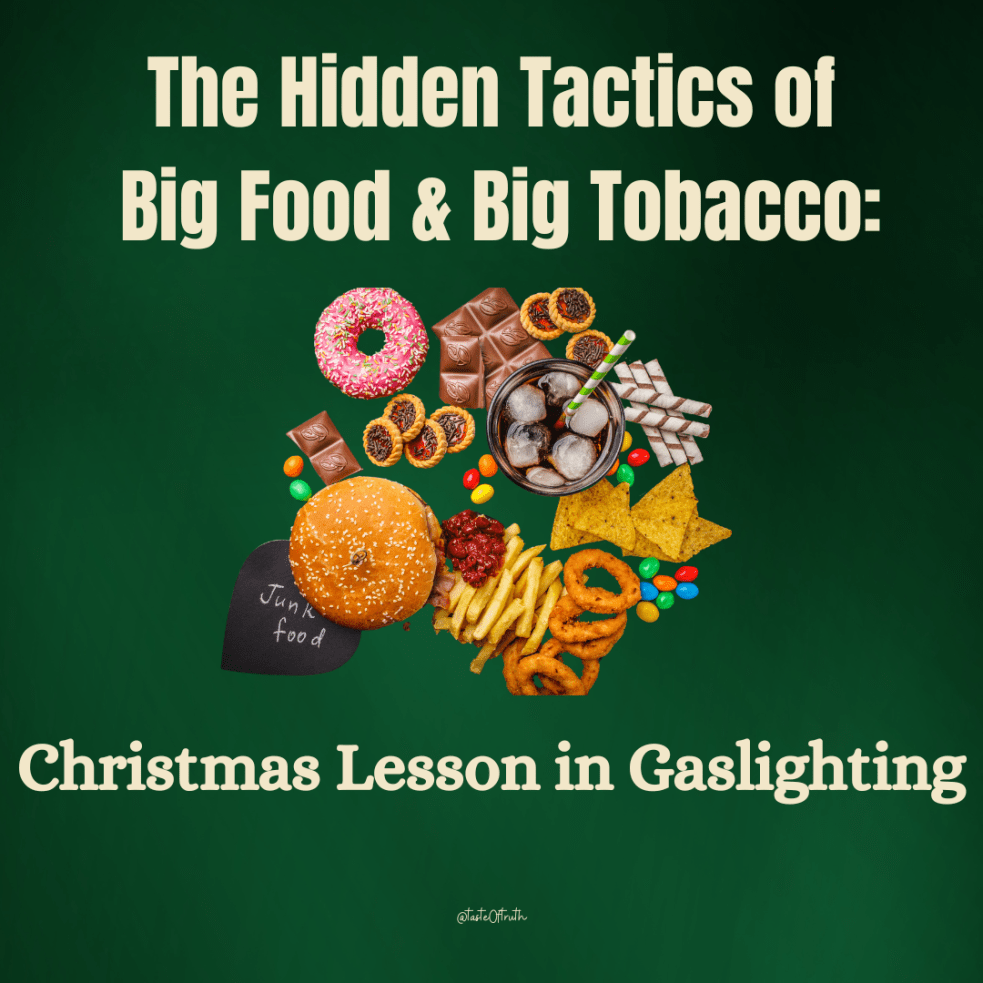
The Hidden Tactics of Big Food and Big Tobacco

A Christmas Lesson in Gaslighting

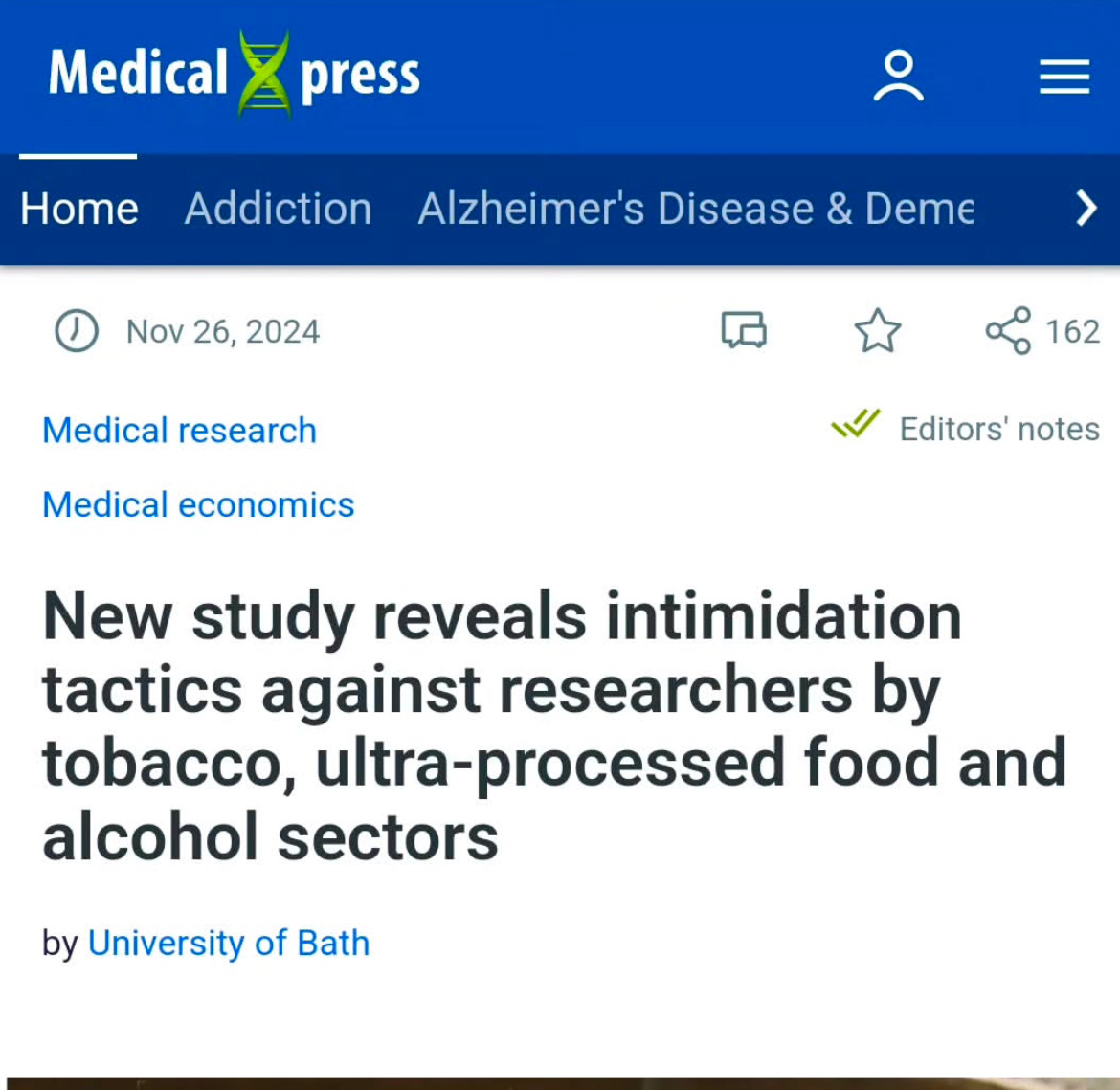
As we gather around our holiday tables, indulging in sweet treats and sipping warm drinks, there’s something deeply unsettling happening behind the scenes of what we consume every day. A recent study has revealed something I find all too familiar: intimidation tactics used by industries like Big Tobacco, ultra-processed food companies, and alcohol sectors to bully and silence researchers, whistleblowers, and anyone challenging their agenda.

These industries have a long history of using misinformation, manufactured doubt, and emotional manipulation to protect their profits—and it’s not just limited to public health campaigns. This plays out in everyday conversations, too. It’s a pattern that many of us have experienced firsthand, especially those who advocate for healthier lifestyles and more transparency in what we put in our bodies.


A Christmas Paradox: Big Food’s Gaslighting & the Anti-MLM Pushback

This tactic—used by Big Food to discredit critics—reminds me of the way people are shamed or bullied for questioning processed foods or advocating for healthier diets. If you’ve ever pointed out the risks of sugary snacks or fast food, you’ve probably been labeled an extremist, a health-obsessed “wellness warrior,” or worse, a “purity culture” advocate. I can’t help but feel this is just another form of gaslighting, where we’re told that it’s worse to worry about the ingredients in our food than it is to consume those ingredients, even if they are known to contribute to chronic health conditions.

Ironically, this kind of manipulation is the same strategy Big Tobacco used for decades to muddy the waters around the health risks of smoking. And now, ultra-processed food companies are doing the same thing—distracting us from the very real, documented consequences of a poor diet.


Why We Need to Trust Ourselves, Not the Experts

What frustrates me is how the anti-MLM community often jumps on wellness advocates who want to clean up their diets for health reasons. While I agree that MLMs are a breeding ground for manipulation, this should not mean we ignore the very real need to question the food industry’s stranglehold on our diets and health. It’s vital to recognize that not all experts have your best interests at heart. Many of the mainstream recommendations we’re told to follow come from organizations or industries with questionable motives—whether it’s Big Pharma, Big Food, or Big Tobacco. These same industries have a long history of misleading the public, and many of their experts are bought and paid for by corporate interests.

Wanting to improve your diet to manage or reverse chronic health conditions shouldn’t be dismissed as obsessive or extreme. It’s a rational, self-preserving choice that empowers you to take control of your health, even when the mainstream narrative tells you otherwise.


Unwrapping the Truth This Holiday Season

This holiday season, let’s unwrap a new perspective: critical thinking over consumerism, authenticity over convenience, and self-empowerment over external pressures. It’s time we stop letting industries dictate our health choices and start reclaiming agency in what we put into our bodies.

If you’ve ever been gaslighted for your food choices, or made to feel like you’re ‘too much’ for caring about your health, know you’re not alone. The more we learn about these intimidation tactics, the better equipped we’ll be to call them out.

As we approach the new year, let’s challenge the status quo—questioning not just what’s on our plates, but the motives of the systems that feed us.

Mastering Stress Management for a Balanced Life

Let’s talk about stress, baby! The holiday season is here, and so is the pressure—family obligations, shopping, cooking, and don’t even get me started on the aftermath of an election year. It feels like stress is at an all-time high, right? But guess what? It doesn’t have to wreck your health goals or derail your progress in 2025.

Forget extreme diets, gimmicky regimens, and complicated rules. In 2025, we’re mastering the basics and building a lifestyle that lasts. The key to handling the chaos of life, including holiday stress and beyond, is learning how to manage it effectively. That’s where stress management fits into the 365 Easy Challenge—your simple, sustainable plan for the new year.

Stress is the silent killer of self-control and health. It doesn’t just disrupt your mind—it messes with your body, too. And when stress builds up, it pulls your energy away from what matters most: your health, your relationships, and your goals. That’s why stress management isn’t just about “chill vibes”—it’s about learning to recognize, manage, and even reframe how we handle stress.

2025 is the year we crush the basics—here’s how to make stress a manageable part of your journey, not a roadblock.


What Is Stress, Really?

Stress is your body’s natural response to change. Whether it’s positive (like getting married or landing a new job) or negative (like losing a loved one or dealing with financial pressure), your body reacts in a similar way. Your nervous system goes into high gear, releasing hormones like adrenaline and cortisol to help you react to the situation.

At a basic level, stress is a mechanism for survival—your body prepares to fight or flee from danger. But in today’s world, the “danger” is more likely to be a heavy workload, relationship problems, or feeling overwhelmed by societal issues. It’s no longer a saber-toothed tiger lurking around the corner, but your body responds with the same intense, sometimes overwhelming, force.


The Stress Response: Fight or Flight, or Freeze?

When stress triggers your fight-or-flight system, your body shifts into survival mode. This state is designed for short bursts of energy—like running away from danger or facing an immediate threat. However, in today’s world, this system is often activated for prolonged periods, even when the “danger” isn’t physical but emotional or mental.

This prolonged state of stress can lead to:

  • Chronic inflammation: Your immune system is on constant alert, which can cause inflammation in your body. Over time, chronic inflammation is linked to conditions like heart disease, diabetes, and autoimmune disorders.
  • Cortisol imbalances: Cortisol is your body’s primary stress hormone. It’s helpful in small amounts, but if cortisol levels stay elevated for too long, it can affect your metabolism, immune function, and even your mood.
  • Digestive issues: Chronic stress slows down digestion, leading to issues like bloating, indigestion, and constipation. Your body diverts energy away from digestion to focus on “surviving,” which means your gut doesn’t get the attention it needs. Check out this post for more!
  • Sleep disturbances: Stress can interfere with your sleep cycle, either by making it difficult to fall asleep or by causing you to wake up in the middle of the night. Inadequate sleep further exacerbates stress, creating a vicious cycle.

We dive deep into the cycles of stress and their impact on the body here–>Unraveling the Impact of Stress on Chronic Health with Theresa Piela-In this powerful episode, I sit down with holistic healing expert Theresa Piela to explore the deep connection between chronic stress and health.


The Chronic Stress Cascade: How Your Body Reacts Over Time

When stress becomes chronic, your body begins to break down. This is where it gets tricky. Initially, stress is adaptive—it helps you meet deadlines, take care of important matters, or perform in high-stakes situations. But when stress persists without relief, your body’s systems start to degrade. Here’s what can happen over time:

  1. The Brain’s Reaction: Your brain uses a part called the hypothalamus to detect stress. The hypothalamus signals the pituitary gland to release ACTH (adrenocorticotropic hormone), which triggers the adrenal glands to produce cortisol. This is your body’s way of priming itself for action. But when cortisol levels remain elevated, it can impair cognitive function, causing issues with memory, focus, and decision-making.
  2. Metabolic and Hormonal Disruptions: Prolonged stress can disrupt your body’s metabolic rate and hormonal balance. Elevated cortisol levels encourage your body to store fat, particularly around the abdominal area, leading to weight gain. It also suppresses the production of thyroid hormones, slowing down your metabolism and making it harder to lose weight.
  3. Impact on Digestion: Under stress, the digestive system gets “shut down” as blood is redirected to muscles and the brain. This leads to slower digestion, poor nutrient absorption, and can worsen symptoms like bloating, constipation, or acid reflux. Over time, these digestive issues can lead to more serious conditions like irritable bowel syndrome (IBS) or leaky gut syndrome.
  4. Sleep and Recovery: The relationship between stress and sleep is a two-way street. High cortisol levels can make it difficult to fall asleep, and poor sleep further heightens stress. Sleep is a critical time for recovery and repair, and without it, your body cannot recover from the physical or mental toll of stress.

Stress Triggers: What’s Really Affecting You?

Now that we understand how stress works, let’s take a deeper look at the factors that are increasing your stress levels. In today’s fast-paced world, many of us are chronically stressed without even realizing it. Some of the most common stress triggers include:

  • Work: The pressure to perform, meet deadlines, and juggle multiple tasks can create a constant state of stress. Add in the current economic uncertainty, and the pressure can skyrocket.
  • Family and Social Expectations: From holiday gatherings to social media pressures, the weight of fulfilling expectations can cause significant stress. Feeling obligated to meet everyone’s needs can drain your mental and emotional reserves.
  • Politics and Global Events: In an election year, especially with heightened tensions and divided opinions, political issues can contribute to a constant feeling of unease and anxiety.
  • Financial Strain: Worrying about money, whether it’s paying bills, managing debt, or planning for the future, is a significant stressor for many people.

Managing Stress: Key Educational Insights for a Healthier Life

While stress is inevitable, there are clear strategies you can adopt to keep it from sabotaging your health. Let’s break down effective stress management into actionable steps.

1. Reframe Your Perception of Stress

Research shows that how you perceive stress matters. When you view stress as something that harms you, your body responds in a negative way. However, when you view stress as a challenge—something to overcome—it actually helps improve your body’s response. It’s not about eliminating stress, but rather about adjusting your mindset.

2. Practice Mindful Stress Reduction

Mindfulness techniques, such as meditation, deep breathing, or progressive muscle relaxation, can help lower your stress levels by activating your parasympathetic nervous system. This is the “rest and digest” system, which counters the “fight or flight” response. Even just 5–10 minutes a day can significantly lower your stress levels.

3. Physical Activity as a Stress Reliever

Exercise is one of the best ways to manage stress. When you engage in physical activity, your body releases endorphins—those “feel-good” chemicals that elevate mood and decrease stress. It doesn’t have to be an intense workout; even a walk, yoga session, or light stretching can help.

4. Nutrition and Hydration: Fueling Your Stress Management

Adequate nutrition and hydration are crucial for your body to handle stress. Dehydration can make you feel more stressed, and poor nutrition can exacerbate your body’s physical stress responses. Eating a balanced diet, with plenty of protein, healthy fats, and fiber, helps maintain stable blood sugar levels and keeps your hormones balanced.

5. Sleep Hygiene: Prioritize Rest

As mentioned earlier, sleep is foundational to stress management. Without quality sleep, your body doesn’t have the opportunity to repair itself. Implementing good sleep hygiene practices—such as avoiding blue light before bed, keeping a regular sleep schedule, and creating a restful environment—will help you get the restorative rest you need.


Conclusion: Stress is Manageable, Not Inevitable

The bottom line is that stress doesn’t have to control your life. By understanding the science behind it, recognizing your triggers, and taking proactive steps to manage it, you can reduce its harmful impact on your health.

As you embark on the 365 Easy Challenge for 2025, managing stress is one of the foundational steps toward living a balanced, sustainable life. Focus on building resilience and consistency, and remember: stress is a challenge you can conquer, not something to fear.

By addressing stress and its impact head-on, you’ll create a lifestyle that nurtures your health, happiness, and long-term success.

Stay calm, stay consistent, and take control of your stress in 2025. You’ve got this! 💪✨

Check out previous blog posts or podcast episodes for more insights on stress!

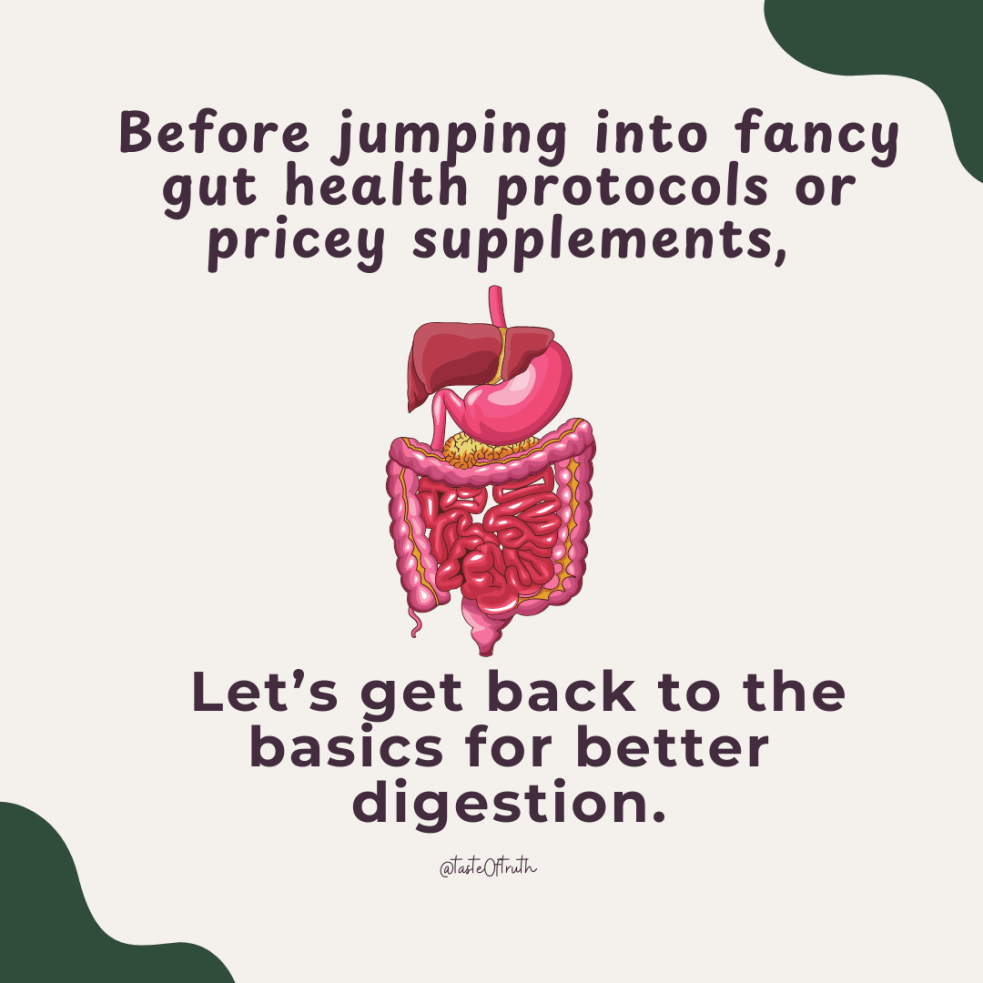
Master Your Digestion This Holiday Season

Posting on a Wednesday? Guess my calendar’s been indulging in holiday cookies too.

Yep, we’re shaking things up this week! Whether you’re catching up on leftovers or prepping for your next holiday feast, now’s the perfect time to talk about digestion. After all, it’s the unsung hero of health—working overtime while we’re busy piling on the mashed potatoes

This post also kicks off a sneak peek into January’s 365 Easy Challenge, where we’ll focus on mastering six foundational habits to make 2025 your healthiest year yet. So, grab a cozy beverage, and let’s dig into how to keep your gut happy (and your pants buttoned) this holiday season.


Why Digestion Deserves the Spotlight

Let’s be real: you can load up on the healthiest foods, but if your digestion isn’t working properly, your body can’t absorb all those nutrients. Instead of diving into advanced gut protocols, let’s focus on digestive basics—those everyday habits that can transform how you feel after a meal.

From holiday feasts to office potlucks, the season is full of opportunities to test your digestive system. If you’ve ever felt bloated, gassy, or sluggish post-meal, you’re not alone. These are signs your gut might need a little TLC.


The Big Three Digestive Culprits

  1. Stress: Chronic stress throws your digestive system into chaos, slowing it down and causing discomfort.
  2. Rushed Eating: Gulping your meals doesn’t give your body time to process food properly.
  3. Poor Chewing: Chewing is where digestion starts, but many of us rush through it like it’s a race.

What to Do Instead:

  • Set the Scene: Before you eat, take a deep breath, relax, and engage your parasympathetic nervous system (aka your “rest and digest” mode).
  • Slow Down: Put your fork down between bites and chew each one 20–30 times. Yes, it feels slow at first, but it’s worth it!
  • Be Present: Step away from distractions like phones or TVs and focus on your food.

The Unsung Heroes of Digestion

1. Stomach Acid (HCL):
Stomach acid is crucial for breaking down protein and absorbing nutrients like zinc, iron, calcium, and B12. It also acts as your body’s first line of defense against harmful bacteria.

🙅‍♀️ Stop: Overusing antacids or skipping protein-rich meals.
✔️ Start: Eating a nutrient-dense diet, practicing mindful eating, and managing stress to naturally support stomach acid production.

2. Digestive Enzymes:
Digestive enzymes break down food so your body can absorb the nutrients. Without enough enzymes, you may experience bloating, constipation, or gas.

🙅‍♀️ Stop: Rushing meals and lying down immediately after eating.
✔️ Start: Chewing thoroughly, walking after meals, and addressing inflammation.

3. Bile Production:
Bile is essential for breaking down fats so your body can absorb them. If bile production is compromised, you might miss out on the benefits of healthy fats like omega-3s.

🙅‍♀️ Stop: Relying on low-fat diets or consuming unhealthy fats like vegetable oils.
✔️ Start: Eating healthy fats (avocado, olive oil, grass-fed butter) and supporting stomach acid levels.


A Healthy Gut Microbiome: Your Digestive Sidekick

Your gut bacteria play a vital role in digestion and overall health. To keep your microbiome balanced:

  • Eat a variety of fiber-rich foods like kale, spinach, swiss chard, cabbage, leeks, turnips, carrots, beets, and artichokes.
  • Avoid overloading your system with excessive fiber, which can cause bloating or discomfort.

Nuts, Seeds, Grains & Legumes: Prep Like a Pro

These foods are nutritional powerhouses, but they contain anti-nutrients like phytic acid and enzyme inhibitors that can block digestion and deplete minerals. Preparing them properly—by soaking or sprouting—neutralizes these compounds and makes nutrients more bioavailable.

How to Soak:

  • Cover your nuts, seeds, grains, or legumes with water and a splash of vinegar or salt.
  • Let them soak overnight, rinse thoroughly, and cook as usual.

Even with proper preparation, these foods can be hard to digest, so enjoy them in moderation.


Holiday Digestion Tips

Here’s how to support your gut through the festive season:

  1. Chew your food mindfully. No one’s handing out awards for fastest eater.
  2. Go for a walk after big meals. Gentle movement aids digestion and prevents sluggishness.
  3. Stay hydrated. Your digestive system needs water to function optimally.
  4. Be intentional with your intake of highly processed refined sugars. Excess amounts can disrupt your gut flora and leave you feeling sluggish and out of balance

Takeaways for a Happy Gut

Proper digestion = better nutrient absorption = thriving health.

Before trying advanced protocols, start with the basics:

  • Chew thoroughly.
  • Manage stress.
  • Prep your meals for optimal digestion.

And don’t forget, this is just the start. In January’s 365 Easy Challenge, we’ll dive deeper into digestion and other foundational habits like sleep, stress management, and nutrition.

Let’s make 2025 the year we simplify health and feel amazing doing it!


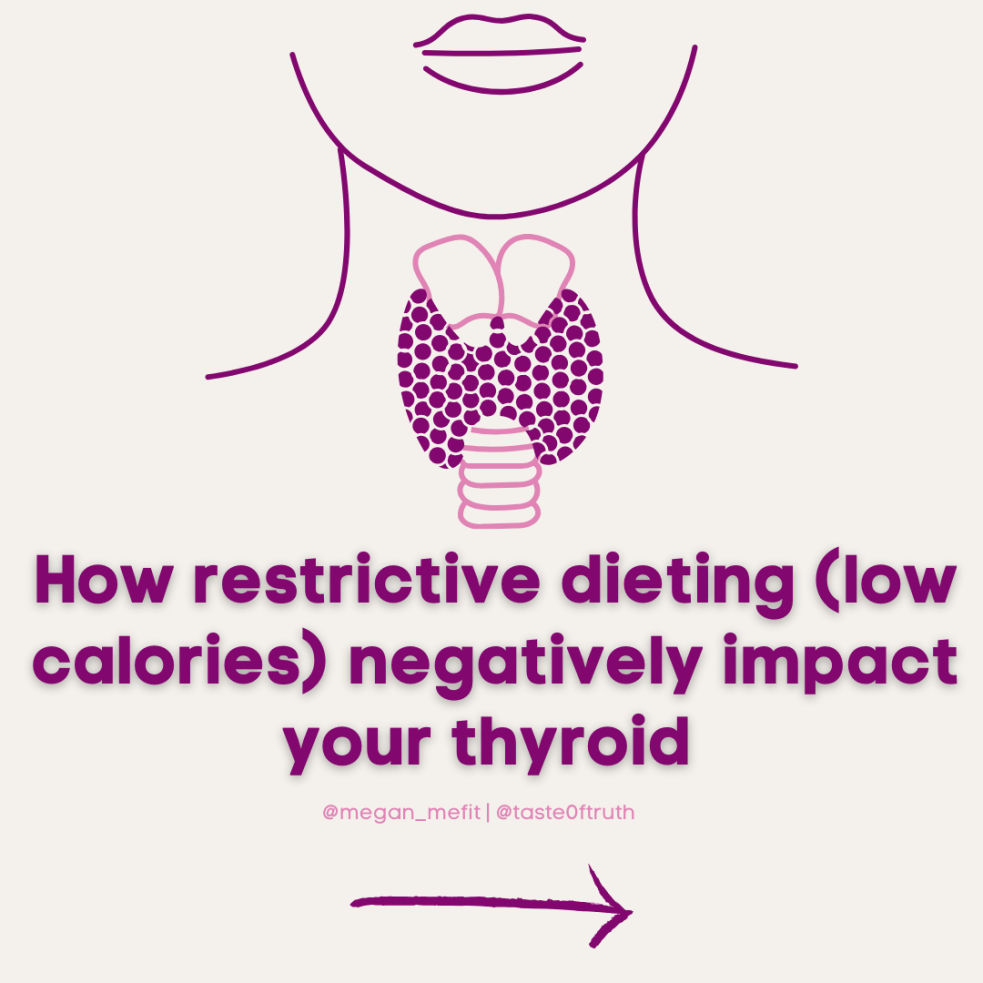
Understanding the Impact of Diet on Thyroid Health

When clients come to me saying they have a “slow metabolism” or a “broken” metabolism, often they think they need to eat even less or cut carbs to jumpstart weight loss. But let me flip the script: in many cases, it’s actually chronic under-eating and restrictive dieting that’s slowing down their metabolism. Chronic dieting, especially with very low calories, can lead to impaired thyroid function and ultimately disrupt how the body uses energy. Here’s how it happens and what you can do to restore balance.


What is the Thyroid and Why Does It Matter?

Your thyroid is a small gland in your neck that plays a massive role in regulating your body’s metabolism. Often called the “controller” of metabolic function, the thyroid works closely with the hypothalamus and pituitary glands in the brain to maintain your metabolic rate. This system allows your body to increase or decrease energy production based on its needs, influencing everything from how you process food to your body temperature.

The thyroid primarily produces two hormones:

  • T3 (Triiodothyronine) – the active hormone that your cells use.
  • T4 (Thyroxine) – the inactive hormone that must be converted into T3 before your body can use it.

The production and conversion of these hormones depend on a feedback loop that begins with TSH (Thyroid Stimulating Hormone), which signals the thyroid to produce and release T4. But when the body is stressed—especially due to chronic under-eating or extreme calorie restriction—this whole process can become disrupted.

How Chronic Dieting Wrecks Your Thyroid

Under-eating is a significant source of stress for the body. Dieting or calorie restriction triggers the HPA axis (Hypothalamic-Pituitary-Adrenal axis), leading to an increase in CRH (Corticotropin-Releasing Hormone) and cortisol, our primary stress hormone. High cortisol levels can interfere with thyroid function in the following ways:

  • Reduces TSH Production: Elevated cortisol inhibits TSH, lowering T4 production and decreasing the amount of thyroid hormone available for energy use.
  • Impairs T4-to-T3 Conversion: Chronic stress slows down the conversion of T4 (inactive) into T3 (active), reducing your body’s energy production.
  • Increases rT3 Levels: Instead of converting into T3, some T4 becomes reverse T3 (rT3), a hormone that blocks T3 from being used. This, in turn, reduces the sensitivity of your cells to thyroid hormones, further lowering metabolic function.

This is why individuals who chronically under-eat or yo-yo diet often experience symptoms of hypothyroidism, even without an official diagnosis.


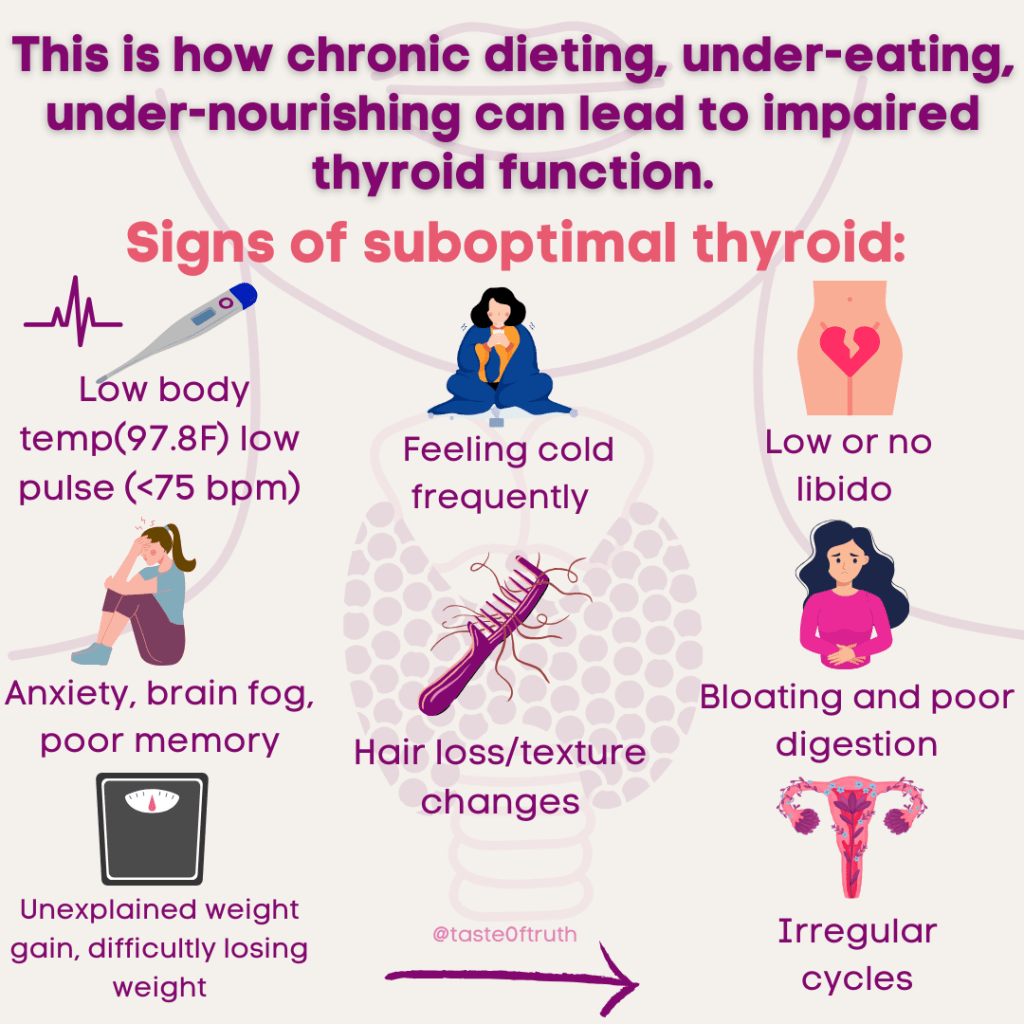
Symptoms of Suboptimal Thyroid Function

If your thyroid isn’t functioning optimally, you may notice some of the following symptoms:

  • Low body temperature (below 97.8°F)
  • Frequent feelings of cold, regardless of weather
  • Low or no libido
  • Anxiety, brain fog, or poor memory
  • Unexplained weight gain or difficulty losing weight
  • Bloating, poor digestion
  • Changes in hair texture or hair loss

Many clients experiencing these symptoms have been stuck in a calorie-deficit mindset for years, keeping their bodies in a constant state of stress. As a result, they’re often dealing with adrenal dysfunction, hypothyroidism, or even reproductive health issues, like extreme PMS, cycle loss, or low testosterone.


Restoring Your Thyroid Health—The First Steps

To begin improving thyroid health, our initial goal is to support both psychological and physiological balance, moving away from restrictive dieting and focusing on nourishment. Here’s a breakdown of the steps:

  1. Stabilize Blood Sugar: Balanced blood sugar supports thyroid health and reduces stress on the body.
  2. Maximize Nutrient Density: Prioritize whole, nutrient-rich foods to ensure your body receives adequate vitamins and minerals, especially selenium, zinc, and iodine, which are crucial for thyroid function.
  3. Reduce Inflammation: Chronic inflammation can further stress the thyroid. Anti-inflammatory foods and lifestyle practices can help.
  4. Incorporate Breathwork: Simple breathwork techniques can stimulate the vagus nerve, helping to regulate the HPA axis and reduce stress.
  5. Avoid Dietary Triggers: Reduce foods that promote “leaky gut,” such as highly processed foods, sugar, and gluten, if sensitive. This protects your immune and thyroid health.
  6. Manage Stress Proactively: Yoga, meditation, journaling, or spending time in nature can help keep cortisol in check.
  7. Reduce Toxins and Pollutants: Environmental toxins can interfere with hormone health, so minimizing exposure can be a powerful step.
  8. Prioritize Rest and Sleep: Quality sleep allows the body to recover and reset, which is essential for thyroid health.

The Bottom Line

Restrictive dieting isn’t the solution to a slow metabolism; it’s often the root cause. Chronic under-eating can lead to imbalances in your thyroid and adrenal glands, ultimately slowing down your metabolic rate and making it harder to achieve your fitness goals. Rebuilding a balanced, nourished body will not only help you feel better but will also lay the foundation for sustainable health.

This week, we’re talking all things thyroid health, and this post breaks down why breaking free from the dietary dogma of diet culture is crucial! Ever feel like your energy’s tanked, your minds in a fog, or your metabolism’s stuck in slow motion? 🧠✨ You’re not alone, and it could be your thyroid talking.

On this week’s Taste of Truth Tuesdays, we’re joined by Nicole, a holistic health advocate who’s here to shed light on how diet culture’s obsession with restriction can wreak havoc on your thyroid. From her own experience facing an autoimmune diagnosis to her advocacy for individualized nutrition, Nicole breaks down how restrictive dieting not only slows your metabolism but also impacts hormone balance, brain clarity, and overall well-being. Join us to learn how making friends with food (yes, even carbs!) might be the best way to support your thyroid and reclaim your energy.

Brain Fog, Thyroid Health, and Gut Connection: Insights from an Integrative Dietitian

Ever felt like your brain’s on vacation while your body’s still clocking in? 🧠✨ Join us as Nicole unveils the secrets behind thyroid health, brain fog, and why carbs might just be your new best friend!

🔍 From Autoimmune Shock to Holistic Advocate: Nicole shares her journey from being blindsided by an autoimmune diagnosis to questioning mainstream diet culture and diving into functional medicine. Find out what sparked her transformation into an advocate for individualized nutrition and holistic health!

💡 Thyroid Health Unveiled: Thyroid dysfunction can be a mystery wrapped in an enigma! Nicole explains why thyroid hormones are key to overall health and how her unique approach, including The BRAIN Method, differs from traditional treatments. Discover how she tackles symptoms and optimizes thyroid function!

🧠 Decoding Brain Fog: Ever felt like your brain is stuck in a fog? Nicole breaks down the most common culprits of brain fog and offers tips on how women can pinpoint their own triggers. Say goodbye to mental sluggishness and hello to clarity!

🌱 Gut Health & Thyroid Function: Did you know your gut health has a major impact on your thyroid? Nicole dives into how imbalances in your gut can affect thyroid hormone production and utilization. Learn how addressing gut health can boost your thyroid function!

🍞 Carbs & Hypothyroidism: Carbs might be getting a bad rap, but Nicole explains why they’re actually essential for those with hypothyroidism. Discover how including carbs in your diet can support thyroid function and enhance overall well-being.

Listen here!

Mentioned in the interview:

⁠MEET YOUR THYROID⁠

⁠BRAIN METHOD⁠

⁠Why Nicole added HTMA (hair tissue analysis) to her practice ⁠

⁠Which comes first? Gut dysfunction or Thyroid dysfunction? ⁠

⁠Could your gut be creating roadblocks in your Thyroid Hormone Journey? ⁠

⁠Why you need carbs especially if you have hypothyroidism⁠

⁠Home – New – Chews Food Wisely⁠

🙏 Please help this podcast reach a larger audience in hope to edify & encourage others! To do so: leave a 5⭐️ review and send it to a friend! Thank you for listening! I’d love to hear from you, find me on Instagram!⁠⁠⁠⁠ @taste0ftruth⁠⁠⁠⁠ or⁠⁠⁠⁠ Pinterest! ⁠⁠ ⁠⁠ 

How Creative Expression Helps Overcome Trauma

When you grow up in a high-control environment—whether through religion, a rigid upbringing, or a spiritual path that preaches emotional suppression—it can feel like your natural human emotions are something to be ashamed of. I’ve lived it. In the high-control religion I was a part of, anger wasn’t just frowned upon; it was portrayed as sinful, a sign of personal failure or weakness. Through the lens of ACBC Biblical counseling (Nouthetic Counseling), anger was framed as something to be suppressed, manipulated out of existence with tactics like guilt, shame, and isolation. But here’s the truth: anger, like any other emotion, isn’t inherently wrong. It’s human. And when we lose access to it, we also lose access to parts of ourselves.

Anger, as Aristotle once put it, is a passion. When experienced and expressed for the right reasons and in the right way, it can even be virtuous. Yet, in so many spiritual environments, particularly the ones I encountered, emotions like anger were seen as dangerous, spiritually harmful, or outright sinful. Especially for women, who are often taught to prioritize harmony and remain calm at all costs, anger can become something we’re scared to touch. For men, anger might be more accepted, but vulnerability is not, creating its own emotional imbalance.

What happens when we suppress emotions like anger? We get stuck, often feeling disconnected from our bodies, from our creativity, and from any sense of playfulness. That’s why art and play become essential tools in healing from spiritual and religious trauma. They allow us to access and express emotions that were long buried, giving us the space to feel without fear. Art doesn’t just heal—it empowers. It gives back what was stolen. Let’s unpack why:

Why Art & Play Matter in Healing Trauma

Trauma—especially the kind stemming from spiritual or religious abuse—can leave you feeling stuck, numb, or like a stranger to your own creativity. High-control environments stifle our freedom to express, explore, or simply be. Art and play can feel like reclaiming those parts of us that were silenced, buried under the weight of shame, fear, or guilt.

“Wherever I look, I see the same themes: not being allowed to feel, to say what you feel, to trust your perceptions, to ask for what you need. This is how we remain imprisoned in our pain.” -Alice Miller

Engaging in creative expression—whether it’s painting, dancing, writing, or making music—gives us a way to process emotions that can be difficult, even impossible, to articulate. Trauma lodges itself deep in the body and subconscious, often beyond the reach of words. But through art, we can access those hidden parts and begin to heal them in ways that talking just doesn’t touch. It’s like tapping into a language the body understands.

Play, on the other hand, might feel like a foreign concept if you’ve been conditioned to take life way too seriously, to follow rules without question. But it’s through play that we reconnect with spontaneity, joy, and a sense of safety—things that high-control environments tend to strip away. Play is about reawakening that inner child, the part of you that knows how to explore and create without fear of judgment. It’s about taking back the joy you were told to suppress.

How Art & Play Help in Deconstructing Religious Trauma

When we start unraveling the teachings we once held as truth, it can feel like walking through a minefield. Shame, fear, and guilt are often deeply embedded in the narratives we were fed. Art becomes a tool for rebellion, a way to question, challenge, and rewrite those beliefs. By creating, we aren’t just making things; we’re making space for new perspectives. We’re loosening the grip that old doctrines had on us.

In high-control environments, the idea of play is usually dismissed as frivolous or even sinful. Reclaiming that sense of play is like finding a key to unlock the parts of yourself that were shut away. Playfulness, whether it’s dancing with wild abandon, hula hooping (yes, circus arts shoutout!), or exploring new hobbies, gives you back a sense of agency. It’s a way to create space for curiosity again, to embrace wonder without the burden of fear or shame. Think of it as giving yourself permission to live without someone else’s narrative hanging over you.

Scientific Backing for Creative Therapies

The science backs this up, too. Numerous studies have shown that creative therapies—like art, dance, and even movement-based play—can significantly reduce symptoms of PTSD, anxiety, and depression. They work by helping the brain rewire itself through neuroplasticity. When you engage in creative activities, you’re not just distracting yourself—you’re helping your brain form new, healthier connections. You’re building resilience, reprogramming the way your brain responds to trauma.

Art and play ignite parts of the brain that foster emotional regulation and healing. This is where trauma lives, after all—deep within the nervous system. But creativity taps into a different part of the brain than verbal communication does, allowing survivors of trauma to express and release emotions they may not even know they’re holding onto.

By embracing art and play, you’re not just finding a distraction from your pain—you’re giving yourself a way to heal, to reclaim parts of yourself that were taken, and to reconnect with joy, creativity, and freedom. The beauty of it all? There’s no right or wrong way to do it. You’re creating your path forward. So, grab that paintbrush, dance it out, or pick up that pen and let your soul speak.

Resources for Healing Through Art and Play

Books:

  1. “Healing the Fragmented Selves of Trauma Survivors” by Janina Fisher
    This book dives into how trauma fragments a person’s sense of self, especially those recovering from spiritual abuse or high-control environments. Fisher provides practical tools, like body-based therapies and creative expressions, to help reintegrate those fragmented parts into a cohesive whole.
  2. “Trauma and Recovery” by Judith Herman
    Herman’s work is a cornerstone in understanding trauma and its long-term effects. She emphasizes the importance of survivors reclaiming their voices, and how creative expression—whether through writing, painting, or dance—plays a critical role in their recovery journey.
  3. “The Creative Cure” by Jacob Nordby
    Nordby explores how reconnecting with creativity can reignite your sense of self and joy. Especially for those who’ve had their emotional expression controlled or diminished by strict belief systems, this book offers a roadmap to reclaiming a more authentic, free version of yourself through creativity.
  4. “Complex PTSD: From Surviving to Thriving” by Pete Walker
    This book focuses on healing the long-term effects of complex PTSD, which many individuals from high-control religious backgrounds experience. Walker highlights how therapeutic outlets like art, journaling, and other forms of play help survivors process their trauma and begin to thrive again.
  5. “Art Therapy Sourcebook” by Cathy Malchiodi
    Malchiodi is a pioneer in the field of art therapy. This book is a practical guide for anyone looking to explore art as a form of emotional expression and healing, especially in the context of trauma recovery. It offers hands-on approaches for integrating creative expression into your healing process.

Articles & Journals:

  1. American Art Therapy Association
    This site offers numerous research studies on the effectiveness of art therapy in healing trauma, especially for those recovering from spiritual abuse or restrictive environments. It provides a well-rounded view of the therapeutic benefits of engaging in creative arts.
  2. International Journal of Play Therapy
    A comprehensive journal that highlights the healing potential of play therapy for trauma survivors. It explores how play can foster emotional resilience and repair, allowing individuals to reconnect with parts of themselves that were silenced or controlled.
  3. “Creative Arts Therapies and Trauma: Scope and Impact”
    A review that outlines how various forms of creative expression—like music, drama, and visual arts—help trauma survivors heal. This article explains how these therapies leverage the brain’s neuroplasticity to create new, healthier emotional patterns.

Experts & Practitioners:

  1. Pat Ogden – Sensorimotor Psychotherapy
    Ogden’s work is at the intersection of movement and trauma recovery. She focuses on how trauma manifests in the body and uses techniques like creative movement and body-based therapies to help people heal from deep emotional wounds. Her book “Trauma and the Body” is a great resource for understanding this approach.
  2. Peter Levine – Somatic Experiencing
    Levine is renowned for his work on trauma recovery through the body. His book “Waking the Tiger: Healing Trauma” offers insights into how movement and body-based expression can help survivors release trauma and regain a sense of safety and control.

Podcasts & Websites:

  1. Sounds True – Insights at the Edge Podcast
    Hosted by Tami Simon, this podcast often features interviews with leading experts in trauma and healing. Guests like Peter Levine and Pat Ogden discuss the importance of integrating creative practices like art and movement into trauma recovery.
  2. Healing Arts Radio (Online Radio Show)
    Focused on art therapy and trauma healing, this show features episodes on creative therapies and personal stories of recovery through art. It’s an inspiring resource for understanding how play and art can transform emotional wounds into creative empowerment.
  3. Institute for Creative Mindfulness
    This site provides resources and courses on expressive arts therapies for trauma survivors. It emphasizes how art and movement therapies foster resilience and healing by tapping into emotional expression and body awareness.

Understanding the Group Mind: A Double-Edged Sword

Navigating the waters of community can feel like a tightrope walk, especially for those of us who’ve been through the storm of spiritual abuse. This week on Taste of Truth Tuesdays, I’m excited to welcome a guest who dives deep into the concept of “Group Mind”—the idea that a collective can elevate individual voices, creating a harmonious collaboration. While this concept sounds beautiful on the surface, having walked the line between healthy and toxic communities myself, I can’t help but question: What happens when “Group Mind” becomes a vessel for manipulation rather than a source of strength?

The Allure of Community

Let’s face it: we all crave connection. From childhood friendships to spiritual gatherings, our lives are woven into a fabric of social interactions. In healthy communities, each thread—each individual—contributes to the larger tapestry. Group Mind can be empowering when everyone contributes their unique strengths. Think of a brainstorming session, where different ideas build on each other to create something innovative. But in controlling groups, individuality is suppressed, and members are pressured to conform, stifling creativity and critical thinking.

The Double-Edged Sword of Group Mind

Our guest shares their experience in an improv class, where the idea of Group Mind became both a revelation and a source of anxiety. It’s fascinating how the language of community can feel welcoming yet be weaponized against those who seek authenticity. This mirrors the complexities of modern social dynamics, especially in the age of social media, where radicalization can happen at lightning speed.

In Episode 5 of my podcast, we tackled the “crunchy hippie to alt-right pipeline,” but now it’s time to shine a light on the radicalization of the left—a topic often overlooked. Why did I go from progressive circles to mingling with Trump supporters and Christians? This shift was marked by a range of events and trends reflecting broader changes within progressive movements and their impact on American politics and culture.

The Irony of the Deconstruction Space

As I navigated the deconstruction space, I noticed something ironic: when the deconstruction movement defines a cult and unintentionally describes their own playbook, the irony is hard to miss. Many who now identify as progressive or left leaning have simply swapped one form of fundamentalism for another. They may have shed their evangelical past, but the same dogmatic, ‘us vs. them’ tactics remain. It’s like they never fully untangled themselves from the rigid mindset they claim to oppose.

Social justice has become their new ‘End Times,’ and the tribalism is painfully obvious. Conformity, consequences for stepping out of line, leaders who set the narrative… sound familiar? 🙃

🔍 “It’s not your enemies, it’s the system.” We often fall into the trap of seeing our political landscape as a battle between two sides—one fighting for democracy, the other autocracy. But this binary thinking misses the larger issue: who really has power in shaping policies? Research, like the 2014 study by Gilens and Page, reveals that economic elites and organized interest groups wield far more influence over government decisions than the average citizen or voter. This isn’t about a single party; it’s about a systemic challenge that transcends partisan lines. 🧠

Instead of feeding into divisive narratives, maybe it’s time to ask: Who benefits from keeping us divided? 🤔 Progressive politics can impose control using a power/victim binary that’s reductive and lacks nuance, leveraging the fear of being labeled an oppressor as a tool for compliance. Reflecting on my journey of deconstruction and exploring progressive spaces, I’ve noticed a concerning trend: the lack of nuance and the prevalence of an ‘us vs. them’ mentality.

Even within progressive Christianity, there’s pressure to conform to certain social norms and ethical behaviors. Disagreement is often met with resistance, and group identity politics can dominate discussions. As I listened to a friend lecture me about the systems of whiteness and how white people are part of the problem, I couldn’t help but feel a visceral response in my body. Wasn’t she aware of how she was marginalizing voices that do not align with CRT principles and fostering division rather than unity?

It’s one thing to leave behind a belief system, but if you’re still using the same control tactics, are you really free? Or are you just in another form of groupthink? Many who now identify as progressive or left-leaning have simply swapped one form of radicalism for another.

In navigating my journey, I’ve discovered that while community can be a source of strength, it can also be stifling. Let’s strive for more open dialogue where diverse perspectives are valued.

“I have a dream that my four little children will one day live in a nation where they will not be judged by the color of their skin but by the content of their character.” — Martin Luther King Jr.

Seeking Authentic Community

This brings us back to the concept of Group Mind. While it has the potential to uplift and unite, we must critically assess the communities we choose to engage with. Are they empowering our individuality, or are they reinforcing a new set of dogmas?

As we explore these themes in this week’s podcast episode, I invite you to reflect on your own experiences with community—whether online or offline. Are you in a space that nurtures your authentic self, or have you found yourself caught in another web of control? Let’s challenge ourselves to seek genuine connections that celebrate our uniqueness, rather than merely conforming to the expectations of a collective.

Navigating Community Dynamics

One critical takeaway from my own experiences and the stories shared by others is the importance of asking ourselves the right questions. When evaluating any community—whether it’s a religious group, a social circle, or even an improv class—we should reflect on whether we’re being encouraged to grow into our full selves or if we’re being pressured to shrink into submission.

Key Questions to Consider:

  • Am I celebrated for my unique contributions, or do I feel like a cog in the machine?
  • Is my voice heard and valued, or am I met with silence (or worse) when I express dissent?
  • Does this community expand my horizons, or does it confine me to a narrow worldview?

The Importance of Individuality

One of the most powerful realizations is that a thriving community doesn’t demand the extinction of individualism; it nourishes it. Just as the author of the guest post observed in an improv competition, the true beauty of collaboration lies in the ability of individuals to bring their full selves to the table, enhancing the group dynamic rather than diminishing it.

In my journey, I’ve learned that safe communities are those that not only say, “Yes!” to your ideas but also invite you to share more, to dig deeper, and to embrace the weirdness that makes you unique. They celebrate individuality as an essential ingredient for collective success, transforming “Group Mind” from a potential source of control into a powerful tool for creativity and support.

The Path to Healing

For those of us recovering from spiritual abuse, the journey to find a healthy community can feel daunting. It requires us to sift through the rubble of past experiences, recognizing patterns that once suffocated our voices. But it also offers a chance for healing, a space where we can reclaim our identities and forge connections based on respect and authenticity.

Ultimately, the quest for community is about more than just belonging; it’s about finding spaces where we can be our true selves. It’s about navigating the complexities of connection with our eyes wide open, ready to discern the difference between a supportive group and one that seeks to control.

Conclusion

As we move through life, let’s remember that community can be a double-edged sword. For some of us, especially those healing from trauma or navigating complex PTSD, the journey may be best supported by solitary pursuits—like books, pets, and podcasts—before stepping into the vibrant chaos of group dynamics. We must be vigilant in recognizing when connection serves us and when it threatens to silence our individuality. Here’s to seeking out those communities that empower us, uplift us, and invite us to shine our light—together.