Social Miasm Theory: The Biology of a Sick Society

How Suppression Shapes Our Bodies, Minds, and the World We Live In

Hey hey, Welcome back! Today’s episode connects beautifully to something many of you resonated with in my earlier show, Science or Stagnation? The Risk of Unquestioned Paradigms. In that episode, we talked about scientism… not science itself, but the dogma that forms around certain scientific ideas.

That’s why voices like Rupert Sheldrake have always fascinated me. Sheldrake, for those unfamiliar, isn’t a fringe crank. He’s a Cambridge-trained biologist who dared to question what he calls the “ten dogmas of modern science”: that nature is mechanical, that the mind is only the brain, that the laws of nature are fixed, that free will is an illusion, and so on.

When he presented these questions in a TED Talk, it struck such a nerve that the talk was quietly taken down. And that raised an obvious question: If the ideas are so wrong… why not let them stand and fall on their own? Why censor them unless they hit something tender? All of this sets the stage for today’s conversation.

Because the theory we’re exploring, Social Miasm Theory, fits right inside that tension between mainstream assumptions and the alternative frameworks we often dismiss too quickly.

My friend Stephinity Salazar just published a fascinating piece of research arguing that suppression  (of toxins, trauma, emotion, and truth) is the root pattern underlying both chronic illness and our wider social dysfunction. It’s a theory that steps outside the materialist worldview and challenges the mechanistic lens we’ve all been taught to see through.

You don’t have to agree with everything…that’s not the goal here.

What I love is the chance to explore, to ask good questions, and to stay grounded while examining ideas that stretch our understanding.

This blog is your guide to the episode, so you can track the concepts, explore the references, and dive deeper while you listen.

So, with that, let’s dive into Social Miasm Theory: what it is, where it comes from, why it matters, and what it might reveal about the world we’re living in today.


What Are Miasms, Anyway?

To anchor our conversation, Stephinity starts by grounding the concept of “miasms” in its homeopathic roots. Historically, Samuel Hahnemann (founder of homeopathy) described three primary miasms:

  • Psora, linked to scabies or skin conditions
  • Syphilis, associated with destructive disease
  • Sycosis, with overgrowth and tissue proliferation

Since then, the theory has expanded. Many modern homeopaths now talk about five chronic miasms, adding:

These aren’t diseases…they’re patterns. A kind of “constitutional operating system.”

Stephinity’s work takes this a step further:
If individuals can have miasms, societies can too.

It’s an ambitious idea. And honestly? A compelling one when you consider what’s happening globally.


Why Social Miasm Theory Matters

Suppression doesn’t stay in the body. It echoes outward into culture, politics, ecosystems, and collective behavior.

She breaks suppression into four types:

  • Toxic suppression: chemicals, pollutants, EMFs, pathogens
  • Emotional suppression: trauma, grief, stress, unprocessed feelings
  • Psychological suppression: denial, cognitive dissonance, fear-driven attachment to ideology
  • Truth suppression: propaganda, censorship, disinformation, scientific dogma

When these forms of suppression accumulate, she argues, they create a “social miasm”: a pathological field that shapes everything from public health to political polarization.

Even if you don’t buy every mechanism she proposes, the metaphor works. And the patterns are hard to ignore.

Evidence, Epistemology, and Skeptics: What Counts as “Real”?

This is the part my skeptical listeners will perk up for.

In the interview, I asked her the question I knew many of you were thinking:
“How do you define evidence within this framework? What would you want skeptical listeners to understand before judging it?”

Stephinity argues that the modern scientific lens is too narrow. Not wrong—but incomplete. She sees value in:

  • case studies
  • pattern recognition
  • field effects
  • resonance models
  • historical cycles
  • experiential knowledge

Whether or not you agree, her challenge to mechanistic materialism echoes thinkers like Rupert Sheldrake, IONS researchers, and even physicists questioning entropic cosmology.

And she’s not claiming this replaces science. She’s asking what science misses when it refuses to look beyond the physical.


Suppression: What It Looks Like in Real Life

Stephinity’s paper covers how suppression shows up on multiple levels. Here are a few examples she explores:
  • Overuse of symptom-suppressive medications
  • Emotional avoidance that pushes trauma deeper
  • Social pressure to conform
  • Institutional censorship
  • Environmental toxins that overwhelm the microbiome
  • Radiation and electromagnetic exposures

She frames suppression as a terrain problem: when the body or society becomes too acidic, stressed, toxic, or disconnected, the miasm takes root.
This is where we start to cross into the biological, psychological, and social layers—which brings us to one of my favorite parts of her theory.


Neuroparasitology: When Parasites Change Behavior

The concept of a new branch of science of neuroparasitology. Study of the influence of parasites on the activity of the brain.

This is the section I teased in the podcast because it’s both wild and backed by real research.

Stephinity references studies showing that parasites can alter host behavior not just in insects or rodents, but potentially in humans too. Her paper cites examples like helminths, nematodes, mycotoxins, and other microorganisms (McAuliffe, 2016; Colaiacovo, 2021). These organisms are everywhere, not just in “developing countries” (Yu, 2010).

Researchers have documented parasites that:

  • influence mood
  • shift risk-taking
  • modify sexual attraction
  • impair impulse control
  • change social patterns

This is what Dawkins called the extended phenotype (1982): the parasite’s genes expressing themselves through the host’s behavior. Neuroparasitologists Hughes & Libersat (2019) and Johnson (2020) have shown how certain infections can shift personality traits in specific, predictable ways.

Stephinity ties this into terrain: parasites tend to thrive in acidic, low-oxygen, stressed, radiative environments (Clark, 1995; Tennant, 2013; Cerecedes, 2015). In her view, chronic suppression creates exactly that kind of internal ecosystem.

But there’s another layer here. One that isn’t biological at all.

This is where philosopher Daniel Dennett enters the chat.

In Breaking the Spell, Dennett describes “parasites of the mind”: ideas that spread not because they’re true, but because they’re incredibly good at hijacking human psychology. These mental parasites latch onto our cognitive wiring the same way biological one’s latch onto the nervous system. They survive by exploiting:

  • fear
  • moral impulses
  • tribal loyalty
  • the desire for certainty
  • social pressure
  • existential insecurity

According to Dennett, religious dogmas, conspiracy theories, and ideological extremes act like memetic parasites: they replicate by using us, encouraging us to host them and then pass them on.

In other words: not all parasites live in the gut. Some live in the mind.

And…..we even discussed how billionaire Les Wexner once publicly described having a “dybbuk spirit” a kind of parasitic entity in Jewish folklore known for influencing personality. Whether symbolic or literal, the analogy fits. 🫨😮

Her point is simple:
When the terrain is weak, something else will fill the space.

Whether that “something” is trauma, ideology, toxicity, or a literal parasite… the mechanism rhymes.


Collective Delusion and Mass Psychosis

Drawing on Jung and Dostoevsky, Stephinity explores the idea that societies can enter “psychic epidemics.”

You’ve seen this. We all have…

The last decade has been a masterclass in how fear, propaganda, and emotional suppression create predictable patterns:

  • polarization
  • tribal thinking
  • moral panics
  • ideological possession
  • scapegoating
  • censorship
  • intolerance of nuance

She argues these are symptoms of a cultural miasm—not failures of individual character.

Whether you lean left, right, or somewhere out in the wilderness, you’ve likely felt this rising tension. And it’s hard not to see how unresolved collective trauma feeds it.


COVID as a Catalyst: What the Pandemic Revealed

Another part of her paper dives into how the pandemic brought hidden patterns to the surface.

Some of her claims are controversial, especially around EMFs and environmental co-factors. In the episode, we unpack these with curiosity, not blind acceptance.

Her larger point is that COVID exposed:

  • institutional fragility
  • scientific gatekeeping
  • public distrust
  • trauma-based responses
  • authoritarian overreach
  • the psychological toll of suppression

Whether you agree with the specific mechanisms or not, the last decade made one thing undeniable: something in our social terrain is deeply dysregulated.


8. Healing Forward: What Do We Do With All This?

If suppression drives miasms, then healing means unsuppressing. Gently, not chaotically.

Stephinity suggests practices like:

  • emotional honesty
  • reconnecting with nature
  • releasing stored trauma
  • nutritional and detoxification support
  • reducing exposure to chronic stressors
  • restoring community and meaning
  • opening space for spiritual or intuitive insight

She’s not prescribing a protocol. She’s offering a map.

The destination is what the Greeks called sophrosyne: a state of balance between wisdom and sanity. Not blissful ignorance, not paranoid awakening. Just grounded clarity.

And I think we could all use a bit more of that.


Key Evidence and Arguments

  • Stephinity critiques materialist science, calling out what she terms “entropic cosmology.” She argues that by assuming nature is strictly mechanistic, mainstream science misses field-based phenomena, non-local consciousness, and deeper systemic patterns.
  • She draws on historical and homeopathic sources (Hahnemann, Kent) to build her theoretical foundation but also argues for newer forms of evidence: resonance, case studies, and pattern detection in social systems.
  • On the environmental front, she explores links between toxins, EMF / 5G, biotech, and chronic disease, not just as correlation, but as evidence of suppression dynamics.
  • Psychologically, she invokes mass delusion or collective repression (drawing from Jung, Dostoevsky) seeing societal crises as expressions of buried collective shadow.
  • Ultimately, her call to action isn’t just for individual healing, but for systemic awakening: more transparency, alternative medical paradigms, and restored connection with nature.

Why This Matters for You

Even if homeopathy isn’t your jam, Social Miasm Theory offers a metaphor (and potentially a map) for understanding how inner repression becomes external crisis. If this episode does anything, I hope it gives you permission to look a little closer and question the stuff we’re told not to touch.


📚 Want to Dig Deeper?

Stephinity’s website: YOUR BODY ELECTRIC YOUR BODY ELECTRIC | FULL SPECTRUM FREQUENCY MEDICINE Find her on Linkden , Instagram and Substack

Social Miasm Theory: Revisiting Chronic Illness from a Meta-Perspective of Suppression [truncated version, pre-JSE publishing]

Official published paper

Miasms

https://www.unifiedfield.info/

https://corbettreport.com/how-the-government-manufactured-covid-consent

Use of fear to control behavior in Covid crisis was ‘totalitarian’, admit scientists

The Dark Side of Manifestation and MLMs

✨Let’s talk Manifestation & MLMs✨

In recent decades, the Law of Attraction has become one of the most influential belief systems in wellness, self-help, and multilevel marketing (MLM) circles. Its premise is seductively simple: your thoughts shape your reality. Think positively, and abundance will flow; dwell on negativity, and you’ll attract misfortune.

We have discussed the pitfalls of Law of attraction in a previous episode, you can find here.

🎙️ Another throwback episode is linked below, where I unpack my journey from wellness fanatic within MLM into a high-control religion. Together, we explore the wild “crunchy hippie to alt-right pipeline.” 🌿➡️🛑 social media, influencers, and wellness hype quietly nudge people toward extreme ideas, and in this episode, we break down exactly how. 🎧🔥

This modern doctrine of “mind over matter” is often traced to The Secret (2006) by Rhonda Byrne, but its genealogy is much older. It reaches back to New Thought philosophy of the 19th century, where figures like Ralph Waldo Emerson, Phineas Quimby, and later Mary Baker Eddy (founder of Christian Science) claimed that divine thought itself was the engine of reality. These Mind Cure and faith healing movements linked spirt and matter together. Disease, poverty, and suffering were seen as products of “wrong or stinking thinking.” Salvation was not just spiritual but cognitive: change your thinking, change your life.

and so again I say: It is shockingly right instead of shockingly wrong of you to be prosperous. Obviously, you cannot be very happy if you are poor and you need not be poor. It is a sin. –Catherine Ponder (The Dynamic Laws of Prosperity)

In fact, it is the search for spiritual healing of the body that led to what is known today as prosperity consciousness or in Christian evangelism, it’s prosperity theology.

That intellectual lineage matters because it shows how the Law of Attraction has always been more than a harmless pep talk. It represents a cosmology of control, one that locates all responsibility (and blame) within the individual mind. As we have discussed many times before, Jonathan Haidt observes in The Righteous Mind, belief systems serve a dual function: they bind communities together and blind them to alternative explanations.

In this sense, the Law of Attraction doesn’t just inspire positive thinking; it narrows. By framing success and failure as purely mental vibrations, it obscures structural realities like economic inequality, physical health and genetic limitations, racism, or corporate exploitation.

And that narrowing is precisely what makes it the perfect handmaiden to MLM culture.


When Positive Thinking Becomes a Business Model

Robert L. FitzPatrick, in False Profits and Ponzinomics, describes MLMs as “endless chain” recruitment schemes. What sustains them isn’t product sales but the constant influx of hopeful recruits. Yet these schemes require something more than numbers: they require belief.

Here, the Law of Attraction becomes the MLM’s best salesman. Distributors are told:

  • Failure isn’t about the structure of the business; it’s about your mindset.
  • Doubt is “negative energy” that will block your success.
  • Quitting is not just a business choice but a moral failing.

In the Amway training program, the “ABCs of Success” are “Attitude, Belief and Commitment.” Attitude was the key which must be guarded. Don’t let anyone steal your attitude. Negative was defined as “whatever influence weakens your belief and commitment in the business” -False Profits

This is where Norman Vincent Peale’s “positive thinking” gospel dovetails with MLM. In his 1948 book Positive Thinking for a Time Like This, Peale popularized the phrase

“Let go and let God. Let Him take over your life and run it. He knows how.”

While originally a call to spiritual surrender, the phrase has since been weaponized in countless contexts from Holiness movements to Alcoholics Anonymous to prosperity preaching. At its worst, it functions as a silencer: don’t question, don’t resist, don’t think critically. Just “let go,” and trust that outcomes (or uplines) will provide.

Eastern Orthodox Christianity has a word for this: prelest. It’s the belief that human beings are so easily deceived that any private sense of spiritual progress — a feeling of clarity, joy, empowerment, even a mystical experience — can’t be trusted on its own. Without humility and the guidance of a spiritual father, you’re told it may just be pride, delusion, or the devil in disguise.

That’s the trap: you can’t trust your own mind, heart, or gut. The only “safe” option is obedience to the system. Which is exactly how MLMs and other high-control groups operate — undermining self-trust to keep you dependent.

Nietzsche would have called this a kind of slave morality, a belief system that encourages resignation to suffering rather than rebellion against unjust structures. The Law of Attraction, framed in this way, doesn’t challenge MLM exploitation; it sanctifies it.

More powerful than any product, charismatic leader, or compensation plan, the MLM mindset materials (the tapes, courses, and “personal development” kits) are the prime tools used to recruit and control distributors. Once you’re in the system, you’re encouraged to buy these materials week after week, keeping you invested emotionally and financially while feeding the company’s bottom line.

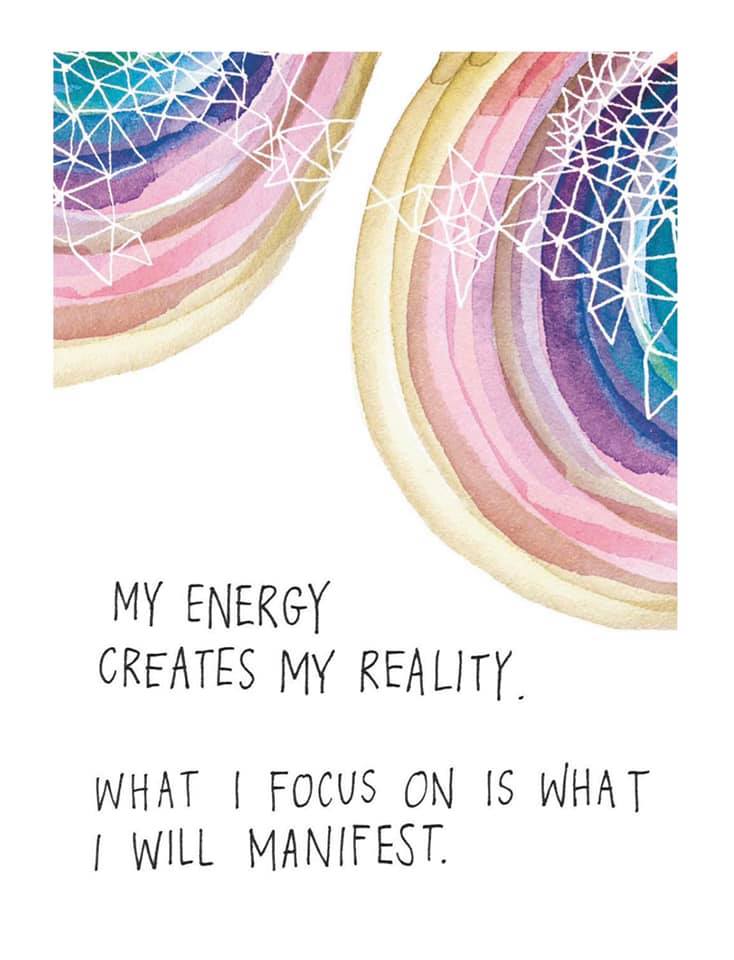
I went back through my Facebook to find some goodies for you! 😜This photo says “My energy creates my reality. What I focus on is what I will Manifest.” Here is the original caption so you can hear how brainwashed I was. “💥🙌🏼Belief is a feeling of certainty about something, driven by emotion. Feeling certain means that it feels true to you and therefore it is your reality. 💥🙌🏼 💪🏼 What you focus on you find 💪🏼 👀 You’ve got to believe it, to see it 👀”

Flashback to my first corporate event Aug 2016. My upline purchased my flight basically forcing me to go.

My caption at the time: 🤮

🔥IGNITE YOUR VISION! 🔥
⚡Attended an event that changed my life. Showed me the massive vision of this company.
🤗Join our passionate, growing team of 18-35-year-olds striving for extraordinary lives and ownership of health, dreams, and contributions.
🤩Returning to this LIFE CHANGING event soon! Nashville, TN—let’s learn, grow, and celebrate!

Sounds inspiring, right? Except what they’re really selling is mandatory product purchases, endless hype, and a community that keeps you chasing the next status milestone. That “massive vision” isn’t about your health or dreams—it’s about the company’s bottom line.

Words like passionate, extraordinary, innovators, ownership are carefully chosen psychological nudges, making you feel like life itself is on the line if you’re not on board. And the countdown to the next “life-changing” event? Keeps you spending, attending, and emotionally hooked.

This is exactly what FitzPatrick calls out in Ponzinomics: the sales rep is the best customer. Only a tiny fraction of participants earn anything; the rest are paying to stay inspired.

More flashback images from my cult days….


The Psychological Toll

When these elements collide the New Thought inheritance of “mind over matter,” Peale’s positive thinking, religious community networks and MLM compensation plans… the result is a high-control environment dressed in empowerment language.

The outcomes are rarely empowering:

  • Blame and guilt when inevitable losses occur.
  • Anxiety from the demand to maintain “high vibrations.”
  • Suppression of doubt, lest skepticism be mistaken for weakness.
  • Financial harm disguised as personal failure.

In wellness communities, this logic extends beyond money. If essential oils don’t heal your illness, it’s because your mindset was wrong. If the diet doesn’t work, it’s because you didn’t “believe” enough. Structural realities (biology, medicine, inequality) are flattened into personal responsibility.

As Haidt warns, morality (and by extension ideology) can both bind and blind. The Law of Attraction, when paired with MLM, binds participants into a shared culture of hope and positivity while blinding them to exploitation.


Connecting the Dots: Bodybuilding, Metabolism & Team Isagenix

A couple weeks ago on the podcast, I shared about my bodybuilding years and the metabolic fallout I still live with today. I had forgotten how much of that season was actually entangled with my Isagenix obsession. My upline (the couple who enrolled me) were a part of Team Isagenix®, and I craved the validation of being “seen” as a successful athlete inside that community.

The requirements were brutal: placing in the top three of multiple competitions in a short span of time. So, between May 2017 and October 2018, I crammed in four shows in just 18 months. No off-season. No recovery. Just constant prep cycles. My metabolism never had a chance to stabilize, and I pushed myself past healthy limits. I wrecked my body and I’m still paying the price.

This is why I push back so hard when people insist that success is all about having a “positive enough” attitude to manifest it. My mindset was ironclad. What I lacked the conscious awareness that valued human health over recruitment and body image. That drive wasn’t just about stage lights and trophies. It was about proving my worth to an MLM culture that dangled prestige as the price of belonging. Team Isagenix® made the bar steep, and I was determined to clear it, no matter the cost.

And if you need proof of how deep this “mindset over matter” indoctrination goes, look no further than my old upline…now rebranded as a Manifestation Coach. Picture the classic boss-babe felt hat, paired with a website promising “signature mindset tools for rapid results.” According to her, if fear or doubt was “shrinking your dreams,” this was your moment to “flip it.” She name-drops 8-figure companies, influencers, and visionaries (the usual credibility glitter) while selling memberships, live events, and 7-day challenges.

It’s the same pitch recycled: your struggle isn’t systemic, it’s your mindset. If you’re not living your “life you truly love,” it’s because you haven’t invested enough in flipping the script (with her paid framework, of course). The MLM grind culture just got a new coat of “manifesting” paint.


🧠 Isagenix Programs & Their Psychological Impact

  • Healthy Mind and Body Program: A 60-day “mindset” initiative framed as holistic wellness. In practice, it ties product use to personal development, creating behavioral conditioning and binding members into a sense of shared identity and belonging. 🚩
  • IsaBody Challenge: A 16-week transformation contest requiring regular Isagenix product purchases. Completion comes with swag and vouchers; finalists are paraded as “success stories,” gamifying loyalty and dangling prestige as bait. The grand prize winner earns $25,000 but most participants earn only deeper entanglement. 🚩
  • Team Isagenix: Marketed as a prestige group for elite athletes with current national certifications, offering exclusivity and aspirational branding. This elevates certain members as “proof” of the products’ legitimacy, fueling both loyalty and recruitment. 🚩
  • Product Consumption: Isagenix requires 100 PV every 30 days just to remain “active.” This equates to about $150/month you HAVE to spend. On paper, bonuses and ranks promise unlimited potential. In reality, most associates struggle to recoup even their monthly product costs. Personal development rhetoric and community belonging often eclipse these financial realities, keeping participants cycling through hope, debt, and blame. 🚩

🤮🐦‍🔥 “Transform Your Life with Isagenix | Empowering Wellness and Wealth” 🐦‍🔥 🤮

Watch closely, because this is where the magic happens: the company paints a picture of limitless opportunity, but as Robert L. FitzPatrick lays out in Ponzinomics, the secret is that the sales rep is the best customer. That’s right… the real profits aren’t coming from your vague dreams of financial freedom; they’re coming from the people who are already buying the products and trying to climb the ranks.

The numbers don’t lie. According to Isagenix’s own disclosure: the overall average annual income for associates is $892. Among those who actually earned anything, the average jumps to $3,994. Do the math: $892 ÷ $3,994 ≈ 0.223 — meaning only about 22% of associates earn anything at all. The other 78%? Zero. Nada. Zilch.

And before you start fantasizing about that $3,994, remember: that’s before expenses. Let’s run a realistic scenario based on actual product spend:

  • $150/month on products or promotional materials = $1,800/year → net ≈ $2,194 − $1,800 = $1,194 before other costs.
  • Factor in travel, events, or socials? That $1,194 could easily drop to near zero…or negative.

The point: the so-called “income potential” evaporates fast when you account for the mandatory spending MLMs require. The only thing truly transformed is the company’s bottom line, not yours.

No wonder the comments are turned off.

Apparently, nobody actually crunches the numbers while the marketing spiel promises energy, strength, and vitality as if a shake could fix financial exploitation, metabolic burnout, and guilt-tripping at the same time.

My story is just one case study of how these tactics play out in real lives: I was recruited through trusted connections, emotionally manipulated with promises of transformation, pressured into relentless product use, and left with financial strain and long-lasting health consequences. That’s the “empowerment” MLMs sell and it’s why scrutiny matters.


Cultural Ecosystems That Enable MLMs


MLMs don’t operate in a vacuum. They flourish where belief structures already normalize submission to authority, truth-claims, and tightly networked communities. Evangelicals and the LDS Church provide striking examples: tight-knit congregations, missionary training in persuasion, and a cultural emphasis on self-reliance and communal obligation create fertile ground for recruitment.

Companies like Nu Skin, Young Living, doTERRA, and Melaleuca have disproportionately strong followings in Utah and among Mormon communities. FitzPatrick notes that MLMs thrive where trust networks and shared values make persuasion easier. The kind of environment where aspirational marketing and “prestige” teams can latch onto pre-existing social structures.

In short, it’s not just the products or the promises of positive thinking; it’s where belief, community, and culture all collide… that allows MLMs to hook people and keep them chasing elusive success.


Beyond Magical Thinking

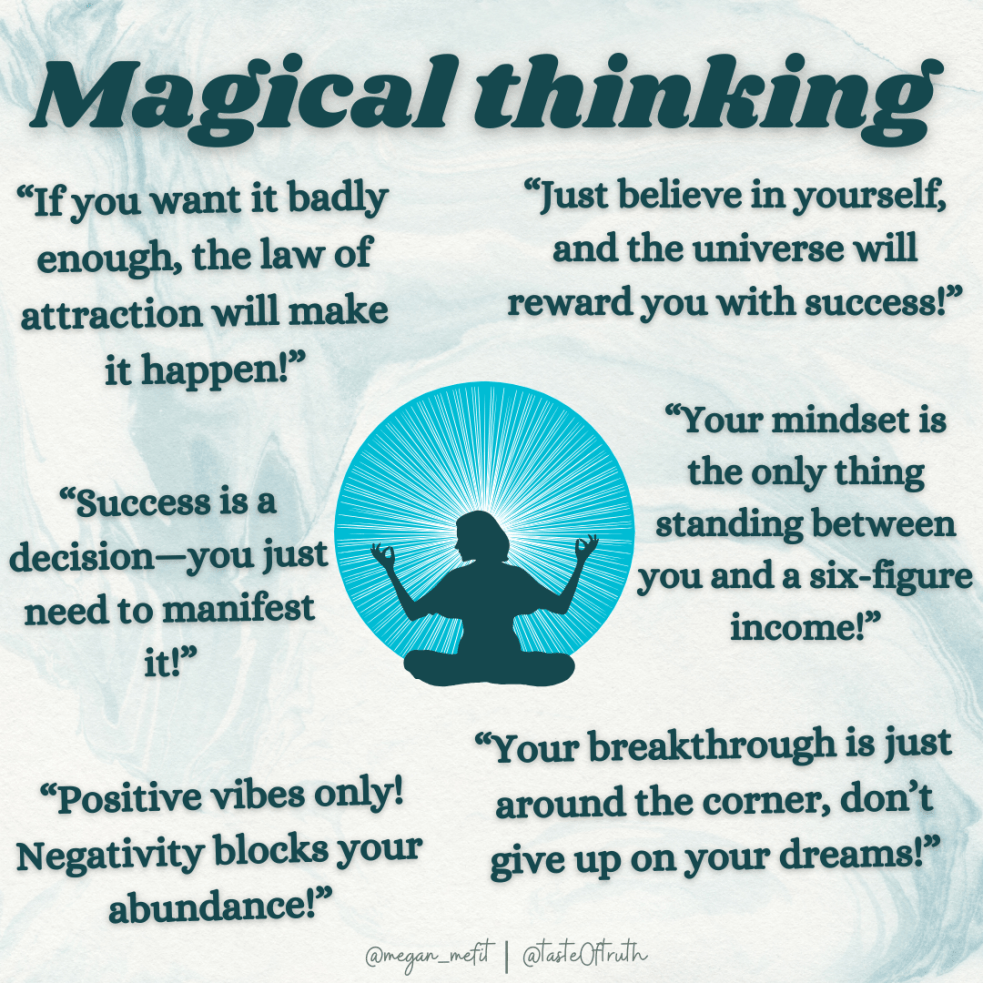
The critique, then, is not of hope or positivity per se, but of weaponized optimism. When mantras like let go and let God or just thinking positive to manifest it are used to shut down discernment, discourage action, or excuse exploitation, they cease to be spiritual tools and become instruments of control.

Nietzsche challenged us to look beyond systems that sanctify passivity, urging instead a confrontation with reality even when it is brutal. FitzPatrick’s work extends this challenge to the world of commerce: if we truly care about empowerment, we must be willing to see how belief systems can be manipulated for profit.

That’s why MLMs and the Law of Attraction deserve scrutiny. Not because they promise too much, but because they redirect responsibility away from unjust structures and onto the very people they exploit.


Coming Up: A Deeper Dive

Next week on the podcast, I’ll be speaking with Robert L. FitzPatrick, author of False Profits and one of the world’s leading experts on MLMs. With decades of research, FitzPatrick has testified in court cases exposing fraudulent MLM schemes and helped unravel the mechanisms behind these multi-billion-dollar operations. He’s seen firsthand how MLMs manipulate culture, co-opt spirituality, and turn belief itself into a product.

Stay tuned. This is a conversation about more than scams, it’s about the machinery of belief, and how it shapes our lives in ways we rarely see.

Taste0ftruth Tuesdays Previous blogs on MLMs

The MLM Illusion: Selling a Dream or a Trap?

Why MLMs Exploit Magical Thinking

Uncover how MLMs and high-control religions exploit narratives to control and isolate you

Lottery Odds vs MLM: Which Poses a Higher Financial Risk?

Previous Interviews:

Deconstructing Deception: MLMs, Exploitation & Online Influencers

From Serendipity to Scrutiny: The Truth Behind MLMs and Coercive Control

References/Suggested Reading

  • Byrne, Rhonda. The Secret. New York: Atria Books, 2006.
  • Eddy, Mary Baker. Science and Health with Key to the Scriptures. Boston: The Christian Science Publishing Society, 1875.
  • Emerson, Ralph Waldo. The Essential Writings of Ralph Waldo Emerson. Edited by Brooks Atkinson. New York: Modern Library, 2000.
  • FitzPatrick, Robert L. False Profits: Seeking Financial and Spiritual Deliverance in Multi-Level Marketing and Pyramid Schemes. Charlotte, NC: Herald Press, 1997.
  • FitzPatrick, Robert L. Ponzinomics: The Untold Story of Multi-Level Marketing. Charlotte, NC: Skyhorse Publishing, 2020.
  • Haidt, Jonathan. The Righteous Mind: Why Good People Are Divided by Politics and Religion. New York: Vintage Books, 2012.
  • Nietzsche, Friedrich. On the Genealogy of Morals. Edited by Walter Kaufmann. New York: Vintage Books, 1989 (originally published 1887).
  • Peale, Norman Vincent. Positive Thinking for a Time Like This. New York: Prentice-Hall, 1948.
  • Quimby, Phineas P. The Quimby Manuscripts. Edited by Horatio W. Dresser. New York: Thomas Y. Crowell, 1921.
  • Wallace, David Foster. “Consider the Lobster.” In Consider the Lobster and Other Essays. New York: Little, Brown, 2005. (Useful on consumer culture critique, if you want a modern edge.)

Why “Trust the Experts” Is Failing Us: The Shocking Loopholes in Our Food System

How Big Food Hijacked Nutrition Advice

In this week’s Taste of Truth Tuesdays podcast episode, we’re diving into an issue that has been brewing in the wellness world—particularly within the anti-MLM (Multi-Level Marketing) community. While many of us recognize the toxicity of MLM schemes in the beauty, wellness, and health industries, there’s another area where the promotion of questionable health products is happening: the food industry.

It’s strange, really. The same voices that speak out against MLMs’ manipulative practices often promote highly processed, sugar-laden foods in the name of convenience, cost-effectiveness, and even “health.” You’ve likely heard some of these food brands positioned as “healthier alternatives”—like Hawaiian Fruit Punch or cinnamon toast cereals—with a wink and a nod suggesting they’re okay to indulge in because they’re “fun,” “easy,” or “fortified” with vitamins. But here’s the truth: these products aren’t the wholesome treats they’re often presented as. The U.S. food system is more complicated—and far more dangerous—than most people realize.

How Many New Chemicals Are in Our Food?

Between 2000 and 2021, 766 new chemicals were introduced into the U.S. food supply. That’s right—thousands of chemicals and additives have been added to our foods without the rigorous review process people assume exists for food safety. In fact, 98.7% of these chemicals were approved through a loophole called the Generally Recognized as Safe (GRAS) pathway, which allows companies to self-certify their ingredients as safe, bypassing FDA review altogether. This system has enabled potentially harmful chemicals to enter our food without independent oversight.

The implications for consumer health are serious. These chemicals include artificial colors, flavor enhancers, preservatives, and sweeteners linked to various health issues. And because the FDA doesn’t maintain a comprehensive list of all the chemicals in our food, the lack of oversight should concern everyone.

The Problem with Self-Certification: Why HHS Secretary Robert F. Kennedy Jr. Is Pushing Back

It’s a real problem when the system designed to ensure food safety operates like the fox guarding the henhouse. Under the GRAS loophole, manufacturers can decide for themselves whether an ingredient is safe, meaning many additives in foods like sugary cereals or drinks may never have undergone adequate safety testing. As a result, foods marketed as “harmless fun” or “nutritious” could contain chemicals with long-term health risks.

In response, Health and Human Services Secretary Robert F. Kennedy Jr. has directed the FDA to explore eliminating the GRAS loophole. His argument? The current system treats chemicals as “innocent until proven guilty” rather than requiring manufacturers to prove safety before using them in food. Kennedy is pushing for greater FDA oversight to hold companies accountable for the ingredients they use—especially those with potential long-term health effects.

The Irony of Anti-MLM Advocates Promoting Big Food Products

Here’s where things get ironic: Many anti-MLM advocates call out the harmful ingredients in MLM products like shakes or vitamins, exposing their pseudoscience and shady marketing tactics. Yet, these same people turn a blind eye when it comes to mass-market food brands like Hawaiian Fruit Punch and sugary cereals.

Why? Because these products are marketed as “fun,” “easy,” or “family-friendly” and don’t carry the same stigma as MLMs. The problem is, these mass-market foods are often loaded with added sugars, artificial colors, and preservatives that have well-documented links to obesity, diabetes, and other chronic illnesses.

The Truth: Real Nutrition vs. Big Food’s Agenda

The food industry operates much like MLMs in how it prioritizes profit over consumer health. While MLMs exploit their members with empty wellness promises, Big Food capitalizes on our craving for convenience and nostalgia. If they can make something taste good, look appealing, and market it as a childhood favorite, we’ll keep buying it—regardless of its actual nutritional value.

As consumers, we need to recognize that just because something is widely available and heavily marketed doesn’t make it safe. Many of these products contain additives that have never been thoroughly tested or reviewed by the FDA. So, while it’s important to call out MLMs for misleading practices, we can’t ignore the fact that Big Food is playing the same game with what we eat.

Conclusion: What We Can Do About It

In this week’s podcast, we discussed the need for greater transparency and awareness in the food industry. Just like with MLMs, it’s crucial to remain skeptical and stay curious about what’s being marketed to us as “healthy.” Whether it’s a pre-packaged drink or a processed cereal, understanding what’s actually in these products can help us make better, more informed choices about what we’re putting into our bodies.

But beyond skepticism, real empowerment comes from reclaiming control over our food choices—getting back to the basics, connecting with local farmers, growing our own food, and learning how to cook from scratch. The more we detach from the processed food system and build relationships with those who produce real, whole foods, the less power these corporations have over our health.

For those wondering where to start, there are resources to help. Websites like LocalHarvest.org make it easy to find nearby farmers’ markets, family farms, and CSAs (Community Supported Agriculture) in your area. Many farmers’ markets even accept food stamps through the SNAP program, making fresh, local food more accessible than ever. Programs like USDA’s Farmers Market Nutrition Program (FMNP) also help connect families with nutritious, farm-fresh options.

This isn’t about fear—it’s about freedom. The freedom to nourish ourselves and our families with food we trust, to support local communities instead of faceless conglomerates, and to opt out of a system that prioritizes profit over well-being.

Let’s keep asking questions, seeking better alternatives, and finding ways to reconnect with real food. And as always, let’s maintain our curiosity, embrace skepticism, and keep questioning what we’re told is “safe.”

Sources:

  1. Center for Science in the Public Interest. (n.d.). GRAS loophole and FDA food safety concerns. https://www.cspinet.org
  2. Environmental Working Group. (n.d.). Thousands of chemicals in our food system remain unregulated. https://www.ewg.org
  3. LocalHarvest. (n.d.). Find local farms, farmers’ markets, and CSAs. https://www.localharvest.org
  4. Pew Charitable Trusts. (2013). Fixing the FDA’s food additive regulatory system.
  5. U.S. Department of Agriculture. (n.d.). SNAP at Farmers Markets. https://www.fns.usda.gov/fmnp/overview
  6. FDA’s GRAS System: U.S. Food and Drug Administration. (n.d.). Generally Recognized as Safe (GRAS). Retrieved from https://www.fda.gov/food/food-ingredients-packaging/generally-recognized-safe-gras
  7. Robert F. Kennedy Jr.’s Statements on FDA GRAS System: U.S. Department of Health and Human Services. (2025, March 10). HHS Secretary Kennedy directs FDA to explore rulemaking to eliminate pathway for companies to self-affirm food ingredients as safe. Retrieved from https://www.hhs.gov/about/news/2025/03/10/hhs-secretary-kennedy-directs-fda-explore-rulemaking-eliminate-pathway-companies-self-affirm-food-ingredients-safe.html
  8. Studies on Food Additives and Health Risks: National Institutes of Health. (n.d.). Artificial additives and their impact on health. Artificial Food Color Additives and Child Behavior

The Real Story Behind Nutrition Research: Unpacking ‘Statistical Significance’

What You Need to Know About Risk and Bias

If you’ve ever been confused by conflicting diet headlines, you’re not alone! Nutrition research aims to help us understand how different foods impact our health, but the process isn’t always straightforward. From small sample sizes to biases and misinterpreted data, the field is full of challenges that can lead to mixed messages. Today, we’re breaking down the complex world of nutrition research, unpacking what it really tells us, what it doesn’t, and how we can read between the lines to make sense of it all.

This is a complex topic, especially when it comes to understanding terms like absolute and relative risk, which can often be confusing without a visual, so be sure to scroll along as you listen!

Let’s dive in!

I recently sat down with Jacqui, a passionate advocate for empowering women to understand and support their bodies at every life stage. Our conversation was deeply insightful, particularly as Jacqui highlighted the importance of critically assessing nutrition research, an area she’s worked in for years. From her early love for nutrition labels to her background in bio-nutritional statistics and clinical trials, Jacqui’s journey has led her to focus on prenatal research and nutrition that fosters development.

Throughout our interview, Jacqui stressed the need for a more nuanced approach when it comes to nutrition science, pointing out how certain research methodologies and common misinterpretations can lead us astray.


1. The Pitfalls of Food Frequency Questionnaires (FFQs)

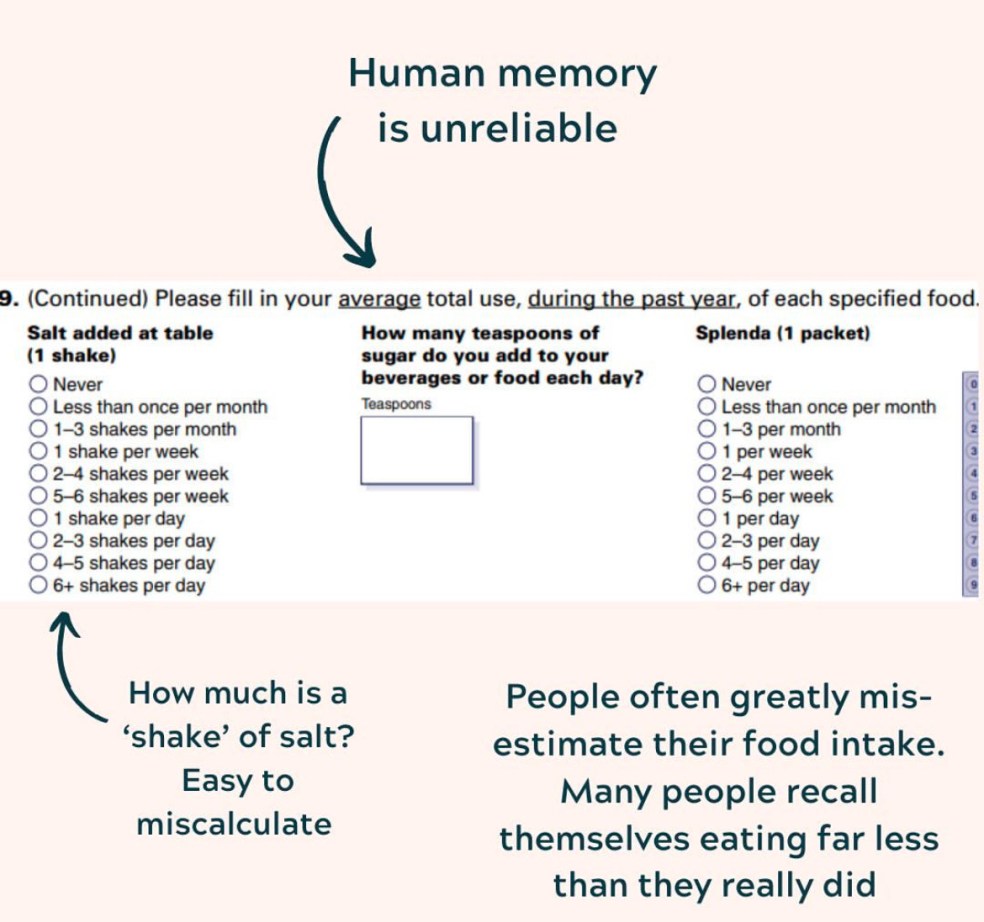
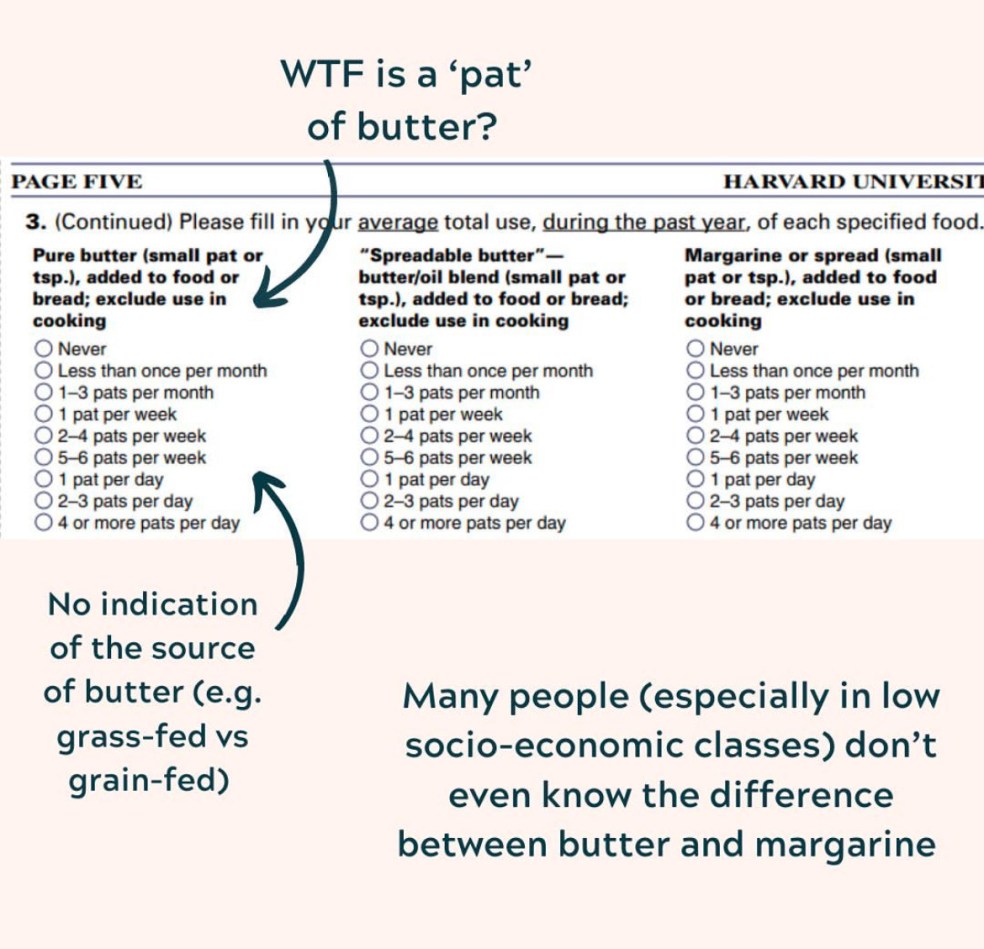
One of Jacqui’s key points was the reliability—or lack thereof—of Food Frequency Questionnaires (FFQs), a tool frequently used to assess dietary habits. FFQs often rely on participants’ memory, which can be imprecise and subjective.

Jacqui shared her firsthand experience collecting FFQ data and witnessing how confused participants often were when asked to recall what they ate. This variability in data collection can significantly impact the accuracy of nutritional studies, making it difficult to draw reliable conclusions about diet and health.

FFQs, though commonly used in research, often do not capture the full complexity of individual diets. This leads to inaccuracies in studies that can misguide dietary guidelines and public health advice. Jacqui emphasized that this is a critical issue because it directly affects how we understand nutrition and the effectiveness of dietary recommendations.


2. Understanding Relative Risk vs. Absolute Risk in Nutrition Headlines

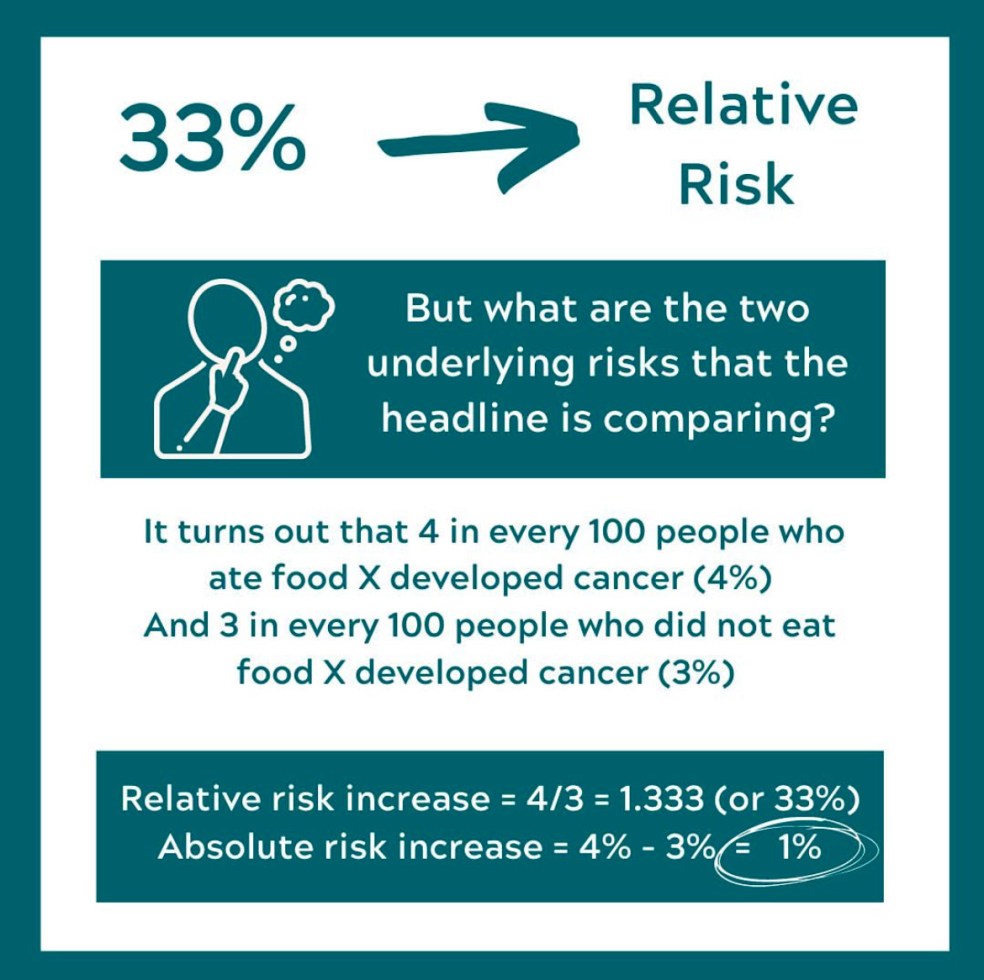
Nutrition studies often grab attention with sensational headlines, particularly when they report relative risks. Jacqui explained how a “33% increase in risk” can sound alarming, but in many cases, it doesn’t reflect the real picture. The key issue here is the difference between relative risk and absolute risk.

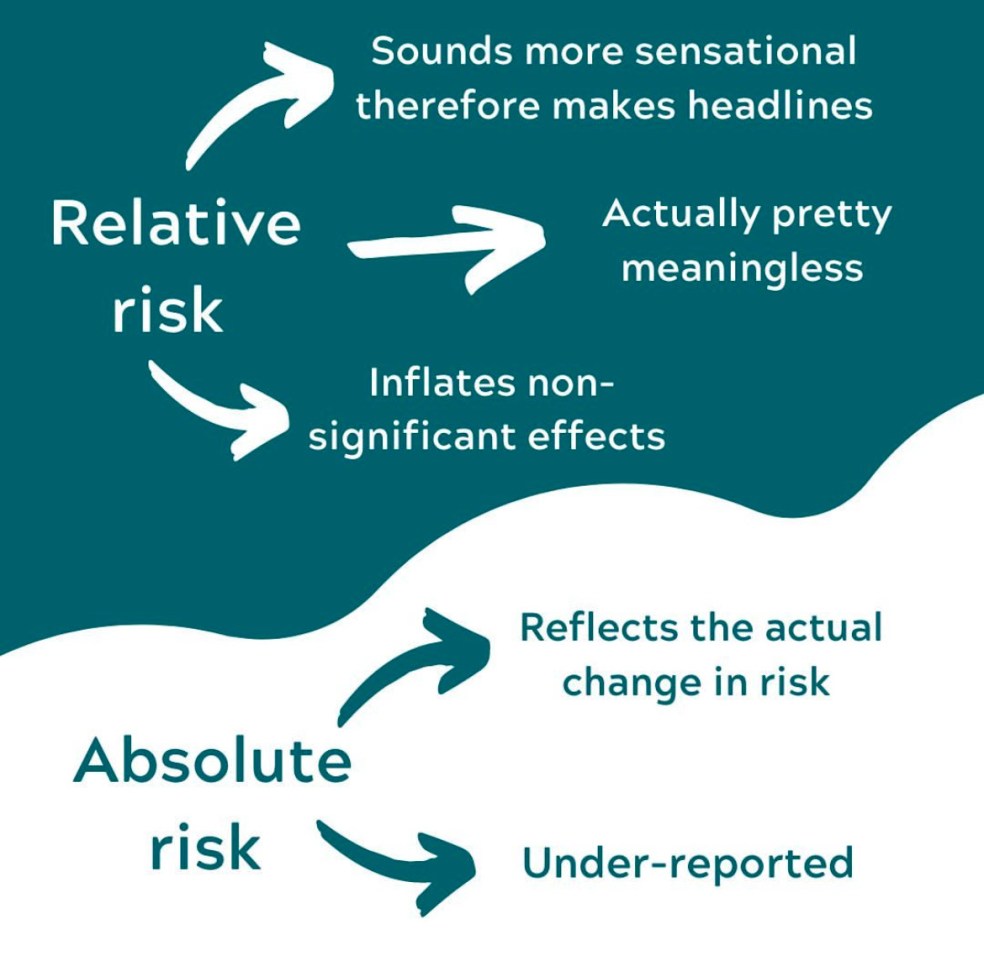
  • Relative risk refers to the increased risk of a particular outcome in one group compared to another. While this sounds important, it can be misleading without context. For example, a small increase in relative risk might not translate to a significant increase in your actual chance of experiencing that outcome.
  • Absolute risk, on the other hand, tells us the actual probability of an event happening.

Jacqui stressed the importance of recognizing this distinction when reading nutrition headlines.

A 33% increase in relative risk might sound alarming, but when we examine the absolute risk, the actual impact could be much less significant. Understanding this distinction helps consumers interpret research with greater accuracy, preventing them from falling for misleading headlines.

Review Jacqui post here to learn more!


3. The Problem with ‘Statistically Significant’ Results

The term “statistically significant” often sounds impressive, but Jacqui warned that it’s not always a reliable indicator of a meaningful finding. In nutritional research, a statistically significant result means that the data supports a specific conclusion beyond what could be expected by chance. However, Jacqui compared this to winning a small lottery: just because the result is statistically significant doesn’t necessarily mean it’s practically important.

In many cases, results that are statistically significant may not have a meaningful or clinically significant impact on real-world outcomes. For example, a study might show a statistically significant difference in health markers between two groups, but the actual difference might be so small that it doesn’t matter in terms of improving health.

When encountering results labeled as statistically significant, Jacqui advised readers to take a step back and ask: Is this result meaningful in the real world, or is it just a statistical fluke?


4. Why Nutritional Research Seems Contradictory

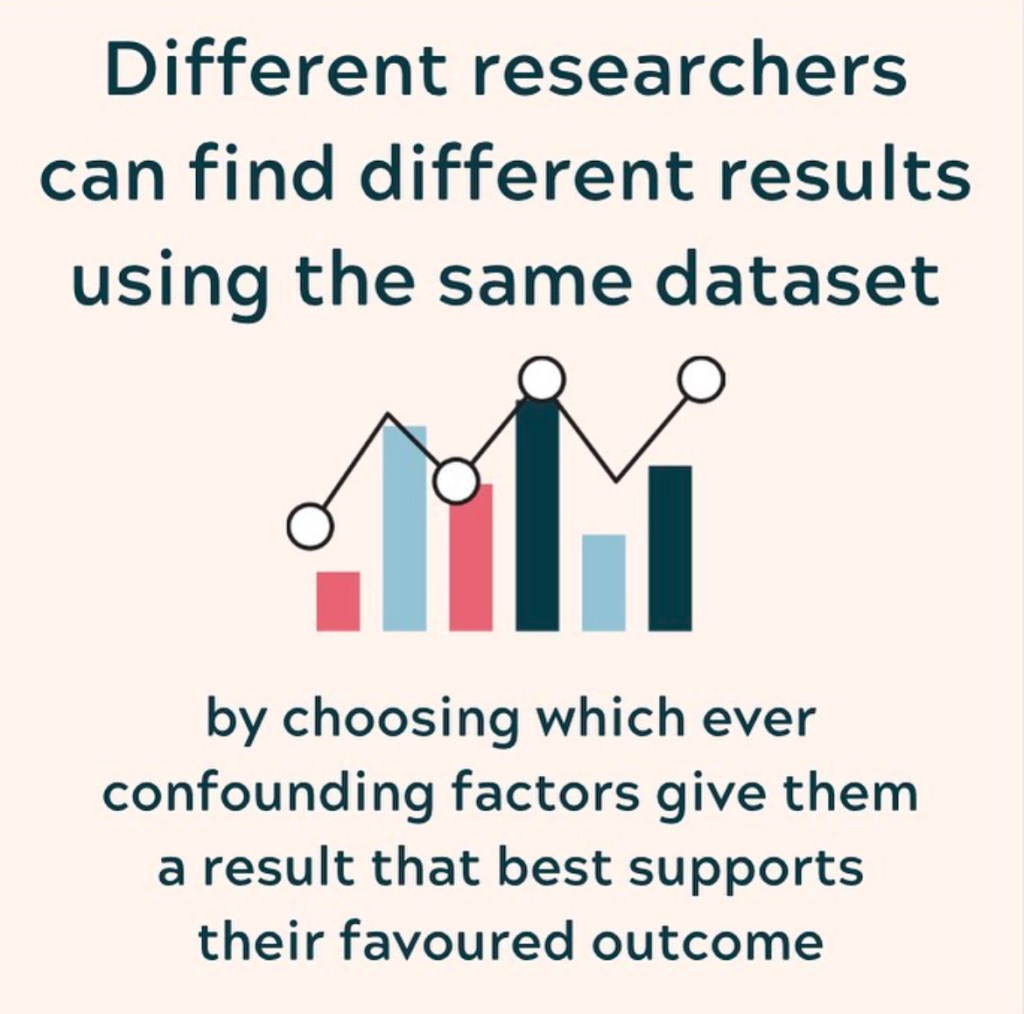
Another fascinating part of our conversation focused on the reasons why nutritional research can often feel contradictory. Jacqui pointed out that factors like small sample sizes, observational study designs, and various biases can skew the outcomes of studies. These variables contribute to conflicting opinions and conclusions in the field of nutrition.

Moreover, biases—whether financial or ideological—can shape the results of studies and the way findings are interpreted. For instance, when a study is funded by a food company, the results might be more favorable toward the products of that company, consciously or unconsciously.

Jacqui encouraged listeners to develop a critical eye when reading nutrition studies. Instead of accepting conclusions at face value, she suggested asking questions like: What’s the sample size? Who funded the study? What biases could influence the results?


5. How to Approach Nutrition Research as an Informed Consumer

So, how should we navigate the sea of nutrition research to make informed decisions about our food? Jacqui’s advice is simple yet powerful: approach nutrition research with a critical mindset.

Here’s how to do it:

  • Look beyond the headlines: Understand the difference between relative and absolute risk and question whether the findings are clinically significant.
  • Question study design: Be wary of studies with small sample sizes or those that rely on self-reported data, like FFQs. Also, consider the biases that may influence results.
  • Seek balanced perspectives: Look for research that examines multiple viewpoints and is not influenced by financial or ideological pressures.

Jacqui’s passion for empowering women through nutrition, particularly prenatal research, shines through in her work. By shedding light on the limitations and complexities of nutrition research, she offers us a much-needed roadmap to make informed decisions about our health. Whether you’re navigating the confusion of wellness trends or simply trying to understand what’s truly healthy, Jacqui’s insights can help us all approach nutrition with more clarity and skepticism.


Want more insights from Jacqui? Follow her on Instagram, where she shares practical advice and challenges the latest trends in wellness.

Learn more about Jacqui

Work with Jacqui: https://www.wellnesswithjacqui.co.za/contact 

The lazy cookbook https://www.wellnesswithjacqui.co.za/product-page/the-lazy-cookbook

Women’s health course: https://cominghometoyourself.thinkific.com/courses/coming-home-to-yourself

Stay curious, embrace skepticism, and keep tuning in!

Untangling the Threads of Chronic Pain, Trauma, and Healing

How Emotional Trauma Contributes to Chronic Pain

If you had asked me a year ago why my body hurt so much—why my hips ached, my calves tightened with every step, or why even walking on the treadmill felt like a chore—I would have said it was from overtraining or poor posture. What I couldn’t articulate then was that my pain wasn’t just physical. It was a complex dance involving my nervous system, my fascia, and my body’s attempt to protect itself after years of unresolved trauma.

Our nervous system plays a fundamental role in chronic pain. When we experience physical or emotional trauma, our body reacts by creating a heightened state of alertness. Over time, these experiences are encoded in the nervous system as neurotags—clusters of physical, emotional, and cognitive memories that influence how we react to stress and pain. Chronic pain, I’ve learned, is often an echo of this activation. It’s not just about tight muscles or structural imbalances—it’s a survival mechanism trying to make sense of and respond to past trauma.

This is the story of how I’ve started to untangle it all, and how chronic pain, emotional wounds, and trauma are all intricately tied together in ways I never imagined.

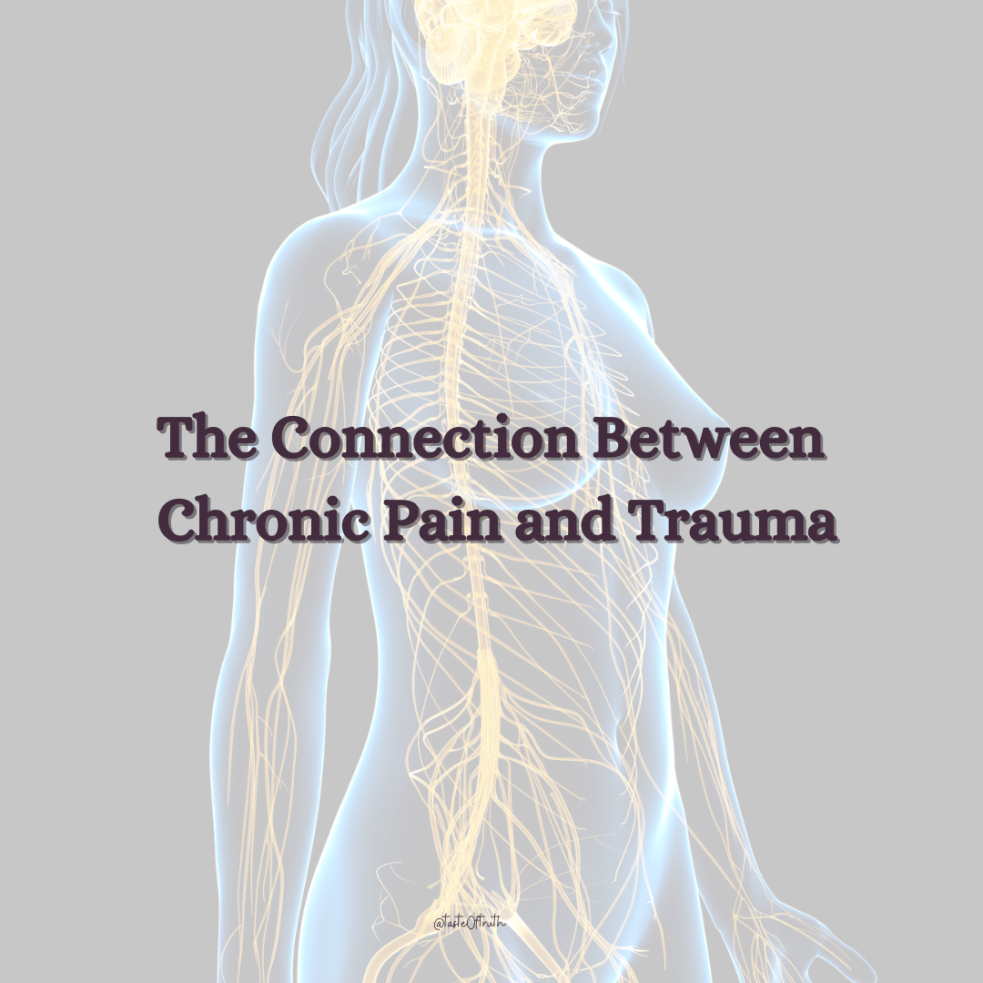
The Connection Between Chronic Pain and Trauma

For years, I treated my body like a machine. During my bodybuilding days, I pushed through discomfort, ignored signs of overtraining, and celebrated soreness as a badge of honor. But what I didn’t understand then was how my nervous system was quietly keeping score.

Chronic pain, I’ve learned, isn’t just about tight muscles or structural imbalances—it’s a survival strategy. When we experience trauma, whether from overtraining, stress, or emotional wounds, our nervous system can get stuck in a heightened state of alertness. It’s like a smoke alarm that keeps going off, long after the fire has been extinguished.

Fascia, the connective tissue that surrounds every muscle and organ in our body, plays a fascinating role in this process. Fascia isn’t just structural—it’s sensory. It’s packed with nerve endings that communicate directly with the brain. When the body perceives danger (even subconsciously), the fascia can tighten, creating patterns of tension that mirror emotional or physical trauma. In my case, that tension showed up in my psoas muscles, my calves, and my lower back—all areas associated with safety and movement.

The more I explored these connections, the more I began to see that pain wasn’t random—it was a message from my body. And it was asking me to listen.


The Power of Neurotags: How Pain and Trauma Intersect

One of the most eye-opening concepts I’ve come across in my journey is the idea of neurotags—a term used to describe the brain’s way of organizing and processing sensory, emotional, and cognitive information. Neurotags are like maps of experiences that are built over time, creating an interconnected network of physical sensations, emotions, and thoughts that work together to form a response to stimuli.

Here’s the kicker: Chronic pain is often stored in these neurotags. When trauma occurs—whether physical, emotional, or psychological—it gets encoded in the nervous system as a pattern. These patterns are not just about the physical experience of pain, but also the emotions and thoughts tied to that experience.

When trauma is stored in the nervous system, it doesn’t just affect how we feel physically; it affects our entire emotional and cognitive landscape. For example, someone who has experienced physical trauma may also experience emotional flashbacks or cognitive distortions that are linked to that experience. These flashbacks are like sudden replays of past trauma, but they don’t just exist in the mind—they can show up physically in the body.


Neurotags, Emotional Flashbacks, and Chronic Pain

Think about it this way: When we experience a traumatic event, our nervous system reacts by encoding that event into a neurotag. This neurotag includes not only the physical sensations (like tightness, pain, or discomfort), but also the emotions (fear, anger, sadness) and cognitive patterns (thoughts like “I am unsafe” or “I am weak”).

Emotional flashbacks happen when the brain reactivates these neurotags, causing the body to respond as if the trauma is happening again. This is why someone with chronic pain may experience intense emotions that seem disproportionate to the physical sensations they’re feeling. The pain can trigger a flashback—a sudden, overwhelming re-experience of trauma that isn’t just mental but is felt deeply in the body.

In my case, the tension I experienced in my hips and lower back was a reflection of both the physical trauma of overtraining and the emotional trauma I had internalized from years of pushing myself too hard and ignoring my body’s signals. When my nervous system encountered stress, it activated these neurotags, making the tension and pain feel more intense and more pervasive. The more I resisted this pain or ignored the emotional connection to it, the worse it became.


How I’m Healing: Creating New Neurotags and Engaging the Vagus Nerve

Understanding neurotags has been revolutionary in how I approach my healing process. The key to healing, I’ve learned, is not simply “fixing” the physical pain but reprogramming the neurotags. This involves creating new patterns that support healing, safety, and relaxation.

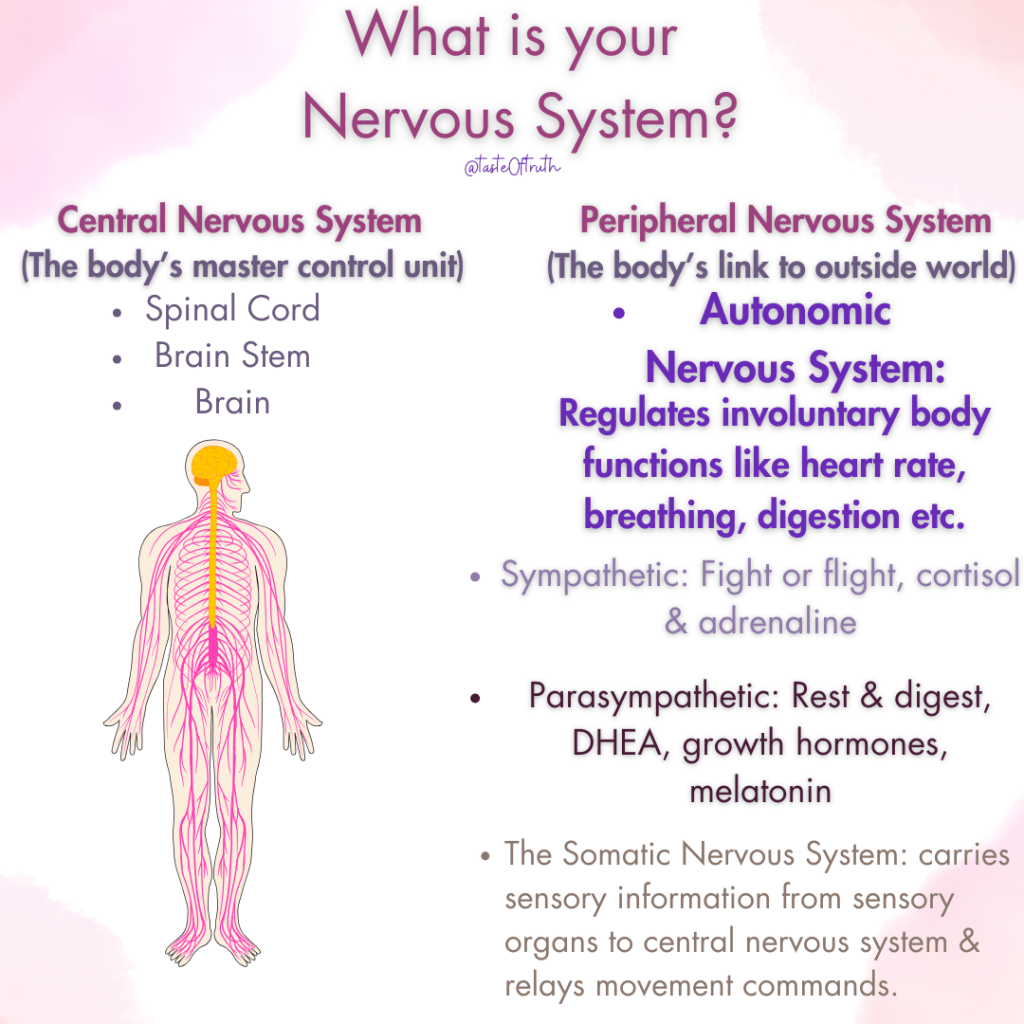
One powerful way I’m rewiring my nervous system is by engaging the vagus nerve, the longest cranial nerve that plays a critical role in regulating the parasympathetic nervous system. The vagus nerve is like the body’s “brakes,” helping to turn off the fight-or-flight response and return the body to a state of calm. When activated, it encourages relaxation, emotional regulation, and recovery—exactly what my body needs as I untangle the tension stored in my fascia and nervous system.

Here’s how I’m starting to rewire my system:

Reconnecting with Joyful Movement:
I’ve reintroduced activities that make me feel alive, like walking in the garden or playing with my pets. These moments remind me that movement isn’t just about strength—it’s about freedom. By incorporating joyful, non-stressful activities, I’m helping to reinforce new neurotags that associate movement with pleasure and ease.

Reclaiming Safety Through Movement:
Instead of high-intensity workouts, I’ve shifted to gentle, functional exercises that strengthen my core and glutes while supporting my nervous system. Slow, mindful movements like glute bridges, bird dogs, and pelvic tilts have become my new best friends. These exercises not only build strength but signal to my nervous system that it’s safe to move.

Releasing Fascia with Love:
I’ve embraced somatic practices like gentle rocking, diaphragmatic breathing, and fascia-focused stretches to help release tension. These practices aren’t just physical—they’re a way of telling my body, “You’re safe now.” They help reprogram the neurotags associated with stress and trauma by sending a message of relaxation and calm.

Vagus Nerve Activation:
To support my nervous system’s recovery, I’ve incorporated practices that stimulate the vagus nerve, such as slow, deep belly breathing and humming. Breathing deeply into my diaphragm (focusing on long exhales) has been especially helpful in calming my body and signaling to my nervous system that it’s okay to relax. By consciously engaging my vagus nerve, I’m helping shift from the fight-or-flight response into a restorative state.

Rewriting Emotional Patterns:
Rewiring my nervous system also means rewriting my emotional patterns. This involves acknowledging the emotional flashbacks that arise when pain triggers old neurotags and consciously choosing to respond with compassion and self-care. Instead of reacting with fear or frustration, I’m learning to pause, breathe, and remind myself that I’m safe now.

What Chronic Pain Has Taught Me

Chronic pain has been a tough teacher, but it’s taught me lessons I wouldn’t trade for anything:

  • Your body is always on your side. Pain is a signal, not a punishment.
  • Healing isn’t linear. Some days, progress looks like resting instead of pushing.
  • Movement is medicine, but only when done with intention and love.

I share this journey because I know I’m not alone. So many of us carry the weight of trauma—both emotional and physical—in our bodies. And while the road to healing isn’t easy, it’s worth it.

If you’re navigating chronic pain, I want you to know this: Your body isn’t broken, and you don’t have to fight it. With the right tools, patience, and self-compassion, you can create safety, release tension, and rediscover the joy of movement.

I’m still on this journey, and I’d love to hear about yours. What has chronic pain taught you? How are you learning to trust your body again? Let’s keep this conversation going—because healing happens when we feel safe enough to share.

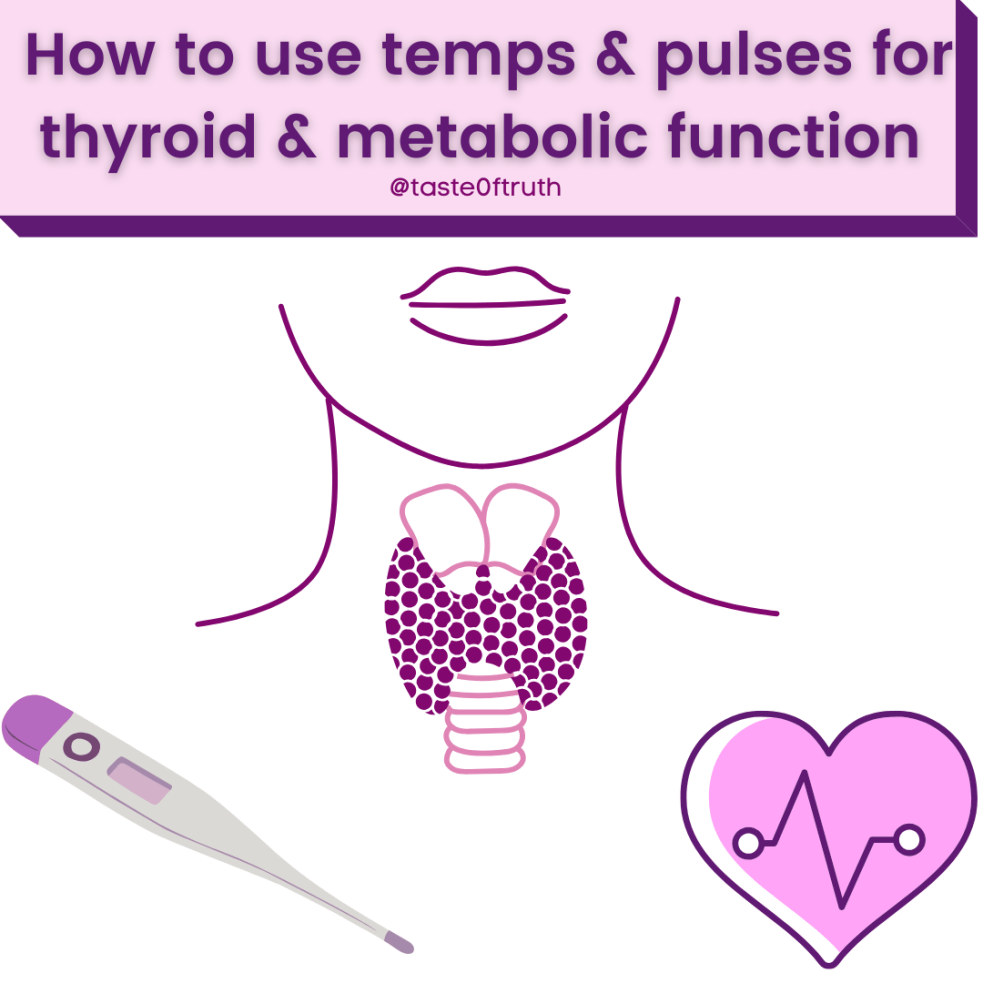
Understanding Metabolic Health: The Role of Temperature and Pulse

How to Use Temperature and Pulse for Metabolic Health Insights

In the summer of 2020, my health began to take a dive. Years of chronic dieting, over-exercising, negative self-talk, and hormonal birth control were taking their toll. I was eating next to no carbs, minimal sugar, low fat, no dairy, and only lean protein. I was working out six days a week, doing hours of cardio, and feeling terrible physically, mentally, and emotionally. Hypothyroid and adrenal symptoms began to emerge. It was clear my lifestyle was working against my physiology. My metabolism felt ‘broken’ or ‘slow,’ but in reality, I was undernourished and overstressed.

Initially, I started tracking basal temperature but did not include resting pulse rates. At the time, my average temperatures were 96.5°F, and my pulse was 44 bpm. Discovering the “pro-metabolic” community introduced me to the research of Dr. Ray Peat and Dr. Broda Barnes, and it changed my perspective.

According to Dr. Raymond Peat, a well-nourished, healthy human should have a resting pulse of 85+ beats per minute. A high resting pulse (in the absence of stress) indicates good metabolic health and a strong ability to repair. This counters mainstream advice, which often celebrates a low resting heart rate as a marker of fitness.

Why Temps and Pulses Matter

Your thyroid acts as your body’s thermostat, controlling metabolism. Metabolism is the sum of all biochemical reactions in the body—essentially, the rate of energy production in the cells and the speed of bodily processes. Body temperature reflects metabolic activity, and people with underperforming thyroids often have low basal body temperatures.

Tracking basal body temperature and resting pulse provides insights into your thyroid and metabolic function:

  • Basal body temperature can indicate if ovulation has occurred, reflecting progesterone production (a pro-thyroid hormone).
  • Resting pulse shows how well your body is utilizing nutrients and oxygen.
  • Tracking post-meal temperatures and pulses helps identify stress responses and metabolic efficiency.

How to Track Temps and Pulses

To get accurate and actionable insights, follow these steps: Log your readings daily to identify trends over time. Note factors like stress, sleep, meals, and menstrual cycle phases that might influence your results.

  • Choose the Right Thermometer
    • Use a digital thermometer with a quick response time and high accuracy.
    • Glass basal thermometers are also effective but require more time to measure.
  • Measuring Basal Temperature
    • Take your temperature first thing in the morning, immediately after waking, and before getting out of bed.
    • Place the thermometer under your tongue for the most reliable reading. Avoid using armpit readings as they can be less accurate due to environmental factors.
  • Measuring Resting Pulse
    • Use a wearable device, like a fitness tracker, to measure your resting pulse overnight or immediately upon waking.
    • Alternatively, place your index and middle fingers on your wrist or neck to manually count beats for 60 seconds.
  • After Meals
    • Check your temperature and pulse 30-40 minutes after breakfast. These should gently rise after eating, as food lowers stress and generates heat. If they drop, it may indicate elevated stress hormones upon waking.
  • Track Afternoon Readings
    • Record your temperature and pulse between 1-3 p.m. when your body’s temperature should naturally peak.
  • Use a Tracking App or Journal

Questioning the Mainstream Narrative

The Mayo Clinic states: “Generally, a lower heart rate at rest implies more efficient heart function and better cardiovascular fitness. For example, a well-trained athlete might have a normal resting heart rate closer to 40 beats per minute.”

But is a low resting heart rate truly beneficial? Evidence suggests otherwise. Thyroid health—the thermostat of the body—plays a crucial role in metabolism. A sluggish thyroid often correlates with lower body temperatures and slower heart rates, indicators of reduced metabolic function.

Why Temperature and Pulse Matter

Metabolism refers to the sum of all biochemical reactions in the body. It’s essentially the rate of energy production at the cellular level—the speed at which your body processes and utilizes energy. Your body temperature is a reflection of this activity. People with under-functioning thyroids tend to exhibit low basal body temperatures and slower pulses, which can indicate:

  • Low thyroid function
  • Inflammation
  • Suppressed immune function
  • High stress
  • Estrogen dominance

In contrast, a warm body is linked to better immune function, efficient digestion, reduced inflammation, and overall metabolic health.

How to Track Temperature and Pulse

Tracking these metrics throughout the day provides invaluable insights into your metabolic health:

  • Upon Waking:
    • Follicular Phase: 97.2-97.8°F
    • Luteal Phase: 98.6°F
    • Resting pulse: 75-90 bpm
  • After Breakfast:
    • Temperatures and pulse should gently rise after meals. Food lowers stress and generates heat. If your numbers drop, it may indicate falsely elevated waking temps due to stress hormones like cortisol.
  • Afternoon:
    • Temperatures should peak between 1-3 PM.

What Your Numbers Reveal

  • Higher temp and pulse (in the absence of stress): Optimal metabolic function
  • Normal temp and higher pulse: Active stress response
  • Lower temp and lower pulse: Chronic stress and metabolic suppression
  • Normal temp and lower pulse: Chronic stress or low thyroid function

How to Optimize Your Numbers

If your temperature and pulse rates aren’t within optimal ranges, consider the following steps:

  1. Prioritize bioavailable protein: Aim for at least 100 grams per day.
  2. Eat enough calories: 1,800-2,000+ per day, depending on individual needs.
  3. Include digestible carbs: At least 150 grams daily (e.g., honey, maple syrup, fruit, root vegetables).
  4. Pair carbs with protein: Avoid “naked carbs” to stabilize blood sugar.
  5. Focus on anabolic exercise: Build muscle with strength training to boost metabolism.

Why This Matters

Using temperature and pulse as tools, you can:

  • Monitor how well your body utilizes energy.
  • Evaluate recovery from exercise.
  • Gain insights into hormonal balance (e.g., progesterone production and ovulation).
  • Identify the impacts of stress on your physiology.

Final Thoughts

Key Takeaways By regularly monitoring your temps and pulses, you can uncover patterns and make adjustments to optimize your thyroid and metabolic health. These small, daily practices provide powerful insights into how your body is functioning and what it needs to thrive.

Healing is never a final destination; it’s an ongoing journey. Over time, I’ve seen significant improvements in my metabolic markers. My overall body temperature has risen to 97.6–98.1°F, and my resting pulse is now around 70 bpm—much better than where I started. This progress has required me to embrace a larger body size than what traditional “fit fam” culture promotes, but it has been worth it. Prioritizing healing and hormone rebalancing has provided my body with the sense of safety and stability it needed to thrive.

To read more about the doctor that pioneered these tests grab the book called Hypothyroidism: The unsuspected illness by Dr. Broda Barnes

✌🏼Looking for more support navigating your cycle with fitness & nutrition? Check out my FREE guide & pro-metabolic strength training guide available for purchase!

LINK to apply for 1:1 coaching ❤️

Sources 👇🏻

PMID: 28740582
PMID: 26792255
Dr. Ray Peat

Season 3 of Taste of Truth Tuesdays: Launching December 31st

We’re back! After a transformative and eye-opening second season, I’m excited to announce that Season 3 of Taste of Truth Tuesdays will kick off on December 31st. (Audio says Jan 7th, which was the original start date, I bumped it up a week.) This season promises to be packed with even more riveting conversations and insightful discussions. We’re diving into the complexities of spirituality, healing, activism, mental health, body image, and the power dynamics that shape our lives.

Here’s a sneak peek at the incredible guests you’ll hear from in the upcoming season:


Connie A. Baker: Spiritual and Religious Abuse

Connie A. Baker brings her expertise and personal experience to discuss the destructive impacts of spiritually abusive messages. These messages often erode our self-trust, leaving us vulnerable to further harm. In our conversation, we’ll explore the process of recovering from spiritual abuse and why it’s essential not to rush this journey. Connie will help us understand how survivors—especially those of us with a default setting of ‘push through’—can slow down and approach the healing process with patience. This wisdom is invaluable for true recovery, and I can’t wait for you to hear Connie’s insights.


Yasmine Mohammed: Escaping Radical Islam and Advocating for Women’s Rights

Yasmine Mohammed, a human rights activist and author of Unveiled: How Western Liberals Empower Radical Islam, joins me to share her powerful story. After escaping a forced, abusive marriage to an Al-Qaeda operative, Yasmine became an advocate for women’s rights. Through her non-profit organization, Free Hearts, Free Minds, she works tirelessly to support individuals seeking freedom from oppressive environments. Her memoir and activism offer a deeply personal and courageous perspective on overcoming adversity and empowering women. Her journey is one of survival, strength, and defiance.


Leah Denton: Therapy Harm and Power Dynamics in Mental Health

Leah Denton, the brilliant host of Psycho/Therapy podcast, will bring her deep insights into the harm that can occur within the therapeutic space and pastoral counseling. Leah, a survivor of therapy harm herself, shines a light on the ethical and systemic flaws within the mental health industry. She amplifies the voices of those who’ve been silenced and challenges us to rethink the power dynamics that can influence our healing. Leah’s work is a powerful call to action for better, more ethical care in therapy and beyond.


The Wellbeing Doctors: Body Image and Social Media’s Impact on Mental Health

Dr. Hannah Jarman and Ms. Claudia Liu, the dynamic team behind The Wellbeing Doctors, will discuss the intersection of body image, disordered eating, and the profound impact that social media has on our mental health. In their research, they’ve uncovered how active engagement with peers on social media can immediately reduce body image satisfaction, particularly for women. Together, we’ll explore how we need to redefine both beauty and health in ways that promote our true well-being, beyond appearances.


Wellness with Jaqui: The Real Story Behind Nutrition Research

Jaqui is back to break down the often-confusing world of nutrition research. If you’ve ever been baffled by conflicting diet headlines, this episode is for you. Jaqui will help us understand why nutrition research can be so complex, and how ‘statistical significance’ might not always mean what we think it does. This episode will bring clarity to the world of nutrition science and challenge the headlines we often see.


Franklin O’Kanu: Bridging Science, Spirituality, and Practical Wisdom

Franklin O’Kanu, also known as The Alchemik Pharmacist, is the founder of Unorthodoxy, a Substack that explores the spiritual dimensions of modern life through a holistic lens. With a Doctorate in Pharmacy and a background that bridges Pentecostal Christianity, Eastern philosophies, quantum physics, and Jungian psychology, Franklin offers a truly unique perspective. We’ll dive into his journey—from challenging conventional views during the pandemic to crafting a plan rooted in spiritual and natural principles. Franklin’s exploration of science, spirituality, and practical wisdom is sure to offer deep insights and foster a deeper understanding of the world around us.


This season is going to be a wild ride, full of wisdom, courage, and deep dives into essential topics that will challenge and inspire you. Don’t miss out on the launch of Taste of Truth Tuesdays Season 3 on December 31st! Make sure you’re subscribed, so you never miss an episode.

Stay curious. Stay skeptical. And, as always, keep tuning in! 🎙️🔒

Master Your Digestion This Holiday Season

Posting on a Wednesday? Guess my calendar’s been indulging in holiday cookies too.

Yep, we’re shaking things up this week! Whether you’re catching up on leftovers or prepping for your next holiday feast, now’s the perfect time to talk about digestion. After all, it’s the unsung hero of health—working overtime while we’re busy piling on the mashed potatoes

This post also kicks off a sneak peek into January’s 365 Easy Challenge, where we’ll focus on mastering six foundational habits to make 2025 your healthiest year yet. So, grab a cozy beverage, and let’s dig into how to keep your gut happy (and your pants buttoned) this holiday season.


Why Digestion Deserves the Spotlight

Let’s be real: you can load up on the healthiest foods, but if your digestion isn’t working properly, your body can’t absorb all those nutrients. Instead of diving into advanced gut protocols, let’s focus on digestive basics—those everyday habits that can transform how you feel after a meal.

From holiday feasts to office potlucks, the season is full of opportunities to test your digestive system. If you’ve ever felt bloated, gassy, or sluggish post-meal, you’re not alone. These are signs your gut might need a little TLC.


The Big Three Digestive Culprits

  1. Stress: Chronic stress throws your digestive system into chaos, slowing it down and causing discomfort.
  2. Rushed Eating: Gulping your meals doesn’t give your body time to process food properly.
  3. Poor Chewing: Chewing is where digestion starts, but many of us rush through it like it’s a race.

What to Do Instead:

  • Set the Scene: Before you eat, take a deep breath, relax, and engage your parasympathetic nervous system (aka your “rest and digest” mode).
  • Slow Down: Put your fork down between bites and chew each one 20–30 times. Yes, it feels slow at first, but it’s worth it!
  • Be Present: Step away from distractions like phones or TVs and focus on your food.

The Unsung Heroes of Digestion

1. Stomach Acid (HCL):
Stomach acid is crucial for breaking down protein and absorbing nutrients like zinc, iron, calcium, and B12. It also acts as your body’s first line of defense against harmful bacteria.

🙅‍♀️ Stop: Overusing antacids or skipping protein-rich meals.
✔️ Start: Eating a nutrient-dense diet, practicing mindful eating, and managing stress to naturally support stomach acid production.

2. Digestive Enzymes:
Digestive enzymes break down food so your body can absorb the nutrients. Without enough enzymes, you may experience bloating, constipation, or gas.

🙅‍♀️ Stop: Rushing meals and lying down immediately after eating.
✔️ Start: Chewing thoroughly, walking after meals, and addressing inflammation.

3. Bile Production:
Bile is essential for breaking down fats so your body can absorb them. If bile production is compromised, you might miss out on the benefits of healthy fats like omega-3s.

🙅‍♀️ Stop: Relying on low-fat diets or consuming unhealthy fats like vegetable oils.
✔️ Start: Eating healthy fats (avocado, olive oil, grass-fed butter) and supporting stomach acid levels.


A Healthy Gut Microbiome: Your Digestive Sidekick

Your gut bacteria play a vital role in digestion and overall health. To keep your microbiome balanced:

  • Eat a variety of fiber-rich foods like kale, spinach, swiss chard, cabbage, leeks, turnips, carrots, beets, and artichokes.
  • Avoid overloading your system with excessive fiber, which can cause bloating or discomfort.

Nuts, Seeds, Grains & Legumes: Prep Like a Pro

These foods are nutritional powerhouses, but they contain anti-nutrients like phytic acid and enzyme inhibitors that can block digestion and deplete minerals. Preparing them properly—by soaking or sprouting—neutralizes these compounds and makes nutrients more bioavailable.

How to Soak:

  • Cover your nuts, seeds, grains, or legumes with water and a splash of vinegar or salt.
  • Let them soak overnight, rinse thoroughly, and cook as usual.

Even with proper preparation, these foods can be hard to digest, so enjoy them in moderation.


Holiday Digestion Tips

Here’s how to support your gut through the festive season:

  1. Chew your food mindfully. No one’s handing out awards for fastest eater.
  2. Go for a walk after big meals. Gentle movement aids digestion and prevents sluggishness.
  3. Stay hydrated. Your digestive system needs water to function optimally.
  4. Be intentional with your intake of highly processed refined sugars. Excess amounts can disrupt your gut flora and leave you feeling sluggish and out of balance

Takeaways for a Happy Gut

Proper digestion = better nutrient absorption = thriving health.

Before trying advanced protocols, start with the basics:

  • Chew thoroughly.
  • Manage stress.
  • Prep your meals for optimal digestion.

And don’t forget, this is just the start. In January’s 365 Easy Challenge, we’ll dive deeper into digestion and other foundational habits like sleep, stress management, and nutrition.

Let’s make 2025 the year we simplify health and feel amazing doing it!


Kangen Water: Science or Scam?

Let’s talk about Kangen Water—a glorified water filter that’s convinced half the wellness community it can practically save the world. Kangen is often presented as the “it” product that will cleanse your body, raise your pH, and cure whatever ails you. From detoxification to slowing the aging process, the claims are endless. But does it actually do any of this, or is it just one expensive bottle of hype?

As someone who loves to blog about wellness trends and help people navigate the often confusing and sometimes downright misleading claims in the wellness industry, I’m here to cut through the noise. It’s time to stop buying into pseudoscience that preys on our desire for easy fixes. The wellness world is filled with products promising miracle results—products that are often built on shaky science or worse, none at all. Kangen Water is no exception.

Let’s break down whether this water really deserves its pedestal, or if it’s just another trend feeding into a culture of overpriced wellness gimmicks.

Water: Neutral, Alkaline, and Misleading Marketing

Water (H2O) typically has a neutral pH, sitting around 7, but it naturally dissociates into hydrogen (H) and hydroxide (OH) ions. The more hydrogen ions in water, the more acidic it becomes, while the more OH ions, the more basic (alkaline) it gets. In pure water, these ions are present in a small amount, and they tend to balance out by reforming into H2O. So, what is alkaline water, and what’s in it?

Real alkaline water contains something to make it basic—often baking soda. Some products claim to alkalinize water electrically, but here’s the catch: any ions in the water will eventually neutralize each other. In the end, pure water will always strive for a pH of 7. The idea that you can “alkalinize” water and benefit your body is where the pseudoscience comes in.

The claim is that when the body becomes “too acidic,” it can lead to a slew of health issues, and drinking alkaline water can balance things out. But here’s the truth: The body works tirelessly to maintain a very narrow pH range—7 to 7.4—in the blood and tissues. Any fluctuation outside this range is potentially dangerous, which is why the body has mechanisms to keep pH in check, like regulating breathing to balance CO2 levels and adjusting urine acidity.

Put simply, the idea that drinking alkaline water will “balance” your body’s pH is misleading. The body is already equipped with efficient systems for managing pH balance, and consuming regular food or liquids, regardless of their pH, won’t disrupt this delicate equilibrium. That’s right—your body’s pH is mostly unaffected by alkaline or acidic foods and beverages. This is why the whole alkaline diet and water movement is rooted in pseudoscience.

While some studies have tried to link an alkaline diet or water to benefits like preventing cancer or osteoporosis, they fail to provide solid evidence. A 2016 systematic review found no proof that alkaline water prevents or treats cancer. A 2011 review similarly found no support for an alkaline diet’s protective effects on bone health. So why do people keep buying into it? The answer lies in clever marketing, celebrity endorsements, and the placebo effect.

In reality, the only plausible benefit of alkaline water may be for those suffering from acid reflux, where it could act as a temporary antacid. But even this is not proven, and established treatments for acid reflux are far more effective.

So, the next time you’re thinking about splurging on Kangen Water or an expensive alkaline water machine, ask yourself: “Am I really buying science—or am I buying into pseudoscience wrapped in a fancy bottle?”

First off, let’s clear up a few things. The Kangen machine has only a single filter, and it’s inadequate for dealing with many of the toxins found in tap water. In fact, because of shortcomings with the filter, the Kangen machine just might change your life—for the worse. The filter in the Kangen machine doesn’t reduce levels of heavy metals or salt, meaning that if you’re relying on it for purity, you’re still drinking some of the same contaminants that you started with.

The Claim: Alkaline Water = Health Savior

Kangen Water’s marketing suggests that its alkaline properties can balance your body’s pH, improve health, and even slow aging. And while this sounds great, there’s a big problem: our stomach acid has an essential job to do, and it does not care about alkaline water. The stomach is a pH powerhouse, designed to digest food with an acidity of around 1.5 to 3.5, which is harsh enough to break down whatever you eat. So, if you’re gulping down alkaline water thinking it’s going to go in and “balance your body’s pH,” hate to break it to you, but it’s being neutralized by stomach acid in a matter of seconds.

The Antioxidant Claims: A Splash of Misleading Science

Another claim is that Kangen Water provides a “high antioxidant” effect by adding molecular hydrogen (H₂) to the water. Real antioxidants like vitamins C and E are absorbed into the bloodstream, where they tackle free radicals directly. But hydrogen’s benefits may not even survive digestion—our stomach acid can neutralize hydrogen molecules before they’re absorbed. While a few small studies suggest hydrogen-rich water might offer some benefits, there’s little robust evidence to back Kangen Water’s lofty promises.

Bottom line? Real antioxidants from food and supplements are a safer, cheaper bet than a pricey filter.

Science Says: Um, No Thanks

There’s simply no solid science to back the idea that alkaline water has sweeping health benefits. Hydration? Absolutely important. But a magic pH fix? Not really. The idea that our bodies need “detoxing” is an incredibly popular concept in the wellness space. If you spend any time on social media or browsing health blogs, you’ve likely come across expensive detox programs, supplements, or special teas that promise to cleanse your body of “toxins.” But here’s the reality: the body has its own built-in detox systems that do an exceptional job of keeping things running smoothly—without the need for any pricey detox gimmicks.

The Body’s Built-In Detox Systems

Our liver and kidneys are the real detox heroes of the body. These organs are specifically designed to filter out harmful substances and waste products, ensuring that our body remains balanced and healthy. The liver plays a central role in detoxifying harmful chemicals by metabolizing them into safer substances, which are then either excreted through bile or filtered through the blood to the kidneys for excretion via urine. These processes are efficient, effective, and happen continuously, without you having to do anything.

Liver: The liver acts like a sophisticated chemical processing plant. It filters out toxins, breaks down fats, proteins, and carbohydrates, and even helps with the digestion of food by producing bile. It’s constantly at work, breaking down substances like alcohol, medications, and other chemicals in the body, rendering them safe or neutral for excretion.

Kidneys: The kidneys are in charge of filtering waste products and excess substances (such as water, salt, and waste metabolites) from the bloodstream, which are then eliminated as urine. They also regulate the body’s fluid balance, keeping things like electrolyte levels in check, which helps maintain overall homeostasis.

These systems work synergistically to maintain a delicate balance in your body. They don’t need the help of a fancy detox program or juice cleanse—they do the job perfectly well on their own.

Why Detox Products Are Mostly a Marketing Scam

So why are detox products so popular, and why are they sold for high prices? A big part of the appeal is that these products promise to make people feel “cleaner” or “lighter” by removing toxins. But many of the ingredients in these products (whether it’s activated charcoal, herbal supplements, or teas) often lack scientific support for their detox claims. For instance, while some herbal teas might have mild diuretic effects, they don’t actually enhance the body’s ability to remove toxins in a meaningful way. In fact, some detox teas have been found to contain dangerous substances, including laxatives that can lead to dehydration and an imbalance in electrolytes.

It’s also important to note that the idea of “toxins” is often used very broadly and vaguely in the wellness industry. Toxins, in the sense that they are often described in detox marketing, are not necessarily specific substances that we need to rid ourselves of. In fact, the body regularly processes and neutralizes “toxins” naturally. The idea of a “toxic overload” is rarely grounded in scientific fact—unless, of course, you’re dealing with something like heavy metal poisoning or an actual overdose, which are medical conditions requiring professional treatment.

The Myth of Quick Fixes

The idea of quick detoxes or cleanses may also play into the human desire for immediate results. People want easy answers and fast solutions for things like weight loss, clearer skin, or improved energy. While it may be tempting to buy into the myth that you can “flush out” all your health problems in a few days, the reality is that lasting health comes from a balanced, sustainable lifestyle, not a quick cleanse. Regular hydration, a well-rounded diet, and sufficient sleep go a lot further toward maintaining your body’s natural detox processes than any supplement or fad.

Real Health Practices vs. Detox Scams

The best thing you can do to support your liver, kidneys, and overall health is to maintain a lifestyle that supports them. This means:

  • Drinking plenty of water (which helps kidneys function properly)
  • Eating a balanced diet with a variety of whole foods (rich in antioxidants, vitamins, and minerals)
  • Exercising regularly (to boost circulation and support liver health)
  • Avoiding excessive alcohol or toxins (to prevent overworking your detox systems)
  • Getting plenty of sleep (for cellular repair and recovery)

These practices help maintain the natural detox processes your body already does efficiently. Instead of spending money on detox products that may only leave you feeling deprived or temporarily lighter, focus on these sustainable habits that provide long-term benefits. Your body doesn’t need a detoxing break—it needs consistent support to keep running at its best.

In short, while the wellness industry promotes detox products as if they are a magic solution, the truth is that your liver, kidneys, and body as a whole have been doing the job perfectly all along.

The Role of Metabolism in Detoxification and Health

The real question you should be asking is whether your metabolic function is optimal. If it’s not, detox programs and restrictive diets are just band aids, suppressing symptoms like weight gain or chronic inflammation without addressing the root cause. And that root cause is often poor metabolic health.

What is metabolism?

  • It’s how efficiently and effectively your body uses energy to perform essential functions. Your metabolism impacts everything from how your cells function, to hormone production, and even the detox systems themselves.
  • Metabolism affects key functions such as:
    • Detoxification (liver, kidneys, skin)
    • Digestion
    • Hormonal output (thyroid, adrenals, insulin)
    • Inflammation and immune response
    • Menstrual cycles and reproductive health

When you focus on optimizing your metabolism through a well-rounded lifestyle—eating enough, managing stress, moving regularly, and prioritizing sleep—you support all of these systems, including detoxification. Restrictive detox diets that promise to “reset” your body do the opposite, often exacerbating metabolic imbalances.

How to Support Your Metabolism (and Detox Naturally)

Instead of relying on trendy detoxes, consider nurturing your body’s natural processes with these foundational practices:

  • Nourish your body rather than restricting it.
  • Eat a balance of protein, carbs, and healthy fats at regular intervals.
  • Breathe deeply to manage your nervous system.
  • Prioritize stress reduction and downtime (yes, even doing nothing is important).
  • Eat consistently, don’t skip meals.
  • Prioritize sleep—it’s essential for metabolic repair.
  • Increase daily movement—move more throughout the day!

A healthy metabolism is the foundation of a healthier body—when you heal your metabolism, you heal your whole self.

In conclusion, skip the detox fads, focus on metabolic health, and support your body’s natural detoxing systems. Your body is incredibly capable, and all it really needs is consistent care and support. 🍑

The Price Tag: Prepare to Be Shocked

Kangen Water machines range from $1,280 to almost $6,000. That’s right—almost six grand for a fancy filter. For comparison, you could buy a lifetime supply of high-quality bottled water, a well-reviewed filtration system, or even invest in a small swimming pool. And while Kangen distributors might tell you it’s an investment in your health, what they really mean is it’s an investment in their commission check.\

The Catch: Welcome to the MLM Trap

Kangen Water’s parent company, Enagic, operates through a multi-level marketing (MLM) model. That means a good chunk of their “sales” come from distributors who are also customers, encouraged to buy machines to qualify for commissions. It’s not so much about the water’s life-changing properties as it is about recruiting new people to buy machines, who then recruit others, and so on. Each sale pays up to 8 people in the “upline,” making it more about building a downline than actually selling to customers 

How to Avoid the Hype

If you’re really concerned about hydration and wellness, stick to filtered water. A quality filtration system can be a great investment without the price tag or the questionable promises. If you want to experiment with pH, try adding lemon to your water. Despite its acidity, lemon can actually have an alkalizing effect on the body once metabolized, and it costs about 50 cents.

Bottom Line: Don’t Drink the Kool-Aid

Wellness should be about making informed, evidence-based choices, not falling for fancy (and pricey) illusions. Kangen Water is marketed as a wellness must-have, but a good filtration system will do the job just as well—without the cult-like MLM tactics. So next time someone tells you alkaline water is the answer, just remember: your body is already handling things perfectly well, and it doesn’t need a $5,000 machine to do its job.


Resources: 

Here are some top resources to explore the science (or lack thereof) behind alkaline water and other wellness claims:

Books

  • 1. “Bad Science” by Ben Goldacre – Critiques pseudoscientific health claims, with sections on the wellness industry.
  • 2. “Trick or Treatment: The Undeniable Facts about Alternative Medicine” by Simon Singh & Edzard Ernst – Examines popular health trends and evaluates evidence behind them.

Articles

Videos

  • 1. Science Vs. (Podcast by Wendy Zukerman) – Covers alkaline water in various episodes, debunking wellness trends.
  • 2. “Alkaline Diets: Fact or Fiction?” by Dr. Mike Hansen on YouTube – A medical professional’s take on alkaline water and diets, with easy-to-understand explanations.

These resources give a broad perspective on why certain wellness claims, like those around alkaline water, often lack scientific support.

Two highly regarded resources targeting MLMs like Kangen Water, are:

1. YouTube Channels: Anti-MLM content creators on YouTube, such as Illuminaughtii and
Always Marco offer thorough, engaging analyses on MLMs, including Kangen Water’s practices and claims. These creators debunk misleading promises of financial success and health benefits promoted by MLM companies, providing evidence-backed critiques and personal accounts from former members.

2. The Anti-MLM Coalition: This website hosts a wide array of articles, lists, and YouTube recommendations that critique various MLMs. They detail many companies, including Enagic (the manufacturer of Kangen Water systems), breaking down why these structures are problematic. The coalition’s articles dissect business tactics, income claims, and legal actions, helping potential recruits or current distributors understand the reality behind MLM promises.

These resources offer educational, factual content to help audiences critically evaluate MLMs and make informed decisions.

Understanding the Impact of Diet on Thyroid Health

When clients come to me saying they have a “slow metabolism” or a “broken” metabolism, often they think they need to eat even less or cut carbs to jumpstart weight loss. But let me flip the script: in many cases, it’s actually chronic under-eating and restrictive dieting that’s slowing down their metabolism. Chronic dieting, especially with very low calories, can lead to impaired thyroid function and ultimately disrupt how the body uses energy. Here’s how it happens and what you can do to restore balance.


What is the Thyroid and Why Does It Matter?

Your thyroid is a small gland in your neck that plays a massive role in regulating your body’s metabolism. Often called the “controller” of metabolic function, the thyroid works closely with the hypothalamus and pituitary glands in the brain to maintain your metabolic rate. This system allows your body to increase or decrease energy production based on its needs, influencing everything from how you process food to your body temperature.

The thyroid primarily produces two hormones:

  • T3 (Triiodothyronine) – the active hormone that your cells use.
  • T4 (Thyroxine) – the inactive hormone that must be converted into T3 before your body can use it.

The production and conversion of these hormones depend on a feedback loop that begins with TSH (Thyroid Stimulating Hormone), which signals the thyroid to produce and release T4. But when the body is stressed—especially due to chronic under-eating or extreme calorie restriction—this whole process can become disrupted.

How Chronic Dieting Wrecks Your Thyroid

Under-eating is a significant source of stress for the body. Dieting or calorie restriction triggers the HPA axis (Hypothalamic-Pituitary-Adrenal axis), leading to an increase in CRH (Corticotropin-Releasing Hormone) and cortisol, our primary stress hormone. High cortisol levels can interfere with thyroid function in the following ways:

  • Reduces TSH Production: Elevated cortisol inhibits TSH, lowering T4 production and decreasing the amount of thyroid hormone available for energy use.
  • Impairs T4-to-T3 Conversion: Chronic stress slows down the conversion of T4 (inactive) into T3 (active), reducing your body’s energy production.
  • Increases rT3 Levels: Instead of converting into T3, some T4 becomes reverse T3 (rT3), a hormone that blocks T3 from being used. This, in turn, reduces the sensitivity of your cells to thyroid hormones, further lowering metabolic function.

This is why individuals who chronically under-eat or yo-yo diet often experience symptoms of hypothyroidism, even without an official diagnosis.


Symptoms of Suboptimal Thyroid Function

If your thyroid isn’t functioning optimally, you may notice some of the following symptoms:

  • Low body temperature (below 97.8°F)
  • Frequent feelings of cold, regardless of weather
  • Low or no libido
  • Anxiety, brain fog, or poor memory
  • Unexplained weight gain or difficulty losing weight
  • Bloating, poor digestion
  • Changes in hair texture or hair loss

Many clients experiencing these symptoms have been stuck in a calorie-deficit mindset for years, keeping their bodies in a constant state of stress. As a result, they’re often dealing with adrenal dysfunction, hypothyroidism, or even reproductive health issues, like extreme PMS, cycle loss, or low testosterone.


Restoring Your Thyroid Health—The First Steps

To begin improving thyroid health, our initial goal is to support both psychological and physiological balance, moving away from restrictive dieting and focusing on nourishment. Here’s a breakdown of the steps:

  1. Stabilize Blood Sugar: Balanced blood sugar supports thyroid health and reduces stress on the body.
  2. Maximize Nutrient Density: Prioritize whole, nutrient-rich foods to ensure your body receives adequate vitamins and minerals, especially selenium, zinc, and iodine, which are crucial for thyroid function.
  3. Reduce Inflammation: Chronic inflammation can further stress the thyroid. Anti-inflammatory foods and lifestyle practices can help.
  4. Incorporate Breathwork: Simple breathwork techniques can stimulate the vagus nerve, helping to regulate the HPA axis and reduce stress.
  5. Avoid Dietary Triggers: Reduce foods that promote “leaky gut,” such as highly processed foods, sugar, and gluten, if sensitive. This protects your immune and thyroid health.
  6. Manage Stress Proactively: Yoga, meditation, journaling, or spending time in nature can help keep cortisol in check.
  7. Reduce Toxins and Pollutants: Environmental toxins can interfere with hormone health, so minimizing exposure can be a powerful step.
  8. Prioritize Rest and Sleep: Quality sleep allows the body to recover and reset, which is essential for thyroid health.

The Bottom Line

Restrictive dieting isn’t the solution to a slow metabolism; it’s often the root cause. Chronic under-eating can lead to imbalances in your thyroid and adrenal glands, ultimately slowing down your metabolic rate and making it harder to achieve your fitness goals. Rebuilding a balanced, nourished body will not only help you feel better but will also lay the foundation for sustainable health.

This week, we’re talking all things thyroid health, and this post breaks down why breaking free from the dietary dogma of diet culture is crucial! Ever feel like your energy’s tanked, your minds in a fog, or your metabolism’s stuck in slow motion? 🧠✨ You’re not alone, and it could be your thyroid talking.

On this week’s Taste of Truth Tuesdays, we’re joined by Nicole, a holistic health advocate who’s here to shed light on how diet culture’s obsession with restriction can wreak havoc on your thyroid. From her own experience facing an autoimmune diagnosis to her advocacy for individualized nutrition, Nicole breaks down how restrictive dieting not only slows your metabolism but also impacts hormone balance, brain clarity, and overall well-being. Join us to learn how making friends with food (yes, even carbs!) might be the best way to support your thyroid and reclaim your energy.