Weaponized Forgiveness, Institutional Abuse, and Evangelical Justifications for Harm

Forgive and Forget? The Dark Side of Christian Forgiveness Culture

One of the main reasons I left mainstream Christianity is the way forgiveness has been weaponized. It’s used not as a path to healing but as a tool to silence victims, excuse harm, and protect institutions.

Instead of confronting abuse, many churches demand those survivors “forgive as they have been forgiven,” which conveniently shields perpetrators and absolves leadership from responsibility. Nowhere is this clearer than in the Southern Baptist Convention (SBC)—the largest Protestant denomination in the U.S.—which has spent decades covering up abuse while doing the bare minimum to protect children.

What Is the Southern Baptist Convention (SBC)?

The Southern Baptist Convention (SBC) is the largest Protestant denomination in the U.S., with over 47,000 churches and 13 million members as of 2024. Founded in 1845, the SBC split from northern Baptists over slavery and has since maintained a conservative theological stance.

The SBC holds complementarian beliefs, teaching that men and women have distinct, God-ordained roles with male headship in both the church and the home. This doctrine reinforces strict gender hierarchies, contributing to a culture of silence around abuse, particularly when male leaders are involved.


The SBC’s Persistent Failure to Protect Children

Despite its size and influence, the SBC has long failed to protect children from abuse. Recent reports show that only 58% of SBC-affiliated congregations require background checks for staff and volunteers working with children, and in smaller churches, this number drops to just 35%. A past audit revealed 12.5% of background checks flagged criminal histories that could disqualify individuals from church roles. These numbers underscore the SBC’s ongoing failure to address its own scandals.

Even if some churches struggle financially, it’s grossly irresponsible to assume volunteers are qualified without basic screenings. Churches should at the very least implement strict policies and mandatory training on abuse prevention and reporting—but the data proves otherwise.

Source: Southern Baptist Membership Decline Slows, Baptisms and Attendance Grow | Lifeway Research | May 7, 2024


SBC’s Hidden Influence: The Non-Denominational Loophole

Many churches that appear to be “non-denominational” are quietly affiliated with the SBC for financial and structural support. This means:

  • They may not openly use “Southern Baptist” in their name, yet still receive funding, resources, and pastoral training from the SBC.
  • Their leadership and policies often align with SBC doctrine, even if they market themselves as independent.
  • Some SBC-affiliated churches hide their connections to avoid association with the denomination’s abuse scandals, while still benefiting from its network.

This hidden network allows the SBC to maintain significant influence over American evangelicalism, even among those who believe they’re attending independent churches. And when scandals emerge, the denomination claims little accountability over individual churches, even as it continues to fund them.

  • The Guidepost Report (2022) exposed that SBC leadership maintained a secret list of over 700 abusive pastors, shielding them from consequences while survivors were ignored, discredited, or retaliated against.
  • Jennifer Lyell, an SBC abuse survivor, was vilified by church leadership when she came forward. Instead of support, she was publicly shamed, and her abuser faced no consequences.
  • Christa Brown, another survivor, spent years advocating for reform after being assaulted by her youth pastor. The SBC’s response? Stonewalling, gaslighting, and further silencing.

This is not an anomaly. It’s a pattern.


The Hillsong Scandal: A Deep Dive into Leadership, Accountability, and Institutional Culture

Hillsong Church, once hailed as a beacon of contemporary Christianity with its celebrity-driven worship services and massive global influence, has been mired in a series of scandals that have sent shockwaves through the church and beyond. The drama surrounding Hillsong reflects much deeper systemic issues within religious institutions, particularly those that prioritize celebrity culture, financial power, and unchecked leadership.

Brian Houston and His Father’s Abuse Scandal

At the heart of the Hillsong scandal is the case of Brian Houston and his handling of sexual abuse allegations against his father, Frank Houston, a founding member of the Assemblies of God in New Zealand. Frank Houston’s abuse of children became widely known, but Brian Houston’s failure to act—despite being aware of the allegations for decades—has raised serious questions about the church’s culture of secrecy and its prioritization of protecting its leaders over seeking justice for victims.

In 2021, Brian Houston was charged with covering up his father’s abuse, but he was acquitted in 2023. While the legal outcomes may be behind him, the moral and ethical questions surrounding his actions remain. His failure to report the abuse to the authorities and the lack of transparency in how Hillsong handled the situation speaks to the larger issue of institutions shielding leaders from accountability, especially when their actions threaten the church’s public image.

Carl Lentz and Leadership Failures

Another key figure in the Hillsong saga is Carl Lentz, the former lead pastor of Hillsong New York. Lentz’s celebrity status, especially his close relationships with figures like Justin Bieber, elevated him to international fame. But in 2020, Lentz was fired from his position after admitting to an extramarital affair. The church’s response to Lentz’s scandal raised more questions than answers. Hillsong failed to address the broader cultural issues at play—namely, a leadership model built on celebrity culture and a lack of accountability.

The church’s focus on its brand, public image, and the reputations of its leaders made it easier to overlook the toxic dynamics that led to Lentz’s behavior. His fall from grace demonstrated the dangers of elevating leaders to superstar status, where moral accountability is secondary to their influence and popularity.

Financial Mismanagement and Lack of Transparency

Financial scandals have also been a hallmark of Hillsong’s decline. Despite its non-profit status, Hillsong has faced accusations of lavish spending by its leaders, including Brian Houston, and financial mismanagement that prioritized the comfort of senior leaders over the needs of the congregation. Hillsong’s lack of financial transparency has led many to question how donations were being spent, particularly when its leaders were living luxurious lifestyles while the church’s financial practices remained opaque.

Reports have shown that church members had little insight into the church’s budgeting or financial decisions, raising alarms about how donations were being used. This financial opacity has created a culture of distrust, with many questioning whether Hillsong truly operated as a faith-based organization or as a business built around its leaders’ financial gain.

Celebrity Culture and Unchecked Leadership

The rise of Hillsong as a “celebrity church” is a clear example of the dangers of celebrity culture within religious organizations. Leaders like Brian Houston and Carl Lentz became more known for their status than their spiritual leadership. This culture created a disconnect between the mission of the church and the behaviors of those at its helm, fostering an environment where moral failings were excused, and accountability was pushed aside in favor of maintaining the church’s celebrity-driven image.

The celebrity culture at Hillsong is not an isolated phenomenon—many mega-churches and influential religious organizations have succumbed to similar dynamics. Leaders are often viewed as untouchable figures whose actions are excused because of their fame and influence. This lack of accountability has led to repeated scandals and a breakdown in trust between church leadership and their congregations.


A Culture of Silence and Protection

Celebrity culture and the culture of silence are both hallmarks of Christian culture, where forgiveness is weaponized to silence victims and maintain the church’s authority. Survivors who seek accountability are often told they are “bitter” or “holding onto unforgiveness,” while abusers are framed as sinners in need of grace.

This forced-reconciliation model doesn’t just silence victims—it actively enables abusers. Over and over, religious institutions have shielded predators while insisting their victims move on.

  • The Catholic Church sex abuse scandal followed the same pattern—priests were quietly transferred rather than removed.
  • The Southern Baptist Convention (SBC) was exposed in 2022 for covering up hundreds of abuse cases, prioritizing its reputation over protecting the vulnerable.
  • The Institute in Basic Life Principles (IBLP), made infamous by Shiny Happy People, used its teachings to guilt victims into silence, reinforcing submission as godliness.
  • The Mormon Church (LDS) has been accused of systematically covering up child sexual abuse, instructing bishops to handle cases internally rather than report them to authorities. The “help line” for abuse victims has been exposed as a legal shield to protect the church from liability.
  • Jehovah’s Witnesses have a longstanding pattern of protecting sexual predators under their “two-witness rule,” which requires at least two people to witness abuse for it to be considered valid. This impossible standard allows abusers to go unpunished while victims are shunned for speaking out.

This cycle continues because religious institutions prioritize obedience and reputation over accountability. Instead of advocating for justice, they demand submission—a dynamic that ensures abuse thrives in the shadows, disguised as grace.


The Evangelical Rejection of Modern Psychology

Many evangelicals reject modern psychology, fearing it undermines biblical authority and promotes a so-called “victim mentality.” Books like Bad Therapy are used to discredit trauma-informed approaches, mental health care, and gentle parenting—reinforcing the belief that obedience and submission matter more than emotional well-being.

But this isn’t just about dismissing psychology—it’s about control. Evangelical spaces often use forgiveness as a tool to suppress legitimate pain and absolve abusers of accountability. Instead of being a process that centers the victim’s healing, forgiveness is reframed as an obligation, a test of faith that prioritizes reconciliation over justice.

This kind of messaging pressures survivors into “forgiving and forgetting” under the guise of spiritual growth. As Susan Forward explains in Toxic Parents, this demand for immediate forgiveness often leads to “premature reconciliation,” where the victim is pushed to restore relationships without ever addressing the harm done. She describes how toxic family systems—and by extension, religious institutions—weaponize guilt, framing any resistance to reconciliation as bitterness, rebellion, or even sin. Forward emphasizes that true healing requires acknowledging pain, setting boundaries, and understanding that some relationships are too harmful to maintain. Forgiveness, in this sense, should never be about dismissing harm but about reclaiming personal agency.

Similarly, Pete Walker in The Tao of Fully Feeling critiques how many forgiveness frameworks, particularly those influenced by religious teachings, encourage victims to suppress righteous anger rather than process it. He argues that when people are pressured to forgive too soon, they bypass the necessary emotional work of grief and anger, which are essential steps in healing. Walker describes how survivors of abuse are often gaslit into believing that their pain is an obstacle to their spiritual growth rather than a justified response to harm. In contrast, he advocates for harvesting forgiveness out of blame—a process that allows victims to first fully validate their experiences, express their anger, and grieve their losses before even considering forgiveness. This approach reframes forgiveness as something that should serve the survivor’s well-being rather than the comfort of the perpetrator.

This is why modern psychology takes a different approach. Unlike evangelical teachings that frame forgiveness as a duty, trauma-informed perspectives recognize that forgiveness is a choice—one that should empower the survivor, not burden them with more guilt. True healing requires honoring all emotions, including anger, rather than rushing to absolution for the sake of appearances or religious pressure.


ACBC “Biblical Counseling”: When Religion Overrides Psychology

Another significant issue within certain Christian communities is the rise of the Biblical Counseling movement, particularly through the Association of Certified Biblical Counselors (ACBC) and its Nouthetic Counseling model. This approach starkly rejects psychological expertise and promotes the belief that biblical wisdom alone is sufficient to address mental health struggles, trauma, and even domestic violence. While this may seem like a spiritual response to real-world issues, it often exacerbates the trauma and leads to harmful advice.

One glaring problem with ACBC counseling is its lack of professional psychological training. Many of its so-called counselors do not possess accredited education in mental health fields. Instead, they rely on an outdated and rigid interpretation of scripture that reduces complex psychological issues to mere spiritual shortcomings. This is particularly dangerous in cases of trauma, mental illness, and domestic violence, where the guidance of trained mental health professionals is crucial.

Additionally, ACBC’s approach often results in victim-blaming, particularly for women who are struggling with abuse or neglect. Rather than providing the resources and support these women need, the movement encourages them to endure hardship with a sense of spiritual submission. This can exacerbate feelings of helplessness and self-blame, which are already prevalent among victims of abuse.

My Experience within ACBC Biblical Counseling

I was involved in a biblical counseling program that reinforced a system of patriarchal control, stifling my autonomy and presenting a distorted view of marriage and gender roles.

One of the most telling moments was when I encountered an excerpt from The Excellent Wife by Martha Peace in one of the workbooks. The list of expectations outlined for a wife to “glorify” her husband was staggering and disempowering. It included directives like:

  1. Organizing cleaning, grocery shopping, laundry, and cooking while fulfilling your “God-given responsibility” so that your husband is free to focus on his work.
  2. Saving some of your energy every day for him.
  3. Prioritizing your husband above children, parents, friends, jobs, Bible studies, etc., and rearranging your schedule whenever necessary to meet his needs.
  4. Speaking positively about him to others and never slandering him—even if what you’re saying is true.
  5. Doing whatever you can to make him look good, from running errands to helping accomplish his goals, while never taking offense if he chooses not to use your suggestions.
  6. Considering his work, goals, hobbies, and religious duties more important than your own.

As I’ve explained, these expectations weren’t just fringe ideas—they were central to the teachings of Biblical Counseling, widely embraced within the Southern Baptist Convention and many non-denominational churches. What I experienced wasn’t just about a partnership; it was about submission—unquestioning and absolute. The woman’s role was essentially to serve her husband’s needs and desires, no matter the cost to her own identity or autonomy.

But perhaps one of the most chilling aspects of this program was a statement that underscored the complete denial of personal rights. The workbook stated that humble people have “no rights” in Christ—only responsibilities. It referenced Philippians 2:3-8 to justify this perspective.

Don’t be selfish; don’t try to impress others. Be humble, thinking of others as better than yourselves. Don’t look out only for your own interests, but take an interest in others, too. You must have the same attitude that Christ Jesus had.

The workbook then presented a list of “rights” that were seen as sinful or selfish to claim in this context. Some of the rights included:

  • The right to control personal belongings
  • The right to privacy
  • The right to express personal opinions
  • The right to earn and use money
  • The right to plan your own schedule
  • The right to respect
  • The right to be married, protected, appreciated, desired, and treated fairly
  • The right to travel, to have a good education, to be beautiful

There were over thirty items on this list. This wasn’t just a list of personal sacrifices; it was a grooming tool that laid the groundwork for further abuse and manipulation under the guise of spiritual obedience.

These teachings were not about partnership, love, or mutual respect. They were about control, and they left no room for the dignity and rights of individuals, especially women.

If you want to dive deeper into the power dynamics at play in these teachings, I highly recommend listening to this podcast that breaks down the power play behind these ideologies.
A study on women’s anger found that common triggers for anger in women include feelings of helplessness, not being listened to, perceived injustice, and the irresponsibility of others. Instead of addressing these genuine concerns, ACBC’s authoritarian approach often pushes women to submit further, casting aside their voices and their safety in favor of a misguided spiritual ideal. This not only exacerbates their mental health but creates an environment ripe for spiritual abuse.

Corporal Punishment and Legal Definitions of Abuse

A major component of ACBC’s teachings also intersects with the controversial use of corporal punishment, where a thin line between discipline and abuse is often blurred. In some evangelical communities, particularly those influenced by ACBC’s authoritarian doctrines, corporal punishment is defended as a necessary part of biblical discipline, despite overwhelming legal and psychological evidence that physical discipline can have long-term harmful effects.

One of the most enduring arguments for corporal punishment is the misquoted phrase, “Spare the rod, spoil the child.” However, this phrase does not originate from the Bible. It comes from a 17th-century satirical poem by Samuel Butler, Hudibras. Despite this, it continues to be used in evangelical circles to justify spanking, whipping, and other forms of physical punishment.

The Bible passages often cited to defend corporal punishment—Proverbs 13:24, 22:15, 23:13-14, 29:15, and Hebrews 12:5-13—are frequently interpreted in a rigid, literal manner by proponents of corporal punishment. However, this literal approach is a key part of what historian Mark Noll refers to as “the scandal of the evangelical mind.” This narrow hermeneutic reflects a resistance to modern biblical criticism, science, and intellectual inquiry. It prioritizes a literal interpretation of scripture without considering the historical, cultural, and literary context of these texts. As a result, the teachings of scripture are applied in ways that disregard the broader ethical and psychological implications of corporal punishment.

Despite the continued justification for corporal punishment in these circles, modern research overwhelmingly shows its harmful effects. Studies indicate that physical discipline can lead to increased aggression, mental health issues, and weakened parent-child relationships. Yet, many evangelicals remain unwilling to reconsider this harmful tradition, which reflects a broader resistance within conservative Christianity to engage with contemporary understandings of psychology, trauma recovery, and legal definitions of abuse.

To clarify what constitutes abuse, Congress enacted the Federal Child Abuse Prevention and Treatment Act (CAPTA) in 1974, defining physical abuse as:

The infliction of physical injuries such as bruises, burns, welts, cuts, bone and skull fractures, caused by kicking, punching, biting, beating, knifing, strapping, and paddling.

Despite this clear legal definition, corporal punishment remains legal in all 50 states, with 19 states still allowing paddling in schools. This creates a disturbing disconnect: what is considered child abuse in some settings (such as foster care) is still widely accepted in evangelical homes and schools, even when it causes lasting harm to children.

This tension highlights the problematic nature of ACBC’s teachings, which sometimes encourage discipline methods that can be classified as abusive under legal definitions. Rather than fostering healthy relationships between parents and children, these practices often reinforce cycles of harm and emotional neglect, contributing to the very psychological issues ACBC claims to address. The refusal to acknowledge these realities creates a fertile ground for continued spiritual and psychological abuse.


The Case of John MacArthur and Grace Community Church (GCC)

One of the most disturbing examples of ACBC counseling practices, combined with the authoritarian culture it fosters, can be seen in the actions of John MacArthur, the pastor of Grace Community Church in Sun Valley, California, and his church’s mishandling of abuse allegations.

MacArthur has long been a proponent of the Nouthetic Counseling model, promoting a brand of counseling that prioritizes submission and forgiveness above all else, even in cases of serious abuse. One such case involves Eileen Gray, a woman who endured severe abuse at the hands of her husband, David Gray, while seeking help from Grace Community Church. Instead of providing support or professional counseling, Eileen was told by church leaders that seeking outside help was “worldly” and wrong.

Eileen’s testimony reveals the disturbing practices within GCC, where she was repeatedly told to forgive her abuser even if he was not repentant. Pastor Carey Hardy, a close associate of MacArthur, allegedly taught Eileen the “threefold promise of forgiveness”—a concept detailed in a booklet by MacArthur himself. According to this model, forgiveness means acting as though the abuse never happened, never bringing it up again, and never sharing it with others. This approach not only trivializes the severity of abuse but also places the onus on the victim to endure suffering for the sake of forgiveness and spiritual purity.

What is perhaps most alarming is the pressure placed on Eileen to allow David back into the home and “model for the children how to suffer for Jesus.” Eileen was told to accept her husband’s abuse and, in a deeply misguided view, to make her children witness this suffering as an example of Christian resilience. When Eileen refused to allow her children to be exposed to further abuse, she was met with resistance and intimidation.

The Revelation of Abuse and MacArthur’s Dismissal

Despite Eileen’s pleas for help, GCC’s response was woefully inadequate. When Eileen eventually sought counsel from Alvin B. Barber, a pastor who had officiated her marriage, Barber corroborated her account of the abusive counseling she had received from Hardy. Barber’s testimony was a damning indictment of both Hardy and the church’s leadership, as he described how Eileen was told to submit to her abuser and accept the abuse as part of her spiritual journey.

Eileen’s refusal to allow her children to remain in an abusive environment ultimately led her to request removal from the church’s membership. However, in a shocking display of disregard for her safety and well-being, Grace Community Church denied her request and continued to maintain her as a member, further compounding the trauma she had already experienced.

In the wake of these revelations, MacArthur’s involvement in the case became a point of contention. While MacArthur publicly denounced David Gray’s actions and supported his conviction, he simultaneously failed to hold his own leadership accountable for their role in enabling the abuse. MacArthur’s contradictory statements and lack of transparency in addressing the failures of his church’s leadership reflect a deeper systemic issue within his ministry: a prioritization of church authority and reputation over the safety and well-being of its members.

The Larger Implications: Spiritual Abuse and Lack of Accountability

The case of Eileen Gray is far from an isolated incident. It highlights a pattern within certain corners of the evangelical church, where women’s voices are silenced, and their suffering is minimized in favor of preserving a theological ideal that values submission and suffering over justice and healing. This pattern can lead to widespread spiritual abuse, where individuals are subjected to harmful advice and counseling that prioritizes conformity over personal well-being.

Furthermore, the lack of accountability for church leaders like John MacArthur, who have enormous influence in evangelical circles, contributes to the perpetuation of this toxic culture. By refusing to acknowledge the harmful consequences of ACBC-style counseling and the dismissive responses to abuse victims, MacArthur and others in positions of power not only fail to protect the vulnerable but also send a message that spiritual authority trumps the dignity and safety of individuals.

In the case of John MacArthur’s response to abuse allegations within his church, we see a chilling example of how religious institutions, under the guise of biblical wisdom, can cause immense harm. Eileen Gray’s story is a reminder of the dangers of theological systems that prioritize submission, forgiveness, and authority without regard for the trauma and suffering of individuals.

As these abuses come to light, it’s essential to continue challenging the status quo and demand greater accountability from religious leaders and organizations that have long been able to operate with impunity. Victims of spiritual abuse must be heard, and their stories must be validated, not dismissed or ignored.


The Bigger Picture: Power, Control, and the Misuse of Forgiveness

Whether we’re talking about institutional abuse, forced forgiveness, corporal punishment, or the rejection of psychology, the common denominator is control.

Evangelicals often claim that therapy “makes people feel like victims”, yet they embrace an even bigger victim narrative—the belief that Christians are under attack, that psychology is a threat, and that questioning church authority is dangerous.

Modern psychology isn’t perfect. Some aspects can promote excessive victimhood narratives. But that doesn’t mean psychology is inherently bad.

What we need is balance:

  • Healing that acknowledges real harm without trapping people in a victim identity.
  • Forgiveness as a choice, not a weapon.
  • Accountability for abusers, not silence for survivors.

Forgiveness should never be used to:

❌ Silence victims

❌ Excuse abuse

❌ Bypass justice

Discipline should never be an excuse for violence.
Faith should never be a shield for abusers.

Final Thoughts

Leaving mainstream Christianity wasn’t about rejecting faith—it was about rejecting an abusive system that prioritizes power over people.

If the church truly cared about justice, it would:

✔️ Prioritize abuse prevention over “cheap grace.”
✔️ Hold abusers accountable instead of demanding forced forgiveness.
✔️ Recognize that psychology isn’t a threat—but unchecked religious authority is.

It’s time to stop justifying harm in the name of God.

If you’re questioning a church’s affiliation with the Southern Baptist Convention (SBC), here are a few ways to check:

  • Ask directly—but be aware that some churches may downplay or obscure their affiliation.
  • Look for “Great Commission Baptists”—a rebranded term used by some SBC churches to distance themselves from controversy.
  • Use the SBC church locator tool online.
  • Investigate whether the church’s pastors were trained at SBC seminaries (e.g., Southern Baptist Theological Seminary, Southwestern Baptist Theological Seminary).

But here’s the thing: A new approach is emerging—one that focuses on community-driven solutions to address the consequences of institutional failures. Transparency, accountability, and education are now essential for organizations to operate ethically in the 21st century.

As these movements grow, it’s clear that change is happening. If you’re interested in exploring these shifts, especially within religious institutions, check out the upcoming docuseries dropping this Easter Sunday. It will dive deep into the pressing need for institutional reform, highlighting the intersection of religious nonprofits and the modern world. The series will explore the ethical, financial, and leadership issues many faith-based organizations face today. For more information, visit The Religion Business.

The Wounds We Don’t See: Betrayal, Recovery and Rebuilding Trust

Healing After Religious Abuse: A Conversation with Connie A. Baker

Religious abuse can leave deep scars—ones that don’t just fade with time but require intentional healing. In this week’s conversation, I sat down with Connie A. Baker, author of Traumatized by Religious Abuse, for an honest and heartfelt discussion about the journey of healing from spiritual trauma. Connie shares her own experiences, the painful realities of the “second wound,” and how survivors can reclaim their emotional autonomy after years of manipulation and control.

Why Healing Can’t Be Rushed

One of the most profound takeaways from our conversation was the reminder that healing isn’t something to bulldoze through. Connie calls herself a “recovering bulldozer,” always pushing to move forward as quickly as possible. But in trauma recovery, speed can be counterproductive. She embraces the mantra, slow is steady, and steady is fast. For survivors, learning to slow down and allow healing to unfold naturally is essential. Trying to rush past the pain often leads to setbacks, while true recovery requires patience, self-compassion, and time.

The Second Wound: Betrayal After Speaking Out

Connie describes how only 25% of the damage she endured came from the abuse itself—the remaining 75% came from the judgment, rejection, and betrayal she faced when she spoke out. This “second wound” is a devastating reality for many survivors who expect support but instead encounter disbelief, gaslighting, or outright hostility.

I resonated deeply with this. When I began speaking about my own experiences within the church, I was met with accusations of backsliding, manipulation, and spiritual rebellion. Survivors already carry the weight of their trauma, and the added burden of social ostracization can feel insurmountable.

So how do we heal from this betrayal? Connie shares practical steps, including:

  • Finding safe, validating spaces where your story is heard and honored.
  • Understanding that others’ disbelief or discomfort does not negate your truth.
  • Developing strong boundaries to protect yourself from further harm.

Naming Abuse and Embracing Spectrum Thinking

One of the most insidious aspects of religious abuse is the difficulty of naming it. Many survivors downplay their experiences, believing that if they weren’t physically harmed, it “wasn’t that bad.” But Connie emphasizes that minimizing abuse hinders healing.

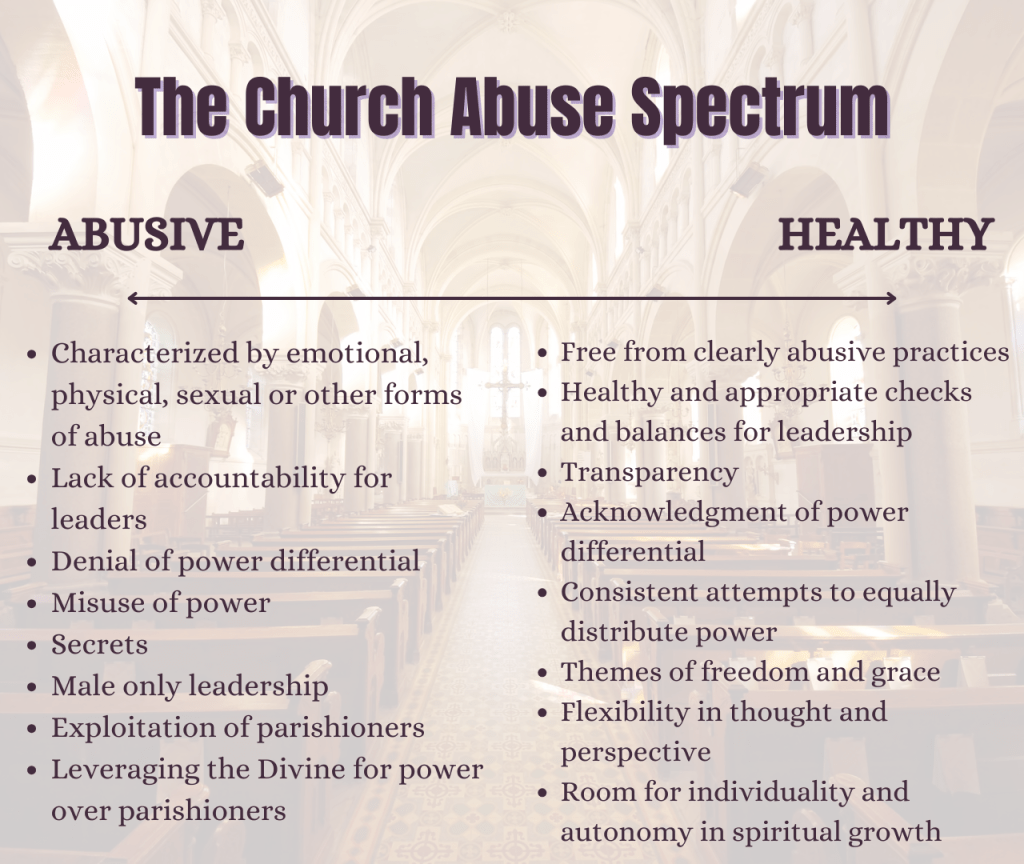
Abuse exists on a spectrum—from coercive control and emotional manipulation to outright physical harm. Recognizing where an experience falls on that spectrum is crucial for understanding the impact and taking steps toward recovery. This applies beyond religion too—cults, MLMs, and even rigid ideological movements can exhibit the same coercive tactics found in high-control religious environments.

Developing spectrum thinking—moving away from rigid “all or nothing” perspectives—allows survivors to see the full picture. Instead of thinking, “I was never physically hurt, so it wasn’t abuse,” they can acknowledge, “This environment manipulated me, eroded my self-trust, and controlled my emotions. That was harmful.”

Reclaiming Emotional Autonomy

Spiritual abuse often hinges on emotional suppression. Survivors are told that negative emotions—anger, sadness, fear—are sinful or a sign of weak faith. Verses like “Rejoice in the Lord always” and “Be anxious for nothing” are weaponized to shame people into emotional denial.

But emotions provide vital information. Anger tells us when our boundaries have been crossed. Sadness signals loss and the need for healing. Anxiety can be a survival mechanism. Connie reminds us that full wisdom comes from embracing the entire spectrum of human emotions.

Learning to trust yourself again after years of emotional control is no small feat. Some practical steps include:

  • Allowing yourself to feel emotions without labeling them as good or bad.
  • Recognizing when religious conditioning is silencing your true feelings.
  • Using anger constructively—to set boundaries rather than self-destruct.

Wrestling with Worldview: From Spiritual to Materialist and Back Again

Many survivors of religious abuse go through a radical shift in their worldview. Some reject spirituality entirely, embracing a materialist perspective where only the tangible world is real. Others swing to the opposite extreme, seeking comfort in rigid new belief systems.

Connie highlights that this spectrum—from deeply spiritual to strictly materialist—is something many survivors navigate as they attempt to make sense of their experiences. Some turn to hedonism—“Eat, drink, and be merry”—while others find meaning in service, activism, or intellectual pursuits. What matters most isn’t where someone lands on the spectrum but rather the process of wrestling with meaning, truth, and autonomy after religious trauma.

Final Thoughts

Healing from religious abuse is not linear. It’s messy, painful, and often isolating. But as Connie’s journey shows, it’s possible. By embracing the full range of emotions, setting firm boundaries, and recognizing abuse for what it is, survivors can reclaim their autonomy and rebuild a life of freedom and self-trust.

If you’re in the midst of this journey, know that you are not alone. Whether you’re deconstructing, reconstructing, or simply trying to make sense of it all, your experiences are valid. And healing—real, lasting healing—is possible.

What part of this conversation resonated most with you? Drop a comment and let’s keep the discussion going.

And as always: Maintain your curiosity, embrace skepticism, and keep tuning in! 🎙️🔒

Resources:

Untangling the Threads of Chronic Pain, Trauma, and Healing

How Emotional Trauma Contributes to Chronic Pain

If you had asked me a year ago why my body hurt so much—why my hips ached, my calves tightened with every step, or why even walking on the treadmill felt like a chore—I would have said it was from overtraining or poor posture. What I couldn’t articulate then was that my pain wasn’t just physical. It was a complex dance involving my nervous system, my fascia, and my body’s attempt to protect itself after years of unresolved trauma.

Our nervous system plays a fundamental role in chronic pain. When we experience physical or emotional trauma, our body reacts by creating a heightened state of alertness. Over time, these experiences are encoded in the nervous system as neurotags—clusters of physical, emotional, and cognitive memories that influence how we react to stress and pain. Chronic pain, I’ve learned, is often an echo of this activation. It’s not just about tight muscles or structural imbalances—it’s a survival mechanism trying to make sense of and respond to past trauma.

This is the story of how I’ve started to untangle it all, and how chronic pain, emotional wounds, and trauma are all intricately tied together in ways I never imagined.

The Connection Between Chronic Pain and Trauma

For years, I treated my body like a machine. During my bodybuilding days, I pushed through discomfort, ignored signs of overtraining, and celebrated soreness as a badge of honor. But what I didn’t understand then was how my nervous system was quietly keeping score.

Chronic pain, I’ve learned, isn’t just about tight muscles or structural imbalances—it’s a survival strategy. When we experience trauma, whether from overtraining, stress, or emotional wounds, our nervous system can get stuck in a heightened state of alertness. It’s like a smoke alarm that keeps going off, long after the fire has been extinguished.

Fascia, the connective tissue that surrounds every muscle and organ in our body, plays a fascinating role in this process. Fascia isn’t just structural—it’s sensory. It’s packed with nerve endings that communicate directly with the brain. When the body perceives danger (even subconsciously), the fascia can tighten, creating patterns of tension that mirror emotional or physical trauma. In my case, that tension showed up in my psoas muscles, my calves, and my lower back—all areas associated with safety and movement.

The more I explored these connections, the more I began to see that pain wasn’t random—it was a message from my body. And it was asking me to listen.


The Power of Neurotags: How Pain and Trauma Intersect

One of the most eye-opening concepts I’ve come across in my journey is the idea of neurotags—a term used to describe the brain’s way of organizing and processing sensory, emotional, and cognitive information. Neurotags are like maps of experiences that are built over time, creating an interconnected network of physical sensations, emotions, and thoughts that work together to form a response to stimuli.

Here’s the kicker: Chronic pain is often stored in these neurotags. When trauma occurs—whether physical, emotional, or psychological—it gets encoded in the nervous system as a pattern. These patterns are not just about the physical experience of pain, but also the emotions and thoughts tied to that experience.

When trauma is stored in the nervous system, it doesn’t just affect how we feel physically; it affects our entire emotional and cognitive landscape. For example, someone who has experienced physical trauma may also experience emotional flashbacks or cognitive distortions that are linked to that experience. These flashbacks are like sudden replays of past trauma, but they don’t just exist in the mind—they can show up physically in the body.


Neurotags, Emotional Flashbacks, and Chronic Pain

Think about it this way: When we experience a traumatic event, our nervous system reacts by encoding that event into a neurotag. This neurotag includes not only the physical sensations (like tightness, pain, or discomfort), but also the emotions (fear, anger, sadness) and cognitive patterns (thoughts like “I am unsafe” or “I am weak”).

Emotional flashbacks happen when the brain reactivates these neurotags, causing the body to respond as if the trauma is happening again. This is why someone with chronic pain may experience intense emotions that seem disproportionate to the physical sensations they’re feeling. The pain can trigger a flashback—a sudden, overwhelming re-experience of trauma that isn’t just mental but is felt deeply in the body.

In my case, the tension I experienced in my hips and lower back was a reflection of both the physical trauma of overtraining and the emotional trauma I had internalized from years of pushing myself too hard and ignoring my body’s signals. When my nervous system encountered stress, it activated these neurotags, making the tension and pain feel more intense and more pervasive. The more I resisted this pain or ignored the emotional connection to it, the worse it became.


How I’m Healing: Creating New Neurotags and Engaging the Vagus Nerve

Understanding neurotags has been revolutionary in how I approach my healing process. The key to healing, I’ve learned, is not simply “fixing” the physical pain but reprogramming the neurotags. This involves creating new patterns that support healing, safety, and relaxation.

One powerful way I’m rewiring my nervous system is by engaging the vagus nerve, the longest cranial nerve that plays a critical role in regulating the parasympathetic nervous system. The vagus nerve is like the body’s “brakes,” helping to turn off the fight-or-flight response and return the body to a state of calm. When activated, it encourages relaxation, emotional regulation, and recovery—exactly what my body needs as I untangle the tension stored in my fascia and nervous system.

Here’s how I’m starting to rewire my system:

Reconnecting with Joyful Movement:
I’ve reintroduced activities that make me feel alive, like walking in the garden or playing with my pets. These moments remind me that movement isn’t just about strength—it’s about freedom. By incorporating joyful, non-stressful activities, I’m helping to reinforce new neurotags that associate movement with pleasure and ease.

Reclaiming Safety Through Movement:
Instead of high-intensity workouts, I’ve shifted to gentle, functional exercises that strengthen my core and glutes while supporting my nervous system. Slow, mindful movements like glute bridges, bird dogs, and pelvic tilts have become my new best friends. These exercises not only build strength but signal to my nervous system that it’s safe to move.

Releasing Fascia with Love:
I’ve embraced somatic practices like gentle rocking, diaphragmatic breathing, and fascia-focused stretches to help release tension. These practices aren’t just physical—they’re a way of telling my body, “You’re safe now.” They help reprogram the neurotags associated with stress and trauma by sending a message of relaxation and calm.

Vagus Nerve Activation:
To support my nervous system’s recovery, I’ve incorporated practices that stimulate the vagus nerve, such as slow, deep belly breathing and humming. Breathing deeply into my diaphragm (focusing on long exhales) has been especially helpful in calming my body and signaling to my nervous system that it’s okay to relax. By consciously engaging my vagus nerve, I’m helping shift from the fight-or-flight response into a restorative state.

Rewriting Emotional Patterns:
Rewiring my nervous system also means rewriting my emotional patterns. This involves acknowledging the emotional flashbacks that arise when pain triggers old neurotags and consciously choosing to respond with compassion and self-care. Instead of reacting with fear or frustration, I’m learning to pause, breathe, and remind myself that I’m safe now.

What Chronic Pain Has Taught Me

Chronic pain has been a tough teacher, but it’s taught me lessons I wouldn’t trade for anything:

  • Your body is always on your side. Pain is a signal, not a punishment.
  • Healing isn’t linear. Some days, progress looks like resting instead of pushing.
  • Movement is medicine, but only when done with intention and love.

I share this journey because I know I’m not alone. So many of us carry the weight of trauma—both emotional and physical—in our bodies. And while the road to healing isn’t easy, it’s worth it.

If you’re navigating chronic pain, I want you to know this: Your body isn’t broken, and you don’t have to fight it. With the right tools, patience, and self-compassion, you can create safety, release tension, and rediscover the joy of movement.

I’m still on this journey, and I’d love to hear about yours. What has chronic pain taught you? How are you learning to trust your body again? Let’s keep this conversation going—because healing happens when we feel safe enough to share.

1984 and The Handmaid’s Tale: Misplaced Parallels and Liberal Delusion

Breaking Free: A Conversation with Yasmine Mohammed on Radical Islam, Empowerment, and the West’s Blind Spots

After finishing George Orwell’s 1984, I noticed its resurgence in popularity, especially after Trump’s election. Ironically, it’s not the conservative right but the progressive left that increasingly mirrors Orwellian themes. Similarly, Margaret Atwood’s The Handmaid’s Tale has become a rallying cry for liberals who claim to be on the brink of a dystopian theocracy. Yet, as Yasmine Muhammad pointed out in this week’s episode, this comparison is not only absurd but deeply insulting to women who live under regimes where Atwood’s fiction is a grim reality.

1984: Rewriting Language and History

The Democratic Party’s obsession with redefining language is straight out of Orwell’s playbook. They tell us biology is bigotry and that there are infinite genders, forcing people to adopt nonsensical pronouns or risk social ostracism. This is not progress—it’s the weaponization of language to control thought, eerily similar to Orwell’s Newspeak.

But it doesn’t stop there. They actively rewrite history by renaming monuments, military bases, and even schools, erasing cultural markers in the name of ideological purity. This is doublespeak in action: the manipulation of truth for political orthodoxy. Orwell’s warning that “orthodoxy is unconsciousness” feels disturbingly apt when observing the modern left.

The Handmaid’s Tale: An Insult to Women Who Actually Suffer

In our conversation, Yasmine highlighted the absurdity of liberal claims that America is The Handmaid’s Tale come to life. Yasmine, who grew up under Islamic theocracy, knows firsthand what it’s like to live in a world where women have no autonomy. These women cannot see a doctor without a male guardian, are forced to cover every inch of their bodies, and are denied basic freedoms like education or the right to drive.

Contrast this with the West, where women have more freedom than any other point in history. Liberal women can run around naked at Pride parades, freely express their sexuality, and redefine what it means to be a woman altogether. And yet, they cry oppression because they are expected to pay for their own birth control or endure debates over abortion limits. This level of cognitive dissonance—claiming victimhood while living in unprecedented freedom—is a slap in the face to women who actually suffer under real patriarchal oppression.

Liberal Orthodoxy: Lost in the Sauce

What’s truly Orwellian is how the left uses its freedom to strip others of theirs. They shout about inclusivity but cancel anyone who disagrees. They claim to fight for justice while weaponizing institutions to enforce ideological conformity. Meanwhile, they are so consumed with their own victim complex that they fail to see how absurd their comparisons to dystopian fiction really are.

Orwell and Atwood warned against unchecked power and ideological extremism. If liberals actually read these books instead of using them as aesthetic props, they might realize they’re mirroring the very authoritarianism they claim to oppose. Instead, they’re lost in the sauce, preaching oppression in a society where they have more freedom than they can handle.

As Yasmine said, “You want to see The Handmaid’s Tale? Try being a woman in Saudi Arabia, Iran, or Afghanistan.” The left would do well to remember that before playing the victim in their cosplay dystopia.

The MLM Illusion: Selling a Dream or a Trap?

New Episode Alert: The Dark Side of MLMs and Coercive Control

🚨 This Week on Taste of Truth Tuesdays 🚨, we’re diving into the complex and manipulative world of multi-level marketing (MLM) companies—uncovering the coercive control tactics they use to keep people hooked. 🧠💸 MLMs don’t just sell products. They sell a dream—a dream of financial freedom, wealth, and unlimited success. The problem? That dream is often built on deceptive tactics that prey on vulnerability, foster magical thinking, and emotionally manipulate their members.

At first glance, MLMs seem like a golden opportunity. They promise wealth, freedom, and independence—targeting people who are seeking a way out of financial struggle or a traditional 9-to-5. But underneath those glittering promises are dangerous tactics that prey on human psychology, exploiting emotional weaknesses to create loyalty and blind devotion.

A key tactic MLMs use is magical thinking. This is the belief that positive thoughts and visualizations alone can bring success, wealth, or health. A 2019 study in Frontiers in Psychology revealed that many MLMs sell products—like supplements and essential oils—by making unverified claims about curing diseases, with little to no scientific evidence to back them up. 😳

Why Is Magical Thinking So Dangerous?

Magical thinking isn’t just harmless optimism. In the context of MLMs, it can lead people to make poor financial and health decisions. Here’s why it’s so dangerous:

🚫 False Sense of Control: Magical thinking tricks people into believing they can control outcomes simply by thinking positively. This false confidence can prevent them from taking real, actionable steps to improve their situation.

🚫 Health Risks: MLMs often push supplements and oils with promises of “miracle cures” for serious illnesses—without scientific validation. People may choose these products over actual medical treatments, putting their health in danger.

🚫 Emotional Manipulation: By convincing members that failure is due to their lack of belief or effort, MLMs shift the blame from the system to the individual. This creates a toxic cycle of guilt and shame, trapping people emotionally in the MLM.

Coercive Loyalty and Emotional Manipulation

Beyond magical thinking, MLMs use coercive control tactics to create a false sense of community and belonging. They foster an atmosphere of loyalty where members feel pressured to stay positive, constantly recruit new people, and never question the system.

💥 Coercive Loyalty: Members are often told that the reason they’re not successful is because they’re not trying hard enough, recruiting enough, or believing in themselves. This turns failure into a personal flaw, rather than a flaw in the business model.

💥 Community Pressure: MLMs thrive on social dynamics, where members are encouraged to pressure their friends and family into joining. This creates a network of dependency and makes it harder for people to leave, even when they start seeing the cracks in the system.

💥 Emotional Exploitation: Guilt, shame, and failure are powerful emotional tools used by MLMs. When people don’t succeed, they’re often made to feel as if they didn’t believe in the product or themselves enough. This emotional manipulation keeps members invested—financially, mentally, and emotionally—even when the odds are against them.

Breaking Free: Real Stories of Escaping MLMs

In this week’s episode, we also share real stories of individuals who have been trapped in MLMs and how they broke free. These stories highlight the emotional, financial, and mental toll that MLMs take on their members, and how difficult it can be to escape once you’re in the cycle. 😳

Why You Need to Listen

If you’ve ever been approached by someone pushing a “life-changing opportunity” or a “groundbreaking product,” this episode is for you. If you’ve been tempted to join an MLM—or know someone who has—this episode is essential listening. We’re unpacking the toxic blend of pseudoscience, community pressure, and emotional exploitation that keeps MLMs running, and sharing actionable tips on how to recognize the red flags before it’s too late. 🚩

Tune in to this week’s episode of Taste of Truth Tuesdays to learn how to protect yourself from the manipulative tactics of MLMs and avoid falling into their web of magical thinking and emotional control. Whether you’re considering joining an MLM or are currently involved, understanding these tactics is key to protecting your financial and emotional well-being.


🎧 Listen to the full episode now—


#MLMAwareness #MagicalThinking #CoerciveControl #PodcastAlert #HealthOverHype #EmotionalManipulation #CriticalThinking #MultiLevelMarketing #BreakFreeFromMLMs

Challenging Complementarianism in the Church: Uncovering Harmful Gender Ideologies

The idea of biblical womanhood is more about human power structures than the message of Christ. When we examine church history, we can challenge the notion that this belief is inherently biblical.

In the early Christian church, there are several examples of female apostles and leaders:

  1. Mary Magdalene: Mary Magdalene is one of the most prominent figures in the New Testament and is often referred to as the “apostle to the apostles.” She was present at Jesus’ crucifixion, burial, and resurrection, and she was the first to witness the risen Christ and announce his resurrection to the disciples.
  2. Priscilla: Priscilla, along with her husband Aquila, played a significant role in the early Christian church. They are mentioned several times in the New Testament, often as fellow workers with Paul. Priscilla is commended for her teaching and ministry alongside her husband.
  3. Junia: Junia is mentioned by Paul in his letter to the Romans as being “outstanding among the apostles.” This indicates that she held a significant leadership role in the early church and was recognized by Paul as a fellow apostle.
  4. Phoebe: Phoebe is mentioned by Paul in his letter to the Romans as a deaconess or servant of the church in Cenchreae. She is commended for her service to the church and is likely to have held a leadership role.

These are just a few examples of the many women who played important roles in the early Christian church as apostles, leaders, and ministers. Their contributions highlight the diversity and inclusivity of the early Christian community.

The conservative ⛪️ promotes dangerous ideologies-women submitting to men aka Complementarianism.

This ideology has connections to movements like the Council on Biblical Manhood and Womanhood (CBMW), which promotes complementarianism and traditional gender roles within conservative Evangelicalism.

This started the rise of New Calvinism, spearheaded by influential figures such as John Piper, John MacArthur, and Mark Driscoll, further reinforcing these gender roles. 🚩

Female gender norms that emphasize tenderness over assertiveness hinder women’s ability to assert themselves and address unfair treatment effectively.

🚨 Women submitting to their husband is a dangerous ideology. 🚨

A major cause of s*xual mistreatment is societal: the structural inequality that gives men power over women. 

The IFS report that showed that conservative highly religious men were far more likely to perpetrate intimate partner violence.

🏴‍☠️A Meta-analysis of 39 studies found hyper-masculinity to be one of the most powerful predictors of men’s likelihood to commit assault. 🏴‍☠️

Couples where the husband dominated decision-making were 2.6 times more likely to experience lower marital satisfaction compared to those who made decisions collaboratively.

This is why ab*se is so common in the ⛪️.

It’s the theology that’s bad. Not just how it’s interpreted.

As I’ve said before, it was deeply painful, realizing I had been influenced by the dangerous lies behind Nancy Pearcey’s book The Toxic War on Masculinity. Which was heavily promoted by David Wolcott, Alisa Childers, Alexa Clark & Frank Turek, who are often associated with right-wing fundamentalist Christianity. 🚩

She said “There’s no need to debate complementarianism or egalitarianism when it comes to marriage” 𝔸𝕔𝕥𝕦𝕒𝕝𝕝𝕪 ℕ𝕒𝕟𝕔𝕪, 𝕎𝕖 𝔻𝕠! Pearcey pulls findings from Gottman’s work, citing that in both egalitarian & hierarchical marriages “emotionally intelligent husbands have figured out the one big thing: how to convey honor and respect.” Thus, she claims, labels don’t matter.

However, she omits to mention the big finding Gottman uses to frame this entire chapter: Complementarian men only do well when they don’t act out hierarchy and put aside their beliefs. You can’t claim beliefs in complementarianism are irrelevant by quoting someone who found acting out those beliefs is disastrous.

This is only ONE of the major criticisms of the book pointing to the lack of empirical evidence to support the claims made in the book, particularly regarding the alleged “war on masculinity.” For more read this!

🚨 We should consider the consequences of promoting ideological narratives without empirical support. 🚨

The liberation of women from oppression is crucial for fostering a more equitable and just society.

When women are liberated, they can fully contribute their talents, perspectives, and skills to all aspects of life, including politics, economics, and culture. This liberation not only benefits women individually but also lead to societal progress by dismantling systemic barriers and promoting inclusivity.

Moreover, when women are empowered, it creates a ripple effect, positively impacting families, communities, and future generations. Ultimately, achieving gender equality and women’s liberation is essential for building a more prosperous and harmonious world for all.

Sources: Sheila Wray Gregoire and Joanna Sawatsky

For more ℹ️
The Bible vs Biblical womanhood by Philip Payne critically examines the concept of “biblical womanhood” and challenges traditional interpretations of scripture that restrict the roles and authority of women in the church. Payne argues that many teachings on gender roles are based on cultural assumptions rather than biblical principles. He examines key passages in the Bible that are often used to support the subjugation of women and offers alternative interpretations that affirm the equality and dignity of women. Payne’s work is a scholarly exploration of the biblical texts related to gender and offers a fresh perspective on the role of women in the church and society.
Man and Woman, One in Christ: An Exegetical and Theological Study of Paul’s Letters by Philip Barton Payne Philip Barton Payne is a comprehensive exploration of the biblical teachings regarding gender equality and roles within the Christian community. Payne examines Paul’s letters with a focus on understanding the true meaning behind passages often used to support hierarchical gender relationships. He argues that Paul’s writings affirm the equality of men and women in Christ and that traditional interpretations promoting male authority over women are based on misunderstandings or misinterpretations. Payne provides exegetical analysis and theological insights to support his argument, offering a scholarly perspective on gender equality within the church. Overall, the book challenges traditional views on gender roles and provides a compelling case for the equality of men and women in Christ.
•Terran Williams’-How God Sees Women-explores the biblical perspective on the role and value of women in Christianity. Through a careful examination of scripture, Williams challenges traditional interpretations that have marginalized women and restricted their participation in religious life. He argues that God views women as equal partners with men in his divine plan and emphasizes the importance of empowering women within the church. Williams’ work offers a refreshing and inclusive perspective on gender equality within Christianity, inviting readers to reconsider their understanding of women’s roles in faith and society
The Making of Biblical Womanhood How the Subjugation of Women became Gospel Truth by Beth Allison Barr This book explores the historical development of gender roles within Christianity. Barr delves into the roots of traditional teachings on gender roles, revealing how they evolved over time and became ingrained as gospel truth. Drawing on historical research, Barr challenges the notion that traditional gender roles are biblical, arguing that they are instead products of cultural and theological developments. She examines key historical figures and events that shaped these teachings, shedding light on the ways in which women’s roles have been subjugated within the church. Ultimately, Barr advocates for a more egalitarian interpretation of scripture and a reevaluation of traditional teachings on gender within Christianity. Her book offers a thought-provoking critique of gender hierarchy in the church and calls for a reexamination of biblical womanhood.
Marg Mowczko’s work focuses on biblical studies and gender equality within Christianity. Through her writing and research, she explores various passages of scripture to challenge traditional interpretations that have limited the roles of women in the church. Mowczko argues for a more inclusive understanding of women’s participation in ministry, leadership, and theological scholarship. She highlights the presence of female leaders, apostles, and prophets in the early Christian church, advocating for their recognition and empowerment in contemporary religious communities. Mowczko’s work contributes to ongoing discussions about gender equality and biblical interpretation, inspiring readers to reevaluate their understanding of women’s roles in faith and spirituality.

MORE SOURCES: The IFS report that showed that conservative highly religious men were far more likely to perpetrate intimate partner violence (p. 36):
-https://ifstudies.org/ifs-admin/resources/reports/worldfamilymap-2019-051819.pdf
-https://baptistnews.com/article/do-complementarian-men-do-better-a-response-to-nancy-pearcey/
-https://leo-cruz.medium.com/nancy-pearcey-pt1-44f98c2a3602

#deconstruction#deconstructioncommunity#genderroles#biblicalfemininity#biblicalwomanhood#biblicalwomanhood#badtheologykills#calvinism#womenempowerment#women#womensupportingwomen#explorepage

Cover-ups within the Church

As y’all know, the deconstruction of Christianity is something I’ve heard of since stepping into the world of theology, but I never thought I’d find myself smack dab in the middle of the movement. There were numerous aspects that led me to begin unraveling, the real smack upside the head, realizing I was within a spiritual abusive biblical counseling relationship and program, that led me to notice the brutal similarities of abuse within IHOPKC, the scandals within the Grace Community Church & ACBC Biblical/Nouthetic counseling. Cover-ups of abuse within the church are deeply troubling & have been documented in various contexts & denominations.

Cover-ups within the institution of the church refer to the deliberate efforts by religious leaders or authorities to conceal or downplay instances of misconduct, abuse, or wrongdoing within the church community. These cover-ups often involve minimizing or denying allegations, protecting perpetrators, silencing victims, and avoiding accountability or legal repercussions.

In many cases, church leaders may prioritize protecting the reputation and image of the institution over addressing the harm caused to individuals who have experienced abuse or misconduct. This can perpetuate a culture of secrecy, mistrust, and impunity within the church, allowing harmful behavior to continue unchecked and undermining the safety and well-being of congregants.

Cover-ups within the church can take various forms, including:

  1. Concealing allegations of abuse or misconduct by clergy or church staff.
  2. Transferring accused individuals to other congregations or positions within the church rather than reporting them to authorities.
  3. Discrediting or intimidating victims who come forward with allegations.
  4. Failing to implement proper protocols for preventing and responding to abuse, such as background checks or training programs.
  5. Withholding information or misleading congregants and the public about the extent of abuse or misconduct within the church.

Key points to consider:

1️⃣Institutional Protection: In some cases, church leaders or institutions have been accused of prioritizing the protection of their reputation or the reputation of the church over addressing allegations of abuse. This can lead to efforts to conceal or minimize reports of abuse, rather than taking appropriate steps to investigate and address them.

2️⃣Failure to Report: In jurisdictions where clergy are mandated reporters of abuse, failure to report allegations of abuse to law enforcement authorities can constitute a form of cover-up. Church leaders who fail to report abuse may face legal consequences and can contribute to ongoing harm to victims and survivors.

3️⃣Impact on Victims: Cover-ups of abuse can have devastating consequences for victims and survivors, who may feel betrayed by trusted religious leaders and institutions. Failure to address abuse allegations can perpetuate cycles of harm and contribute to ongoing trauma and suffering.

4️⃣Lack of Transparency: Cover-ups of abuse often involve a lack of transparency and accountability within the church hierarchy. Victims and survivors may be discouraged or silenced from speaking out, and internal investigations may be conducted without appropriate oversight or impartiality.

Please 🎧 into this week’s podcast, where we explore my journey of disentangling from restrictive religious beliefs and rediscovering personal faith and autonomy!

Listen here! 🎧

These cover-ups can have devastating consequences for victims, perpetuating cycles of abuse, trauma, and disillusionment. They also erode trust in church leadership and contribute to broader societal concerns about institutional integrity and accountability.

Addressing cover-ups of abuse within the church requires a commitment to transparency, accountability, and justice. Church leaders and institutions must prioritize the safety and well-being of all members of their community and take decisive action to prevent and address abuse in all its forms.

#churchhurt #SpiritualAbuse #HidingHurts #SpeakUp #BreakTheSilence #ProtectTheInnocent #HealingJourney #AuthenticConversations #CommunitySupport #FindYourVoice #ChurchDisrupted #Podcast #christian #christianity #religioustrauma #honestyheals #deconstruction #disentanglement #religioustrauma #adversereligiousexperiences #spiritualtruth #progressivechristianity #exvangelical #exevangelical #igotout_org #churchhurt #purityculture
#deconstructioncommunity #deconstruction #deconstructingfaith #disentanglement

Faith Unbound: Navigating the Process of Disentanglement

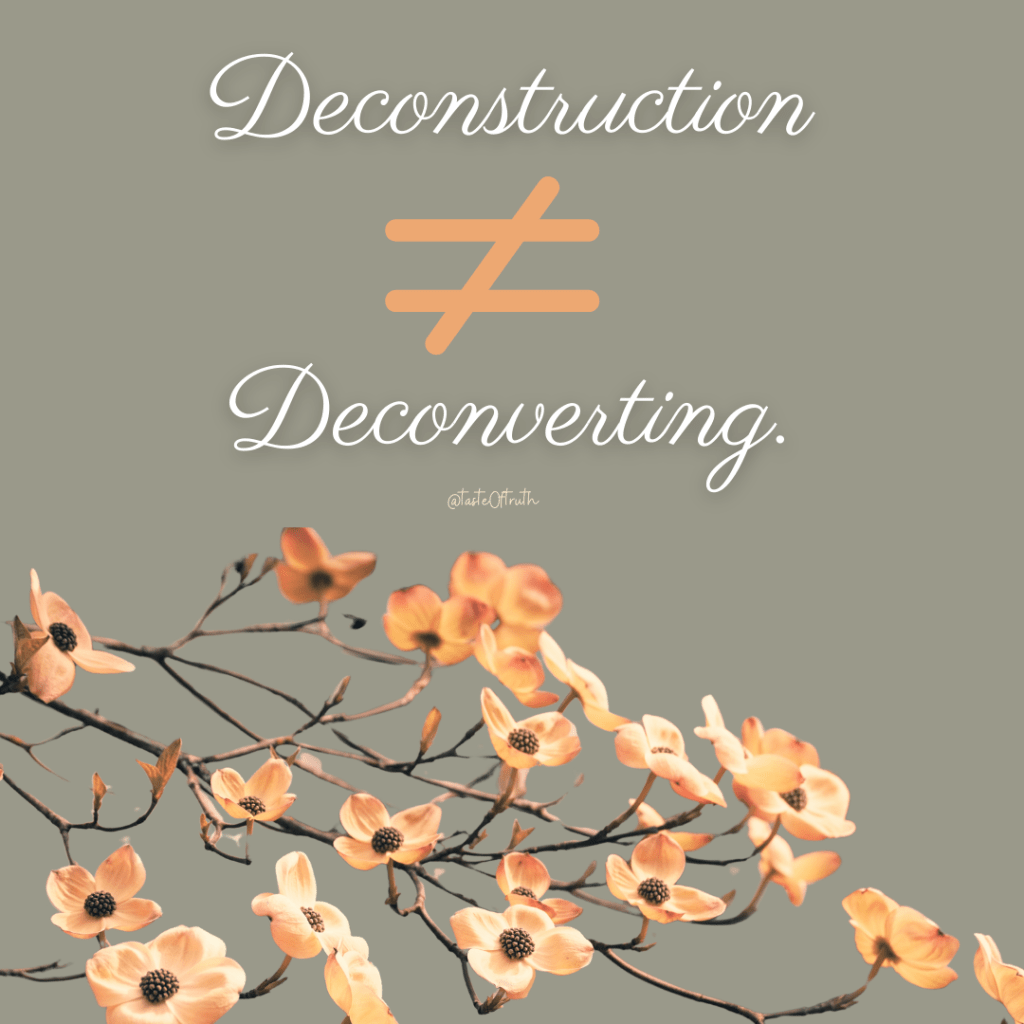
Deconstruction is a scary world, but it doesn’t have to be. Deconstruction does not have to mean deconverting. (But it might and that’s okay too! 😉)

The deconstruction of Christianity is something I’ve heard of since stepping into the world of theology, but I never thought I’d find myself smack dab in the middle of the movement.

Disentangling or Deconstruction is a phenomenon where individuals, often within the Christian faith, critically reevaluate their beliefs, doctrines, and practices. This process involves questioning and challenging long-held assumptions, teachings, and traditions within Christianity, with the goal of arriving at a more authentic and personally meaningful understanding of faith.

Apologetics like Alisha Childers, Mama bear Apologetics or pasters like John Mark Comer are doing piss-poor jobs articulating “why” we are deconstructing and it’s truly offensive and only adding more fuel for the fire.

Is deconstruction the enemy of Christianity like Alisa, Mama Bear Apologetics, and so many others assert? please read Liz Mall’s take on this……

or listen (click here!)

There were numerous aspects that led me to begin unraveling, the real smack upside the head, realizing I was within a spiritual abusive biblical counseling relationship and program, that led me to notice the brutal similarities of abuse within IHOPKC, the scandals within the Grace Community Church & ACBC Biblical/Nouthetic counseling….

Unveiling the Shadows: Exploring Abuse and Ideology in Religious Communities

  1. Introduction:
    • Introduction to the podcast episode’s theme of uncovering abuse and harmful ideologies within religious communities.
    • Brief overview of my entire faith journey to provide context on where we started, where we were, and how we got here.
    • Exploring the Gray Area: Between Cults and High-Control Environments
    • END TIMES OBSESSION–Prophecy Belief in modern American culture concludes that while Christian fascination with the end of the world has existed for a very long time, but only recently have evangelicals label contemporary events with great self-confidence as the fulfillment of biblical prophecies heralding the End of Time has been particularly intense. Since the publication of C.I. Scofield’s edition of the King James Version in 1909, premillennial dispensationalism came to dominate evangelical thought. Also known as Dispensationalism, which can be hard to define, but one of the telltale signs is the date setting historicism of those like Hal Lindsey which I mentioned on my testimony podcast, episode who identify current events as the fulfillment of biblical prophecies.
    • The rise of the Holiness movement, Pentecostalism and fundamentalism marked a monumental development in American Evangelicalism. While these three movements were never entirely aligned in view theology, very different, they share a stress on the dangers of the world, the comforts of separated piety, the centrality of evangelism, and an expectation of the End.
    • As I was isolated during 2020-2022, I believe the process of radicalization and conversion to religion often intertwines with the allure of conspiracies. As individuals seek answers to complex questions and meaning in their lives, they may become drawn to radical ideologies and conspiratorial narratives that promise a sense of belonging, purpose, and empowerment. These ideologies may offer a simplistic worldview where the believer is part of an exclusive group that possesses hidden knowledge and is tasked with a righteous mission.
    • Conspiracies can provide a framework for interpreting the world and understanding perceived injustices or challenges. They often exploit feelings of fear, uncertainty, and distrust, portraying religious or ideological adversaries as sinister forces working against the believer’s values and identity. In this context, religion may offer a sense of community, moral guidance, and a framework for understanding the world that resonates with the believer’s conspiratorial worldview. (However, it’s important to recognize that not all individuals who embrace radical conspiracies end up converting to religion, and vice versa. Each person’s journey is unique and influenced by a combination of personal experiences, psychological factors, social influences, and external circumstances. Additionally, the relationship between radicalization, conspiracies, and religion is complex and multifaceted, with many variables at play.)
    • Generation Joshua, often called “GenJ” by its members, is an American Christian fundamentalist youth organization founded in 2003 that aims to encourage youth participation in government, civics, and politics toward conservative Christian values. Paul and Morgan are Mad About Being in the Dugger Documentary | Tim Whitaker | The New Evangelicals
    • Dangers of the “Trad Wife” movement on Instagram
    • The doctrine of inerrancy is an innovation of the nineteenth century. Rogers and McKim argued that the Princeton theologians of the nineteenth and early twentieth centuries, most notably B.B. Warfield, created the doctrine of inerrancy, which teaches that the Bible is entirely without error in all that it affirms. I bet you didn’t know the FACT that the inerrancy of the Bible–the belief that the Bible is without error–is a contentious topic among mainstream Christianity! Check out this book Five Views on Biblical Inerrancy (Counterpoints: Bible and Theology) 
  2. Purity Culture:
  3. John MacArthur Situation:
    • Discuss the implications of John MacArthur’s involvement, ACBC and the potential harm caused by authoritarian leadership within religious organizations.
    • Discuss MacArthur’s dismissive response to Wendy’s accusations, the confrontation and revelation of Paul Guay’s abuse, GCC’s inadequate response to the abuse, MacArthur’s involvement and contradictory statements, MacArthur’s public shaming of Eileen Gray, the elders’ dismissal of Gray’s abuse allegations, David Gray’s conviction and MacArthur’s support, Alistair Begg’s controversial advice and MacArthur’s response, and the lack of accountability for MacArthur’s actions.
    • Explore various forms of abuse, including emotional, psychological, and spiritual, and the LACK OF ACCOUNTABILITY OR REFORM happening within churches and religious institutions.
    •  MacArthur’s views on slavery are HORRIFIC–listen here.
    • WHY IS IT protocol for the Church to Put a Marital Rape Victim under Church Discipline? Truly horrific protocols within the patriarchy.
  4. ACBC Biblical Counseling:
    • I was enrolled in Change that Sticks, an abusive ACBC biblical counseling program that stripped me of autonomy and treated any mental health condition as SIN that needed to be repented of, and not a real condition. Biblical counseling is dangerous, unethical and immoral.
    • Identification of manipulation and control tactics used in biblical counseling settings to exert emotional and psychological control over individuals.
    • We should consider the potential harms of relying solely on biblical counseling methods without considering professional mental health resources.
    • Call to action for religious leaders and communities to prioritize the safety and well-being of their members and address instances of abuse with transparency and accountability.
    • The key here for me to understand was that gravitating to fundamentalism after experiencing hyper-charismatic or the new age movement can make sense. Particularly during times of stress and uncertainty, we can gravitate towards the need for a sense of control & structure. The strict rules and structure create a perceived sense of safety, which is also another form of the prosperity gospel. Do these spiritual disciplines read the bible, pray, repent, etc for God’s blessing.  
  5. Mark Driscoll:
    • Overview of the rise and fall of Mark Driscoll, a controversial figure within evangelical Christianity.
    • Exploration of the allegations of abuse, authoritarian leadership, and ethical misconduct associated with Driscoll and his former church, Mars Hill Church.
    • Reflection on the lessons learned from the Mark Driscoll saga and the importance of holding religious leaders accountable for their actions.
  6. Learning more about Dominion theology & Christian nationalism. They are related but distinct movements within Christianity, both of which emphasize the idea of Christians playing a prominent role in shaping society and culture according to their religious beliefs. Prominent adherents of those ideologies include Calvinist Christian reconstructionism (Doug Wilson, Costi Hinn, John MacArthur, John Piper, Charlie Kirk) Charismatic and Pentecostal Kingdom Now theology, (7 Mountain Mandate) and the New Apostolic Reformation. How insane is it that this conservative group THRIVES on calling out “false Christians” and making a mockery of Pentecostals, while they are part of the very same theology, if not WORSE, because Council of Biblical Manhood and Womanhood/complementarianism is patriarchal and misogynistic at heart, and all of this is connected to the Lordship Salvation controversary (a rabbit hole you need to go down) and to my next point:

8. Critique of Nancy Pearcey’s book “Toxic War on Masculinity” and its assertions about masculinity and culture.:

  • Absence of evidence: The lack of empirical evidence to support the claims made in Pearcey’s book, particularly regarding the alleged “war on masculinity.” We should consider the potential consequences of promoting ideological narratives without empirical support.
  • Oversimplification of Gender Issues: Critics argue that Pearcey’s book oversimplifies complex gender issues by framing them as a “war on masculinity.” They suggest that this framing perpetuates a binary view of gender and fails to adequately address the diverse experiences and identities of individuals across the gender spectrum.
  • Perpetuating Gender Stereotypes: Critics contend that Pearcey’s characterization of masculinity as under attack reinforces traditional gender stereotypes and norms, which may contribute to harmful social expectations and restricts the freedom of individuals to express their gender identity authentically.
  • Lack of Intersectionality: Some critics argue that Pearcey’s analysis lacks intersectionality, as it fails to consider how factors such as race, class, sexuality, and disability intersect with gender to shape individuals’ experiences and social realities. This omission may result in a limited understanding of the complexity of gender dynamics.
  • Ideological Bias: Some critics suggest that Pearcey’s perspective reflects a conservative or right-wing ideological bias, as she tends to frame gender issues within a traditional Christian worldview. This ideological framing may alienate readers with different religious or philosophical beliefs and limit the book’s appeal to a narrow audience.
  • Nancy claimed in the book and on a podcast interview that women’s suffrage was a net loss!!!!! This is part of Dominion Theology

9. Right-Wing Fundamentalists aka Dominion Theology/Christian Nationalism

Key features of fundamentalism include:

•Literalism: Fundamentalists often interpret Scripture texts in a literal or strict manner

•Inerrancy: Fundamentalists typically uphold the belief in the inerrancy or infallibility of the Bible, viewing them as the ultimate authority in matters of faith and practice. Aka Biblicists

•Separatism: Fundamentalist movements may advocate for the separation of believers from secular society or from other religious groups deemed to be impure or heretical.

•Moral Conservatism: Fundamentalists often promote traditional moral values and social norms, opposing practices or lifestyles they perceive as contrary to their religious beliefs.

•Resistance to Change: Fundamentalists are often resistant to change and innovation within religious doctrine or practice, viewing such developments as departures from true faith.

•Intolerance: Fundamentalist groups may exhibit intolerance towards individuals or groups who hold different beliefs or lifestyles, leading to discrimination, ostracism, or even violence towards perceived “outsiders” or “heretics.”

•Dogmatism: Fundamentalist ideology tends to promote rigid, inflexible interpretations of religious or ideological principles, discouraging questioning or exploration of alternative viewpoints.

•Anti-intellectualism: Critics argue that fundamentalism can foster distrust or rejection of scientific knowledge, critical thinking, and scholarly inquiry, leading to a rejection of evidence-based reasoning and a preference for simplistic, black-and-white thinking

The concept of scriptural inerrancy is often associated with conservative or evangelical Christian theology, although it has been debated and interpreted in various ways within different theological traditions. Some theologians interpret inerrancy to apply only to matters of faith and salvation, while others extend it to include historical, scientific, and other factual claims made in the Bible.

Critics of scriptural inerrancy argue that it imposes an unrealistic and untenable standard on the Bible, ignoring the complexities of its historical and cultural context and the presence of apparent contradictions or discrepancies within its texts. They suggest that a more nuanced understanding of the Bible’s inspiration and authority is needed, one that acknowledges the human element in its composition and transmission.

Literary Criticism: Critics may approach the Bible as a collection of literary texts rather than divinely inspired scripture. They may analyze its narratives, poetry, and teachings from a literary perspective, examining themes, motifs, and rhetorical techniques without presupposing divine authorship or inspiration.

The authorship of 1 Timothy, along with 2 Timothy and Titus, is a subject of debate among scholars. While traditional Christian belief attributes these letters to the Apostle Paul, some scholars raise questions about their authorship based on linguistic, stylistic, and theological differences compared to Paul’s undisputed letters. These scholars suggest that these letters may have been written by a disciple of Paul or someone writing in Paul’s name.

-Linguistic and Stylistic Differences: Some scholars note that the vocabulary, grammar, and writing style of 1 Timothy differ from Paul’s undisputed letters. They argue that these differences suggest a different authorship or a later date of composition.

-Theological and Ecclesiastical Developments: Critics point out that 1 Timothy contains instructions regarding church organization, leadership qualifications, and pastoral duties that reflect a more developed ecclesiastical structure than was present in Paul’s time. They suggest that these developments may indicate a later date of composition.

  • Analysis of prominent figures in evangelical Christianity, including David Wolcott, Alisha Childers, and Frank Turek, who are associated with right-wing fundamentalism.
  • Exploration of the ideological positions and beliefs espoused by these individuals and their impact on religious communities.
  • Consideration of the broader societal implications of right-wing fundamentalism and its intersection with politics and religion.

10. Conclusion:

  • Summary of emphasizing the importance of addressing abuse and harmful ideologies within religious communities.
  • Call to action for listeners to advocate for accountability and transparency within religious institutions and to support survivors of abuse.
  • Invitation for further exploration of these topics in future episodes of the podcast.

RESOURCES MENTIONED:

Other resources to consider:

  • “The Bible Tells Me So: Why Defending Scripture Has Made Us Unable to Read It” by Peter Enns – Enns explores how the Bible’s messy and diverse nature challenges the notion of inerrancy and offers a fresh perspective on understanding its authority.
  • “Inspiration and Incarnation: Evangelicals and the Problem of the Old Testament” by Peter Enns – In this book, Enns examines the challenges of reconciling modern scholarship with traditional views of biblical inerrancy, particularly in relation to the Old Testament.
  • “The Evolution of Adam: What the Bible Does and Doesn’t Say about Human Origins” by Peter Enns – Enns explores the theological implications of accepting scientific understandings of human origins while still affirming the authority of scripture.
  • “Misquoting Jesus: The Story Behind Who Changed the Bible and Why” by Bart D. Ehrman – Ehrman explores the history of textual transmission and the ways in which scribes, translators, and interpreters have shaped the biblical text over time, challenging the notion of a perfectly preserved and inerrant scripture.
  • “The Human Faces of God: What Scripture Reveals When It Gets God Wrong (and Why Inerrancy Tries to Hide It)” by Thom Stark – Stark examines instances in the Bible where God’s character and actions appear contradictory or morally problematic, challenging the idea of a completely consistent and inerrant scripture.
  •  The Invention of the Inspired Text: Philological Windows on the Theopneustia of Scripture by John C. Poirier 
  • The Creationist–The evolution of Scientific Creationism by Ronald L. Numbers
  • The Story of Christian Theology by Roger E Olson
  • The Essentials of Christian thought by Olson