Panpsychism, the Emergence Problem, and the Fractures Inside Mythicism with Dr. Skrbina
Today’s conversation isn’t just about whether Jesus existed.
It’s about something sitting underneath that entire debate.
Most mythicist conversations, meaning scholars and skeptics who argue that Jesus may be a literary or constructed figure, operate inside a philosophical framework called materialism.
Materialism in this sense doesn’t simply mean “trust science.” It’s a deeper metaphysical claim: that everything that exists is ultimately physical. Matter is fundamental, and consciousness is something the brain produces when matter is arranged in the right way.
Revisit a past episode where we discussed the dogma of materialism further
In that picture, mind comes after matter. Meaning comes after biology. Religion becomes a byproduct of social evolution.
But there’s a philosophical tension hiding inside that assumption.
Evolution can explain how biological bodies change. It can describe how organisms adapt and diversify. What it does not explain is something much more basic:
Why is there subjective experience at all? Why does pain actually hurt? Why does the color red look like something?
If matter is completely mindless at the ground level, how does experience suddenly appear?
Philosophers call this the emergence problem.
One alternative view (panpsychism) proposes that consciousness isn’t produced by matter at all. Instead, consciousness may be fundamental to reality itself.
That’s where philosopher Dr. David Skrbina enters the conversation.
His book Panpsychism in the West traces this idea across centuries of philosophical thought, showing that the notion of a mind-infused cosmos has appeared again and again throughout Western intellectual history.
But Skrbina has also stepped directly into the mythicist debate with his book The Jesus Hoax. More recently, he published a sharp response to criticism from fellow skeptics David Fitzgerald and Richard Carrier.
Add to that Adam Green’s recent book The Jesus Deception, which approaches early Christianity from yet another angle, and something interesting starts to appear:
Mythicism isn’t a unified theory. It’s fracturing into camps.
So, this conversation moves across several layers at once:
• consciousness and materialism • the emergence problem • whether panpsychism overlaps with Neoplatonism • Paul: historical strategist or literary construct? • and how The Jesus Hoax differs from The Jesus Deception
Let’s start with the philosophical ground beneath it all.
Consciousness and the Return of Panpsychism
Panpsychism is one of those philosophical ideas that sounds strange the first time you hear it but becomes harder to dismiss the more you think about the alternatives.
In plain terms, the idea is simple: mind or experience may exist at some level throughout reality.
That doesn’t mean rocks are thinking thoughts. Rather, it suggests that the basic constituents of the universe may possess extremely simple forms of experience.
The reason this idea keeps resurfacing across centuries of philosophy is precisely because of the emergence problem.
If consciousness appears only when matter becomes sufficiently complex, we still have to explain how completely mindless matter suddenly gives rise to subjective experience.
Panpsychism flips that question around. Instead of asking how consciousness emerges from matter, it proposes that matter itself may already possess proto-mental properties.
Skrbina’s historical work traces this idea from ancient Greek philosophy through early modern thinkers and into contemporary debates in philosophy of mind.
The interesting thing is that the idea never quite disappears. Even in periods dominated by strict materialism, it keeps resurfacing whenever philosophers run into the same problem: explaining how subjective experience arises from purely physical processes.
Materialism and the Emergence Problem
Materialism has been extraordinarily successful as a scientific framework.
It assumes that the universe is composed of physical entities governed by consistent laws. That assumption has allowed science to model everything from particle physics to molecular biology.
But when we apply that framework to consciousness, something unusual happens.
If matter is entirely mindless at the fundamental level, then at some point in the evolutionary process subjective experience must suddenly appear.
But where?
There’s no obvious “magic neuron” where awareness switches on. There’s no clear moment in development when matter transforms from non-experiencing to experiencing.
This is the emergence problem in its most basic form: explaining how subjective experience arises from purely physical systems.
Some scientists have attempted to address this by looking deeper into physics itself. Theories like Roger Penrose and Stuart Hameroff’s Orch-OR model propose that consciousness may be connected to quantum processes occurring inside neurons.
Whether or not those models succeed, they reveal something important: even within science, researchers are exploring ways to rethink the relationship between mind and matter.
Panpsychism is one such attempt.
Is Panpsychism Just Neoplatonism?
Because panpsychism proposes a cosmos infused with mind, people often assume it’s simply a modern version of Neoplatonism.
But the two traditions aren’t identical.
Neoplatonism describes reality as a hierarchical structure flowing from the One— a metaphysical unity that gives rise to intellect and soul. It carries strong teleological and ethical implications about how humans align themselves with the structure of reality.
Panpsychism, by contrast, is often framed as a metaphysical hypothesis about the nature of matter and consciousness, without necessarily including the moral or spiritual framework found in Neoplatonic thought.
Still, the overlap is hard to ignore. Both challenge the idea that the universe is purely mechanical.
Both suggest that mind and reality may be deeply intertwined.
The Mythicism Debate Fractures
Another interesting tension here is that some of the things Skrbina is criticized for aren’t that far from ideas that already exist in mythicist literature.
One of the central claims in The Jesus Hoax is that St Paul and a small cabal of early Christians may have functioned as a kind of non-military strategy within the Roman world. Instead of armed revolt, the movement theologically conquered by the spread through ideas, theology, and cultural influence.
Skrbina frames this as a kind of ideological or narrative strategy that could reshape behavior across the empire.
What makes the criticism somewhat puzzling is that a similar concept appears in Richard Carrier’s own work.
In Not the Impossible Faith, Carrier describes early Christianity as a movement that spread not through military rebellion but through cultural transformation. Rome could defeat armed revolts, but it could not easily suppress ideas that moved through communities, texts, and belief.
Carrier even characterizes this as a kind of revolutionary strategy. If Rome would always win a military conflict, the only rebellion that could succeed would be a cultural one— a war ofideas rather than armies. (Carrier, Not the Impossible Faith, Ch. 9).
In that sense, the notion that early Christianity functioned as a non-military cultural movement is not controversial. It is widely recognized that the early Jesus movement spread through persuasion, networks, and theology rather than organized violence.
Where the real disagreement emerges is over intent and origin.
Skrbina interprets this cultural transformation as something that may have been deliberately constructed or strategically shaped. His critics tend to view it as an organic religious development rather than a coordinated narrative project.
Another point raised in the exchange concerns the authorship of the gospels, particularly the question of whether Luke was a Gentile writer. Skrbina notes that even if certain details of authorship were revised, for example: if Luke were ultimately shown to be Gentile, the core structure of his argument would not collapse. It would simply require refinement.
That willingness to concede smaller points while maintaining the broader model is something he addresses repeatedly in his response.
The broader takeaway from this debate is that mythicism itself is not a single theory. It is a field where scholars often agree that the traditional gospel narrative is historically unreliable but disagree sharply about what actually replaced it.
One of the most important figures in this entire discussion is Paul of Tarsus.
Skrbina’s model treats Paul as a strategic actor who played a central role in shaping early Christian theology.
But other scholars have raised a more radical possibility: that the Pauline corpus itself may not represent a stable first-century historical figure at all.
Research such as Nina Livesey’s work on the Roman literary context of the Pauline letters suggests that some of these texts may reflect later second-century developments.
If Paul himself were partly a literary construct, it would reshape the debate considerably.
Yet even in that scenario, Skrbina argues, the broader thesis of deliberate narrative construction would not necessarily collapse. It would simply require revision.
Adam Green and the Midrashic Jesus
Adam Green’s recent book The Jesus Deception adds another dimension to the conversation.
Green emphasizes the possibility that the gospel narratives were crafted through midrashic techniques, weaving together Hebrew scriptures to construct the story of Jesus.
This raises a broader question about how religious narratives function historically.
Are they simply stories? Or do they operate as cultural scripts that shape behavior across entire societies?
Green invokes a concept from cultural theory called hyperstition: the idea that beliefs can begin to influence reality because people act as if those beliefs are true.
In other words, a prophecy doesn’t need to be literally true to become historically powerful.
It only needs to be believed strongly enough that people start behaving in ways that bring it about.
That possibility becomes particularly interesting when we look at modern geopolitics.
Some recent reports have suggested that military personnel have framed conflicts in the Middle East through apocalyptic biblical language, describing events as part of a divine plan leading toward Armageddon.
Whether or not such interpretations reflect official policy, they illustrate how powerful religious narratives can be in shaping political imagination.
For readers who want to explore the topics discussed in this episode more deeply, the following books and research have shaped the ideas discussed in this conversation. These works cover philosophy of consciousness, panpsychism, early Christianity, and the intellectual history of the ancient world.
Philosophy of Consciousness & Panpsychism
Panpsychism in the West – David Skrbina A comprehensive historical survey tracing the idea that mind or experience may be fundamental to reality across centuries of Western philosophy.
Science Set Free – Rupert Sheldrake A critique of the assumptions underlying modern scientific materialism and an exploration of alternative ways of thinking about nature, consciousness, and scientific inquiry.
The Emperor’s New Mind – Roger Penrose A physicist’s investigation into the nature of consciousness, the limits of artificial intelligence, and the possibility that consciousness is tied to deeper physical processes in the universe.
The Jesus Hoax – David Skrbina Explores the possibility that early Christian narratives functioned as a strategic cultural movement within the Roman world.
The Jesus Deception – Adam Green Argues that the story of Jesus may have been constructed through Jewish midrashic storytelling traditions.
Not the Impossible Faith – Richard Carrier Carrier’s argument that Christianity’s success in the Roman Empire was historically improbable given the cultural environment of the time.
The Letters of Paul in Their Roman Literary Context – Nina Livesey A scholarly examination of whether the Pauline letters reflect later Roman literary production and rhetorical conventions.
The Opening of the Western Mind – Charles Freeman A history of classical Greek and Roman intellectual traditions and the philosophical foundations of the ancient world.
The Closing of the Western Mind – Charles Freeman Examines how classical philosophical traditions were gradually replaced by Christian orthodoxy in late antiquity.
A historical documentary blended with a personal reckoning and a cultural warning
This one has been sitting with me for a long time.
Six months, maybe more. Notes in the book margins. Tons of screenshots. Quotes stacked in my notes folder. Books half-highlighted and folded pages revisited. Every time I thought I was ready to write it, I wasn’t…
Because this isn’t just about history. It’s about a story we keep repeating with confidence: that Christianity saved the West and what happens when you actually slow down to examine that claim.
The claim that Christianity civilized Europe. Christianity gave us human rights, pluralism, rational inquiry, restraint. And if Western civilization feels unstable today, the prescription is simple— return to Christian moral supremacy.
I find myself increasingly tired of hearing it.
Tired of watching “Judeo-Christian values” invoked as shorthand for liberty. Tired of hearing that our freedoms, our intellectual life, our legal architecture all flow directly from the Bible. Tired of the way paganism is casually used as a synonym for barbarism, ego, domination — while Christianity is cast as the moral counterweight, the conscience that civilizes power.
A recent example sharpened that fatigue. Leighton Woodhouse published an opinion piece in The New York Times titled Donald Trump, Pagan King. The framing was familiar and rhetorically smooth. Paganism was associated with appetite, force, and unchecked authority. Christianity appeared as restraint, humility, moral seriousness. The implication was subtle but unmistakable: whatever is broken in our politics represents a departure from Christian virtue.
The structure of this narrative is ancient. Pagan equals raw power. Christian equals moral discipline.
But that framing rests on an assumption that deserves far more scrutiny than it receives. It assumes that Christianity is the moral software of the West. Before it, there was chaos; after it, civilization.
The deeper I have gone into late antiquity, through Catherine Nixey’s The Darkening Age, Charles Freeman’s analysis of intellectual narrowing, Ramsay MacMullen’s documentation of coercive conversion, and through primary sources from both Christian and pagan voices— the more that tidy civilizational story begins to unravel.
Because when Christianity gained institutional dominance, what followed was not the natural flowering of pluralism and inquiry. It was very opposite.
And for us to truly understand, we have to begin this story before Christianity held power.
A World Before Monopoly
The Greco-Roman world was not a utopia. It had power structures, that were often violent, and deeply unequal. But it operated within a religious and intellectual framework that functioned very differently from exclusive monotheism.
Roman religion was additive rather than subtractive. One could honor household gods, civic gods, the imperial cult, foreign deities, and philosophical conceptions of the divine without renouncing the others. Orthopraxy mattered more than orthodoxy. What counted was correct ritual performance, not exclusive belief. The pax deorum (the peace with the gods) was maintained through observance, not doctrinal conformity.
Philosophically, multiplicity was the norm. Stoics, Epicureans, Skeptics, and Platonists argued openly about cosmology, ethics, and the nature of reality. Protagoras could admit uncertainty about the gods without being erased from the record. Cicero articulated natural law grounded in reason and universality long before Christianity gained political authority. Debate was public. Rhetorical training was a civic skill. Argument was like oxygen at the time.
Cicero
The Roman legal system developed sophisticated structures of administration and legislation that would profoundly shape Western law. None of this depended on exclusive revelation. It depended on human reasoning operating within a plural environment.
Rome suppressed what it perceived as politically dangerous. It was capable of cruelty. But structurally, it tolerated metaphysical competition. Truth was not framed as singular and jealous in the way later Christian orthodoxy would insist.
Christianity did not enter this world as one more school of thought among many. It entered with a different moral architecture. Not “add Christ to the pantheon.”
But “burn down the rest.”
That distinction is not merely cosmetic. It is foundational to understanding the real history.
The Architecture of Exclusivity
The Hebrew scriptures that Christianity inherited contain a recurring moral posture toward rival worship. Altars are to be broken down. Sacred groves burned. Idols smashed. “You shall have no other gods before me” is not a suggestion of preference; it is a declaration of exclusivity. Rival worship is not seen as a mere mistake; it is corrupting.
When confined to private devotion, this posture functions as identity formation. When fused with state power, it moves from conviction to coercion.
For the first three centuries of its existence, Christianity lacked imperial authority. It survived in the margins of society. The decisive shift came when Christianity aligned with imperial power under Constantine and his successors.
Estimates vary, but many scholars place Christians at roughly ten percent of the empire around the year 300. The exact percentage is debated (ancient demographic modeling is necessarily approximate) but the trajectory is clear. Within a few generations, that minority became the ruling faith. By the end of the fourth century, imperial law assumed Christianity as normative and increasingly treated rival ritual as illegal.
This demographic reversal was not merely theological. It was political.
Once exclusivist theology acquired enforcement capacity, differences in beliefs was no longer merely error. It was threat.
In the 380s and 390s, imperial edicts against non-Christian ritual multiplied. In 399, a Christian emperor issued a decree stating:
“If there should be any temples in the country districts, they shall be torn down without disturbance or tumult. For when they are torn down and removed, the material basis for all superstition will be destroyed.”
The language is bureaucratic. The effect was not.
These edicts provided legal cover for demolition. Bishops lobbied rulers for stricter laws. Congregations became demolition crews. Rival worship was framed as superstition whose material foundation had to be eradicated.
As Ramsay MacMullendemonstrates, once rival belief is conceptualized as spiritually dangerous, compromise becomes morally suspect. In a plural system, rivals are mistaken. In an exclusivist system, rivals are demonic. And demons are not debated. They are expelled.
This is the mechanism. And it becomes visible in stone.
Once theology fused with imperial authority, enforcement did not remain theoretical. It moved outward into public space. It moved into cities. It moved into stone.
Catherine Nixey opens The Darkening Age not with doctrine but with an image. The choice is deliberate. Arguments can be abstract. Statues cannot.
The Temple of Athena in Palmyra had stood for centuries. It was not a relic in a museum. It was part of a living civic landscape. Its columns had watched merchants pass through the city, soldiers march under banners, pilgrims move between worlds. Within it stood Athena— goddess of wisdom, of strategic intelligence, of disciplined thought. She represented more than devotion. She embodied the classical inheritance itself: philosophy, rhetoric, ordered reasoning, the cultivation of mind.
When the destroyers arrived, what they attacked was not simply stone.
Nixey describes a man entering the temple with a weapon and striking the back of Athena’s head with such force that the goddess was decapitated. The violence did not stop there. Her nose was sliced off. Her cheeks crushed. Her once composed face mutilated with intention.
And yet her eyes were left intact.
Those eyes still exist.
They look out from a ruined face that once symbolized wisdom.
This was not accidental vandalism. It was theology enacted physically. The old gods were not to be debated, not to be reinterpreted, not to be absorbed into new meaning. They were to be neutralized. Their presence was dangerous. Their very material existence was a threat to salvation.
The word often used for this period is triumph. Christianity triumphed over paganism. But triumph over what? Over multiplicity? Over a world in which philosophical disagreement could exist without annihilation? Over the idea that wisdom might not belong exclusively to one revelation?
The violence at Palmyra was not isolated. Temples across the empire were damaged, repurposed, stripped of ornament, or demolished. Some were converted into churches. Others were dismantled entirely. Sacred spaces that had structured civic and religious life for centuries were rendered spiritually illegitimate almost overnight.
What makes the image of Athena more destabilizing is its repetition.
In 2015, Islamic State militants bulldozed the ancient Assyrian city of Nimrud because it was deemed idolatrous. The reconstructed remnants of Athena were attacked again. Beheaded again. An arm sheared off again.
Different century. Different scripture. Different empire.
Same logic. When rival sacred presence is conceptualized as contamination, destruction becomes purification.
This is not about equivalence between traditions. It is about structure. When any Abrahamic framework defines truth as singular, exclusive, and threatened by proximity to rivals, pluralism becomes fragile. Once that framework acquires political power, fragility becomes enforcement.
And enforcement does not stop at statues.
Hypatia and the Enforcement of Certainty
If Athena represents symbolic erasure, Hypatia represents human cost.
Hypatia of Alexandria was not an obscure mystic. She was a philosopher, mathematician, and teacher in a city long known for intellectual life. Alexandria had been home to the great library and to competing schools of thought for centuries. Hypatia occupied a visible position within that tradition.
By the early fifth century, Alexandria was also home to a group known as the parabalani — often translated as “the reckless ones.” Officially devoted to acts of charity, they functioned in practice as muscle for ecclesiastical authority. By some estimates there were hundreds of them in the city. Roman legal documents describe them using the word terror.
Hypatia lived in the same civic space as these enforcers.
Her murder was not random street violence. It occurred within an atmosphere already shaped by escalating Christian authority and shrinking tolerance for rival influence. When exclusivist theology defines truth as singular and civic order as dependent upon that truth, intellectual figures outside that structure become destabilizing.
Hypatia was stripped, beaten, and killed by a mob associated with Christian zeal.
Her death did not mark the beginning of violence. It marked the normalization of it.
Once difference is framed as corruption and corruption as emergency, elimination becomes defensible.
This pattern appears again and again in late antiquity. Pagan philosophers were exiled. Schools were closed. Public debate narrowed. The emperor Justinian would eventually close the philosophical schools of Athens entirely. Inquiry did not vanish overnight, but the atmosphere changed. What had once been competition became suspicion.
And suspicion reshapes a civilization quietly before it reshapes it violently.
Fear as Teacher
One of the most revealing threads in the historical record is not the destruction itself but the emotional atmosphere that made it possible.
Demonology was not marginal superstition. It structured perception. Pagan temples were described as inhabited by malevolent spirits. Sacrifices were not merely mistaken rituals but demonic feasts. The world itself became morally charged terrain.
The Devil Belial before the Gates of Hell, from Das Buch Belial, published in Augsburg, 1473
Christians wrote anxious letters asking whether they could sit in places pagans had sat, use baths used on feast days, drink from wells near deserted temples, eat food that might have been associated with sacrifice. The fear was not symbolic. It was visceral.
Augustine’s response: that it was better to refuse contaminated food with Christian fortitude even if one starved, reveals a hierarchy of values. Survival could be negotiable. Purity could not.
John Chrysostom’s sermons described eternal punishment in sensory detail: rivers of fire, venomous worms, inescapable bonds, exterior darkness. Fear was not incidental rhetoric. It trained the imagination to view error as catastrophe and proximity to rival belief as existential threat.
When fear becomes formative, pluralism becomes psychologically intolerable.
And when that psychology is paired with law, narrowing becomes institutional.
The Disappearance of Thought
The destruction of statues is visible. The destruction of thought is quieter.
One of the most devastating aspects of late antique Christianization was not merely the smashing of temples but the narrowing of what was considered worth preserving.
The ancient Mediterranean world once contained the greatest concentration of written knowledge humanity had yet assembled. The Library of Alexandria, even allowing for scholarly debate about its exact size, symbolized an ambition toward accumulation. Knowledge was not singular. It was expansive. It was contradictory. It was messy.
Scholars selecting and reading scrolls in the Great Library of Alexandria hall
What remains of that intellectual inheritance is fragmentary.
By some estimates, only about one percent of Latin literature survives from antiquity. Entire authors are known only by name. Entire schools of philosophy survive only in hostile summaries written by opponents. Whole lines of speculation disappeared not because they were refuted but because they were not copied.
Copying is survival.
In the late antique world, the people doing the copying increasingly operated within Christian institutions.
And institutions preserve selectively.
“Stay clear of all pagan books!” reads the Apostolic Constitution. The warning is not casual. It reflects a moral anxiety about contamination. Texts are not neutral. They are spiritually charged. Exposure to the wrong argument is dangerous.
Celsus, one of the few pagan critics whose voice survives, accused Christians of discouraging inquiry. He mocked the posture: “Do not ask questions; just believe.” His tone is sharp, even sarcastic, but the anxiety is real. In Greek philosophy, reason was virtue. Inquiry was sacred. Faith, as unexamined assent, was the lowest epistemic posture.
Even Origen, writing within the Christian tradition, conceded the problem with striking bluntness, remarking that “the stupidity of some Christians is heavier than the sand of the sea.” The anti-intellectual reputation of early Christianity was not a later invention. It was noted by contemporaries.
The tragedy of Democritus crystallizes this narrowing.
Democritus — the philosopher often described as the father of atomic theory — wrote extensively across cosmology, mathematics, and ethics. He proposed a universe composed of atoms and void centuries before modern physics. And yet none of his works survive intact.
Not one.
What we know of his thought survives because it was partially preserved inside a single poem, Lucretius’s De Rerum Natura, which itself survived precariously through a single manuscript discovered in a German monastery centuries later.
The physicist Carlo Rovelli has called the total loss of Democritus’s writings “the greatest intellectual tragedy to ensue from the collapse of the old classical civilisation.”
An entire philosophical lineage survived by accident.
That should unsettle anyone who claims Christianity simply “preserved learning.”
Yes, monasteries copied texts. But copying is filtration. Texts deemed dangerous, frivolous, obscene, or spiritually corrupt were less likely to be preserved. When a civilization narrows its moral boundaries, its archive narrows with it.
Charles Freeman, in The Closing of the Western Mind, argues that the most significant shift was not physical destruction but the narrowing of acceptable modes of thought. Public philosophical debate gradually gave way to appeals to authority and revealed certainty. Disputes were settled by councils backed by imperial power. Orthodoxy was defined not by open inquiry but by boundary enforcement.
The world did not stop thinking overnight. But the conditions for free competition of ideas shifted.
And once intellectual diversity contracts, recovery takes centuries.
The Martyr Myth and Moral Insulation
The martyr narrative sits at the emotional center of Christian self-understanding. It does more than preserve memory. It defines identity.
The story is familiar: early Christians were persecuted by a pagan empire. They were imprisoned, tortured, executed for their faith. They endured without retaliation. They did not conquer. They survived.
There is truth in this. The Great Persecution under Diocletian was real and brutal. Scriptures were burned. Churches destroyed. Christians were imprisoned and executed. No serious historian denies that.
What modern scholarship questions is scale and continuity. The most severe empire-wide persecution lasted roughly a decade. Other persecutions were local, sporadic, and uneven across regions. They were not a continuous three-century campaign of systematic eradication.
Martyr literature itself expanded over time. Detailed analysis of saints’ calendars reveals duplication, embellishment, and narrative layering. Some figures appear under multiple names. Some accounts contain anachronisms or miraculous flourishes that complicate their historical reliability.
The historian G. E. M. de Ste. Croix observed that later martyr literature increasingly displayed what he called “a contempt for historicity.”
That line matters. Because it signals a shift: suffering was not only remembered. It was shaped.
And shaped suffering serves a purpose.
Martyrdom of Saint Sebastian is an Italian Renaissance Tempera Painting created by Andrea Mantegna in c.1480.
Once Christianity aligned with imperial authority, the martyr narrative did not recede. It hardened into interpretive insulation. The same tradition that now authorized temple closures and school shuttings still understood itself as historically persecuted.
The story generates moral asymmetry: whatever Christians do can be framed as response, not domination.
And the function of the martyr narrative did not end in late antiquity. In modern apologetics, it often operates as proof. The logic runs like this: the apostles would not have died for something they knew was false; early Christians endured torture rather than recant; therefore, their testimony must be true.
But willingness to suffer proves sincerity, not metaphysical accuracy. People across religions have died for beliefs that contradict one another. Martyrdom establishes conviction. It does not establish truth.
This is why the martyr story is so stabilizing. It allows a movement to wield authority while retaining the self-image ofinnocence. It transforms power into protection and critique into persecution.
When temples were outlawed and philosophical schools shuttered, the tradition exercising authority did not see itself as conqueror. It saw itself as guardian of truth under threat.
If you are always defending truth, enforcement feels righteous.
The Last Pleas for Coexistence
One of the tragedies of this period is that the archive becomes overwhelmingly Christian. The winners preserved their own voices. The losing side survives in fragments.
But some fragments remain.
Libanius, a pagan orator in the fourth century, watched as temples across the empire were damaged, repurposed, or destroyed. His speeches are not the rantings of a fanatic. They are the anxious observations of a man watching his world contract. He describes sacred spaces falling into ruin, rituals forbidden, property seized. He notes opportunists dividing temple lands for personal gain under the cover of piety. What Christian historians later frame as triumph, Libanius experiences as loss.
Then there is Symmachus.
In 382 CE, the Christian emperor Gratian ordered the removal of the Altar of Victory from the Roman Senate House. For centuries, senators had offered ritual observances there before conducting civic business. It was not merely religious decoration; it was part of Rome’s public identity.
Symmachus wrote an appeal for its restoration.
His language is remarkable for its restraint. He does not demand dominance. He does not threaten revolt. He argues for coexistence.
“We look on the same stars,” he writes. “The sky is common. The same world surrounds us. What difference does it make by what pains each seeks the truth? We cannot attain to so great a secret by one road alone.”
It is difficult to imagine a clearer articulation of pluralism in the ancient world.
He closes not with hostility but with humility: “We offer now prayers, not conflict.”
He lost. The altar was not restored. The plea for multiplicity was overridden by certainty.
This moment matters because it reveals a collision between two moral architectures. One sees truth as approached through many paths. The other sees truth as singular and threatened by rival proximity.
Symmachus represents not pagan decadence but civic pluralism. He is not asking to suppress Christianity. He is asking for coexistence.
The answer he receives is enforcement. The narrowing was not accidental. It was structural.
The Long Return of Pluralism
The narrowing of late antiquity did not permanently extinguish intellectual life. But it did change its conditions. For centuries, inquiry moved within theological boundaries defined by ecclesiastical authority. Councils determined orthodoxy. Deviation could be punished. Philosophical speculation survived, but often cautiously, often cloaked.
What we now call the Enlightenment did not arise as a natural extension of Christian supremacy. It arose within tension — sometimes quiet, sometimes explosive — with religious monopoly.
Beginning in the Renaissance, Europe experienced a gradual rediscovery of classical texts. Manuscripts long buried in monastic libraries re-entered circulation. Lucretius’s De Rerum Natura, preserving echoes of Democritus’s atomism, resurfaced. Greek philosophy was studied not merely as commentary on theology but as intellectual inheritance in its own right.
The recovery of classical thought did not instantly dissolve Christian authority. But it reintroduced plurality into the bloodstream of European intellectual life.
The Enlightenment sharpened that reintroduction.
Thinkers like John Locke articulated natural rights grounded not in revelation but in reason and shared human nature. Locke’s arguments for religious toleration did not emerge from biblical exclusivity; they emerged from a recognition that coercion in matters of belief corrupts both faith and civic peace.
Montesquieu analyzed the separation of powers not as a theological doctrine but as a structural safeguard against concentration of authority. His framework was explicitly concerned with preventing tyranny — whether monarchic or clerical.
These ideas did not descend seamlessly from medieval orthodoxy. They developed alongside, and often in resistance to, religious entanglement with state power.
When we reach the American founding, the tension becomes explicit.
The framers of the Constitution were deeply literate in classical thought. They read Cicero. They read Tacitus. They studied Roman republicanism. They were steeped in Enlightenment political theory. They feared concentrated power, including ecclesiastical power.
The Constitution contains no reference to Jesus Christ. It prohibits religious tests for office. The First Amendment forbids establishment of religion and protects free exercise. This was not a casual omission. It was intentional architecture.
The American experiment was not a biblical republic.
It was a republic designed to prevent religious monopoly.
Thomas Jefferson provides a particularly revealing case. Jefferson famously produced his own edited version of the Gospels, physically cutting out miracles and supernatural elements. The result, often referred to as the Jefferson Bible, retained ethical teachings while discarding divine intervention.
This was not the act of a man seeking to found a theocracy.
It was the act of a man separating moral philosophy from revealed absolutism.
Jefferson’s project reflects a broader Enlightenment impulse: to preserve ethical insight while disentangling it from exclusivist authority.
Roger Olson’s theological scholarship further complicates the claim that Christianity simply “gave us” pluralism. Olson emphasizes that Christianity was never doctrinally uniform in its early centuries. Orthodoxy was consolidated through contest, suppression, and boundary enforcement. The unity later invoked as civilizational foundation was itself the product of narrowing.
The Enlightenment did not grow naturally from that narrowing. It reopened debate.
It reintroduced skepticism as virtue.
It separated church and state not to destroy religion but to protect civic plurality.
If Christianity had already secured pluralism, the Enlightenment would have been unnecessary.
The fact that it was necessary tells us something profound.
Pluralism survived not because exclusivity reigned, but because exclusivity was restrained.
Did Christianity Give Us Human Rights?
At this point, the most common objection surfaces.
Even if there were excesses. Even if there was narrowing. Even if temples fell and texts disappeared. Christianity still gave us the concept of human dignity. Christianity laid the groundwork for human rights.
The claim sounds intuitive because Christian theology does contain a powerful moral idea: humans are made in the image of God. That idea has inspired reformers and abolitionists and activists. It matters.
But the existence of moral language is not the same thing as institutional pluralism.
The Stoics articulated a form of universal human rationality centuries before Christianity held power. Roman law developed ideas of legal personhood and universality that would influence later legal systems. Cicero’s natural law did not depend on revelation.
Christianity contributed to moral discourse. That is true.
But the institutional protection of dissent: the right to disagree publicly, to publish heterodox ideas, to worship differently without legal annihilation… did not emerge during periods of Christian monopoly. Those protections developed when religious authority was structurally limited.
Rights require restraint of power.
And historically, the moments when Christianity was most fused with state authority were not the moments when pluralism expanded.
What This Feels Like From the Inside
What unsettles me most about this history is not simply that it happened. It is that I recognize the mechanism.
I have lived the internal version of it.
Burn the books. Throw away the tarot cards. Remove your new age spirituality material. Avoid contamination of demonic entities. Guard the mind. Monitor the thoughts. Stay pure.
When you inhabit Christianity long enough, the anxiety internalizes. You become your own enforcer. You police your curiosity. You treat rival ideas not as intellectual challenges but as spiritual threats.
When I read about Christians in late antiquity asking whether they could sit where pagans had sat or drink from wells near deserted temples, it was too relatable.
The narrowing does not begin with demolition crews. It begins with fear.
Fear reshapes perception. Fear shrinks curiosity. Fear frames difference as danger.
Scale that fear across institutions and you have late antiquity.
Scale it across a nation and you have something far more consequential.
The Warning
This is why the rhetoric of Christian supremacy unsettles me.
Not because Christianity has contributed nothing to Western civilization. It has shaped art, music, law, charity, moral imagination. That is undeniable.
Much of this period is still narrated as civilizational triumph rather than suppression. As the academic John Pollini notes, “modern scholarship, influenced by a Judeo-Christian cultural bias, has frequently overlooked or downplayed such attacks and even at times sought to present Christian desecration in a positive light.”
But the claim that Christianity saved the West collapses complexity into myth. It erases the plural foundations of Greco-Roman thought. It erases the Enlightenment’s deliberate separation of church and state. It erases the long struggle to restrain religious monopoly.
Reformers like John Calvin did not argue for a secular state. In his Institutes, Calvin insisted that magistrates had a duty to suppress blasphemy and false worship.
Pluralism did not emerge from supremacy.
It survived by limiting it.
When modern commentators frame Christianity as the sole guardian of civilization and paganism as barbaric force, they repeat a frame older than they realize. They invoke a story in which exclusivity is equated with order and multiplicity with chaos.
History suggests something different.
Civilizations are stabilized not by monopoly but by constraint. Not by erasing rivals but by tolerating them. Not by conflating revelation with law but by separating the two.
If we forget that, if we mythologize exclusivity as the foundation of freedom, we risk mistaking that narrowing for renewal.
And that is not a mistake history makes gently.
aaaand that’s all I have for you today folks. If you’ve been here for a while, you know this is what Taste of Truth Tuesdays is about. Not tearing down for sport. Not defending tradition out of reflex. But slowing down long enough to ask: Is the story we’re repeating actually true?
and As always…
Maintain your curiosity. Embrace skepticism. And keep tuning in.
Endnotes
Leighton Woodhouse, “Donald Trump, Pagan King,” The New York Times, February 11, 2026. (Referenced as an example of contemporary framing of paganism versus Christianity.)
Catherine Nixey, The Darkening Age: The Christian Destruction of the Classical World (Boston: Houghton Mifflin Harcourt, 2017). Charles Freeman, The Closing of the Western Mind: The Rise of Faith and the Fall of Reason (New York: Knopf, 2002). Ramsay MacMullen, Christianizing the Roman Empire (A.D. 100–400) (New Haven: Yale University Press, 1984). See also Ramsay MacMullen, Christianity and Paganism in the Fourth to Eighth Centuries (New Haven: Yale University Press, 1997).
On Roman religion as orthopraxic and plural in structure, see: Mary Beard, John North, and Simon Price, Religions of Rome, Vol. 1 (Cambridge: Cambridge University Press, 1998). Jörg Rüpke, Religion of the Romans (Cambridge: Polity Press, 2007).
Cicero’s articulation of natural law appears in De Re Publica and De Legibus. See: Cicero, On the Republic and On the Laws, trans. James E. G. Zetzel (Cambridge University Press, 1999).
On late fourth-century anti-pagan legislation, see: Theodosian Code 16.10 (various edicts restricting sacrifice and authorizing temple closures). For analysis: Michele Renee Salzman, The Making of a Christian Aristocracy (Harvard University Press, 2002). Ramsay MacMullen, Christianizing the Roman Empire.
On the debated scope and frequency of early Christian persecutions: Candida Moss, The Myth of Persecution (HarperOne, 2013). G. E. M. de Ste. Croix, Christian Persecution, Martyrdom, and Orthodoxy (Oxford University Press, 2006). These works challenge the traditional narrative of continuous empire-wide persecution and note embellishment in later martyr literature.
On the parabalani and Hypatia: Socrates Scholasticus, Ecclesiastical History, Book VII. Christopher Haas, Alexandria in Late Antiquity (Johns Hopkins University Press, 1997). Edward J. Watts, Hypatia: The Life and Legend of an Ancient Philosopher (Oxford University Press, 2017). Roman legislation regulating the parabalani appears in Theodosian Code 16.2.42 and related laws.
On the Altar of Victory controversy and Symmachus: Symmachus, Relatio 3 (Petition for the Restoration of the Altar of Victory). Ambrose of Milan’s response in Epistle 17–18. See also: Michele Renee Salzman, The Making of a Christian Aristocracy.
On demonology and late antique Christian perceptions of paganism: Peter Brown, The Rise of Western Christendom (Blackwell, 1996). Catherine Nixey, The Darkening Age. Brown discusses the moralization of the inner life and late antique anxiety regarding contamination and spiritual danger.
On the survival rate of classical literature: It is widely acknowledged among classicists that only a small fraction of ancient literature survives. See: Anthony Grafton, The Footnote: A Curious History (Harvard University Press, 1997). James J. O’Donnell, Avatars of the Word (Harvard University Press, 1998). The exact percentage is debated, but the scale of loss is undisputed.
On Democritus and the loss of his works: Diogenes Laertius, Lives of Eminent Philosophers (Book IX). Carlo Rovelli, Reality Is Not What It Seems (Riverhead Books, 2016), where Rovelli refers to the loss of Democritus as a major intellectual tragedy. Lucretius, De Rerum Natura, as the principal ancient source preserving atomist philosophy.
On the closure of pagan philosophical schools under Justinian: Procopius, Secret History. Edward J. Watts, The Final Pagan Generation (University of California Press, 2015).
On Enlightenment political theory and religious toleration: John Locke, A Letter Concerning Toleration (1689). Montesquieu, The Spirit of the Laws (1748).
On Thomas Jefferson’s edited Bible: Thomas Jefferson, The Life and Morals of Jesus of Nazareth (commonly known as the Jefferson Bible), completed in 1820. See also: Edwin Gaustad, Sworn on the Altar of God: A Religious Biography of Thomas Jefferson (Eerdmans, 1996).
On early Christian theological diversity and consolidation of orthodoxy: Roger E. Olson, The Story of Christian Theology (InterVarsity Press, 1999). Bart D. Ehrman, Lost Christianities (Oxford University Press, 2003) (for broader context on early doctrinal diversity).
This episode isn’t about religion versus religion. It’s about power, fear, and what happens inside belief systems when conformity becomes more important than honesty.
In this conversation, I’m joined by Sigrin, founder of Universal Pagan Temple.
She’s a practicing Pagan, a witch, a public educator, and someone who speaks openly about leaving Christianity after experiencing fear-based theology, spiritual control, and shame. I want to pause here, because even as an agnostic, when I hear the word witch, my brain still flashes to the cartoon villain version. Green. Ugly. Evil. That image didn’t come from nowhere. It was taught.
One of the things we get into in this conversation is how morality actually functions in Pagan traditions, and how different that framework is from what most people assume.
She describes leaving Christianity not as rebellion, but as self-preservation. And what pushed her out wasn’t God. It was other Christians.
For many people, Christianity isn’t learned from scripture. It’s learned from other Christians.
The judgment. The constant monitoring. The fear of being seen as wrong, dangerous, or spiritually compromised.
In high-control Christian environments, conformity equals safety. Questioning creates anxiety. And the fear of social punishment often becomes stronger than belief itself.
When belonging is conditional, faith turns into survival.
What We Cover in This Conversation:
Paganism Beyond Aesthetics
A lot of people hear “Paganism” and immediately picture vibes, trends, or cosplay. We spend time breaking that assumption apart.
Sigrin explains that many beginners jump straight into ritual without actually invoking or dedicating to the divine.
She talks about the difference between aesthetic practice and intentional practice.
For people who don’t yet feel connected to a specific god or goddess, she offers grounded guidance on how to approach devotion without forcing it.
We talk about the transition she experienced moving from Christianity, to atheism, to polytheism.
We explore the role of myth, story, and symbolism in spiritual life.
She shares her experience of feeling an energy she couldn’t deny, even after rejecting belief entirely.
We touch on the wide range of ways Pagans relate to pantheons, including devotional, symbolic, ancestral, and experiential approaches.
The takeaway here isn’t “believe this.” It’s that Paganism isn’t shallow, trendy, or uniform. It’s relational.
No Holy Book, No Central Authority
One of the most misunderstood aspects of Paganism is the absence of a single text or governing authority.
Sigrin references a line she often uses: “If you get 20 witches in a room, you’ll have 40 different beliefs.”
We talk about how Pagan traditions don’t operate under enforced doctrine or centralized belief.
She brings up the 42 Negative Confessions from ancient Egyptian tradition as an example of ethical self-statements rather than commandments.
These function more like reflections on character than laws imposed from above.
We compare this to moral storytelling across different myth traditions rather than rigid rule-following.
She emphasizes intuition and empathy as core tools for ethical decision-making.
I add the role of self-reflection and introspection in systems without external enforcement.
This raises an important question: without a script, responsibility shifts inward.
Why This Can Be Hard After Christianity
We also talk honestly about why this freedom can be uncomfortable, especially for people leaving authoritarian religion.
Sigrin notes how difficult it can be to release belief in hell, even after leaving Christianity.
Fear doesn’t disappear just because belief changes.
When morality was once externally enforced, internal trust has to be rebuilt.
Pagan paths often require learning how to sit with uncertainty rather than replacing one authority with another.
This isn’t easier. It’s quieter. And it asks more of the individual.
That backdrop matters, because it shapes how Paganism gets misunderstood, misrepresented, and framed as dangerous.
The “Pagan Threat” Narrative
One of the reasons Pagan Threat has gained attention and sparked controversy is not just its content, but whose voice it carries and how it’s framed at the outset.
The book was written by Pastor Lucas Miles, a senior director with Turning Point USA Faith and author of other conservative religious critiques. The project is positioned as a warning about what Miles sees as threats to the church and American society. The foreword was written by Charlie Kirk, founder of Turning Point USA. His introduction positions the book as urgent for Christians to read.
From there, the book makes a striking claim:
It describes Christianity as a religion of freedom, while framing Paganism as operating under a hive mind or collective groupthink.
A key problem is which Paganism the book is actually engaging.
The examples Miles focuses on overwhelmingly reflect liberal, online, or activist-adjacent Pagan spaces, particularly those aligned with progressive identity politics.
That narrow focus gets treated as representative of Paganism as a whole.
Conservative Pagans, reconstructionist traditions, land-based practices, and sovereignty-focused communities are largely ignored.
As a result, “wokeness” becomes a kind of explanatory shortcut.
Modern political anxieties get mapped onto Paganism.
Gender ideology, progressive activism, and left-leaning culture get blamed on an ancient and diverse spiritual category.
Paganism becomes a convenient container for everything the author already opposes.
We also talk openly about political realignment, and why neither of us fits cleanly into the right/left binary anymore. I raise the importance of actually understanding Queer Theory, rather than using “queer” as a vague identity umbrella.
To help visualize this, I reference a chart breaking down five tiers of the far left, which I’ll include here for listeners who want context.
Next, in our conversation, Sigrin explains why the groupthink accusation feels completely inverted to anyone who has actually practiced Paganism.
Pagan traditions lack central authority, universal doctrine, or an enforcement mechanism.
Diversity of belief isn’t a flaw. It’s a defining feature.
Pagan communities often openly disagree, practice differently, and resist uniformity by design.
The “hive mind” label ignores that reality and instead relies on a caricature built from a narrow and selective sample.
“Trotter and Le Bon concluded that the group mind does not think in the restricted sense of the word. In place of thoughts, it has impulses, habits, and emotions. Lacking an independent mind, its first impulse is usually to follow the example of a trusted leader. This is one of the most firmly established principles of mass psychology.” Propaganda by Edward L. Bernays
We contrast this with Christian systems that rely on shared creeds, orthodoxy, and social enforcement to maintain cohesion.
Accusations of groupthink, in that context, often function as projection from environments where conformity is tied to spiritual safety.
In those systems, agreement is often equated with faithfulness and deviation with danger.
Globalism, Centralization, and Historical Irony
We end the conversation by stepping back and looking at the bigger historical picture.
The book positions Christianity as the antidote to globalism.
At the same time, it advocates coordinated religious unification, political mobilization, and cultural enforcement.
That contradiction becomes hard to ignore once you zoom out historically.
Sigrin points out that pre-Christian Pagan worlds were not monolithic.
Ancient polytheist societies were highly localized.
City-states and regions had their own gods, rituals, myths, and customs.
Religious life varied widely from place to place, even within the same broader culture.
I reference The Darkening Age by Catherine Nixey, which documents this diversity in detail.
Pagan societies weren’t unified under a single doctrine.
There was no universal creed to enforce across regions.
Difference wasn’t a problem to be solved. It was normal.
Christianity, by contrast, became one of the first truly globalizing religious systems.
A single truth claim.
A centralized authority structure.
A mandate to replace local traditions rather than coexist with them.
That history makes the book’s framing ironic.
Paganism gets labeled “globalist,” despite being inherently local and decentralized.
Christianity gets framed as anti-globalist, while proposing further consolidation of belief, power, and authority.
What This Is Actually About
This isn’t about attacking Christians as people. And it’s not about defending Paganism as a brand.
It is a critique of how certain forms of Christianity function when belief hardens into certainty and certainty turns into control.
Fear-based religion and fear-based ideology share the same problem. They promise safety. They demand conformity. And they struggle with humility.
That doesn’t describe every Christian. But it does describe systems that rely on fear, surveillance, and moral enforcement to survive.
What I appreciate about this conversation is the reminder that spirituality doesn’t have to look like domination, hierarchy, or a battle plan.
It can be rooted. Local. Embodied.
It can ask something of you without erasing you.
And whether someone lands in Paganism, Christianity, or somewhere else entirely, the question isn’t “Which side are you on?”
It’s whether your beliefs make you more honest, more grounded, and more responsible for how you live.
That’s what I hope people sit with after listening.
Ways to Support Universal Pagan Temple
Every bit of support helps keep the temple lights on, create more free content, and maintain our community altar. Thank you from the bottom of my heart!
When I first joined a multi-level marketing company, it felt like destiny. Freedom. Empowerment. Community. So much so that I tattooed “trust the process” on my body as a daily reminder. But the deeper I got, the more I noticed the cracks: emotional manipulation, magical thinking, and an almost religious silencing of doubts.
If you missed last week’s episode here is the deep dive of my own experience.
That’s why I’m thrilled to share this week’s podcast interview with Robert L. FitzPatrick. Robert has been sounding the alarm on MLMs for decades, long before it was common to describe them as cult-like. He’s the author of Ponzinomics: The Untold Story of Multi-Level Marketing, co-author of False Profits, and a respected expert cited by the BBC, The New York Times, and courts alike. For years, he’s been giving people the tools (language, data, and perspective) to recognize MLMs for what they truly are: predatory business models, not opportunities.
Here is the image of the “Airplane Game” we reference in the interview
In this episode, we cover:
The Spark: Robert’s first encounter with a scam-like business in the 1980s, which pushed him into decades of research on MLMs and fraud—mirroring the way my own personal MLM experience prompted deep self-examination.
Why “Not All MLMs” Is a Myth: The business model itself is designed to funnel money upward, making it impossible for the vast majority to succeed, regardless of the company or product.
Puritan Theology & Prosperity: How old ideas linking wealth to virtue evolved into the prosperity gospel, and how MLMs exploit that mindset.
Cultural Hooks: From hustle culture to self-improvement mantras and spiritual undertones, MLMs borrow heavily from mainstream culture to recruit and retain followers.
Narrative Control: How pre-scripted objections, emotional manipulation, and silencing tactics maintain loyalty and block critical thinking—something I’ve noticed both in MLMs and high-control religious groups.
The Hard Numbers: Realistic odds of success are brutal—most recruits lose money, almost all quit within a year, and mandatory purchases like “Healthy Mind and Body” programs or the Isabody Challenge trap participants financially and emotionally.
Legality & Political Protection: If MLMs are fundamentally unfair, how are they still legal? And what protects them politically?
Beyond the MLM Mindset: MLMs don’t just drain your wallet—they reshape identities, fracture communities, and erode trust in yourself and others.
This conversation is essential for anyone curious about MLMs, whether you’ve been drawn into one, have friends or family involved, or are simply interested in understanding how these systems work under the surface. Robert’s insights give us not just the numbers, but the language and tools to recognize the scam and the courage to break free from it.
Tune in for an eye-opening conversation that goes beyond the hype and digs into the real human cost of MLMs.
Let’s discuss what Tucker Carlson, Nick Fuentes, & The New Jerusalem Reveal About Power and Media
Hey Hey Welcome back to Taste of Truth Tuesdays.
At the end of last month, we started unpacking a big question: where does real power sit in our country? And how does understanding history & theology change the way we see what’s happening today?
Well, the timing couldn’t be more perfect, because right now there’s a viral clash unfolding that brings all those threads together in real time.
I just finished reading the book The New Jerusalem by Michael Collins Piper, which was written way back in 2004 and it discussed a lot of the same individuals and key information that Fuentes said during this 2-part attack on Tucker. The book is a deep dive into decades of political and financial influence shaping America. As I’m reading it, this public duel emerges between two of the loudest voices in the alt-right media: Tucker Carlson and Nick Fuentes. And I really appreciated what Ian Carroll had to say about the subject while he reminded us why these kinds of debates aren’t just entertainment: they’re essential for discussing the truth & the health of our nation.
This isn’t gossip or drama. It’s about understanding the invisible lines drawn around what we’re allowed to talk about, what gets filtered out, and what’s shut down. If we pay attention, this moment could help move the conversation forward in ways we desperately need.
The New Jerusalem: Mapping Influence Behind the Scenes
In our previous episode, I mentioned how I truly believe that we have been an occupied nation since 1960s and Michael Piper (author of The New Jerusalem) totally agrees. He wrote a 768 page book called The Final Judgment The missing link in the JFK Assassination Conspiracy and so that is just a whole nother rabbithole.
He also wrote a book called The High Priest of War which was the first full length work examining the little known history of the hardline pro Israel neoconservative movement which Nick Fuentes was really breaking down for us in his part two series (in particular).
It is starting to make so much sense… So I’m just trying to point you guys into resources not to propose myself as someone who can connect all the dots like Michael Collins Piper can. He traces the networks, deals, and consolidations of power that have shaped the American political and financial landscape over the last century.
It’s definitely a lot shorter and more entertaining than Whitney’s Webs books Nation Under Blackmail I couldn’t get through them to be honest with you they were so dry so if you read them mad props to you.
So, for me, what stands out is the gradual centralization of influence: from banking to media to government appointments. These connections have profound effects on policy, public opinion, and international alliances.
You know you can say connecting the dots is anti-Semitic
The esteemed Websters dictionary has now broadened the definition of antisemitism to include: “opposition to Zionism” which is definitely a lot of what I speak about and “sympathy for the opponents of Israel”.
Those two categories alone would probably include literally billions of people across the face of this planet. We need to understand that when people label folks as “white-supremacists”, “Nazi”, “antisemitic”…. you know cancel culture is over so if y’all aren’t picking up on that like do you need to go to primary sources and listen specifically to what people were saying try to read books try to listen to different sides of the story so you can grasp the truth (if you can).
This isn’t wild conspiracy. It’s a careful look at decades of patterns and documented facts (most of the sources were from Jewish resources). Our current political reality didn’t just appear by chance. It’s the product of generations of social engineering, strategic moves and powerful leverage.
Without this historical lens, it’s easy to see today’s media as an organic mess of voices. But with it, you realize just how much of what we hear (and don’t hear) is carefully shaped, and rarely talked about openly.
Tucker Carlson vs. Nick Fuentes: A Public Clash Over Boundaries
What kicked all of this off was an interview on August 1st, 2025, when Tucker Carlson sat down with Candace Owens. During that 15-minute segment, they launched a personal character attack on Nick Fuentes. The spark? Tucker claimed he didn’t know his dad was in the CIA until after his father’s death in March 2025 — a claim most of us know was a blatant lie.
That lie set off a firestorm. In response, Nick Fuentes dropped a two-part viral series on Rumble, calling out Tucker for being dishonest and, more importantly, for not pushing far enough on certain topics. Fuentes argues there are clear lines Tucker won’t cross — and those lines shape what millions of people get to hear.
Whether you agree with Fuentes or not, this public clash is rare. Usually, these kinds of disputes stay behind the scenes or get smoothed over. But this time, it’s happening in front of us, giving the audience a rare look at the invisible boundaries of public discourse — the unspoken rules about what topics are “safe” and which ones are off limits.
Once you notice those lines, it’s natural to ask: who drew them? And why?
If you want to see the full exchange and judge for yourself, Nick Fuentes’ two-part response is available on Rumble:
Watching these gives a clearer picture of why this clash has grabbed so much attention and why the boundaries of public discourse matter now more than ever.
Now, this ties into something I’ve been noticing from some corners of the conversation: people who’ve moved away from Protestant Church and embraced Orthodox Christianity, rightly pushing back against things like Zionism and dispensationalism.
On our last episode, I talked about how it’s not just dispensationalism or the Schofield Bible fueling this whole machine — it’s that Christianity itself is built on Jewish roots.
“Inside ever Christian is a Jew” —Pope Francis (June 16, 2014)
Reading from The Jesus Hoax:
Consider, first of all, the ancient origins of Judaism and the corresponding events of the Old Testament (OT) otherwise known as the Jewish (or Hebrew Bible). The original Patriarch, Abraham, (originally called ‘Abram’—strange how so many people in the Bible have two names), allegedly lived sometime between 1800 and 1500 BC; he was the traditional father of not only Judaism and thus Christianity but centuries later, of Islam as well. Thus, one sometimes reads that Judaism, Christianity and Islam are all viewed as the “Abrahamic” religions.
Simply put: Christians believe in a Jewish God, read Jewish Scriptures, and worship a Jewish rabbi. If you take those origin stories as literal history, you’re often reinforcing the very narratives that prop up modern Zionism.
But here’s where my beef 🥩comes in: In a recent clip, one such voice claimed that Jesus wasn’t really a Jew — just ‘an Israelite from Judah’ — as if that somehow changes His identity or the core of the faith. Here is the clip:
This is a good point to take a short detour to explain some very relevant terminology Much confusion exists around three apparently interchangeable terms Hebrew Israelite and Jew. In the book of Genesis 14:13 Abram/Abraham is the first referred to as the “Hebrew”—a term of ambiguous origin and no clear meaning. Regardless, Abraham was the original “Hebrew”, and this designation came to be attached to his son Isaac (but not Ishmael) and to Isaac’s son Jacob (but not Esau) and to Jacob’s 12th sons and their descendants—all of whom would be called “Hebrews”
The term “Israel” as noted above, has been in existence since at least 1200 BC. In Hebrew language, “Israel” means ‘he who strives with God’, and thus is a term of honor. It first appears in the BIble in Genesis 32:28 when Jacob is renamed Israel. Therefore, Jacob and his 12 sons and all their heirs are called Israelites.
But what about ‘Jew’? We See above that one of Jacob’s 12 sons was Judah-or in Hebrew, Jehudah. Judah was Jacob/Israel’s 4th son, but as it turns out, the first three (Reuben, Simeon and Levi) ended up in his disfavor and so Judah takes a leading role. Speaking to his sons, Jacob says: Genesis 49:10
This idea that Jesus wasn’t a Jew feels more like a way to cope or sidestep with the uncomfortable historical and theological realities than a true insight. And it’s important to recognize when narratives intended to clarify actually end up muddying the waters…..
Any case, as the 12 tribes and their descendants became established in Palestine, the 10 northern-most tribes became known as ‘Israel’ and the southern-most two, as ‘Judah.’ At some point, the ‘man of Judah’ or descendant of Judah’ became a Yehudia Jew.
After the Babylonian exile and return (597 to 538 BC), the 12 tribes became known collectively as both ‘Israel’ and ‘men of Judah’ or Yehu-dim. We see a variation on this term appear on a coin minted around 120 BC, with the word Hayehudim (“of Judah” or “of the Jews”). Yehudi, or plural Yehudim, appear several times in the OT; typically this is translated into English as ‘Jew’ or ‘Jews’., although sometimes as ‘man of Judah’
The first appearance is in 2 Kings (16:6 and 25:25), and then several times later in Ezra, Nehemiah, Esther, Jeremiah, Daniel (twice), and Zecharia (8:23). ‘Jew’ is not in the first five books (Pentateuch) like He-brew’ and ‘Israel’ are, which suggests that it is not quite as ancient within Jewish culture; but still, its presence throughout the remainder of the OT shows its importance to the Jewish authors, who, of course, were writing strictly to a Jewish audience. When Jews were writing to their fellow Jews, they had no compunction about using the word ‘Jew.’
As the OT spread into Greek and (later) Latin culture, Yehudi became translated as Ioudaios and Iudaeus, respectively. The Latin term lost its ‘d’ when moving into the region of modern-day France, and the people there created a contracted version, giu. This then worked its way into Old English around the year 1000, where it took a variety of forms:
Gyu, Giu, lew, luu, and so on. By the late 1300s, Chaucer was using the word Jewes. And by the late 1500s, playwrights like Marlowe and Shakespeare were writing, simply, ‘Jews.’
So, the 12 tribes became the nation of Israel, but after exile and time, the term “Jew” came to specifically mean someone from the tribe of Judah or the people of that southern kingdom.
Let’s set the record straight: The Orthodox tradition affirms that Jesus was Jewish by both lineage and practice. For example, the OrthodoxWiki notes that Jesus is the Messiah prophesied by Jewish prophets, and the Gospel of Matthew is written especially for a Jewish audience, emphasizing His fulfillment of Jewish prophecy.
The Orthodox Church in America points out that Jesus was the long-awaited Jewish Messiah, who lived fully within the Jewish covenant community — even though some of His contemporaries refused to recognize Him as such. Orthodox catechism reminds us that Jesus’ divine incarnation took place in a fully human, Jewish context.
Historical records in the Gospels show Jesus was born of the tribe of Judah, descended from David, circumcised according to Jewish law, and faithfully observed Jewish festivals and customs. He taught in synagogues and affirmed the Torah and the Prophets (Luke 4:16; John 7:2, 10; Matthew 5:17–18).
That’s why I’m bringing on Dr. David Skrbina, author of The Jesus Hoax, in an upcoming episode. Because when you start questioning who Jesus really was — beyond the narratives handed down or pushed by certain agendas — you begin to see how much history, theology, and culture have been carefully shaped. And as with political power and media, the truth often lives just beyond the boundaries we’re allowed to explore.
Why This Moment Matters
This isn’t just about one book, or two media figures, or a particular platform. It’s a rare opening — a crack in the matrix — that lets us see where conversation gets shut down, and maybe even push those limits back.
Agree or disagree with Piper, Fuentes, or Carlson… that’s your right. But the bigger question remains: who decides what’s okay to say? And if those decisions are made without our awareness, how free are we really?
That question feels especially urgent today, as laws around hate speech and anti-Semitism shape what can be discussed publicly — in ways that limit honest dialogue. Efforts like DEI programs aimed at protecting Jewish students completely contradict how most conservatives feel about identity politics.
My hope is that we take this moment seriously. We stop treating these boundaries as natural or unchangeable. We start asking who benefits from keeping the conversation so tightly controlled — and whether that control is helping or harming our society.
Because once you see where the conversation ends, you realize how much more there is beyond — and often, that’s where the truth really lives.
The Bible Isn’t History and Trump Isn’t Your Savior
It’s Been a Minute… Let’s Get Real
Hey Hey, welcome back to Taste of Truth Tuesdays! it’s been over a month since my last episode, and wow—a lot has happened. Honestly, I’ve been doing some serious soul-searching and education, especially around some political events that shook me up.
I was firmly against Trump’s strikes on Iran. And the more I dug in, the more I realized how blind I’d been completely uneducated and ignorant about the massive political power Zionism holds in this country. And it’s clear now: Trump is practically bent over the Oval Office for Netanyahu. The Epstein files cover-up only confirms that blackmail and shadow control are the real puppet strings pulling at the highest levels of power. Our nation has been quietly occupied since Lyndon B. Johnson’s presidency and that’s a whole other episode I’ll get into later.
Once I saw that, the religious right’s worship of him stopped looking like misguided patriotism and started looking like mass delusion. Or complicity. Either way, I couldn’t unsee it.
And that’s when I started asking the bigger questions: What else have we mistaken for holy? What else have we accepted as truth without scrutiny?
For now, I want to cut to the heart of the matter: the major problem at the root of so much chaos: the fact that millions of Christians still believe the Bible is a literal historical document.
This belief doesn’t just distort faith-it fuels political agendas, end-times obsession, and yes, even foreign policy disasters. So, let’s dig into where this all began, how it’s evolved, and why it’s time we rethink everything we thought we knew about Scripture.
Thanks for reading Taste of Truth! Subscribe for free to receive new posts and support my work.
For most Christians, the Bible is more than a book-it’s the blueprint of reality, the inspired Word of God, infallible and untouchable. But what if that belief wasn’t original to Christianity? What if it was a reaction…. a strategic response to modern doubt, historical criticism, and the crumbling authority of the Church?
In this episode, we’re pulling back the veil on the doctrine of biblical inerrancy, the rise of dispensationalism, and the strange marriage of American politics and prophetic obsession. From the Scofield Bible to the belief that modern-day Israel is a fulfillment of God’s plan, we’re asking hard questions about the origins of these ideas.
As Dr. Mark Gregory Karris said when he joined us on a previous episode: “Can you imagine two different families? One, the Bible is the absolute inerrant word of God every.Word, every jot and title, so to speak, is meant to be in there due to the inspiration of God. And so every story you read, you know, God killing Egyptian babies and God flooding the entire planet and thinking, well yeah, there’s gonna be babies gasping for air and drowning grandmothers and all these animals. And that is seen as absolute objective truth. But then in another family, oh, these are, these are myths. These are sacred myths that people can learn from. No, that wasn’t like God speaking and smiting them and burning them alive because they touch this particular arc or now that this is how they thought given their minds at the time, given their understandings of and then like you talked about oh look at that aspect of humanity interesting that they portrayed god and not like it becomes like wow that’s cool instead of like oh my gosh i need 3-4 years of therapy because I was taught the bible in a particular way.”
Once you trace these doctrines back to their roots, it’s not divine revelation you find: it’s human agendas.
Let’s get uncomfortable. Was your faith formed by sacred truth… or centuries of strategic storytelling?
How Literalism Took Over
In the 19th century, biblical literalism became a kind of ideological panic room. As science, archaeology, and critical scholarship began to chip away at traditional interpretations, conservative Christians doubled down. Instead of exploring the Bible as a complex, layered anthology full of metaphor, moral instruction, and mythology, they started treating it like a divine press release. Every word had to be accurate. Every timeline had to match. Every contradiction had to be “harmonized” away.
The Myth of Inerrancy
One of the most destructive byproducts of this era was the invention of biblical inerrancy. Yes, invention. The idea that the Bible is “without error in all that it affirms” isn’t ancient…. it’s theological propaganda, most notably pushed by B.B. Warfield and his peers at Princeton. Rogers and McKim wrote extensively about how this doctrine was manufactured and not handed down from the apostles as many assume. We dive deeper into all that—here.
Inerrancy teaches that the Bible is flawless, even in its historical, scientific, and moral claims. But this belief falls apart under even basic scrutiny. Manuscripts don’t agree. Archaeological timelines conflict with biblical ones. The Gospels contradict each other. And yet this doctrine persists, warping believers’ understanding and demanding blind loyalty to texts written by fallible people in vastly different cultures.
That’s the danger of biblical inerrancy: it treats every verse as historical journalism rather than layered myth, metaphor, or moral instruction. But what happens when you apply that literalist lens to ancient origin stories?
📖 “Read as mythology, the various stories of the great deluge have considerable cultural value, but taken as history, they are asinine and absurd.” — John G. Jackson, Christianity Before Christ
And yet, this is the foundation of belief for millions who think Noah’s Ark was a literal boat and not a borrowed flood myth passed down and reshaped across Mesopotamian cultures. This flattening of myth into fact doesn’t just ruin the poetry-it fuels bad politics, end-times obsession, and yes… Zionism.
And just to be clear, early Christians didn’t read the Bible this way. That kind of rigid literalism didn’t emerge until centuries later…long after the apostles were gone. We’ll get to that.
When we cling to inerrancy, we’re not preserving truth. We’re missing it entirely.
Enter: Premillennial Dispensationalism
If biblical inerrancy was the fuel, C.I. Scofield’s 1909 annotated Bible was the match. His work made premillennial dispensationalism a household belief in evangelical churches. For those unfamiliar with the term, here’s a quick breakdown:
Premillennialism: Jesus will return before a literal thousand-year reign of peace.
Dispensationalism: History is divided into distinct eras (or “dispensations”) in which God interacts with humanity differently.
When merged, this theology suggests we’re living in the “Church Age,” which will end with the rapture. Then comes a seven-year tribulation, the rise of the Antichrist, and finally, Jesus returns for the ultimate battle after which He’ll rule Earth for a millennium. Sounds like the plot of a dystopian film, right? And yet, this became the dominant lens through which American evangelicals interpret reality.
The result? A strange alliance between American evangelicals and Zionist nationalism. You get politicians quoting Revelation like it’s foreign policy, pastors fundraising for military aid, and millions of Christians cheering on war in the Middle East because they think it’ll speed up Jesus’ return.
But here’s what I want you to take away from this episode today: none of this works unless you believe the Bible is literal, infallible, and historically airtight.
How This Shaped Evangelical Culture and Politics
The Scofield Bible didn’t just change theology. It changed culture. Dispensationalist doctrine seeped into seminaries like Dallas Theological Seminary and Moody Bible Institute, influencing generations of pastors. It also exploded into popular culture through Hal Lindsey’s The Late Great Planet Earth and the Left Behind series. Fiction, prophecy, and fear blurred into one big spiritual panic attack.
But perhaps the most alarming shift came in the political realm. Dispensationalist belief heavily influences evangelical support for the modern state of Israel. Why? Because many believe Israel’s 1948 founding was a prophetic event. Figures like Jerry Falwell turned theology into foreign policy. His organization, the Moral Majority, was built on an unwavering belief that supporting Israel was part of God’s plan. Falwell didn’t just preach this, he traveled to Israel, funded by its government, and made pro-Israel advocacy a cornerstone of evangelical identity.
This alignment between theology and geopolitics hasn’t faded. In the 2024 election cycle, evangelical leaders ranked support for Israel on par with anti-abortion stances. Ralph Reed, founder of the Faith and Freedom Coalition, explicitly said as much. Donald Trump even quipped that “Christians love Israel more than Jews.” Whether that’s true or not, it reveals just how deep this belief system runs.
And the propaganda doesn’t stop there…currently Israel’s Foreign Ministry is funding a week-long visit for 16 prominent young influencers aligned with Donald Trump’s MAGA and America First movements, part of an ambitious campaign to reshape Israel’s image among American youth.
But Let’s Talk About the Red Flags
This isn’t just about belief-it’s about control. Dispensationalist theology offers a simple, cosmic narrative: you’re on God’s winning team, the world is evil, and the end is near. There’s no room for nuance, no time for doubt. Just stay loyal, and you’ll be saved.
This thinking pattern isn’t exclusive to Christianity. You’ll find it in MLMs, and some conspiracy theory communities. The recipe is the same: create an in-group with secret knowledge, dangle promises of salvation or success, and paint outsiders as corrupt or deceived. It’s classic manipulation-emotional coercion wrapped in spiritual language.
And let’s not forget the date-setting obsession. Hal Lindsey made a career out of it. People still point to blood moons, earthquakes, and global politics as “proof” that prophecy is unfolding. If you’ve ever been trapped in that mindset, you know how addictive and anxiety-inducing it can be.
BY THE WAY, it’s not just dispensationalism or the Scofield Bible that fuels modern Zionism. The deeper issue is, if you believe the Bible is historically accurate and divinely orchestrated, you’re still feeding the ideological engine of Zionism. Because at its core, Christianity reveres Jewish texts, upholds Jewish chosenness, and worships a Jewish messiah. That’s not neutrality it’s alignment.
If this idea intrigued you, you’re not alone. There’s a growing body of work unpacking how Christianity’s very framework serves Jewish supremacy, whether intentionally or not. For deeper dives, check out Adam Green’s work over at Know More News on Rumble, and consider reading The Jesus Hoax: How St. Paul’s Cabal Fooled the World for Two Thousand Years. You don’t have to agree with everything to realize: the story you were handed might not be sacred it might be strategic.
Why This Matters for Deconstruction
For me, one of the most painful parts of deconstruction was realizing I’d been sold a false bill of goods. I was told the Bible was the infallible word of God. That it held all the answers. That doubt was dangerous. But when I began asking real questions, the entire system started to crack.
The doctrine of inerrancy didn’t deepen my faith… it limited it. It kept me from exploring the Bible’s human elements: its contradictions, its cultural baggage, and its genuine beauty. The truth is that these texts were written by people trying to make sense of their world and their experiences with the divine. They are not divine themselves.
Modern Scholarship Breaks the Spell
Modern biblical scholarship has long since moved away from the idea of inerrancy. When you put aside faith-based apologetics and look honestly at the evidence, the traditional claims unravel quickly:
Moses didn’t write the Torah. Instead, the Pentateuch was compiled over centuries by multiple authors, each with their own theological agendas (see the JEDP theory).
King David is likely a mythic figure. Outside of the Bible, there’s no solid evidence he actually existed, much less ruled a vast kingdom.
The Gospels weren’t written by Matthew, Mark, Luke, and John. Those names were added later. The original texts are anonymous and they often contradict each other.
John didn’t write Revelation. Not the Apostle John, anyway. The Greek and style are completely different from the Gospel of John. The real author was probably some unknown apocalyptic mystic on Patmos, writing during Roman persecution.
And yet millions still cling to these stories as literal fact, building entire belief systems and foreign policies on myths and fairy tales.
🧠 Intellectual Starvation in Evangelicalism
Here’s the deeper scandal: it’s not just that foundational Christian stories crumble under modern scrutiny. It’s that the church never really wanted you to think critically in the first place.
Mark Noll, a respected evangelical historian, didn’t mince words when he wrote:
“The scandal of the evangelical mind is that there is not much of an evangelical mind.”
In The Scandal of the Evangelical Mind, Noll traces how American evangelicalism lost its intellectual life. It wasn’t shaped by a pursuit of truth, but by populist revivalism, emotionalism, and a hyper-literal obsession with “the end times.” The same movements that embraced dispensationalism and biblical inerrancy also gutted their communities of academic rigor, curiosity, and serious theological reflection.
The result? A spiritually frantic but intellectually hollow faith—one that discourages questions, mistrusts scholarship, and fears nuance like it’s heresy.
Noll shows that instead of grappling with ambiguity or cultural complexity, evangelicals often default to reactionary postures. This isn’t just a relic of the past. It’s why so many modern Christians cling to false authorship claims, deny historical context, and accept prophecy as geopolitical fact. It’s why Revelation gets quoted to justify Zionist foreign policy without ever asking who actually wrote the book or when, or why.
This anti-intellectualism isn’t an accident. It was baked in from the start.
But Noll doesn’t leave us hopeless. He offers a call forward: for a faith that engages the world with both heart and mind. A faith that can live with tension, welcome complexity, and evolve beyond fear-driven literalism.
What Did the Early Church Actually Think About Scripture?
Here’s what gets lost in modern evangelical retellings: the earliest Christians didn’t treat Scripture the way today’s inerrantists do.
For the first few centuries, Christians didn’t even have a finalized Bible. There were letters passed around, oral traditions, a few widely recognized Gospels, and a whole lot of discussion about what counted as authoritative. It wasn’t until the fourth century that anything close to our current canon was even solidified. And even then, it wasn’t set in stone across all branches of Christianity.
Church fathers like Origen, Clement of Alexandria, and Irenaeus viewed Scripture as spiritually inspired but full of metaphor and mystery. They weren’t demanding literal accuracy; they were mining the texts for deeper meanings. Allegory was considered a legitimate, even necessary, interpretive method. Scripture was read devotionally and theologically, not scientifically or historically. In other words, it wasn’t inerrancy that defined early Christian engagement with Scripture, it was curiosity and contemplation.
For a deeper dive, check out The Gnostic Informant’s incredible documentary that uncovers the first hundred years of Christianity, a period that has been systematically lied about and rewritten. It reveals how much of what we take for granted was shaped by political and theological agendas far removed from the original followers of Jesus.
If you’re serious about understanding the roots of your faith or just curious about how history gets reshaped, this documentary is essential viewing. It’s a reminder that truth often hides in plain sight and that digging beneath the surface is how we reclaim our own understanding.
Protestantism: A Heretical Offshoot Disguised as Tradition
The Protestant Reformation shook things up in undeniable ways. Reformers like Martin Luther and John Calvin challenged the Catholic Church’s abuses and rightly demanded reform. But what’s often missed (or swept under the rug) is how deeply Protestantism broke with the ancient, historic Church.
By insisting on sola scriptura—Scripture alone—as the sole authority, the Reformers rejected centuries of Church tradition, councils, and lived community discernment that shaped orthodox belief. They didn’t invent biblical inerrancy as we know it today, but their elevation of the Bible above all else cracked the door wide open for literalism and fundamentalism to storm in.
What began as a corrective movement turned into a theological minefield. Today, Protestantism isn’t a single coherent tradition; it’s a sprawling forest of over 45,000 different denominations, all claiming exclusive access to “the truth.”
This fragmentation isn’t accidental…. it’s the logical outcome of rejecting historic continuity and embracing personal interpretation as the final authority.
Far from preserving the faith of the ancient Church, Protestantism represents a fractured offshoot: one that often contradicts the early Church’s beliefs and teachings. It trades the richness of lived tradition and community wisdom for a rigid, literalistic, and competitive approach to Scripture.
The 20th century saw this rigid framework perfected into a polished doctrine demanding total conformity and punishing doubt. Protestant fundamentalism turned into an ideological fortress, where questioning is treated as betrayal, and theological nuance is replaced by black-and-white dogma.
If you want to understand where so much of modern evangelical rigidity and end-times obsession comes from, look no further than this fractured legacy. Protestantism’s break with the ancient Church set the stage for the spiritual and intellectual starvation that Mark Noll so powerfully exposes.
Rethinking the Bible
Seeing the Bible as a collection of human writings about God rather than the literal word from God opens up space for critical thinking and compassion. It allows us to:
Study historical context and cultural influences.
Embrace the diversity of perspectives in Scripture.
Let go of rigid interpretations and seek core messages like love, justice, and humility.
Move away from proof-texting and toward spiritual growth.
Reconcile faith with science, reason, and modern ethics.
When we stop demanding that the Bible be perfect, we can finally appreciate what it actually is: a complex, messy, beautiful attempt by humans to understand the sacred.
This shift doesn’t weaken faith…. I believe it strengthens it.
It moves us away from dogma disguised as certainty and into something deeper…. something alive. It opens the door for real relationship, not just with the divine, but with each other. It makes space for growth, for disagreement, for honesty.
And in a world tearing itself apart over whose version of truth gets to rule, that kind of open-hearted spirituality isn’t just refreshing-it’s essential.
Because if your faith can’t stand up to questions, history, or accountability… maybe it was never built on truth to begin with.
Let’s stop worshiping the paper and start seeking the presence.
🔎 Resources Worth Exploring:
“The Jesus Hoax: How St. Paul’s Cabal Fooled the World for Two Thousand Years” by David Skrbina
“Christianity Before Christ” by John G. Jackson
The Scandal of the Evangelical Mind” by Mark Noll – A scathing but sincere critique from within the evangelical tradition itself. Noll exposes how anti-intellectualism, biblical literalism, and cultural isolationism have gutted American Christianity’s ability to engage the world honestly.
Check out Adam Green’s work at Know More News on Rumble for more on the political and mythological implications of Christian Zionism
And don’t miss my interview with Dr. Mark Gregory Karris, author of The Diabolical Trinity: Wrathful God, Sinful Self, and Eternal Hell, where we dive deep into the psychological damage caused by toxic theology
How Media Manipulation and Pseudo-Intellectualism Are Undermining Independent Thought
In today’s episode of Taste of Truth Tuesdays, I sit down with Franklin O’Kanu, also known as The Alchemik Pharmacist, to unpack one of the most pressing issues of our time: the erosion of critical thinking. Franklin, founder of Unorthodoxy, brings a unique perspective that bridges science, spirituality, and philosophy. Together, we explore how media narratives, pseudo-intellectualism, and societal conditioning have trained people to ignore their inner “Divine BS meter” and simply accept what they’re told.
The Death of Critical Thinking
As Franklin points out, we’ve lost the ability to thoughtfully absorb and analyze information. The past few years have conditioned individuals to disregard anything that doesn’t align with mainstream sources, experts, or consensus. Instead of engaging with information critically, many have been taught to dismiss it outright. The result? A culture that values conformity over curiosity and blind acceptance over intellectual rigor.
We discuss how this shift has been accelerated by media bombardment, especially during the pandemic. The New York Times even published an article on critical thinking, but instead of encouraging intellectual engagement, it suggested that questioning mainstream narratives is dangerous. This is narrative warfare at its finest—manipulating public perception to ensure that only “approved” ideas are given legitimacy.
The Power of Narratives: How Ideological Echo Chambers Shape Reality
Franklin O’Kanu often cites James Corbett’s work on media’s role in shaping public perception as a major inspiration behind his Substack. Corbett’s central thesis is simple: narratives build realities—and whoever controls the dominant narrative controls public thought. Nowhere is this clearer than in the nihilistic messaging that dominates left-leaning social media platforms like Meta. The idea that humans are an irredeemable blight on the planet has been mainstreamed, despite evidence to the contrary.
This same unquestioning adherence to an ideological narrative played out during the pandemic with phrases like “Trust the science” and “Don’t do your own research.”I explored this trend in my Substack, particularly through the lens of so-called ‘cult expert’ Steven Hassan. Hassan built his career exposing ideological manipulation, branding himself as the foremost authority on cult mind control. But here’s the irony: while he calls out high-control religious groups, he seems completely blind to the cult-like tactics within his own political ideology.
Information Control: Censoring ‘Dangerous’ Ideas
Hassan’s BITE model—which stands for Behavior, Information, Thought, and Emotional control—is designed to help people recognize manipulation.
In cults, leaders dictate what information followers can access. The extreme left does the same.
Censorship of Opposing Views – Deplatforming, banning books, firing professors—if an idea threatens the ideology, it’s labeled “harmful” and shut down.
Historical Revisionism – Complex events are reframed to fit simplistic oppression narratives, ignoring inconvenient facts.
Selective Science – Only research that supports the ideology gets funding and visibility. Studies on biological sex differences, IQ variations, or alternative climate models? Silenced or retracted—not because they’re disproven, but because they’re inconvenient.
Discouraging Exposure to Counterarguments – Followers are taught that listening to the other side is “platforming hate” or “giving oxygen to fascism.”
This is exactly what happened when Franklin challenged the mainstream climate change narrative. The moment he questioned NetZero policies, he wasn’t just hit with the usual accusations: “climate denier,” “science denier,” and the ever-expanding list of ideological insults meant to discredit rather than debate, but he was blocked. This is how bad ideas survive—by shutting down the people who challenge them.
Franklin warns that if you’re not careful, these narratives can take you down a dark rabbit hole built on lies. Once an ideological framework is built around selective truth, it becomes a self-reinforcing system—one that punishes dissent and rewards conformity. And once you let someone else dictate what information is “safe” for you to consume, you’re already in the first stages of ideological capture.
The Rise of the Fake Intellectual
Platforms like Facebook/Instagram/YouTube have perfected the illusion of intellectual discourse while actively suppressing opposing voices. This has led to what Franklin calls the fake intellectual—individuals or organizations that present themselves as champions of knowledge but ultimately serve to shut down real dialogue.
Fake intellectuals don’t invite discussion; they police it. They rely on appeals to authority, groupthink, and censorship to maintain an illusion of correctness. True intellectualism, on the other hand, is rooted in curiosity, openness, and the willingness to engage with challenging perspectives.
Reclaiming Intellectual Integrity
One of the most powerful insights from our discussion is the role belief plays in shaping our world. Franklin warns that when we accept narratives without scrutiny, we risk being deceived. This applies across industries—medicine, science, finance, and even religion. These systems function because people believe in them, often without verifying their claims. But if we fail to question these narratives, we become passive participants in a game where only a select few control the rules.
So, how do we resist narrative warfare and reclaim critical thinking? Franklin suggests:
Cultivating intellectual humility—being open to the possibility that we might be wrong.
Recognizing media manipulation—understanding how information is curated to shape public perception.
Engaging with diverse perspectives—actively seeking out voices that challenge our beliefs.
Trusting our own discernment—developing the confidence to think independently instead of outsourcing our opinions to authority figures.
Franklin expands on this in his writings, particularly in his two articles, How to See the World and How to Train Your Mind. As he puts it, “We all have these voices in our heads. Philosophy is really just understanding the reality of the world, and there’s a principle in philosophy—keep things as simple as possible.” He breaks it down like this:
You are a soul. That’s the foundation. If every child grew up knowing this, it would change the way we see ourselves.
You have a body. Your body exists to experience the physical reality of the world.
You have a mind. Your mind is an information processor that collects input from your senses. But it also generates thoughts—sometimes helpful, sometimes misleading.
Franklin uses a simple example: Is my craving for ice cream coming from my body, my mind, or my soul? That question highlights the need to discern where our impulses originate. He extends this concept to online interactions: How many thoughts do we have just from seeing something online? How many narratives do we construct before our soul even has a chance to process reality?
Online spaces, Franklin argues, give rise to what he calls the “inner troll.”🧌 He connects this to the spiritual concept of demons—forces that seek to provoke, enrage, and divide. “Think about the term ‘troll,’” he says. “What is that, really? It’s an inner demon that gets let loose online. The internet makes it easy for our worst instincts to take over.”
So, what’s the antidote? Franklin emphasizes the importance of the pause. Before reacting to something online, before getting swept into outrage, take a step back. Ask: What is happening here? What am I feeling? Is this a real threat, or is my mind generating a reaction?
“It’s extremely hard to do online,” Franklin admits. “But when we practice stepping back, we can respond more humanely—more divinely. That’s the key to reclaiming critical thinking in a world that thrives on emotional manipulation.”
The digital age bombards us with narratives designed to capture our attention, manipulate our emotions, and direct our beliefs. But we are not powerless.
On an episode last season, we discussed a concept I learned from Dr. Greg Karris—something he calls narcissistic rage in fundamentalist ideologies.It helped me understand why people react so viscerally when their beliefs are challenged. My friend Jay described a similar idea as emotional hijacks, tying it to the amygdala’s response. This concept also appears in Emotional Intelligence 2.0 by Daniel Goleman and is expanded upon in Pete Walker’s Complex PTSD.
When the amygdala gets triggered—exactly what Franklin was describing—we have to learn to recognize the physical sensations that come with it. Elevated heart rate. Sweaty palms. That’s your body sounding the alarm. But in that moment, your prefrontal cortex—the part responsible for logic and rational thinking—is offline. Your biology is overriding your soul’s intention. And that’s why taking a step back is so crucial.
The best way to get your higher reasoning back online? Create space. Pause. Let the emotional surge settle before you engage. As simple as it sounds, it’s one of the hardest things to do. But in a world where reactionary thinking is the default, practicing this skill is an act of rebellion—and a path to reclaiming our intellectual and emotional sovereignty.
Next, Franklin and I dive into a pressing issue: The Coddling of the Mind in society—a theme I’ve explored numerous times on the podcast and in my blogs. Franklin brings up a fascinating point, saying, “One thing that’s happened with COVID, though it started before, is the softening of humanity. We’ve become so soft that you can’t say anything anymore. And what that’s done is pushed away true intellectual rigor. We used to be able to sit and share ideas, but now we’re obsessed with safe spaces. And this started on college campuses.”
Franklin’s observation taps into a broader cultural shift that has eroded the foundations of intellectual engagement. In the past, people could engage in discussions where the goal wasn’t necessarily to convince others, but to explore ideas, challenge assumptions, and learn. The push for safe spaces—often an attempt to shield individuals from discomfort or offense—has inadvertently led to the silencing of open debate. In this environment, people have become more focused on avoiding offense than on confronting difficult ideas or engaging in intellectual rigor. This dynamic, Franklin argues, has stripped away the very essence of what it means to debate, discuss, and learn.
This idea echoes themes explored in Gad Saad’s The Parasitic Mind, where Saad delves into how certain ideologies undermine intellectual diversity and critical thinking. Franklin builds on this, urging that true intellectual growth comes from understanding where someone is coming from, even if their views differ from your own. “Learn what happened to individuals to understand how they arrived at their conclusions,” he says. “Remove personal bias and avoid attacks. Only then can you critique the point effectively, offering counterpoints that strengthen both arguments and allow experiences from both sides to shine.” This approach, Franklin explains, fosters a more nuanced understanding of each other’s perspectives, allowing both sides to learn and grow rather than simply entrenched in opposing views.
This fragility encourages echo chambers and groupthink, where dissent is silenced, and alternative perspectives are rejected outright. Ironically, in the pursuit of empathy, freedom, and inclusivity, movements like deconstruction can end up mirroring the same intellectual and moral rigidity they sought to escape.
I could continue typing out the entire conversation, or you could just listen. 🙂
In an age where the appearance of truth is often prioritized over truth itself, our ability to think critically is more important than ever. This episode is an invitation to break free from intellectual complacency and reclaim the power of questioning.
From religion to politics, why deeply held beliefs trigger defensiveness, outrage, and even hostility—and how we can foster better conversations.
We all have seen how the internet seems to bring out everyone’s inner troll. 🧌
The moment a deeply held belief—whether religious or political—is questioned, people lash out with hostility, aggression, or outright rage. Why does this happen? Why do some people react as if their very identity is under attack?
This season on Taste of Truth, we have been expanding the conversation—because this isn’t just about religion. Political ideologies, social movements, and even scientific debates can trigger the same defensive responses.
Fundamentalist thinking—whether in religion or politics—creates a fear-driven, us-vs-them mentality.
At its most basic, the allure of fundamentalism, whether religious or ideological, liberal or conservative, is that it provides an appealing order to things that are actually disorderly. -Peter Mountford
This hits at something crucial that I’ve written about numerous times before: the human brain craves order, even in the face of chaos. The illusion of control is a powerful psychological driver, and our brains reward it with dopamine. Fundamentalist thinking offers a structured, black-and-white framework that feels safe and predictable, making it incredibly appealing—especially in times of uncertainty. It’s why people cling even harder to rigid beliefs when they feel threatened. Whether in faith or politics, the need for certainty can override openness to new information, leading to the defensive reactions we see when those beliefs are questioned.
The moment someone questions the “truth,” it’s perceived as an existential threat, triggering anxiety, cognitive dissonance, and sometimes outright hostility.
Take a look at the patterns:
Verbal Attacks: When someone questions a core belief, the response can be insults, shouting, or belittling. For example, in religious circles, someone questioning doctrine might be labeled a heretic, while in political spaces, dissenters might be called traitors or bigots.
Social Ostracism: In both fundamentalist religious and political groups, those who challenge the status quo risk being shunned, excommunicated, or “canceled.” A former churchgoer who deconstructs their faith may be cut off from their community, just as someone who questions ideological orthodoxy in politics might lose social standing, friendships, or even career opportunities.
Online Harassment: Social media amplifies these reactions. Question a sacred political narrative? Expect dogpiling. Challenge a religious doctrine? Brace yourself for moral outrage. The internet rewards ideological purity and punishes deviation.
Physical Aggression: In extreme cases, questioning or challenging deeply held beliefs can escalate to threats or violence. History is littered with examples—holy wars, political purges, ideological revolutions—all stemming from the belief that certain ideas must be defended at any cost.
This isn’t just about bad behavior—it’s about psychology. When beliefs become intertwined with identity, disagreement feels like a personal attack. Fundamentalist teachings—whether religious or ideological—reinforce this by instilling fear of deviation:
Fear of Deviation – Straying from the accepted belief system is framed as dangerous, whether it’s framed as spiritual damnation or societal collapse.
Cognitive Dissonance – Encountering opposing viewpoints creates internal discomfort, making people double down rather than reconsider.
Fear of Consequences – Whether it’s eternal hellfire or being cast out by one’s political tribe, the cost of questioning is framed as too high.
Identity Threat – When beliefs define self-worth, changing one’s mind feels like losing a part of oneself.
Social Pressure – Communities reinforce conformity, and breaking from the group’s ideology invites punishment.
When Morality Binds and Blinds
In The Righteous Mind, Jonathan Haidt explains how moral systems don’t just guide our sense of right and wrong—they also bind us to our tribes and blind us to opposing perspectives. Morality evolved not just to help individuals make ethical choices but to reinforce group cohesion. When we share a moral framework with others, it strengthens social bonds and builds trust. But there’s a cost: once we’re deeply embedded in a moral community—whether religious, political, or ideological—we stop seeing outside perspectives clearly.
This is why people react with such hostility when their beliefs are challenged. They aren’t just defending a set of ideas; they’re defending their sense of identity, belonging, and moral righteousness. A challenge to the belief feels like a challenge to the self—and to the entire group they’re part of.
This also explains why fundamentalist thinking isn’t confined to religion. Political movements, activist groups, and even secular ideologies can exhibit the same rigid certainty, group loyalty, and hostility toward outsiders. The more a belief system becomes tied to identity, the more resistant it is to change—and the more aggressive the response when it’s questioned.
The antidote? Intellectual humility. The ability to recognize that our beliefs, no matter how deeply held, might be flawed. That truth-seeking requires engaging with discomfort. That real conversations happen not when we dig in our heels but when we’re willing to ask, What if I’m wrong?
These dynamics explain why deconstruction—whether of faith or political ideology—often leads to intense backlash. It also reminds me of our conversation with Neil Van Leeuwen, author of Religion as Make-Believe. He pointed out that factual beliefs thrive on evidence, but religious and ideological beliefs function differently. When a belief becomes part of group identity, truth often takes a backseat. In fact, sometimes falsehoods serve the group better because they reinforce belonging.
To close down the conversation, let’s talk about healthy communities—whether religious, political, or social—embrace intellectual humility. Here’s what that looks like:
Open Dialogue: Encouraging respectful conversations where differing perspectives are explored rather than attacked.
Supportive Community: Allowing for questions, doubts, and evolving beliefs without fear of punishment.
Personal Reflection: Cultivating a mindset that prioritizes growth over ideological purity.
Interdisciplinary Engagement: Seeking insights from multiple fields rather than reinforcing an echo chamber.
By recognizing these patterns, we can navigate our own beliefs with more self-awareness and engage in discussions that foster curiosity rather than hostility. The question isn’t whether we hold tightly to certain beliefs—it’s whether we’re willing to interrogate why.
So, what’s one belief you’ve held onto tightly that you later questioned?
As we gather around our holiday tables, indulging in sweet treats and sipping warm drinks, there’s something deeply unsettling happening behind the scenes of what we consume every day. A recent study has revealed something I find all too familiar: intimidation tactics used by industries like Big Tobacco, ultra-processed food companies, and alcohol sectors to bully and silence researchers, whistleblowers, and anyone challenging their agenda.
These industries have a long history of using misinformation, manufactured doubt, and emotional manipulation to protect their profits—and it’s not just limited to public health campaigns. This plays out in everyday conversations, too. It’s a pattern that many of us have experienced firsthand, especially those who advocate for healthier lifestyles and more transparency in what we put in our bodies.
A Christmas Paradox: Big Food’s Gaslighting & the Anti-MLM Pushback
This tactic—used by Big Food to discredit critics—reminds me of the way people are shamed or bullied for questioning processed foods or advocating for healthier diets. If you’ve ever pointed out the risks of sugary snacks or fast food, you’ve probably been labeled an extremist, a health-obsessed “wellness warrior,” or worse, a “purity culture” advocate. I can’t help but feel this is just another form of gaslighting, where we’re told that it’s worse to worry about the ingredients in our food than it is to consume those ingredients, even if they are known to contribute to chronic health conditions.
Ironically, this kind of manipulation is the same strategy Big Tobacco used for decades to muddy the waters around the health risks of smoking. And now, ultra-processed food companies are doing the same thing—distracting us from the very real, documented consequences of a poor diet.
Why We Need to Trust Ourselves, Not the Experts
What frustrates me is how the anti-MLM community often jumps on wellness advocates who want to clean up their diets for health reasons. While I agree that MLMs are a breeding ground for manipulation, this should not mean we ignore the very real need to question the food industry’s stranglehold on our diets and health. It’s vital to recognize that not all experts have your best interests at heart. Many of the mainstream recommendations we’re told to follow come from organizations or industries with questionable motives—whether it’s Big Pharma, Big Food, or Big Tobacco. These same industries have a long history of misleading the public, and many of their experts are bought and paid for by corporate interests.
Wanting to improve your diet to manage or reverse chronic health conditions shouldn’t be dismissed as obsessive or extreme. It’s a rational, self-preserving choice that empowers you to take control of your health, even when the mainstream narrative tells you otherwise.
Unwrapping the Truth This Holiday Season
This holiday season, let’s unwrap a new perspective: critical thinking over consumerism, authenticity over convenience, and self-empowerment over external pressures. It’s time we stop letting industries dictate our health choices and start reclaiming agency in what we put into our bodies.
If you’ve ever been gaslighted for your food choices, or made to feel like you’re ‘too much’ for caring about your health, know you’re not alone. The more we learn about these intimidation tactics, the better equipped we’ll be to call them out.
As we approach the new year, let’s challenge the status quo—questioning not just what’s on our plates, but the motives of the systems that feed us.
We’re back! After a transformative and eye-opening second season, I’m excited to announce that Season 3 of Taste of Truth Tuesdays will kick off on December 31st. (Audio says Jan 7th, which was the original start date, I bumped it up a week.) This season promises to be packed with even more riveting conversations and insightful discussions. We’re diving into the complexities of spirituality, healing, activism, mental health, body image, and the power dynamics that shape our lives.
Here’s a sneak peek at the incredible guests you’ll hear from in the upcoming season:
Connie A. Baker: Spiritual and Religious Abuse
Connie A. Baker brings her expertise and personal experience to discuss the destructive impacts of spiritually abusive messages. These messages often erode our self-trust, leaving us vulnerable to further harm. In our conversation, we’ll explore the process of recovering from spiritual abuse and why it’s essential not to rush this journey. Connie will help us understand how survivors—especially those of us with a default setting of ‘push through’—can slow down and approach the healing process with patience. This wisdom is invaluable for true recovery, and I can’t wait for you to hear Connie’s insights.
Yasmine Mohammed: Escaping Radical Islam and Advocating for Women’s Rights
Yasmine Mohammed, a human rights activist and author of Unveiled: How Western Liberals Empower Radical Islam, joins me to share her powerful story. After escaping a forced, abusive marriage to an Al-Qaeda operative, Yasmine became an advocate for women’s rights. Through her non-profit organization, Free Hearts, Free Minds, she works tirelessly to support individuals seeking freedom from oppressive environments. Her memoir and activism offer a deeply personal and courageous perspective on overcoming adversity and empowering women. Her journey is one of survival, strength, and defiance.
Leah Denton: Therapy Harm and Power Dynamics in Mental Health
Leah Denton, the brilliant host of Psycho/Therapy podcast, will bring her deep insights into the harm that can occur within the therapeutic space and pastoral counseling. Leah, a survivor of therapy harm herself, shines a light on the ethical and systemic flaws within the mental health industry. She amplifies the voices of those who’ve been silenced and challenges us to rethink the power dynamics that can influence our healing. Leah’s work is a powerful call to action for better, more ethical care in therapy and beyond.
The Wellbeing Doctors: Body Image and Social Media’s Impact on Mental Health
Dr. Hannah Jarman and Ms. Claudia Liu, the dynamic team behind The Wellbeing Doctors, will discuss the intersection of body image, disordered eating, and the profound impact that social media has on our mental health. In their research, they’ve uncovered how active engagement with peers on social media can immediately reduce body image satisfaction, particularly for women. Together, we’ll explore how we need to redefine both beauty and health in ways that promote our true well-being, beyond appearances.
Wellness with Jaqui: The Real Story Behind Nutrition Research
Jaqui is back to break down the often-confusing world of nutrition research. If you’ve ever been baffled by conflicting diet headlines, this episode is for you. Jaqui will help us understand why nutrition research can be so complex, and how ‘statistical significance’ might not always mean what we think it does. This episode will bring clarity to the world of nutrition science and challenge the headlines we often see.
Franklin O’Kanu: Bridging Science, Spirituality, and Practical Wisdom
Franklin O’Kanu, also known as The Alchemik Pharmacist, is the founder of Unorthodoxy, a Substack that explores the spiritual dimensions of modern life through a holistic lens. With a Doctorate in Pharmacy and a background that bridges Pentecostal Christianity, Eastern philosophies, quantum physics, and Jungian psychology, Franklin offers a truly unique perspective. We’ll dive into his journey—from challenging conventional views during the pandemic to crafting a plan rooted in spiritual and natural principles. Franklin’s exploration of science, spirituality, and practical wisdom is sure to offer deep insights and foster a deeper understanding of the world around us.
This season is going to be a wild ride, full of wisdom, courage, and deep dives into essential topics that will challenge and inspire you. Don’t miss out on the launch of Taste of Truth Tuesdays Season 3 on December 31st! Make sure you’re subscribed, so you never miss an episode.



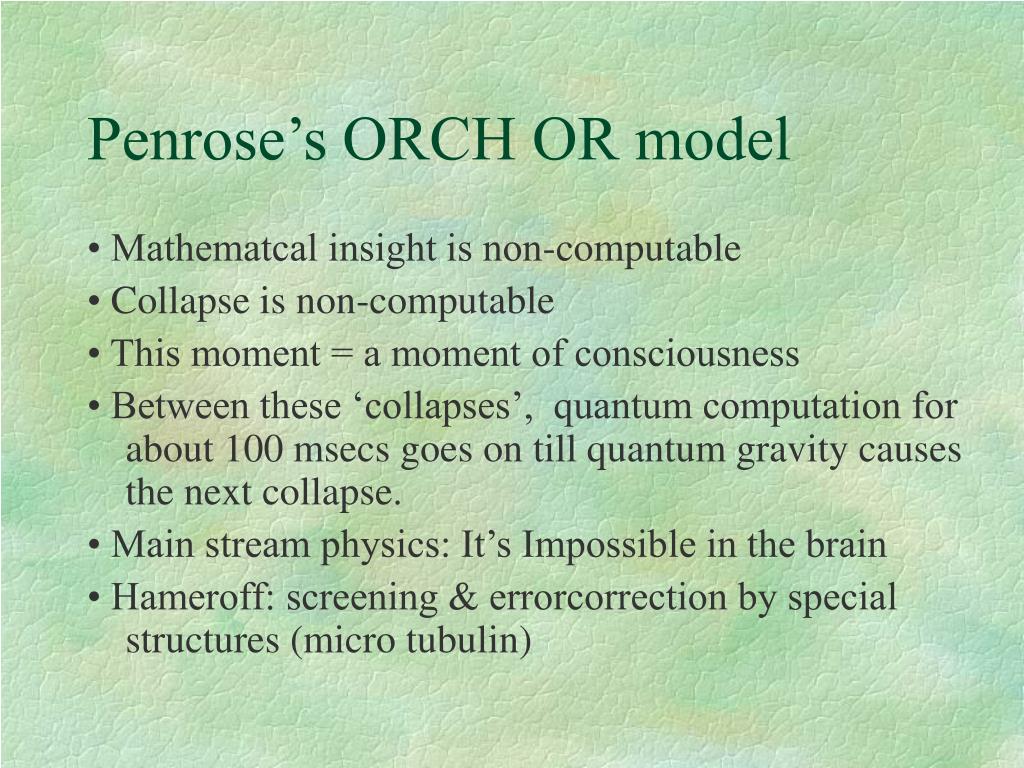
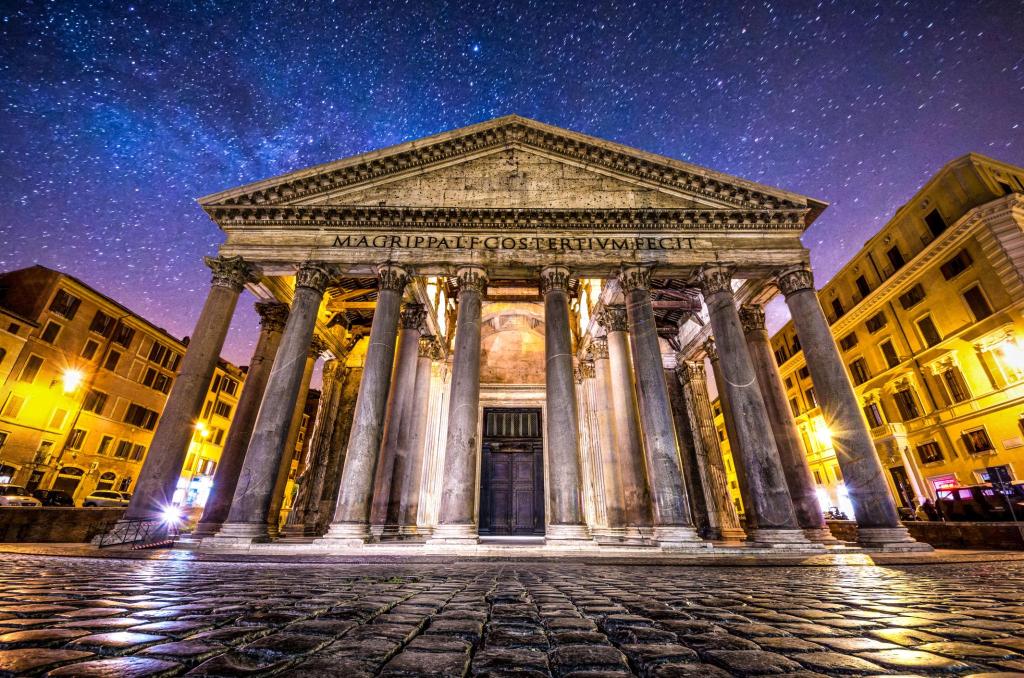
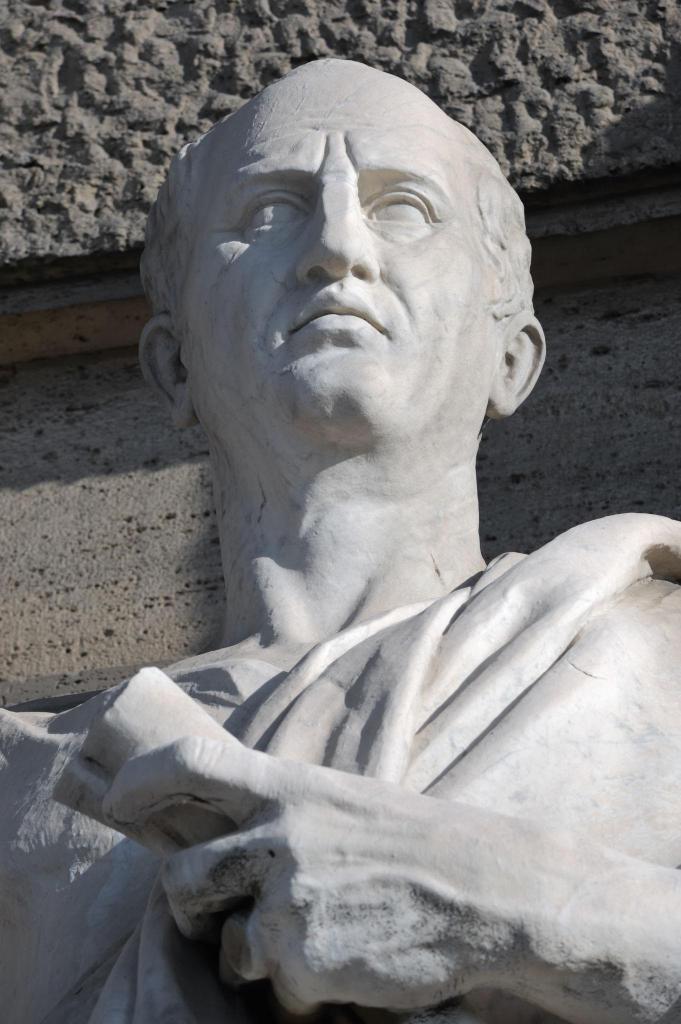
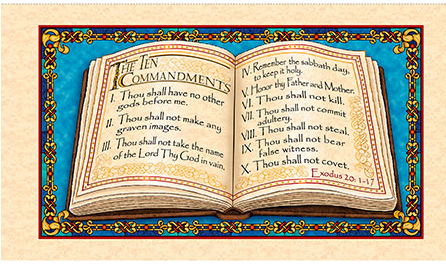
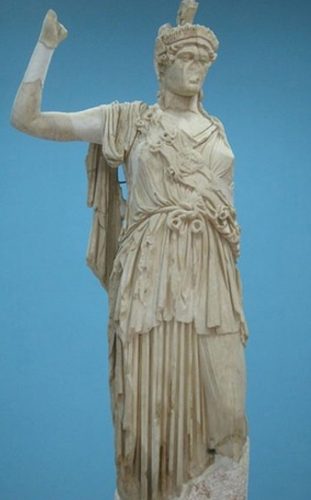
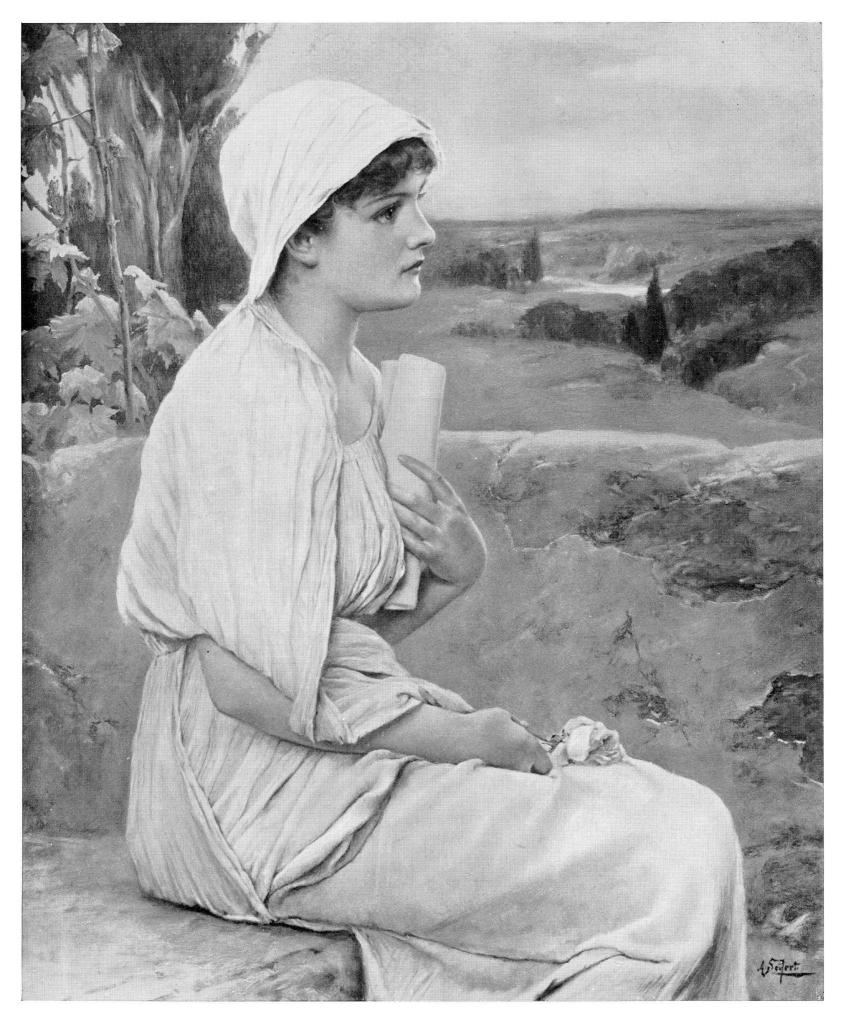
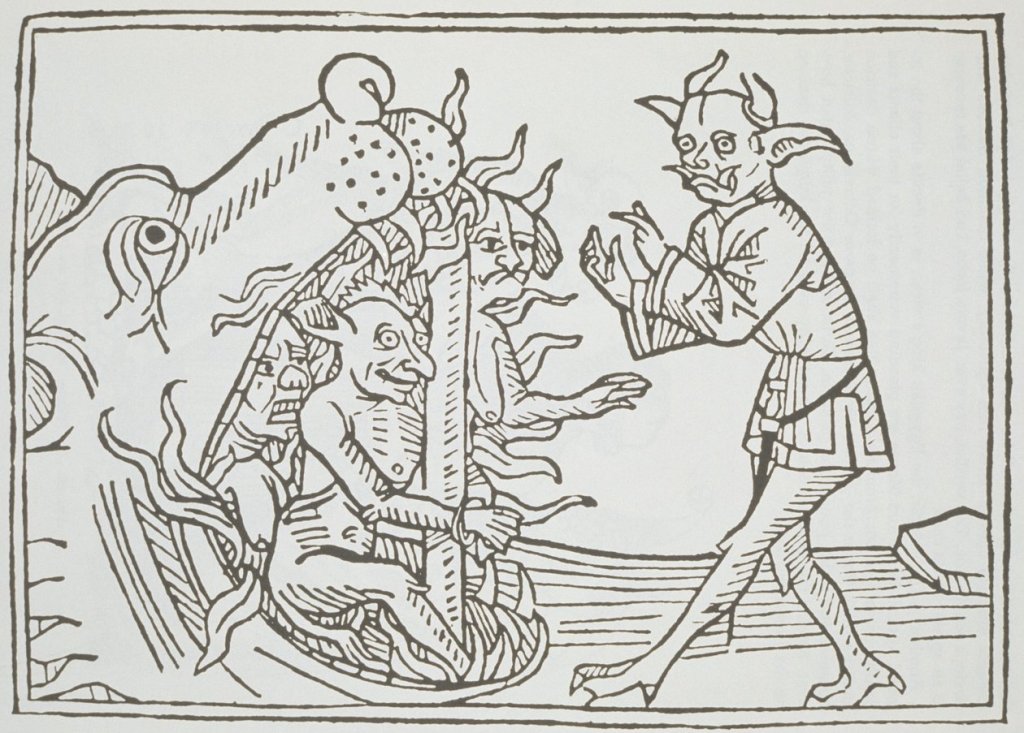
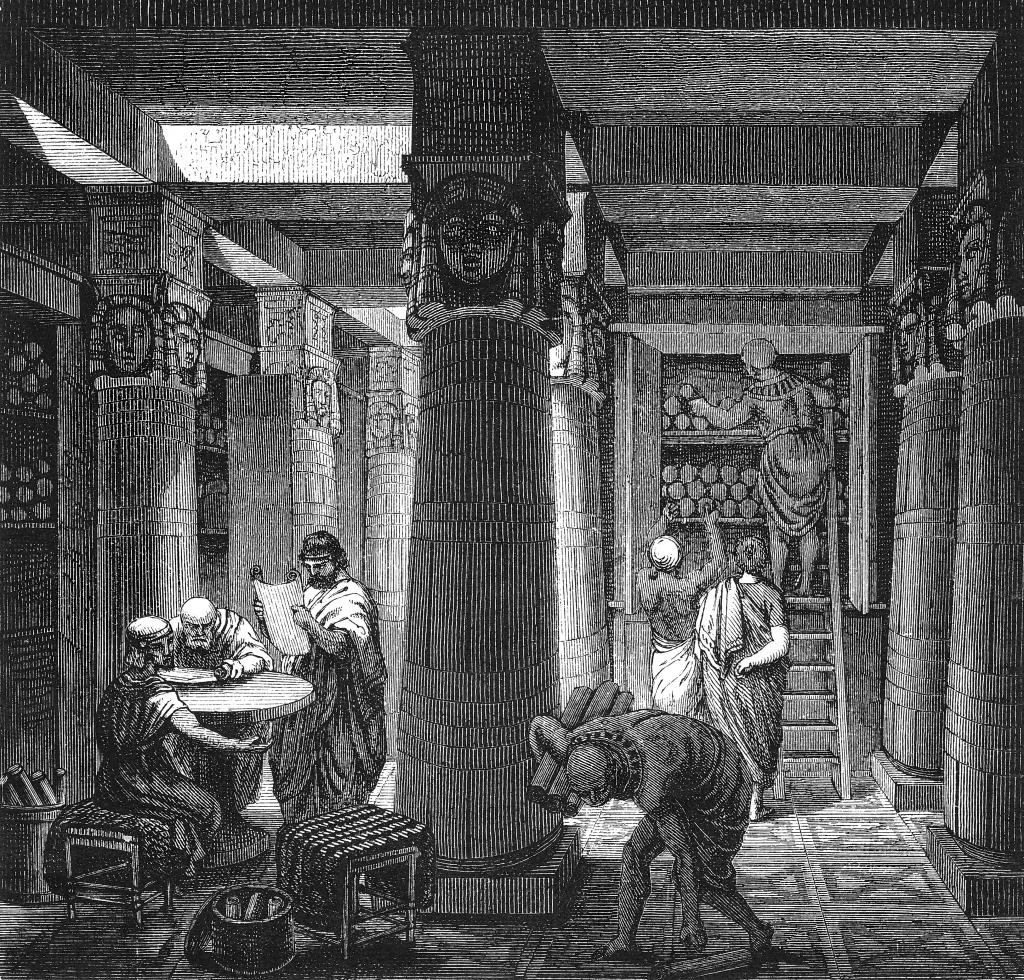
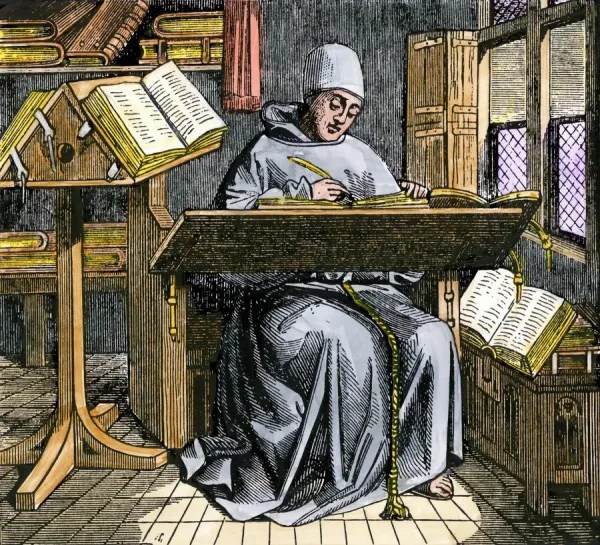
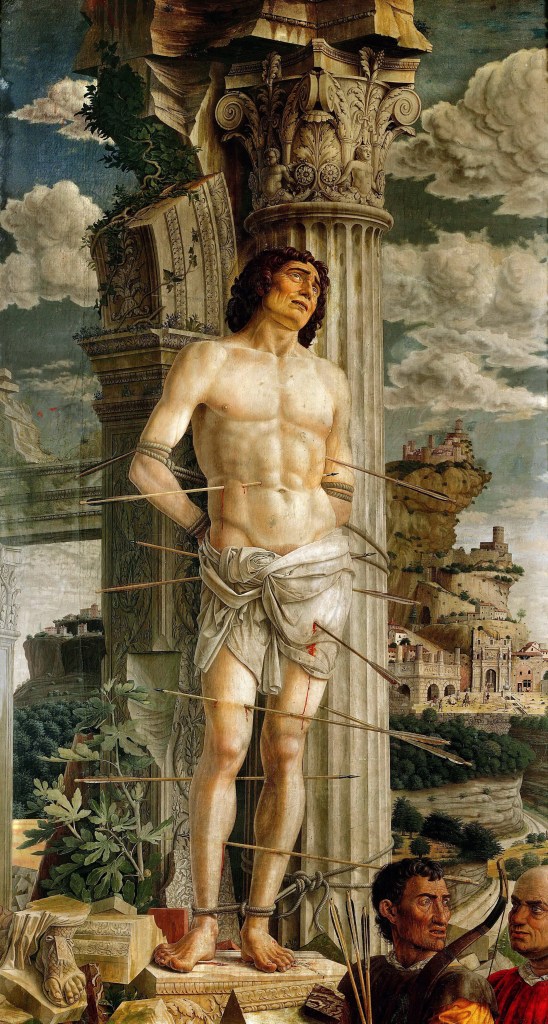
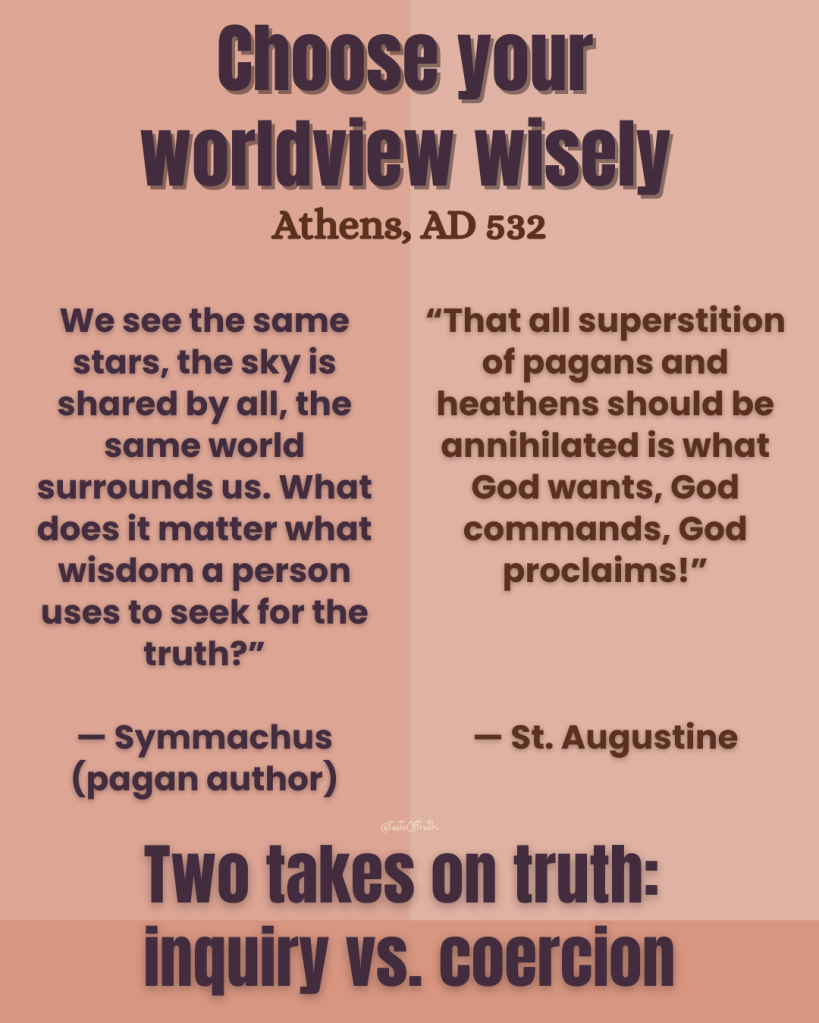
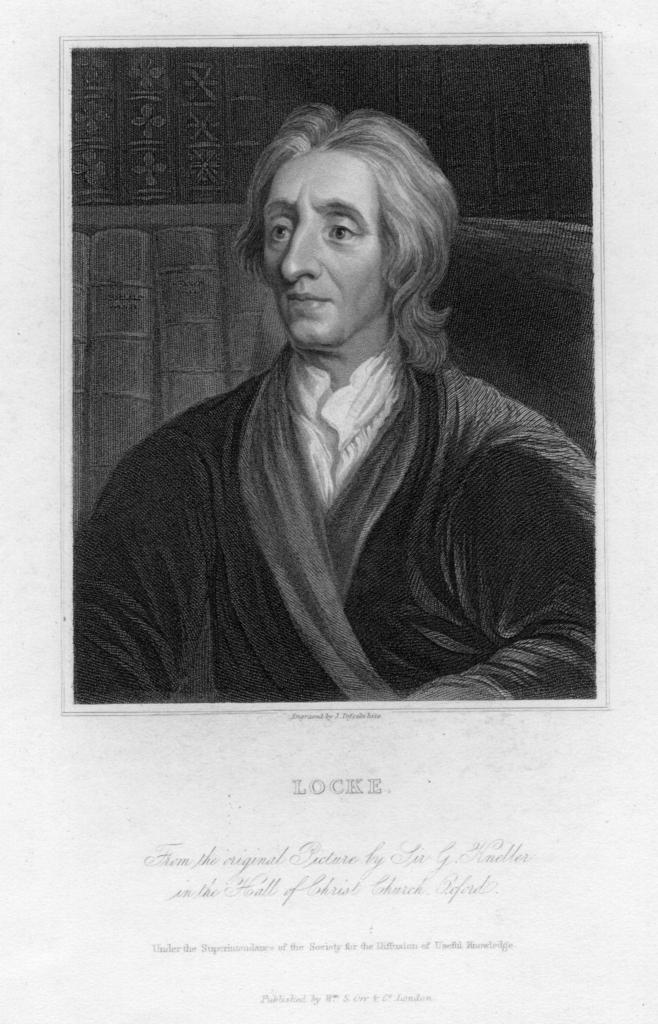

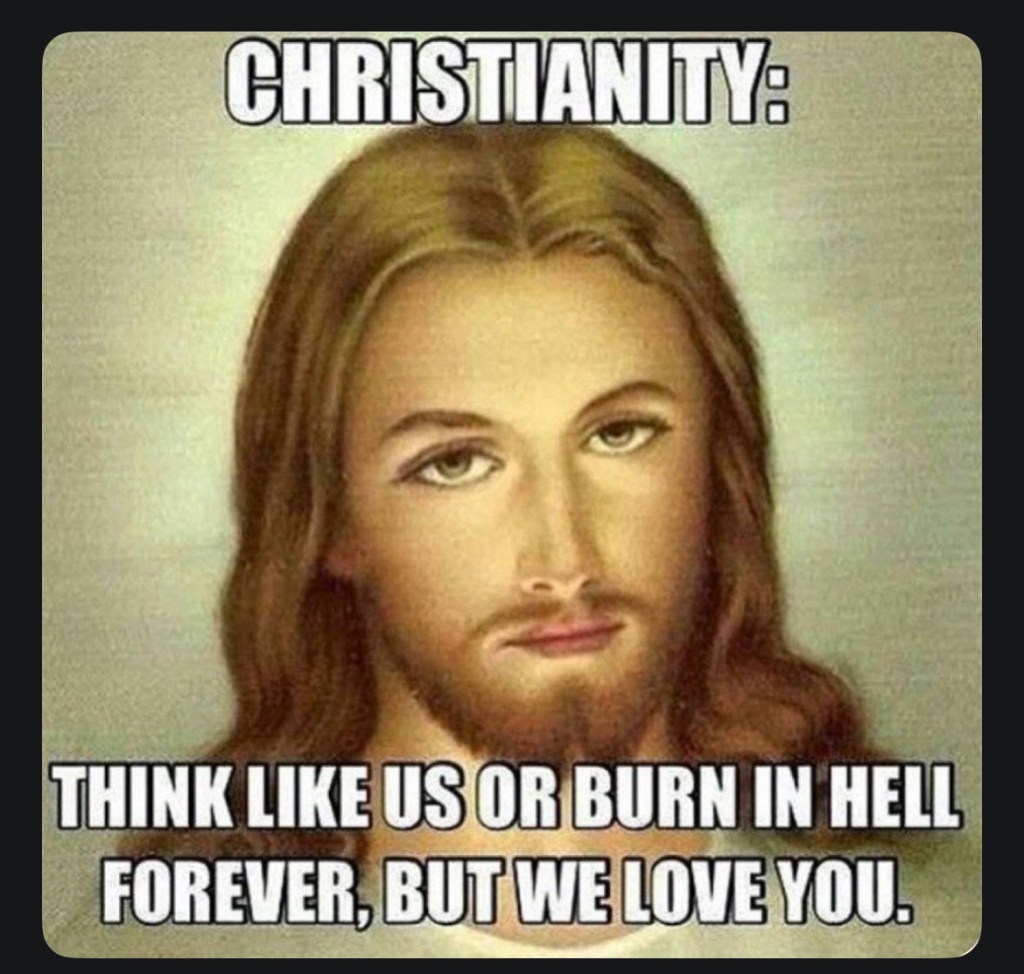

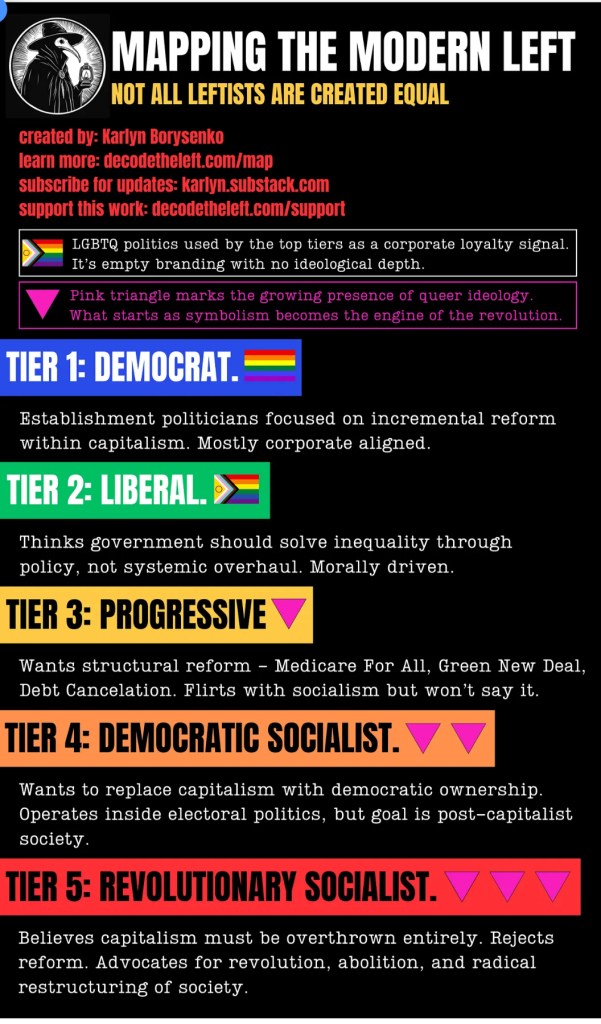




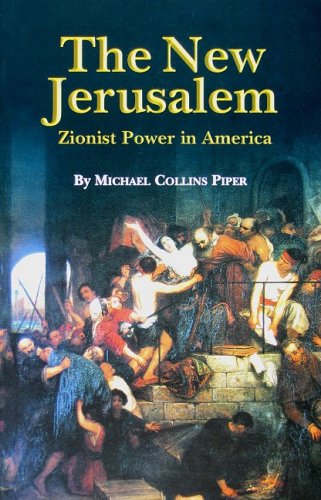
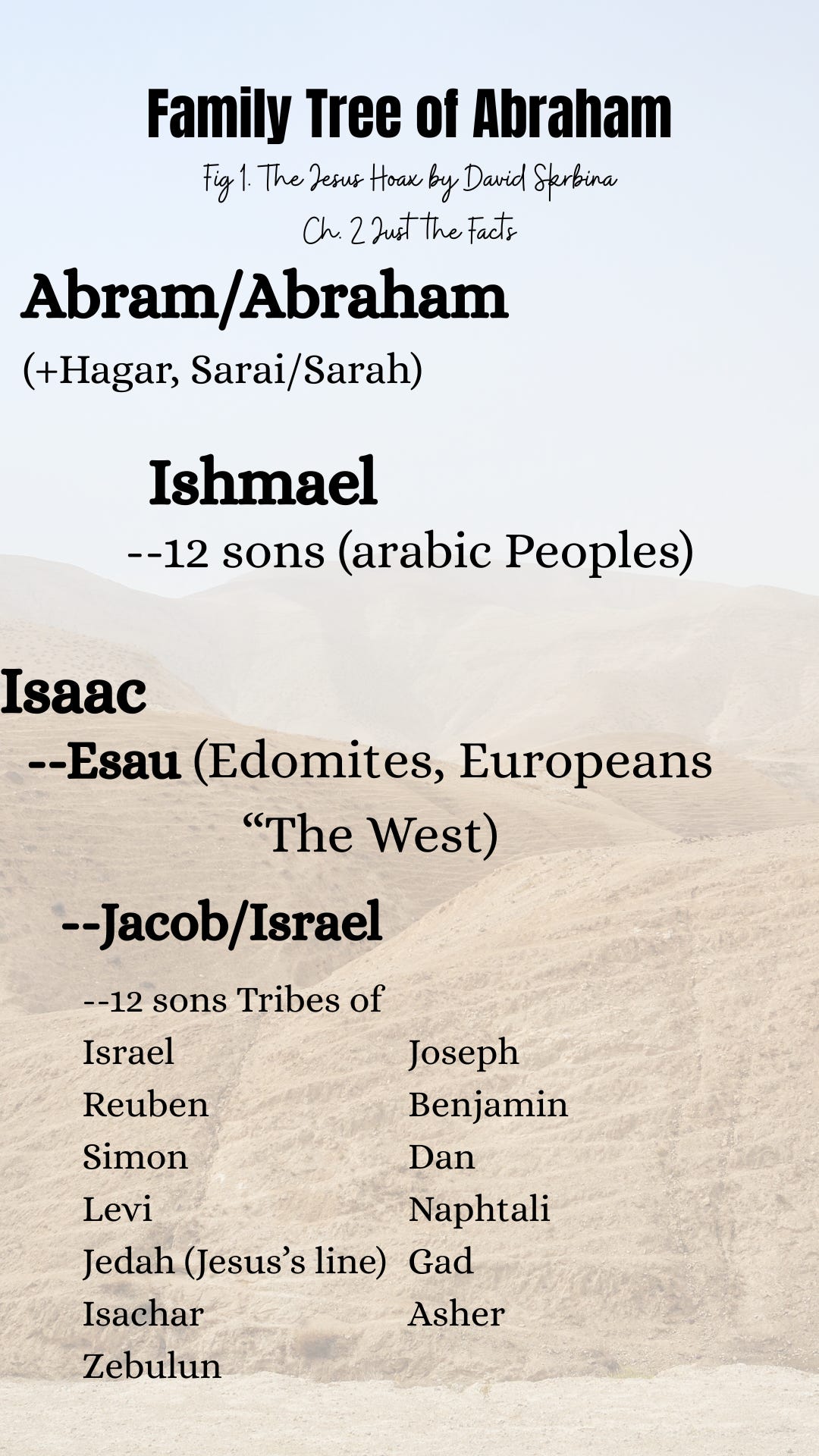
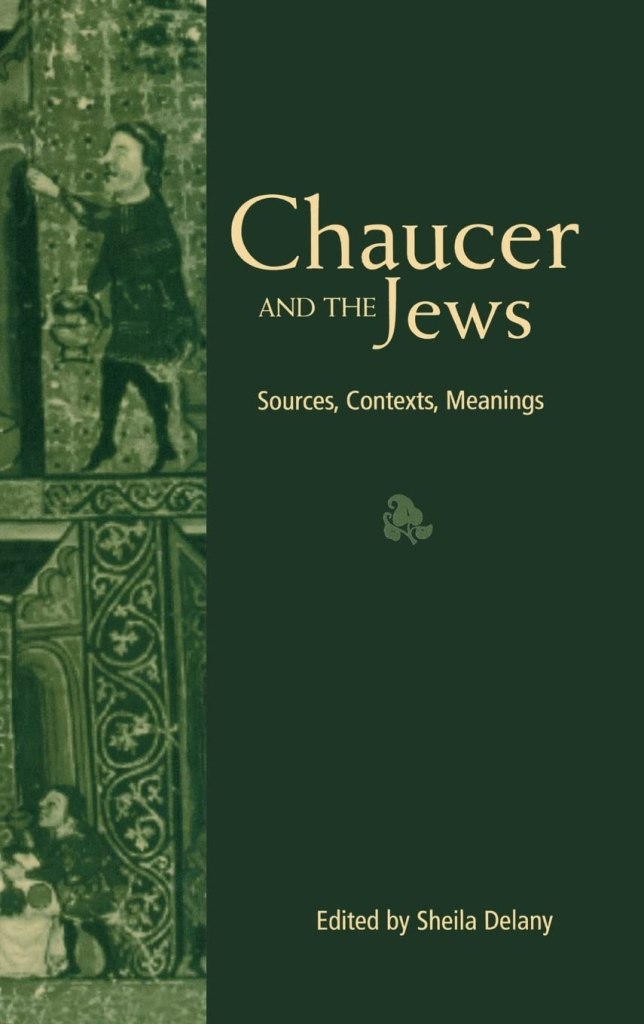

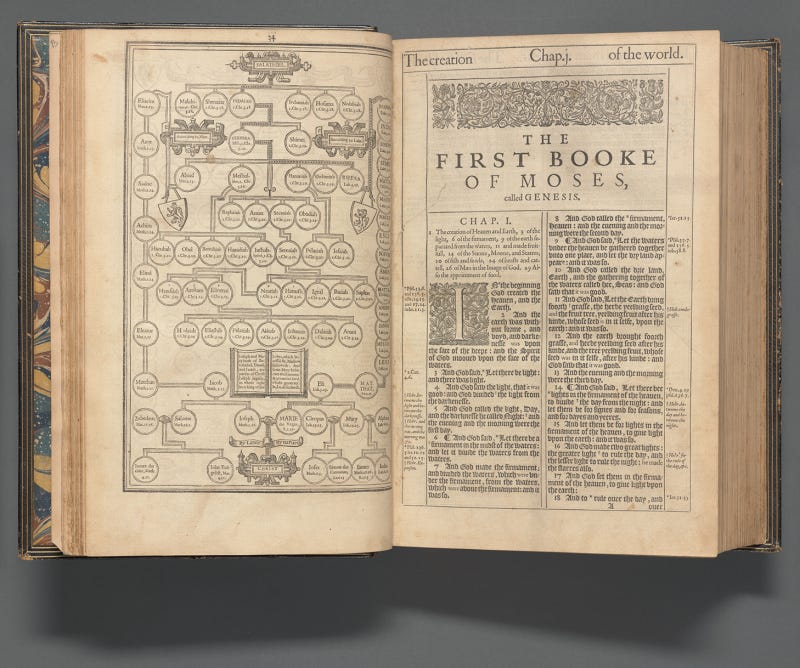



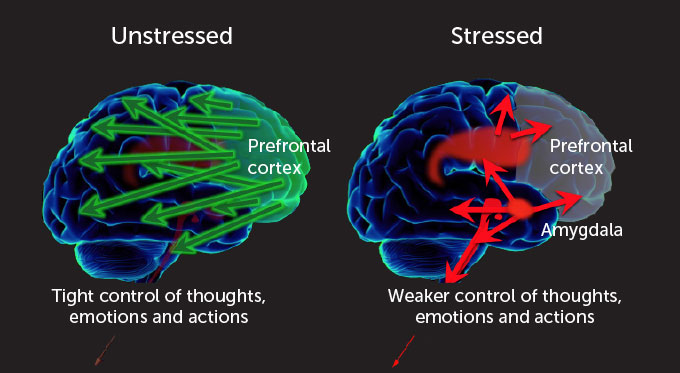

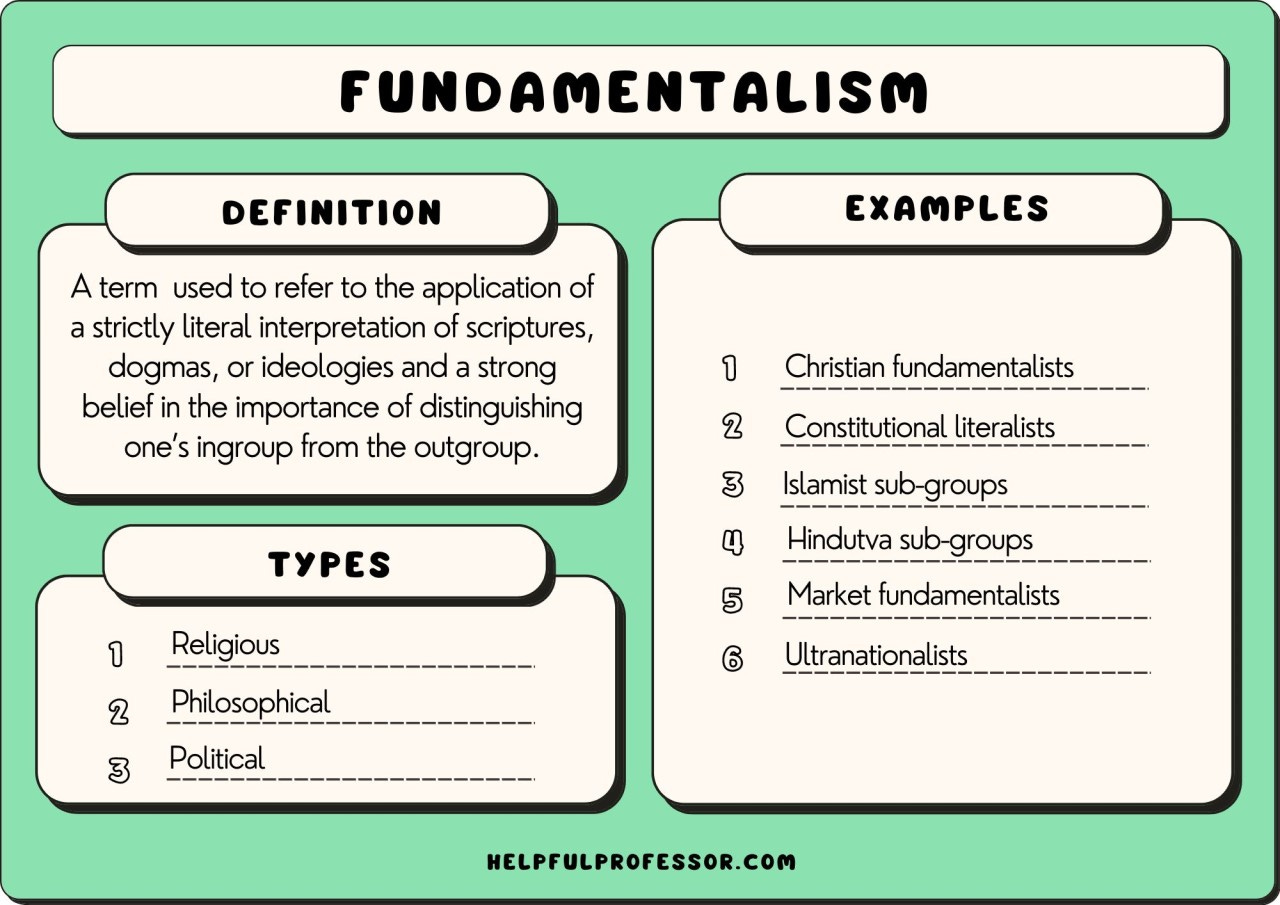

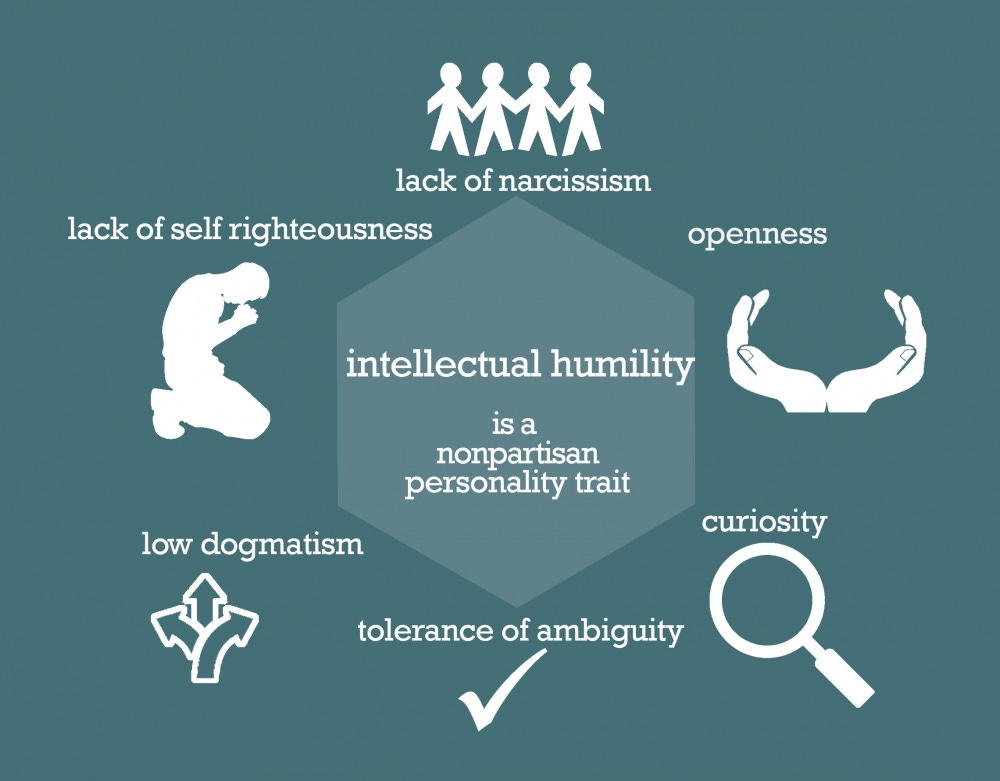



 Taste0ftruth Tuesdays