The Fatal Flaws of Calories In Calories Out and the Metabolism Model That Could Change Everything
Alright, let’s talk about the four most useless words in the history of weight loss advice: ‘Just eat less, move more.’ You’ve heard it, I’ve heard it, and if this phrase actually worked the way people think it does, we wouldn’t have skyrocketing rates of obesity, metabolic dysfunction, and entire industries built around yo-yo dieting. But here’s the kicker—it sounds logical. Simple math, right? Calories in, calories out. Except the human body is not a bank account; it’s a biological orchestra, and the way we process energy is more like a symphony than a spreadsheet.
We’ve already tackled the oversimplified calorie-counting dogma in our Science Dogma episode, and we’ve explored how perception alone—like believing a milkshake is ‘indulgent’—can literally alter our hormonal response. That’s not woo-woo, that’s science. But today, we’re going deeper. Because beyond the CICO model, beyond the calorie obsession, there’s a much bigger, messier, and more fascinating reality about metabolism, obesity, and why diet advice keeps failing people.
And I know what some of you might be thinking—‘But Megan, are you saying calories don’t matter?’ No. I’m saying they don’t tell the whole story. The way we eat, when we eat, why we eat, our hormones, stress levels, metabolic adaptations, even our past dieting history—all of it plays into how our body responds to food.
So as we close out Season 3 of Taste of Truth Tuesday, I want to leave you with something foundational. Not another diet trend. Not another oversimplified soundbite. But a real, nuanced conversation about what actually influences metabolism, weight loss, and why some of the most popular strategies—like keto, intermittent fasting, and calorie counting—work for some people but absolutely wreck others.
And here’s the disclaimer—I’m not an advocate for low-carb dieting in general, especially as someone who’s recovered from disordered eating. But my guest today? He eats low-carb and keto. And here’s what I respect—he’s not dogmatic about it. He understands that the real answer to health and weight loss isn’t found in any one-size-fits-all approach. It’s about bio-individuality.
So grab your coffee, take a deep breath, and get ready to rethink everything you thought you knew about metabolism. Let’s do this.
The calorie, as a unit of measurement, has a fascinating history that ties directly into the calories in, calories out (CICO) debate. While many assume the calorie has always been the standard for measuring food energy, its adoption in nutrition is relatively recent and shaped by shifts in scientific understanding, industry influence, and public health narratives.
The Origin of the Calorie
The concept of the calorie originated in physics, not nutrition. In the early 19th century, Nicolas Clément, a French chemist, introduced the term calorie as a measure of heat energy. By the late 1800s, scientists like Wilbur Olin Atwater adapted this concept to human metabolism, conducting bomb calorimeter experiments to determine how much energy food provided when burned. Atwater’s Physiological Fuel Values established the foundation for modern caloric values assigned to macronutrients (fat = 9 kcal/g, carbohydrates and protein = 4 kcal/g, alcohol = 7 kcal/g).
The Rise of Caloric Nutrition
By the early 20th century, calories became central to dietary guidelines, especially in public health efforts to address malnutrition. During both World Wars, governments used calorie counts to ration food efficiently. However, as food abundance grew, the focus shifted from ensuring sufficient calorie intake to preventing excess, paving the way for weight-focused dietary interventions.
CICO and the Simplification of Weight Loss
The calories in, calories out model became dominant in the mid-20th century, driven by research showing that weight loss or gain depended on energy balance. The First Law of Thermodynamics—energy cannot be created or destroyed, only transformed—was applied to human metabolism, reinforcing the idea that a calorie surplus leads to weight gain and a deficit to weight loss.
This framework became the foundation of mainstream diet advice, but it often overlooked complexities such as:
Metabolic adaptation (how bodies adjust to calorie deficits)
The thermic effect of food (protein takes more energy to digest than fat or carbs)
Gut microbiome effects on calorie absorption
Psychological and behavioral aspects of eating
Criticism and the Evolution of the Debate
By the late 20th century, challenges to strict CICO thinking emerged. Researchers in endocrinology and metabolism, such as Dr. Robert Lustig and Dr. David Ludwig, highlighted that not all calories affect the body in the same way—insulin regulation, macronutrient composition, and food quality play crucial roles.
Low-carb and ketogenic diet advocates argued that carbohydrate restriction, not just calorie restriction, was key to weight management due to its impact on insulin and fat storage.
I personally think, it’s not just carbs or calories doing this. There are at least 42 factors that impact blood sugar and metabolism. This is something I’ve worked to educate my audience on for years. Carbs are just one piece of the puzzle. Stress, sleep, gut microbiome, meal timing, inflammation, hormonal balance—all of these influence the body’s metabolic “terrain.”
Where Are We Now?
Today, the calorie remains a useful measure, but the conversation has expanded beyond simple energy balance. Researchers acknowledge that while calories matter, factors like food quality, hormonal responses, and individual metabolic differences significantly impact how the body processes energy. The debate now leans toward a more nuanced view.
Now, let’s talk about why this matters.
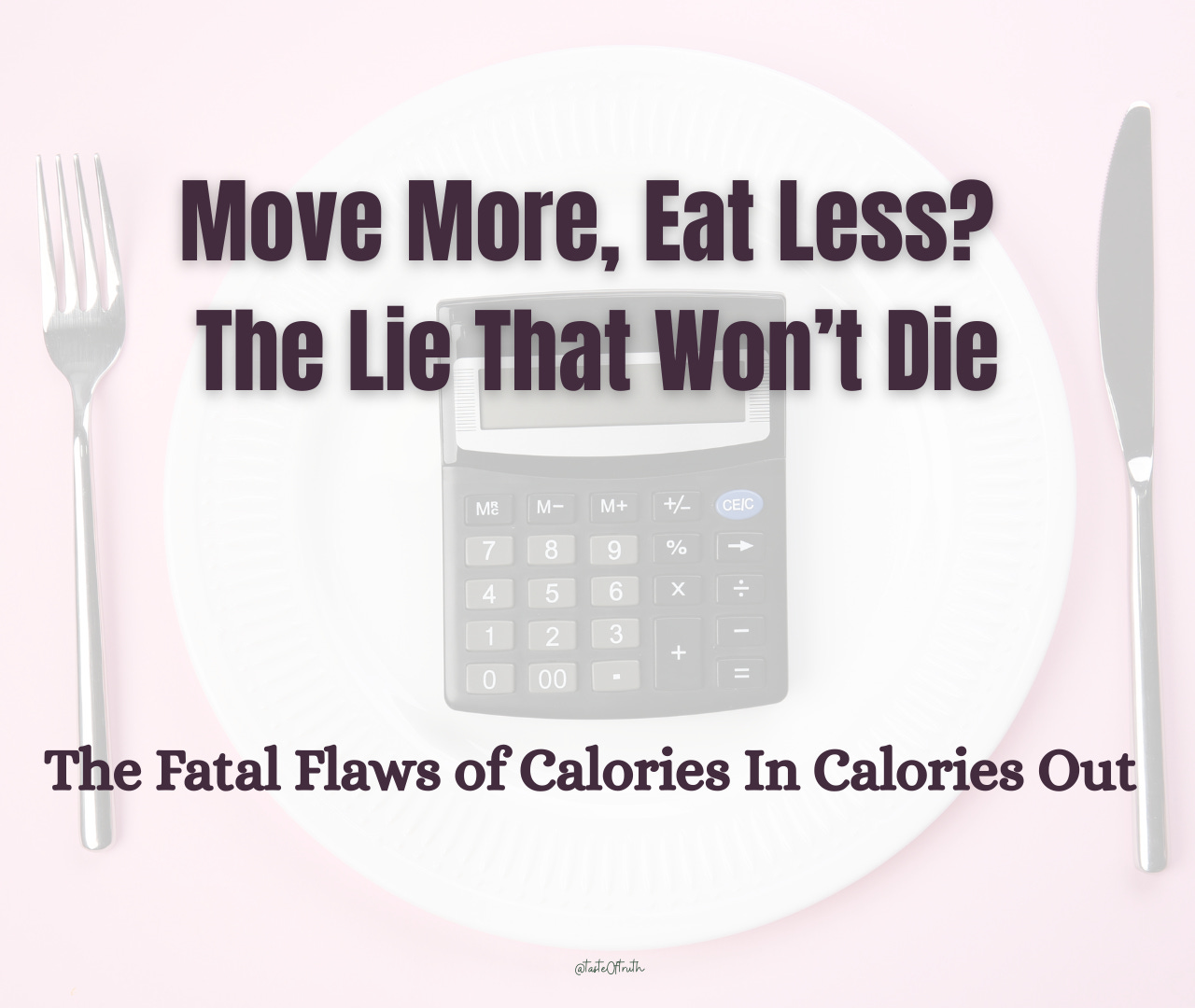
Today, I’m joined by Adam Kosloff, an author and researcher who isn’t afraid to challenge conventional wisdom—especially when it comes to obesity and metabolism. A Substack post of his, A Righteous Assault on the Absolute Worst Idea in the History of Science, takes a sledgehammer to the dominant ‘calories in, calories out’ model, aka Move More, Eat Less? The Lie That Won’t Die, arguing that our understanding of fat storage is fundamentally broken. Instead, he presents a revolutionary new framework—the Farmer Model—that redefines how we think about metabolism, obesity, and weight loss.
For years, the dominant narrative around weight loss has been depressingly simple: “move more, eat less.” This slogan has been drilled into us by dietitians, doctors, and fitness gurus as if it were an unshakable law of physics. But if it were that simple, why has metabolic disease skyrocketed despite more people tracking their calories and increasing exercise?
Adam challenges the traditional CICO (calories in, calories out) model, not just by saying it’s wrong, but by arguing it is catastrophically misleading. His Farmer Model reframes obesity and metabolic dysfunction as a landscape issue rather than a simple calorie balance equation.
Think of your metabolism like farmland. The most obvious disruptor might be “acid rain”—high-carb, sweet, ultra-processed foods that erode the topsoil, flood the land, and cause metabolic damage (fat storage, inflammation, insulin spikes). But not all disruptions look like a storm.
Sometimes, the changes are more insidious. Maybe those daily lattes weren’t a flood but a subtle shift in the terrain, like over-fertilizing a field. Too much of a good thing, whether dairy proteins or artificial sweeteners, can nudge the metabolic landscape in a way that leads to dysfunction over time.
And here’s the kicker: It’s not just carbs or calories doing this. There are at least 42 factors that impact blood sugar and metabolism. This is something I’ve worked to educate my audience on for years. Carbs are just one piece of the puzzle. Stress, sleep, gut microbiome, meal timing, inflammation, hormonal balance—all of these influence the body’s metabolic “terrain.”
Adam’s latest Substack post, 10 Smackdowns That Lay Waste to CICO, was an absolute banger. The line “Gaze upon these arguments, ye mighty gym bros, and despair…” had me cackling. But beyond the sass, the research was rock solid. In our conversation, we break down some of the most devastating smackdowns against CICO and discuss which ones tend to make the most die-hard calorie counters short-circuit.
The takeaway? The “move more, eat less” doctrine is outdated and incomplete. It’s time for a more sophisticated conversation about metabolism that acknowledges the complexity of the human body rather than reducing it to a basic math equation.
I had a lot of different topics in mind for my final solo episode of Taste of Truth Tuesdays Season 3. For example, The Stress-Mitochondria Connection: How B vitamins, Taurine and Magnesium Fuel your Energy, A world without religion: Freedom or Fragmentation, How Emotional Trauma contributes to Chronic Pain or the Social Media Dilemma How to Break Free from the Digital Grip… But then, a new development landed right in my lap—one that perfectly encapsulates the concerning trends I’ve been observing in the deconstruction, ex-Christian, anti-MLM, and ex-cult communities.
My friend Brandie, who I had on in Season 2 for the episode From Serendipity to Scrutiny, recently blocked me. And why? Because I simply pushed back and asked questions. We’d had some private conversations in the DMs that had already raised red flags for me, but apparently, even the slightest bit of pushback was enough to get me cut off. This isn’t just about one friendship—it’s about a much bigger pattern I’ve seen unfolding.
The Deconstruction Pipeline: When Leaving a High-Control Group Means Entering Another
One of the biggest ironies in the ExChristian circles is how quickly people flee high-control religious environments only to land in equally dogmatic ideological spaces. This isn’t a coincidence—it’s human nature. As Jonathan Haidt lays out in The Righteous Mind, our reasoning evolved more for argumentation than truth-seeking. We are wired for confirmation bias, and when we leave one belief system, we often replace it with another that feels equally absolute but now appears “rational” or “liberating.”
This is where figures like Steven Hassan and Janja Lalich come in (because this isn’t just about Brandie) self-proclaimed experts on cults who, ironically, exhibit the same control tactics they claim to expose. Hassan, a former Moonie turned cult deprogrammer, has made a career out of helping people escape authoritarian religious systems. But a deeper look at his work reveals an ideological bent (it’s hard to ignore). He frequently frames conservative or traditional religious beliefs as inherently cult-like while giving progressive or leftist movements a pass. He has called Trumpism a cult but is conspicuously silent on the high-control tactics within certain progressive activist spaces. His criteria for what constitute undue influence seem to shift depending on the political context, (BITE model) making his framework less about critical thinking and more about reinforcing his preferred ideological narrative. I did what Hassan won’t: use his own model to break down the mind control tactics of the extreme left.
Janja Lalich follows a similar pattern. A (supposedly) former Marxist-Leninist, she applies her cult analysis primarily to religious and right-wing groups while glossing over the coercive elements in the far-left spaces she once occupied (or still does). Her work is valuable in breaking down how high-demand groups operate, but she, too, appears to have blind spots when it comes to ideological echo chambers outside of the religious sphere. These represent a pattern rather than an isolated incident. Other platforms like (The New Evangelicals,Dr. Pete Enns (The Bible for Normal People), Eve was framed,Jesus Unfollower, Dr. Laura Anderson just to name a few.) highlight control tactics when they appear in traditional or conservative groups but fail to apply the same scrutiny to their own ideological circles.
This selective analysis creates a dangerous illusion: it allows people leaving fundamentalist religious spaces to believe they are now “free thinkers” while unknowingly adopting another rigid belief system. The deconstruction pipeline often leads former evangelicals straight into progressive activism, where purity tests, ideological loyalty, and social shaming operate just as effectively as they did in the church. The language changes: “sin” becomes “problematic,” “heresy” becomes “harmful rhetoric”, but the mechanisms remain the same.
Haidt’s work on moral foundations helps explain this phenomenon. Progressive and conservative worldviews are built on different moral intuitions, but both can be taken to extremes. The key to avoiding ideological capture is intellectual humility—the ability to recognize that no belief system has a monopoly on truth and that reason itself can be weaponized for tribalism.
John Stuart Mill warned of this centuries ago: the greatest threat to truth is not outright censorship but the cultural and social pressures that make certain ideas unspeakable. Greg Lukianoff and Jonathan Haidt’s The Coddling of the American Mind echoes this concern, showing how overprotective thinking and emotional reasoning have created a generation that confuses disagreement with harm.
Franklin O’Kanu’s concept of the “fake intellectual” is particularly relevant here—people who claim to be champions of free thought while aggressively enforcing ideological orthodoxy.
In this episode, through my experience with Brandie, I’ll illustrate how skepticism is selectively applied, and how ‘critical thinking’ communities can become just as dogmatic as the systems they reject. And unlike Hassan or Lalich, my connection with Brandie was personal. And that’s why I felt this warranted an entire podcast episode. Because what happened with her is a microcosm of a larger issue: people leaving high-control spaces only to re-enter new ones. They are convinced that this time, they’ve finally found the “truth.” Spoiler alert: that’s not how truth works.
So, let’s talk about it.
Blocked for Asking Questions
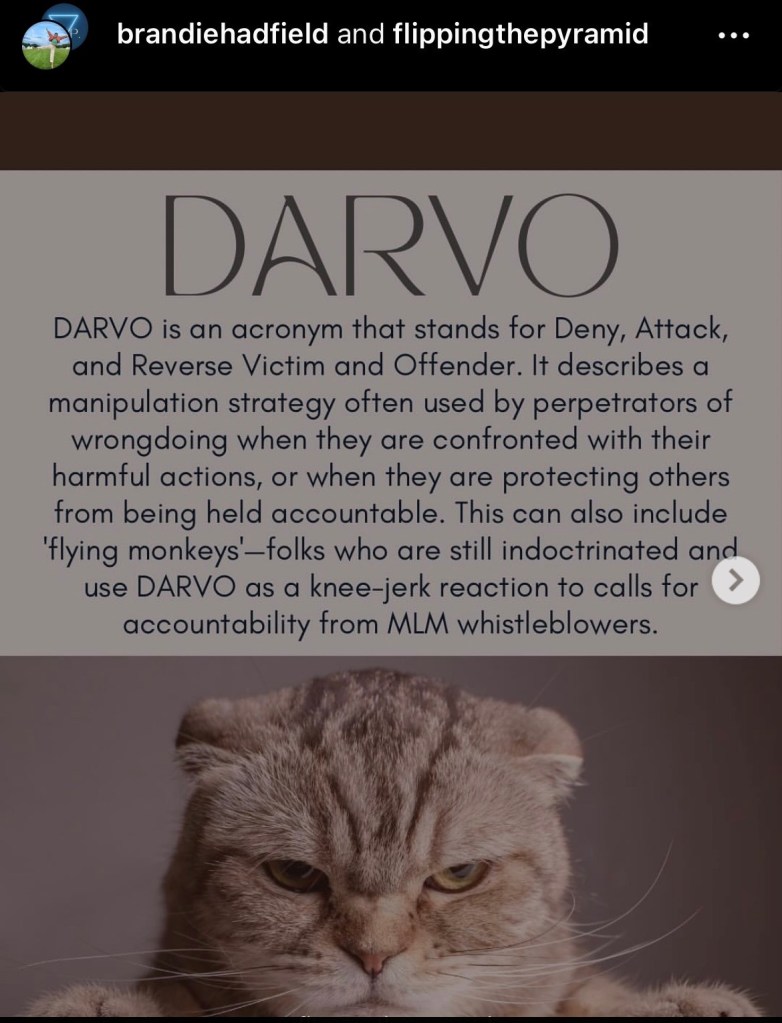
Recently, Brandie posted on Instagram about DARVO—a psychological tactic where abusers Deny, Attack, and Reverse Victim and Offender to avoid accountability. I agree that MLMs use DARVO. But I wanted to add friendly pushback, that I’ve noticed anti-MLM advocates use similar tactics to silence critics—especially when it comes to questioning the food industry— but she had turned the comments off.
DARVO stands for Deny, Attack, Reverse Victim and Offender—a tactic frequently used by abusers, cult leaders, and high-control groups when they’re called out. It flips accountability on its head, making the person asking legitimate questions seem like the aggressor while the actual manipulator plays the victim.
How MLMs Use DARVO
Multi-Level Marketing (MLM) schemes thrive on DARVO because their entire business model is built on deception. Here’s a classic example:
Deny – A distributor is confronted with the fact that 99% of people in MLMs lose money. Instead of addressing the data, they deny it completely: “That’s just a myth! I know tons of people making six figures!”
Attack – When pressed further, they go on the offensive, accusing the skeptic of being negative or jealous: “Wow, you’re so close-minded. No wonder you’re not successful!”
Reverse Victim and Offender – Finally, they paint themselves as the victim and the questioner as the bully: “I’m just a woman trying to build a business and empower others. Why are you trying to tear me down?”
This tactic shuts down meaningful discussion and keeps people trapped in a system that exploits them.
Do you know what else exploits individuals? Fear and propaganda.
I saw this firsthand in a recent conversation with a friend who’s deeply entrenched in leftist ideologies and what I’d call “Trump Derangement Syndrome.” She shared a post warning people to change their bank accounts because of a false claim that Elon Musk’s staff had access to personal financial data. I pointed out that the post was misinformation, but instead of engaging with the facts, the conversation quickly shifted in a way that mirrors the DARVO tactic.
First, she denied that the post could be harmful or misleading. Then, she attacked me for not understanding the larger “fear” that people are feeling in the current political climate. Finally, she reversed the roles, casting herself as the victim of a chaotic world and me as the one creating unnecessary tension by questioning the post.
This is a textbook example of DARVO, a tactic that deflects accountability, shifts blame, and keeps people trapped in fear-driven narratives. It keeps them from having honest, fact-based conversations and prevents any real understanding of what’s going on around them.
How Brandie Used DARVO on Me
Ironically, despite being an anti-MLM advocate, Brandie used the exact same manipulation tactics when I pushed back on some of her positions. This is a woman who criticizes manipulative marketing tactics in MLMs, yet here she was, employing the very same tactics in our discussion. It’s a stark example of how these patterns can be so ingrained that even those who oppose them can fall into using them.
Deny – When I questioned her promotion of dietitians who endorse processed foods like Clif Z Bars (which recently faced a class-action lawsuit for misleading health claims), she refused to acknowledge the legitimate concerns. Instead, she dismissed it by claiming that caring about food ingredients was more stressful for the body than just eating the food itself—a false dichotomy that undermines any nuance in the conversation, especially when she often critiques the same logical fallacy in other contexts.
Attack – Rather than engaging with my points, she made it personal, implying that I was being antagonistic or bad-faith for even questioning her stance.
Reverse Victim and Offender – Finally, when I didn’t back down, she blocked me, flipping the narrative to make it seem like I was the one causing harm simply by asking questions.
When Therapy Becomes Thought Control: The Weaponization of Mental Health
What makes this dynamic even more interesting is that both my friend in Portland and Brandie, an anti-MLM advocate, are therapists. These conversations have all unfolded within a culture that professes to value feelings, emotional well-being, and mental health awareness. More people are going to therapy than ever before, and an increasing number of people are training to become therapists—mostly women. Currently, around 70-80% of psychologists and therapists are female, and those seeking help are also more likely to be female.
The field has increasingly become a vehicle for ideological activism. Dr. Roger McFillin has spoken extensively about this shift, describing how therapy now often reinforces victimhood narratives rather than fostering resilience. Instead of helping clients process experiences and build coping skills, many therapists nudge them toward predetermined ideological conclusions—especially in areas of identity, oppression, and systemic injustice.
This shift has eroded one of psychology’s most fundamental ethical principles: informed consent. Clients, particularly young and vulnerable individuals, are often funneled into ideological frameworks without realizing it. Under the guise of “affirming care” or “social justice-informed therapy,” therapists may subtly guide them toward specific worldviews rather than offering a full range of perspectives. What should be a process of self-discovery instead becomes thought reform, where questioning the prevailing narrative is framed as harmful or regressive.
Therapy is no longer just political—it has become a mechanism of enforcement. We see this in counseling programs that demand ideological conformity from students, in therapists who blur the line between clinical work and activism, and in public figures like Janja Lalich and Steven Hassan, who claim to expose undue influence while engaging in the same tactics. This is ideological gatekeeping disguised as expertise.
Rather than fostering open exploration, the field is increasingly defined by rigid dogma. Questioning the dominant ideology isn’t framed as critical thinking—it’s labeled as resistance, ignorance, or even harm. And when that happens, dissenting voices aren’t debated; they’re erased. If this trend continues, therapy won’t just be a tool for self-improvement. It will be a tool for social control. It already is.
The Hypocrisy of Selective Skepticism
Brandie and the anti-MLM crowd claim to combat misinformation, yet they overlook a significant issue: the influence of Big Food and Big Pharma on public health narratives.
On her social media story and in private conversations, Brandie has defended dietitians who actively promote ultra-processed foods. Some registered dietitians with large platforms endorse products like Hawaiian Punch and Clif Z Bars as acceptable—even healthy—options.
Clif Z Bars, for example, were recently involved in a $12 million class action settlement for falsely marketing their products as “healthy and nutritious.” These bars are 37% added sugar, essentially sugar bombs.
Yet, a dietitian Brandie supports feeds these bars to her young children, publicly calling them a “healthy snack.” Why is this not considered misinformation?
These conflicts of interest raise serious concerns about industry influence over public health recommendations. Yet, if you question this, you’re labeled anti-science.
This kind of blind faith in authority is no different from religious dogma. The pursuit of truth should always leave room for debate. This also highlights why blindly trusting “credentialed experts” is insufficient. Degrees and titles don’t guarantee that recommendations are free from corporate influence.
Rather than acknowledge these conflicts, Brandie and her followers discredit those asking valid questions, often accusing them of using the “Just Asking Questions” fallacy.
The “Just Asking Questions” Fallacy
A common tactic used to dismiss skepticism is labeling it as the “Just Asking Questions” (JAQ) fallacy. This fallacy occurs when people imply that merely questioning an issue is a form of misinformation or bad faith argumentation.
Many dietitians and anti-MLM advocates are deeply entrenched in mainstream narratives on topics like vaccine safety, climate change, and pharmaceutical efficacy. When skeptics ask pointed questions about these subjects, they are often accused of using JAQing off—a term that suggests they are sowing doubt without providing counter-evidence. The accusation assumes that asking difficult questions is inherently conspiratorial, rather than a legitimate means of inquiry.
But skepticism is not the same as denialism. Critical thinking demands that we interrogate all claims—especially those made by institutions with financial or ideological incentives. Dismissing questions outright only serves to protect entrenched power structures.
The Counterpoint: Intellectual Humility and the Dogma of Data
While it’s vital to engage critically with the information we’re presented, it’s equally crucial to consider the potential pitfalls of blind adherence to any ideology—whether it’s religious, political, or scientific. In the modern age, science and data have often become the new forms of dogma. The scientific community, which prides itself on skepticism and inquiry, is sometimes treated as an unassailable authority—leaving no room for dissent or alternative perspectives.
The worship of science and data as infallible can feel eerily similar to religious dogma. It demands conformity in the name of progress, dismisses alternative viewpoints, and often shuts down debate—all while asserting that it’s in the name of critical thinking and rationality. In this system, the pursuit of truth can ironically become an exercise in tribalism and intellectual rigidity.
What is critical to recognize is that science and reason themselves are not immune to bias, corruption, or influence. Take, for example, the “revolving door” between regulatory agencies and the pharmaceutical industry, which compromises the integrity of public health policies. This conflict of interest is a significant factor in the mistrust surrounding many mainstream health recommendations, especially when we see how corporate interests shape the outcomes of clinical trials, the approval of drugs, or public health initiatives.
Take the nutrition field, for example. The dietitian mentioned earlier endorses Clif Z Bars for her young children, but if you challenge this, you’re accused of being anti-science or fear-mongering.
Similarly, when figures like RFK Jr. highlight pharmaceutical industry ties to regulatory agencies, critics don’t engage with the data. Instead, they attempt to discredit the person asking the questions.
The Real Issue is Deception from Trusted Intuitions
The real misinformation often stems from corporate-backed institutions. Public trust in physicians and hospitals fell from 71.5% in April 2020 to 40.1% in January 2024—not due to misinformation, but because people witnessed firsthand the contradictions, shifting narratives, and financial incentives behind public health decisions. Trust is eroded by deception, not by questioning.
RFK Jr. isn’t “sowing doubt” for the sake of it. He’s pointing out documented cases where pharmaceutical companies have manipulated clinical trials, buried adverse data, and exercised significant influence over regulatory bodies. His book The Real Anthony Fauci outlines a heavily researched case against the unchecked power of Big Pharma and its ties to government agencies. If his claims were false, he would face lawsuits, yet his work continues to spark vital discussions.
True skepticism means demanding better science, not blindly trusting authority. The real danger lies in silencing those who ask critical questions.
Big Food and the Shaming of Health Advocates
A recent study has revealed something I find all too familiar: intimidation tactics used by industries like Big Tobacco, ultra-processed food companies, and alcohol sectors to bully and silence researchers, whistleblowers, and anyone challenging their agenda. This tactic—used by Big Food to discredit critics—reminds me of the way people are shamed or bullied for questioning processed foods or advocating for healthier diets. If you’ve ever pointed out the risks of sugary snacks or fast food, you’ve probably been labeled an extremist, a health-obsessed “wellness warrior,” or worse, a “purity culture” advocate. I can’t help but feel this is just another form of gaslighting, where we’re told that it’s worse to worry about the ingredients in our food than it is to consume those ingredients, even if they are known to contribute to chronic health conditions.
Ironically, this kind of manipulation is the same strategy Big Tobacco used for decades to muddy the waters around the health risks of smoking. And now, ultra-processed food companies are doing the same thing—distracting us from the very real, documented consequences of a poor diet.
Why We Need to Trust Ourselves, Not JUST the Experts
What frustrates me is how the anti-MLM community often jumps on wellness advocates who want to clean up their diets for health reasons. While I agree that MLMs are a breeding ground for manipulation, this should not mean we ignore the very real need to question the food industry’s stranglehold on our diets and health. It’s vital to recognize that not all experts have your best interests at heart. Many of the mainstream recommendations we’re told to follow come from organizations or industries with questionable motives—whether it’s Big Pharma, Big Food, or Big Tobacco. These same industries have a long history of misleading the public, and many of their experts are bought and paid for by corporate interests.
Wanting to improve your diet to manage or reverse chronic health conditions shouldn’t be dismissed as obsessive or extreme. It’s a rational, self-preserving choice that empowers you to take control of your health, even when the mainstream narrative tells you otherwise.
Is This Healing or Just Another High-Control Belief System?
Brandie often talks about “cult recovery” and the importance of psychological resilience. But is she really modeling resilience? Because true resilience isn’t about avoiding discomfort—it’s about engaging with it, questioning your own biases, and standing firm in discussions, even when they challenge your worldview.
Instead, she’s teaching people to coddle their minds. To create ideological echo chambers where questioning the “right” experts is heresy. To avoid any perspective that might cause discomfort. If she’s teaching people to avoid discomfort rather than work through it, I’m not sure how that aligns with the principles of ethical psychotherapy.
True healing requires grappling with discomfort, not running from it. When you teach people to shut down their discomfort rather than confront it, you’re not promoting growth—you’re just pushing them into another high-control belief system.
That’s not healing. That’s just another form of control.
And let’s be real—if your response to fair, thoughtful criticism is to shut down the conversation and block people who used to support you, you haven’t actually deconstructed anything. You’ve just built a new echo chamber with different branding.
The Bigger Picture
This isn’t just about Brandie. It’s about a larger pattern I see in the deconstruction and anti-MLM communities. Many of them claim to be freeing minds, but in reality, they’re just recruiting people into a different kind of ideological purity test.
The message is clear: You’re allowed to be skeptical, but only in the “approved” ways.
That’s not intellectual freedom. That’s just another cult.
Where Do We Go From Here?
We need real conversations about manipulation and misinformation—whether it comes from MLMs, Big Food, Big Pharma, or influencer dietitians who profit from pushing corporate-backed narratives. It means we need to question everything—without replacing one unquestionable authority with another. And we need to be willing to hold all forms of power accountable, not just the ones that fit neatly into our existing beliefs.
Because if we’re not careful, we’ll escape one high-control group only to fall right into another.
We’re back! After a transformative and eye-opening second season, I’m excited to announce that Season 3 of Taste of Truth Tuesdays will kick off on December 31st. (Audio says Jan 7th, which was the original start date, I bumped it up a week.) This season promises to be packed with even more riveting conversations and insightful discussions. We’re diving into the complexities of spirituality, healing, activism, mental health, body image, and the power dynamics that shape our lives.
Here’s a sneak peek at the incredible guests you’ll hear from in the upcoming season:
Connie A. Baker: Spiritual and Religious Abuse
Connie A. Baker brings her expertise and personal experience to discuss the destructive impacts of spiritually abusive messages. These messages often erode our self-trust, leaving us vulnerable to further harm. In our conversation, we’ll explore the process of recovering from spiritual abuse and why it’s essential not to rush this journey. Connie will help us understand how survivors—especially those of us with a default setting of ‘push through’—can slow down and approach the healing process with patience. This wisdom is invaluable for true recovery, and I can’t wait for you to hear Connie’s insights.
Yasmine Mohammed: Escaping Radical Islam and Advocating for Women’s Rights
Yasmine Mohammed, a human rights activist and author of Unveiled: How Western Liberals Empower Radical Islam, joins me to share her powerful story. After escaping a forced, abusive marriage to an Al-Qaeda operative, Yasmine became an advocate for women’s rights. Through her non-profit organization, Free Hearts, Free Minds, she works tirelessly to support individuals seeking freedom from oppressive environments. Her memoir and activism offer a deeply personal and courageous perspective on overcoming adversity and empowering women. Her journey is one of survival, strength, and defiance.
Leah Denton: Therapy Harm and Power Dynamics in Mental Health
Leah Denton, the brilliant host of Psycho/Therapy podcast, will bring her deep insights into the harm that can occur within the therapeutic space and pastoral counseling. Leah, a survivor of therapy harm herself, shines a light on the ethical and systemic flaws within the mental health industry. She amplifies the voices of those who’ve been silenced and challenges us to rethink the power dynamics that can influence our healing. Leah’s work is a powerful call to action for better, more ethical care in therapy and beyond.
The Wellbeing Doctors: Body Image and Social Media’s Impact on Mental Health
Dr. Hannah Jarman and Ms. Claudia Liu, the dynamic team behind The Wellbeing Doctors, will discuss the intersection of body image, disordered eating, and the profound impact that social media has on our mental health. In their research, they’ve uncovered how active engagement with peers on social media can immediately reduce body image satisfaction, particularly for women. Together, we’ll explore how we need to redefine both beauty and health in ways that promote our true well-being, beyond appearances.
Wellness with Jaqui: The Real Story Behind Nutrition Research
Jaqui is back to break down the often-confusing world of nutrition research. If you’ve ever been baffled by conflicting diet headlines, this episode is for you. Jaqui will help us understand why nutrition research can be so complex, and how ‘statistical significance’ might not always mean what we think it does. This episode will bring clarity to the world of nutrition science and challenge the headlines we often see.
Franklin O’Kanu: Bridging Science, Spirituality, and Practical Wisdom
Franklin O’Kanu, also known as The Alchemik Pharmacist, is the founder of Unorthodoxy, a Substack that explores the spiritual dimensions of modern life through a holistic lens. With a Doctorate in Pharmacy and a background that bridges Pentecostal Christianity, Eastern philosophies, quantum physics, and Jungian psychology, Franklin offers a truly unique perspective. We’ll dive into his journey—from challenging conventional views during the pandemic to crafting a plan rooted in spiritual and natural principles. Franklin’s exploration of science, spirituality, and practical wisdom is sure to offer deep insights and foster a deeper understanding of the world around us.
This season is going to be a wild ride, full of wisdom, courage, and deep dives into essential topics that will challenge and inspire you. Don’t miss out on the launch of Taste of Truth Tuesdays Season 3 on December 31st! Make sure you’re subscribed, so you never miss an episode.
Take Control of Your Health Decisions: A Deep Dive with Just the Inserts
This week on Taste of Truth Tuesdays, we’re excited to welcome a special guest— the founder of Just the Inserts 🩺💊—as we explore her groundbreaking new book, Well Considered: A Handbook for Making Informed Medical Decisions. In this episode, we tackle one of the most vital topics in healthcare today: informed consent.
Here’s a preview of what we’ll be unpacking:
✨ What Inspired Well Considered?
What was the catalyst for creating this essential handbook? We’ll dive into the pivotal moment that led to its conception. Whether it was a personal experience or witnessing the confusion around medical decisions, you’ll hear the full backstory straight from the source.
📝 What is Informed Consent and Why Is It a Game-Changer?
Informed consent is more than a checkbox—it’s about having the knowledge and confidence to make the best choices for your health. We break down the meaning of informed consent and explore why it’s crucial for every patient to understand their options before saying ‘yes’ to a treatment.
📜 Are Inserts Just for Legal Reasons?
Some critics claim Just the Inserts causes unnecessary alarm by drawing too much attention to drug inserts. We take on these criticisms and discuss why inserts are far more than just legal protections for pharmaceutical companies. Get ready to hear why being fully informed isn’t about fear—it’s about empowerment.
💡 Feeling Rushed by Healthcare Providers? Here’s How to Stand Your Ground
Ever felt pressured by a doctor to make a snap decision? You’re not alone. We’ll share practical advice on how to slow down the conversation, ask the right questions, and ensure your voice is heard—without being rushed into treatments or medications.
💉 The Vaccine Debate: Individual Choice vs. Public Health
Vaccines are a hot topic, sparking debates about individual rights versus collective health. We’ll explore how to navigate this complex issue, finding balance between personal autonomy and the greater good when it comes to medical interventions like vaccines.
Dr. Stanley Plotkin, a prominent figure in vaccinology, and some of his colleagues recently published an article that has drawn significant attention. The article acknowledges that vaccines are not as thoroughly studied as previously claimed, particularly in terms of safety, both before and after they are licensed. This has raised concerns among critics, who argue that for decades, the public was assured that vaccines underwent rigorous safety testing.
Key points from the article include the admission that prelicensure clinical trials often have limited sample sizes and short follow-up periods, which may not fully capture long-term safety data. Additionally, there are currently no dedicated resources for post-authorization safety studies, relying instead on annual appropriations approved by Congress. This lack of resources for ongoing safety monitoring has been criticized as inadequate, particularly given the widespread use of vaccines.
This revelation has been met with strong reactions, especially from those who have long questioned the rigor of vaccine safety studies. They argue that these acknowledgments confirm their concerns that vaccine safety has not been as thoroughly investigated as it should be.
🧠 Get the Right Info: Making Confident Prescription Decisions
Not all medical advice is created equal, and it can be tough to know if your doctor is offering the best treatment options for you. We’ll share strategies for ensuring you get the most accurate, unbiased information when making choices about prescription medications.
✔️ 3 Actionable Tips to Start Making Informed Choices Today
We’ll wrap up the episode with three practical, actionable tips to empower you to start making more informed medical decisions—whether you’re picking up a prescription or heading in for a routine check-up.
This week’s conversation is all about reclaiming control over your health decisions. Tune in for an eye-opening discussion that’ll give you the tools you need to ask better questions, challenge the status quo, and take a more active role in your medical care.
Don’t miss this powerful episode of Taste of Truth Tuesdays! 🎙️
This week we have been diving into conspiracies chronicles, exploring how the 20th century marked a turning point in the rise of political paranoia and corporate influence, as conspiracies began to shape public perception and policy. With the rapid technological and social changes of the Second Industrial Revolution, powerful corporate interests gained unprecedented sway. From the Fletcher Report to the invention of Crisco, and the deeply flawed research by Ancel Keys on dietary fat and heart disease, lobbying, payoffs, and conflicts of interest paved the way for decisions that continue to shape public health policies to this day.
The integrity of our food system has been called into question with a 2020 study revealing that 95% of the members on the Dietary Guidelines Advisory Committee (DGAC) have conflicts of interest with major industry actors. These include ties to companies like Kellogg, General Mills, Kraft, and Dannon. Such conflicts arise through research funding, board memberships, and other forms of collaboration, raising concerns about the impartiality of public health recommendations. With industries like food, pharmaceuticals, and even agriculture involved, the guidelines that shape what Americans are encouraged to eat may be heavily influenced by corporate agendas.
This issue is particularly worrying because dietary guidelines play a critical role in shaping national health policies. A lack of transparency around these conflicts undermines public trust and can skew the focus of health advice, potentially shifting attention away from critical issues like diet-related diseases. Researchers have emphasized the need for stronger regulations and safeguards to mitigate these conflicts, suggesting that more unbiased committees could help prevent corporate interests from unduly shaping the nation’s nutrition policies.
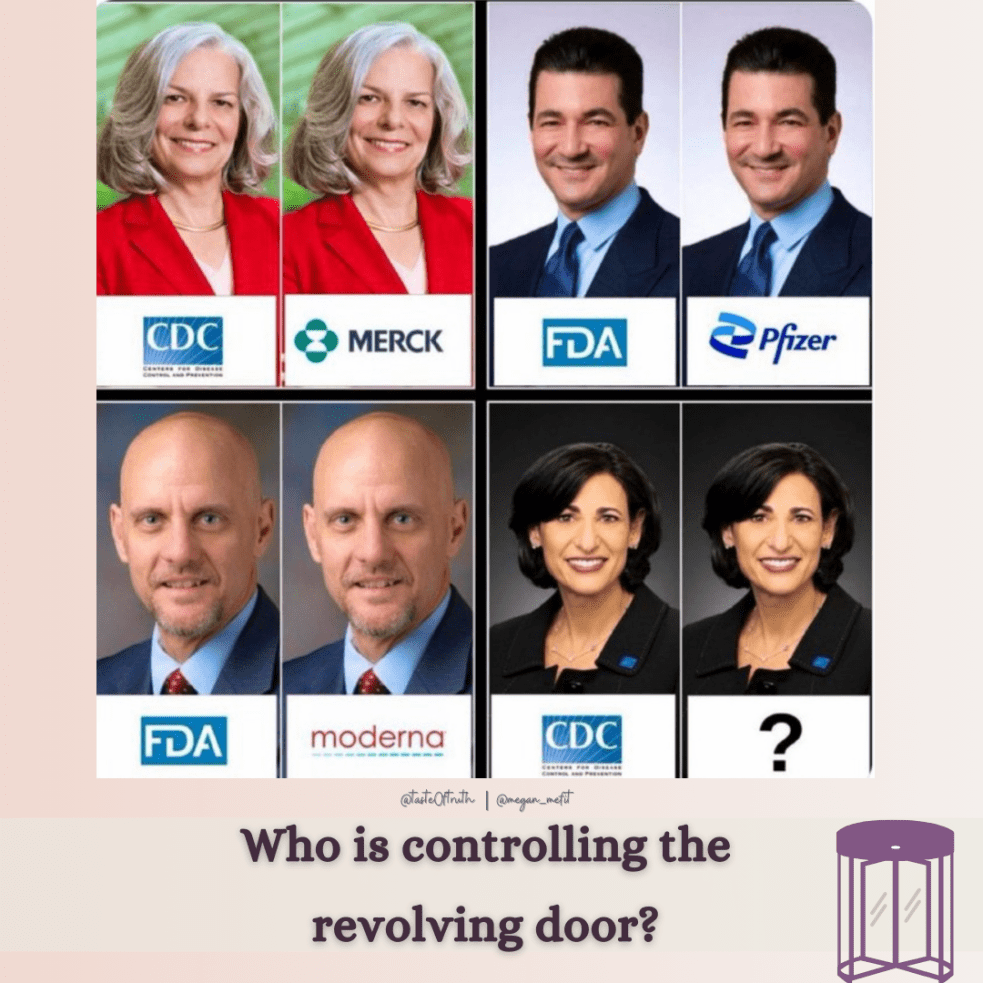
In the realm of public health and pharmaceuticals, there’s a well-documented phenomenon known as the “revolving door” between regulatory agencies and the pharmaceutical industry. This term refers to the cyclical movement of personnel between roles as regulators or policymakers and positions within the industries they oversee.
What Is the Revolving Door?
The revolving door concept highlights a pattern where high-ranking officials from organizations such as the CDC (Centers for Disease Control and Prevention) and the FDA (Food and Drug Administration) transition into influential roles within pharmaceutical companies, and vice versa. This fluid movement raises critical questions about the integrity and impartiality of regulatory oversight.
Notable Examples
Several prominent examples illustrate this phenomenon:
Scott Gottlieb, who served as the FDA Commissioner from 2017 to 2019, joined Pfizer’s board of directors shortly after his tenure at the FDA.
Julie Gerberding, the CDC Director from 2002 to 2009, transitioned to an executive role at Merck following her time at the CDC.
Stephen Hahn, FDA Commissioner from 2019 to 2021, took on a role at Flagship Pioneering, the venture capital firm instrumental in founding Moderna.
The Debate: Conflicts of Interest vs. Expertise
The revolving door sparks intense debate. Critics argue that this cycle of movement can create potential conflicts of interest. Regulators may be more lenient or biased towards the industries with which they have personal or future professional connections. This concern is particularly significant in the pharmaceutical sector, where regulatory decisions have profound implications for public health.
On the other hand, defenders suggest that this movement ensures that regulatory bodies benefit from the expertise and insider knowledge of seasoned professionals. They argue that these individuals bring valuable industry insights that can enhance regulatory practices and decisions.
The Impact on Public Health
The dynamics of the revolving door are crucial in discussions about the impartiality of regulatory oversight. In an industry where public health and safety are at stake, maintaining transparency and objectivity in regulatory processes is paramount. The potential for conflicts of interest necessitates ongoing scrutiny and reforms to ensure that the primary focus remains on safeguarding public health.
Robert F. Kennedy Jr. has been vocal about the issues with U.S. food systems, particularly targeting ultra-processed foods and the conflicts of interest surrounding federal dietary guidelines. He emphasizes how powerful food industry lobbies, including companies behind highly processed products, have influenced organizations like the USDA and FDA. RFK Jr. argues that this corruption has resulted in dietary guidelines that are detrimental to public health, prioritizing corporate profits over scientific integrity. He has criticized the ties between NGOs, including groups like the NAACP and diabetes associations, and the processed food lobby, which he claims skews their advocacy away from public health concerns and toward protecting industry interests.
Kennedy has connected these issues with broader systemic problems in the healthcare and pharmaceutical industries, asserting that ultra-processed foods contribute to a wide range of health problems, including metabolic disorders, cancer, and mental health issues. He also stresses that these foods disproportionately affect low-income communities and marginalized groups due to their accessibility, exacerbating health disparities. His stance resonates with his broader critique of government agencies being compromised by corporate interests, echoing his calls for transparency and reform across various sectors
As this debate continues, it is essential for the public to stay informed about these connections and advocate for transparency and accountability in the regulatory process. The revolving door is more than a mere career path—it’s a vital issue that affects how health policies and safety standards are shaped and enforced.
If you’re looking to explore the topic of conflicts of interest in the U.S. food system, including the influence of corporate lobbying on dietary guidelines and public health, here are some credible resources:
Marion Nestle’s Work Marion Nestle, a renowned nutritionist and public health advocate, has extensively written about the politics of food and how corporate interests shape food policies. Her book “Food Politics: How the Food Industry Influences Nutrition and Health” is a foundational resource that explores conflicts of interest in detail. She has also published several articles and blog posts that can be found on her website, Food Politics.
The Center for Science in the Public Interest (CSPI) CSPI is a non-profit organization that advocates for public health and transparency in the food industry. They regularly publish reports and articles on how industry lobbyists influence dietary guidelines and public health policies. Visit their site for comprehensive resources: CSPI.
The Journal of the American Medical Association (JAMA) JAMA has published several peer-reviewed articles on the conflicts of interest within the committees that develop dietary guidelines. You can access these studies through JAMA.
The Union of Concerned Scientists (UCS) UCS focuses on the intersection of science, policy, and industry influence, and they have published reports on the food industry’s role in shaping guidelines. You can find their reports here: UCS Food System Work.
Robert F. Kennedy Jr.’s Health Freedom Platform RFK Jr.’s organization, Children’s Health Defense, provides reports and articles on corporate influence in healthcare and the food system. While this source may reflect RFK Jr.’s specific views, it offers insights into his arguments and data regarding industry control. Children’s Health Defense.
These resources provide a deep dive into the systemic issues within the food industry, helping you critically examine how corporate interests shape dietary guidelines and health outcomes.
In today’s complex world of nutrition and health, embracing skepticism and critical thinking is essential. Rather than accepting dominant narratives, challenge them to uncover the truth.
🥕 Veganism vs. Meat: What’s the Real Issue? 🥕
The debate over veganism often gets tangled in oversimplified conspiracies. However, the real concern lies in our growing disconnect from nature’s balance. Our modern lifestyles and diets are increasingly detached from natural ecosystems, which profoundly affects our health and well-being.
To truly grasp the nuances of nutrition and health, especially when it comes to veganism, we must examine how our beliefs have been shaped by science, history, and religion. Over the next few weeks, we will time traveling through the last century to see how these elements intertwine and influence our perspectives on veganism.
🔬Before Lobbyism: The Golden Age of Nutritional Science 🔬
Before the rise of lobbyism and industrial influence in the mid-20th century, nutritional science was marked by pioneering research that laid the groundwork for our understanding of essential nutrients. One such figure was Elmer McCollum: Vitamin Pioneer.
Elmer McCollum, a prominent nutrition researcher in the early 20th century, made groundbreaking discoveries regarding vitamins A, B, C, and D. His work was instrumental in identifying the role of these vitamins in preventing nutritional deficiencies.
Vitamin A (Retinol): McCollum’s work significantly advanced the understanding of vitamin A, which is crucial for vision, immune function, and skin health. Retinol, the active form of vitamin A, is primarily found in animal-based foods like liver, fish oils, eggs, and dairy products. Unlike plant-based sources, which provide provitamin A carotenoids like beta-carotene that the body must convert into retinol, animal sources deliver this vitamin in its ready-to-use form.
🧬 BCO1 Gene and Vitamin A 🧬
Did you know that about 45% of people have a genetic variation that makes it hard for them to get enough vitamin A from plant foods? This is because of a gene called BCO1.
The BCO1 gene is responsible for converting beta-carotene (found in carrots, sweet potatoes, and other plants) into active vitamin A, also known as retinol. But for almost half of the population, this gene doesn’t work very efficiently, meaning their bodies can’t make enough vitamin A from plants alone.
Vitamin A is crucial for things like good vision, a strong immune system, and healthy skin. If you can’t get enough from plants, you might need to include animal foods like liver, fish oils, or dairy in your diet to make sure you’re meeting your vitamin A needs.
This explains why some people might struggle with a vegan diet—they need the more easily absorbed form of vitamin A that comes from animal products.
McCollum’s research emphasized the importance of unprocessed, nutrient-rich foods in maintaining health. Diets high in refined grains can exacerbate nutritional deficiencies by displacing more nutrient-dense foods. This indirectly touches on the issues, we see today related to grain consumption, though McCollum’s era was more focused on preventing deficiencies than on inflammation.
The Refinement of Grains: A Double-Edged Sword
As the food industry grew and refined processing techniques became widespread, the nutritional value of grains was compromised. The removal of bran and germ during processing not only reduced the essential vitamins and minerals in grains but also increased their glycemic index. This shift contributed to inflammation and other metabolic issues, like Type-2 Diabetes a concern that has become more prominent in later research.
A Shift in Focus: From Nutritional Science to Industrial Influence
McCollum’s era represents a time when nutritional science was still largely driven by the quest to understand and prevent deficiencies. However, as we moved into the mid-20th century, the influence of lobbyists and industrial interests began to muddy the waters, promoting processed foods and refined grains that strayed from McCollum’s principles of whole, nutrient-rich foods.
🥕 The Influence of Religion and Early Health Movements 🥕
Ellen G. White, a key figure in the Seventh-day Adventist Church, significantly impacted early American dietetics with her advocacy for a plant-based diet and abstinence from alcohol, tobacco, and caffeine. Her health reforms, which emphasized vegetarianism and whole foods, were institutionalized through health institutions like the Battle Creek Sanitarium and figures like Dr. John Harvey Kellogg. The sanitarium’s success and the dissemination of these dietary principles led to the establishment of the American Dietetic Association in 1917, which originally promoted many of these plant-based, whole-food principles. The Adventist emphasis on preventive health care and diet principles laid the groundwork for many modern dietary guidelines and continue to influence discussions around veganism.
🔬 The Role of Science in Shaping Dietary Beliefs 🔬
In the early 20th century, scientific advancements also played a role in shaping nutrition. The Fetner Report highlighted the need for standardized nutritional guidelines and brought attention to the importance of vitamins and minerals. Meanwhile, innovations like Crisco introduced hydrogenated fats into American diets, shifting culinary practices and influencing our understanding of what constitutes a healthy diet.
In a future episode dropping 9/10, we’ll take a deeper dive into how industrialization, scientific reports, and influential figures like John D. Rockefeller and Ancel Keys have further impacted our dietary beliefs and public health policies. Stay tuned as we explore:
The Flexner Report: How it reshaped medical education and its ripple effects on nutrition science.
The Rise of Processed Foods: The transformation of our food supply and its long-term health implications.
Rockefeller’s Influence: The role of industrial interests in shaping modern dietary guidelines.
Ancel Key’s: His research became highly influential in the field of nutrition, primarily took place during the mid-20th century, particularly in the 1950s and 1960s. His most famous work, the Seven Countries Study, began in 1958 and was published over several decades. This research was pivotal in linking dietary fat, particularly saturated fat, to heart disease and played a significant role in shaping dietary guidelines that emphasized reducing fat intake to prevent cardiovascular disease. Now adays it is seen as deeply controversial due to several perceived flaws that have been widely discussed by critics over the years.
How does current research define the top nutrient-dense foods?
📰 Spotlight on Micronutrient Density: A Key to Combatting Global Deficiencies
A March 2022 study published in Frontiers in Nutrition titled “Priority Micronutrient Density in Foods” emphasizes the importance of nutrient-dense foods in addressing global micronutrient deficiencies, particularly in vulnerable populations. The research identifies organ meats, small fish, dark leafy greens, shellfish, and dairy products as some of the most essential sources of vital nutrients like vitamin A, iron, and B12. These findings could be instrumental in shaping dietary guidelines and nutritional policies.
🍽️ Plant vs. Animal Nutrients: Understanding Bioavailability 🍽️
When it comes to nutrient absorption, not all foods are created equal. The bioavailability of nutrients—the proportion that our bodies can absorb and use—varies significantly between plant and animal sources.
🌱 Plant-Based Nutrients: While plant foods are rich in essential vitamins and minerals, they also contain anti-nutrients like phytates and oxalates. These compounds can bind to minerals such as iron, calcium, and zinc, inhibiting their absorption. For example, non-heme iron found in plants is less efficiently absorbed compared to the heme iron from animal sources. Similarly, the vitamin A found in plants as beta-carotene requires conversion to retinol in the body, a process that is not always efficient, particularly in certain populations.
🍖 Animal-Based Nutrients: Animal products, on the other hand, often provide nutrients in forms that are more readily absorbed. Heme iron from meat, retinol from animal liver, and vitamin B12 from dairy and eggs are all examples of highly bioavailable nutrients. These forms are directly usable by the body without the need for complex conversions, making animal products a more reliable source for certain essential nutrients.
🌍 Global Property Rights: Gender Inequality 🌍
Promoting veganism can unintentionally undermine the very principles of women’s rights and social justice that the political left often advocates for. In many countries, women face significant legal and cultural barriers that prevent them from owning land, despite laws that may suggest otherwise. However, in these same regions, women often have the ability to own and manage livestock, which serves as a crucial economic resource and a form of wealth.
This disparity highlights the persistent challenges in achieving gender equality in property rights, especially in rural areas where land ownership is key to economic independence and security. While livestock ownership is valuable, it doesn’t offer the same level of security or social status as land ownership. The lack of land rights perpetuates gender inequality, limiting women’s economic power, social status, and access to resources.
🌿 Plant-Based Diets and Environmental Costs 🌿
Plant-based diets are often praised for their environmental benefits, yet it’s crucial to recognize the complexities involved. While the availability of vegan foods has significantly improved, making it easier than ever to follow a plant-based diet, this increased accessibility does not necessarily equate to better environmental outcomes.
Many vegan products rely heavily on industrial agriculture and monocropping practices. These methods can lead to deforestation, soil depletion, and the loss of biodiversity. The production of popular vegan ingredients, such as soy and almonds, often involves large-scale farming that can have detrimental effects on local ecosystems. Additionally, the industrial processes used to produce processed vegan foods, including heavy use of pesticides, fertilizers, and water, also contribute to environmental concerns.
Understanding these trade-offs is crucial for making informed dietary choices. Opting for sustainably farmed, organic produce and supporting local farmers can help mitigate some of these negative impacts. It’s not just about choosing plant-based foods, but also about how they are produced.
🔄 Ethical Food Choices 🔄
Making ethical food choices involves a comprehensive evaluation of your diet’s impact on health, the environment, and animal welfare. While plant-based diets can be a step towards reducing your carbon footprint, it’s important to consider the broader implications of industrial agriculture and monocropping. Strive for a balanced approach that aligns with your values and promotes sustainability. This might include supporting local and organic options, as well as exploring ways to minimize your environmental impact through diverse and responsible food choices.
By being mindful of these factors, you can better navigate the complexities of dietary decisions and work towards a more ethical and sustainable future.
🔍 Listen to Our Podcast for More 🔍
For an in-depth exploration of these topics and more, tune into our podcast. We offer detailed discussions and insights into how history, science, and societal trends shape our understanding of nutrition and health. Stay curious and informed!
In a future episode dropping 9/10, we’ll take a deeper dive into how industrialization, scientific reports, and influential figures like John D. Rockefeller have further impacted our dietary beliefs and public health policies. Stay tuned as we explore:
The Flexner Report: How it reshaped medical education and its ripple effects on nutrition science.
The Rise of Processed Foods: The transformation of our food supply and its long-term health implications.
Rockefeller’s Influence: The role of industrial interests in shaping modern dietary guidelines.
The interplay of religion, science, and industry has profoundly influenced our beliefs about veganism and nutrition. By understanding these historical and scientific contexts, we gain insight into the broader impact on our dietary choices and health.
Don’t miss the upcoming episode where we’ll explore these themes in greater depth!
Resources:
1. Historical and Nutritional Science:
“Nutrition and Physical Degeneration” by Weston A. Price: Examines traditional diets and their impact on health, providing historical context for nutritional science.
“The Adventist Health Study: 30 Years of Research” edited by Gary E. Fraser: Covers the impact of vegetarian diets advocated by the Seventh-day Adventists.
“Food Politics: How the Food Industry Influences Nutrition and Health” by Marion Nestle: Examines how food industries shape dietary guidelines and public perception.
“The Vitamin D Solution” by Michael F. Holick: Offers insights into the importance of Vitamin D, complementing McCollum’s work on essential nutrients.
Prophetess of Health: A Study of Ellen G. White (Library of Religious Biography) Paperback – July 2, 2008
Articles:
“Ellen G. White and the Origins of American Vegetarianism” from Journal of the American Dietetic Association: Explores the historical influence of Ellen G. White on American dietetics.
“Elmer McCollum: The Vitamin Pioneer” from The Journal of Nutrition: Provides an overview of McCollum’s contributions to nutritional science.
Genetic Factors and Vitamin A
Research Papers:
“The Role of Genetic Variability in Vitamin A Metabolism” by Steven A. Arneson et al. (Journal of Nutrition): Discusses the genetic factors affecting Vitamin A conversion.
“BCO1 Genetic Variation and Beta-Carotene Conversion” in American Journal of Clinical Nutrition: Explores how genetic differences impact the conversion of beta-carotene to Vitamin A.
The Impact of Industrial Agriculture
Books:
“The Omnivore’s Dilemma” by Michael Pollan: Investigates the industrial food system and its environmental impact.
“The End of Food” by Paul Roberts: Looks at the global food industry and its implications for health and the environment.
Articles:
“The Hidden Costs of Industrial Agriculture” from Environmental Research Letters: Analyzes the ecological impacts of industrial farming practices.
1. Regenerative Agriculture Principles and Practices
Books:
“Regenerative Agriculture: How to Create a Self-Sustaining Farm Ecosystem” by Richard Perkins: Provides a comprehensive guide to regenerative farming practices.
“The Regenerative Garden: How to Grow Healthy Soil and Manage Your Garden for the Future” by Maria Rodale: Focuses on regenerative techniques for gardening.
“Dirt to Soil: One Family’s Journey into Regenerative Agriculture” by Gabe Brown: Shares practical experiences and insights from a farmer who has successfully implemented regenerative practices.
Articles:
“Regenerative Agriculture: What Is It and Why Does It Matter?” from Regenerative Agriculture Initiative: Provides an overview of regenerative agriculture principles and benefits.
“The Benefits of Regenerative Agriculture for Soil Health and Sustainability” from Agronomy Journal: Discusses how regenerative practices impact soil health and sustainability.
2. Sustainable and Ecological Farming
Books:
“The Soil Will Save Us: How Scientists, Farmers, and Foodies Are Healing the Soil to Save the Planet” by Kristin Ohlson: Explores how soil health can be restored through sustainable practices.
“Beyond the Jungle: Regenerative Agroforestry and Resilient Communities” by S. H. Smith: Examines the role of agroforestry in regenerative practices and community resilience.
Articles:
“Sustainable Agriculture and Its Impact on Environmental Conservation” from Sustainable Agriculture Research: Analyzes how sustainable farming methods contribute to environmental conservation.
“Ecological Farming: Benefits Beyond the Farm Gate” from Ecology and Society: Looks at the broader ecological benefits of adopting ecological farming practices.
3. Soil Health and Carbon Sequestration
Books:
“The Carbon Farming Solution: A Global Toolkit of Perennial Crops and Regenerative Agriculture Practices for Climate Change Mitigation and Food Security” by Eric Toensmeier: Focuses on using regenerative practices to sequester carbon and improve soil health.
“Soil: The Incredible Story of What Keeps Us Alive” by David R. Montgomery: Provides an in-depth look at soil science and its crucial role in agriculture and climate stability.
Articles:
“Carbon Sequestration and Soil Health: The Role of Regenerative Agriculture” from Agricultural Systems: Discusses how regenerative agriculture practices contribute to carbon sequestration and soil health.
“Soil Organic Matter and Its Role in Carbon Sequestration” from Journal of Soil and Water Conservation: Explores the importance of soil organic matter in maintaining soil health and sequestering carbon.
4. Food Systems and Regenerative Practices
Books:
“The Ecology of Food: A Historical Perspective” by Peter M. Smith: Provides historical context on food systems and their ecological impact.
“The Omnivore’s Dilemma: A Natural History of Four Meals” by Michael Pollan: While it explores various food systems, it touches on sustainable and regenerative practices in agriculture.
Articles:
“The Future of Food: Regenerative Agriculture and Its Role in Sustainable Food Systems” from Food Policy: Examines the role of regenerative agriculture in creating sustainable food systems.
“Regenerative Agriculture and Food Security: An Integrative Approach” from Journal of Agricultural and Environmental Ethics: Looks at how regenerative practices contribute to food security and sustainability.
Gender Inequality and Property Rights
Books:
“Women, Work, and Property: Gender Inequality and the Economic Impact of Land Rights” by Elizabeth N. L. Allwood: Analyzes the intersection of gender, land ownership, and economic empowerment.
Articles:
“Gender and Land Rights: A Global Overview” from World Development: Examines gender disparities in land ownership and its implications for women’s economic status.










 Taste0ftruth Tuesdays