Mastering Stress Management for a Balanced Life

Let’s talk about stress, baby! The holiday season is here, and so is the pressure—family obligations, shopping, cooking, and don’t even get me started on the aftermath of an election year. It feels like stress is at an all-time high, right? But guess what? It doesn’t have to wreck your health goals or derail your progress in 2025.

Forget extreme diets, gimmicky regimens, and complicated rules. In 2025, we’re mastering the basics and building a lifestyle that lasts. The key to handling the chaos of life, including holiday stress and beyond, is learning how to manage it effectively. That’s where stress management fits into the 365 Easy Challenge—your simple, sustainable plan for the new year.

Stress is the silent killer of self-control and health. It doesn’t just disrupt your mind—it messes with your body, too. And when stress builds up, it pulls your energy away from what matters most: your health, your relationships, and your goals. That’s why stress management isn’t just about “chill vibes”—it’s about learning to recognize, manage, and even reframe how we handle stress.

2025 is the year we crush the basics—here’s how to make stress a manageable part of your journey, not a roadblock.


What Is Stress, Really?

Stress is your body’s natural response to change. Whether it’s positive (like getting married or landing a new job) or negative (like losing a loved one or dealing with financial pressure), your body reacts in a similar way. Your nervous system goes into high gear, releasing hormones like adrenaline and cortisol to help you react to the situation.

At a basic level, stress is a mechanism for survival—your body prepares to fight or flee from danger. But in today’s world, the “danger” is more likely to be a heavy workload, relationship problems, or feeling overwhelmed by societal issues. It’s no longer a saber-toothed tiger lurking around the corner, but your body responds with the same intense, sometimes overwhelming, force.


The Stress Response: Fight or Flight, or Freeze?

When stress triggers your fight-or-flight system, your body shifts into survival mode. This state is designed for short bursts of energy—like running away from danger or facing an immediate threat. However, in today’s world, this system is often activated for prolonged periods, even when the “danger” isn’t physical but emotional or mental.

This prolonged state of stress can lead to:

  • Chronic inflammation: Your immune system is on constant alert, which can cause inflammation in your body. Over time, chronic inflammation is linked to conditions like heart disease, diabetes, and autoimmune disorders.
  • Cortisol imbalances: Cortisol is your body’s primary stress hormone. It’s helpful in small amounts, but if cortisol levels stay elevated for too long, it can affect your metabolism, immune function, and even your mood.
  • Digestive issues: Chronic stress slows down digestion, leading to issues like bloating, indigestion, and constipation. Your body diverts energy away from digestion to focus on “surviving,” which means your gut doesn’t get the attention it needs. Check out this post for more!
  • Sleep disturbances: Stress can interfere with your sleep cycle, either by making it difficult to fall asleep or by causing you to wake up in the middle of the night. Inadequate sleep further exacerbates stress, creating a vicious cycle.

We dive deep into the cycles of stress and their impact on the body here–>Unraveling the Impact of Stress on Chronic Health with Theresa Piela-In this powerful episode, I sit down with holistic healing expert Theresa Piela to explore the deep connection between chronic stress and health.


The Chronic Stress Cascade: How Your Body Reacts Over Time

When stress becomes chronic, your body begins to break down. This is where it gets tricky. Initially, stress is adaptive—it helps you meet deadlines, take care of important matters, or perform in high-stakes situations. But when stress persists without relief, your body’s systems start to degrade. Here’s what can happen over time:

  1. The Brain’s Reaction: Your brain uses a part called the hypothalamus to detect stress. The hypothalamus signals the pituitary gland to release ACTH (adrenocorticotropic hormone), which triggers the adrenal glands to produce cortisol. This is your body’s way of priming itself for action. But when cortisol levels remain elevated, it can impair cognitive function, causing issues with memory, focus, and decision-making.
  2. Metabolic and Hormonal Disruptions: Prolonged stress can disrupt your body’s metabolic rate and hormonal balance. Elevated cortisol levels encourage your body to store fat, particularly around the abdominal area, leading to weight gain. It also suppresses the production of thyroid hormones, slowing down your metabolism and making it harder to lose weight.
  3. Impact on Digestion: Under stress, the digestive system gets “shut down” as blood is redirected to muscles and the brain. This leads to slower digestion, poor nutrient absorption, and can worsen symptoms like bloating, constipation, or acid reflux. Over time, these digestive issues can lead to more serious conditions like irritable bowel syndrome (IBS) or leaky gut syndrome.
  4. Sleep and Recovery: The relationship between stress and sleep is a two-way street. High cortisol levels can make it difficult to fall asleep, and poor sleep further heightens stress. Sleep is a critical time for recovery and repair, and without it, your body cannot recover from the physical or mental toll of stress.

Stress Triggers: What’s Really Affecting You?

Now that we understand how stress works, let’s take a deeper look at the factors that are increasing your stress levels. In today’s fast-paced world, many of us are chronically stressed without even realizing it. Some of the most common stress triggers include:

  • Work: The pressure to perform, meet deadlines, and juggle multiple tasks can create a constant state of stress. Add in the current economic uncertainty, and the pressure can skyrocket.
  • Family and Social Expectations: From holiday gatherings to social media pressures, the weight of fulfilling expectations can cause significant stress. Feeling obligated to meet everyone’s needs can drain your mental and emotional reserves.
  • Politics and Global Events: In an election year, especially with heightened tensions and divided opinions, political issues can contribute to a constant feeling of unease and anxiety.
  • Financial Strain: Worrying about money, whether it’s paying bills, managing debt, or planning for the future, is a significant stressor for many people.

Managing Stress: Key Educational Insights for a Healthier Life

While stress is inevitable, there are clear strategies you can adopt to keep it from sabotaging your health. Let’s break down effective stress management into actionable steps.

1. Reframe Your Perception of Stress

Research shows that how you perceive stress matters. When you view stress as something that harms you, your body responds in a negative way. However, when you view stress as a challenge—something to overcome—it actually helps improve your body’s response. It’s not about eliminating stress, but rather about adjusting your mindset.

2. Practice Mindful Stress Reduction

Mindfulness techniques, such as meditation, deep breathing, or progressive muscle relaxation, can help lower your stress levels by activating your parasympathetic nervous system. This is the “rest and digest” system, which counters the “fight or flight” response. Even just 5–10 minutes a day can significantly lower your stress levels.

3. Physical Activity as a Stress Reliever

Exercise is one of the best ways to manage stress. When you engage in physical activity, your body releases endorphins—those “feel-good” chemicals that elevate mood and decrease stress. It doesn’t have to be an intense workout; even a walk, yoga session, or light stretching can help.

4. Nutrition and Hydration: Fueling Your Stress Management

Adequate nutrition and hydration are crucial for your body to handle stress. Dehydration can make you feel more stressed, and poor nutrition can exacerbate your body’s physical stress responses. Eating a balanced diet, with plenty of protein, healthy fats, and fiber, helps maintain stable blood sugar levels and keeps your hormones balanced.

5. Sleep Hygiene: Prioritize Rest

As mentioned earlier, sleep is foundational to stress management. Without quality sleep, your body doesn’t have the opportunity to repair itself. Implementing good sleep hygiene practices—such as avoiding blue light before bed, keeping a regular sleep schedule, and creating a restful environment—will help you get the restorative rest you need.


Conclusion: Stress is Manageable, Not Inevitable

The bottom line is that stress doesn’t have to control your life. By understanding the science behind it, recognizing your triggers, and taking proactive steps to manage it, you can reduce its harmful impact on your health.

As you embark on the 365 Easy Challenge for 2025, managing stress is one of the foundational steps toward living a balanced, sustainable life. Focus on building resilience and consistency, and remember: stress is a challenge you can conquer, not something to fear.

By addressing stress and its impact head-on, you’ll create a lifestyle that nurtures your health, happiness, and long-term success.

Stay calm, stay consistent, and take control of your stress in 2025. You’ve got this! 💪✨

Check out previous blog posts or podcast episodes for more insights on stress!

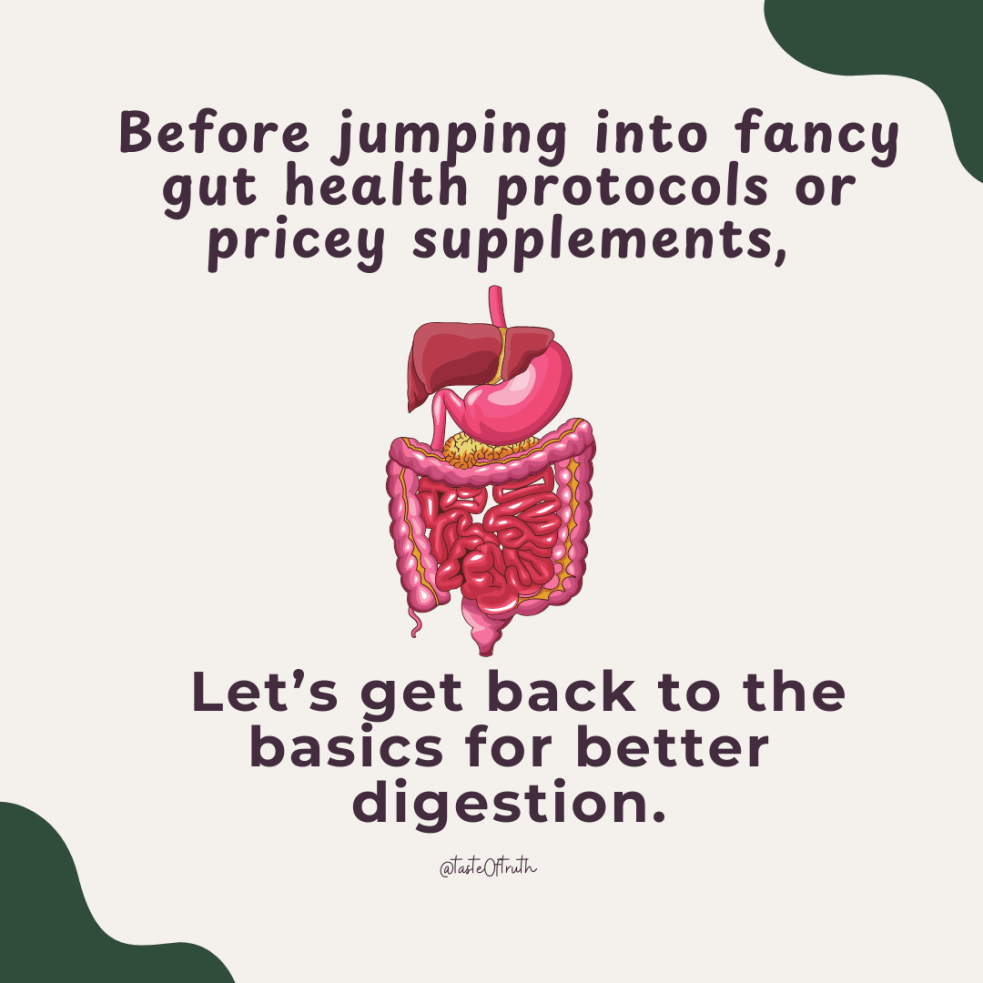
Master Your Digestion This Holiday Season

Posting on a Wednesday? Guess my calendar’s been indulging in holiday cookies too.

Yep, we’re shaking things up this week! Whether you’re catching up on leftovers or prepping for your next holiday feast, now’s the perfect time to talk about digestion. After all, it’s the unsung hero of health—working overtime while we’re busy piling on the mashed potatoes

This post also kicks off a sneak peek into January’s 365 Easy Challenge, where we’ll focus on mastering six foundational habits to make 2025 your healthiest year yet. So, grab a cozy beverage, and let’s dig into how to keep your gut happy (and your pants buttoned) this holiday season.


Why Digestion Deserves the Spotlight

Let’s be real: you can load up on the healthiest foods, but if your digestion isn’t working properly, your body can’t absorb all those nutrients. Instead of diving into advanced gut protocols, let’s focus on digestive basics—those everyday habits that can transform how you feel after a meal.

From holiday feasts to office potlucks, the season is full of opportunities to test your digestive system. If you’ve ever felt bloated, gassy, or sluggish post-meal, you’re not alone. These are signs your gut might need a little TLC.


The Big Three Digestive Culprits

  1. Stress: Chronic stress throws your digestive system into chaos, slowing it down and causing discomfort.
  2. Rushed Eating: Gulping your meals doesn’t give your body time to process food properly.
  3. Poor Chewing: Chewing is where digestion starts, but many of us rush through it like it’s a race.

What to Do Instead:

  • Set the Scene: Before you eat, take a deep breath, relax, and engage your parasympathetic nervous system (aka your “rest and digest” mode).
  • Slow Down: Put your fork down between bites and chew each one 20–30 times. Yes, it feels slow at first, but it’s worth it!
  • Be Present: Step away from distractions like phones or TVs and focus on your food.

The Unsung Heroes of Digestion

1. Stomach Acid (HCL):
Stomach acid is crucial for breaking down protein and absorbing nutrients like zinc, iron, calcium, and B12. It also acts as your body’s first line of defense against harmful bacteria.

🙅‍♀️ Stop: Overusing antacids or skipping protein-rich meals.
✔️ Start: Eating a nutrient-dense diet, practicing mindful eating, and managing stress to naturally support stomach acid production.

2. Digestive Enzymes:
Digestive enzymes break down food so your body can absorb the nutrients. Without enough enzymes, you may experience bloating, constipation, or gas.

🙅‍♀️ Stop: Rushing meals and lying down immediately after eating.
✔️ Start: Chewing thoroughly, walking after meals, and addressing inflammation.

3. Bile Production:
Bile is essential for breaking down fats so your body can absorb them. If bile production is compromised, you might miss out on the benefits of healthy fats like omega-3s.

🙅‍♀️ Stop: Relying on low-fat diets or consuming unhealthy fats like vegetable oils.
✔️ Start: Eating healthy fats (avocado, olive oil, grass-fed butter) and supporting stomach acid levels.


A Healthy Gut Microbiome: Your Digestive Sidekick

Your gut bacteria play a vital role in digestion and overall health. To keep your microbiome balanced:

  • Eat a variety of fiber-rich foods like kale, spinach, swiss chard, cabbage, leeks, turnips, carrots, beets, and artichokes.
  • Avoid overloading your system with excessive fiber, which can cause bloating or discomfort.

Nuts, Seeds, Grains & Legumes: Prep Like a Pro

These foods are nutritional powerhouses, but they contain anti-nutrients like phytic acid and enzyme inhibitors that can block digestion and deplete minerals. Preparing them properly—by soaking or sprouting—neutralizes these compounds and makes nutrients more bioavailable.

How to Soak:

  • Cover your nuts, seeds, grains, or legumes with water and a splash of vinegar or salt.
  • Let them soak overnight, rinse thoroughly, and cook as usual.

Even with proper preparation, these foods can be hard to digest, so enjoy them in moderation.


Holiday Digestion Tips

Here’s how to support your gut through the festive season:

  1. Chew your food mindfully. No one’s handing out awards for fastest eater.
  2. Go for a walk after big meals. Gentle movement aids digestion and prevents sluggishness.
  3. Stay hydrated. Your digestive system needs water to function optimally.
  4. Be intentional with your intake of highly processed refined sugars. Excess amounts can disrupt your gut flora and leave you feeling sluggish and out of balance

Takeaways for a Happy Gut

Proper digestion = better nutrient absorption = thriving health.

Before trying advanced protocols, start with the basics:

  • Chew thoroughly.
  • Manage stress.
  • Prep your meals for optimal digestion.

And don’t forget, this is just the start. In January’s 365 Easy Challenge, we’ll dive deeper into digestion and other foundational habits like sleep, stress management, and nutrition.

Let’s make 2025 the year we simplify health and feel amazing doing it!


Overcoming Negativity: The Power of Gratitude

Thanksgiving marks a season of reflection, yet gratitude isn’t always easy to come by—especially after an election year, when cognitive overload and societal stress dominate our attention. This isn’t just a personal struggle; neuroscience suggests our brains are wired to focus on negativity, a phenomenon called negativity bias. This tendency, coupled with cultural norms emphasizing individual success and the relentless comparisons driven by social media, makes practicing gratitude a skill we must consciously develop.

In my work as a coach and host of Taste of Truth Tuesdays, I often explore how habits—like fitness, nutrition, or mindfulness—shape not just our bodies, but our minds. Gratitude operates the same way: it’s not a passive feeling, but an active practice. According to Dr. Monica Johnson, gratitude has the power to rewire your brain, reducing stress and boosting resilience. Here’s why it can be so hard—and how you can overcome those challenges.

Why Gratitude Feels So Hard

  • 1. Negativity Bias

Our brains are wired to prioritize threats and negative experiences over positive ones. This evolutionary survival mechanism can make it harder to notice or appreciate the good in our lives.

  • 2. High Expectations and Comparisons

Social media amplifies the pressure to compare our lives to others, often creating unrealistic standards. When our focus shifts to what we lack, gratitude takes a backseat.

  • 3. Cognitive Overload and Stress

Life moves fast, and our schedules are packed. Reflecting on what we’re thankful for requires slowing down—a luxury stress and busyness don’t easily allow.

  • 4. Cultural and Social Conditioning

In cultures that prize personal achievement and material success, gratitude can feel secondary. Celebrating milestones and accomplishments may overshadow smaller, everyday joys.

  • 5. Mental Health Challenges

Depression, anxiety, and trauma can make it difficult to recognize and appreciate the positives in life. These conditions often shift focus to worries, fears, or a sense of helplessness.

  • 6. Entitlement Mindset

When we feel entitled to certain comforts or successes, it diminishes our ability to see them as gifts, fostering dissatisfaction instead of gratitude.

  • 7. Lack of Practice

Gratitude is a skill, not just an attitude. Without consistent effort, it’s easy for this muscle to weaken.

The Science of Gratitude: Three Proven Strategies

Fortunately, research provides powerful tools to strengthen gratitude. These practices are straightforward, effective, and supported by science.

1. Gratitude Journaling

One of the simplest and most effective methods is keeping a gratitude journal. Regularly writing down three to five things you’re thankful for has been shown to boost emotional well-being and reduce stress.

As a gardener and homesteader, I’ve found parallels here: journaling is like planting seeds of positivity. With time, those seeds grow into a garden of resilience and contentment.

Why it works:

A study by Dr. Robert Emmons, a leading researcher on gratitude, found that journaling helps rewire the brain by reinforcing positive experiences. This practice shifts focus away from what’s missing in your life toward what’s already there.

How to do it:

  • Spend five minutes each evening listing specific things you’re grateful for.
  • Be detailed—rather than “I’m grateful for my family,” write, “I’m grateful for the family dinner we had tonight where everyone laughed together.”

2. Gratitude Letters or Visits

Writing a heartfelt letter to someone who has positively impacted your life is another effective practice. Even better? Deliver the letter in person or send it to them.

Why it works:

Research highlighted by Dr. Monica Johnson of The Savvy Psychologist shows that thanking someone you’ve never properly appreciated increases happiness immediately and for up to a month afterward. The act deepens relationships and reinforces a sense of connection.

How to do it:

  • Reflect on someone who has helped or supported you in a meaningful way.
  • Write a sincere letter describing what they did and why it mattered.
  • Deliver it, either in person, through a video call, or via mail.

For me, this practice reminds me of the people who’ve supported my journey—from launching my podcast to building a small homestead.

3. Mental Subtraction of Positive Events

Instead of focusing on what you’re grateful for, imagine your life without certain positive aspects. This “mental subtraction” technique can powerfully enhance your appreciation for what you have.

Why it works:

A study published in the Journal of Positive Psychology revealed that imagining life without key blessings intensifies gratitude by showing how much worse life could be. This perspective shift cultivates appreciation even for things we take for granted.

How to do it:

  • Think about a cherished relationship, opportunity, or moment in your life.
  • Reflect on how your life would be without it.
  • Let this realization deepen your gratitude for that aspect of your life.

I often reflect on what life would be like without the small joys I’ve cultivated—like watching our garden grow or exploring life with my 3 dogs. It’s a powerful way to deepen appreciation for the present.

Gratitude is a Skill Worth Building

Gratitude might not come naturally, but with consistent practice, it can become a cornerstone of emotional resilience and happiness. By journaling, expressing thanks to others, and practicing mental subtraction, you can train your brain to focus on the good—even amidst life’s challenges.

Gratitude isn’t just a feel-good emotion—it’s a powerful mental tool that rewires your brain for better health and happiness. Through neuroplasticity, gratitude practices such as journaling or simply expressing thanks, strengthen neural pathways linked to positive emotions and weaken those associated with stress or negativity. This results in reduced anxiety, lower cortisol (the stress hormone), and improved mood​​

But the benefits don’t stop at mental health. Gratitude is also linked to better heart health, stronger immune function, and improved sleep quality. By calming the nervous system, gratitude promotes relaxation and a sense of well-being. Plus, it enhances emotional intelligence, fostering empathy, compassion, and stronger social connections​

As Dr. Monica Johnson reminds us, gratitude is like a muscle: it grows stronger the more you use it. This Thanksgiving, and in the year ahead, let’s commit to cultivating gratitude as a daily habit. The rewards—a brighter perspective, deeper connections, and greater joy—are well worth the effort.

Gratitude isn’t about ignoring pain or hardship—it’s about recognizing the value in the journey. Whether you’re navigating personal struggles, cultural pressures, or simply a stressful holiday season, gratitude offers a way to stay curious, grounded, and resilient.

For more information on the 365 Easy Challenge for 2025, click here!

Which gratitude strategy will you try first? Let me know in the comments!

For a deeper exploration of the science of gratitude, you can check out these insightful resources:

Books:

  1. The Gratitude Diaries by Janice Kaplan – This book blends personal storytelling with scientific research on the power of gratitude in transforming daily life.
  2. Thanks! How the New Science of Gratitude Can Make You Happier by Robert Emmons – Emmons, one of the leading researchers in the field, explores the science behind gratitude and how practicing it can improve physical and mental health.
  3. The Happiness Advantage by Shawn Achor – Achor discusses how happiness, including gratitude, can lead to success in work and life by creating a positive mindset.

Studies and Articles:

  1. Gratitude and Well-being (Greater Good Science Center) – A collection of studies demonstrating that gratitude can improve overall well-being, reduce stress, and enhance relationships​Greater Good.
  2. A study published in Psychology of Well-Being found that practicing gratitude regularly can help reduce negative emotions and promote a greater sense of life satisfaction​Greater Good.

TED Talks:

  1. “The Power of Vulnerability” by Brené Brown – Brown explores how embracing vulnerability, along with gratitude, leads to a deeper connection with others and personal well-being.
  2. “What’s So Funny About Gratitude?” by Robyn Stratton-Berkessel – In this talk, Stratton-Berkessel discusses the profound impact that asking about positive experiences can have on fostering gratitude in everyday life​ PositivePsychology.com.
  3. “The Secret to Happiness is Helping Others” by Mike Robbins – Robbins highlights how gratitude, especially when expressed towards others, can create a ripple effect of kindness and well-being​PositivePsychology.com.

These resources provide a rich blend of personal, scientific, and practical perspectives on how gratitude can enhance our lives.

Kangen Water: Science or Scam?

Let’s talk about Kangen Water—a glorified water filter that’s convinced half the wellness community it can practically save the world. Kangen is often presented as the “it” product that will cleanse your body, raise your pH, and cure whatever ails you. From detoxification to slowing the aging process, the claims are endless. But does it actually do any of this, or is it just one expensive bottle of hype?

As someone who loves to blog about wellness trends and help people navigate the often confusing and sometimes downright misleading claims in the wellness industry, I’m here to cut through the noise. It’s time to stop buying into pseudoscience that preys on our desire for easy fixes. The wellness world is filled with products promising miracle results—products that are often built on shaky science or worse, none at all. Kangen Water is no exception.

Let’s break down whether this water really deserves its pedestal, or if it’s just another trend feeding into a culture of overpriced wellness gimmicks.

Water: Neutral, Alkaline, and Misleading Marketing

Water (H2O) typically has a neutral pH, sitting around 7, but it naturally dissociates into hydrogen (H) and hydroxide (OH) ions. The more hydrogen ions in water, the more acidic it becomes, while the more OH ions, the more basic (alkaline) it gets. In pure water, these ions are present in a small amount, and they tend to balance out by reforming into H2O. So, what is alkaline water, and what’s in it?

Real alkaline water contains something to make it basic—often baking soda. Some products claim to alkalinize water electrically, but here’s the catch: any ions in the water will eventually neutralize each other. In the end, pure water will always strive for a pH of 7. The idea that you can “alkalinize” water and benefit your body is where the pseudoscience comes in.

The claim is that when the body becomes “too acidic,” it can lead to a slew of health issues, and drinking alkaline water can balance things out. But here’s the truth: The body works tirelessly to maintain a very narrow pH range—7 to 7.4—in the blood and tissues. Any fluctuation outside this range is potentially dangerous, which is why the body has mechanisms to keep pH in check, like regulating breathing to balance CO2 levels and adjusting urine acidity.

Put simply, the idea that drinking alkaline water will “balance” your body’s pH is misleading. The body is already equipped with efficient systems for managing pH balance, and consuming regular food or liquids, regardless of their pH, won’t disrupt this delicate equilibrium. That’s right—your body’s pH is mostly unaffected by alkaline or acidic foods and beverages. This is why the whole alkaline diet and water movement is rooted in pseudoscience.

While some studies have tried to link an alkaline diet or water to benefits like preventing cancer or osteoporosis, they fail to provide solid evidence. A 2016 systematic review found no proof that alkaline water prevents or treats cancer. A 2011 review similarly found no support for an alkaline diet’s protective effects on bone health. So why do people keep buying into it? The answer lies in clever marketing, celebrity endorsements, and the placebo effect.

In reality, the only plausible benefit of alkaline water may be for those suffering from acid reflux, where it could act as a temporary antacid. But even this is not proven, and established treatments for acid reflux are far more effective.

So, the next time you’re thinking about splurging on Kangen Water or an expensive alkaline water machine, ask yourself: “Am I really buying science—or am I buying into pseudoscience wrapped in a fancy bottle?”

First off, let’s clear up a few things. The Kangen machine has only a single filter, and it’s inadequate for dealing with many of the toxins found in tap water. In fact, because of shortcomings with the filter, the Kangen machine just might change your life—for the worse. The filter in the Kangen machine doesn’t reduce levels of heavy metals or salt, meaning that if you’re relying on it for purity, you’re still drinking some of the same contaminants that you started with.

The Claim: Alkaline Water = Health Savior

Kangen Water’s marketing suggests that its alkaline properties can balance your body’s pH, improve health, and even slow aging. And while this sounds great, there’s a big problem: our stomach acid has an essential job to do, and it does not care about alkaline water. The stomach is a pH powerhouse, designed to digest food with an acidity of around 1.5 to 3.5, which is harsh enough to break down whatever you eat. So, if you’re gulping down alkaline water thinking it’s going to go in and “balance your body’s pH,” hate to break it to you, but it’s being neutralized by stomach acid in a matter of seconds.

The Antioxidant Claims: A Splash of Misleading Science

Another claim is that Kangen Water provides a “high antioxidant” effect by adding molecular hydrogen (H₂) to the water. Real antioxidants like vitamins C and E are absorbed into the bloodstream, where they tackle free radicals directly. But hydrogen’s benefits may not even survive digestion—our stomach acid can neutralize hydrogen molecules before they’re absorbed. While a few small studies suggest hydrogen-rich water might offer some benefits, there’s little robust evidence to back Kangen Water’s lofty promises.

Bottom line? Real antioxidants from food and supplements are a safer, cheaper bet than a pricey filter.

Science Says: Um, No Thanks

There’s simply no solid science to back the idea that alkaline water has sweeping health benefits. Hydration? Absolutely important. But a magic pH fix? Not really. The idea that our bodies need “detoxing” is an incredibly popular concept in the wellness space. If you spend any time on social media or browsing health blogs, you’ve likely come across expensive detox programs, supplements, or special teas that promise to cleanse your body of “toxins.” But here’s the reality: the body has its own built-in detox systems that do an exceptional job of keeping things running smoothly—without the need for any pricey detox gimmicks.

The Body’s Built-In Detox Systems

Our liver and kidneys are the real detox heroes of the body. These organs are specifically designed to filter out harmful substances and waste products, ensuring that our body remains balanced and healthy. The liver plays a central role in detoxifying harmful chemicals by metabolizing them into safer substances, which are then either excreted through bile or filtered through the blood to the kidneys for excretion via urine. These processes are efficient, effective, and happen continuously, without you having to do anything.

Liver: The liver acts like a sophisticated chemical processing plant. It filters out toxins, breaks down fats, proteins, and carbohydrates, and even helps with the digestion of food by producing bile. It’s constantly at work, breaking down substances like alcohol, medications, and other chemicals in the body, rendering them safe or neutral for excretion.

Kidneys: The kidneys are in charge of filtering waste products and excess substances (such as water, salt, and waste metabolites) from the bloodstream, which are then eliminated as urine. They also regulate the body’s fluid balance, keeping things like electrolyte levels in check, which helps maintain overall homeostasis.

These systems work synergistically to maintain a delicate balance in your body. They don’t need the help of a fancy detox program or juice cleanse—they do the job perfectly well on their own.

Why Detox Products Are Mostly a Marketing Scam

So why are detox products so popular, and why are they sold for high prices? A big part of the appeal is that these products promise to make people feel “cleaner” or “lighter” by removing toxins. But many of the ingredients in these products (whether it’s activated charcoal, herbal supplements, or teas) often lack scientific support for their detox claims. For instance, while some herbal teas might have mild diuretic effects, they don’t actually enhance the body’s ability to remove toxins in a meaningful way. In fact, some detox teas have been found to contain dangerous substances, including laxatives that can lead to dehydration and an imbalance in electrolytes.

It’s also important to note that the idea of “toxins” is often used very broadly and vaguely in the wellness industry. Toxins, in the sense that they are often described in detox marketing, are not necessarily specific substances that we need to rid ourselves of. In fact, the body regularly processes and neutralizes “toxins” naturally. The idea of a “toxic overload” is rarely grounded in scientific fact—unless, of course, you’re dealing with something like heavy metal poisoning or an actual overdose, which are medical conditions requiring professional treatment.

The Myth of Quick Fixes

The idea of quick detoxes or cleanses may also play into the human desire for immediate results. People want easy answers and fast solutions for things like weight loss, clearer skin, or improved energy. While it may be tempting to buy into the myth that you can “flush out” all your health problems in a few days, the reality is that lasting health comes from a balanced, sustainable lifestyle, not a quick cleanse. Regular hydration, a well-rounded diet, and sufficient sleep go a lot further toward maintaining your body’s natural detox processes than any supplement or fad.

Real Health Practices vs. Detox Scams

The best thing you can do to support your liver, kidneys, and overall health is to maintain a lifestyle that supports them. This means:

  • Drinking plenty of water (which helps kidneys function properly)
  • Eating a balanced diet with a variety of whole foods (rich in antioxidants, vitamins, and minerals)
  • Exercising regularly (to boost circulation and support liver health)
  • Avoiding excessive alcohol or toxins (to prevent overworking your detox systems)
  • Getting plenty of sleep (for cellular repair and recovery)

These practices help maintain the natural detox processes your body already does efficiently. Instead of spending money on detox products that may only leave you feeling deprived or temporarily lighter, focus on these sustainable habits that provide long-term benefits. Your body doesn’t need a detoxing break—it needs consistent support to keep running at its best.

In short, while the wellness industry promotes detox products as if they are a magic solution, the truth is that your liver, kidneys, and body as a whole have been doing the job perfectly all along.

The Role of Metabolism in Detoxification and Health

The real question you should be asking is whether your metabolic function is optimal. If it’s not, detox programs and restrictive diets are just band aids, suppressing symptoms like weight gain or chronic inflammation without addressing the root cause. And that root cause is often poor metabolic health.

What is metabolism?

  • It’s how efficiently and effectively your body uses energy to perform essential functions. Your metabolism impacts everything from how your cells function, to hormone production, and even the detox systems themselves.
  • Metabolism affects key functions such as:
    • Detoxification (liver, kidneys, skin)
    • Digestion
    • Hormonal output (thyroid, adrenals, insulin)
    • Inflammation and immune response
    • Menstrual cycles and reproductive health

When you focus on optimizing your metabolism through a well-rounded lifestyle—eating enough, managing stress, moving regularly, and prioritizing sleep—you support all of these systems, including detoxification. Restrictive detox diets that promise to “reset” your body do the opposite, often exacerbating metabolic imbalances.

How to Support Your Metabolism (and Detox Naturally)

Instead of relying on trendy detoxes, consider nurturing your body’s natural processes with these foundational practices:

  • Nourish your body rather than restricting it.
  • Eat a balance of protein, carbs, and healthy fats at regular intervals.
  • Breathe deeply to manage your nervous system.
  • Prioritize stress reduction and downtime (yes, even doing nothing is important).
  • Eat consistently, don’t skip meals.
  • Prioritize sleep—it’s essential for metabolic repair.
  • Increase daily movement—move more throughout the day!

A healthy metabolism is the foundation of a healthier body—when you heal your metabolism, you heal your whole self.

In conclusion, skip the detox fads, focus on metabolic health, and support your body’s natural detoxing systems. Your body is incredibly capable, and all it really needs is consistent care and support. 🍑

The Price Tag: Prepare to Be Shocked

Kangen Water machines range from $1,280 to almost $6,000. That’s right—almost six grand for a fancy filter. For comparison, you could buy a lifetime supply of high-quality bottled water, a well-reviewed filtration system, or even invest in a small swimming pool. And while Kangen distributors might tell you it’s an investment in your health, what they really mean is it’s an investment in their commission check.\

The Catch: Welcome to the MLM Trap

Kangen Water’s parent company, Enagic, operates through a multi-level marketing (MLM) model. That means a good chunk of their “sales” come from distributors who are also customers, encouraged to buy machines to qualify for commissions. It’s not so much about the water’s life-changing properties as it is about recruiting new people to buy machines, who then recruit others, and so on. Each sale pays up to 8 people in the “upline,” making it more about building a downline than actually selling to customers 

How to Avoid the Hype

If you’re really concerned about hydration and wellness, stick to filtered water. A quality filtration system can be a great investment without the price tag or the questionable promises. If you want to experiment with pH, try adding lemon to your water. Despite its acidity, lemon can actually have an alkalizing effect on the body once metabolized, and it costs about 50 cents.

Bottom Line: Don’t Drink the Kool-Aid

Wellness should be about making informed, evidence-based choices, not falling for fancy (and pricey) illusions. Kangen Water is marketed as a wellness must-have, but a good filtration system will do the job just as well—without the cult-like MLM tactics. So next time someone tells you alkaline water is the answer, just remember: your body is already handling things perfectly well, and it doesn’t need a $5,000 machine to do its job.


Resources: 

Here are some top resources to explore the science (or lack thereof) behind alkaline water and other wellness claims:

Books

  • 1. “Bad Science” by Ben Goldacre – Critiques pseudoscientific health claims, with sections on the wellness industry.
  • 2. “Trick or Treatment: The Undeniable Facts about Alternative Medicine” by Simon Singh & Edzard Ernst – Examines popular health trends and evaluates evidence behind them.

Articles

Videos

  • 1. Science Vs. (Podcast by Wendy Zukerman) – Covers alkaline water in various episodes, debunking wellness trends.
  • 2. “Alkaline Diets: Fact or Fiction?” by Dr. Mike Hansen on YouTube – A medical professional’s take on alkaline water and diets, with easy-to-understand explanations.

These resources give a broad perspective on why certain wellness claims, like those around alkaline water, often lack scientific support.

Two highly regarded resources targeting MLMs like Kangen Water, are:

1. YouTube Channels: Anti-MLM content creators on YouTube, such as Illuminaughtii and
Always Marco offer thorough, engaging analyses on MLMs, including Kangen Water’s practices and claims. These creators debunk misleading promises of financial success and health benefits promoted by MLM companies, providing evidence-backed critiques and personal accounts from former members.

2. The Anti-MLM Coalition: This website hosts a wide array of articles, lists, and YouTube recommendations that critique various MLMs. They detail many companies, including Enagic (the manufacturer of Kangen Water systems), breaking down why these structures are problematic. The coalition’s articles dissect business tactics, income claims, and legal actions, helping potential recruits or current distributors understand the reality behind MLM promises.

These resources offer educational, factual content to help audiences critically evaluate MLMs and make informed decisions.

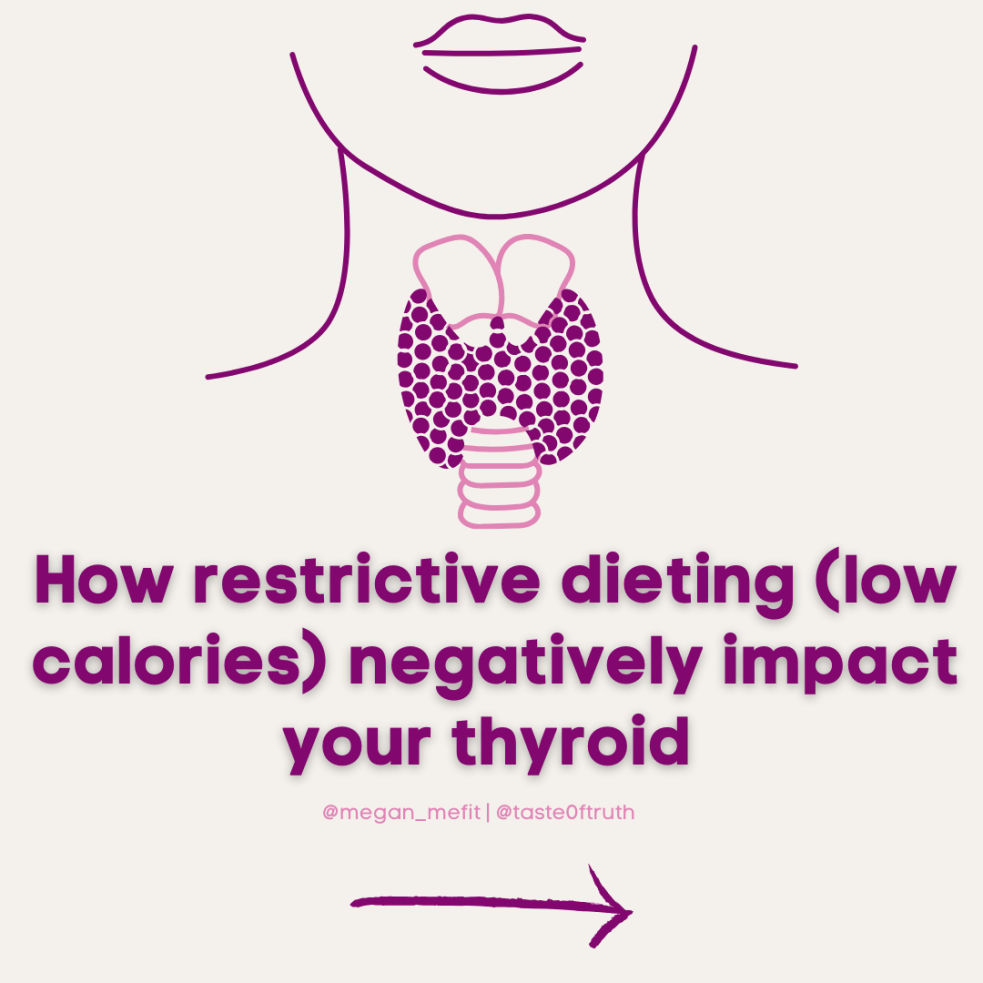
Understanding the Impact of Diet on Thyroid Health

When clients come to me saying they have a “slow metabolism” or a “broken” metabolism, often they think they need to eat even less or cut carbs to jumpstart weight loss. But let me flip the script: in many cases, it’s actually chronic under-eating and restrictive dieting that’s slowing down their metabolism. Chronic dieting, especially with very low calories, can lead to impaired thyroid function and ultimately disrupt how the body uses energy. Here’s how it happens and what you can do to restore balance.


What is the Thyroid and Why Does It Matter?

Your thyroid is a small gland in your neck that plays a massive role in regulating your body’s metabolism. Often called the “controller” of metabolic function, the thyroid works closely with the hypothalamus and pituitary glands in the brain to maintain your metabolic rate. This system allows your body to increase or decrease energy production based on its needs, influencing everything from how you process food to your body temperature.

The thyroid primarily produces two hormones:

  • T3 (Triiodothyronine) – the active hormone that your cells use.
  • T4 (Thyroxine) – the inactive hormone that must be converted into T3 before your body can use it.

The production and conversion of these hormones depend on a feedback loop that begins with TSH (Thyroid Stimulating Hormone), which signals the thyroid to produce and release T4. But when the body is stressed—especially due to chronic under-eating or extreme calorie restriction—this whole process can become disrupted.

How Chronic Dieting Wrecks Your Thyroid

Under-eating is a significant source of stress for the body. Dieting or calorie restriction triggers the HPA axis (Hypothalamic-Pituitary-Adrenal axis), leading to an increase in CRH (Corticotropin-Releasing Hormone) and cortisol, our primary stress hormone. High cortisol levels can interfere with thyroid function in the following ways:

  • Reduces TSH Production: Elevated cortisol inhibits TSH, lowering T4 production and decreasing the amount of thyroid hormone available for energy use.
  • Impairs T4-to-T3 Conversion: Chronic stress slows down the conversion of T4 (inactive) into T3 (active), reducing your body’s energy production.
  • Increases rT3 Levels: Instead of converting into T3, some T4 becomes reverse T3 (rT3), a hormone that blocks T3 from being used. This, in turn, reduces the sensitivity of your cells to thyroid hormones, further lowering metabolic function.

This is why individuals who chronically under-eat or yo-yo diet often experience symptoms of hypothyroidism, even without an official diagnosis.


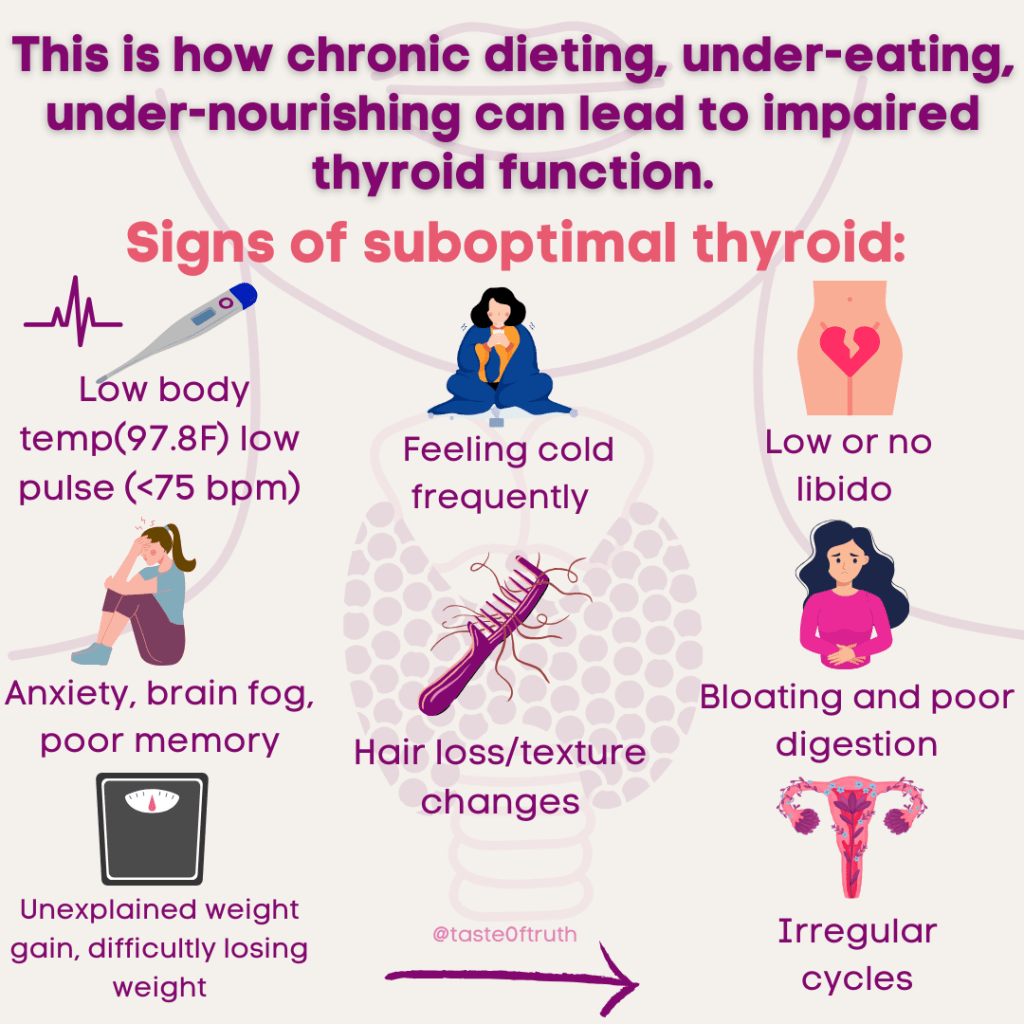
Symptoms of Suboptimal Thyroid Function

If your thyroid isn’t functioning optimally, you may notice some of the following symptoms:

  • Low body temperature (below 97.8°F)
  • Frequent feelings of cold, regardless of weather
  • Low or no libido
  • Anxiety, brain fog, or poor memory
  • Unexplained weight gain or difficulty losing weight
  • Bloating, poor digestion
  • Changes in hair texture or hair loss

Many clients experiencing these symptoms have been stuck in a calorie-deficit mindset for years, keeping their bodies in a constant state of stress. As a result, they’re often dealing with adrenal dysfunction, hypothyroidism, or even reproductive health issues, like extreme PMS, cycle loss, or low testosterone.


Restoring Your Thyroid Health—The First Steps

To begin improving thyroid health, our initial goal is to support both psychological and physiological balance, moving away from restrictive dieting and focusing on nourishment. Here’s a breakdown of the steps:

  1. Stabilize Blood Sugar: Balanced blood sugar supports thyroid health and reduces stress on the body.
  2. Maximize Nutrient Density: Prioritize whole, nutrient-rich foods to ensure your body receives adequate vitamins and minerals, especially selenium, zinc, and iodine, which are crucial for thyroid function.
  3. Reduce Inflammation: Chronic inflammation can further stress the thyroid. Anti-inflammatory foods and lifestyle practices can help.
  4. Incorporate Breathwork: Simple breathwork techniques can stimulate the vagus nerve, helping to regulate the HPA axis and reduce stress.
  5. Avoid Dietary Triggers: Reduce foods that promote “leaky gut,” such as highly processed foods, sugar, and gluten, if sensitive. This protects your immune and thyroid health.
  6. Manage Stress Proactively: Yoga, meditation, journaling, or spending time in nature can help keep cortisol in check.
  7. Reduce Toxins and Pollutants: Environmental toxins can interfere with hormone health, so minimizing exposure can be a powerful step.
  8. Prioritize Rest and Sleep: Quality sleep allows the body to recover and reset, which is essential for thyroid health.

The Bottom Line

Restrictive dieting isn’t the solution to a slow metabolism; it’s often the root cause. Chronic under-eating can lead to imbalances in your thyroid and adrenal glands, ultimately slowing down your metabolic rate and making it harder to achieve your fitness goals. Rebuilding a balanced, nourished body will not only help you feel better but will also lay the foundation for sustainable health.

This week, we’re talking all things thyroid health, and this post breaks down why breaking free from the dietary dogma of diet culture is crucial! Ever feel like your energy’s tanked, your minds in a fog, or your metabolism’s stuck in slow motion? 🧠✨ You’re not alone, and it could be your thyroid talking.

On this week’s Taste of Truth Tuesdays, we’re joined by Nicole, a holistic health advocate who’s here to shed light on how diet culture’s obsession with restriction can wreak havoc on your thyroid. From her own experience facing an autoimmune diagnosis to her advocacy for individualized nutrition, Nicole breaks down how restrictive dieting not only slows your metabolism but also impacts hormone balance, brain clarity, and overall well-being. Join us to learn how making friends with food (yes, even carbs!) might be the best way to support your thyroid and reclaim your energy.

Brain Fog, Thyroid Health, and Gut Connection: Insights from an Integrative Dietitian

Ever felt like your brain’s on vacation while your body’s still clocking in? 🧠✨ Join us as Nicole unveils the secrets behind thyroid health, brain fog, and why carbs might just be your new best friend!

🔍 From Autoimmune Shock to Holistic Advocate: Nicole shares her journey from being blindsided by an autoimmune diagnosis to questioning mainstream diet culture and diving into functional medicine. Find out what sparked her transformation into an advocate for individualized nutrition and holistic health!

💡 Thyroid Health Unveiled: Thyroid dysfunction can be a mystery wrapped in an enigma! Nicole explains why thyroid hormones are key to overall health and how her unique approach, including The BRAIN Method, differs from traditional treatments. Discover how she tackles symptoms and optimizes thyroid function!

🧠 Decoding Brain Fog: Ever felt like your brain is stuck in a fog? Nicole breaks down the most common culprits of brain fog and offers tips on how women can pinpoint their own triggers. Say goodbye to mental sluggishness and hello to clarity!

🌱 Gut Health & Thyroid Function: Did you know your gut health has a major impact on your thyroid? Nicole dives into how imbalances in your gut can affect thyroid hormone production and utilization. Learn how addressing gut health can boost your thyroid function!

🍞 Carbs & Hypothyroidism: Carbs might be getting a bad rap, but Nicole explains why they’re actually essential for those with hypothyroidism. Discover how including carbs in your diet can support thyroid function and enhance overall well-being.

Listen here!

Mentioned in the interview:

⁠MEET YOUR THYROID⁠

⁠BRAIN METHOD⁠

⁠Why Nicole added HTMA (hair tissue analysis) to her practice ⁠

⁠Which comes first? Gut dysfunction or Thyroid dysfunction? ⁠

⁠Could your gut be creating roadblocks in your Thyroid Hormone Journey? ⁠

⁠Why you need carbs especially if you have hypothyroidism⁠

⁠Home – New – Chews Food Wisely⁠

🙏 Please help this podcast reach a larger audience in hope to edify & encourage others! To do so: leave a 5⭐️ review and send it to a friend! Thank you for listening! I’d love to hear from you, find me on Instagram!⁠⁠⁠⁠ @taste0ftruth⁠⁠⁠⁠ or⁠⁠⁠⁠ Pinterest! ⁠⁠ ⁠⁠ 

Why MLMs Exploit Magical Thinking

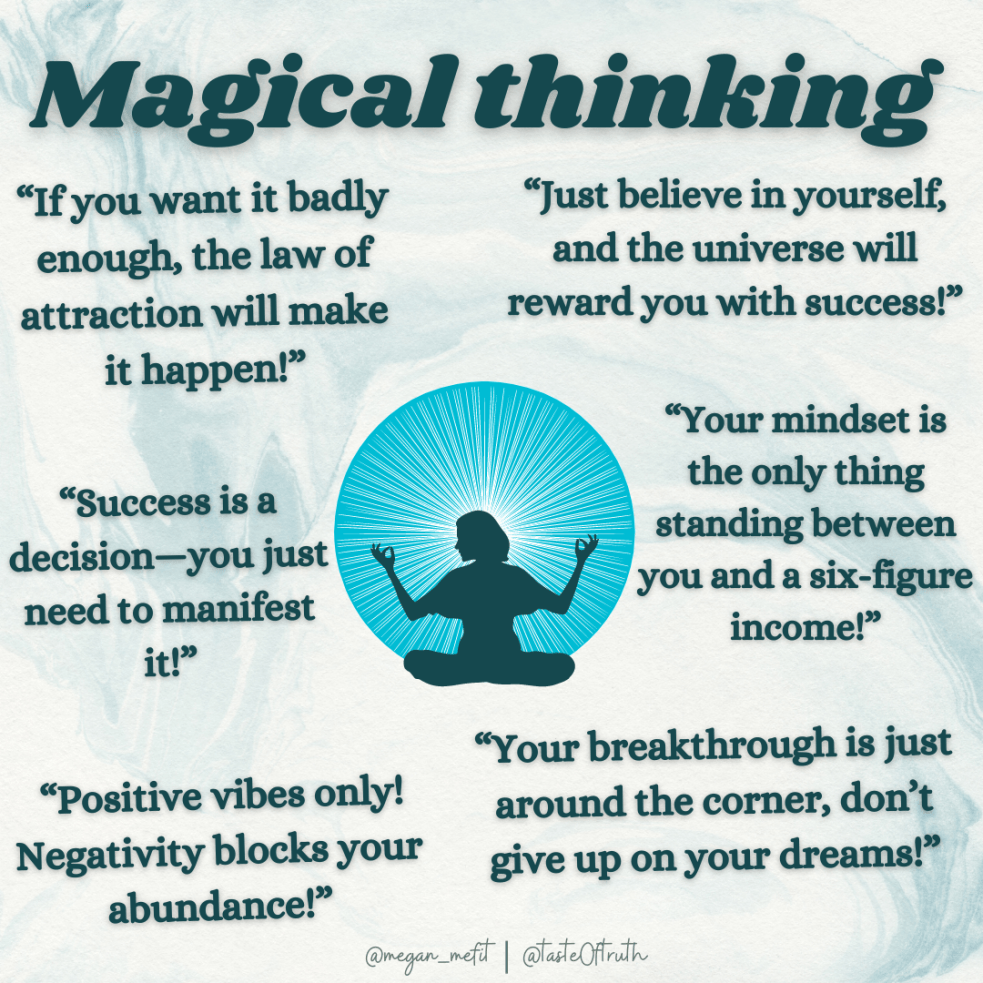
Magical thinking is a quirky psychological phenomenon where people believe that their thoughts, wishes, or actions can directly influence real-world outcomes, despite defying logic or scientific fact. It’s the belief that if you wish for something hard enough, visualize it every day, or think positively, the universe will somehow bend to your will. Sounds empowering, right? But in reality, it leads to a lot of irrational beliefs and behaviors, particularly in high-pressure environments like multi-level marketing (MLM) schemes.

MLMs thrive on this kind of thinking, pushing slogans and practices that dangle the promise of success, wealth, and happiness in front of their members—all through nothing but the power of positive thinking and visualization. “Just think it, and it’ll happen!” But here’s the catch: it never really works like that.

Why Is Magical Thinking Dangerous?

1. False Sense of Control

Magical thinking feeds people this false sense of control over their lives and circumstances. It convinces them that all they need is positive vibes to attract success, which can lead to dangerous complacency. Instead of putting in the hard work, effort, and strategic thinking needed to succeed in any real business, MLM recruits often fall into a trap where they believe success will magically come to them. Spoiler alert: it won’t.

2. Financial Loss

MLMs are notorious for selling the idea that anyone can make it big if they just believe in themselves. It sounds inspiring, right? But it’s a trap. People are encouraged to pour their hard-earned money into products, recruitment materials, and endless training sessions without fully understanding the shaky foundation these businesses stand on. In reality, research shows that up to 99% of MLM participants lose money, but thanks to the allure of magical thinking, they keep going, convinced that their big break is just one more product purchase or recruit away.

3. Emotional Manipulation

MLMs are also masters of emotional manipulation. If you’re not succeeding, they’ll convince you that it’s not the business model that’s failing—it’s you. You didn’t think positively enough, you didn’t manifest hard enough, or you weren’t dedicated enough to your dreams. This emotional burden can leave individuals feeling guilty, ashamed, and like personal failures, even when the deck was stacked against them from the start. The cycle of shame continues as they compare themselves to the shiny success stories splashed all over social media.

4. Detachment from Reality

Magical thinking can lead to complete detachment from reality. When you’re convinced that positive thoughts are all you need, you can easily ignore the mounting red flags. People end up ignoring their dwindling bank accounts, fractured relationships, and mental exhaustion because they’re too busy trying to manifest success. And by the time they snap out of it, the damage is done.

Why Do MLMs Use Magical Thinking?

1. Reinforcement of Loyalty

MLMs aren’t just about selling products—they’re about creating a cult-like loyalty. By pushing magical thinking, they foster a tight-knit community of like-minded believers. This sense of belonging makes it incredibly difficult for individuals to walk away, even when the financial and emotional costs start piling up. After all, leaving the MLM means leaving the tribe—and who wants to be the one to break away?

2. Justification of Failure

When magical thinking is the foundation of your belief system, failure is never about the business model. It’s always personal. Didn’t make the millions you were promised? It’s because you didn’t believe enough. This mindset is a genius way for MLMs to deflect blame, keeping their own reputation intact while making their members feel like the problem lies with them. It keeps the business running without accountability.

3. Encouragement of Recruitment

MLMs thrive on recruitment, and magical thinking is the fuel for the machine. The idea that anyone can succeed if they just think positively or visualize their dreams is a powerful hook for drawing in new recruits. If everyone believes success is inevitable through mental willpower alone, they’ll keep signing up—and bringing others with them.

Red Flags to Watch Out For

• Slogans and Phrases

Be on the lookout for those overly-optimistic, saccharine catchphrases like, “Just believe and you’ll achieve!” or “Manifest your dreams, and they’ll come true!” These slogans might seem harmless at first, but they’re big red flags that magical thinking is being used to manipulate and keep people hooked.

• Focus on Personal Stories

MLMs love to highlight the few personal success stories where individuals “made it,” while conveniently sweeping the 99% of struggling participants under the rug. This selective storytelling distorts reality and feeds the illusion that success is within easy reach for everyone.

• Pressure to Stay Positive

If you feel constant pressure to only stay positive and avoid discussing any challenges or failures, that’s another major warning sign. MLMs don’t want anyone disrupting their “positive vibes” because questioning the business model threatens the entire operation.

• Ignoring Evidence

If an MLM is constantly dismissing scientific evidence or research in favor of anecdotal stories and positive affirmations, it’s time to raise an eyebrow. Facts and figures don’t lie—but magical thinking demands you ignore the hard truths in favor of feel-good fiction.

Conclusion

Magical thinking can feel seductive—after all, who doesn’t want to believe that simply thinking positively can change your life? But in the context of MLMs, it’s a dangerous trap that exploits emotions, manipulates reality, and can lead to significant financial and psychological harm.

Recognizing the power of magical thinking is a key step toward protecting yourself from falling prey to MLM schemes. The next time someone tries to sell you the dream with a hefty dose of “just believe,” remember: real success comes from strategy, effort, and critical thinking—not wishful thinking. Stay sharp, and always dig for the facts behind the hype.

If you’re looking to dig deeper into the topic of magical thinking, MLMs, and their psychological impacts, here are some top-notch resources that will give you the depth and insight needed to fully understand the scope of this issue:

1. Books

  • “Merchants of Deception” by Eric Scheibeler
    • A former high-ranking member of an MLM, Scheibeler exposes the dark side of the industry, shining a light on the manipulative tactics, including magical thinking, used to keep participants hooked and financially invested.
  • “Ponzinomics: The Untold Story of Multi-Level Marketing” by Robert FitzPatrick
    • FitzPatrick’s book is one of the most thorough resources available on MLMs, dissecting the psychological manipulation that fosters the illusion of success, including how magical thinking plays a role in perpetuating these business models.
  • “Influence: The Psychology of Persuasion” by Robert B. Cialdini
    • While not specifically about MLMs, this classic book on persuasion provides a solid foundation for understanding the psychological tactics used in MLMs, including magical thinking. The book covers how people are influenced by emotional appeals and irrational thinking in decision-making.
  • “The Confidence Game: Why We Fall for It… Every Time” by Maria Konnikova
    • This book dives into why people fall for scams, cons, and magical thinking, explaining the psychological elements at play, such as the desire for control and emotional manipulation—key tactics used by MLMs.

2. Podcasts

  • “The Dream”
    • This investigative podcast explores the world of MLMs, breaking down the psychological manipulation, emotional appeals, and magical thinking used to recruit and retain participants. The show offers interviews and personal stories, exposing the inner workings of MLMs in a captivating and digestible format.
  • “MLM: The Broke Podcast”
    • Hosted by a former MLM member, this podcast uncovers how MLMs operate and the manipulative strategies they employ. The podcast touches on magical thinking and the emotional manipulation that keeps participants in these schemes.

3. Academic Articles & Research Papers

  • “Magical Thinking and Superstitions: How Beliefs and Cognitive Biases Drive Irrational Behavior” – by Michael Shermer
    • This article explores the psychological underpinnings of magical thinking and how it relates to belief systems. Shermer’s work is helpful for understanding the cognitive biases MLMs exploit.
  • “The Dark Side of Positive Thinking” by Gabriele Oettingen (Psychological Science)
    • Oettingen’s research critically examines the idea that positive thinking, often promoted in MLMs, can lead to worse outcomes when people fail to back it up with realistic planning and action, a key aspect of magical thinking.
  • “The Fantasy of Success: MLMs and the Psychology of Unrealistic Optimism” by Kim Korteweg (Journal of Business Ethics)
    • This study looks at the role of unrealistic optimism and magical thinking in MLM recruitment and retention, providing a scholarly perspective on how these psychological tricks keep participants engaged.

4. Documentaries & Films

  • “Betting on Zero” (2016)
    • This documentary follows hedge fund manager Bill Ackman’s quest to expose Herbalife as a pyramid scheme. It highlights how MLMs, including Herbalife, use magical thinking to maintain their recruitment and selling operations, and the devastating impact it has on participants.
  • “LuluRich” (2021)
    • A documentary series about the rise and fall of LuLaRoe, this film touches on the magical thinking that drove people to invest thousands into the company based on promises of riches and financial freedom. It dives into the personal stories of those who fell victim to the MLM’s tactics.

5. Articles and Blogs

  • “MLMs Use Magical Thinking to Sell Dreams” (The Atlantic)
    • This article delves into the connection between magical thinking and MLM success, explaining how the industry’s use of vision boards, affirmations, and other positive-thinking tactics lure people into believing they can manifest wealth.
  • “Why People Keep Falling for MLM Scams” by Amanda Montell (Cosmopolitan)
    • Montell breaks down the psychological manipulation MLMs use, including magical thinking, and how they tap into emotional vulnerabilities, especially for women seeking financial independence or a sense of community.
  • “Multi-Level Marketing and the Cult of Magical Thinking” (Psychology Today)
    • This blog post by a psychologist explores the mental traps of magical thinking, including how MLMs leverage these tactics to keep people hooked, even when they’re losing money.

6. Research Studies & Psychology Databases

  • American Psychological Association (APA)
    • The APA has various articles and studies on cognitive distortions, belief systems, and the psychology behind magical thinking, which are key to understanding how MLMs manipulate thought patterns.
  • PubMed/NIH Studies
    • If you’re looking for peer-reviewed research, searching PubMed for articles on cognitive biases, emotional manipulation, and the psychology of MLMs can provide high-quality, evidence-based insights.

These resources will give you a comprehensive understanding of how magical thinking, emotional manipulation, and psychological tricks are intertwined with MLM schemes. Whether you’re writing, podcasting, or just seeking to educate yourself, these tools will sharpen your perspective on the dangers of MLMs and the allure of magical thinking.

From Serendipity to Scrutiny: The Truth Behind MLMs and Coercive Control

At the beginning of my journey into multi-level marketing (MLM), I felt an overwhelming sense of serendipity. Like many others, I was drawn into the promise of freedom, financial independence, and the power of owning my own business. That initial excitement felt so right, I even got a “trust the process” tattoo to anchor myself in the belief that I was on the right path. But the deeper I delved into this world, the more I realized the complexities and underlying control tactics that defined it.

Reflecting on my early days in the MLM space, I can’t help but think of how magical the thinking felt. I truly believed I was guided into the opportunity. But as time went on, the inconsistencies, emotional manipulation, and exploitative nature became impossible to ignore. It’s been a journey of grieving that magical thinking—something I now understand as part of a coercive, controlling system designed to keep me chasing an illusion.

Brandie, my guest on this episode, shares a similar experience. As a mother, writer, speaker, and advocate, she’s been at the forefront of exposing MLMs as commercial cults, wellness scams, and even legalized labor trafficking. She has spoken extensively about how her journey, which started with serendipity, eventually led her to scrutinize MLMs more critically. Her insights reflect the emotional complexity many face when disentangling from these organizations.

Here are some key aspects of our conversation:

  • The Magical Thinking Trap: Both Brandie and I felt an initial sense of serendipity, which was reinforced by the community and mentors telling us to “trust the process.” This belief system is intentionally nurtured in MLMs to keep participants emotionally invested.
  • Leveraging Credentials: We discussed how MLMs often leverage the credentials and influence of professionals like doctors, nutritionists, and influencers to give the illusion of legitimacy. Brandie emphasized how this tactic makes MLM pitches more persuasive, especially to vulnerable individuals seeking validation.
  • The “Mother” Angle: Brandie shared how MLMs often target mothers, using manipulative language that preys on their desire for financial freedom and the ability to work from home while caring for their families. The messaging can be so powerful that mothers internalize guilt and blame when they don’t succeed, despite the system being rigged against them.
  • Unpaid Labor and Emotional Manipulation: We delved into how MLMs strategically manipulate participants into performing unpaid labor, like attending large-group-awareness trainings or MLM conferences, under the guise that these events will lead to success. This creates a cycle of emotional dependency on the MLM structure.
  • Coercive Control Beyond the Home: Brandie highlighted the growing movement to criminalize coercive control, not just in domestic environments but also in online groups and commercial cults, including MLMs. Canada’s Bill C-332 and California’s SB 1141 are steps toward addressing this kind of manipulation in non-physical forms.
    • Misleading Social Media Practices: MLMs are notorious for using social media posts to bait others into joining, often hiding the true nature of the opportunity behind attractive lifestyle imagery and vague promises of success.
    • Paid Certifications as Funnels: Another tactic we discussed is the use of paid certifications and courses as entry points to recruit others into MLMs or similar for-profit groups, disguising recruitment as personal development.
    • Power Dynamics and Influence: Brandie warned about individuals in positions of power, like pastors or healthcare professionals, who pitch MLM opportunities using their influence, creating a dangerous overlap between authority and exploitation.
    • Bait-and-Switch in Non-Profits: Some MLMs use non-profit organizations as fronts to recruit members, exploiting charitable intentions for financial gain.

Brandie’s Substack recently covered how Canada’s Bill C-332 and California’s SB 1141 aim to combat coercive control. These laws recognize that coercion doesn’t always result in physical harm but can have long-lasting emotional and psychological effects. Extending these protections to online and commercial environments, like MLMs, is a crucial step toward addressing the hidden abuse happening in plain sight.

MLM Compensation Plans

For those unfamiliar with how MLMs work, here’s a breakdown of their typical compensation plans, which all hinge on recruitment:

  • Binary: You recruit two people, who recruit two more, forming a pyramid. You earn based on the sales and recruits of those beneath you.
  • Unilevel: You can recruit as many people as possible, with everyone directly under you. You earn a percentage of sales from your downline.
  • Forced Matrix: There’s a limit to how many people you can recruit directly, so recruits are placed under others in your team, further embedding the hierarchical structure.

Although MLMs claim that participants can make money from sales alone, true financial gain only comes from recruiting others. Companies avoid pyramid scheme accusations by paying bonuses on downline commissions rather than direct recruitment. Still, this setup exploits participants, most of whom will never see a living wage.

MLM Profitability

Studies and reports paint a grim picture for those involved in MLMs:

  • FTC Report: According to the Federal Trade Commission (FTC), approximately 99% of MLM participants end up losing money.
  • Profit Sources: Success in MLMs often hinges on recruiting new participants rather than selling products to consumers, which creates a structure where the majority are positioned at the bottom, struggling to make a profit.

When it comes to making a profit, the comparison between lottery odds and MLM (multi-level marketing) success rates reveals a stark reality: both paths are fraught with significant financial risk, but MLMs typically offer even lower chances of profitability.

If you’re evaluating an MLM opportunity, watch out for:

  • Deceptive earnings claims
  • Manipulative recruitment tactics disguised as “personal development”
  • High-pressure tactics to attend unpaid events
  • Cult-like devotion to leadership or the company itself

As Brandie and I peeled back the layers, it became clear that MLMs are not just financial traps—they are systems of coercive control designed to exploit both financially and emotionally. With legal movements like Bill C-332 gaining traction, there’s hope that MLMs and similar organizations will finally face the scrutiny they deserve.


Grieving the magical thinking days has been bittersweet. In some ways, it was easier to believe in the serendipity, but now, stepping into a space of scrutiny offers greater growth and clarity. In that sense, the journey may be more challenging, but it’s also far more rewarding.

How MLMs and high-control religions exploit narratives to control and isolate

As we have discussed in a previous blog post, in both MLM companies and high-control religions, sophisticated methods of narrative control and emotional manipulation are used to maintain adherence and deflect objections. These organizations craft carefully curated stories of success, empowerment, and belonging, reinforcing a strong sense of group identity while discouraging critical thinking. Objections are met with pre-scripted narratives designed to dismiss doubts and isolate dissenters, creating environments where questioning becomes taboo.

By understanding the parallels between these two worlds, we can begin to recognize the underlying tactics used to manipulate emotions and maintain control. Whether it’s an MLM promising financial freedom or a religious group offering spiritual salvation, the emotional hooks are the same: they both rely on your commitment to their carefully constructed reality. Breaking free means reclaiming your own narrative, embracing skepticism, and fostering critical thought in the face of pressure to conform.

Be sure to find Brandie on Instagram and on Substack!

Resources mentioned in the interview:

🙏 Please help this podcast reach a larger audience in hope to edify & encourage others! To do so: leave a 5⭐️ review and send it to a friend! Thank you for listening! I’d love to hear from you, find me on Instagram!⁠⁠⁠ @taste0ftruth⁠⁠⁠ or⁠⁠⁠ Pinterest! ⁠⁠ ⁠ 

Here are some of the best resources for learning more about commercial cults and anti-MLM movements:

Books:

  1. Ponzinomics: The Untold Story of Multi-Level Marketing by Robert L. FitzPatrick – This book provides a thorough exploration of MLMs and their business structures, helping readers understand how they operate like legal pyramid schemes.
  2. Cultish: The Language of Fanaticism by Amanda Montell – Analyzes how cults (including MLMs) use language and manipulation techniques to maintain control over their members.
  3. Duped: Compulsive Consumers and the Culture of Shame by Ron Jonson – While not MLM-specific, this book delves into how we’re manipulated by industries that exploit our insecurities.

Websites & Blogs:

  1. Truth In Advertising (TINA.org) – A watchdog organization that exposes deceptive marketing practices, including MLM earnings claims and false advertising.
  2. MLMTruth.org – A resource dedicated to educating the public on the dangers and tactics of MLMs, providing reports and analysis on popular companies.
  3. The Anti-MLM Coalition – This coalition provides insight, resources, and stories from those who’ve escaped MLMs, along with analysis of companies and their harmful practices.

YouTube Channels:

  1. The Anti-MLM Coalition – A YouTube channel that breaks down how MLMs operate, featuring stories from former MLM participants and experts in cult dynamics.
  2. Savannah Marie – A former MLM participant who creates in-depth critiques and investigative videos on popular MLM schemes.
  3. The Recovering Hunbot – Focuses on exposing the emotional manipulation and false promises made by MLM companies.
  4. Hannah Alonzo-Hosts commentary-style videos relating to multi-level marketing companies, scams, cults, and influencer/social media culture.

Podcasts:

  1. The Dream – A highly-rated podcast that dives deep into the world of MLMs, offering an in-depth investigation into the industry’s history and practices.
  2. Life After MLM – Hosted by Roberta Blevins, this podcast features interviews with former MLM participants, exploring the mental and financial impacts of MLMs.
  3. Opportunity Cost-Hosted by a past guest, Jill, and is about multi-level marketing, each episode she covers inner workings, origins, nuances, and tries to answer the question: Is this the opportunity of a lifetime? Or the illusion of one?

Conferences & Activist Groups:

  1. The Anti-MLM Conference – A yearly event that gathers MLM critics, industry experts, and scholars to discuss deceptive practices in MLMs and their broader social impacts.
  2. Multi-Level Marketing Conference (MLM Conference) – A scholarly conference that brings together academics, legal experts, and former MLM participants to discuss MLMs from a critical perspective.
  3. Pyramid Scheme Alert – Run by Robert FitzPatrick, a pioneer in anti-MLM activism, this organization focuses on educating the public about the dangers of pyramid schemes and MLMs.

These resources provide a wide range of perspectives on commercial cults and MLMs, making them essential for those looking to understand and dismantle the harmful structures behind these organizations.

Unlocking the Power of Hope Molecules: How Movement Transforms Mind and Body

Did you know your body can help your brain feel more hopeful through movement?

In our fast-paced world, finding effective ways to boost our mental and physical well-being is more crucial than ever. Recent research highlights an exciting phenomenon: our muscles aren’t just for movement; they act as endocrine organs, secreting beneficial substances known as hope molecules. These molecules, or myokines, have a profound impact on our brain, body, and mood, offering a natural and powerful way to enhance our overall health.

What Are Hope Molecules?

Hope molecules are proteins released into the bloodstream from our muscles during movement. These myokines play a vital role in:

  • Protecting against depression, PTSD, and chronic stress
  • Increasing neuroplasticity, which helps our brain adapt and grow
  • Altering the hippocampus, a brain region crucial for stress resilience
  • Boosting brain-derived neurotrophic factor (BDNF), which enhances our ability to manage stress and difficult emotions

Dr. Kelly McGonigal succinctly puts it: “Every time we move our muscles, we are giving ourselves an intravenous dose of hope.” This means that even a short burst of movement can significantly impact our mental health, providing an antidepressant effect that enhances resilience to stress and trauma.

For instance, a short walk or a quick workout doesn’t just get the blood pumping; it also triggers the release of these mood-enhancing chemicals. This phenomenon is sometimes referred to as an “antidepressant effect,” where the physical act of moving your body leads to the release of neurotransmitters that can lift your spirits and combat feelings of depression.

Moreover, this boost in mood and resilience isn’t just about the immediate effects. Regular short bursts of exercise contribute to long-term mental health benefits, enhancing your ability to cope with stress and trauma. By incorporating even small amounts of movement into your daily routine, you can help your body produce more hope molecules, thereby strengthening your mental health and emotional resilience.

So, the next time you’re feeling low, remember that a little movement might just be the key to unlocking your body’s natural antidepressants and enhancing your capacity to handle life’s challenges. 🚶‍♀️💪🌟

The Mind-Body Connection: Insights from the “Mind Over Milkshake” Study

To deepen our understanding of how movement and mindset intersect, consider the fascinating findings from the study titled “Mind Over Milkshake: Mindsets, Not Just Nutrients, Determine Ghrelin Response.” This research explores how our beliefs about the food we consume can alter physiological responses, such as hunger and energy regulation.

Participants in the study were given milkshakes with differing calorie information, but their physiological responses varied based on their expectations. The study demonstrated that our mindset about what we consume can impact hormonal and physiological reactions, revealing the powerful connection between belief and bodily responses.

Similarly, our mindset towards exercise can greatly influence the benefits we derive from it. Viewing exercise not merely as a physical task but as a source of hope and well-being can amplify its positive effects on our mental health.

Why Movement Matters More Than We Think

Understanding that hope molecules and our mindset play a critical role in our health highlights the multifaceted benefits of exercise. It’s not just about weight loss or physical fitness; it’s about enhancing:

  • Happiness and life satisfaction
  • Resilience to stress and anxiety
  • A sense of purpose and social connection

Emerging research suggests that when exercised, our muscles essentially become a “pharmacy” for our physical and mental health. This perspective shifts the focus from restrictive exercise goals to a more holistic view of movement as a tool for improving our quality of life.

Applying Hope Molecules to Recovery from High-Control Environments

For those recovering from high-control environments, such as strict religious or ideological communities, the concept of hope molecules is particularly relevant:

  • Resilience and Recovery: Engaging in regular movement can help mitigate the effects of chronic stress and trauma often associated with high-control environments. The release of myokines (hope molecules) during physical activity supports brain health and emotional resilience, aiding in the recovery process.
  • Regaining Control: Movement and exercise can be empowering for those who have felt controlled or restricted. It offers a way to regain a sense of agency and control over one’s body and mind, promoting healing and personal autonomy.
  • Restoring Mental Health: For individuals recovering from harmful environments, exercise can provide a natural antidepressant effect. Regular physical activity enhances mood, reduces symptoms of depression, and supports overall mental health, which is crucial for those rebuilding their lives and self-esteem.

Practical Tips for Integrating Movement into Recovery

  1. Start Small: Incorporate any form of movement into your routine, even if it’s just a few minutes each day. Studies indicate that as little as 3 minutes of exercise can have positive impacts.
  2. Adopt a Positive Mindset: Frame your physical activity as an opportunity for mental and emotional growth, not just a chore. This mindset can enhance the benefits you receive.
  3. Enjoy the Process: Find activities you enjoy and that make you feel good. The more you enjoy your movement, the more likely you are to stick with it.
  4. Build a Routine: Establishing a consistent movement routine can support long-term recovery and well-being. Integrate movement into your daily life in a way that feels sustainable and rewarding.
  5. Connect with Community: Movement can also foster social connections. Engaging in group activities or fitness communities can provide additional support and a sense of belonging, which is valuable for those recovering from isolating environments.

Hacking Consistency: Your Path to Achieving Health Goals

In my 20 years as a personal trainer, I’ve seen one common thread that holds people back from achieving their health and fitness goals: consistency. For many, the journey to better health is fraught with the misconception that it must be difficult. If you resonate with this, I want you to know that I understand how intimidating change can be. It can feel like a long road ahead, but I’m here to share some tips to help you hack consistency and make your health journey not only achievable but also enjoyable.

1. Habit Stacking: Start Small

The first strategy to develop consistency is habit stacking. Focus on one or two small habits that you can easily commit to. Once you’ve established these, you can begin to build additional habits on top of them.

For example:

  • Starting Habit 1: A 5-minute morning walk. This quick stroll can boost your mood and energy levels, providing an immediate sense of accomplishment.
  • Starting Habit 2: A one-minute breathing exercise. Before your walk, try a simple box breathing technique: inhale for 4 seconds, hold for 4 seconds, exhale for 4 seconds, and hold again for 4 seconds. This practice can reduce stress and help center your mind.

Once you have these foundational habits in place, you can stack additional practices:

  • Post-Walk Habit: After your 5-minute walk, add 2-3 minutes of gentle stretching. Focus on your neck, shoulders, and legs to release tension and enhance the mental health benefits of movement.
  • Post-Breathing Habit: After your breathing exercise, incorporate a quick moment of gratitude. Name one thing you’re grateful for to reinforce positive thinking and cultivate a hopeful mindset. This simple act can help you recover from emotional strain and improve overall well-being.

Starting small with these habits allows you to create a consistent and sustainable routine.

2. Focus on Addition, Not Restriction

The second tip for hacking consistency is to concentrate on what you can add to your life rather than what you need to take away. This could involve increasing your movement, enhancing your awareness, practicing breathwork, or incorporating more protein, fruits, and vegetables into your meals. When you focus on adding positive elements, it becomes easier to embrace change and maintain consistency.

3. Find Personal Meaning

Your journey to feeling better should be tied to personal meaning and intrinsic motivation. This means tapping into your internal drive to pursue these changes. Reflect on why you want to achieve your health goals and let that guide your actions. When you find personal significance in your journey, it becomes a source of motivation rather than a chore.

4. Build Self-Efficacy

Self-efficacy is crucial in creating a sustainable lifestyle. It’s about building belief in yourself over time and understanding that consistency is the key to lasting results. Instead of thinking in terms of short-term challenges, consider how you can develop habits that last long-term. Routines created from consistent habits lead to sustainable success.

Building on habits is what creates a routine. A routine is what creates consistency and consistency is what creates results.

Awareness is the first step in bridging the gap between your goals and the actions you need to take. While you may have aspirations, it’s consistent behaviors and actions that make them a reality.

Mindset Matters

Remember, if you’re struggling to maintain consistency, it’s not a reflection of your willpower or determination; it could be a sign that your approach needs adjustment. Your mindset is vital in this journey. Frame your movement as an opportunity to boost your brain and body rather than a chore or punishment.

By implementing these strategies, you can transform your health journey into a rewarding experience. Consistency is everything. Embrace the process, celebrate your achievements, and watch as you progress toward your goals!

Broader Implications for Personal Development

The principles of hope molecules tie into broader themes of personal development, critical thinking, and spirituality:

  • Challenging Limiting Beliefs: Movement and exercise can challenge limiting beliefs about oneself and one’s capabilities. This aligns with the focus on critical thinking and questioning restrictive ideologies.
  • Embracing New Perspectives: Seeing movement as a tool for embracing new perspectives and opportunities for growth is crucial for those redefining their lives after leaving high-control environments.

In conclusion, the science of hope molecules reveals that our muscles do much more than move us; they create hope and enhance our mental well-being. By embracing movement and adopting a positive mindset, we can unlock these powerful benefits and cultivate a more resilient, fulfilling life.

Embrace the power of hope molecules and experience the transformative effects on your mental and physical health.

RESOURCES:

For a comprehensive understanding of the role of hope molecules (myokines) and their impact on mental and physical health, the following studies and sources are highly relevant:

Key Studies and Sources

  1. Myokines and Mental Health
    • Pedersen, B. K., & Febbraio, M. A. (2012). “Muscle as an endocrine organ: Focus on muscle-derived cytokines as potential pharmacological targets.” Diabetologia, 55(10), 2975-2985. Link to Study
      This review discusses how muscle-derived cytokines (myokines) are involved in various physiological processes and their potential therapeutic effects on metabolic diseases, inflammation, and mental health.
  2. Exercise, Hope Molecules, and Brain Health
    • Gordon, B. A., & Herring, M. P. (2014). “The effect of exercise on depression: A review of meta-analyses.” Journal of Clinical Psychiatry, 75(2), 156-161. Link to Study
      This meta-analysis reviews the impact of exercise on depression, highlighting how physical activity influences mental health through various mechanisms, including the release of beneficial myokines.
  3. Hope Molecules and Neuroplasticity
    • Hogan, M. C., & Durcan, J. M. (2018). “Exercise and neuroplasticity: A review of the role of physical activity in promoting brain health and cognitive function.” Journal of Clinical Neurology, 14(3), 342-350. Link to Study
      This review examines how exercise-induced myokines contribute to neuroplasticity, cognitive function, and overall brain health.
  4. Mindset and Physiological Responses
    • Crum, A. J., & Langer, E. J. (2015). “Mindset matters: Exercise and the placebo effect.” Psychological Science, 26(4), 663-670. Link to Study
      This study explores how individuals’ beliefs and mindsets about exercise can influence their physiological responses and overall effectiveness of physical activity.
  5. Exercise, Stress Resilience, and Mental Health
    • McGonigal, K. (2015). “The Upside of Stress: Why Stress Is Good for You, and How to Get Good at It.” Penguin Books.
      While not a study, this book by Dr. Kelly McGonigal provides insights into how stress, when managed effectively, can be beneficial. It complements research on how exercise and movement can positively influence mental health through stress resilience.
  6. “Mind Over Milkshake” Study
    • Elder, R., & Croyle, R. T. (2011). “The role of expectations in health behavior: Mindset and health.” Health Psychology Review, 5(1), 2-12. Link to Study
      This study investigates how people’s expectations about what they consume affect their physiological responses, illustrating the influence of mindset on health outcomes.

Ways to support your body during stress

Feeling stressed? 😩 Chronic stress can drain your energy, disrupt your sleep, and even increase the risk of serious health issues like cancer. This week on the podcast, we are diving deep into how stress impacts your body—and sharing real tips to fight back! 👊🏼 💥

In this powerful episode, I sit down with holistic healing expert Theresa Piela, @livingrootswellness to explore the deep connection between chronic stress and health. Theresa shares her personal story of hitting rock bottom in 2019, when chronic illness nearly led to organ failure. We dive into the guilt and exhaustion that comes with being chronically ill in a toxic world, and how healing techniques like Emotional Freedom Techniques (EFT) tapping can offer relief. 🌱✨

The Impact of Stress on the Body

Understanding Stress: Theresa breaks down the three stages of stress and how they manifest in our daily lives, leading to digestive issues and chronic illnesses. She sheds light on the silent havoc that prolonged stress wreaks on our gut health and overall bodily functions. Please review our earlier blog for more details!

Fuel & Nutrition: Supporting Your Body’s Adaptive Stress Response

Just as important as shifting your mindset is fueling your body with the right nutrients. A starved or inflamed system will struggle to adapt to stress, especially when trying to balance internal chaos. Proper nutrition is key to supporting the body’s stress response.

When the body isn’t fueled properly, persistent stress leads to harmful effects, such as blood sugar swings, hormonal dysregulation, and weakened immunity. To counteract this, we need to provide the body with the building blocks it needs to recover.

Here’s a high-level look at what your body requires for optimal function:

  • Proteins: Anti-inflammatory sources like grass-fed beef, broths, shellfish, and dairy.
  • Carbohydrates: Glucose and fructose from fruits, honey, maple syrup, and root vegetables.
  • Fats: Saturated fats are essential.
  • Vitamins & Minerals: Vitamin C, D, E, B1, B6, B12, calcium, magnesium, copper, sodium, potassium, selenium, and zinc.

I wanted to expand a BIT MORE on nutritional tips we may or may not have mentioned in this week’s discussion that are for sure helpful along your healing journey!

1️⃣Adrenal Elixirs-It’s a combination of sodium, potassium, and vitamin C—a perfect blend for your adrenals. Click here for recipes!

2️⃣Magnesium: During stressful times, your body burns through magnesium faster! Supplementing orally and using topical magnesium is helpful all the time, & increasing during times of stress can avoid future deficiency. Click here for a guide to Magnesium supplements!

3️⃣Boosting mineral-rich foods: Coconut water-rich in potassium. Potatoes, squash, fruit—also rich in
potassium, Brewer’s yeast-rich in potassium, B vitamins, and many more nutrients (if you can handle the taste!) Cacao powder-rich in magnesium, Citrus & vitamin C rich foods-support adrenals and copper balance.

4️⃣Consistent timing for meals & snacks with proteins carbs and fats to help support blood sugar. Meal tips here!

5️⃣Prioritize Daily Routines with your non-negotiables like: Reading, meditation, walks, eating, movement, winding down time. Stay consistent! Research shows that it can take anywhere from 18 to 254 days for someone to form a new habit. Let’s talk more about morning and bedtime routines!

Morning Routine:

☀️ Morning person or not, having a set routine can be beneficial. First, a good morning starts the night before-am I right? Be sure to prioritize getting to bed at a decent time to support incorporating the new routine. ⏰ A great morning routine is the one that works for you. Not everyone will be able to have a lengthy routine due to time constraints or family obligations and that’s okay.

Here are some ideas:

  • Don’t pick up your phone right away: Scrolling Instagram and reading emails can wait. When you reach for your phone right after you wake up, you put yourself directly into reactive mode. This can cause you to lose focus and get stressed before you’ve even made it out of bed.
  • Making your bed takes about two minutes and it gives you a quick, easy sense of accomplishment right off the bat. Plus, it makes your room look neat and tidy even if the rest of your space is messy.
  • Eat Something Even if you’re not a big breakfast person, getting some nutrients in your body can really turn on your brain. Having a balanced meal can go a long way toward improving your mood and energy levels right off the bat. Whatever constitutes breakfast for you, just get some food into your body.
  • Do something for yourself each morning. Even if you just have five minutes, you can stretch, do a quick meditation, journal or work on a crossword puzzle while you drink your morning coffee. (Catching up on social media can also count as self care if this activity truly brings you joy. )
  • Write—or review—your daily to-do list and calendar
    Check over what’s on deck for the day so you don’t run into any surprises. You might even block off ten minutes or so to look over emails and address any messages that need to be taken care of right away. 📧

Bedtime Routine:

Sleep is consistently the most underrated aspect of any health & wellness journey. Creating & maintaining a bedtime routine is the best way to prioritize a good night’s sleep.

  • It’s best to be consistent with the time- set an alarm or notification on your phone. It will be a help signal that it’s time to unplug and start your bedtime routine.
  • The circadian rhythm regulates the body’s temperature, lowering the thermostat to 65 degrees is a good temperature for sleep. The body will adapt to the lower room temperature and you will begin to feel drowsy. Turning off or lowering bright lights can help with the process. As we know with screen time, exposure to bright lights before bedtime affects the circadian rhythm.
  • Screens from TVs, smartphones and laptops emit blue light that stimulates the body’s internal clock (circadian rhythm), keeping you buzzing long after it’s time to hibernate for the night. Sleep studies have shown that exposure to high amounts of blue light before bed can lower melatonin levels, resulting in sleeplessness and delayed REM sleep.
  • Journaling is good for mental health by reducing stress and helping you remember good ideas before sleep.
  • Using foam rolling and yoga for sleep will help relax your muscles and ground your mind before bed. They decelerate the mind and body, relieve tension and improve sleep quality.
  • Aromatherapy are used to help with stress management.
  • ❔HOW LONG should my bedtime routine be? About 30 to 60 minutes. This will give you enough time to unwind without feeling rushed.

Okay back to the final aspect of today’s post for supporting your body during stressful times:

6️⃣TOXINS – Specific chemicals called halogens (bromine, chlorine, and fluorine) compete with iodine and bind to thyroid receptors, preventing thyroid hormones from working properly. Filtering fluoride and chloride out of your drinking and bath/shower water helps those with thyroid dysfunction. More Information here

Research says about 90% of cancers are a result of a lifetime of dysfunction: stress, poor nutrition, toxin exposure, chronic hormone imbalance etc. It is estimated that it takes up to 10 years for cancer to develop in the body. Every day our environment and personal choices provide information to cells, in a constant feedback loop. Research has shown us many factors that cause cancer cell development—we can use this information to optimize our environments, nutrition, hormones, etc, create a healthy terrain, and mitigate cancer risk. The body is always responding to us, and healing is possible! One of my favorite resources is here! Leigh Erin Connealy, M.D.

In summary

Addressing intestinal permeability, blood sugar imbalances, and other stress-induced dysfunctions through proper nutrition will help rebuild resilience. For those with severe gut issues, a nutrient-dense, elimination-style diet—like carnivore plus easy-to-digest carbs—may be necessary short-term to restore balance. In the end, listening to your body is critical. Experiment with what makes you feel good, trust yourself, and remember: you know best.

By shifting your mindset and supporting your body with proper fuel, you can navigate life’s stressors with resilience and strength.

🎙️ Tune in now to learn how to take control of your stress before it takes control of you!

#TasteOfTruthTuesdays#StressRelief#EFT#BurnoutRecovery#AdrenalSupport#podcastersofinstagram#podcast#holistichealth#nutritionist#nutritiontips#stressrelief#stressmanagement#deconstruction#deconstructingfaith#healthjourney#magnesium#adrenals#thyroidhealing