Your Body Is the Scoreboard

From Heart to Brain: The Neuroscience Behind Connection and Calm

Welcome back to Taste of Truth Tuesdays, where we maintain our curiosity, embrace skepticism, and never stop asking what’s really going on beneath the surface. Last week, I prepared you for this episode, so if you missed out, please check it out! It’s short and sweet.

Now, for today’s episode….

Let me ask you something:

Why does your body feel like it’s on high alert… even when nothing “bad” is happening?
Why do you either trust too quickly or not at all and end up anxious, burned out, and ashamed?
Why is it so damn hard to regulate your emotions, especially when you’re great at controlling everything else?

If those questions hit a little too close to home… this episode is for you.

Last season, we dove deep into complex trauma through Pete Walker’s From Surviving to Thriving, unpacking how childhood neglect, emotional abuse, and developmental trauma shape adult patterns.

And today? We’re going even deeper — through the lens of neuroscience.

Because what if these aren’t personality quirks or moral failings? What if your brain and body are actually doing their best to protect you, using adaptations wired by Complex PTSD?

My guest today is Cody Isabel | Neuroscience, a neuroscience researcher and writer whose work has become a game-changer in trauma conversations. He holds a degree in Cognitive Behavioral Neuroscience, has training in Internal Family Systems psychotherapy, and specializes in the emerging field of Psychoneuroimmunology — the study of how your thoughts, brain, and immune system interact.

His Substack article, “PTSD & Complex PTSD Are NOT the Same Thing,” has been one of the clearest, most validating reads on this topic I’ve found.

So, if you’ve ever felt stuck, shut down, reactive, misunderstood, or like your nervous system has a mind of its own…. stay with me.

Because today we’re not just talking trauma.
We’re talking nervous system intelligence.
We’re talking identity repair.
We’re talking real, embodied healing.

And before we get into that, I want to bring a few threads together from past episodes—because they’re all woven into this conversation.

We’ve talked about fawning, the lesser-known trauma response that shows up as chronic people-pleasing, self-abandonment, and conflict avoidance—especially common in those who’ve survived high-control environments. In this episode with Theresa, we also explore the stress cycle. According to Selye’s General Adaptation Syndrome, your body moves through three stages when facing ongoing stress: Alarm, Resistance, and eventually, Exhaustion. And fawning, while behavioral, can easily become your nervous system’s go-to tactic—especially during prolonged stress or in the presence of power dynamics that feel threatening.

We have talked about the Emotional Hijack and how trauma impacts the brain in this episode.

We’ve also referenced the vagus nerve, but not specifically Polyvagal Theory—but today, we’re going deeper. Instead of seeing your stress responses as “malfunctions,” it reframes them as adaptive survival strategies. Your nervous system isn’t betraying you—it’s trying to protect you. It’s just working off old wiring.
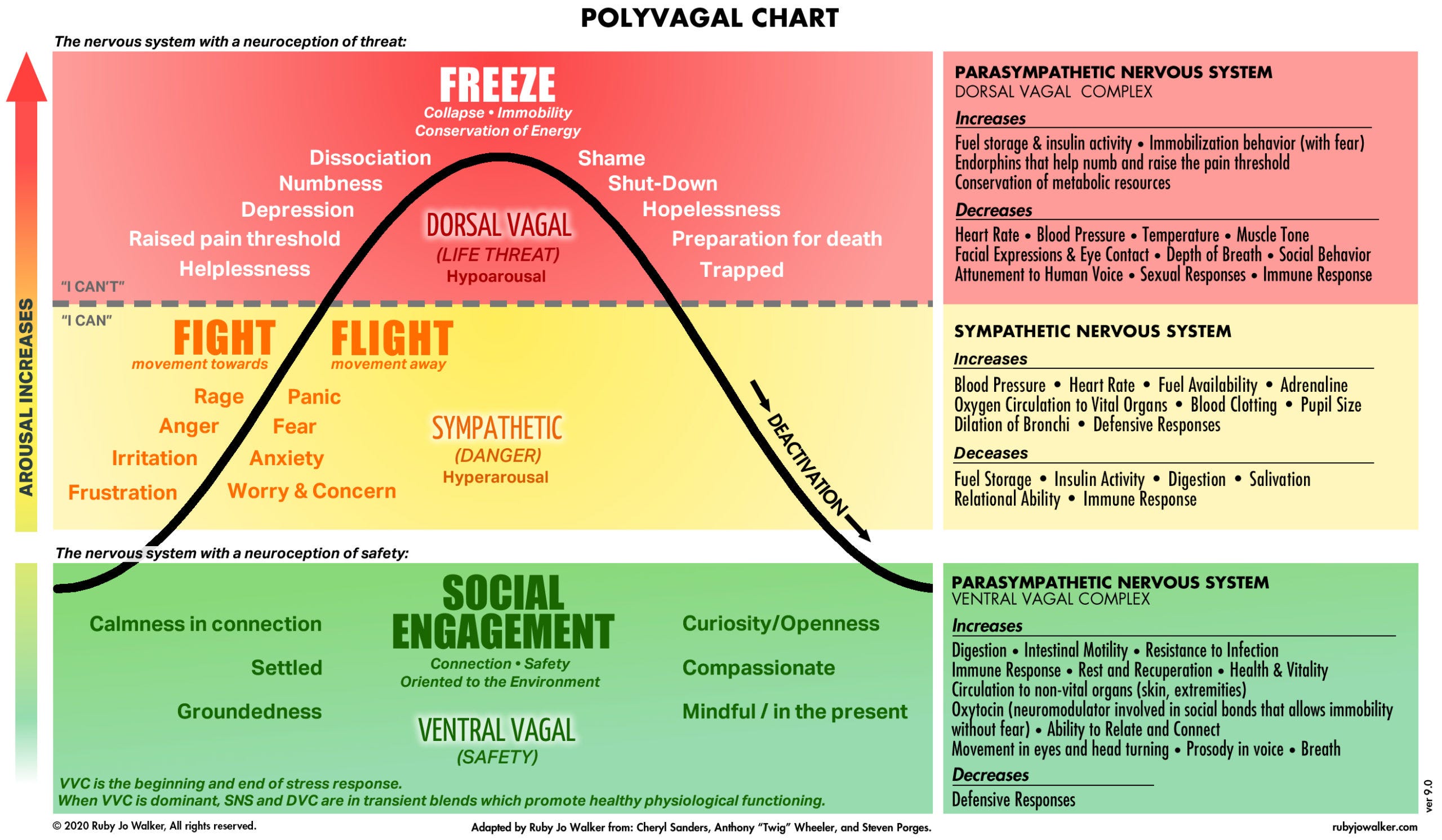
Think of it like this:

Your nervous system is constantly scanning for cues of safety or threat—this is called neuroception. And based on what it detects, your body shifts into different states—each with a biological purpose.

The Polyvagal Chart breaks this down into three major states:

1. 🟢 Ventral Vagal – Social Engagement (Safety)

This is your “rest-and-connect” zone. You feel grounded, calm, curious, and open. You can be present with yourself and with others. Your body prioritizes digestion, immune function, and bonding hormones like oxytocin. You’re regulated.

This is the state we’re meant to live in most of the time—but trauma, chronic stress, or inconsistent caregiving can knock us out of it.

2. 🟡 Sympathetic – Fight or Flight (Danger)

When your system detects danger, it flips into high alert. Blood rushes to your limbs, your heart races, your digestion shuts down. You either fight (rage, irritation) or flee (anxiety, panic). This is survival mode. It’s not rational—it’s reactive.

And if that still doesn’t resolve the threat?

3. 🔴 Dorsal Vagal – Freeze (Life Threat)

This is the deepest shutdown. Your system says: “This is too much. I can’t.” You go numb. You collapse. You may dissociate, feel hopeless, or emotionally flatline. It’s not weakness—it’s your nervous system pulling the emergency brake to conserve energy and protect you.

Here’s what’s crucial to understand: these responses aren’t choices. They’re biological defaults. And many of us are stuck in loops of fight, flight, or freeze because our systems never got a chance to complete the stress cycle and return to safety.

So instead of shaming yourself for overreacting or shutting down, what if you asked:

“What is my nervous system trying to do for me right now?”
“What does it need to feel safe again?”

That shift—from judgment to curiosity—is the beginning of healing.

And we’ll connect this to another major thread—attachment systems, which we haven’t unpacked in depth yet, but absolutely need to.

Your attachment system is the biological and psychological mechanism that drives you to seek safety, closeness, and emotional connection—especially when you’re under stress. It develops in early childhood through repeated interactions with your caregivers, shaping how you regulate your emotions, perceive threats, and relate to others. If those caregivers were emotionally attuned, predictable, and responsive, you likely formed a secure attachment. But if they were inconsistent, neglectful, controlling, or chaotic… your attachment system learned to adapt in ways that may have kept you safe then—but cost you connection now.

In The Happiness Hypothesis, Jonathan Haidt points to a disturbing moment in psychological history that disrupted the natural development of secure attachment: the rise of behaviorism in the early 20th century.

John B. Watson, a founding figure of behaviorism, famously applied the same rigid, mechanistic principles he used on rats to raising human children. In his 1928 bestseller The Psychological Care of Infant and Child, he urged parents not to kiss their children, not to comfort them when they cried, and to withhold affection—believing emotional bonding would produce weak, dependent adults.

By the mid-20th century, attachment theory began to challenge these behaviorist claims. John Bowlby, in the 1950s, argued that infants form emotional bonds with caregivers as an innate survival mechanism—not merely as conditioned responses to rewards, as behaviorism suggested. His work, drawing from ethology, psychoanalysis, and control systems theory, moved beyond behaviorism’s narrow stimulus-response framework. Mary Ainsworth’s empirical research in the 1960s and ’70s, through her Strange Situation study, confirmed that attachment styles stem from caregiver sensitivity and infant security needs, rather than simple conditioning.

Yet, ironically, during the 1970s and ’80s, Christian parenting teachings—particularly those popularized by figures like Dobson—adopted and amplified the very behaviorist ideas that attachment research was already disproving. These teachings emphasized strict discipline and emotional control, often citing Scripture to justify practices rooted in outdated psychological theories rather than theology.

Let that sink in.

For decades, dominant parenting advice discouraged emotional responsiveness, treating affection not as a necessity but as a liability.

This wasn’t just bad advice—it was the psychological equivalent of nutritional starvation. Instead of missing vitamins, children missed attunement, safety, and connection. As attachment research has since shown, those early emotional experiences shape nervous system development, stress regulation, and whether someone grows up trusting or fearing closeness.

So, when we talk about stress responses like fawning… or chronic over-functioning… or emotional dysregulation… we’re often seeing the adult expression of a nervous system that never learned what safety feels like in the presence of other people.

And that’s why today’s conversation matters. Because healing isn’t just about rewiring thought patterns. It’s about rebuilding your felt sense of safety—in your body, in your relationships, and in your life.

And if you are anything like me and have found yourself wondering… why your nervous system reacts the way it does… or why regulating your emotions feels impossible even when you “know better” … this episode will connect the dots in ways that are both validating and eye-opening.

We’re talking trauma, identity, neuroplasticity, stress, survival, and what it really means to come home to yourself.

The topics we explore:

  • The critical differences between PTSD and Complex PTSD — and how each impacts the brain and body
  • Why CPTSD isn’t just a fear response, but a full-body survival adaptation that reshapes your identity
  • What it means to heal “from the bottom up,” and why insight alone isn’t enough
  • How books and language can validate our experience — without replacing the need for somatic work
  • The push-pull of relational safety: why CPTSD makes connection feel risky, even when we crave it
  • How trauma affects the Default Mode Network, and why healing often feels like rediscovering who you are

Whether you’re navigating relational triggers, spiritual disorientation, or the long road of recovery, this conversation offers clarity, compassion, and a grounded path forward.

Please enjoy the interview!

Subscribe now on Substack!

LINKS:

Check out Cody’s work! About – The Mind, Brain, Body Digest

The Top 5 Childhood Core Wounds in Overachievers 🧠

No Bad Parts | IFS Institute | Schwartz

Transcending Trauma Healing Complex PTSD with Internal Family Systems Therapy

Understanding Hormonal Changes in Midlife Women

The Truth About Hormones &Body Fat

If you’re a woman in midlife witnessing changes in your body, let’s be honest—hearing one more expert say “just move more and eat less” might make you scream. That tired, oversimplified advice ignores the very real ways our bodies change—and the decades of life we’ve already lived in them.

Midlife, generally defined as the ages between 37 and 65, isn’t just a calendar phase. It’s a biological, emotional, and identity-shifting chapter. For women, it often marks the beginning of perimenopause—the transitional period leading up to menopause, when the ovaries gradually produce less estrogen. Menopause itself is defined as the 12-month mark after your final menstrual period, but the hormonal fluctuations and symptoms often begin years before and can last well beyond that point.

To really understand what’s happening in our bodies now, we have to rewind the clock.

From puberty, our bodies have been shaped by an elegant hormonal dance. Estrogen, progesterone, and to a lesser extent testosterone, govern everything from our cycle to our skin, from our energy to our emotional responses. These hormones rise and fall in predictable patterns until they don’t. And when they don’t, you feel it.

Hot flashes. Sleep disruptions. Brain fog. Mood swings. Slower recovery from workouts. A scale that doesn’t seem to budge no matter what you do. And the silent undercurrents like the gradual loss of bone density—osteopenia—that often go unnoticed until it’s too late.

These aren’t random annoyances. They’re signals. And they deserve to be understood.

In this post and in today’s podcast episode, I talk with registered dietitian and research wizard Maryann Jacobsen about what actually helps us thrive during perimenopause and menopause. We get into why muscle is metabolic gold, why cardio isn’t always the answer, and how biofeedback your body’s own cues like hunger, energy, sleep, and mood can tell you more about what’s working than any calorie tracker or influencer’s reel ever could.

We also challenge the idea that your bathroom scale is the best measure of health. Spoiler alert: it’s not. Tools like DEXA scans provide deeper insight into your bone density and lean mass—two things that matter more than “weight” ever could in this stage of life. And while your smart scale using bioelectrical impedance might not be as accurate, it can still help you track general trends if you know how to interpret it.

One part of our conversation that hit me hard was Maryann’s mention of the body fat research around fertility. Scientists have found that a minimum of 17% body fat is required just to get a menstrual cycle, and about 22% is needed to maintain ovulation. But here’s the real shocker: in mature women, regular ovulatory cycles are often supported best at 26–28% body fat. (PMID: 3117838, 2282736) That means what many of us have been taught to chase ultra-lean physiques (around 17 BF% or so), chronic calorie restriction, or overtraining can actually backfire on our reproductive health, bone health, and overall vitality.

In populations where food is scarce or physical demands are high, we see patterns: delayed first periods, longer gaps between births, earlier menopause. It’s the body adapting for survival. But in modern life, we sometimes impose these same conditions on ourselves in the name of “fitness.”


And while estrogen usually gets the spotlight in menopause care often treated as the main character it’s progesterone that deserves a standing ovation. Many women are told they “need progesterone” just to protect themselves from estrogen’s effects, as if it’s merely a buffer. But that undersells its brilliance.

The name progesterone literally means “pro-gestation,” but its impact goes far beyond fertility. Progesterone is a master regulator. It stabilizes tissues, supports metabolic balance, calms inflammation, protects against stress, and even plays a role in brain health. While estrogen stimulates, progesterone shields. While estrogen builds, progesterone restores.

Fascinatingly, our bodies produce far more progesterone than estrogen especially after ovulation and during pregnancy. That’s not a fluke. It reflects just how critical progesterone is to our overall well-being.

So when ovulation slows or disappears in midlife, it’s not just your period going quiet. It’s this entire downstream network of hormonal resilience especially progesterone that starts to fade. And that’s when symptoms ramp up.

Understanding this isn’t just about managing menopause. It’s about honoring your biology, updating your strategy, and supporting your body like the powerful, responsive system it actually is.

If we want to balance and optimize our hormones in midlife, we have to re-evaluate our goals. This isn’t about grinding harder it’s about getting smarter. And to get smarter, we need to zoom out.

Ovulation isn’t just some fertility footnote-it’s the main event of your cycle. But many of us were taught that the bleed is the cycle. Nope. That’s just the after-party. The headliner? Ovulation.

Why does this matter in midlife?

Because ovulation is what triggers the production of progesterone a hormone that plays a critical role in metabolism, mood, sleep, brain function, and bone health. And spoiler: progesterone is the first to dip off the radar as we enter perimenopause. That’s why your energy feels off, your sleep gets weird, and your tolerance for stress tanks. Your body isn’t broken—it’s adapting.

Here’s where things click into place: your body will only ovulate consistently if it feels safe and nourished. That means you’re eating enough, not overtraining, and not living in a cortisol-fueled chaos spiral.

Ovulation isn’t just about reproduction it’s a vital sign of health.
And the two hormones that anchor your entire cycle, estrogen and progesterone, do so much more than regulate periods.

From bone density to brain function, from insulin sensitivity to mitochondrial health, these hormones influence nearly every system in your body. So, when they fluctuate…. or flatline… you feel it. Not just in your body, but in your entire day to day experience.

So, let’s break the rules, rewrite the midlife playbook, and finally start listening to the wisdom our bodies have been whispering all along.

LINKS:

In-depth-guide-on-midlife-weight

The Hidden Risks of Ozempic: Rapid Weight Loss Can Weaken Bones and Muscles

Farmer Vs Banker episode Move More, Eat Less? The Lie That Won’t Die

Resistance-exercise-perimenopause-symptoms

To take hormone therapy or not to take hormone therapy

The Case for Cardio

Contrary to popular belief, a larger body may actually be healthier (insta post)

Why Are Americans So Obsessed With Protein? Blame MAGA.

Midlife stress and its ripple effect on health

Meet your new post-40 nervous system

Move More, Eat Less? The Lie That Won’t Die

The Fatal Flaws of Calories In Calories Out

Let’s talk about one of the most persistent pieces of weight-loss advice ever given:

“Just eat less and move more.”

On the surface, it sounds reasonable. If weight loss were simply a matter of reducing calories and increasing activity, we’d expect long-term success rates to be much higher than they are. Instead, many people find themselves caught in a cycle of restriction, weight regain, and frustration.

The problem isn’t that calories are irrelevant. The problem is that the slogan reduces a complex biological process to a simple equation.

For decades, we’ve been taught to think about the body like a math problem: calories in versus calories out. But human beings aren’t closed systems operating under laboratory conditions. We’re dynamic, adaptive organisms influenced by hormones, stress, sleep, appetite regulation, past dieting history, genetics, environment, and countless other variables that affect how energy is used, stored, and conserved.

In previous episodes, we’ve explored the limitations of calorie-focused thinking and discussed research showing that our beliefs and expectations about food can influence physiological responses. Today, we’re taking that conversation a step further.

Because once you move beyond simplistic explanations, metabolism becomes far more interesting.

The questions aren’t just how much we eat, but what we eat, when we eat, why we eat, and how our bodies adapt over time. Those factors help explain why the same dietary strategy can produce dramatically different outcomes for different people.

Before we examine the limitations of modern diet advice, it’s worth asking a different question:

How did calories become the primary way we think about food in the first place?

To answer that, we need a little historical context.

The History of the Calorie

The calorie, as a unit of measurement, has a fascinating history that ties directly into today’s conversation. While many people assume calories have always been the standard way to understand food and metabolism, their adoption is actually a relatively recent development shaped by scientific discovery, public health initiatives, and changing cultural attitudes toward weight and nutrition.

The Origin of the Calorie

The concept of the calorie originated in physics, not nutrition.

In the early nineteenth century, French chemist Nicolas Clément introduced the term calorie as a unit of heat energy. Later, scientists such as Wilbur Olin Atwater adapted the concept to human metabolism, conducting experiments to estimate how much energy food released when burned.

Atwater’s work eventually produced the familiar caloric values we still use today:

  • Fat: 9 calories per gram
  • Carbohydrate: 4 calories per gram
  • Protein: 4 calories per gram
  • Alcohol: 7 calories per gram

These values became the foundation of modern nutrition science and remain embedded in food labels around the world.

The Rise of Caloric Nutrition

By the early twentieth century, calories became an important public health tool.

Governments used calorie estimates to address malnutrition, design military rations, and manage food supplies during both World Wars. At a time when food scarcity was a major concern, understanding energy needs was enormously valuable.

As food became more abundant throughout the twentieth century, however, the conversation shifted. Rather than asking how to get enough calories, public health experts increasingly focused on how to avoid consuming too many.

This shift laid the groundwork for the modern weight-loss industry and the growing emphasis on calorie counting as a primary strategy for weight management.


black and silver electronic device
Photo by Quilia on Unsplash

CICO and the Simplification of Weight Loss

The calories in, calories out (CICO) model became increasingly influential during the twentieth century. Grounded in the First Law of Thermodynamics, it framed weight change as a matter of energy balance: consume more energy than you expend and weight increases; consume less and weight decreases.

At a basic level, this is true. Energy does not simply appear or disappear.

The challenge is that many people began treating a principle from physics as a complete explanation of human metabolism.

Human beings are not bomb calorimeters. We are living, adaptive systems. Hormones influence hunger and satiety. Metabolism adjusts to periods of restriction. Different foods require different amounts of energy to digest. Sleep, stress, illness, medications, movement patterns, and prior dieting history can all influence how the body uses and stores energy.

Over time, researchers began recognizing that while energy balance matters, it is only one piece of a much larger picture.

Some of the factors that influence metabolism and weight regulation include:

  • Hormonal signaling, including insulin, leptin, ghrelin, cortisol, and thyroid hormones
  • Metabolic adaptation during periods of caloric restriction
  • Differences in food quality and macronutrient composition
  • The thermic effect of food
  • Gut microbiome composition
  • Sleep quality and circadian rhythms
  • Psychological and behavioral factors that shape eating patterns

A More Nuanced Conversation

As research in metabolism and endocrinology expanded, scientists began asking more sophisticated questions.

Researchers such as David Ludwig and Robert Lustig drew attention to the ways hormones, food processing, and metabolic regulation influence health outcomes beyond calorie counts alone.

This led to renewed interest in dietary approaches such as low-carbohydrate and ketogenic diets. Advocates argued that insulin regulation and metabolic signaling deserved far more attention than they had traditionally received.

My own view is that the conversation is often framed too narrowly.

Carbohydrates may influence blood sugar regulation, but they are only one variable among many. Over the years, I’ve spent a great deal of time educating clients and audiences about the numerous factors that influence metabolic health. Stress, sleep, inflammation, meal timing, physical activity, gut health, hormonal status, medications, social environment, and dieting history all contribute to what I often think of as a person’s metabolic terrain.

Where Are We Now?

Today, the calorie remains a useful measurement tool, but most serious discussions of metabolism extend well beyond simple arithmetic. The question is no longer whether calories matter.

The question is whether calorie counts alone can adequately explain why two people eating the same number of calories may experience dramatically different outcomes.

Increasingly, the answer appears to be no. Calories matter. Biology matters too.

And that’s where today’s conversation begins.

Today, I’m joined by Adam Kosloff, a writer and independent researcher whose work explores obesity, metabolism, and the assumptions that shape modern nutrition science. I first encountered Adam’s work through a Substack essay A Righteous Assault on the Absolute Worst Idea in the History of Science, behind the provocative title was a question that immediately caught my attention:

Have we reduced metabolism to an overly simplistic equation?

Adam argues that while energy balance matters, the standard calories in, calories out explanation often fails to capture the complexity of living systems.

In response, he developed what he calls the Farmer Model—a framework that encourages us to think about metabolism as an ecosystem rather than a simple accounting problem.

The metaphor is straightforward. A farmer doesn’t judge the health of a field solely by measuring inputs and outputs. They also pay attention to soil quality, weather patterns, biodiversity, water availability, and the countless conditions that influence what grows.

Adam suggests that metabolism may deserve a similarly holistic perspective.

Whether you agree with every aspect of the model or not, I think he’s asking worthwhile questions.

After all, if obesity and metabolic disease were fully explained by “eat less and move more,” we would likely have solved these problems decades ago.

Instead, we’re left with a more complicated reality. Human metabolism is influenced by hormones, food quality, sleep, stress, activity levels, genetics, environment, prior dieting history, and a host of other interacting variables.

In our conversation, Adam and I explore where the traditional calorie model is useful, where it may fall short, and why many researchers, clinicians, and patients continue searching for more comprehensive explanations.

The goal isn’t to replace one form of dogma with another.

It’s to have a more honest conversation about complexity.

The takeaway? The “move more, eat less” doctrine is outdated and incomplete. It’s time for a more sophisticated conversation about metabolism that acknowledges the complexity of the human body rather than reducing it to a basic math equation.

LINKS

Science or Stagnation? The Risk of Unquestioned Paradigms – The first episode we challenged calories in, calories out (CICO) & mention Germ theory vs Terrain theory

The Farmer vs. The Banker

10 Smackdowns that lay waste to CICO

3 Times I Gained Weight on Keto

Gary Taubes Substack articles

Emotional Hijacks & Nutritional Hacks: Unveiling the🧠Amygdala’s Secrets ⁠

The Dissolution of the Nutrition Science Initiative

Obesity and Starvation Found Together

The Influence of Religious Movements on Nutrition

Why Challenging Beliefs Feels Like a Personal Attack—And Why It Shouldn’t

The Biggest Loser Study-The metabolic consequences of extreme dieting & the weight gain rebound effect

Taste Test Thursdays: A BONUS Series!

A New Way to Dig Into Truth Together

Hey everyone, welcome to the very first episode of Taste Test Thursdays! If you’re new here, this is a special bonus series where I’ll be giving you a behind-the-scenes look at the topics I didn’t get a chance to fully explore during Season 3 of Taste of Truth Tuesdays. Think of this as the leftovers—the ideas that were simmering on the back burner but never made it onto the main plate.

But this series isn’t just about what I didn’t cover. It’s about giving you a deeper look into my thought process—how I research, why I choose certain topics, and the unfiltered thoughts I don’t always include in the main episodes. Some weeks will be casual, some will be research-heavy, and some, like today, will be personal.

Because for this first episode, I want to start with a topic I’ve touched on but never fully shared: my own experience with chronic pain and how it shaped not only my fitness journey but my entire approach to health and resilience.

The Story Behind My Chronic Pain & Fitness Journey

Let’s rewind a bit. Growing up, I was always active, but I never saw fitness as something I’d build my life around. That changed when I started dealing with chronic pain. At first, it was subtle—nagging aches, stiffness that didn’t go away. But then it became something more. Pain wasn’t just an inconvenience; it dictated what I could and couldn’t do. Doctors didn’t always have clear answers, and at times, it felt like I was being dismissed.

That frustration pushed me to start researching on my own-diving into biomechanics, nutrition, corrective exercise, and the ways the nervous system and pain are intertwined. I wasn’t just looking for relief; I was trying to understand why my body was responding this way. And what I found changed everything.

A while back, I wrote a blog post about this—one that really captures my experience in a way that feels raw and honest. And instead of just summarizing it, I want to share it with you here. So, here’s that piece, in its entirety.

How It Shaped My Career & Perspective

This experience didn’t just lead me into fitness; it redefined how I approach movement altogether. It made me realize that pain isn’t just a physical experience—it’s emotional, neurological, and deeply personal. It’s why I’m so passionate about evidence-based approaches to health and why I push back against a lot of the oversimplified fitness narratives out there.

I’ve seen firsthand how the right training, nutrition, and mindset shifts can change the way someone interacts with their own body. And I’ve also seen the damage of quick-fix culture—where people are told they just need more discipline, or worse, that their pain is all in their head.

What I Wish More People Knew About Chronic Pain & Fitness

One of the biggest misconceptions I had to unlearn is that pain automatically means damage. That’s something I wish more people understood. Pain is real, but it’s also complex—it can be influenced by stress, trauma, movement patterns, and even the stories we tell ourselves about our bodies. Learning that was a game changer for me.

Another thing? There is no one-size-fits-all approach. Healing, strength, and movement look different for everyone, and that’s okay.

What to Expect From Taste Test Thursdays

So, that’s today’s leftover—a topic I didn’t get to fully explore in Season 3 but felt like now was the right time to share. But Taste Test Thursdays won’t always be this personal. Some weeks, I’ll take you inside my research process—breaking down how I fact-check, where I find sources, and the information I don’t trust. Other weeks, I’ll revisit ideas I didn’t have time for, explore unfiltered takes, or answer your burning questions.

Next week, we’ll be talking about how I put together my episodes—how I decide on topics, what I look for in sources, and some of the biggest red flags I watch out for when researching.

I’d love to hear from you—what’s been your experience with pain and fitness? Have you ever had to unlearn things about your own body? Let me know over on Instagram or in the comments if you’re listening somewhere that allows it.

Thanks for being here, and as always—maintain your curiosity, embrace skepticism, and keep tuning in!

Detransition, Lawsuits, & Accountability: A Deep Dive with Transition Justice

When Affirmation Fails: The Fight for Justice in Gender Medicine

For years, we’ve been told that gender affirmation is the only compassionate response. Questioning it? Unthinkable. But as the dust settles, more and more individuals are coming forward with stories of regret, medical complications, and the realization that they weren’t given the full picture before making life-altering decisions.

This week on Taste of Truth Tuesdays, I sat down with Martha, co-founder of Transition Justice, an organization dedicated to helping detransitioners and their families seek legal recourse. If you’re unfamiliar, Transition Justice is one of the few organizations providing legal resources for those who feel they were misled, rushed, or even coerced into medical transition without true informed consent.

The Legal Battle Over Gender Medicine

One of the biggest takeaways from my conversation with Martha was the growing number of legal cases related to gender medicine. Detransitioners—many of whom transitioned as minors—are now speaking out, claiming that the medical community failed them. They argue they were fast-tracked into hormone therapy and surgeries without adequate psychological evaluation or a real understanding of the long-term consequences.

Transition Justice connects these individuals with legal professionals who can help them navigate potential malpractice suits and other forms of legal action. The goal? Accountability. Because when medical institutions push an ideology over evidence-based care, lives are affected—permanently.

Social & Ideological Pressures: A Personal Reflection

As someone who lived in Portland for years, I watched firsthand as gender ideology swept through my social circles. I had friends who transitioned, friends who encouraged their kids to transition, and a culture that made any dissent feel like social suicide. Parents who hesitated were accused of being unsupportive, bigoted, even abusive. Many went along with it—not because they were convinced, but because they were afraid.

Now, years later, some of those same parents are questioning everything. Some of those kids, now young adults, regret what happened. But where do they turn when their bodies have changed irreversibly? When the very institutions that promised to help them are nowhere to be found?

The Ethics of Informed Consent

One of the key issues Martha and I discussed was the tension between bodily autonomy and medical ethics. Should adults have the right to modify their bodies as they see fit? Some states limit abortion at some extent. But what about minors? What about individuals who were never properly informed of the risks? What happens when a decision made at 13 results in permanent medical complications at 25?

Medical ethics demand that patients receive full, unbiased information about risks, benefits, and alternatives before undergoing treatment. But in many cases, detransitioners say they were only given one path: affirmation or nothing. The idea that therapy, alternative treatments, or even just more time to explore could be a viable option was dismissed as “conversion therapy.” That’s not informed consent—that’s coercion.

What Comes Next?

The tide is shifting. Countries like the UK, Sweden, and Finland have already started scaling back gender-affirming treatments for minors, citing a lack of evidence and serious concerns about long-term harm. The U.S., however, remains deeply divided. But as more detransitioners come forward and more lawsuits gain traction, it’s clear this conversation isn’t going away.

Martha believes we’re on the cusp of major legal and cultural shifts. Institutions that once claimed there were “no regrets” are being forced to reckon with reality. And for those who were harmed? Transition Justice is fighting to make sure they’re heard—and that those responsible are held accountable.

Final Thoughts

This is a conversation we need to have—without fear, without labels, and without ideological blinders. If we care about bodily autonomy, medical ethics, and the well-being of future generations, we can’t afford to look away.

Want to hear the full discussion? Listen to my interview with Martha on Taste of Truth Tuesdays! And if you or someone you know has been impacted by these issues, check out Transition Justice at

Home | Transition Justice

Partners for Ethical Care | Medicalization

Detransition: a Real and Growing Phenomenon | SEGM

Home – Moms for Liberty

Protect Kids CA Launches Petition to Repeal Transgender Policies and Protect Parent Rights – California Family Council

Ban on puberty blockers to be made indefinite on experts’ advice – GOV.UK

🙏 Please help this podcast reach a larger audience in hope to edify & encourage others! To do so: leave a 5⭐️ review and send it to a friend! Thank you for listening! I’d love to hear from you, find me on Instagram!⁠⁠⁠ @taste0ftruth⁠⁠⁠ , @megan_mefit , ⁠⁠⁠ Pinterest! ⁠⁠ ⁠ Substack and on X!

From ‘Women’ to ‘AFAB’: The Ideological Capture of Biology and the War on Reality

Welcome back to Taste of Truth Tuesdays. Today, we’re diving into a topic I’ve wanted to explore for a while now. Earlier this month, I came across a writer on Substack who posted something that really struck me. In his piece, he used dehumanizing language ‘assigned female at birth’. While his intention may have been to be inclusive, I found it to be exclusive and downright misogynistic.

It reminded me of back in 2021, I had a few people reach out to me on Instagram, pointing out that we had shifted from using the term ‘women’ to ‘AFAB’—’assigned female at birth.’ My gut reaction was intense—what the hell is going on here? It also reminds me of when I was living in Portland, I was constantly stressed, seeking external validation, and lacked the courage to speak up against gender ideology around 2013-2015. Little did I know, it would eventually take over the world.

Now, we’re going to dive into the consequences of transgenderism and its impact on children. And here’s the thing: I’m no longer afraid of being canceled or ridiculed. Honestly, I’ve already lost all my friends. But at this point, I’ve come to appreciate who I am, and standing for truth in today’s world has never been more important. It’s worth every consequence.

How We Got Here—The Origins of Gender Ideology

To understand how we went from recognizing biological sex as reality to debating whether we can even say the word “women” in medical journals, we have to look at where gender ideology came from.

This whole mess started with psychologist John Money in the 1950s. He was one of the first people to separate “gender” from “sex,” arguing that gender was a social construct, independent of biology. Expanding on John Money’s experiments is crucial because they expose the disturbing origins of gender ideology. Money, a psychologist and sexologist, was instrumental in pushing the idea that gender identity is entirely socially constructed, separate from biological sex. However, his most infamous experiment—the case of David Reimer—reveals the dark and unethical foundation of this belief system.

David Reimer was born male, alongside his identical twin brother, Brian. After a botched circumcision, Money convinced his parents to raise David as a girl, “Brenda,” after undergoing surgery and hormone treatments. Money believed this would prove that gender identity was purely a matter of socialization. However, David never truly identified as female. He struggled with severe psychological distress, eventually rejecting the imposed identity in his teenage years and transitioning back to male. His twin brother Brian also suffered severe emotional distress, and both tragically died by suicide in their 30s—a devastating consequence of Money’s reckless experiment.

The nature vs. nurture debate is at the heart of this issue. Money’s work attempted to prove that nurture—socialization and upbringing—could completely override biological sex. Yet, the failure of the Reimer case demonstrated the opposite: biology plays an undeniable role in identity and development. Attempts to force individuals into gender identities that contradict their biology often lead to severe psychological distress.

While John Money championed the idea that gender was purely a social construct, his ideological opponent, Dr. Milton Diamond, spent decades proving otherwise. Diamond, a biologist and sexologist, conducted extensive research showing that biological sex has an innate influence on identity. He exposed the flaws in Money’s work, particularly the David Reimer case, and argued that forcing an identity contrary to one’s biology leads to immense suffering. Diamond’s work underscored the importance of acknowledging biological sex while still allowing for individual gender expression—a stance completely at odds with today’s gender ideology, which seeks to erase biological realities altogether.

Intersex conditions are often misused as a justification for erasing sex-based distinctions. While intersex individuals exist, they make up a small fraction of the population and do not negate the binary nature of human sexual reproduction. Most intersex conditions result in variations of male or female biology, not a third sex. Using intersex as a reason to eliminate sex-based language ultimately harms both intersex and non-intersex individuals by denying the reality of biological differences.

Beyond David Reimer’s case, Money’s broader work was filled with moral controversies. His therapy sessions with young children were highly controversial and ethically disturbing by today’s standards. He conducted what he called “sexual rehearsal therapy,” which involved encouraging children to engage in sexual activities with their parents or siblings as a form of treatment for various psychological issues.

These sessions were intended to help children overcome sexual anxieties or developmental disorders, but they often crossed serious ethical boundaries and caused significant harm to the children involved. The lack of informed consent, the inappropriate nature of the activities, and the potential for long-term psychological damage have led to widespread criticism of Money’s methods.

Despite this, Money’s ideas laid the foundation for modern gender ideology. His theories, though discredited by cases like David Reimer’s, were absorbed into academia and later expanded upon by activists. The result? A cultural shift where subjective identity is prioritized over biological reality, and dissent is often met with backlash.

Understanding the origins of gender ideology is crucial because it reveals the shaky foundation upon which these ideas were built. Science, ethics, and real-world consequences all point to the same conclusion: biology matters, and attempts to erase it come at a significant human cost.

His theories were later expanded by Judith Butler in the ‘90s, who pushed the idea that gender is performative and entirely detached from biology. This philosophy has now morphed into the idea that sex itself is a “social construct.”

The Trans Flag’s Creator: A Window into Gender Ideology’s Evolution

Monica Helms, born Robert Hogge, designed the trans🏳️‍⚧️ pride flag in 1999.

Genevieve Gluck wrote in Reduxx Magizine:

According to researcher Dr. Sarah Goode, CEO of StopSO (Specialist Treatment Organization for the Prevention of Sexual Offending), pedophiles who organize online have developed their own culture, language, and symbols. One common symbol used in pedophile forums incorporates the colors baby blue, pink and white. In her lecture, ‘Hidden Knowledge: What We Ought to Know About Pedophiles,’ Dr. Goode shows a slide of the image, and says, “The pink half represents ‘girl lovers’ and the blue half represents ‘boy lovers.’”

The color code system appears to predate the initial design of the transgender flag and can be traced back to at least as early as 1997, according to online pro-pedophile forums.

Areas in Europe that advertise child trafficking to pedophile sex tourists have used the color code: “blue curtains mean a boy child prostitute and pink curtains a girl.”

It is unclear whether Helms was aware of this correlation at the time, but when discussing the symbolism behind the trans flag in an interview in 2017, Helms stated that blue represented young boys and pink represented young girls.

Whatever the case may be, his personal history and writings reveal disturbing patterns that echo the unsettling dynamics of gender ideology we’ve seen in figures like Dr. John Money. Helms, who now identifies as a woman, has long been involved in controversial and fetishistic behaviors, even writing “forced feminization” and erotic short stories. His writings include disturbing themes, such as the sexualization of minors, notably in a short story where a man marries a young girl who ages slowly, reflecting a disturbing fantasy that came to him in a dream.

In his memoir, More Than Just a Flag, Helms describes his “bigender” identity, as an “enlightened” being who floats between multiple identities, switching from male to female, sometimes simultaneously, or in an instant. He recalls times of experimentation, especially as an adult, where he would wear clothing inappropriate for his age and faced consequences for doing so at work.

Adding a deeply unsettling layer to the conversation, Helms, who was 70 at the time in 2022, made headlines by claiming to have changed his age to 25. Given the logic behind these transformations, this age shift sparked a viral conversation, with some commenters pointing out that his partner, Darlene Darlington Wagner, would now be “just 16 years old.” This raises questions about how fluid identity could extend beyond gender and into age.

As gender ideology increasingly became intertwined with political movements, it found its way into the mainstream, especially within the Democratic Party. Initially, intellectual discussions around gender began with French philosophers whose ideas about the body, power, and identity influenced later iterations of gender theory. But these complex theories have since been stripped of their nuance and rebranded into a political dogma that now dominates much of the left-leaning discourse.

The Democratic Party, which once championed civil rights and social justice, now finds itself navigating a fine line between advocating for freedom and accommodating forces that seek to change the very definition of identity itself. But at what cost? The more corporate interests and industries gain traction in shaping these ideologies, the more the left’s original values of anti-corporate resistance become a distant memory.

Which brings us to today’s nightmare.

From Fringe Theory to Political Dogma—How Gender Ideology Took Over the Democratic Party

How did academic theorizing become an institutionalized belief system within mainstream politics, particularly in the Democratic Party? This transformation happened through several key developments:

  1. The Rise of Queer Theory in Academia – Universities became breeding grounds for gender ideology throughout the 1990s and 2000s. Gender studies departments, influenced by postmodernist philosophy, framed gender as entirely fluid, rejecting biological sex distinctions. As students trained in these theories graduated and took positions in media, education, and activism, they carried these ideas into broader society.
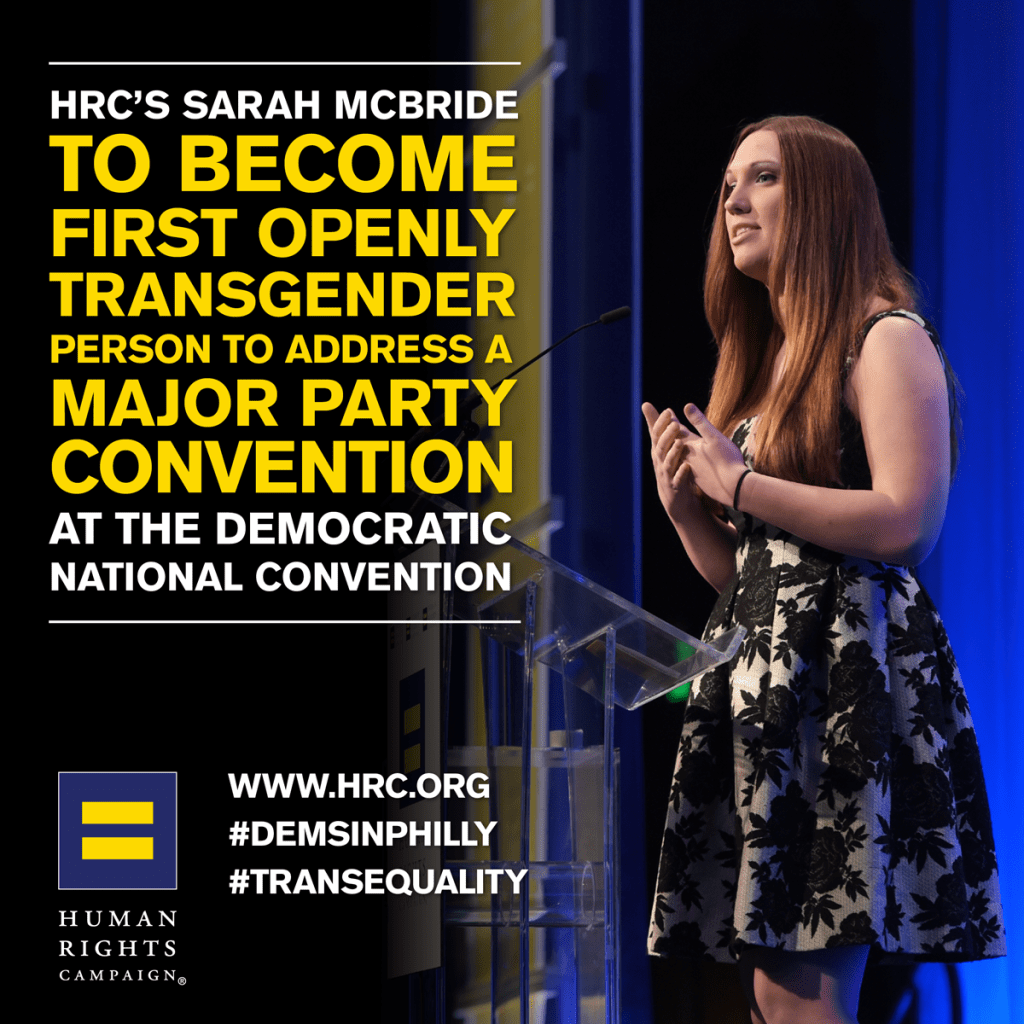
  2. Institutional Capture and Activism – Activist organizations like the Human Rights Campaign (HRC) and the American Civil Liberties Union (ACLU) began pushing gender ideology into corporate policies, legal frameworks, and public schools. Their influence, combined with the rapid spread of social media, helped mainstream these concepts far beyond the academic world.
  3. Legal and Policy Shifts – Under the Obama administration, gender ideology gained political traction, particularly through Title IX reinterpretations that mandated schools to accommodate self-declared gender identities. This was further expanded under the Biden administration, with policies requiring federally funded institutions to adopt gender-affirming policies in sports, healthcare, and education. Let’s talk about the hilarious double standards around the billionaires funding the LGBT movement. We’ve all seen the left melting down over the influence of billionaires—except, of course, when those billionaires are funding agendas they support. An article from First Things calls out some of the big names behind the LGBT movement, and guess what? It’s showcases this massive contradiction.
  4. Big Tech and Media Reinforcement – Social media platforms, major news outlets, and entertainment industries began actively promoting gender ideology while censoring dissenting views. This created a cultural environment where questioning gender ideology was framed as hateful or bigoted, further entrenching it within left-wing politics.
  5. The Redefinition of Civil Rights – Transgender identity was increasingly framed as the next major civil rights frontier, equating sex-based protections with racial and disability rights. This shifted the Democratic Party’s platform to fully embrace gender ideology, making skepticism or critique politically unacceptable within mainstream liberal discourse.

The Shift from ‘Women’ to ‘AFAB’—Erasing Women for Ideology

So why has the term “women” been replaced with “AFAB” (Assigned Female At Birth)? The justification is that saying “women” is “exclusionary” to trans-identified females. But in reality, it’s deeply misogynistic.

Jennifer Bilek, in her Dispatches from the 11th Hour essays, has done incredible work exposing how gender ideology isn’t some organic civil rights movement—it’s a well-funded social engineering project backed by billionaires and biotech companies. She points out that this linguistic shift isn’t just about “inclusion.” It’s about destabilizing categories of sex for the benefit of corporate and medical industries.

When you erase the words “women” or “woman,” you erase women’s ability to advocate for their needs. You make it harder to talk about female-specific health issues. And you make it easier for policies to prioritize ideology over science.

The Medical and Scientific Consequences of Erasing Sex

This isn’t just an abstract cultural issue. It has real, dangerous consequences for medicine and science.

Historically, women have been excluded from medical research—for decades, studies were conducted almost exclusively on male subjects, and the results were assumed to apply to women. The problem? Women are not small men. We have different hormonal cycles, different metabolic rates, and different responses to medications.

Here are just a few examples of how ignoring biological sex in medicine harms women:

  • Heart disease: Women’s symptoms are different from men’s, and because most research was done on men, women are more likely to be misdiagnosed.
  • ACL injuries: Women are at a significantly higher risk due to differences in hip structure and ligament laxity, yet training protocols are still modeled on male athletes.
  • Medication dosages: Women metabolize drugs differently, but dosages are often tested on male bodies, leading to overdoses or ineffective treatments for women.

In 2016, the NIH finally mandated that women be included in medical research, a huge step forward. But now, under gender ideology, we’re reversing that progress by saying we can’t acknowledge sex at all.

If we replace “women’s health” with “AFAB health,” how do we effectively study and treat female-specific conditions like PCOS, endometriosis, or pregnancy-related complications?

We don’t. Because that’s the point.

The Connection Between Transgenderism and Transhumanism

As the journalist, Stella Morabito, has written:

“Transgenderism is a vehicle for state power and censorship.”

It is tyranny dressed up in the clothes of what has become the carcass of the progressive left and it seeks absolute power and control over humanity and nature.

This is where things get dark.

Jennifer Bilek and other researchers have pointed out how gender ideology is just one arm of a larger movement: transhumanism—the belief that humanity should merge with technology, that our bodies are “obsolete,” and that we should ultimately move beyond biology altogether.

Think about what the transgender movement pushes:

  • The idea that our bodies are wrong and need to be medically altered
  • A reliance on synthetic hormones for life
  • The normalization of body modification to fit identity over reality

Now zoom out: Who benefits from this ideology? Pharmaceutical companies. The same billionaires pushing trans activism are also deeply invested in AI, biotech, and synthetic biology.

Oligarchs on both the political right like Peter Thiel and on the left like Jeff Bezos. JD Vance is the co-founder of Narya Capital and invested in Amplied Bio which has announced a strategic partnership RNAV8 to support MRNA therapeutic developers. Even MAHA’s hero RFK Jr has invested in Crispr technology. Financially disclosers released in Jan 2025 reveal he holds invested in Crispr therapeutics which specialists in gene editing technologies, as well as Dragon Fly Therapeutics which focuses on immunotherapies. So, despite his history of expressing concerns against gene-editing therapy. He did state he would divest from these companies if confirmed secretary of HHS. So, Mr. Secretary, we are keeping eyes on you. 👀

I haven’t even mentioned of Elon Musk with NeuraLink and who knows what else that guy has planned. I am a big fan of DODGE and the exposure of the corruption, YET I definitely keep a skeptical eye on him as well.

The goal is not just to let people “live as their authentic selves.” The goal is to dissolve sex-based reality entirely, making people dependent on medical interventions for life. This isn’t liberation—it’s medical enslavement.

Brave New World Revisited: The Synthetic Creation of Culture

Earlier this year I read Huxley’s Brave New World, and it didn’t read as fiction, it read as he had a crystal ball into the future. In his dystopia, human reproduction was industrialized, the family unit was obsolete, and people were engineered for compliance under the guise of “progress.” Sound familiar? The push for synthetic reproduction, the erasure of sex-based identity, and the growing narrative that biology itself is a problem all mirror Huxley’s warning.

Jennifer Bilek exposes how transhumanism is the real endgame. The same corporate interests promoting gender ideology are also pioneering artificial wombs, genetically modified embryos, and bioengineered organ harvesting. This is a world where human beings are no longer conceived but manufactured. Where the natural, biological family is replaced by state-sanctioned, lab-grown “life.”

Huxley warned us about a future where people would love their servitude—where the loss of freedom would be reframed as liberation. That future is unfolding now. The question is: Are we resisting dehumanization, or are we embracing it under a new name?

The Erasure of Women Illustration by Greg Groesch

Fighting Back Against the Erasure of Women

So what do we do?

  1. Refuse to comply with ideological language. Women are women—not AFABs.
  2. Call out the erasure of sex in medicine and policy. We must advocate for sex-based language in healthcare.
  3. Expose the billionaires funding this movement. This is not grassroots activism—it’s top-down social engineering.

The fight to protect reality isn’t just about ideology. It’s about protecting women, safeguarding science, and ensuring future generations don’t grow up in a world where “female” is a forbidden word.

Sources: