Social Miasm Theory: The Biology of a Sick Society

How Suppression Shapes Our Bodies, Minds, and the World We Live In

Hey hey, Welcome back! Today’s episode connects beautifully to something many of you resonated with in my earlier show, Science or Stagnation? The Risk of Unquestioned Paradigms. In that episode, we talked about scientism… not science itself, but the dogma that forms around certain scientific ideas.

That’s why voices like Rupert Sheldrake have always fascinated me. Sheldrake, for those unfamiliar, isn’t a fringe crank. He’s a Cambridge-trained biologist who dared to question what he calls the “ten dogmas of modern science”: that nature is mechanical, that the mind is only the brain, that the laws of nature are fixed, that free will is an illusion, and so on.

When he presented these questions in a TED Talk, it struck such a nerve that the talk was quietly taken down. And that raised an obvious question: If the ideas are so wrong… why not let them stand and fall on their own? Why censor them unless they hit something tender? All of this sets the stage for today’s conversation.

Because the theory we’re exploring, Social Miasm Theory, fits right inside that tension between mainstream assumptions and the alternative frameworks we often dismiss too quickly.

My friend Stephinity Salazar just published a fascinating piece of research arguing that suppression  (of toxins, trauma, emotion, and truth) is the root pattern underlying both chronic illness and our wider social dysfunction. It’s a theory that steps outside the materialist worldview and challenges the mechanistic lens we’ve all been taught to see through.

You don’t have to agree with everything…that’s not the goal here.

What I love is the chance to explore, to ask good questions, and to stay grounded while examining ideas that stretch our understanding.

This blog is your guide to the episode, so you can track the concepts, explore the references, and dive deeper while you listen.

So, with that, let’s dive into Social Miasm Theory: what it is, where it comes from, why it matters, and what it might reveal about the world we’re living in today.


What Are Miasms, Anyway?

To anchor our conversation, Stephinity starts by grounding the concept of “miasms” in its homeopathic roots. Historically, Samuel Hahnemann (founder of homeopathy) described three primary miasms:

  • Psora, linked to scabies or skin conditions
  • Syphilis, associated with destructive disease
  • Sycosis, with overgrowth and tissue proliferation

Since then, the theory has expanded. Many modern homeopaths now talk about five chronic miasms, adding:

These aren’t diseases…they’re patterns. A kind of “constitutional operating system.”

Stephinity’s work takes this a step further:
If individuals can have miasms, societies can too.

It’s an ambitious idea. And honestly? A compelling one when you consider what’s happening globally.


Why Social Miasm Theory Matters

Suppression doesn’t stay in the body. It echoes outward into culture, politics, ecosystems, and collective behavior.

She breaks suppression into four types:

  • Toxic suppression: chemicals, pollutants, EMFs, pathogens
  • Emotional suppression: trauma, grief, stress, unprocessed feelings
  • Psychological suppression: denial, cognitive dissonance, fear-driven attachment to ideology
  • Truth suppression: propaganda, censorship, disinformation, scientific dogma

When these forms of suppression accumulate, she argues, they create a “social miasm”: a pathological field that shapes everything from public health to political polarization.

Even if you don’t buy every mechanism she proposes, the metaphor works. And the patterns are hard to ignore.

Evidence, Epistemology, and Skeptics: What Counts as “Real”?

This is the part my skeptical listeners will perk up for.

In the interview, I asked her the question I knew many of you were thinking:
“How do you define evidence within this framework? What would you want skeptical listeners to understand before judging it?”

Stephinity argues that the modern scientific lens is too narrow. Not wrong—but incomplete. She sees value in:

  • case studies
  • pattern recognition
  • field effects
  • resonance models
  • historical cycles
  • experiential knowledge

Whether or not you agree, her challenge to mechanistic materialism echoes thinkers like Rupert Sheldrake, IONS researchers, and even physicists questioning entropic cosmology.

And she’s not claiming this replaces science. She’s asking what science misses when it refuses to look beyond the physical.


Suppression: What It Looks Like in Real Life

Stephinity’s paper covers how suppression shows up on multiple levels. Here are a few examples she explores:

  • Overuse of symptom-suppressive medications
  • Emotional avoidance that pushes trauma deeper
  • Social pressure to conform
  • Institutional censorship
  • Environmental toxins that overwhelm the microbiome
  • Radiation and electromagnetic exposures

She frames suppression as a terrain problem: when the body or society becomes too acidic, stressed, toxic, or disconnected, the miasm takes root.

This is where we start to cross into the biological, psychological, and social layers—which brings us to one of my favorite parts of her theory.


Neuroparasitology: When Parasites Change Behavior

The concept of a new branch of science of neuroparasitology. Study of the influence of parasites on the activity of the brain.

This is the section I teased in the podcast because it’s both wild and backed by real research.

Stephinity references studies showing that parasites can alter host behavior not just in insects or rodents, but potentially in humans too. Her paper cites examples like helminths, nematodes, mycotoxins, and other microorganisms (McAuliffe, 2016; Colaiacovo, 2021). These organisms are everywhere, not just in “developing countries” (Yu, 2010).

Researchers have documented parasites that:

  • influence mood
  • shift risk-taking
  • modify sexual attraction
  • impair impulse control
  • change social patterns

This is what Dawkins called the extended phenotype (1982): the parasite’s genes expressing themselves through the host’s behavior. Neuroparasitologists Hughes & Libersat (2019) and Johnson (2020) have shown how certain infections can shift personality traits in specific, predictable ways.

Stephinity ties this into terrain: parasites tend to thrive in acidic, low-oxygen, stressed, radiative environments (Clark, 1995; Tennant, 2013; Cerecedes, 2015). In her view, chronic suppression creates exactly that kind of internal ecosystem.

But there’s another layer here. One that isn’t biological at all.

This is where philosopher Daniel Dennett enters the chat.

In Breaking the Spell, Dennett describes “parasites of the mind”: ideas that spread not because they’re true, but because they’re incredibly good at hijacking human psychology. These mental parasites latch onto our cognitive wiring the same way biological one’s latch onto the nervous system. They survive by exploiting:

  • fear
  • moral impulses
  • tribal loyalty
  • the desire for certainty
  • social pressure
  • existential insecurity

According to Dennett, religious dogmas, conspiracy theories, and ideological extremes act like memetic parasites: they replicate by using us, encouraging us to host them and then pass them on.

In other words: not all parasites live in the gut. Some live in the mind.

And…..we even discussed how billionaire Les Wexner once publicly described having a “dybbuk spirit” a kind of parasitic entity in Jewish folklore known for influencing personality. Whether symbolic or literal, the analogy fits. 🫨😮

Her point is simple:
When the terrain is weak, something else will fill the space.

Whether that “something” is trauma, ideology, toxicity, or a literal parasite… the mechanism rhymes.


Collective Delusion and Mass Psychosis
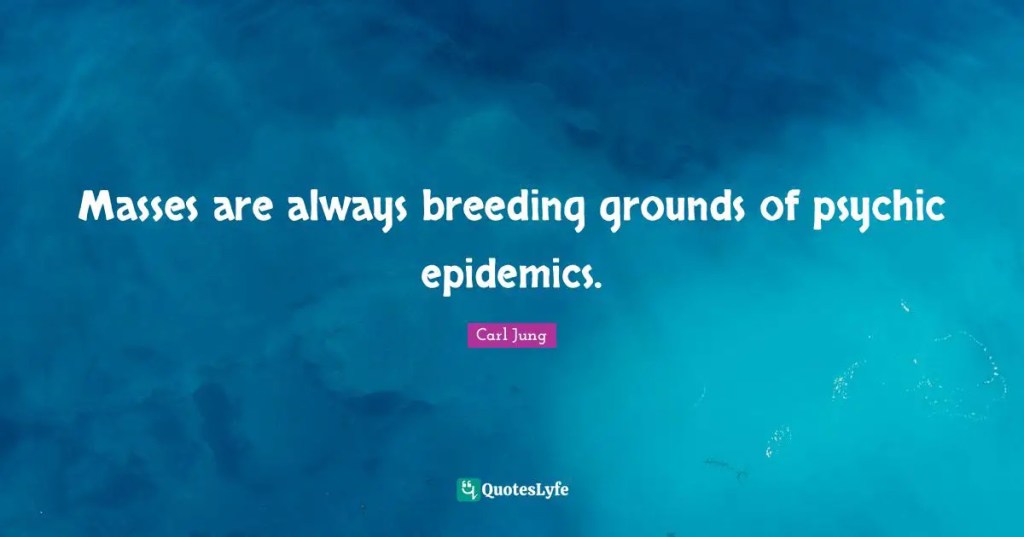
Drawing on Jung and Dostoevsky, Stephinity explores the idea that societies can enter “psychic epidemics.”

You’ve seen this. We all have…

The last decade has been a masterclass in how fear, propaganda, and emotional suppression create predictable patterns:

  • polarization
  • tribal thinking
  • moral panics
  • ideological possession
  • scapegoating
  • censorship
  • intolerance of nuance

She argues these are symptoms of a cultural miasm—not failures of individual character.

Whether you lean left, right, or somewhere out in the wilderness, you’ve likely felt this rising tension. And it’s hard not to see how unresolved collective trauma feeds it.


COVID as a Catalyst: What the Pandemic Revealed

Another part of her paper dives into how the pandemic brought hidden patterns to the surface.

Some of her claims are controversial, especially around EMFs and environmental co-factors. In the episode, we unpack these with curiosity, not blind acceptance.

Her larger point is that COVID exposed:

  • institutional fragility
  • scientific gatekeeping
  • public distrust
  • trauma-based responses
  • authoritarian overreach
  • the psychological toll of suppression

Whether you agree with the specific mechanisms or not, the last decade made one thing undeniable: something in our social terrain is deeply dysregulated.


8. Healing Forward: What Do We Do With All This?

If suppression drives miasms, then healing means unsuppressing. Gently, not chaotically.

Stephinity suggests practices like:

  • emotional honesty
  • reconnecting with nature
  • releasing stored trauma
  • nutritional and detoxification support
  • reducing exposure to chronic stressors
  • restoring community and meaning
  • opening space for spiritual or intuitive insight

She’s not prescribing a protocol. She’s offering a map.

The destination is what the Greeks called sophrosyne: a state of balance between wisdom and sanity. Not blissful ignorance, not paranoid awakening. Just grounded clarity.

And I think we could all use a bit more of that.


Key Evidence and Arguments

  • Stephinity critiques materialist science, calling out what she terms “entropic cosmology.” She argues that by assuming nature is strictly mechanistic, mainstream science misses field-based phenomena, non-local consciousness, and deeper systemic patterns.
  • She draws on historical and homeopathic sources (Hahnemann, Kent) to build her theoretical foundation but also argues for newer forms of evidence: resonance, case studies, and pattern detection in social systems.
  • On the environmental front, she explores links between toxins, EMF / 5G, biotech, and chronic disease, not just as correlation, but as evidence of suppression dynamics.
  • Psychologically, she invokes mass delusion or collective repression (drawing from Jung, Dostoevsky) seeing societal crises as expressions of buried collective shadow.
  • Ultimately, her call to action isn’t just for individual healing, but for systemic awakening: more transparency, alternative medical paradigms, and restored connection with nature.

Why This Matters for You

Even if homeopathy isn’t your jam, Social Miasm Theory offers a metaphor (and potentially a map) for understanding how inner repression becomes external crisis. If this episode does anything, I hope it gives you permission to look a little closer and question the stuff we’re told not to touch.


📚 Want to Dig Deeper?

Stephinity’s website: YOUR BODY ELECTRIC YOUR BODY ELECTRIC | FULL SPECTRUM FREQUENCY MEDICINE Find her on Linkden , Instagram and Substack

Social Miasm Theory: Revisiting Chronic Illness from a Meta-Perspective of Suppression [truncated version, pre-JSE publishing]

Official published paper

Miasms

https://www.unifiedfield.info/

https://corbettreport.com/how-the-government-manufactured-covid-consent

Use of fear to control behavior in Covid crisis was ‘totalitarian’, admit scientists
The Dark Side of Manifestation and MLMs

✨Let’s talk Manifestation & MLMs✨

In recent decades, the Law of Attraction has become one of the most influential belief systems in wellness, self-help, and multilevel marketing (MLM) circles. Its premise is seductively simple: your thoughts shape your reality. Think positively, and abundance will flow; dwell on negativity, and you’ll attract misfortune.

We have discussed the pitfalls of Law of attraction in a previous episode, you can find here.

🎙️ Another throwback episode is linked below, where I unpack my journey from wellness fanatic within MLM into a high-control religion. Together, we explore the wild “crunchy hippie to alt-right pipeline.” 🌿➡️🛑 social media, influencers, and wellness hype quietly nudge people toward extreme ideas, and in this episode, we break down exactly how. 🎧🔥

This modern doctrine of “mind over matter” is often traced to The Secret (2006) by Rhonda Byrne, but its genealogy is much older. It reaches back to New Thought philosophy of the 19th century, where figures like Ralph Waldo Emerson, Phineas Quimby, and later Mary Baker Eddy (founder of Christian Science) claimed that divine thought itself was the engine of reality. These Mind Cure and faith healing movements linked spirt and matter together. Disease, poverty, and suffering were seen as products of “wrong or stinking thinking.” Salvation was not just spiritual but cognitive: change your thinking, change your life.

and so again I say: It is shockingly right instead of shockingly wrong of you to be prosperous. Obviously, you cannot be very happy if you are poor and you need not be poor. It is a sin. –Catherine Ponder (The Dynamic Laws of Prosperity)

In fact, it is the search for spiritual healing of the body that led to what is known today as prosperity consciousness or in Christian evangelism, it’s prosperity theology.

That intellectual lineage matters because it shows how the Law of Attraction has always been more than a harmless pep talk. It represents a cosmology of control, one that locates all responsibility (and blame) within the individual mind. As we have discussed many times before, Jonathan Haidt observes in The Righteous Mind, belief systems serve a dual function: they bind communities together and blind them to alternative explanations.

In this sense, the Law of Attraction doesn’t just inspire positive thinking; it narrows. By framing success and failure as purely mental vibrations, it obscures structural realities like economic inequality, physical health and genetic limitations, racism, or corporate exploitation.

And that narrowing is precisely what makes it the perfect handmaiden to MLM culture.


When Positive Thinking Becomes a Business Model

Robert L. FitzPatrick, in False Profits and Ponzinomics, describes MLMs as “endless chain” recruitment schemes. What sustains them isn’t product sales but the constant influx of hopeful recruits. Yet these schemes require something more than numbers: they require belief.

Here, the Law of Attraction becomes the MLM’s best salesman. Distributors are told:

  • Failure isn’t about the structure of the business; it’s about your mindset.
  • Doubt is “negative energy” that will block your success.
  • Quitting is not just a business choice but a moral failing.

In the Amway training program, the “ABCs of Success” are “Attitude, Belief and Commitment.” Attitude was the key which must be guarded. Don’t let anyone steal your attitude. Negative was defined as “whatever influence weakens your belief and commitment in the business” -False Profits

This is where Norman Vincent Peale’s “positive thinking” gospel dovetails with MLM. In his 1948 book Positive Thinking for a Time Like This, Peale popularized the phrase

“Let go and let God. Let Him take over your life and run it. He knows how.”

While originally a call to spiritual surrender, the phrase has since been weaponized in countless contexts from Holiness movements to Alcoholics Anonymous to prosperity preaching. At its worst, it functions as a silencer: don’t question, don’t resist, don’t think critically. Just “let go,” and trust that outcomes (or uplines) will provide.

Eastern Orthodox Christianity has a word for this: prelest. It’s the belief that human beings are so easily deceived that any private sense of spiritual progress — a feeling of clarity, joy, empowerment, even a mystical experience — can’t be trusted on its own. Without humility and the guidance of a spiritual father, you’re told it may just be pride, delusion, or the devil in disguise.

That’s the trap: you can’t trust your own mind, heart, or gut. The only “safe” option is obedience to the system. Which is exactly how MLMs and other high-control groups operate — undermining self-trust to keep you dependent.

Nietzsche would have called this a kind of slave morality, a belief system that encourages resignation to suffering rather than rebellion against unjust structures. The Law of Attraction, framed in this way, doesn’t challenge MLM exploitation; it sanctifies it.

More powerful than any product, charismatic leader, or compensation plan, the MLM mindset materials (the tapes, courses, and “personal development” kits) are the prime tools used to recruit and control distributors. Once you’re in the system, you’re encouraged to buy these materials week after week, keeping you invested emotionally and financially while feeding the company’s bottom line.

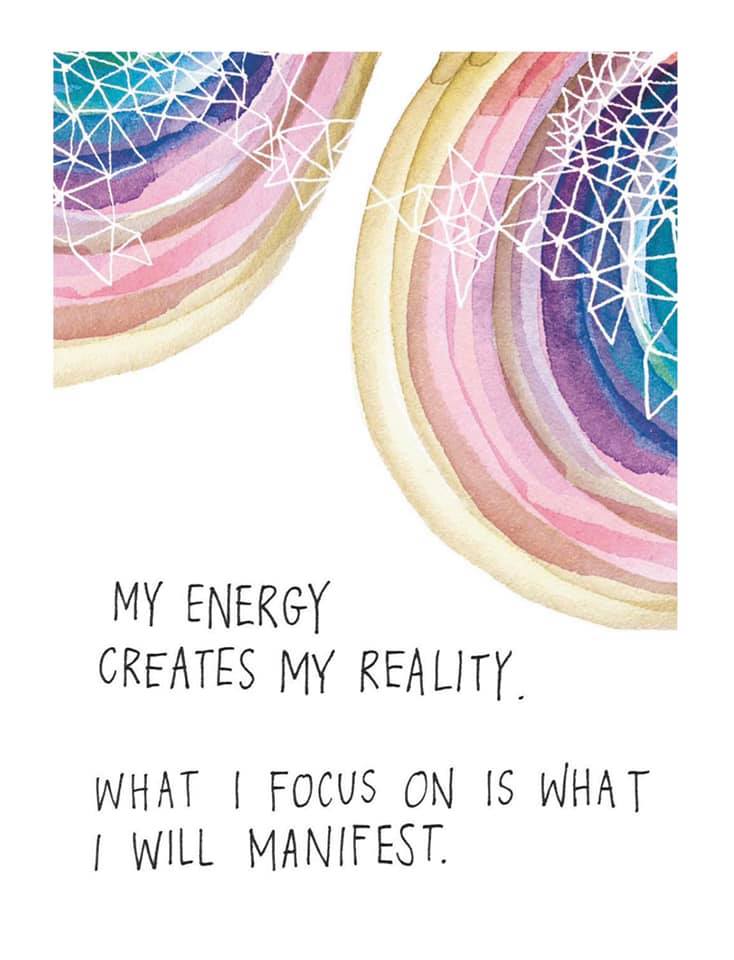
I went back through my Facebook to find some goodies for you! 😜This photo says “My energy creates my reality. What I focus on is what I will Manifest.” Here is the original caption so you can hear how brainwashed I was. “💥🙌🏼Belief is a feeling of certainty about something, driven by emotion. Feeling certain means that it feels true to you and therefore it is your reality. 💥🙌🏼 💪🏼 What you focus on you find 💪🏼 👀 You’ve got to believe it, to see it 👀”

Flashback to my first corporate event Aug 2016. My upline purchased my flight basically forcing me to go.

My caption at the time: 🤮

🔥IGNITE YOUR VISION! 🔥
⚡Attended an event that changed my life. Showed me the massive vision of this company.
🤗Join our passionate, growing team of 18-35-year-olds striving for extraordinary lives and ownership of health, dreams, and contributions.
🤩Returning to this LIFE CHANGING event soon! Nashville, TN—let’s learn, grow, and celebrate!

Sounds inspiring, right? Except what they’re really selling is mandatory product purchases, endless hype, and a community that keeps you chasing the next status milestone. That “massive vision” isn’t about your health or dreams—it’s about the company’s bottom line.

Words like passionate, extraordinary, innovators, ownership are carefully chosen psychological nudges, making you feel like life itself is on the line if you’re not on board. And the countdown to the next “life-changing” event? Keeps you spending, attending, and emotionally hooked.

This is exactly what FitzPatrick calls out in Ponzinomics: the sales rep is the best customer. Only a tiny fraction of participants earn anything; the rest are paying to stay inspired.

More flashback images from my cult days….


The Psychological Toll

When these elements collide the New Thought inheritance of “mind over matter,” Peale’s positive thinking, religious community networks and MLM compensation plans… the result is a high-control environment dressed in empowerment language.

The outcomes are rarely empowering:

  • Blame and guilt when inevitable losses occur.
  • Anxiety from the demand to maintain “high vibrations.”
  • Suppression of doubt, lest skepticism be mistaken for weakness.
  • Financial harm disguised as personal failure.

In wellness communities, this logic extends beyond money. If essential oils don’t heal your illness, it’s because your mindset was wrong. If the diet doesn’t work, it’s because you didn’t “believe” enough. Structural realities (biology, medicine, inequality) are flattened into personal responsibility.

As Haidt warns, morality (and by extension ideology) can both bind and blind. The Law of Attraction, when paired with MLM, binds participants into a shared culture of hope and positivity while blinding them to exploitation.


Connecting the Dots: Bodybuilding, Metabolism & Team Isagenix

A couple weeks ago on the podcast, I shared about my bodybuilding years and the metabolic fallout I still live with today. I had forgotten how much of that season was actually entangled with my Isagenix obsession. My upline (the couple who enrolled me) were a part of Team Isagenix®, and I craved the validation of being “seen” as a successful athlete inside that community.

The requirements were brutal: placing in the top three of multiple competitions in a short span of time. So, between May 2017 and October 2018, I crammed in four shows in just 18 months. No off-season. No recovery. Just constant prep cycles. My metabolism never had a chance to stabilize, and I pushed myself past healthy limits. I wrecked my body and I’m still paying the price.

This is why I push back so hard when people insist that success is all about having a “positive enough” attitude to manifest it. My mindset was ironclad. What I lacked the conscious awareness that valued human health over recruitment and body image. That drive wasn’t just about stage lights and trophies. It was about proving my worth to an MLM culture that dangled prestige as the price of belonging. Team Isagenix® made the bar steep, and I was determined to clear it, no matter the cost.

And if you need proof of how deep this “mindset over matter” indoctrination goes, look no further than my old upline…now rebranded as a Manifestation Coach. Picture the classic boss-babe felt hat, paired with a website promising “signature mindset tools for rapid results.” According to her, if fear or doubt was “shrinking your dreams,” this was your moment to “flip it.” She name-drops 8-figure companies, influencers, and visionaries (the usual credibility glitter) while selling memberships, live events, and 7-day challenges.

It’s the same pitch recycled: your struggle isn’t systemic, it’s your mindset. If you’re not living your “life you truly love,” it’s because you haven’t invested enough in flipping the script (with her paid framework, of course). The MLM grind culture just got a new coat of “manifesting” paint.


🧠 Isagenix Programs & Their Psychological Impact

  • Healthy Mind and Body Program: A 60-day “mindset” initiative framed as holistic wellness. In practice, it ties product use to personal development, creating behavioral conditioning and binding members into a sense of shared identity and belonging. 🚩
  • IsaBody Challenge: A 16-week transformation contest requiring regular Isagenix product purchases. Completion comes with swag and vouchers; finalists are paraded as “success stories,” gamifying loyalty and dangling prestige as bait. The grand prize winner earns $25,000 but most participants earn only deeper entanglement. 🚩
  • Team Isagenix: Marketed as a prestige group for elite athletes with current national certifications, offering exclusivity and aspirational branding. This elevates certain members as “proof” of the products’ legitimacy, fueling both loyalty and recruitment. 🚩
  • Product Consumption: Isagenix requires 100 PV every 30 days just to remain “active.” This equates to about $150/month you HAVE to spend. On paper, bonuses and ranks promise unlimited potential. In reality, most associates struggle to recoup even their monthly product costs. Personal development rhetoric and community belonging often eclipse these financial realities, keeping participants cycling through hope, debt, and blame. 🚩

🤮🐦‍🔥 “Transform Your Life with Isagenix | Empowering Wellness and Wealth” 🐦‍🔥 🤮

Watch closely, because this is where the magic happens: the company paints a picture of limitless opportunity, but as Robert L. FitzPatrick lays out in Ponzinomics, the secret is that the sales rep is the best customer. That’s right… the real profits aren’t coming from your vague dreams of financial freedom; they’re coming from the people who are already buying the products and trying to climb the ranks.

The numbers don’t lie. According to Isagenix’s own disclosure: the overall average annual income for associates is $892. Among those who actually earned anything, the average jumps to $3,994. Do the math: $892 ÷ $3,994 ≈ 0.223 — meaning only about 22% of associates earn anything at all. The other 78%? Zero. Nada. Zilch.

And before you start fantasizing about that $3,994, remember: that’s before expenses. Let’s run a realistic scenario based on actual product spend:

  • $150/month on products or promotional materials = $1,800/year → net ≈ $2,194 − $1,800 = $1,194 before other costs.
  • Factor in travel, events, or socials? That $1,194 could easily drop to near zero…or negative.

The point: the so-called “income potential” evaporates fast when you account for the mandatory spending MLMs require. The only thing truly transformed is the company’s bottom line, not yours.

No wonder the comments are turned off.

Apparently, nobody actually crunches the numbers while the marketing spiel promises energy, strength, and vitality as if a shake could fix financial exploitation, metabolic burnout, and guilt-tripping at the same time.

My story is just one case study of how these tactics play out in real lives: I was recruited through trusted connections, emotionally manipulated with promises of transformation, pressured into relentless product use, and left with financial strain and long-lasting health consequences. That’s the “empowerment” MLMs sell and it’s why scrutiny matters.


Cultural Ecosystems That Enable MLMs


MLMs don’t operate in a vacuum. They flourish where belief structures already normalize submission to authority, truth-claims, and tightly networked communities. Evangelicals and the LDS Church provide striking examples: tight-knit congregations, missionary training in persuasion, and a cultural emphasis on self-reliance and communal obligation create fertile ground for recruitment.

Companies like Nu Skin, Young Living, doTERRA, and Melaleuca have disproportionately strong followings in Utah and among Mormon communities. FitzPatrick notes that MLMs thrive where trust networks and shared values make persuasion easier. The kind of environment where aspirational marketing and “prestige” teams can latch onto pre-existing social structures.

In short, it’s not just the products or the promises of positive thinking; it’s where belief, community, and culture all collide… that allows MLMs to hook people and keep them chasing elusive success.


Beyond Magical Thinking

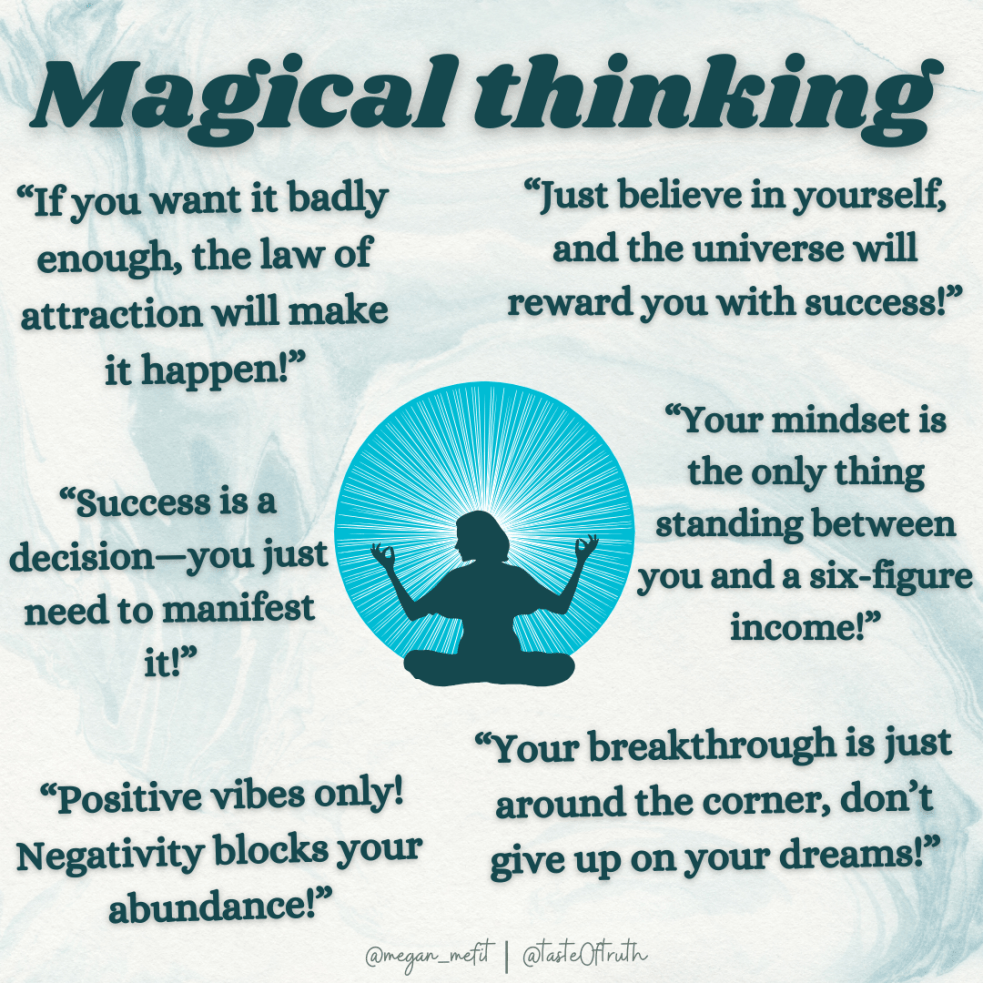
The critique, then, is not of hope or positivity per se, but of weaponized optimism. When mantras like let go and let God or just thinking positive to manifest it are used to shut down discernment, discourage action, or excuse exploitation, they cease to be spiritual tools and become instruments of control.

Nietzsche challenged us to look beyond systems that sanctify passivity, urging instead a confrontation with reality even when it is brutal. FitzPatrick’s work extends this challenge to the world of commerce: if we truly care about empowerment, we must be willing to see how belief systems can be manipulated for profit.

That’s why MLMs and the Law of Attraction deserve scrutiny. Not because they promise too much, but because they redirect responsibility away from unjust structures and onto the very people they exploit.


Coming Up: A Deeper Dive

Next week on the podcast, I’ll be speaking with Robert L. FitzPatrick, author of False Profits and one of the world’s leading experts on MLMs. With decades of research, FitzPatrick has testified in court cases exposing fraudulent MLM schemes and helped unravel the mechanisms behind these multi-billion-dollar operations. He’s seen firsthand how MLMs manipulate culture, co-opt spirituality, and turn belief itself into a product.

Stay tuned. This is a conversation about more than scams, it’s about the machinery of belief, and how it shapes our lives in ways we rarely see.

Taste0ftruth Tuesdays Previous blogs on MLMs

The MLM Illusion: Selling a Dream or a Trap?

Why MLMs Exploit Magical Thinking

Uncover how MLMs and high-control religions exploit narratives to control and isolate you

Lottery Odds vs MLM: Which Poses a Higher Financial Risk?

Previous Interviews:

Deconstructing Deception: MLMs, Exploitation & Online Influencers

From Serendipity to Scrutiny: The Truth Behind MLMs and Coercive Control

References/Suggested Reading

  • Byrne, Rhonda. The Secret. New York: Atria Books, 2006.
  • Eddy, Mary Baker. Science and Health with Key to the Scriptures. Boston: The Christian Science Publishing Society, 1875.
  • Emerson, Ralph Waldo. The Essential Writings of Ralph Waldo Emerson. Edited by Brooks Atkinson. New York: Modern Library, 2000.
  • FitzPatrick, Robert L. False Profits: Seeking Financial and Spiritual Deliverance in Multi-Level Marketing and Pyramid Schemes. Charlotte, NC: Herald Press, 1997.
  • FitzPatrick, Robert L. Ponzinomics: The Untold Story of Multi-Level Marketing. Charlotte, NC: Skyhorse Publishing, 2020.
  • Haidt, Jonathan. The Righteous Mind: Why Good People Are Divided by Politics and Religion. New York: Vintage Books, 2012.
  • Nietzsche, Friedrich. On the Genealogy of Morals. Edited by Walter Kaufmann. New York: Vintage Books, 1989 (originally published 1887).
  • Peale, Norman Vincent. Positive Thinking for a Time Like This. New York: Prentice-Hall, 1948.
  • Quimby, Phineas P. The Quimby Manuscripts. Edited by Horatio W. Dresser. New York: Thomas Y. Crowell, 1921.
  • Wallace, David Foster. “Consider the Lobster.” In Consider the Lobster and Other Essays. New York: Little, Brown, 2005. (Useful on consumer culture critique, if you want a modern edge.)

Reclaiming Critical Thinking in an Age of Narrative Warfare

How Media Manipulation and Pseudo-Intellectualism Are Undermining Independent Thought

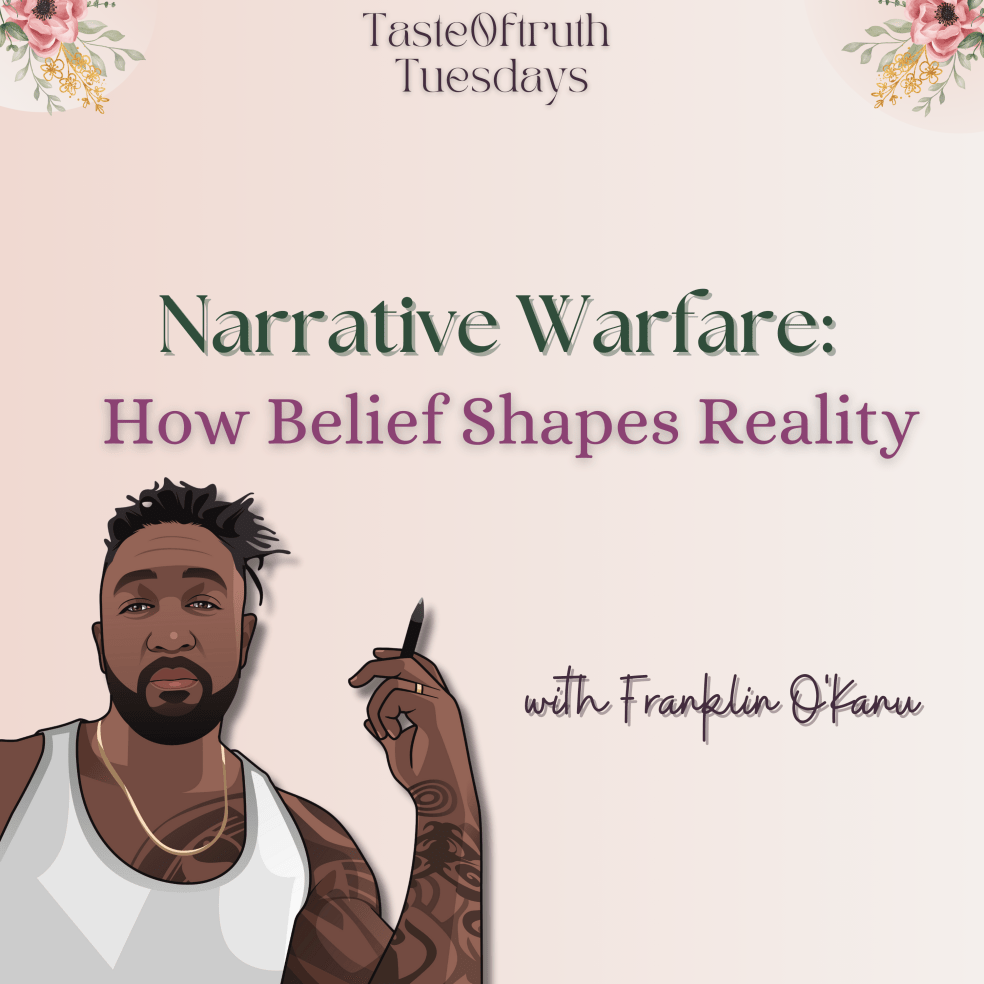
In today’s episode of Taste of Truth Tuesdays, I sit down with Franklin O’Kanu, also known as The Alchemik Pharmacist, to unpack one of the most pressing issues of our time: the erosion of critical thinking. Franklin, founder of Unorthodoxy, brings a unique perspective that bridges science, spirituality, and philosophy. Together, we explore how media narratives, pseudo-intellectualism, and societal conditioning have trained people to ignore their inner “Divine BS meter” and simply accept what they’re told.

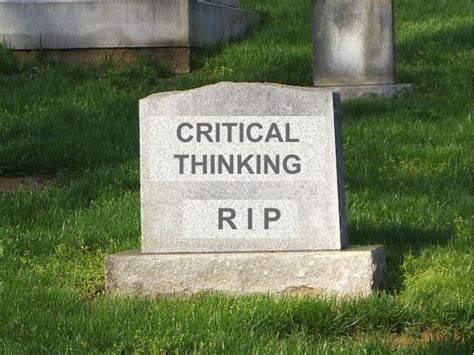
The Death of Critical Thinking

As Franklin points out, we’ve lost the ability to thoughtfully absorb and analyze information. The past few years have conditioned individuals to disregard anything that doesn’t align with mainstream sources, experts, or consensus. Instead of engaging with information critically, many have been taught to dismiss it outright. The result? A culture that values conformity over curiosity and blind acceptance over intellectual rigor.

We discuss how this shift has been accelerated by media bombardment, especially during the pandemic. The New York Times even published an article on critical thinking, but instead of encouraging intellectual engagement, it suggested that questioning mainstream narratives is dangerous. This is narrative warfare at its finest—manipulating public perception to ensure that only “approved” ideas are given legitimacy.

The Power of Narratives: How Ideological Echo Chambers Shape Reality

Franklin O’Kanu often cites James Corbett’s work on media’s role in shaping public perception as a major inspiration behind his Substack. Corbett’s central thesis is simple: narratives build realities—and whoever controls the dominant narrative controls public thought. Nowhere is this clearer than in the nihilistic messaging that dominates left-leaning social media platforms like Meta. The idea that humans are an irredeemable blight on the planet has been mainstreamed, despite evidence to the contrary.

This same unquestioning adherence to an ideological narrative played out during the pandemic with phrases like “Trust the science” and “Don’t do your own research.” I explored this trend in my Substack, particularly through the lens of so-called ‘cult expert’ Steven Hassan. Hassan built his career exposing ideological manipulation, branding himself as the foremost authority on cult mind control. But here’s the irony: while he calls out high-control religious groups, he seems completely blind to the cult-like tactics within his own political ideology.

Information Control: Censoring ‘Dangerous’ Ideas

Hassan’s BITE model—which stands for Behavior, Information, Thought, and Emotional control—is designed to help people recognize manipulation.

In cults, leaders dictate what information followers can access. The extreme left does the same.

  • Censorship of Opposing Views – Deplatforming, banning books, firing professors—if an idea threatens the ideology, it’s labeled “harmful” and shut down.
  • Historical Revisionism – Complex events are reframed to fit simplistic oppression narratives, ignoring inconvenient facts.
  • Selective Science – Only research that supports the ideology gets funding and visibility. Studies on biological sex differences, IQ variations, or alternative climate models? Silenced or retracted—not because they’re disproven, but because they’re inconvenient.
  • Discouraging Exposure to Counterarguments – Followers are taught that listening to the other side is “platforming hate” or “giving oxygen to fascism.”

This is exactly what happened when Franklin challenged the mainstream climate change narrative. The moment he questioned NetZero policies, he wasn’t just hit with the usual accusations: “climate denier,” “science denier,” and the ever-expanding list of ideological insults meant to discredit rather than debate, but he was blocked. This is how bad ideas survive—by shutting down the people who challenge them.

Franklin warns that if you’re not careful, these narratives can take you down a dark rabbit hole built on lies. Once an ideological framework is built around selective truth, it becomes a self-reinforcing system—one that punishes dissent and rewards conformity. And once you let someone else dictate what information is “safe” for you to consume, you’re already in the first stages of ideological capture.

The Rise of the Fake Intellectual

Platforms like Facebook/Instagram/YouTube have perfected the illusion of intellectual discourse while actively suppressing opposing voices. This has led to what Franklin calls the fake intellectual—individuals or organizations that present themselves as champions of knowledge but ultimately serve to shut down real dialogue.

Fake intellectuals don’t invite discussion; they police it. They rely on appeals to authority, groupthink, and censorship to maintain an illusion of correctness. True intellectualism, on the other hand, is rooted in curiosity, openness, and the willingness to engage with challenging perspectives.

Reclaiming Intellectual Integrity

One of the most powerful insights from our discussion is the role belief plays in shaping our world. Franklin warns that when we accept narratives without scrutiny, we risk being deceived. This applies across industries—medicine, science, finance, and even religion. These systems function because people believe in them, often without verifying their claims. But if we fail to question these narratives, we become passive participants in a game where only a select few control the rules.

So, how do we resist narrative warfare and reclaim critical thinking? Franklin suggests:

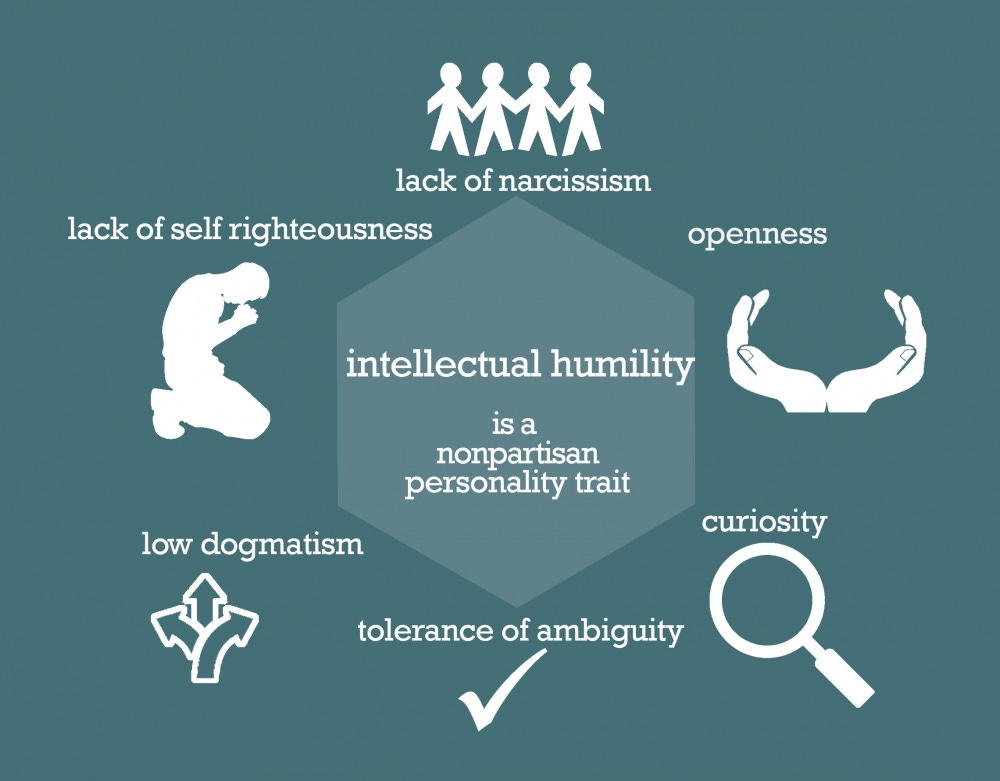
  • Cultivating intellectual humility—being open to the possibility that we might be wrong.
  • Recognizing media manipulation—understanding how information is curated to shape public perception.
  • Engaging with diverse perspectives—actively seeking out voices that challenge our beliefs.
  • Trusting our own discernment—developing the confidence to think independently instead of outsourcing our opinions to authority figures.

Franklin expands on this in his writings, particularly in his two articles, How to See the World and How to Train Your Mind. As he puts it, “We all have these voices in our heads. Philosophy is really just understanding the reality of the world, and there’s a principle in philosophy—keep things as simple as possible.” He breaks it down like this:

  • You are a soul. That’s the foundation. If every child grew up knowing this, it would change the way we see ourselves.
  • You have a body. Your body exists to experience the physical reality of the world.
  • You have a mind. Your mind is an information processor that collects input from your senses. But it also generates thoughts—sometimes helpful, sometimes misleading.

Franklin uses a simple example: Is my craving for ice cream coming from my body, my mind, or my soul? That question highlights the need to discern where our impulses originate. He extends this concept to online interactions: How many thoughts do we have just from seeing something online? How many narratives do we construct before our soul even has a chance to process reality?

Online spaces, Franklin argues, give rise to what he calls the “inner troll.”🧌 He connects this to the spiritual concept of demons—forces that seek to provoke, enrage, and divide. “Think about the term ‘troll,’” he says. “What is that, really? It’s an inner demon that gets let loose online. The internet makes it easy for our worst instincts to take over.”

So, what’s the antidote? Franklin emphasizes the importance of the pause. Before reacting to something online, before getting swept into outrage, take a step back. Ask: What is happening here? What am I feeling? Is this a real threat, or is my mind generating a reaction?

“It’s extremely hard to do online,” Franklin admits. “But when we practice stepping back, we can respond more humanely—more divinely. That’s the key to reclaiming critical thinking in a world that thrives on emotional manipulation.”

The digital age bombards us with narratives designed to capture our attention, manipulate our emotions, and direct our beliefs. But we are not powerless.

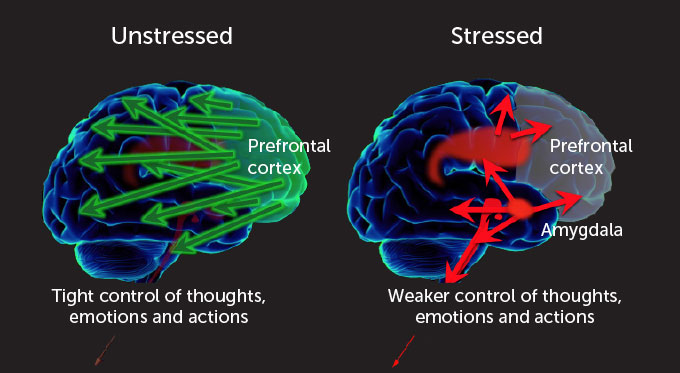
On an episode last season, we discussed a concept I learned from Dr. Greg Karris—something he calls narcissistic rage in fundamentalist ideologies. It helped me understand why people react so viscerally when their beliefs are challenged. My friend Jay described a similar idea as emotional hijacks, tying it to the amygdala’s response. This concept also appears in Emotional Intelligence 2.0 by Daniel Goleman and is expanded upon in Pete Walker’s Complex PTSD.

When the amygdala gets triggered—exactly what Franklin was describing—we have to learn to recognize the physical sensations that come with it. Elevated heart rate. Sweaty palms. That’s your body sounding the alarm. But in that moment, your prefrontal cortex—the part responsible for logic and rational thinking—is offline. Your biology is overriding your soul’s intention. And that’s why taking a step back is so crucial.

The best way to get your higher reasoning back online? Create space. Pause. Let the emotional surge settle before you engage. As simple as it sounds, it’s one of the hardest things to do. But in a world where reactionary thinking is the default, practicing this skill is an act of rebellion—and a path to reclaiming our intellectual and emotional sovereignty.


Next, Franklin and I dive into a pressing issue: The Coddling of the Mind in society—a theme I’ve explored numerous times on the podcast and in my blogs. Franklin brings up a fascinating point, saying, “One thing that’s happened with COVID, though it started before, is the softening of humanity. We’ve become so soft that you can’t say anything anymore. And what that’s done is pushed away true intellectual rigor. We used to be able to sit and share ideas, but now we’re obsessed with safe spaces. And this started on college campuses.”

Franklin’s observation taps into a broader cultural shift that has eroded the foundations of intellectual engagement. In the past, people could engage in discussions where the goal wasn’t necessarily to convince others, but to explore ideas, challenge assumptions, and learn. The push for safe spaces—often an attempt to shield individuals from discomfort or offense—has inadvertently led to the silencing of open debate. In this environment, people have become more focused on avoiding offense than on confronting difficult ideas or engaging in intellectual rigor. This dynamic, Franklin argues, has stripped away the very essence of what it means to debate, discuss, and learn.

This idea echoes themes explored in Gad Saad’s The Parasitic Mind, where Saad delves into how certain ideologies undermine intellectual diversity and critical thinking. Franklin builds on this, urging that true intellectual growth comes from understanding where someone is coming from, even if their views differ from your own. “Learn what happened to individuals to understand how they arrived at their conclusions,” he says. “Remove personal bias and avoid attacks. Only then can you critique the point effectively, offering counterpoints that strengthen both arguments and allow experiences from both sides to shine.” This approach, Franklin explains, fosters a more nuanced understanding of each other’s perspectives, allowing both sides to learn and grow rather than simply entrenched in opposing views.

This fragility encourages echo chambers and groupthink, where dissent is silenced, and alternative perspectives are rejected outright. Ironically, in the pursuit of empathy, freedom, and inclusivity, movements like deconstruction can end up mirroring the same intellectual and moral rigidity they sought to escape.

I could continue typing out the entire conversation, or you could just listen. 🙂

In an age where the appearance of truth is often prioritized over truth itself, our ability to think critically is more important than ever. This episode is an invitation to break free from intellectual complacency and reclaim the power of questioning.


Article mentioned in the interview:

Why Challenging Beliefs Feels Like a Personal Attack—And Why It Shouldn’t

From religion to politics, why deeply held beliefs trigger defensiveness, outrage, and even hostility—and how we can foster better conversations.

We all have seen how the internet seems to bring out everyone’s inner troll. 🧌

The moment a deeply held belief—whether religious or political—is questioned, people lash out with hostility, aggression, or outright rage. Why does this happen? Why do some people react as if their very identity is under attack?

This past summer, we sat down with Dr. Mark Gregory Karris to explore religious trauma, belief deconstruction, and the psychological grip of fundamentalist ideology.

This season on Taste of Truth, we have been expanding the conversation—because this isn’t just about religion. Political ideologies, social movements, and even scientific debates can trigger the same defensive responses.

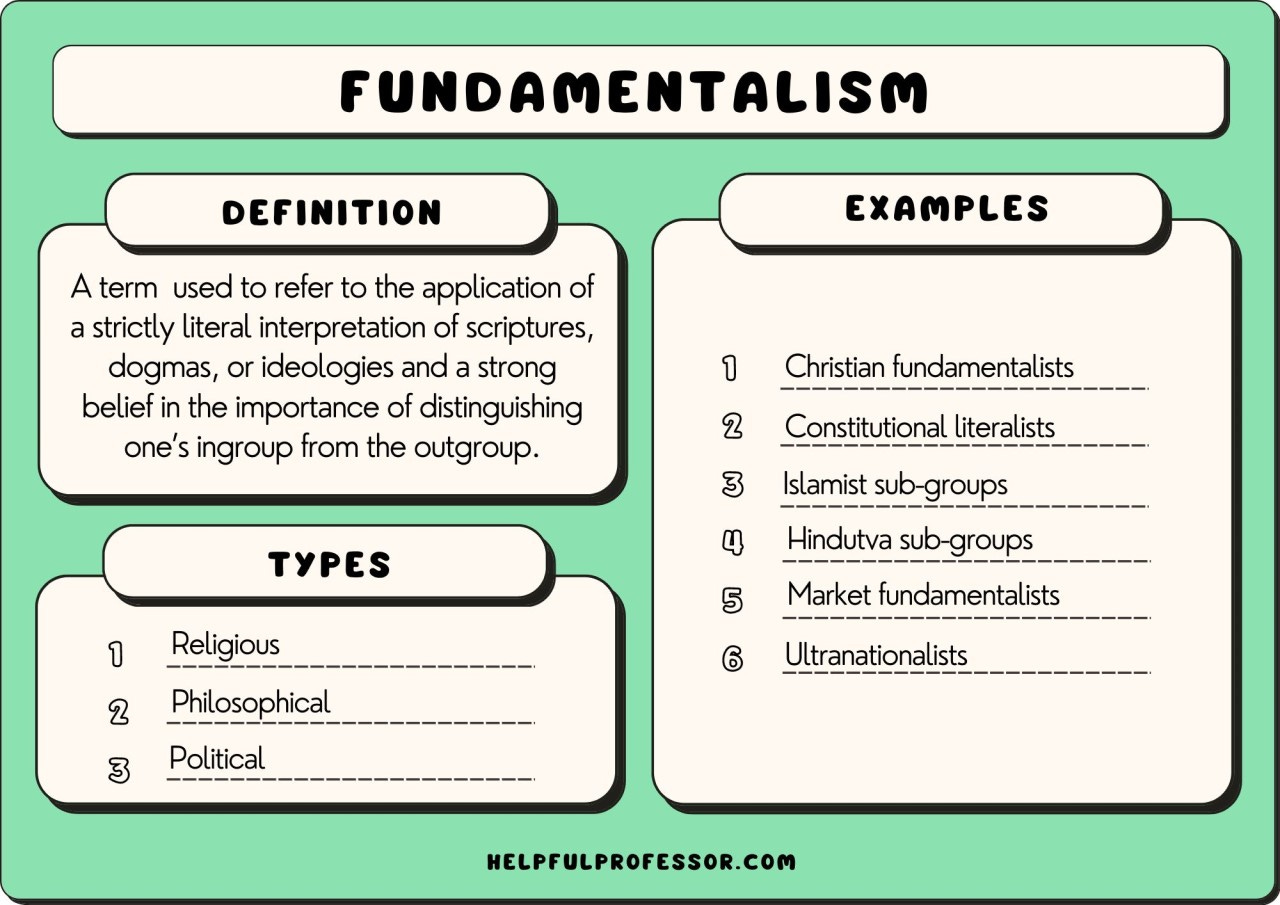
Fundamentalist thinking—whether in religion or politics—creates a fear-driven, us-vs-them mentality.

At its most basic, the allure of fundamentalism, whether religious or ideological, liberal or conservative, is that it provides an appealing order to things that are actually disorderly. -Peter Mountford

This hits at something crucial that I’ve written about numerous times before: the human brain craves order, even in the face of chaos. The illusion of control is a powerful psychological driver, and our brains reward it with dopamine. Fundamentalist thinking offers a structured, black-and-white framework that feels safe and predictable, making it incredibly appealing—especially in times of uncertainty. It’s why people cling even harder to rigid beliefs when they feel threatened. Whether in faith or politics, the need for certainty can override openness to new information, leading to the defensive reactions we see when those beliefs are questioned.

The moment someone questions the “truth,” it’s perceived as an existential threat, triggering anxiety, cognitive dissonance, and sometimes outright hostility.

Take a look at the patterns:

  • Verbal Attacks: When someone questions a core belief, the response can be insults, shouting, or belittling. For example, in religious circles, someone questioning doctrine might be labeled a heretic, while in political spaces, dissenters might be called traitors or bigots.
  • Social Ostracism: In both fundamentalist religious and political groups, those who challenge the status quo risk being shunned, excommunicated, or “canceled.” A former churchgoer who deconstructs their faith may be cut off from their community, just as someone who questions ideological orthodoxy in politics might lose social standing, friendships, or even career opportunities.
  • Online Harassment: Social media amplifies these reactions. Question a sacred political narrative? Expect dogpiling. Challenge a religious doctrine? Brace yourself for moral outrage. The internet rewards ideological purity and punishes deviation.
  • Physical Aggression: In extreme cases, questioning or challenging deeply held beliefs can escalate to threats or violence. History is littered with examples—holy wars, political purges, ideological revolutions—all stemming from the belief that certain ideas must be defended at any cost.

This isn’t just about bad behavior—it’s about psychology. When beliefs become intertwined with identity, disagreement feels like a personal attack. Fundamentalist teachings—whether religious or ideological—reinforce this by instilling fear of deviation:

  1. Fear of Deviation – Straying from the accepted belief system is framed as dangerous, whether it’s framed as spiritual damnation or societal collapse.
  2. Cognitive Dissonance – Encountering opposing viewpoints creates internal discomfort, making people double down rather than reconsider.
  3. Fear of Consequences – Whether it’s eternal hellfire or being cast out by one’s political tribe, the cost of questioning is framed as too high.
  4. Identity Threat – When beliefs define self-worth, changing one’s mind feels like losing a part of oneself.
  5. Social Pressure – Communities reinforce conformity, and breaking from the group’s ideology invites punishment.

When Morality Binds and Blinds

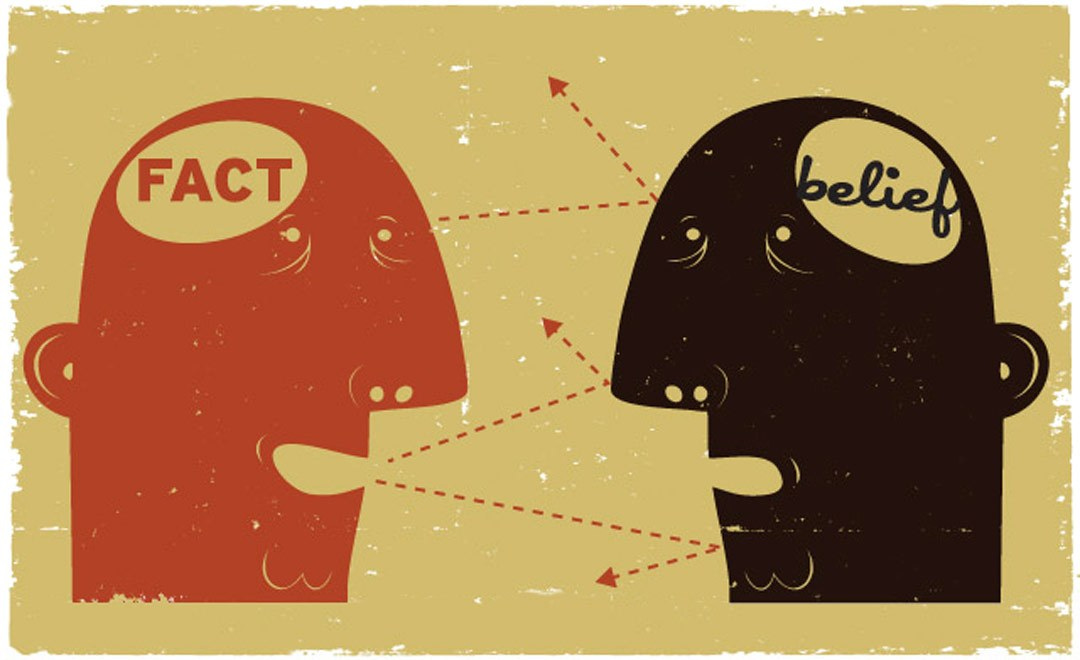
In The Righteous Mind, Jonathan Haidt explains how moral systems don’t just guide our sense of right and wrong—they also bind us to our tribes and blind us to opposing perspectives. Morality evolved not just to help individuals make ethical choices but to reinforce group cohesion. When we share a moral framework with others, it strengthens social bonds and builds trust. But there’s a cost: once we’re deeply embedded in a moral community—whether religious, political, or ideological—we stop seeing outside perspectives clearly.

This is why people react with such hostility when their beliefs are challenged. They aren’t just defending a set of ideas; they’re defending their sense of identity, belonging, and moral righteousness. A challenge to the belief feels like a challenge to the self—and to the entire group they’re part of.

This also explains why fundamentalist thinking isn’t confined to religion. Political movements, activist groups, and even secular ideologies can exhibit the same rigid certainty, group loyalty, and hostility toward outsiders. The more a belief system becomes tied to identity, the more resistant it is to change—and the more aggressive the response when it’s questioned.

The antidote? Intellectual humility. The ability to recognize that our beliefs, no matter how deeply held, might be flawed. That truth-seeking requires engaging with discomfort. That real conversations happen not when we dig in our heels but when we’re willing to ask, What if I’m wrong?

These dynamics explain why deconstruction—whether of faith or political ideology—often leads to intense backlash. It also reminds me of our conversation with Neil Van Leeuwen, author of Religion as Make-Believe. He pointed out that factual beliefs thrive on evidence, but religious and ideological beliefs function differently. When a belief becomes part of group identity, truth often takes a backseat. In fact, sometimes falsehoods serve the group better because they reinforce belonging.

To close down the conversation, let’s talk about healthy communities—whether religious, political, or social—embrace intellectual humility. Here’s what that looks like:

  • Open Dialogue: Encouraging respectful conversations where differing perspectives are explored rather than attacked.
  • Supportive Community: Allowing for questions, doubts, and evolving beliefs without fear of punishment.
  • Personal Reflection: Cultivating a mindset that prioritizes growth over ideological purity.
  • Interdisciplinary Engagement: Seeking insights from multiple fields rather than reinforcing an echo chamber.

By recognizing these patterns, we can navigate our own beliefs with more self-awareness and engage in discussions that foster curiosity rather than hostility. The question isn’t whether we hold tightly to certain beliefs—it’s whether we’re willing to interrogate why.

So, what’s one belief you’ve held onto tightly that you later questioned?

Let’s talk about it in the comments.

Season 3 of Taste of Truth Tuesdays: Launching December 31st

We’re back! After a transformative and eye-opening second season, I’m excited to announce that Season 3 of Taste of Truth Tuesdays will kick off on December 31st. (Audio says Jan 7th, which was the original start date, I bumped it up a week.) This season promises to be packed with even more riveting conversations and insightful discussions. We’re diving into the complexities of spirituality, healing, activism, mental health, body image, and the power dynamics that shape our lives.

Here’s a sneak peek at the incredible guests you’ll hear from in the upcoming season:


Connie A. Baker: Spiritual and Religious Abuse

Connie A. Baker brings her expertise and personal experience to discuss the destructive impacts of spiritually abusive messages. These messages often erode our self-trust, leaving us vulnerable to further harm. In our conversation, we’ll explore the process of recovering from spiritual abuse and why it’s essential not to rush this journey. Connie will help us understand how survivors—especially those of us with a default setting of ‘push through’—can slow down and approach the healing process with patience. This wisdom is invaluable for true recovery, and I can’t wait for you to hear Connie’s insights.


Yasmine Mohammed: Escaping Radical Islam and Advocating for Women’s Rights

Yasmine Mohammed, a human rights activist and author of Unveiled: How Western Liberals Empower Radical Islam, joins me to share her powerful story. After escaping a forced, abusive marriage to an Al-Qaeda operative, Yasmine became an advocate for women’s rights. Through her non-profit organization, Free Hearts, Free Minds, she works tirelessly to support individuals seeking freedom from oppressive environments. Her memoir and activism offer a deeply personal and courageous perspective on overcoming adversity and empowering women. Her journey is one of survival, strength, and defiance.


Leah Denton: Therapy Harm and Power Dynamics in Mental Health

Leah Denton, the brilliant host of Psycho/Therapy podcast, will bring her deep insights into the harm that can occur within the therapeutic space and pastoral counseling. Leah, a survivor of therapy harm herself, shines a light on the ethical and systemic flaws within the mental health industry. She amplifies the voices of those who’ve been silenced and challenges us to rethink the power dynamics that can influence our healing. Leah’s work is a powerful call to action for better, more ethical care in therapy and beyond.


The Wellbeing Doctors: Body Image and Social Media’s Impact on Mental Health

Dr. Hannah Jarman and Ms. Claudia Liu, the dynamic team behind The Wellbeing Doctors, will discuss the intersection of body image, disordered eating, and the profound impact that social media has on our mental health. In their research, they’ve uncovered how active engagement with peers on social media can immediately reduce body image satisfaction, particularly for women. Together, we’ll explore how we need to redefine both beauty and health in ways that promote our true well-being, beyond appearances.


Wellness with Jaqui: The Real Story Behind Nutrition Research

Jaqui is back to break down the often-confusing world of nutrition research. If you’ve ever been baffled by conflicting diet headlines, this episode is for you. Jaqui will help us understand why nutrition research can be so complex, and how ‘statistical significance’ might not always mean what we think it does. This episode will bring clarity to the world of nutrition science and challenge the headlines we often see.


Franklin O’Kanu: Bridging Science, Spirituality, and Practical Wisdom

Franklin O’Kanu, also known as The Alchemik Pharmacist, is the founder of Unorthodoxy, a Substack that explores the spiritual dimensions of modern life through a holistic lens. With a Doctorate in Pharmacy and a background that bridges Pentecostal Christianity, Eastern philosophies, quantum physics, and Jungian psychology, Franklin offers a truly unique perspective. We’ll dive into his journey—from challenging conventional views during the pandemic to crafting a plan rooted in spiritual and natural principles. Franklin’s exploration of science, spirituality, and practical wisdom is sure to offer deep insights and foster a deeper understanding of the world around us.


This season is going to be a wild ride, full of wisdom, courage, and deep dives into essential topics that will challenge and inspire you. Don’t miss out on the launch of Taste of Truth Tuesdays Season 3 on December 31st! Make sure you’re subscribed, so you never miss an episode.

Stay curious. Stay skeptical. And, as always, keep tuning in! 🎙️🔒

Understanding the Group Mind: A Double-Edged Sword

Navigating the waters of community can feel like a tightrope walk, especially for those of us who’ve been through the storm of spiritual abuse. This week on Taste of Truth Tuesdays, I’m excited to welcome a guest who dives deep into the concept of “Group Mind”—the idea that a collective can elevate individual voices, creating a harmonious collaboration. While this concept sounds beautiful on the surface, having walked the line between healthy and toxic communities myself, I can’t help but question: What happens when “Group Mind” becomes a vessel for manipulation rather than a source of strength?

The Allure of Community

Let’s face it: we all crave connection. From childhood friendships to spiritual gatherings, our lives are woven into a fabric of social interactions. In healthy communities, each thread—each individual—contributes to the larger tapestry. Group Mind can be empowering when everyone contributes their unique strengths. Think of a brainstorming session, where different ideas build on each other to create something innovative. But in controlling groups, individuality is suppressed, and members are pressured to conform, stifling creativity and critical thinking.

The Double-Edged Sword of Group Mind

Our guest shares their experience in an improv class, where the idea of Group Mind became both a revelation and a source of anxiety. It’s fascinating how the language of community can feel welcoming yet be weaponized against those who seek authenticity. This mirrors the complexities of modern social dynamics, especially in the age of social media, where radicalization can happen at lightning speed.

In Episode 5 of my podcast, we tackled the “crunchy hippie to alt-right pipeline,” but now it’s time to shine a light on the radicalization of the left—a topic often overlooked. Why did I go from progressive circles to mingling with Trump supporters and Christians? This shift was marked by a range of events and trends reflecting broader changes within progressive movements and their impact on American politics and culture.

The Irony of the Deconstruction Space

As I navigated the deconstruction space, I noticed something ironic: when the deconstruction movement defines a cult and unintentionally describes their own playbook, the irony is hard to miss. Many who now identify as progressive or left leaning have simply swapped one form of fundamentalism for another. They may have shed their evangelical past, but the same dogmatic, ‘us vs. them’ tactics remain. It’s like they never fully untangled themselves from the rigid mindset they claim to oppose.

Social justice has become their new ‘End Times,’ and the tribalism is painfully obvious. Conformity, consequences for stepping out of line, leaders who set the narrative… sound familiar? 🙃

🔍 “It’s not your enemies, it’s the system.” We often fall into the trap of seeing our political landscape as a battle between two sides—one fighting for democracy, the other autocracy. But this binary thinking misses the larger issue: who really has power in shaping policies? Research, like the 2014 study by Gilens and Page, reveals that economic elites and organized interest groups wield far more influence over government decisions than the average citizen or voter. This isn’t about a single party; it’s about a systemic challenge that transcends partisan lines. 🧠

Instead of feeding into divisive narratives, maybe it’s time to ask: Who benefits from keeping us divided? 🤔 Progressive politics can impose control using a power/victim binary that’s reductive and lacks nuance, leveraging the fear of being labeled an oppressor as a tool for compliance. Reflecting on my journey of deconstruction and exploring progressive spaces, I’ve noticed a concerning trend: the lack of nuance and the prevalence of an ‘us vs. them’ mentality.

Even within progressive Christianity, there’s pressure to conform to certain social norms and ethical behaviors. Disagreement is often met with resistance, and group identity politics can dominate discussions. As I listened to a friend lecture me about the systems of whiteness and how white people are part of the problem, I couldn’t help but feel a visceral response in my body. Wasn’t she aware of how she was marginalizing voices that do not align with CRT principles and fostering division rather than unity?

It’s one thing to leave behind a belief system, but if you’re still using the same control tactics, are you really free? Or are you just in another form of groupthink? Many who now identify as progressive or left-leaning have simply swapped one form of radicalism for another.

In navigating my journey, I’ve discovered that while community can be a source of strength, it can also be stifling. Let’s strive for more open dialogue where diverse perspectives are valued.

“I have a dream that my four little children will one day live in a nation where they will not be judged by the color of their skin but by the content of their character.” — Martin Luther King Jr.

Seeking Authentic Community

This brings us back to the concept of Group Mind. While it has the potential to uplift and unite, we must critically assess the communities we choose to engage with. Are they empowering our individuality, or are they reinforcing a new set of dogmas?

As we explore these themes in this week’s podcast episode, I invite you to reflect on your own experiences with community—whether online or offline. Are you in a space that nurtures your authentic self, or have you found yourself caught in another web of control? Let’s challenge ourselves to seek genuine connections that celebrate our uniqueness, rather than merely conforming to the expectations of a collective.

Navigating Community Dynamics

One critical takeaway from my own experiences and the stories shared by others is the importance of asking ourselves the right questions. When evaluating any community—whether it’s a religious group, a social circle, or even an improv class—we should reflect on whether we’re being encouraged to grow into our full selves or if we’re being pressured to shrink into submission.

Key Questions to Consider:

  • Am I celebrated for my unique contributions, or do I feel like a cog in the machine?
  • Is my voice heard and valued, or am I met with silence (or worse) when I express dissent?
  • Does this community expand my horizons, or does it confine me to a narrow worldview?

The Importance of Individuality

One of the most powerful realizations is that a thriving community doesn’t demand the extinction of individualism; it nourishes it. Just as the author of the guest post observed in an improv competition, the true beauty of collaboration lies in the ability of individuals to bring their full selves to the table, enhancing the group dynamic rather than diminishing it.

In my journey, I’ve learned that safe communities are those that not only say, “Yes!” to your ideas but also invite you to share more, to dig deeper, and to embrace the weirdness that makes you unique. They celebrate individuality as an essential ingredient for collective success, transforming “Group Mind” from a potential source of control into a powerful tool for creativity and support.

The Path to Healing

For those of us recovering from spiritual abuse, the journey to find a healthy community can feel daunting. It requires us to sift through the rubble of past experiences, recognizing patterns that once suffocated our voices. But it also offers a chance for healing, a space where we can reclaim our identities and forge connections based on respect and authenticity.

Ultimately, the quest for community is about more than just belonging; it’s about finding spaces where we can be our true selves. It’s about navigating the complexities of connection with our eyes wide open, ready to discern the difference between a supportive group and one that seeks to control.

Conclusion

As we move through life, let’s remember that community can be a double-edged sword. For some of us, especially those healing from trauma or navigating complex PTSD, the journey may be best supported by solitary pursuits—like books, pets, and podcasts—before stepping into the vibrant chaos of group dynamics. We must be vigilant in recognizing when connection serves us and when it threatens to silence our individuality. Here’s to seeking out those communities that empower us, uplift us, and invite us to shine our light—together.

The Convergence of Science, Religion, and Society: A Look at the Late 19th and Early 20th Centuries

The late 19th and early 20th centuries were a time of profound change, a period when the boundaries between science, religion, and society were continually reshaped. This era saw the emergence of groundbreaking technological innovations, the rise of new belief systems, and the popularization of ideas that were once considered fringe. These developments didn’t just redefine technological progress—they also deeply influenced the way people understood the world and their place in it. Let’s explore some of the key transformations that marked this fascinating period.

🏭 An Era of Transformation

The Second Industrial Revolution: Shaping the Modern World

The Second Industrial Revolution, which spanned from the late 19th to the early 20th century, was a time of explosive growth and innovation. The advent of new technologies and processes fundamentally changed industries and daily life. Key advancements included:

  • Steel Production: The Bessemer process revolutionized steel production, making it faster and more cost-effective. This development laid the groundwork for the expansion of railways, the construction of skyscrapers, and the growth of cities.
  • Electric Power: The introduction of electric lighting and power systems transformed urban landscapes, extending work hours and improving the quality of life in cities. Innovations in electrical engineering also paved the way for the modern electronics industry.
  • Mechanized Production: The rise of large-scale factories and mechanized production processes changed the face of manufacturing. These innovations increased productivity and lowered costs, contributing to the mass production of goods and the rise of consumer culture.

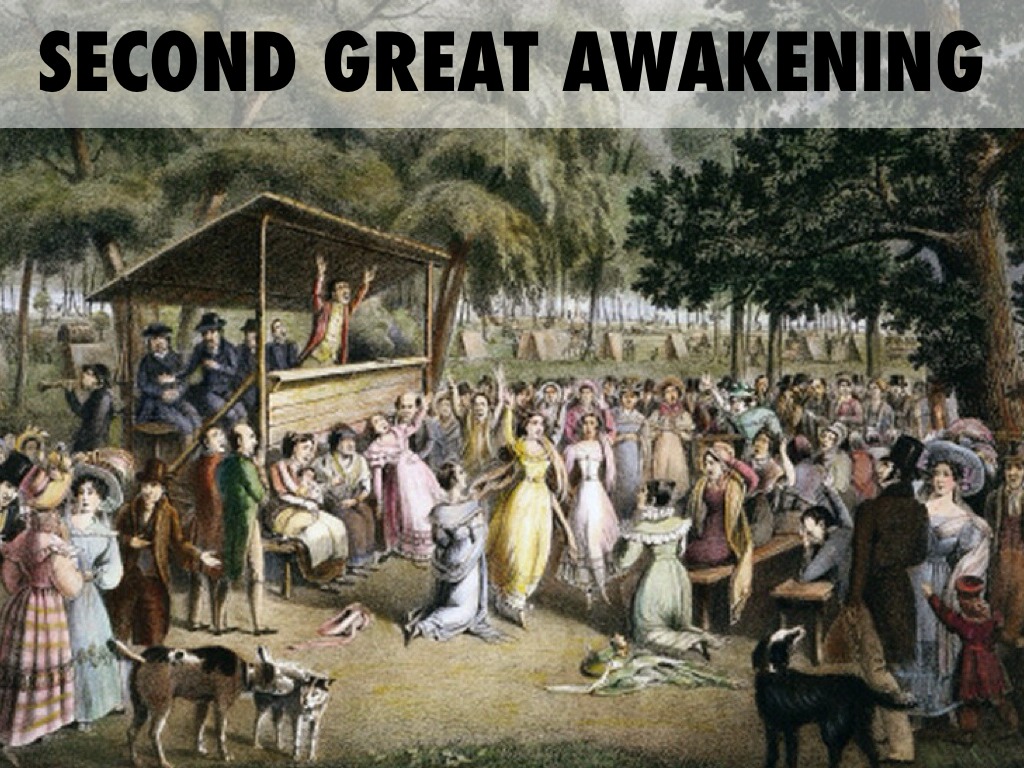
The Second Great Awakening: A Religious Revival with Social Impact

Running parallel to technological advancements was the Second Great Awakening, a religious revival movement that swept across the United States in the early 19th century. This movement was characterized by fervent enthusiasm, emotional sermons, and mass conversions. Key aspects include:

  • Personal Salvation: Leaders like Charles Finney emphasized personal salvation and a direct, emotional connection with God. This focus on individual spirituality led to the growth of various Christian denominations and movements.
  • Social Reform: The revivalist spirit of the Second Great Awakening also fueled social reform movements, including abolitionism, temperance, and women’s rights. Religious fervor became a driving force behind efforts to reshape society according to Christian principles.

The Intersection of Science and Religion

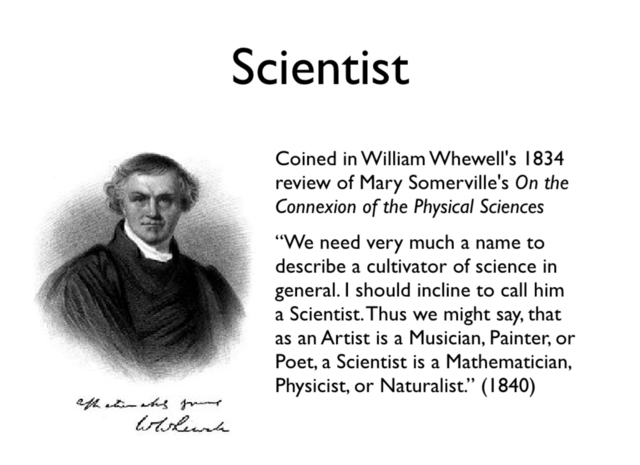
The Birth of the Scientist: A New Approach to Understanding the World

The term “scientist” was first coined by philosopher William Whewell in 1833, marking a significant shift in how knowledge was pursued. This period saw the establishment of scientific societies and the professionalization of research, laying the foundation for modern science. Key developments included:

  • Systematic Inquiry: The emergence of the “scientist” as a distinct profession reflected a growing commitment to systematic, empirical methods for understanding the natural world. This approach contrasted with earlier, more philosophical or speculative methods of inquiry.
  • Scientific Societies: The formation of scientific societies provided a platform for the exchange of ideas and the dissemination of research. These organizations played a crucial role in advancing scientific knowledge and fostering collaboration among researchers.

Charles Darwin’s Evolutionary Theory: A Paradigm Shift

One of the most significant scientific developments of this era was the publication of Charles Darwin’s On the Origin of Species in 1859. Darwin’s theory of natural selection revolutionized biology and had profound implications for religion and society. Key points include:

  • Natural Selection: Darwin proposed that species evolve over time through a process of natural selection, where organisms better adapted to their environment are more likely to survive and reproduce. This theory challenged traditional creationist views and sparked intense debate.
  • Impact on Religion: Darwin’s work provoked significant controversy, particularly among religious communities. The idea that life could evolve without direct divine intervention challenged established religious doctrines and forced a reevaluation of the relationship between science and faith.

A Period of Dynamic Change

The late 19th and early 20th centuries were a time of dynamic change, where the interplay between technological progress, religious revival, and scientific discovery reshaped society in profound ways. The advancements and debates of this era laid the groundwork for many of the intellectual and cultural developments that continue to influence us today. As we reflect on this period, it’s clear that the convergence of science, religion, and society was not just a backdrop to history—it was a driving force that shaped the modern world.

Crisco and the Industrialization of Food: A Public Health Dilemma

David Wesson’s Innovations: Paving the Way for Processed Fats

Before Crisco became a household name, a critical innovation by chemist David Wesson set the stage for the transformation of cottonseed oil into a viable commercial product. Wesson developed industrial bleaching and deodorizing techniques that removed impurities and odors from cottonseed oil, making it suitable for consumption. These innovations turned what was once considered a waste byproduct of the cotton industry into a popular ingredient in processed foods.

  • The Transformation of Cottonseed Oil: Prior to Wesson’s advancements, cottonseed oil was largely discarded due to its unpleasant taste and smell. However, his techniques made it possible to produce a neutral-tasting oil, paving the way for its widespread use in cooking and food manufacturing. This not only provided a new revenue stream for the cotton industry but also introduced a new type of fat into the American diet.
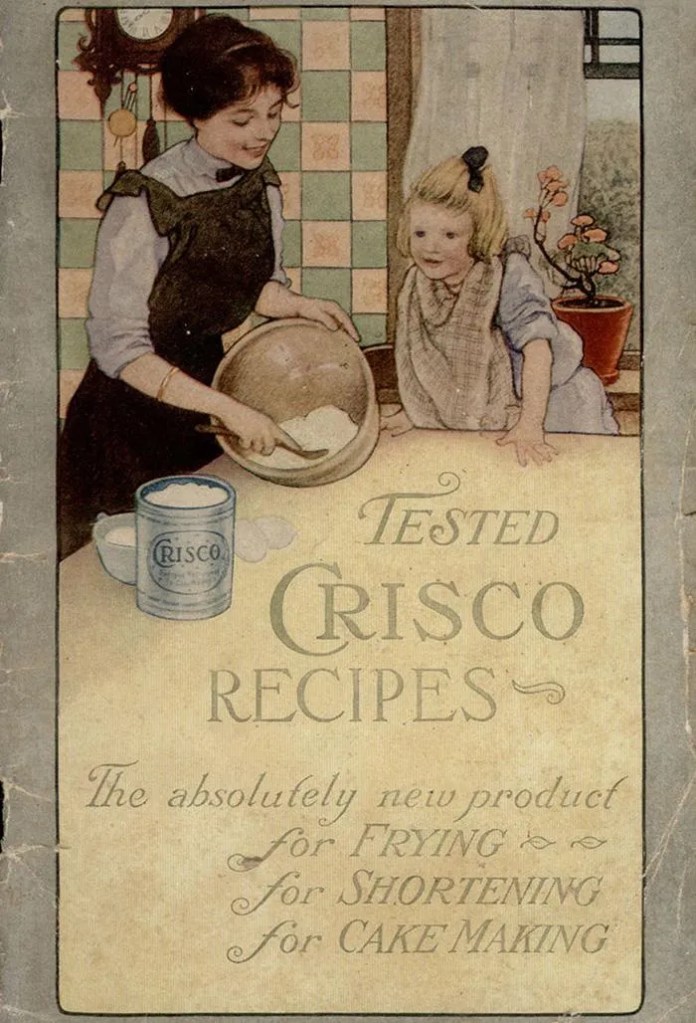
  • Setting the Stage for Crisco: Wesson’s innovations in refining cottonseed oil directly influenced the creation of Crisco. In 1911, Procter & Gamble capitalized on this now-viable oil by using it as the base for their new product, Crisco, the first hydrogenated vegetable oil. Crisco was marketed as a cleaner, healthier alternative to traditional animal fats, further embedding processed fats into the American diet.

of nutrition.

The Flexner Report: Redefining Medical Education and Marginalizing Nutrition

The Medicalization of Health

In 1910, Abraham Flexner, an educator commissioned by the Carnegie Foundation, published a report that would fundamentally reshape medical education in the United States. The Flexner Report criticized the state of medical schools at the time, advocating for a more scientific and rigorous approach to medical training. While this led to significant improvements in the quality of medical education, it also had unintended consequences that continue to affect the healthcare system today.

  • Pharmaceutical Focus: One of the key outcomes of the Flexner Report was the shift towards a model of medical education that heavily emphasized pharmaceutical treatments and the biomedical approach to disease. This focus on treating symptoms with drugs often sidelined other aspects of health, such as nutrition, lifestyle, and preventive care.
  • Marginalization of Nutrition: As medical education became more specialized and disease-focused, the role of nutrition in maintaining health was increasingly neglected. The curriculum in medical schools began to prioritize pharmacology and surgery over dietary interventions and holistic approaches to health. This trend has persisted, contributing to a healthcare system that often overlooks the importance of nutrition in preventing and managing chronic diseases.
  • Lasting Impact: The legacy of the Flexner Report is still evident in today’s healthcare system, where physicians receive minimal training in nutrition and preventive care. This has led to a disconnect between the medical profession and the growing body of evidence supporting the role of diet and lifestyle in health. Patients often find that their doctors are more likely to prescribe medication than to offer dietary advice, perpetuating a cycle where symptoms are treated rather than underlying causes.

Rockefeller’s Indirect Role in Crisco’s Creation

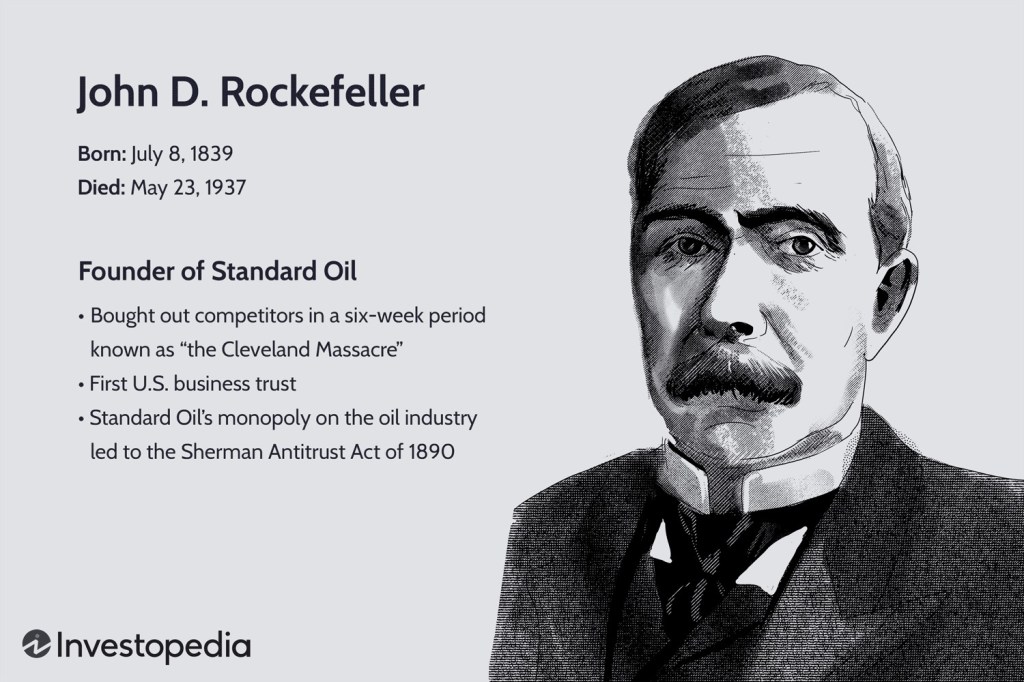
One of Rockefeller’s lesser-known ventures was cottonseed oil. Standard Oil was involved in refining oil, and as the company expanded, it ventured into agricultural byproducts like cottonseed oil, which had ties to industrial processes similar to those used in petroleum refining. Rockefeller’s influence in the oil refining industry paved the way for technologies that would later be used in the food industry, such as hydrogenation. Hydrogenation is a process that was originally developed in the oil industry—primarily petroleum.

Crisco and the Industrialization of Food: A Public Health Dilemma

The Rise of Crisco: From Industry to Kitchen

Just a year after the publication of the Flexner Report, Procter & Gamble introduced Crisco, a revolutionary new product that would transform the American diet. Crisco was the first hydrogenated vegetable oil, created through a process that turned cottonseed oil—a byproduct of the cotton industry—into a solid, shelf-stable fat. Marketed as a cleaner, healthier alternative to animal fats like lard and butter, Crisco quickly became a staple in kitchens across the country.

  • Industrialization of Food: Crisco’s success marked a significant step in the industrialization of the food supply. It was one of the first mass-produced food products that relied on industrial processes to create something entirely new, rather than simply refining or preserving traditional foods. This innovation paved the way for the widespread use of processed foods, which today dominate the American diet.
  • The Introduction of Trans Fats: The hydrogenation process that created Crisco also produced trans fats, which were largely unknown to the public at the time. For decades, trans fats were used extensively in processed foods due to their stability and low cost. However, research eventually revealed that trans fats are highly detrimental to health, significantly increasing the risk of heart disease, stroke, and other chronic conditions.
  • Public Health Consequences: The widespread adoption of Crisco and other hydrogenated oils contributed to a dramatic shift in the American diet, away from natural fats and towards processed, industrially produced fats. This shift has been linked to the rise in obesity, cardiovascular disease, and other diet-related health issues that continue to plague the population today.

The intersection of industry, medicine, and nutrition in the early 20th century had profound and lasting impacts on public health. Two significant events—the publication of the Flexner Report in 1910 and the introduction of Crisco in 1911—played pivotal roles in shaping the way we approach food, health, and medicine. These influences continue to resonate in modern healthcare and nutrition science, often to the detriment of public health. Let’s explore how these developments unfolded and the lasting effects they’ve had on our understanding of nutrition.

The Impact of Historical Influences on Nutrition: How the Flexner Report and Crisco Reshaped Public Health

The intersection of industry, medicine, and nutrition in the early 20th century had profound and lasting impacts on public health. Two significant events—the publication of the Flexner Report in 1910 and the introduction of Crisco in 1911—played pivotal roles in shaping the way we approach food, health, and medicine. These influences continue to resonate in modern healthcare and nutrition science, often to the detriment of public health.

The Influence of Religious Movements on Nutrition

Seventh-Day Adventism and Nutritional Reform

The Seventh-Day Adventist Church, founded in the mid-19th century, had a profound impact on American dietary practices. Ellen G. White, a key figure in the church, advocated for dietary restrictions based on her religious beliefs. Her recommendations included vegetarianism, the avoidance of stimulants like caffeine and alcohol, and a focus on holistic health. These recommendations were driven by religious beliefs rather than scientific evidence, leading to misleading dietary practices and a restrictive diet culture rather than genuinely beneficial health habits.

Her health reforms, which emphasized vegetarianism and whole foods, were institutionalized through health institutions like the Battle Creek Sanitarium and figures like Dr. John Harvey Kellogg. The sanitarium’s success and the dissemination of these dietary principles led to the establishment of the American Dietetic Association in 1917, which originally promoted many of these plant-based, whole-food principles. The Adventist emphasis on preventive health care and diet principles laid the groundwork for many modern dietary guidelines and continue to influence discussions around veganism.

Sylvester Graham and the Health Food Movement: A Critical Perspective

Sylvester Graham, a key figure in early American health reform, is often remembered for his influence on the health food movement and the creation of the Graham cracker. However, his dietary principles were deeply intertwined with his moral and religious views, particularly his beliefs about suppressing sexual urges.

The Man Behind the Movement

Sylvester Graham (1794–1851) was a Presbyterian minister whose health reform efforts were driven by more than just a desire for better nutrition. His dietary recommendations were rooted in his belief that physical health was closely linked to moral and spiritual purity. Graham’s ideas were based on the notion that a simpler diet, free from stimulants like caffeine and alcohol, would not only improve physical health but also help suppress sexual desires, which he and his contemporaries saw as a moral failing.

Dietary Principles and Moral Agenda

Graham’s health principles included:

  • Vegetarianism: He promoted a diet free from meat, believing it would enhance both physical health and moral restraint.
  • Avoidance of Stimulants: He advised against consuming caffeine and alcohol, which he associated with negative moral and physical effects.
  • Simplicity and Moderation: His diet emphasized plain, unprocessed foods and self-restraint.

Graham’s dietary reforms were part of a broader attempt to control what he saw as unhealthy and immoral behavior. He believed that a disciplined diet would help curb sexual urges, which he viewed as a major threat to individual and societal purity.

The Graham Cracker: A Tool for Reform

The Graham cracker, a product of Graham’s dietary reform, was created with the intention of supporting digestive health and satisfying cravings in a morally acceptable way. While it has become a popular snack, its creation was driven by Graham’s broader health and moral agenda. The cracker was designed to be a healthful alternative to more stimulating and indulgent foods.

Graham’s dietary principles were part of a larger movement that sought to reform not just food habits but also moral behavior. His ideas reflected a concern with maintaining moral purity through dietary control, a concept that influenced various health reform efforts of the time. However, it’s important to recognize that many of Graham’s claims were not based on rigorous scientific evidence but rather on his own beliefs and the prevailing moral attitudes of his era.

While Graham’s advocacy for dietary reform contributed to the development of health foods and the broader health movement, his ideas were also deeply entwined with his attempts to control sexual behavior. This connection reflects a historical context where dietary practices were often used as a means of enforcing moral and social norms.

The Graham cracker, though still a common snack, serves as a reminder of the complex interplay between health reform and moral ideologies. Today, it’s essential to approach such historical figures with a critical understanding of how their personal beliefs influenced their recommendations.

Sylvester Graham’s impact on the health food movement was significant, but it was also rooted in a broader moral agenda that sought to suppress sexual urges through dietary control. While his ideas helped shape dietary practices and health food development, they were not always grounded in scientific evidence. By understanding the historical context of Graham’s work, we can better appreciate the evolution of dietary reform and the need for evidence-based approaches to health.

Learning from History: Integrating Nutrition into Modern Health Practices

The historical narratives of the Flexner Report, Crisco, and influential dietary movements like Seventh-Day Adventism reveal the intricate connections between industry, religion, and health. The Flexner Report’s emphasis on pharmaceuticals and Crisco’s promotion of processed fats underscores significant shifts in health practices that have had lasting impacts on public health.

A Shift in Priorities: The Flexner Report’s focus on pharmaceuticals often came at the expense of a more holistic understanding of health, one that includes nutrition and lifestyle as key components. Similarly, the industrialization of food, exemplified by Crisco, introduced dietary patterns that are now recognized as harmful.

Learning from History: As we continue to navigate challenges in nutrition and healthcare, it’s crucial to reintegrate a holistic approach to health that includes both nutrition and preventive care. Recognizing the historical impacts of these developments helps us advocate for a healthcare system that values comprehensive care and a food industry that prioritizes public health over profit.

Reclaiming Health Through Nutrition

Ellen G. White’s health reforms, emphasizing vegetarianism and whole foods, were institutionalized by the Battle Creek Sanitarium and figures like Dr. John Harvey Kellogg. This led to the 1917 founding of the American Dietetic Association, initially promoting these principles. Meanwhile, the Flexner Report and Crisco’s introduction highlight historical forces shaping health and nutrition. These events underscore the need for a holistic health approach that integrates nutrition and addresses industrialization’s impacts. Moving forward, it’s crucial to advocate for a healthcare system focused on preventive care and a food industry that prioritizes public health.

As we wrap up our exploration of conspiracy chronicles this week, we’ve uncovered how the 20th century marked a pivotal shift in the rise of political paranoia and corporate influence. Powerful corporations, fueled by rapid technological and social changes during the Second Industrial Revolution, began to wield unprecedented control. From the Fletcher Report to the invention of Crisco and Ancel Keys’ flawed dietary research, lobbying and payoffs set the stage for policies that still impact public health today.

In fact, a 2020 study revealed that 95% of members on the Dietary Guidelines Advisory Committee have conflicts of interest with industry giants like Kellogg, General Mills, Kraft, and Dannon. These ties, whether through research funding or board memberships, call into question the impartiality of public health recommendations. With corporate agendas deeply embedded in sectors like food and pharmaceuticals, the guidelines shaping what we eat are under scrutiny, reminding us that the influence of these forces remains a pressing issue. Read more here.

📚 Further Reading

Dive deeper into these captivating topics with these resources:

Explore these intriguing developments and see how they continue to shape our understanding of health, religion, and science today. 🌟

If you’re looking to explore the topic of conflicts of interest in the U.S. food system, including the influence of corporate lobbying on dietary guidelines and public health, here are some credible resources:

  1. Marion Nestle’s Work
    Marion Nestle, a renowned nutritionist and public health advocate, has extensively written about the politics of food and how corporate interests shape food policies. Her book “Food Politics: How the Food Industry Influences Nutrition and Health” is a foundational resource that explores conflicts of interest in detail. She has also published several articles and blog posts that can be found on her website, Food Politics.
  2. The Center for Science in the Public Interest (CSPI)
    CSPI is a non-profit organization that advocates for public health and transparency in the food industry. They regularly publish reports and articles on how industry lobbyists influence dietary guidelines and public health policies. Visit their site for comprehensive resources: CSPI.
  3. The Journal of the American Medical Association (JAMA)
    JAMA has published several peer-reviewed articles on the conflicts of interest within the committees that develop dietary guidelines. You can access these studies through JAMA.
  4. The Union of Concerned Scientists (UCS)
    UCS focuses on the intersection of science, policy, and industry influence, and they have published reports on the food industry’s role in shaping guidelines. You can find their reports here: UCS Food System Work.
  5. Robert F. Kennedy Jr.’s Health Freedom Platform
    RFK Jr.’s organization, Children’s Health Defense, provides reports and articles on corporate influence in healthcare and the food system. While this source may reflect RFK Jr.’s specific views, it offers insights into his arguments and data regarding industry control. Children’s Health Defense.

🏷️ Tags

#saturatedfat #nutrition #podcast #fitness #conspiracies #nutritionhistory #historylesson #funfacts

The Deceptive Allure of “Before and After” Photos: A Parallel to Spiritual Testimonies

Today, let’s talk about the deceptive allure of “before and after” photos in the fitness industry—and draw a parallel to how spiritual testimonies can also manipulate emotions and perceptions.

The Fitness Industry’s “Before and After” Photos

In the fitness world, “before and after” transformations are marketed as proof of the efficacy of programs and products. These photos promise more than physical change; they sell a narrative of personal triumph over adversity. But behind these glossy images lie often overlooked truths: strategic lighting, posing, and digital enhancements that create an illusion of rapid, effortless transformation. This manipulation plays on our desire for quick fixes and can leave us feeling inadequate when our own progress doesn’t mirror these idealized images.

Many fitness marketers use various tricks to enhance these photos, such as manipulating lighting, posture, and even the time between shots. Sometimes, the “before” photo might be taken in the morning and the “after” photo later the same day, with the person tanned, flexed, and using better lighting. Studies have shown that such photos can significantly influence people’s perceptions and motivations, often leading to unrealistic expectations and disappointment​ (Trainer Josh)​​ (Visual Culture)​.

The Emotional Manipulation of Spiritual Testimonies

Similarly, spiritual testimonies often follow a formulaic structure designed to evoke specific emotional responses. They typically begin with a depiction of a troubled past—perhaps addiction, loss, or despair—followed by a dramatic turning point: a moment of conversion or spiritual awakening. These stories, while often sincere, can omit the complexities and doubts that accompany genuine spiritual journeys. They paint a picture of faith that is pristine and unwavering, reinforcing the belief that divine intervention leads to miraculous change.

I’m eager to explore a phenomenon that emerged in Summer 2022: “Not So Secret Societies.” This podcast intertwined QAnon conspiracies with Christianity, making waves in spiritual communities. One of the hosts, Kara, bravely shared her testimony of converting from New Age spirituality, where she encountered spirits as a medium. Her journey to embracing Jesus was emotional, filled with tears, and profoundly impactful. Many of us listening felt convicted, realizing the spiritual implications and our own paths.

Join me as we unpack these complex intersections and reflect on the profound shifts in belief and perception. Let’s delve into how narratives on social media can reshape worldviews and influence personal journeys.

Understanding the Emotional Impact

Kara’s testimony likely resonated deeply due to its emotional narrative of spiritual transformation—from New Age spirituality to Christianity. Testimonies often appeal to emotions and personal experiences, making them powerful tools for persuasion. Stories like this appeal to emotions by highlighting profound experiences and struggles, which can resonate deeply with listeners seeking meaning or spiritual fulfillment.

The narrative of converting from New Age beliefs, where spiritual entities are often seen positively or neutrally, to Christianity, where demons are viewed as real and malevolent, creates a stark contrast. This binary worldview can lead listeners to feel they must choose between good (Jesus) and evil (Satan).

Joining a group like Not-So-Secret Societies, which merges QAnon conspiracy theories with Christianity, can create a sense of belonging and purpose. Kara’s testimony might have reinforced group identity by framing her conversion as a rejection of perceived darkness and alignment with a community of light-bearers.

Psychological Mechanisms at Play

Cognitive Dissonance: Kara’s story may have triggered cognitive dissonance in listeners who resonated with her previous beliefs in New Age spirituality. This discomfort can drive individuals to align with her new perspective on Christianity to resolve conflicting beliefs.

Confirmation Bias: Listeners may selectively interpret information that supports Kara’s narrative, reinforcing their own beliefs while discounting contradictory evidence.

Psychological Vulnerabilities and Exploitation

Vulnerabilities in Seekers:

  • Existential Uncertainty: Many individuals experience periods of questioning and uncertainty about life’s meaning and their place in the world. Narratives like Kara’s offer a clear path and sense of purpose, which can be appealing during times of existential crisis.
  • Emotional Needs: Feelings of loneliness, isolation, or a lack of community drive individuals to seek belonging and acceptance. Conversion stories often promise a supportive community and emotional fulfillment.
  • Desire for Spiritual Fulfillment: Some seekers may feel spiritually unfulfilled or disconnected from their current beliefs, prompting them to explore alternative spiritual paths that offer a deeper sense of connection or transcendence.

Exploitation by Manipulative Tactics:

  • Emotional Manipulation: Conversion narratives often leverage emotional storytelling to evoke sympathy, empathy, or fear. By presenting a dramatic transformation from darkness to light, storytellers appeal to listeners’ emotions and foster a sense of urgency to follow suit.
  • Fear-Based Messaging: Some narratives use fear tactics, suggesting dire consequences for not embracing the presented belief system. This can create a sense of vulnerability and heighten the perceived importance of making a decision.
  • Promises of Belonging and Acceptance: Groups like Not So Secret Societies capitalize on the human need for community by promising acceptance and belonging to those who adopt their beliefs. This can be particularly compelling for individuals who feel marginalized or disconnected from mainstream society.

Recognizing Manipulative Tactics

Selective Storytelling: Narratives like Kara’s often present a selective portrayal of personal experiences to support a specific worldview. Encourage listeners to look for missing perspectives or contradictory evidence that may be omitted.

Appeals to Emotion: Emotional appeals can cloud judgment and hinder rational decision-making. By recognizing emotional manipulation tactics, individuals can maintain objectivity and evaluate information more critically.

Community and Identity Formation

Joining groups like Not So Secret Societies offers a sense of belonging and community based on shared beliefs and experiences. Kara’s story likely strengthened group identity by framing her conversion as a move towards spiritual enlightenment and away from perceived darkness.

Exploring the Broader Implications

Social Media’s Role in Recruitment: Podcasts and social media platforms amplify narratives like Kara’s, reaching a wide audience quickly and effectively. Algorithms and sharing mechanisms on platforms can contribute to the virality of compelling stories, enhancing their influence. Online communities, including those blending conspiracy theories with spirituality, create echo chambers where members reinforce each other’s beliefs. Exposure to consistent messaging can solidify beliefs and increase susceptibility to ideological conformity.

Ethical and Moral Dimensions: Consider the ethical implications of blending religious conversion narratives with conspiracy theories. How do these narratives shape individuals’ perceptions of reality and influence their behaviors? Combining religious conversion narratives with conspiracy theories raises ethical concerns about misinformation, manipulation, and the impact on individual autonomy. It prompts discussions about the responsibilities of content creators and platforms in promoting critical thinking and fact-checking.

Cultural and Societal Context

Cultural Shifts and Crisis Narratives: Consider how broader cultural shifts, such as societal crises or rapid technological changes, contribute to the appeal of narratives that promise clarity and certainty in uncertain times.

  • Societal Instability: During periods of societal upheaval or rapid change, individuals may seek stability and certainty in their beliefs. Conversion narratives that promise clarity and moral absolutes can provide a sense of security amid uncertainty.
  • Technological Advancements: The rise of social media and digital communication platforms has democratized information dissemination but also facilitated the rapid spread of ideological content. Narratives can gain traction quickly and reach a global audience almost instantly.

Historical Precedents:

  • Religious Revivals: Throughout history, religious revivals and spiritual movements have often been sparked by charismatic leaders or compelling testimonies of personal transformation. These movements have shaped public discourse and influenced societal norms.
  • Political and Social Movements: Ideological movements, whether religious, political, or cultural, have historically used persuasive narratives to mobilize followers and challenge existing social structures. Understanding historical parallels can provide insights into current trends.

Media Literacy and Critical Thinking

Promoting Media Literacy:

  • Fact-Checking and Source Evaluation: Encourage listeners to critically evaluate the credibility of sources and information presented online. Teaching fact-checking skills empowers individuals to distinguish between reliable information and misinformation.
  • Questioning Assumptions: Emphasize the importance of questioning assumptions and biases when consuming media. Critical thinking involves examining underlying motivations and potential agendas behind persuasive narratives.

Long-term Impacts and Responsibilities

Impact on Individual Beliefs:

  • Worldview and Identity Formation: Exposure to persuasive narratives can shape individuals’ beliefs and identities over time. Conversion stories may influence how individuals perceive themselves and their place in society, impacting their values and behaviors.
  • Psychological Well-being: Consider the potential psychological effects of adopting new belief systems based on persuasive narratives. Individuals may experience cognitive dissonance or emotional distress if their beliefs conflict with their previous worldview.

Responsibilities of Content Creators:

  • Ethical Guidelines: Content creators, influencers, and platforms have a responsibility to uphold ethical standards in content creation and dissemination. This includes transparency about sources, avoiding misleading or exaggerated claims, and respecting the diversity of beliefs and perspectives.
  • Promoting Critical Awareness: Encourage content creators to promote critical awareness among their audiences. This involves fostering open dialogue, encouraging respectful debate, and acknowledging the complexity of social and ideological issues.

Conclusion and Call to Action

Encouraging Dialogue:

  • Open Discussion: Foster open dialogue among listeners about the impact of persuasive narratives and the role of social media in shaping beliefs. Encourage respectful debate and exchange of ideas across ideological divides.
  • Community Engagement: Promote community engagement as a means of supporting individuals who may be questioning or reevaluating their beliefs. Provide resources for further exploration and encourage listeners to seek diverse perspectives.

Personal Reflection:

  • Critical Self-reflection: Spend time thinking of your own susceptibility to persuasive narratives and ideological influences. Encourage them to cultivate critical thinking skills and

Beyond Dogma: Wellness & Religion’s Striking Parallels

Welcome back to Taste0ftruth Tuesdays Wellness Warriors and truth seekers!

Listen here 🎧

Fundamentalist thinking doesn’t just reside in religious circles—it also permeates wellness and healing spaces. Just as high-control religions exploit human vulnerability, so does diet culture.

I’ve had my share of blindly following extreme health regimens recommended by practitioners, ignoring my own discomfort along the way. It became clear that fundamentalism can crop up in various aspects of life, and part of healing is about recognizing and addressing these tendencies within us.

High control religion and diet culture both capitalize on the brain’s tendency to interpret things in a binary black-and-white manner by presenting clear-cut rules, guidelines, and belief systems that simplify complex issues into easy-to-follow directives.

Clear Rules and Regulations:

  • High Control Religion: Provides rigid doctrines, moral codes, and commandments that delineate right from wrong, good from evil, and righteous from sinful.
  • Diet Culture: Promotes strict dietary regimes, cleanses, and “good” vs. “bad” foods, categorizing eating behaviors as virtuous or detrimental.

In both of these contexts, this black-and-white thinking oversimplifies complex issues related to spirituality and health, offering a sense of clarity and control in exchange for individual autonomy and critical thinking. 

I used to be fixated on healing, always chasing the next fix. When I later dove into a high-control religion, this perpetual quest for self-improvement morphed into the religious ritual of sanctification—an equally exhausting endeavor.

Healing should be about presence, connection, and truly living—not an endless pursuit of perfection.

Have you noticed this shift in your own or others’ healing journeys?

Here are some examples of fundamentalist thinking and behaviors found in both high-control religions and wellness/healing spaces:

AspectHigh-Control ReligionWellness Spaces
Strict Rules and RegulationsRigid doctrines and moral codes with severe consequencesStrict dietary regimes or detox plans with inflexible guidelines, labeling deviations as harmful or sinful
Authority FiguresCentralized figures with unquestionable teachingsGurus or practitioners whose advice is taken as absolute truth
Us vs. Them MentalityClear divisions between the “righteous” and “sinful” outsidersLabeling foods, behaviors, or people as “clean” or “toxic,” fostering an in-group/out-group mentality
Fear-Based TacticsFear of damnation or punishment to maintain controlInstilling fear of illness or toxins to enforce adherence to wellness practices
Exclusive Truth ClaimsBelief that their interpretation of faith is the only truthClaiming their diet or lifestyle is the only path to true health and well-being
Shame and GuiltUsing shame and guilt to enforce complianceShaming individuals for not adhering to specific diets or wellness protocols
Community PressureIntense pressure to conform within the communitySocial pressure to adhere to specific wellness practices, with fear of ostracism for non-compliance
Promised RewardsPromises of spiritual rewards or salvation for adherencePromises of optimal health or purity through strict adherence to wellness practices
Fundamentalist thinking and behaviors found in both

    Seeking Clarity during Stress

    Gravitating towards fundamentalism after experiencing hyper-charismatic or new age movements can seem understandable. The strict rules and structure provide a perceived sense of safety. Particularly during times of stress and uncertainty, we can gravitate towards the need for a sense of control & structure. However, this rigidity and extreme control often lead to increased trauma over time.

    As I deconstruct from the Christian faith, I am re-evaluating beliefs, questioning long-held doctrines, and confronting the challenges faced within spiritually abusive environments. 

    Fundamentalism’s rigid adherence to traditional beliefs and practices can create significant challenges, fostering environments that can stifle personal freedom, promote division, and sometimes lead to conflict and violence. We also see intolerance towards individuals or groups who hold different beliefs or lifestyles, leading to discrimination, ostracism, or even violence towards perceived “outsiders” or “heretics.”

    This is due to the dogmatism, this fundamentalist ideology tends to promote rigid, inflexible interpretations of religious or ideological principles, discouraging questioning or exploration of ANY alternative viewpoints.

    Fundamentalists are often resistant to change and innovation within religious doctrine or practice, viewing such developments as departures from true faith.

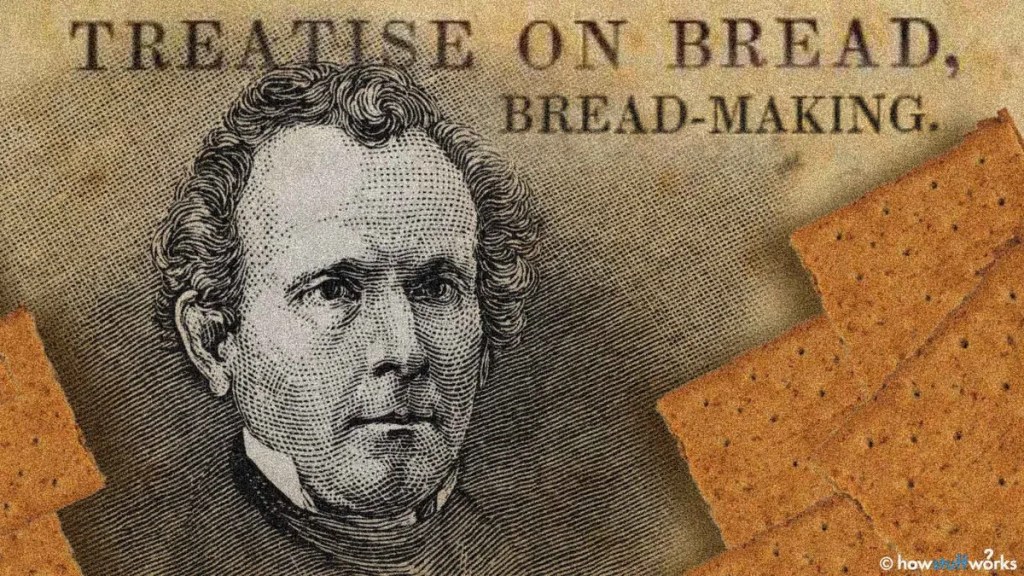
    I recently shared a post on Instagram, reflecting on my journey of deconstruction and exploring progressive spaces, I’ve noticed a concerning trend: the lack of nuance and the prevalence of an ‘us vs. them’ mentality.

    Even within progressive Christianity, there’s pressure to conform to certain social norms and ethical behaviors. Disagreement is often met with resistance, and group identity politics can dominate discussions.

    Please review this blog for more information and resources: Understanding Fundamentalism: Rigid Beliefs, Division, and Psychological Impact I am hoping these resources provide comprehensive insights into the dangers of fundamentalism, illustrating its potential to foster intolerance, social division, and conflict

    Understanding these parallels helps us recognize and challenge fundamentalist thinking in all areas of life, promoting a more balanced and critical approach to wellness and healing, and JUST EXISTING!

    Let’s move away from the dualistic thinking and judgment that these ideologies promote, and instead, embrace a more holistic and compassionate path forward.

    That’s all I have for you today folks! Thanks again for listening/reading. Next week, we will continue the conversation breaking from Diet Culture and for future episodes:

    •Dr. Mark Gregory Karris, author of The Diabiological Trinity Healing Religious Trauma from a Wrathful God, Tormenting Hell & a Sinful Self, Religious Refugees: (De)Constructing Toward Spiritual and Emotional Healing and more
    @neilyvanneily is a philosopher and cognitive scientist known for his work in the intersection of religion, cognition, and culture. He holds a Ph.D. in philosophy from Princeton University. We will be discussing his new book- “Religion as Make-Believe,” which offers a thought-provoking analysis of the nature of religious belief and its role in human societies.

    @mburtwrites To discuss Biblical Counseling & a little bit of the evolution of Christian parenting, along with Kelsey McGinnis, they offer a comprehensive exploration of the historical, cultural, ideological, political, and social factors that have influenced Christian parenting over time.

    @carielmoore to discuss Franciscan theology: which focuses on simplicity, poverty, and love for all. Inspired by Saint Francis, it’s about imitating Christ and caring for the marginalized. 🌿 she also explores parenting through the lens of spirituality, theology, and childhood liberation ✨

    and MORE! Until then, maintain your curiosity, embrace skepticism, and keep tuning in! 🎙️🔒

    Have a great week!

    🙏 Please help this podcast reach a larger audience in hope to encourage others! To do so: leave a 5⭐️ review and send it to a friend! Thank you for listening! I’d love to hear from you, find me on Instagram!⁠⁠⁠⁠⁠ @taste0ftruth⁠⁠⁠⁠⁠ or⁠⁠⁠⁠⁠ Pinterest!