We’re back! After a transformative and eye-opening second season, I’m excited to announce that Season 3 of Taste of Truth Tuesdays will kick off on December 31st. (Audio says Jan 7th, which was the original start date, I bumped it up a week.) This season promises to be packed with even more riveting conversations and insightful discussions. We’re diving into the complexities of spirituality, healing, activism, mental health, body image, and the power dynamics that shape our lives.
Here’s a sneak peek at the incredible guests you’ll hear from in the upcoming season:
Connie A. Baker: Spiritual and Religious Abuse
Connie A. Baker brings her expertise and personal experience to discuss the destructive impacts of spiritually abusive messages. These messages often erode our self-trust, leaving us vulnerable to further harm. In our conversation, we’ll explore the process of recovering from spiritual abuse and why it’s essential not to rush this journey. Connie will help us understand how survivors—especially those of us with a default setting of ‘push through’—can slow down and approach the healing process with patience. This wisdom is invaluable for true recovery, and I can’t wait for you to hear Connie’s insights.
Yasmine Mohammed: Escaping Radical Islam and Advocating for Women’s Rights
Yasmine Mohammed, a human rights activist and author of Unveiled: How Western Liberals Empower Radical Islam, joins me to share her powerful story. After escaping a forced, abusive marriage to an Al-Qaeda operative, Yasmine became an advocate for women’s rights. Through her non-profit organization, Free Hearts, Free Minds, she works tirelessly to support individuals seeking freedom from oppressive environments. Her memoir and activism offer a deeply personal and courageous perspective on overcoming adversity and empowering women. Her journey is one of survival, strength, and defiance.
Leah Denton: Therapy Harm and Power Dynamics in Mental Health
Leah Denton, the brilliant host of Psycho/Therapy podcast, will bring her deep insights into the harm that can occur within the therapeutic space and pastoral counseling. Leah, a survivor of therapy harm herself, shines a light on the ethical and systemic flaws within the mental health industry. She amplifies the voices of those who’ve been silenced and challenges us to rethink the power dynamics that can influence our healing. Leah’s work is a powerful call to action for better, more ethical care in therapy and beyond.
The Wellbeing Doctors: Body Image and Social Media’s Impact on Mental Health
Dr. Hannah Jarman and Ms. Claudia Liu, the dynamic team behind The Wellbeing Doctors, will discuss the intersection of body image, disordered eating, and the profound impact that social media has on our mental health. In their research, they’ve uncovered how active engagement with peers on social media can immediately reduce body image satisfaction, particularly for women. Together, we’ll explore how we need to redefine both beauty and health in ways that promote our true well-being, beyond appearances.
Wellness with Jaqui: The Real Story Behind Nutrition Research
Jaqui is back to break down the often-confusing world of nutrition research. If you’ve ever been baffled by conflicting diet headlines, this episode is for you. Jaqui will help us understand why nutrition research can be so complex, and how ‘statistical significance’ might not always mean what we think it does. This episode will bring clarity to the world of nutrition science and challenge the headlines we often see.
Franklin O’Kanu: Bridging Science, Spirituality, and Practical Wisdom
Franklin O’Kanu, also known as The Alchemik Pharmacist, is the founder of Unorthodoxy, a Substack that explores the spiritual dimensions of modern life through a holistic lens. With a Doctorate in Pharmacy and a background that bridges Pentecostal Christianity, Eastern philosophies, quantum physics, and Jungian psychology, Franklin offers a truly unique perspective. We’ll dive into his journey—from challenging conventional views during the pandemic to crafting a plan rooted in spiritual and natural principles. Franklin’s exploration of science, spirituality, and practical wisdom is sure to offer deep insights and foster a deeper understanding of the world around us.
This season is going to be a wild ride, full of wisdom, courage, and deep dives into essential topics that will challenge and inspire you. Don’t miss out on the launch of Taste of Truth Tuesdays Season 3 on December 31st! Make sure you’re subscribed, so you never miss an episode.
Welcome back to Taste of Truth Tuesdays! With the winter solstice just days away, we’re officially in the home stretch of 2024. The shortest day of the year reminds us to embrace the darkness while we prepare for the return of the light. It’s a reflective time—perfect for thinking about the holidays, setting intentions, and crafting meaningful goals for the new year. Today, we’re unpacking all of this, diving into the science of motivation, and introducing the 365 Easy Challenge. If you’re ready to create lasting habits that stick, you’re in the right place. Stick around until the end for December journal prompts designed to help you close out the year with clarity. Let’s get started!
The Truth About Motivation
Let’s start by busting a common myth: motivation is NOT the secret sauce to achieving your goals. It’s more like an internal campfire. You have to keep stoking it, or it fizzles out. Motivation, whether intrinsic or extrinsic, is unreliable. Intrinsic motivation comes from within — like your desire to be healthy or curious. Extrinsic motivation, like fitness challenges or rewards, comes from external sources.
So, what’s the science behind this? Motivation is tied to our brain’s reward system. Dopamine plays a critical role—it’s the “feel-good” chemical released when we anticipate a reward. But here’s the catch: dopamine isn’t just about pleasure; it’s about seeking. This is why motivation can be fleeting—once the novelty of the reward wears off, so does the drive. This is where habits and routines come in. They remove the need to rely on motivation alone, anchoring actions in consistency instead of fleeting feelings.
Awareness is the foundation of meaningful change. You can’t fix what you don’t know is broken. That’s why our 365 Easy Challenge emphasizes building habits that last, not just riding the highs of short-term motivation.
Why Traditional Challenges Fall Short
Have you ever tried extreme diets like Whole 30 or intense challenges like 75 Hard? While these can inspire short bursts of action, they often fail to teach sustainable skills. The problem isn’t laziness or lack of discipline; it’s unrealistic goals and focusing on what others are doing instead of tailoring solutions to your needs.
Science supports this too: extreme approaches often activate the brain’s stress response, making it harder to sustain willpower. Cortisol, the stress hormone, can hijack your decision-making, leading to burnout or impulsive choices. Instead, we need to focus on actions that align with our values and fit seamlessly into our lives.
This year, we’re flipping the script. The 365 Easy Challenge is all about mastering the basics — simple, sustainable actions that create consistency. Remember, consistency builds routines, and routines drive results.
Introducing the 365 Easy Challenge
Here’s the breakdown: The challenge focuses on six foundational habits:
Brain Reframe 🧠 Your body doesn’t need a “reset” — your brain does! Shift the focus to what you’re adding, not subtracting. More protein, more fruits & veggies, more movement. It’s all about progress, not perfection. Spend five minutes daily countering negative self-talk with rational, supportive statements. This rewires neural pathways and strengthens your brain’s ability to shift perspectives, helping you stay aligned with your goals.
Stress Management (and Your Mindset Around Stress) 😤 Stress is the silent killer of self-control and health. Managing stress isn’t just about chill vibes; it’s about understanding your stress and handling it like the boss you are. Take intentional movement breaks, practice deep breathing, and reframe stress as a challenge, not a threat. Movement enhances endorphin release, while reframing stress alters its impact on your body, helping you maintain mental clarity and avoid burnout.
Sleep Consistently 😴 The most underrated (yet most important) aspect of health? SLEEP. If you’re aiming for aesthetic goals, consistent sleep should be at the top of your priority list. Prioritize a bedtime routine with blue-light blocking, magnesium supplements, and a consistent schedule. Sleep affects everything from metabolism to emotional regulation. Even just one hour less sleep per night can impair cognitive function and decision-making, so get those 7-9 hours for optimal performance.
Digestive Health 🥦 Your body doesn’t thrive off what you eat, but off what you can digest and absorb. Let’s get those healthy poops on track and optimize your digestion for real transformation. Eat a protein-rich breakfast within 60 minutes of waking, and practice mindful eating by chewing thoroughly. Did you know that proper chewing activates enzymes in your saliva that kickstart digestion, setting the stage for better nutrient absorption and smoother digestion throughout the day?
Adequate Nutrition 🍏 Under-eating doesn’t get you anywhere good. Let’s focus on fueling your metabolism, building muscle, and living your life — so when the time comes for fat loss, it’s smoother and healthier than ever. The amount of food you need to eat per day may surprise you! Your TDEE (Total Daily Energy Expenditure) includes the energy required to support basic bodily functions (known as basal metabolic rate or BMR) and your daily physical activities. This can range from 1800-2400 calories for most individuals, so fueling your body adequately is key to long-term success.
Gratitude Practice 🙏 Meditation, prayer, and focusing on gratitude are more than just buzzwords. Science shows they can actually help you stay on track with your diet and exercise goals. Start your day by writing down three things you’re grateful for. Research shows that gratitude practices enhance mental health and even improve physical health by reducing inflammation and improving sleep quality, creating a positive feedback loop that supports overall wellness.
When clients approach me desiring fat loss, we often need to shift our focus first to achieving optimal psychological and physiological baselines. Many struggle with yo-yo dieting, binge eating, a poor relationship with food, negative body image, and sporadic workout consistency. That’s why periodized nutrition—or planning strategies like reverse dieting to support metabolism—is so important. Nutrition isn’t just about cutting calories; it’s about fueling your body to thrive.
Every week, you’ll add one action from each habit category. By week five, you’ll have integrated all six habits into your routine. And it’s okay if life happens and you miss a day — progress over perfection is the goal here.
Building Sustainable Habits
Why does this approach work? Because it’s rooted in simplicity and adaptability. You’re not overhauling your life overnight or setting yourself up for burnout. Instead, you’re focusing on actions that are easy to maintain and build upon.
For example, let’s talk digestion. Did you know your body isn’t what you eat but what you can digest and absorb? Simple changes like chewing your food more thoroughly or incorporating a 10-minute walk after meals can make a huge difference in your health.
And when it comes to sleep, the science is clear: adults need 7-9 hours of quality sleep for optimal function. Creating a bedtime ritual can condition your brain to wind down, making it easier to fall asleep and stay asleep.
December Journal Prompts
As promised, here are your December journal prompts to close out the year with reflection:
What was the most significant moment of your year, and why?
List three accomplishments you’re most proud of this year.
How have you grown as a person over the past year?
Write about a goal you didn’t achieve—what held you back, and what did you learn?
“This year taught me…”
Take 10 minutes to reflect on these, and you’ll start the new year with a clear mind and a motivated heart.
As you embrace the new year, remember that lasting change comes from building habits, not from a fleeting burst of motivation. By grounding yourself in gratitude, reflection, and simple daily actions, you can create a year that feels easy—and meaningful.
Check out the full 365 Easy Challenge guide for detailed steps to start your journey today.
Let’s talk about stress, baby! The holiday season is here, and so is the pressure—family obligations, shopping, cooking, and don’t even get me started on the aftermath of an election year. It feels like stress is at an all-time high, right? But guess what? It doesn’t have to wreck your health goals or derail your progress in 2025.
Forget extreme diets, gimmicky regimens, and complicated rules. In 2025, we’re mastering the basics and building a lifestyle that lasts. The key to handling the chaos of life, including holiday stress and beyond, is learning how to manage it effectively. That’s where stress management fits into the 365 Easy Challenge—your simple, sustainable plan for the new year.
Stress is the silent killer of self-control and health. It doesn’t just disrupt your mind—it messes with your body, too. And when stress builds up, it pulls your energy away from what matters most: your health, your relationships, and your goals. That’s why stress management isn’t just about “chill vibes”—it’s about learning to recognize, manage, and even reframe how we handle stress.
2025 is the year we crush the basics—here’s how to make stress a manageable part of your journey, not a roadblock.
What Is Stress, Really?
Stress is your body’s natural response to change. Whether it’s positive (like getting married or landing a new job) or negative (like losing a loved one or dealing with financial pressure), your body reacts in a similar way. Your nervous system goes into high gear, releasing hormones like adrenaline and cortisol to help you react to the situation.
At a basic level, stress is a mechanism for survival—your body prepares to fight or flee from danger. But in today’s world, the “danger” is more likely to be a heavy workload, relationship problems, or feeling overwhelmed by societal issues. It’s no longer a saber-toothed tiger lurking around the corner, but your body responds with the same intense, sometimes overwhelming, force.
The Stress Response: Fight or Flight, or Freeze?
When stress triggers your fight-or-flight system, your body shifts into survival mode. This state is designed for short bursts of energy—like running away from danger or facing an immediate threat. However, in today’s world, this system is often activated for prolonged periods, even when the “danger” isn’t physical but emotional or mental.
This prolonged state of stress can lead to:
Chronic inflammation: Your immune system is on constant alert, which can cause inflammation in your body. Over time, chronic inflammation is linked to conditions like heart disease, diabetes, and autoimmune disorders.
Cortisol imbalances: Cortisol is your body’s primary stress hormone. It’s helpful in small amounts, but if cortisol levels stay elevated for too long, it can affect your metabolism, immune function, and even your mood.
Digestive issues: Chronic stress slows down digestion, leading to issues like bloating, indigestion, and constipation. Your body diverts energy away from digestion to focus on “surviving,” which means your gut doesn’t get the attention it needs. Check out this post for more!
Sleep disturbances: Stress can interfere with your sleep cycle, either by making it difficult to fall asleep or by causing you to wake up in the middle of the night. Inadequate sleep further exacerbates stress, creating a vicious cycle.
We dive deep into the cycles of stress and their impact on the body here–>Unraveling the Impact of Stress on Chronic Health with Theresa Piela-In this powerful episode, I sit down with holistic healing expert Theresa Piela to explore the deep connection between chronic stress and health.
The Chronic Stress Cascade: How Your Body Reacts Over Time
When stress becomes chronic, your body begins to break down. This is where it gets tricky. Initially, stress is adaptive—it helps you meet deadlines, take care of important matters, or perform in high-stakes situations. But when stress persists without relief, your body’s systems start to degrade. Here’s what can happen over time:
The Brain’s Reaction: Your brain uses a part called the hypothalamus to detect stress. The hypothalamus signals the pituitary gland to release ACTH (adrenocorticotropic hormone), which triggers the adrenal glands to produce cortisol. This is your body’s way of priming itself for action. But when cortisol levels remain elevated, it can impair cognitive function, causing issues with memory, focus, and decision-making.
Metabolic and Hormonal Disruptions: Prolonged stress can disrupt your body’s metabolic rate and hormonal balance. Elevated cortisol levels encourage your body to store fat, particularly around the abdominal area, leading to weight gain. It also suppresses the production of thyroid hormones, slowing down your metabolism and making it harder to lose weight.
Impact on Digestion: Under stress, the digestive system gets “shut down” as blood is redirected to muscles and the brain. This leads to slower digestion, poor nutrient absorption, and can worsen symptoms like bloating, constipation, or acid reflux. Over time, these digestive issues can lead to more serious conditions like irritable bowel syndrome (IBS) or leaky gut syndrome.
Sleep and Recovery: The relationship between stress and sleep is a two-way street. High cortisol levels can make it difficult to fall asleep, and poor sleep further heightens stress. Sleep is a critical time for recovery and repair, and without it, your body cannot recover from the physical or mental toll of stress.
Stress Triggers: What’s Really Affecting You?
Now that we understand how stress works, let’s take a deeper look at the factors that are increasing your stress levels. In today’s fast-paced world, many of us are chronically stressed without even realizing it. Some of the most common stress triggers include:
Work: The pressure to perform, meet deadlines, and juggle multiple tasks can create a constant state of stress. Add in the current economic uncertainty, and the pressure can skyrocket.
Family and Social Expectations: From holiday gatherings to social media pressures, the weight of fulfilling expectations can cause significant stress. Feeling obligated to meet everyone’s needs can drain your mental and emotional reserves.
Politics and Global Events: In an election year, especially with heightened tensions and divided opinions, political issues can contribute to a constant feeling of unease and anxiety.
Financial Strain: Worrying about money, whether it’s paying bills, managing debt, or planning for the future, is a significant stressor for many people.
Managing Stress: Key Educational Insights for a Healthier Life
While stress is inevitable, there are clear strategies you can adopt to keep it from sabotaging your health. Let’s break down effective stress management into actionable steps.
1. Reframe Your Perception of Stress
Research shows that how you perceive stress matters. When you view stress as something that harms you, your body responds in a negative way. However, when you view stress as a challenge—something to overcome—it actually helps improve your body’s response. It’s not about eliminating stress, but rather about adjusting your mindset.
2. Practice Mindful Stress Reduction
Mindfulness techniques, such as meditation, deep breathing, or progressive muscle relaxation, can help lower your stress levels by activating your parasympathetic nervous system. This is the “rest and digest” system, which counters the “fight or flight” response. Even just 5–10 minutes a day can significantly lower your stress levels.
3. Physical Activity as a Stress Reliever
Exercise is one of the best ways to manage stress. When you engage in physical activity, your body releases endorphins—those “feel-good” chemicals that elevate mood and decrease stress. It doesn’t have to be an intense workout; even a walk, yoga session, or light stretching can help.
4. Nutrition and Hydration: Fueling Your Stress Management
Adequate nutrition and hydration are crucial for your body to handle stress. Dehydration can make you feel more stressed, and poor nutrition can exacerbate your body’s physical stress responses. Eating a balanced diet, with plenty of protein, healthy fats, and fiber, helps maintain stable blood sugar levels and keeps your hormones balanced.
5. Sleep Hygiene: Prioritize Rest
As mentioned earlier, sleep is foundational to stress management. Without quality sleep, your body doesn’t have the opportunity to repair itself. Implementing good sleep hygiene practices—such as avoiding blue light before bed, keeping a regular sleep schedule, and creating a restful environment—will help you get the restorative rest you need.
Conclusion: Stress is Manageable, Not Inevitable
The bottom line is that stress doesn’t have to control your life. By understanding the science behind it, recognizing your triggers, and taking proactive steps to manage it, you can reduce its harmful impact on your health.
As you embark on the 365 Easy Challenge for 2025, managing stress is one of the foundational steps toward living a balanced, sustainable life. Focus on building resilience and consistency, and remember: stress is a challenge you can conquer, not something to fear.
By addressing stress and its impact head-on, you’ll create a lifestyle that nurtures your health, happiness, and long-term success.
Stay calm, stay consistent, and take control of your stress in 2025. You’ve got this! 💪✨
Check out previous blog posts or podcast episodes for more insights on stress!
Posting on a Wednesday? Guess my calendar’s been indulging in holiday cookies too.
Yep, we’re shaking things up this week! Whether you’re catching up on leftovers or prepping for your next holiday feast, now’s the perfect time to talk about digestion. After all, it’s the unsung hero of health—working overtime while we’re busy piling on the mashed potatoes
This post also kicks off a sneak peek into January’s 365 Easy Challenge, where we’ll focus on mastering six foundational habits to make 2025 your healthiest year yet. So, grab a cozy beverage, and let’s dig into how to keep your gut happy (and your pants buttoned) this holiday season.
Why Digestion Deserves the Spotlight
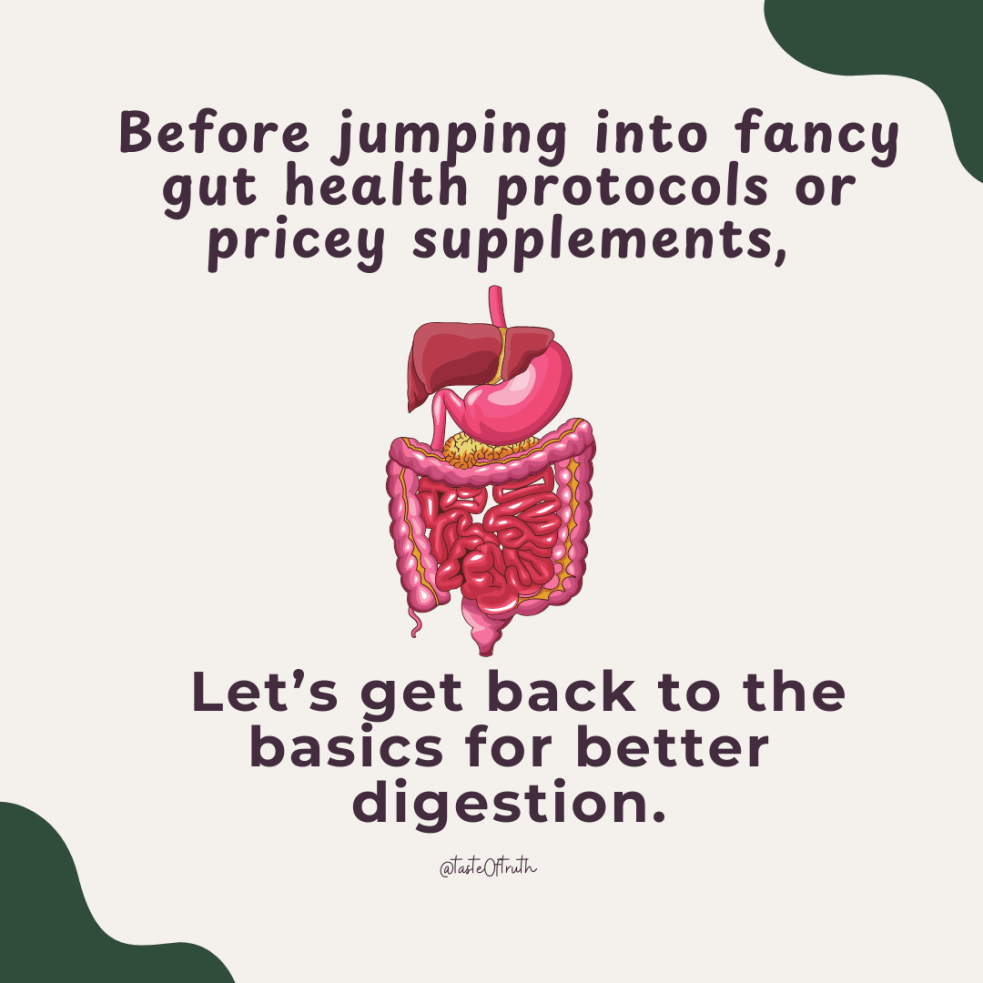
Let’s be real: you can load up on the healthiest foods, but if your digestion isn’t working properly, your body can’t absorb all those nutrients. Instead of diving into advanced gut protocols, let’s focus on digestive basics—those everyday habits that can transform how you feel after a meal.
From holiday feasts to office potlucks, the season is full of opportunities to test your digestive system. If you’ve ever felt bloated, gassy, or sluggish post-meal, you’re not alone. These are signs your gut might need a little TLC.
The Big Three Digestive Culprits
Stress: Chronic stress throws your digestive system into chaos, slowing it down and causing discomfort.
Rushed Eating: Gulping your meals doesn’t give your body time to process food properly.
Poor Chewing: Chewing is where digestion starts, but many of us rush through it like it’s a race.
What to Do Instead:
Set the Scene: Before you eat, take a deep breath, relax, and engage your parasympathetic nervous system (aka your “rest and digest” mode).
Slow Down: Put your fork down between bites and chew each one 20–30 times. Yes, it feels slow at first, but it’s worth it!
Be Present: Step away from distractions like phones or TVs and focus on your food.
The Unsung Heroes of Digestion
1. Stomach Acid (HCL): Stomach acid is crucial for breaking down protein and absorbing nutrients like zinc, iron, calcium, and B12. It also acts as your body’s first line of defense against harmful bacteria.
🙅♀️ Stop: Overusing antacids or skipping protein-rich meals. ✔️ Start: Eating a nutrient-dense diet, practicing mindful eating, and managing stress to naturally support stomach acid production.
2. Digestive Enzymes: Digestive enzymes break down food so your body can absorb the nutrients. Without enough enzymes, you may experience bloating, constipation, or gas.
🙅♀️ Stop: Rushing meals and lying down immediately after eating. ✔️ Start: Chewing thoroughly, walking after meals, and addressing inflammation.
3. Bile Production: Bile is essential for breaking down fats so your body can absorb them. If bile production is compromised, you might miss out on the benefits of healthy fats like omega-3s.
🙅♀️ Stop: Relying on low-fat diets or consuming unhealthy fats like vegetable oils. ✔️ Start: Eating healthy fats (avocado, olive oil, grass-fed butter) and supporting stomach acid levels.
A Healthy Gut Microbiome: Your Digestive Sidekick
Your gut bacteria play a vital role in digestion and overall health. To keep your microbiome balanced:
Eat a variety of fiber-rich foods like kale, spinach, swiss chard, cabbage, leeks, turnips, carrots, beets, and artichokes.
Avoid overloading your system with excessive fiber, which can cause bloating or discomfort.
Nuts, Seeds, Grains & Legumes: Prep Like a Pro
These foods are nutritional powerhouses, but they contain anti-nutrients like phytic acid and enzyme inhibitors that can block digestion and deplete minerals. Preparing them properly—by soaking or sprouting—neutralizes these compounds and makes nutrients more bioavailable.
How to Soak:
Cover your nuts, seeds, grains, or legumes with water and a splash of vinegar or salt.
Let them soak overnight, rinse thoroughly, and cook as usual.
Even with proper preparation, these foods can be hard to digest, so enjoy them in moderation.
Holiday Digestion Tips
Here’s how to support your gut through the festive season:
Chew your food mindfully. No one’s handing out awards for fastest eater.
Go for a walk after big meals. Gentle movement aids digestion and prevents sluggishness.
Stay hydrated. Your digestive system needs water to function optimally.
Be intentional with your intake of highly processed refined sugars.Excess amounts can disrupt your gut flora and leave you feeling sluggish and out of balance
Before trying advanced protocols, start with the basics:
Chew thoroughly.
Manage stress.
Prep your meals for optimal digestion.
And don’t forget, this is just the start. In January’s365 Easy Challenge, we’ll dive deeper into digestion and other foundational habits like sleep, stress management, and nutrition.
Let’s make 2025 the year we simplify health and feel amazing doing it!
When clients come to me saying they have a “slow metabolism” or a “broken” metabolism, often they think they need to eat even less or cut carbs to jumpstart weight loss. But let me flip the script: in many cases, it’s actually chronic under-eating and restrictive dieting that’s slowing down their metabolism. Chronic dieting, especially with very low calories, can lead to impaired thyroid function and ultimately disrupt how the body uses energy. Here’s how it happens and what you can do to restore balance.
What is the Thyroid and Why Does It Matter?
Your thyroid is a small gland in your neck that plays a massive role in regulating your body’s metabolism. Often called the “controller” of metabolic function, the thyroid works closely with the hypothalamus and pituitary glands in the brain to maintain your metabolic rate. This system allows your body to increase or decrease energy production based on its needs, influencing everything from how you process food to your body temperature.
The thyroid primarily produces two hormones:
T3 (Triiodothyronine) – the active hormone that your cells use.
T4 (Thyroxine) – the inactive hormone that must be converted into T3 before your body can use it.
The production and conversion of these hormones depend on a feedback loop that begins with TSH (Thyroid Stimulating Hormone), which signals the thyroid to produce and release T4. But when the body is stressed—especially due to chronic under-eating or extreme calorie restriction—this whole process can become disrupted.
How Chronic Dieting Wrecks Your Thyroid
Under-eating is a significant source of stress for the body. Dieting or calorie restriction triggers the HPA axis (Hypothalamic-Pituitary-Adrenal axis), leading to an increase in CRH (Corticotropin-Releasing Hormone) and cortisol, our primary stress hormone. High cortisol levels can interfere with thyroid function in the following ways:
Reduces TSH Production: Elevated cortisol inhibits TSH, lowering T4 production and decreasing the amount of thyroid hormone available for energy use.
Impairs T4-to-T3 Conversion: Chronic stress slows down the conversion of T4 (inactive) into T3 (active), reducing your body’s energy production.
Increases rT3 Levels: Instead of converting into T3, some T4 becomes reverse T3 (rT3), a hormone that blocks T3 from being used. This, in turn, reduces the sensitivity of your cells to thyroid hormones, further lowering metabolic function.
This is why individuals who chronically under-eat or yo-yo diet often experience symptoms of hypothyroidism, even without an official diagnosis.
Symptoms of Suboptimal Thyroid Function
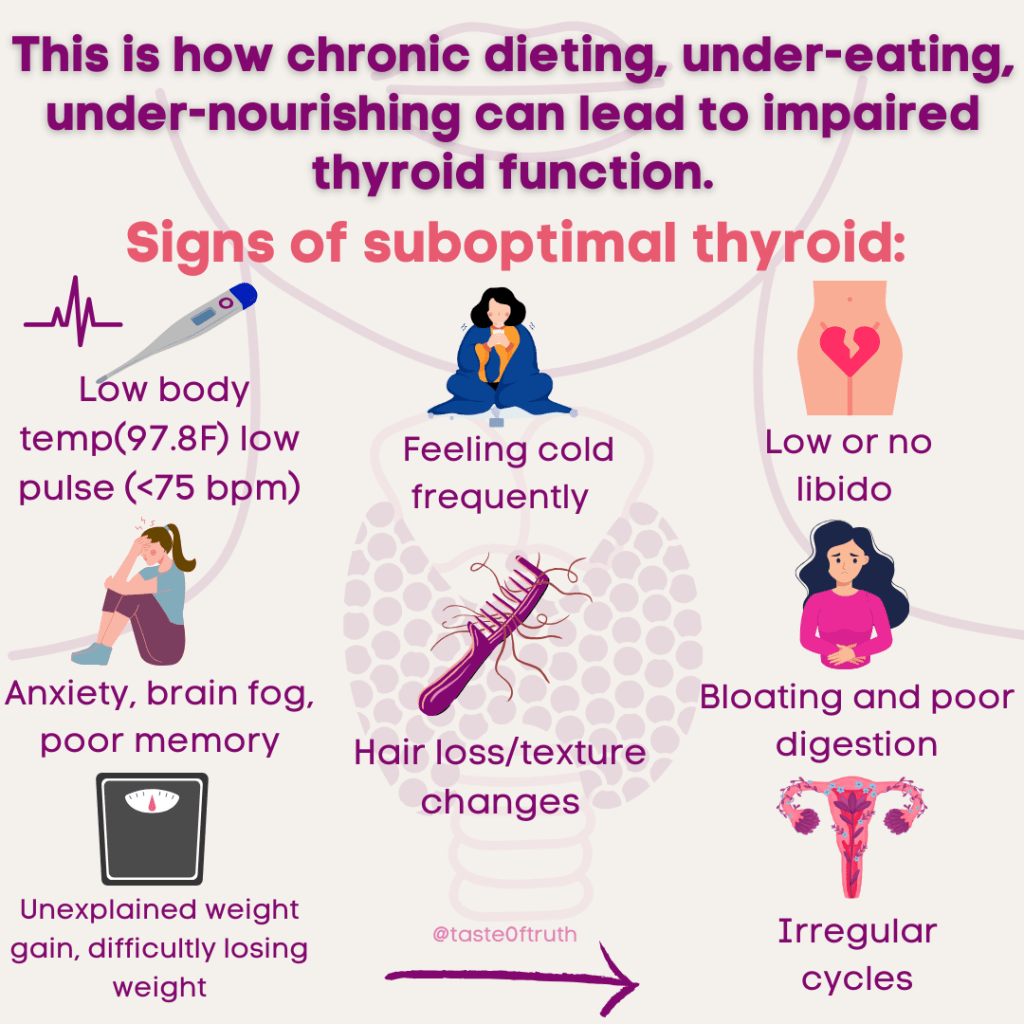
If your thyroid isn’t functioning optimally, you may notice some of the following symptoms:
Low body temperature (below 97.8°F)
Frequent feelings of cold, regardless of weather
Low or no libido
Anxiety, brain fog, or poor memory
Unexplained weight gain or difficulty losing weight
Bloating, poor digestion
Changes in hair texture or hair loss
Many clients experiencing these symptoms have been stuck in a calorie-deficit mindset for years, keeping their bodies in a constant state of stress. As a result, they’re often dealing with adrenal dysfunction, hypothyroidism, or even reproductive health issues, like extreme PMS, cycle loss, or low testosterone.
Restoring Your Thyroid Health—The First Steps
To begin improving thyroid health, our initial goal is to support both psychological and physiological balance, moving away from restrictive dieting and focusing on nourishment. Here’s a breakdown of the steps:
Stabilize Blood Sugar: Balanced blood sugar supports thyroid health and reduces stress on the body.
Maximize Nutrient Density: Prioritize whole, nutrient-rich foods to ensure your body receives adequate vitamins and minerals, especially selenium, zinc, and iodine, which are crucial for thyroid function.
Reduce Inflammation: Chronic inflammation can further stress the thyroid. Anti-inflammatory foods and lifestyle practices can help.
Incorporate Breathwork: Simple breathwork techniques can stimulate the vagus nerve, helping to regulate the HPA axis and reduce stress.
Avoid Dietary Triggers: Reduce foods that promote “leaky gut,” such as highly processed foods, sugar, and gluten, if sensitive. This protects your immune and thyroid health.
Manage Stress Proactively: Yoga, meditation, journaling, or spending time in nature can help keep cortisol in check.
Reduce Toxins and Pollutants: Environmental toxins can interfere with hormone health, so minimizing exposure can be a powerful step.
Prioritize Rest and Sleep: Quality sleep allows the body to recover and reset, which is essential for thyroid health.
The Bottom Line
Restrictive dieting isn’t the solution to a slow metabolism; it’s often the root cause. Chronic under-eating can lead to imbalances in your thyroid and adrenal glands, ultimately slowing down your metabolic rate and making it harder to achieve your fitness goals. Rebuilding a balanced, nourished body will not only help you feel better but will also lay the foundation for sustainable health.
This week, we’re talking all things thyroid health, and this post breaks down why breaking free from the dietary dogma of diet culture is crucial! Ever feel like your energy’s tanked, your minds in a fog, or your metabolism’s stuck in slow motion? 🧠✨ You’re not alone, and it could be your thyroid talking.
On this week’s Taste of Truth Tuesdays, we’re joined by Nicole, a holistic health advocate who’s here to shed light on how diet culture’s obsession with restriction can wreak havoc on your thyroid. From her own experience facing an autoimmune diagnosis to her advocacy for individualized nutrition, Nicole breaks down how restrictive dieting not only slows your metabolism but also impacts hormone balance, brain clarity, and overall well-being. Join us to learn how making friends with food (yes, even carbs!) might be the best way to support your thyroid and reclaim your energy.







 Taste0ftruth Tuesdays