Understanding Metabolic Health: The Role of Temperature and Pulse

How to Use Temperature and Pulse for Metabolic Health Insights

In the summer of 2020, my health began to take a dive. Years of chronic dieting, over-exercising, negative self-talk, and hormonal birth control were taking their toll. I was eating next to no carbs, minimal sugar, low fat, no dairy, and only lean protein. I was working out six days a week, doing hours of cardio, and feeling terrible physically, mentally, and emotionally. Hypothyroid and adrenal symptoms began to emerge. It was clear my lifestyle was working against my physiology. My metabolism felt ‘broken’ or ‘slow,’ but in reality, I was undernourished and overstressed.

Initially, I started tracking basal temperature but did not include resting pulse rates. At the time, my average temperatures were 96.5°F, and my pulse was 44 bpm. Discovering the “pro-metabolic” community introduced me to the research of Dr. Ray Peat and Dr. Broda Barnes, and it changed my perspective.

According to Dr. Raymond Peat, a well-nourished, healthy human should have a resting pulse of 85+ beats per minute. A high resting pulse (in the absence of stress) indicates good metabolic health and a strong ability to repair. This counters mainstream advice, which often celebrates a low resting heart rate as a marker of fitness.

Why Temps and Pulses Matter

Your thyroid acts as your body’s thermostat, controlling metabolism. Metabolism is the sum of all biochemical reactions in the body—essentially, the rate of energy production in the cells and the speed of bodily processes. Body temperature reflects metabolic activity, and people with underperforming thyroids often have low basal body temperatures.

Tracking basal body temperature and resting pulse provides insights into your thyroid and metabolic function:

  • Basal body temperature can indicate if ovulation has occurred, reflecting progesterone production (a pro-thyroid hormone).
  • Resting pulse shows how well your body is utilizing nutrients and oxygen.
  • Tracking post-meal temperatures and pulses helps identify stress responses and metabolic efficiency.

How to Track Temps and Pulses

To get accurate and actionable insights, follow these steps: Log your readings daily to identify trends over time. Note factors like stress, sleep, meals, and menstrual cycle phases that might influence your results.

  • Choose the Right Thermometer
    • Use a digital thermometer with a quick response time and high accuracy.
    • Glass basal thermometers are also effective but require more time to measure.
  • Measuring Basal Temperature
    • Take your temperature first thing in the morning, immediately after waking, and before getting out of bed.
    • Place the thermometer under your tongue for the most reliable reading. Avoid using armpit readings as they can be less accurate due to environmental factors.
  • Measuring Resting Pulse
    • Use a wearable device, like a fitness tracker, to measure your resting pulse overnight or immediately upon waking.
    • Alternatively, place your index and middle fingers on your wrist or neck to manually count beats for 60 seconds.
  • After Meals
    • Check your temperature and pulse 30-40 minutes after breakfast. These should gently rise after eating, as food lowers stress and generates heat. If they drop, it may indicate elevated stress hormones upon waking.
  • Track Afternoon Readings
    • Record your temperature and pulse between 1-3 p.m. when your body’s temperature should naturally peak.
  • Use a Tracking App or Journal

Questioning the Mainstream Narrative

The Mayo Clinic states: “Generally, a lower heart rate at rest implies more efficient heart function and better cardiovascular fitness. For example, a well-trained athlete might have a normal resting heart rate closer to 40 beats per minute.”

But is a low resting heart rate truly beneficial? Evidence suggests otherwise. Thyroid health—the thermostat of the body—plays a crucial role in metabolism. A sluggish thyroid often correlates with lower body temperatures and slower heart rates, indicators of reduced metabolic function.

Why Temperature and Pulse Matter

Metabolism refers to the sum of all biochemical reactions in the body. It’s essentially the rate of energy production at the cellular level—the speed at which your body processes and utilizes energy. Your body temperature is a reflection of this activity. People with under-functioning thyroids tend to exhibit low basal body temperatures and slower pulses, which can indicate:

  • Low thyroid function
  • Inflammation
  • Suppressed immune function
  • High stress
  • Estrogen dominance

In contrast, a warm body is linked to better immune function, efficient digestion, reduced inflammation, and overall metabolic health.

How to Track Temperature and Pulse

Tracking these metrics throughout the day provides invaluable insights into your metabolic health:

  • Upon Waking:
    • Follicular Phase: 97.2-97.8°F
    • Luteal Phase: 98.6°F
    • Resting pulse: 75-90 bpm
  • After Breakfast:
    • Temperatures and pulse should gently rise after meals. Food lowers stress and generates heat. If your numbers drop, it may indicate falsely elevated waking temps due to stress hormones like cortisol.
  • Afternoon:
    • Temperatures should peak between 1-3 PM.

What Your Numbers Reveal

  • Higher temp and pulse (in the absence of stress): Optimal metabolic function
  • Normal temp and higher pulse: Active stress response
  • Lower temp and lower pulse: Chronic stress and metabolic suppression
  • Normal temp and lower pulse: Chronic stress or low thyroid function

How to Optimize Your Numbers

If your temperature and pulse rates aren’t within optimal ranges, consider the following steps:

  1. Prioritize bioavailable protein: Aim for at least 100 grams per day.
  2. Eat enough calories: 1,800-2,000+ per day, depending on individual needs.
  3. Include digestible carbs: At least 150 grams daily (e.g., honey, maple syrup, fruit, root vegetables).
  4. Pair carbs with protein: Avoid “naked carbs” to stabilize blood sugar.
  5. Focus on anabolic exercise: Build muscle with strength training to boost metabolism.

Why This Matters

Using temperature and pulse as tools, you can:

  • Monitor how well your body utilizes energy.
  • Evaluate recovery from exercise.
  • Gain insights into hormonal balance (e.g., progesterone production and ovulation).
  • Identify the impacts of stress on your physiology.

Final Thoughts

Key Takeaways By regularly monitoring your temps and pulses, you can uncover patterns and make adjustments to optimize your thyroid and metabolic health. These small, daily practices provide powerful insights into how your body is functioning and what it needs to thrive.

Healing is never a final destination; it’s an ongoing journey. Over time, I’ve seen significant improvements in my metabolic markers. My overall body temperature has risen to 97.6–98.1°F, and my resting pulse is now around 70 bpm—much better than where I started. This progress has required me to embrace a larger body size than what traditional “fit fam” culture promotes, but it has been worth it. Prioritizing healing and hormone rebalancing has provided my body with the sense of safety and stability it needed to thrive.

To read more about the doctor that pioneered these tests grab the book called Hypothyroidism: The unsuspected illness by Dr. Broda Barnes

✌🏼Looking for more support navigating your cycle with fitness & nutrition? Check out my FREE guide & pro-metabolic strength training guide available for purchase!

LINK to apply for 1:1 coaching ❤️

Sources 👇🏻

PMID: 28740582
PMID: 26792255
Dr. Ray Peat
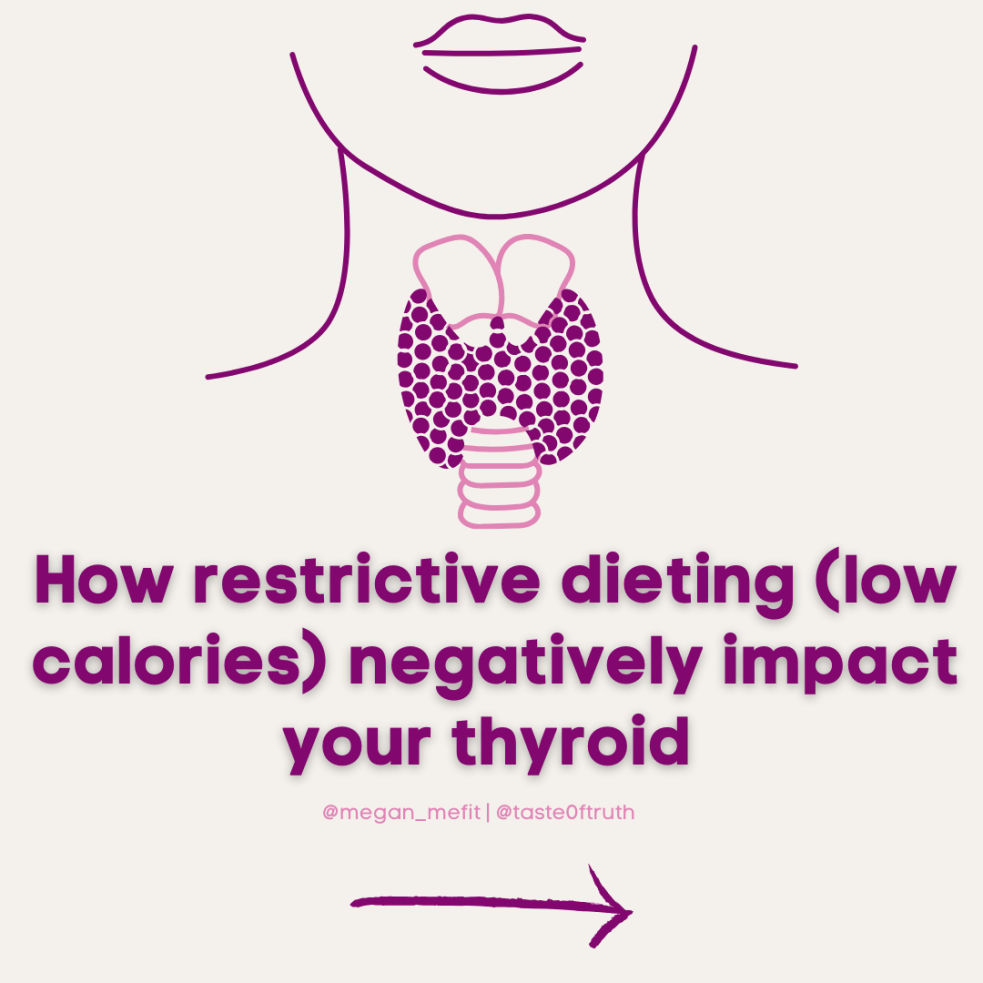
Understanding the Impact of Diet on Thyroid Health

When clients come to me saying they have a “slow metabolism” or a “broken” metabolism, often they think they need to eat even less or cut carbs to jumpstart weight loss. But let me flip the script: in many cases, it’s actually chronic under-eating and restrictive dieting that’s slowing down their metabolism. Chronic dieting, especially with very low calories, can lead to impaired thyroid function and ultimately disrupt how the body uses energy. Here’s how it happens and what you can do to restore balance.


What is the Thyroid and Why Does It Matter?

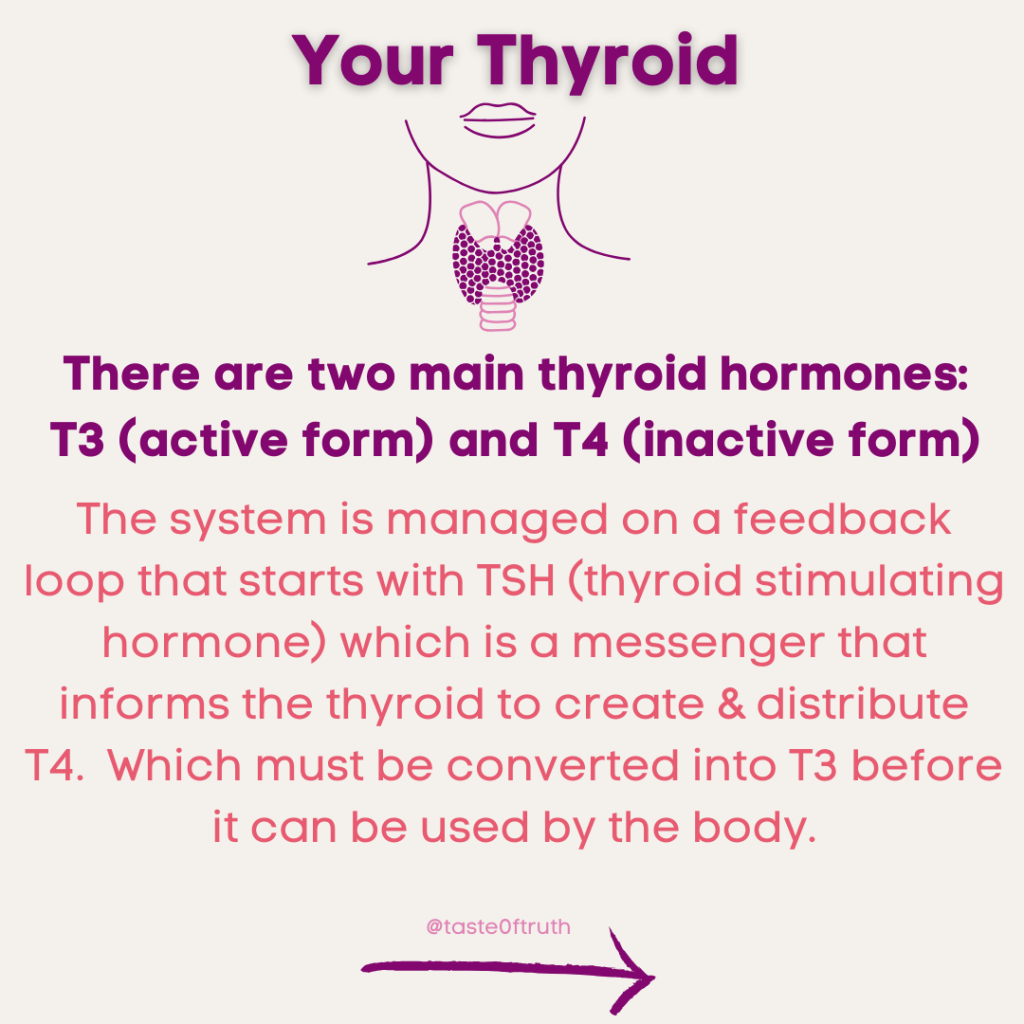
Your thyroid is a small gland in your neck that plays a massive role in regulating your body’s metabolism. Often called the “controller” of metabolic function, the thyroid works closely with the hypothalamus and pituitary glands in the brain to maintain your metabolic rate. This system allows your body to increase or decrease energy production based on its needs, influencing everything from how you process food to your body temperature.

The thyroid primarily produces two hormones:

  • T3 (Triiodothyronine) – the active hormone that your cells use.
  • T4 (Thyroxine) – the inactive hormone that must be converted into T3 before your body can use it.

The production and conversion of these hormones depend on a feedback loop that begins with TSH (Thyroid Stimulating Hormone), which signals the thyroid to produce and release T4. But when the body is stressed—especially due to chronic under-eating or extreme calorie restriction—this whole process can become disrupted.

How Chronic Dieting Wrecks Your Thyroid

Under-eating is a significant source of stress for the body. Dieting or calorie restriction triggers the HPA axis (Hypothalamic-Pituitary-Adrenal axis), leading to an increase in CRH (Corticotropin-Releasing Hormone) and cortisol, our primary stress hormone. High cortisol levels can interfere with thyroid function in the following ways:

  • Reduces TSH Production: Elevated cortisol inhibits TSH, lowering T4 production and decreasing the amount of thyroid hormone available for energy use.
  • Impairs T4-to-T3 Conversion: Chronic stress slows down the conversion of T4 (inactive) into T3 (active), reducing your body’s energy production.
  • Increases rT3 Levels: Instead of converting into T3, some T4 becomes reverse T3 (rT3), a hormone that blocks T3 from being used. This, in turn, reduces the sensitivity of your cells to thyroid hormones, further lowering metabolic function.

This is why individuals who chronically under-eat or yo-yo diet often experience symptoms of hypothyroidism, even without an official diagnosis.


Symptoms of Suboptimal Thyroid Function

If your thyroid isn’t functioning optimally, you may notice some of the following symptoms:

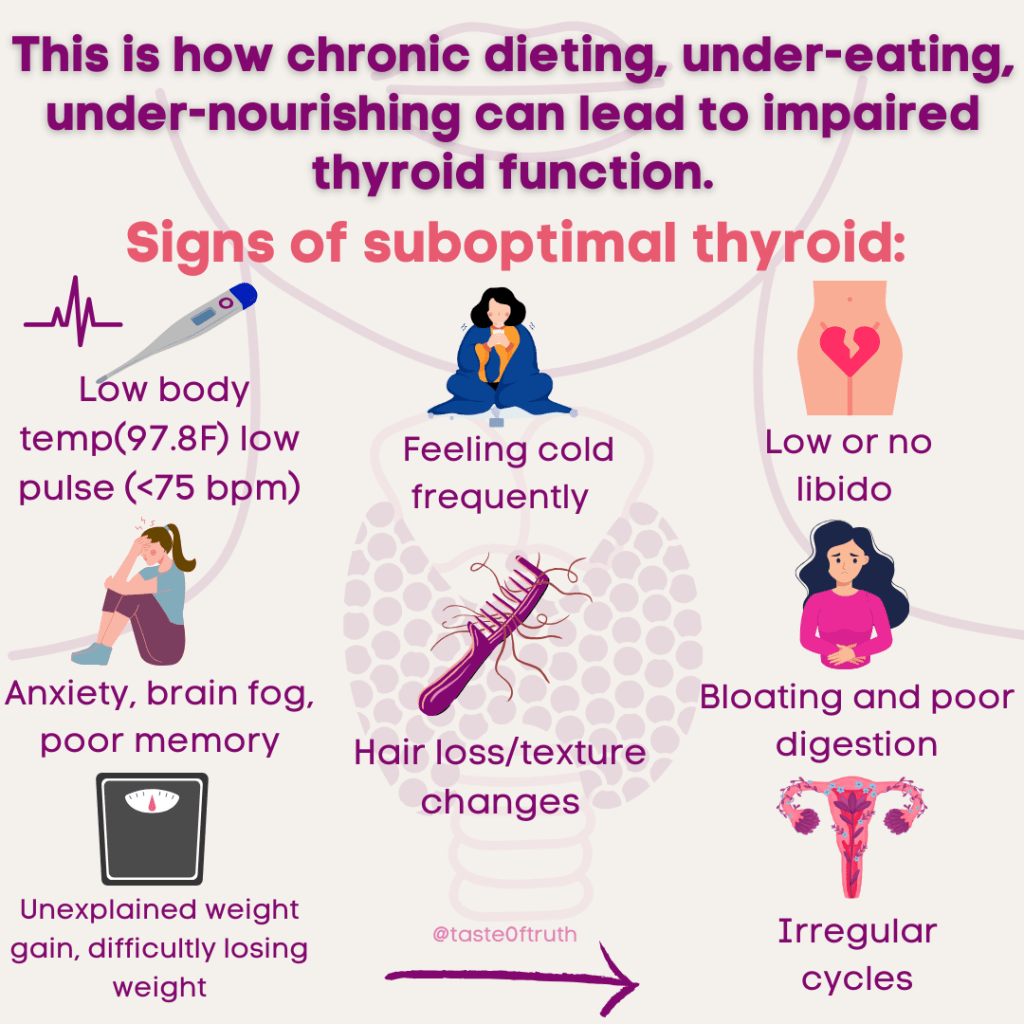
  • Low body temperature (below 97.8°F)
  • Frequent feelings of cold, regardless of weather
  • Low or no libido
  • Anxiety, brain fog, or poor memory
  • Unexplained weight gain or difficulty losing weight
  • Bloating, poor digestion
  • Changes in hair texture or hair loss

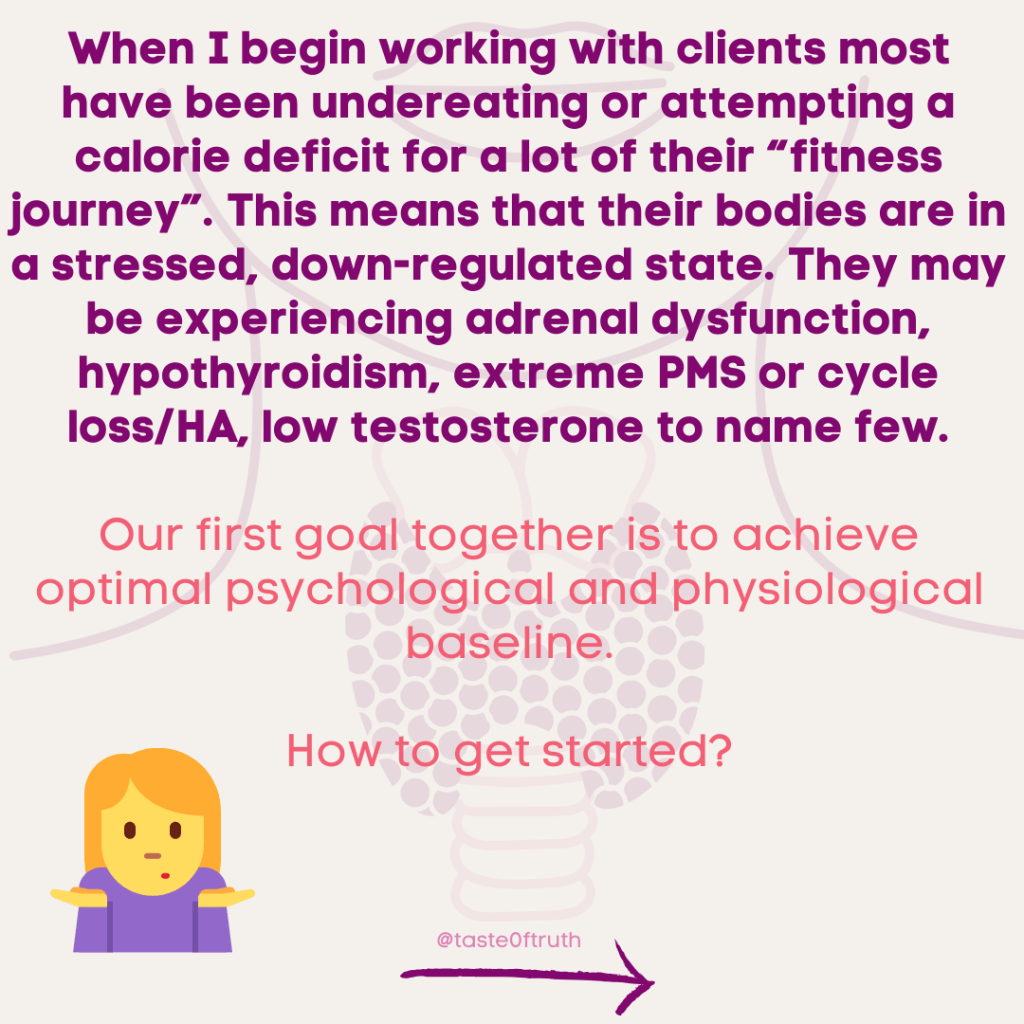
Many clients experiencing these symptoms have been stuck in a calorie-deficit mindset for years, keeping their bodies in a constant state of stress. As a result, they’re often dealing with adrenal dysfunction, hypothyroidism, or even reproductive health issues, like extreme PMS, cycle loss, or low testosterone.


Restoring Your Thyroid Health—The First Steps

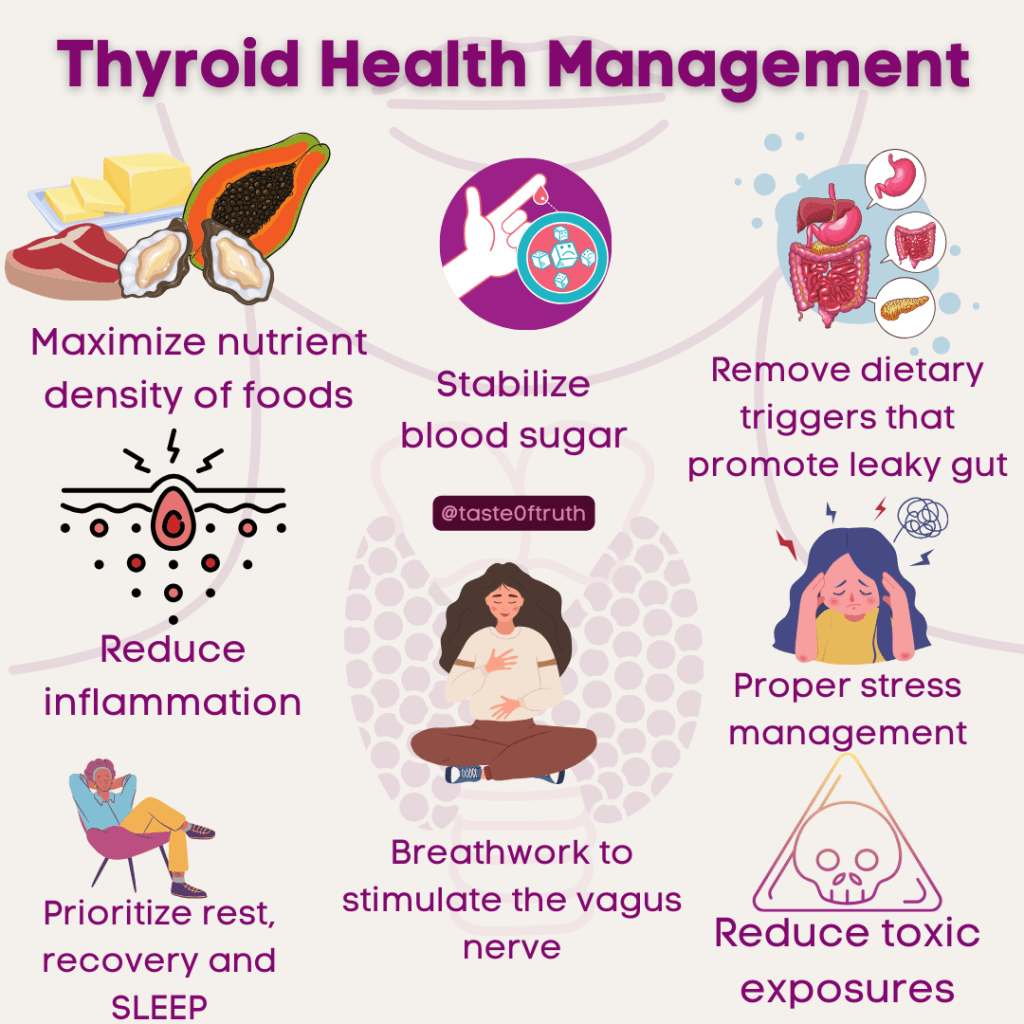
To begin improving thyroid health, our initial goal is to support both psychological and physiological balance, moving away from restrictive dieting and focusing on nourishment. Here’s a breakdown of the steps:

  1. Stabilize Blood Sugar: Balanced blood sugar supports thyroid health and reduces stress on the body.
  2. Maximize Nutrient Density: Prioritize whole, nutrient-rich foods to ensure your body receives adequate vitamins and minerals, especially selenium, zinc, and iodine, which are crucial for thyroid function.
  3. Reduce Inflammation: Chronic inflammation can further stress the thyroid. Anti-inflammatory foods and lifestyle practices can help.
  4. Incorporate Breathwork: Simple breathwork techniques can stimulate the vagus nerve, helping to regulate the HPA axis and reduce stress.
  5. Avoid Dietary Triggers: Reduce foods that promote “leaky gut,” such as highly processed foods, sugar, and gluten, if sensitive. This protects your immune and thyroid health.
  6. Manage Stress Proactively: Yoga, meditation, journaling, or spending time in nature can help keep cortisol in check.
  7. Reduce Toxins and Pollutants: Environmental toxins can interfere with hormone health, so minimizing exposure can be a powerful step.
  8. Prioritize Rest and Sleep: Quality sleep allows the body to recover and reset, which is essential for thyroid health.

The Bottom Line

Restrictive dieting isn’t the solution to a slow metabolism; it’s often the root cause. Chronic under-eating can lead to imbalances in your thyroid and adrenal glands, ultimately slowing down your metabolic rate and making it harder to achieve your fitness goals. Rebuilding a balanced, nourished body will not only help you feel better but will also lay the foundation for sustainable health.

This week, we’re talking all things thyroid health, and this post breaks down why breaking free from the dietary dogma of diet culture is crucial! Ever feel like your energy’s tanked, your minds in a fog, or your metabolism’s stuck in slow motion? 🧠✨ You’re not alone, and it could be your thyroid talking.

On this week’s Taste of Truth Tuesdays, we’re joined by Nicole, a holistic health advocate who’s here to shed light on how diet culture’s obsession with restriction can wreak havoc on your thyroid. From her own experience facing an autoimmune diagnosis to her advocacy for individualized nutrition, Nicole breaks down how restrictive dieting not only slows your metabolism but also impacts hormone balance, brain clarity, and overall well-being. Join us to learn how making friends with food (yes, even carbs!) might be the best way to support your thyroid and reclaim your energy.

Brain Fog, Thyroid Health, and Gut Connection: Insights from an Integrative Dietitian

Ever felt like your brain’s on vacation while your body’s still clocking in? 🧠✨ Join us as Nicole unveils the secrets behind thyroid health, brain fog, and why carbs might just be your new best friend!

🔍 From Autoimmune Shock to Holistic Advocate: Nicole shares her journey from being blindsided by an autoimmune diagnosis to questioning mainstream diet culture and diving into functional medicine. Find out what sparked her transformation into an advocate for individualized nutrition and holistic health!

💡 Thyroid Health Unveiled: Thyroid dysfunction can be a mystery wrapped in an enigma! Nicole explains why thyroid hormones are key to overall health and how her unique approach, including The BRAIN Method, differs from traditional treatments. Discover how she tackles symptoms and optimizes thyroid function!

🧠 Decoding Brain Fog: Ever felt like your brain is stuck in a fog? Nicole breaks down the most common culprits of brain fog and offers tips on how women can pinpoint their own triggers. Say goodbye to mental sluggishness and hello to clarity!

🌱 Gut Health & Thyroid Function: Did you know your gut health has a major impact on your thyroid? Nicole dives into how imbalances in your gut can affect thyroid hormone production and utilization. Learn how addressing gut health can boost your thyroid function!

🍞 Carbs & Hypothyroidism: Carbs might be getting a bad rap, but Nicole explains why they’re actually essential for those with hypothyroidism. Discover how including carbs in your diet can support thyroid function and enhance overall well-being.

Listen here!

Mentioned in the interview:

⁠MEET YOUR THYROID⁠

⁠BRAIN METHOD⁠

⁠Why Nicole added HTMA (hair tissue analysis) to her practice ⁠

⁠Which comes first? Gut dysfunction or Thyroid dysfunction? ⁠

⁠Could your gut be creating roadblocks in your Thyroid Hormone Journey? ⁠

⁠Why you need carbs especially if you have hypothyroidism⁠

⁠Home – New – Chews Food Wisely⁠

🙏 Please help this podcast reach a larger audience in hope to edify & encourage others! To do so: leave a 5⭐️ review and send it to a friend! Thank you for listening! I’d love to hear from you, find me on Instagram!⁠⁠⁠⁠ @taste0ftruth⁠⁠⁠⁠ or⁠⁠⁠⁠ Pinterest! ⁠⁠ ⁠⁠ 

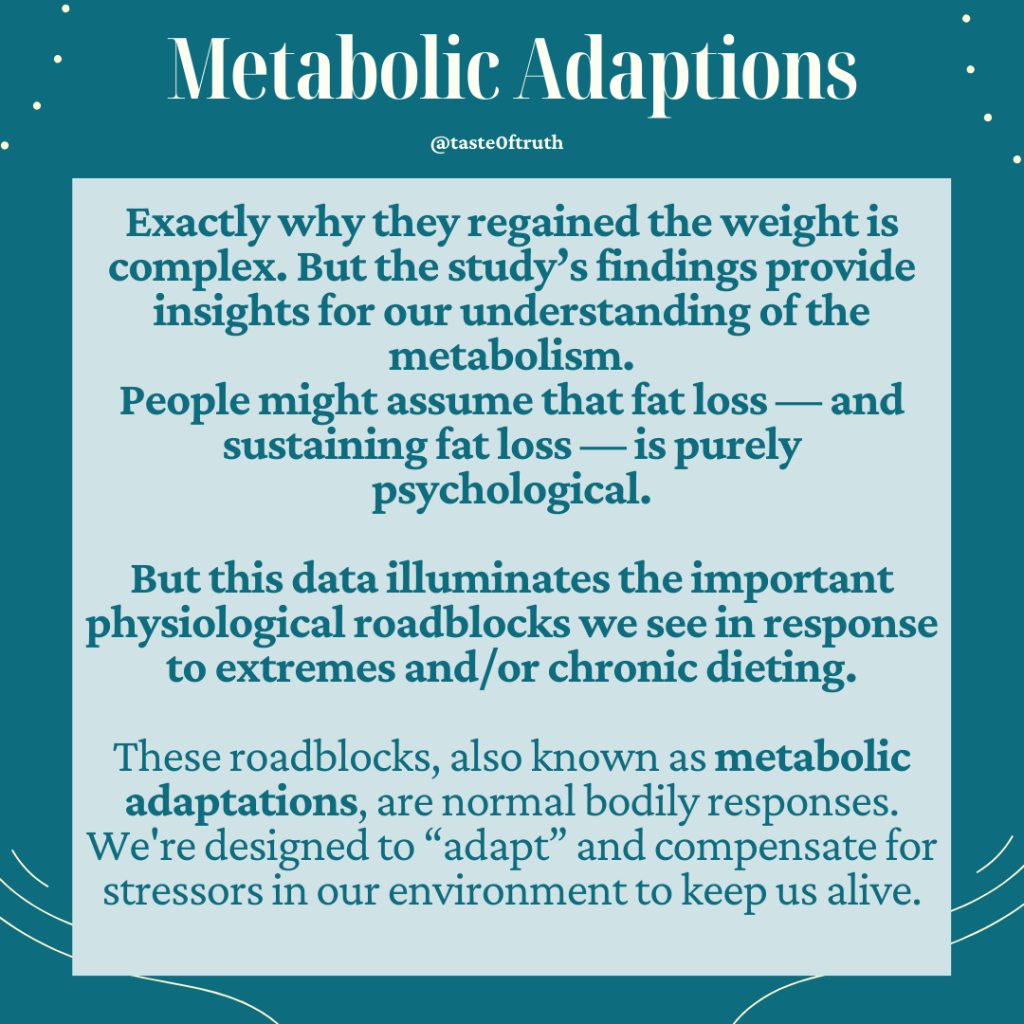
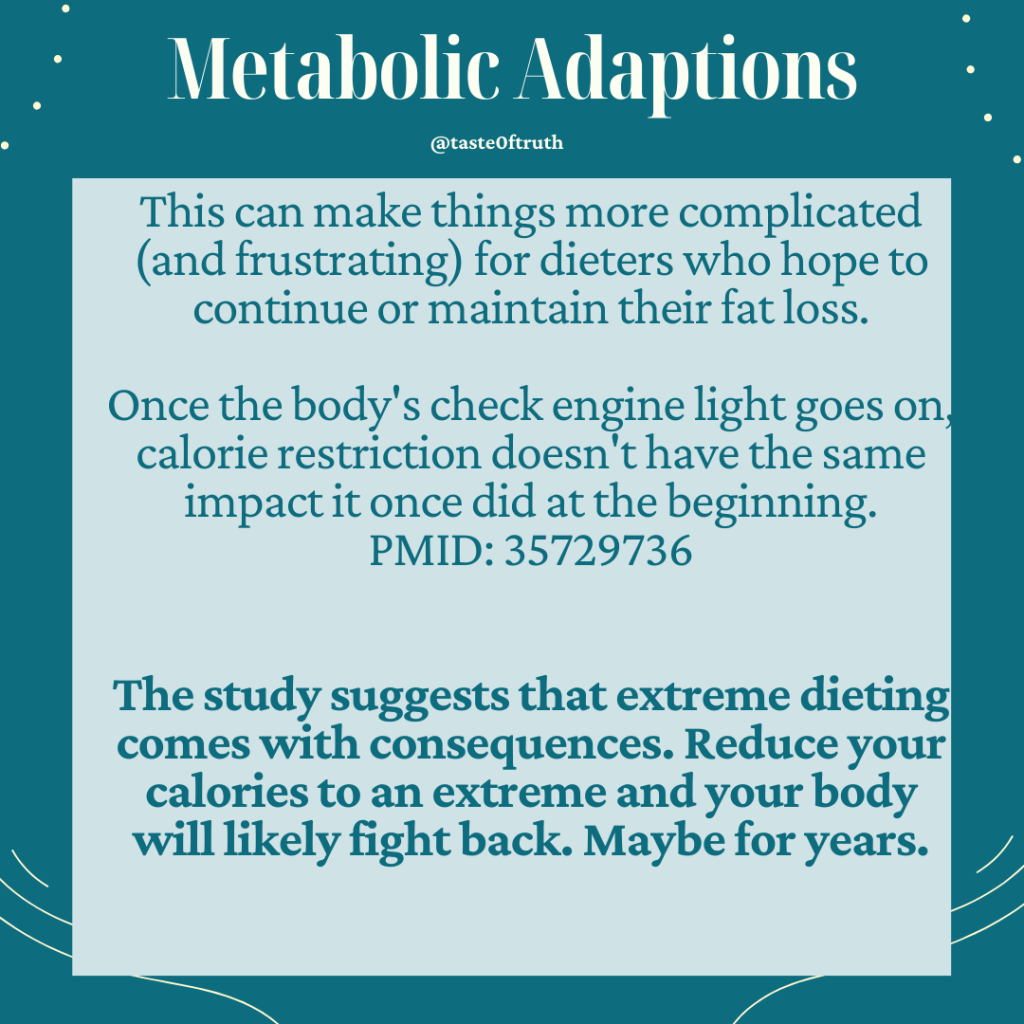
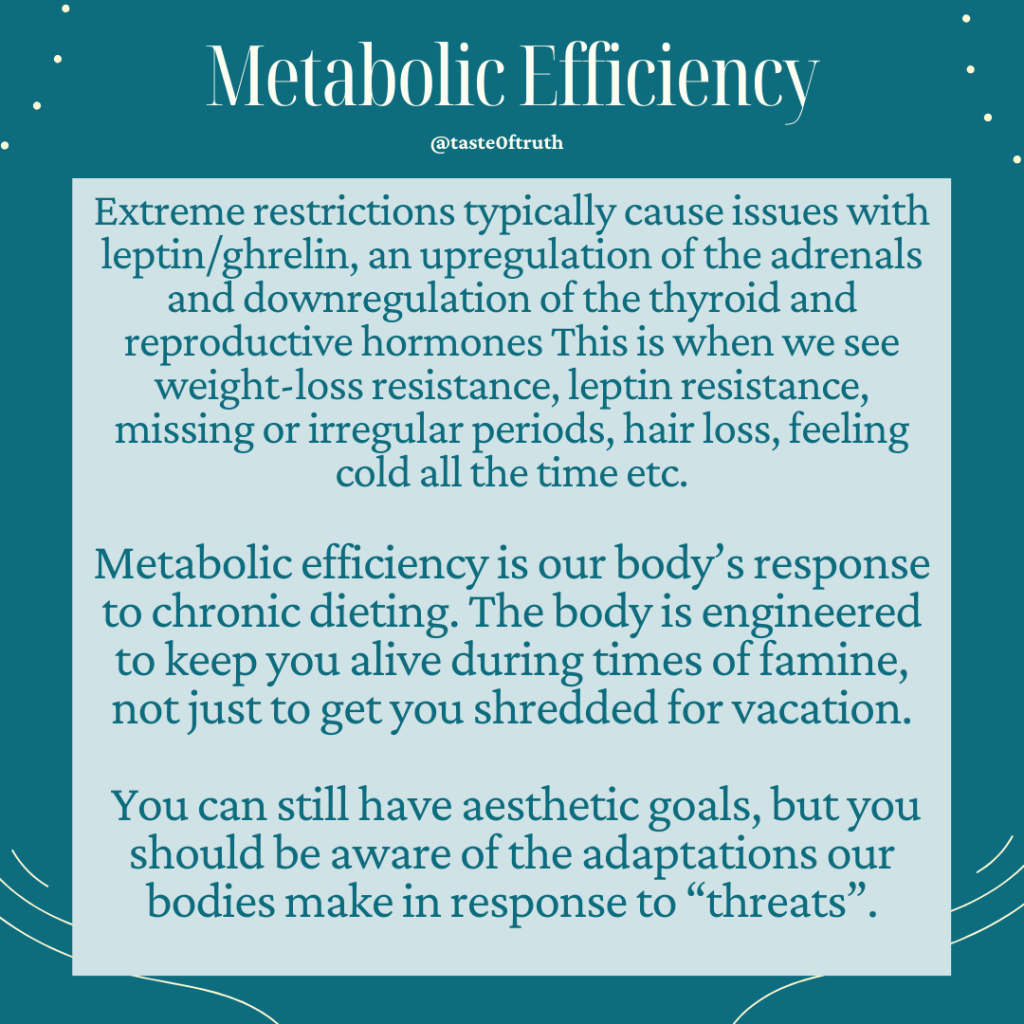
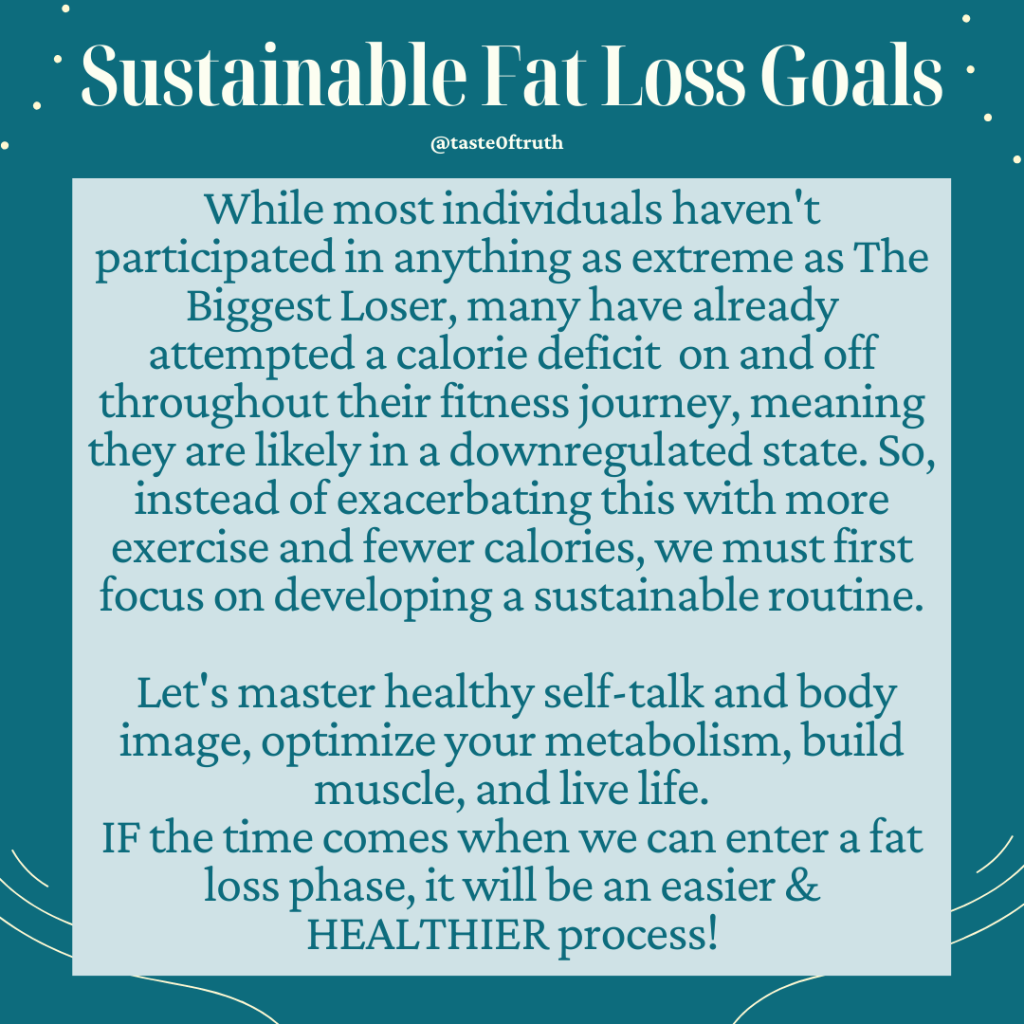
The Biggest Loser Study-The metabolic consequences of extreme dieting & the weight gain rebound effect

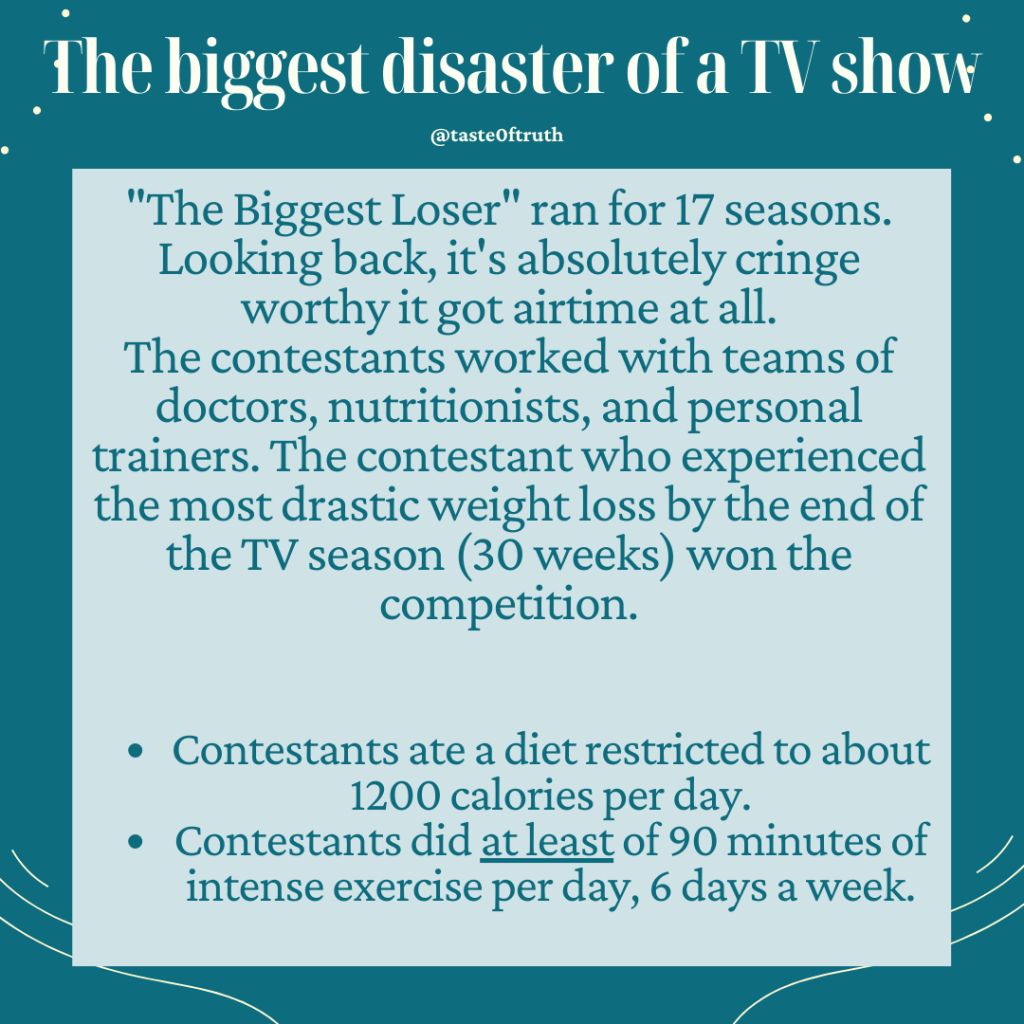
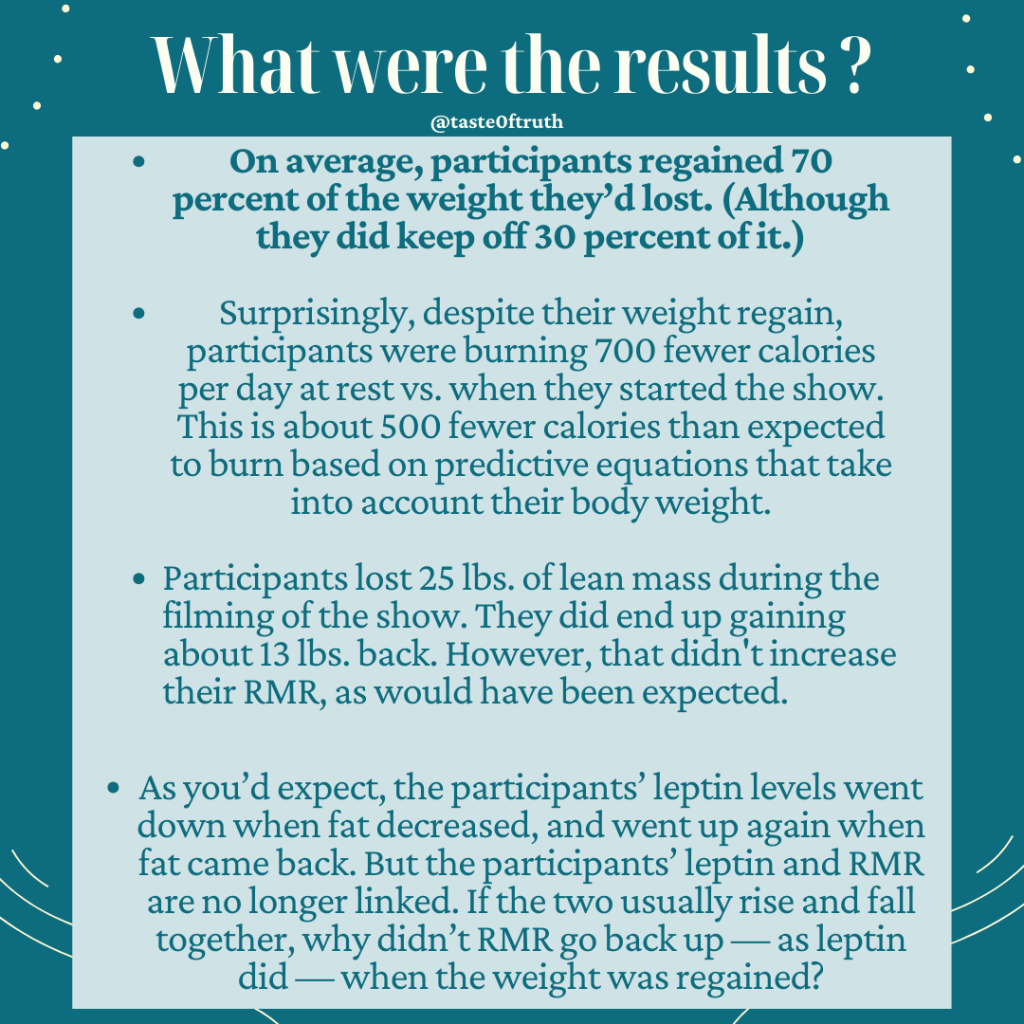
🎙️ On this week’s podcast with @chewsfoodwisely, we explore the common question: Is your metabolism broken or adapted? An interesting study that showcases BOTH metabolic adaptation & metabolic efficiency is The Biggest Loser study!


👉🏻SWIPE👉🏻
Our guest, Nicole, a renowned nutrition expert, helps us navigate through the complexities of metabolism and offers insights into understanding how our bodies respond to various factors such as diet, exercise, and lifestyle.

We discuss the differences between a “broken” metabolism and one that has adapted to environmental influences, as well as practical tips for optimizing metabolic health.

Tune in to our latest podcast episode where we’ll be sharing expert insights, tips, and strategies to revitalize your metabolism and get back on track.


Let’s reclaim your health and crush those goals together! 💪🔥

#BrokenMetabolism #FitnessJourney #HealthGoals #biggestloser #weightlossjourney #christianpodcast #christianblogger #faith #faithbasedwellness #wellness #dietculturedropout

How restrictive dieting impacts your thyroid…

This week on the podcast we are talking about your thyroid which is a 🦋-shaped gland that powers every cell in your body. It sets the pace for your body to function and operate.

👉🏻Swipe 👉🏻 to learn how chronic dieting, under-eating, under-nourishing can lead to impaired thyroid function.

Thyroid health can be so confusing, especially because you don’t need to be diagnosed with a thyroid disorder to suffer from thyroid issues. Hypothyroidism or sluggish thyroid is much more common in women than hyperthyroidism—see symptoms on slide 6.

It’s important to understand that the years of stressors (Like: undernourishment, overexercising, lack of rest, sunlight, constant stimulation, trauma, halogen exposure, etc.) will not disappear overnight.

Here are some areas to focus on to bring back balance:

Managing STRESS — Developing positive stress coping mechanisms like: praying, singing, journaling, getting outside, asking for help, breath work, taking a bath, therapy, &hanging with pets. Be sure to prioritize morning and bedtime routines, quality sleep, gentle exercise, and support your circadian rhythm by getting enough natural light (and less blue light exposure).⠀⠀⠀⠀⠀⠀⠀⠀⠀
⠀⠀⠀⠀⠀⠀⠀⠀⠀
NUTRIENTS — Our thyroid requires specific minerals, like Vit. A, iodine, zinc, copper, selenium, etc. to properly function. Focus on nutrient-dense foods like shrimp, organ meats, bone broth, quality dairy, &fresh fruits.⠀⠀⠀⠀⠀⠀⠀⠀⠀
⠀⠀⠀⠀⠀⠀⠀⠀⠀
DIGESTION — We need to properly break down and absorb our food to get the nutrients our thyroid requires. We also need enough stomach acid for a healthy digestive process. Try adding in digestive bitters if you suffer from digestive issues.⠀⠀⠀⠀⠀⠀⠀⠀⠀
⠀⠀⠀⠀⠀⠀⠀⠀⠀
TOXINS — Specific chemicals called halogens (bromine, chlorine, and fluorine) compete with iodine and bind to thyroid receptors, preventing thyroid hormones from working properly. Filtering fluoride and chloride out of your drinking and bath/shower water helps those with thyroid dysfunction.⠀⠀⠀

#onlinepersonaltrainer#onlinefitnesscoach#chronicdieting#hormoneimbalance#womenshealth#strengthtrainingforwomen
#thyroid#thyroidhealth#fitnessjourney#newagetojesus#faith#biblicalwomanhood