Breaking Free: A Conversation with Yasmine Mohammed on Radical Islam, Empowerment, and the West’s Blind Spots
After finishing George Orwell’s 1984, I noticed its resurgence in popularity, especially after Trump’s election. Ironically, it’s not the conservative right but the progressive left that increasingly mirrors Orwellian themes. Similarly, Margaret Atwood’s The Handmaid’s Tale has become a rallying cry for liberals who claim to be on the brink of a dystopian theocracy. Yet, as Yasmine Muhammad pointed out in this week’s episode, this comparison is not only absurd but deeply insulting to women who live under regimes where Atwood’s fiction is a grim reality.
1984: Rewriting Language and History
The Democratic Party’s obsession with redefining language is straight out of Orwell’s playbook. They tell us biology is bigotry and that there are infinite genders, forcing people to adopt nonsensical pronouns or risk social ostracism. This is not progress—it’s the weaponization of language to control thought, eerily similar to Orwell’s Newspeak.
But it doesn’t stop there. They actively rewrite history by renaming monuments, military bases, and even schools, erasing cultural markers in the name of ideological purity. This is doublespeak in action: the manipulation of truth for political orthodoxy. Orwell’s warning that “orthodoxy is unconsciousness” feels disturbingly apt when observing the modern left.
The Handmaid’s Tale: An Insult to Women Who Actually Suffer
In our conversation, Yasmine highlighted the absurdity of liberal claims that America is The Handmaid’s Tale come to life. Yasmine, who grew up under Islamic theocracy, knows firsthand what it’s like to live in a world where women have no autonomy. These women cannot see a doctor without a male guardian, are forced to cover every inch of their bodies, and are denied basic freedoms like education or the right to drive.
Contrast this with the West, where women have more freedom than any other point in history. Liberal women can run around naked at Pride parades, freely express their sexuality, and redefine what it means to be a woman altogether. And yet, they cry oppression because they are expected to pay for their own birth control or endure debates over abortion limits. This level of cognitive dissonance—claiming victimhood while living in unprecedented freedom—is a slap in the face to women who actually suffer under real patriarchal oppression.
Liberal Orthodoxy: Lost in the Sauce
What’s truly Orwellian is how the left uses its freedom to strip others of theirs. They shout about inclusivity but cancel anyone who disagrees. They claim to fight for justice while weaponizing institutions to enforce ideological conformity. Meanwhile, they are so consumed with their own victim complex that they fail to see how absurd their comparisons to dystopian fiction really are.
Orwell and Atwood warned against unchecked power and ideological extremism. If liberals actually read these books instead of using them as aesthetic props, they might realize they’re mirroring the very authoritarianism they claim to oppose. Instead, they’re lost in the sauce, preaching oppression in a society where they have more freedom than they can handle.
As Yasmine said, “You want to see The Handmaid’s Tale? Try being a woman in Saudi Arabia, Iran, or Afghanistan.” The left would do well to remember that before playing the victim in their cosplay dystopia.
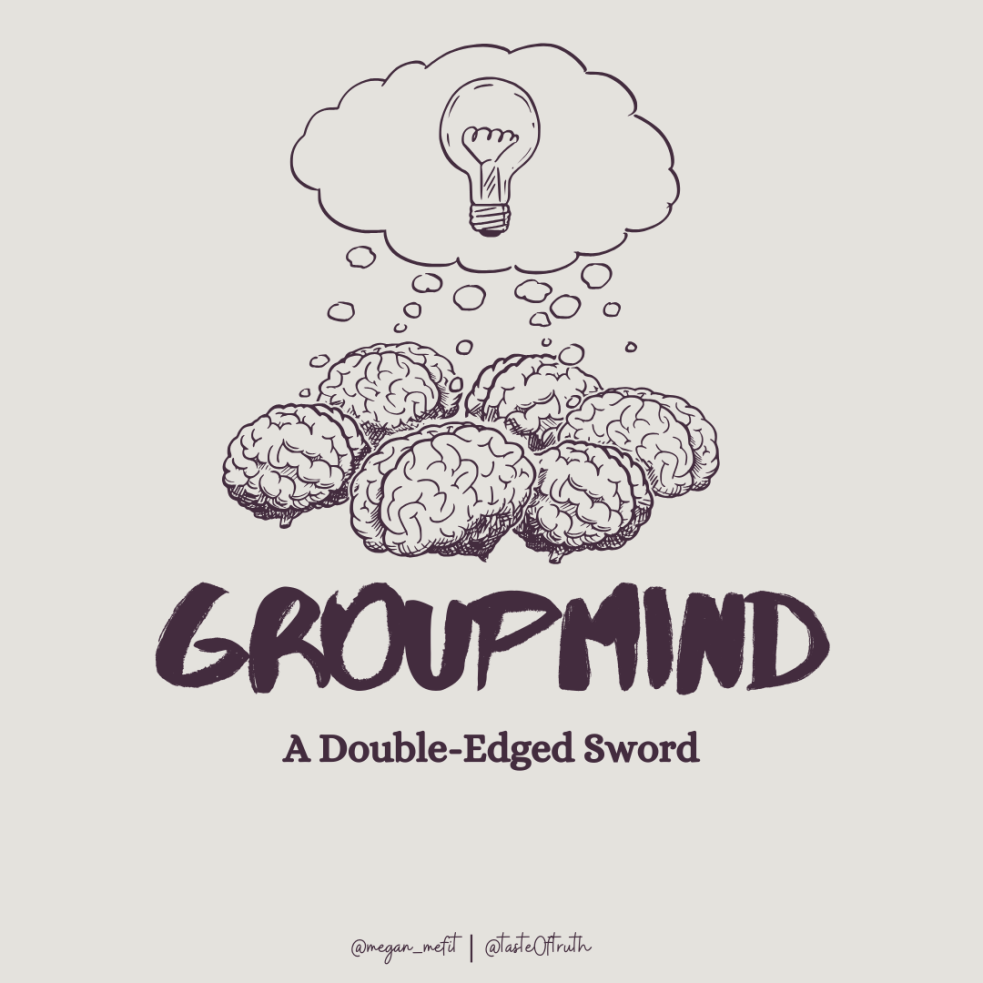
Navigating the waters of community can feel like a tightrope walk, especially for those of us who’ve been through the storm of spiritual abuse. This week on Taste of Truth Tuesdays, I’m excited to welcome a guest who dives deep into the concept of “Group Mind”—the idea that a collective can elevate individual voices, creating a harmonious collaboration. While this concept sounds beautiful on the surface, having walked the line between healthy and toxic communities myself, I can’t help but question: What happens when “Group Mind” becomes a vessel for manipulation rather than a source of strength?
The Allure of Community
Let’s face it: we all crave connection. From childhood friendships to spiritual gatherings, our lives are woven into a fabric of social interactions. In healthy communities, each thread—each individual—contributes to the larger tapestry. Group Mind can be empowering when everyone contributes their unique strengths. Think of a brainstorming session, where different ideas build on each other to create something innovative. But in controlling groups, individuality is suppressed, and members are pressured to conform, stifling creativity and critical thinking.
The Double-Edged Sword of Group Mind
Our guest shares their experience in an improv class, where the idea of Group Mind became both a revelation and a source of anxiety. It’s fascinating how the language of community can feel welcoming yet be weaponized against those who seek authenticity. This mirrors the complexities of modern social dynamics, especially in the age of social media, where radicalization can happen at lightning speed.
In Episode 5 of my podcast, we tackled the “crunchy hippie to alt-right pipeline,” but now it’s time to shine a light on the radicalization of the left—a topic often overlooked. Why did I go from progressive circles to mingling with Trump supporters and Christians? This shift was marked by a range of events and trends reflecting broader changes within progressive movements and their impact on American politics and culture.
The Irony of the Deconstruction Space
As I navigated the deconstruction space, I noticed something ironic: when the deconstruction movement defines a cult and unintentionally describes their own playbook, the irony is hard to miss. Many who now identify as progressive or left leaning have simply swapped one form of fundamentalism for another. They may have shed their evangelical past, but the same dogmatic, ‘us vs. them’ tactics remain. It’s like they never fully untangled themselves from the rigid mindset they claim to oppose.
Social justice has become their new ‘End Times,’ and the tribalism is painfully obvious. Conformity, consequences for stepping out of line, leaders who set the narrative… sound familiar? 🙃
🔍 “It’s not your enemies, it’s the system.” We often fall into the trap of seeing our political landscape as a battle between two sides—one fighting for democracy, the other autocracy. But this binary thinking misses the larger issue: who really has power in shaping policies? Research, like the 2014 study by Gilens and Page, reveals that economic elites and organized interest groups wield far more influence over government decisions than the average citizen or voter. This isn’t about a single party; it’s about a systemic challenge that transcends partisan lines. 🧠
Instead of feeding into divisive narratives, maybe it’s time to ask: Who benefits from keeping us divided? 🤔 Progressive politics can impose control using a power/victim binary that’s reductive and lacks nuance, leveraging the fear of being labeled an oppressor as a tool for compliance. Reflecting on my journey of deconstruction and exploring progressive spaces, I’ve noticed a concerning trend: the lack of nuance and the prevalence of an ‘us vs. them’ mentality.
Even within progressive Christianity, there’s pressure to conform to certain social norms and ethical behaviors. Disagreement is often met with resistance, and group identity politics can dominate discussions. As I listened to a friend lecture me about the systems of whiteness and how white people are part of the problem, I couldn’t help but feel a visceral response in my body. Wasn’t she aware of how she was marginalizing voices that do not align with CRT principles and fostering division rather than unity?
It’s one thing to leave behind a belief system, but if you’re still using the same control tactics, are you really free? Or are you just in another form of groupthink? Many who now identify as progressive or left-leaning have simply swapped one form of radicalism for another.
In navigating my journey, I’ve discovered that while community can be a source of strength, it can also be stifling. Let’s strive for more open dialogue where diverse perspectives are valued.
“I have a dream that my four little children will one day live in a nation where they will not be judged by the color of their skin but by the content of their character.” — Martin Luther King Jr.
Seeking Authentic Community
This brings us back to the concept of Group Mind. While it has the potential to uplift and unite, we must critically assess the communities we choose to engage with. Are they empowering our individuality, or are they reinforcing a new set of dogmas?
As we explore these themes in this week’s podcast episode, I invite you to reflect on your own experiences with community—whether online or offline. Are you in a space that nurtures your authentic self, or have you found yourself caught in another web of control? Let’s challenge ourselves to seek genuine connections that celebrate our uniqueness, rather than merely conforming to the expectations of a collective.
Navigating Community Dynamics
One critical takeaway from my own experiences and the stories shared by others is the importance of asking ourselves the right questions. When evaluating any community—whether it’s a religious group, a social circle, or even an improv class—we should reflect on whether we’re being encouraged to grow into our full selves or if we’re being pressured to shrink into submission.
Key Questions to Consider:
Am I celebrated for my unique contributions, or do I feel like a cog in the machine?
Is my voice heard and valued, or am I met with silence (or worse) when I express dissent?
Does this community expand my horizons, or does it confine me to a narrow worldview?
The Importance of Individuality
One of the most powerful realizations is that a thriving community doesn’t demand the extinction of individualism; it nourishes it. Just as the author of the guest post observed in an improv competition, the true beauty of collaboration lies in the ability of individuals to bring their full selves to the table, enhancing the group dynamic rather than diminishing it.
In my journey, I’ve learned that safe communities are those that not only say, “Yes!” to your ideas but also invite you to share more, to dig deeper, and to embrace the weirdness that makes you unique. They celebrate individuality as an essential ingredient for collective success, transforming “Group Mind” from a potential source of control into a powerful tool for creativity and support.
The Path to Healing
For those of us recovering from spiritual abuse, the journey to find a healthy community can feel daunting. It requires us to sift through the rubble of past experiences, recognizing patterns that once suffocated our voices. But it also offers a chance for healing, a space where we can reclaim our identities and forge connections based on respect and authenticity.
Ultimately, the quest for community is about more than just belonging; it’s about finding spaces where we can be our true selves. It’s about navigating the complexities of connection with our eyes wide open, ready to discern the difference between a supportive group and one that seeks to control.
Conclusion
As we move through life, let’s remember that community can be a double-edged sword. For some of us, especially those healing from trauma or navigating complex PTSD, the journey may be best supported by solitary pursuits—like books, pets, and podcasts—before stepping into the vibrant chaos of group dynamics. We must be vigilant in recognizing when connection serves us and when it threatens to silence our individuality. Here’s to seeking out those communities that empower us, uplift us, and invite us to shine our light—together.
This week, we’re diving deep into the murky waters of high-control groups like MLMs, conspiracies, and evangelicalism. 💥✨
🚨 Exploitation Alert 🚨
Tune in to explore the shady side of:
Lobbyism & Amway – How lobbying shapes the MLM landscape.
Enagic’s Kangen Water Scandal – Uncover the dangerous misinformation and financial exploitation by MLMs like Enagic.
Faith and Finance – Why are Christian women particularly vulnerable to MLM schemes? Learn to spot the red flags.
Influencers and Ideologies – How influencers like Girl Defined hide harmful beliefs behind appealing facades.
Podcasting Insights – Hear about the joys and challenges of podcasting, from trusting your instincts to finding joy in the creative process.
Join us for an eye-opening episode that tackles the intersections of gender, culture, business, and control. Don’t miss out on these compelling insights! 🚀✨
The Institute in Basic Life Principles was founded by Bill Gothard, is known for its strict, authoritarian teachings on Christian living and family roles, often leading to significant emotional harm.
In the deconstruction space, there’s a troubling tendency to focus exclusively on extreme cases of spiritual abuse, such as those from the Institute in Basic Life Principles (IBLP). While it’s crucial to address and understand these severe experiences, it’s equally important to recognize that spiritual and religious trauma can manifest in many forms beyond such high-profile examples.
While IBLP is a notable example of spiritual abuse, its practices reflect broader trends within evangelical Christianity that also emphasize control, guilt, and fear.
Unveiling the Shared Roots
The roots of evangelical Christianity are deeply entwined with guilt, fear, coercion, and deception, a legacy that can permeate all levels of faith practice. This issue isn’t confined to one group or doctrine; rather, it echoes through the broader history of evangelicalism, including the violent and tumultuous period of the Protestant Reformation.
Guilt and Fear: Evangelical teachings often emphasize human sinfulness and the need for constant repentance, creating an environment where guilt and fear become central. The pressure to meet unattainable moral standards can lead to chronic anxiety and self-doubt. Believers may struggle with feelings of inadequacy and unworthiness, which can erode self-esteem and lead to long-term psychological trauma.
Coercion: Many evangelical doctrines employ coercive tactics to ensure conformity and compliance. This can include manipulating believers through promises of divine favor or threats of divine punishment. Such coercion often pressures individuals into adhering to strict beliefs and behaviors, stifling personal autonomy and fostering a sense of control and manipulation.
Deception: The evangelical tradition can sometimes perpetuate deceptive teachings, presenting religious doctrines in a way that omits or distorts critical truths. This can include selective scriptural interpretations or misleading teachings about the nature of God and salvation. When individuals later confront these deceptions, they may experience profound disillusionment and betrayal, further contributing to their trauma.
Historical Context: The Protestant Reformation, a pivotal event in evangelical history, was marked by violent conflict and intense upheaval. The brutality and extremism of this period set a precedent for how religious movements can become entangled in aggression and intolerance. This historical backdrop adds another layer to understanding how evangelical Christianity, in its various forms, can inflict spiritual harm.
By acknowledging this broader context, we can better address the diverse experiences of trauma within the Christian faith and work towards healing that encompasses all who have been affected.\
Let’s look at the parallels:
1. Control and Authority:
Evangelical Teachings: Evangelical groups often emphasize strict adherence to biblical authority and teachings, which can lead to high levels of control over personal beliefs and behavior.
IBLP: The IBLP, founded by Bill Gothard, is known for its rigid set of rules and teachings that govern nearly every aspect of life, including family dynamics, education, and personal conduct.
2. Use of Guilt and Fear:
Evangelical Teachings: Evangelicals may use guilt and fear of eternal damnation to enforce moral behavior and adherence to religious practices.
IBLP: The IBLP uses fear of divine punishment and guilt to maintain control, emphasizing strict obedience to its principles and teachings.
3. Isolation from Dissenting Views:
Evangelical Teachings: Evangelical communities might discourage or isolate members who question or deviate from core beliefs, often labeling dissent as dangerous or sinful.
IBLP: The IBLP isolates its members from outside influences and encourages avoidance of those who criticize or question its teachings.
4. Emphasis on Obedience:
Evangelical Teachings: Emphasis is placed on obedience to God’s commands and church teachings, which can sometimes discourage critical thinking and personal questioning.
IBLP: stresses strict obedience to its guidelines as a sign of faithfulness, often at the expense of personal autonomy and critical reflection.
5. Authoritarian Structure:
Evangelical Teachings: Many evangelical groups have a hierarchical structure where church leaders wield significant authority over members’ beliefs and practices.
IBLP: The IBLP has a centralized authority with Bill Gothard’s teachings at the core, and his directives are followed unquestioningly by adherents.
6. Focus on Family Roles:
Evangelical Teachings: Traditional evangelical teachings often emphasize distinct roles within the family, typically with a strong patriarchal structure.
IBLP: The IBLP advocates for a strict family hierarchy where the father is the ultimate authority, and family roles are rigidly defined.
7. Handling of Dissent and Criticism:
Evangelical Teachings: In many evangelical communities, dissent or criticism of church doctrine or practices can lead to significant social and spiritual consequences. Those who voice doubts may be labeled as troublemakers or heretics, and their concerns are often dismissed or invalidated.
IBLP: The IBLP is known for its strong stance against criticism. Those who question or criticize its teachings are often ostracized or labeled as spiritually immature or rebellious. This approach helps to maintain a homogenous and compliant membership base.
8. Emphasis on Personal Purity and Moral Behavior:
Evangelical Teachings: Evangelical teachings often place a high value on personal purity and moral behavior, with a strong focus on abstaining from behaviors deemed sinful, such as premarital sex, substance abuse, or other forms of moral failing. This emphasis can create a culture of judgment and fear of falling short.
IBLP: The IBLP emphasizes extreme standards of moral behavior and personal purity, with detailed guidelines on how members should conduct themselves in all areas of life. The focus on maintaining high moral standards can lead to guilt and self-policing among members.
9. Economic and Social Expectations:
Evangelical Teachings: Some evangelical communities have specific expectations regarding financial contributions to the church and adherence to tithing practices. Members may be encouraged to prioritize church-related financial support over other expenses.
IBLP: The IBLP also has expectations regarding financial and social behavior, including guidelines on how families should manage their finances and interactions. Members are often encouraged to support the organization financially and align their social activities with its teachings.
10. Role of Testimonies and Personal Experiences:
Evangelical Teachings: Evangelical communities often emphasize personal testimonies and experiences as evidence of spiritual truth. Individuals are encouraged to share their personal stories of conversion or miracles as validation of their faith.
IBLP: The IBLP similarly relies on personal testimonies and experiences to validate its teachings. Success stories and positive outcomes are used to promote the effectiveness of its principles, while negative experiences are often dismissed or attributed to a lack of adherence.
11. Intervention in Personal Choices:
Evangelical Teachings: Evangelical teachings may extend into personal choices such as dating, marriage, and career decisions. Members might receive guidance or pressure to make choices that align with church teachings or leadership directives.
IBLP: The IBLP provides detailed guidance on personal choices, including dating and marriage, often imposing strict rules on how these aspects of life should be approached. Members are expected to follow these guidelines closely, with deviations viewed as problematic.
12. Cultural and Social Isolation:
Evangelical Teachings: Evangelical communities may promote cultural and social isolation from secular society, encouraging members to avoid influences that are seen as contrary to their faith. This can include limiting exposure to secular media, secular education, or interfaith interactions.
IBLP: The IBLP promotes a high degree of cultural and social isolation, encouraging members to avoid secular influences and limit interactions with those outside the organization. This isolation helps to reinforce adherence to IBLP teachings and prevents exposure to alternative viewpoints.
13. Psychological and Emotional Impact:
– Evangelical Teachings: The pressure to conform to strict religious standards can lead to psychological and emotional stress, including anxiety, guilt, and fear of failure or condemnation. Members may struggle with self-esteem and mental health issues as a result of these pressures.
– IBLP: The IBLP’s emphasis on strict adherence to its principles can also have significant psychological and emotional impacts, including stress, guilt, and fear of not measuring up to its standards. This can lead to long-term emotional and psychological difficulties for members.
In examining the similarities between evangelical teachings and the Institute in Basic Life Principles (IBLP), it becomes clear that both systems employ similar methods of control and influence.
Evangelicalism often emphasizes strict adherence to biblical authority, use of guilt and fear, and isolation of dissenting views, which can significantly impact personal beliefs and behavior.
Similarly, IBLP’s rigid rules and central authority exert profound control over its members, using fear and guilt to enforce compliance. Both systems focus on obedience and maintain hierarchical structures that can suppress critical thinking and personal autonomy.
Understanding these parallels sheds light on the broader patterns of spiritual trauma that can arise within high-control religious environments.
Whether within the confines of IBLP or the wider evangelical world, the use of control, guilt, and isolation can have lasting effects on individuals.
Recognizing these patterns is crucial for fostering awareness and support for those affected by such environments. As we continue to explore and address these issues, it is essential to advocate for more compassionate and open approaches to faith and personal growth, free from undue control and fear.
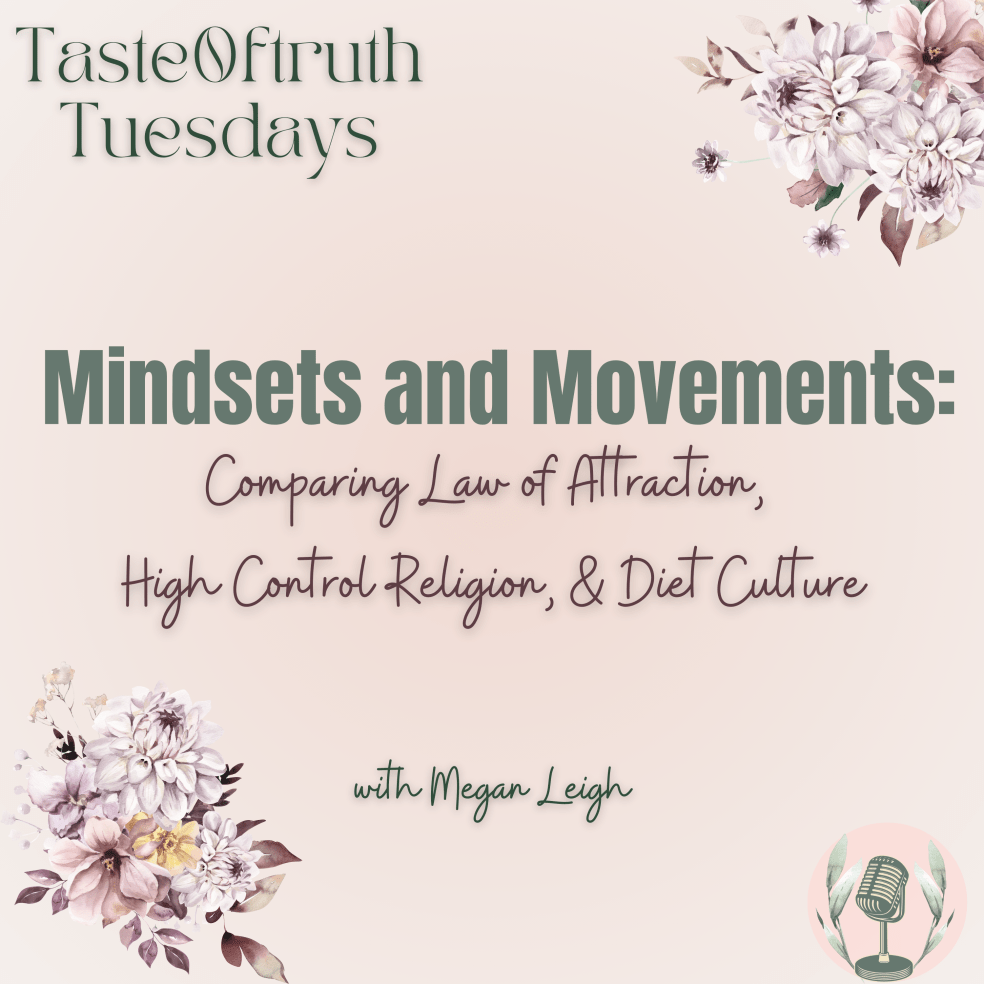
Welcome back to Taste0ftruth Tuesdays, where today’s topic is Mindsets and Movements: Comparing Law of Attraction, High Control Religion, and Diet Culture
Ever wondered how MLMs thrive? Many of them tap into the power of teachings like the law of attraction—convincing you that your thoughts create your reality. It sounds empowering, right? 🤪
But behind the facade lies a darker truth. MLMs manipulate these beliefs to lure in dreamers, promising wealth and success through their products.
So, what’s the scoop? The Law of Attraction says that what you focus on—whether positive vibes or the occasional grumpy thought—can actually manifest in your life. It’s all about tuning into those good vibrations and sending out positive signals to the universe.
Picture this: by visualizing your dreams, practicing gratitude like a pro, and keeping that vibe high, you’re supposedly paving the way for all those good things to come knocking on your door. 🚪
But hold up! It’s not all rainbows and sunshine. Just like dodging fad diets or harmful religious practices, there are pitfalls.
Stay tuned as we uncover the highs, lows, and everything in between of this cosmic mind game. We’ll share some tips on how to keep your mental mojo balanced, whether you’re manifesting your dream job or just trying to stay chill in the chaos.
Let’s walk that fine line between harnessing the power of our minds and falling into the traps of unrealistic expectations and self-blame.
The law of attraction, diet culture, and high-control religions can promote all-or-nothing thinking in several ways:
1. Law of Attraction: This philosophy suggests that positive thoughts bring positive outcomes, and negative thoughts bring negative outcomes. This can lead people to believe that if they’re not constantly thinking positively, they’re attracting negativity into their lives. This binary thinking ignores the complexity of human emotions and experiences.
2. Diet Culture: Many diets promote strict rules about what foods are “good” or “bad,” fostering an all-or-nothing approach to eating. If someone deviates from the diet even slightly, they may feel like they’ve failed completely. This can contribute to unhealthy relationships with food and body image.
3. High-Control Religions (HCR): Some religions enforce rigid rules and beliefs, presenting a stark contrast between righteousness and sin. Followers may feel intense pressure to adhere perfectly to these standards, fearing severe consequences for any perceived transgression.
This black-and-white thinking can create feelings of guilt, shame, or inadequacy.
In each case, the emphasis on absolutes and extremes discourages nuanced thinking and self-compassion. It can lead individuals to judge themselves harshly for perceived failures and to feel like they must constantly strive for unattainable ideals.
The law of attraction mindset can be damaging to mental health and well-being, I know this from my past experiences prior to being converted into a high control religion. In my journey of deconstruction, I’ve been pondering how belief systems like the law of attraction, high-control religions, and diet culture wield their influence.
Each of these ideologies promises transformative change through strict adherence to their principles, whether it’s manifesting positivity, spiritual purity, or a perfect body.
But here’s the kicker – they all share several common threads 🧵 🪡
1. Belief in Control and Manifestation
2. Promises of Transformation
3. Blaming the Individual for Failure
4. Emphasis on Discipline and Compliance
5. Commercialization and Profit
While their specific goals vary, the law of attraction, high-control religions, and diet culture share fundamental similarities in their mechanisms of belief, control, promise of transformation, and their impact on adherents’ lives
Similarities in Their Harmful Effects:
1. Unrealistic Expectations:
– Law of Attraction: Promises that positive thinking can manifest any desire, leading to unrealistic expectations about what can be achieved without effort or acknowledging external factors.
– Diet Culture: Promotes the idea that a perfect body is achievable through strict adherence to specific diets or exercise regimens, often ignoring genetic, physiological, and lifestyle differences.
– High Control Religion (HCR): Claims of absolute truths and moral perfection can create unattainable standards for behavior and belief, often leading to feelings of inadequacy or failure when individuals fall short.
2. Self-Blame and Guilt:
– Law of Attraction: Encourages individuals to believe that any failure to achieve their desires is due to their own negative thinking, leading to self-blame and guilt.
– Diet Culture: Instills guilt and shame in individuals who cannot maintain the prescribed diet or achieve the desired body image, blaming them for a lack of willpower or discipline.
– HCR: Imposes strict moral codes and doctrines, where deviation is often seen as a personal failure or sin, leading to guilt and self-condemnation.
3. Emotional Manipulation:
– Law of Attraction: Often exploits emotional vulnerability by selling the idea that happiness and success are just a thought away, leading to financial exploitation through self-help products and courses.
– Diet Culture: Uses emotional manipulation to sell products, diets, and fitness programs, preying on insecurities about body image and societal standards of beauty.
– HCR: Can manipulate emotions by promising eternal rewards or threatening eternal punishment, using fear and hope to control behavior and beliefs.
4. Avoidance of Complex Realities:
– Law of Attraction: Simplifies complex life issues by attributing outcomes solely to individual thoughts, ignoring systemic, social, and external factors.
– Diet Culture: Overlooks the complexities of human biology, metabolism, and mental health by promoting one-size-fits-all solutions to weight and health.
– HCR: May offer simple answers to complex existential questions, discouraging critical thinking and exploration of diverse perspectives.
5. Promotion of Perfectionism:
– Law of Attraction: Suggests that perfect thoughts can lead to a perfect life, fostering an unrealistic ideal of constant positivity.
– Diet Culture: Advocates for an ideal body type and perfect eating habits, leading to obsessive behaviors and unhealthy relationships with food and self-image.
– HCR: Can push for moral and spiritual perfection, creating pressure to conform to strict standards and leading to anxiety and fear of judgment.
Mental Health Concerns:
1. Unrealistic Expectations:
Believing that thoughts alone can manifest reality may lead to unrealistic expectations and disappointment when desired outcomes don’t materialize. This can lead to frustration, self-blame, and decreased self-esteem.
2. Ignoring Reality:
Overemphasis on positive thinking can sometimes lead to denial of real issues or avoidance of necessary actions. Individuals may neglect practical steps and problem-solving strategies, relying solely on mental strategies.
3. Blame and Guilt:
When negative events occur, individuals might blame themselves for having “wrong” or “negative” thoughts. This self-blame can exacerbate feelings of guilt, anxiety, and depression.
4. Mental Health Symptoms Exacerbation:
For individuals with certain mental health conditions, such as anxiety disorders or obsessive-compulsive disorder (OCD), the pressure to control thoughts can be particularly detrimental. Intrusive thoughts and the fear of their potential impact can intensify symptoms.
5. Isolation:
If individuals feel their spiritual practices are misunderstood or dismissed by others, they may become isolated. Lack of social support can negatively impact mental health.
These ideologies promise transformative change through strict adherence to their principles, often promoting all-or-nothing thinking. But breaking free from this mindset is crucial for fostering balanced perspectives and personal growth.
Here are practical tips to challenge all-or-nothing thinking:
1. Practice Mindfulness: Embrace techniques like meditation to become aware of thoughts without judgment, recognizing when you’re stuck in extremes.
2. Identify Thought Patterns: Notice words like ‘always’ and ‘never,’ replacing them with ‘sometimes’ or ‘progress’ to introduce flexibility.
3. Challenge Assumptions: Explore alternative perspectives and shades of gray instead of thinking in absolutes.
4. Set Realistic Goals: Break down big goals into smaller steps, celebrating progress and effort along the way.
5. Practice Self-Compassion: Be kind to yourself during setbacks, understanding that growth involves learning from mistakes.
6. Seek Different Opinions: Discuss beliefs with trusted others to gain diverse viewpoints and broaden understanding.
7. Use the 10% Rule: Aim for gradual improvement rather than perfection, reducing pressure and promoting sustainable progress.
8. Keep a Thought Journal: Reflect on instances of all-or-nothing thinking to identify triggers and develop alternative interpretations.
9. Practice Gratitude: Regularly acknowledge small positives to shift focus away from perfectionism.
10. Educate Yourself: Learn about cognitive distortions to empower yourself in challenging and changing these patterns effectively.
By integrating these practices, we can cultivate resilience and a more balanced approach to life, moving beyond rigid belief systems toward authenticity and personal well-being.
And that’s all I have for you today, folks!
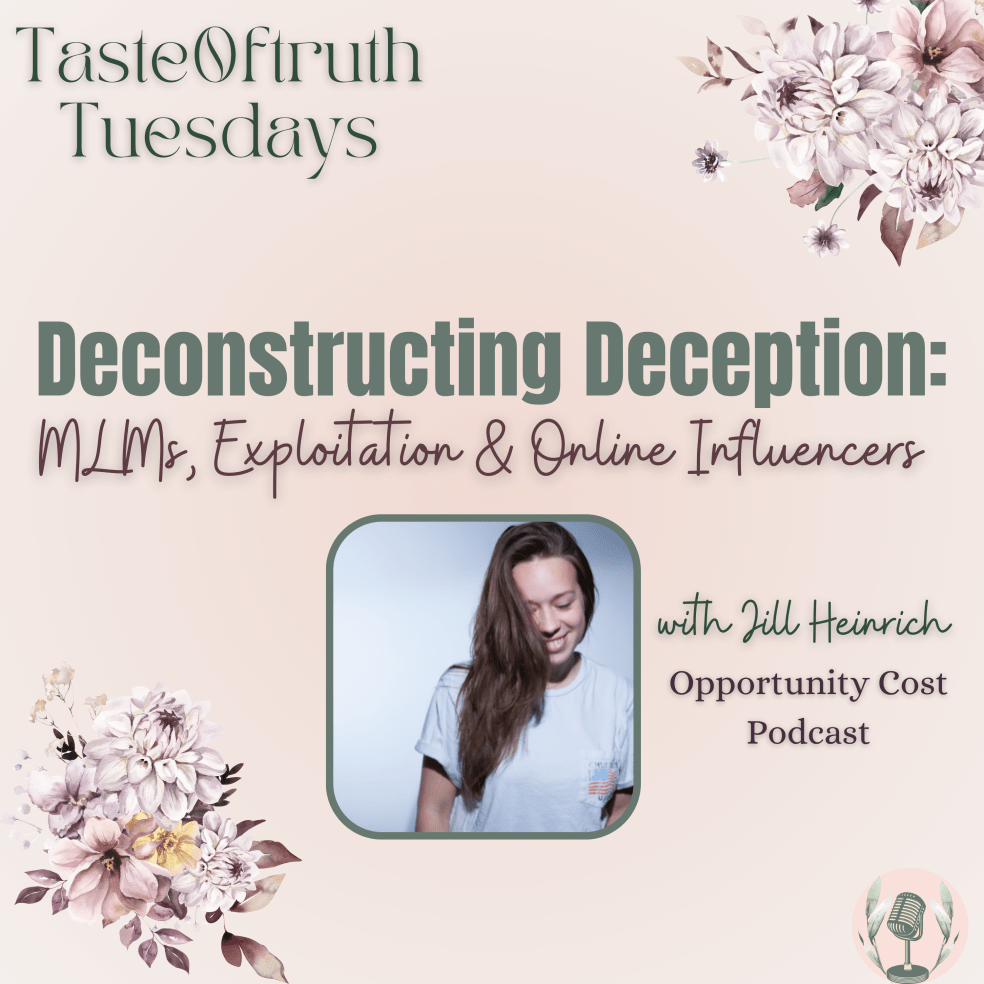
For upcoming episodes, we have Deconstructing Deception: MLMs, Exploitation & Online Influencers with my friend Jill, we dive into the murky waters of high control groups like MLMs, conspiracies and evangelicalism. We discuss about how exploitation is huge in these environments. And I share a bit more about my journey from MLM entanglement to pandemic conspiracies and high-control religion.
Next month: Equality in Focus: Reproductive Rights, Gender Norms, and Political Reform with my friend Emma and a lot more exciting interviews coming for you!
Until then, maintain your curiosity, embrace skepticism, and keep tuning in! 🎙️🔒
To deepen your understanding of the potential pitfalls of spiritual practices like the law of attraction, diet culture, and religious absolutism, as well as to develop critical thinking and emotional intelligence, consider exploring these high-quality resources across various formats:
Books:
“Bright-Sided: How Positive Thinking Is Undermining America” by Barbara Ehrenreich** – This book critiques the overemphasis on positive thinking and its societal impacts.
“Dietland” by Sarai Walker** – A fictional yet poignant critique of diet culture and societal beauty standards.
“The Body is Not an Apology: The Power of Radical Self-Love” by Sonya Renee Taylor** – Discusses body positivity and challenges diet culture.
“When Prophecy Fails” by Leon Festinger, Henry Riecken, and Stanley Schachter** – A classic work on cognitive dissonance, exploring how people react when prophecies or absolute religious claims fail.
Articles and Papers:
“The Trouble with the ‘Law of Attraction'” by Carolyn Gregoire** (HuffPost) – Discusses the psychological and practical issues with the law of attraction.
“The Harmful Effects of Diet Culture” by Taylor Wolfram** (Academy of Nutrition and Dietetics) – An article exploring the negative impacts of diet culture.
“The Perils of Positive Thinking” by Susan David** (Harvard Business Review) – Analyzes the downsides of relentless positivity in personal and professional settings.
Websites and Online Courses:
Intuitive Eating – A resource focusing on a balanced approach to food and body image, countering diet culture.
Coursera and edX – Provide courses on critical thinking, emotional intelligence, and psychology. Examples include:
– “The Science of Well-Being” by Yale University (Coursera)
– “Psychological First Aid” by Johns Hopkins University (Coursera)
Podcasts and Videos:
1. “Maintenance Phase” – A podcast debunking wellness and diet culture myths.
“The Happiness Lab” by Dr. Laurie Santos** – Explores the science of well-being, addressing the limits of positive thinking.
TED Talks – Search for talks on critical thinking, the psychology of belief, and emotional intelligence. Notable example:
“The Danger of a Single Story” by Chimamanda Ngozi Adichie
Supportive Communities:
Body Positivity Groups** – Communities like “The Body Positive” offer support and resources to counteract diet culture.
Skeptics Societies – Organizations like The Skeptics Society promote scientific skepticism and critical thinking about various claims, including those related to spirituality and religion.
Religious Literacy Projects – Programs like Harvard’s Religious Literacy Project provide nuanced education on religion and its diverse expressions, promoting understanding and critical engagement.
Academic Journals:
Journal of Positive Psychology** – Offers research on the benefits and limitations of positive thinking and related practices.
International Journal for the Psychology of Religion** – Publishes research on the psychological aspects of religious beliefs and practices.
These resources can help you critically engage with the topics, develop a balanced perspective, and avoid the pitfalls associated with overly simplistic or manipulative practices.





 Taste0ftruth Tuesdays