In recent decades, the Law of Attraction has become one of the most influential belief systems in wellness, self-help, and multilevel marketing (MLM) circles. Its premise is seductively simple: your thoughts shape your reality. Think positively, and abundance will flow; dwell on negativity, and you’ll attract misfortune.
We have discussed the pitfalls of Law of attraction in a previous episode, you can find here.
🎙️ Another throwback episode is linked below, where I unpack my journey from wellness fanatic within MLM into a high-control religion. Together, we explore the wild “crunchy hippie to alt-right pipeline.” 🌿➡️🛑 social media, influencers, and wellness hype quietly nudge people toward extreme ideas, and in this episode, we break down exactly how. 🎧🔥
This modern doctrine of “mind over matter” is often traced to The Secret (2006) by Rhonda Byrne, but its genealogy is much older. It reaches back to New Thought philosophy of the 19th century, where figures like Ralph Waldo Emerson, Phineas Quimby, and later Mary Baker Eddy (founder of Christian Science) claimed that divine thought itself was the engine of reality. These Mind Cure and faith healing movements linked spirt and matter together. Disease, poverty, and suffering were seen as products of “wrong or stinking thinking.” Salvation was not just spiritual but cognitive: change your thinking, change your life.
and so again I say: It is shockingly right instead of shockingly wrong of you to be prosperous. Obviously, you cannot be very happy if you are poor and you need not be poor. It is a sin. –Catherine Ponder (The Dynamic Laws of Prosperity)
In fact, it is the search for spiritual healing of the body that led to what is known today as prosperity consciousness or in Christian evangelism, it’s prosperity theology.
That intellectual lineage matters because it shows how the Law of Attraction has always been more than a harmless pep talk. It represents a cosmology of control, one that locates all responsibility (and blame) within the individual mind. As we have discussed many times before, Jonathan Haidt observes in The Righteous Mind, belief systems serve a dual function: they bind communities together and blind them to alternative explanations.
In this sense, the Law of Attraction doesn’t just inspire positive thinking; it narrows. By framing success and failure as purely mental vibrations, it obscures structural realities like economic inequality, physical health and genetic limitations, racism, or corporate exploitation.
And that narrowing is precisely what makes it the perfect handmaiden to MLM culture.
When Positive Thinking Becomes a Business Model
Robert L. FitzPatrick, in False Profits and Ponzinomics, describes MLMs as “endless chain” recruitment schemes. What sustains them isn’t product sales but the constant influx of hopeful recruits. Yet these schemes require something more than numbers: they require belief.
Here, the Law of Attraction becomes the MLM’s best salesman. Distributors are told:
Failure isn’t about the structure of the business; it’s about your mindset.
Doubt is “negative energy” that will block your success.
Quitting is not just a business choice but a moral failing.
In the Amway training program, the “ABCs of Success” are “Attitude, Belief and Commitment.” Attitude was the key which must be guarded. Don’t let anyone steal your attitude. Negative was defined as “whatever influence weakens your belief and commitment in the business” -False Profits
This is where Norman Vincent Peale’s “positive thinking” gospel dovetails with MLM. In his 1948 book Positive Thinking for a Time Like This, Peale popularized the phrase
“Let go and let God. Let Him take over your life and run it. He knows how.”
While originally a call to spiritual surrender, the phrase has since been weaponized in countless contexts from Holiness movements to Alcoholics Anonymous to prosperity preaching. At its worst, it functions as a silencer: don’t question, don’t resist, don’t think critically. Just “let go,” and trust that outcomes (or uplines) will provide.
Eastern Orthodox Christianity has a word for this: prelest. It’s the belief that human beings are so easily deceived that any private sense of spiritual progress — a feeling of clarity, joy, empowerment, even a mystical experience — can’t be trusted on its own. Without humility and the guidance of a spiritual father, you’re told it may just be pride, delusion, or the devil in disguise.
That’s the trap: you can’t trust your own mind, heart, or gut. The only “safe” option is obedience to the system. Which is exactly how MLMs and other high-control groups operate — undermining self-trust to keep you dependent.
Nietzsche would have called this a kind of slave morality, a belief system that encourages resignation to suffering rather than rebellion against unjust structures. The Law of Attraction, framed in this way, doesn’t challenge MLM exploitation; it sanctifies it.
More powerful than any product, charismatic leader, or compensation plan, the MLM mindset materials (the tapes, courses, and “personal development” kits) are the prime tools used to recruit and control distributors. Once you’re in the system, you’re encouraged to buy these materials week after week, keeping you invested emotionally and financially while feeding the company’s bottom line.
I went back through my Facebook to find some goodies for you! 😜This photo says “My energy creates my reality. What I focus on is what I will Manifest.” Here is the original caption so you can hear how brainwashed I was. “💥🙌🏼Belief is a feeling of certainty about something, driven by emotion. Feeling certain means that it feels true to you and therefore it is your reality. 💥🙌🏼 💪🏼 What you focus on you find 💪🏼 👀 You’ve got to believe it, to see it 👀”
Flashback to my first corporate event Aug 2016. My upline purchased my flight basically forcing me to go.
My caption at the time: 🤮
🔥IGNITE YOUR VISION! 🔥 ⚡Attended an event that changed my life. Showed me the massive vision of this company. 🤗Join our passionate, growing team of 18-35-year-olds striving for extraordinary lives and ownership of health, dreams, and contributions. 🤩Returning to this LIFE CHANGING event soon! Nashville, TN—let’s learn, grow, and celebrate!
Sounds inspiring, right? Except what they’re really selling is mandatory product purchases, endless hype, and a community that keeps you chasing the next status milestone. That “massive vision” isn’t about your health or dreams—it’s about the company’s bottom line.
Words like passionate, extraordinary, innovators, ownership are carefully chosen psychological nudges, making you feel like life itself is on the line if you’re not on board. And the countdown to the next “life-changing” event? Keeps you spending, attending, and emotionally hooked.
This is exactly what FitzPatrick calls out in Ponzinomics: the sales rep is the best customer. Only a tiny fraction of participants earn anything; the rest are paying to stay inspired.
More flashback images from my cult days….
The Psychological Toll
When these elements collide the New Thought inheritance of “mind over matter,” Peale’s positive thinking, religious community networks and MLM compensation plans… the result is a high-control environment dressed in empowerment language.
The outcomes are rarely empowering:
Blame and guilt when inevitable losses occur.
Anxiety from the demand to maintain “high vibrations.”
Suppression of doubt, lest skepticism be mistaken for weakness.
Financial harm disguised as personal failure.
In wellness communities, this logic extends beyond money. If essential oils don’t heal your illness, it’s because your mindset was wrong. If the diet doesn’t work, it’s because you didn’t “believe” enough. Structural realities (biology, medicine, inequality) are flattened into personal responsibility.
As Haidt warns, morality (and by extension ideology) can both bind and blind. The Law of Attraction, when paired with MLM, binds participants into a shared culture of hope and positivity while blinding them to exploitation.
Connecting the Dots: Bodybuilding, Metabolism & Team Isagenix
A couple weeks ago on the podcast, I shared about my bodybuilding years and the metabolic fallout I still live with today. I had forgotten how much of that season was actually entangled with my Isagenix obsession. My upline (the couple who enrolled me) were a part of Team Isagenix®, and I craved the validation of being “seen” as a successful athlete inside that community.
The requirements were brutal: placing in the top three of multiple competitions in a short span of time. So, between May 2017 and October 2018, I crammed in four shows in just 18 months. No off-season. No recovery. Just constant prep cycles. My metabolism never had a chance to stabilize, and I pushed myself past healthy limits. I wrecked my body and I’m still paying the price.
This is why I push back so hard when people insist that success is all about having a “positive enough” attitude to manifest it. My mindset was ironclad. What I lacked the conscious awareness that valued human health over recruitment and body image. That drive wasn’t just about stage lights and trophies. It was about proving my worth to an MLM culture that dangled prestige as the price of belonging. Team Isagenix® made the bar steep, and I was determined to clear it, no matter the cost.
And if you need proof of how deep this “mindset over matter” indoctrination goes, look no further than my old upline…now rebranded as a Manifestation Coach. Picture the classic boss-babe felt hat, paired with a website promising “signature mindset tools for rapid results.” According to her, if fear or doubt was “shrinking your dreams,” this was your moment to “flip it.” She name-drops 8-figure companies, influencers, and visionaries (the usual credibility glitter) while selling memberships, live events, and 7-day challenges.
It’s the same pitch recycled: your struggle isn’t systemic, it’s your mindset. If you’re not living your “life you truly love,” it’s because you haven’t invested enough in flipping the script (with her paid framework, of course). The MLM grind culture just got a new coat of “manifesting” paint.
🧠 Isagenix Programs & Their Psychological Impact
Healthy Mind and Body Program: A 60-day “mindset” initiative framed as holistic wellness. In practice, it ties product use to personal development, creating behavioral conditioning and binding members into a sense of shared identity and belonging. 🚩
IsaBody Challenge: A 16-week transformation contest requiring regular Isagenix product purchases. Completion comes with swag and vouchers; finalists are paraded as “success stories,” gamifying loyalty and dangling prestige as bait. The grand prize winner earns $25,000 but most participants earn only deeper entanglement. 🚩
Team Isagenix: Marketed as a prestige group for elite athletes with current national certifications, offering exclusivity and aspirational branding. This elevates certain members as “proof” of the products’ legitimacy, fueling both loyalty and recruitment. 🚩
Product Consumption: Isagenix requires 100 PV every 30 days just to remain “active.” This equates to about $150/month you HAVE to spend. On paper, bonuses and ranks promise unlimited potential. In reality, most associates struggle to recoup even their monthly product costs. Personal development rhetoric and community belonging often eclipse these financial realities, keeping participants cycling through hope, debt, and blame. 🚩
🤮🐦🔥 “Transform Your Life with Isagenix | Empowering Wellness and Wealth” 🐦🔥 🤮
Watch closely, because this is where the magic happens: the company paints a picture of limitless opportunity, but as Robert L. FitzPatrick lays out in Ponzinomics, the secret is that the sales rep is the best customer. That’s right… the real profits aren’t coming from your vague dreams of financial freedom; they’re coming from the people who are already buying the products and trying to climb the ranks.
The numbers don’t lie. According to Isagenix’s own disclosure: the overall average annual income for associates is $892. Among those who actually earned anything, the average jumps to $3,994. Do the math: $892 ÷ $3,994 ≈ 0.223 — meaning only about 22% of associates earn anything at all. The other 78%? Zero. Nada. Zilch.
And before you start fantasizing about that $3,994, remember: that’s before expenses. Let’s run a realistic scenario based on actual product spend:
$150/month on products or promotional materials = $1,800/year → net ≈ $2,194 − $1,800 = $1,194 before other costs.
Factor in travel, events, or socials? That $1,194 could easily drop to near zero…or negative.
The point: the so-called “income potential” evaporates fast when you account for the mandatory spending MLMs require. The only thing truly transformed is the company’s bottom line, not yours.
No wonder the comments are turned off.
Apparently, nobody actually crunches the numbers while the marketing spiel promises energy, strength, and vitality as if a shake could fix financial exploitation, metabolic burnout, and guilt-tripping at the same time.
My story is just one case study of how these tactics play out in real lives: I was recruited through trusted connections, emotionally manipulated with promises of transformation, pressured into relentless product use, and left with financial strain and long-lasting health consequences. That’s the “empowerment” MLMs sell and it’s why scrutiny matters.
Cultural Ecosystems That Enable MLMs
MLMs don’t operate in a vacuum. They flourish where belief structures already normalize submission to authority, truth-claims, and tightly networked communities. Evangelicals and the LDS Church provide striking examples: tight-knit congregations, missionary training in persuasion, and a cultural emphasis on self-reliance and communal obligation create fertile ground for recruitment.
Companies like Nu Skin, Young Living, doTERRA, and Melaleuca have disproportionately strong followings in Utah and among Mormon communities. FitzPatrick notes that MLMs thrive where trust networks and shared values make persuasion easier. The kind of environment where aspirational marketing and “prestige” teams can latch onto pre-existing social structures.
In short, it’s not just the products or the promises of positive thinking; it’s where belief, community, and culture all collide… that allows MLMs to hook people and keep them chasing elusive success.
Beyond Magical Thinking
The critique, then, is not of hope or positivity per se, but of weaponized optimism. When mantras like let go and let God or just thinking positive to manifest it are used to shut down discernment, discourage action, or excuse exploitation, they cease to be spiritual tools and become instruments of control.
Nietzsche challenged us to look beyond systems that sanctify passivity, urging instead a confrontation with reality even when it is brutal. FitzPatrick’s work extends this challenge to the world of commerce: if we truly care about empowerment, we must be willing to see how belief systems can be manipulated for profit.
That’s why MLMs and the Law of Attraction deserve scrutiny. Not because they promise too much, but because they redirect responsibility away from unjust structures and onto the very people they exploit.
Coming Up: A Deeper Dive
Next week on the podcast, I’ll be speaking with Robert L. FitzPatrick, author of False Profits and one of the world’s leading experts on MLMs. With decades of research, FitzPatrick has testified in court cases exposing fraudulent MLM schemes and helped unravel the mechanisms behind these multi-billion-dollar operations. He’s seen firsthand how MLMs manipulate culture, co-opt spirituality, and turn belief itself into a product.
Stay tuned. This is a conversation about more than scams, it’s about the machinery of belief, and how it shapes our lives in ways we rarely see.
Byrne, Rhonda. The Secret. New York: Atria Books, 2006.
Eddy, Mary Baker. Science and Health with Key to the Scriptures. Boston: The Christian Science Publishing Society, 1875.
Emerson, Ralph Waldo. The Essential Writings of Ralph Waldo Emerson. Edited by Brooks Atkinson. New York: Modern Library, 2000.
FitzPatrick, Robert L. False Profits: Seeking Financial and Spiritual Deliverance in Multi-Level Marketing and Pyramid Schemes. Charlotte, NC: Herald Press, 1997.
FitzPatrick, Robert L. Ponzinomics: The Untold Story of Multi-Level Marketing. Charlotte, NC: Skyhorse Publishing, 2020.
Haidt, Jonathan. The Righteous Mind: Why Good People Are Divided by Politics and Religion. New York: Vintage Books, 2012.
Nietzsche, Friedrich. On the Genealogy of Morals. Edited by Walter Kaufmann. New York: Vintage Books, 1989 (originally published 1887).
Peale, Norman Vincent. Positive Thinking for a Time Like This. New York: Prentice-Hall, 1948.
Quimby, Phineas P. The Quimby Manuscripts. Edited by Horatio W. Dresser. New York: Thomas Y. Crowell, 1921.
Wallace, David Foster. “Consider the Lobster.” In Consider the Lobster and Other Essays. New York: Little, Brown, 2005. (Useful on consumer culture critique, if you want a modern edge.)
Today we’re unpacking several interwoven topics I’ve explored in my writing before why people get drawn into high-control environments and how forgiveness in Christian culture is often weaponized, not as a path to healing, but as a tool to silence victims and protect institutions. This isn’t just a personal issue; it’s an institutional one.
This came into sharp focus after Erika Kirk, Charlie Kirk’s widow, said she forgives her husband’s killer. I’m not here to critique her grief, that’s her own process. What I want to explore is the cultural framework that makes this kind of forgiveness expected, celebrated, and even demanded in evangelical spaces. I have a MUCH MUCH longer blog linked here if you want to go much deeper than I plan to cover today.
Before even touching forgiveness, let’s pause on why this moment is so primed for revivalist recruiting. Sociologists and psychologists have long noted that people are most vulnerable to high-control groups (whether churches or MLMs) during times of disruption and emotional chaos.
Laura Dodsworth, in her book Free Your Mind, calls this a “blip.” A blip is any disruption that cracks our normal defenses: loss, illness, exhaustion, grief. Even smaller stressors (Think HALT) Hunger, anger/anxiety, loneliness or being tired can chip away at our resistance. Push long enough, and the conscious mind collapses into a state of openness, hungry for belonging and ready to absorb new narratives.
That’s exactly what makes funerals, memorials, and major crises fertile ground for recruitment. Orwell nailed it in 1984:
“Power is in tearing human minds to pieces and putting them together again in shapes of your own choosing.”
Jehovah’s Witnesses even admit to targeting what they call “ripe fruit”-the recently bereaved. In Brazil, recruiters have driven cars with loudspeakers through cemeteries on All Souls’ Day, broadcasting sermons to tens of thousands of mourners. That isn’t compassion; it’s strategic exploitation. Naomi Klein would call it the Shock Doctrine: trauma as an entry point for control.
We’re seeing the same tactics play out online right now. Someone posts about “returning to church” after years away, and within hours their feed fills with love-bombing-likes, comments, and digital hugs. It feels affirming, but it’s also classic manipulation: vulnerability plus attention equals a wide-open door into manipulation.
And so it’s no surprise that revivalist energy is surging in the wake of Kirk’s death.
Situational vulnerability + orchestrated belonging = fertile ground for expansion.
The Myth of “Christlike” Forgiveness
This brings us back to forgiveness. I want to be CLEAR HERE, obviously Erika Kirk wasn’t coerced into forgiving, but in evangelical culture forgiveness is never entirely personal, it’s baked into the ethos. The more you forgive, the more “Christlike” you appear.
Matthew 6:14–15“For if you forgive others their trespasses, your heavenly Father will also forgive you, but if you do not forgive others their trespasses, neither will your Father forgive your trespasses.”
That expectation is dangerous. Forgiveness is sacred when it grows out of genuine healing. But when demanded prematurely, it becomes a weapon. Survivors are told to “forgive as you’ve been forgiven” before they’re ready, before their pain is acknowledged, and typically long before their abuser is held accountable.
Pete Walker, in The Tao of Fully Feeling, argues that forgiveness is not a one-time act but a continual choice and that choice only works after grief, rage, and hurt are fully processed. Skip that, and forgiveness turns into compliance, a way to silence anger and keep victims stuck.
In other words: real forgiveness empowers the survivor. Weaponized forgiveness protects the institution.
How Churches Use Forgiveness to Protect Themselves
We’ve seen this pattern across evangelical institutions:
The Guidepost Report (2022) exposed that SBC leadership maintained a secret list of over 700 abusive pastors, shielding them from consequences while survivors were ignored, discredited, or retaliated against.
Jennifer Lyell, an SBC abuse survivor, was vilified by church leadership when she came forward. Instead of support, she was publicly shamed, and her abuser faced no consequences.
Christa Brown, another survivor, spent years advocating for reform after being assaulted by her youth pastor. The SBC’s response? Stonewalling, gaslighting, and further silencing.
Jehovah’s Witnesses have a longstanding pattern of protecting sexual predatorsunder their “two-witness rule,” which requires at least two people to witness abuse for it to be considered valid. This impossible standard allows abusers to go unpunished while victims are shunned for speaking out.
In each case, forgiveness isn’t about healing. It’s about compliance, silence, and institutional survival.
Nietzsche, Freud, and the Cycles of Guilt
This isn’t new. Nietzsche warned that Abrahamic religions hijacked older wisdom traditions, reframing them into systems of obedience rather than life-affirmation. Freud saw religion as a kind of collective neurosis, trapping people in loops of guilt and repression.
What is ironic, Freud’s own psychoanalytic model looks eerily similar to the religious structures he critiqued. As historian Bakan and others have suggested, Freud may have drawn (consciously or not) on Jewish mysticism, replacing priests with analysts, confession with therapy, sin with repressed desire. In trying to explain away religion, Freud ended up reproducing its patterns in secular form. In other words, the pattern of taking human vulnerability and channeling it into control runs deep.
And this is where Laura Dodsworth’s idea of the “blip” becomes so relevant. The blip is that moment of rupture…when you’re grieving, disoriented, exhausted, or otherwise cracked open. Your defenses are down, your critical mind isn’t firing at full strength, and the brain is searching for something to hold onto. In these liminal spaces, new ideologies rush in.
That’s why this moment is so ripe for revivalist energy. It’s not just about forgiveness…it’s about the total atmosphere of grief and disruption that can act as a blip. And high-control groups know it. It’s why political movements, religious revivals, and even MLMs wait for crisis points: job loss, divorce, a death in the family. The blip isn’t compassionately held-it’s exploited.
So when we watch something like Kirk’s memorial, we’re not just seeing personal mourning. We’re watching a social script unfold, one that revivalists know how to activate. In this script, forgiveness, obedience, and “turning your life over” aren’t neutral virtues—they become instruments of recruitment. Which means the real question isn’t should people forgive, but who benefits when forgiveness and emotional openness are demanded at the exact moment people are least able to resist?
Sources & Recommended Reading
Laura Dodsworth, Free Your Mind: The New World of Manipulation and How to Resist It (2023) – esp. Chapter 10, “Watch Out for the Blip.”
George Orwell, 1984 (1949) – “Power is in tearing human minds to pieces…”
Naomi Klein, The Shock Doctrine: The Rise of Disaster Capitalism (2007).
Pete Walker, The Tao of Fully Feeling: Harvesting Forgiveness out of Blame (1996).
Friedrich Nietzsche, On the Genealogy of Morals (1887); The Antichrist (1895).
Sigmund Freud, The Future of an Illusion (1927).
David Bakan, Sigmund Freud and the Jewish Mystical Tradition (1958).
Hey hey my friends, welcome back to Taste of Truth Tuesdays. Today’s episode is going to be heavier than usual, because I want to process something that has been shaking me to my core over the past week, the brutal death of Charlie Kirk.
Now, I need to start here: I did not agree with Charlie on everything, especially not his theology. You know me, I don’t subscribe to the idea that morality begins and ends with the Abrahamic scriptures. That’s a hard pass. But I also can’t deny the impact Charlie had on me. I spent years watching him debate, learning from the way he sharpened his arguments and stayed composed with people he deeply disagreed with. He’s one of the people who actually inspired me to study the Constitution, socialism, and to pay more attention to what’s happening politically.
So when I heard he was brutally murdered, I cried. It was horrific. And then, when I looked online and saw people celebrating his death? Saying he deserved it because he was a white, conservative, Christian man? That was gutting. Not just emotionally but morally.
In fact, let me show you a comment I received. This person told me she couldn’t believe I was mourning the death of a Trump supporter, that he had ‘spewed so much,’ and then announced she was unfollowing and blocking me.
That’s the climate we’re in. Not just disagreement, but outright dehumanization.
That kind of reaction, the dancing-on-the-grave energy, it’s not just tasteless. It’s a reflection of how far moral tribalism has gone. She is a perfect example of what I saw when I was navigating ex-Christian and ex-evangelical spaces. It is the same trend there: conservatives painted as villains, ridiculed, dismissed, treated as less-than.
Folks in my parasocial networks would send me podcasts or Instagram pages that were just openly disrespectful and overgeneralizing, like mocking anyone who leaned right was simply part of the healing process. And I remember sitting there thinking… how are you even friends with me if you despise people like me so much?
It’s like the hatred is so baked into the zeitgeist, people don’t even notice they’re doing it.
I’ve already done an episode on the radical left and why I left the left in 2020. Back then I saw the extremism ramping up with Black Lives Matter, with pandemic policies, and yes, with those shocking poll results in 2022, where a significant portion of Democrats said they believed unvaccinated people should have their kids taken away or even be put into camps.
That was the moment I realized this wasn’t just about public health. It was about authoritarianism cloaked in moral righteousness.
And I want to tie that moment to this moment. Because what we’re seeing with Charlie Kirk’s death is the exact same kind of moral righteousness, just flipped.
This is where Jonathan Haidt’s book The Righteous Mind comes in and yall know I bring this book up a lot, but today it’s essential.
Haidt’s big idea is that morality isn’t one single thing. It’s made up of six different foundations, like taste buds of the moral sense. Let me walk you through them:
Care vs. Harm – the instinct to protect others from suffering. Progressives tend to emphasize this one the most.
Fairness vs. Cheating – concern for justice, reciprocity, equal treatment. Again, heavily weighted on the left.
Loyalty vs. Betrayal – valuing group solidarity, patriotism, belonging. This resonates more on the right.
Authority vs. Subversion – respect for tradition, leadership, order. Again, more prominent for conservatives.
Sanctity vs. Degradation – ideas of purity, sacredness, things that must not be defiled. Religion is one form, but health and nature can trigger it too. Conservatives score higher here, but you see progressives activate it around food purity or environmentalism.
Liberty vs. Oppression – the drive to resist domination and protect freedom. This one cuts across both sides but is framed differently, the right fears big government, the left fears corporate or systemic oppression.
Now, how does this help us explain what we’re seeing?
Progressives, whose moral taste buds are dominated by Care and Fairness, look at Charlie Kirk and say, ‘He caused harm to marginalized groups, he propped up unfair systems.’ So when he died, they felt justified in celebrating. Their moral taste buds told them: this is justice.
Conservatives, on the other hand, lean more heavily on Loyalty, Authority, and Sanctity. Charlie embodied loyalty to the nation, respect for conservative traditions, and yes, defense of the sacred. So his death wasn’t just tragic, it was an attack on everything sacred to them. That’s why you’re seeing these martyrdom narratives, even AI videos of Charlie in heaven with other ‘heroes of the faith.’ It’s moral psychology in action.
I’m aware that this is AI of course — but it has moved me, I can only imagine how Charlie is celebrating 🕊️ pic.twitter.com/b9G4lBGVpZ
👉 And this is also the perfect moment to point out the formula behind Psy-Ops. Because these martyrdom narratives aren’t just spontaneous. They follow a pattern of influence:
That’s the formula. You feed people a stimulus, in this case, AI imagery of Charlie Kirk as a martyr. You attach it to a strong feeling: grief, anger, hope. By doing so, conscious awareness is bypassed, people aren’t stopping to analyze, they’re in raw emotion. And then you repeat it over and over. Before long, it’s not just an image, it’s a belief. This is why these videos are so powerful, they’re not just content, they’re psychological conditioning.
In the book FreeYour Mind, which we discussed in our previous podcast episode, Chapter 9 emphasizes the importance of getting ideas in writing—but it also highlights the unique power of images. As the book notes:
“An image tells a thousand words, and seeing is believing. You tend to be more easily persuaded by images than by words, and video is even more persuasive. On the other hand, reading leaves more breathing room for critical thinking.”
Images can define ideas and stick in our minds in ways words alone often cannot. A single powerful metaphor or visual statement can leave a lasting impression. Take Donald Trump’s political career, for example: it wasn’t only shaped by complex and abstract immigration policies, but also by concrete, visual symbols—a border wall, or the image of him standing with his fist raised, signaling defiance after the attempted assassination. Mental images grab our attention and viscerally anchor themselves in our minds. They’re persuasive tools that can move political movements forward.
Psychologists agree. This phenomenon is known as the picture superiority effect: images are far more memorable than words. In one study, participants were shown a mix of 612 images and words for six seconds each. When asked later which they recognized, 98% of the pictures were remembered, compared to just 90% of the words. Another study of news broadcasts found that only 16% of stories were remembered when heard over the radio, versus 34% when watched on television.
The takeaway? Images are not just memorable-they shape perception.
Seeing really is believing.
And here’s Haidt’s main takeaway: morality binds and blinds. Both sides feel righteous, but both sides are blinded. The left is blinded to the humanity of someone they disagreed with, so they cheer for his death. The right is blinded to pluralism and nuance, so they sanctify him and risk sliding into Christian authoritarianism.
And let’s pause here…because this rise in religious fervor is deeply concerning to me. I used to push back when people warned about Christian nationalism. I thought it was overblown. But watching Gen Z churn out martyr videos of Charlie Kirk, watching this wave of revivalist passion roll in, I can’t deny the potential for backlash anymore.
Go along with Jesus or you are a terrorist is basically the narrative these guys are spinning. pic.twitter.com/kRv2XRXnvp
It’s not just reverence – it’s symbolism, its revivalism, its identity politics wrapped in scripture. And that’s where my alarm starts.
Take the Noahide Laws movement. People often describe it as returning to a universal moral code. On its face, sure, that sounds appealing. But when morality is rooted in a particular scripture or identity, it often becomes a tool to say: ‘these norms are non-negotiable, and dissent or spiritual alternatives are forbidden’ That’s when spirituality crosses into political power-building.
Listen to this clip from Ben Shapero on the Daily Wire.
And we’re already seeing it creep into policy.
The administration just passed an executive order on ‘Eradicating Anti-Christian Bias.’ Protecting religious freedom is vital, yes. But there’s a difference between protecting believers from discrimination and making laws where Christian sentiment is immune from critique or satire.
The White House posted a video mourning Charlie Kirk concluding with:
In loving memory of Charlie Kirk, a fearless patriot & man of unwavering faith who dedicated his life to America.
"It's bigger than you, I want you to remember that… It's bigger than me – you are here to make somebody else's life better, the pursuit of liberty & freedom."❤️ pic.twitter.com/3Xrf5dcFlP
“1 Corinthians 5 and 15 provide compelling evidence (not only intrabiblical but also extrabiblical) that Jesus Christ was a real historical figure. He lived a perfect life, was crucified, rose on the third day, and is Lord and God.”
If you still don’t see how Christianity and faith in Jesus, a figure who probably never existed—is both holding this country back and enabling Zionism, it’s time to wake up.
We’ve already seen new laws against so-called antisemitism that start to look a lot like blasphemy laws. How long before similar protections are extended to Christian sentiment?
This matters because young people might get swept into this revivalist Christian / Abrahamic framework without realizing it.
It reduces room for spiritual alternatives, for pluralism, for traditions like panpsychism or animism, worldviews that see all of reality as alive, interconnected, and worthy of respect. That feels more universal to me. Less tied to tribal texts, less prone to turning spirituality into a weapon of the state.
History has shown us that religious revivalism mixed with nationalism and state power is a dangerous cocktail. It binds, but it also blinds. And that’s why I can’t jump on board with this new wave of Abrahamic revivalism being fueled by Charlie’s death. My skepticism sharpens right here.
So here’s where I land: I grieve. I grieve for a man who influenced me. I grieve the way his life was taken. But I also grieve the way his death is being used by some to celebrate evil, by others to canonize him into sainthood. Both sides reveal how morality binds and blinds. And if we don’t wake up to that, we’ll keep swinging between authoritarian extremes.
And I want to close with a reminder from Jonathan Haidt himself. He wrote:
“Social scientists have identified at least 3 major forces that collectively bind together successful democracies: social capital (extensive social networks with high levels of trust), strong institutions, and shared stories. We are now at the greatest level of political polarization since the 1860s. It’s more necessary than ever to return to these 3 forces in every way we can, individually and as a society.”
That’s where I want us to go. Beyond tribal stories of vengeance or martyrdom, back toward trust, strong institutions, and stories that unite rather than divide.
So, maintain your curiosity, embrace skepticism, and keep tuning in.
Further Reading & Sources
The Righteous Mind– Why Good People are Divided on Religion and Politics by Jonathon Haidt
Charlie Kirk’s Death Exposed the Biggest Scam in History This video exposes how suppression, radicalization, and division are weaponized not by ideology, but by systems designed to keep you outraged, divided, and distracted.
Let’s discuss what Tucker Carlson, Nick Fuentes, & The New Jerusalem Reveal About Power and Media
Hey Hey Welcome back to Taste of Truth Tuesdays.
At the end of last month, we started unpacking a big question: where does real power sit in our country? And how does understanding history & theology change the way we see what’s happening today?
Well, the timing couldn’t be more perfect, because right now there’s a viral clash unfolding that brings all those threads together in real time.
I just finished reading the book The New Jerusalem by Michael Collins Piper, which was written way back in 2004 and it discussed a lot of the same individuals and key information that Fuentes said during this 2-part attack on Tucker. The book is a deep dive into decades of political and financial influence shaping America. As I’m reading it, this public duel emerges between two of the loudest voices in the alt-right media: Tucker Carlson and Nick Fuentes. And I really appreciated what Ian Carroll had to say about the subject while he reminded us why these kinds of debates aren’t just entertainment: they’re essential for discussing the truth & the health of our nation.
This isn’t gossip or drama. It’s about understanding the invisible lines drawn around what we’re allowed to talk about, what gets filtered out, and what’s shut down. If we pay attention, this moment could help move the conversation forward in ways we desperately need.
The New Jerusalem: Mapping Influence Behind the Scenes
In our previous episode, I mentioned how I truly believe that we have been an occupied nation since 1960s and Michael Piper (author of The New Jerusalem) totally agrees. He wrote a 768 page book called The Final Judgment The missing link in the JFK Assassination Conspiracy and so that is just a whole nother rabbithole.
He also wrote a book called The High Priest of War which was the first full length work examining the little known history of the hardline pro Israel neoconservative movement which Nick Fuentes was really breaking down for us in his part two series (in particular).
It is starting to make so much sense… So I’m just trying to point you guys into resources not to propose myself as someone who can connect all the dots like Michael Collins Piper can. He traces the networks, deals, and consolidations of power that have shaped the American political and financial landscape over the last century.
It’s definitely a lot shorter and more entertaining than Whitney’s Webs books Nation Under Blackmail I couldn’t get through them to be honest with you they were so dry so if you read them mad props to you.
So, for me, what stands out is the gradual centralization of influence: from banking to media to government appointments. These connections have profound effects on policy, public opinion, and international alliances.
You know you can say connecting the dots is anti-Semitic
The esteemed Websters dictionary has now broadened the definition of antisemitism to include: “opposition to Zionism” which is definitely a lot of what I speak about and “sympathy for the opponents of Israel”.
Those two categories alone would probably include literally billions of people across the face of this planet. We need to understand that when people label folks as “white-supremacists”, “Nazi”, “antisemitic”…. you know cancel culture is over so if y’all aren’t picking up on that like do you need to go to primary sources and listen specifically to what people were saying try to read books try to listen to different sides of the story so you can grasp the truth (if you can).
This isn’t wild conspiracy. It’s a careful look at decades of patterns and documented facts (most of the sources were from Jewish resources). Our current political reality didn’t just appear by chance. It’s the product of generations of social engineering, strategic moves and powerful leverage.
Without this historical lens, it’s easy to see today’s media as an organic mess of voices. But with it, you realize just how much of what we hear (and don’t hear) is carefully shaped, and rarely talked about openly.
Tucker Carlson vs. Nick Fuentes: A Public Clash Over Boundaries
What kicked all of this off was an interview on August 1st, 2025, when Tucker Carlson sat down with Candace Owens. During that 15-minute segment, they launched a personal character attack on Nick Fuentes. The spark? Tucker claimed he didn’t know his dad was in the CIA until after his father’s death in March 2025 — a claim most of us know was a blatant lie.
That lie set off a firestorm. In response, Nick Fuentes dropped a two-part viral series on Rumble, calling out Tucker for being dishonest and, more importantly, for not pushing far enough on certain topics. Fuentes argues there are clear lines Tucker won’t cross — and those lines shape what millions of people get to hear.
Whether you agree with Fuentes or not, this public clash is rare. Usually, these kinds of disputes stay behind the scenes or get smoothed over. But this time, it’s happening in front of us, giving the audience a rare look at the invisible boundaries of public discourse — the unspoken rules about what topics are “safe” and which ones are off limits.
Once you notice those lines, it’s natural to ask: who drew them? And why?
If you want to see the full exchange and judge for yourself, Nick Fuentes’ two-part response is available on Rumble:
Watching these gives a clearer picture of why this clash has grabbed so much attention and why the boundaries of public discourse matter now more than ever.
Now, this ties into something I’ve been noticing from some corners of the conversation: people who’ve moved away from Protestant Church and embraced Orthodox Christianity, rightly pushing back against things like Zionism and dispensationalism.
On our last episode, I talked about how it’s not just dispensationalism or the Schofield Bible fueling this whole machine — it’s that Christianity itself is built on Jewish roots.
“Inside ever Christian is a Jew” —Pope Francis (June 16, 2014)
Reading from The Jesus Hoax:
Consider, first of all, the ancient origins of Judaism and the corresponding events of the Old Testament (OT) otherwise known as the Jewish (or Hebrew Bible). The original Patriarch, Abraham, (originally called ‘Abram’—strange how so many people in the Bible have two names), allegedly lived sometime between 1800 and 1500 BC; he was the traditional father of not only Judaism and thus Christianity but centuries later, of Islam as well. Thus, one sometimes reads that Judaism, Christianity and Islam are all viewed as the “Abrahamic” religions.
Simply put: Christians believe in a Jewish God, read Jewish Scriptures, and worship a Jewish rabbi. If you take those origin stories as literal history, you’re often reinforcing the very narratives that prop up modern Zionism.
But here’s where my beef 🥩comes in: In a recent clip, one such voice claimed that Jesus wasn’t really a Jew — just ‘an Israelite from Judah’ — as if that somehow changes His identity or the core of the faith. Here is the clip:
This is a good point to take a short detour to explain some very relevant terminology Much confusion exists around three apparently interchangeable terms Hebrew Israelite and Jew. In the book of Genesis 14:13 Abram/Abraham is the first referred to as the “Hebrew”—a term of ambiguous origin and no clear meaning. Regardless, Abraham was the original “Hebrew”, and this designation came to be attached to his son Isaac (but not Ishmael) and to Isaac’s son Jacob (but not Esau) and to Jacob’s 12th sons and their descendants—all of whom would be called “Hebrews”
The term “Israel” as noted above, has been in existence since at least 1200 BC. In Hebrew language, “Israel” means ‘he who strives with God’, and thus is a term of honor. It first appears in the BIble in Genesis 32:28 when Jacob is renamed Israel. Therefore, Jacob and his 12 sons and all their heirs are called Israelites.
But what about ‘Jew’? We See above that one of Jacob’s 12 sons was Judah-or in Hebrew, Jehudah. Judah was Jacob/Israel’s 4th son, but as it turns out, the first three (Reuben, Simeon and Levi) ended up in his disfavor and so Judah takes a leading role. Speaking to his sons, Jacob says: Genesis 49:10
This idea that Jesus wasn’t a Jew feels more like a way to cope or sidestep with the uncomfortable historical and theological realities than a true insight. And it’s important to recognize when narratives intended to clarify actually end up muddying the waters…..
Any case, as the 12 tribes and their descendants became established in Palestine, the 10 northern-most tribes became known as ‘Israel’ and the southern-most two, as ‘Judah.’ At some point, the ‘man of Judah’ or descendant of Judah’ became a Yehudia Jew.
After the Babylonian exile and return (597 to 538 BC), the 12 tribes became known collectively as both ‘Israel’ and ‘men of Judah’ or Yehu-dim. We see a variation on this term appear on a coin minted around 120 BC, with the word Hayehudim (“of Judah” or “of the Jews”). Yehudi, or plural Yehudim, appear several times in the OT; typically this is translated into English as ‘Jew’ or ‘Jews’., although sometimes as ‘man of Judah’
The first appearance is in 2 Kings (16:6 and 25:25), and then several times later in Ezra, Nehemiah, Esther, Jeremiah, Daniel (twice), and Zecharia (8:23). ‘Jew’ is not in the first five books (Pentateuch) like He-brew’ and ‘Israel’ are, which suggests that it is not quite as ancient within Jewish culture; but still, its presence throughout the remainder of the OT shows its importance to the Jewish authors, who, of course, were writing strictly to a Jewish audience. When Jews were writing to their fellow Jews, they had no compunction about using the word ‘Jew.’
As the OT spread into Greek and (later) Latin culture, Yehudi became translated as Ioudaios and Iudaeus, respectively. The Latin term lost its ‘d’ when moving into the region of modern-day France, and the people there created a contracted version, giu. This then worked its way into Old English around the year 1000, where it took a variety of forms:
Gyu, Giu, lew, luu, and so on. By the late 1300s, Chaucer was using the word Jewes. And by the late 1500s, playwrights like Marlowe and Shakespeare were writing, simply, ‘Jews.’
So, the 12 tribes became the nation of Israel, but after exile and time, the term “Jew” came to specifically mean someone from the tribe of Judah or the people of that southern kingdom.
Let’s set the record straight: The Orthodox tradition affirms that Jesus was Jewish by both lineage and practice. For example, the OrthodoxWiki notes that Jesus is the Messiah prophesied by Jewish prophets, and the Gospel of Matthew is written especially for a Jewish audience, emphasizing His fulfillment of Jewish prophecy.
The Orthodox Church in America points out that Jesus was the long-awaited Jewish Messiah, who lived fully within the Jewish covenant community — even though some of His contemporaries refused to recognize Him as such. Orthodox catechism reminds us that Jesus’ divine incarnation took place in a fully human, Jewish context.
Historical records in the Gospels show Jesus was born of the tribe of Judah, descended from David, circumcised according to Jewish law, and faithfully observed Jewish festivals and customs. He taught in synagogues and affirmed the Torah and the Prophets (Luke 4:16; John 7:2, 10; Matthew 5:17–18).
That’s why I’m bringing on Dr. David Skrbina, author of The Jesus Hoax, in an upcoming episode. Because when you start questioning who Jesus really was — beyond the narratives handed down or pushed by certain agendas — you begin to see how much history, theology, and culture have been carefully shaped. And as with political power and media, the truth often lives just beyond the boundaries we’re allowed to explore.
Why This Moment Matters
This isn’t just about one book, or two media figures, or a particular platform. It’s a rare opening — a crack in the matrix — that lets us see where conversation gets shut down, and maybe even push those limits back.
Agree or disagree with Piper, Fuentes, or Carlson… that’s your right. But the bigger question remains: who decides what’s okay to say? And if those decisions are made without our awareness, how free are we really?
That question feels especially urgent today, as laws around hate speech and anti-Semitism shape what can be discussed publicly — in ways that limit honest dialogue. Efforts like DEI programs aimed at protecting Jewish students completely contradict how most conservatives feel about identity politics.
My hope is that we take this moment seriously. We stop treating these boundaries as natural or unchangeable. We start asking who benefits from keeping the conversation so tightly controlled — and whether that control is helping or harming our society.
Because once you see where the conversation ends, you realize how much more there is beyond — and often, that’s where the truth really lives.
A conversation with Karlyn Borysenko on why understanding the Left’s internal factions matters now more than ever.
Welcome back to Taste Test Thursday—my bonus series (or maybe just another excuse to drop a second episode mid-week 😉)
Prelude to Collapse: The War Within
Anti-ICE riots, open declarations of war, and the revolution you’re not supposed to notice….
Thanks for reading Taste of Truth! Subscribe for free to receive new posts and support my work.
Before we dive into today’s main topic, I have to share something with yall.
Here’s the tea you might have missed: Simone Biles, once the queen of female athleticism, just decided to throw female athletes under the bus. She went scorched-earth on Riley Gaines—a woman who had the nerve to say basic biology matters in sports.
Simone’s stance? Basically, “Step aside, ladies. Men who say they’re women get to play too. Deal with it.”
Yeah, that crushed a lot of dreams. Every young girl who looked up to Simone for grit and talent got served a big, ugly dose of woke betrayal instead.
But wait, the drama didn’t stop there. The comment sections exploded with some of the wildest, most ridiculous takes you’ll ever see:
People claimed things like:
“Trans women are actually weaker than cis women,” ignoring every major study, physiology, and real-world athletic results.
“You’re just obsessed with genitals,” as if biological reality is some kind of personal fetish.
“Stop bullying! Simone Biles was just being inclusive,” even though Simone personally attacked another female athlete and told her to “pick on someone your own size”—which was clearly a jab at men, flipping the narrative.
“Only one trans woman has ever medaled in the Olympics, and it was in a team sport,” using tiny sample sizes as “proof” while ignoring decades of male athletic advantage and the ongoing displacement of female athletes.
Claims that acknowledging biology is “bigotry” or “hate,” which is a classic deflection to avoid actual debate.
What’s striking is how none of this is about facts or fairness—it’s about protecting an ideology at all costs. That’s the Bulldozer at work: steamrolling science, reason, and women’s rights in the name of feelings and group loyalty.
This isn’t just about sports. It’s a microcosm of a larger, coordinated push to erase distinctions and rewrite reality. The same movement that’s burning flags, tearing down institutions, and pushing radical social change also demands that we deny biology and silence dissent.
If you think this sounds wild, it’s because it is.
And it’s happening everywhere.
In cities like Los Angeles, Austin, and New York, something is boiling over—but you won’t see it clearly if you rely on mainstream media. Violent riots outside ICE offices. Masked agitators throwing bricks and firebombs. American flags burned in the street while chants echo: No borders, no nations, no more deportations.
It’s not just civil unrest—it’s ideological warfare.
The Revolutionary Communists of America recently made it explicit. On their official channels, they didn’t just critique policy—they declared war on the United States. Not metaphorically. Not rhetorically. Literally.
For the radical left, capitalism isn’t just an economic system; it’s the system—the root of all oppression. The force that creates every hierarchy, every disparity, every injustice.
When they say systemic racism, they don’t mean individual prejudice or even discriminatory laws-they mean the entire capitalist structure that, in their view, was built to privilege some and exploit others.
And still, mainstream outlets call it “activism.”
These aren’t fringe events. They’re pressure points in a much larger movement: one that uses radical ideology to attack the very concept of law, order, and national identity. Immigration is just the entry wound. The deeper goal is to dissolve the nation-state, abolish prisons, defund police, and destabilize every Western institution—starting with the family, borders, and biological reality itself.
They want the system to burn.
They just want you to feel guilty for noticing.
This isn’t liberalism. It’s not even progressivism. It’s an ideological virus that blends Marxist collapse fantasies with postmodern identity theory—what some have rightly begun to call Queer Marxism. And it’s spreading, not through military coups or overt revolution, but through activist groups, academic institutions, union politics, and nonprofit networks.
We call it the Bulldozer.
Because it doesn’t just push for justice.
It erases categories, flattens distinctions, and leaves nothing but rubble behind.
🧭 Where This Started For Me
How the modern Left radicalizes through language, identity, and psychological control
Once upon a time, I considered myself a proud progressive. I believed in equality, compassion, and social justice—values I still hold. But over the years, I began to notice a shift: the language of empathy was being used to silence people. The banner of inclusion began to look more like a gatekeeping badge. The people preaching tolerance were often the least tolerant of dissent.
I entered the movement through the doorway of compassion. But I didn’t understand, at the time, that it led to a staircase. A funnel. Tier by tier, the path narrowed—not toward a better world, but toward radicalism. And once inside, the pressure to conform only grew stronger.
Today, much of what passes as “progressive” isn’t about progress at all. It’s about compliance. It’s about scripts. It’s about moral absolutism enforced by social shaming. What began as genuine concern for the marginalized has metastasized into an ideological machine—one that feeds on sincerity, weaponizes pain, and punishes nuance.
That’s why I’m excited to share this conversation with
Karlyn Borysenko, a voice that’s become indispensable in making sense of what’s really happening on the modern Left.
Karlyn is a bold, unapologetic critic of collectivist ideology. An organizational psychologist turned independent journalist, she brings sharp wit and deep psychological insight to her investigations. She’s not just analyzing theory from the outside—she’s been inside the radical inner circles. Through her work on Decode the Left, Karlyn infiltrates socialist and communist meetings, documents activist materials, and translates their coded language into something the average American can understand.
Her work has helped many—including me—see what’s been hiding in plain sight.
In our 30-minute interview, we discuss:
Her recent article: Democrats Are Not the Same as Communists. Know the Difference
What May Day organizing reveals about the Left’s summer strategy
How her infamous “Spy Streams” expose internal tactics and contradictions
Her book A Brief History of Racism, and why history matters more than ever now
But before we jump into that conversation, I want to lay a foundation. This post is both a companion and a continuation—an exploration of how well-meaning people get pulled into radical ideologies, how activism gets hijacked, and why naming this process matters.
The Bait: Branding with Virtue
Progressive branding thrives on moral urgency. It co-opts legitimate concerns—racism, sexism, homophobia—and repurposes them as litmus tests. Agree with our solutions or you’re the problem.
I began to question this during the rise of Black Lives Matter. But when I asked reasonable questions about BLM’s funding, its leadership, or its goals, I was told that even asking was racist. It wasn’t enough to be “not racist.” You had to be “anti-racist” in a very specific, approved way.
This wasn’t justice—it was dogma.
The Switch: From Inclusion to Compliance
At the same time, in the wellness and spiritual communities I trusted, I saw the language of healing twist into something coercive. Phrases like “decolonize your practice” and “center marginalized voices” began as invitations—but morphed into rules.
There was no room to push back. Questioning the narrative meant you were part of the problem. Even trauma healing became politicized. The very spaces meant for introspection and healing became echo chambers.
Instead of curiosity, we got shame. Instead of conversation, we got scripts.
The Funnel: Tier by Tier Toward Radicalism
Karlyn Borysenko’s framework Mapping the Modern Left helped make sense of something I had felt but couldn’t articulate: a tiered escalation of ideology.
From empathy to entropy: How ideological movements erase meaning and dissolve reality
The modern Left doesn’t just want change—it wants a revolution.
It isn’t about lifting up the marginalized. It’s about obliterating the boundaries that hold society together—gender, family, biology, even objective truth. In this worldview, distinction itself is oppression.
Gender is violence. Borders are fascism. The family is a cage. Biology is a lie. Truth is power, and power must be redistributed.
Language becomes fluid. Categories dissolve. Womanhood becomes a costume. Masculinity becomes pathology. Childhood becomes political property. “Liberation” now means detaching people from anything stable or inherited—be it tradition, biology, or even their own identity.
And all of this is done under a banner of inclusion. This ideological bulldozer doesn’t advertise itself as destruction. It wears a rainbow sticker and smiles.
But that rainbow is no longer just a symbol of tolerance. It’s become the uniform of a new moral order—one that does not believe in reforming society, but in erasing and rebuilding it from ideological rubble.
To understand how this happens, you need to understand the spectrum of the modern Left—and how it collapses into itself under the weight of its own ideology.
❝ Not all leftists are created equal. ❞ But they’re treated that way—by media, by educators, by corporations, and even by confused voters.
From Tier 1 (corporate Democrats) to Tier 5 (open revolutionary socialists), there is a clear progression:
The slogans get more radical.
The policies become less about reform and more about control.
The language of empathy becomes the weapon of erasure.
By the time you hit Tier 5, “equity” no longer means fairness—it means forced sameness. “Liberation” no longer means freedom—it means obedience to the ideology. “Compassion” no longer means understanding—it means submission to the narrative.
This is why it matters to draw clear distinctions between liberals, progressives, socialists, and revolutionaries. Because the Bulldozer’s first move is to blur all those lines—until every rainbow flag, every DEI committee, every social justice curriculum becomes a Trojan Horse.
The Trojan Horse
Democratic Socialists and the slow march through institutions
Democratic Socialists don’t throw bricks—they shake hands, campaign politely, and quote Bernie Sanders. They reject the optics of violent revolution, but their endgame is the same: the death of capitalism, the toppling of “oppressive systems,” and the remaking of society through collective control.
Instead of storming the gates, they infiltrate. School boards, city councils, union leadership—they operate like ideological missionaries, cloaked in the language of reform. They speak of “economic justice,” “solidarity,” and “participatory democracy.” But behind the rebranded slogans is the same old Marxist blueprint: dismantle private property, weaken law enforcement, and centralize economic power under collectivist principles.
Strategy: Cultural subversion. Institutional capture. Goal: Dismantle capitalism through political power and social engineering. How They Show Up: Labor organizing, tenant unions, co-op movements, policy think tanks.
Example
A DSA-backed city council member campaigns on tenant rights and rent control. Once elected, they introduce proposals to defund the police, establish “people’s budgets,” and replace merit-based hiring with DEI quotas. All under the banner of “equity.”
Major Players
Democratic Socialists of America (DSA) – boasting over 90,000 members and growing influence in state legislatures.
Working Families Party – a political organization that cloaks socialism in populist rhetoric.
Jacobin Magazine – the glossy PR firm of soft socialism.
People’s Policy Project – crafting white papers that sanitize radical redistribution schemes.
These groups are the useful professionals. The respectable radicals. They are the bridge between normie liberals and revolutionary anarchists. And they often don’t even realize they’re playing that role.
The True Believers
When revolution is the only answer
Then there are the purists—the radicals who reject democratic socialism as too soft, too compromised. These are the revolutionaries who don’t want reform. They want collapse.
To them, every institution—from the police to the family to the very idea of gender—is a pillar of oppression. And those pillars must be burned to the ground.
Violence is not a last resort. It’s a moral imperative. They call it “direct action.” They organize online, use encrypted channels, and treat molotov cocktails like communion.
Strategy: Agitate. Destabilize. Destroy. Rebuild from ideological ashes. Goal: Overthrow capitalism and traditional Western structures entirely. How They Show Up: Riots, black bloc formations, propaganda zines, “mutual aid” front groups.
Example
The George Floyd riots were framed as peaceful protests, but cities burned, federal courthouses were firebombed, and police precincts were taken over.
This wasn’t protest. It was trial-run revolution.
Major Players
Revolutionary Communists of America – unflinching in their anti-Americanism and pro-collapse rhetoric.
Haymarket Books – publishing far-left literature on race, labor, and abolition.
Antifa – not a formal group, but a loosely affiliated movement of anarchists who believe violence is speech.
CrimethInc. – anarchist media collective advocating sabotage and social revolt.
It’s Going Down – a digital hub for anarchist propaganda and riot coordination.
Tempest Collective / Firebrand Collective / Pinko Magazine – pushing Marxist, intersectional, and abolitionist agendas under the radar.
These aren’t outliers. They set the moral tone for the entire activist ecosystem. Even mainstream liberals are afraid to publicly denounce them. Why? Because the language of revolution—phrases like “abolish the police” or “disrupt the nuclear family”—has already trickled downstream into the DEI statements of schools, nonprofits, and corporate HR departments.
Death by Distortion
What connects these factions—whether polite socialists or masked anarchists—is not just a hatred of capitalism, but a rejection of distinction itself.
They believe:
Truth is power
Gender is fiction
Biology is oppression
Order is violence
In their world, there is no such thing as “woman”—only a fluctuating identity to be claimed or discarded. There is no moral hierarchy—only power struggles between oppressors and the oppressed. There is no reality—only narrative.
And this matters, not just in theory, but in your everyday life:
Children are told they were “assigned” a gender.
Women’s sports and scholarships are being erased.
Therapists fear losing their licenses for affirming biology.
Teachers hide “gender transitions” from parents.
Pride parades feature kink, nudity, and communist banners.
This is what happens when Queer Theory and Marxist revolution combine: identity becomes a tool, the body becomes political, and all stable truths are dismantled in the name of liberation.
But what’s left after the bulldozer passes through?
Just rubble. Confusion.
A Chilling Parallel: Psychiatry, Eugenics, and Modern Control
We’ve been here before.
In the early 20th century, American psychiatry and genetics embraced eugenics. Under the banner of science and progress, they sterilized alcoholics, the disabled, the poor, and the “unfit.” The roots of Nazi atrocities were inspired, in part, by American policies.
What began as “science” became ideology. And then became tyranny.
Today, we see a similar pattern. Radical identity politics now overrides biological facts. Science is cherry-picked. Individual concerns are dismissed as bigotry. Dissent becomes dangerous.
A Political Religion
The modern Democratic Party doesn’t act like a political party—it functions like a religion.
Belief is required. Doubt is punished. Apostates are shunned.
Masculinity is vilified. Womanhood is politicized. Kids are taught that biology is bigotry. Therapists are scared to speak. Teachers walk on eggshells.
This isn’t about progress. It’s about power.
Real-World Consequences
Women’s sports are being erased.
Speech is being policed.
Gay conservatives are told they don’t count.
Pride Month has become a political litmus test.
Even Pride itself has been hijacked—from a movement for freedom into a vehicle for ideological conformity. As journalist Brad Polumbo put it: it’s not enough to be gay anymore—you must also be leftist.
Why I Speak Out
Some people assume I’ve “become conservative.” And maybe I have—at least compared to where I started. But to me, it’s not about labels. It’s about clarity. About being honest.
I still care about compassion, justice, and fairness. But I care about truth too. And truth doesn’t require threats.
I speak out because I’ve seen what ideological manipulation does to good people. I’ve seen friends shrink themselves, walking on eggshells, terrified to be seen as bigots.
I was there once. But I’m not anymore.
🎙️ Now, My Conversation with Karlyn Borysenko
This conversation is an eye-opener—especially if you’re just beginning to question what’s really going on behind the messaging.
Between Liberation and Collapse: Why We Need to Talk About the Middle Path
Welcome back to Taste Test Thursdays, where we explore health, culture, belief, and everything in between. I’m your host, Megan Leigh and today, we’re asking a question that’s bound to make someone uncomfortable:
What if the very institutions we tore down as oppressive… were also protecting us?
We live in a time of extremes. On one side, you’ve got Quiverfull-style fundamentalists preaching hyper-fertility and wifely submission like it’s the only antidote to modern decay. On the other, we’ve got a postmodern buffet of “do what you want, gender is a vibe, all structures are violence.”
And if you’re like me—having navigated the high-control religion pipeline but also come out the other side—you might be wondering…
“Wait… does anyone believe in guardrails anymore?”
Because spoiler: freedom without form becomes chaos. And chaos isn’t empowering. It’s destabilizing.
I truly believe that structure and boundaries can actually serve a purpose—especially when it comes to sex, gender, and human flourishing.
This isn’t a call to go backward. It’s a call to pause, zoom out, and ask: what’s been lost in our so-called progress? Let’s dig in.
The Panic Playbook
This past summer, the media went full apocalyptic. You couldn’t scroll, stream, or tune in without hearing it: Christian nationalism is taking over.Project 2025 is a fascist manifesto.Trump is a theocratic threat to democracy itself. The narrative was everywhere—breathless Substacks, viral TikToks, and cable news countdowns to Gilead.
But while progressives were busy hallucinating handmaids and framing every Republican vote as the end of America, they were also helping cover up the biggest political scandal since Watergate: Biden’s cognitive decline.
This blog isn’t a right-wing defense or a leftist takedown. It’s a wake-up call. Because authoritarian creep doesn’t wear just one team’s jersey. If we’re serious about resisting tyranny, we need to stop fearmongering about theocracy and start interrogating the power grabs happening under our own banners—especially the ones cloaked in compassion, inclusion, and “equity.”
Not All “Christian Nationalism” Is the Same—Let’s Break It Down
The term “nationalism” gets thrown around a lot, but it actually has different meanings:
🔸 1. The Theocratic Extreme This is the version everyone fears—and with good reason.
Belief: Government should follow biblical law.
Goal: A Christian theocracy where dissent is treated as rebellion.
Associated with: Christian Reconstructionism, Dominionism, and groups hostile to pluralism. 📍 Reality: This is fringe. Most evangelicals don’t support this, but it’s the go-to boogeyman in media and deconstruction circles.
🔸 2. Civic or Cultural Nationalism More common, less scary.
Belief: Shared culture—language, customs, even religion—can create unity.
Goal: Strong national identity and cohesion, not exclusion.
Seen in: France’s secularism, Japan’s cultural pride, and even Fourth of July BBQs. 📍 Reality: This is where most “Christian nationalists” actually land. They believe in the U.S.’s Christian roots and want to preserve those values—not enforce a theocracy.
🔸 3. Patriotism (Often Mislabeled as Nationalism) Here’s where it gets absurd.
Belief: Loving your country and its traditions.
Goal: A moral, thriving republic. 📍 Reality: Critics lump this in with extremism to discredit conservatives, centrists, or people of faith.
Why It Matters
Lumping everyone—from flag-waving moderates to dominionist hardliners—into one “Christian nationalist” category fuels moral panic. It shuts down real dialogue and replaces nuance with hysteria.
You can:
✅ Love your country ✅ Value strong families ✅ Want morality in public life
…without wanting a theocracy.
Let’s Define the Terms Critics Confuse:
Dominionism: A fringe movement pushing for Christian control of civic life. Exists, but not mainstream.
Quiverfull: Ultra-niche belief in having as many kids as possible for religious reasons. Rare and extreme.
Christian Nationalism: Belief that the U.S. has a Christian identity that should shape culture and law. Vague, often misapplied.
And What It Isn’t:
Pro-natalism: A global concern over falling birth rates—not just a religious thing.
Conservative Feminism: Belief in empowerment through family and tradition. Dismissing it as brainwashing is anti-feminist.
Family Values: Often demonized, but for many, it just means prioritizing marriage, kids, and legacy.
Not all traditionalism is fascism. Not all progressivism is liberation. Let’s keep the conversation honest.
Hillary’s “Handmaid” Moment
Hilary Clinton🎧 “Well, first of all, don’t be a handmaiden to the patriarchy. Which kind of eliminates every woman on the other side of the aisle, except for very few. First, we have to get there, and it is obviously so much harder than it should be. So, if a woman runs who I think would be a good president, as I thought Kamala Harris would be, and as I knew I would be, I will support that woman.”
This quote from Hillary Clinton caused predictable outrage—but what’s more disturbing than the clip is the sentiment behind it.
In one breath, she managed to dismiss millions of women—mothers, caretakers, homemakers, conservative politicians, religious traditionalists—as unwitting slaves to male domination. Clinton doesn’t leave room for the idea that a woman might freely choose to prioritize home, faith, or family—not because she’s brainwashed, but because she’s pragmatic, thoughtful, and in tune with her own values.
To Clinton, there’s one legitimate type of woman in politics: the woman who governs like Hillary Clinton.
This framework—that conservative, traditional, or religious women are “handmaidens”—isn’t new. It’s a familiar talking point in progressive circles. And lately, it’s been weaponized even more boldly, as Clinton revealed in another recent statement:
“…blatant effort to basically send a message, most exemplified by Vance and Musk and others, that, you know, what we really need from you women are more children. And what that really means is you should go back to doing what you were born to do, which is to produce more children. So this is another performance about concerns they allegedly have for family life. Return to the family, the nuclear family. Return to being a Christian nation. Return to, you know, producing a lot of children, which is sort of odd because the people who produce the most children in our country are immigrants and they want to deport them, so none of this adds up.”
This is where modern feminism loses its plot. If liberation only counts when women make certain kinds of choices, it’s not about freedom then.
The Pro-Natalism Panic—and the Projection Problem
🎧 “Although the Quiverfull formal life isn’t necessarily being preached, many of the underlying theological and practical assumptions are elevated… and now, you know, they’re in the White House.” – Emily Hunter McGowin, guest on In the Church Library podcast with Kelsey Kramer McGinnis and Marissa Franks Burt
There’s a subtle but dangerous trend happening in the deconstruction space: lumping all traditional Christian views of family into the Quiverfull/Dominionist bucket.
In a recent episode of In the Church Library, the hosts and guest reflected on the rise of pro-natalist ideas and Christian influence in politics. Marissa asks whether the ideology behind the Quiverfull movement might be getting a new rebrand—and Emily responds with what sounds like a chilling observation: echoes of that movement are now in the White House.
But let’s pause.
❗ The Quiverfull movement is real—but it’s fringe. It’s not representative of all evangelicals, conservatives, or even Christian pro-family thinking.
Yet increasingly, any policy or belief that values marriage, child-rearing, or generational stability gets painted with that same extremist brush. This is where projection replaces analysis.
Take J.D. Vance, often scapegoated in these conversations. He’s frequently accused of trying to turn America into Gilead—even though he has three children, supports working-class families, and hasn’t once called for a theocracy. His concern? America’s birthrate is in freefall.
That’s not theocracy. That’s math.
Pro-natalism isn’t about forcing women to give birth. It’s about grappling with a demographic time bomb. Countries like South Korea, Hungary, and Italy are facing societal collapse because too few people are having children. This isn’t moral panic—it’s math.
Even secular thinkers are sounding the alarm:
Lyman Stone, an economist and demographer, emphasizes: “Lower fertility rates are harbingers of lower economic growth, less innovation, less entrepreneurship, a weakened global position, any number of factors… But for me, the thing I worry about most is just disappointment. That is a society where most people grow old alone with little family around them, even though they wanted a family.”
Paul Morland, a British demographer, warns: “We’ve never seen anything like this kind of population decline before. The Black Death wiped out perhaps a third of Europe, but we’ve never seen an inverted population pyramid like the one we have today. I can’t see a way out of this beyond the supposedly crazy notion that people should try to have more kids.”
We have to be able to separate structure from subjugation. There’s a world of difference between saying “families matter” and forcing women into barefoot-and-pregnant obedience.
When we flatten every traditional idea into a fundamentalist threat, we not only lose clarity—we alienate people who are genuinely seeking meaning, stability, and community in a fragmented culture.
If we want to be intellectually honest, we must distinguish:
Extremism vs. Order
Oppression vs. Structure
Religious Tyranny vs. Social Cohesion
And we should probably stop pretending that every road leads to the Handmaid’s Tale.
Protective Powers: What Louise Perry and Joan Brumberg Reveal About Institutions
Let’s talk about The Case Against the Sexual Revolution by Louise Perry. Perry is a secular feminist. She’s not nostalgic for 1950s housewife culture—but she is asking: what did we actually get from the sexual revolution?
Here’s her mic-drop:
“The new sexual culture didn’t liberate women. It just asked them to participate in their own objectification with a smile.”
We built an entire culture around the idea that as long as it’s consensual, it’s empowering. But Perry argues that consent—without wisdom, without boundaries, without institutional protection—leaves women wide open to harm.
She points to:
Porn culture
Casual hookups
The normalization of sexual aggression and coercion in dating
These aren’t signs of liberation—they’re signs of a society that privatized female suffering and told us to smile through it.
Perry doesn’t say “go full tradwife.” But she does say maybe marriage, sexual restraint, and even modesty functioned as protective constraints—not just patriarchal tools of oppression.
We traded one form of pressure (be pure, stay home) for another (be hot, work hard, never need a man). Neither version asked what women actually want.
Now flip over to The Body Project by Joan Jacobs Brumberg. This one blew my mind.
She traces how, a century ago, girls were taught to cultivate inner character: honesty, kindness, self-control.
By the late 20th century? That inner moral development had been replaced by bodily self-surveillance: thigh gaps, clear skin, flat stomachs. Girls now focus on looking good, not being good.
She writes:
“The body has become the primary expression of self for teenage girls.”
Think about that. We went from teaching virtue to teaching girls how to market themselves. We told them they were free—and then handed them Instagram and said, “Good luck.”
So again, maybe some of those “oppressive” structures were also serving as cultural scaffolding. Not perfect. Not painless. But they gave young people—especially girls—a script that wasn’t just: “Be hot, be available, and don’t catch feelings.”
Brumberg isn’t saying go back to corsets and courtship. But she is saying we’ve lost our moral imagination. We gave up teaching self-restraint and purpose and replaced it with branding. With body projects. And now we wonder why depression and anxiety are through the roof??
We dive deeper into these subjects in these two podcasts:
Why the Fear Feels Real—And Why It’s Still Misguided
Look, I get it.
If you’ve escaped religious trauma, purity culture, or spiritual abuse, the sight of a political figure talking about motherhood as a virtue can feel like a threat. Your nervous system registers it as a return to oppression. The media confirms your panic. And suddenly, a call for demographic survival starts sounding like a demand for forced birth.
But your trauma doesn’t make every policy that triggers you authoritarian. It just means you need to slow down and check the data.
Because ironically, the real threats to bodily autonomy and family structure? They might not be coming from traditionalists at all.
🏛 The Progressive Power Grab You’re Not Supposed to Question
Another frustrating comment made by Kelsey Kramer McGinnis in a recent podcast was the need to “decenter nuclear families” and the dismissal of concerns about an “attack on nuclear families” as mere panic. But here’s the thing—this fear isn’t fabricated. It’s not fringe. It’s rooted in observable cultural trends and policy shifts. You can’t just wave it away with smug academic detachment.
Whether you support the traditional family structure or not, the erosion of it has real consequences—especially for children, social stability, and intergenerational resilience. Calling that out isn’t fearmongering. It’s an invitation to discuss the stakes honestly.
Let’s set the record straight: The desire to shape culture, laws, and education systems is not the sole domain of religious conservatives. Dominionist Christians aren’t the only ones with blueprints for a theocratic society. Progressive activists also seek to remake the world in their image—one institution at a time.
This isn’t a right-wing “whataboutism.” It’s an honest observation about how ideological movements—regardless of political lean—operate when they gain influence.
Let’s take a look at what this looks like on both ends of the spectrum:
🏛 Dominionism (Far-Right Christian Nationalism)
Core Belief: Christians are mandated by God to bring every area of life—government, education, business—under biblical authority.
Tactics:
Homeschool curricula promoting biblical literalism and creationism.
Campaigns for Christian prayer in public schools or Ten Commandments monuments in courthouses.
Promoting the idea that America was founded as a Christian nation and must return to those roots.
Electing openly Christian lawmakers with the explicit goal of reshaping law and public policy to reflect “biblical values.”
Supporting the Quiverfull movement, which encourages large families to “outbreed the left” and raise up “arrows for God’s army.”
Core Belief: Society must be dismantled and rebuilt to eliminate systemic oppression, centering race, gender, and identity as primary moral lenses.
Tactics:
Embedding DEI (Diversity, Equity, Inclusion) frameworks into public schools, universities, and corporate policy.
Redefining gender and sex in school curricula while often sidelining parental input or community values.
Elevating “lived experience” over objective standards in hiring, curriculum design, and academic research.
Weaponizing social media and institutional policies to punish dissenting views (labeling them as “harmful,” “unsafe,” or “hateful”).
Using activist lingo to obscure government overreach (“gender-affirming care” vs. irreversible medical intervention for minors).
🔄 Shared Behaviors: The Race to Capture Institutions
Despite their stark differences in values, both dominionists and far-left activists behave in eerily similar ways:
They seek cultural dominance through schools, law, media, and public policy.
They view their moral framework as not just legitimate but necessary for a just society.
They suppress dissent by pathologizing disagreement—branding critics as “anti-Christian,” “bigoted,” “transphobic,” “groomers,” or “domestic extremists.”
The battleground is no longer just the ballot box. It’s the school board meeting. The state legislature. The HR department. The university curriculum. The TikTok algorithm.
Colorado’s HB25-1312 — The “Kelly Loving Act”
Signed in May 2025, this law expands protections for transgender individuals. Fine on the surface. But here’s the fine print:
It redefines coercive control to include misgendering and deadnaming.
In custody cases, a parent who refuses to affirm a child’s gender identity could now be framed as abusive—even if that child is a minor in the midst of rapid-onset gender dysphoria.
Is it protecting kids? Or is it using identity to override parental rights?
Washington State’s HB 1296
This bill guts the Parents’ Bill of Rights (which was approved by voters via Initiative 2081). It:
Eliminates mandatory parental access to children’s health records (including mental health).
Enshrines gender identity and sexual orientation in a new “Student Bill of Rights.”
Allows state-level monitoring of school boards that don’t comply.
And the cherry on top? It was passed with an emergency clause so it would take effect immediately, bypassing normal legislative scrutiny.
This isn’t some abstract culture war. These are real laws, passed in real states, stripping real parents of their authority.
A Marxist Framework Masquerading as Compassion
Some of these changes echo critical theory more than constitutional liberty.
Historically, Marxist and Maoist ideologies viewed the family unit as an oppressive structure that needed dismantling. Parental authority was often seen as an extension of capitalist control. In its place? State-affirmed loyalty, reeducation, and ideological uniformity.
Now, it’s not happening with red stars and gulags—it’s happening through rainbow flags and DEI seminars. But the power dynamics are the same:
The family becomes secondary to the state. Dissent becomes dangerous. Disagreement becomes “violence.”
This is how authoritarianism creeps in—wrapped in the language of safety and inclusion.
What Real Theocracy Looks Like
If you need a reality check, read Yasmine Mohammed’s Unveiled. Raised in a fundamentalist Muslim home, where women had no autonomy, no basic rights, and no freedom. She was forced into hijab at age 9, married off to an al-Qaeda operative, and beaten for asking questions. Women cannot see a doctor without a male guardian, they are forced to cover every inch of their bodies and are denied access to education and even the right to drive. That’s theocracy. That is TRUE oppression.
Now contrast that with the freedom that women enjoy in the West today. In modern America, women have more rights and freedoms than at any point in history. Women can run around naked at Pride parades, express their sexuality however they choose, and redefine what it means to be a woman altogether. The very idea of a “dystopia” here is laughable when we consider the actual freedom women in the West enjoy.
Yet, despite these freedoms, many liberal women still cry oppression. They whine about having to pay for their student loans, birth control or endure debates over abortion restrictions. This level of cognitive dissonance—claiming victimhood while living in unprecedented freedom—is a slap in the face to women who actually suffer under real patriarchal oppression.
What’s even more Orwellian is how the left, in its quest for inclusivity and justice, is actively stripping others of their freedoms. They preach about fighting for freedom of speech while canceling anyone who disagrees with them. They claim to be champions of equality while weaponizing institutions to enforce ideological conformity.
Bottom line: If you think Elon Musk tweeting about birth rates is the same as what Yasmine went through? You’ve lost perspective.
If your feminism can’t handle dissent, it was never liberation—it was just a prettier cage.
We have to stop mistaking fear for wisdom. We have to stop confusing criticism with violence. And we absolutely must stop handing our power over to ideologies that infantilize us in the name of compassion.
Let’s be clear: Gilead isn’t coming. But if we’re not careful, something just as destructive might.
A world where parents are powerless. Where biology is negotiable but ideology is law. Where compliance is the only virtue, and questions are a crime.
The Courage to Be Honest
What I’m suggesting isn’t fashionable. It doesn’t fit neatly in a progressive or conservative box. But I’m tired of those boxes.
I’ve lived in Portland’s secular utopia and inside a high-control religious environment. I’ve seen how each side distorts truth in the name of “freedom” or “righteousness.”
But what if true liberation is found in the tension between the two?
The most revolutionary thing we can do today is refuse to become an extremist.
Not because we’re afraid. Not because we’re fence-sitters. But because we believe there’s a better way—one that honors the past without being imprisoned by it and faces the future with clear eyes and moral courage.
Maintain your curiosity, embrace skepticism, and keep tuning in. 🎙️🔒
— Megan Leigh
📚 Source List for Blog Post
1. Hillary Clinton Quotes
Quote 1 (on being a “handmaiden to the patriarchy”): [Reference: “Defending Democracy” podcast with historian Heather Cox Richardson, May 2024] No official transcript published — you’re using a direct audio clip for this one.
From Heart to Brain: The Neuroscience Behind Connection and Calm
Welcome back to Taste of Truth Tuesdays, where we maintain our curiosity, embrace skepticism, and never stop asking what’s really going on beneath the surface. Last week, I prepared you for this episode, so if you missed out, please check it out! It’s short and sweet.
Why does your body feel like it’s on high alert… even when nothing “bad” is happening? Why do you either trust too quickly or not at all and end up anxious, burned out, and ashamed? Why is it so damn hard to regulate your emotions, especially when you’re great at controlling everything else?
If those questions hit a little too close to home… this episode is for you.
Last season, we dove deep into complex trauma through Pete Walker’s From Surviving to Thriving, unpacking how childhood neglect, emotional abuse, and developmental trauma shape adult patterns.
And today? We’re going even deeper — through the lens of neuroscience.
Because what if these aren’t personality quirks or moral failings? What if your brain and body are actually doing their best to protect you, using adaptations wired by Complex PTSD?
My guest today is Cody Isabel | Neuroscience, a neuroscience researcher and writer whose work has become a game-changer in trauma conversations. He holds a degree in Cognitive Behavioral Neuroscience, has training in Internal Family Systems psychotherapy, and specializes in the emerging field of Psychoneuroimmunology — the study of how your thoughts, brain, and immune system interact.
We’ve talked about fawning, the lesser-known trauma response that shows up as chronic people-pleasing, self-abandonment, and conflict avoidance—especially common in those who’ve survived high-control environments. In this episode with Theresa, we also explore the stress cycle. According to Selye’s General Adaptation Syndrome, your body moves through three stages when facing ongoing stress: Alarm, Resistance, and eventually, Exhaustion. And fawning, while behavioral, can easily become your nervous system’s go-to tactic—especially during prolonged stress or in the presence of power dynamics that feel threatening.
We have talked about the Emotional Hijack and how trauma impacts the brain in this episode.
We’ve also referenced the vagus nerve, but not specifically Polyvagal Theory—but today, we’re going deeper. Instead of seeing your stress responses as “malfunctions,” it reframes them as adaptive survival strategies. Your nervous system isn’t betraying you—it’s trying to protect you. It’s just working off old wiring.
Think of it like this:
Your nervous system is constantly scanning for cues of safety or threat—this is called neuroception. And based on what it detects, your body shifts into different states—each with a biological purpose.
The Polyvagal Chart breaks this down into three major states:
1. 🟢 Ventral Vagal – Social Engagement (Safety)
This is your “rest-and-connect” zone. You feel grounded, calm, curious, and open. You can be present with yourself and with others. Your body prioritizes digestion, immune function, and bonding hormones like oxytocin. You’re regulated.
This is the state we’re meant to live in most of the time—but trauma, chronic stress, or inconsistent caregiving can knock us out of it.
2. 🟡 Sympathetic – Fight or Flight (Danger)
When your system detects danger, it flips into high alert. Blood rushes to your limbs, your heart races, your digestion shuts down. You either fight (rage, irritation) or flee (anxiety, panic). This is survival mode. It’s not rational—it’s reactive.
And if that still doesn’t resolve the threat?
3. 🔴 Dorsal Vagal – Freeze (Life Threat)
This is the deepest shutdown. Your system says: “This is too much. I can’t.” You go numb. You collapse. You may dissociate, feel hopeless, or emotionally flatline. It’s not weakness—it’s your nervous system pulling the emergency brake to conserve energy and protect you.
Here’s what’s crucial to understand: these responses aren’t choices. They’re biological defaults. And many of us are stuck in loops of fight, flight, or freeze because our systems never got a chance to complete the stress cycle and return to safety.
So instead of shaming yourself for overreacting or shutting down, what if you asked:
“What is my nervous system trying to do for me right now?” “What does it need to feel safe again?”
That shift—from judgment to curiosity—is the beginning of healing.
And we’ll connect this to another major thread—attachment systems, which we haven’t unpacked in depth yet, but absolutely need to.
Your attachment system is the biological and psychological mechanism that drives you to seek safety, closeness, and emotional connection—especially when you’re under stress. It develops in early childhood through repeated interactions with your caregivers, shaping how you regulate your emotions, perceive threats, and relate to others. If those caregivers were emotionally attuned, predictable, and responsive, you likely formed a secure attachment. But if they were inconsistent, neglectful, controlling, or chaotic… your attachment system learned to adapt in ways that may have kept you safe then—but cost you connection now.
In The Happiness Hypothesis, Jonathan Haidt points to a disturbing moment in psychological history that disrupted the natural development of secure attachment: the rise of behaviorism in the early 20th century.
John B. Watson, a founding figure of behaviorism, famously applied the same rigid, mechanistic principles he used on rats to raising human children. In his 1928 bestseller The Psychological Care of Infant and Child, he urged parents not to kiss their children, not to comfort them when they cried, and to withhold affection—believing emotional bonding would produce weak, dependent adults.
By the mid-20th century, attachment theory began to challenge these behaviorist claims. John Bowlby, in the 1950s, argued that infants form emotional bonds with caregivers as an innate survival mechanism—not merely as conditioned responses to rewards, as behaviorism suggested. His work, drawing from ethology, psychoanalysis, and control systems theory, moved beyond behaviorism’s narrow stimulus-response framework. Mary Ainsworth’s empirical research in the 1960s and ’70s, through her Strange Situation study, confirmed that attachment styles stem from caregiver sensitivity and infant security needs, rather than simple conditioning.
Yet, ironically, during the 1970s and ’80s, Christian parenting teachings—particularly those popularized by figures like Dobson—adopted and amplified the very behaviorist ideas that attachment research was already disproving. These teachings emphasized strict discipline and emotional control, often citing Scripture to justify practices rooted in outdated psychological theories rather than theology.
Let that sink in.
For decades, dominant parenting advice discouraged emotional responsiveness, treating affection not as a necessity but as a liability.
This wasn’t just bad advice—it was the psychological equivalent of nutritional starvation. Instead of missing vitamins, children missed attunement, safety, and connection. As attachment research has since shown, those early emotional experiences shape nervous system development, stress regulation, and whether someone grows up trusting or fearing closeness.
So, when we talk about stress responses like fawning… or chronic over-functioning… or emotional dysregulation… we’re often seeing the adult expression of a nervous system that never learned what safety feels like in the presence of other people.
And that’s why today’s conversation matters. Because healing isn’t just about rewiring thought patterns. It’s about rebuilding your felt sense of safety—in your body, in your relationships, and in your life.
And if you are anything like me and have found yourself wondering… why your nervous system reacts the way it does… or why regulating your emotions feels impossible even when you “know better” … this episode will connect the dots in ways that are both validating and eye-opening.
We’re talking trauma, identity, neuroplasticity, stress, survival, and what it really means to come home to yourself.
The topics we explore:
The critical differences between PTSD and Complex PTSD — and how each impacts the brain and body
Why CPTSD isn’t just a fear response, but a full-body survival adaptation that reshapes your identity
What it means to heal “from the bottom up,” and why insight alone isn’t enough
How books and language can validate our experience — without replacing the need for somatic work
The push-pull of relational safety: why CPTSD makes connection feel risky, even when we crave it
How trauma affects the Default Mode Network, and why healing often feels like rediscovering who you are
Whether you’re navigating relational triggers, spiritual disorientation, or the long road of recovery, this conversation offers clarity, compassion, and a grounded path forward.
Welcome to Taste Test Thursday! You know how online debates often turn into full-blown keyboard wars? People lash out with rage when their beliefs whether political, religious, or social are challenged. But why? What’s behind these intense, emotional responses?
What if it’s not just about bad ideas, but something deeper a brain imbalance? What if our need for certainty and addiction to outrage comes from the way our brains are wired to process the world?
Today we’re diving into the neuroscience behind these defensive reactions. We’ll see how the brain’s wiring for survival influences everything from ideological rigidity to emotional hijacking. We’re setting the stage for something important that we’ll explore this upcoming Tuesday how Complex PTSD and PTSD are NOT the same thing. This is an episode you won’t want to miss, especially if you’ve ever felt stuck in a cycle of intense emotional reactions that you just can’t control.
Let’s review something we’ve discussed before: Amygdala Hijacking. If you remember, the amygdala is a part of our brain that processes emotions like fear and anger. Now, when the amygdala gets triggered especially in stressful or traumatic situations it can completely bypass the more rational prefrontal cortex. This results in what we call an “emotional hijack,” where the brain goes straight into fight-or-flight mode often in situations that don’t actually require that level of reaction.
This kind of response helps explain why some people find comfort in fundamentalism.
“At its most basic, the allure of fundamentalism, whether religious or ideological, liberal or conservative, is that it provides an appealing order to things that are actually disorderly.” — Peter MountfordThe Dismal Science
That line hits at something crucial we have explored many times before: the human brain craves order, especially in the face of chaos. The illusion of control is one of our brain’s favorite coping mechanisms and when we find a system (religious, political, or otherwise) that delivers black-and-white certainty? You get a dopamine hit.
Rigid ideologies offer a tidy framework that feels safe and predictable especially in times of confusion, disillusionment, or personal crisis. That’s not just philosophy. That’s neurology.
When Chaos Was the Norm, Control Becomes a Coping Mechanism
For many of us, rigid beliefs aren’t just intellectual frameworks. They’re emotional survival strategies.
The need for control, the drive for perfection, the desire to be “good enough” to earn love these weren’t just quirks of personality. They were adaptations to childhoods where emotional needs weren’t met. And like many people who grew up in households marked by emotional neglect, those patterns shaped everything: our relationships, our careers, our bodies, and the ideologies we clung to.
Psychologists like Alice Miller and Elan Golomb have long noted how children raised in emotionally unavailable or narcissistic homes often create a false self a version of themselves designed to gain approval and avoid rejection. It’s a blueprint that gets carried into adulthood, often unconsciously.
That’s why fundamentalist spaces feel so magnetic to people with childhood trauma. They offer:
Clear rules instead of emotional chaos
“Unconditional” love that’s actually highly conditional
A surrogate parent in the form of a deity or ideology that tells you who to be
Religious trauma often echoes family trauma—because it’s a new version of the same wound.
When Identity Is Built on Compliance
When a belief system rewards obedience over curiosity, it recreates the dynamics of an authoritarian household. You’re loved when you perform correctly. You belong when you don’t question. You’re “good” when you conform.
So what happens when you start to deconstruct?
The moment someone questions the “truth,” it’s perceived as a betrayal—not just of doctrine, but of identity and tribe. And that’s when we see:
Verbal attacks – Heretic. Traitor. Bigot.
Social ostracism – Canceled. Shunned. Ghosted.
Online harassment – Dogpiling and moral outrage.
Even physical aggression – History is full of examples, from witch hunts to ideological purges.
But this isn’t just about “bad actors.” It’s about brains shaped by fear.
When your childhood taught you that being wrong = being unloved, then someone challenging your beliefs doesn’t just feel uncomfortable it feels unsafe. Disagreement triggers:
Cognitive dissonance – That gut-wrenching anxiety when facts don’t fit your worldview
Fear of consequences – Hellfire or public shaming
Loss of self – Because the belief was the identity
Loss of community – The people who “loved” you might now condemn you
The Brain’s Role in Certainty Addiction
Neuroscience adds another layer here—one that makes ideological rigidity more understandable, even if it’s not excusable.
Dr. Iain McGilchrist, in The Master and His Emissary, outlines how the brain’s left and right hemispheres don’t just process information differently—they perceive reality differently.
❌ Not: “Left brain = logic, Right brain = creativity.” ✅ But: “Left brain = control, categorization, and certainty. Right brain = context, relationship, and meaning.”
In a balanced brain, the right hemisphere leads—it sees the big picture, embraces nuance, and stays grounded in lived reality. The left hemisphere refines, classifies, and helps us act.
But modern culture has flipped the script. We’ve let the left hemisphere hijack our perception, reducing the complex to the manageable, the mysterious to the measurable. In this flipped hierarchy:
Ambiguity feels threatening
Context gets stripped away
Relationship is sacrificed for abstraction
And certainty becomes a kind of drug
That’s why ideological possession feels so safe. The left brain loves a clear system, even if it’s oppressive. It would rather be certain and wrong than uncertain and real.
So, when someone questions your belief, it’s not just inconvenient. It shatters the left brain’s illusion of control. And when that illusion is all, you’ve known since childhood, the reaction isn’t just intellectual-it’s existential. a threat.
When Belief Becomes Identity
Jonathan Haidt, in The Righteous Mind, explains that we don’t arrive at beliefs through pure logic. We have moral intuitions quick, gut-level judgments and then our reasoning brain (usually the left hemisphere) steps in, not to find the truth, but to defend the tribe.
The moment someone questions our “truth,” we don’t hear it as a conversation—we hear it as an attack.
What happens next?
Verbal Attacks: When someone questions a core belief, the response often isn’t curiosity—it’s insults, belittling, or outright contempt. In faith spaces, that might look like calling someone a heretic. In political spaces, it’s labels like traitor, bigot, or grifter.
Social Ostracism: Both religious and political groups punish deviation. Doubters are canceled, excommunicated, or ghosted. Deconstruct your faith? You might lose your church community. Question political orthodoxy? You might lose friends—or your job.
Online Harassment: The algorithm rewards outrage. Post a thoughtful question about a sacred ideology and you’ll get dogpiled. Our moral tastebuds, as Haidt would say, are being hijacked by dopamine-fueled tribalism.
Physical Aggression: At the extremes, ideological certainty becomes dangerous. From holy wars to revolutions, the ugliest parts of history stem from one belief: we’re right, and they’re evil.
Why We React This Way: The Psychology of Threat
When beliefs are fused with identity, disagreement feels like annihilation. Especially when the community around us reinforces that fusion. Here’s the pattern:
Fear of Deviation: Questioning is framed as betrayal either spiritual or social.
Cognitive Dissonance: New ideas create discomfort, and doubling down feels safer than rethinking.
Fear of Consequences: From hellfire to being canceled, the cost of questioning is high.
Identity Threat: When belief equals self-worth, letting go feels like losing yourself.
Social Pressure: Communities often reward conformity and punish dissent.
This is where McGilchrist and Haidt align beautifully: one shows how the brain gets hijacked by the need for control, the other shows howmorality binds us to our tribe and blinds us to complexity.
Make-Believe, Morality, and the Group
In our episode with Neil Van Leeuwen, author of Religion as Make-Believe, we unpacked another crucial insight: factual beliefs are flexible, but identity-based beliefs aren’t. They don’t require evidence. In fact, falsehoods often serve the group better because they signal loyalty, not logic.
This is why both sides of a political aisle can believe obviously contradictory things because the truth is secondary to belonging. And once we belong, we don’t think critically–we defend instinctively.
The Antidote: Intellectual Humility
The only way out is through a kind of self-aware disruption.
Open Dialogue: Spaces where disagreement isn’t punished—but explored.
Supportive Community: Groups that allow for doubt, evolution, and honest questioning.
Personal Reflection: A willingness to examine the stories we tell ourselves—and why we need them.
Interdisciplinary Curiosity: Instead of staying in one thought silo, we pull from neuroscience, sociology, philosophy, and lived experience.
Fundamentalism, at its core, is the elevation of certainty over curiosity. But healing, freedom, and truth? They live on the other side of that certainty.
So, what’s one belief you once clung to tightly only to realize it wasn’t the whole truth?
Let’s talk about it in the comments.
And remember:
Maintain your curiosity, embrace skepticism, and keep tuning in. 🎙️🔒 We’re not here to worship reason or reject it. We’re here to see more clearly.
Sources:
Dr. Iain McGilchrist – Left and Right Hemisphere Functions McGilchrist, Iain. The Master and His Emissary: The Divided Brain and the Making of the Western World. Yale University Press, 2009.
Alice Miller – Emotional Neglect and the False Self Miller, Alice. The Drama of the Gifted Child: The Search for the True Self. Basic Books, 1997.
Elan Golomb – Narcissistic Parenting and Emotional Consequences Golomb, Elan. Trapped in the Mirror: Adult Children of Narcissists in Their Struggle for Self. William Morrow, 1992.
Neil Van Leeuwen – Religious Trauma and Belief Systems Van Leeuwen, Neil. Religion as Make-Believe: The Religious Imagination and the Design of the World. Cambridge University Press, 2021.
Jonathan Haidt – Moral Psychology and Group Loyalty Haidt, Jonathan. The Righteous Mind: Why Good People are Divided by Politics and Religion. Pantheon Books, 2012.
Hey friends, and welcome to another Taste Test Thursday—where we’re serving up the scraps, the side dishes, and the stories that didn’t quite make it to the main course over on Taste of Truth Tuesdays. I’m your host, Megan Leigh, and today I’m inviting you into the behind-the-scenes mess and magic of how each episode comes to life.
No Master Plan—Just a Gut Feeling
Honestly? Each season starts as a complete blank slate. Sure, I usually have a few themes I know I’ll circle back to—nutrition, fitness, body image, spirituality—but there’s no rigid map. It’s more like I’m following a scent trail. And yeah, that might sound a little woo, but if you’ve been here for a while, you know I’m not afraid to blend the practical with the mystical.
There’s this intuitive flow to it. I don’t always know where we’re going—but I trust we’ll end up somewhere honest.
Where I Find My Guests
Most of my guests? I stumble across them in the wild—on Substack, Instagram, someone else’s podcast, or even real-life circles. Before I ever hit “invite,” I try to go deep with their work. I read their writing, binge their interviews, scroll their posts, and ask myself:
What do they really stand for?
Does their voice contribute to the kind of dialogue I want to host here?
I take platforming seriously. I know I’m not responsible for a guest’s entire body of work, but I do feel responsible for curating voices that align with the space we’re building together. That doesn’t mean I have to agree with every single word they say—but there needs to be a shared thread of integrity.
That said… sometimes I get it wrong. There’ve been moments when I jumped into an interview too quickly—maybe I skimmed their stuff or got pulled in by one compelling take—and mid-recording I realized: “Oh no. This isn’t a fit.” It’s uncomfortable, but it’s part of the process. And I’m learning from it every time.
Following the Rabbit Trails
The books I recommend? They usually come from the same rabbit holes I fall down—reading essays, following threads across Substacks, or chasing a quote from one podcast to the next. My brain is basically a conspiracy board with red yarn connecting ideas. Tracking how I get from point A to Z? A mystery even to me.
Writing Questions with Curiosity
Developing questions for guests is an evolving art form. I anchor myself in two core questions:
What’s my main intention with this guest?
What’s the one big takeaway I want the listener to walk away with?
Once I’ve roughed out my ideas, I bring in ChatGPT to help shape and sharpen them—tightening the language and helping me spot blind spots. I send the final questions to guests about a week ahead of time so they can feel prepared and grounded when we hit record.
Editing Isn’t Glamorous—But I Love the Creative Bits
For editing, I use an AI tool that balances audio levels and trims awkward pauses. Nothing fancy. But the parts I love? Coming up with episode titles, designing the cover art, and writing these blog posts.
Sometimes the blog expands on an episode’s theme. Other times, it’s short and sweet. Either way—if you’ve got a preference, I’d love to know. Seriously. I want this to feel like a conversation, not a monologue.
How Themes Find Me (Not the Other Way Around)
One of the most fascinating things about this whole creative process? Every season finds its own theme—even though I never plan it that way.
In Season Two, the theme that emerged was control—and the dopamine hit we chase in high-control environments, whether that’s strict diets or rigid religious rules.
In Season Three, the big thread was the cost of certainty—how much we sacrifice when we demand black-and-white answers in a beautifully grey world.
I don’t map this stuff out in advance. It just… happens. And honestly? That’s been one of the most surprising and affirming parts of hosting this podcast. Watching these ideas thread themselves together like they’ve been waiting for a home.
Your Turn
So that’s the scoop—how the sausage gets made, or maybe how the plates get stacked before the main course hits the table.
If you’ve got questions about the process—or ideas for what you’d love to hear on a future Taste Test Thursday—don’t be shy. Hit reply, send a DM, or drop a comment. I’m always listening.
Until next time— Maintain your curiosity, embrace skepticism, and keep tuning in. 🎙️🔒
Political scientists have long found that our opinions are shaped more by group identity than by rational self-interest. As Jonathan Haidt explains in The Righteous Mind, politics is deeply tribal—we’re hardwired to align with groups, not necessarily because they offer truth, but because they provide belonging.
As I’ve been navigating the deconstruction, ex-Christian, ex-cult communities, I’ve noticed for many, the radical progressive left becomes their new “safe” community, offering a clear moral hierarchy—oppressed vs. oppressor, privileged vs. marginalized. It mirrors what they once found in their faith.
But here’s the problem: the partisan brain, already trained in “us vs. them” thinking, doesn’t become freer—it simply finds a new orthodoxy.
These words dominate the language of social justice activism, but what do they actually mean? If you take them at face value, you might think they’re about fighting discrimination or ensuring equal opportunity.
But if you really listen—if you really follow the ideology to its core—it all comes back to one thing: capitalism.
For the radical left, capitalism isn’t just an economic system; it’s the system—the root of all oppression. The force that creates every hierarchy, every disparity, every injustice.
When they say systemic racism, they don’t mean individual prejudice or even discriminatory laws—they mean the entire capitalist structure that, in their view, was built to privilege some and exploit others.
And here’s the part that’s honestly exhausting—watching the same deconstruction folks preach about “decolonizing healing” and “Christian nationalism” in the same breath while pushing trauma support for religious survivors—all while being knee-deep in Critical Race Theory.
It’s one thing to acknowledge past harms. But this ideology just piles on more depression and anxiety without offering real solutions.
Let’s get real: this isn’t healing. It’s more of the same toxic division and victimhood—repackaged as activism.
And if you think I’m exaggerating, just listen to this clip from my interview last season with the founder of Tears of Eden, a nonprofit supporting survivor of spiritual abuse:
Katherine Spearing: (Timestamp 4:32) “Now, like, one of the things that I have committed to—who knows how long it will last—I don’t listen to white men. Like, I don’t listen to white men’s podcasts, I don’t listen to white men on TV, white men sermons, I don’t read white men’s books, and I miss ZERO things by not listening to white men. There is amazing material created by BIPOC, queer-identifying people, women—I miss ZERO things not listening to white men. And we, as a culture—especially in fundamentalist spaces—have platformed white men as voices of authority and trust.”
Now let’s take Nikki G. Speaks, who also works with Tears of Eden. Her book frames Christian nationalism as the root of systemic oppression, defining it in a way that casts anyone with conservative values or moral convictions as complicit. And it’s not just an argument—it’s being packaged as trauma recovery. Just look at how it’s marketed:
“Hearing the same controlling language in our laws that I heard in church feels like a step backward in my healing.”“It’s like my trauma has left the church and entered our government—it’s a reminder of how pervasive these beliefs can be.”
This isn’t about healing—it’s about turning political disagreement into personal trauma. And this is just one example of how therapy spaces are being used to enforce ideology rather than foster true recovery.
Let that sink in.
This is what is being promoted under the guise of “healing.”
This isn’t about liberation. It’s about swapping one dogma for another, one form of control for another. And the worst part?
It’s being fed to people who have already been deeply wounded, offering them more alienation and resentment instead of real recovery.
This is where intersectionality comes in.
Coined by Kimberlé Crenshaw in the 1980s, intersectionality originally described how different forms of discrimination—race, gender, class—could compound. But in the hands of modern activists, it’s become something much broader—a blueprint for how capitalism oppresses everyone.
Race? Capitalism’s fault. Gender? A hierarchy created by capitalism. Policing? A tool of capitalism to protect property and maintain order. Disability? Even that, they argue, is socially constructed through a capitalist framework that determines who is “productive” and who isn’t.
The goal isn’t reform—it’s destruction. Private property, free markets, law enforcement, even objective truth itself—everything is viewed as an extension of capitalism’s oppressive grip. And because the U.S. Constitution protects that system, it too is labeled a racist, colonialist document that must be overturned.
This is why, no matter what progress is made, America will always be deemed a racist society by those who see racism and capitalism as inextricably linked. And if you think this sounds extreme, just wait—because the next frontier, Queer Marxism, takes it even further. This emerging ideology argues that capitalism didn’t just create economic classes but created gender itself. That masculinity and femininity aren’t just cultural norms, but capitalist inventions designed to uphold oppression.
The radical goal? Not just to redefine gender—but to abolish it entirely.
Today, I’m joined by someone who saw this ideology take over firsthand.
Suzannah Alexander is the writer behind Diogenes in Exile and a self-described whistleblower. Her journey took a sharp turn when she returned to grad school to pursue a master’s in clinical Mental Health Counseling at the University of Tennessee. Instead of a rigorous academic environment, she found a program completely entrenched in Critical Theories—one that didn’t just push radical ideas but actively rejected her Buddhist practice and raised serious ethical concerns about how future therapists were being trained. Believing the curriculum would do more harm than good, she made the difficult decision to leave.
Since then, Suzannah has dedicated herself to investigating and exposing the ideological capture of psychology, higher education, and other institutions that seem to have lost their way.
Today, we’re pulling back the curtain on what’s really happening in academia and the mental health field—how radical ideologies are shaping the next generation of therapists, and what that means for all of us.
This isn’t just about politics.
This is about the fundamental reshaping of how we think about identity, human nature, and even reality itself.
Buckle up—this conversation is going to challenge some assumptions.
Let’s get into it.
The ‘Shell Game’ of Autonomy vs. Collectivism
In the counseling profession, the ACA (American Counseling Association) Code of Ethics emphasizes autonomy as a fundamental value. Counselors are meant to respect the autonomy of their clients, allowing them to make decisions based on their own needs, values, and beliefs. However, there’s a disturbing contradiction in the way this value is applied.
Suzannah points out a glaring issue: while the ACA Code of Ethics pushes for autonomy on an individual level, the broader agenda within counselor training increasingly prioritizes societal goals—often driven by collectivist ideologies—over the well-being of the individual client. She likens this contradiction to a “shell game,” where one thing (autonomy) is promised, but what you get is something entirely different: an emphasis on societal goals and moral frameworks that favor groupthink over personal decision-making.
From Competence to Conformity: The New Standard for Counselor Training
In Suzannah’s story, she highlights how counseling programs have made a troubling shift from evaluating students based on competence—their ability to effectively help clients—to assessing whether they’re willing to “confess, comply, and conform.” This process, Suzannah describes, is what she terms “ideological purification.”
This ideological purification isn’t about developing professional skill; it’s about enforcing a prescribed set of beliefs. Under the influence of CACREP (Council for Accreditation of Counseling and Related Educational Programs) standards, students are now pressured to align their personal values and beliefs with certain ideological standards. For Suzannah, this was most evident in how multicultural counseling courses and other required coursework increasingly centered around critical race theory, intersectionality, and social justice activism.
Suzannah asks: How can this ideological shift affect students who resist, and what happens when they’re coerced into aligning with values that aren’t their own?
The danger here is twofold: students who resist this ideological conditioning may find themselves marginalized, pushed out of programs, or forced into an uncomfortable position where they feel pressured to abandon their own beliefs. This, Suzannah argues, creates a chilling atmosphere for anyone who doesn’t conform to the prescribed worldview.
Ideological Purity in Counselor Training: What’s at Stake?
Suzannah’s personal experience with CACREP’s “dispositions” exemplifies the pressure to align personal beliefs with ideological standards. She shares that this led to her being placed on a “Support Plan”—essentially a probationary period where she was expected to prove her ideological compliance. This was compounded by verbal abuse from professors who seemed intent on forcing her to adopt a specific worldview, regardless of her personal or professional integrity.
Suzannah reflects: How did this ideological enforcement affect her professional integrity? The pressure to abandon her personal beliefs and adopt prescribed values made her question whether counseling, a field that should center around helping individuals find their own path, had become more about enforcing conformity than fostering autonomy.
The Impact of Ideological Capture on Effective Therapy
Suzannah’s concerns go beyond her own experience; she warns of the long-term consequences of this ideological capture on the broader counseling profession. As the training process increasingly focuses on ideological purity rather than competence, it undermines the very foundation of therapy—trust, autonomy, and the ability to genuinely help clients.
Suzannah argues that when counselor training programs force students to abandon their personal beliefs, they create a system where the ability to genuinely help clients is compromised. Counselors may find themselves unable to offer support that reflects the true diversity of their clients’ experiences—particularly those who may not share the same ideological framework. This ideological conditioning poses a real threat to the integrity of the counseling profession as a whole.
The Long-Term Consequences: A Dangerous Path
The future of the counseling profession, as Suzannah warns, is in jeopardy if this trend of ideological conformity continues. What once was a field designed to support individuals in navigating their personal struggles is at risk of becoming another ideological tool, where practitioners are forced to conform to an orthodoxy rather than providing true, individualized care.
As Suzannah explains, the core values of counseling—such as autonomy, respect for the individual, and the ability to help clients work through their unique experiences—are being overshadowed by an agenda that prioritizes ideological purity. If this trend continues, it may lead to a future where counselors are more concerned with political correctness than the well-being of their clients.
The Final Question: Is Healing Possible in This New Environment?
Suzannah’s story raises critical questions about the future of counseling and mental health support in an increasingly ideological landscape. How do counselors maintain their professional integrity in a system that demands conformity? How can clients receive true support when the professionals meant to help them are being trained under such an ideological framework?
The answers to these questions will shape the future of mental health care. If the trend of ideological capture continues, it may very well reshape the profession into something unrecognizable—an environment where therapy becomes just another vehicle for ideological control, rather than a space for healing and personal growth.
Have thoughts on this?Join the conversation! If you’ve experienced the impact of ideological conformity in mental health training or therapy, share your story in the comments or send us a message. The more we understand the forces shaping mental health care, the better equipped we are to fight for a future where autonomy and true healing are at the center of care.


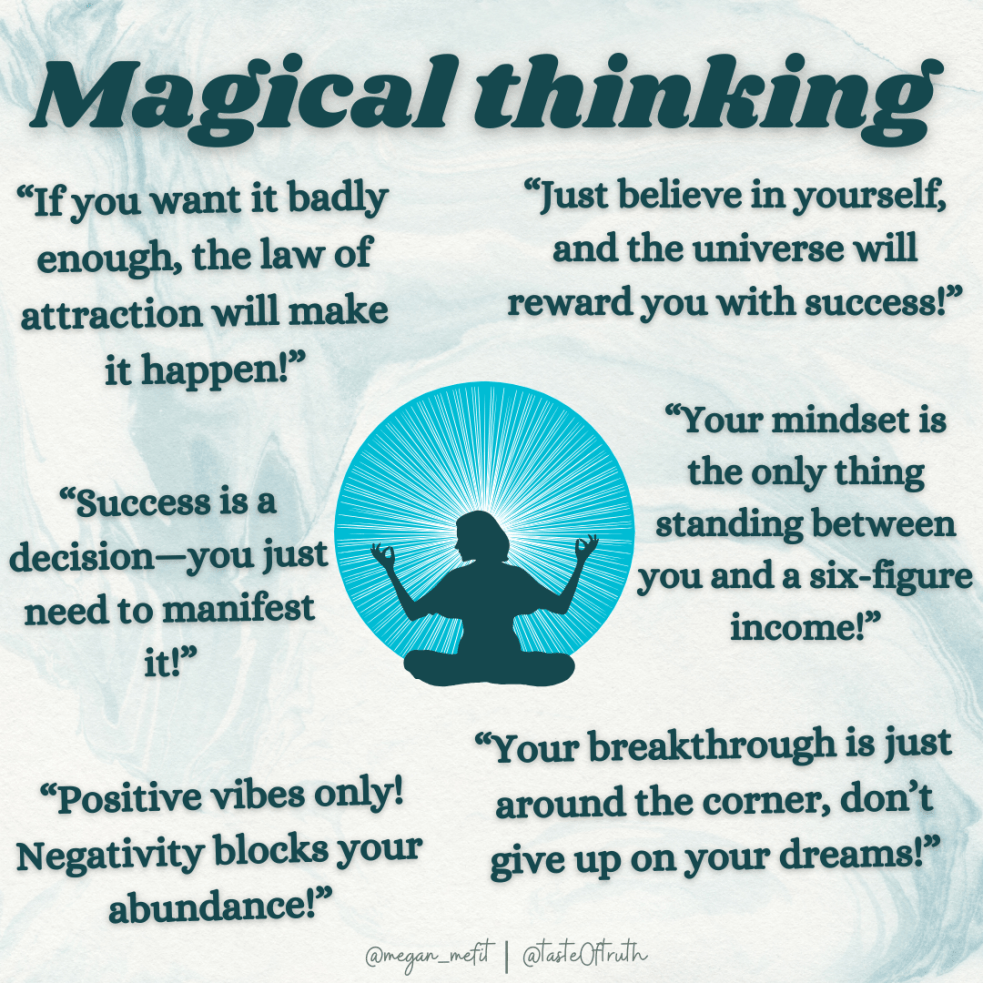
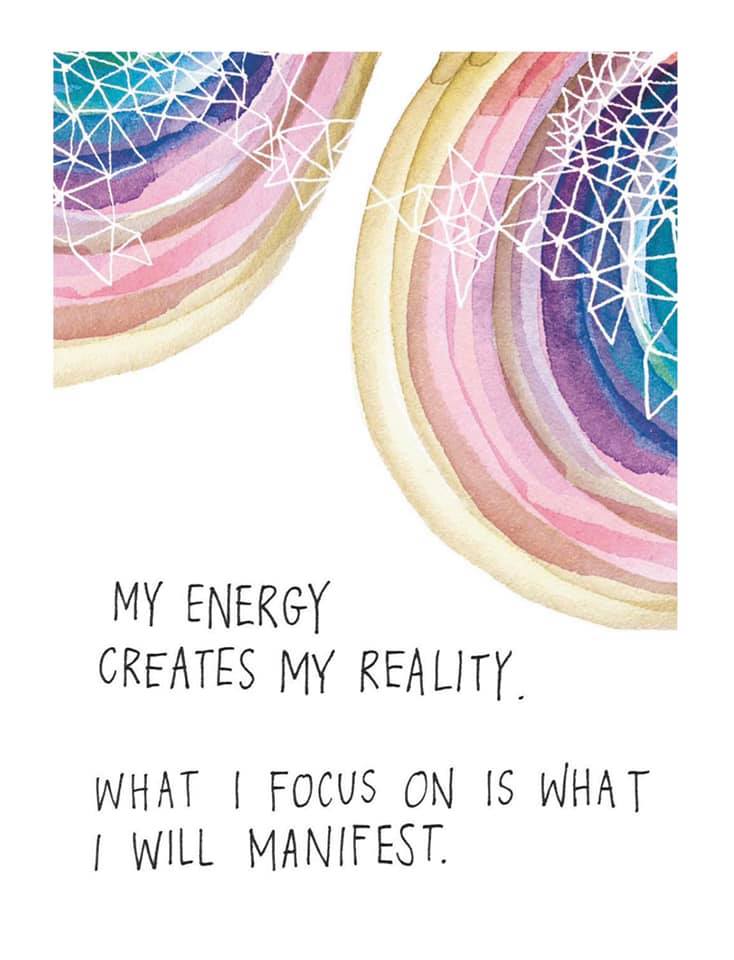



















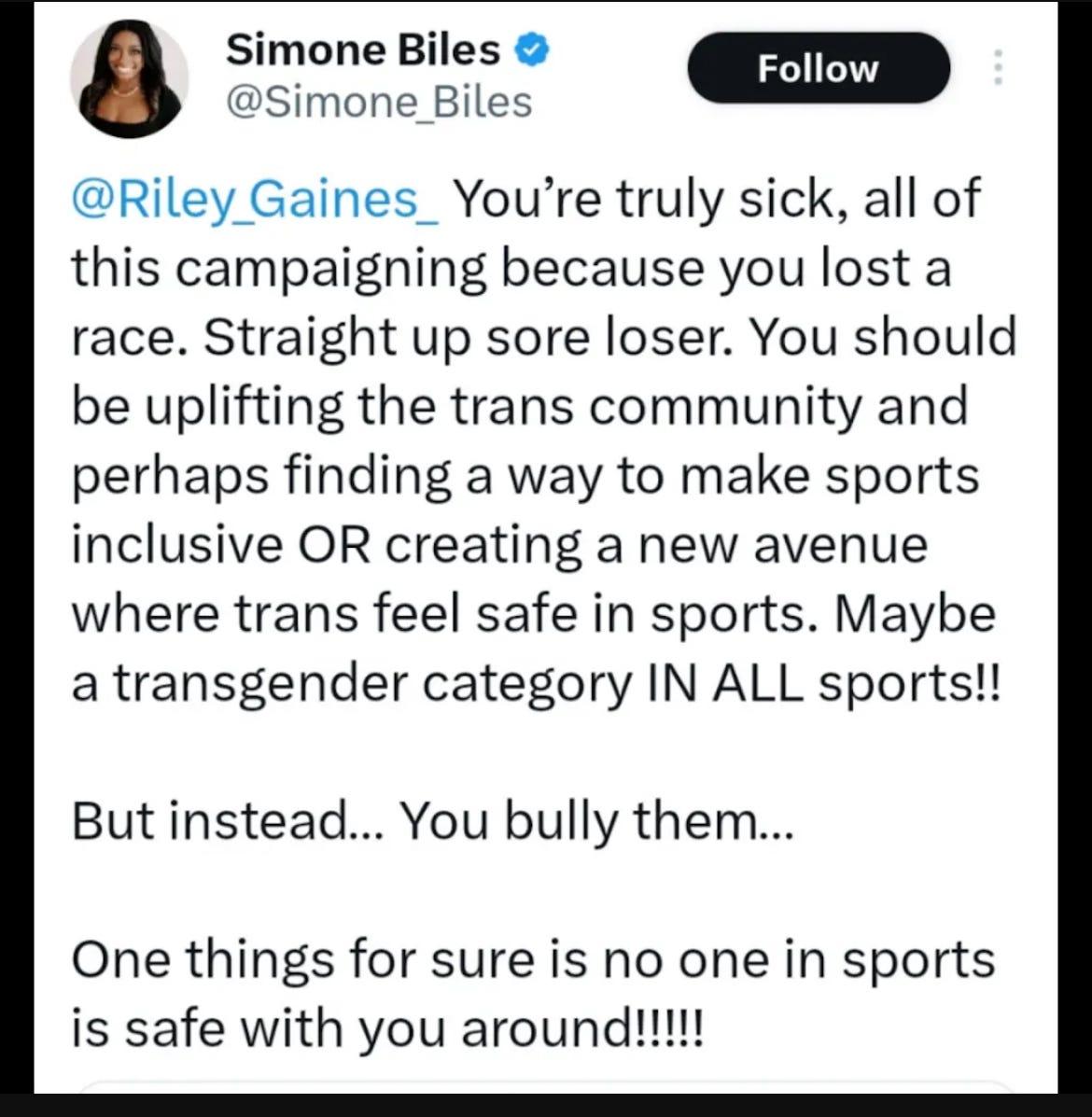

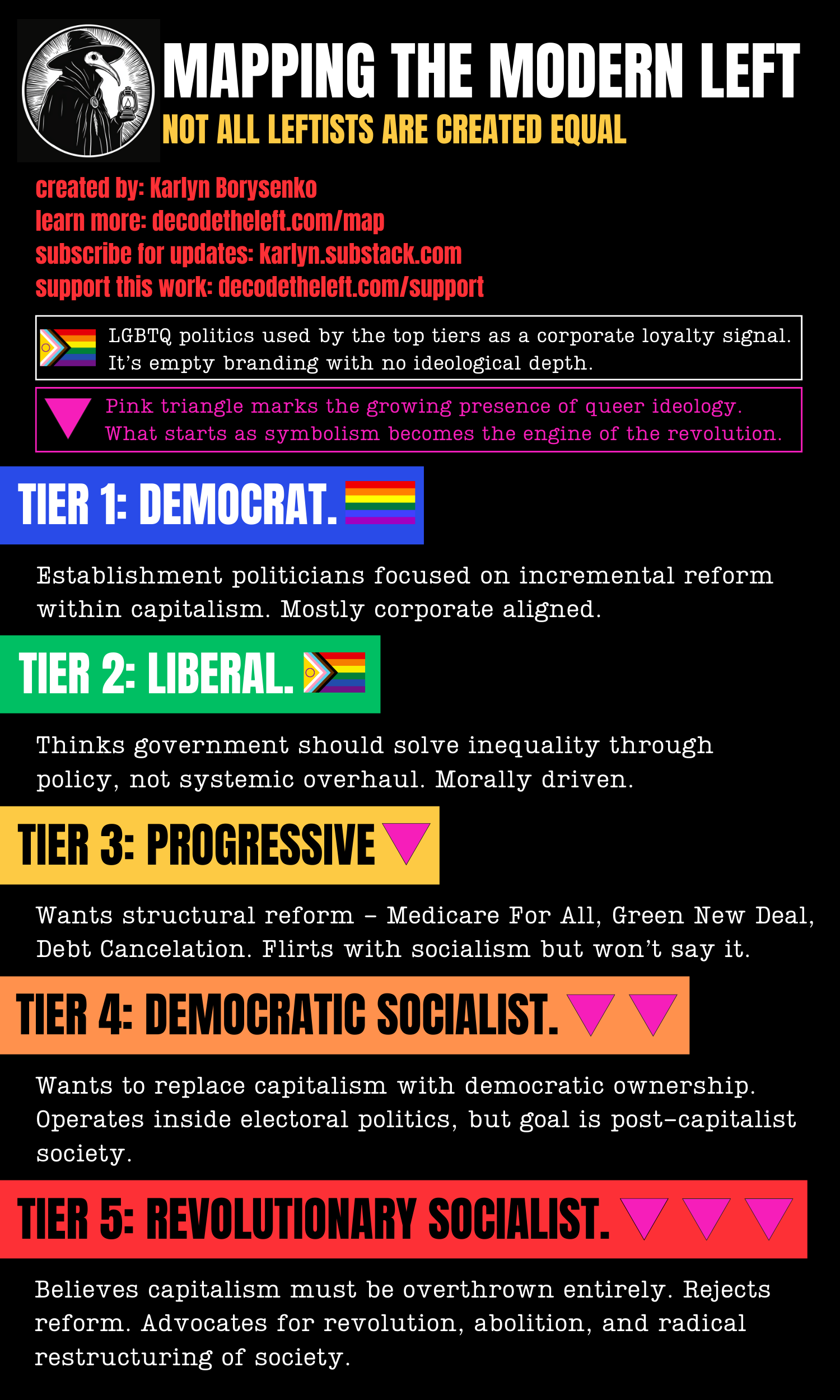

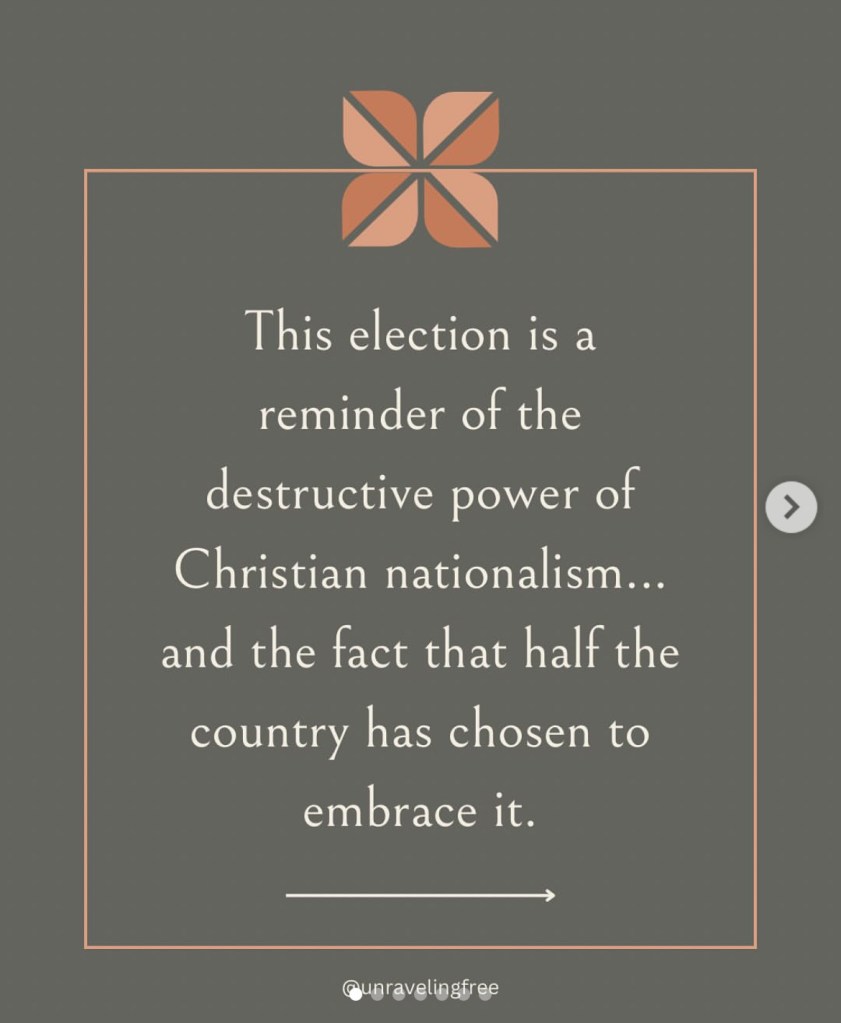
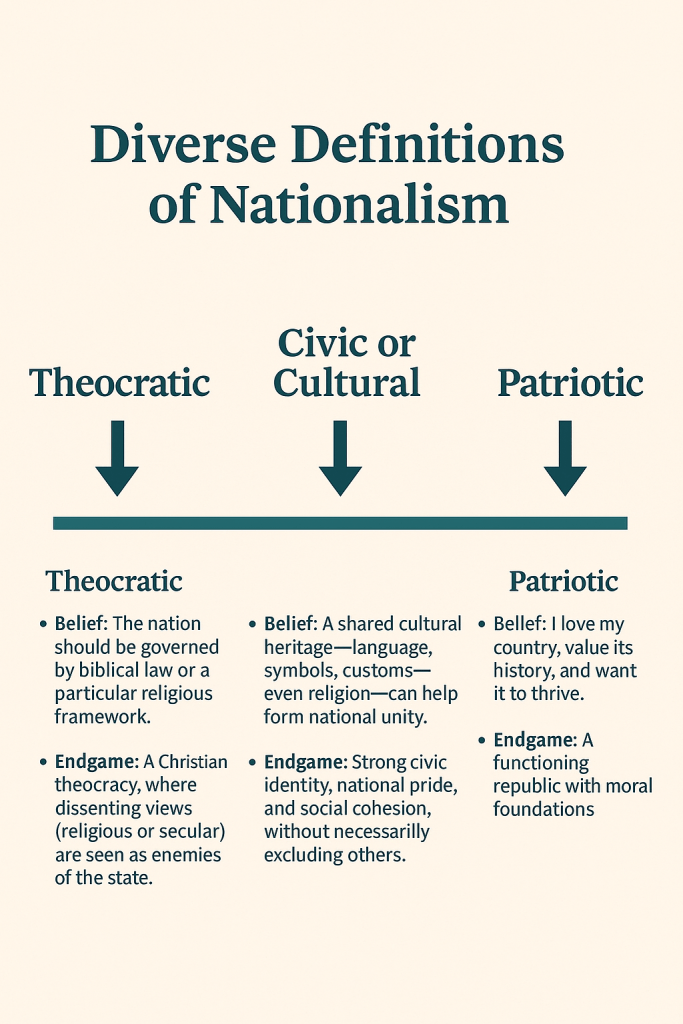

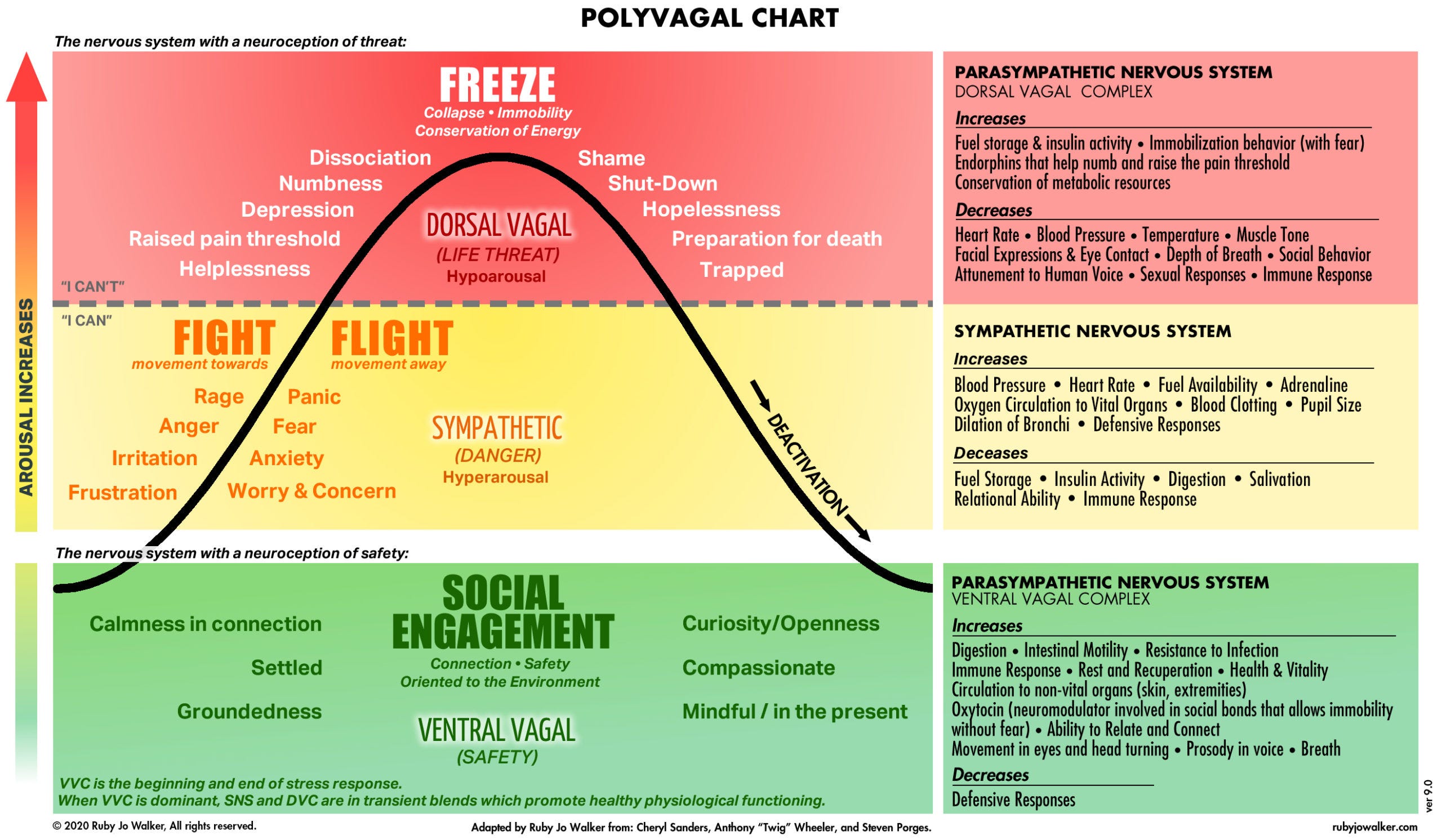





 Taste0ftruth Tuesdays