Panpsychism, the Emergence Problem, and the Fractures Inside Mythicism with Dr. Skrbina
Today’s conversation isn’t just about whether Jesus existed.
It’s about something sitting underneath that entire debate.
Most mythicist conversations, meaning scholars and skeptics who argue that Jesus may be a literary or constructed figure, operate inside a philosophical framework called materialism.
Materialism in this sense doesn’t simply mean “trust science.” It’s a deeper metaphysical claim: that everything that exists is ultimately physical. Matter is fundamental, and consciousness is something the brain produces when matter is arranged in the right way.
Revisit a past episode where we discussed the dogma of materialism further
In that picture, mind comes after matter. Meaning comes after biology. Religion becomes a byproduct of social evolution.
But there’s a philosophical tension hiding inside that assumption.
Evolution can explain how biological bodies change. It can describe how organisms adapt and diversify. What it does not explain is something much more basic:
Why is there subjective experience at all? Why does pain actually hurt? Why does the color red look like something?
If matter is completely mindless at the ground level, how does experience suddenly appear?
Philosophers call this the emergence problem.
One alternative view (panpsychism) proposes that consciousness isn’t produced by matter at all. Instead, consciousness may be fundamental to reality itself.
That’s where philosopher Dr. David Skrbina enters the conversation.
His book Panpsychism in the West traces this idea across centuries of philosophical thought, showing that the notion of a mind-infused cosmos has appeared again and again throughout Western intellectual history.
But Skrbina has also stepped directly into the mythicist debate with his book The Jesus Hoax. More recently, he published a sharp response to criticism from fellow skeptics David Fitzgerald and Richard Carrier.
Add to that Adam Green’s recent book The Jesus Deception, which approaches early Christianity from yet another angle, and something interesting starts to appear:
Mythicism isn’t a unified theory. It’s fracturing into camps.
So, this conversation moves across several layers at once:
• consciousness and materialism • the emergence problem • whether panpsychism overlaps with Neoplatonism • Paul: historical strategist or literary construct? • and how The Jesus Hoax differs from The Jesus Deception
Let’s start with the philosophical ground beneath it all.
Consciousness and the Return of Panpsychism
Panpsychism is one of those philosophical ideas that sounds strange the first time you hear it but becomes harder to dismiss the more you think about the alternatives.
In plain terms, the idea is simple: mind or experience may exist at some level throughout reality.
That doesn’t mean rocks are thinking thoughts. Rather, it suggests that the basic constituents of the universe may possess extremely simple forms of experience.
The reason this idea keeps resurfacing across centuries of philosophy is precisely because of the emergence problem.
If consciousness appears only when matter becomes sufficiently complex, we still have to explain how completely mindless matter suddenly gives rise to subjective experience.
Panpsychism flips that question around. Instead of asking how consciousness emerges from matter, it proposes that matter itself may already possess proto-mental properties.
Skrbina’s historical work traces this idea from ancient Greek philosophy through early modern thinkers and into contemporary debates in philosophy of mind.
The interesting thing is that the idea never quite disappears. Even in periods dominated by strict materialism, it keeps resurfacing whenever philosophers run into the same problem: explaining how subjective experience arises from purely physical processes.
Materialism and the Emergence Problem
Materialism has been extraordinarily successful as a scientific framework.
It assumes that the universe is composed of physical entities governed by consistent laws. That assumption has allowed science to model everything from particle physics to molecular biology.
But when we apply that framework to consciousness, something unusual happens.
If matter is entirely mindless at the fundamental level, then at some point in the evolutionary process subjective experience must suddenly appear.
But where?
There’s no obvious “magic neuron” where awareness switches on. There’s no clear moment in development when matter transforms from non-experiencing to experiencing.
This is the emergence problem in its most basic form: explaining how subjective experience arises from purely physical systems.
Some scientists have attempted to address this by looking deeper into physics itself. Theories like Roger Penrose and Stuart Hameroff’s Orch-OR model propose that consciousness may be connected to quantum processes occurring inside neurons.
Whether or not those models succeed, they reveal something important: even within science, researchers are exploring ways to rethink the relationship between mind and matter.
Panpsychism is one such attempt.
Is Panpsychism Just Neoplatonism?
Because panpsychism proposes a cosmos infused with mind, people often assume it’s simply a modern version of Neoplatonism.
But the two traditions aren’t identical.
Neoplatonism describes reality as a hierarchical structure flowing from the One— a metaphysical unity that gives rise to intellect and soul. It carries strong teleological and ethical implications about how humans align themselves with the structure of reality.
Panpsychism, by contrast, is often framed as a metaphysical hypothesis about the nature of matter and consciousness, without necessarily including the moral or spiritual framework found in Neoplatonic thought.
Still, the overlap is hard to ignore. Both challenge the idea that the universe is purely mechanical.
Both suggest that mind and reality may be deeply intertwined.
The Mythicism Debate Fractures
Another interesting tension here is that some of the things Skrbina is criticized for aren’t that far from ideas that already exist in mythicist literature.
One of the central claims in The Jesus Hoax is that St Paul and a small cabal of early Christians may have functioned as a kind of non-military strategy within the Roman world. Instead of armed revolt, the movement theologically conquered by the spread through ideas, theology, and cultural influence.
Skrbina frames this as a kind of ideological or narrative strategy that could reshape behavior across the empire.
What makes the criticism somewhat puzzling is that a similar concept appears in Richard Carrier’s own work.
In Not the Impossible Faith, Carrier describes early Christianity as a movement that spread not through military rebellion but through cultural transformation. Rome could defeat armed revolts, but it could not easily suppress ideas that moved through communities, texts, and belief.
Carrier even characterizes this as a kind of revolutionary strategy. If Rome would always win a military conflict, the only rebellion that could succeed would be a cultural one— a war ofideas rather than armies. (Carrier, Not the Impossible Faith, Ch. 9).
In that sense, the notion that early Christianity functioned as a non-military cultural movement is not controversial. It is widely recognized that the early Jesus movement spread through persuasion, networks, and theology rather than organized violence.
Where the real disagreement emerges is over intent and origin.
Skrbina interprets this cultural transformation as something that may have been deliberately constructed or strategically shaped. His critics tend to view it as an organic religious development rather than a coordinated narrative project.
Another point raised in the exchange concerns the authorship of the gospels, particularly the question of whether Luke was a Gentile writer. Skrbina notes that even if certain details of authorship were revised, for example: if Luke were ultimately shown to be Gentile, the core structure of his argument would not collapse. It would simply require refinement.
That willingness to concede smaller points while maintaining the broader model is something he addresses repeatedly in his response.
The broader takeaway from this debate is that mythicism itself is not a single theory. It is a field where scholars often agree that the traditional gospel narrative is historically unreliable but disagree sharply about what actually replaced it.
One of the most important figures in this entire discussion is Paul of Tarsus.
Skrbina’s model treats Paul as a strategic actor who played a central role in shaping early Christian theology.
But other scholars have raised a more radical possibility: that the Pauline corpus itself may not represent a stable first-century historical figure at all.
Research such as Nina Livesey’s work on the Roman literary context of the Pauline letters suggests that some of these texts may reflect later second-century developments.
If Paul himself were partly a literary construct, it would reshape the debate considerably.
Yet even in that scenario, Skrbina argues, the broader thesis of deliberate narrative construction would not necessarily collapse. It would simply require revision.
Adam Green and the Midrashic Jesus
Adam Green’s recent book The Jesus Deception adds another dimension to the conversation.
Green emphasizes the possibility that the gospel narratives were crafted through midrashic techniques, weaving together Hebrew scriptures to construct the story of Jesus.
This raises a broader question about how religious narratives function historically.
Are they simply stories? Or do they operate as cultural scripts that shape behavior across entire societies?
Green invokes a concept from cultural theory called hyperstition: the idea that beliefs can begin to influence reality because people act as if those beliefs are true.
In other words, a prophecy doesn’t need to be literally true to become historically powerful.
It only needs to be believed strongly enough that people start behaving in ways that bring it about.
That possibility becomes particularly interesting when we look at modern geopolitics.
Some recent reports have suggested that military personnel have framed conflicts in the Middle East through apocalyptic biblical language, describing events as part of a divine plan leading toward Armageddon.
Whether or not such interpretations reflect official policy, they illustrate how powerful religious narratives can be in shaping political imagination.
For readers who want to explore the topics discussed in this episode more deeply, the following books and research have shaped the ideas discussed in this conversation. These works cover philosophy of consciousness, panpsychism, early Christianity, and the intellectual history of the ancient world.
Philosophy of Consciousness & Panpsychism
Panpsychism in the West – David Skrbina A comprehensive historical survey tracing the idea that mind or experience may be fundamental to reality across centuries of Western philosophy.
Science Set Free – Rupert Sheldrake A critique of the assumptions underlying modern scientific materialism and an exploration of alternative ways of thinking about nature, consciousness, and scientific inquiry.
The Emperor’s New Mind – Roger Penrose A physicist’s investigation into the nature of consciousness, the limits of artificial intelligence, and the possibility that consciousness is tied to deeper physical processes in the universe.
The Jesus Hoax – David Skrbina Explores the possibility that early Christian narratives functioned as a strategic cultural movement within the Roman world.
The Jesus Deception – Adam Green Argues that the story of Jesus may have been constructed through Jewish midrashic storytelling traditions.
Not the Impossible Faith – Richard Carrier Carrier’s argument that Christianity’s success in the Roman Empire was historically improbable given the cultural environment of the time.
The Letters of Paul in Their Roman Literary Context – Nina Livesey A scholarly examination of whether the Pauline letters reflect later Roman literary production and rhetorical conventions.
The Opening of the Western Mind – Charles Freeman A history of classical Greek and Roman intellectual traditions and the philosophical foundations of the ancient world.
The Closing of the Western Mind – Charles Freeman Examines how classical philosophical traditions were gradually replaced by Christian orthodoxy in late antiquity.
A historical documentary blended with a personal reckoning and a cultural warning
This one has been sitting with me for a long time.
Six months, maybe more. Notes in the book margins. Tons of screenshots. Quotes stacked in my notes folder. Books half-highlighted and folded pages revisited. Every time I thought I was ready to write it, I wasn’t…
Because this isn’t just about history. It’s about a story we keep repeating with confidence: that Christianity saved the West and what happens when you actually slow down to examine that claim.
The claim that Christianity civilized Europe. Christianity gave us human rights, pluralism, rational inquiry, restraint. And if Western civilization feels unstable today, the prescription is simple— return to Christian moral supremacy.
I find myself increasingly tired of hearing it.
Tired of watching “Judeo-Christian values” invoked as shorthand for liberty. Tired of hearing that our freedoms, our intellectual life, our legal architecture all flow directly from the Bible. Tired of the way paganism is casually used as a synonym for barbarism, ego, domination — while Christianity is cast as the moral counterweight, the conscience that civilizes power.
A recent example sharpened that fatigue. Leighton Woodhouse published an opinion piece in The New York Times titled Donald Trump, Pagan King. The framing was familiar and rhetorically smooth. Paganism was associated with appetite, force, and unchecked authority. Christianity appeared as restraint, humility, moral seriousness. The implication was subtle but unmistakable: whatever is broken in our politics represents a departure from Christian virtue.
The structure of this narrative is ancient. Pagan equals raw power. Christian equals moral discipline.
But that framing rests on an assumption that deserves far more scrutiny than it receives. It assumes that Christianity is the moral software of the West. Before it, there was chaos; after it, civilization.
The deeper I have gone into late antiquity, through Catherine Nixey’s The Darkening Age, Charles Freeman’s analysis of intellectual narrowing, Ramsay MacMullen’s documentation of coercive conversion, and through primary sources from both Christian and pagan voices— the more that tidy civilizational story begins to unravel.
Because when Christianity gained institutional dominance, what followed was not the natural flowering of pluralism and inquiry. It was very opposite.
And for us to truly understand, we have to begin this story before Christianity held power.
A World Before Monopoly
The Greco-Roman world was not a utopia. It had power structures, that were often violent, and deeply unequal. But it operated within a religious and intellectual framework that functioned very differently from exclusive monotheism.
Roman religion was additive rather than subtractive. One could honor household gods, civic gods, the imperial cult, foreign deities, and philosophical conceptions of the divine without renouncing the others. Orthopraxy mattered more than orthodoxy. What counted was correct ritual performance, not exclusive belief. The pax deorum (the peace with the gods) was maintained through observance, not doctrinal conformity.
Philosophically, multiplicity was the norm. Stoics, Epicureans, Skeptics, and Platonists argued openly about cosmology, ethics, and the nature of reality. Protagoras could admit uncertainty about the gods without being erased from the record. Cicero articulated natural law grounded in reason and universality long before Christianity gained political authority. Debate was public. Rhetorical training was a civic skill. Argument was like oxygen at the time.
Cicero
The Roman legal system developed sophisticated structures of administration and legislation that would profoundly shape Western law. None of this depended on exclusive revelation. It depended on human reasoning operating within a plural environment.
Rome suppressed what it perceived as politically dangerous. It was capable of cruelty. But structurally, it tolerated metaphysical competition. Truth was not framed as singular and jealous in the way later Christian orthodoxy would insist.
Christianity did not enter this world as one more school of thought among many. It entered with a different moral architecture. Not “add Christ to the pantheon.”
But “burn down the rest.”
That distinction is not merely cosmetic. It is foundational to understanding the real history.
The Architecture of Exclusivity
The Hebrew scriptures that Christianity inherited contain a recurring moral posture toward rival worship. Altars are to be broken down. Sacred groves burned. Idols smashed. “You shall have no other gods before me” is not a suggestion of preference; it is a declaration of exclusivity. Rival worship is not seen as a mere mistake; it is corrupting.
When confined to private devotion, this posture functions as identity formation. When fused with state power, it moves from conviction to coercion.
For the first three centuries of its existence, Christianity lacked imperial authority. It survived in the margins of society. The decisive shift came when Christianity aligned with imperial power under Constantine and his successors.
Estimates vary, but many scholars place Christians at roughly ten percent of the empire around the year 300. The exact percentage is debated (ancient demographic modeling is necessarily approximate) but the trajectory is clear. Within a few generations, that minority became the ruling faith. By the end of the fourth century, imperial law assumed Christianity as normative and increasingly treated rival ritual as illegal.
This demographic reversal was not merely theological. It was political.
Once exclusivist theology acquired enforcement capacity, differences in beliefs was no longer merely error. It was threat.
In the 380s and 390s, imperial edicts against non-Christian ritual multiplied. In 399, a Christian emperor issued a decree stating:
“If there should be any temples in the country districts, they shall be torn down without disturbance or tumult. For when they are torn down and removed, the material basis for all superstition will be destroyed.”
The language is bureaucratic. The effect was not.
These edicts provided legal cover for demolition. Bishops lobbied rulers for stricter laws. Congregations became demolition crews. Rival worship was framed as superstition whose material foundation had to be eradicated.
As Ramsay MacMullendemonstrates, once rival belief is conceptualized as spiritually dangerous, compromise becomes morally suspect. In a plural system, rivals are mistaken. In an exclusivist system, rivals are demonic. And demons are not debated. They are expelled.
This is the mechanism. And it becomes visible in stone.
Once theology fused with imperial authority, enforcement did not remain theoretical. It moved outward into public space. It moved into cities. It moved into stone.
Catherine Nixey opens The Darkening Age not with doctrine but with an image. The choice is deliberate. Arguments can be abstract. Statues cannot.
The Temple of Athena in Palmyra had stood for centuries. It was not a relic in a museum. It was part of a living civic landscape. Its columns had watched merchants pass through the city, soldiers march under banners, pilgrims move between worlds. Within it stood Athena— goddess of wisdom, of strategic intelligence, of disciplined thought. She represented more than devotion. She embodied the classical inheritance itself: philosophy, rhetoric, ordered reasoning, the cultivation of mind.
When the destroyers arrived, what they attacked was not simply stone.
Nixey describes a man entering the temple with a weapon and striking the back of Athena’s head with such force that the goddess was decapitated. The violence did not stop there. Her nose was sliced off. Her cheeks crushed. Her once composed face mutilated with intention.
And yet her eyes were left intact.
Those eyes still exist.
They look out from a ruined face that once symbolized wisdom.
This was not accidental vandalism. It was theology enacted physically. The old gods were not to be debated, not to be reinterpreted, not to be absorbed into new meaning. They were to be neutralized. Their presence was dangerous. Their very material existence was a threat to salvation.
The word often used for this period is triumph. Christianity triumphed over paganism. But triumph over what? Over multiplicity? Over a world in which philosophical disagreement could exist without annihilation? Over the idea that wisdom might not belong exclusively to one revelation?
The violence at Palmyra was not isolated. Temples across the empire were damaged, repurposed, stripped of ornament, or demolished. Some were converted into churches. Others were dismantled entirely. Sacred spaces that had structured civic and religious life for centuries were rendered spiritually illegitimate almost overnight.
What makes the image of Athena more destabilizing is its repetition.
In 2015, Islamic State militants bulldozed the ancient Assyrian city of Nimrud because it was deemed idolatrous. The reconstructed remnants of Athena were attacked again. Beheaded again. An arm sheared off again.
Different century. Different scripture. Different empire.
Same logic. When rival sacred presence is conceptualized as contamination, destruction becomes purification.
This is not about equivalence between traditions. It is about structure. When any Abrahamic framework defines truth as singular, exclusive, and threatened by proximity to rivals, pluralism becomes fragile. Once that framework acquires political power, fragility becomes enforcement.
And enforcement does not stop at statues.
Hypatia and the Enforcement of Certainty
If Athena represents symbolic erasure, Hypatia represents human cost.
Hypatia of Alexandria was not an obscure mystic. She was a philosopher, mathematician, and teacher in a city long known for intellectual life. Alexandria had been home to the great library and to competing schools of thought for centuries. Hypatia occupied a visible position within that tradition.
By the early fifth century, Alexandria was also home to a group known as the parabalani — often translated as “the reckless ones.” Officially devoted to acts of charity, they functioned in practice as muscle for ecclesiastical authority. By some estimates there were hundreds of them in the city. Roman legal documents describe them using the word terror.
Hypatia lived in the same civic space as these enforcers.
Her murder was not random street violence. It occurred within an atmosphere already shaped by escalating Christian authority and shrinking tolerance for rival influence. When exclusivist theology defines truth as singular and civic order as dependent upon that truth, intellectual figures outside that structure become destabilizing.
Hypatia was stripped, beaten, and killed by a mob associated with Christian zeal.
Her death did not mark the beginning of violence. It marked the normalization of it.
Once difference is framed as corruption and corruption as emergency, elimination becomes defensible.
This pattern appears again and again in late antiquity. Pagan philosophers were exiled. Schools were closed. Public debate narrowed. The emperor Justinian would eventually close the philosophical schools of Athens entirely. Inquiry did not vanish overnight, but the atmosphere changed. What had once been competition became suspicion.
And suspicion reshapes a civilization quietly before it reshapes it violently.
Fear as Teacher
One of the most revealing threads in the historical record is not the destruction itself but the emotional atmosphere that made it possible.
Demonology was not marginal superstition. It structured perception. Pagan temples were described as inhabited by malevolent spirits. Sacrifices were not merely mistaken rituals but demonic feasts. The world itself became morally charged terrain.
The Devil Belial before the Gates of Hell, from Das Buch Belial, published in Augsburg, 1473
Christians wrote anxious letters asking whether they could sit in places pagans had sat, use baths used on feast days, drink from wells near deserted temples, eat food that might have been associated with sacrifice. The fear was not symbolic. It was visceral.
Augustine’s response: that it was better to refuse contaminated food with Christian fortitude even if one starved, reveals a hierarchy of values. Survival could be negotiable. Purity could not.
John Chrysostom’s sermons described eternal punishment in sensory detail: rivers of fire, venomous worms, inescapable bonds, exterior darkness. Fear was not incidental rhetoric. It trained the imagination to view error as catastrophe and proximity to rival belief as existential threat.
When fear becomes formative, pluralism becomes psychologically intolerable.
And when that psychology is paired with law, narrowing becomes institutional.
The Disappearance of Thought
The destruction of statues is visible. The destruction of thought is quieter.
One of the most devastating aspects of late antique Christianization was not merely the smashing of temples but the narrowing of what was considered worth preserving.
The ancient Mediterranean world once contained the greatest concentration of written knowledge humanity had yet assembled. The Library of Alexandria, even allowing for scholarly debate about its exact size, symbolized an ambition toward accumulation. Knowledge was not singular. It was expansive. It was contradictory. It was messy.
Scholars selecting and reading scrolls in the Great Library of Alexandria hall
What remains of that intellectual inheritance is fragmentary.
By some estimates, only about one percent of Latin literature survives from antiquity. Entire authors are known only by name. Entire schools of philosophy survive only in hostile summaries written by opponents. Whole lines of speculation disappeared not because they were refuted but because they were not copied.
Copying is survival.
In the late antique world, the people doing the copying increasingly operated within Christian institutions.
And institutions preserve selectively.
“Stay clear of all pagan books!” reads the Apostolic Constitution. The warning is not casual. It reflects a moral anxiety about contamination. Texts are not neutral. They are spiritually charged. Exposure to the wrong argument is dangerous.
Celsus, one of the few pagan critics whose voice survives, accused Christians of discouraging inquiry. He mocked the posture: “Do not ask questions; just believe.” His tone is sharp, even sarcastic, but the anxiety is real. In Greek philosophy, reason was virtue. Inquiry was sacred. Faith, as unexamined assent, was the lowest epistemic posture.
Even Origen, writing within the Christian tradition, conceded the problem with striking bluntness, remarking that “the stupidity of some Christians is heavier than the sand of the sea.” The anti-intellectual reputation of early Christianity was not a later invention. It was noted by contemporaries.
The tragedy of Democritus crystallizes this narrowing.
Democritus — the philosopher often described as the father of atomic theory — wrote extensively across cosmology, mathematics, and ethics. He proposed a universe composed of atoms and void centuries before modern physics. And yet none of his works survive intact.
Not one.
What we know of his thought survives because it was partially preserved inside a single poem, Lucretius’s De Rerum Natura, which itself survived precariously through a single manuscript discovered in a German monastery centuries later.
The physicist Carlo Rovelli has called the total loss of Democritus’s writings “the greatest intellectual tragedy to ensue from the collapse of the old classical civilisation.”
An entire philosophical lineage survived by accident.
That should unsettle anyone who claims Christianity simply “preserved learning.”
Yes, monasteries copied texts. But copying is filtration. Texts deemed dangerous, frivolous, obscene, or spiritually corrupt were less likely to be preserved. When a civilization narrows its moral boundaries, its archive narrows with it.
Charles Freeman, in The Closing of the Western Mind, argues that the most significant shift was not physical destruction but the narrowing of acceptable modes of thought. Public philosophical debate gradually gave way to appeals to authority and revealed certainty. Disputes were settled by councils backed by imperial power. Orthodoxy was defined not by open inquiry but by boundary enforcement.
The world did not stop thinking overnight. But the conditions for free competition of ideas shifted.
And once intellectual diversity contracts, recovery takes centuries.
The Martyr Myth and Moral Insulation
The martyr narrative sits at the emotional center of Christian self-understanding. It does more than preserve memory. It defines identity.
The story is familiar: early Christians were persecuted by a pagan empire. They were imprisoned, tortured, executed for their faith. They endured without retaliation. They did not conquer. They survived.
There is truth in this. The Great Persecution under Diocletian was real and brutal. Scriptures were burned. Churches destroyed. Christians were imprisoned and executed. No serious historian denies that.
What modern scholarship questions is scale and continuity. The most severe empire-wide persecution lasted roughly a decade. Other persecutions were local, sporadic, and uneven across regions. They were not a continuous three-century campaign of systematic eradication.
Martyr literature itself expanded over time. Detailed analysis of saints’ calendars reveals duplication, embellishment, and narrative layering. Some figures appear under multiple names. Some accounts contain anachronisms or miraculous flourishes that complicate their historical reliability.
The historian G. E. M. de Ste. Croix observed that later martyr literature increasingly displayed what he called “a contempt for historicity.”
That line matters. Because it signals a shift: suffering was not only remembered. It was shaped.
And shaped suffering serves a purpose.
Martyrdom of Saint Sebastian is an Italian Renaissance Tempera Painting created by Andrea Mantegna in c.1480.
Once Christianity aligned with imperial authority, the martyr narrative did not recede. It hardened into interpretive insulation. The same tradition that now authorized temple closures and school shuttings still understood itself as historically persecuted.
The story generates moral asymmetry: whatever Christians do can be framed as response, not domination.
And the function of the martyr narrative did not end in late antiquity. In modern apologetics, it often operates as proof. The logic runs like this: the apostles would not have died for something they knew was false; early Christians endured torture rather than recant; therefore, their testimony must be true.
But willingness to suffer proves sincerity, not metaphysical accuracy. People across religions have died for beliefs that contradict one another. Martyrdom establishes conviction. It does not establish truth.
This is why the martyr story is so stabilizing. It allows a movement to wield authority while retaining the self-image ofinnocence. It transforms power into protection and critique into persecution.
When temples were outlawed and philosophical schools shuttered, the tradition exercising authority did not see itself as conqueror. It saw itself as guardian of truth under threat.
If you are always defending truth, enforcement feels righteous.
The Last Pleas for Coexistence
One of the tragedies of this period is that the archive becomes overwhelmingly Christian. The winners preserved their own voices. The losing side survives in fragments.
But some fragments remain.
Libanius, a pagan orator in the fourth century, watched as temples across the empire were damaged, repurposed, or destroyed. His speeches are not the rantings of a fanatic. They are the anxious observations of a man watching his world contract. He describes sacred spaces falling into ruin, rituals forbidden, property seized. He notes opportunists dividing temple lands for personal gain under the cover of piety. What Christian historians later frame as triumph, Libanius experiences as loss.
Then there is Symmachus.
In 382 CE, the Christian emperor Gratian ordered the removal of the Altar of Victory from the Roman Senate House. For centuries, senators had offered ritual observances there before conducting civic business. It was not merely religious decoration; it was part of Rome’s public identity.
Symmachus wrote an appeal for its restoration.
His language is remarkable for its restraint. He does not demand dominance. He does not threaten revolt. He argues for coexistence.
“We look on the same stars,” he writes. “The sky is common. The same world surrounds us. What difference does it make by what pains each seeks the truth? We cannot attain to so great a secret by one road alone.”
It is difficult to imagine a clearer articulation of pluralism in the ancient world.
He closes not with hostility but with humility: “We offer now prayers, not conflict.”
He lost. The altar was not restored. The plea for multiplicity was overridden by certainty.
This moment matters because it reveals a collision between two moral architectures. One sees truth as approached through many paths. The other sees truth as singular and threatened by rival proximity.
Symmachus represents not pagan decadence but civic pluralism. He is not asking to suppress Christianity. He is asking for coexistence.
The answer he receives is enforcement. The narrowing was not accidental. It was structural.
The Long Return of Pluralism
The narrowing of late antiquity did not permanently extinguish intellectual life. But it did change its conditions. For centuries, inquiry moved within theological boundaries defined by ecclesiastical authority. Councils determined orthodoxy. Deviation could be punished. Philosophical speculation survived, but often cautiously, often cloaked.
What we now call the Enlightenment did not arise as a natural extension of Christian supremacy. It arose within tension — sometimes quiet, sometimes explosive — with religious monopoly.
Beginning in the Renaissance, Europe experienced a gradual rediscovery of classical texts. Manuscripts long buried in monastic libraries re-entered circulation. Lucretius’s De Rerum Natura, preserving echoes of Democritus’s atomism, resurfaced. Greek philosophy was studied not merely as commentary on theology but as intellectual inheritance in its own right.
The recovery of classical thought did not instantly dissolve Christian authority. But it reintroduced plurality into the bloodstream of European intellectual life.
The Enlightenment sharpened that reintroduction.
Thinkers like John Locke articulated natural rights grounded not in revelation but in reason and shared human nature. Locke’s arguments for religious toleration did not emerge from biblical exclusivity; they emerged from a recognition that coercion in matters of belief corrupts both faith and civic peace.
Montesquieu analyzed the separation of powers not as a theological doctrine but as a structural safeguard against concentration of authority. His framework was explicitly concerned with preventing tyranny — whether monarchic or clerical.
These ideas did not descend seamlessly from medieval orthodoxy. They developed alongside, and often in resistance to, religious entanglement with state power.
When we reach the American founding, the tension becomes explicit.
The framers of the Constitution were deeply literate in classical thought. They read Cicero. They read Tacitus. They studied Roman republicanism. They were steeped in Enlightenment political theory. They feared concentrated power, including ecclesiastical power.
The Constitution contains no reference to Jesus Christ. It prohibits religious tests for office. The First Amendment forbids establishment of religion and protects free exercise. This was not a casual omission. It was intentional architecture.
The American experiment was not a biblical republic.
It was a republic designed to prevent religious monopoly.
Thomas Jefferson provides a particularly revealing case. Jefferson famously produced his own edited version of the Gospels, physically cutting out miracles and supernatural elements. The result, often referred to as the Jefferson Bible, retained ethical teachings while discarding divine intervention.
This was not the act of a man seeking to found a theocracy.
It was the act of a man separating moral philosophy from revealed absolutism.
Jefferson’s project reflects a broader Enlightenment impulse: to preserve ethical insight while disentangling it from exclusivist authority.
Roger Olson’s theological scholarship further complicates the claim that Christianity simply “gave us” pluralism. Olson emphasizes that Christianity was never doctrinally uniform in its early centuries. Orthodoxy was consolidated through contest, suppression, and boundary enforcement. The unity later invoked as civilizational foundation was itself the product of narrowing.
The Enlightenment did not grow naturally from that narrowing. It reopened debate.
It reintroduced skepticism as virtue.
It separated church and state not to destroy religion but to protect civic plurality.
If Christianity had already secured pluralism, the Enlightenment would have been unnecessary.
The fact that it was necessary tells us something profound.
Pluralism survived not because exclusivity reigned, but because exclusivity was restrained.
Did Christianity Give Us Human Rights?
At this point, the most common objection surfaces.
Even if there were excesses. Even if there was narrowing. Even if temples fell and texts disappeared. Christianity still gave us the concept of human dignity. Christianity laid the groundwork for human rights.
The claim sounds intuitive because Christian theology does contain a powerful moral idea: humans are made in the image of God. That idea has inspired reformers and abolitionists and activists. It matters.
But the existence of moral language is not the same thing as institutional pluralism.
The Stoics articulated a form of universal human rationality centuries before Christianity held power. Roman law developed ideas of legal personhood and universality that would influence later legal systems. Cicero’s natural law did not depend on revelation.
Christianity contributed to moral discourse. That is true.
But the institutional protection of dissent: the right to disagree publicly, to publish heterodox ideas, to worship differently without legal annihilation… did not emerge during periods of Christian monopoly. Those protections developed when religious authority was structurally limited.
Rights require restraint of power.
And historically, the moments when Christianity was most fused with state authority were not the moments when pluralism expanded.
What This Feels Like From the Inside
What unsettles me most about this history is not simply that it happened. It is that I recognize the mechanism.
I have lived the internal version of it.
Burn the books. Throw away the tarot cards. Remove your new age spirituality material. Avoid contamination of demonic entities. Guard the mind. Monitor the thoughts. Stay pure.
When you inhabit Christianity long enough, the anxiety internalizes. You become your own enforcer. You police your curiosity. You treat rival ideas not as intellectual challenges but as spiritual threats.
When I read about Christians in late antiquity asking whether they could sit where pagans had sat or drink from wells near deserted temples, it was too relatable.
The narrowing does not begin with demolition crews. It begins with fear.
Fear reshapes perception. Fear shrinks curiosity. Fear frames difference as danger.
Scale that fear across institutions and you have late antiquity.
Scale it across a nation and you have something far more consequential.
The Warning
This is why the rhetoric of Christian supremacy unsettles me.
Not because Christianity has contributed nothing to Western civilization. It has shaped art, music, law, charity, moral imagination. That is undeniable.
Much of this period is still narrated as civilizational triumph rather than suppression. As the academic John Pollini notes, “modern scholarship, influenced by a Judeo-Christian cultural bias, has frequently overlooked or downplayed such attacks and even at times sought to present Christian desecration in a positive light.”
But the claim that Christianity saved the West collapses complexity into myth. It erases the plural foundations of Greco-Roman thought. It erases the Enlightenment’s deliberate separation of church and state. It erases the long struggle to restrain religious monopoly.
Reformers like John Calvin did not argue for a secular state. In his Institutes, Calvin insisted that magistrates had a duty to suppress blasphemy and false worship.
Pluralism did not emerge from supremacy.
It survived by limiting it.
When modern commentators frame Christianity as the sole guardian of civilization and paganism as barbaric force, they repeat a frame older than they realize. They invoke a story in which exclusivity is equated with order and multiplicity with chaos.
History suggests something different.
Civilizations are stabilized not by monopoly but by constraint. Not by erasing rivals but by tolerating them. Not by conflating revelation with law but by separating the two.
If we forget that, if we mythologize exclusivity as the foundation of freedom, we risk mistaking that narrowing for renewal.
And that is not a mistake history makes gently.
aaaand that’s all I have for you today folks. If you’ve been here for a while, you know this is what Taste of Truth Tuesdays is about. Not tearing down for sport. Not defending tradition out of reflex. But slowing down long enough to ask: Is the story we’re repeating actually true?
and As always…
Maintain your curiosity. Embrace skepticism. And keep tuning in.
Endnotes
Leighton Woodhouse, “Donald Trump, Pagan King,” The New York Times, February 11, 2026. (Referenced as an example of contemporary framing of paganism versus Christianity.)
Catherine Nixey, The Darkening Age: The Christian Destruction of the Classical World (Boston: Houghton Mifflin Harcourt, 2017). Charles Freeman, The Closing of the Western Mind: The Rise of Faith and the Fall of Reason (New York: Knopf, 2002). Ramsay MacMullen, Christianizing the Roman Empire (A.D. 100–400) (New Haven: Yale University Press, 1984). See also Ramsay MacMullen, Christianity and Paganism in the Fourth to Eighth Centuries (New Haven: Yale University Press, 1997).
On Roman religion as orthopraxic and plural in structure, see: Mary Beard, John North, and Simon Price, Religions of Rome, Vol. 1 (Cambridge: Cambridge University Press, 1998). Jörg Rüpke, Religion of the Romans (Cambridge: Polity Press, 2007).
Cicero’s articulation of natural law appears in De Re Publica and De Legibus. See: Cicero, On the Republic and On the Laws, trans. James E. G. Zetzel (Cambridge University Press, 1999).
On late fourth-century anti-pagan legislation, see: Theodosian Code 16.10 (various edicts restricting sacrifice and authorizing temple closures). For analysis: Michele Renee Salzman, The Making of a Christian Aristocracy (Harvard University Press, 2002). Ramsay MacMullen, Christianizing the Roman Empire.
On the debated scope and frequency of early Christian persecutions: Candida Moss, The Myth of Persecution (HarperOne, 2013). G. E. M. de Ste. Croix, Christian Persecution, Martyrdom, and Orthodoxy (Oxford University Press, 2006). These works challenge the traditional narrative of continuous empire-wide persecution and note embellishment in later martyr literature.
On the parabalani and Hypatia: Socrates Scholasticus, Ecclesiastical History, Book VII. Christopher Haas, Alexandria in Late Antiquity (Johns Hopkins University Press, 1997). Edward J. Watts, Hypatia: The Life and Legend of an Ancient Philosopher (Oxford University Press, 2017). Roman legislation regulating the parabalani appears in Theodosian Code 16.2.42 and related laws.
On the Altar of Victory controversy and Symmachus: Symmachus, Relatio 3 (Petition for the Restoration of the Altar of Victory). Ambrose of Milan’s response in Epistle 17–18. See also: Michele Renee Salzman, The Making of a Christian Aristocracy.
On demonology and late antique Christian perceptions of paganism: Peter Brown, The Rise of Western Christendom (Blackwell, 1996). Catherine Nixey, The Darkening Age. Brown discusses the moralization of the inner life and late antique anxiety regarding contamination and spiritual danger.
On the survival rate of classical literature: It is widely acknowledged among classicists that only a small fraction of ancient literature survives. See: Anthony Grafton, The Footnote: A Curious History (Harvard University Press, 1997). James J. O’Donnell, Avatars of the Word (Harvard University Press, 1998). The exact percentage is debated, but the scale of loss is undisputed.
On Democritus and the loss of his works: Diogenes Laertius, Lives of Eminent Philosophers (Book IX). Carlo Rovelli, Reality Is Not What It Seems (Riverhead Books, 2016), where Rovelli refers to the loss of Democritus as a major intellectual tragedy. Lucretius, De Rerum Natura, as the principal ancient source preserving atomist philosophy.
On the closure of pagan philosophical schools under Justinian: Procopius, Secret History. Edward J. Watts, The Final Pagan Generation (University of California Press, 2015).
On Enlightenment political theory and religious toleration: John Locke, A Letter Concerning Toleration (1689). Montesquieu, The Spirit of the Laws (1748).
On Thomas Jefferson’s edited Bible: Thomas Jefferson, The Life and Morals of Jesus of Nazareth (commonly known as the Jefferson Bible), completed in 1820. See also: Edwin Gaustad, Sworn on the Altar of God: A Religious Biography of Thomas Jefferson (Eerdmans, 1996).
On early Christian theological diversity and consolidation of orthodoxy: Roger E. Olson, The Story of Christian Theology (InterVarsity Press, 1999). Bart D. Ehrman, Lost Christianities (Oxford University Press, 2003) (for broader context on early doctrinal diversity).
When I first joined a multi-level marketing company, it felt like destiny. Freedom. Empowerment. Community. So much so that I tattooed “trust the process” on my body as a daily reminder. But the deeper I got, the more I noticed the cracks: emotional manipulation, magical thinking, and an almost religious silencing of doubts.
If you missed last week’s episode here is the deep dive of my own experience.
That’s why I’m thrilled to share this week’s podcast interview with Robert L. FitzPatrick. Robert has been sounding the alarm on MLMs for decades, long before it was common to describe them as cult-like. He’s the author of Ponzinomics: The Untold Story of Multi-Level Marketing, co-author of False Profits, and a respected expert cited by the BBC, The New York Times, and courts alike. For years, he’s been giving people the tools (language, data, and perspective) to recognize MLMs for what they truly are: predatory business models, not opportunities.
Here is the image of the “Airplane Game” we reference in the interview
In this episode, we cover:
The Spark: Robert’s first encounter with a scam-like business in the 1980s, which pushed him into decades of research on MLMs and fraud—mirroring the way my own personal MLM experience prompted deep self-examination.
Why “Not All MLMs” Is a Myth: The business model itself is designed to funnel money upward, making it impossible for the vast majority to succeed, regardless of the company or product.
Puritan Theology & Prosperity: How old ideas linking wealth to virtue evolved into the prosperity gospel, and how MLMs exploit that mindset.
Cultural Hooks: From hustle culture to self-improvement mantras and spiritual undertones, MLMs borrow heavily from mainstream culture to recruit and retain followers.
Narrative Control: How pre-scripted objections, emotional manipulation, and silencing tactics maintain loyalty and block critical thinking—something I’ve noticed both in MLMs and high-control religious groups.
The Hard Numbers: Realistic odds of success are brutal—most recruits lose money, almost all quit within a year, and mandatory purchases like “Healthy Mind and Body” programs or the Isabody Challenge trap participants financially and emotionally.
Legality & Political Protection: If MLMs are fundamentally unfair, how are they still legal? And what protects them politically?
Beyond the MLM Mindset: MLMs don’t just drain your wallet—they reshape identities, fracture communities, and erode trust in yourself and others.
This conversation is essential for anyone curious about MLMs, whether you’ve been drawn into one, have friends or family involved, or are simply interested in understanding how these systems work under the surface. Robert’s insights give us not just the numbers, but the language and tools to recognize the scam and the courage to break free from it.
Tune in for an eye-opening conversation that goes beyond the hype and digs into the real human cost of MLMs.
In recent decades, the Law of Attraction has become one of the most influential belief systems in wellness, self-help, and multilevel marketing (MLM) circles. Its premise is seductively simple: your thoughts shape your reality. Think positively, and abundance will flow; dwell on negativity, and you’ll attract misfortune.
We have discussed the pitfalls of Law of attraction in a previous episode, you can find here.
🎙️ Another throwback episode is linked below, where I unpack my journey from wellness fanatic within MLM into a high-control religion. Together, we explore the wild “crunchy hippie to alt-right pipeline.” 🌿➡️🛑 social media, influencers, and wellness hype quietly nudge people toward extreme ideas, and in this episode, we break down exactly how. 🎧🔥
This modern doctrine of “mind over matter” is often traced to The Secret (2006) by Rhonda Byrne, but its genealogy is much older. It reaches back to New Thought philosophy of the 19th century, where figures like Ralph Waldo Emerson, Phineas Quimby, and later Mary Baker Eddy (founder of Christian Science) claimed that divine thought itself was the engine of reality. These Mind Cure and faith healing movements linked spirt and matter together. Disease, poverty, and suffering were seen as products of “wrong or stinking thinking.” Salvation was not just spiritual but cognitive: change your thinking, change your life.
and so again I say: It is shockingly right instead of shockingly wrong of you to be prosperous. Obviously, you cannot be very happy if you are poor and you need not be poor. It is a sin. –Catherine Ponder (The Dynamic Laws of Prosperity)
In fact, it is the search for spiritual healing of the body that led to what is known today as prosperity consciousness or in Christian evangelism, it’s prosperity theology.
That intellectual lineage matters because it shows how the Law of Attraction has always been more than a harmless pep talk. It represents a cosmology of control, one that locates all responsibility (and blame) within the individual mind. As we have discussed many times before, Jonathan Haidt observes in The Righteous Mind, belief systems serve a dual function: they bind communities together and blind them to alternative explanations.
In this sense, the Law of Attraction doesn’t just inspire positive thinking; it narrows. By framing success and failure as purely mental vibrations, it obscures structural realities like economic inequality, physical health and genetic limitations, racism, or corporate exploitation.
And that narrowing is precisely what makes it the perfect handmaiden to MLM culture.
When Positive Thinking Becomes a Business Model
Robert L. FitzPatrick, in False Profits and Ponzinomics, describes MLMs as “endless chain” recruitment schemes. What sustains them isn’t product sales but the constant influx of hopeful recruits. Yet these schemes require something more than numbers: they require belief.
Here, the Law of Attraction becomes the MLM’s best salesman. Distributors are told:
Failure isn’t about the structure of the business; it’s about your mindset.
Doubt is “negative energy” that will block your success.
Quitting is not just a business choice but a moral failing.
In the Amway training program, the “ABCs of Success” are “Attitude, Belief and Commitment.” Attitude was the key which must be guarded. Don’t let anyone steal your attitude. Negative was defined as “whatever influence weakens your belief and commitment in the business” -False Profits
This is where Norman Vincent Peale’s “positive thinking” gospel dovetails with MLM. In his 1948 book Positive Thinking for a Time Like This, Peale popularized the phrase
“Let go and let God. Let Him take over your life and run it. He knows how.”
While originally a call to spiritual surrender, the phrase has since been weaponized in countless contexts from Holiness movements to Alcoholics Anonymous to prosperity preaching. At its worst, it functions as a silencer: don’t question, don’t resist, don’t think critically. Just “let go,” and trust that outcomes (or uplines) will provide.
Eastern Orthodox Christianity has a word for this: prelest. It’s the belief that human beings are so easily deceived that any private sense of spiritual progress — a feeling of clarity, joy, empowerment, even a mystical experience — can’t be trusted on its own. Without humility and the guidance of a spiritual father, you’re told it may just be pride, delusion, or the devil in disguise.
That’s the trap: you can’t trust your own mind, heart, or gut. The only “safe” option is obedience to the system. Which is exactly how MLMs and other high-control groups operate — undermining self-trust to keep you dependent.
Nietzsche would have called this a kind of slave morality, a belief system that encourages resignation to suffering rather than rebellion against unjust structures. The Law of Attraction, framed in this way, doesn’t challenge MLM exploitation; it sanctifies it.
More powerful than any product, charismatic leader, or compensation plan, the MLM mindset materials (the tapes, courses, and “personal development” kits) are the prime tools used to recruit and control distributors. Once you’re in the system, you’re encouraged to buy these materials week after week, keeping you invested emotionally and financially while feeding the company’s bottom line.
I went back through my Facebook to find some goodies for you! 😜This photo says “My energy creates my reality. What I focus on is what I will Manifest.” Here is the original caption so you can hear how brainwashed I was. “💥🙌🏼Belief is a feeling of certainty about something, driven by emotion. Feeling certain means that it feels true to you and therefore it is your reality. 💥🙌🏼 💪🏼 What you focus on you find 💪🏼 👀 You’ve got to believe it, to see it 👀”
Flashback to my first corporate event Aug 2016. My upline purchased my flight basically forcing me to go.
My caption at the time: 🤮
🔥IGNITE YOUR VISION! 🔥 ⚡Attended an event that changed my life. Showed me the massive vision of this company. 🤗Join our passionate, growing team of 18-35-year-olds striving for extraordinary lives and ownership of health, dreams, and contributions. 🤩Returning to this LIFE CHANGING event soon! Nashville, TN—let’s learn, grow, and celebrate!
Sounds inspiring, right? Except what they’re really selling is mandatory product purchases, endless hype, and a community that keeps you chasing the next status milestone. That “massive vision” isn’t about your health or dreams—it’s about the company’s bottom line.
Words like passionate, extraordinary, innovators, ownership are carefully chosen psychological nudges, making you feel like life itself is on the line if you’re not on board. And the countdown to the next “life-changing” event? Keeps you spending, attending, and emotionally hooked.
This is exactly what FitzPatrick calls out in Ponzinomics: the sales rep is the best customer. Only a tiny fraction of participants earn anything; the rest are paying to stay inspired.
More flashback images from my cult days….
The Psychological Toll
When these elements collide the New Thought inheritance of “mind over matter,” Peale’s positive thinking, religious community networks and MLM compensation plans… the result is a high-control environment dressed in empowerment language.
The outcomes are rarely empowering:
Blame and guilt when inevitable losses occur.
Anxiety from the demand to maintain “high vibrations.”
Suppression of doubt, lest skepticism be mistaken for weakness.
Financial harm disguised as personal failure.
In wellness communities, this logic extends beyond money. If essential oils don’t heal your illness, it’s because your mindset was wrong. If the diet doesn’t work, it’s because you didn’t “believe” enough. Structural realities (biology, medicine, inequality) are flattened into personal responsibility.
As Haidt warns, morality (and by extension ideology) can both bind and blind. The Law of Attraction, when paired with MLM, binds participants into a shared culture of hope and positivity while blinding them to exploitation.
Connecting the Dots: Bodybuilding, Metabolism & Team Isagenix
A couple weeks ago on the podcast, I shared about my bodybuilding years and the metabolic fallout I still live with today. I had forgotten how much of that season was actually entangled with my Isagenix obsession. My upline (the couple who enrolled me) were a part of Team Isagenix®, and I craved the validation of being “seen” as a successful athlete inside that community.
The requirements were brutal: placing in the top three of multiple competitions in a short span of time. So, between May 2017 and October 2018, I crammed in four shows in just 18 months. No off-season. No recovery. Just constant prep cycles. My metabolism never had a chance to stabilize, and I pushed myself past healthy limits. I wrecked my body and I’m still paying the price.
This is why I push back so hard when people insist that success is all about having a “positive enough” attitude to manifest it. My mindset was ironclad. What I lacked the conscious awareness that valued human health over recruitment and body image. That drive wasn’t just about stage lights and trophies. It was about proving my worth to an MLM culture that dangled prestige as the price of belonging. Team Isagenix® made the bar steep, and I was determined to clear it, no matter the cost.
And if you need proof of how deep this “mindset over matter” indoctrination goes, look no further than my old upline…now rebranded as a Manifestation Coach. Picture the classic boss-babe felt hat, paired with a website promising “signature mindset tools for rapid results.” According to her, if fear or doubt was “shrinking your dreams,” this was your moment to “flip it.” She name-drops 8-figure companies, influencers, and visionaries (the usual credibility glitter) while selling memberships, live events, and 7-day challenges.
It’s the same pitch recycled: your struggle isn’t systemic, it’s your mindset. If you’re not living your “life you truly love,” it’s because you haven’t invested enough in flipping the script (with her paid framework, of course). The MLM grind culture just got a new coat of “manifesting” paint.
🧠 Isagenix Programs & Their Psychological Impact
Healthy Mind and Body Program: A 60-day “mindset” initiative framed as holistic wellness. In practice, it ties product use to personal development, creating behavioral conditioning and binding members into a sense of shared identity and belonging. 🚩
IsaBody Challenge: A 16-week transformation contest requiring regular Isagenix product purchases. Completion comes with swag and vouchers; finalists are paraded as “success stories,” gamifying loyalty and dangling prestige as bait. The grand prize winner earns $25,000 but most participants earn only deeper entanglement. 🚩
Team Isagenix: Marketed as a prestige group for elite athletes with current national certifications, offering exclusivity and aspirational branding. This elevates certain members as “proof” of the products’ legitimacy, fueling both loyalty and recruitment. 🚩
Product Consumption: Isagenix requires 100 PV every 30 days just to remain “active.” This equates to about $150/month you HAVE to spend. On paper, bonuses and ranks promise unlimited potential. In reality, most associates struggle to recoup even their monthly product costs. Personal development rhetoric and community belonging often eclipse these financial realities, keeping participants cycling through hope, debt, and blame. 🚩
🤮🐦🔥 “Transform Your Life with Isagenix | Empowering Wellness and Wealth” 🐦🔥 🤮
Watch closely, because this is where the magic happens: the company paints a picture of limitless opportunity, but as Robert L. FitzPatrick lays out in Ponzinomics, the secret is that the sales rep is the best customer. That’s right… the real profits aren’t coming from your vague dreams of financial freedom; they’re coming from the people who are already buying the products and trying to climb the ranks.
The numbers don’t lie. According to Isagenix’s own disclosure: the overall average annual income for associates is $892. Among those who actually earned anything, the average jumps to $3,994. Do the math: $892 ÷ $3,994 ≈ 0.223 — meaning only about 22% of associates earn anything at all. The other 78%? Zero. Nada. Zilch.
And before you start fantasizing about that $3,994, remember: that’s before expenses. Let’s run a realistic scenario based on actual product spend:
$150/month on products or promotional materials = $1,800/year → net ≈ $2,194 − $1,800 = $1,194 before other costs.
Factor in travel, events, or socials? That $1,194 could easily drop to near zero…or negative.
The point: the so-called “income potential” evaporates fast when you account for the mandatory spending MLMs require. The only thing truly transformed is the company’s bottom line, not yours.
No wonder the comments are turned off.
Apparently, nobody actually crunches the numbers while the marketing spiel promises energy, strength, and vitality as if a shake could fix financial exploitation, metabolic burnout, and guilt-tripping at the same time.
My story is just one case study of how these tactics play out in real lives: I was recruited through trusted connections, emotionally manipulated with promises of transformation, pressured into relentless product use, and left with financial strain and long-lasting health consequences. That’s the “empowerment” MLMs sell and it’s why scrutiny matters.
Cultural Ecosystems That Enable MLMs
MLMs don’t operate in a vacuum. They flourish where belief structures already normalize submission to authority, truth-claims, and tightly networked communities. Evangelicals and the LDS Church provide striking examples: tight-knit congregations, missionary training in persuasion, and a cultural emphasis on self-reliance and communal obligation create fertile ground for recruitment.
Companies like Nu Skin, Young Living, doTERRA, and Melaleuca have disproportionately strong followings in Utah and among Mormon communities. FitzPatrick notes that MLMs thrive where trust networks and shared values make persuasion easier. The kind of environment where aspirational marketing and “prestige” teams can latch onto pre-existing social structures.
In short, it’s not just the products or the promises of positive thinking; it’s where belief, community, and culture all collide… that allows MLMs to hook people and keep them chasing elusive success.
Beyond Magical Thinking
The critique, then, is not of hope or positivity per se, but of weaponized optimism. When mantras like let go and let God or just thinking positive to manifest it are used to shut down discernment, discourage action, or excuse exploitation, they cease to be spiritual tools and become instruments of control.
Nietzsche challenged us to look beyond systems that sanctify passivity, urging instead a confrontation with reality even when it is brutal. FitzPatrick’s work extends this challenge to the world of commerce: if we truly care about empowerment, we must be willing to see how belief systems can be manipulated for profit.
That’s why MLMs and the Law of Attraction deserve scrutiny. Not because they promise too much, but because they redirect responsibility away from unjust structures and onto the very people they exploit.
Coming Up: A Deeper Dive
Next week on the podcast, I’ll be speaking with Robert L. FitzPatrick, author of False Profits and one of the world’s leading experts on MLMs. With decades of research, FitzPatrick has testified in court cases exposing fraudulent MLM schemes and helped unravel the mechanisms behind these multi-billion-dollar operations. He’s seen firsthand how MLMs manipulate culture, co-opt spirituality, and turn belief itself into a product.
Stay tuned. This is a conversation about more than scams, it’s about the machinery of belief, and how it shapes our lives in ways we rarely see.
Byrne, Rhonda. The Secret. New York: Atria Books, 2006.
Eddy, Mary Baker. Science and Health with Key to the Scriptures. Boston: The Christian Science Publishing Society, 1875.
Emerson, Ralph Waldo. The Essential Writings of Ralph Waldo Emerson. Edited by Brooks Atkinson. New York: Modern Library, 2000.
FitzPatrick, Robert L. False Profits: Seeking Financial and Spiritual Deliverance in Multi-Level Marketing and Pyramid Schemes. Charlotte, NC: Herald Press, 1997.
FitzPatrick, Robert L. Ponzinomics: The Untold Story of Multi-Level Marketing. Charlotte, NC: Skyhorse Publishing, 2020.
Haidt, Jonathan. The Righteous Mind: Why Good People Are Divided by Politics and Religion. New York: Vintage Books, 2012.
Nietzsche, Friedrich. On the Genealogy of Morals. Edited by Walter Kaufmann. New York: Vintage Books, 1989 (originally published 1887).
Peale, Norman Vincent. Positive Thinking for a Time Like This. New York: Prentice-Hall, 1948.
Quimby, Phineas P. The Quimby Manuscripts. Edited by Horatio W. Dresser. New York: Thomas Y. Crowell, 1921.
Wallace, David Foster. “Consider the Lobster.” In Consider the Lobster and Other Essays. New York: Little, Brown, 2005. (Useful on consumer culture critique, if you want a modern edge.)
Today we’re unpacking several interwoven topics I’ve explored in my writing before why people get drawn into high-control environments and how forgiveness in Christian culture is often weaponized, not as a path to healing, but as a tool to silence victims and protect institutions. This isn’t just a personal issue; it’s an institutional one.
This came into sharp focus after Erika Kirk, Charlie Kirk’s widow, said she forgives her husband’s killer. I’m not here to critique her grief, that’s her own process. What I want to explore is the cultural framework that makes this kind of forgiveness expected, celebrated, and even demanded in evangelical spaces. I have a MUCH MUCH longer blog linked here if you want to go much deeper than I plan to cover today.
Before even touching forgiveness, let’s pause on why this moment is so primed for revivalist recruiting. Sociologists and psychologists have long noted that people are most vulnerable to high-control groups (whether churches or MLMs) during times of disruption and emotional chaos.
Laura Dodsworth, in her book Free Your Mind, calls this a “blip.” A blip is any disruption that cracks our normal defenses: loss, illness, exhaustion, grief. Even smaller stressors (Think HALT) Hunger, anger/anxiety, loneliness or being tired can chip away at our resistance. Push long enough, and the conscious mind collapses into a state of openness, hungry for belonging and ready to absorb new narratives.
That’s exactly what makes funerals, memorials, and major crises fertile ground for recruitment. Orwell nailed it in 1984:
“Power is in tearing human minds to pieces and putting them together again in shapes of your own choosing.”
Jehovah’s Witnesses even admit to targeting what they call “ripe fruit”-the recently bereaved. In Brazil, recruiters have driven cars with loudspeakers through cemeteries on All Souls’ Day, broadcasting sermons to tens of thousands of mourners. That isn’t compassion; it’s strategic exploitation. Naomi Klein would call it the Shock Doctrine: trauma as an entry point for control.
We’re seeing the same tactics play out online right now. Someone posts about “returning to church” after years away, and within hours their feed fills with love-bombing-likes, comments, and digital hugs. It feels affirming, but it’s also classic manipulation: vulnerability plus attention equals a wide-open door into manipulation.
And so it’s no surprise that revivalist energy is surging in the wake of Kirk’s death.
Situational vulnerability + orchestrated belonging = fertile ground for expansion.
The Myth of “Christlike” Forgiveness
This brings us back to forgiveness. I want to be CLEAR HERE, obviously Erika Kirk wasn’t coerced into forgiving, but in evangelical culture forgiveness is never entirely personal, it’s baked into the ethos. The more you forgive, the more “Christlike” you appear.
Matthew 6:14–15“For if you forgive others their trespasses, your heavenly Father will also forgive you, but if you do not forgive others their trespasses, neither will your Father forgive your trespasses.”
That expectation is dangerous. Forgiveness is sacred when it grows out of genuine healing. But when demanded prematurely, it becomes a weapon. Survivors are told to “forgive as you’ve been forgiven” before they’re ready, before their pain is acknowledged, and typically long before their abuser is held accountable.
Pete Walker, in The Tao of Fully Feeling, argues that forgiveness is not a one-time act but a continual choice and that choice only works after grief, rage, and hurt are fully processed. Skip that, and forgiveness turns into compliance, a way to silence anger and keep victims stuck.
In other words: real forgiveness empowers the survivor. Weaponized forgiveness protects the institution.
How Churches Use Forgiveness to Protect Themselves
We’ve seen this pattern across evangelical institutions:
The Guidepost Report (2022) exposed that SBC leadership maintained a secret list of over 700 abusive pastors, shielding them from consequences while survivors were ignored, discredited, or retaliated against.
Jennifer Lyell, an SBC abuse survivor, was vilified by church leadership when she came forward. Instead of support, she was publicly shamed, and her abuser faced no consequences.
Christa Brown, another survivor, spent years advocating for reform after being assaulted by her youth pastor. The SBC’s response? Stonewalling, gaslighting, and further silencing.
Jehovah’s Witnesses have a longstanding pattern of protecting sexual predatorsunder their “two-witness rule,” which requires at least two people to witness abuse for it to be considered valid. This impossible standard allows abusers to go unpunished while victims are shunned for speaking out.
In each case, forgiveness isn’t about healing. It’s about compliance, silence, and institutional survival.
Nietzsche, Freud, and the Cycles of Guilt
This isn’t new. Nietzsche warned that Abrahamic religions hijacked older wisdom traditions, reframing them into systems of obedience rather than life-affirmation. Freud saw religion as a kind of collective neurosis, trapping people in loops of guilt and repression.
What is ironic, Freud’s own psychoanalytic model looks eerily similar to the religious structures he critiqued. As historian Bakan and others have suggested, Freud may have drawn (consciously or not) on Jewish mysticism, replacing priests with analysts, confession with therapy, sin with repressed desire. In trying to explain away religion, Freud ended up reproducing its patterns in secular form. In other words, the pattern of taking human vulnerability and channeling it into control runs deep.
And this is where Laura Dodsworth’s idea of the “blip” becomes so relevant. The blip is that moment of rupture…when you’re grieving, disoriented, exhausted, or otherwise cracked open. Your defenses are down, your critical mind isn’t firing at full strength, and the brain is searching for something to hold onto. In these liminal spaces, new ideologies rush in.
That’s why this moment is so ripe for revivalist energy. It’s not just about forgiveness…it’s about the total atmosphere of grief and disruption that can act as a blip. And high-control groups know it. It’s why political movements, religious revivals, and even MLMs wait for crisis points: job loss, divorce, a death in the family. The blip isn’t compassionately held-it’s exploited.
So when we watch something like Kirk’s memorial, we’re not just seeing personal mourning. We’re watching a social script unfold, one that revivalists know how to activate. In this script, forgiveness, obedience, and “turning your life over” aren’t neutral virtues—they become instruments of recruitment. Which means the real question isn’t should people forgive, but who benefits when forgiveness and emotional openness are demanded at the exact moment people are least able to resist?
Sources & Recommended Reading
Laura Dodsworth, Free Your Mind: The New World of Manipulation and How to Resist It (2023) – esp. Chapter 10, “Watch Out for the Blip.”
George Orwell, 1984 (1949) – “Power is in tearing human minds to pieces…”
Naomi Klein, The Shock Doctrine: The Rise of Disaster Capitalism (2007).
Pete Walker, The Tao of Fully Feeling: Harvesting Forgiveness out of Blame (1996).
Friedrich Nietzsche, On the Genealogy of Morals (1887); The Antichrist (1895).
Sigmund Freud, The Future of an Illusion (1927).
David Bakan, Sigmund Freud and the Jewish Mystical Tradition (1958).
Let’s discuss what Tucker Carlson, Nick Fuentes, & The New Jerusalem Reveal About Power and Media
Hey Hey Welcome back to Taste of Truth Tuesdays.
At the end of last month, we started unpacking a big question: where does real power sit in our country? And how does understanding history & theology change the way we see what’s happening today?
Well, the timing couldn’t be more perfect, because right now there’s a viral clash unfolding that brings all those threads together in real time.
I just finished reading the book The New Jerusalem by Michael Collins Piper, which was written way back in 2004 and it discussed a lot of the same individuals and key information that Fuentes said during this 2-part attack on Tucker. The book is a deep dive into decades of political and financial influence shaping America. As I’m reading it, this public duel emerges between two of the loudest voices in the alt-right media: Tucker Carlson and Nick Fuentes. And I really appreciated what Ian Carroll had to say about the subject while he reminded us why these kinds of debates aren’t just entertainment: they’re essential for discussing the truth & the health of our nation.
This isn’t gossip or drama. It’s about understanding the invisible lines drawn around what we’re allowed to talk about, what gets filtered out, and what’s shut down. If we pay attention, this moment could help move the conversation forward in ways we desperately need.
The New Jerusalem: Mapping Influence Behind the Scenes
In our previous episode, I mentioned how I truly believe that we have been an occupied nation since 1960s and Michael Piper (author of The New Jerusalem) totally agrees. He wrote a 768 page book called The Final Judgment The missing link in the JFK Assassination Conspiracy and so that is just a whole nother rabbithole.
He also wrote a book called The High Priest of War which was the first full length work examining the little known history of the hardline pro Israel neoconservative movement which Nick Fuentes was really breaking down for us in his part two series (in particular).
It is starting to make so much sense… So I’m just trying to point you guys into resources not to propose myself as someone who can connect all the dots like Michael Collins Piper can. He traces the networks, deals, and consolidations of power that have shaped the American political and financial landscape over the last century.
It’s definitely a lot shorter and more entertaining than Whitney’s Webs books Nation Under Blackmail I couldn’t get through them to be honest with you they were so dry so if you read them mad props to you.
So, for me, what stands out is the gradual centralization of influence: from banking to media to government appointments. These connections have profound effects on policy, public opinion, and international alliances.
You know you can say connecting the dots is anti-Semitic
The esteemed Websters dictionary has now broadened the definition of antisemitism to include: “opposition to Zionism” which is definitely a lot of what I speak about and “sympathy for the opponents of Israel”.
Those two categories alone would probably include literally billions of people across the face of this planet. We need to understand that when people label folks as “white-supremacists”, “Nazi”, “antisemitic”…. you know cancel culture is over so if y’all aren’t picking up on that like do you need to go to primary sources and listen specifically to what people were saying try to read books try to listen to different sides of the story so you can grasp the truth (if you can).
This isn’t wild conspiracy. It’s a careful look at decades of patterns and documented facts (most of the sources were from Jewish resources). Our current political reality didn’t just appear by chance. It’s the product of generations of social engineering, strategic moves and powerful leverage.
Without this historical lens, it’s easy to see today’s media as an organic mess of voices. But with it, you realize just how much of what we hear (and don’t hear) is carefully shaped, and rarely talked about openly.
Tucker Carlson vs. Nick Fuentes: A Public Clash Over Boundaries
What kicked all of this off was an interview on August 1st, 2025, when Tucker Carlson sat down with Candace Owens. During that 15-minute segment, they launched a personal character attack on Nick Fuentes. The spark? Tucker claimed he didn’t know his dad was in the CIA until after his father’s death in March 2025 — a claim most of us know was a blatant lie.
That lie set off a firestorm. In response, Nick Fuentes dropped a two-part viral series on Rumble, calling out Tucker for being dishonest and, more importantly, for not pushing far enough on certain topics. Fuentes argues there are clear lines Tucker won’t cross — and those lines shape what millions of people get to hear.
Whether you agree with Fuentes or not, this public clash is rare. Usually, these kinds of disputes stay behind the scenes or get smoothed over. But this time, it’s happening in front of us, giving the audience a rare look at the invisible boundaries of public discourse — the unspoken rules about what topics are “safe” and which ones are off limits.
Once you notice those lines, it’s natural to ask: who drew them? And why?
If you want to see the full exchange and judge for yourself, Nick Fuentes’ two-part response is available on Rumble:
Watching these gives a clearer picture of why this clash has grabbed so much attention and why the boundaries of public discourse matter now more than ever.
Now, this ties into something I’ve been noticing from some corners of the conversation: people who’ve moved away from Protestant Church and embraced Orthodox Christianity, rightly pushing back against things like Zionism and dispensationalism.
On our last episode, I talked about how it’s not just dispensationalism or the Schofield Bible fueling this whole machine — it’s that Christianity itself is built on Jewish roots.
“Inside ever Christian is a Jew” —Pope Francis (June 16, 2014)
Reading from The Jesus Hoax:
Consider, first of all, the ancient origins of Judaism and the corresponding events of the Old Testament (OT) otherwise known as the Jewish (or Hebrew Bible). The original Patriarch, Abraham, (originally called ‘Abram’—strange how so many people in the Bible have two names), allegedly lived sometime between 1800 and 1500 BC; he was the traditional father of not only Judaism and thus Christianity but centuries later, of Islam as well. Thus, one sometimes reads that Judaism, Christianity and Islam are all viewed as the “Abrahamic” religions.
Simply put: Christians believe in a Jewish God, read Jewish Scriptures, and worship a Jewish rabbi. If you take those origin stories as literal history, you’re often reinforcing the very narratives that prop up modern Zionism.
But here’s where my beef 🥩comes in: In a recent clip, one such voice claimed that Jesus wasn’t really a Jew — just ‘an Israelite from Judah’ — as if that somehow changes His identity or the core of the faith. Here is the clip:
This is a good point to take a short detour to explain some very relevant terminology Much confusion exists around three apparently interchangeable terms Hebrew Israelite and Jew. In the book of Genesis 14:13 Abram/Abraham is the first referred to as the “Hebrew”—a term of ambiguous origin and no clear meaning. Regardless, Abraham was the original “Hebrew”, and this designation came to be attached to his son Isaac (but not Ishmael) and to Isaac’s son Jacob (but not Esau) and to Jacob’s 12th sons and their descendants—all of whom would be called “Hebrews”
The term “Israel” as noted above, has been in existence since at least 1200 BC. In Hebrew language, “Israel” means ‘he who strives with God’, and thus is a term of honor. It first appears in the BIble in Genesis 32:28 when Jacob is renamed Israel. Therefore, Jacob and his 12 sons and all their heirs are called Israelites.
But what about ‘Jew’? We See above that one of Jacob’s 12 sons was Judah-or in Hebrew, Jehudah. Judah was Jacob/Israel’s 4th son, but as it turns out, the first three (Reuben, Simeon and Levi) ended up in his disfavor and so Judah takes a leading role. Speaking to his sons, Jacob says: Genesis 49:10
This idea that Jesus wasn’t a Jew feels more like a way to cope or sidestep with the uncomfortable historical and theological realities than a true insight. And it’s important to recognize when narratives intended to clarify actually end up muddying the waters…..
Any case, as the 12 tribes and their descendants became established in Palestine, the 10 northern-most tribes became known as ‘Israel’ and the southern-most two, as ‘Judah.’ At some point, the ‘man of Judah’ or descendant of Judah’ became a Yehudia Jew.
After the Babylonian exile and return (597 to 538 BC), the 12 tribes became known collectively as both ‘Israel’ and ‘men of Judah’ or Yehu-dim. We see a variation on this term appear on a coin minted around 120 BC, with the word Hayehudim (“of Judah” or “of the Jews”). Yehudi, or plural Yehudim, appear several times in the OT; typically this is translated into English as ‘Jew’ or ‘Jews’., although sometimes as ‘man of Judah’
The first appearance is in 2 Kings (16:6 and 25:25), and then several times later in Ezra, Nehemiah, Esther, Jeremiah, Daniel (twice), and Zecharia (8:23). ‘Jew’ is not in the first five books (Pentateuch) like He-brew’ and ‘Israel’ are, which suggests that it is not quite as ancient within Jewish culture; but still, its presence throughout the remainder of the OT shows its importance to the Jewish authors, who, of course, were writing strictly to a Jewish audience. When Jews were writing to their fellow Jews, they had no compunction about using the word ‘Jew.’
As the OT spread into Greek and (later) Latin culture, Yehudi became translated as Ioudaios and Iudaeus, respectively. The Latin term lost its ‘d’ when moving into the region of modern-day France, and the people there created a contracted version, giu. This then worked its way into Old English around the year 1000, where it took a variety of forms:
Gyu, Giu, lew, luu, and so on. By the late 1300s, Chaucer was using the word Jewes. And by the late 1500s, playwrights like Marlowe and Shakespeare were writing, simply, ‘Jews.’
So, the 12 tribes became the nation of Israel, but after exile and time, the term “Jew” came to specifically mean someone from the tribe of Judah or the people of that southern kingdom.
Let’s set the record straight: The Orthodox tradition affirms that Jesus was Jewish by both lineage and practice. For example, the OrthodoxWiki notes that Jesus is the Messiah prophesied by Jewish prophets, and the Gospel of Matthew is written especially for a Jewish audience, emphasizing His fulfillment of Jewish prophecy.
The Orthodox Church in America points out that Jesus was the long-awaited Jewish Messiah, who lived fully within the Jewish covenant community — even though some of His contemporaries refused to recognize Him as such. Orthodox catechism reminds us that Jesus’ divine incarnation took place in a fully human, Jewish context.
Historical records in the Gospels show Jesus was born of the tribe of Judah, descended from David, circumcised according to Jewish law, and faithfully observed Jewish festivals and customs. He taught in synagogues and affirmed the Torah and the Prophets (Luke 4:16; John 7:2, 10; Matthew 5:17–18).
That’s why I’m bringing on Dr. David Skrbina, author of The Jesus Hoax, in an upcoming episode. Because when you start questioning who Jesus really was — beyond the narratives handed down or pushed by certain agendas — you begin to see how much history, theology, and culture have been carefully shaped. And as with political power and media, the truth often lives just beyond the boundaries we’re allowed to explore.
Why This Moment Matters
This isn’t just about one book, or two media figures, or a particular platform. It’s a rare opening — a crack in the matrix — that lets us see where conversation gets shut down, and maybe even push those limits back.
Agree or disagree with Piper, Fuentes, or Carlson… that’s your right. But the bigger question remains: who decides what’s okay to say? And if those decisions are made without our awareness, how free are we really?
That question feels especially urgent today, as laws around hate speech and anti-Semitism shape what can be discussed publicly — in ways that limit honest dialogue. Efforts like DEI programs aimed at protecting Jewish students completely contradict how most conservatives feel about identity politics.
My hope is that we take this moment seriously. We stop treating these boundaries as natural or unchangeable. We start asking who benefits from keeping the conversation so tightly controlled — and whether that control is helping or harming our society.
Because once you see where the conversation ends, you realize how much more there is beyond — and often, that’s where the truth really lives.
The Bible Isn’t History and Trump Isn’t Your Savior
It’s Been a Minute… Let’s Get Real
Hey Hey, welcome back to Taste of Truth Tuesdays! it’s been over a month since my last episode, and wow—a lot has happened. Honestly, I’ve been doing some serious soul-searching and education, especially around some political events that shook me up.
I was firmly against Trump’s strikes on Iran. And the more I dug in, the more I realized how blind I’d been completely uneducated and ignorant about the massive political power Zionism holds in this country. And it’s clear now: Trump is practically bent over the Oval Office for Netanyahu. The Epstein files cover-up only confirms that blackmail and shadow control are the real puppet strings pulling at the highest levels of power. Our nation has been quietly occupied since Lyndon B. Johnson’s presidency and that’s a whole other episode I’ll get into later.
Once I saw that, the religious right’s worship of him stopped looking like misguided patriotism and started looking like mass delusion. Or complicity. Either way, I couldn’t unsee it.
And that’s when I started asking the bigger questions: What else have we mistaken for holy? What else have we accepted as truth without scrutiny?
For now, I want to cut to the heart of the matter: the major problem at the root of so much chaos: the fact that millions of Christians still believe the Bible is a literal historical document.
This belief doesn’t just distort faith-it fuels political agendas, end-times obsession, and yes, even foreign policy disasters. So, let’s dig into where this all began, how it’s evolved, and why it’s time we rethink everything we thought we knew about Scripture.
Thanks for reading Taste of Truth! Subscribe for free to receive new posts and support my work.
For most Christians, the Bible is more than a book-it’s the blueprint of reality, the inspired Word of God, infallible and untouchable. But what if that belief wasn’t original to Christianity? What if it was a reaction…. a strategic response to modern doubt, historical criticism, and the crumbling authority of the Church?
In this episode, we’re pulling back the veil on the doctrine of biblical inerrancy, the rise of dispensationalism, and the strange marriage of American politics and prophetic obsession. From the Scofield Bible to the belief that modern-day Israel is a fulfillment of God’s plan, we’re asking hard questions about the origins of these ideas.
As Dr. Mark Gregory Karris said when he joined us on a previous episode: “Can you imagine two different families? One, the Bible is the absolute inerrant word of God every.Word, every jot and title, so to speak, is meant to be in there due to the inspiration of God. And so every story you read, you know, God killing Egyptian babies and God flooding the entire planet and thinking, well yeah, there’s gonna be babies gasping for air and drowning grandmothers and all these animals. And that is seen as absolute objective truth. But then in another family, oh, these are, these are myths. These are sacred myths that people can learn from. No, that wasn’t like God speaking and smiting them and burning them alive because they touch this particular arc or now that this is how they thought given their minds at the time, given their understandings of and then like you talked about oh look at that aspect of humanity interesting that they portrayed god and not like it becomes like wow that’s cool instead of like oh my gosh i need 3-4 years of therapy because I was taught the bible in a particular way.”
Once you trace these doctrines back to their roots, it’s not divine revelation you find: it’s human agendas.
Let’s get uncomfortable. Was your faith formed by sacred truth… or centuries of strategic storytelling?
How Literalism Took Over
In the 19th century, biblical literalism became a kind of ideological panic room. As science, archaeology, and critical scholarship began to chip away at traditional interpretations, conservative Christians doubled down. Instead of exploring the Bible as a complex, layered anthology full of metaphor, moral instruction, and mythology, they started treating it like a divine press release. Every word had to be accurate. Every timeline had to match. Every contradiction had to be “harmonized” away.
The Myth of Inerrancy
One of the most destructive byproducts of this era was the invention of biblical inerrancy. Yes, invention. The idea that the Bible is “without error in all that it affirms” isn’t ancient…. it’s theological propaganda, most notably pushed by B.B. Warfield and his peers at Princeton. Rogers and McKim wrote extensively about how this doctrine was manufactured and not handed down from the apostles as many assume. We dive deeper into all that—here.
Inerrancy teaches that the Bible is flawless, even in its historical, scientific, and moral claims. But this belief falls apart under even basic scrutiny. Manuscripts don’t agree. Archaeological timelines conflict with biblical ones. The Gospels contradict each other. And yet this doctrine persists, warping believers’ understanding and demanding blind loyalty to texts written by fallible people in vastly different cultures.
That’s the danger of biblical inerrancy: it treats every verse as historical journalism rather than layered myth, metaphor, or moral instruction. But what happens when you apply that literalist lens to ancient origin stories?
📖 “Read as mythology, the various stories of the great deluge have considerable cultural value, but taken as history, they are asinine and absurd.” — John G. Jackson, Christianity Before Christ
And yet, this is the foundation of belief for millions who think Noah’s Ark was a literal boat and not a borrowed flood myth passed down and reshaped across Mesopotamian cultures. This flattening of myth into fact doesn’t just ruin the poetry-it fuels bad politics, end-times obsession, and yes… Zionism.
And just to be clear, early Christians didn’t read the Bible this way. That kind of rigid literalism didn’t emerge until centuries later…long after the apostles were gone. We’ll get to that.
When we cling to inerrancy, we’re not preserving truth. We’re missing it entirely.
Enter: Premillennial Dispensationalism
If biblical inerrancy was the fuel, C.I. Scofield’s 1909 annotated Bible was the match. His work made premillennial dispensationalism a household belief in evangelical churches. For those unfamiliar with the term, here’s a quick breakdown:
Premillennialism: Jesus will return before a literal thousand-year reign of peace.
Dispensationalism: History is divided into distinct eras (or “dispensations”) in which God interacts with humanity differently.
When merged, this theology suggests we’re living in the “Church Age,” which will end with the rapture. Then comes a seven-year tribulation, the rise of the Antichrist, and finally, Jesus returns for the ultimate battle after which He’ll rule Earth for a millennium. Sounds like the plot of a dystopian film, right? And yet, this became the dominant lens through which American evangelicals interpret reality.
The result? A strange alliance between American evangelicals and Zionist nationalism. You get politicians quoting Revelation like it’s foreign policy, pastors fundraising for military aid, and millions of Christians cheering on war in the Middle East because they think it’ll speed up Jesus’ return.
But here’s what I want you to take away from this episode today: none of this works unless you believe the Bible is literal, infallible, and historically airtight.
How This Shaped Evangelical Culture and Politics
The Scofield Bible didn’t just change theology. It changed culture. Dispensationalist doctrine seeped into seminaries like Dallas Theological Seminary and Moody Bible Institute, influencing generations of pastors. It also exploded into popular culture through Hal Lindsey’s The Late Great Planet Earth and the Left Behind series. Fiction, prophecy, and fear blurred into one big spiritual panic attack.
But perhaps the most alarming shift came in the political realm. Dispensationalist belief heavily influences evangelical support for the modern state of Israel. Why? Because many believe Israel’s 1948 founding was a prophetic event. Figures like Jerry Falwell turned theology into foreign policy. His organization, the Moral Majority, was built on an unwavering belief that supporting Israel was part of God’s plan. Falwell didn’t just preach this, he traveled to Israel, funded by its government, and made pro-Israel advocacy a cornerstone of evangelical identity.
This alignment between theology and geopolitics hasn’t faded. In the 2024 election cycle, evangelical leaders ranked support for Israel on par with anti-abortion stances. Ralph Reed, founder of the Faith and Freedom Coalition, explicitly said as much. Donald Trump even quipped that “Christians love Israel more than Jews.” Whether that’s true or not, it reveals just how deep this belief system runs.
And the propaganda doesn’t stop there…currently Israel’s Foreign Ministry is funding a week-long visit for 16 prominent young influencers aligned with Donald Trump’s MAGA and America First movements, part of an ambitious campaign to reshape Israel’s image among American youth.
But Let’s Talk About the Red Flags
This isn’t just about belief-it’s about control. Dispensationalist theology offers a simple, cosmic narrative: you’re on God’s winning team, the world is evil, and the end is near. There’s no room for nuance, no time for doubt. Just stay loyal, and you’ll be saved.
This thinking pattern isn’t exclusive to Christianity. You’ll find it in MLMs, and some conspiracy theory communities. The recipe is the same: create an in-group with secret knowledge, dangle promises of salvation or success, and paint outsiders as corrupt or deceived. It’s classic manipulation-emotional coercion wrapped in spiritual language.
And let’s not forget the date-setting obsession. Hal Lindsey made a career out of it. People still point to blood moons, earthquakes, and global politics as “proof” that prophecy is unfolding. If you’ve ever been trapped in that mindset, you know how addictive and anxiety-inducing it can be.
BY THE WAY, it’s not just dispensationalism or the Scofield Bible that fuels modern Zionism. The deeper issue is, if you believe the Bible is historically accurate and divinely orchestrated, you’re still feeding the ideological engine of Zionism. Because at its core, Christianity reveres Jewish texts, upholds Jewish chosenness, and worships a Jewish messiah. That’s not neutrality it’s alignment.
If this idea intrigued you, you’re not alone. There’s a growing body of work unpacking how Christianity’s very framework serves Jewish supremacy, whether intentionally or not. For deeper dives, check out Adam Green’s work over at Know More News on Rumble, and consider reading The Jesus Hoax: How St. Paul’s Cabal Fooled the World for Two Thousand Years. You don’t have to agree with everything to realize: the story you were handed might not be sacred it might be strategic.
Why This Matters for Deconstruction
For me, one of the most painful parts of deconstruction was realizing I’d been sold a false bill of goods. I was told the Bible was the infallible word of God. That it held all the answers. That doubt was dangerous. But when I began asking real questions, the entire system started to crack.
The doctrine of inerrancy didn’t deepen my faith… it limited it. It kept me from exploring the Bible’s human elements: its contradictions, its cultural baggage, and its genuine beauty. The truth is that these texts were written by people trying to make sense of their world and their experiences with the divine. They are not divine themselves.
Modern Scholarship Breaks the Spell
Modern biblical scholarship has long since moved away from the idea of inerrancy. When you put aside faith-based apologetics and look honestly at the evidence, the traditional claims unravel quickly:
Moses didn’t write the Torah. Instead, the Pentateuch was compiled over centuries by multiple authors, each with their own theological agendas (see the JEDP theory).
King David is likely a mythic figure. Outside of the Bible, there’s no solid evidence he actually existed, much less ruled a vast kingdom.
The Gospels weren’t written by Matthew, Mark, Luke, and John. Those names were added later. The original texts are anonymous and they often contradict each other.
John didn’t write Revelation. Not the Apostle John, anyway. The Greek and style are completely different from the Gospel of John. The real author was probably some unknown apocalyptic mystic on Patmos, writing during Roman persecution.
And yet millions still cling to these stories as literal fact, building entire belief systems and foreign policies on myths and fairy tales.
🧠 Intellectual Starvation in Evangelicalism
Here’s the deeper scandal: it’s not just that foundational Christian stories crumble under modern scrutiny. It’s that the church never really wanted you to think critically in the first place.
Mark Noll, a respected evangelical historian, didn’t mince words when he wrote:
“The scandal of the evangelical mind is that there is not much of an evangelical mind.”
In The Scandal of the Evangelical Mind, Noll traces how American evangelicalism lost its intellectual life. It wasn’t shaped by a pursuit of truth, but by populist revivalism, emotionalism, and a hyper-literal obsession with “the end times.” The same movements that embraced dispensationalism and biblical inerrancy also gutted their communities of academic rigor, curiosity, and serious theological reflection.
The result? A spiritually frantic but intellectually hollow faith—one that discourages questions, mistrusts scholarship, and fears nuance like it’s heresy.
Noll shows that instead of grappling with ambiguity or cultural complexity, evangelicals often default to reactionary postures. This isn’t just a relic of the past. It’s why so many modern Christians cling to false authorship claims, deny historical context, and accept prophecy as geopolitical fact. It’s why Revelation gets quoted to justify Zionist foreign policy without ever asking who actually wrote the book or when, or why.
This anti-intellectualism isn’t an accident. It was baked in from the start.
But Noll doesn’t leave us hopeless. He offers a call forward: for a faith that engages the world with both heart and mind. A faith that can live with tension, welcome complexity, and evolve beyond fear-driven literalism.
What Did the Early Church Actually Think About Scripture?
Here’s what gets lost in modern evangelical retellings: the earliest Christians didn’t treat Scripture the way today’s inerrantists do.
For the first few centuries, Christians didn’t even have a finalized Bible. There were letters passed around, oral traditions, a few widely recognized Gospels, and a whole lot of discussion about what counted as authoritative. It wasn’t until the fourth century that anything close to our current canon was even solidified. And even then, it wasn’t set in stone across all branches of Christianity.
Church fathers like Origen, Clement of Alexandria, and Irenaeus viewed Scripture as spiritually inspired but full of metaphor and mystery. They weren’t demanding literal accuracy; they were mining the texts for deeper meanings. Allegory was considered a legitimate, even necessary, interpretive method. Scripture was read devotionally and theologically, not scientifically or historically. In other words, it wasn’t inerrancy that defined early Christian engagement with Scripture, it was curiosity and contemplation.
For a deeper dive, check out The Gnostic Informant’s incredible documentary that uncovers the first hundred years of Christianity, a period that has been systematically lied about and rewritten. It reveals how much of what we take for granted was shaped by political and theological agendas far removed from the original followers of Jesus.
If you’re serious about understanding the roots of your faith or just curious about how history gets reshaped, this documentary is essential viewing. It’s a reminder that truth often hides in plain sight and that digging beneath the surface is how we reclaim our own understanding.
Protestantism: A Heretical Offshoot Disguised as Tradition
The Protestant Reformation shook things up in undeniable ways. Reformers like Martin Luther and John Calvin challenged the Catholic Church’s abuses and rightly demanded reform. But what’s often missed (or swept under the rug) is how deeply Protestantism broke with the ancient, historic Church.
By insisting on sola scriptura—Scripture alone—as the sole authority, the Reformers rejected centuries of Church tradition, councils, and lived community discernment that shaped orthodox belief. They didn’t invent biblical inerrancy as we know it today, but their elevation of the Bible above all else cracked the door wide open for literalism and fundamentalism to storm in.
What began as a corrective movement turned into a theological minefield. Today, Protestantism isn’t a single coherent tradition; it’s a sprawling forest of over 45,000 different denominations, all claiming exclusive access to “the truth.”
This fragmentation isn’t accidental…. it’s the logical outcome of rejecting historic continuity and embracing personal interpretation as the final authority.
Far from preserving the faith of the ancient Church, Protestantism represents a fractured offshoot: one that often contradicts the early Church’s beliefs and teachings. It trades the richness of lived tradition and community wisdom for a rigid, literalistic, and competitive approach to Scripture.
The 20th century saw this rigid framework perfected into a polished doctrine demanding total conformity and punishing doubt. Protestant fundamentalism turned into an ideological fortress, where questioning is treated as betrayal, and theological nuance is replaced by black-and-white dogma.
If you want to understand where so much of modern evangelical rigidity and end-times obsession comes from, look no further than this fractured legacy. Protestantism’s break with the ancient Church set the stage for the spiritual and intellectual starvation that Mark Noll so powerfully exposes.
Rethinking the Bible
Seeing the Bible as a collection of human writings about God rather than the literal word from God opens up space for critical thinking and compassion. It allows us to:
Study historical context and cultural influences.
Embrace the diversity of perspectives in Scripture.
Let go of rigid interpretations and seek core messages like love, justice, and humility.
Move away from proof-texting and toward spiritual growth.
Reconcile faith with science, reason, and modern ethics.
When we stop demanding that the Bible be perfect, we can finally appreciate what it actually is: a complex, messy, beautiful attempt by humans to understand the sacred.
This shift doesn’t weaken faith…. I believe it strengthens it.
It moves us away from dogma disguised as certainty and into something deeper…. something alive. It opens the door for real relationship, not just with the divine, but with each other. It makes space for growth, for disagreement, for honesty.
And in a world tearing itself apart over whose version of truth gets to rule, that kind of open-hearted spirituality isn’t just refreshing-it’s essential.
Because if your faith can’t stand up to questions, history, or accountability… maybe it was never built on truth to begin with.
Let’s stop worshiping the paper and start seeking the presence.
🔎 Resources Worth Exploring:
“The Jesus Hoax: How St. Paul’s Cabal Fooled the World for Two Thousand Years” by David Skrbina
“Christianity Before Christ” by John G. Jackson
The Scandal of the Evangelical Mind” by Mark Noll – A scathing but sincere critique from within the evangelical tradition itself. Noll exposes how anti-intellectualism, biblical literalism, and cultural isolationism have gutted American Christianity’s ability to engage the world honestly.
Check out Adam Green’s work at Know More News on Rumble for more on the political and mythological implications of Christian Zionism
And don’t miss my interview with Dr. Mark Gregory Karris, author of The Diabolical Trinity: Wrathful God, Sinful Self, and Eternal Hell, where we dive deep into the psychological damage caused by toxic theology
Why Trump’s new executive order deserves close scrutiny
President Trump signed an executive order on July 24, 2025, calling on states and cities to clear homeless encampments and expand involuntary psychiatric treatment, framed as a move to improve public safety and compassion
At first glance, it seems reasoned: address the homelessness crisis in many progressive cities, restore order, & help those with severe mental illness. But when I read it closely, and the language….phrases like “untreated mental illness,” “public nuisance,” and “at risk of harm”is vague enough, subjective enough, and feels ripe for misuse 😳
This goes beyond homelessness. It marks a shift toward normalizing forced institutionalization, a trend with deep roots in American psychiatric history.
We explored this dark legacy in a recent episode, Beneath the White Coats 🥼 and if you listened to that episode, you’ll know that
compulsory commitment isn’t new.
Historically, psychiatric institutions in the U.S. served not just medical needs but social control. Early 20th-century asylums housed the poor, the racially marginalized, and anyone deemed “unfit.”
The International Congress of Eugenics’ Logo 1921
The eugenics movement wasn’t a fringe ideology….it was supported by mainstream medical groups, state law, and psychiatry. Forced sterilization, indefinite confinement, and ambiguous diagnoses like “moral defectiveness” were justified under the guise of public health.
Now, an executive order gives local governments incentives (and of course funding 💰 is always tied to compliance) to loosen involuntary commitment laws and redirect funding to those enforcing anti-camping and drug-use ordinances instead of harm reduction programs
Once states rewrite their laws to align with the order’s push toward involuntary treatment and if “public nuisance” or “mental instability” are to be interpreted broadly…
Now, you don’t have to be homeless to be at risk. A public disturbance, a call from a neighbor, even a refusal to comply with treatment may trigger involuntary confinement.
Is it just me, or does this feel like history is repeating?
We’ve seen where badly defined psychiatric authority leads: disproportionate targeting, loss of civil rights, and institutionalization justified as compassion. Today’s executive order could enable a similar expansion of psychiatric control.
So.. what do you think? Is this just a homelessness policy? or is it another slippery slope?
We like to believe science is self-correcting—that data drives discovery, that good ideas rise, and bad ones fall. But when it comes to mental health, modern society is still tethered to a deeply flawed framework—one that pathologizes human experience, medicalizes distress, and often does more harm than good.
Psychiatry has long promised progress, yet history tells a different story. From outdated treatments like bloodletting to today’s overprescription of SSRIs, we’ve traded one form of blind faith for another. These drugs—still experimental in many respects—carry serious risks, yet are handed out at staggering rates. And rather than healing root causes, they often reinforce a narrative of victimhood and chronic dysfunction.
The pharmaceutical industry now drives diagnosis rates, shaping public perception and clinical practice in ways that few understand. What’s marketed as care is often a system of control. In this episode, we revisit the dangers of consensus-driven science—how it silences dissent and rewards conformity.
Because science, like religion or politics, can become dogma. Paradigms harden. Institutions protect their power. And the costs are human lives.
But beneath this entire structure lies a deeper, more uncomfortable question—one we rarely ask:
What does it mean to be a person?
Are we just bodies and brains—repairable, programmable, replaceable? Or is there something more?
Is consciousness a glitch of chemistry, or is it a window into the soul?
Modern psychiatry doesn’t just treat symptoms—it defines the boundaries of personhood. It tells us who counts, who’s disordered, who can be trusted with autonomy—and who can’t.
But what if those definitions are wrong?
We’ve talked before about the risks of unquestioned paradigms—how ideas become dogma, and dogma becomes control. In a past episode,How Dogma Limits Progress in Fitness, Nutrition, and Spirituality, we explored Rupert Sheldrake’s challenge to the dominant scientific worldview—his argument that science itself had become a belief system, closing itself off to dissent. TED removed that talk, calling it “pseudoscience.” But many saw it as an attempt to protect the status quo—the high priests of data and empiricism silencing heresy in the name of progress. We will revisit his work later on in our conversation.
We’ve also discussed how science, more than politics or religion, is often weaponized to control behavior, shape belief, and reinforce social hierarchies. And in a recent Taste Test Thursday episode, we dug into how the industrial food system was shaped not just by profit but by ideology—driven by a merger of science and faith.
This framework—that science is never truly neutral—becomes especially chilling when you look at the history of psychiatry.
To begin this conversation, we’re going back—not to Freud or Prozac, but further. To the roots of American psychiatry. To two early figures—John Galt and Benjamin Rush—whose ideas helped define the trajectory of an entire field. What we find there presents a choice: a path toward genuine hope, or a legacy of continued harm.
This story takes us into the forgotten corners of that history, a place where “normal” and “abnormal” were declared not by discovery, but by decree.
Clinical psychiatrist Paul Minot put it plainly:
“Psychiatry is so ashamed of its history that it has deleted much of it.”
And for good reason.
Psychiatry’s early roots weren’t just tangled with bad science—they were soaked in ideology. What passed for “treatment” was often social control, justified through a veneer of medical language. Institutions were built not to heal, but to hide. Lives were labeled defective.
We would like to think that medicine is objective, that the white coat stands for healing. But behind those coats was a mission to save society from the so-called “abnormal.” But who defined normal? And who paid the price?
The Forgotten Legacy of Dr. John Galt
Lithograph, “Virginia Lunatic Asylum at Williamsburg, Va.” by Thomas Charles Millington, ca.1845. Block & Building Files – Public Hospital, Block 04, Box 07. Image citation: D2018-COPY-1104-001. Special Collections.
Long before DSM codes and Big Pharma, the first freestanding mental hospital in America called Eastern Lunatic Asylum opened its doors in 1773—just down the road from where I live, in Williamsburg, Virginia. Though officially declared a hospital, it was commonly known as “The Madhouse.” For most who entered, institutionalization meant isolation, dehumanization, and often treatment worse than what was afforded to livestock. Mental illness was framed as a threat to the social order—those deemed “abnormal” were removed from society and punished in the name of care.
But one man dared to imagine something different.
Dr. John Galt II, appointed as the first medical superintendent of the hospital (later known as Eastern State), came from a family of alienists—an old-fashioned term for early psychiatrists. The word comes from the Latin alienus, meaning “other” or “stranger,” and referred to those considered mentally “alienated” from themselves or society. Today, of course, the word alien has taken on very different connotations—especially in the heated political debates over immigration. It’s worth clarifying: the historical use of alienist had nothing to do with immigration or nationality. It was a clinical label tied to 19th-century psychiatry, not race or citizenship. But like many terms, it’s often misunderstood or manipulated in modern discourse.
Galt, notably, broke with the harsh legacy of many alienists of his time. Inspired by French psychiatrist Philippe Pinel—often credited as the first true psychiatrist—Galt embraced a radically compassionate model known as moral therapy. Where others saw madness as a threat to be controlled, Galt saw suffering that could be soothed. He believed the mentally ill deserved dignity, freedom, and individualized care—not chains or punishment. He refused to segregate patients by race. He treated enslaved people alongside the free. And he opposed the rising belief—already popular among his fellow psychiatrists—that madness was simply inherited, and the mad were unworthy of full personhood.
Credit:The Valentine Original Author: Cook Collection Created: Late nineteenth to early twentieth century
Rather than seeing madness as a biological defect to be subdued or “cured,” Galt and Pinel viewed it as a crisis of the soul. Their methods rejected medical manipulation and instead focused on restoring dignity. They believed that those struggling with mental affliction should be treated not as deviants but as ordinary people, worthy of love, freedom, and respect.
Dr. Marshall Ledger, founder and editor of Penn Medicine, once quoted historian Nancy Tomes to summarize this period:
“Medical science in this period contributed to the understanding of mental illness, but patient care improved less because of any medical advance than because of one simple factor: Christian charity and common sense.”
Galt’s asylum was one of the only institutions in the United States to treat enslaved people and free Black patients equally—and even to employ them as caregivers. He insisted that every person, regardless of race, had a soul of equal moral worth. His belief in equality and metaphysical healing put him at odds with nearly every other psychiatrist of his time.
And he paid the price.
The psychiatric establishment, closely allied with state power and emerging medical-industrial interests, rejected his human-centered model. Most psychiatrists of the era endorsed slavery and upheld racist pseudoscience. The prevailing consensus was rooted in hereditary determinism—that madness and criminality were genetically transmitted, particularly among the “unfit.”
This growing belief—that mental illness was a biological flaw to be medically managed—was not just a scientific view, but an ideological one. Had Galt’s model of moral therapy been embraced more broadly, it would have undermined the growing assumption that biology and state-run institutions offered the only path to sanity. It would have challenged the idea that human suffering could—and should—be controlled by external authorities.
Instead, psychiatry aligned with power.
Moral therapy was quietly abandoned. And the field moved steadily toward the medicalized, racialized, and state-controlled version of mental health that would pave the way for both eugenics and the modern pharmaceutical regime.
“The Father of American Psychiatry”
Long before Auschwitz. Long before the Eugenics Record Office. Long before sterilization laws and IQ tests, there was Dr. Benjamin Rush—signer of the Declaration of Independence, founder of the first American medical school, and the man still honored as the “father of American psychiatry.” His portrait hangs today in the headquarters of the American Psychiatric Association.
Though many historians point to Francis Galton as the father of eugenics, it was Rush—nearly a century earlier—who laid much of the ideological groundwork. He argued that mental illness was biologically determined and hereditary. And he didn’t stop there.
Rush infamously diagnosed Blackness itself as a form of disease—what he called “negritude.” He theorized that Black people suffered from a kind of leprosy, and that their skin color and behavior could, in theory, be “cured.” He also tied criminality, alcoholism, and madness to inherited degeneracy, particularly among poor and non-white populations.
These ideas found a troubling ally in Charles Darwin’s emerging theories of evolution and heredity. While Darwin’s work revolutionized biology, it was often misused to justify racist notions of racial hierarchy and biological determinism.
Rush’s medical theories were mainstream and deeply influential, shaping generations of physicians and psychiatrists. Together, these ideas reinforced the belief that social deviance and mental illness were rooted in faulty bloodlines—pseudoscientific reasoning that provided a veneer of legitimacy to racism and social control within medicine and psychiatry.
The tragic irony? While Rush advocated for the humane treatment of the mentally ill in certain respects, his racial theories helped pave the way for the pathologizing of entire populations—a mindset that would fuel both American and European eugenics movements in the next century.
American Eugenics: The Soil Psychiatry Grew From
Before Hitler, there was Cold Spring Harbor. Founded in 1910, the Eugenics Record Office (ERO) operated out of Cold Spring Harbor Laboratory in New York with major funding from the Carnegie Institution, later joined by Rockefeller Foundation money. It became the central hub for American eugenic research, gathering family pedigrees to trace so-called hereditary defects like “feeblemindedness,” “criminality,” and “pauperism.”
Between the early 1900s and 1970s, over 30 U.S. states passed forced sterilization laws targeting tens of thousands of people deemed unfit to reproduce. The justification? Traits like alcoholism, poverty, promiscuity, deafness, blindness, low IQ, and mental illness were cast as genetic liabilities that threatened the health of the nation.
The practice was upheld by the U.S. Supreme Court in 1927 in the infamous case of Buck v. Bell. In an 8–1 decision, Justice Oliver Wendell Holmes Jr. wrote, “Three generations of imbeciles are enough,” greenlighting the sterilization of 18-year-old Carrie Buck, a young woman institutionalized for being “feebleminded”—a label also applied to her mother and child. The ruling led to an estimated 60,000+ sterilizations across the U.S.
And yes—those sterilizations disproportionately targeted African American, Native American, and Latina women, often without informed consent. In North Carolina alone, Black women made up nearly 65% of sterilizations by the 1960s, despite being a much smaller share of the population.
Eugenics wasn’t a fringe pseudoscience. It was mainstream policy—supported by elite universities, philanthropists, politicians, and the medical establishment.
And psychiatry was its institutional partner.
The American Journal of Psychiatry published favorable discussions of sterilization and even euthanasia for the mentally ill as early as the 1930s. American psychiatrists traveled to Nazi Germany to observe and advise, and German doctors openly cited U.S. laws and scholarship as inspiration for their own racial hygiene programs.
In some cases, the United States led—and Nazi Germany followed.
The International Congress of Eugenics’ Logo 1921
This isn’t conspiracy. It’s history. Documented, peer-reviewed, and disturbingly overlooked.
From Ideology to Institution
By the early 20th century, the groundwork had been laid. Psychiatry had evolved from a fringe field rooted in speculation and racial ideology into a powerful institutional force—backed by universities, governments, and the courts. But its foundation was still deeply compromised. What had begun with Benjamin Rush’s biologically deterministic theories and America’s eugenic policies now matured into a formalized doctrine—one that treated human suffering not as a relational or spiritual crisis, but as a defect to be categorized, corrected, or eliminated.
This is where the five core doctrines of modern psychiatry emerge.
The Five Doctrines That Shaped Modern Psychiatry
These five doctrines weren’t abandoned after World War II. They were rebranded, exported, and quietly absorbed into the foundations of American psychiatry.
1. The Elimination of Subjectivity
Patients were no longer seen as people with stories, pain, or meaning—they were seen as bundles of symptoms. Suffering was abstracted into clinical checklists. The Diagnostic and Statistical Manual of Mental Disorders (DSM) became the gold standard, not because it offered clear science, but because it offered utility: a standardized language that served pharmaceutical companies, insurance billing, and bureaucratic control. If you could name it, you could code it—and medicate it.
2. The Eradication of Spiritual and Moral Meaning
Struggles once understood through relational, existential, or moral frameworks were stripped of depth. Grief became depression. Anger became oppositional defiance. Existential despair was reduced to a neurotransmitter imbalance. The soul was erased from the conversation. As Berger notes, suffering was no longer something to be witnessed or explored—it became something to be treated, as quickly and quietly as possible.
3. Biological Determinism
Mental illness was redefined as the inevitable result of faulty genes or broken brain chemistry—even though no consistent biological markers have ever been found. The “chemical imbalance” theory, aggressively marketed throughout the late 20th century, was never scientifically validated. Yet it persists, in part because it sells. Selective serotonin reuptake inhibitors (SSRIs)—still widely prescribed—were promoted on this flawed premise, despite studies showing they often perform no better than placebo and come with serious side effects, including emotional blunting, dependence, and sexual dysfunction.
4. Population Control and Racial Hygiene
In Germany, this meant sterilizing and exterminating those labeled “life unworthy of life.” In the U.S., it meant forced sterilizations of African-American and Native American women, institutionalizing the poor, the disabled, and the nonconforming. These weren’t fringe policies—they were mainstream, upheld by law and supported by leading psychiatrists and journals. Even today, disproportionate diagnoses in communities of color, coercive treatments in prisons and state hospitals, and medicalization of poverty reflect these same logics of control.
5. The Use of Institutions for Social Order
Hospitals became tools for enforcing conformity. Psychiatry wasn’t just about healing—it was about managing the unmanageable, quieting the inconvenient, and keeping society orderly. From lobotomies to electroshock therapy to modern-day involuntary holds, psychiatry has long straddled the line between medicine and discipline. Coercive treatment continues under new names: community treatment orders, chemical restraints, and state-mandated compliance.
These doctrines weren’t discarded after the fall of Nazi Germany. They were imported. Adopted. Rebranded under the guise of “evidence-based medicine” and “public health.” But the same logic persists: reduce the person, erase the context, medicalize the soul, and reinforce the system.
Letchworth Village: The Human Cost
I didn’t simply read this in a textbook. I stood there—on the edge of those woods—next to rows of numbered graves.
In 2020, while waiting to close on our New York house, my husband and I were staying in an Airbnb in Rockland County. We were walking the dogs one morning nearing the end of Call Hollow Road, there is a wide path dividing thick woodland when we came across a memorial stone:
“THOSE WHO SHALL NOT BE FORGOTTEN.”
We had stumbled upon the entrance to Old Letchworth Village Cemetery, and we instantly felt it’s somber history. Beyond it, rows of T-shaped markers each one a muted testament to the hundreds of nameless victims who perished at Letchworth. Situated just half a mile from the institution, these weathered grave markers reveal only the numbers that were once assigned to forgotten souls—a stark reminder that families once refused to let their names be known. This omission serves as a silent indictment of a system that institutionalized, dehumanized, and ultimately discarded these individuals.
When we researched the history, the truth was staggering.
Letchworth was supposed to be a progressive alternative to the horrors of 19th-century asylums. Instead, it became one of them. By the 1920s, reports described children and adults left unclothed, unbathed, overmedicated, and raped. Staff abused residents—and each other. The dormitories were overcrowded. Funding dried up. Buildings decayed.
The facility was severely overcrowded. Many residents lived in filth, unfed and unattended. Children were restrained for hours. Some were used in vaccine trials without consent. And when they died, they were buried behind the trees—nameless, marked only by small concrete stakes.
I stood among those graves. Over 900 of them. A long row of numbered markers, each representing a life once deemed unworthy of attention, of love, of dignity.
But the deeper horror is what Letchworth symbolized: the idea that certain people were better off warehoused than welcomed, that abnormality was a disease to be eradicated—not a difference to be understood.
This is the real history of psychiatric care in America.
The Problem of Purpose
But this history didn’t unfold in a vacuum. It was built on something deeper—an idea so foundational, it often goes unquestioned: that nature has no purpose. That life has no inherent meaning. That humans are complex machines—repairable, discardable, programmable.
This mechanistic worldview didn’t just shape medicine. It has shaped what we call reality itself.
As Dr. Rupert Sheldrake explains in Science Set Free, the denial of purpose in biology isn’t a scientific conclusion—it’s a philosophical assumption. Beginning in the 17th century, science removed soul and purpose from nature. Plants, animals, and human bodies were understood as nothing more than matter in motion, governed by fixed laws. No pull toward the good. No inner meaning.
By the time Darwin’s Origin of Species arrived in the 19th century 1859, this mechanistic lens was fully established. Evolution wasn’t creative—it was random. Life wasn’t guided—it was accidental.
Psychiatry, emerging in this same cultural moment, absorbed this worldview. Suffering was pathologized, difference diagnosed, and the soul reduced to faulty genetics and broken wiring.
Today, that mindset is alive in the DSM’s ever-expanding labels, in the belief that trauma is a chemical imbalance, that identity issues must be solved with hormones and surgery, and in the reflex to medicate children who don’t conform.
But what if suffering isn’t a bug in the system?
What if it’s a signal?
What if these so-called “disorders” are cries for meaning in a world that pretends meaning doesn’t exist?
The graves at Letchworth aren’t just a warning about medical abuse. They are a mirror—reflecting what happens when we forget that people are not problems to be solved, but souls to be seen.
Sheldrake writes, “The materialist denial of purpose in evolution is not based on evidence, but is an assumption.” Modern science insists all change results from random mutations and blind forces—chance and necessity. But these claims are not just about biology. They influence how we see human beings: as broken machines to be repaired or discarded.
As we said, in the 17th century, the mechanistic revolution abolished soul and purpose from nature—except in humans. But as atheism and materialism rose in the 19th century, even divine and human purpose were dismissed, replaced by the ideal of scientific “progress.” Psychiatry emerged from this philosophical soup, fueled not by reverence for the human soul but by the desire to categorize, control, and “correct” behavior—by any mechanical means necessary.
What if that assumption is wrong? What if the people we label “disordered” are responding to something real? What if our suffering has meaning—and our biology is not destiny?
“Genetics” as the New Eugenics
Today, psychiatry no longer speaks in the language of race hygiene.
It speaks in the language of genes.
But the message is largely the same:
You are broken at the root.
Your biology is flawed.
And the only solution is lifelong medication—or medical intervention.
We now tell people their suffering is rooted in faulty wiring, inherited defects, or bad brain chemistry—despite decades of inconclusive or contradictory evidence.
We still medicalize behaviors that don’t conform.
We still pathologize pain that stems from trauma, poverty, or social disconnection.
We still market drugs for “chemical imbalances” that have never been biologically verified.
And we still pretend this is science—not ideology.
But as Dr. Rupert Sheldrake argues in Science Set Free, even the field of genetics rests on a fragile and often overstated foundation. In Chapter 6, he challenges one of modern biology’s core assumptions: that all heredity is purely material—that our traits, tendencies, and identities are completely locked in by our genes.
But this isn’t how people have understood inheritance for most of human history.
Long before Darwin or Mendel, breeders, farmers, and herders knew how to pass on traits. Proverbs like “like father, like son” weren’t based on lab results—they were based on generations of observation. Dogs were bred into dozens of varieties. Wild cabbage became broccoli, kale, and cauliflower. The principles of heredity weren’t discovered by science; they were named by science. They were already in practice across the world.
What Sheldrake points out is that modern biology took this folk knowledge, stripped it of its nuance, and then centralized it—until genes became the sole explanation for almost everything.
And that’s a problem.
Because genetics has been crowned the ultimate cause of everything from depression to addiction, from ADHD to schizophrenia. When the outcomes aren’t clear-cut, the answer is simply: “We haven’t mapped the genome enough yet.”
But what if the model is wrong?
What if suffering isn’t locked in our DNA?
What if genes are only part of the story—and not even the most important part?
By insisting that people are genetically flawed, psychiatry sidesteps the deeper questions:
What happened to you?
What story are you carrying?
What environments shaped your experience of the world?
It pathologizes people—and exonerates systems.
Instead of exploring trauma, we prescribe pills.
Instead of restoring dignity, we reduce people to diagnoses.
Instead of healing souls, we treat symptoms.
Modern genetics, like eugenics before it, promises answers. But too often, it delivers a verdict: you were born broken.
We can do better.
We must do better.
Because healing doesn’t come from blaming bloodlines or rebranding biology.
It comes from listening, loving, and refusing to reduce people to a diagnosis or a gene sequence.
The Hidden Truth About Trauma and Diagnosis
As Pete Walker references Dr. John Briere’s poignant observation: if Complex PTSD and the role of early trauma were fully acknowledged by psychiatry, the Diagnostic and Statistical Manual of Mental Disorders (DSM) could shrink from a massive textbook to something no larger than a simple pamphlet.
We’ve previously explored the crucial difference between PTSD and complex PTSD—topics like trauma, identity, neuroplasticity, stress, survival, and what it truly means to come home to yourself. This deeper understanding exposes a vast gap between real human experience and how mental health is often diagnosed and treated today.
Instead of addressing trauma with truth and compassion, the system expands diagnostic categories, medicalizes pain, and silences those who suffer.
The Cost of Our Silence
Many of us know someone who’s been diagnosed, hospitalized, or medicated into submission.
Some of us have been that person.
And we’re told this is progress. That this is compassion. That this is care.
But when I stood at the edge of those graves in Rockland County—row after row of anonymous markers—nothing about this history felt compassionate.
It felt buried. On purpose.
We must unearth it.
Not to deny mental suffering—but to reclaim the right to define it for ourselves.
To reimagine what healing could look like, if we dared to value dignity over diagnosis.
Because psychiatry hasn’t “saved” the abnormal.
It has often silenced, sterilized, and sacrificed them.
It has named pain as disorder.
Difference as defect.
Trauma as pathology.
The DSM is not a Bible.
The white coat is not a priesthood.
And genetics is not destiny.
We need better language, better questions, and better ways of relating to each other’s pain.
And that brings us full circle—to a man most people have never heard of: Dr. John Galt II.
Nearly 200 years ago, in Williamsburg, Virginia, Galt ran the first freestanding mental hospital in America. But unlike many of his peers, he rejected chains, cruelty, and coercion. He embraced what he called moral treatment—an approach rooted in truth, love, and human dignity. Galt didn’t see the “insane” as dangerous or defective. He saw them as souls.
He was influenced by Philippe Pinel, the French physician who famously removed shackles from asylum patients in Paris. Together, these early reformers dared to believe that healing began not with force, but with presence. With relationship. With care.
Galt refused to segregate patients by race. He treated enslaved people alongside the free. And he opposed the rising belief—already popular among his fellow psychiatrists—that madness was simply inherited, and the mad were unworthy of full personhood.
But what does it mean to recognize someone’s personhood?
Personhood is more than just being alive or having a body. It’s about being seen as a full human being with inherent dignity, moral worth, and rights—someone whose inner life, choices, and experiences matter. Recognizing personhood means acknowledging the whole person beyond any diagnosis, disability, or social status.
This question isn’t just philosophical—it’s deeply practical and contested. It’s at the heart of debates over mental health care, disability rights, euthanasia and even abortion. When does a baby become a person? When does someone with a mental illness or cognitive difference gain full moral consideration? These debates all circle back to how we define humanity itself.
In Losing Our Dignity: How Secularized Medicine Is Undermining Fundamental Human Equality, Charles C. Camosy warns that secular, mechanistic medicine can strip people down to biological parts—genes, symptoms, behaviors—rather than seeing them as full persons. This reduction risks denying people their dignity and the respect that comes with being more than the sum of their medical conditions.
Galt’s approach stood against this reduction. He saw patients as complex individuals with stories and struggles, deserving compassion and respect—not just as “cases” to be categorized or “disorders” to be fixed.
To truly recognize personhood is to honor that complexity and to affirm that every individual, regardless of race, mental health, or social status, has an equal claim to dignity and care.
But… Galt’s approach was pushed aside.
Why?
Because it didn’t serve the state.
Because it didn’t serve power.
Because it didn’t make money.
Today, we see a similar rejection of truth and compassion.
When a child in distress is told they were “born in the wrong body,” we call it gender-affirming care.
When a woman, desperate to be understood, is handed a borderline personality disorder label instead.
When medications with severe side effects are pushed as the only solution, we call it science.
But are we healing the person—or managing the symptoms?
Are we meeting the soul—or erasing it?
We’ve medicalized the human condition—and too often, we’ve called that progress.
We’ve spoken before about the damage done by Biblical counseling programs when therapy is replaced with doctrine—how evangelical frameworks often dismiss pain as rebellion, frame anger as sin, and pressure survivors into premature forgiveness.
But the secular system is often no better. A model that sees people as nothing more than biology and brain chemistry may wear a lab coat instead of a collar—but it still demands submission.
Both systems can bypass the human being in front of them.
Both can serve control over compassion.
Both can silence pain in the name of order.
What we truly need is something deeper.
To be seen.
To be heard.
To be honored in our complexity—not reduced to a diagnosis or a moral failing.
It’s time to stop.
It’s time to remember that human suffering is not a clinical flaw. It’s time to remember the metaphysical soul/psyche.
Our emotional pain is not a chemical defect.
That being different, distressed, or deeply wounded is not a disease.
It’s time to recover the wisdom of Dr. John Galt II.
To treat those in pain—not as problems to be solved—but as people to be seen.
To offer truth and love, not labels, not sterilizing surgeries and lifelong prescriptions.
Because if we don’t, the graves will keep multiplying—quietly, behind institutions, beneath a silence we dare not disturb.
But we must disturb it.
Because they mattered.
And truth matters.
And the most powerful medicine has never been compliance or chemistry.
It’s being met with real humanity.
Being listened to. Believed.
Not pathologized. Not preached at. Not controlled.
But loved—in the deepest, most grounded sense of the word.
The kind of love that doesn’t look away.
The kind that tells the truth, even when it’s costly.
The kind that says: you are not broken—you are worth staying with.
Because to love someone like that…
is to recognize their personhood.
And maybe that’s the most radical act of all.
SOURCES:
“Director of the Kaiser Wilhelm Institute for Anthropology, Human Heredity, and Eugenics from 1927 to 1942, [Eugen] Fischer authored a 1913 study of the Mischlinge (racially mixed) children of Dutch men and Hottentot women in German southwest Africa. Fischer opposed ‘racial mixing, arguing that “negro blood” was of ‘lesser value and that mixing it with ‘white blood’ would bring about the demise of European culture” (United States Holocaust Memorial Museum, “Deadly Medicine: Creating the Master Race,” HMM Online: https://www.ushmm.org/exhibition/deadly-medicine/ profiles/). See also, Richard C. Lewontin, Steven Rose, and Leon J. Kamin, Not in Our Genes: Biology, Ideology, and Human Nature 2nd edition (Chicago: Haymarket Books, 2017), 207.
Gonaver, The Making of Modern Psychiatry
Saving Abnormal-The Disorder of Psychiatric Genetics-Daneil R Berger II
📘 General History of American Eugenics Lombardo, Paul A. Three Generations, No Imbeciles: Eugenics, the Supreme Court, and Buck v. Bell (2008) This book is the definitive account of Buck v. Bell and American eugenics law. It documents how widespread sterilizations were and provides legal and historical context. Black, Edwin. War Against the Weak: Eugenics and America’s Campaign to Create a Master Race (2003) Covers the U.S. eugenics movement in depth, including funding by Carnegie and Rockefeller, Cold Spring Harbor, and connections to Nazi Germany. Kevles, Daniel J. In the Name of Eugenics: Genetics and the Uses of Human Heredity (1985) A foundational academic history detailing how early American psychiatry and genetics were interwoven with eugenic ideology.
🧬 Institutions & Funding Cold Spring Harbor Laboratory Archives https://www.cshl.edu Documents the history of the Eugenics Record Office (1910–1939), its funding by the Carnegie Institution, and its influence on U.S. and international eugenics. The Rockefeller Foundation Archives https://rockarch.org Shows how the foundation funded eugenics research both in the U.S. and abroad, including programs that influenced German racial hygiene policies.
⚖️ Sterilization Policies & Buck v. Bell Supreme Court Decision: Buck v. Bell, 274 U.S. 200 (1927) https://supreme.justia.com/cases/federal/us/274/200/ Includes Justice Holmes’ infamous quote and the legal justification for forced sterilization. North Carolina Justice for Sterilization Victims Foundation https://www.ncdhhs.gov Reports the disproportionate targeting of Black women in 20th-century sterilization programs. Stern, Alexandra Minna. Eugenic Nation: Faults and Frontiers of Better Breeding in Modern America (2005) Explores race, sterilization, and medical ethics in eugenics programs, with data from states like California and North Carolina.
🧠 Psychiatry’s Role & Nazi Connections Lifton, Robert Jay. The Nazi Doctors: Medical Killing and the Psychology of Genocide (1986) Shows how American eugenics—including psychiatric writings—helped shape Nazi ideology and policies like Aktion T-4 (the euthanasia program). Wahl, Otto F. “Eugenics, Genetics, and the Minority Group Mentality” in American Journal of Psychiatry, 1985. Traces how psychiatric institutions were complicit in promoting eugenic ideas. American Journal of Psychiatry Archives 1920s–1930s issues include articles in support of sterilization and early euthanasia rhetoric. Available via https://ajp.psychiatryonline.org
Between Liberation and Collapse: Why We Need to Talk About the Middle Path
Welcome back to Taste Test Thursdays, where we explore health, culture, belief, and everything in between. I’m your host, Megan Leigh and today, we’re asking a question that’s bound to make someone uncomfortable:
What if the very institutions we tore down as oppressive… were also protecting us?
We live in a time of extremes. On one side, you’ve got Quiverfull-style fundamentalists preaching hyper-fertility and wifely submission like it’s the only antidote to modern decay. On the other, we’ve got a postmodern buffet of “do what you want, gender is a vibe, all structures are violence.”
And if you’re like me—having navigated the high-control religion pipeline but also come out the other side—you might be wondering…
“Wait… does anyone believe in guardrails anymore?”
Because spoiler: freedom without form becomes chaos. And chaos isn’t empowering. It’s destabilizing.
I truly believe that structure and boundaries can actually serve a purpose—especially when it comes to sex, gender, and human flourishing.
This isn’t a call to go backward. It’s a call to pause, zoom out, and ask: what’s been lost in our so-called progress? Let’s dig in.
The Panic Playbook
This past summer, the media went full apocalyptic. You couldn’t scroll, stream, or tune in without hearing it: Christian nationalism is taking over.Project 2025 is a fascist manifesto.Trump is a theocratic threat to democracy itself. The narrative was everywhere—breathless Substacks, viral TikToks, and cable news countdowns to Gilead.
But while progressives were busy hallucinating handmaids and framing every Republican vote as the end of America, they were also helping cover up the biggest political scandal since Watergate: Biden’s cognitive decline.
This blog isn’t a right-wing defense or a leftist takedown. It’s a wake-up call. Because authoritarian creep doesn’t wear just one team’s jersey. If we’re serious about resisting tyranny, we need to stop fearmongering about theocracy and start interrogating the power grabs happening under our own banners—especially the ones cloaked in compassion, inclusion, and “equity.”
Not All “Christian Nationalism” Is the Same—Let’s Break It Down
The term “nationalism” gets thrown around a lot, but it actually has different meanings:
🔸 1. The Theocratic Extreme This is the version everyone fears—and with good reason.
Belief: Government should follow biblical law.
Goal: A Christian theocracy where dissent is treated as rebellion.
Associated with: Christian Reconstructionism, Dominionism, and groups hostile to pluralism. 📍 Reality: This is fringe. Most evangelicals don’t support this, but it’s the go-to boogeyman in media and deconstruction circles.
🔸 2. Civic or Cultural Nationalism More common, less scary.
Belief: Shared culture—language, customs, even religion—can create unity.
Goal: Strong national identity and cohesion, not exclusion.
Seen in: France’s secularism, Japan’s cultural pride, and even Fourth of July BBQs. 📍 Reality: This is where most “Christian nationalists” actually land. They believe in the U.S.’s Christian roots and want to preserve those values—not enforce a theocracy.
🔸 3. Patriotism (Often Mislabeled as Nationalism) Here’s where it gets absurd.
Belief: Loving your country and its traditions.
Goal: A moral, thriving republic. 📍 Reality: Critics lump this in with extremism to discredit conservatives, centrists, or people of faith.
Why It Matters
Lumping everyone—from flag-waving moderates to dominionist hardliners—into one “Christian nationalist” category fuels moral panic. It shuts down real dialogue and replaces nuance with hysteria.
You can:
✅ Love your country ✅ Value strong families ✅ Want morality in public life
…without wanting a theocracy.
Let’s Define the Terms Critics Confuse:
Dominionism: A fringe movement pushing for Christian control of civic life. Exists, but not mainstream.
Quiverfull: Ultra-niche belief in having as many kids as possible for religious reasons. Rare and extreme.
Christian Nationalism: Belief that the U.S. has a Christian identity that should shape culture and law. Vague, often misapplied.
And What It Isn’t:
Pro-natalism: A global concern over falling birth rates—not just a religious thing.
Conservative Feminism: Belief in empowerment through family and tradition. Dismissing it as brainwashing is anti-feminist.
Family Values: Often demonized, but for many, it just means prioritizing marriage, kids, and legacy.
Not all traditionalism is fascism. Not all progressivism is liberation. Let’s keep the conversation honest.
Hillary’s “Handmaid” Moment
Hilary Clinton🎧 “Well, first of all, don’t be a handmaiden to the patriarchy. Which kind of eliminates every woman on the other side of the aisle, except for very few. First, we have to get there, and it is obviously so much harder than it should be. So, if a woman runs who I think would be a good president, as I thought Kamala Harris would be, and as I knew I would be, I will support that woman.”
This quote from Hillary Clinton caused predictable outrage—but what’s more disturbing than the clip is the sentiment behind it.
In one breath, she managed to dismiss millions of women—mothers, caretakers, homemakers, conservative politicians, religious traditionalists—as unwitting slaves to male domination. Clinton doesn’t leave room for the idea that a woman might freely choose to prioritize home, faith, or family—not because she’s brainwashed, but because she’s pragmatic, thoughtful, and in tune with her own values.
To Clinton, there’s one legitimate type of woman in politics: the woman who governs like Hillary Clinton.
This framework—that conservative, traditional, or religious women are “handmaidens”—isn’t new. It’s a familiar talking point in progressive circles. And lately, it’s been weaponized even more boldly, as Clinton revealed in another recent statement:
“…blatant effort to basically send a message, most exemplified by Vance and Musk and others, that, you know, what we really need from you women are more children. And what that really means is you should go back to doing what you were born to do, which is to produce more children. So this is another performance about concerns they allegedly have for family life. Return to the family, the nuclear family. Return to being a Christian nation. Return to, you know, producing a lot of children, which is sort of odd because the people who produce the most children in our country are immigrants and they want to deport them, so none of this adds up.”
This is where modern feminism loses its plot. If liberation only counts when women make certain kinds of choices, it’s not about freedom then.
The Pro-Natalism Panic—and the Projection Problem
🎧 “Although the Quiverfull formal life isn’t necessarily being preached, many of the underlying theological and practical assumptions are elevated… and now, you know, they’re in the White House.” – Emily Hunter McGowin, guest on In the Church Library podcast with Kelsey Kramer McGinnis and Marissa Franks Burt
There’s a subtle but dangerous trend happening in the deconstruction space: lumping all traditional Christian views of family into the Quiverfull/Dominionist bucket.
In a recent episode of In the Church Library, the hosts and guest reflected on the rise of pro-natalist ideas and Christian influence in politics. Marissa asks whether the ideology behind the Quiverfull movement might be getting a new rebrand—and Emily responds with what sounds like a chilling observation: echoes of that movement are now in the White House.
But let’s pause.
❗ The Quiverfull movement is real—but it’s fringe. It’s not representative of all evangelicals, conservatives, or even Christian pro-family thinking.
Yet increasingly, any policy or belief that values marriage, child-rearing, or generational stability gets painted with that same extremist brush. This is where projection replaces analysis.
Take J.D. Vance, often scapegoated in these conversations. He’s frequently accused of trying to turn America into Gilead—even though he has three children, supports working-class families, and hasn’t once called for a theocracy. His concern? America’s birthrate is in freefall.
That’s not theocracy. That’s math.
Pro-natalism isn’t about forcing women to give birth. It’s about grappling with a demographic time bomb. Countries like South Korea, Hungary, and Italy are facing societal collapse because too few people are having children. This isn’t moral panic—it’s math.
Even secular thinkers are sounding the alarm:
Lyman Stone, an economist and demographer, emphasizes: “Lower fertility rates are harbingers of lower economic growth, less innovation, less entrepreneurship, a weakened global position, any number of factors… But for me, the thing I worry about most is just disappointment. That is a society where most people grow old alone with little family around them, even though they wanted a family.”
Paul Morland, a British demographer, warns: “We’ve never seen anything like this kind of population decline before. The Black Death wiped out perhaps a third of Europe, but we’ve never seen an inverted population pyramid like the one we have today. I can’t see a way out of this beyond the supposedly crazy notion that people should try to have more kids.”
We have to be able to separate structure from subjugation. There’s a world of difference between saying “families matter” and forcing women into barefoot-and-pregnant obedience.
When we flatten every traditional idea into a fundamentalist threat, we not only lose clarity—we alienate people who are genuinely seeking meaning, stability, and community in a fragmented culture.
If we want to be intellectually honest, we must distinguish:
Extremism vs. Order
Oppression vs. Structure
Religious Tyranny vs. Social Cohesion
And we should probably stop pretending that every road leads to the Handmaid’s Tale.
Protective Powers: What Louise Perry and Joan Brumberg Reveal About Institutions
Let’s talk about The Case Against the Sexual Revolution by Louise Perry. Perry is a secular feminist. She’s not nostalgic for 1950s housewife culture—but she is asking: what did we actually get from the sexual revolution?
Here’s her mic-drop:
“The new sexual culture didn’t liberate women. It just asked them to participate in their own objectification with a smile.”
We built an entire culture around the idea that as long as it’s consensual, it’s empowering. But Perry argues that consent—without wisdom, without boundaries, without institutional protection—leaves women wide open to harm.
She points to:
Porn culture
Casual hookups
The normalization of sexual aggression and coercion in dating
These aren’t signs of liberation—they’re signs of a society that privatized female suffering and told us to smile through it.
Perry doesn’t say “go full tradwife.” But she does say maybe marriage, sexual restraint, and even modesty functioned as protective constraints—not just patriarchal tools of oppression.
We traded one form of pressure (be pure, stay home) for another (be hot, work hard, never need a man). Neither version asked what women actually want.
Now flip over to The Body Project by Joan Jacobs Brumberg. This one blew my mind.
She traces how, a century ago, girls were taught to cultivate inner character: honesty, kindness, self-control.
By the late 20th century? That inner moral development had been replaced by bodily self-surveillance: thigh gaps, clear skin, flat stomachs. Girls now focus on looking good, not being good.
She writes:
“The body has become the primary expression of self for teenage girls.”
Think about that. We went from teaching virtue to teaching girls how to market themselves. We told them they were free—and then handed them Instagram and said, “Good luck.”
So again, maybe some of those “oppressive” structures were also serving as cultural scaffolding. Not perfect. Not painless. But they gave young people—especially girls—a script that wasn’t just: “Be hot, be available, and don’t catch feelings.”
Brumberg isn’t saying go back to corsets and courtship. But she is saying we’ve lost our moral imagination. We gave up teaching self-restraint and purpose and replaced it with branding. With body projects. And now we wonder why depression and anxiety are through the roof??
We dive deeper into these subjects in these two podcasts:
Why the Fear Feels Real—And Why It’s Still Misguided
Look, I get it.
If you’ve escaped religious trauma, purity culture, or spiritual abuse, the sight of a political figure talking about motherhood as a virtue can feel like a threat. Your nervous system registers it as a return to oppression. The media confirms your panic. And suddenly, a call for demographic survival starts sounding like a demand for forced birth.
But your trauma doesn’t make every policy that triggers you authoritarian. It just means you need to slow down and check the data.
Because ironically, the real threats to bodily autonomy and family structure? They might not be coming from traditionalists at all.
🏛 The Progressive Power Grab You’re Not Supposed to Question
Another frustrating comment made by Kelsey Kramer McGinnis in a recent podcast was the need to “decenter nuclear families” and the dismissal of concerns about an “attack on nuclear families” as mere panic. But here’s the thing—this fear isn’t fabricated. It’s not fringe. It’s rooted in observable cultural trends and policy shifts. You can’t just wave it away with smug academic detachment.
Whether you support the traditional family structure or not, the erosion of it has real consequences—especially for children, social stability, and intergenerational resilience. Calling that out isn’t fearmongering. It’s an invitation to discuss the stakes honestly.
Let’s set the record straight: The desire to shape culture, laws, and education systems is not the sole domain of religious conservatives. Dominionist Christians aren’t the only ones with blueprints for a theocratic society. Progressive activists also seek to remake the world in their image—one institution at a time.
This isn’t a right-wing “whataboutism.” It’s an honest observation about how ideological movements—regardless of political lean—operate when they gain influence.
Let’s take a look at what this looks like on both ends of the spectrum:
🏛 Dominionism (Far-Right Christian Nationalism)
Core Belief: Christians are mandated by God to bring every area of life—government, education, business—under biblical authority.
Tactics:
Homeschool curricula promoting biblical literalism and creationism.
Campaigns for Christian prayer in public schools or Ten Commandments monuments in courthouses.
Promoting the idea that America was founded as a Christian nation and must return to those roots.
Electing openly Christian lawmakers with the explicit goal of reshaping law and public policy to reflect “biblical values.”
Supporting the Quiverfull movement, which encourages large families to “outbreed the left” and raise up “arrows for God’s army.”
Core Belief: Society must be dismantled and rebuilt to eliminate systemic oppression, centering race, gender, and identity as primary moral lenses.
Tactics:
Embedding DEI (Diversity, Equity, Inclusion) frameworks into public schools, universities, and corporate policy.
Redefining gender and sex in school curricula while often sidelining parental input or community values.
Elevating “lived experience” over objective standards in hiring, curriculum design, and academic research.
Weaponizing social media and institutional policies to punish dissenting views (labeling them as “harmful,” “unsafe,” or “hateful”).
Using activist lingo to obscure government overreach (“gender-affirming care” vs. irreversible medical intervention for minors).
🔄 Shared Behaviors: The Race to Capture Institutions
Despite their stark differences in values, both dominionists and far-left activists behave in eerily similar ways:
They seek cultural dominance through schools, law, media, and public policy.
They view their moral framework as not just legitimate but necessary for a just society.
They suppress dissent by pathologizing disagreement—branding critics as “anti-Christian,” “bigoted,” “transphobic,” “groomers,” or “domestic extremists.”
The battleground is no longer just the ballot box. It’s the school board meeting. The state legislature. The HR department. The university curriculum. The TikTok algorithm.
Colorado’s HB25-1312 — The “Kelly Loving Act”
Signed in May 2025, this law expands protections for transgender individuals. Fine on the surface. But here’s the fine print:
It redefines coercive control to include misgendering and deadnaming.
In custody cases, a parent who refuses to affirm a child’s gender identity could now be framed as abusive—even if that child is a minor in the midst of rapid-onset gender dysphoria.
Is it protecting kids? Or is it using identity to override parental rights?
Washington State’s HB 1296
This bill guts the Parents’ Bill of Rights (which was approved by voters via Initiative 2081). It:
Eliminates mandatory parental access to children’s health records (including mental health).
Enshrines gender identity and sexual orientation in a new “Student Bill of Rights.”
Allows state-level monitoring of school boards that don’t comply.
And the cherry on top? It was passed with an emergency clause so it would take effect immediately, bypassing normal legislative scrutiny.
This isn’t some abstract culture war. These are real laws, passed in real states, stripping real parents of their authority.
A Marxist Framework Masquerading as Compassion
Some of these changes echo critical theory more than constitutional liberty.
Historically, Marxist and Maoist ideologies viewed the family unit as an oppressive structure that needed dismantling. Parental authority was often seen as an extension of capitalist control. In its place? State-affirmed loyalty, reeducation, and ideological uniformity.
Now, it’s not happening with red stars and gulags—it’s happening through rainbow flags and DEI seminars. But the power dynamics are the same:
The family becomes secondary to the state. Dissent becomes dangerous. Disagreement becomes “violence.”
This is how authoritarianism creeps in—wrapped in the language of safety and inclusion.
What Real Theocracy Looks Like
If you need a reality check, read Yasmine Mohammed’s Unveiled. Raised in a fundamentalist Muslim home, where women had no autonomy, no basic rights, and no freedom. She was forced into hijab at age 9, married off to an al-Qaeda operative, and beaten for asking questions. Women cannot see a doctor without a male guardian, they are forced to cover every inch of their bodies and are denied access to education and even the right to drive. That’s theocracy. That is TRUE oppression.
Now contrast that with the freedom that women enjoy in the West today. In modern America, women have more rights and freedoms than at any point in history. Women can run around naked at Pride parades, express their sexuality however they choose, and redefine what it means to be a woman altogether. The very idea of a “dystopia” here is laughable when we consider the actual freedom women in the West enjoy.
Yet, despite these freedoms, many liberal women still cry oppression. They whine about having to pay for their student loans, birth control or endure debates over abortion restrictions. This level of cognitive dissonance—claiming victimhood while living in unprecedented freedom—is a slap in the face to women who actually suffer under real patriarchal oppression.
What’s even more Orwellian is how the left, in its quest for inclusivity and justice, is actively stripping others of their freedoms. They preach about fighting for freedom of speech while canceling anyone who disagrees with them. They claim to be champions of equality while weaponizing institutions to enforce ideological conformity.
Bottom line: If you think Elon Musk tweeting about birth rates is the same as what Yasmine went through? You’ve lost perspective.
If your feminism can’t handle dissent, it was never liberation—it was just a prettier cage.
We have to stop mistaking fear for wisdom. We have to stop confusing criticism with violence. And we absolutely must stop handing our power over to ideologies that infantilize us in the name of compassion.
Let’s be clear: Gilead isn’t coming. But if we’re not careful, something just as destructive might.
A world where parents are powerless. Where biology is negotiable but ideology is law. Where compliance is the only virtue, and questions are a crime.
The Courage to Be Honest
What I’m suggesting isn’t fashionable. It doesn’t fit neatly in a progressive or conservative box. But I’m tired of those boxes.
I’ve lived in Portland’s secular utopia and inside a high-control religious environment. I’ve seen how each side distorts truth in the name of “freedom” or “righteousness.”
But what if true liberation is found in the tension between the two?
The most revolutionary thing we can do today is refuse to become an extremist.
Not because we’re afraid. Not because we’re fence-sitters. But because we believe there’s a better way—one that honors the past without being imprisoned by it and faces the future with clear eyes and moral courage.
Maintain your curiosity, embrace skepticism, and keep tuning in. 🎙️🔒
— Megan Leigh
📚 Source List for Blog Post
1. Hillary Clinton Quotes
Quote 1 (on being a “handmaiden to the patriarchy”): [Reference: “Defending Democracy” podcast with historian Heather Cox Richardson, May 2024] No official transcript published — you’re using a direct audio clip for this one.





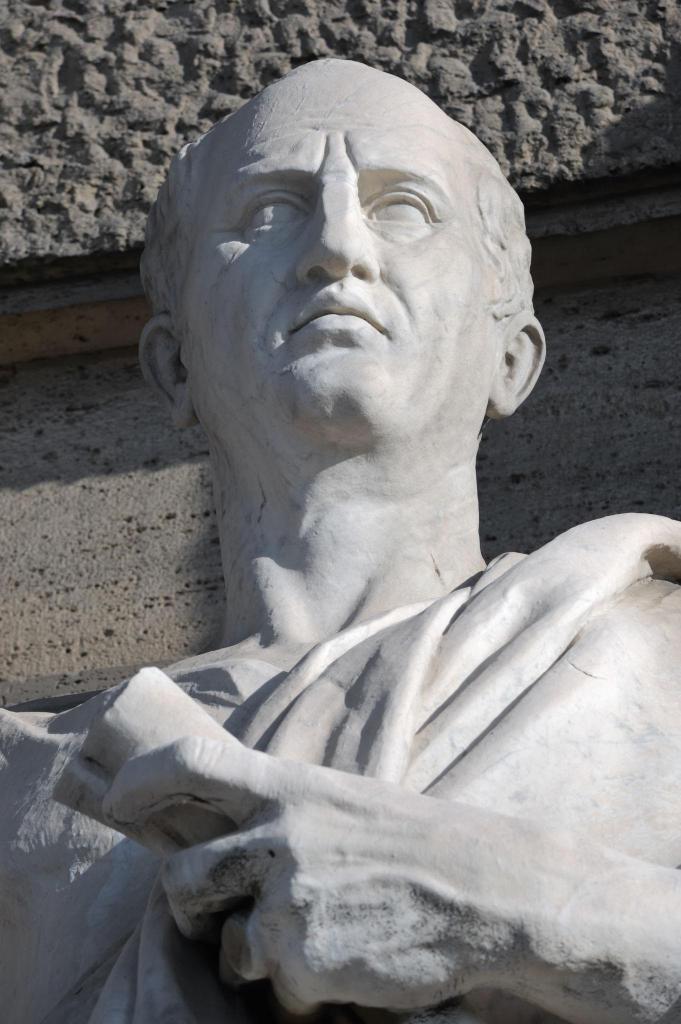
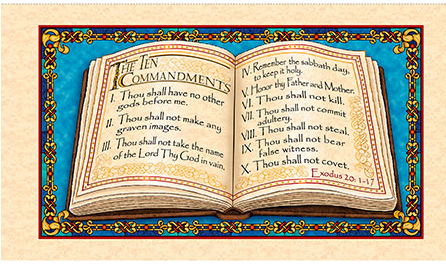

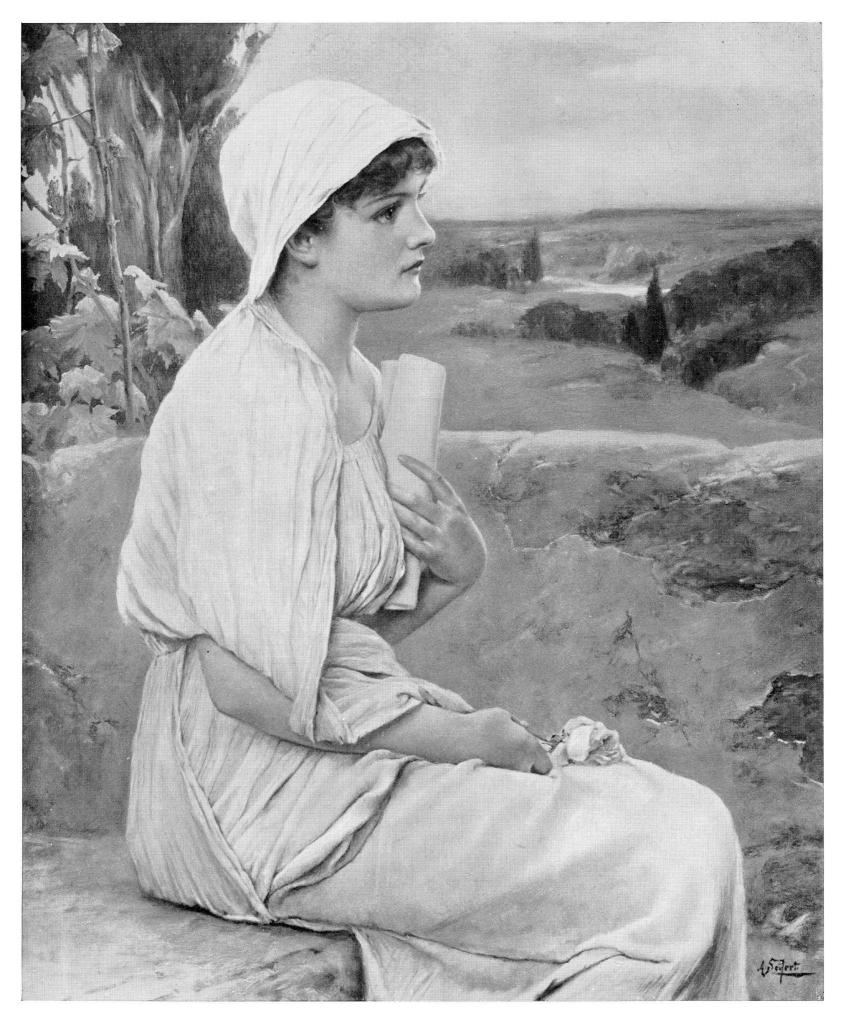
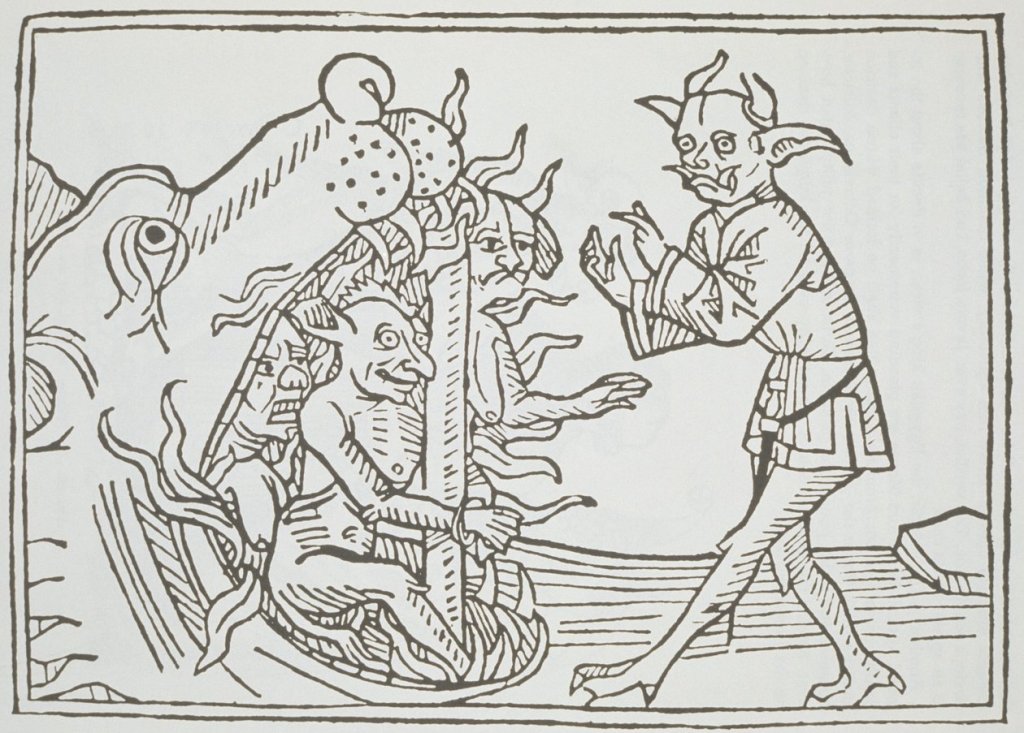
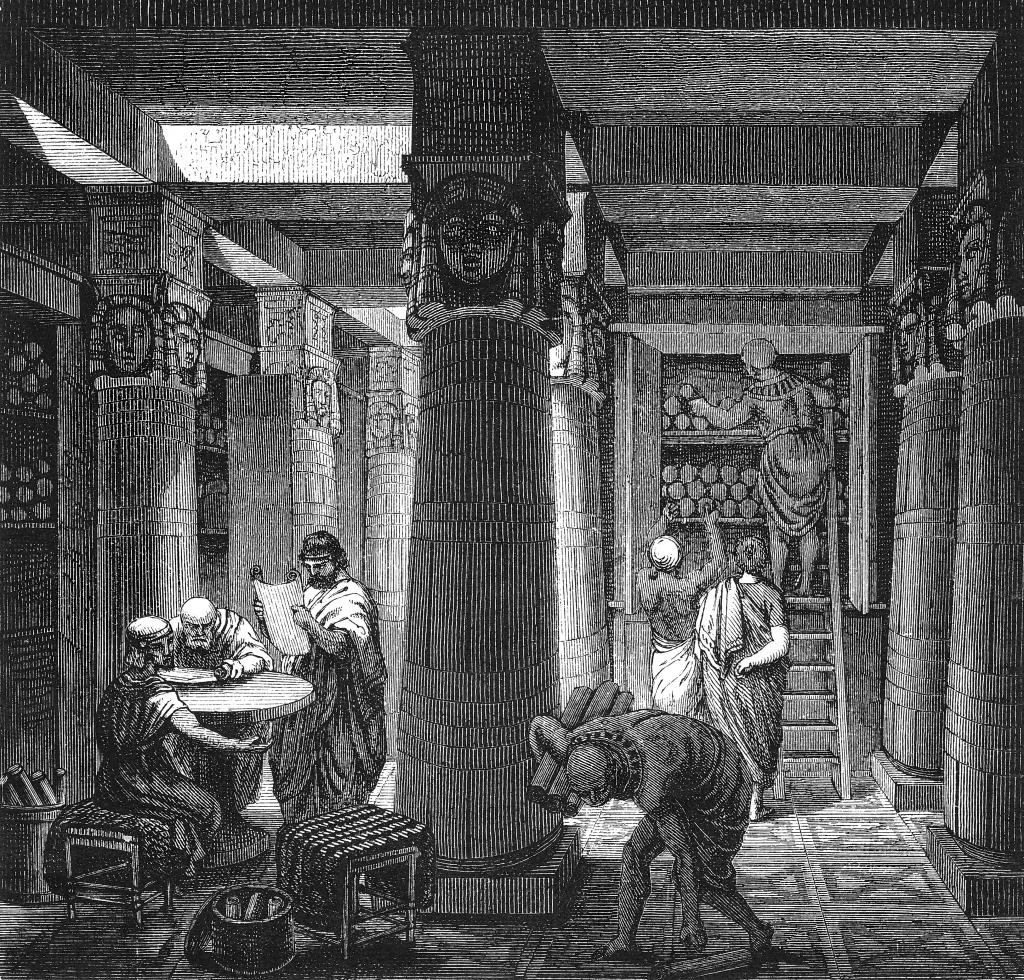

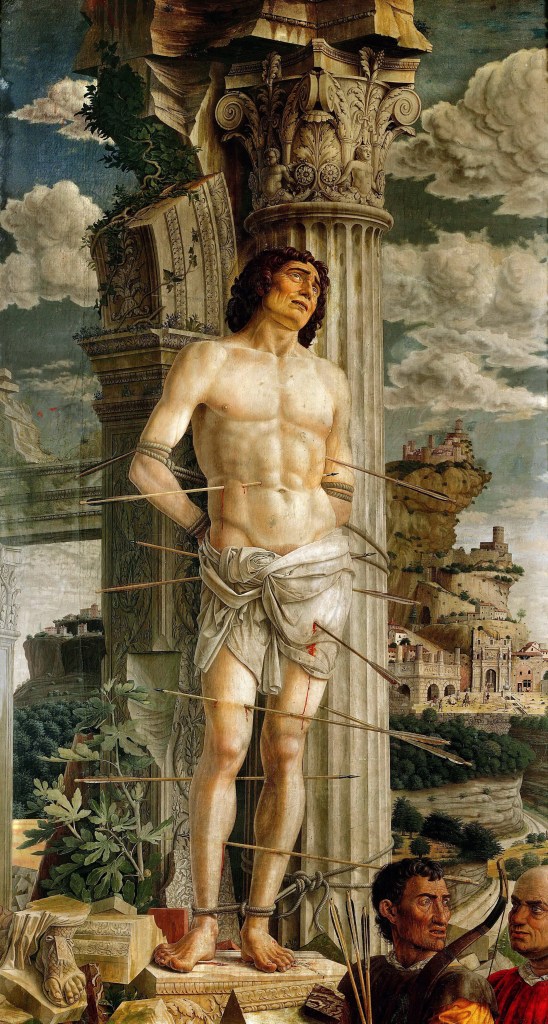
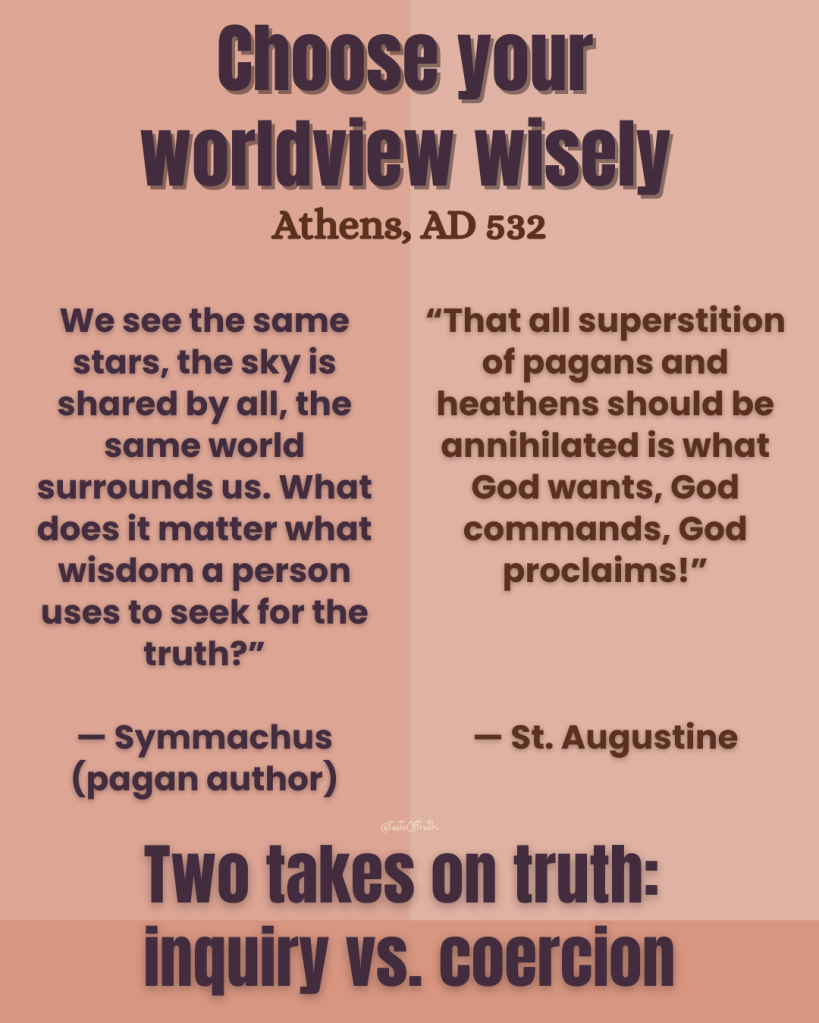
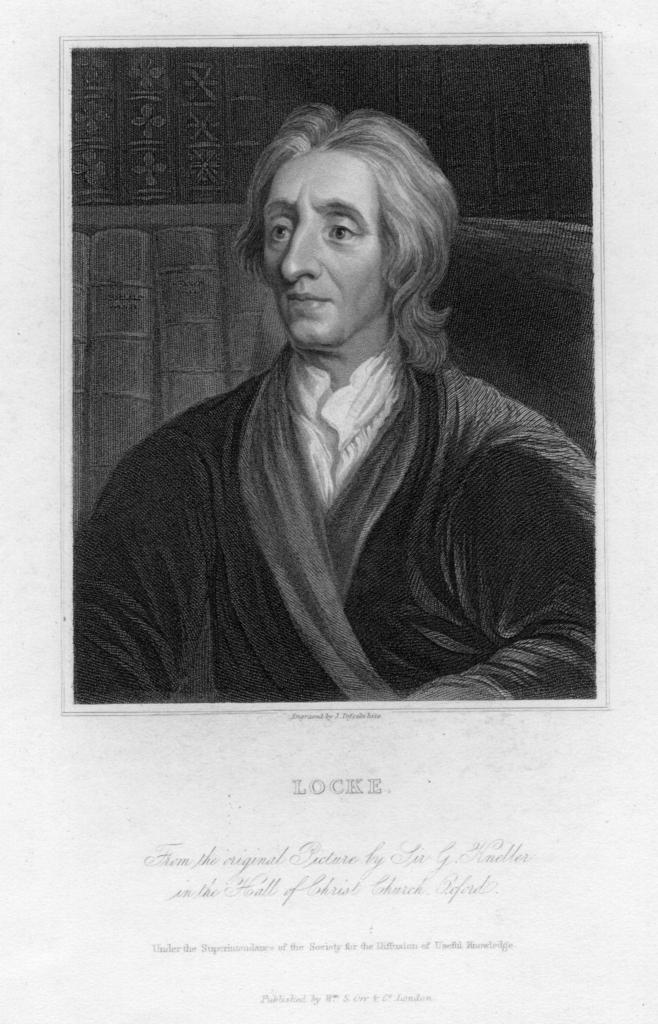


















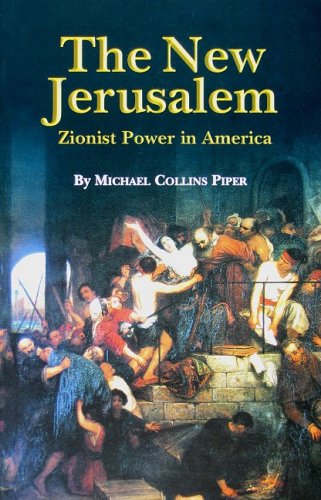













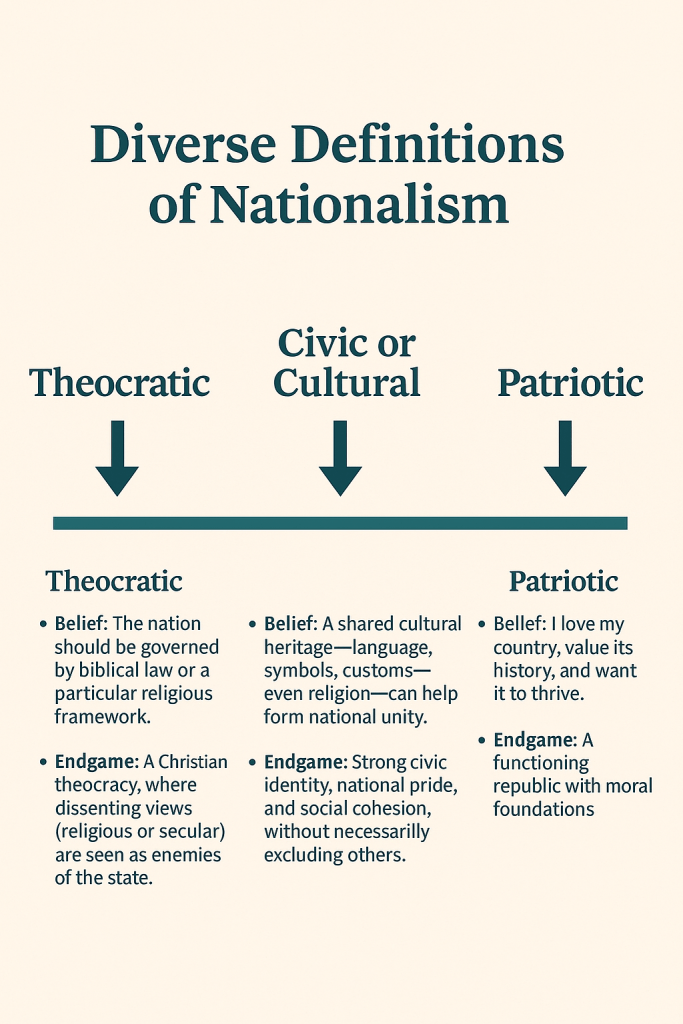

 Taste0ftruth Tuesdays