Are we wearing poison? Let’s talk the Hidden Chemistry of Modern Clothing
We obsess over what goes into our bodies (the food we eat, the supplements we take) but what about what touches our skin every day? From Victorian gowns to modern period underwear, the history of fashion is riddled with invisible chemicals that make us sick, sometimes quietly, sometimes catastrophically.
In this week’s Taste of Truth Tuesdays, we explore the hidden chemistry in the fabrics we wear, the cultural stories that taught us to hide what’s natural, and small steps we can take to reclaim autonomy over our own bodies.
I sat down with Arielle, founder of Flower Girl, a brand reimagining period underwear with natural, breathable fibers— no toxic coatings, no gimmicks. But this episode isn’t just about a product. It’s about the invisible chemistry that touches our skin, and the cultural stories that taught us to hide what’s natural while normalizing what’s toxic.
🧵 A Brief History of Poisonous Fashion
From Victorian gowns to modern athleisure, fashion has a long history of exposing us (sometimes invisibly) to chemicals that affect our health. Here’s a quick dive:
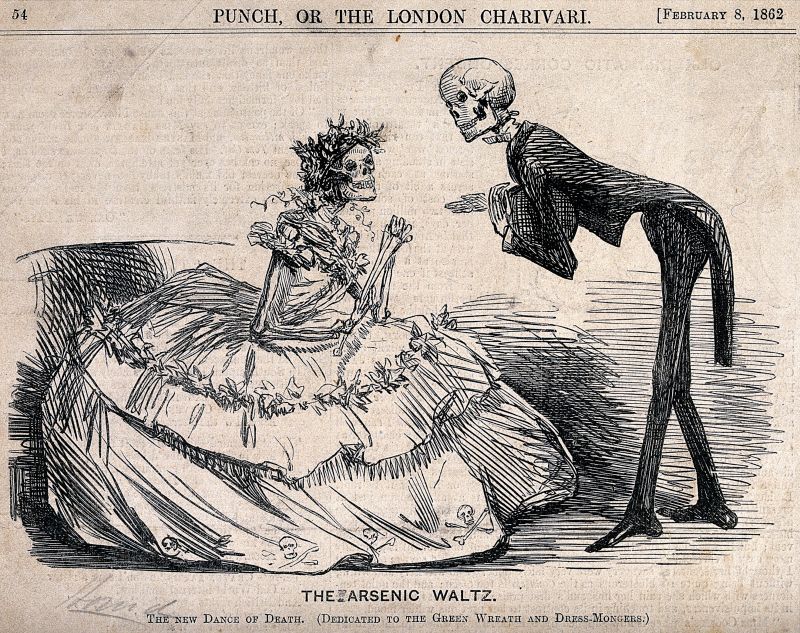
Victorian Era: Those green dresses weren’t just a statement— they were laced with arsenic, and mercury-based pigments were common. The result? Rashes, lung damage, even death. Fashion literally killed.
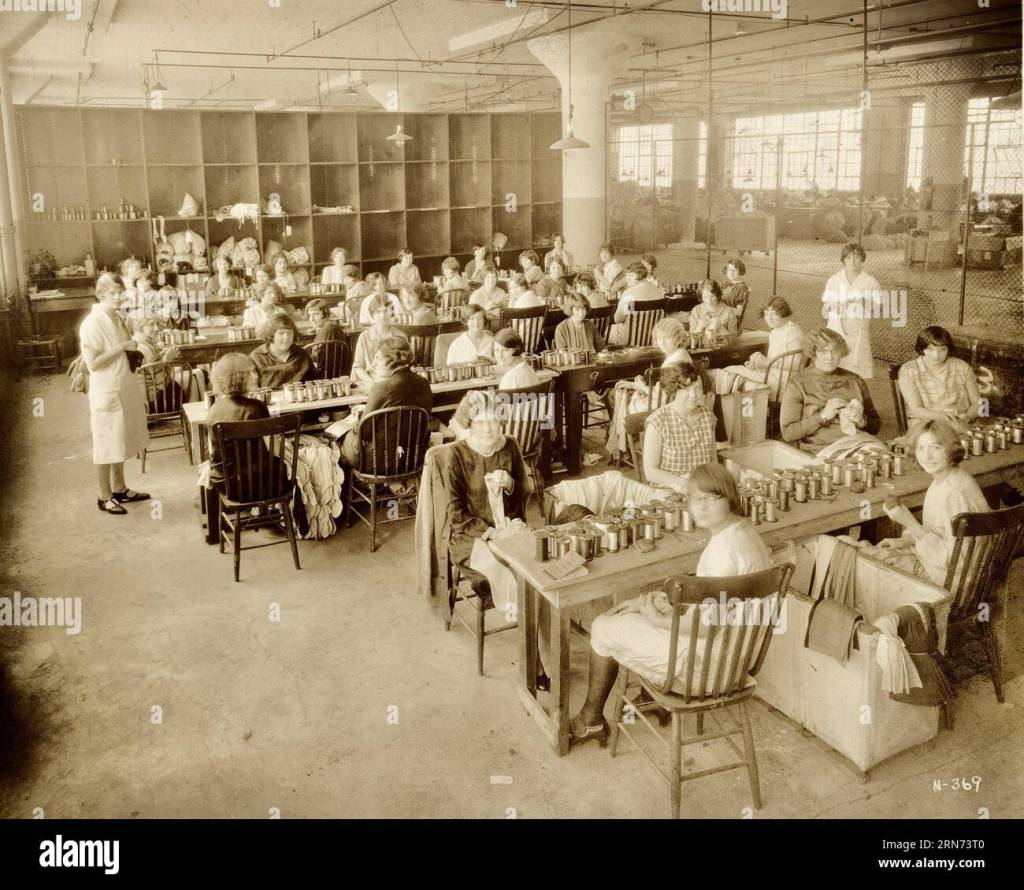
Early 1900s: Factory workers handled lead, aniline dyes, and formaldehyde finishes. Mercury made hat-makers insane, while young women painting radium watch dials suffered bone decay and radiation poisoning.
Mid-20th century: Synthetic fabrics like nylon and polyester promised convenience and comfort — but chemical coatings for stain-proofing, wrinkle-free finishes, and flame retardants added a new layer of invisible toxins.
Modern Toxic Threads
Fast-forward to today, and the chemical story hasn’t improved much:
Plastic fibers (polyester, nylon, spandex): Shed microplastics into waterways and can absorb and re-release toxins through skin contact with these substances. And yes— even period products aren’t safe from the chemical experiment.
PFAS (“forever chemicals”): Used for stain- and water-resistance in yoga pants, athleisure, and some period underwear. Linked to hormone disruption, infertility, thyroid disease, and cancer.
Formaldehyde finishes: Wrinkle-free clothing often contains formaldehyde, a known skin irritant and probable carcinogen.
Azo dyes & heavy metals: Cheap and fast-fashion fabrics often use dyes with heavy metals, which can trigger allergic reactions and long-term organ toxicity.
Some of the most publicized cases show just how pervasive these risks are:
Thinx Period Underwear (2023): Independent testing revealed PFAS in products marketed as organic and “clean,” sparking lawsuits and class-action settlements. Even items sold as safe aren’t always free from hidden chemicals.
Flight Attendant Uniforms: Airlines like Alaska, Delta, and American faced reports of workers developing rashes, respiratory issues, and thyroid problems after new uniforms were treated with PFAS or formaldehyde coatings.
Outdoor & Athleisure Brands:Major brands like Patagonia, Lululemon, and REI have been scrutinized for PFAS in waterproof or sweat-wicking gear, showing that convenience and performance often come at a chemical cost.
Globally, more than 40,000 chemicals are used in textiles and apparel, yet only a fraction have been tested for safety— for humans, animals, or the environment. These scandals aren’t isolated; they reflect a system where toxic exposure is often invisible, normalized, and poorly regulated.
A 2024 study from UC Berkeley and Columbia found 16 different metals (including lead and arsenic) in tampons across both organic and non-organic brands. The levels were low, but researchers warned that the vaginal route is especially absorbent— a reminder that what we wear inside our bodies matters as much as what we eat.
💬 From Ritual Impurity to Hygiene Marketing
Over the last century, the cultural messaging around menstruation has shifted in a few distinct stages and each one carried the same underlying expectation: women should hide and control their bodies.
Ritual or moral framing (ancient to early modern): In many societies, including biblical times, periods were treated as a matter of ritual purity. Women were temporarily “unclean” in religious or social terms, meaning they couldn’t participate in certain activities. The focus was spiritual or moral, not about hygiene or appearance.
Hygiene framing (early 20th century): With industrialization and the rise of consumer products, periods were recast as a hygiene problem. Ads emphasized cleanliness and odor control, implying that menstruation was inherently messy or dangerous. Women were encouraged to conceal their cycles, but the emphasis was still largely about avoiding germs and embarrassment.
Performance framing (mid-to-late 20th century onward): Marketing and media shifted the conversation again, this time framing periods as an obstacle to a woman’s ability to perform socially, professionally, and physically. Products promised to let women stay active, go to work, exercise, and socialize “normally”, without anyone noticing their period. The message became: your body is natural, but it shouldn’t interfere with the image of a controlled, capable, and flawless woman.
In other words, the period itself didn’t change, but what society demanded of women did. “Performance” here doesn’t mean athletics alone— it means the expectation that women should navigate daily life seamlessly, keeping their bodies’ natural processes invisible, as if menstruation were a glitch in an otherwise perfect system.
🌍 The New Awareness
Today’s “wellness” world loves to market empowerment but secretly it’s still selling control. Arielle’s work with Flower Girl pushes against that. Her goal isn’t fearmongering about chemicals; it is about helping women rebuild trust with their own bodies, starting with the fabrics that touch them daily.
Because true control over your body is about sovereignty, not ideology.
What we wear, what we absorb, and how we relate to our cycles all tell a deeper story about modern womanhood…. one that’s overdue for rewriting.
Next Steps: What You Can Do
Read Labels Critically: Seek out brands that disclose fabric treatments and avoid PFAS, formaldehyde, or undisclosed chemical finishes. Wicker highlights the challenge in identifying safe clothing due to the lack of ingredient transparency, urging consumers to demand more disclosure from manufacturers.
Prioritize Natural Fibers: Opt for materials like cotton, bamboo, or other certified breathable fabrics to reduce your chemical load. Wicker notes that while natural fibers are generally safer, it’s crucial to ensure they are not treated with harmful chemicals during processing.
Wash New Clothes: Especially synthetics- washing before first wear can remove some surface chemicals. Wicker advises washing new garments to reduce initial chemical exposure, particularly from dyes and finishes.
Choose Sustainable Period Products: Brands like Flower Girl use body-safe fabrics designed for comfort, breathability, and longevity— and are tested for safety. Wicker emphasizes the importance of selecting period products that are free from toxic chemicals, as these items are in close contact with sensitive areas of the body.
Advocate for Transparency: Demand that brands tell you what’s in your clothing. Knowledge is power, and the more we ask, the more companies will act. Wicker encourages consumers to be vocal about their concerns, as increased demand for transparency can drive industry-wide change.
🎧 Listen In
Tune in to this week’s Taste of Truth Tuesdays episode, “What’s Really in Our Clothes (and What That Says About Us)”, where Arielle and I unpack the hidden toxins in textiles, the myths around “clean” wellness marketing, and what it really means to live in a body that’s free— not just from chemicals, but from shame.
In recent decades, the Law of Attraction has become one of the most influential belief systems in wellness, self-help, and multilevel marketing (MLM) circles. Its premise is seductively simple: your thoughts shape your reality. Think positively, and abundance will flow; dwell on negativity, and you’ll attract misfortune.
We have discussed the pitfalls of Law of attraction in a previous episode, you can find here.
🎙️ Another throwback episode is linked below, where I unpack my journey from wellness fanatic within MLM into a high-control religion. Together, we explore the wild “crunchy hippie to alt-right pipeline.” 🌿➡️🛑 social media, influencers, and wellness hype quietly nudge people toward extreme ideas, and in this episode, we break down exactly how. 🎧🔥
This modern doctrine of “mind over matter” is often traced to The Secret (2006) by Rhonda Byrne, but its genealogy is much older. It reaches back to New Thought philosophy of the 19th century, where figures like Ralph Waldo Emerson, Phineas Quimby, and later Mary Baker Eddy (founder of Christian Science) claimed that divine thought itself was the engine of reality. These Mind Cure and faith healing movements linked spirt and matter together. Disease, poverty, and suffering were seen as products of “wrong or stinking thinking.” Salvation was not just spiritual but cognitive: change your thinking, change your life.
and so again I say: It is shockingly right instead of shockingly wrong of you to be prosperous. Obviously, you cannot be very happy if you are poor and you need not be poor. It is a sin. –Catherine Ponder (The Dynamic Laws of Prosperity)
In fact, it is the search for spiritual healing of the body that led to what is known today as prosperity consciousness or in Christian evangelism, it’s prosperity theology.
That intellectual lineage matters because it shows how the Law of Attraction has always been more than a harmless pep talk. It represents a cosmology of control, one that locates all responsibility (and blame) within the individual mind. As we have discussed many times before, Jonathan Haidt observes in The Righteous Mind, belief systems serve a dual function: they bind communities together and blind them to alternative explanations.
In this sense, the Law of Attraction doesn’t just inspire positive thinking; it narrows. By framing success and failure as purely mental vibrations, it obscures structural realities like economic inequality, physical health and genetic limitations, racism, or corporate exploitation.
And that narrowing is precisely what makes it the perfect handmaiden to MLM culture.
When Positive Thinking Becomes a Business Model
Robert L. FitzPatrick, in False Profits and Ponzinomics, describes MLMs as “endless chain” recruitment schemes. What sustains them isn’t product sales but the constant influx of hopeful recruits. Yet these schemes require something more than numbers: they require belief.
Here, the Law of Attraction becomes the MLM’s best salesman. Distributors are told:
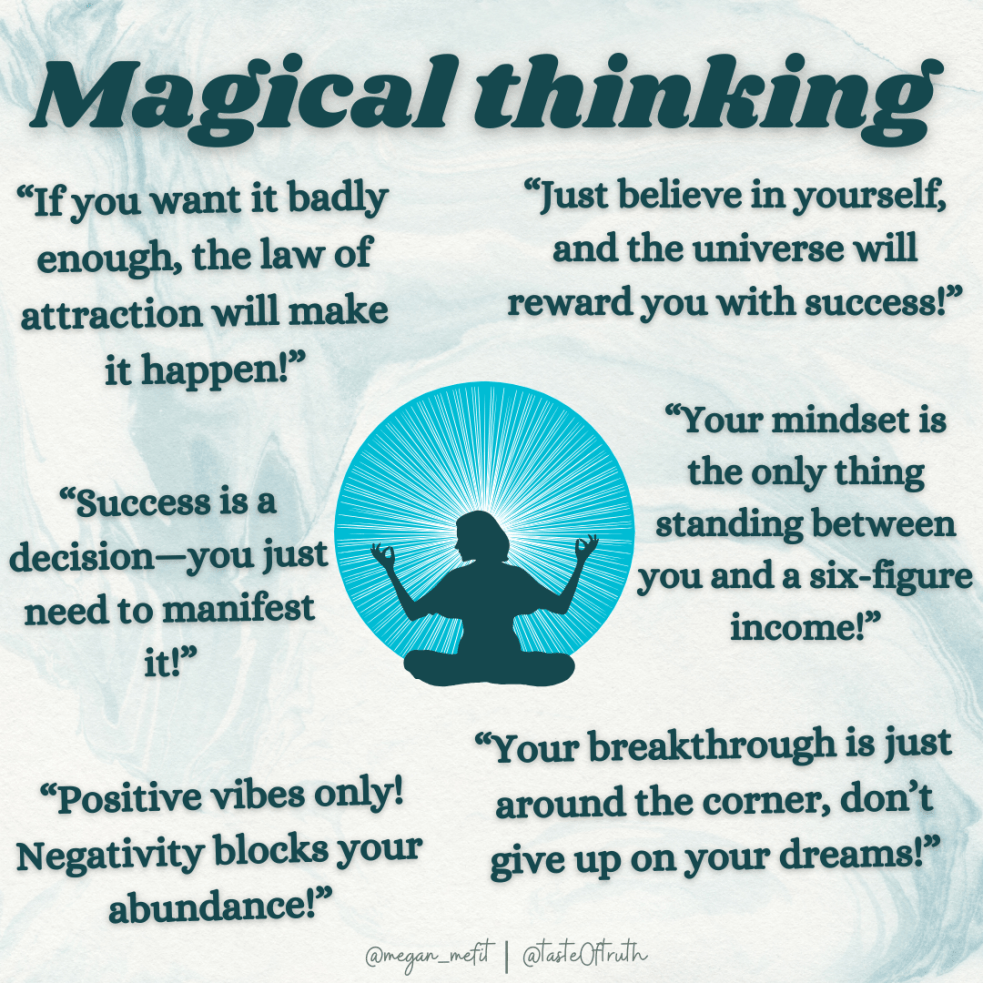
Failure isn’t about the structure of the business; it’s about your mindset.
Doubt is “negative energy” that will block your success.
Quitting is not just a business choice but a moral failing.
In the Amway training program, the “ABCs of Success” are “Attitude, Belief and Commitment.” Attitude was the key which must be guarded. Don’t let anyone steal your attitude. Negative was defined as “whatever influence weakens your belief and commitment in the business” -False Profits
This is where Norman Vincent Peale’s “positive thinking” gospel dovetails with MLM. In his 1948 book Positive Thinking for a Time Like This, Peale popularized the phrase
“Let go and let God. Let Him take over your life and run it. He knows how.”
While originally a call to spiritual surrender, the phrase has since been weaponized in countless contexts from Holiness movements to Alcoholics Anonymous to prosperity preaching. At its worst, it functions as a silencer: don’t question, don’t resist, don’t think critically. Just “let go,” and trust that outcomes (or uplines) will provide.
Eastern Orthodox Christianity has a word for this: prelest. It’s the belief that human beings are so easily deceived that any private sense of spiritual progress — a feeling of clarity, joy, empowerment, even a mystical experience — can’t be trusted on its own. Without humility and the guidance of a spiritual father, you’re told it may just be pride, delusion, or the devil in disguise.
That’s the trap: you can’t trust your own mind, heart, or gut. The only “safe” option is obedience to the system. Which is exactly how MLMs and other high-control groups operate — undermining self-trust to keep you dependent.
Nietzsche would have called this a kind of slave morality, a belief system that encourages resignation to suffering rather than rebellion against unjust structures. The Law of Attraction, framed in this way, doesn’t challenge MLM exploitation; it sanctifies it.
More powerful than any product, charismatic leader, or compensation plan, the MLM mindset materials (the tapes, courses, and “personal development” kits) are the prime tools used to recruit and control distributors. Once you’re in the system, you’re encouraged to buy these materials week after week, keeping you invested emotionally and financially while feeding the company’s bottom line.
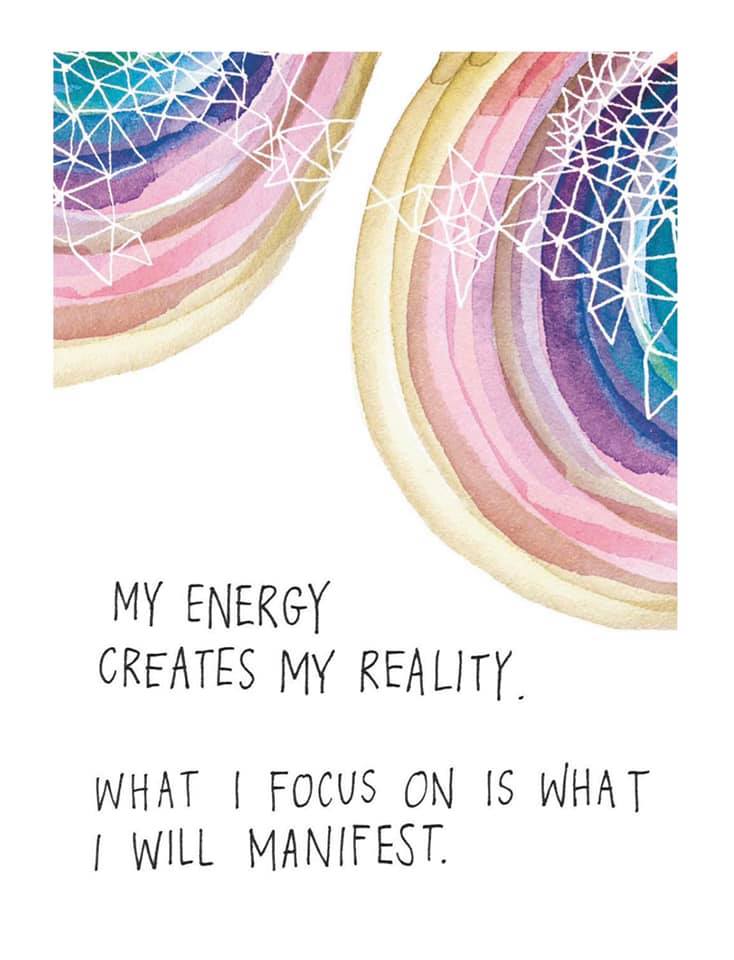
I went back through my Facebook to find some goodies for you! 😜This photo says “My energy creates my reality. What I focus on is what I will Manifest.” Here is the original caption so you can hear how brainwashed I was. “💥🙌🏼Belief is a feeling of certainty about something, driven by emotion. Feeling certain means that it feels true to you and therefore it is your reality. 💥🙌🏼 💪🏼 What you focus on you find 💪🏼 👀 You’ve got to believe it, to see it 👀”
Flashback to my first corporate event Aug 2016. My upline purchased my flight basically forcing me to go.
My caption at the time: 🤮
🔥IGNITE YOUR VISION! 🔥 ⚡Attended an event that changed my life. Showed me the massive vision of this company. 🤗Join our passionate, growing team of 18-35-year-olds striving for extraordinary lives and ownership of health, dreams, and contributions. 🤩Returning to this LIFE CHANGING event soon! Nashville, TN—let’s learn, grow, and celebrate!
Sounds inspiring, right? Except what they’re really selling is mandatory product purchases, endless hype, and a community that keeps you chasing the next status milestone. That “massive vision” isn’t about your health or dreams—it’s about the company’s bottom line.
Words like passionate, extraordinary, innovators, ownership are carefully chosen psychological nudges, making you feel like life itself is on the line if you’re not on board. And the countdown to the next “life-changing” event? Keeps you spending, attending, and emotionally hooked.
This is exactly what FitzPatrick calls out in Ponzinomics: the sales rep is the best customer. Only a tiny fraction of participants earn anything; the rest are paying to stay inspired.
More flashback images from my cult days….
The Psychological Toll
When these elements collide the New Thought inheritance of “mind over matter,” Peale’s positive thinking, religious community networks and MLM compensation plans… the result is a high-control environment dressed in empowerment language.
The outcomes are rarely empowering:
Blame and guilt when inevitable losses occur.
Anxiety from the demand to maintain “high vibrations.”
Suppression of doubt, lest skepticism be mistaken for weakness.
Financial harm disguised as personal failure.
In wellness communities, this logic extends beyond money. If essential oils don’t heal your illness, it’s because your mindset was wrong. If the diet doesn’t work, it’s because you didn’t “believe” enough. Structural realities (biology, medicine, inequality) are flattened into personal responsibility.
As Haidt warns, morality (and by extension ideology) can both bind and blind. The Law of Attraction, when paired with MLM, binds participants into a shared culture of hope and positivity while blinding them to exploitation.
Connecting the Dots: Bodybuilding, Metabolism & Team Isagenix
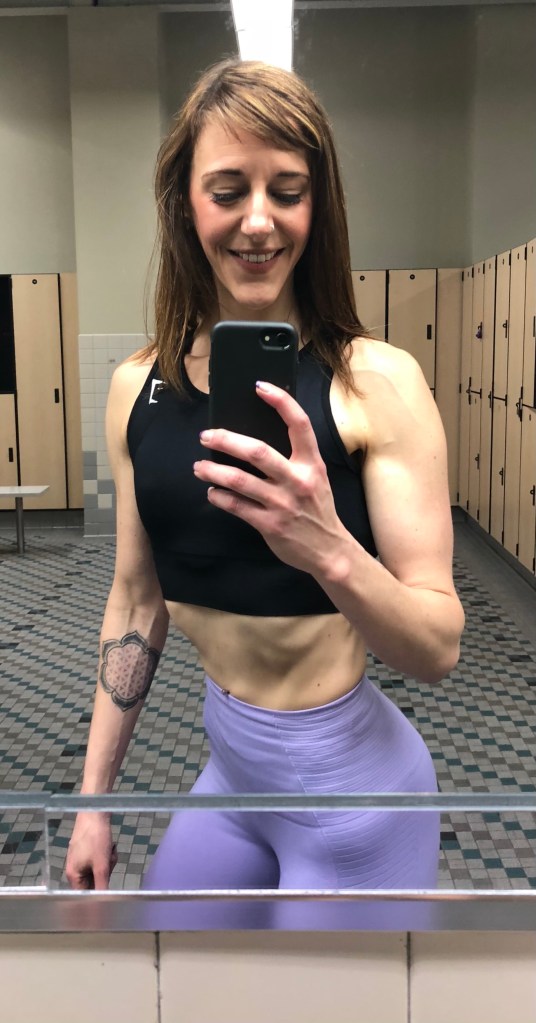
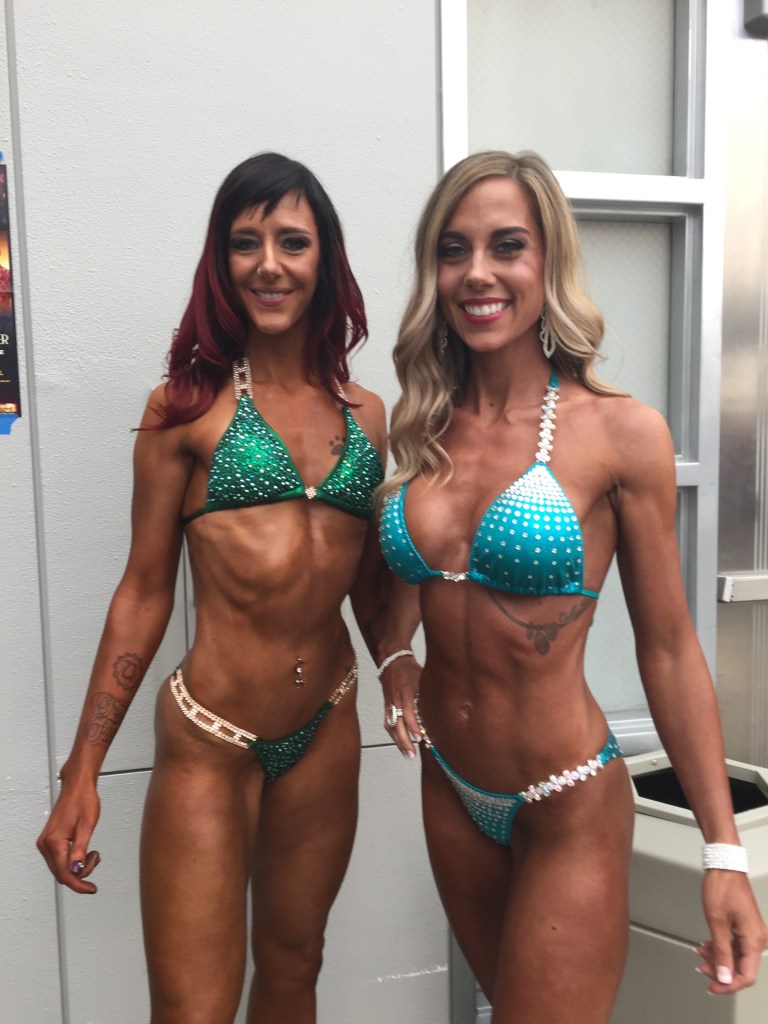
A couple weeks ago on the podcast, I shared about my bodybuilding years and the metabolic fallout I still live with today. I had forgotten how much of that season was actually entangled with my Isagenix obsession. My upline (the couple who enrolled me) were a part of Team Isagenix®, and I craved the validation of being “seen” as a successful athlete inside that community.
The requirements were brutal: placing in the top three of multiple competitions in a short span of time. So, between May 2017 and October 2018, I crammed in four shows in just 18 months. No off-season. No recovery. Just constant prep cycles. My metabolism never had a chance to stabilize, and I pushed myself past healthy limits. I wrecked my body and I’m still paying the price.
This is why I push back so hard when people insist that success is all about having a “positive enough” attitude to manifest it. My mindset was ironclad. What I lacked the conscious awareness that valued human health over recruitment and body image. That drive wasn’t just about stage lights and trophies. It was about proving my worth to an MLM culture that dangled prestige as the price of belonging. Team Isagenix® made the bar steep, and I was determined to clear it, no matter the cost.
And if you need proof of how deep this “mindset over matter” indoctrination goes, look no further than my old upline…now rebranded as a Manifestation Coach. Picture the classic boss-babe felt hat, paired with a website promising “signature mindset tools for rapid results.” According to her, if fear or doubt was “shrinking your dreams,” this was your moment to “flip it.” She name-drops 8-figure companies, influencers, and visionaries (the usual credibility glitter) while selling memberships, live events, and 7-day challenges.
It’s the same pitch recycled: your struggle isn’t systemic, it’s your mindset. If you’re not living your “life you truly love,” it’s because you haven’t invested enough in flipping the script (with her paid framework, of course). The MLM grind culture just got a new coat of “manifesting” paint.
🧠 Isagenix Programs & Their Psychological Impact
Healthy Mind and Body Program: A 60-day “mindset” initiative framed as holistic wellness. In practice, it ties product use to personal development, creating behavioral conditioning and binding members into a sense of shared identity and belonging. 🚩
IsaBody Challenge: A 16-week transformation contest requiring regular Isagenix product purchases. Completion comes with swag and vouchers; finalists are paraded as “success stories,” gamifying loyalty and dangling prestige as bait. The grand prize winner earns $25,000 but most participants earn only deeper entanglement. 🚩
Team Isagenix: Marketed as a prestige group for elite athletes with current national certifications, offering exclusivity and aspirational branding. This elevates certain members as “proof” of the products’ legitimacy, fueling both loyalty and recruitment. 🚩
Product Consumption: Isagenix requires 100 PV every 30 days just to remain “active.” This equates to about $150/month you HAVE to spend. On paper, bonuses and ranks promise unlimited potential. In reality, most associates struggle to recoup even their monthly product costs. Personal development rhetoric and community belonging often eclipse these financial realities, keeping participants cycling through hope, debt, and blame. 🚩
🤮🐦🔥 “Transform Your Life with Isagenix | Empowering Wellness and Wealth” 🐦🔥 🤮
Watch closely, because this is where the magic happens: the company paints a picture of limitless opportunity, but as Robert L. FitzPatrick lays out in Ponzinomics, the secret is that the sales rep is the best customer. That’s right… the real profits aren’t coming from your vague dreams of financial freedom; they’re coming from the people who are already buying the products and trying to climb the ranks.
The numbers don’t lie. According to Isagenix’s own disclosure: the overall average annual income for associates is $892. Among those who actually earned anything, the average jumps to $3,994. Do the math: $892 ÷ $3,994 ≈ 0.223 — meaning only about 22% of associates earn anything at all. The other 78%? Zero. Nada. Zilch.
And before you start fantasizing about that $3,994, remember: that’s before expenses. Let’s run a realistic scenario based on actual product spend:
$150/month on products or promotional materials = $1,800/year → net ≈ $2,194 − $1,800 = $1,194 before other costs.
Factor in travel, events, or socials? That $1,194 could easily drop to near zero…or negative.
The point: the so-called “income potential” evaporates fast when you account for the mandatory spending MLMs require. The only thing truly transformed is the company’s bottom line, not yours.
No wonder the comments are turned off.
Apparently, nobody actually crunches the numbers while the marketing spiel promises energy, strength, and vitality as if a shake could fix financial exploitation, metabolic burnout, and guilt-tripping at the same time.
My story is just one case study of how these tactics play out in real lives: I was recruited through trusted connections, emotionally manipulated with promises of transformation, pressured into relentless product use, and left with financial strain and long-lasting health consequences. That’s the “empowerment” MLMs sell and it’s why scrutiny matters.
Cultural Ecosystems That Enable MLMs
MLMs don’t operate in a vacuum. They flourish where belief structures already normalize submission to authority, truth-claims, and tightly networked communities. Evangelicals and the LDS Church provide striking examples: tight-knit congregations, missionary training in persuasion, and a cultural emphasis on self-reliance and communal obligation create fertile ground for recruitment.
Companies like Nu Skin, Young Living, doTERRA, and Melaleuca have disproportionately strong followings in Utah and among Mormon communities. FitzPatrick notes that MLMs thrive where trust networks and shared values make persuasion easier. The kind of environment where aspirational marketing and “prestige” teams can latch onto pre-existing social structures.
In short, it’s not just the products or the promises of positive thinking; it’s where belief, community, and culture all collide… that allows MLMs to hook people and keep them chasing elusive success.
Beyond Magical Thinking
The critique, then, is not of hope or positivity per se, but of weaponized optimism. When mantras like let go and let God or just thinking positive to manifest it are used to shut down discernment, discourage action, or excuse exploitation, they cease to be spiritual tools and become instruments of control.
Nietzsche challenged us to look beyond systems that sanctify passivity, urging instead a confrontation with reality even when it is brutal. FitzPatrick’s work extends this challenge to the world of commerce: if we truly care about empowerment, we must be willing to see how belief systems can be manipulated for profit.
That’s why MLMs and the Law of Attraction deserve scrutiny. Not because they promise too much, but because they redirect responsibility away from unjust structures and onto the very people they exploit.
Coming Up: A Deeper Dive
Next week on the podcast, I’ll be speaking with Robert L. FitzPatrick, author of False Profits and one of the world’s leading experts on MLMs. With decades of research, FitzPatrick has testified in court cases exposing fraudulent MLM schemes and helped unravel the mechanisms behind these multi-billion-dollar operations. He’s seen firsthand how MLMs manipulate culture, co-opt spirituality, and turn belief itself into a product.
Stay tuned. This is a conversation about more than scams, it’s about the machinery of belief, and how it shapes our lives in ways we rarely see.
Byrne, Rhonda. The Secret. New York: Atria Books, 2006.
Eddy, Mary Baker. Science and Health with Key to the Scriptures. Boston: The Christian Science Publishing Society, 1875.
Emerson, Ralph Waldo. The Essential Writings of Ralph Waldo Emerson. Edited by Brooks Atkinson. New York: Modern Library, 2000.
FitzPatrick, Robert L. False Profits: Seeking Financial and Spiritual Deliverance in Multi-Level Marketing and Pyramid Schemes. Charlotte, NC: Herald Press, 1997.
FitzPatrick, Robert L. Ponzinomics: The Untold Story of Multi-Level Marketing. Charlotte, NC: Skyhorse Publishing, 2020.
Haidt, Jonathan. The Righteous Mind: Why Good People Are Divided by Politics and Religion. New York: Vintage Books, 2012.
Nietzsche, Friedrich. On the Genealogy of Morals. Edited by Walter Kaufmann. New York: Vintage Books, 1989 (originally published 1887).
Peale, Norman Vincent. Positive Thinking for a Time Like This. New York: Prentice-Hall, 1948.
Quimby, Phineas P. The Quimby Manuscripts. Edited by Horatio W. Dresser. New York: Thomas Y. Crowell, 1921.
Wallace, David Foster. “Consider the Lobster.” In Consider the Lobster and Other Essays. New York: Little, Brown, 2005. (Useful on consumer culture critique, if you want a modern edge.)
When Willpower Isn’t Enough: Media, Metabolism, and the Myth of Transformation
You’re listening to Taste Test Thursdays–a space for the deep dives, the passion projects, and the stories that didn’t quite fit the main course. Today, we’re hitting pause on the intense spiritual and political conversations we usually have to focus on something just as powerful: how technology shapes our bodies, minds, and behaviors. We’ll be unpacking a recent Netflix documentary that highlights research and concepts we’ve explored before, shining a light on the subtle ways screens and media program us and why it matters more than ever.
I have a confession: I watched The Biggest Loser. Yep. Cringe, right? Back in 2008, when I was just starting to seriously focus on personal training (I got my first certification in 2006 but really leaned in around 2008), this show was everywhere. It was intense, dramatic, and promised transformation—a visual fairy tale of sweat, willpower, and discipline.
Looking back now, it’s so painfully cringe, but I wasn’t alone. Millions of people were glued to the screens, absorbing what the show told us about health, fat loss, and success. And the new Netflix documentary Fit for TV doesn’t hold back. It exposes the extreme, sometimes illegal methods used to push contestants: caffeine pills given by Jillian Michaels, emotional manipulation, extreme exercise protocols, and food as a weapon. Watching it now, I can see how this programming shaped not just contestants, but an entire generation of viewers—including me.
Screens Aren’t Just Entertainment
Laura Dodsworth nails it in Free Your Mind:
“Television is relaxing, but it also is a source of direct and indirect propaganda. It shapes your perception of reality. What’s more, you’re more likely to be ‘programmed’ by the programming when you are relaxed.”
This is key. Television isn’t just a casual distraction. It teaches, it socializes, and it normalizes behavior. A study by Lowery & DeFleur (Milestones in Mass Communication Research, 1988) called TV a “major source of observational learning.” Millions of people aren’t just entertained—they’re learning what’s normal, acceptable, and desirable.
Dodsworth also warns:
“Screens do not show the world; they obscure. The television screen erects visual screens in our mind and constructs a fake reality that obscures the truth.”
And that’s exactly what reality diet shows did. They created a distorted narrative: extreme restriction and punishment equals success. If you just try harder, work longer, and push further, your body will cooperate. Except, biology doesn’t work like that.
The Metabolic Reality
Let’s dig into the science. The Netflix documentary Fit for TV references the infamous Biggest Loser study, which tracked contestants years after the show ended. Here’s what happened:
Contestants followed extreme protocols: ~1,200 calories a day, 90–120 minutes of intense daily exercise (sometimes up to 5–8 hours), and “Franken-foods” like fat-free cheese or energy drinks.
They lost massive amounts of weight on TV. Dramatic, visible transformations. Ratings gold.
Six years later, researchers checked back: most regained ~70% of the weight. But the real kicker? Their resting metabolic rate (RMR) was still burning 700 fewer calories per day than baseline—500 calories less than expected based on regained body weight.
In everyday terms? Imagine you used to burn 2,000 calories a day just by living. After extreme dieting, your body was burning only 1,300–1,500 calories a day, even though you weighed almost the same. That’s like your body suddenly deciding it needs to hold on to every calorie, making it much harder to lose weight—or even maintain it—no matter how “good” you eat or how much you exercise.
This is huge. It shows extreme dieting doesn’t just fail long-term; it fundamentally rewires your metabolism.
Why?
Leptin crash: The hormone that tells your brain you’re full plummeted during the show. After weight regain, leptin rebounded, but RMR didn’t. Normally, these rise and fall together—but the link was broken.
Loss of lean mass: Contestants lost ~25 pounds of muscle. Regaining some of it didn’t restore metabolic function.
Hormonal havoc: Chronic calorie deficits and overtraining disrupted thyroid, reproductive, and adrenal hormones. Weight loss resistance, missed periods, hair loss, and constant cold are all part of the aftermath.
Put bluntly: your body is not passive. Extreme dieting triggers survival mode, conserving energy, increasing hunger, and slowing metabolism.
I know this from my own experience. Between May 2017 and October 2018, I competed in four bodybuilding competitions. I didn’t prioritize recovery or hormone balance, and I pushed my body way too hard. The metabolic consequences? Echoes of the Biggest Loser study:
Slowed metabolism after prep phases.
Hormonal swings that made maintaining progress harder.
Mental fatigue and burnout from extreme restriction and exercise.
Diet culture and TV had me convinced that suffering = transformation. But biology doesn’t care about your willpower. Extreme restriction is coercion, not empowerment.
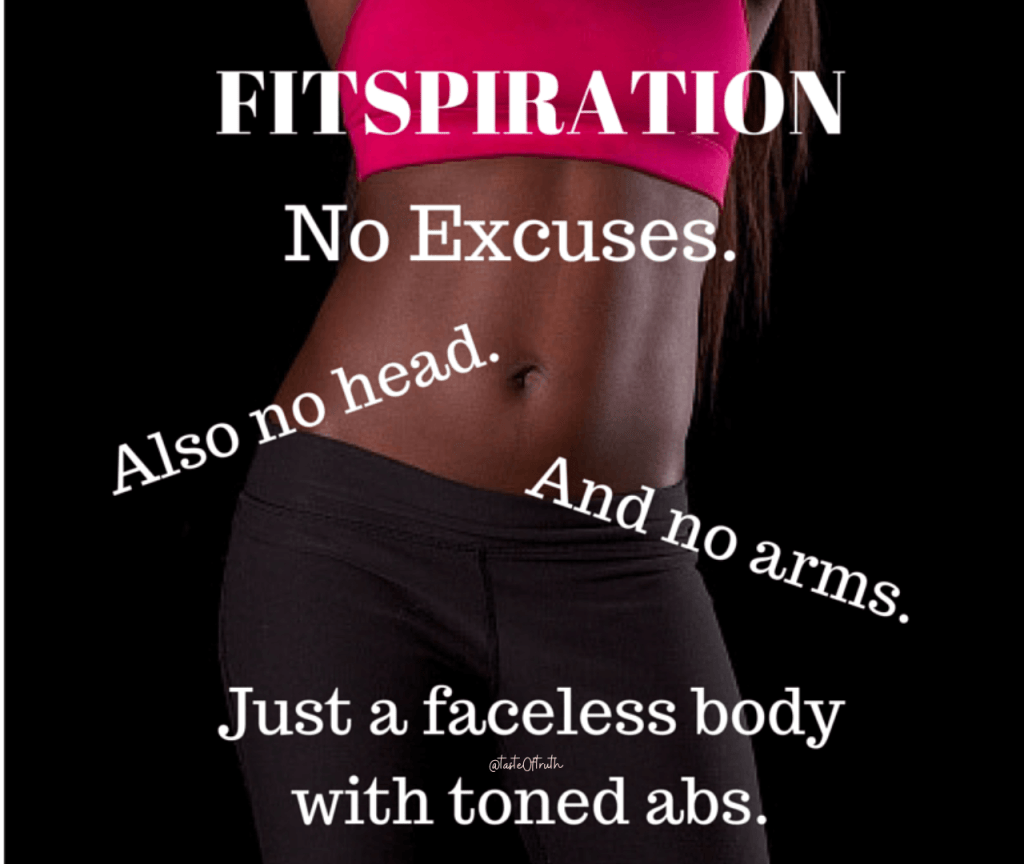
This isn’t just a TV problem. The same mechanisms appear in social media fitness culture, or “fitspiration.” In a previous podcast and blog, From Diary Entries to Digital Screens: How Beauty Ideals and Sexualization Have Transformed Over Time, we discussed the dangerous myth: hard work guarantees results.
Fitness influencers, trainers, and the “no excuses” culture sell the illusion that discipline alone equals success. Consistency and proper nutrition matter—but genetics set the foundation. Ignoring this truth fuels:
Unrealistic expectations: People blame themselves when they don’t achieve Instagram-worthy physiques.
Overtraining & injury: Chasing impossible ideals leads to chronic injuries and burnout.
Disordered eating & supplement abuse: Extreme diets, excessive protein, or PEDs are often used to push past natural limits.
The industry keeps genetics under wraps because the truth doesn’t sell. Expensive programs, supplement stacks, and influencer promises rely on people believing they can “buy” someone else’s results. Many extreme physiques are genetically gifted and often enhanced, yet presented as sheer willpower. The result? A culture of self-blame and impossible standards.
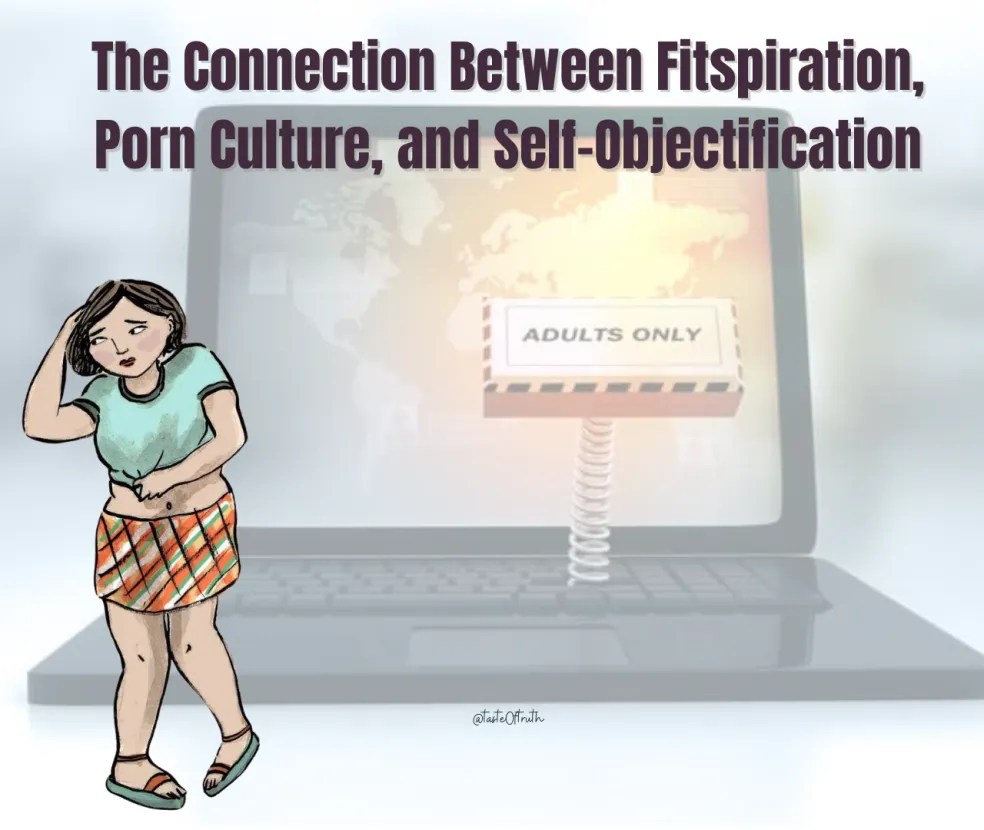
Fitspiration and Self-Objectification
The 2023 study in Computers in Human Behavior found that exposure to fitspiration content increases body dissatisfaction, especially among women who already struggle with self-image. Fitspo encourages the internalized gaze that John Berger described in Ways of Seeing:
“A woman must continually watch herself. She is almost continually accompanied by her own image of herself… she comes to consider the surveyor and the surveyed within her as the two constituent yet always distinct elements of her identity as a woman.”
One part of a woman is constantly judging her body; the other exists as a reflection of an ideal. Fitness becomes performative, not functional. Anxiety, depression, disordered eating, and self-objectification follow. Fitness culture no longer focuses on strength or health—it’s about performing an idealized body for an audience.
The Dangerous Pipeline: Fitspo to Porn Culture
This extends further. Fitspiration primes women to see themselves as objects, which feeds directly into broader sexualization. Porn culture and the sex industry reinforce the same dynamic: self-worth tied to appearance, desire, and external validation. Consider these stats:
Over 134,000 porn site visits per minute globally.
88% of porn scenes contain physical aggression, 49% verbal aggression, with women overwhelmingly targeted (Bridges et al., 2010).
Most youth are exposed to pornography between ages 11–13 (Wright et al., 2021).
91.5% of men and 60.2% of women report watching porn monthly (Solano, Eaton, & O’Leary, 2020).
Fitspiration teaches the same objectification: value is appearance-dependent. Social media and reality TV prime us to obsess over performance and image, extending beyond fitness into sexualization and body commodification.
Contestants were given illegal caffeine pills to keep energy up.
Trainers manipulated emotions for drama—heightened stress, shame, and competitiveness.
Food was weaponized—rationed, withheld, or turned into rewards/punishments.
Exercise protocols weren’t just intense—they were unsafe, designed to produce dramatic visuals for the camera.
The documentary also makes it clear: these methods weren’t isolated incidents. They were systemic, part of a machine that broadcasts propaganda as entertainment.
The Bigger Picture: Propaganda, Screens, and Social Conditioning
Dodsworth again:
“Watching TV encourages normative behavior.”
Shows like The Biggest Loser don’t just affect contestants—they socialize an audience. Millions of viewers internalize: “Success = willpower + suffering + restriction.” Social media amplifies this further, nudging us constantly toward behaviors dictated by advertisers, algorithms, and curated narratives.
George Orwell imagined a world of compulsory screens in 1984. We aren’t there yet—but screens still shape behavior, expectations, and self-perception.
The good news? Unlike Orwell’s telescreens, we can turn off our TVs. We can watch critically. We can question the values being sold to us. Dodsworth reminds us:
“Fortunately for us, we can turn off our television and we should.”
Breaking Free
Here’s the takeaway for me—and for anyone navigating diet culture and fitness media:
Watch critically: Ask, “What is this really teaching me?”
Respect biology: Your body fights extreme restriction—it’s not lazy or weak.
Pause before you absorb: Screens are powerful teachers, but you have the final say.
The bigger question isn’t just “What should I eat?” or “How should I train?” It’s:
Who’s controlling the story my mind is telling me, and who benefits from it?
Reality shows like The Biggest Loser and even social media feeds are not neutral. They are propaganda machines—wrapped in entertainment, designed to manipulate perception, reward suffering, and sell ideals that are biologically unsafe.
I’ve lived some of those lessons firsthand. The scars aren’t just physical—they’re mental, hormonal, and metabolic. But the first step to freedom is seeing the screen for what it really is, turning it off, and reclaiming control over your body, mind, and reality.
Thank you for taking the time to read/listen!
🙏 Please help this podcast reach a larger audience in hope to edify & encourage others! To do so: leave a 5⭐️ review and send it to a friend! Thank you for listening! I’d love to hear from you, find me on Instagram! @taste0ftruth , @megan_mefit , Pinterest! Substack and on X!
Until then, maintain your curiosity, embrace skepticism, and keep tuning in! 🎙️🔒
Between Liberation and Collapse: Why We Need to Talk About the Middle Path
Welcome back to Taste Test Thursdays, where we explore health, culture, belief, and everything in between. I’m your host, Megan Leigh and today, we’re asking a question that’s bound to make someone uncomfortable:
What if the very institutions we tore down as oppressive… were also protecting us?
We live in a time of extremes. On one side, you’ve got Quiverfull-style fundamentalists preaching hyper-fertility and wifely submission like it’s the only antidote to modern decay. On the other, we’ve got a postmodern buffet of “do what you want, gender is a vibe, all structures are violence.”
And if you’re like me—having navigated the high-control religion pipeline but also come out the other side—you might be wondering…
“Wait… does anyone believe in guardrails anymore?”
Because spoiler: freedom without form becomes chaos. And chaos isn’t empowering. It’s destabilizing.
I truly believe that structure and boundaries can actually serve a purpose—especially when it comes to sex, gender, and human flourishing.
This isn’t a call to go backward. It’s a call to pause, zoom out, and ask: what’s been lost in our so-called progress? Let’s dig in.
The Panic Playbook
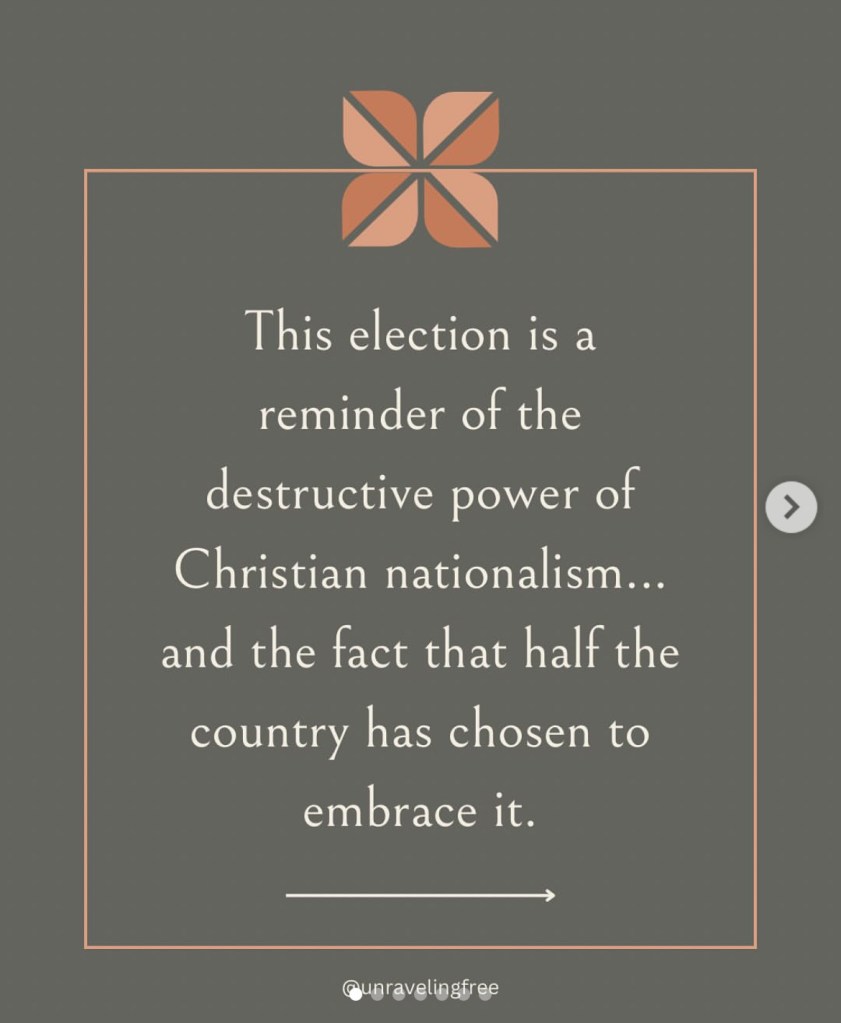
This past summer, the media went full apocalyptic. You couldn’t scroll, stream, or tune in without hearing it: Christian nationalism is taking over.Project 2025 is a fascist manifesto.Trump is a theocratic threat to democracy itself. The narrative was everywhere—breathless Substacks, viral TikToks, and cable news countdowns to Gilead.
But while progressives were busy hallucinating handmaids and framing every Republican vote as the end of America, they were also helping cover up the biggest political scandal since Watergate: Biden’s cognitive decline.
This blog isn’t a right-wing defense or a leftist takedown. It’s a wake-up call. Because authoritarian creep doesn’t wear just one team’s jersey. If we’re serious about resisting tyranny, we need to stop fearmongering about theocracy and start interrogating the power grabs happening under our own banners—especially the ones cloaked in compassion, inclusion, and “equity.”
Not All “Christian Nationalism” Is the Same—Let’s Break It Down
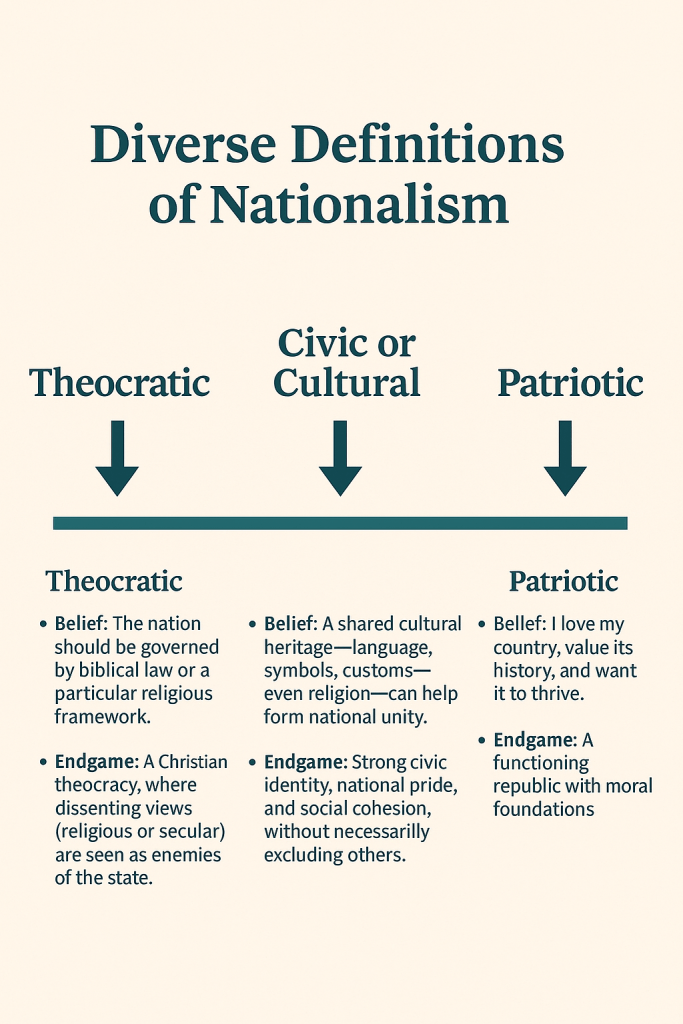
The term “nationalism” gets thrown around a lot, but it actually has different meanings:
🔸 1. The Theocratic Extreme This is the version everyone fears—and with good reason.
Belief: Government should follow biblical law.
Goal: A Christian theocracy where dissent is treated as rebellion.
Associated with: Christian Reconstructionism, Dominionism, and groups hostile to pluralism. 📍 Reality: This is fringe. Most evangelicals don’t support this, but it’s the go-to boogeyman in media and deconstruction circles.
🔸 2. Civic or Cultural Nationalism More common, less scary.
Belief: Shared culture—language, customs, even religion—can create unity.
Goal: Strong national identity and cohesion, not exclusion.
Seen in: France’s secularism, Japan’s cultural pride, and even Fourth of July BBQs. 📍 Reality: This is where most “Christian nationalists” actually land. They believe in the U.S.’s Christian roots and want to preserve those values—not enforce a theocracy.
🔸 3. Patriotism (Often Mislabeled as Nationalism) Here’s where it gets absurd.
Belief: Loving your country and its traditions.
Goal: A moral, thriving republic. 📍 Reality: Critics lump this in with extremism to discredit conservatives, centrists, or people of faith.
Why It Matters
Lumping everyone—from flag-waving moderates to dominionist hardliners—into one “Christian nationalist” category fuels moral panic. It shuts down real dialogue and replaces nuance with hysteria.
You can:
✅ Love your country ✅ Value strong families ✅ Want morality in public life
…without wanting a theocracy.
Let’s Define the Terms Critics Confuse:
Dominionism: A fringe movement pushing for Christian control of civic life. Exists, but not mainstream.
Quiverfull: Ultra-niche belief in having as many kids as possible for religious reasons. Rare and extreme.
Christian Nationalism: Belief that the U.S. has a Christian identity that should shape culture and law. Vague, often misapplied.
And What It Isn’t:
Pro-natalism: A global concern over falling birth rates—not just a religious thing.
Conservative Feminism: Belief in empowerment through family and tradition. Dismissing it as brainwashing is anti-feminist.
Family Values: Often demonized, but for many, it just means prioritizing marriage, kids, and legacy.
Not all traditionalism is fascism. Not all progressivism is liberation. Let’s keep the conversation honest.
Hillary’s “Handmaid” Moment
Hilary Clinton🎧 “Well, first of all, don’t be a handmaiden to the patriarchy. Which kind of eliminates every woman on the other side of the aisle, except for very few. First, we have to get there, and it is obviously so much harder than it should be. So, if a woman runs who I think would be a good president, as I thought Kamala Harris would be, and as I knew I would be, I will support that woman.”
This quote from Hillary Clinton caused predictable outrage—but what’s more disturbing than the clip is the sentiment behind it.
In one breath, she managed to dismiss millions of women—mothers, caretakers, homemakers, conservative politicians, religious traditionalists—as unwitting slaves to male domination. Clinton doesn’t leave room for the idea that a woman might freely choose to prioritize home, faith, or family—not because she’s brainwashed, but because she’s pragmatic, thoughtful, and in tune with her own values.
To Clinton, there’s one legitimate type of woman in politics: the woman who governs like Hillary Clinton.
This framework—that conservative, traditional, or religious women are “handmaidens”—isn’t new. It’s a familiar talking point in progressive circles. And lately, it’s been weaponized even more boldly, as Clinton revealed in another recent statement:
“…blatant effort to basically send a message, most exemplified by Vance and Musk and others, that, you know, what we really need from you women are more children. And what that really means is you should go back to doing what you were born to do, which is to produce more children. So this is another performance about concerns they allegedly have for family life. Return to the family, the nuclear family. Return to being a Christian nation. Return to, you know, producing a lot of children, which is sort of odd because the people who produce the most children in our country are immigrants and they want to deport them, so none of this adds up.”
This is where modern feminism loses its plot. If liberation only counts when women make certain kinds of choices, it’s not about freedom then.
The Pro-Natalism Panic—and the Projection Problem
🎧 “Although the Quiverfull formal life isn’t necessarily being preached, many of the underlying theological and practical assumptions are elevated… and now, you know, they’re in the White House.” – Emily Hunter McGowin, guest on In the Church Library podcast with Kelsey Kramer McGinnis and Marissa Franks Burt
There’s a subtle but dangerous trend happening in the deconstruction space: lumping all traditional Christian views of family into the Quiverfull/Dominionist bucket.
In a recent episode of In the Church Library, the hosts and guest reflected on the rise of pro-natalist ideas and Christian influence in politics. Marissa asks whether the ideology behind the Quiverfull movement might be getting a new rebrand—and Emily responds with what sounds like a chilling observation: echoes of that movement are now in the White House.
But let’s pause.
❗ The Quiverfull movement is real—but it’s fringe. It’s not representative of all evangelicals, conservatives, or even Christian pro-family thinking.
Yet increasingly, any policy or belief that values marriage, child-rearing, or generational stability gets painted with that same extremist brush. This is where projection replaces analysis.
Take J.D. Vance, often scapegoated in these conversations. He’s frequently accused of trying to turn America into Gilead—even though he has three children, supports working-class families, and hasn’t once called for a theocracy. His concern? America’s birthrate is in freefall.
That’s not theocracy. That’s math.
Pro-natalism isn’t about forcing women to give birth. It’s about grappling with a demographic time bomb. Countries like South Korea, Hungary, and Italy are facing societal collapse because too few people are having children. This isn’t moral panic—it’s math.
Even secular thinkers are sounding the alarm:
Lyman Stone, an economist and demographer, emphasizes: “Lower fertility rates are harbingers of lower economic growth, less innovation, less entrepreneurship, a weakened global position, any number of factors… But for me, the thing I worry about most is just disappointment. That is a society where most people grow old alone with little family around them, even though they wanted a family.”
Paul Morland, a British demographer, warns: “We’ve never seen anything like this kind of population decline before. The Black Death wiped out perhaps a third of Europe, but we’ve never seen an inverted population pyramid like the one we have today. I can’t see a way out of this beyond the supposedly crazy notion that people should try to have more kids.”
We have to be able to separate structure from subjugation. There’s a world of difference between saying “families matter” and forcing women into barefoot-and-pregnant obedience.
When we flatten every traditional idea into a fundamentalist threat, we not only lose clarity—we alienate people who are genuinely seeking meaning, stability, and community in a fragmented culture.
If we want to be intellectually honest, we must distinguish:
Extremism vs. Order
Oppression vs. Structure
Religious Tyranny vs. Social Cohesion
And we should probably stop pretending that every road leads to the Handmaid’s Tale.
Protective Powers: What Louise Perry and Joan Brumberg Reveal About Institutions
Let’s talk about The Case Against the Sexual Revolution by Louise Perry. Perry is a secular feminist. She’s not nostalgic for 1950s housewife culture—but she is asking: what did we actually get from the sexual revolution?
Here’s her mic-drop:
“The new sexual culture didn’t liberate women. It just asked them to participate in their own objectification with a smile.”
We built an entire culture around the idea that as long as it’s consensual, it’s empowering. But Perry argues that consent—without wisdom, without boundaries, without institutional protection—leaves women wide open to harm.
She points to:
Porn culture
Casual hookups
The normalization of sexual aggression and coercion in dating
These aren’t signs of liberation—they’re signs of a society that privatized female suffering and told us to smile through it.
Perry doesn’t say “go full tradwife.” But she does say maybe marriage, sexual restraint, and even modesty functioned as protective constraints—not just patriarchal tools of oppression.
We traded one form of pressure (be pure, stay home) for another (be hot, work hard, never need a man). Neither version asked what women actually want.
Now flip over to The Body Project by Joan Jacobs Brumberg. This one blew my mind.
She traces how, a century ago, girls were taught to cultivate inner character: honesty, kindness, self-control.
By the late 20th century? That inner moral development had been replaced by bodily self-surveillance: thigh gaps, clear skin, flat stomachs. Girls now focus on looking good, not being good.
She writes:
“The body has become the primary expression of self for teenage girls.”
Think about that. We went from teaching virtue to teaching girls how to market themselves. We told them they were free—and then handed them Instagram and said, “Good luck.”
So again, maybe some of those “oppressive” structures were also serving as cultural scaffolding. Not perfect. Not painless. But they gave young people—especially girls—a script that wasn’t just: “Be hot, be available, and don’t catch feelings.”
Brumberg isn’t saying go back to corsets and courtship. But she is saying we’ve lost our moral imagination. We gave up teaching self-restraint and purpose and replaced it with branding. With body projects. And now we wonder why depression and anxiety are through the roof??
We dive deeper into these subjects in these two podcasts:
Why the Fear Feels Real—And Why It’s Still Misguided
Look, I get it.
If you’ve escaped religious trauma, purity culture, or spiritual abuse, the sight of a political figure talking about motherhood as a virtue can feel like a threat. Your nervous system registers it as a return to oppression. The media confirms your panic. And suddenly, a call for demographic survival starts sounding like a demand for forced birth.
But your trauma doesn’t make every policy that triggers you authoritarian. It just means you need to slow down and check the data.
Because ironically, the real threats to bodily autonomy and family structure? They might not be coming from traditionalists at all.
🏛 The Progressive Power Grab You’re Not Supposed to Question
Another frustrating comment made by Kelsey Kramer McGinnis in a recent podcast was the need to “decenter nuclear families” and the dismissal of concerns about an “attack on nuclear families” as mere panic. But here’s the thing—this fear isn’t fabricated. It’s not fringe. It’s rooted in observable cultural trends and policy shifts. You can’t just wave it away with smug academic detachment.
Whether you support the traditional family structure or not, the erosion of it has real consequences—especially for children, social stability, and intergenerational resilience. Calling that out isn’t fearmongering. It’s an invitation to discuss the stakes honestly.
Let’s set the record straight: The desire to shape culture, laws, and education systems is not the sole domain of religious conservatives. Dominionist Christians aren’t the only ones with blueprints for a theocratic society. Progressive activists also seek to remake the world in their image—one institution at a time.
This isn’t a right-wing “whataboutism.” It’s an honest observation about how ideological movements—regardless of political lean—operate when they gain influence.
Let’s take a look at what this looks like on both ends of the spectrum:
🏛 Dominionism (Far-Right Christian Nationalism)
Core Belief: Christians are mandated by God to bring every area of life—government, education, business—under biblical authority.
Tactics:
Homeschool curricula promoting biblical literalism and creationism.
Campaigns for Christian prayer in public schools or Ten Commandments monuments in courthouses.
Promoting the idea that America was founded as a Christian nation and must return to those roots.
Electing openly Christian lawmakers with the explicit goal of reshaping law and public policy to reflect “biblical values.”
Supporting the Quiverfull movement, which encourages large families to “outbreed the left” and raise up “arrows for God’s army.”
Core Belief: Society must be dismantled and rebuilt to eliminate systemic oppression, centering race, gender, and identity as primary moral lenses.
Tactics:
Embedding DEI (Diversity, Equity, Inclusion) frameworks into public schools, universities, and corporate policy.
Redefining gender and sex in school curricula while often sidelining parental input or community values.
Elevating “lived experience” over objective standards in hiring, curriculum design, and academic research.
Weaponizing social media and institutional policies to punish dissenting views (labeling them as “harmful,” “unsafe,” or “hateful”).
Using activist lingo to obscure government overreach (“gender-affirming care” vs. irreversible medical intervention for minors).
🔄 Shared Behaviors: The Race to Capture Institutions
Despite their stark differences in values, both dominionists and far-left activists behave in eerily similar ways:
They seek cultural dominance through schools, law, media, and public policy.
They view their moral framework as not just legitimate but necessary for a just society.
They suppress dissent by pathologizing disagreement—branding critics as “anti-Christian,” “bigoted,” “transphobic,” “groomers,” or “domestic extremists.”
The battleground is no longer just the ballot box. It’s the school board meeting. The state legislature. The HR department. The university curriculum. The TikTok algorithm.
Colorado’s HB25-1312 — The “Kelly Loving Act”
Signed in May 2025, this law expands protections for transgender individuals. Fine on the surface. But here’s the fine print:
It redefines coercive control to include misgendering and deadnaming.
In custody cases, a parent who refuses to affirm a child’s gender identity could now be framed as abusive—even if that child is a minor in the midst of rapid-onset gender dysphoria.
Is it protecting kids? Or is it using identity to override parental rights?
Washington State’s HB 1296
This bill guts the Parents’ Bill of Rights (which was approved by voters via Initiative 2081). It:
Eliminates mandatory parental access to children’s health records (including mental health).
Enshrines gender identity and sexual orientation in a new “Student Bill of Rights.”
Allows state-level monitoring of school boards that don’t comply.
And the cherry on top? It was passed with an emergency clause so it would take effect immediately, bypassing normal legislative scrutiny.
This isn’t some abstract culture war. These are real laws, passed in real states, stripping real parents of their authority.
A Marxist Framework Masquerading as Compassion
Some of these changes echo critical theory more than constitutional liberty.
Historically, Marxist and Maoist ideologies viewed the family unit as an oppressive structure that needed dismantling. Parental authority was often seen as an extension of capitalist control. In its place? State-affirmed loyalty, reeducation, and ideological uniformity.
Now, it’s not happening with red stars and gulags—it’s happening through rainbow flags and DEI seminars. But the power dynamics are the same:
The family becomes secondary to the state. Dissent becomes dangerous. Disagreement becomes “violence.”
This is how authoritarianism creeps in—wrapped in the language of safety and inclusion.
What Real Theocracy Looks Like
If you need a reality check, read Yasmine Mohammed’s Unveiled. Raised in a fundamentalist Muslim home, where women had no autonomy, no basic rights, and no freedom. She was forced into hijab at age 9, married off to an al-Qaeda operative, and beaten for asking questions. Women cannot see a doctor without a male guardian, they are forced to cover every inch of their bodies and are denied access to education and even the right to drive. That’s theocracy. That is TRUE oppression.
Now contrast that with the freedom that women enjoy in the West today. In modern America, women have more rights and freedoms than at any point in history. Women can run around naked at Pride parades, express their sexuality however they choose, and redefine what it means to be a woman altogether. The very idea of a “dystopia” here is laughable when we consider the actual freedom women in the West enjoy.
Yet, despite these freedoms, many liberal women still cry oppression. They whine about having to pay for their student loans, birth control or endure debates over abortion restrictions. This level of cognitive dissonance—claiming victimhood while living in unprecedented freedom—is a slap in the face to women who actually suffer under real patriarchal oppression.
What’s even more Orwellian is how the left, in its quest for inclusivity and justice, is actively stripping others of their freedoms. They preach about fighting for freedom of speech while canceling anyone who disagrees with them. They claim to be champions of equality while weaponizing institutions to enforce ideological conformity.
Bottom line: If you think Elon Musk tweeting about birth rates is the same as what Yasmine went through? You’ve lost perspective.
If your feminism can’t handle dissent, it was never liberation—it was just a prettier cage.
We have to stop mistaking fear for wisdom. We have to stop confusing criticism with violence. And we absolutely must stop handing our power over to ideologies that infantilize us in the name of compassion.
Let’s be clear: Gilead isn’t coming. But if we’re not careful, something just as destructive might.
A world where parents are powerless. Where biology is negotiable but ideology is law. Where compliance is the only virtue, and questions are a crime.
The Courage to Be Honest
What I’m suggesting isn’t fashionable. It doesn’t fit neatly in a progressive or conservative box. But I’m tired of those boxes.
I’ve lived in Portland’s secular utopia and inside a high-control religious environment. I’ve seen how each side distorts truth in the name of “freedom” or “righteousness.”
But what if true liberation is found in the tension between the two?
The most revolutionary thing we can do today is refuse to become an extremist.
Not because we’re afraid. Not because we’re fence-sitters. But because we believe there’s a better way—one that honors the past without being imprisoned by it and faces the future with clear eyes and moral courage.
Maintain your curiosity, embrace skepticism, and keep tuning in. 🎙️🔒
— Megan Leigh
📚 Source List for Blog Post
1. Hillary Clinton Quotes
Quote 1 (on being a “handmaiden to the patriarchy”): [Reference: “Defending Democracy” podcast with historian Heather Cox Richardson, May 2024] No official transcript published — you’re using a direct audio clip for this one.
If you’re a woman in midlife witnessing changes in your body, let’s be honest—hearing one more expert say “just move more and eat less” might make you scream. That tired, oversimplified advice ignores the very real ways our bodies change—and the decades of life we’ve already lived in them.
Midlife, generally defined as the ages between 37 and 65, isn’t just a calendar phase. It’s a biological, emotional, and identity-shifting chapter. For women, it often marks the beginning of perimenopause—the transitional period leading up to menopause, when the ovaries gradually produce less estrogen. Menopause itself is defined as the 12-month mark after your final menstrual period, but the hormonal fluctuations and symptoms often begin years before and can last well beyond that point.
To really understand what’s happening in our bodies now, we have to rewind the clock.
From puberty, our bodies have been shaped by an elegant hormonal dance. Estrogen, progesterone, and to a lesser extent testosterone, govern everything from our cycle to our skin, from our energy to our emotional responses. These hormones rise and fall in predictable patterns until they don’t. And when they don’t, you feel it.
Hot flashes. Sleep disruptions. Brain fog. Mood swings. Slower recovery from workouts. A scale that doesn’t seem to budge no matter what you do. And the silent undercurrents like the gradual loss of bone density—osteopenia—that often go unnoticed until it’s too late.
These aren’t random annoyances. They’re signals. And they deserve to be understood.
In this post and in today’s podcast episode, I talk with registered dietitian and research wizard Maryann Jacobsen about what actually helps us thrive during perimenopause and menopause. We get into why muscle is metabolic gold, why cardio isn’t always the answer, and how biofeedback your body’s own cues like hunger, energy, sleep, and mood can tell you more about what’s working than any calorie tracker or influencer’s reel ever could.
We also challenge the idea that your bathroom scale is the best measure of health. Spoiler alert: it’s not. Tools like DEXA scans provide deeper insight into your bone density and lean mass—two things that matter more than “weight” ever could in this stage of life. And while your smart scale using bioelectrical impedance might not be as accurate, it can still help you track general trends if you know how to interpret it.
One part of our conversation that hit me hard was Maryann’s mention of the body fat research around fertility. Scientists have found that a minimum of 17% body fat is required just to get a menstrual cycle, and about 22% is needed to maintain ovulation. But here’s the real shocker: in mature women, regular ovulatory cycles are often supported best at 26–28% body fat. (PMID: 3117838, 2282736) That means what many of us have been taught to chase ultra-lean physiques (around 17 BF% or so), chronic calorie restriction, or overtraining can actually backfire on our reproductive health, bone health, and overall vitality.
In populations where food is scarce or physical demands are high, we see patterns: delayed first periods, longer gaps between births, earlier menopause. It’s the body adapting for survival. But in modern life, we sometimes impose these same conditions on ourselves in the name of “fitness.”
And while estrogen usually gets the spotlight in menopause care often treated as the main character it’s progesterone that deserves a standing ovation. Many women are told they “need progesterone” just to protect themselves from estrogen’s effects, as if it’s merely a buffer. But that undersells its brilliance.
The name progesterone literally means “pro-gestation,” but its impact goes far beyond fertility. Progesterone is a master regulator. It stabilizes tissues, supports metabolic balance, calms inflammation, protects against stress, and even plays a role in brain health. While estrogen stimulates, progesterone shields. While estrogen builds, progesterone restores.
Fascinatingly, our bodies produce far more progesterone than estrogen especially after ovulation and during pregnancy. That’s not a fluke. It reflects just how critical progesterone is to our overall well-being.
So when ovulation slows or disappears in midlife, it’s not just your period going quiet. It’s this entire downstream network of hormonal resilience especially progesterone that starts to fade. And that’s when symptoms ramp up.
Understanding this isn’t just about managing menopause. It’s about honoring your biology, updating your strategy, and supporting your body like the powerful, responsive system it actually is.
If we want to balance and optimize our hormones in midlife, we have to re-evaluate our goals. This isn’t about grinding harder it’s about getting smarter. And to get smarter, we need to zoom out.
Ovulation isn’t just some fertility footnote-it’s the main event of your cycle. But many of us were taught that the bleed is the cycle. Nope. That’s just the after-party. The headliner? Ovulation.
Why does this matter in midlife?
Because ovulation is what triggers the production of progesterone a hormone that plays a critical role in metabolism, mood, sleep, brain function, and bone health. And spoiler: progesterone is the first to dip off the radar as we enter perimenopause. That’s why your energy feels off, your sleep gets weird, and your tolerance for stress tanks. Your body isn’t broken—it’s adapting.
Here’s where things click into place: your body will only ovulate consistently if it feels safe and nourished. That means you’re eating enough, not overtraining, and not living in a cortisol-fueled chaos spiral.
Ovulation isn’t just about reproduction it’s a vital sign of health. And the two hormones that anchor your entire cycle, estrogen and progesterone, do so much more than regulate periods.
From bone density to brain function, from insulin sensitivity to mitochondrial health, these hormones influence nearly every system in your body. So, when they fluctuate…. or flatline… you feel it. Not just in your body, but in your entire day to day experience.
So, let’s break the rules, rewrite the midlife playbook, and finally start listening to the wisdom our bodies have been whispering all along.
Beyond the Glamour: The Dark Reality of the Sex Industry
Welcome back to Taste of Truth Tuesdays. Today’s episode is one that I’ve both been eager and hesitant to share. While I’ve spoken about my journey through faith, fitness and personal transformation that there’s one chapter I’ve largely kept private until now….
For most of my life, I was fed a specific narrative: go to college, get a degree, build a career, and don’t worry about prioritizing marriage or family. Financial independence was the ultimate goal.
After graduating college, I moved from Virginia to Portland, Oregon, to chase my career as a personal trainer, lifestyle coach, and professional circus performer. My income relied on clientele, and while I had busy seasons, nothing was ever truly stable. But with inconsistent income and the ever-present pressure to make ends meet, I found myself in a space that many glamorize but few truly understand—the world of sugar dating.
At first, it didn’t seem that different from the casual dating I was already doing—except now, dinner was covered, and there was a financial incentive. But the deeper I got, the more I realized how unstable and unsafe it was. Most of these men didn’t care about you as a person; they just wanted no-strings-attached access to your body. And when I found myself in situations where I wasn’t in control—where boundaries were ignored, protection was negotiable, and at times, I left empty-handed even after doing my part—I started to see the cracks in the ‘empowerment’ narrative. I remember one night, sitting in my car after being verbally and physically assaulted, I realized I had no one to report it to. No way to warn the next woman. That’s when the illusion fully shattered for me.
That’s why today’s conversation is so important. I’m joined by Sloane Wilson from Exodus Cry, an organization dedicated to exposing the truth about sexual exploitation and advocating for survivors. We’re unpacking the hard truths about the sex industry, the myths that keep women trapped in it, and the cultural shifts that have normalized what should never be considered “just work.”
But we’re also diving into something deeper, faith. Both Sloane and I have gone through our own journeys of deconstruction and reconstruction. She’s seen firsthand how the church can mishandle encountering survivors and how delicate and complex these situations can be.
The Reality of “Sugar Dating”
Some nights felt harmless—like having dinner with a businessman who just wanted company and conversation. But most nights? They were anything but that. The truth is, the fantasy of sugar dating—mutually beneficial, long-term arrangements with financial stability—was just that: a fantasy. Most men weren’t offering monthly allowances or ongoing support. They wanted pay-per-meet agreements—no strings attached, no safety net, just transactional sex. And when survival depended on it, I found myself scrambling to secure the next “daddy.”
I struggled to assert myself, especially in two key areas: insisting on protection and ensuring I was paid upfront. That put me at immense risk—both for my health and my safety. One night, I was forced into acts I didn’t consent to, verbally assaulted, and then left empty-handed. Sitting in my car afterward, I realized something chilling: there was no one to report it to. No way to warn the next girl. No system to hold these men accountable.
Some men had hidden home cameras, recording our time together without my consent. Others were forceful, rough, and used sex toys in ways that crossed every boundary I had. And yet, as awful as those experiences were, I knew I was lucky—because it could have been so much worse.
Most of these men pushed to move conversations off the platform as quickly as possible, demanding explicit photos before agreeing to meet. When you’re in a financial bind, it’s hard to say no. That’s how exploitation thrives—through desperation.
The Trap of a “Luxe” Illusion
Looking back, I wonder—why didn’t I just walk away? Why couldn’t I see, from the beginning, that this wasn’t sustainable? I wasn’t like most women in the industry. I was white, college-educated, and didn’t even have student debt shackling me. My financial stress came from my own reckless spending—maxed-out credit cards and the relentless costs of bodybuilding, a sport I was pouring everything into. So why, with all the options I had, did I keep chasing this?
I think part of it was desperation. The MLM-like promise of sugar dating had me convinced that if I just worked harder, played the game right, and landed the right arrangement, I could have financial security and independence. I put more energy into curating the perfect sugar persona than I ever did into building my personal training business. And maybe, just maybe, I was chasing the mirage of someone close to me—someone who had made sugar dating “work.” I saw her succeed, and I kept believing I could, too.
But there’s another layer. One I don’t love admitting (and one my mom will absolutely deny.) My mother praised me for it. She told me, “I wish I had done this when I was your age.” That kind of validation messes with your perception of right and wrong. It made it seem like I was onto something genius, like I had cracked code other women were too scared or too moralistic to try. Was I subconsciously trying to prove something? Was I filling the void left by emotional neglect?
Or was it just my own damn fault?
That’s the thing about these choices—they never come down to just one reason. It is always more complex. It wasn’t just the financial stress. It wasn’t just my upbringing. It wasn’t just the influence of someone I admired. It was all of it, tangled together, keeping me locked in place. And it took me years to realize that no amount of effort or strategy would turn sugar dating into the safety net I desperately wanted it to be.
The Lie of “Sex Work is Work”
For a long time, I believed the mantra: “sex work is work.” It’s the rallying cry of the sex-positive movement, a phrase meant to legitimize the industry. Prostitution is often called “the oldest profession,” but historically, it has always been a last resort for survival. Women don’t enter this industry because it’s empowering. They do it because they have no better options.
The real harm in prostitution isn’t just about bad working conditions or societal stigma. It’s about dehumanization. When sex is reduced to a transaction, people become commodities. And when we treat people like products to be bought and sold, we strip them of their dignity.
Louise Perry, in The Case Against the Sexual Revolution, makes this point powerfully. She argues that the sex industry’s only real defense is a hollow, commodified version of “liberation”—one that insists, “Everyone consents, everyone is an adult, the women enjoy it, so who are you to judge?” But when consent is the only moral standard, we ignore the broader ethical issue: that people are being treated as means to an end. Consent alone does not erase coercion, exploitation, or harm.
In our postmodern culture, we’ve rejected objective morality and replaced it with a consumerist approach to sex. If both parties “agree,” then anything goes. But this is a dangerous slope—one that allows predatory men to exploit desperate women under the guise of empowerment.
Insights from Recent Research
New research exposes the blurred lines between sugar dating and traditional sex work. A study published in The Journal of Sex Research found that over one-third of sugar babies have engaged in other forms of transactional sex work, such as escorting or stripping. This challenges the narrative that sugar dating is different or “classier” than prostitution. The reality? It operates on the same fundamental exchange.
The study also found that sugar benefactors reported an average of over six arrangements, indicating a revolving door of sugar relationships. For these men, sugar dating is just another avenue for purchasing companionship and sex.
Beyond the emotional toll, sugar dating carries serious legal and personal risks. Legal experts warn that these arrangements can lead to blackmail, coercion, and threats—especially when expectations aren’t met. Many women find themselves in vulnerable situations with no real recourse. The illusion of control is just that—an illusion.
The Flawed Narrative Around Sex Work and Deconstructing Purity Culture
In the deconstruction space, there’s a growing trend of equating sexual liberation with empowerment while rejecting any critique of the sex industry as moral panic. A popular post circulating on International Sex Workers Day exemplifies this mindset, arguing that deconstructing purity culture requires deconstructing any negative views of sex work. The claim? Sex work and sex trafficking are entirely separate, and many big Christian anti-trafficking organizations wrongly conflate the two to push an agenda. The post insists that if a person is not forced, defrauded, or coerced, they are simply making a free choice to engage in sex work. But this argument is deeply flawed when examined through historical context, real-world data, and the experiences of women who have lived through it.
The Demand Problem: Why Legalizing Sex Work Doesn’t Protect Women
One of the most critical oversights in this argument is the failure to acknowledge that sex work is a demand-driven industry. As Louise Perry outlines in The Case Against the Sexual Revolution, countries that have legalized prostitution have seen an increase in trafficking. Why? Because legalizing the industry normalizes the demand for paid sex, and when there aren’t enough willing participants, traffickers step in to fill the gap. Studies show that in places like Germany and the Netherlands, where prostitution is legal, trafficking rates have skyrocketed because the market rewards pimps and exploiters. The idea that sex work can be fully separate from trafficking ignores the economic reality that supply follows demand.
Linda Lovelace’s experience in Deep Throat is a perfect example of this. The film was a massive success, grossing over $600 million, and was hailed as revolutionary at the time. But years later, Lovelace revealed that she had been coerced into performing in the film under violent and abusive conditions. Her book Ordeal exposed the hidden abuse within the industry—an industry that thrives precisely because there is a market for extreme, degrading content. This isn’t an isolated case; countless women have echoed similar stories after leaving the industry, only to be dismissed while they were still in it because they were expected to uphold the “liberation” narrative.
The Exploitation Behind the Industry
Another major flaw in the sex-work-as-liberation argument is the lack of accountability within the industry itself. MindGeek, the corporation behind the world’s largest pornography sites, has faced multiple civil lawsuits for monetizing non-consensual content—including child sexual abuse, rape, revenge pornography, and voyeuristic recordings of women showering. Reports from December 2020 revealed that the platform was infested with videos depicting abuse and that it profited from some of the darkest corners of human sexuality.
The industry thrives on the illusion that all participants are willing, yet it repeatedly fails to ensure consent. The reality is that the vast majority of those in sex work come from backgrounds of financial instability, trauma, or coercion—not from an empowered, freely chosen career path. The notion that sex work is “just another job” ignores how uniquely dangerous, exploitative, and often inescapable it can be.
The Broader Issue: Normalizing Harm Under the Guise of Liberation
This same pattern of dismissing harm under the banner of liberation isn’t exclusive to the sex industry. I recently came across another example in the deconstruction space where an account that advocates for women’s sexual empowerment was documenting her abortion experience on National Abortion Day. She filmed herself taking the abortion pill as if it were nothing—a casual, almost celebratory act. But this kind of messaging erases the medical realities and risks associated with the abortion pill. It ignores the fact that women absolutely should get an ultrasound before taking it to determine gestational age and rule out ectopic pregnancy, which can be fatal if left untreated. Reducing such a serious medical decision to a political performance trivializes the real consequences that many women face.
This connects back to the issue with sex work: the rush to de-stigmatize everything labeled as “empowerment” often leads to a dangerous lack of critical thought. If deconstruction is about questioning harmful narratives, then why aren’t we allowed to question the harm within the sex industry? Why does rejecting purity culture mean embracing an industry that, time and time again, has been built on coercion, abuse, and exploitation?
Deconstructing purity culture shouldn’t mean abandoning discernment. If anything, it should mean taking an even closer look at these industries and asking hard questions about who truly benefits from them. Because when we actually listen to the stories of women who have left sex work, the pattern is clear: what is sold as empowerment often turns out to be exploitation in disguise.
Healing & Advocacy
Looking back, my perspective has completely shifted. The journey out of the sex industry has been long and complicated, but I’m grateful for the clarity I have now. Organizations like Exodus Cry work to expose the realities of the commercial sex trade and fight for real change. And voices like Louise Perry’s are crucial in dismantling the harmful myths that keep this industry alive.
The sexual revolution promised liberation, but for many women, it delivered exploitation instead. The more we normalize the commodification of sex, the more we enable the very systems that harm us. It’s time to rethink everything we’ve been told about “sex work” and start asking: Who really benefits from this industry? Because it’s certainly not the women inside it.
If you’ve ever questioned the narrative around sex work, if you’ve been curious about the reality behind sugar dating, or if you want to hear from someone who’s been there—I invite you to tune in.
It’s time to move beyond the glamour and face the truth.
Welcome back to Taste of Truth Tuesdays. Today, we’re diving into a topic I’ve wanted to explore for a while now. Earlier this month, I came across a writer on Substack who posted something that really struck me. In his piece, he used dehumanizing language ‘assigned female at birth’. While his intention may have been to be inclusive, I found it to be exclusive and downright misogynistic.
It reminded me of back in 2021, I had a few people reach out to me on Instagram, pointing out that we had shifted from using the term ‘women’ to ‘AFAB’—’assigned female at birth.’ My gut reaction was intense—what the hell is going on here? It also reminds me of when I was living in Portland, I was constantly stressed, seeking external validation, and lacked the courage to speak up against gender ideology around 2013-2015. Little did I know, it would eventually take over the world.
Now, we’re going to dive into the consequences of transgenderism and its impact on children. And here’s the thing: I’m no longer afraid of being canceled or ridiculed. Honestly, I’ve already lost all my friends. But at this point, I’ve come to appreciate who I am, and standing for truth in today’s world has never been more important. It’s worth every consequence.
How We Got Here—The Origins of Gender Ideology
To understand how we went from recognizing biological sex as reality to debating whether we can even say the word “women” in medical journals, we have to look at where gender ideology came from.
This whole mess started with psychologist John Money in the 1950s. He was one of the first people to separate “gender” from “sex,” arguing that gender was a social construct, independent of biology. Expanding on John Money’s experiments is crucial because they expose the disturbing origins of gender ideology. Money, a psychologist and sexologist, was instrumental in pushing the idea that gender identity is entirely socially constructed, separate from biological sex. However, his most infamous experiment—the case of David Reimer—reveals the dark and unethical foundation of this belief system.
David Reimer was born male, alongside his identical twin brother, Brian. After a botched circumcision, Money convinced his parents to raise David as a girl, “Brenda,” after undergoing surgery and hormone treatments. Money believed this would prove that gender identity was purely a matter of socialization. However, David never truly identified as female. He struggled with severe psychological distress, eventually rejecting the imposed identity in his teenage years and transitioning back to male. His twin brother Brian also suffered severe emotional distress, and both tragically died by suicide in their 30s—a devastating consequence of Money’s reckless experiment.
The nature vs. nurture debate is at the heart of this issue. Money’s work attempted to prove that nurture—socialization and upbringing—could completely override biological sex. Yet, the failure of the Reimer case demonstrated the opposite: biology plays an undeniable role in identity and development. Attempts to force individuals into gender identities that contradict their biology often lead to severe psychological distress.
While John Money championed the idea that gender was purely a social construct, his ideological opponent, Dr. Milton Diamond, spent decades proving otherwise. Diamond, a biologist and sexologist, conducted extensive research showing that biological sex has an innate influence on identity. He exposed the flaws in Money’s work, particularly the David Reimer case, and argued that forcing an identity contrary to one’s biology leads to immense suffering. Diamond’s work underscored the importance of acknowledging biological sex while still allowing for individual gender expression—a stance completely at odds with today’s gender ideology, which seeks to erase biological realities altogether.
Intersex conditions are often misused as a justification for erasing sex-based distinctions. While intersex individuals exist, they make up a small fraction of the population and do not negate the binary nature of human sexual reproduction. Most intersex conditions result in variations of male or female biology, not a third sex. Using intersex as a reason to eliminate sex-based language ultimately harms both intersex and non-intersex individuals by denying the reality of biological differences.
Beyond David Reimer’s case, Money’s broader work was filled with moral controversies. His therapy sessions with young children were highly controversial and ethically disturbing by today’s standards. He conducted what he called “sexual rehearsal therapy,” which involved encouraging children to engage in sexual activities with their parents or siblings as a form of treatment for various psychological issues.
These sessions were intended to help children overcome sexual anxieties or developmental disorders, but they often crossed serious ethical boundaries and caused significant harm to the children involved. The lack of informed consent, the inappropriate nature of the activities, and the potential for long-term psychological damage have led to widespread criticism of Money’s methods.
Despite this, Money’s ideas laid the foundation for modern gender ideology. His theories, though discredited by cases like David Reimer’s, were absorbed into academia and later expanded upon by activists. The result? A cultural shift where subjective identity is prioritized over biological reality, and dissent is often met with backlash.
Understanding the origins of gender ideology is crucial because it reveals the shaky foundation upon which these ideas were built. Science, ethics, and real-world consequences all point to the same conclusion: biology matters, and attempts to erase it come at a significant human cost.
His theories were later expanded by Judith Butler in the ‘90s, who pushed the idea that gender is performative and entirely detached from biology. This philosophy has now morphed into the idea that sex itself is a “social construct.”
The Trans Flag’s Creator: A Window into Gender Ideology’s Evolution
Monica Helms, born Robert Hogge, designed the trans🏳️⚧️ pride flag in 1999.
According to researcher Dr. Sarah Goode, CEO of StopSO (Specialist Treatment Organization for the Prevention of Sexual Offending), pedophiles who organize online have developed their own culture, language, and symbols. One common symbol used in pedophile forums incorporates the colors baby blue, pink and white. In her lecture, ‘Hidden Knowledge: What We Ought to Know About Pedophiles,’ Dr. Goode shows a slide of the image, and says, “The pink half represents ‘girl lovers’ and the blue half represents ‘boy lovers.’”
The color code system appears to predate the initial design of the transgender flag and can be traced back to at least as early as 1997, according to online pro-pedophile forums.
Areas in Europe that advertise child trafficking to pedophile sex tourists have used the color code: “blue curtains mean a boy child prostitute and pink curtains a girl.”
It is unclear whether Helms was aware of this correlation at the time, but when discussing the symbolism behind the trans flag in an interview in 2017, Helms stated that blue represented young boys and pink represented young girls.
Whatever the case may be, his personal history and writings reveal disturbing patterns that echo the unsettling dynamics of gender ideology we’ve seen in figures like Dr. John Money. Helms, who now identifies as a woman, has long been involved in controversial and fetishistic behaviors, even writing “forced feminization” and erotic short stories. His writings include disturbing themes, such as the sexualization of minors, notably in a short story where a man marries a young girl who ages slowly, reflecting a disturbing fantasy that came to him in a dream.
In his memoir, More Than Just a Flag, Helms describes his “bigender” identity, as an “enlightened” being who floats between multiple identities, switching from male to female, sometimes simultaneously, or in an instant. He recalls times of experimentation, especially as an adult, where he would wear clothing inappropriate for his age and faced consequences for doing so at work.
Adding a deeply unsettling layer to the conversation, Helms, who was 70 at the time in 2022, made headlines by claiming to have changed his age to 25. Given the logic behind these transformations, this age shift sparked a viral conversation, with some commenters pointing out that his partner, Darlene Darlington Wagner, would now be “just 16 years old.” This raises questions about how fluid identity could extend beyond gender and into age.
As gender ideology increasingly became intertwined with political movements, it found its way into the mainstream, especially within the Democratic Party. Initially, intellectual discussions around gender began with French philosophers whose ideas about the body, power, and identity influenced later iterations of gender theory. But these complex theories have since been stripped of their nuance and rebranded into a political dogma that now dominates much of the left-leaning discourse.
The Democratic Party, which once championed civil rights and social justice, now finds itself navigating a fine line between advocating for freedom and accommodating forces that seek to change the very definition of identity itself. But at what cost? The more corporate interests and industries gain traction in shaping these ideologies, the more the left’s original values of anti-corporate resistance become a distant memory.
Which brings us to today’s nightmare.
From Fringe Theory to Political Dogma—How Gender Ideology Took Over the Democratic Party
How did academic theorizing become an institutionalized belief system within mainstream politics, particularly in the Democratic Party? This transformation happened through several key developments:
The Rise of Queer Theory in Academia – Universities became breeding grounds for gender ideology throughout the 1990s and 2000s. Gender studies departments, influenced by postmodernist philosophy, framed gender as entirely fluid, rejecting biological sex distinctions. As students trained in these theories graduated and took positions in media, education, and activism, they carried these ideas into broader society.
Institutional Capture and Activism – Activist organizations like the Human Rights Campaign (HRC) and the American Civil Liberties Union (ACLU) began pushing gender ideology into corporate policies, legal frameworks, and public schools. Their influence, combined with the rapid spread of social media, helped mainstream these concepts far beyond the academic world.
Legal and Policy Shifts – Under the Obama administration, gender ideology gained political traction, particularly through Title IX reinterpretations that mandated schools to accommodate self-declared gender identities. This was further expanded under the Biden administration, with policies requiring federally funded institutions to adopt gender-affirming policies in sports, healthcare, and education. Let’s talk about the hilarious double standards around the billionaires funding the LGBT movement. We’ve all seen the left melting down over the influence of billionaires—except, of course, when those billionaires are funding agendas they support. An article from First Things calls out some of the big names behind the LGBT movement, and guess what? It’s showcases this massive contradiction.
Big Tech and Media Reinforcement – Social media platforms, major news outlets, and entertainment industries began actively promoting gender ideology while censoring dissenting views. This created a cultural environment where questioning gender ideology was framed as hateful or bigoted, further entrenching it within left-wing politics.
The Redefinition of Civil Rights – Transgender identity was increasingly framed as the next major civil rights frontier, equating sex-based protections with racial and disability rights. This shifted the Democratic Party’s platform to fully embrace gender ideology, making skepticism or critique politically unacceptable within mainstream liberal discourse.
The Shift from ‘Women’ to ‘AFAB’—Erasing Women for Ideology
So why has the term “women” been replaced with “AFAB” (Assigned Female At Birth)? The justification is that saying “women” is “exclusionary” to trans-identified females. But in reality, it’s deeply misogynistic.
Jennifer Bilek, in her Dispatches from the 11th Hour essays, has done incredible work exposing how gender ideology isn’t some organic civil rights movement—it’s a well-funded social engineering project backed by billionaires and biotech companies. She points out that this linguistic shift isn’t just about “inclusion.” It’s about destabilizing categories of sex for the benefit of corporate and medical industries.
When you erase the words “women” or “woman,” you erase women’s ability to advocate for their needs. You make it harder to talk about female-specific health issues. And you make it easier for policies to prioritize ideology over science.
The Medical and Scientific Consequences of Erasing Sex
This isn’t just an abstract cultural issue. It has real, dangerous consequences for medicine and science.
Historically, women have been excluded from medical research—for decades, studies were conducted almost exclusively on male subjects, and the results were assumed to apply to women. The problem? Women are not small men. We have different hormonal cycles, different metabolic rates, and different responses to medications.
Here are just a few examples of how ignoring biological sex in medicine harms women:
Heart disease: Women’s symptoms are different from men’s, and because most research was done on men, women are more likely to be misdiagnosed.
ACL injuries: Women are at a significantly higher risk due to differences in hip structure and ligament laxity, yet training protocols are still modeled on male athletes.
Medication dosages: Women metabolize drugs differently, but dosages are often tested on male bodies, leading to overdoses or ineffective treatments for women.
In 2016, the NIH finally mandated that women be included in medical research, a huge step forward. But now, under gender ideology, we’re reversing that progress by saying we can’t acknowledge sex at all.
If we replace “women’s health” with “AFAB health,” how do we effectively study and treat female-specific conditions like PCOS, endometriosis, or pregnancy-related complications?
We don’t. Because that’s the point.
The Connection Between Transgenderism and Transhumanism
As the journalist, Stella Morabito, has written:
“Transgenderism is a vehicle for state power and censorship.”
It is tyranny dressed up in the clothes of what has become the carcass of the progressive left and it seeks absolute power and control over humanity and nature.
This is where things get dark.
Jennifer Bilek and other researchers have pointed out how gender ideology is just one arm of a larger movement: transhumanism—the belief that humanity should merge with technology, that our bodies are “obsolete,” and that we should ultimately move beyond biology altogether.
Think about what the transgender movement pushes:
The idea that our bodies are wrong and need to be medically altered
A reliance on synthetic hormones for life
The normalization of body modification to fit identity over reality
Now zoom out: Who benefits from this ideology? Pharmaceutical companies. The same billionaires pushing trans activism are also deeply invested in AI, biotech, and synthetic biology.
Oligarchs on both the political right like Peter Thiel and on the left like Jeff Bezos. JD Vance is the co-founder of Narya Capital and invested in Amplied Bio which has announced a strategic partnership RNAV8 to support MRNA therapeutic developers. Even MAHA’s hero RFK Jr has invested in Crispr technology. Financially disclosers released in Jan 2025 reveal he holds invested in Crispr therapeutics which specialists in gene editing technologies, as well as Dragon Fly Therapeutics which focuses on immunotherapies. So, despite his history of expressing concerns against gene-editing therapy. He did state he would divest from these companies if confirmed secretary of HHS. So, Mr. Secretary, we are keeping eyes on you. 👀
I haven’t even mentioned of Elon Musk with NeuraLink and who knows what else that guy has planned. I am a big fan of DODGE and the exposure of the corruption, YET I definitely keep a skeptical eye on him as well.
The goal is not just to let people “live as their authentic selves.” The goal is to dissolve sex-based reality entirely, making people dependent on medical interventions for life. This isn’t liberation—it’s medical enslavement.
Brave New World Revisited: The Synthetic Creation of Culture
Earlier this year I read Huxley’s Brave New World, and it didn’t read as fiction, it read as he had a crystal ball into the future. In his dystopia, human reproduction was industrialized, the family unit was obsolete, and people were engineered for compliance under the guise of “progress.” Sound familiar? The push for synthetic reproduction, the erasure of sex-based identity, and the growing narrative that biology itself is a problem all mirror Huxley’s warning.
Jennifer Bilek exposes how transhumanism is the real endgame. The same corporate interests promoting gender ideology are also pioneering artificial wombs, genetically modified embryos, and bioengineered organ harvesting. This is a world where human beings are no longer conceived but manufactured. Where the natural, biological family is replaced by state-sanctioned, lab-grown “life.”
Huxley warned us about a future where people would love their servitude—where the loss of freedom would be reframed as liberation. That future is unfolding now. The question is: Are we resisting dehumanization, or are we embracing it under a new name?
The Erasure of Women Illustration by Greg Groesch
Fighting Back Against the Erasure of Women
So what do we do?
Refuse to comply with ideological language. Women are women—not AFABs.
Call out the erasure of sex in medicine and policy. We must advocate for sex-based language in healthcare.
Expose the billionaires funding this movement. This is not grassroots activism—it’s top-down social engineering.
The fight to protect reality isn’t just about ideology. It’s about protecting women, safeguarding science, and ensuring future generations don’t grow up in a world where “female” is a forbidden word.
Over the past year, we’ve explored a web of interconnected topics—religious extremism, theology, the role of social media in radicalization, and most recently, body image and the impact of fitspiration.
These discussions aren’t isolated; they all trace back to a common thread—how external influences shape our beliefs, behaviors, and sense of identity. Today, we’re diving deeper into that connection, looking at how beauty standards, social media, and the normalization of self-objectification are part of a larger cultural shift.
The Evolution of Body Image: From Calorie Counting to the Cult of Fitness
Our cultural obsession with body modification isn’t new—it’s just evolved.
In The Body Project, historian Joan Jacobs Brumberg explores the history of American girls and how today women have more freedom and choice than ever before, but many of us begin a pattern of negative self-image, beauty obsession and dieting as early as five or six. Brumberg states:
“All throughout history, adolescent self-consciousness is quite persistent, but it’s level is raised or lowered, like the water level in a pool, by the cultural and social setting.”
For instance, in the late 19th century, girls might have been particularly conscious of their hands and feet due to the fashion and modesty standards of the time, as well as the emphasis on delicate and proper presentation. Additionally, the ideal feminine silhouette of the time, with tightly laced corsets and voluminous skirts, might have made girls more conscious of their waists and overall body shape.
So, while in modern day times, we may cringe at the confinements of what the Victorian society and wearing the corset did to women, but I’d like to argue that in 2025 body angst is driven by much more sinister forces. Today, commercial interests utilize marketing strategies that result in enormous amounts of profit for the manufactures of cosmetic, surgery, hair products and of course diet foods.
The reality that American girls now center their lives around their bodies is neither coincidental nor trivial: it reflects historical shifts that are just now being comprehended.
15th November 1926: Film star, Mae Murray (1889 – 1965) making herself up in a mirror in the lid of her make-up box.
Brumberg examines how the modern fixation on weight began in the early 20th century. Historically, the surge of explicit “girl talk” about body and sexuality is a relatively recent American phenomenon. As the language surrounding sex and the body has evolved, so too have the body projects of different generations of American girls. By the 1920s, girls began writing about their efforts to develop sexual allure through clothing and cosmetics, and for the first time, they experimented with “slimming”—a new body project tied to the scientific discovery of the calorie. The dieters and sexual players of the 1920s were generally girls in middle to late adolescence, finishing high school or heading off to college and jobs in the business world—unlike today, where such concerns often affect younger children and teenagers.
By the 1970s and 1980s, body control became about more than just being thin; it evolved into sculpting the ideal physique. This shift gave rise to what we now recognize as the cult of fitness—a movement that reframed body control as discipline and self-mastery. The rise of bodybuilding, aerobics, and the emerging diet industry all played a role in selling the idea that, with enough effort, anyone could build their “dream body.”
The Role of Genetics in Muscle Growth: What Fitness Culture Gets Wrong
But science tells a different story. While training and nutrition matter, genetics play a massive role in muscle development, strength, and even fat distribution. A study published in Communications Biology (2020) found that an individual’s ability to build muscle and strength is 50-80% genetic(Pei et al., 2020).
This means that two people following the exact same training program and nutrition plan will not achieve the same results—because their genetic blueprint largely determines their potential for muscle growth, recovery speed, tendon strength, and even motivation to train.
Yet, fitness culture—including myself as a personal trainer for nearly 20 years—rarely acknowledges this, pushing the narrative that extreme discipline alone is the key to achieving a certain look. This myth is not only misleading but also damaging, leading many people to believe that if they just worked harder, ate “cleaner,” or followed the right influencer’s workout, they could look like a fitness model.
How Genetics Impact Strength and Muscle Development
Muscle Fiber Composition: The Fast-Twitch vs. Slow-Twitch Factor
People with a higher percentage of fast-twitch muscle fibers (Type II) have a genetic advantage in strength and hypertrophy (muscle growth). These fibers respond better to resistance training and grow larger than slow-twitch (Type I) fibers, which are more endurance-focused.
Some individuals are naturally fast-twitch dominant, making it easier for them to build muscle. Others are slow-twitch dominant, meaning they may struggle with size gains but excel in endurance sports like long-distance running (Timmons et al., 2010).
Myostatin: The Genetic “Muscle Growth Brake”
Myostatin is a protein that regulates muscle growth by preventing muscles from getting too large.
People with lower levels of myostatin (due to genetic mutations) have an easier time building muscle naturally. Some bodybuilders and elite athletes are born with myostatin deficiencies, giving them an unfair advantage (Lee & McPherron, 2001).
Testosterone and Hormonal Variability
Testosterone is a major driver of muscle protein synthesis, and its levels vary wildly among individuals.
Some people naturally produce more free testosterone (the biologically active form), which enhances muscle recovery, strength, and hypertrophy.
Women generally have 10-20 times lower testosterone levels than men, making significant muscle gains much harder without pharmacological assistance (i.e., steroids)(Kraemer et al., 1998).
Bone Structure and Muscle Insertions: The Aesthetic Factor
Ever wonder why some people seem to have a “naturally sculpted” look even before they start training?
Bone structure (such as clavicle length, rib cage width, and hip-to-waist ratio) dictates how muscle mass is distributed.
Muscle insertion points vary genetically, meaning some people have longer muscle bellies, which create fuller-looking muscles, while others have shorter insertions, making certain muscles appear smaller or less defined no matter how much they train (Abe et al., 2016).
The Dangerous Myth of “Hard Work = Guaranteed Results”
Fitness influencers, personal trainers, and the entire “no excuses” culture have sold the idea that discipline alone determines success. And yes—training consistency and proper nutrition absolutely matter. But they will never override genetic limitations.
This myth leads to:
Unrealistic Expectations: People blame themselves when they don’t achieve Instagram-worthy physiques, despite training and eating “perfectly.”
Overtraining & Injury: Chasing unrealistic body standards leads many to overtrain, ignore recovery, and develop chronic injuries.
Disordered Eating & Supplement Abuse: Some resort to extreme dieting, excessive protein intake, or even performance-enhancing drugs to push past genetic limits.
The Industry’s Selective Silence on Genetics
Why does fitness culture ignore genetics? Simple: it doesn’t sell. If people accepted that their muscle-building potential was largely predetermined, the billion-dollar fitness industry wouldn’t be able to push:
Expensive training programs promising “X body in X weeks.”
Supplement stacks claiming to “maximize muscle growth.”
The illusion that buying a program from a shredded influencer will make you look like them.
Ironically, many of the biggest names in fitness—especially those with extreme physiques—are genetically gifted (and often enhanced by PEDs). Yet, they claim their results come solely from “hard work and dedication,” keeping their followers trapped in a cycle of unrealistic expectations and self-blame.
After nearly 20 years as a personal trainer, I wish I had been more honest about genetics with my clients. Fitness is absolutely a combination of training, nutrition, recovery, and mindset—but genetics are the foundation that determines what’s possible.
Let’s stop pretending everyone can achieve the same results through sheer willpower. Fitness should be about maximizing your individual potential—not chasing an impossible ideal. Focusing on body neutral fitness and strength training gave me tangible, measurable improvements, but it also made me realize how much misinformation circulates in mainstream fitness spaces, particularly in the fitspiration content flooding social media.
Fitspiration: The Reinvention of Beauty Standards
A 2023 study in Computers in Human Behavior compared the effects of fit ideal vs. non-fit ideal body types in fitspiration imagery. The findings? Exposure to fitspiration content significantly increases body dissatisfaction, especially in women who already struggle with self-image. This isn’t surprising—social media’s curated highlight reels create a distorted sense of what’s achievable. And just like 90s diet culture failed to acknowledge genetic differences in weight, today’s fitness culture largely ignores the reality that strength and muscle growth are heavily influenced by genetics.
But the impact of fitspiration goes beyond body image. The same mechanisms that fuel fitness obsession—comparison, idealization, and self-objectification—are also at play in the broader cultural shift toward hypersexualization.
Fitspiration and Self-Objectification: The Internalized Gaze
Self-objectification occurs when a person sees themselves through the eyes of others, measuring their worth by how they look rather than who they are. And nowhere is this dynamic more evident than in fitspiration culture.
John Berger describes this process perfectly in Ways of Seeing:
“A woman must continually watch herself. She is almost continually accompanied by her own image of herself… From earliest childhood she has been taught and persuaded to survey herself continually. And so she comes to consider the surveyor and the surveyed within her as the two constituent yet always distinct elements of her identity as a woman.”
Fitspiration content encourages this exact split identity—one part of a woman is the observer, constantly assessing whether she looks toned, lean, or strong enough. The other part is the observed, existing only as a reflection of an idealized body type. It’s no longer just about fitness; it’s about performing fitness for an audience.
And the consequences are severe:
Chronic body surveillance leads to increased anxiety, depression, and disordered eating (Fredrickson & Roberts, 1997).
Instead of focusing on how movement feels, women focus on how their bodies appear while exercising.
The line between fitness and sexualization blurs, reinforcing the idea that a woman’s body is only valuable when it is desirable to others.
In this way, fitspiration isn’t just a rebranded version of diet culture—it’s also a pipeline to broader cultural hypersexualization, where the body is constantly on display, measured, and objectified. And this feeds directly into an even deeper issue: the normalization of pornography and the sex industry, where women’s bodies are not just idealized but commodified.
By promoting self-objectification as empowerment, fitspiration culture primes women to see themselves as both the product and the consumer, caught in an endless cycle of external validation. And the most insidious part? It’s framed as self-improvement—when in reality, it’s just another system designed to keep women watching themselves instead of living fully.
The Connection Between Fitspiration, Porn Culture, and Self-Objectification
The way women are impacted by pornography—and by extension, the sex industry—is something far too many people overlook. The statistics are staggering:
The top three porn sites receive a combined 134,491 visits per minute.
Most pornographic videos contain some form of aggression or violence, particularly toward women. A 2020 meta-analysis found that 88% of pornographic scenes contain physical aggression (slapping, choking, hair-pulling) and 49% contain verbal aggression, with women overwhelmingly being the targets (Bridges et al., 2010).
Most young people are exposed to pornography between the ages of 11 and 13, with some studies reporting an even earlier age for boys (Wright et al., 2021).
How This Connects to Fitspiration and Porn Culture
At first glance, fitspiration (or “fitspo”) might seem like it has nothing to do with pornography or the sex industry. After all, isn’t fitness about health and strength? But when we look closer, the connections become clear.
Both fitspiration and porn culture promote self-objectification. Fitspiration culture tells women that their worth is tied to their body’s appearance—specifically, whether they have a lean, sculpted, and sexually desirable physique. This reinforces self-objectification, where women begin viewing their bodies primarily as objects to be judged rather than lived-in, experienced, and valued beyond aesthetics.
Remember our study in Computers in Human Behavior (2023) found that exposure to fitspiration imagery leads to increased body dissatisfaction and self-objectification, particularly among women who already struggle with body image….Similarly, pornography fuels external validation as a primary measure of self-worth.
Women in both fitspo and porn culture are expected to conform to an idealized version of femininity that is both hypersexualized and carefully curated for male consumption.
Both industries capitalize on the illusion of empowerment. One of the biggest arguments in favor of fitspiration and porn is that they “empower” women. But empowerment, in its truest sense, involves autonomy, agency, and self-determination—not just adhering to societal beauty standards under the guise of “strength” or “choice.”
Fitspiration content often presents extreme dieting, excessive exercise, and body sculpting as forms of self-discipline and self-improvement, even when they veer into disordered behaviors.
The porn industry promotes the idea that sex work is a path to empowerment, despite overwhelming evidence of the harm it causes to those involved. Research on women in the porn industry has found high rates of PTSD, substance abuse, and coercion (Farley et al., 2003).
The same narrative that tells women they must be “empowered” by fitspiration also tells them they must be “empowered” by commodifying their bodies through sex work. The reality is that both industries profit from women internalizing external standards of worth rather than defining it for themselves.
The rise of OnlyFans and the blending of fitness and sex work. Social media has blurred the lines between fitness influencers and the sex industry in a way that previous generations didn’t experience. Platforms like Instagram, TikTok, and OnlyFans have created a new category of influencers who monetize their appearance—whether through fitness content, sexually suggestive photos, or outright pornography.
Some fitness influencers now have OnlyFans accounts, where they claim to be selling fitness content but also offer sexually explicit material.
The normalization of “soft porn” in fitness spaces (suggestive poses, hypersexualized workout attire) conditions women to see their fitness journey as something that must be publicly displayed and validated by others.
Many young women have turned to selling “spicy content” on OnlyFans as a form of income, believing it to be harmless self-expression—only to later experience the psychological and social fallout.
This isn’t just theoretical. A growing body of research shows that women who engage in sexualized self-presentation online report higher levels of self-objectification, body dissatisfaction, and lower self-esteem(Boursier et al., 2020).
The Psychological Toll: What Happens When Women Internalize These Messages?
Self-objectification doesn’t just impact body image—it affects mental health, cognitive performance, and even physical performance. Studies have found that women who are primed to focus on their appearance:
Perform worse on cognitive tasks (Fredrickson et al., 1998).
Experience greater body shame and anxiety (Moradi & Huang, 2008).
Are less likely to engage in activities that prioritize function over appearance (Roberts & Gettman, 2004).
And this has real-world consequences. Women who internalize self-objectification are more likely to experience:
Higher rates of depression and anxiety
Greater susceptibility to eating disorders
Lower confidence in their physical abilities
Reframing the Narrative: What’s the Alternative?
Recognizing these patterns is the first step in breaking free from them. If fitspiration, porn culture, and social media all push the message that women must shape themselves into externally validated objects, then the antidote is reclaiming agency over our bodies—not as things to be looked at, but as tools for living, experiencing, and creating.
Strength training should be about what your body can do, not how it looks.
Health and fitness should prioritize function over pain.

Challenge Beauty Norms & External Validation. Who benefits from women being consumed by their appearance? The more we recognize these influences, the easier it is to resist them.
Women should be encouraged to pursue movement, sport, and physical strength without the added layer of performative sexuality.
Joan Jacobs Brumberg’s The Body Project reinforced for me how unprepared young women have been for the level of sexualization and exploitation in our culture—something that has only worsened with social media. The way sex work is framed as “empowerment” in some circles ignores the long-term harm it inflicts, and I’ve seen that firsthand.
I can’t wait to discuss this more with my friend Sloane Wilson, a survivor advocate with Exodus Cry, on my podcast later this season. Her insights into the realities of the sex industry and the dangers of normalizing self-objectification are incredibly important for this conversation.