The Hidden Philosophies Behind the Renaissance

When Plato Returned, Religious Authority, and the Birth of Freedom of Conscience

This week I sat down with fellow Virginian Collin Conkwright of American Esoteric to discuss a topic that has deeply fascinated me: the pagan, Platonic, and esoteric currents that helped shape the Italian Renaissance.

Most of us inherit a fairly simple story. Christianity triumphs, paganism fades away, and the Renaissance eventually arrives as an artistic and cultural flowering. But history is rarely that neat.

One reason these questions interest me is because of Jan Assmann’s idea of the “Mosaic Distinction.” You’ll hear me mention this concept several times throughout the interview, so I wanted to offer more clarification here.

In simple terms, Assmann argued that many ancient religions could accommodate multiple gods, cults, and local traditions, while the Jewish Torah tradition introduced a much sharper distinction between true religion and false religion, orthodoxy and error. A topic we discuss often here, is what happens when competing worldviews are no longer seen as different paths, but as rivals in a struggle over truth itself? That tension sits quietly beneath much of what we discussed in this episode.

Our conversation centered on figures like Gemistos Plethon, the Byzantine scholar who helped reintroduce Plato to Renaissance Italy, and the remarkable recovery of ancient philosophical traditions that many assumed had long vanished. We discussed everything from Neoplatonism and intermediary spiritual beings to the preservation, destruction, and transmission of ancient texts.

One of the themes that kept resurfacing was memory. How much of the ancient world actually survived? How much was lost? And how much of what survives comes to us through institutions that may have opposed the very ideas they were preserving?

The destruction of Plethon’s Book of Laws became a particularly fascinating example. It raises a question I’ve found myself returning to often: when we’re trying to understand antiquity, are we seeing the ancient world itself, or are we seeing the ancient world through the lens of those who copied, edited, condemned, and preserved it?
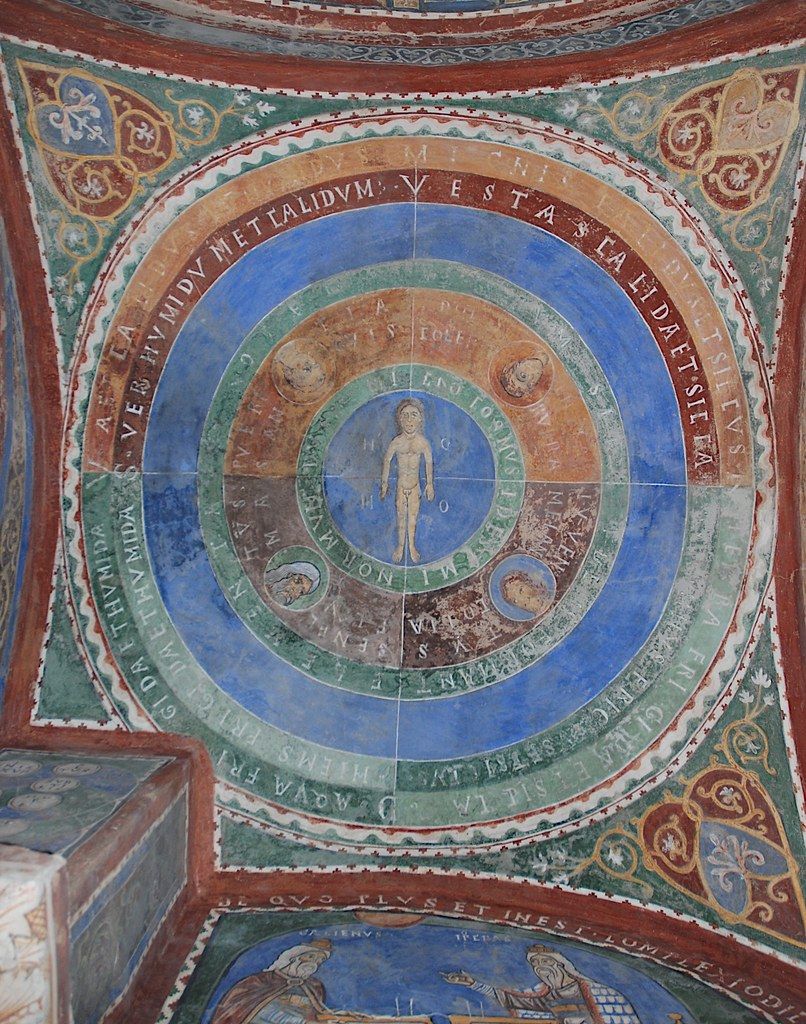
A fresco in Anagni Cathedral
C.1250, illustrating the theme of Plato’s Timaeus. At the centre of the universe, the macrocosm, is a human figure, the microcosm. The surrounding circles represent the ages of man, the seasons and the four humours.

We also explored the strange relationship between Christianity and Greek philosophy. The Renaissance recovery of Plato wasn’t entirely foreign to Christian thought. Figures like Philo of Alexandria had already fused Jewish and Platonic ideas centuries before the formal development of Christian theology. In many ways, the Renaissance reopened conversations that had never fully gone away.

This is where the story becomes especially interesting to me.

The Logos language that became so central to Christianity did not emerge from nowhere. It moved through Hellenistic Judaism, and through a world already shaped by Greek philosophical categories.

For me, the broader pattern is difficult to ignore, Christianity positioned itself as transcending both Judaism and paganism while carrying important elements of both within its own intellectual framework. The irony is striking, dontcha think? The later Christian West often came to fear the return of pagan philosophy, even though portions of its own theological architecture had been built from those exact materials centuries earlier.
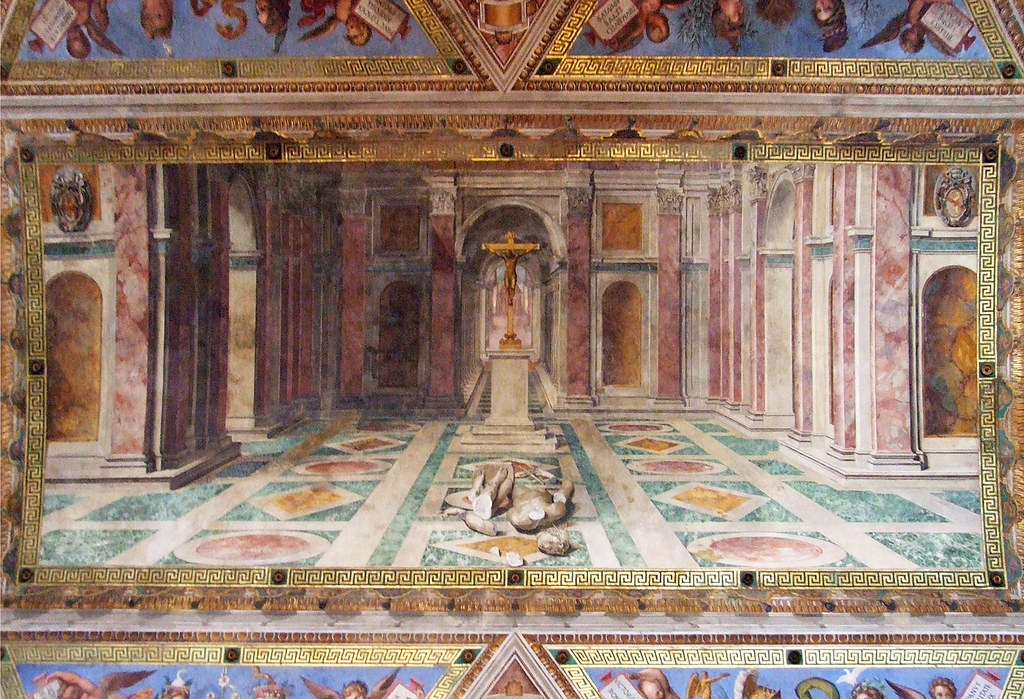
The Triumph of Christianity Over Paganism, by Tommaso Laureti 1585

As Laurent Guyénot puts it, perhaps too sharply for some readers, this represented

“a turning point in Western intellectual history—a Jewish coup on the Gentile mind.”
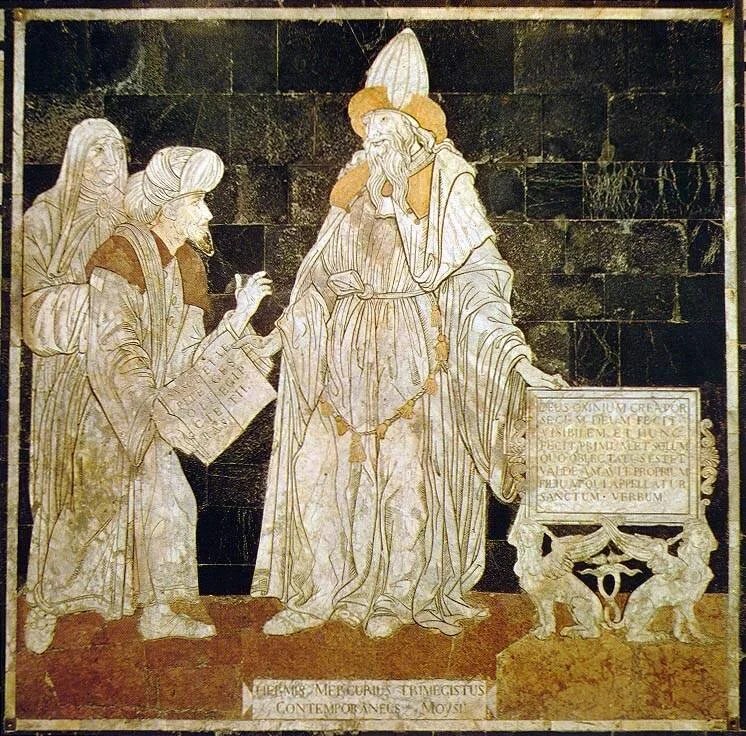
Hermes Trismegistus passing ancient wisdom to the Greeks and Egyptians. Renaissance thinkers increasingly believed that forgotten truths could be recovered through philosophy, mysticism, and ancient texts.

One unexpected moment in the conversation led to a friendly scholarly disagreement between Collin and me. We began discussing Christianity’s relationship to power and empire, and whether the alliance between Christianity and imperial authority represented a corruption of the original movement or something more deeply rooted in the tradition itself.

Collin suggested that he couldn’t imagine Jesus signing off on the imperial structures that later developed around Christianity. My immediate reaction was that I’m not entirely convinced the divide is that clean. The language of kingship, authority, judgment, obedience, dominion, and universal truth claims seems deeply embedded within both the Old and New Testaments. For me, the harder question is not whether Christianity became attached to power, but whether some of those impulses were already present from the beginning.

We didn’t solve that debate, and honestly I’m glad we didn’t.

It’s one of those conversations where reasonable people can look at the same texts and arrive at very different conclusions. I’d be curious to hear where listeners land on that question after hearing the episode.

One reason I loved Collin’s video on Thomas Jefferson and Virginia’s fight for religious freedom is because it reminds us that Americans were not merely inheriting a tidy Christian political order. They were actively trying to disentangle state power from enforced religious authority.

The “Christian nation” narrative becomes much harder to sustain once you start looking at Enlightenment thought, classical influence, religious pluralism, and Virginia’s own struggle over conscience. Early American liberty imagery drew heavily from Greece and Rome while existing within a broadly Christian culture. The Virginia Statute for Religious Freedom and Madison’s arguments against religious assessments did not emerge from nowhere. They emerged from centuries of debate over authority, conscience, philosophy, and the proper relationship between religion and the state.

In many ways, that’s what makes the Renaissance relevant to this conversation.

The recovery of ancient philosophy helped reopen intellectual space. Competing traditions could once again be examined. Older assumptions could be questioned. The monopoly of a single inherited worldview became increasingly difficult to maintain.
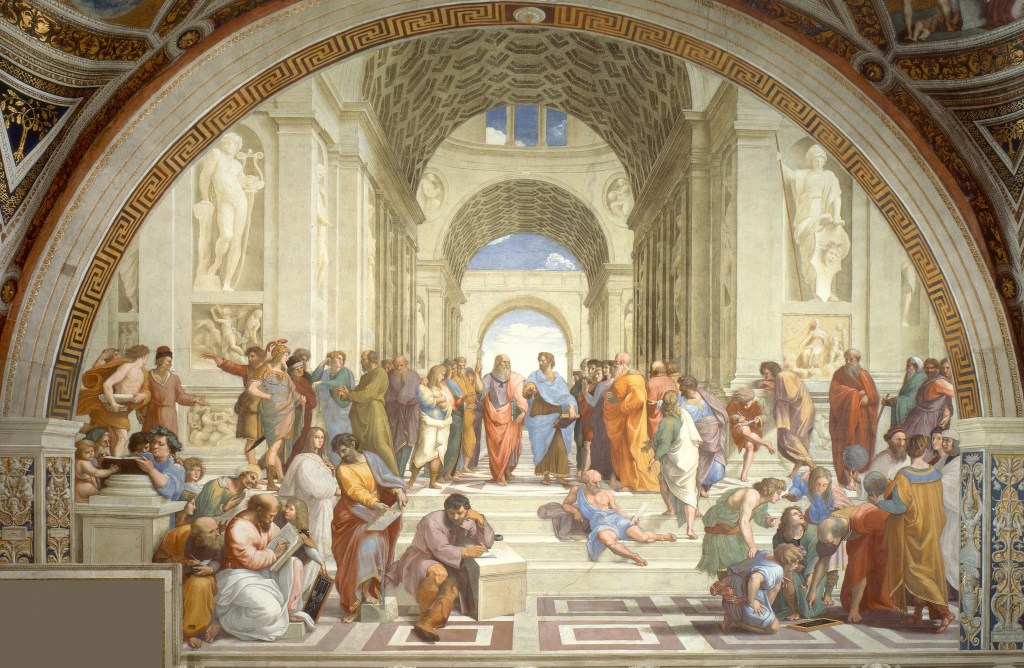
Raphael’s School of Athens places Plato and Aristotle at the center of the ancient intellectual world. Plato points upward toward transcendent realities, eternal forms, and truths beyond the material world, while Aristotle gestures downward toward observation, experience, and the world around us. The painting captures one of the great tensions in Western thought: revelation and reason, idealism and empiricism, the eternal and the earthly. The Renaissance did not merely rediscover classical art. It reopened an entire philosophical conversation that had been unfolding for nearly two thousand years.

The Renaissance itself was, in many ways, an act of remembering. Forgotten texts resurfaced. Ancient philosophers returned to the conversation. Assumptions that had gone unquestioned for centuries were examined again.

Whether we’re talking about Plato, Plethon, Christianity, paganism, religious freedom, or the preservation of knowledge itself, the same questions keep appearing. What do we inherit from the past? What do we forget? What gets preserved, and what gets lost? And perhaps most importantly, who gets to decide?

I hope you enjoy this conversation with Collin Conkwright as much as I did. As always, I’d love to hear your thoughts, especially on our friendly disagreement about Christianity, empire, and whether those two worlds were destined to collide from the beginning or simply converged through the circumstances of history.

Until then, maintain your curiosity, embrace skepticism, and keep tuning in! 🎙️🔒


Links 🔗 

The Secret Pagan of Renaissance Platonism: Gemistos Plethon

Virginia’s Fight for Religious Freedom in Post-Revolution America

Substack Patreon Buy his new book: https://www.amazon.com/Universalist-Universal-Principles-Experiential-Religion/dp/B0GXCDPTJB

SOURCES:
Adams, John. A Defense of the Constitutions of Government of the United States of America. London: C. Dilly, 1787–1788.

Buckley, Thomas J. Establishing Religious Freedom. Charlottesville: University of Virginia Press, 2013.

Freneau, Philip. On the Universality and Other Attributes of the God of Nature. In Poems Written Between the Years 1768 & 1794, 395–396. Monmouth, NJ: Printed at the press of the author, 1795.

Holmes, David L. The Faiths of Our Founding Fathers. New York: Oxford University Press, 2006.

Jefferson, Thomas. Notes on the State of Virginia. Philadelphia: Prichard and Hall, 1788.

Jefferson, Thomas. The Statute for Religious Freedom. 1777–1786. Manuscript, Virginia.

Madison, James. Memorial and Remonstrance Against Religious Assessments. 1785. Manuscript, Virginia.

Paine, Thomas. Age of Reason. London: J. Watson, 1794–1807.
Exposing the Philosophical Roots of Modern Pseudoscience and Self-Help

Ever wondered where all those ‘self-help’ mantras and pseudoscientific health claims originated?

Today, we’re diving into the tangled web of modern pseudoscience and self-help nonsense, tracing its roots back to the 18th century. Join us as we explore the historical figures and movements that laid the groundwork for today’s self-help industry and pseudoscientific practices.

The Age of Enlightenment and the Dawn of Pseudoscience

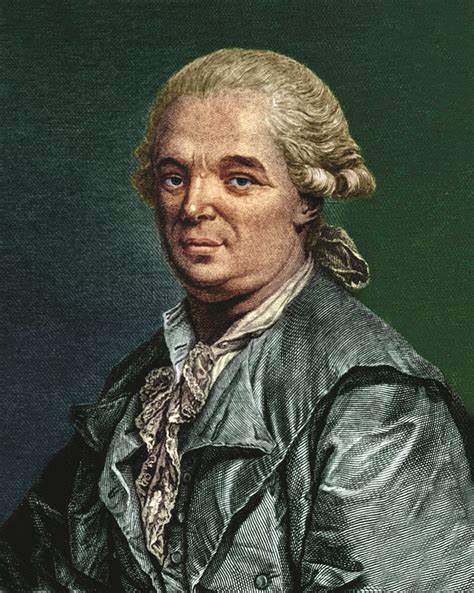
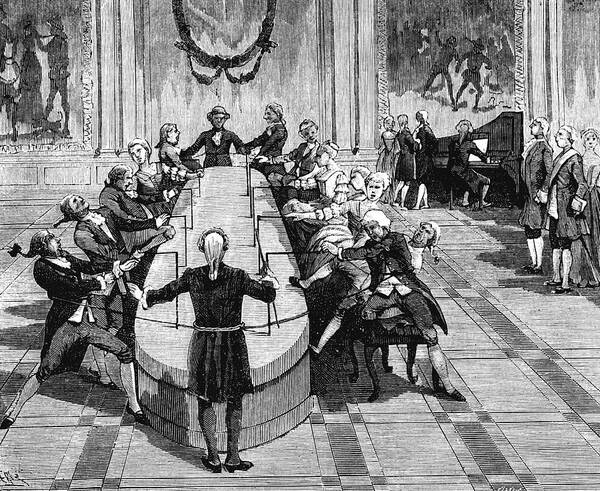
Mesmer claimed that an invisible magnetic fluid flowed through all living things and that he could manipulate this fluid to heal people. His methods, often referred to as ‘mesmerism,’ involved elaborate rituals where he would pass his hands over patients or use magnetic rods, supposedly restoring the natural flow of this magnetic energy. The concepts of ‘balancing your energies’ or ‘unblocking your internal flows’ that are familiar in modern self-help and wellness circles can be traced back to Mesmer’s influence.

During the Age of Enlightenment, the scientific revolution was reshaping our understanding of the universe. However, medical practices were still lagging behind, relying on outdated treatments like leeching and bloodletting. Amidst this backdrop of scientific progress and societal change, Franz Mesmer, a charismatic physician from Vienna, introduced his controversial theory of ‘animal magnetism.’

The Debunking of Mesmerism

In 1784, a Royal Commission led by Benjamin Franklin and Antoine Lavoisier was established to investigate Mesmer’s claims. Through a series of experiments, they debunked the existence of the magnetic fluid, revealing that the observed effects were likely due to the power of suggestion and placebo rather than any real magnetic force. This investigation was pioneering in its use of controlled clinical trials and provided early insights into the placebo effect and modern hypnotism.

The Rise of Charismatic Faith Healing

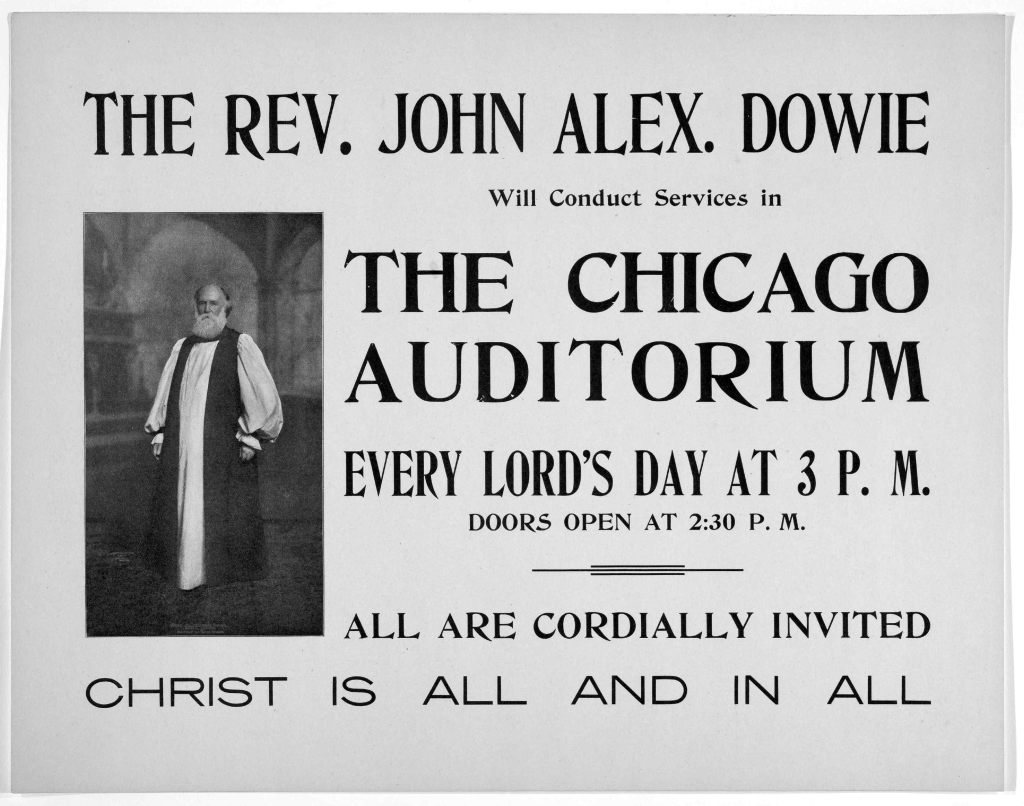
Alexander Dowie emerged in the late 19th century with a different approach to healing. Dowie, a charismatic faith healer, conducted dramatic healing sessions where he would lay hands on the sick, claiming that divine power was responsible for their recovery. His dramatic pronouncements, such as ‘Be healed in the name of the Lord,’ exemplified his method.

However, Dowie’s methods, like those of other high-control groups and charismatic faith healers, often involved emotional manipulation to maintain control over their followers. The promise of miraculous healing or spiritual enlightenment could exploit vulnerable individuals, leading them to invest emotionally and financially in unproven methods.

The Influence of Phineas Quimby

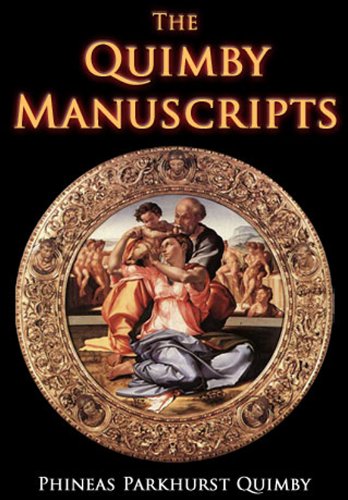
Phineas Quimby, another influential figure of the 19th century, took a different approach. Quimby believed that the mind wielded incredible power over physical health and reality itself. His writings, which were published posthumously in 1921, propagated the notion that our thoughts could profoundly shape our lives. Quimby’s ideas significantly influenced the New Thought movement, which linked mind over matter with spiritual and mystical practices.

The Interplay of Occultism and New Thought

The New Thought movement was also intertwined with occultism and spiritism, which suggested that unseen spiritual forces could be harnessed to influence the material world. This blend of spiritual and pseudoscientific ideas contributed to the development of various modern self-help philosophies.

The Legacy in Modern Self-Help

Today, the legacy of these 19th-century ideas is evident in the booming self-help industry. Many contemporary ‘gurus’ draw on principles derived from Quimby’s teachings, promising that you can manifest your desires through positive thinking alone. However, it’s important to approach these claims with caution, as they can sometimes mask modern forms of manipulation, preying on individuals’ hopes and fears.

Modern Pseudoscience: German New Medicine and Joe Dispenza

Moving forward to more contemporary times, let’s examine some of the modern pseudoscientific claims making waves today.

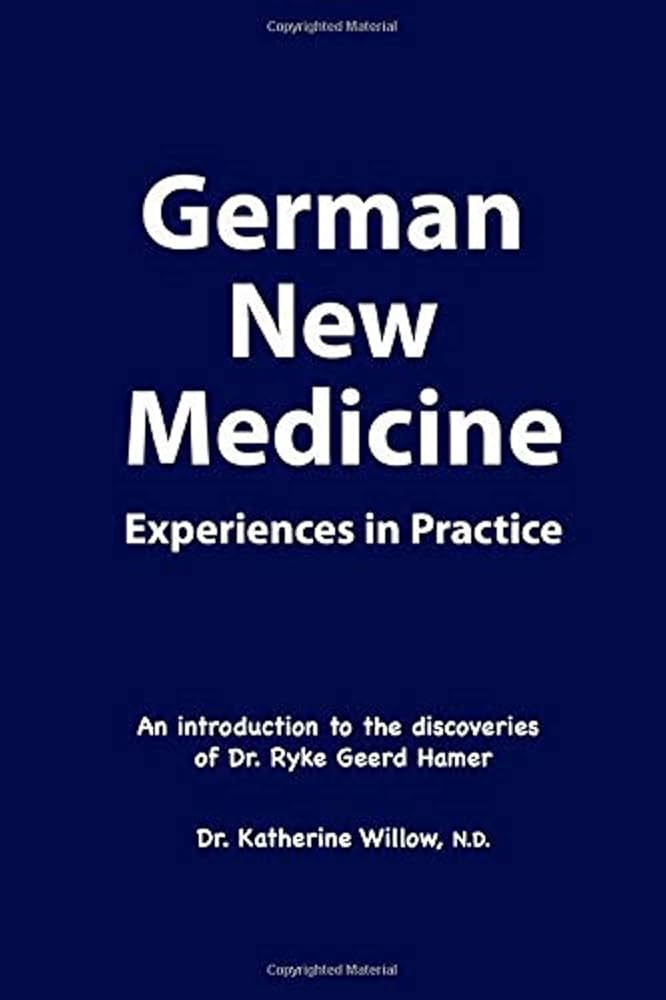
German New Medicine (GNM): This theory, introduced by Dr. Ryke Geerd Hamer, posits that diseases are the result of unresolved psychological conflicts. While intriguing, GNM lacks solid scientific backing and is riddled with ethical and legal issues. Traditional cancer treatments like chemotherapy and radiation therapy, though challenging and not always successful, are grounded in extensive research. The frustration with their limitations often drives people towards alternative options, but not all alternatives are created equal.

Joe Dispenza: Known for his belief that the mind can heal the body, Dispenza’s ideas have gained popularity but often dip into pseudoscience. While there is some truth to the idea that mindset can influence well-being, it’s crucial to distinguish between positive thinking and unproven claims that can mislead vulnerable individuals.

Ancient Teachings and Their Modern Adaptations

The teachings of the Essenes, an ancient Jewish sect, offer another example of how historical ideas are repackaged for modern consumption. The Essenes believed in holistic healing and spirituality, and today, their practices are often marketed with a modern twist. While exploring the ‘lost teachings of the Essenes’ can be fascinating, it’s important to differentiate between genuine historical practices and modern marketing spin.

The Dangers of Mysticism and Extreme Practices

Mysticism sometimes promotes the idea that transcending physical needs through spiritual practices can lead to enlightenment. However, this can be extremely risky. Extreme fasting and other practices can cause nutritional deficiencies, severe malnutrition, and even mental health issues such as delusions and eating disorders.

Navigating the Fine Line Between Healing and Harm

Despite the lack of scientific proof, pseudoscientific ideas remain appealing, especially when traditional treatments fall short. Approach such claims with a critical mind and seek evidence-based practices. Knowledge is power, and staying informed is the best way to navigate health and wellness.

Critical Evaluation of Self-Help Claims

Common Themes:

  • 1. Misuse of Scientific Concepts: All three exploit complex ideas—quantum physics for Dispenza and GNM, and mystical ancient wisdom for the Essenes—to lend credibility to their claims.
  • 2. Lack of Scientific Evidence: None of these approaches are supported by credible scientific research, often relying on anecdotal evidence or misinterpretations of scientific principles.
  • 3. Potential Harm: By promoting unproven methods as alternatives to evidence-based medical treatments, they can lead individuals to make dangerous health choices.

While some people find inspiration in these teachings, it’s crucial to remember their origins and critically evaluate their claims. Just because something sounds empowering doesn’t mean it’s based on solid evidence.

Stay informed and be cautious of the fine line between genuine self-improvement and pseudoscientific hype. Thank you for reading!

Mesmerising Science: The Franklin Commission and the Modern Clinical Trial — The Public Domain Review

Mesmer-and-the-Rise-and-Fall-of-Animal-Magnetism.pdf (academia.dk)

Franklin, Lavoisier, and Mesmer: origin of the controlled clinical trial – PubMed (nih.gov)

The Sketchy Faith Healer Who Tried to Save New York From Vice – Atlas Obscura

Testimonies of former employees of Hamer – Psiram

Administrative Court of Sigmaringen, 17.12.1986 – Judgment in the Administrative litigation Hamer % University of Tübingen (archive.org)

https://link.springer.com/chapter/10.1007/978-3-030-67227-0_8

https://water.lsbu.ac.uk/water/memory_of_water.html

The German New Medicine a new Natural Science” by Professor Dr. Hans Ulrich Niemitz

Germanic New Medicine – Psiram

Victims of New Medicine – Psiram

The “Iron Rule of Cancer”: The dangerous cancer quackery that is the “German New Medicine” | Science-Based Medicine (sciencebasedmedicine.org)

Laws of biology: why so few? – PMC (nih.gov)

For those wanting to learn about the dangers of mysticism, pseudoscience, and the importance of proper nutrition, here are some solid resources:

Books

  1. “Bad Science” by Ben Goldacre: This book critically examines the misuse of science in various fields, including health and wellness, and debunks common pseudoscientific claims.
  2. “The Demon-Haunted World: Science as a Candle in the Dark” by Carl Sagan: Sagan’s classic work promotes scientific skepticism and critical thinking, essential for understanding and debunking pseudoscientific beliefs.
  3. “Trick or Treatment: The Undeniable Facts about Alternative Medicine” by Simon Singh and Edzard Ernst: This book provides a thorough analysis of various alternative medicine practices, including the evidence (or lack thereof) supporting them.

Websites and Online Resources

  1. Quackwatch (quackwatch.org): A comprehensive resource for information on health frauds, myths, fads, and fallacies in the medical field.
  2. Science-Based Medicine (sciencebasedmedicine.org): A blog dedicated to evaluating medical treatments and products from a scientific perspective.
  3. Nutritional Resources from Mayo Clinic (mayoclinic.org): Provides evidence-based information on nutrition, diet, and healthy living.

Academic Journals and Articles

  1. PubMed (pubmed.ncbi.nlm.nih.gov): A free search engine accessing primarily the MEDLINE database of references and abstracts on life sciences and biomedical topics. It’s an excellent resource for finding peer-reviewed studies on nutrition, health, and pseudoscience.
  2. “Nutrition” Journal (journals.elsevier.com/nutrition): Publishes peer-reviewed research articles on nutrition science.

Educational Videos and Courses

  1. TED Talks on Nutrition and Health: Various experts provide insights into the latest research and practical advice on maintaining a healthy lifestyle.
  2. Coursera and edX: These platforms offer courses from universities on nutrition, health sciences, and critical thinking skills.

Podcasts

  1. “Science Vs” by Wendy Zukerman: This podcast looks at what’s fact and what’s not in popular science topics, including health and wellness.
  2. “Skeptics’ Guide to the Universe”: A weekly science podcast discussing critical thinking, science, and pseudoscience.

By exploring these resources, individuals can gain a deeper understanding of the risks associated with mysticism and pseudoscientific beliefs, as well as the importance of evidence-based practices in health and nutrition.