
When Plato Returned, Religious Authority, and the Birth of Freedom of Conscience
This week I sat down with fellow Virginian Collin Conkwright of American Esoteric to discuss a topic that has deeply fascinated me: the pagan, Platonic, and esoteric currents that helped shape the Italian Renaissance.
Most of us inherit a fairly simple story. Christianity triumphs, paganism fades away, and the Renaissance eventually arrives as an artistic and cultural flowering. But history is rarely that neat.
One reason these questions interest me is because of Jan Assmann’s idea of the “Mosaic Distinction.” You’ll hear me mention this concept several times throughout the interview, so I wanted to offer more clarification here.
In simple terms, Assmann argued that many ancient religions could accommodate multiple gods, cults, and local traditions, while the Jewish Torah tradition introduced a much sharper distinction between true religion and false religion, orthodoxy and error. A topic we discuss often here, is what happens when competing worldviews are no longer seen as different paths, but as rivals in a struggle over truth itself? That tension sits quietly beneath much of what we discussed in this episode.
Our conversation centered on figures like Gemistos Plethon, the Byzantine scholar who helped reintroduce Plato to Renaissance Italy, and the remarkable recovery of ancient philosophical traditions that many assumed had long vanished. We discussed everything from Neoplatonism and intermediary spiritual beings to the preservation, destruction, and transmission of ancient texts.
One of the themes that kept resurfacing was memory. How much of the ancient world actually survived? How much was lost? And how much of what survives comes to us through institutions that may have opposed the very ideas they were preserving?
The destruction of Plethon’s Book of Laws became a particularly fascinating example. It raises a question I’ve found myself returning to often: when we’re trying to understand antiquity, are we seeing the ancient world itself, or are we seeing the ancient world through the lens of those who copied, edited, condemned, and preserved it?
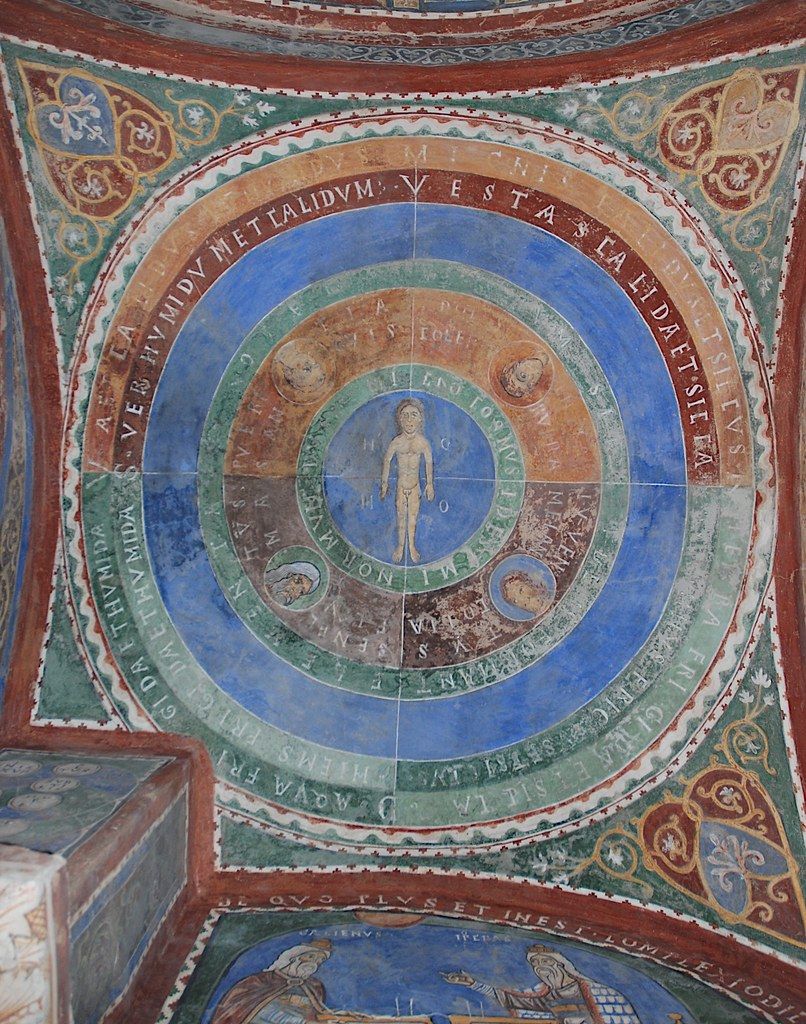
C.1250, illustrating the theme of Plato’s Timaeus. At the centre of the universe, the macrocosm, is a human figure, the microcosm. The surrounding circles represent the ages of man, the seasons and the four humours.
We also explored the strange relationship between Christianity and Greek philosophy. The Renaissance recovery of Plato wasn’t entirely foreign to Christian thought. Figures like Philo of Alexandria had already fused Jewish and Platonic ideas centuries before the formal development of Christian theology. In many ways, the Renaissance reopened conversations that had never fully gone away.
This is where the story becomes especially interesting to me.
The Logos language that became so central to Christianity did not emerge from nowhere. It moved through Hellenistic Judaism, and through a world already shaped by Greek philosophical categories.
For me, the broader pattern is difficult to ignore, Christianity positioned itself as transcending both Judaism and paganism while carrying important elements of both within its own intellectual framework. The irony is striking, dontcha think? The later Christian West often came to fear the return of pagan philosophy, even though portions of its own theological architecture had been built from those exact materials centuries earlier.
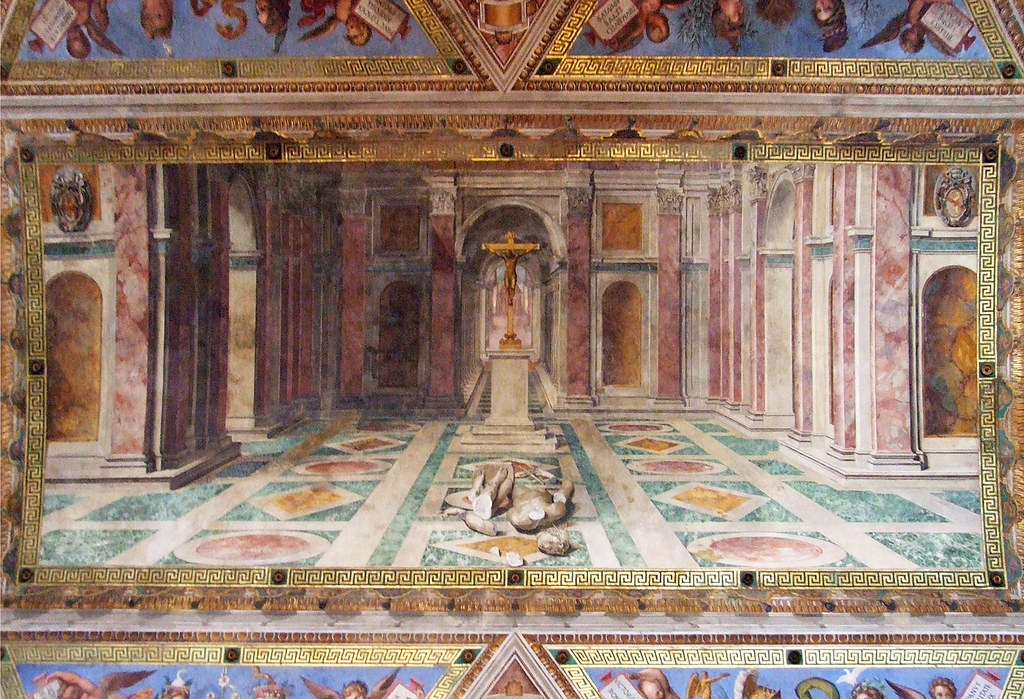
As Laurent Guyénot puts it, perhaps too sharply for some readers, this represented
“a turning point in Western intellectual history—a Jewish coup on the Gentile mind.”
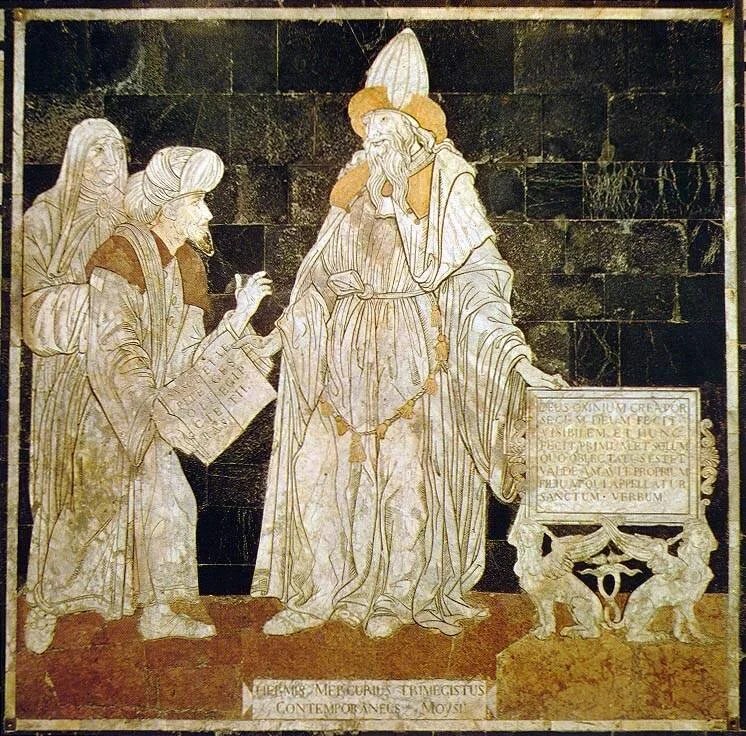
One unexpected moment in the conversation led to a friendly scholarly disagreement between Collin and me. We began discussing Christianity’s relationship to power and empire, and whether the alliance between Christianity and imperial authority represented a corruption of the original movement or something more deeply rooted in the tradition itself.
Collin suggested that he couldn’t imagine Jesus signing off on the imperial structures that later developed around Christianity. My immediate reaction was that I’m not entirely convinced the divide is that clean. The language of kingship, authority, judgment, obedience, dominion, and universal truth claims seems deeply embedded within both the Old and New Testaments. For me, the harder question is not whether Christianity became attached to power, but whether some of those impulses were already present from the beginning.
We didn’t solve that debate, and honestly I’m glad we didn’t.
It’s one of those conversations where reasonable people can look at the same texts and arrive at very different conclusions. I’d be curious to hear where listeners land on that question after hearing the episode.
One reason I loved Collin’s video on Thomas Jefferson and Virginia’s fight for religious freedom is because it reminds us that Americans were not merely inheriting a tidy Christian political order. They were actively trying to disentangle state power from enforced religious authority.
The “Christian nation” narrative becomes much harder to sustain once you start looking at Enlightenment thought, classical influence, religious pluralism, and Virginia’s own struggle over conscience. Early American liberty imagery drew heavily from Greece and Rome while existing within a broadly Christian culture. The Virginia Statute for Religious Freedom and Madison’s arguments against religious assessments did not emerge from nowhere. They emerged from centuries of debate over authority, conscience, philosophy, and the proper relationship between religion and the state.
In many ways, that’s what makes the Renaissance relevant to this conversation.
The recovery of ancient philosophy helped reopen intellectual space. Competing traditions could once again be examined. Older assumptions could be questioned. The monopoly of a single inherited worldview became increasingly difficult to maintain.
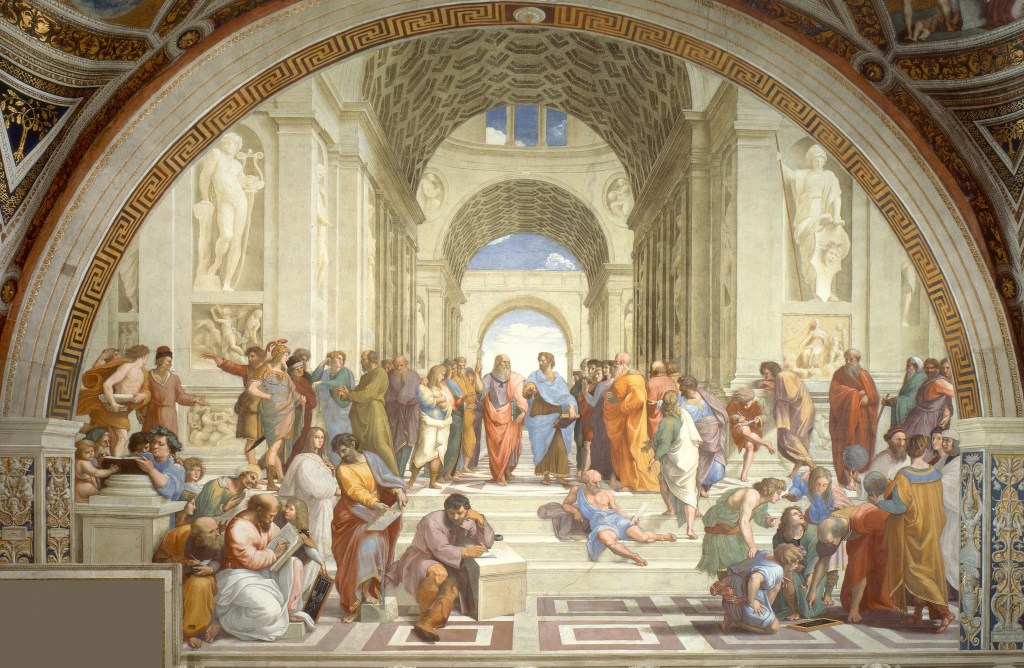
The Renaissance itself was, in many ways, an act of remembering. Forgotten texts resurfaced. Ancient philosophers returned to the conversation. Assumptions that had gone unquestioned for centuries were examined again.
Whether we’re talking about Plato, Plethon, Christianity, paganism, religious freedom, or the preservation of knowledge itself, the same questions keep appearing. What do we inherit from the past? What do we forget? What gets preserved, and what gets lost? And perhaps most importantly, who gets to decide?
I hope you enjoy this conversation with Collin Conkwright as much as I did. As always, I’d love to hear your thoughts, especially on our friendly disagreement about Christianity, empire, and whether those two worlds were destined to collide from the beginning or simply converged through the circumstances of history.
Until then, maintain your curiosity, embrace skepticism, and keep tuning in! 🎙️🔒
Links 🔗
The Secret Pagan of Renaissance Platonism: Gemistos Plethon
Virginia’s Fight for Religious Freedom in Post-Revolution America
Substack Patreon Buy his new book: https://www.amazon.com/Universalist-Universal-Principles-Experiential-Religion/dp/B0GXCDPTJB
SOURCES:
Adams, John. A Defense of the Constitutions of Government of the United States of America. London: C. Dilly, 1787–1788.
Buckley, Thomas J. Establishing Religious Freedom. Charlottesville: University of Virginia Press, 2013.
Freneau, Philip. On the Universality and Other Attributes of the God of Nature. In Poems Written Between the Years 1768 & 1794, 395–396. Monmouth, NJ: Printed at the press of the author, 1795.
Holmes, David L. The Faiths of Our Founding Fathers. New York: Oxford University Press, 2006.
Jefferson, Thomas. Notes on the State of Virginia. Philadelphia: Prichard and Hall, 1788.
Jefferson, Thomas. The Statute for Religious Freedom. 1777–1786. Manuscript, Virginia.
Madison, James. Memorial and Remonstrance Against Religious Assessments. 1785. Manuscript, Virginia.
Paine, Thomas. Age of Reason. London: J. Watson, 1794–1807.

