The Real Handmaid’s Tale Isn’t in America

Between Liberation and Collapse: Why We Need to Talk About the Middle Path

Welcome back to Taste Test Thursdays, where we explore health, culture, belief, and everything in between. I’m your host, Megan Leigh and today, we’re asking a question that’s bound to make someone uncomfortable:

What if the very institutions we tore down as oppressive… were also protecting us?

We live in a time of extremes. On one side, you’ve got Quiverfull-style fundamentalists preaching hyper-fertility and wifely submission like it’s the only antidote to modern decay. On the other, we’ve got a postmodern buffet of “do what you want, gender is a vibe, all structures are violence.”

And if you’re like me—having navigated the high-control religion pipeline but also come out the other side—you might be wondering…

“Wait… does anyone believe in guardrails anymore?”

Because spoiler: freedom without form becomes chaos. And chaos isn’t empowering. It’s destabilizing.

I truly believe that structure and boundaries can actually serve a purpose—especially when it comes to sex, gender, and human flourishing.

This isn’t a call to go backward. It’s a call to pause, zoom out, and ask: what’s been lost in our so-called progress? Let’s dig in.

The Panic Playbook

This past summer, the media went full apocalyptic. You couldn’t scroll, stream, or tune in without hearing it: Christian nationalism is taking over. Project 2025 is a fascist manifesto. Trump is a theocratic threat to democracy itself. The narrative was everywhere—breathless Substacks, viral TikToks, and cable news countdowns to Gilead.
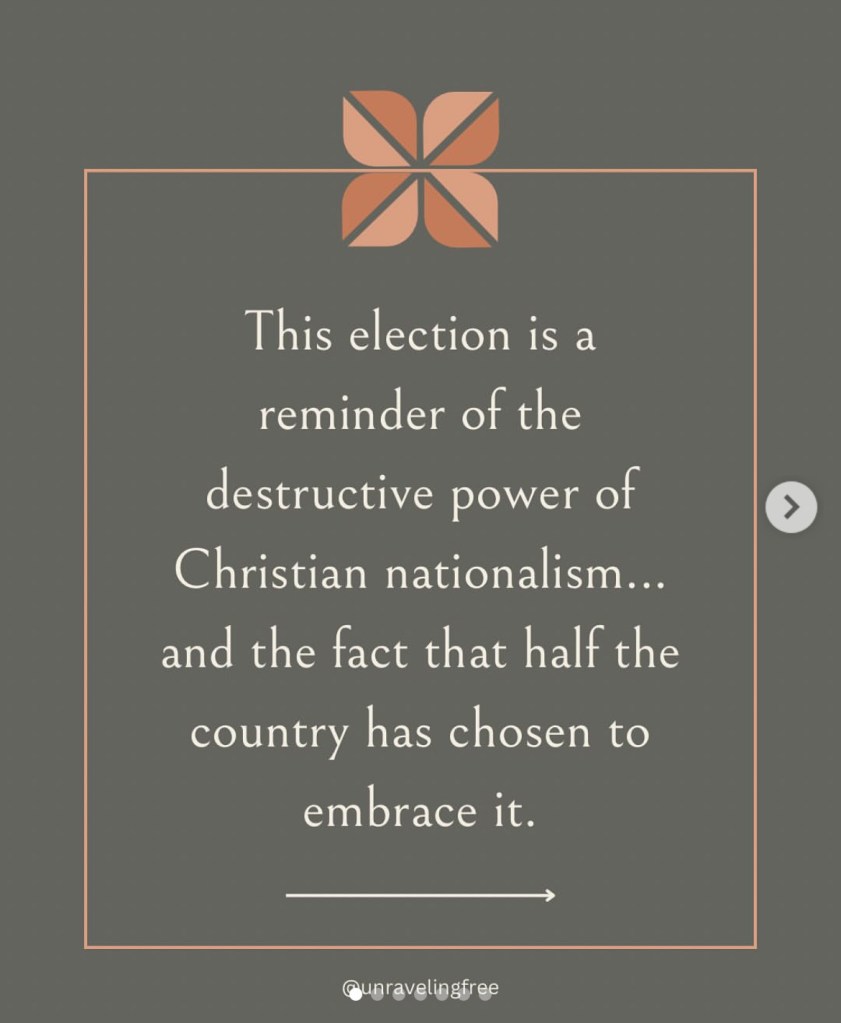
But while progressives were busy hallucinating handmaids and framing every Republican vote as the end of America, they were also helping cover up the biggest political scandal since Watergate: Biden’s cognitive decline.

This blog isn’t a right-wing defense or a leftist takedown. It’s a wake-up call. Because authoritarian creep doesn’t wear just one team’s jersey. If we’re serious about resisting tyranny, we need to stop fearmongering about theocracy and start interrogating the power grabs happening under our own banners—especially the ones cloaked in compassion, inclusion, and “equity.”


Not All “Christian Nationalism” Is the Same—Let’s Break It Down
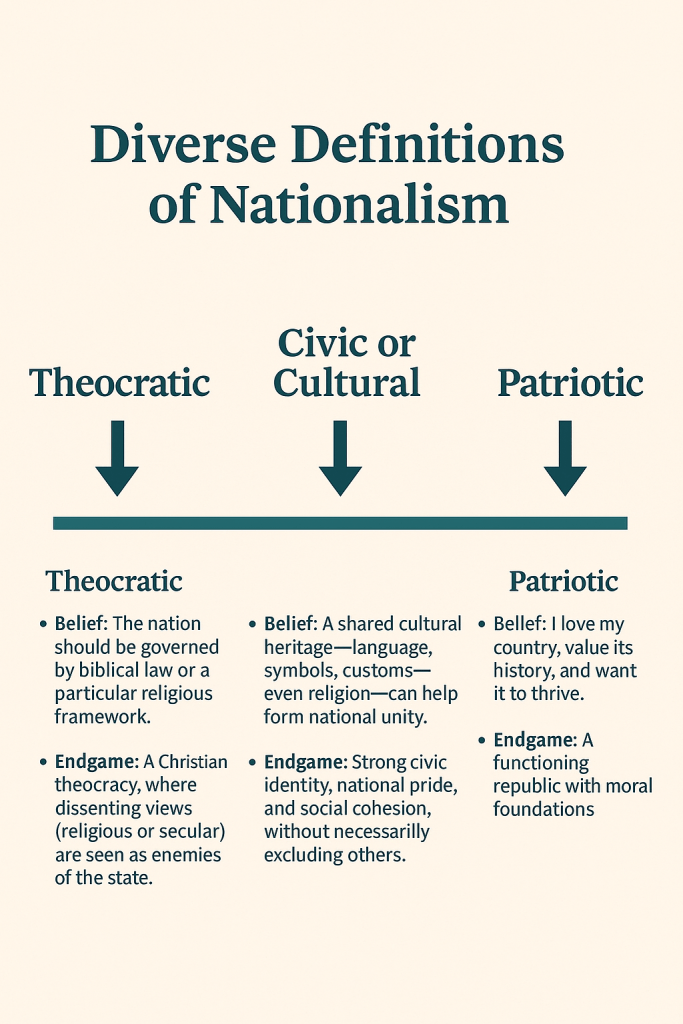
The term “nationalism” gets thrown around a lot, but it actually has different meanings:

🔸 1. The Theocratic Extreme
This is the version everyone fears—and with good reason.

  • Belief: Government should follow biblical law.
  • Goal: A Christian theocracy where dissent is treated as rebellion.
  • Associated with: Christian Reconstructionism, Dominionism, and groups hostile to pluralism.
    📍 Reality: This is fringe. Most evangelicals don’t support this, but it’s the go-to boogeyman in media and deconstruction circles.

🔸 2. Civic or Cultural Nationalism
More common, less scary.

  • Belief: Shared culture—language, customs, even religion—can create unity.
  • Goal: Strong national identity and cohesion, not exclusion.
  • Seen in: France’s secularism, Japan’s cultural pride, and even Fourth of July BBQs.
    📍 Reality: This is where most “Christian nationalists” actually land. They believe in the U.S.’s Christian roots and want to preserve those values—not enforce a theocracy.

🔸 3. Patriotism (Often Mislabeled as Nationalism)
Here’s where it gets absurd.

  • Belief: Loving your country and its traditions.
  • Goal: A moral, thriving republic.
    📍 Reality: Critics lump this in with extremism to discredit conservatives, centrists, or people of faith.

Why It Matters

Lumping everyone—from flag-waving moderates to dominionist hardliners—into one “Christian nationalist” category fuels moral panic. It shuts down real dialogue and replaces nuance with hysteria.

You can:

✅ Love your country
✅ Value strong families
✅ Want morality in public life

…without wanting a theocracy.

Let’s Define the Terms Critics Confuse:

  • Dominionism: A fringe movement pushing for Christian control of civic life. Exists, but not mainstream.
  • Quiverfull: Ultra-niche belief in having as many kids as possible for religious reasons. Rare and extreme.
  • Christian Nationalism: Belief that the U.S. has a Christian identity that should shape culture and law. Vague, often misapplied.

And What It Isn’t:

  • Pro-natalism: A global concern over falling birth rates—not just a religious thing.
  • Conservative Feminism: Belief in empowerment through family and tradition. Dismissing it as brainwashing is anti-feminist.
  • Family Values: Often demonized, but for many, it just means prioritizing marriage, kids, and legacy.

Not all traditionalism is fascism.
Not all progressivism is liberation.
Let’s keep the conversation honest.


Hillary’s “Handmaid” Moment

Hilary Clinton🎧 “Well, first of all, don’t be a handmaiden to the patriarchy. Which kind of eliminates every woman on the other side of the aisle, except for very few. First, we have to get there, and it is obviously so much harder than it should be. So, if a woman runs who I think would be a good president, as I thought Kamala Harris would be, and as I knew I would be, I will support that woman.”

This quote from Hillary Clinton caused predictable outrage—but what’s more disturbing than the clip is the sentiment behind it.

In one breath, she managed to dismiss millions of women—mothers, caretakers, homemakers, conservative politicians, religious traditionalists—as unwitting slaves to male domination. Clinton doesn’t leave room for the idea that a woman might freely choose to prioritize home, faith, or family—not because she’s brainwashed, but because she’s pragmatic, thoughtful, and in tune with her own values.

To Clinton, there’s one legitimate type of woman in politics: the woman who governs like Hillary Clinton.

This framework—that conservative, traditional, or religious women are “handmaidens”—isn’t new. It’s a familiar talking point in progressive circles. And lately, it’s been weaponized even more boldly, as Clinton revealed in another recent statement:

“…blatant effort to basically send a message, most exemplified by Vance and Musk and others, that, you know, what we really need from you women are more children. And what that really means is you should go back to doing what you were born to do, which is to produce more children. So this is another performance about concerns they allegedly have for family life. Return to the family, the nuclear family. Return to being a Christian nation. Return to, you know, producing a lot of children, which is sort of odd because the people who produce the most children in our country are immigrants and they want to deport them, so none of this adds up.”

This is where modern feminism loses its plot. If liberation only counts when women make certain kinds of choices, it’s not about freedom then.


The Pro-Natalism Panic—and the Projection Problem

🎧 “Although the Quiverfull formal life isn’t necessarily being preached, many of the underlying theological and practical assumptions are elevated… and now, you know, they’re in the White House.”
Emily Hunter McGowin, guest on In the Church Library podcast with Kelsey Kramer McGinnis and Marissa Franks Burt

There’s a subtle but dangerous trend happening in the deconstruction space: lumping all traditional Christian views of family into the Quiverfull/Dominionist bucket.

In a recent episode of In the Church Library, the hosts and guest reflected on the rise of pro-natalist ideas and Christian influence in politics. Marissa asks whether the ideology behind the Quiverfull movement might be getting a new rebrand—and Emily responds with what sounds like a chilling observation: echoes of that movement are now in the White House.

But let’s pause.

❗ The Quiverfull movement is real—but it’s fringe. It’s not representative of all evangelicals, conservatives, or even Christian pro-family thinking.

Yet increasingly, any policy or belief that values marriage, child-rearing, or generational stability gets painted with that same extremist brush. This is where projection replaces analysis.

Take J.D. Vance, often scapegoated in these conversations. He’s frequently accused of trying to turn America into Gilead—even though he has three children, supports working-class families, and hasn’t once called for a theocracy. His concern? America’s birthrate is in freefall.

That’s not theocracy. That’s math.

Pro-natalism isn’t about forcing women to give birth. It’s about grappling with a demographic time bomb. Countries like South Korea, Hungary, and Italy are facing societal collapse because too few people are having children. This isn’t moral panic—it’s math.

Even secular thinkers are sounding the alarm:

Lyman Stone, an economist and demographer, emphasizes: “Lower fertility rates are harbingers of lower economic growth, less innovation, less entrepreneurship, a weakened global position, any number of factors… But for me, the thing I worry about most is just disappointment. That is a society where most people grow old alone with little family around them, even though they wanted a family.”

Paul Morland, a British demographer, warns: “We’ve never seen anything like this kind of population decline before. The Black Death wiped out perhaps a third of Europe, but we’ve never seen an inverted population pyramid like the one we have today. I can’t see a way out of this beyond the supposedly crazy notion that people should try to have more kids.”

We have to be able to separate structure from subjugation. There’s a world of difference between saying “families matter” and forcing women into barefoot-and-pregnant obedience.

When we flatten every traditional idea into a fundamentalist threat, we not only lose clarity—we alienate people who are genuinely seeking meaning, stability, and community in a fragmented culture.

If we want to be intellectually honest, we must distinguish:

  • Extremism vs. Order
  • Oppression vs. Structure
  • Religious Tyranny vs. Social Cohesion

And we should probably stop pretending that every road leads to the Handmaid’s Tale.


Protective Powers: What Louise Perry and Joan Brumberg Reveal About Institutions

Let’s talk about The Case Against the Sexual Revolution by Louise Perry. Perry is a secular feminist. She’s not nostalgic for 1950s housewife culture—but she is asking: what did we actually get from the sexual revolution?

Here’s her mic-drop:

“The new sexual culture didn’t liberate women. It just asked them to participate in their own objectification with a smile.”

We built an entire culture around the idea that as long as it’s consensual, it’s empowering. But Perry argues that consent—without wisdom, without boundaries, without institutional protection—leaves women wide open to harm.

She points to:

  • Porn culture
  • Casual hookups
  • The normalization of sexual aggression and coercion in dating

These aren’t signs of liberation—they’re signs of a society that privatized female suffering and told us to smile through it.

Perry doesn’t say “go full tradwife.” But she does say maybe marriage, sexual restraint, and even modesty functioned as protective constraints—not just patriarchal tools of oppression.

We traded one form of pressure (be pure, stay home) for another (be hot, work hard, never need a man). Neither version asked what women actually want.

Now flip over to The Body Project by Joan Jacobs Brumberg. This one blew my mind.

She traces how, a century ago, girls were taught to cultivate inner character: honesty, kindness, self-control.

By the late 20th century? That inner moral development had been replaced by bodily self-surveillance: thigh gaps, clear skin, flat stomachs. Girls now focus on looking good, not being good.

She writes:

“The body has become the primary expression of self for teenage girls.”

Think about that. We went from teaching virtue to teaching girls how to market themselves. We told them they were free—and then handed them Instagram and said, “Good luck.”

So again, maybe some of those “oppressive” structures were also serving as cultural scaffolding. Not perfect. Not painless. But they gave young people—especially girls—a script that wasn’t just: “Be hot, be available, and don’t catch feelings.”

Brumberg isn’t saying go back to corsets and courtship. But she is saying we’ve lost our moral imagination. We gave up teaching self-restraint and purpose and replaced it with branding. With body projects. And now we wonder why depression and anxiety are through the roof??

We dive deeper into these subjects in these two podcasts:


Why the Fear Feels Real—And Why It’s Still Misguided

Look, I get it.

If you’ve escaped religious trauma, purity culture, or spiritual abuse, the sight of a political figure talking about motherhood as a virtue can feel like a threat. Your nervous system registers it as a return to oppression. The media confirms your panic. And suddenly, a call for demographic survival starts sounding like a demand for forced birth.

But your trauma doesn’t make every policy that triggers you authoritarian. It just means you need to slow down and check the data.

Because ironically, the real threats to bodily autonomy and family structure? They might not be coming from traditionalists at all.


🏛 The Progressive Power Grab You’re Not Supposed to Question

Another frustrating comment made by Kelsey Kramer McGinnis in a recent podcast was the need to “decenter nuclear families” and the dismissal of concerns about an “attack on nuclear families” as mere panic. But here’s the thing—this fear isn’t fabricated. It’s not fringe. It’s rooted in observable cultural trends and policy shifts. You can’t just wave it away with smug academic detachment.

Whether you support the traditional family structure or not, the erosion of it has real consequences—especially for children, social stability, and intergenerational resilience. Calling that out isn’t fearmongering. It’s an invitation to discuss the stakes honestly.

Let’s set the record straight: The desire to shape culture, laws, and education systems is not the sole domain of religious conservatives. Dominionist Christians aren’t the only ones with blueprints for a theocratic society. Progressive activists also seek to remake the world in their image—one institution at a time.

This isn’t a right-wing “whataboutism.” It’s an honest observation about how ideological movements—regardless of political lean—operate when they gain influence.

Let’s take a look at what this looks like on both ends of the spectrum:

🏛 Dominionism (Far-Right Christian Nationalism)

Core Belief: Christians are mandated by God to bring every area of life—government, education, business—under biblical authority.

Tactics:

  • Homeschool curricula promoting biblical literalism and creationism.
  • Campaigns for Christian prayer in public schools or Ten Commandments monuments in courthouses.
  • Promoting the idea that America was founded as a Christian nation and must return to those roots.
  • Electing openly Christian lawmakers with the explicit goal of reshaping law and public policy to reflect “biblical values.”
  • Supporting the Quiverfull movement, which encourages large families to “outbreed the left” and raise up “arrows for God’s army.”

📘 Progressive Institutional Capture (Far-Left Activism)

Core Belief: Society must be dismantled and rebuilt to eliminate systemic oppression, centering race, gender, and identity as primary moral lenses.

Tactics:

  • Embedding DEI (Diversity, Equity, Inclusion) frameworks into public schools, universities, and corporate policy.
  • Redefining gender and sex in school curricula while often sidelining parental input or community values.
  • Elevating “lived experience” over objective standards in hiring, curriculum design, and academic research.
  • Weaponizing social media and institutional policies to punish dissenting views (labeling them as “harmful,” “unsafe,” or “hateful”).
  • Using activist lingo to obscure government overreach (“gender-affirming care” vs. irreversible medical intervention for minors).

🔄 Shared Behaviors: The Race to Capture Institutions

Despite their stark differences in values, both dominionists and far-left activists behave in eerily similar ways:

  • They seek cultural dominance through schools, law, media, and public policy.
  • They view their moral framework as not just legitimate but necessary for a just society.
  • They suppress dissent by pathologizing disagreement—branding critics as “anti-Christian,” “bigoted,” “transphobic,” “groomers,” or “domestic extremists.”

The battleground is no longer just the ballot box. It’s the school board meeting. The state legislature. The HR department. The university curriculum. The TikTok algorithm.

Colorado’s HB25-1312 — The “Kelly Loving Act”

Signed in May 2025, this law expands protections for transgender individuals. Fine on the surface. But here’s the fine print:

  • It redefines coercive control to include misgendering and deadnaming.
  • In custody cases, a parent who refuses to affirm a child’s gender identity could now be framed as abusive—even if that child is a minor in the midst of rapid-onset gender dysphoria.

Is it protecting kids? Or is it using identity to override parental rights?

Washington State’s HB 1296

This bill guts the Parents’ Bill of Rights (which was approved by voters via Initiative 2081). It:

  • Eliminates mandatory parental access to children’s health records (including mental health).
  • Enshrines gender identity and sexual orientation in a new “Student Bill of Rights.”
  • Allows state-level monitoring of school boards that don’t comply.

And the cherry on top? It was passed with an emergency clause so it would take effect immediately, bypassing normal legislative scrutiny.

This isn’t some abstract culture war. These are real laws, passed in real states, stripping real parents of their authority.


A Marxist Framework Masquerading as Compassion

Some of these changes echo critical theory more than constitutional liberty.

Historically, Marxist and Maoist ideologies viewed the family unit as an oppressive structure that needed dismantling. Parental authority was often seen as an extension of capitalist control. In its place? State-affirmed loyalty, reeducation, and ideological uniformity.

Now, it’s not happening with red stars and gulags—it’s happening through rainbow flags and DEI seminars. But the power dynamics are the same:

The family becomes secondary to the state.
Dissent becomes dangerous.
Disagreement becomes “violence.”

This is how authoritarianism creeps in—wrapped in the language of safety and inclusion.


What Real Theocracy Looks Like

If you need a reality check, read Yasmine Mohammed’s Unveiled. Raised in a fundamentalist Muslim home, where women had no autonomy, no basic rights, and no freedom. She was forced into hijab at age 9, married off to an al-Qaeda operative, and beaten for asking questions. Women cannot see a doctor without a male guardian, they are forced to cover every inch of their bodies and are denied access to education and even the right to drive. That’s theocracy. That is TRUE oppression.

Now contrast that with the freedom that women enjoy in the West today. In modern America, women have more rights and freedoms than at any point in history. Women can run around naked at Pride parades, express their sexuality however they choose, and redefine what it means to be a woman altogether. The very idea of a “dystopia” here is laughable when we consider the actual freedom women in the West enjoy.

Yet, despite these freedoms, many liberal women still cry oppression. They whine about having to pay for their student loans, birth control or endure debates over abortion restrictions. This level of cognitive dissonance—claiming victimhood while living in unprecedented freedom—is a slap in the face to women who actually suffer under real patriarchal oppression.

What’s even more Orwellian is how the left, in its quest for inclusivity and justice, is actively stripping others of their freedoms. They preach about fighting for freedom of speech while canceling anyone who disagrees with them. They claim to be champions of equality while weaponizing institutions to enforce ideological conformity.

Bottom line: If you think Elon Musk tweeting about birth rates is the same as what Yasmine went through? You’ve lost perspective.

To revisit my conversation with Yasmine:


Fear Isn’t Feminism

If your feminism can’t handle dissent, it was never liberation—it was just a prettier cage.

We have to stop mistaking fear for wisdom. We have to stop confusing criticism with violence. And we absolutely must stop handing our power over to ideologies that infantilize us in the name of compassion.

Let’s be clear: Gilead isn’t coming. But if we’re not careful, something just as destructive might.

A world where parents are powerless.
Where biology is negotiable but ideology is law.
Where compliance is the only virtue, and questions are a crime.

The Courage to Be Honest

What I’m suggesting isn’t fashionable. It doesn’t fit neatly in a progressive or conservative box. But I’m tired of those boxes.

I’ve lived in Portland’s secular utopia and inside a high-control religious environment. I’ve seen how each side distorts truth in the name of “freedom” or “righteousness.”

But what if true liberation is found in the tension between the two?

The most revolutionary thing we can do today is refuse to become an extremist.

Not because we’re afraid.
Not because we’re fence-sitters.
But because we believe there’s a better way—one that honors the past without being imprisoned by it and faces the future with clear eyes and moral courage.


Maintain your curiosity, embrace skepticism, and keep tuning in. 🎙️🔒

— Megan Leigh

📚 Source List for Blog Post

1. Hillary Clinton Quotes

  • Quote 1 (on being a “handmaiden to the patriarchy”):
    [Reference: “Defending Democracy” podcast with historian Heather Cox Richardson, May 2024]
    No official transcript published — you’re using a direct audio clip for this one.
  • Quote 2 (on pro-natalism and immigration):
    [Source: Same podcast — “Defending Democracy” with Heather Cox Richardson, 2024]
    Partial reference via The Independent article

2. Louise Perry


3. Mary Harrington


4. Demographer Paul Morland


5. Lyman Stone


6. Dominionism & Quiverfull Movement


7. Recent Legislation Affecting Parental Rights

The Deluded Brain: Why Control Feels Safe, Certainty Feels Holy, & Complexity Feels Threatening

Welcome to Taste Test Thursday! You know how online debates often turn into full-blown keyboard wars? People lash out with rage when their beliefs whether political, religious, or social are challenged. But why? What’s behind these intense, emotional responses?

What if it’s not just about bad ideas, but something deeper a brain imbalance? What if our need for certainty and addiction to outrage comes from the way our brains are wired to process the world?

Today we’re diving into the neuroscience behind these defensive reactions. We’ll see how the brain’s wiring for survival influences everything from ideological rigidity to emotional hijacking. We’re setting the stage for something important that we’ll explore this upcoming Tuesday how Complex PTSD and PTSD are NOT the same thing. This is an episode you won’t want to miss, especially if you’ve ever felt stuck in a cycle of intense emotional reactions that you just can’t control.

Let’s review something we’ve discussed before: Amygdala Hijacking. If you remember, the amygdala is a part of our brain that processes emotions like fear and anger. Now, when the amygdala gets triggered especially in stressful or traumatic situations it can completely bypass the more rational prefrontal cortex. This results in what we call an “emotional hijack,” where the brain goes straight into fight-or-flight mode often in situations that don’t actually require that level of reaction.

This kind of response helps explain why some people find comfort in fundamentalism.

“At its most basic, the allure of fundamentalism, whether religious or ideological, liberal or conservative, is that it provides an appealing order to things that are actually disorderly.”
Peter Mountford The Dismal Science

That line hits at something crucial we have explored many times before: the human brain craves order, especially in the face of chaos. The illusion of control is one of our brain’s favorite coping mechanisms and when we find a system (religious, political, or otherwise) that delivers black-and-white certainty? You get a dopamine hit.

Rigid ideologies offer a tidy framework that feels safe and predictable especially in times of confusion, disillusionment, or personal crisis. That’s not just philosophy. That’s neurology.


When Chaos Was the Norm, Control Becomes a Coping Mechanism

For many of us, rigid beliefs aren’t just intellectual frameworks. They’re emotional survival strategies.

The need for control, the drive for perfection, the desire to be “good enough” to earn love these weren’t just quirks of personality. They were adaptations to childhoods where emotional needs weren’t met. And like many people who grew up in households marked by emotional neglect, those patterns shaped everything: our relationships, our careers, our bodies, and the ideologies we clung to.

Psychologists like Alice Miller and Elan Golomb have long noted how children raised in emotionally unavailable or narcissistic homes often create a false self a version of themselves designed to gain approval and avoid rejection.
It’s a blueprint that gets carried into adulthood, often unconsciously.

That’s why fundamentalist spaces feel so magnetic to people with childhood trauma. They offer:

  • Clear rules instead of emotional chaos
  • “Unconditional” love that’s actually highly conditional
  • A surrogate parent in the form of a deity or ideology that tells you who to be

Religious trauma often echoes family trauma—because it’s a new version of the same wound.


When Identity Is Built on Compliance

When a belief system rewards obedience over curiosity, it recreates the dynamics of an authoritarian household. You’re loved when you perform correctly. You belong when you don’t question. You’re “good” when you conform.

So what happens when you start to deconstruct?

The moment someone questions the “truth,” it’s perceived as a betrayal—not just of doctrine, but of identity and tribe. And that’s when we see:

  • Verbal attacks – Heretic. Traitor. Bigot.
  • Social ostracism – Canceled. Shunned. Ghosted.
  • Online harassment – Dogpiling and moral outrage.
  • Even physical aggression – History is full of examples, from witch hunts to ideological purges.

But this isn’t just about “bad actors.” It’s about brains shaped by fear.

When your childhood taught you that being wrong = being unloved, then someone challenging your beliefs doesn’t just feel uncomfortable it feels unsafe.
Disagreement triggers:

  • Cognitive dissonance – That gut-wrenching anxiety when facts don’t fit your worldview
  • Fear of consequences – Hellfire or public shaming
  • Loss of self – Because the belief was the identity
  • Loss of community – The people who “loved” you might now condemn you

The Brain’s Role in Certainty Addiction

Neuroscience adds another layer here—one that makes ideological rigidity more understandable, even if it’s not excusable.

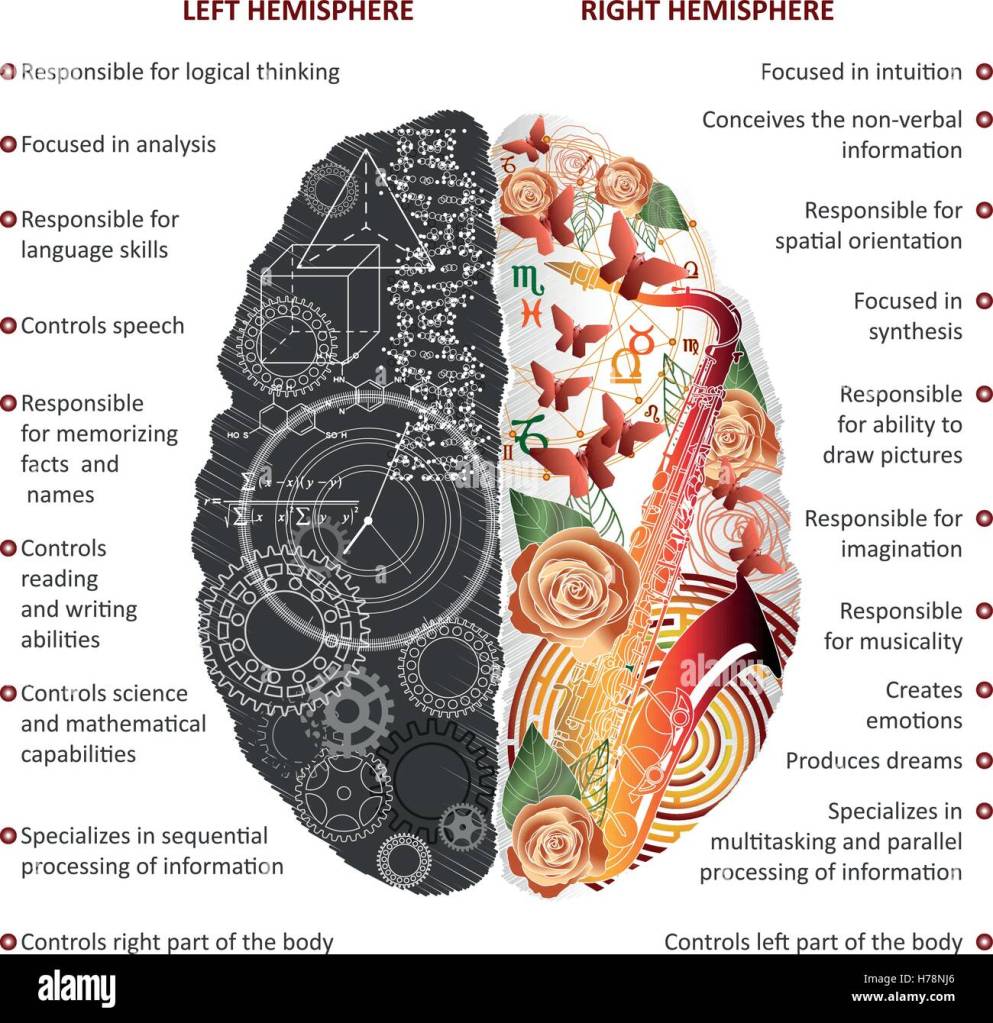
Dr. Iain McGilchrist, in The Master and His Emissary, outlines how the brain’s left and right hemispheres don’t just process information differently—they perceive reality differently.

❌ Not: “Left brain = logic, Right brain = creativity.”
✅ But: “Left brain = control, categorization, and certainty. Right brain = context, relationship, and meaning.”

In a balanced brain, the right hemisphere leads—it sees the big picture, embraces nuance, and stays grounded in lived reality. The left hemisphere refines, classifies, and helps us act.

But modern culture has flipped the script. We’ve let the left hemisphere hijack our perception, reducing the complex to the manageable, the mysterious to the measurable. In this flipped hierarchy:

  • Ambiguity feels threatening
  • Context gets stripped away
  • Relationship is sacrificed for abstraction
  • And certainty becomes a kind of drug

That’s why ideological possession feels so safe. The left brain loves a clear system, even if it’s oppressive. It would rather be certain and wrong than uncertain and real.

So, when someone questions your belief, it’s not just inconvenient. It shatters the left brain’s illusion of control. And when that illusion is all, you’ve known since childhood, the reaction isn’t just intellectual-it’s existential. a threat.


When Belief Becomes Identity

Jonathan Haidt, in The Righteous Mind, explains that we don’t arrive at beliefs through pure logic. We have moral intuitions quick, gut-level judgments and then our reasoning brain (usually the left hemisphere) steps in, not to find the truth, but to defend the tribe.

The moment someone questions our “truth,” we don’t hear it as a conversation—we hear it as an attack.

What happens next?

Verbal Attacks:
When someone questions a core belief, the response often isn’t curiosity—it’s insults, belittling, or outright contempt. In faith spaces, that might look like calling someone a heretic. In political spaces, it’s labels like traitor, bigot, or grifter.

Social Ostracism:
Both religious and political groups punish deviation. Doubters are canceled, excommunicated, or ghosted. Deconstruct your faith? You might lose your church community. Question political orthodoxy? You might lose friends—or your job.

Online Harassment:
The algorithm rewards outrage. Post a thoughtful question about a sacred ideology and you’ll get dogpiled. Our moral tastebuds, as Haidt would say, are being hijacked by dopamine-fueled tribalism.

Physical Aggression:
At the extremes, ideological certainty becomes dangerous. From holy wars to revolutions, the ugliest parts of history stem from one belief: we’re right, and they’re evil.


Why We React This Way: The Psychology of Threat

When beliefs are fused with identity, disagreement feels like annihilation. Especially when the community around us reinforces that fusion. Here’s the pattern:

  • Fear of Deviation: Questioning is framed as betrayal either spiritual or social.
  • Cognitive Dissonance: New ideas create discomfort, and doubling down feels safer than rethinking.
  • Fear of Consequences: From hellfire to being canceled, the cost of questioning is high.
  • Identity Threat: When belief equals self-worth, letting go feels like losing yourself.
  • Social Pressure: Communities often reward conformity and punish dissent.

This is where McGilchrist and Haidt align beautifully: one shows how the brain gets hijacked by the need for control, the other shows how morality binds us to our tribe and blinds us to complexity.


Make-Believe, Morality, and the Group

In our episode with Neil Van Leeuwen, author of Religion as Make-Believe, we unpacked another crucial insight: factual beliefs are flexible, but identity-based beliefs aren’t. They don’t require evidence. In fact, falsehoods often serve the group better because they signal loyalty, not logic.

This is why both sides of a political aisle can believe obviously contradictory things because the truth is secondary to belonging. And once we belong, we don’t think critically–we defend instinctively.


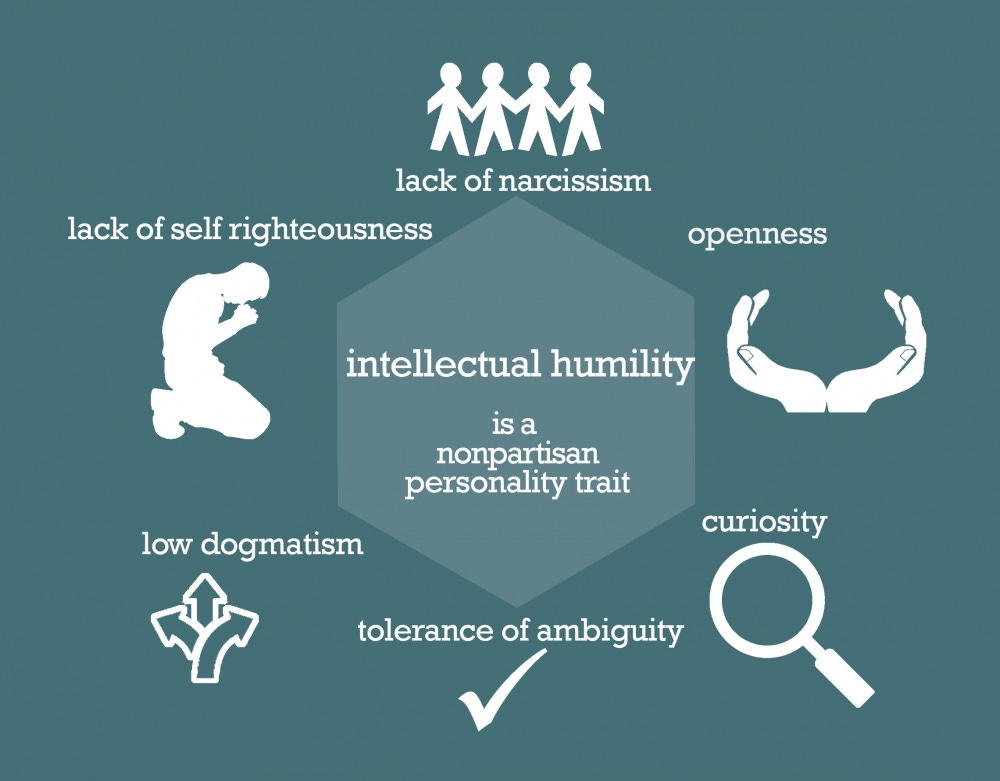
The Antidote: Intellectual Humility

The only way out is through a kind of self-aware disruption.

  • Open Dialogue: Spaces where disagreement isn’t punished—but explored.
  • Supportive Community: Groups that allow for doubt, evolution, and honest questioning.
  • Personal Reflection: A willingness to examine the stories we tell ourselves—and why we need them.
  • Interdisciplinary Curiosity: Instead of staying in one thought silo, we pull from neuroscience, sociology, philosophy, and lived experience.

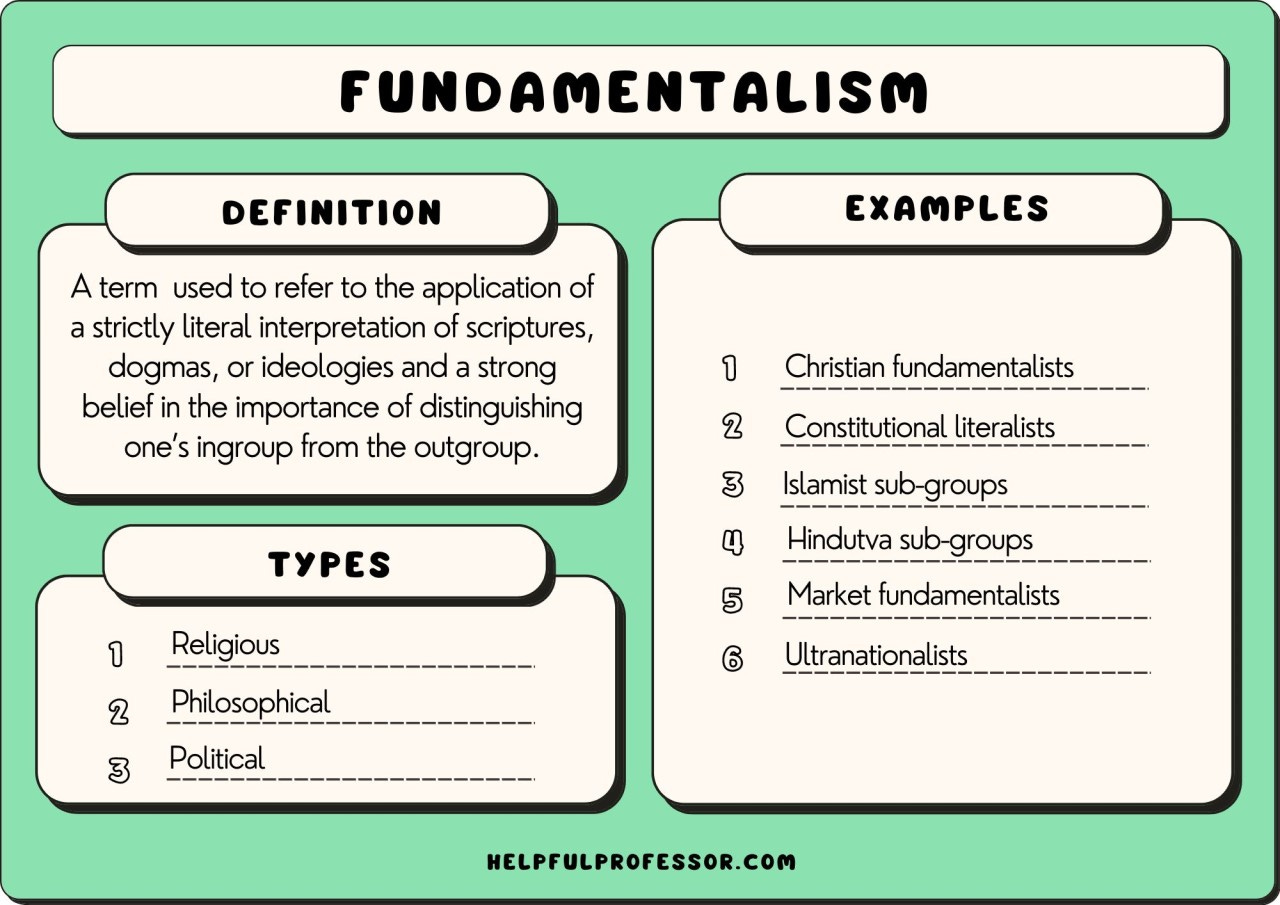
Fundamentalism, at its core, is the elevation of certainty over curiosity. But healing, freedom, and truth? They live on the other side of that certainty.


So, what’s one belief you once clung to tightly only to realize it wasn’t the whole truth?

Let’s talk about it in the comments.

And remember:

Maintain your curiosity, embrace skepticism, and keep tuning in. 🎙️🔒
We’re not here to worship reason or reject it.
We’re here to see more clearly.

Sources:

  1. Dr. Iain McGilchrist – Left and Right Hemisphere Functions
    McGilchrist, Iain. The Master and His Emissary: The Divided Brain and the Making of the Western World. Yale University Press, 2009.
  2. Alice Miller – Emotional Neglect and the False Self
    Miller, Alice. The Drama of the Gifted Child: The Search for the True Self. Basic Books, 1997.
  3. Elan Golomb – Narcissistic Parenting and Emotional Consequences
    Golomb, Elan. Trapped in the Mirror: Adult Children of Narcissists in Their Struggle for Self. William Morrow, 1992.
  1. Neil Van Leeuwen – Religious Trauma and Belief Systems
    Van Leeuwen, Neil. Religion as Make-Believe: The Religious Imagination and the Design of the World. Cambridge University Press, 2021.
  2. Jonathan Haidt – Moral Psychology and Group Loyalty
    Haidt, Jonathan. The Righteous Mind: Why Good People are Divided by Politics and Religion. Pantheon Books, 2012.

Why Challenging Beliefs Feels Like a Personal Attack—And Why It Shouldn’t

From religion to politics, why deeply held beliefs trigger defensiveness, outrage, and even hostility—and how we can foster better conversations.

We all have seen how the internet seems to bring out everyone’s inner troll. 🧌

The moment a deeply held belief—whether religious or political—is questioned, people lash out with hostility, aggression, or outright rage. Why does this happen? Why do some people react as if their very identity is under attack?

This past summer, we sat down with Dr. Mark Gregory Karris to explore religious trauma, belief deconstruction, and the psychological grip of fundamentalist ideology.

This season on Taste of Truth, we have been expanding the conversation—because this isn’t just about religion. Political ideologies, social movements, and even scientific debates can trigger the same defensive responses.

Fundamentalist thinking—whether in religion or politics—creates a fear-driven, us-vs-them mentality.

At its most basic, the allure of fundamentalism, whether religious or ideological, liberal or conservative, is that it provides an appealing order to things that are actually disorderly. -Peter Mountford

This hits at something crucial that I’ve written about numerous times before: the human brain craves order, even in the face of chaos. The illusion of control is a powerful psychological driver, and our brains reward it with dopamine. Fundamentalist thinking offers a structured, black-and-white framework that feels safe and predictable, making it incredibly appealing—especially in times of uncertainty. It’s why people cling even harder to rigid beliefs when they feel threatened. Whether in faith or politics, the need for certainty can override openness to new information, leading to the defensive reactions we see when those beliefs are questioned.

The moment someone questions the “truth,” it’s perceived as an existential threat, triggering anxiety, cognitive dissonance, and sometimes outright hostility.

Take a look at the patterns:

  • Verbal Attacks: When someone questions a core belief, the response can be insults, shouting, or belittling. For example, in religious circles, someone questioning doctrine might be labeled a heretic, while in political spaces, dissenters might be called traitors or bigots.
  • Social Ostracism: In both fundamentalist religious and political groups, those who challenge the status quo risk being shunned, excommunicated, or “canceled.” A former churchgoer who deconstructs their faith may be cut off from their community, just as someone who questions ideological orthodoxy in politics might lose social standing, friendships, or even career opportunities.
  • Online Harassment: Social media amplifies these reactions. Question a sacred political narrative? Expect dogpiling. Challenge a religious doctrine? Brace yourself for moral outrage. The internet rewards ideological purity and punishes deviation.
  • Physical Aggression: In extreme cases, questioning or challenging deeply held beliefs can escalate to threats or violence. History is littered with examples—holy wars, political purges, ideological revolutions—all stemming from the belief that certain ideas must be defended at any cost.

This isn’t just about bad behavior—it’s about psychology. When beliefs become intertwined with identity, disagreement feels like a personal attack. Fundamentalist teachings—whether religious or ideological—reinforce this by instilling fear of deviation:

  1. Fear of Deviation – Straying from the accepted belief system is framed as dangerous, whether it’s framed as spiritual damnation or societal collapse.
  2. Cognitive Dissonance – Encountering opposing viewpoints creates internal discomfort, making people double down rather than reconsider.
  3. Fear of Consequences – Whether it’s eternal hellfire or being cast out by one’s political tribe, the cost of questioning is framed as too high.
  4. Identity Threat – When beliefs define self-worth, changing one’s mind feels like losing a part of oneself.
  5. Social Pressure – Communities reinforce conformity, and breaking from the group’s ideology invites punishment.

When Morality Binds and Blinds

In The Righteous Mind, Jonathan Haidt explains how moral systems don’t just guide our sense of right and wrong—they also bind us to our tribes and blind us to opposing perspectives. Morality evolved not just to help individuals make ethical choices but to reinforce group cohesion. When we share a moral framework with others, it strengthens social bonds and builds trust. But there’s a cost: once we’re deeply embedded in a moral community—whether religious, political, or ideological—we stop seeing outside perspectives clearly.

This is why people react with such hostility when their beliefs are challenged. They aren’t just defending a set of ideas; they’re defending their sense of identity, belonging, and moral righteousness. A challenge to the belief feels like a challenge to the self—and to the entire group they’re part of.

This also explains why fundamentalist thinking isn’t confined to religion. Political movements, activist groups, and even secular ideologies can exhibit the same rigid certainty, group loyalty, and hostility toward outsiders. The more a belief system becomes tied to identity, the more resistant it is to change—and the more aggressive the response when it’s questioned.

The antidote? Intellectual humility. The ability to recognize that our beliefs, no matter how deeply held, might be flawed. That truth-seeking requires engaging with discomfort. That real conversations happen not when we dig in our heels but when we’re willing to ask, What if I’m wrong?

These dynamics explain why deconstruction—whether of faith or political ideology—often leads to intense backlash. It also reminds me of our conversation with Neil Van Leeuwen, author of Religion as Make-Believe. He pointed out that factual beliefs thrive on evidence, but religious and ideological beliefs function differently. When a belief becomes part of group identity, truth often takes a backseat. In fact, sometimes falsehoods serve the group better because they reinforce belonging.

To close down the conversation, let’s talk about healthy communities—whether religious, political, or social—embrace intellectual humility. Here’s what that looks like:

  • Open Dialogue: Encouraging respectful conversations where differing perspectives are explored rather than attacked.
  • Supportive Community: Allowing for questions, doubts, and evolving beliefs without fear of punishment.
  • Personal Reflection: Cultivating a mindset that prioritizes growth over ideological purity.
  • Interdisciplinary Engagement: Seeking insights from multiple fields rather than reinforcing an echo chamber.

By recognizing these patterns, we can navigate our own beliefs with more self-awareness and engage in discussions that foster curiosity rather than hostility. The question isn’t whether we hold tightly to certain beliefs—it’s whether we’re willing to interrogate why.

So, what’s one belief you’ve held onto tightly that you later questioned?

Let’s talk about it in the comments.

Fierce Self-Compassion: A Revolutionary Guide for Women in Religious Trauma

Breaking Free from the Chains of Perfectionism

In a world where the patriarchy often dictates our worth and actions, Kristin Neff’s Fierce Self-Compassion is a beacon of hope and empowerment. This book is not just a guide; it’s a call to arms for women navigating the treacherous waters of religious and spiritual trauma, particularly those grappling with self-criticism and perfectionism.

Understanding the Dual Nature of Self-Compassion

Neff introduces a groundbreaking concept in Fierce Self-Compassion: the dual nature of self-compassion. She distinguishes between the gentle, nurturing aspect of self-compassion—often associated with self-care and soothing—and the fierce, protective side that involves standing up for oneself, setting boundaries, and taking action to alleviate suffering.

For women emerging from high-control religious environments, this duality is essential. Religious trauma often leaves deep scars, manifesting as guilt, shame, and an overwhelming sense of unworthiness. The nurturing side of self-compassion helps in healing these wounds, but it’s the fierce side that empowers women to reclaim their autonomy, resist external pressures, and redefine their lives on their own terms.

The Impact of Self-Compassion on Self-Criticism and Perfectionism

Self-criticism and perfectionism are often rooted in the teachings of high-control religions, where strict adherence to doctrine and an emphasis on sinfulness can create a toxic cycle of self-judgment. Research shows that self-compassion is a powerful antidote to these issues. A study published in the Journal of Personality found that individuals who practice self-compassion are less likely to engage in harsh self-criticism and more likely to embrace a growth mindset. This shift is crucial for those recovering from religious trauma, where the inner critic often echoes the voices of past religious authorities.

Neff’s book provides practical tools to help readers silence their inner critic and embrace self-compassion. For example, one exercise encourages readers to write a compassionate letter to themselves, addressing their fears and insecurities as they would for a dear friend. This practice not only fosters self-compassion but also helps in rewiring the brain to respond to challenges with kindness rather than self-judgment.

Addressing Religious Trauma through Fierce Self-Compassion

Religious trauma is a significant issue for many women, especially those who have been part of patriarchal, high-control religious groups. These environments often condition individuals to suppress their needs and feelings, leading to a disconnection from their true selves. Fierce Self-Compassion offers a path to healing by encouraging women to acknowledge their pain, validate their experiences, and take action to protect their well-being.

Neff emphasizes that fierce self-compassion is not about being aggressive or selfish; it’s about standing up for oneself in a way that is both assertive and compassionate. This approach is particularly important for women who have been taught to prioritize others’ needs over their own, often at the expense of their mental and emotional health.

Practical Applications of Fierce Self-Compassion

One of the strengths of Fierce Self-Compassion is its focus on practical applications. Neff includes numerous exercises designed to integrate self-compassion into daily life. For instance, she suggests a practice called “compassionate body scan,” where readers are encouraged to tune into their bodies, notice areas of tension or discomfort, and respond with kindness and care. This practice is particularly beneficial for those recovering from religious trauma, as it helps to reconnect with the body and cultivate a sense of safety and well-being.

Neff also discusses the importance of setting boundaries and asserting oneself—skills that are often underdeveloped in women who have lived under rigid religious control. By practicing fierce self-compassion, women can learn to say “no” to what doesn’t serve them and “yes” to what nourishes their souls, paving the way for authentic personal growth.

The Crucial Message for Women Breaking Free from the Patriarchy

Fierce Self-Compassion is more than just a book; it’s a game-changer for any woman breaking out of the patriarchy. It’s a powerful reminder that we have the power to define our lives on our terms, and that doing so is not only okay but necessary for our well-being. This message is particularly vital for women deconstructing from harmful religious environments, where the patriarchy often exerts a strong influence.

Neff’s work resonates deeply with those on a journey of self-discovery and healing. Her emphasis on balancing tenderness with strength provides a roadmap for women to navigate their paths with courage and compassion. By embracing fierce self-compassion, women can break free from the chains of perfectionism, silence their inner critic, and reclaim their power.

Conclusion: A Must-Read for Women on a Path to Empowerment

Fierce Self-Compassion by Kristin Neff is an essential read for any woman navigating the complex terrain of religious and spiritual trauma. Neff’s profound insights and practical tools offer a pathway to healing, self-empowerment, and personal growth. Her dual focus on nurturing and fierce self-compassion equips readers with the resilience and courage needed to navigate their journey and reclaim their lives. This book is not just a guide; it’s a lifeline for those seeking freedom and authenticity after leaving controlling religious environments.

For those ready to embark on a journey of self-compassion and empowerment, Fierce Self-Compassion is a crucial companion. It’s time to embrace the fierce side of self-compassion, stand up for ourselves, and redefine our lives on our terms.

Empower Your Healing Journey: The Diabolical Trinity Book Review

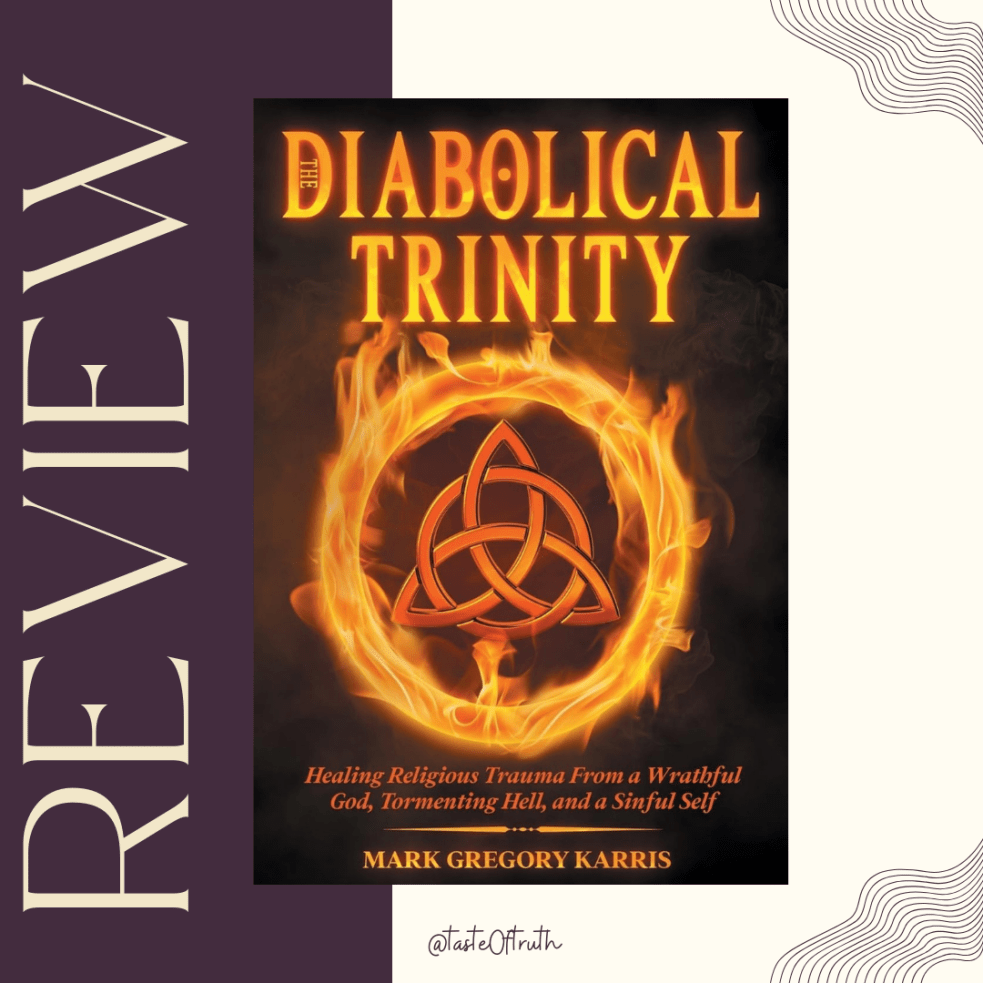
🌟 Book Review Alert! 🌟 This week’s podcast guest, Dr. Mark Gregory Karris, dives deep into religious trauma with his eye-opening book, “The Diabolical Trinity: Healing Religious Trauma from Original Sin, a Wrathful God, and Tormenting Hell.” 📚✨

Struggling with the remnants of religious fear and guilt? Dr. Karris’s insights are a game-changer. Swipe ➡️ to uncover why this book is a must-read for anyone on a healing journey.

Don’t miss our discussion on the podcast—catch up now before the next episode drops! 🎧💬

Tune in, transform, and take back your peace. 🙌

Listen here! 🎧

Dr. Mark Gregory Karris’s “The Diabolical Trinity: Healing Religious Trauma from a Wrathful God, Tormenting Hell, and Sinful Self” is a groundbreaking exploration of the psychological and emotional toll of harmful religious doctrines. Drawing from his extensive experience as a licensed therapist and ordained pastor, Karris skillfully dissects the “Diabolical Trinity”—the doctrines of a wrathful God, eternal torment in hell, and pervasive self-condemnation.

A Fresh Perspective on Religious Trauma

Dr. Mark’s has a compassionate and insightful approach to a topic often shrouded in silence and stigma. His work is praised for providing a fresh perspective on religious trauma, moving beyond mere critique to offer tangible steps toward healing. Karris’s ability to blend scholarly rigor with heartfelt empathy makes the book accessible to both academic and general audiences.

Empowering & Transformative

One of the most celebrated aspects of “The Diabolical Trinity” is Karris’s focus on empowerment. Critics have highlighted how the book not only identifies the sources of trauma but also provides practical tools for recovery. Karris’s therapeutic techniques and exercises are designed to help readers reclaim their sense of self-worth and foster a healthier, more compassionate spiritual outlook.

Critique & Redemption

While Karris does not shy away from critiquing harmful religious doctrines, he does so with a redemptive vision. He challenges readers to rethink their understanding of God, hell, and sin, offering an alternative that is both theologically sound and psychologically healing. This balanced approach has been particularly praised by critics who value both the deconstruction and reconstruction of faith.

Engaging & Accessible

The book’s engaging narrative style has also been a point of praise. Karris weaves personal anecdotes with clinical case studies, creating a compelling and relatable read. His clear and concise writing ensures that complex theological and psychological concepts are easily understood, making the book suitable for a wide audience.

Conclusion

In “The Diabolical Trinity,” Dr. Mark Gregory Karris offers a powerful and necessary contribution to the conversation on religious trauma. His work stands out for its depth of insight, practical guidance, and hopeful vision for healing. For anyone grappling with the damaging effects of rigid religious doctrines, this book provides a beacon of light and a path toward wholeness.

Diabolical Trinity: Healing Religious Trauma from a Wrathful God, Tormenting Hell and Sinful Self

🌟 🎙️Welcome back, Get ready for a mind-expanding journey in this week’s episode! 🌟🎙️ We’re sitting down with Dr. Mark Gregory Karris to explore the twists and turns of his diverse professional journey and how it shapes his approach to tackling religious trauma.

 🎢 From deconstructing faith dynamics to navigating life after leaving religious traditions, Dr. Karris dishes out practical steps and deep insights like a pro. 📚 We dive into his latest book ‘Diabolical Trinity’ where he takes on the big questions—like transforming a wrathful God into a compassionate one and the impact of religious experiences on mental health. 🕊️ 

Join us as we uncover the power of community and holistic healing in this can’t-miss conversation! 🌈

Dr. Mark Karris is an experienced therapist with a rich and diverse background. He began his career working with adolescents and the severely mentally ill at Mental Health of Rockland County. In San Diego, he specialized in Emotionally Focused Couple’s Therapy under renowned mentors Kathryn de Bruin and Lisa Palmer Olson. He also spent three years in Japan, providing therapy on a military base and conducting international workshops for the Red Cross. He is now an adjunct professor at Point Loma Nazarene University. His educational background includes a Bachelor of Science in Psychology, a Master of Counseling, a Master of Divinity, and a PsyD with an emphasis in Marriage and Family Therapy.

Dr. Karris combines his extensive professional training with personal experiences of life’s ups and downs, making him uniquely equipped to guide his clients through their own journeys of healing and restoration.

He has authored several books that focus on topics related to spirituality, therapy, and personal growth. Some of his notable works include:

  1. “Divine Echoes: Reconciling Prayer with the Un-controlling Love of God” – This work explores the nature of prayer and God’s love, offering a fresh perspective on the power and purpose of prayer.
  2. “Season of Heartbreak: Healing for the Heart, Brain, and Soul” – In this book, Dr. Karris provides insights and strategies for healing from emotional and relational pain, drawing from his extensive experience as a therapist.
  3. “Diabolical Trinity: Healing Religious Trauma from a Wrathful God, Tormenting Hell and Sinful Self”

The interview begins with Dr. Mark sharing more about his own personal life and spiritual experiences that led him to be where he is today.

In his groundbreaking research, Dr. Mark Karris unveils the intricate layers of religious deconstruction through a lens of empathy and rigorous academic inquiry. His qualitative findings published in Clinical Pastoral Education challenge conventional evangelical narratives that attribute deconstruction solely to moral lapses or spiritual deception. Instead, Dr. Karris illuminates the diverse and often deeply personal reasons individuals undergo this transformative journey, shedding light on the complex interplay of faith, identity, and personal growth.

Here are some key insights from his study:

  1. Doctrinal and Theological Concerns: Many individuals experience faith deconstruction due to conflicts or doubts about core religious doctrines and beliefs. This can include questioning the validity of certain theological teachings or interpretations.
  2. Personal and Emotional Trauma: Religious trauma, stemming from negative experiences within religious contexts such as abuse, judgment, or oppression, often triggers a process of deconstruction as individuals seek healing and distance from harmful environments.
  3. Cultural and Social Factors: Changes in societal norms and cultural shifts can prompt individuals to reevaluate their religious beliefs and practices. This includes broader movements towards inclusivity, social justice, and equality that may conflict with traditional religious teachings.
  4. Intellectual Exploration: Increased access to diverse perspectives and information through the internet and education encourages critical thinking and exploration of alternative worldviews, leading to questioning of previously held religious beliefs.
  5. Existential and Spiritual Quests: Many people undergo faith deconstruction as part of a personal journey towards deeper existential meaning, spiritual growth, and authenticity. This involves exploring new spiritual paths or embracing a more flexible and inclusive understanding of spirituality.

Dr. Mark Karris’s shares a personal anecdote about encountering legalistic beliefs at a wedding highlights a broader issue within certain Christian traditions where behaviors are scrutinized through the lens of a wrathful God and the threat of hellfire. This theological framework often centers around doctrines like Original Sin, which have shaped Christian thought but are not universally accepted across all Christian denominations.

History and Evolution of Doctrine

1. Original Sin: The concept of Original Sin traces its roots to early Christian theologians such as Augustine of Hippo in the 5th century. Augustine argued that all humans inherit a sinful nature from Adam and Eve’s disobedience in the Garden of Eden, leading to a state of inherent moral corruption and separation from God.

2. Wrathful God: Throughout history, various Christian theologians and denominations have grappled with the portrayal of God as wrathful and vengeful, often emphasizing divine justice and punishment for sin. This perspective has been influential in shaping religious practices and beliefs, contributing to fears of divine judgment.

3. Hellfire and Eternal Damnation: The concept of hell as a place of eternal punishment for sinners is deeply embedded in Christian teachings, particularly in traditions emphasizing the consequences of disobedience to God’s will. This belief has profound psychological and emotional impacts, instilling fear and guilt among believers.

Critiques and Controversies

1. Cultural and Interpretive Differences: Not all Christian traditions adhere to the doctrines of Original Sin, a wrathful God, and eternal damnation in the same way. Some denominations interpret these concepts metaphorically or emphasize God’s love and mercy over punitive justice.

2. Psychological Effects: The emphasis on sin, guilt, and punishment can lead to harmful psychological effects, such as low self-esteem, anxiety, and religious trauma, especially when coupled with authoritarian interpretations that dictate strict moral codes and behaviors.

Diversity of Interpretations and Doctrines Within Christianity

Dr. Karris helps me challenge the claims of Clarity and Divine Truth. Here’s a breakdown of this issue:

  1. Diversity of Interpretations: The existence of over 45,000 Christian denominations worldwide reflects a wide range of doctrinal interpretations, from reformed traditions to Pentecostal beliefs. Each denomination asserts that their understanding of the Bible is correct and aligned with God’s truth. However, the diversity and sometimes contradictory nature of these interpretations suggest that clarity in biblical understanding is not as straightforward as proclaimed.
  2. Reasons for Diversity: The diversity in interpretations stems from a variety of factors:
    • Cultural and Historical Contexts: Different denominations interpret biblical texts through the lens of their cultural and historical contexts, which can lead to varied understandings.
    • Theological Emphases: Emphasis on different theological doctrines (such as salvation, baptism, worship practices) can shape how scriptures are interpreted.
    • Hermeneutical Approaches: Variations in interpretive methods (literal vs. allegorical, contextual vs. universal application) contribute to divergent doctrinal beliefs.
    • Human Fallibility: Interpretations are influenced by human limitations, biases, and subjective interpretations of scripture.
  3. Implications for Biblical Inerrancy and Infallibility: The existence of diverse and conflicting interpretations challenges the notions of biblical inerrancy (the belief that the Bible is without error in all matters) and infallibility (the belief that the Bible is incapable of error in matters of faith and practice). If the Bible were truly clear and unambiguous in its teachings, one might expect a greater consensus among denominations. However, the wide array of interpretations suggests that human understanding and cultural influences significantly shape biblical interpretation.
  4. Critical Assessment: Dr. Karris’s critique invites Christians to critically assess claims of absolute doctrinal clarity and instead recognize the complex and nuanced nature of biblical interpretation. It encourages humility in acknowledging the limitations of human understanding and the importance of dialogue and openness to diverse perspectives within Christian discourse.

The diversity of interpretations among Christian denominations challenges the notion of a singular, clear, and error-free interpretation of the Bible, thereby questioning traditional claims of biblical inerrancy and infallibility. Understanding and grappling with this diversity can foster deeper theological reflection and dialogue within the Christian community.

Navigating Anxiety in Fundamentalist Christian Circles During Deconstruction

People entrenched in fundamentalist sects of Christianity often experience heightened anxiety when they witness others going through a process of deconstruction. This reaction stems from their upbringing, where they were taught that deviation from established beliefs and practices is not only wrong but potentially dangerous. In fundamentalist environments, any departure from the accepted norms can be perceived as a threat to one’s faith, community, and even personal safety.

This anxiety is compounded by the fear that questioning or exploring alternative beliefs may lead to spiritual and moral peril. Fundamentalist teachings often instill a rigid worldview where conformity is equated with spiritual safety, and deviation is seen as a sign of weakness or susceptibility to worldly influences.

Moreover, the concept of narcissistic rage can be observed in some cases, where individuals deeply embedded in fundamentalist ideologies react with hostility or aggression towards those who challenge or question their beliefs. This reaction is different from a healthy spiritual practice, which encourages openness, curiosity, and respectful dialogue about different perspectives.

Navigating these dynamics requires empathy and understanding from both sides. Those undergoing deconstruction seek to reconcile their evolving beliefs with their personal experiences and spiritual growth, while those in fundamentalist circles may benefit from recognizing that diversity of belief does not necessarily threaten their own faith or spiritual well-being. Here’s how this dynamic unfolds:

  1. Fear of Deviation: Fundamentalist teachings often emphasize a strict adherence to doctrinal purity and established beliefs. Any questioning or deviation from these beliefs is viewed as a threat to faith and spiritual safety.
  2. Cognitive Dissonance: Witnessing others deconstructing their faith can trigger cognitive dissonance among fundamentalists. It challenges their worldview and belief system, leading to discomfort and anxiety.
  3. Fear of Consequences: Fundamentalist teachings may instill fear regarding the consequences of exploring different beliefs or questioning established doctrines. There’s a pervasive belief that straying from the accepted path could lead to spiritual peril or loss of salvation.
  4. Sense of Identity Threat: For individuals deeply embedded in fundamentalist communities, their identity and sense of belonging are closely tied to doctrinal conformity. Deconstruction challenges this identity, causing emotional distress and anxiety.
  5. Social Pressure: Fundamentalist communities often exert strong social pressure to conform to group norms and beliefs. The prospect of others deconstructing their faith can create social anxiety and a fear of ostracization or judgment from peers and leaders.

In essence, the anxiety experienced by individuals in fundamentalist sects when encountering deconstruction reflects deep-seated beliefs and teachings that equate divergence from established doctrines with spiritual peril. This anxiety underscores the psychological and emotional challenges inherent in questioning and evolving one’s faith within such contexts. Encouraging open dialogue and mutual respect can foster a healthier approach to spiritual exploration and community dynamics.

Challenges Faced by Religious Refugees

In his book Religious Refugees, Dr. Mark Gregory Karris explores the profound journey of individuals who have chosen to leave behind their religious traditions. He examines the challenges faced by these “religious refugees,” which include:

  1. Loss of Community and Identity: Leaving a religious tradition often means departing from a community that has provided identity, belonging, and social support. This loss can lead to feelings of isolation and disorientation.
  2. Existential Uncertainty: Departing from familiar religious beliefs can provoke profound existential questions about purpose, meaning, and the nature of existence. This existential uncertainty can be unsettling and challenging to navigate.
  3. Family and Social Rejection: Religious refugees may face rejection or judgment from family members, friends, or broader social circles who adhere to the traditional religious beliefs from which they departed. This can strain relationships and create emotional distress.
  4. Psychological Impact: The process of leaving a religious tradition can evoke emotional turmoil, including guilt, fear, grief, and confusion. Individuals may grapple with reconciling their past beliefs with new perspectives.
  5. Navigating New Belief Systems: After leaving a religious tradition, individuals often embark on a journey of exploring new belief systems or philosophical frameworks. This process requires openness, intellectual curiosity, and a willingness to challenge prior assumptions.

“Another wave of rejection surfaced when people either shamed us for not being in church or stopped talking to us all together. It left me wondering whether I was truly accepted by God–his people surely weren’t making me feel that way, except when I did what they wanted me to do” -Karl Forehand Out into the Desert

I’ve often expressed that becoming a Christian is one of my biggest regrets due to the intense religious harm I experienced. From my perspective, deconstructing from Original Sin, a wrathful God and Eternal damnation have been the most impactful. This trinity consists of toxic theology, abusive practices, and authoritarian leadership. These elements work together to create environments that are spiritually and psychologically harmful.

Doctrines such as original sin & eternal damnation can instill fear and guilt, while abusive practices and authoritarian leadership stifle personal autonomy and foster dependency.

The combination of these factors can lead to profound emotional and spiritual damage, manifesting as Religious Trauma Syndrome (RTS).

  • Some symptoms of religious trauma include:
  • Compulsive perfectionism
  • Faith crisis or becoming disillusioned with spirituality
  • Self-hatred or compromised self-worth
  • Constant feelings of shame or guilt
  • Hypervigilance
  • A distinct lack of boundaries between personal life and religious

Religious trauma can cause, contribute to, or otherwise worsen mental health disorders, including posttraumatic stress disorder (PTSD), depression, and anxiety.

Some steps in the recovery process include:
1️⃣Finding a trusted confidant with whom you can be honest and share your feelings

2️⃣Psychodynamic therapy or counseling, where individuals can explore their past religious experiences, learn to express painful emotions, challenge ingrained beliefs, and develop healthier coping mechanisms.

In Conclusion

Modern theologians and Christian thinkers have proposed alternative interpretations of sin, emphasizing human dignity, moral responsibility, and the transformative power of grace. These perspectives aim to promote a more compassionate and inclusive understanding of faith that supports mental and emotional well-being.

Dr. Karris’s reflection on the intertwined doctrines of a wrathful God, Original Sin, and eternal punishment underscores the complexity and diversity within Christian theology. By questioning and critiquing these doctrines, he invites dialogue on how theological beliefs impact individuals’ spiritual journeys and mental health. Recognizing the historical context and evolving interpretations of these doctrines is essential for fostering a more compassionate and supportive religious environment that promotes healing and personal growth.

🙏 Please help this podcast reach a larger audience in hope to edify & encourage others! To do so: leave a 5⭐️ review and send it to a friend! Thank you for listening! I’d love to hear from you, find me on Instagram!⁠⁠⁠ @taste0ftruth⁠⁠⁠ or⁠⁠⁠ Pinterest! ⁠⁠ ⁠

From Conspiracy to Cult–How I was recruited into high control religion.

Hey hey Truth seekers! Welcome back to Taste of Truth Tuesdays. It’s Megan Leigh here, your host, and today we’re mixing up our usual bite-sized conversations on fitness, nutrition, mindset, and spirituality with something a little different. Buckle up, because we’re diving headfirst into the fascinating (and sometimes unsettling) world of end-times obsession and its connection to conspiracy theories.

This season, we’re all about unpacking trends, debunking myths, and delivering practical tips for living a healthier, more balanced life. But today, we’re taking a detour. Have you ever found yourself tumbling down the rabbit hole of radical ideologies or swept up in the fervor of religious conversion? If so, you’re not alone. In fact, during the pandemic, I saw firsthand how deeply conspiracies and religious movements can intertwine, drawing people in with promises of belonging, purpose, and empowerment.

Picture this: it’s the height of the pandemic. Isolation, uncertainty, and fear are at an all-time high. Suddenly, conspiracy theories start to feel less like fringe ideas and more like a secret society offering answers and clarity. For many, including myself, this seductive pull can lead straight into the arms of cult-like dynamics. Let’s rewind a bit so I can share my journey.

From 2016 to 2020, I was caught in the grip of multi-level marketing (MLM) schemes. You know the ones—alluring promises of financial freedom and community, flashy products that claim to change your life but often come with unrealistic body standards and toxic relationships with food. At the time, I was searching for connection and a sense of control, but instead, I found myself hooked like a fish on a line, reeled into a world that felt more like a trap the deeper I went.

Now it’s 2020, the beginning of the pandemic, and I found myself knee-deep in conspiracy theories faster than you can say “tin foil hat.” Before I knew it, I was lured into the clutches of a high-control religion, complete with charismatic leaders and an intense “us versus them” mentality. Are you buckled up, folks? Good, because we’re about to embark on a wild ride through the intriguing world of religious prophecy, biblical interpretations, and the end-times obsession that has everyone talking.

Imagine modern American culture—a melting pot of beliefs and ideologies—stirred up with a hefty dose of religious prophecy. For centuries, Christians have been captivated by the idea of the apocalypse, with theological discussions diving deep into the mysterious realms of biblical prophecy. But hold onto your hats, because things have kicked into high gear in recent times. By “recent,” I mean the last 100-200 years. Evangelical Christians, in particular, have cranked their confidence levels to 11, interpreting every hiccup in current events as a surefire sign that the end is near.

Let’s rewind a little to the 19th century. This was a time of upheaval and change, where discoveries in science and historical criticism were turning the world on its head. This era sparked a renewed fervor for interpreting religious texts through a literal lens—a trend that still echoes today. Critics of the literal hermeneutic argue that it can be overly simplistic and fails to account for the complexities and nuances of ancient texts. They contend that a purely literal interpretation can overlook metaphorical or symbolic meanings, cultural contexts, and the evolving nature of language over time. Additionally, critics suggest that such an approach may lead to fundamentalism and rigid dogmatism rather than a deeper understanding of the text.

The lie of Biblical Inerrancy

And let’s not forget about the false doctrine of biblical inerrancy, another shiny new invention from the 19th century. Rogers and McKim argued that the Princeton theologians of the 19th and early 20th centuries, most notably B.B. Warfield, created the doctrine of inerrancy, which teaches that the Bible is entirely without error in all that it affirms. This little gem teaches that the Bible is without error—a claim that’s got more holes than a block of Swiss cheese. By focusing so heavily on inerrancy, proponents often miss the deeper, more nuanced messages these texts are trying to convey. 🚩🚩Read my blog: Rethinking biblical inerrancy.

Since the publication of C.I. Scofield’s edition of the King James Version in 1909, premillennial dispensationalism came to dominate evangelical thought. Premillennial Dispensationalism is a Christian theological perspective that combines premillennialism with dispensationalism. Here’s a breakdown of the components:

Premillennialism: This is the belief that Jesus Christ will return to Earth before (pre-) a thousand-year period of peace and righteousness known as the Millennium. According to premillennialists, the Second Coming of Christ will precede this millennial reign, during which Christ will physically rule on Earth.

Dispensationalism: This is a framework for interpreting the Bible that divides history into distinct periods or “dispensations.” Each dispensation is seen as a specific way in which God interacts with humanity. Dispensationalists typically identify seven such periods, ranging from the time of innocence in the Garden of Eden to the millennial kingdom and beyond.

When combined, Premillennial Dispensationalism holds that:

  • We are currently living in a dispensation known as the “Church Age,” which will end with the rapture of the church, where believers are taken up to meet Christ in the air.
  • This event will be followed by a seven-year period of tribulation, characterized by widespread suffering and the rise of the Antichrist.
  • At the end of the tribulation, Christ will return to Earth to defeat the forces of evil in the Battle of Armageddon.
  • Following this, Christ will establish His millennial kingdom, reigning for a thousand years of peace and justice.
  • After the Millennium, there will be a final rebellion, followed by the last judgment and the creation of a new heaven and a new earth.

Influence on Evangelical and Fundamentalist Thought

Widespread Adoption: The Scofield Reference Bible became a staple in many evangelical and fundamentalist seminaries, churches, and homes, solidifying dispensationalism’s dominance in American evangelicalism.

Theological Education: Institutions such as Dallas Theological Seminary, including prominent figures like Dwight Pentecost and John F. Walvoord, and Moody Bible Institute became centers for dispensationalist teaching, training generations of pastors, theologians, and missionaries.

Popular Culture: Dispensationalist ideas have permeated popular culture, particularly through books like Hal Lindsey’s “The Late Great Planet Earth” and the “Left Behind” series by Tim LaHaye and Jerry B. Jenkins, which present fictionalized accounts of the rapture and tribulation period.

Political Influence: Dispensationalist beliefs have influenced the political views of many evangelicals, particularly regarding support for the state of Israel, which is seen as a fulfillment of biblical prophecy.

Dispensationalist beliefs have significantly influenced the political views of many evangelicals, particularly regarding support for the state of Israel, which is seen as a fulfillment of biblical prophecy. This theological perspective interprets the establishment of Israel in 1948 as a pivotal event in God’s prophetic timeline, intensifying evangelical support for Israel in both religious and political spheres.

Historical Context and Political Engagement

The late 20th century marked a shift from evangelical separatism to active political engagement, notably through the emergence of the Christian Right. Influential figures like Jerry Falwell, founder of the Moral Majority in 1979, emphasized unwavering support for Israel, viewing its existence as central to divine prophecy. Falwell’s trips to Israel, sponsored by the Israeli government, underscored this commitment, and he became a prominent advocate for pro-Israel U.S. foreign policy.

This period also saw the rise of dispensationalist literature, such as Hal Lindsey’s “The Late Great Planet Earth,” which linked contemporary events to biblical prophecies, further galvanizing evangelical support for Israel. Such works suggested that geopolitical developments involving Israel were direct fulfillments of scripture, reinforcing the theological imperative to support the Jewish state.

Contemporary Political Influence

In recent years, dispensationalist beliefs continue to shape evangelical political perspectives. Support for Israel remains a pivotal issue, often influencing voting patterns and policy advocacy. For instance, during the 2024 U.S. presidential election, evangelical leaders emphasized the importance of backing Israel, equating it with other core issues like pro-life advocacy. Ralph Reed, founder of the Faith and Freedom Coalition, stated that support for Israel rivals pro-life issues in evangelical importance, highlighting the enduring impact of dispensationalist theology on political priorities.

Furthermore, political figures have recognized and appealed to this demographic. Former President Donald Trump, for example, acknowledged the strong support for Israel among evangelical Christians, noting that “Christians love Israel more than Jews.” This statement reflects the deep-seated theological convictions that drive evangelical support for Israel, rooted in dispensationalist interpretations of biblical prophecy.

Critiques and Considerations

While dispensationalist-driven support for Israel is significant, it is not without controversy. My concern here is that such theological perspectives can lead to uncritical political alliances, potentially overlooking complex geopolitical realities and ethical considerations. The intertwining of religious prophecy with foreign policy raises questions about the implications of basing political decisions on specific theological interpretations.

Dispensationalist beliefs have profoundly influenced evangelical political views, particularly regarding support for Israel. This theological framework interprets the modern state of Israel as a fulfillment of biblical prophecy, driving political engagement and shaping policy advocacy among evangelicals.

One of the telltale signs of this belief is the date-setting historicism of figures like Hal Lindsey (which I mentioned on my testimony podcast episode, if you remember) who identify current events as the fulfillment of biblical prophecies. Here are a few more examples to watch out for! 🚩

  • David Jeremiah: Senior pastor of Shadow Mountain Community Church and author of several books on prophecy and end times, Jeremiah is a well-known contemporary dispensationalist preacher.
  • Chuck Missler: Chuck Missler (1934-2018) was a prominent figure in evangelical Christian circles, known for his deep and often controversial insights into biblical prophecy and end times. He was the founder of Koinonia House, a ministry dedicated to providing biblical teaching through various media.
    • Key Points about Chuck Missler:
      • Biblical Prophecy and Eschatology: Missler was well-known for his detailed studies on the book of Revelation and other prophetic scriptures.
      • Integration of Science and Scripture: He often discussed topics like quantum physics, extraterrestrial life, and the technological advancements in relation to biblical texts, aiming to show that modern science supports the Bible. 🚩
      • Controversial Views: His unconventional perspectives sometimes placed him on the fringes of mainstream evangelical thought, making him a figure of interest in conspiracy theory circles.
      • Promoted by Conspiracy Pages: Missler’s work has found a following among conspiracy theorist communities, including social media accounts like kingkat2.0.
  • Thomas Ice: Executive Director of the Pre-Trib Research Center, Ice is a prominent scholar and proponent of dispensational premillennialism.
  • Dave Hunt: Known for his critical works on Catholicism, mysticism, and New Age practices, Hunt was an influential figure in evangelical circles. His books often weave biblical prophecy with contemporary events, painting a picture of a world on the brink of divine judgment. 🚩 Hunt’s tendency to overemphasize conspiratorial themes, such as connections between the Vatican and global control, exemplifies the merging of theological and speculative narratives.

So, what’s the bottom line?

These ideologies offer a simplistic worldview where believers feel part of an exclusive group with hidden knowledge and a righteous mission from the big guy upstairs. Conspiracies can provide a framework for interpreting the world and understanding perceived injustices or challenges. They often exploit feelings of fear, uncertainty, and distrust, portraying religious or ideological adversaries as sinister forces working against the believer’s values.

As someone who has walked this path, I want to shed light on how these patterns develop and how we can break free from their grip. In today’s episode, we’ll explore the tactics that draw people into these worlds, the warning signs to watch for, and most importantly, how to reclaim your sense of self and create a balanced, fulfilling life beyond the allure of quick fixes and easy answers.

So, whether you’re curious about the psychology behind these phenomena or looking to make sense of your own experiences, this episode is for you. Together, we’ll unravel the mysteries of these enticing yet dangerous dynamics, one thread at a time.

Whether it’s an MLM, a conspiracy theory, or a religious sect, they all have one thing in common—they thrive on manipulation and exploitation. 😈 From emotional vulnerabilities to charismatic leaders who skillfully manipulate followers, these groups use tactics designed to control and exploit individuals for their own gain.

They often prey on people’s fears, insecurities, and desires for belonging, creating an environment where critical thinking is suppressed, and loyalty is demanded. By promising quick solutions, ultimate truths, or exclusive knowledge, they ensnare individuals into cycles of dependence and obedience, all while profiting from their followers’ dedication and sacrifice.

High control religions often employ a variety of psychological techniques that can be categorized as brainwashing to maintain control over their members. These methods can be understood through the following key strategies:

1. Isolation

  • Physical Isolation: Members may be encouraged or required to live in communal settings away from the outside world, reducing their exposure to differing opinions.
  • Social Isolation: Members are often discouraged from associating with outsiders, including family and friends who are not part of the religion, leading to an echo chamber effect.

2. Control of Information

  • Censorship: Access to information, particularly from outside sources, is heavily restricted. Members are often told to avoid books, websites, and media that might criticize or contradict the group’s teachings.
  • Propaganda: The group provides a controlled flow of information that consistently reinforces its beliefs and practices. This includes frequent meetings, sermons, and literature that promote the group’s ideology.

3. Induced Dependency

  • Emotional Dependency: The group fosters a sense of dependency by portraying itself as the sole source of spiritual truth and salvation. Leaving the group is often presented as leading to spiritual ruin or eternal damnation.
  • Economic Dependency: Members might be financially dependent on the group through communal living, shared resources, or expectations to donate a significant portion of their income.

4. Manipulation of Emotions

  • Fear and Guilt: High control religions often use fear tactics, such as threats of punishment, divine retribution, or ostracism, to maintain control. Guilt is also used to manipulate members into conforming to group norms and practices.
  • Love Bombing: New members often receive an overwhelming amount of attention and affection, creating a sense of belonging and making them more receptive to the group’s influence.

5. Cognitive Dissonance

  • Conflicting Information: The group may present conflicting doctrines or teachings that create cognitive dissonance. Members are then encouraged to resolve this dissonance by accepting the group’s explanation or by attributing any doubts to their own lack of faith or understanding.
  • Repetitive Messaging: Constant repetition of the group’s ideology helps to internalize beliefs, making it harder for members to question or think critically about them.

6. Control of the Environment

  • Regulation of Environment: The group regulates the environment of its members through strict schedules, rituals, and practices. This control extends to aspects of daily life, including diet, dress, sleep, and social interactions.
  • Totalist Doctrine: The group’s doctrine is presented as the absolute and only truth. Any dissent or deviation is harshly punished or suppressed.

7. Loss of Identity OR Identity Confusion

  • Role Confusion: Members are often given new identities or roles that are closely tied to the group’s ideology. This can include new names, titles, or responsibilities that align with the group’s goals.
  • Erosion of Personal Boundaries: Personal boundaries are often dissolved, with the group demanding complete loyalty and submission to its leaders and teachings.

8. Exploitation of Psychological Vulnerabilities

  • Targeting Vulnerable Individuals: High control religions often target individuals who are experiencing personal crises, loneliness, or seeking meaning in life. These individuals are more susceptible to the group’s message and control techniques.
  • Gradual Indoctrination: The process of indoctrination is typically gradual, starting with mild teachings and escalating to more extreme beliefs and practices as the member becomes more deeply involved.

By employing these techniques, high control religions can significantly influence and control their members’ thoughts, emotions, and behaviors, creating a closed system that is resistant to outside influence and critical thinking.

Are you prepared to continue unraveling the mysteries? Tune into this episode as we delve further into… exposing the Impact of social media on Recruitment and Manipulation. Until then, maintain your curiosity, embrace skepticism, and keep tuning in! 🎙️🔒

For a deeper understanding of brainwashing and related psychological manipulation techniques, you can explore a variety of resources spanning books, academic papers, and credible online articles. Here are some notable recommendations:

### Books
1. **”Thought Reform and the Psychology of Totalism” by Robert Jay Lifton**: This seminal work offers a detailed examination of brainwashing techniques used during the Chinese thought reform programs.
2. **”Cults in Our Midst: The Hidden Menace in Our Everyday Lives” by Margaret Thaler Singer and Janja Lalich**: This book provides insights into the psychological mechanisms of cults and brainwashing.
3. **”Influence: The Psychology of Persuasion” by Robert B. Cialdini**: While not exclusively about brainwashing, this book explores the principles of influence and manipulation.
4. **”Combatting Cult Mind Control” by Steven Hassan**: This book by a former cult member and mental health counselor offers practical advice and personal insights into the process of mind control and how to counter it.

### Academic Articles
1. **”Brainwashing: The Science of Thought Control” by Kathleen Taylor**: This article, and the book of the same name, delve into the scientific basis of brainwashing and its effects on the brain.
2. **”Psychological Coercion and Human Rights: Exploring the Notion of Brainwashing”**: Various academic journals explore the intersection of psychological coercion and human rights, providing theoretical and empirical insights.

### Online Resources
1. **The International Cultic Studies Association (ICSA)**: Their website offers a wealth of articles, research papers, and resources on brainwashing, mind control, and cultic studies.
2. **APA PsycNet**: The American Psychological Association’s database provides access to numerous scholarly articles on brainwashing and related topics.
3. **TED Talks and Documentaries**: Several TED Talks and documentaries explore the impact of psychological manipulation and brainwashing, offering both expert insights and personal stories.

By exploring these resources, you can gain a comprehensive understanding of the mechanisms, effects, and countermeasures related to brainwashing.

#Brainwashing #MindControl #Awareness #StayInformed #Psychology #CriticalThinking #HighControlReligion #CultAwareness #KnowledgeIsPower #deconstruction #deconstructioncommunity #faith #podcast #endtimesbeliefs #taste0ftruthtuesdays

Understanding Religious Trauma: Causes, Symptoms, and Healing

“Another wave of rejection surfaced when people either shamed us for not being in church or stopped talking to us all together. It left me wondering whether I was truly accepted by God–his people surely weren’t making me feel that way, except when I did what they wanted me to do” -Karl Forehand Out into the Desert

The Deconstruction of Christianity is something I’ve heard of since stepping into the world of theology, but I never thought I’d find myself smack dab in the middle of the movement.  #deconstructioncommunity

Disentangling or #deconstruction is a phenomenon where individuals, often within the Christian faith, critically reevaluate their beliefs, doctrines, and practices. This process involves questioning and challenging long-held assumptions, teachings, and traditions within Christianity, with the goal of arriving at a more authentic and personally meaningful understanding of #faith.

The 𝑓𝑒𝑎𝑟 of rejection from God, from others, and actual rejection from others can feel suffocating as negative emotions become all consuming.

The feeling of loneliness when working through one’s doubts, questions and the decision to move away from harmful religious teachings can feel unbearable.

#Religioustrauma refers to psychological, emotional, or social harm caused by religious beliefs, practices, or communities.

Here are some quick facts:

1. **Definition**: It encompasses experiences of guilt, shame, fear, and anxiety resulting from religious teachings, practices, or communities.

2. **Causes**: It can stem from rigid dogma, abusive religious leaders, or pressure to conform to specific beliefs.

3. **Symptoms**: Symptoms may include anxiety, depression, low self-esteem, and difficulty trusting others.

4. **Triggers**: Certain events or experiences may trigger religious trauma, such as leaving a religious community, questioning beliefs, or encountering religious lingo.

5. **Treatment**: Treatment often involves therapy, support groups, and finding new sources of meaning and community.

6. **Impact**: Religious trauma can have long-lasting effects on individuals’ mental health, relationships, and sense of identity.

7. **Awareness**: Awareness of religious trauma is growing, leading to more resources and support for those affected.

“Religious trauma is the emotional and psychological damage caused by harmful religious experiences or teachings. It can result from authoritarianism, legalism, fear-based theology, and other forms of spiritual abuse.”

“Deconstruction often involves revisiting and reevaluating one’s religious upbringing, which can bring to light past trauma and contribute to healing.”

“The deconstruction movement recognizes the importance of addressing religious trauma and creating safe spaces for individuals to explore their beliefs without fear of judgment or retribution.”

“For many, deconstruction is not just about questioning beliefs, but also about processing and healing from religious trauma.”

“Navigating the deconstruction journey can be challenging, especially for those who have experienced religious trauma. It requires courage, self-compassion, and support from others who understand.”

The book When Religion Hurts you has served as a beacon of support and empowerment for those of us who are navigating the complexities of disentanglement from restrictive religious beliefs. It offers validation, guidance, and solidarity to individuals who are embarking on this journey.

Thank you @drlauraeanderson ❤️‍🩹

If you’re looking for more! Please check out these support groups:

https://www.soyouredeconstructing.com/communities

https://www.disrupted.church/becomeadisruptor

The New Evangelicals website

 #deconstructingfaith #trauma #traumainformed #traumahealing #spiritualgrowth #spiritualjourney #church #churchhurt #purityculture #faithtrauma #faith #community #growth #explorepage

Exploring the Gray Area: Between Cults and High-Control Environments

Exploring the Gray Area

The distinction between cults and high-control groups can be somewhat nuanced, as both share many characteristics related to manipulation, authoritarianism, and the exertion of control over members.

Exploring the gray area between cults and high-control environments can be challenging due to several factors.

Firstly, defining what constitutes a cult or a high-control environment can be subjective and complex, as there is no universally agreed-upon definition. This ambiguity can make it difficult to draw clear boundaries between the two.

Secondly, both cults and high-control environments often use subtle tactics of manipulation and influence, making it challenging to recognize when individuals are being subjected to undue influence or coercion.

Additionally, individuals within these environments may be deeply invested emotionally, financially, or socially, which can cloud their perception and make it challenging to acknowledge the extent of control exerted over them.

Furthermore, there may be societal stigma or shame associated with admitting involvement in a cult or high-control environment, which can deter individuals from seeking help or speaking out about their experiences.

Here are some key signs of a high control group to look out for:

Navigating the gray area between cults and high-control environments requires careful consideration, empathy, and an understanding of the nuanced dynamics at play. Here is a side-by-side graphic to help demonstrate the similarities and differences:

Understanding high-control environments and the differences between cults is important for several reasons:

  1. Protecting Individuals: High-control environments can exert significant influence over individuals, potentially leading to exploitation, abuse, and manipulation. By understanding the characteristics of these environments, individuals can recognize warning signs and protect themselves and others from harm.
  2. Promoting Awareness: Many people may not realize when they are in a high-control environment or may be hesitant to label their experiences as cult-like. Educating the public about the traits and tactics used in these environments can increase awareness and empower individuals to identify and address problematic situations.
  3. Supporting Recovery: For those who have been involved in high-control environments or cults, understanding the dynamics at play can be crucial for recovery and healing. Recognizing that their experiences were part of a larger pattern of manipulation can validate survivors’ experiences and provide a framework for processing their trauma.
  4. Preventing Recruitment: By raising awareness about the tactics used in high-control environments and cults, communities can work to prevent vulnerable individuals from being recruited or radicalized. This includes providing education and support to those at risk and promoting critical thinking skills to resist manipulation tactics.
  5. Protecting Democratic Values: High-control environments and cults can pose a threat to democratic values such as individual autonomy, freedom of thought, and diversity of belief. Understanding these dynamics is essential for safeguarding democratic principles and promoting social cohesion.

Overall, understanding high-control environments and the differences between cults is essential for protecting individuals, promoting awareness, supporting recovery, preventing recruitment, and safeguarding democratic values.