Taste Test Thursdays: The Creative Chaos Behind the Curtain

Hey friends, and welcome to another Taste Test Thursday—where we’re serving up the scraps, the side dishes, and the stories that didn’t quite make it to the main course over on Taste of Truth Tuesdays. I’m your host, Megan Leigh, and today I’m inviting you into the behind-the-scenes mess and magic of how each episode comes to life.

No Master Plan—Just a Gut Feeling

Honestly? Each season starts as a complete blank slate. Sure, I usually have a few themes I know I’ll circle back to—nutrition, fitness, body image, spirituality—but there’s no rigid map. It’s more like I’m following a scent trail. And yeah, that might sound a little woo, but if you’ve been here for a while, you know I’m not afraid to blend the practical with the mystical.

There’s this intuitive flow to it. I don’t always know where we’re going—but I trust we’ll end up somewhere honest.

Where I Find My Guests

Most of my guests? I stumble across them in the wild—on Substack, Instagram, someone else’s podcast, or even real-life circles. Before I ever hit “invite,” I try to go deep with their work. I read their writing, binge their interviews, scroll their posts, and ask myself:

  • What do they really stand for?
  • Does their voice contribute to the kind of dialogue I want to host here?

I take platforming seriously. I know I’m not responsible for a guest’s entire body of work, but I do feel responsible for curating voices that align with the space we’re building together. That doesn’t mean I have to agree with every single word they say—but there needs to be a shared thread of integrity.

That said… sometimes I get it wrong. There’ve been moments when I jumped into an interview too quickly—maybe I skimmed their stuff or got pulled in by one compelling take—and mid-recording I realized: “Oh no. This isn’t a fit.”
It’s uncomfortable, but it’s part of the process. And I’m learning from it every time.

Following the Rabbit Trails

The books I recommend? They usually come from the same rabbit holes I fall down—reading essays, following threads across Substacks, or chasing a quote from one podcast to the next. My brain is basically a conspiracy board with red yarn connecting ideas. Tracking how I get from point A to Z? A mystery even to me.

Writing Questions with Curiosity

Developing questions for guests is an evolving art form. I anchor myself in two core questions:

  • What’s my main intention with this guest?
  • What’s the one big takeaway I want the listener to walk away with?

Once I’ve roughed out my ideas, I bring in ChatGPT to help shape and sharpen them—tightening the language and helping me spot blind spots. I send the final questions to guests about a week ahead of time so they can feel prepared and grounded when we hit record.

Editing Isn’t Glamorous—But I Love the Creative Bits

For editing, I use an AI tool that balances audio levels and trims awkward pauses. Nothing fancy. But the parts I love? Coming up with episode titles, designing the cover art, and writing these blog posts.

Sometimes the blog expands on an episode’s theme. Other times, it’s short and sweet. Either way—if you’ve got a preference, I’d love to know. Seriously. I want this to feel like a conversation, not a monologue.

How Themes Find Me (Not the Other Way Around)

One of the most fascinating things about this whole creative process? Every season finds its own theme—even though I never plan it that way.

  • In Season Two, the theme that emerged was control—and the dopamine hit we chase in high-control environments, whether that’s strict diets or rigid religious rules.
  • In Season Three, the big thread was the cost of certainty—how much we sacrifice when we demand black-and-white answers in a beautifully grey world.

I don’t map this stuff out in advance. It just… happens. And honestly? That’s been one of the most surprising and affirming parts of hosting this podcast. Watching these ideas thread themselves together like they’ve been waiting for a home.

Your Turn

So that’s the scoop—how the sausage gets made, or maybe how the plates get stacked before the main course hits the table.

If you’ve got questions about the process—or ideas for what you’d love to hear on a future Taste Test Thursday—don’t be shy. Hit reply, send a DM, or drop a comment. I’m always listening.

Until next time—
Maintain your curiosity, embrace skepticism, and keep tuning in. 🎙️🔒
1984 and The Handmaid’s Tale: Misplaced Parallels and Liberal Delusion

Breaking Free: A Conversation with Yasmine Mohammed on Radical Islam, Empowerment, and the West’s Blind Spots

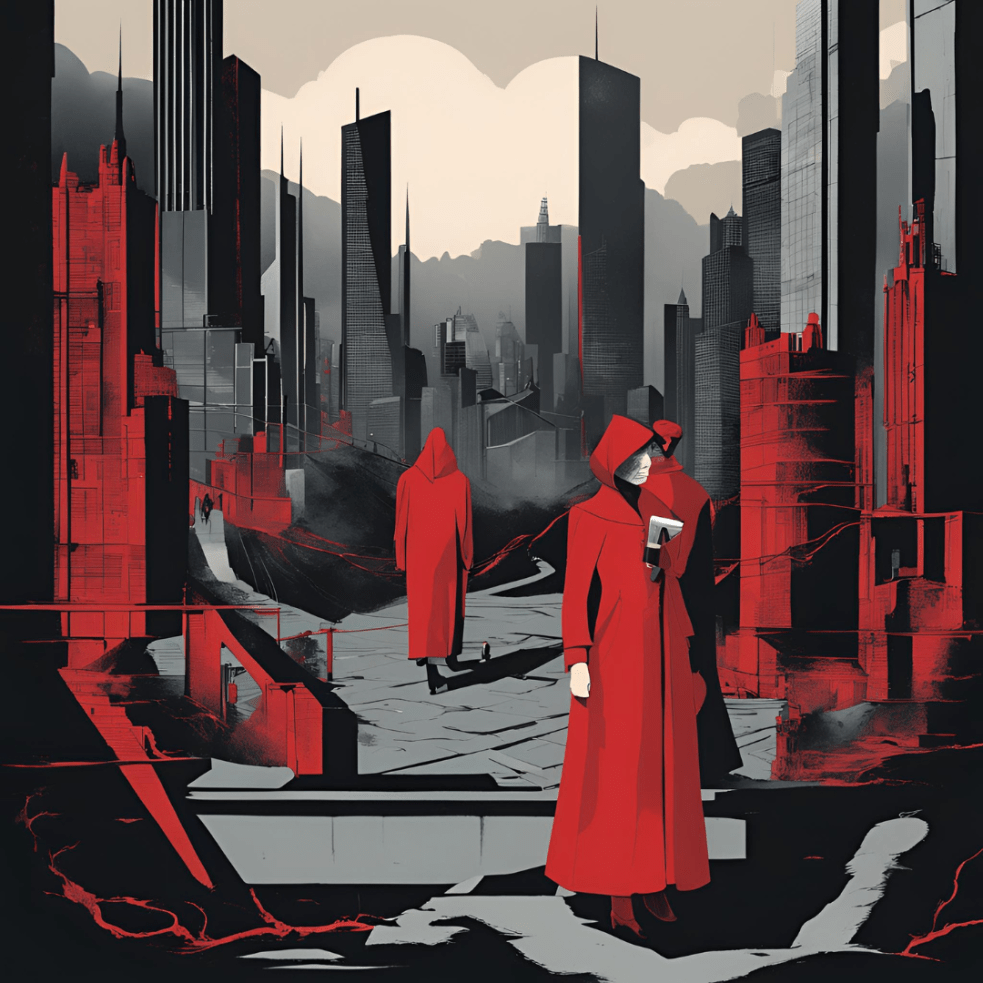
After finishing George Orwell’s 1984, I noticed its resurgence in popularity, especially after Trump’s election. Ironically, it’s not the conservative right but the progressive left that increasingly mirrors Orwellian themes. Similarly, Margaret Atwood’s The Handmaid’s Tale has become a rallying cry for liberals who claim to be on the brink of a dystopian theocracy. Yet, as Yasmine Muhammad pointed out in this week’s episode, this comparison is not only absurd but deeply insulting to women who live under regimes where Atwood’s fiction is a grim reality.

1984: Rewriting Language and History

The Democratic Party’s obsession with redefining language is straight out of Orwell’s playbook. They tell us biology is bigotry and that there are infinite genders, forcing people to adopt nonsensical pronouns or risk social ostracism. This is not progress—it’s the weaponization of language to control thought, eerily similar to Orwell’s Newspeak.

But it doesn’t stop there. They actively rewrite history by renaming monuments, military bases, and even schools, erasing cultural markers in the name of ideological purity. This is doublespeak in action: the manipulation of truth for political orthodoxy. Orwell’s warning that “orthodoxy is unconsciousness” feels disturbingly apt when observing the modern left.

The Handmaid’s Tale: An Insult to Women Who Actually Suffer

In our conversation, Yasmine highlighted the absurdity of liberal claims that America is The Handmaid’s Tale come to life. Yasmine, who grew up under Islamic theocracy, knows firsthand what it’s like to live in a world where women have no autonomy. These women cannot see a doctor without a male guardian, are forced to cover every inch of their bodies, and are denied basic freedoms like education or the right to drive.

Contrast this with the West, where women have more freedom than any other point in history. Liberal women can run around naked at Pride parades, freely express their sexuality, and redefine what it means to be a woman altogether. And yet, they cry oppression because they are expected to pay for their own birth control or endure debates over abortion limits. This level of cognitive dissonance—claiming victimhood while living in unprecedented freedom—is a slap in the face to women who actually suffer under real patriarchal oppression.

Liberal Orthodoxy: Lost in the Sauce

What’s truly Orwellian is how the left uses its freedom to strip others of theirs. They shout about inclusivity but cancel anyone who disagrees. They claim to fight for justice while weaponizing institutions to enforce ideological conformity. Meanwhile, they are so consumed with their own victim complex that they fail to see how absurd their comparisons to dystopian fiction really are.

Orwell and Atwood warned against unchecked power and ideological extremism. If liberals actually read these books instead of using them as aesthetic props, they might realize they’re mirroring the very authoritarianism they claim to oppose. Instead, they’re lost in the sauce, preaching oppression in a society where they have more freedom than they can handle.

As Yasmine said, “You want to see The Handmaid’s Tale? Try being a woman in Saudi Arabia, Iran, or Afghanistan.” The left would do well to remember that before playing the victim in their cosplay dystopia.

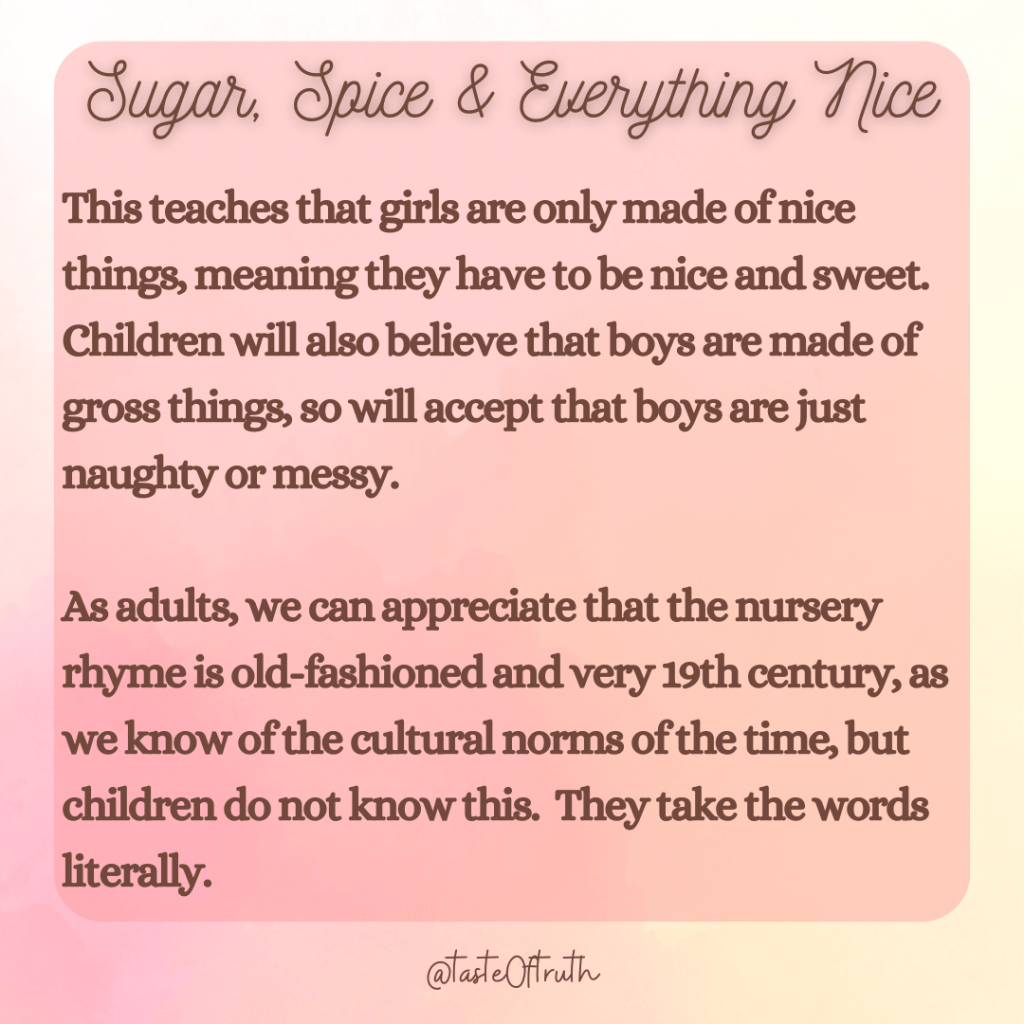
Sugar, Spice and Everything Nice….

Exploring the Intersection of Gender Roles, Christianity, and Dominion Theology: A Critical Look at Contemporary Teachings

Exploring the Intersection of Gender Roles, Christianity, & Dominion Theology: A Critical Look at Contemporary Teachings 🤔

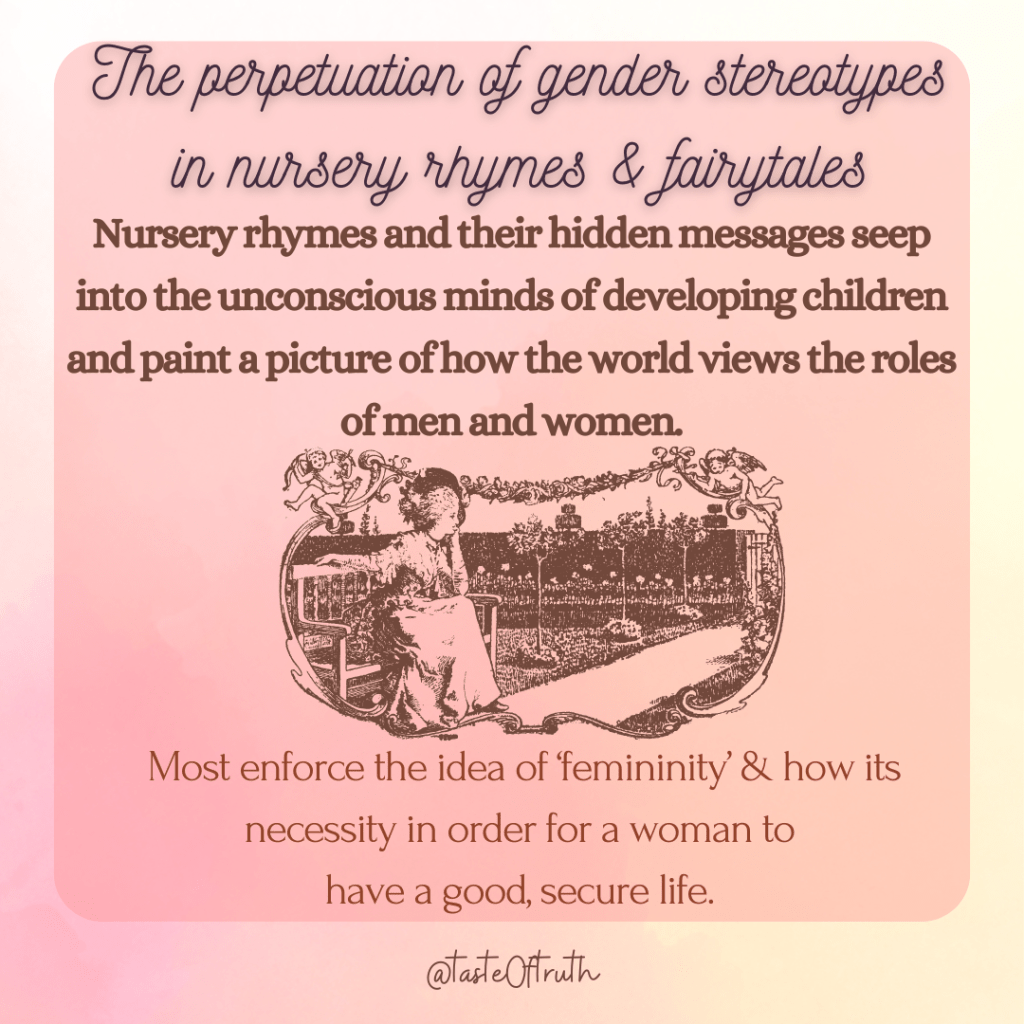
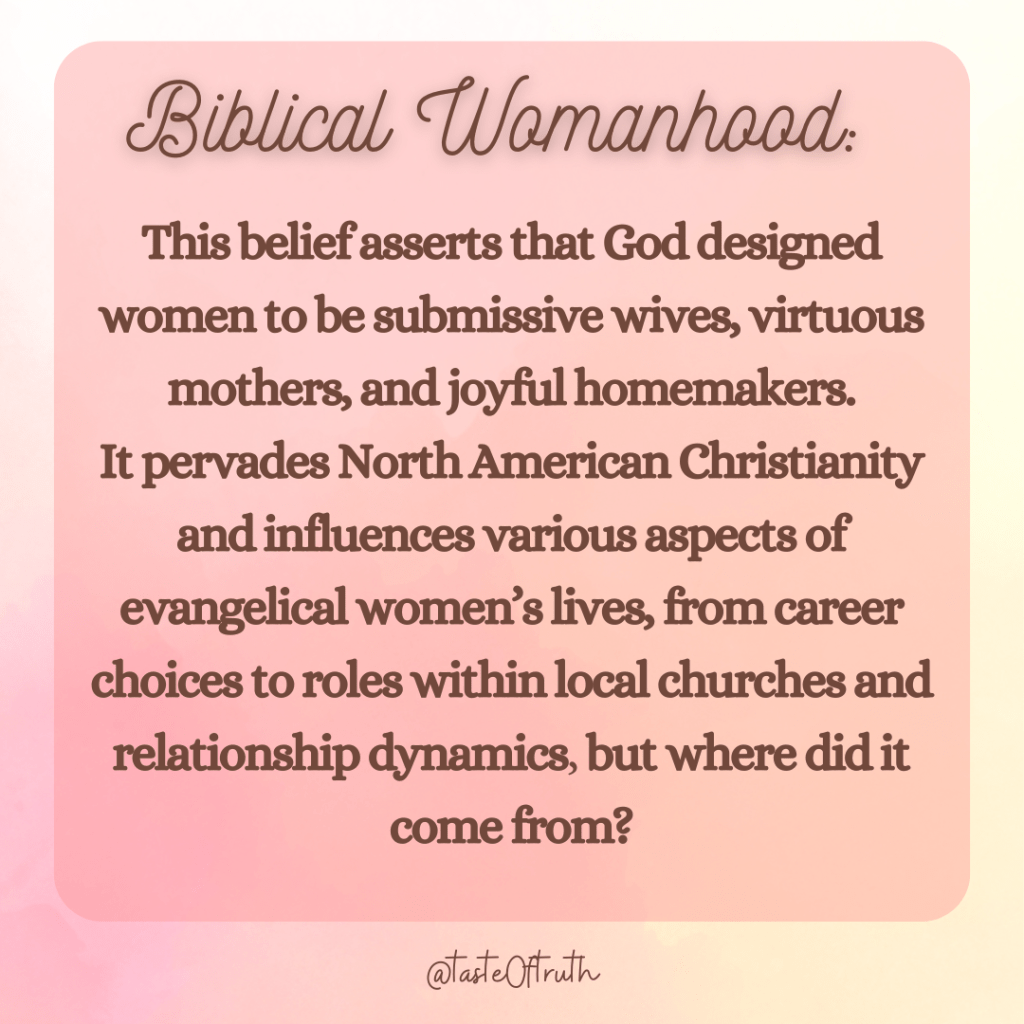
Delving into history, we explore the nuanced connections between nursery rhymes, biblical teachings on women’s roles, and contemporary controversies.

These ideas find support in movements like the Council on Biblical Manhood and Womanhood (CBMW), which advocate for complementarianism and traditional gender norms within conservative Evangelicalism.

This started the rise of New Calvinism, spearheaded by influential figures such as John Piper, John MacArthur, and Mark Driscoll, further reinforcing these gender roles.

Moreover, dominion theology, which seeks to establish a Christian-led government based on biblical law, is closely associated with these movements.

We uncover how interpretations of women’s roles in the church have been shaped by power dynamics rather than the teachings of Christ.

Nancy Pearcey’s recent controversial claim that women’s suffrage was a net loss highlights the connection between such ideologies and dominionism or Christian nationalism.

In the podcast episode, we delve into the connections between dominion theology, far-right fundamentalism, Pearcey’s controversial assertions, and more.

Join us as we unravel the complexities of gender, religion, and power in contemporary Christianity.🎙️

Tune in! 🎧

Sources:
•‘Sugar and spice’ versus ‘Frogs and snails’ – Not Only Pink and Blue
•WAITING FOR HER KNIGHT: GENDER STEREOTYPES IN FAIRYTALES – Jaipur Literature Festival
•Nursery Rhymes: A Perfect Example of the Perpetuation of Sexism in Society – Dr. Bethany Cook (doctorbethanycook.com)
•https://ifstudies.org/ifs-admin/resources/reports/worldfamilymap-2019-051819.pdf pg 36
•https://baptistnews.com/article/do-complementarian-men-do-better-a-response-to-nancy-pearcey/
•https://leo-cruz.medium.com/nancy-pearcey-pt1-44f98c2a3602 When apologetics debases historical memory | Medium
•Gottman Institute
•The Bible vs Biblical womanhood by Philip Payne
•Man and Woman, One in Christ: An Exegetical and Theological Study of Paul’s Letters by Philip Barton Payne
•The Making of Biblical womanhood How the subjugation of women became gospel truth by Beth Allison Barr

#ChurchHistory#ChristianNationalism#GenderStereotypes#PodcastDiscussion
#calvinism#biblicalwomanhood#biblicalfemininity#biblicalliving#biblicalmarriage#deconstruction#genderequality

 A Critique of Nancy Pearcey’s book “Toxic War on Masculinity”

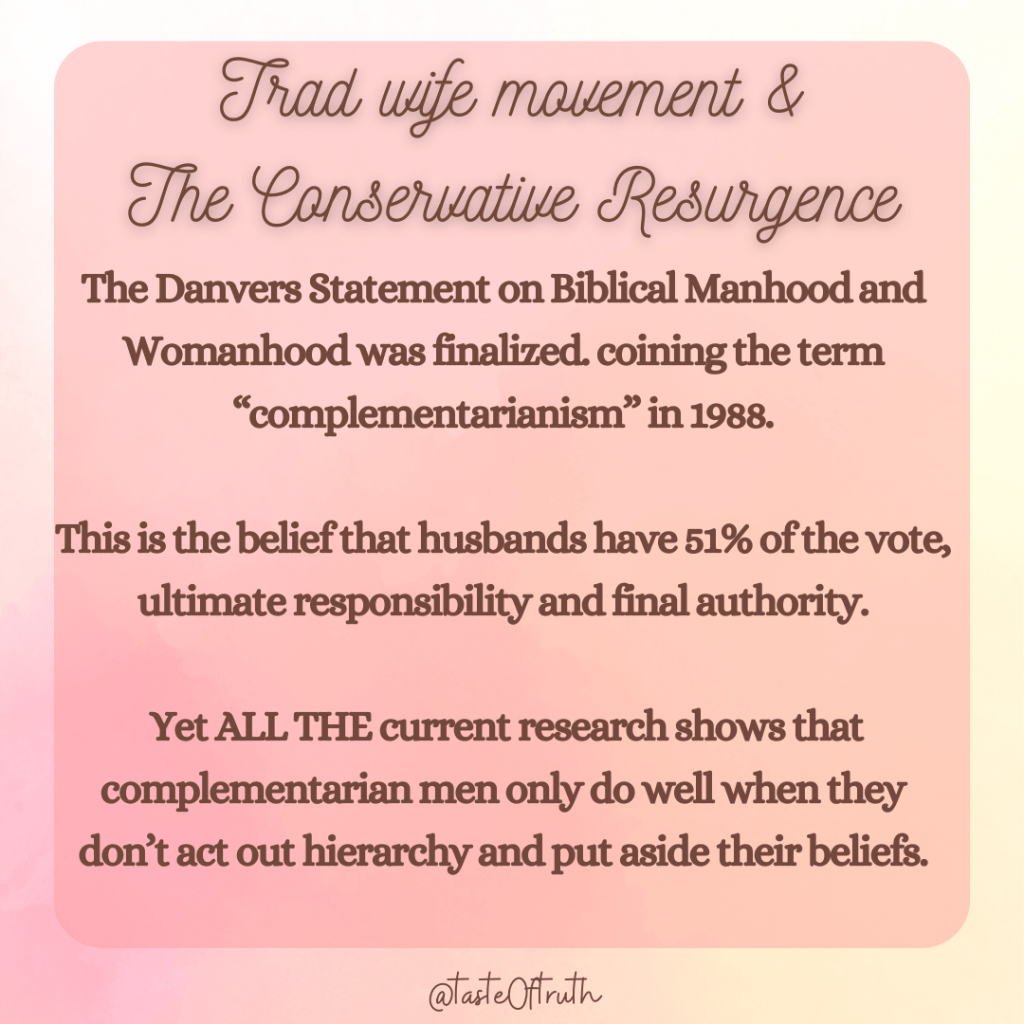
“Complementarian men only do well when they don’t act out hierarchy and put aside their beliefs.” John Gottman of the world-renowned Gottman Institute.

A big part of my deconstruction process was realizing the dangerous lies behind Nancy Pearcey’s book The Toxic War on Masculinity. Which was heavily promoted by David Wolcott, Alisa Childers, Alexa Clark & Frank Turek, who are often associated with right-wing fundamentalist Christianity. 🚩It was such a disappointment to find out that this book, touted as a high quality, scholarly work, was clearly just an opinion piece full of logical fallacies, misrepresentation of research data, and poor quality (non-peer reviewed) sources.

She said “There’s no need to debate complementarianism or egalitarianism when it comes to marriage” 𝔸𝕔𝕥𝕦𝕒𝕝𝕝𝕪 ℕ𝕒𝕟𝕔𝕪, 𝕎𝕖 𝔻𝕠!

Pearcey pulls findings from Gottman’s work, citing that in both egalitarian & hierarchical marriages “emotionally intelligent husbands have figured out the one big thing: how to convey honor and respect.” Thus, she claims, labels don’t matter.

However, she omits to mention the big finding Gottman uses to frame this entire chapter: Complementarian men only do well when they don’t act out hierarchy and put aside their beliefs. You can’t claim beliefs in complementarianism are irrelevant by quoting someone who found acting out those beliefs is disastrous.

This is only ONE of the major criticisms of the book pointing to the lack of empirical evidence to support the claims made in the book, particularly regarding the alleged “war on masculinity.”

🚨 We should consider the consequences of promoting ideological narratives without empirical support. 🚨

Other concerns but not limited to:

  • Oversimplification of Gender Issues: Critics argue that Pearcey’s book oversimplifies complex gender issues by framing them as a “war on masculinity.” They suggest that this framing perpetuates a binary view of gender and fails to adequately address the diverse experiences and identities of individuals across the gender spectrum.
  • Perpetuating Gender Stereotypes: Critics contend that Pearcey’s characterization of masculinity as under attack reinforces traditional gender stereotypes and norms, which may contribute to harmful social expectations and restricts the freedom of individuals to express their gender identity authentically.
  • Lack of Intersectionality: Some critics argue that Pearcey’s analysis lacks intersectionality, as it fails to consider how factors such as race, class, sexuality, and disability intersect with gender to shape individuals’ experiences and social realities. This omission may result in a limited understanding of the complexity of gender dynamics.
  • Ideological Bias: Some critics suggest that Pearcey’s perspective reflects a conservative or right-wing ideological bias, as she tends to frame gender issues within a traditional Christian worldview. This ideological framing may alienate readers with different religious or philosophical beliefs and limit the book’s appeal to a narrow audience.

Click to watch THIS VIDEO–>Dr. Nancy Pearcey, author of ‘The Toxic War on Masculinity’ claimed in a recent podcast interview that women’s suffrage was a net loss and that Christian marriages are healthier than their non-christian counterparts. Tim brings on Sheila Gregoire, author of ‘The Great Sex Rescue’ and her co-author Rebecca Gregoire Lindenbach, along with Dr. Beth Allison Barr, author of ‘The Making of Biblical Womanhood’ to respond.

Nancy claimed in the book and on a podcast interview that women’s suffrage was a net loss!!!! This is dominionism aka Christian Nationalism.

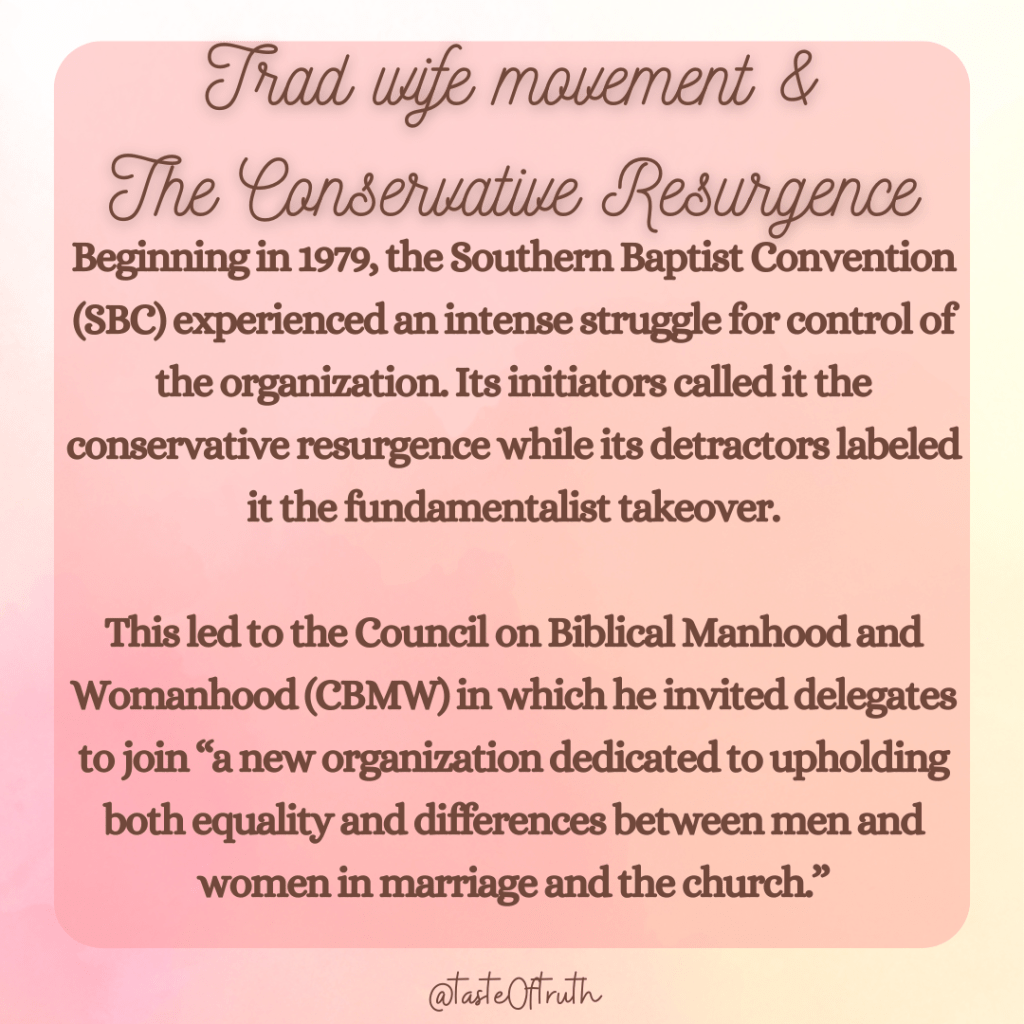
This is a whole ‘nother rabbit hole, connected to the TRAD wife movement/conservative resurgence… let’s get into it a bit….

Beginning in 1979, the Southern Baptist Convention (SBC) experienced an intense struggle for control of the organization. Its initiators called it the conservative resurgence while its detractors labeled it the fundamentalist takeover. It was launched with the charge that the seminaries and denominational agencies were dominated by liberals. The movement was primarily aimed at reorienting the denomination away from a liberal trajectory.

This led to the Council on Biblical Manhood and Womanhood (CBMW) At a 1986 meeting of the Evangelical Theological Society (ETS), Wayne Grudem gave a speech on “Manhood and Womanhood in Biblical and Theological Perspectives” in which he invited delegates to join “a new organization dedicated to upholding both equality and differences between men and women in marriage and the church.”[11] This was followed by a meeting in Dallas with Grudem, John Piper etc.  

A subsequent meeting was held in Danvers, Massachusetts; at this meeting, the Danvers Statement on Biblical Manhood and Womanhood was finalized. coining the term “complementarianism” in 1988.

This is connected to New Calvinism, also known as the Young, Restless, and Reformed Movement, is a movement within conservative Evangelicalism that reinterprets 16th century Calvinism under contemporary US values and ideologies.

The New Calvinism movement started in the 1980s, with the founding of the Council on Biblical Manhood and Womanhood in 1987 in the United States, which stresses the complementarianism between men and women (in contrast to egalitarianism, and as opposed to feminism). The teaching of covenant theology (as opposed to Wesleyanism, or Arminian theology), a rejection of dispensationalism, and a church governance by male elders are also hallmarks of the movement.

The movement gained wider publicity with a conference held in Louisville, Kentucky, in 2006, Together for the Gospel by American pastors John Piper, Mark Driscoll, John MacArthur, Matt Chandler, Al Mohler, Mark Dever and CJ Mahaney. In March 2009, Time magazine ranked it as one of the “10 Ideas Changing the World Right Now”, while questioning if “more Christians searching for security will submit their wills to the austerely demanding God of their country’s infancy”.

Dominion theology, also known as dominionism, is a group of Christian political ideologies that seek to institute a nation governed by Christians and based on their understandings of biblical law. Extents of rule and ways of acquiring governing authority are varied. For example, dominion theology can include theonomy but does not necessarily involve advocacy of adherence to the Mosaic Law as the basis of government. The label is primarily applied to groups of Christians in the United States.

Prominent adherents of those ideologies include Calvinist Christian reconstructionism, Charismatic and Pentecostal Kingdom Now theology, and the New Apostolic Reformation. On the podcast we talk more about Dominion Theology & it’s connections to far right fundamentalists aka Christian nationalist and Nancy’s book.

🎧Tune in for more!

For further reading:
•The Bible vs Biblical womanhood by Philip Payne
•Man and Woman, One in Christ: An Exegetical and Theological Study of Paul’s Letters by Philip Barton Payne
•Terran Williams’ Book How God Sees Women
•The Making of Biblical Womanhood How the Subjugation of Women became Gospel Truth by Beth Allison Barr
•Marg Mowczko’s work

👇🏻Sources: Sheila Wray Gregoire and Joanna Sawatsky 👇🏻 👇🏻

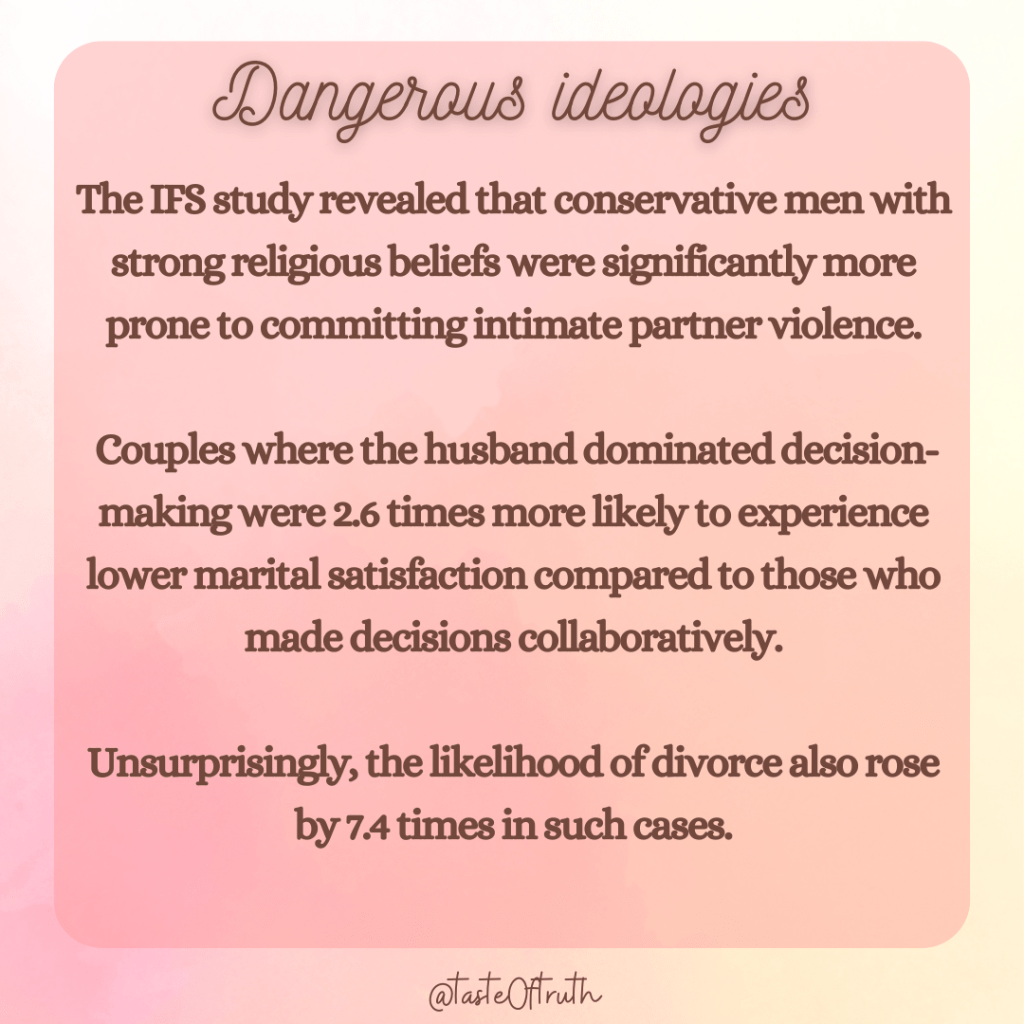
The IFS report that showed that conservative highly religious men were far more likely to perpetrate intimate partner violence (p. 36):

https://leo-cruz.medium.com/nancy-pearcey-pt1-44f98c2a3602

MORE Resources: – Susan Ware, Why They Marched: Untold Stories of the Women Who Fought for the Right to Vote (Cambridge, MA: The Belknap Press of Harvard University Press) – Anita Anand, Sophia: Princess, Suffragette, Revolutionary (New York: Bloomsbury) – Manuela Thurner, “’Better Citizens without the Ballot’: American AntiSuffrage Women and Their Rationale During the Progressive Era,” Journal of Women’s History 5:1 (Spring 1993), 33-60 – Hallie Rubenhold, The Five: The Untold Lives of the Women Killed by Jack the Ripper (New York: Mariner Books An Imprint of HarperCollins) – Martha S. Jones, Vanguard: How Black Women Broke Barriers, Won the Vote, and Insisted on Equality for All (New York: Basic Books)

#churchhurt #SpiritualAbuse #HidingHurts #SpeakUp #BreakTheSilence #ProtectTheInnocent #HealingJourney #AuthenticConversations #CommunitySupport #FindYourVoice #ChurchDisrupted #Podcast #christian #christianity #religioustrauma #honestyheals
#deconstructioncommunity #deconstruction #deconstructingfaith #disentanglement #patriarchy #crushthepatriarchy #egalitarian #egalitarianism #complementarianism