Unveiling Evangelicalism: From High-Control Practices to Spiritual Trauma

Challenging the Narrow View: Understanding Spiritual Trauma Beyond the IBLP

In the deconstruction space, there’s a troubling tendency to focus exclusively on extreme cases of spiritual abuse, such as those from the Institute in Basic Life Principles (IBLP). While it’s crucial to address and understand these severe experiences, it’s equally important to recognize that spiritual and religious trauma can manifest in many forms beyond such high-profile examples.

The roots of evangelical Christianity are deeply entwined with guilt, fear, coercion, and deception, a legacy that can permeate all levels of faith practice. This issue isn’t confined to one group or doctrine; rather, it echoes through the broader history of evangelicalism, including the violent and tumultuous period of the Protestant Reformation.

Guilt and Fear: Evangelical teachings often emphasize human sinfulness and the need for constant repentance, creating an environment where guilt and fear become central. The pressure to meet unattainable moral standards can lead to chronic anxiety and self-doubt. Believers may struggle with feelings of inadequacy and unworthiness, which can erode self-esteem and lead to long-term psychological trauma.

Coercion: Many evangelical doctrines employ coercive tactics to ensure conformity and compliance. This can include manipulating believers through promises of divine favor or threats of divine punishment. Such coercion often pressures individuals into adhering to strict beliefs and behaviors, stifling personal autonomy and fostering a sense of control and manipulation.

Deception: The evangelical tradition can sometimes perpetuate deceptive teachings, presenting religious doctrines in a way that omits or distorts critical truths. This can include selective scriptural interpretations or misleading teachings about the nature of God and salvation. When individuals later confront these deceptions, they may experience profound disillusionment and betrayal, further contributing to their trauma.

Historical Context: The Protestant Reformation, a pivotal event in evangelical history, was marked by violent conflict and intense upheaval. The brutality and extremism of this period set a precedent for how religious movements can become entangled in aggression and intolerance. This historical backdrop adds another layer to understanding how evangelical Christianity, in its various forms, can inflict spiritual harm.

By acknowledging this broader context, we can better address the diverse experiences of trauma within the Christian faith and work towards healing that encompasses all who have been affected.

⛓️Evangelicalism is the opposite of freedom. ⛓️

A high-control religion is a religious group that exercises significant control over its members’ lives, including their beliefs, behaviors, relationships, and access to information.

Evangelical Christianity often exerts high levels of control over its members by demanding strict adherence to its interpretations of the Bible.

Members may be expected to attend multiple church services and small group meetings each week, adhere to moral codes regarding sexuality, substance use, and entertainment, and prioritize church activities over other aspects of life.

The lie of penal substitutionary atonement theory, original sin, fear of hell and eternal damnation is frequently used to enforce compliance and discourage questioning.

Evangelical communities may also encourage social isolation from non-believers, creating an insular environment where dissenting views are discouraged and conformity is enforced.

These practices and teachings illustrate how Christianity, particularly in its more conservative and fundamentalist forms, exhibits the characteristics of a high-control religion.

#exvangelical#exchristian#exvangelicals#highcontrol#cult#cultawareness#indoctrination#brainwashing#dogma#protestant#reformedtheology#reformed#christianity
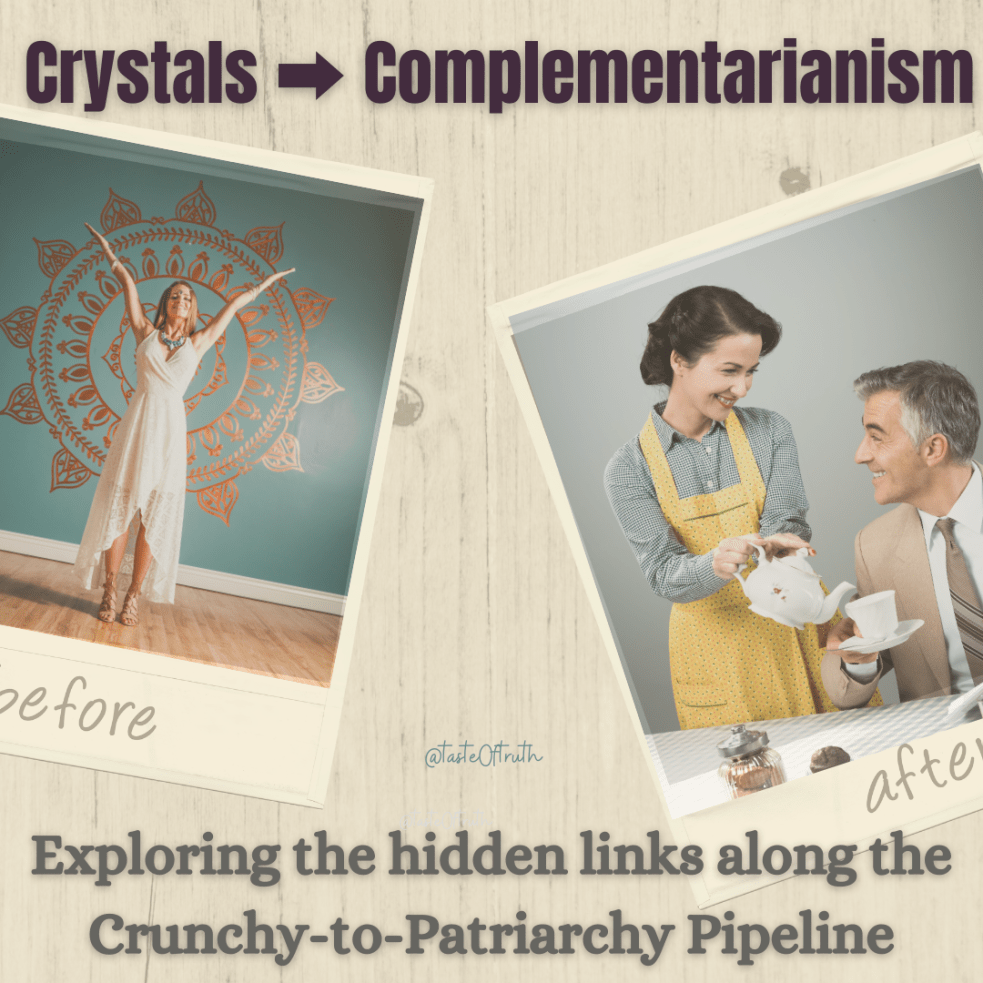
Crystals ➡️ Complementarianism: Exploring the hidden links along the Crunchy-to-Patriarchy Pipeline

Navigating the Intersection of Wellness and Ideology

Have you noticed this social trend New Age lifestyles to Jesus testimonies embracing far-right ideologies?

It’s a phenomenon influenced by social media algorithms and influencers who blend wellness with conspiracy theories and extreme views. What starts as an interest in yoga and herbal remedies can subtly transition into something much darker.

Understanding the Trad Wife and Stay-at-Home Girlfriend Movements

Enter the Trad Wife and Stay-at-Home Girlfriend movements—cultural trends advocating for traditional gender roles within relationships. Followers prioritize homemaking, submission to husbands, and nurturing domestic skills. This intersects with the Crunchy to Alt-Right Pipeline when online narratives blend wellness with conservative ideologies, portraying traditional roles as spiritual ideals.

Motivations Behind the Movements

  1. Embracing Traditional Values: Supporters cite a desire to uphold stability and traditional family roles, believing in the importance of creating a nurturing home environment and supporting their partners as leaders of the household.
  2. Rejecting Modern Feminism: Many within these movements view modern feminism as promoting anti-family agendas and undermining traditional values, preferring roles they see as empowering and fulfilling.
  3. Cultural and Religious Influences: Cultural and religious beliefs play a significant role, with some viewing traditional roles as rooted in religious teachings or cultural heritage, finding validation in communities that promote these values.

Understanding Fear Tactics and Cultural Influences

Fear tactics are prevalent in online content that combines wellness with extreme ideologies. These tactics manipulate users into adopting the group’s beliefs by promoting fear of worldly dangers, apocalyptic scenarios, or spiritual consequences. For example, narratives within the “culture wars” often lead to anti-LGBTQ and anti-feminist sentiments. Influencers may use fear of societal collapse or moral decay to urge followers towards conservative values, portraying them as a defense against perceived threats to traditional lifestyles.

Historical Precedents: Satanic Panic and Moral Panics

Historically, movements like the “Satanic Panic” in the 1980s and ’90s stoked fears of occult influences on children and communities, leading to widespread moral panic. Similarly, today’s online narratives can exaggerate or fabricate threats to bolster ideological adherence. The fear of cultural shifts, such as evolving attitudes towards gender roles or LGBTQ rights, fuels narratives that paint progressive changes as morally corrupt or spiritually dangerous.

Example: Evangelical Fears and Pop Culture In recent years, evangelical communities have expressed fears over pop culture icons like Taylor Swift, attributing spiritual significance to her lyrics and persona. This illustrates how fear can be used to mobilize against perceived threats to traditional values, even in seemingly innocuous contexts.

Examples:

  1. Harry Potter and Witchcraft: The “Harry Potter” book and film series sparked concerns among some evangelical groups who viewed the portrayal of magic and witchcraft as promoting occult practices and undermining Christian values. This led to debates and even bans on the series in some communities.
  2. Rock and Roll Music: Throughout history, evangelical circles have expressed fears over the influence of rock and roll music on youth, believing it promotes rebellion, promiscuity, and anti-Christian values. This fear was particularly pronounced during the rise of rock music in the 1950s and continues in various forms today.
  3. Secularization of Media: Evangelical fears often extend to broader secular media, with concerns over its perceived influence on moral values and religious beliefs. For instance, certain movies, TV shows, and music artists are scrutinized for their content and perceived impact on cultural norms.
  4. Celebrity Influence: Pop culture icons like Taylor Swift, Lady Gaga, or Madonna have been subjects of evangelical concern due to their lyrics, imagery, or public personas, which some interpret as promoting values contrary to traditional Christian teachings. These concerns reflect broader anxieties about the influence of celebrity culture on moral standards.

Navigating Complexity

While these movements resonate with some as empowering choices, they also perpetuate outdated stereotypes and limit opportunities for autonomy and self-fulfillment outside traditional roles. Some narratives oversimplify complex societal issues, promoting a binary worldview of good versus evil and omitting nuances and alternative perspectives. It’s essential to critically evaluate such content and consider its broader implications on personal beliefs and societal attitudes.

Understanding the motivations and concerns behind these movements fosters dialogue about gender, family, and cultural norms in contemporary society.

Let’s discuss: Have you observed or encountered these dynamics in your online experiences? What are your thoughts on their impact on societal norms?

The Crunchy-to-Alt-Right Pipeline: from Wellness to Extremism

Over the last few weeks, we have been exploring the complex interplay between radicalization, conspiracies and religion. During the pandemic, I was one of those new-age rebels that was pumped into conspiracy and conversion to religion pipeline. I was one of those people seeking answers and meaning that was drawn to radical ideologies and conspiratorial narratives that promised belonging, purpose, and empowerment.

A huge aspect of my deconstruction process is realizing how I’ve been susceptible and caught up in cult-like dynamics for most of my adult life. I spent years entangled in an MLM (2016-2020), which only worsened my dis0rded eat1ng behaviors from high school. These products often promoting unrealistic body standards and fostering unhealthy relationships with food. Feeling lost without that community, I was drawn into pandem1c conspiracies and eventually into high-control religion.

The “crunchy hippie to alt-right pipeline” is a phenomenon where individuals initially attracted to alternative wellness and New Age practices become increasingly exposed to far-right ideologies.

This shift is facilitated by social media algorithms and influential figures who blend wellness content with conspiracy theories and extremist views. This shift is facilitated by social media algorithms and influential figures who blend wellness content with conspiracy theories and extremist views.

Key Points of the Pipeline:

  1. Algorithmic Influence:
    • Social media platforms like YouTube and Instagram use algorithms that can gradually expose users to more extreme content. For instance, someone watching videos on natural health remedies might eventually receive recommendations for videos that include far-right conspiracy theories or anti-establishment rhetoric​ (Virginia Review of Politics)​.
  2. Overlapping Values:
    • Certain aspects of New Age and wellness cultures, such as skepticism of mainstream medicine and government, overlap with the distrust and anti-establishment sentiments of far-right groups. This makes the transition smoother as the ideologies can appear to support each other​ (Cross Cultural Solidarity)​.
  3. Influential Figures:
    • Wellness influencers who propagate conspiracy theories (like QAnon) help bridge the gap between New Age communities and far-right ideologies. They often present themselves as offering alternative truths, which can be appealing to those already disillusioned with conventional systems​ (Cross Cultural Solidarity)​.
  4. Community Dynamics:
    • Online communities play a crucial role. Individuals often seek validation and a sense of belonging in these groups. Once part of a community that blends wellness with far-right views, it becomes easier to accept and internalize these extremist ideologies​ (Virginia Review of Politics)​​ (Cross Cultural Solidarity)​.

Implications:

  • Radicalization: This pipeline can lead to the radicalization of individuals who initially joined wellness communities for benign reasons but gradually adopt extremist views.
  • Polarization: The spread of far-right ideologies within wellness spaces contributes to societal polarization and the mainstreaming of conspiracy theories.
  • Public Health Concerns:
    • Misinformation and Hesitancy towards “BigPharma”
      Social media platforms have been conduits for the dissemination of misinformation regarding 💉, leading to hesitancy. False claims about safety and conspiracy theories have undermined public health efforts.
    • Addressing these public health concerns requires a multi-faceted approach that includes combating misinformation, improving mental health services, addressing healthcare inequities, ensuring continuity of chronic disease management, strengthening public health infrastructure, and promoting evidence-based health practices. Public awareness and education, policy reforms, and community engagement are essential in tackling these challenges and improving overall public health outcomes

Conclusion:

Understanding this pipeline is essential for recognizing how seemingly unrelated interests in wellness and spirituality can be co-opted by extremist ideologies. It highlights the need for vigilance and critical thinking in online spaces, as well as the importance of promoting credible information and fostering inclusive communities. For more detailed discussions on this topic, you can refer to articles from sources like the Virginia Review of Politics and Cross Cultural Solidarity​ (Virginia Review of Politics)​​ (Cross Cultural Solidarity)​.

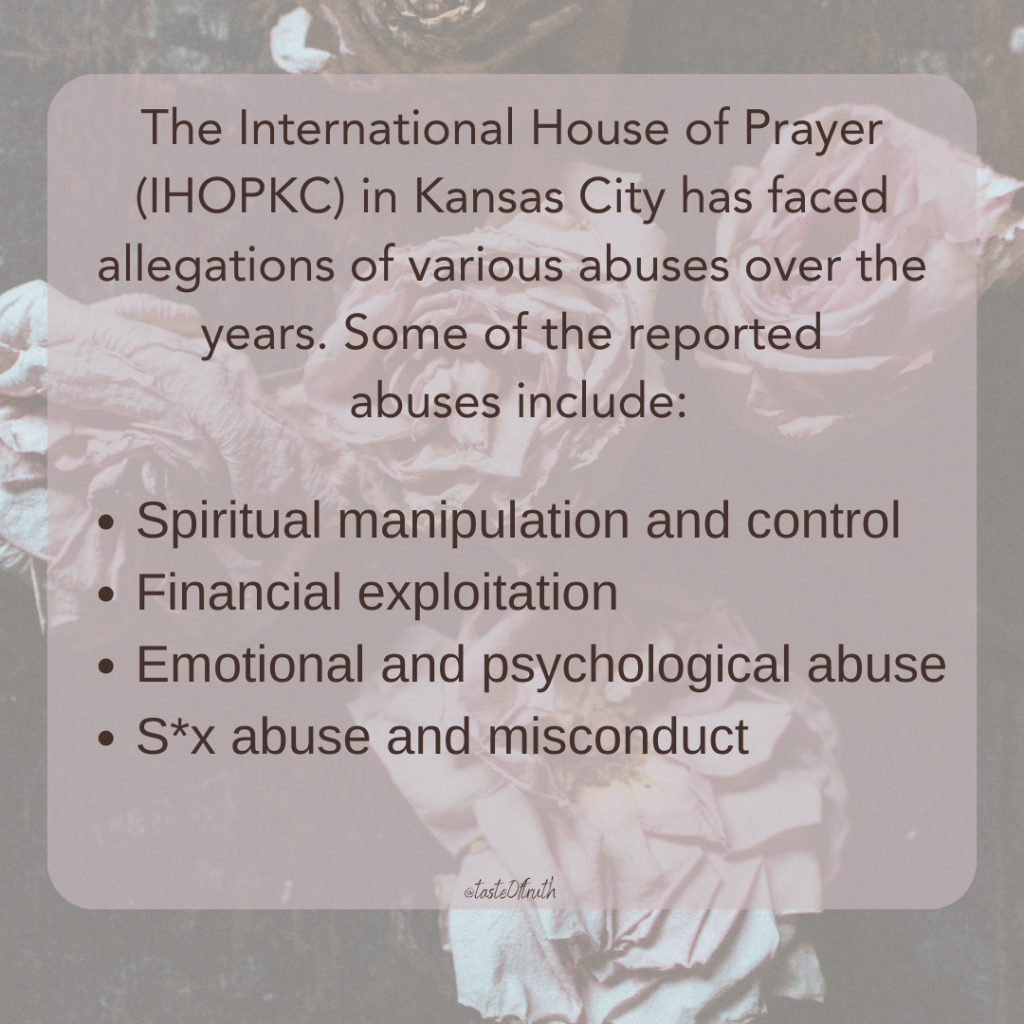
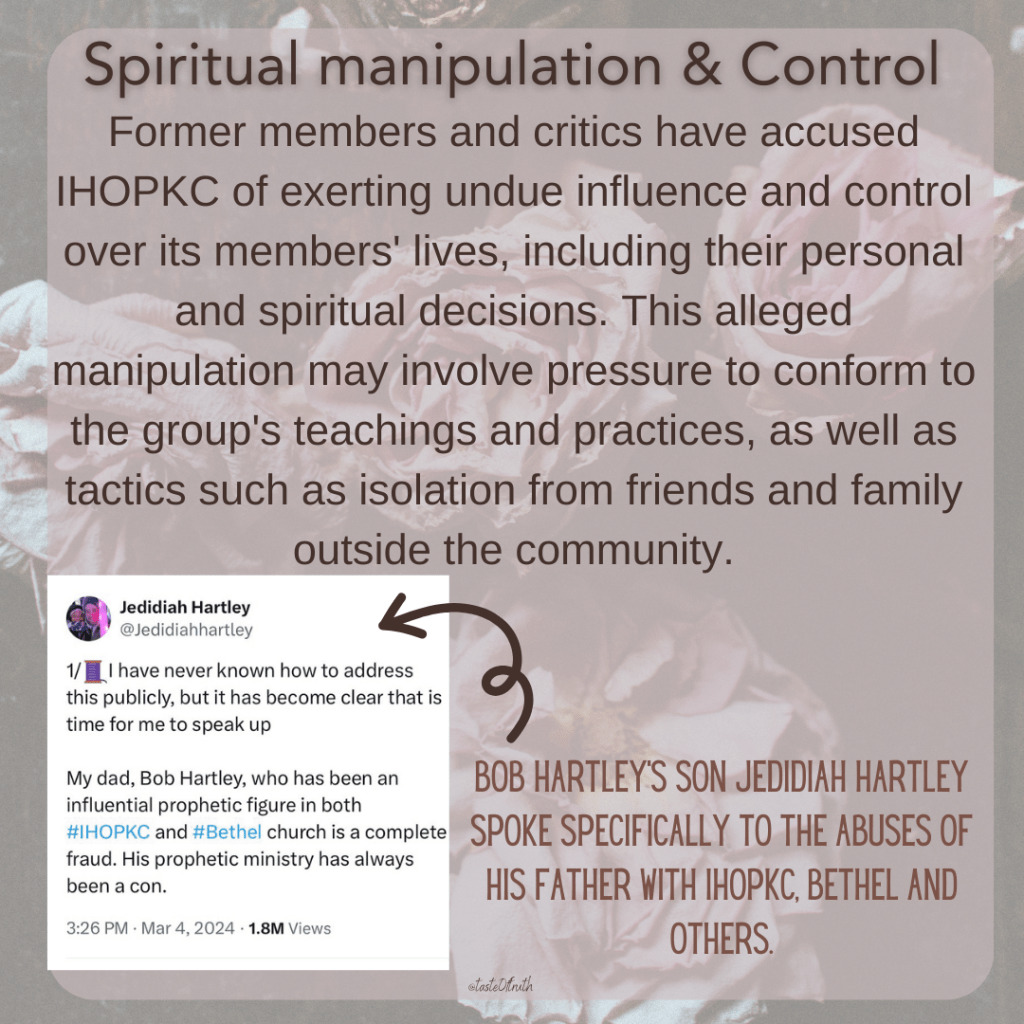
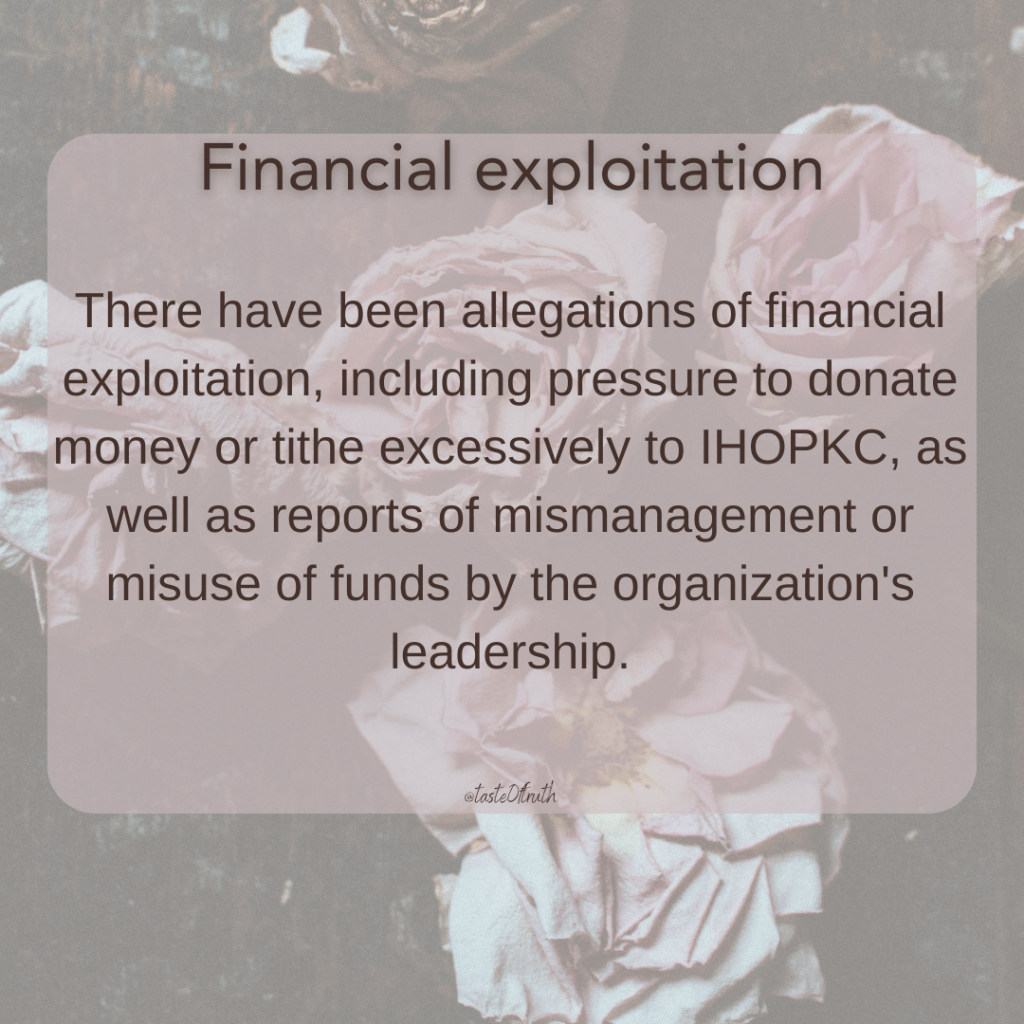
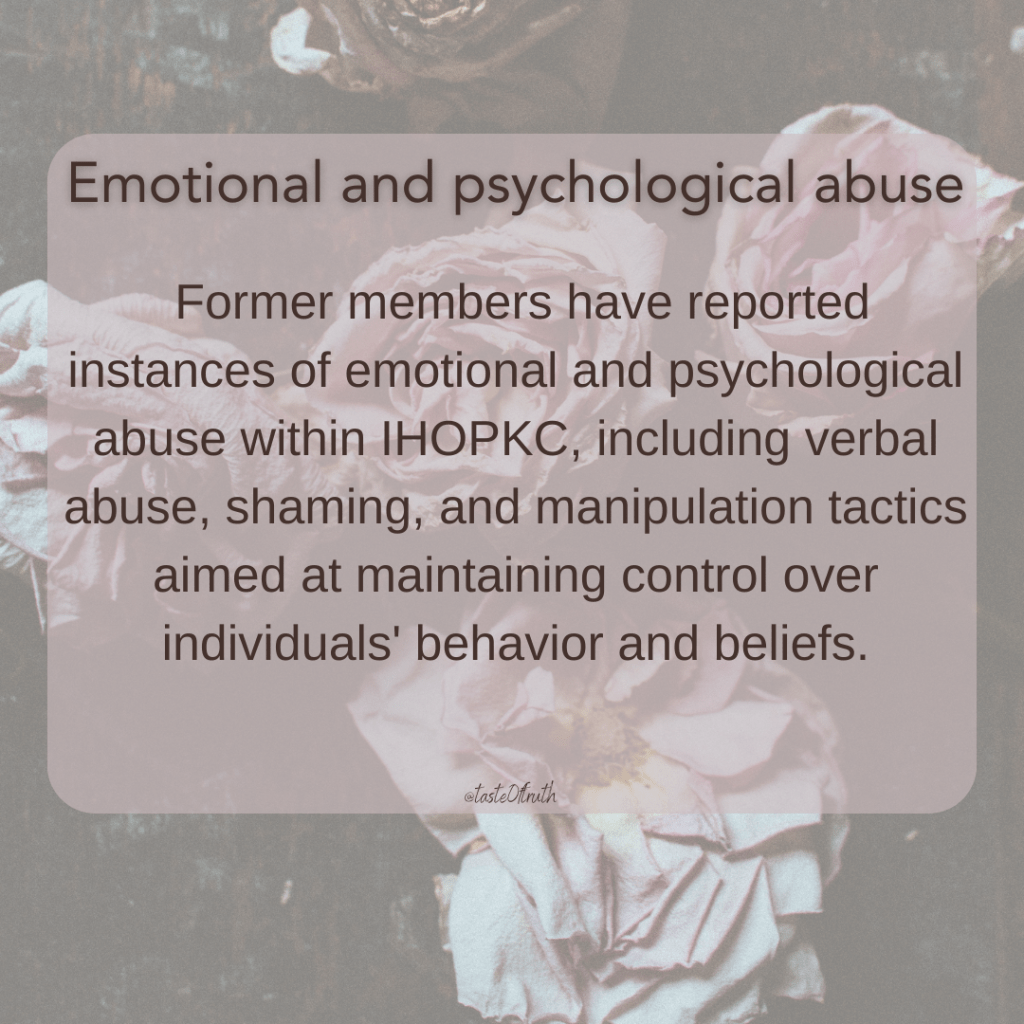
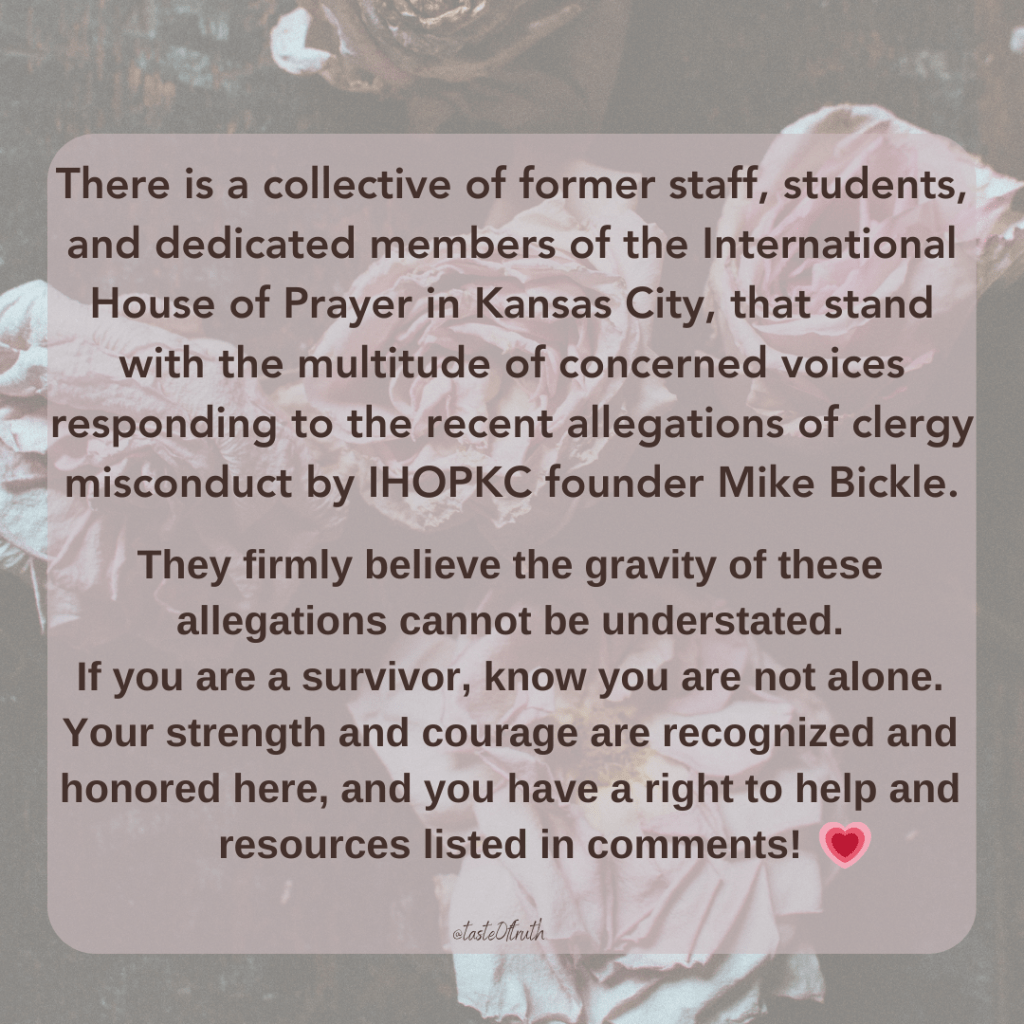
IHOPKC-Manipulation, Deception & Spiritual Harm

🎙️Episode 10 From Falsehood to Freedom: Lessons from a former False Prophetess

This week on the podcast we had Dawn Hill with us who discussed that a HUGE issue with the prophetic prayers and prophetic word movement is the potential for manipulation, deception, and spiritual harm.

I can’t help but to notice the brutal similarities between the approach IHOPKC is taking which is clearly focused on maintaining control and protecting the institution & the scandals within the Grace Community Church & ACBC Biblical/Nouthetic counseling.

If you or anyone you know has experienced abuse or misconduct within IHOPKC or any other religious organization PLEASE be encouraged to seek support, speak out, and report your experiences to appropriate authorities.

SEEK THEN SPEAK – A tool for sexual assault survivors and support people. Visit seekthenspeak.app to fill out a private survey to gather information and consider your next steps.

MOCSA (Metropolitan Organization to Counter S*xual Assault)

Call the crisis hotline at (816) 531-0233 in Missouri or (913) 642-0233 in Kansas.

DRZ Law Call (913) 400-2033 to request a free case evaluation.

BozLaw PA – Now representing victims of IHOPKC
Visit http://www.bozlawpa.com and fill out the form on the website to request a free case evaluation.

International House of Prayer Founder Mike Bickle Accused …… | News & Reporting | Christianity Today

IHOP Prayer Movement Disputes Link to Murder in Religious …… | News & Reporting | Christianity Today

IHOPKC confirms ‘inappropriate behavior,’ announces permanent split with founder Bickle (msn.com)

Woman Says Mike Bickle Used Prophecy to Sexually Abuse Her (julieroys.com)

IHOPKC Stories – A platform to share your stories