

Welcome back to Taste0fTruth Tuesdays! 🌟 Today, we’re diving deep into the controversial world of German New Medicine (GNM) 🧬. Developed by Dr. Ryke Geerd Hamer, GNM boldly claims that diseases like cancer stem from unresolved psychological conflicts, not genetics or lifestyle 🧠💔.
But here’s the twist: medical experts slam GNM for lacking scientific proof 🧪, warning it could endanger lives by dissuading patients from proven treatments like chemotherapy 🚫💉. Legal battles ⚖️ and ethical dilemmas surround GNM practitioners, while conspiracy theorists 🤔 and new-age enthusiasts 🌿 flock to its holistic promises, fueling a fiery debate 🔥 between alternative healers and conventional medicine.
But that’s not all! 🌠 In this episode, we’re also tackling the pseudoscientific claims of Joe Dispenza, who misappropriates quantum physics ⚛️ to promote his controversial teachings. We’ll uncover the unsettling parallels between GNM and Dispenza’s ways, examining how they both exploit vulnerable individuals seeking other health solutions 🕵️♀️.
Additionally, we’re delving into the so-called “lost teachings of the Essenes” 📜 to explore the dangers of mysticism 🌌 and how these ancient practices are being repackaged for modern audiences. Discover why GNM, Dispenza, and Essene mysticism divide opinions, challenge medical norms, and spark passionate discussions about health, ethics, and the quest for truth 💬.
Tune in for an eye-opening exploration that will leave you questioning the fine line between healing and harm 🧩✨
Unmasking the Philosophical Roots of Modern Pseudoscience and Self-Help
The tangled web of modern pseudoscience and self-help nonsense finds its origins in the 19th-century New Thought movement, heavily influenced by Franz Mesmer and Alexander Dowie before Phineas Quimby’s ideas took center stage. Quimby’s posthumously published writings in 1921 propelled the notion that the mind wields incredible power over physical health and reality itself.
German New Medicine and Joe Dispenza: Mind Games and Misdirection
Dr. Ryke Geerd Hamer’s German New Medicine (GNM) pushes the envelope of New Thought by suggesting that diseases are purely the result of unaddressed psychological conflicts. Despite its lack of scientific validation, this idea has found a foothold among those desperate for other explanations. Similarly, Joe Dispenza’s blend of meditation and mental exercises, promising miraculous health benefits, mirrors the core tenets of New Thought but fails to stand up to scientific scrutiny.
Self-Help Gurus: Masters of Mental Manipulation
Modern self-help titans like Tony Robbins and the proponents of the Law of Attraction have taken New Thought’s “think it, achieve it” philosophy and run with it. Tony Robbins encourages you to transform your life by changing your mindset—a direct echo of New Thought principles. Napoleon Hill’s “Think and Grow Rich,” a staple in the self-help world, preaches that positive thinking can attract wealth and success, a concept rooted deeply in New Thought ideology.
Influential figures such as Brené Brown and Adam Grant also touch on the power of mindset in their works, though they ground their insights in more robust research compared to their predecessors.
MLMs: Modern-Day Merchants of False Hope
Multi-Level Marketing (MLM) companies have eagerly adopted these self-help doctrines to keep their recruits motivated and dreaming big. The Law of Attraction and “Think and Grow Rich” are their go-to tools for convincing individuals that their financial success is solely a matter of mindset—an insidious tactic that conveniently shifts the blame for failure onto the individuals rather than the flawed MLM model itself.
Understanding these philosophical roots is crucial as we delve into the origins of German New Medicine (GNM). Dr. Ryke Geerd Hamer, the controversial figure behind GNM, proposed that all diseases, including cancer, are triggered by unresolved psychological conflicts. Hamer’s theories diverge significantly from established medical science, but they share a common ancestry with the New Thought movement’s emphasis on the mind’s power over the body.
An Overview and Critical Examination
Quote from website: German New Medicine is not only a new paradigm of medicine, it is also a new consciousness. It is the awareness that our organism possesses an inexhaustible creativity and remarkable self-healing capabilities. It is the recognition that each cell of our body is endowed with a biological wisdom we share with all living beings.
A new consciousness? Is this a spiritual awakening? or a physical healing modality? or is it both?
The 5 “biological laws”
Sometime after his son’s death, Hamer developed testicular cancer and thought there was a link between the two events, so he began to develop Germanic New Medicine (GNM), which can be summarized in its “five biological laws”
According to Hamer “laws”, no real diseases exist; rather, what established medicine calls a “disease” is actually a “special meaningful program of nature “to which bacteria, viruses and fungi belong. Hamer’s GNM claims to explain every disease and treatment according to those premises, and to thereby obviate traditional medicine. The cure is always the resolving of the conflict. Some treatments like chemotherapy or pain-relieving drugs like morphine are considered deadly according to Hamer.
The Five Biological Laws:
- The Iron Rule of Cancer: Diseases, especially cancer, are triggered by a significant emotional conflict.
- The Law of Two Phases: Diseases have two phases: an active conflict phase and a healing phase once the conflict is resolved.
- The Ontogenetic System of Tumors: Different types of cancers are linked to different embryonic germ layers.
- The Ontogenetic System of Microbes: Microbes help in the healing phase rather than causing diseases.
- The Fifth Biological Law: Every disease has a special biological meaning (London South Bank University Water) (SpringerLink).
Common fallacies and Responses
When I was in the conservative evangelical space, I witnessed several Christians who were fully convinced that GNM was part of God’s perfect plan to heal us🤪🤦♀️ I wanted to break down the common fallacies I often see presented as arguments:
Contradictory Nature of “conflict/sin” and Disease
- Fallacy: Assuming a direct causal link between conflict/sin and physiological disease overlooks the multifaceted nature of health issues, which can stem from various biological, environmental, and genetic factors.
- Response: While addressing emotions may have psychological benefits, diseases like cancer and chronic conditions have complex origins beyond moral causes. Medical treatment should prioritize evidence-based approaches rather than relying solely on spiritual explanations. Health issues often arise from an interplay of factors that require comprehensive medical interventions rather than attributing them to moral or spiritual failings.
Psychosomatic Origin of Diseases
- Fallacy: Generalizing from a theory like German New Medicine (GNM) without robust scientific validation overlooks the complexity of disease etiology, including genetic predispositions and environmental factors.
- Response: While GNM proposes psychosomatic origins for diseases, scientific consensus demands rigorous empirical evidence to substantiate such claims. Anecdotal observations should not substitute for validated medical understanding. Diseases are complex and multifactorial, often requiring a holistic approach that integrates psychological, genetic, and environmental considerations.
- Anecdotal evidence refers to information derived from personal stories or individual cases rather than systematic research or scientific data. While these anecdotes can offer valuable insights and illustrate real-world experiences, they lack the rigor and objectivity of controlled studies. This type of evidence is subjective, often influenced by personal biases, and cannot be generalized to larger populations. Therefore, while anecdotes can highlight potential areas for further investigation, they should be used with caution and not be considered robust or conclusive evidence on their own.
Animal vs. Human Responses to Triggers
- Fallacy: Drawing direct parallels between animal responses to triggers and human psychosomatic responses oversimplifies human psychology and physiology.
- Response: Human responses to stress and triggers are influenced by complex cognitive processes that extend beyond conditioned reflexes observed in animals. Human responses involve nuanced cognitive and emotional evaluations of situations. These responses are shaped by individual experiences, cognitive assessments, and social contexts, making them distinct from animal behaviors.
Specific Events and Conflict Resolution
- Fallacy: Assuming conflicts must be sudden and isolative overlooks the diverse and nuanced nature of human experiences and responses to stressors.
- Response: Human responses to stress are multifaceted and can vary widely, influenced by individual perceptions, coping mechanisms, and social support systems rather than adherence to a rigid pattern of conflict resolution. Stressors can have cumulative effects, and individual responses are shaped by a complex interplay of personal and contextual factors.
Dogma not “laws”
These “laws” are dogmas of GNM, not laws of nature or medicine, and are at odds with scientific understanding of human physiology. It’s a mixture of life-science and biology facts with false connections and fallacious deductions sprinkled throughout.
Hamer never published his hypotheses in a scientific paper (his doctoral thesis has nothing to do with it), and apart from an article by Danish holistic physician (now barred) Sören Ventegodt which appeared in a rather unimportant journal, no scientific paper analyzing his method can be found in databases. The author Ventegodt also lost his medical license in the meantime and has been criticized for working in a pseudoscientific manner; furthermore the journal apparently accepts papers after receiving a payment. This makes it more difficult to evaluate his ideas.
What is a scientific law?
There are four major concepts in science: facts, hypotheses, laws, and theories.
Scientific laws develop from scientific discoveries and rigorously tested hypotheses, and new theories generally uphold and expand laws—though neither is ever held to be unimpeachably true.
Laws are descriptions — often mathematical descriptions- of natural phenomena. For example: Newton’s Law of Gravity, The laws of thermodynamics. These laws simply describe the observation, not how or why they work.
The Hamer doctrine allows for NO chemical carcinogens to exist- it claims they have no effect on tumor formation and that smoking does not cause cancer, for instance. Hamer claims that cancer may occur because people were in panic after hearing those carcinogens, like asbestos or cigarette smoke, were harmful. He is proposing it’s the actual thought’s you’re having, not the chemicals or anything else.
🚧Quick detour 🚧
As we delve into the controversial claims of German New Medicine, it’s worth noting the striking similarities with another figure in the wellness industry—Joe Dispenza. Both promote ideas that can mislead and endanger those seeking health and wellness solutions.

Joe Dispenza’s Claims:
The Reality of Quantum Physics:
Joe Dispenza asserts that through the power of thought and meditation, individuals can heal themselves and transform their reality. He frequently misrepresents quantum physics to support these assertions. Dispenza talks about the “quantum field” and suggests that by focusing our thoughts and emotions, we can tap into this field to manifest physical changes in our bodies and lives. He uses terms like “quantum coherence” and “quantum entanglement” to imply that our minds can create reality.
In reality, quantum physics deals with phenomena at the atomic and subatomic levels. “Quantum coherence” and “quantum entanglement” are genuine scientific concepts, but their effects are significant only at extremely tiny scales and do not translate to the human scale. Quantum physics does not support the idea that our thoughts can change physical objects or heal our bodies. The misconception arises from the observation that particles behave differently when observed, but this is specific to quantum experiments and does not imply that human thoughts can directly alter reality.

Example: Imagine you have a coin in your pocket. In the quantum world, particles can exist in multiple states until observed, like a coin being both heads and tails at once. However, this doesn’t mean you can think really hard and change a coin in your pocket from heads to tails. Dispenza’s claims stretch quantum principles far beyond their scientific basis.
Similarities with German New Medicine (GNM):
Like Dispenza, GNM posits that diseases are caused by unresolved emotional conflicts and that resolving these conflicts can cure diseases. GNM implies a direct connection between mind and matter, resembling quantum principles. However, while stress and emotions do impact health, there is no scientific evidence supporting GNM’s claims that specific emotional conflicts cause specific diseases or that resolving these conflicts can cure them. Quantum physics does not provide evidence for such direct causation at the cellular level.
Comparison with the Lost Teachings of the Essenes:

The proponents of the so-called lost teachings of the Essenes claim that ancient spiritual practices have the power to heal and transform lives. These teachings are often presented as having special knowledge about the mind-body connection, using mystical language similar to how Dispenza and GNM misuse quantum physics.
Mysticism often teaches that individuals can transcend their physical limitations, including the need for food, through spiritual or mental practices. While these beliefs can be alluring, they are extremely dangerous for several reasons:
Health Risks of Not Eating
- Nutritional Deficiencies: The human body requires a range of nutrients to function properly. Essential vitamins, minerals, proteins, fats, and carbohydrates are all necessary for maintaining bodily functions, repairing tissues, and supporting the immune system. Without food, these nutrients are not replenished, leading to deficiencies that can cause serious health problems, including anemia, scurvy, osteoporosis, and more.
- Starvation and Malnutrition: Prolonged periods without food can lead to starvation and severe malnutrition, which can be fatal. Starvation affects every organ and system in the body, causing muscle wasting, weakened immune response, and eventually organ failure.
- Mental Health Issues: Extreme fasting or belief in the ability to live without food can lead to mental health issues such as delusions, eating disorders, and other psychological problems. The strain of trying to adhere to such practices can exacerbate stress and anxiety, leading to further health complications.
Pseudoscientific Claims
- Lack of Scientific Evidence: There is no scientific evidence to support the claim that humans can live without food. The idea contradicts fundamental principles of biology and physiology. The human body is not designed to function without regular intake of nutrients from food.
- False Promises: Mystical teachings that claim ascension to a higher reality where food is unnecessary often prey on vulnerable individuals seeking solutions to their health problems or spiritual fulfillment. These false promises can lead individuals away from proven medical treatments and healthy lifestyles, resulting in harm.
Real-World Consequences
- Deaths and Severe Illnesses: There have been documented cases where individuals who followed extreme fasting or breatharian practices (believing they can live on air alone) suffered severe health consequences, including death. These tragic outcomes highlight the real dangers of such beliefs.
- Ethical Concerns: Promoting the idea that people can live without food is not only misleading but also ethically irresponsible. It can cause harm to individuals who take these teachings seriously and neglect their nutritional needs. Leaders or proponents of such ideas often face criticism for endangering lives.
Examples from History and Research
- Jasmuheen (Ellen Greve): A prominent figure in the breatharian movement, Jasmuheen claimed she could live without food. However, during a monitored experiment by the Australian television program “60 Minutes,” she exhibited signs of severe dehydration and weakness after just a few days, debunking her claims.
- Scientific Studies: Research consistently shows that prolonged fasting without medical supervision leads to detrimental health effects. For instance, a study published in the journal “Nutrition” highlighted the risks of severe caloric restriction, emphasizing that it should only be undertaken with proper medical oversight to avoid serious health risks.
While mystical teachings about transcending physical needs can be intriguing, they pose serious risks to health and well-being. The human body requires regular nourishment to function correctly, and ignoring this fundamental need can lead to catastrophic consequences. It is crucial to approach such claims with skepticism and rely on scientifically proven methods for maintaining health and wellness.
Reality Check:
While the Essenes were a historical Jewish sect known for their ascetic lifestyle, there is no historical evidence that they possessed secret knowledge capable of miraculous healing. The claims about their teachings are often exaggerated or fabricated, much like the misrepresentation of quantum physics by Dispenza and GNM.
Common Themes:
- 1. Misuse of Scientific Concepts: All three exploit complex ideas—quantum physics for Dispenza and GNM, and mystical ancient wisdom for the Essenes—to lend credibility to their claims.
- 2. Lack of Scientific Evidence: None of these approaches are supported by credible scientific research, often relying on anecdotal evidence or misinterpretations of scientific principles.
- 3. Potential Harm: By promoting unproven methods as alternatives to evidence-based medical treatments, they can lead individuals to make dangerous health choices.
Joe Dispenza, German New Medicine, and the proponents of the lost teachings of the Essenes all present unproven methods as valid alternatives to evidence-based medicine. Their misuse of quantum physics and historical narratives can cause serious health consequences for those who follow these teachings. It’s crucial to approach such claims with skepticism and rely on scientifically validated treatments for health and wellness.
Quick review so far: Criticisms and Controversies:
- Lack of Scientific Validation: GNM, Joe Dispenza and mystic teachings lacks empirical support and contradicts established medical science.
- Ethical Concerns: GNM advises against conventional treatments like surgery and chemotherapy, which can delay or prevent effective medical care (London South Bank University Water) (Science 2.0)
- Legal Issues: Practitioners have faced legal actions due to the harm caused to patients who forgo conventional treatments (Science 2.0).
Randomness vs. Causative Factors in Disease
- Fallacy: Assuming diseases arise randomly or solely from stress oversimplifies their origins, which often involve intricate interactions between genetics, environment, and lifestyle.
- Response: Medical understanding recognizes diverse causes for disease onset, including genetic mutations and environmental exposures. Stress can exacerbate symptoms but doesn’t universally cause specific diseases without other contributing factors. The interplay of genetic predisposition, lifestyle choices, and environmental exposures must be considered in disease management and prevention.
Mitochondrial Dysfunction and Disease Correlations
- Fallacy: Linking brain conflicts directly to mitochondrial dysfunction oversimplifies the complex interactions between neurological processes and systemic health.
- Response: While stress and inflammation can impact health, disease pathology involves intricate biochemical processes beyond localized brain signaling, requiring comprehensive medical evaluation and treatment. Mitochondrial dysfunction can be influenced by a variety of factors, including genetic mutations and environmental exposures, highlighting the need for a nuanced understanding of disease mechanisms.
Interviewing Former Employees
Three former employees of Dr. Ryke Geerd Hamer, who have bravely decided to share their experiences working in his private cancer clinic in 1985.
These former employees reported seeing no one cured by Dr. Hamer. Instead, they witnessed dying patients being rapidly transferred to other hospitals or transported to France to avoid recording deaths at his clinic. They recounted how Dr. Hamer ordered nursing care to continue even after patients had died.
One of the women, Mrs. Gemmer, worked in the office of Dr. Hamer’s hospital in Katzenelnbogen. She shared that the patients treated by Dr. Hamer were often those abandoned by conventional medicine, coming from France, Italy, and across Germany, seeking a last resort. A French Earl named Antoine D’Oncieu de la Batie, a sponsor of Dr. Hamer, helped make him known in France, which is why many French patients sought his care.
Mrs. Gemmer described how terminally ill patients were often transferred to other hospitals to avoid deaths at Dr. Hamer’s clinic, leading to hospitals in Koblenz and Limburg refusing further patients from his clinic. She also mentioned the discreet transportation of bodies at night to avoid public attention.
Mrs. Gemmer initially thought Dr. Hamer was a compassionate doctor but quickly realized he had paranoid tendencies, constantly battling authorities and believing he was being persecuted. She found his letters to authorities confused and difficult to support.
Despite the chaotic environment, Mrs. Gemmer stayed on for nearly half a year, feeling a responsibility to the severely ill patients who had no one else to care for them. She organized a part-time nurse, cleaning staff, and kitchen help, despite the clinic’s financial struggles.
A particularly disturbing incident involved a young, severely ill cancer patient in excruciating pain while Dr. Hamer was unreachable. Mrs. Gemmer called a former surgeon, who arrived with a colleague to administer pain relief. This incident led to a complaint against Dr. Hamer and the eventual closure of the clinic after a criminal investigation.
Mrs. Gemmer believes Dr. Hamer was entirely convinced of his methods and obsessed with his new opportunities for cancer patients, despite widespread medical disagreement.
For those interested in reading the full interview, the conversation is linked at the end of this blog.
So, why the appeal?
Conspiracy theorists and New-age Rebels without a cause seem to eat this stuff up. Despite critisims, it still attracts followers that distrusts mainstream medicine and big pharma. These individuals are drawn to holistic approachs and want to reject what is percieved as “profit driven practices”.
These appeal to those who are seeking alternative explanations for illness, and a narrative that resonates with distrust of institutionalized medicine and its commercial interest.
I believe, Hamer is popular within Truther/conspiracy circles because he denies the moon landing happened, believes that viruses do not exist and v@ccinations are entirely unjustified. Even more concerning, Hamer has made numerous anti-Semitic and Holocaust denialist statements, accusing an international Jewish conspiracy of slandering him and keeping the truth about German New Medicine from the public. He claimed that Jewish doctors secretly practice GNM successfully on Jewish patients but deny it to others. Hence, he held Jews responsible for the deaths of every patient who had died while undergoing conventional cancer treatment.
Extraordinary claims without extraordinary evidence
Hamer has repeatedly claimed that German New Medicine could cure more than 90% of cancer cases. In reality, evidence of patients successfully treated by GNM is no more than anecdotal, while at least 140 deaths of GNM patients have been documented. Hamer does not present scientific proof in favor of his method and does not present controlled and placebo-controlled prospective studies supporting it. Instead, he shows retrospectively filtered reports and letters of anecdotal value, often written by himself or laypersons.
Validity of Hamer’s Contributions Despite Controversies
- Fallacy: Arguing for the utility of Hamer’s theories based on their potential contributions to science disregards ethical concerns and lack of empirical support.
- Response: While insights from unconventional sources can inspire scientific inquiry, validity hinges on empirical validation rather than anecdotal or theoretical constructs unsupported by robust evidence. Ethical concerns arise when theories like GNM lead patients to forgo proven medical treatments, potentially endangering their health.
Yes, allopathic medicine has its pitfalls & corruption, BUT if we truly seek to help people, we must be very careful before adopting methodologies like this.
He wasn’t some genius like Nikola Tesla that the government tried to crush, he was a narcissistic psychopath. It’s irresponsible to endorse such pseudoscientific theories, with the potential to cause serious risk and harm, all the while jeopardizing the reputation of ALL holistic or alternative methods.
Comparison with Established Medical Practices:
Traditional medicine is based on rigorous scientific research and evidence. It diagnoses and treats diseases through methods like surgery, chemotherapy, and medications, aiming to provide effective and proven care. In contrast, GNM’s approach is deemed dangerous by the medical community because it relies on psychosomatic explanations and rejects conventional medical interventions, potentially leading to adverse outcomes for patients (SpringerLink).
Ethical Concerns in Western Medicine: A Balanced Perspective
Western medicine, with its foundation in scientific research and technological advancements, has revolutionized healthcare, offering treatments and cures for many conditions that were once untreatable. However, critics of Western Med often highlight various ethical concerns that they believe undermine its credibility and effectiveness. Let’s explore these concerns and provide a balanced perspective on the issues.
1. Commercial Interests and Profit Motive
Concern: Critics argue that the pharmaceutical and medical industries are driven by profit rather than patient well-being. This profit motive can lead to the over-prescription of medications, unnecessary treatments, and the prioritization of profitable drugs over more effective or affordable options. Example: The opioid crisis in the United States is a stark example. Pharmaceutical companies aggressively marketed addictive painkillers, resulting in widespread misuse and addiction, often prioritizing profits over patient safety.
2. Access and Inequality
Concern: There is significant concern about the disparities in access to healthcare. Quality medical care can be prohibitively expensive for those without adequate insurance or financial resources. Example: In the United States, millions of people are uninsured or underinsured, leading to disparities in health outcomes based on socioeconomic status. These disparities often mean that those in lower-income brackets receive less comprehensive care, resulting in poorer health outcomes overall.
3. Over-medicalization
Concern: Critics argue that Western medicine sometimes pathologizes normal human experiences and emotions, leading to unnecessary medicalization of issues that might be better addressed through lifestyle changes or psychological support.
Example: The medicalization of mental health conditions such as anxiety and depression are a common concern. Medications are often prescribed as the first line of treatment instead of therapy or other non-pharmacological interventions, potentially leading to over-reliance on pharmaceuticals.
4. Pharmaceutical Influence on Research
Concern: The influence of pharmaceutical companies on medical research is a major ethical issue. Funding from these companies can bias research outcomes and influence which studies are published. Example: Studies have shown that industry-funded research is more likely to report positive results for the company’s products, raising concerns about the integrity and objectivity of medical research. This bias can undermine trust in medical research and its findings.
5. Patient Autonomy and Informed Consent
Concern: There are instances where patients may feel they are not given enough information to make fully informed decisions about their treatment options. The power imbalance between doctors and patients can sometimes lead to patients’ preferences being overlooked. Example: Patients may feel pressured to consent to procedures or treatments without fully understanding the risks and benefits involved, compromising their autonomy and ability to make informed decisions about their healthcare
6. Focus on Disease Over Prevention
Concern: Critics argue that Western medicine often focuses more on treating diseases rather than preventing them. This can result in a reactive rather than proactive approach to health. Example: The emphasis on treating chronic diseases like diabetes and heart disease with medications rather than focusing on preventive measures such as diet, exercise, and lifestyle changes highlights this concern.
Balanced Perspective
While these concerns highlight genuine issues within Western medicine, it is also important to recognize its strengths and benefits:
- Evidence-Based Practice: Western medicine is grounded in rigorous scientific research and clinical trials, providing treatments that have been proven effective through empirical evidence.
- Technological Advancements: Innovations in medical technology and procedures have significantly improved diagnostic capabilities and treatment outcomes for many conditions.
- Comprehensive Care: Western medicine offers a wide range of specialties and services, ensuring that patients can receive specialized care tailored to their specific needs.
Integrative Approaches
Some advocate for integrative medicine, which combines the strengths of Western medicine with complementary and alternative practices. This approach seeks to address the shortcomings of both systems:
- Holistic Care: Integrative medicine emphasizes treating the whole person—mind, body, and spirit—rather than just the symptoms of a disease.
- Patient-Centered: This approach often places a stronger emphasis on patient preferences, values, and active participation in their own care.
Conclusion
Critics of Western medicine raise valid ethical concerns, particularly regarding commercial interests, access to care, over-medicalization, and the influence of pharmaceutical companies. While these issues warrant attention and reform, the benefits of evidence-based practice, technological advancements, and comprehensive care provided by Western medicine are significant. Balancing these strengths with a more holistic and patient-centered approach, as seen in integrative medicine, may help address these ethical concerns while optimizing patient care.
Resources for Further Reading:
Testimonies of former employees of Hamer – Psiram
https://link.springer.com/chapter/10.1007/978-3-030-67227-0_8
https://water.lsbu.ac.uk/water/memory_of_water.html
The German New Medicine a new Natural Science” by Professor Dr. Hans Ulrich Niemitz
Germanic New Medicine – Psiram
Victims of New Medicine – Psiram
Laws of biology: why so few? – PMC (nih.gov)
For those wanting to learn about the dangers of mysticism, pseudoscience, and the importance of proper nutrition, here are some solid resources:
Books
- “Bad Science” by Ben Goldacre: This book critically examines the misuse of science in various fields, including health and wellness, and debunks common pseudoscientific claims.
- “The Demon-Haunted World: Science as a Candle in the Dark” by Carl Sagan: Sagan’s classic work promotes scientific skepticism and critical thinking, essential for understanding and debunking pseudoscientific beliefs.
- “Trick or Treatment: The Undeniable Facts about Alternative Medicine” by Simon Singh and Edzard Ernst: This book provides a thorough analysis of various alternative medicine practices, including the evidence (or lack thereof) supporting them.
Websites and Online Resources
- Quackwatch (quackwatch.org): A comprehensive resource for information on health frauds, myths, fads, and fallacies in the medical field.
- Science-Based Medicine (sciencebasedmedicine.org): A blog dedicated to evaluating medical treatments and products from a scientific perspective.
- Nutritional Resources from Mayo Clinic (mayoclinic.org): Provides evidence-based information on nutrition, diet, and healthy living.
Academic Journals and Articles
- PubMed (pubmed.ncbi.nlm.nih.gov): A free search engine accessing primarily the MEDLINE database of references and abstracts on life sciences and biomedical topics. It’s an excellent resource for finding peer-reviewed studies on nutrition, health, and pseudoscience.
- “Nutrition” Journal (journals.elsevier.com/nutrition): Publishes peer-reviewed research articles on nutrition science.
Educational Videos and Courses
- TED Talks on Nutrition and Health: Various experts provide insights into the latest research and practical advice on maintaining a healthy lifestyle.
- Coursera and edX: These platforms offer courses from universities on nutrition, health sciences, and critical thinking skills.
Podcasts
- “Science Vs” by Wendy Zukerman: This podcast looks at what’s fact and what’s not in popular science topics, including health and wellness.
- “Skeptics’ Guide to the Universe”: A weekly science podcast discussing critical thinking, science, and pseudoscience.
By exploring these resources, individuals can gain a deeper understanding of the risks associated with mysticism and pseudoscientific beliefs, as well as the importance of evidence-based practices in health and nutrition.


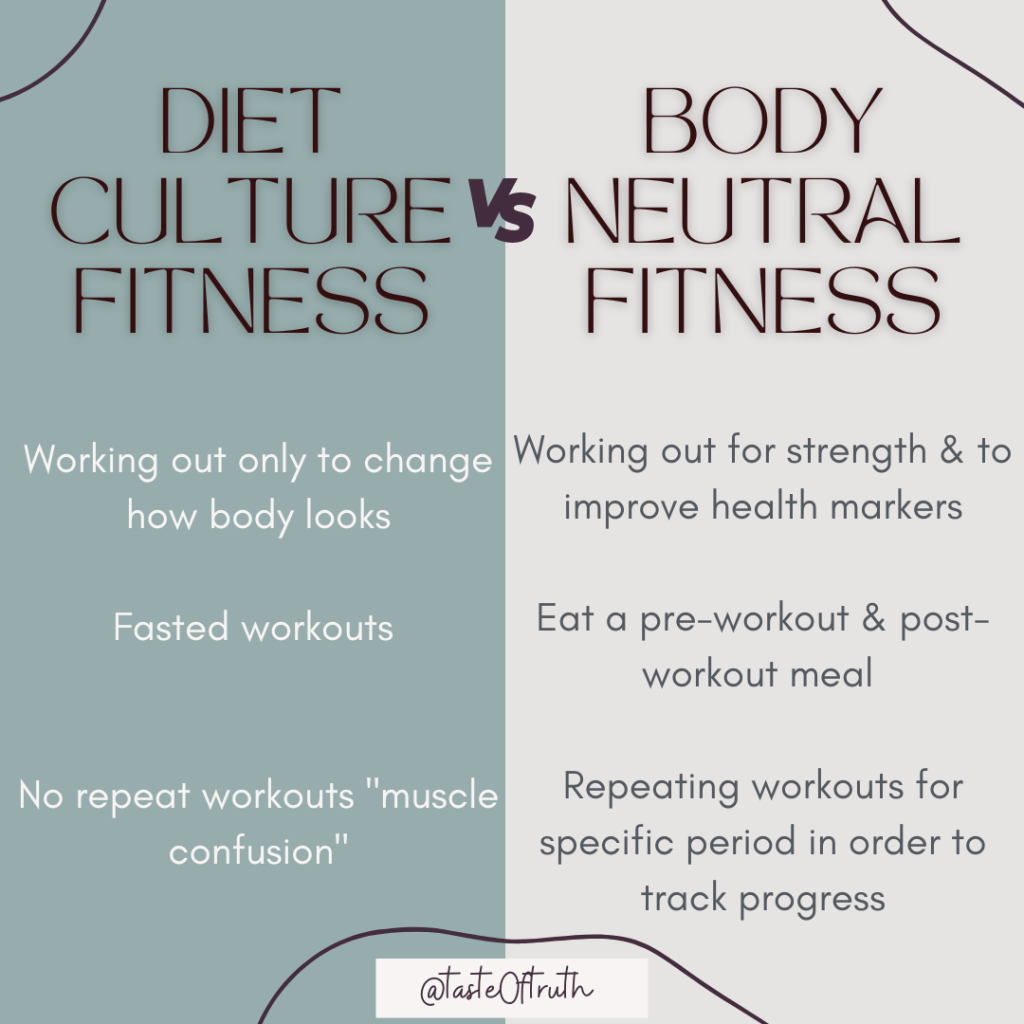
 Embracing Performance Goals: Discover how focusing on what your body can do, rather than how it looks, can revolutionize your fitness journey.
 From Rules to Freedom: Say goodbye to restrictive diets and hello to intuitive eating and joyful movement.
 Tune in as we unpack the myths of diet culture and celebrate the liberating path to body-neutral fitness!
 Remember, you’re not just dropping out of diet culture—you’re leveling up to a healthier, happier you!











 Taste0ftruth Tuesdays