This episode isn’t about religion versus religion. It’s about power, fear, and what happens inside belief systems when conformity becomes more important than honesty.
In this conversation, I’m joined by Sigrin, founder of Universal Pagan Temple.
She’s a practicing Pagan, a witch, a public educator, and someone who speaks openly about leaving Christianity after experiencing fear-based theology, spiritual control, and shame. I want to pause here, because even as an agnostic, when I hear the word witch, my brain still flashes to the cartoon villain version. Green. Ugly. Evil. That image didn’t come from nowhere. It was taught.
One of the things we get into in this conversation is how morality actually functions in Pagan traditions, and how different that framework is from what most people assume.
She describes leaving Christianity not as rebellion, but as self-preservation. And what pushed her out wasn’t God. It was other Christians.
For many people, Christianity isn’t learned from scripture. It’s learned from other Christians.
The judgment. The constant monitoring. The fear of being seen as wrong, dangerous, or spiritually compromised.
In high-control Christian environments, conformity equals safety. Questioning creates anxiety. And the fear of social punishment often becomes stronger than belief itself.
When belonging is conditional, faith turns into survival.
What We Cover in This Conversation:
Paganism Beyond Aesthetics
A lot of people hear “Paganism” and immediately picture vibes, trends, or cosplay. We spend time breaking that assumption apart.
Sigrin explains that many beginners jump straight into ritual without actually invoking or dedicating to the divine.
She talks about the difference between aesthetic practice and intentional practice.
For people who don’t yet feel connected to a specific god or goddess, she offers grounded guidance on how to approach devotion without forcing it.
We talk about the transition she experienced moving from Christianity, to atheism, to polytheism.
We explore the role of myth, story, and symbolism in spiritual life.
She shares her experience of feeling an energy she couldn’t deny, even after rejecting belief entirely.
We touch on the wide range of ways Pagans relate to pantheons, including devotional, symbolic, ancestral, and experiential approaches.
The takeaway here isn’t “believe this.” It’s that Paganism isn’t shallow, trendy, or uniform. It’s relational.
No Holy Book, No Central Authority
One of the most misunderstood aspects of Paganism is the absence of a single text or governing authority.
Sigrin references a line she often uses: “If you get 20 witches in a room, you’ll have 40 different beliefs.”
We talk about how Pagan traditions don’t operate under enforced doctrine or centralized belief.
She brings up the 42 Negative Confessions from ancient Egyptian tradition as an example of ethical self-statements rather than commandments.
These function more like reflections on character than laws imposed from above.
We compare this to moral storytelling across different myth traditions rather than rigid rule-following.
She emphasizes intuition and empathy as core tools for ethical decision-making.
I add the role of self-reflection and introspection in systems without external enforcement.
This raises an important question: without a script, responsibility shifts inward.
Why This Can Be Hard After Christianity
We also talk honestly about why this freedom can be uncomfortable, especially for people leaving authoritarian religion.
Sigrin notes how difficult it can be to release belief in hell, even after leaving Christianity.
Fear doesn’t disappear just because belief changes.
When morality was once externally enforced, internal trust has to be rebuilt.
Pagan paths often require learning how to sit with uncertainty rather than replacing one authority with another.
This isn’t easier. It’s quieter. And it asks more of the individual.
That backdrop matters, because it shapes how Paganism gets misunderstood, misrepresented, and framed as dangerous.
The “Pagan Threat” Narrative
One of the reasons Pagan Threat has gained attention and sparked controversy is not just its content, but whose voice it carries and how it’s framed at the outset.
The book was written by Pastor Lucas Miles, a senior director with Turning Point USA Faith and author of other conservative religious critiques. The project is positioned as a warning about what Miles sees as threats to the church and American society. The foreword was written by Charlie Kirk, founder of Turning Point USA. His introduction positions the book as urgent for Christians to read.
From there, the book makes a striking claim:
It describes Christianity as a religion of freedom, while framing Paganism as operating under a hive mind or collective groupthink.
A key problem is which Paganism the book is actually engaging.
The examples Miles focuses on overwhelmingly reflect liberal, online, or activist-adjacent Pagan spaces, particularly those aligned with progressive identity politics.
That narrow focus gets treated as representative of Paganism as a whole.
Conservative Pagans, reconstructionist traditions, land-based practices, and sovereignty-focused communities are largely ignored.
As a result, “wokeness” becomes a kind of explanatory shortcut.
Modern political anxieties get mapped onto Paganism.
Gender ideology, progressive activism, and left-leaning culture get blamed on an ancient and diverse spiritual category.
Paganism becomes a convenient container for everything the author already opposes.
We also talk openly about political realignment, and why neither of us fits cleanly into the right/left binary anymore. I raise the importance of actually understanding Queer Theory, rather than using “queer” as a vague identity umbrella.
To help visualize this, I reference a chart breaking down five tiers of the far left, which I’ll include here for listeners who want context.
Next, in our conversation, Sigrin explains why the groupthink accusation feels completely inverted to anyone who has actually practiced Paganism.
Pagan traditions lack central authority, universal doctrine, or an enforcement mechanism.
Diversity of belief isn’t a flaw. It’s a defining feature.
Pagan communities often openly disagree, practice differently, and resist uniformity by design.
The “hive mind” label ignores that reality and instead relies on a caricature built from a narrow and selective sample.
“Trotter and Le Bon concluded that the group mind does not think in the restricted sense of the word. In place of thoughts, it has impulses, habits, and emotions. Lacking an independent mind, its first impulse is usually to follow the example of a trusted leader. This is one of the most firmly established principles of mass psychology.” Propaganda by Edward L. Bernays
We contrast this with Christian systems that rely on shared creeds, orthodoxy, and social enforcement to maintain cohesion.
Accusations of groupthink, in that context, often function as projection from environments where conformity is tied to spiritual safety.
In those systems, agreement is often equated with faithfulness and deviation with danger.
Globalism, Centralization, and Historical Irony
We end the conversation by stepping back and looking at the bigger historical picture.
The book positions Christianity as the antidote to globalism.
At the same time, it advocates coordinated religious unification, political mobilization, and cultural enforcement.
That contradiction becomes hard to ignore once you zoom out historically.
Sigrin points out that pre-Christian Pagan worlds were not monolithic.
Ancient polytheist societies were highly localized.
City-states and regions had their own gods, rituals, myths, and customs.
Religious life varied widely from place to place, even within the same broader culture.
I reference The Darkening Age by Catherine Nixey, which documents this diversity in detail.
Pagan societies weren’t unified under a single doctrine.
There was no universal creed to enforce across regions.
Difference wasn’t a problem to be solved. It was normal.
Christianity, by contrast, became one of the first truly globalizing religious systems.
A single truth claim.
A centralized authority structure.
A mandate to replace local traditions rather than coexist with them.
That history makes the book’s framing ironic.
Paganism gets labeled “globalist,” despite being inherently local and decentralized.
Christianity gets framed as anti-globalist, while proposing further consolidation of belief, power, and authority.
What This Is Actually About
This isn’t about attacking Christians as people. And it’s not about defending Paganism as a brand.
It is a critique of how certain forms of Christianity function when belief hardens into certainty and certainty turns into control.
Fear-based religion and fear-based ideology share the same problem. They promise safety. They demand conformity. And they struggle with humility.
That doesn’t describe every Christian. But it does describe systems that rely on fear, surveillance, and moral enforcement to survive.
What I appreciate about this conversation is the reminder that spirituality doesn’t have to look like domination, hierarchy, or a battle plan.
It can be rooted. Local. Embodied.
It can ask something of you without erasing you.
And whether someone lands in Paganism, Christianity, or somewhere else entirely, the question isn’t “Which side are you on?”
It’s whether your beliefs make you more honest, more grounded, and more responsible for how you live.
That’s what I hope people sit with after listening.
Ways to Support Universal Pagan Temple
Every bit of support helps keep the temple lights on, create more free content, and maintain our community altar. Thank you from the bottom of my heart!
Archaeology, “External Evidence,” and Groundhog Day in the Comment Section
Welcome back to Taste of Truth Tuesdays, where we stay curious, stay skeptical, and keep a healthy distance from any dogma, whether it’s wrapped in a Bible verse or a political ideology.
This is Part Two of my Jesus Myth series, and I’m going to be straight with you:
This one is a doozy. Buckle up, buttercup. Feel free to pause and come back.
Originally, the plan was to bring David Fitzgerald back for another conversation. If you listened to Part One, you know he’s done a ton to popularize the idea that Jesus never existed and to dismantle Christian dogma. I still agree with the core mythicist claim: I don’t think the Jesus of the Gospels was a real historical person. If you missed it, here is the link.
But agreeing with someone’s conclusion doesn’t mean I hand them a free pass on how they argue.
After our first interview, I went deeper into Fitzgerald’s work and into critiques of it (especially Tim O’Neill’s long atheist review that absolutely shreds his method.) While his critique of Fitzgerald’s arguments is genuinely useful; his habit of branding people with political labels (“Trump supporter,” “denier”) to discredit them is… very regressive.
It’s the same purity-testing impulse you see in progressive (should be regressive) spaces, just performed in a different costume.
And that’s what finally pushed me over the edge: The more I watch the atheist/deconstruction world online, the more it reminded me of the exact rigid, dogmatic cultures people say they escaped.
Not all atheists, obviously. But a very loud chunk of that ecosystem runs on:
dunking, dog-piling, and humiliation
tribal loyalty, not actual inquiry
“You’re dead to me” energy toward anyone who may lean conservative or shows nuance
It’s purity culture in different branding.
Then I read how Fitzgerald responded to critics in those archived blog exchanges (not with clear counterarguments) but with emotional name-calling and an almost devotional defense of his “hero and mentor,” Richard Carrier. For me, that was a hard stop.
Add to that: his public Facebook feed is full of contempt for moderates, conservatives, “anti-vaxxers,” and basically anyone outside progressive orthodoxy. My audience includes exactly those people. This space is built for nuance for people who’ve already escaped one rigid belief system and are not shopping for a new one.
He’s free to have his politics. I’m free not to platform that energy.
So instead of Part Two with a guest, you’re getting something I honestly think is better:
me (😜)
a stack of sources
a comment section that turned into a live demo of modern apologetics
and a segment at the end where I turn the same critical lens on the mythicist side — including Fitzgerald himself
Yes, we’re going there. Just not yet.
Previously on Taste of Truth…
In Part One, I unpacked why “Jesus might never have existed” is treated like a taboo thought — even though the historical evidence is thin and the standards used to “prove” Jesus would never pass in any other field of ancient history.
Then, in a Taste Test Thursday episode, I zoomed out and asked: Why do apologists argue like this at all? We walked through:
early church power moves
modern thought-stopping tricks
and Neil Van Leeuwen’s idea of religious “credences,” which don’t function like normal factual beliefs at all
Today is about the evidence. Especially the apologetic tropes that showed up in my comments like a glitching NPC on repeat.
⭐ MYTHS #6 & #7 — “History and Archaeology Confirm the Gospels”
Papyrus P52 (𝔓52), often called the oldest New Testament manuscript. (It’s the size of a credit card) Apologists treat it like a smoking gun. It contains… one complete word: ‘the.’
These two myths always show up together in the comments, and honestly, they feed off each other. People claim, “history confirms the Gospels,” and when that collapses, they jump to “archaeology proves Jesus existed.” So, I’m combining them here, because the evidence (and the problems) overlap more than apologists want to admit.
In short: Archaeology confirms the setting. History confirms the existence of Christians. Neither confirms the Jesus of the Gospels. And once you actually look at the evidence, the apologetic scaffolding falls apart fast.
1. What Archaeology Really Shows (and What It Doesn’t)
If Jesus were a public figure performing miracles, drawing crowds, causing disturbances, and being executed by Rome, archaeology should show something tied to him or to his original movement.
Here’s what archaeology does show:
Nazareth existed.
Capernaum existed.
The general layout of Judea under Rome.
Ritual baths, synagogues, pottery, coins.
A real Pilate (from a fragmentary inscription).
That’s the setting.
Here’s what archaeology has never produced:
no house of Jesus
no workshop or tools
no tomb we can authenticate
no inscription naming him
no artifacts linked to the Twelve
no evidence of a public ministry
no trace of Gospel-level notoriety
Not even a rumor in archaeology that points to a miracle-working rabbi. Ancient Troy existing doesn’t prove Achilles existed. Nazareth existing doesn’t prove Jesus existed.
Apologists push the setting as if it confirms the character. It doesn’t.
If the Gospels were eyewitness-based biographies, their geography would line up with first-century Palestine.
Instead, we get:
• Towns that don’t match reality
The Gerasene/Gadarene/Gergesa demon-pig fiasco moves between three different locations because the original story (Mark) puts Jesus 30 miles inland… nowhere near a lake or cliffs.
• Galilee described like a later era
Archaeology shows Galilee in the 20s CE was:
taxed to the bone
rebellious
dotted with large Romanized cities like Sepphoris and Tiberias
But the Gospels portray quaint fishing villages, peaceful Pharisees, and quiet countryside. This reflects post-70 CE Galilee: the era when the Gospels were actually written.
• Homeric storms on a tiny lake
Mark treats the Sea of Galilee like the Aegean (raging storms, near capsizings, disciples fearing death) even though ancient critics mocked this because the “sea” is a small lake.
Dennis MacDonald shows Mark lifting whole scenes from Homer, which explains the mismatch: his geography serves his literary needs, not the historical landscape.
• Joseph of “Arimathea” (a town no one can find)
Carrier and others point out the name works more like a literary pun (“best disciple town”) than a real toponym.
• Emmaus placed at different distances
Luke places it seven miles away. Other manuscripts vary. There was no fixed memory.
These aren’t the mistakes of people writing about their homeland. They’re the mistakes of later authors constructing a symbolic landscape.
3. The Gospel Trial Scenes: Legally Impossible
This is the part Christians never touch.
One of the most respected legal scholars of ancient Jewish law did a line-by-line analysis of the Gospel trial scenes. He wasn’t writing from a religious angle, he approached it strictly as a historian of legal procedure.
His conclusion? The trial described in the Gospels violates almost every rule of how Jewish courts actually worked.
According to his research:
capital trials were never held at night
they were not allowed during festivals like Passover
capital verdicts required multiple days, not hours
the High Priest did not interrogate defendants
witness testimony had to match
beating a prisoner during questioning was illegal
and Jewish courts didn’t simply hand people over to Rome
When you stack these facts together, it becomes clear:
The Gospel trial scenes aren’t legal history…. they’re theological storytelling.
That’s before we even get to Pilate.
Pilate was not a timid bureaucrat.
He was violent, ruthless, removed from office for brutality.
4. Acts Doesn’t Remember Any Gospel Miracles
If Jesus actually:
drew crowds,
fed thousands,
raised the dead,
blacked out the sun,
split the Temple curtain,
and resurrected publicly…
Acts (written after the Gospels) should remember all of this.
Instead:
No one in Acts has heard of Jesus.
No one mentions an empty tomb.
No one cites miracles as recent events.
Roman officials are clueless.
Paul knows Jesus only through visions and the scriptures.
Acts behaves exactly like a community whose “history” was not yet written.
5. Manuscripts: Many Copies, No Control
Apologists love saying:
“We have 24,000 manuscripts!”
Quantity isn’t quality.
almost all are medieval
the earliest are tiny scraps
none are originals
no first-century copies
scribes altered texts freely
entire passages were added or deleted
six of Paul’s letters are pseudonymous
many early Christian writings were forged
Even Origen admitted that scribes “add and remove what they please” (privately, of course.)
The manuscript tradition looks nothing like reliable preservation.
6. The Church Fathers Don’t Help (and They Were Tampered With Too)
This is where Fitzgerald’s chapter hits hardest.
Before 150 CE, we have:
no Church Father quoting any Gospel
no awareness of four distinct Gospels
no clear references to Gospel events
Justin Martyr (writing in the 150s) is the first to quote anything Gospel-like, and:
he never names Matthew, Mark, Luke, or John
many of his quotes don’t match our Gospels
he calls them simply “the memoirs”
Even worse:
The writings of Ignatius, Polycarp, Dionysius of Corinth, and many others were tampered with. Some were forged entirely.
So the apologetic claim “The Fathers confirm the Gospels” collapses:
They don’t quote them. They don’t know them. And their own texts are unstable.
Metzger claimed we could reconstruct the New Testament from the Fathers’ quotations but his own scholarship shows the Fathers don’t quote anything reliably until after the Gospels were circulating.
7. External Pagan Sources: Late, Thin, and Dependent on Christian Claims
This is the other half of the myth… that “history” outside the Bible confirms Jesus.
Let’s look quickly:
• Tacitus (116 CE)
Reports what Christians of his day believed. He cites no source, no archive, no investigation.
• Pliny (c. 111 CE)
Says Christians worship Christ “as a god.” Confirms Christians existed — not that Jesus did.
• Josephus (93 CE)
The Testimonium is tampered with. Even conservative scholars admit Christian hands were all over it. The “James, brother of Jesus” line is ambiguous at best.
These are not independent confirmations. They’re late echoes of Christian claims.
In closing:
You can confirm:
towns
coins
synagogues
political offices
geography
But that only shows the world existed, not the characters.
The Gospels are theological narratives composed decades later, stitched out of scripture, symbolism, literary models, and the needs of competing communities.
Archaeology confirms the backdrop. History confirms the movement. Neither confirms the biography.
Once you strip away apologetic spin, the evidence points to late, literary, constructed narratives, not eyewitness records of a historical man.
Myth #8: “Paul and the Epistles Confirm the Gospels”
Albert Schweitzer pointed out that if we only had Paul’s letters, we would never know that:
Jesus taught in parables
gave the Sermon on the Mount
told the “Our Father” prayer
healed people in Galilee
debated Pharisees
From Paul and the other epistles, you wouldn’t even know Jesus was from Nazareth or born in Bethlehem.
That alone should make us pause before saying, “Paul confirms the Gospels.”
Paul’s “Gospel” Is Not a Life Story
When Paul says “my gospel,” he doesn’t mean a narrative like Matthew, Mark, Luke, or John. His gospel is:
Christ died for our sins
was buried
was raised
now offers salvation to those who trust him
No:
Bethlehem, Nazareth, Mary, Joseph
John the Baptist
miracles, exorcisms, parables
empty tomb story with women at dawn
And this isn’t because Paul is forgetful. His letters are full of perfect moments to say, “As Jesus taught us…” or “As we all know from our Lord’s ministry…”
He never does.
Instead, he appeals to:
his own visions
the Hebrew scriptures (in Greek translation, the Septuagint)
what “the Lord” reveals directly to him
For Paul, Christ is:
“the image of the invisible God”
“firstborn of all creation”
the cosmic figure through whom all things were made
the one who descends to the lower realms, defeats spiritual powers, and ascends again
That is cosmic myth language… not “my friend’s rabbi who did a lot of teaching in Galilee a few decades ago.”
The “Lord’s Supper,” Not a Last Supper
The one place people think Paul lines up with the Gospels is 1 Corinthians 11, where he describes “the Lord’s Supper.”
Look closely:
He never calls it “the Last Supper.”
He never says it was a Passover meal.
He never places it in Jerusalem.
He says he received this ritual from the Lord, not from human eyewitnesses.
The phrase he uses, kuriakon deipnon (“Lord’s dinner”), is the same kind of language used for sacred meals in pagan mystery cults.
The verb he uses for “handed over” is used elsewhere of God handing Christ over, or Christ handing himself over not of a buddy’s betrayal. The specific “Judas betrayed him at dinner” motif shows up later, in the Gospels.
Then, when later authors retell the scene, they can’t even agree on the script. We get:
Paul’s version
Mark’s version
Matthew’s tweak on Mark
Luke’s two different textual forms
and John, who skips a Last Supper entirely and relocates the “eat my flesh, drink my blood” thing to a synagogue sermon in Capernaum
That looks less like multiple eyewitness reports and more like a liturgical formula evolving as it gets theologized.
Hebrews and the Missing Connection
The author of Hebrews:
goes deep on covenant and sacrificial blood
quotes Moses: “This is the blood of the covenant…”
spends time on Melchizedek, who brings bread and wine and blesses Abraham
In other words: The author sets up what would be a perfect sermon illustration for the Last Supper… but he never takes it. No “as our Lord did on the night he was betrayed.” No Eucharist scene. No Passover meal.
The simplest explanation: He doesn’t know that story. He knows the ritual meaning; the later narrative scene in Jerusalem hasn’t been invented yet in his circle.
How Paul Says He Knows Christ
Paul is very clear about his source:
He did not receive his gospel from any human (Galatians 1).
He barely met the Jerusalem “pillars,” waited years to even visit them, and insists they added nothing to his message.
He says God “revealed his Son in me.”
His scriptures are the Septuagint, which he reads as a giant coded story about Christ.
In other words, for Paul:
Christ is a hidden heavenly figure revealed in scripture and visions.
The “mystery” has just now been unveiled.
That only makes sense if there wasn’t already a widely known human teacher whose sayings and deeds were circulating everywhere.
The Silence of the Other Epistles
If it were just Paul, we could say, “That’s just Paul being weird.”
But the pattern runs across the other epistles:
From the New Testament letters outside the Gospels and Acts, you would never know:
Jesus was from Nazareth or born in Bethlehem
he grew up in Galilee
he taught crowds, told parables, healed people, or exorcised demons
he had twelve disciples, one of whom betrayed him
there were sacred sites tied to his life in Jerusalem
“Bethlehem,” “Nazareth,” “Galilee” do not appear in those letters with reference to Jesus. Jerusalem is never presented as, “You know, the place where all this just happened.”
The supposed “brothers of the Lord” never act like family with stories to tell. The letters attributed to James and Jude don’t even mention they’re related to Jesus.
When these early authors argue about circumcision, food laws, purity, and ethics, they consistently go back to the Old Testament…not to anything like a Sermon on the Mount.
That is very hard to reconcile with a memory of a recent, popular Galilean preacher inspiring the entire movement.
Myth #9: “Christianity Began With Jesus and His Twelve Besties”
If you grew up on Acts, you probably have this movie in your head:
Tiny, persecuted but unified Jesus movement
Centered in Jerusalem
Led by Jesus’ family and the Twelve
Paul shows up later in season two as the complex antihero
That’s the canonical story.
When you step back and read our earliest sources on their own terms, that picture melts.
Fragmented from the Start
In 1 Corinthians, Paul complains:
“Each of you says, ‘I belong to Paul,’ or ‘I belong to Apollos,’ or ‘I belong to Cephas,’ or ‘I belong to Christ.’ Is Christ divided?” (1 Cor. 1:12–13)
That’s not “one unified church.”
He also:
rants about people “preaching another Jesus”
calls rival apostles “deceitful workers,” “false brothers,” “servants of Satan”
invokes curses on those preaching a different gospel (Gal. 1:6–9; 2 Cor. 11)
Meanwhile, the early Christian manual Didakhē warns communities about wandering preachers who are just “traffickers in Christs” (what Bart Ehrman nicknames “Christ-mongers.”)
Right away, we see:
multiple groups using the Christ label
competing versions of what “the gospel” even is
no sign of one tight central group everyone agrees on
Different Jesuses for Different Communities
By the time the Gospels and later texts are in circulation, we can already see:
Paul’s Christ: a cosmic, heavenly savior, revealed in scripture and visions, ruling spiritual realms
Thomasine Christ: in the Gospel of Thomas, salvation comes through hidden wisdom; there’s no crucifixion or resurrection narrative
Mark’s Jesus: a suffering, misunderstood Son of God who’s “adopted” at baptism and abandoned at the cross
John’s Jesus: the eternal Logos, present at creation, walking around announcing his unity with the Father
Hebrews’ Christ: the heavenly High Priest performing a sacrifice in a heavenly sanctuary
These are not just “different camera angles on the same historical guy.” They reflect:
different liturgies
different cosmologies
different starting assumptions about who or what Christ even is
And notice: there is no clean pipeline from “this man’s twelve students carefully preserved his teachings” into this wild diversity.
Paul vs. Peter: Not a Cute Disagreement
Acts spins the Jerusalem meeting as:
everyone sits down
hashes things out
walks away in perfect unity
Paul’s own account (Galatians 2) is… not that:
he calls some of the Jerusalem people “false brothers”
he says they were trying to enslave believers
he says he “did not yield to them for a moment”
he treats the supposed “pillars” (Peter, James, John) as nobodies who “added nothing” to his gospel
That’s not a friendly staff meeting. That’s two rival Christianities:
a more Torah-observant, Jerusalem-centered Jesus-sect
Paul’s law-free, Gentile-mystic Christ-sect
Acts, written later, airbrushes this into harmony. The letters show how close the whole thing came to a full split.
Where Are the Twelve?
If Jesus’ twelve disciples were:
real,
the main founders of Christianity,
traveling around planting churches,
we’d expect:
lots of references to them
preserved teachings and letters
at least some reliable biographical detail
Instead:
the lists of the Twelve don’t agree between Gospels
some manuscripts can’t even settle on their names
outside the Gospels and Acts, the Twelve basically vanish from the first-century record
Paul:
never quotes “the Twelve”
never appeals to them as the final authority
treats Peter, James, John simply as rival apostles, not as Jesus’ old friends
We have no authentic writings from any of the Twelve. The later “Acts of Peter,” “Acts of Andrew,” “Acts of Thomas,” etc., are generally acknowledged to be later inventions.
The simplest explanation is not that the Twelve were historically massive and weirdly left no trace. It’s that:
“The Twelve” are symbolic: twelve tribes, twelve cosmic seats, twelve zodiac signs, take your pick.
Their names and “biographies” were built after the theology, not before.
The Kenosis Hymn: Jesus as a Title, Not a Birth Name
In Philippians 2, Paul quotes an early hymn:
“Being found in human form, he humbled himself and became obedient to the point of death — death on a cross. Therefore God highly exalted him and gave him the name that is above every name, so that at the name of Jesus every knee should bow…”
Notice:
The hymn does not say God gave him the title “Lord.”
It says God gave him the name Jesus after the exaltation.
That is not what you expect if “Jesus” was already the known name of a village carpenter from Nazareth. It makes a lot more sense if:
“Jesus” functions originally as a divine name for a savior figure (“Yahweh saves”),
assigned in the mythic story after his cosmic act,
and only later gets retrofitted as the everyday name of a human hero.
Mark: From Mystery Faith to “Biography”
All of this funnels into the earliest Gospel: Mark.
Mark announces up front that he’s writing a gospel, not a biography. Modern scholars have shown that Mark:
builds scenes out of Old Testament passages
mirrors patterns from Greek epics
structures the story like a giant parable, where insiders are given “the mystery of the kingdom,” and outsiders only get stories
In Mark’s own framework, Jesus speaks in parables so that many will see but not understand. The whole Gospel plays that way: symbolic narrative first, later read as straight history once the church gains power.
So did Christianity “begin with Jesus and his apostles”?
If by that you mean:
One coherent movement, founded by a famous rabbi with twelve close disciples, faithfully transmitted from Jerusalem outward…
Then no. That’s the myth.
What we actually see is:
multiple competing Jesuses
rival gospels and factions
no clear paper trail from “Jesus’ inner circle”
later authors stitching together a cleaned-up origin story and branding rivals as “heresy”
Biographies came after belief, not before.
Myth #10: “Christianity Was a Miraculous Overnight Success That Changed the World”
The standard Christian flex goes like this:
“No mere myth could have spread so fast and changed the world so profoundly. That proves Jesus was real.”
Let’s slow that down.
But before we even touch the growth rates, we need to name something obvious that apologists conveniently forget:
Christianity wasn’t the first tradition built around a dying-and-rising savior. Not even close.
Long before the Gospels were written, the ancient Near East had already produced fully developed resurrection myths. One of the oldest (and one of the most important) belonged to Inanna, the Sumerian Queen of Heaven.
Ancient Akkadian cylinder seal (2350–2150 BCE) depicting Inanna
Inanna’s Descent (c. 2000–3000 BCE) is the earliest recorded resurrection narrative in human history.
She descends into the Underworld, is stripped, judged, executed, hung on a hook, and then through divine intervention, is brought back to life and restored to her throne.
This story predates Christianity by two thousand years and was well known across Mesopotamia.
In other words:
✨ The idea that a divine figure dies, descends into darkness, and returns transformed was already ancient before Christianity was even born.
So, the claim that “no myth could spread unless it were historically real” falls apart immediately. Myths did spread. Myths do spread. Myths shaped entire civilizations long before Jesus entered the story.
Now (with that context in place) let’s actually talk about Christianity’s growth..
Christianities Stayed Small…. Until Politics Changed
Carrier’s modeling makes it clear:
even if you start with generous numbers (say 5,000 believers in 40 CE),
you still don’t get anywhere near a significant percentage of the Empire until well into the third century
And that includes all groups who believed in some form of Christ — including the later-branded “heretics.”
So, for the first ~250 years, Christianity:
is tiny
is fragmented
is one cult among many in a very crowded religious landscape
The “miracle” is not early explosive growth. It’s what happens when their tiny, disciplined network suddenly gets access to empire-level power.
Rome Falls; Christianity Rises
Fitzgerald is right that Christianity benefitted from Rome’s third-century crisis:
chronic civil wars
inflation and currency debasement
border instability and barbarian incursions
trade networks breaking down
urban life contracting
As conditions worsened:
Christianity’s disdain for “worldly” culture
its emphasis on endurance, suffering, and heavenly reward
its growing bishop-led structure and charity networks
…all became more attractive to the poor and dispossessed.
“It was a mark of Constantine’s political genius … that he realized it was better to utilize a religion … that already had a well‑established structure of authority … rather than exclude it as a hindrance.” Charles Freeman, The Closing of the Western Mind: The Rise of Faith & the Fall of Reason
But there’s a step many historians including Fitzgerald often underplay:
How Christianity destroyed the classical world.
From Tolerated to Favored to Tyrannical
A quick timeline:
313-Constantine legalizes Christianity (Edict of Milan). Christianity is now allowed, not official. Constantine still honors Sol Invictus and dies as a pagan emperor who also patronized bishops.
4th century– Christian bishops gain wealth and political leverage. Imperial funds start flowing to churches. Pagan temples begin to be looted or repurposed.
380– Emperor Theodosius I issues the Edict of Thessalonica: Nicene Christianity becomes the official state religion.
395 and after– Laws begin banning pagan sacrifices and temple worship. Pagan rites become crimes.
Catherine Nixey’s The Darkening Age and Charles Freeman’s The Closing of the Western Mind document how this looked on the ground:
temples closed, looted, or destroyed
statues smashed
libraries and shrines burned
philosophers harassed, exiled, or killed
non-Christian rites criminalized
Christianity didn’t “persuade” its way to exclusive dominance. It:
received funding and legal favor
then helped outlaw and dismantle its competition
That is not a moral judgment; it’s just how imperial religions behave.
The “Overnight Success” That Took Centuries and a State
So was Christianity a new, radically different, overnight success?
Not new: it recycled the son-of-god savior pattern, sacred meals, initiation, and rebirth themes common in the religious world around it. Even early church fathers admitted the similarities and blamed them on Satan “counterfeiting” Christianity in advance.
Not overnight: it stayed statistically tiny for generations.
Not purely spiritual success: it became powerful when emperors needed an obedient, centralized religious hierarchy to stabilize a collapsing state.
Christianity didn’t “win” because its evidence was overwhelming.
It won because:
it fit the needs of late-imperial politics
it built a strong internal hierarchy
it could supply social services
its leaders were willing to suppress, outlaw, and overwrite rival traditions
This is not unique. It’s a textbook case of how state-backed religions spread.
Why the Pushback Always Sounds the Same
After Part One, my comment sections turned into Groundhog Day:
“You’re ignoring Tacitus and Josephus!”
“Every serious scholar agrees Jesus existed.”
“Archaeology proves the Bible.”
“There are 25,000 manuscripts.”
“Paul met Jesus’ brother!”
“If Jesus wasn’t real, who started Christianity?”
“Ancient critics never denied his existence — checkmate.”
“You just hate religion.”
“This is misinformation.”
Different usernames. Same script.
This is where Neil Van Leeuwen’s work on religious credences helps:
Factual beliefs are supposed to track evidence. If you show me credible new data, I update.
Religious credences function differently: they’re tied to identity, community, and morality. Their job isn’t to track facts; it’s to hold the group together.
So when you challenge Jesus’ historicity, you’re not just questioning an ancient figure. You’re touching:
“Who am I?”
“Who are my people?”
“What makes my life meaningful?”
No wonder people come in hot.
That doesn’t make them stupid or evil. It just means the conversation isn’t really about Tacitus. It’s about identity maintenance.
Now Let’s Turn the Lens on Mythicism (Yes, Including Fitzgerald)
Here’s where I want to be very clear:
I am a mythicist.
I do not think the Jesus of the Gospels ever existed as a historical person.
But mythicism itself doesn’t get a free pass.
Carrier’s Probability Model: When Someone Actually Does the Math
Most debates about Jesus collapse into appeals to authority. Richard Carrier’s On the Historicity of Jesus at least does something different: it quantifies the evidence.
Using Bayesian reasoning, he argues roughly:
about a 1 in 3 prior probability that there was a “minimal historical Jesus”– a real Jewish teacher who got executed and inspired a movement
about 2 in 3 for a “minimal mythicist” origin– a celestial figure whose story later got historicized
Then, after weighing the actual evidence (Paul’s silence, the late Gospels, contradictions, etc.), he argues the probability of a historical Jesus drops further, to something like 1 in 12.
You don’t have to agree with his exact numbers to see the point:
Once you treat the sources like data, not dogma, the overconfident “of course Jesus existed, you idiot” stance looks a lot less justified.
O’Neill’s Critique of Fitzgerald: Atheist vs Atheist
Tim O’Neill, an atheist historian, wrote a long piece on Fitzgerald’s Nailed and does not hold back. His basic charges:
Fitzgerald oversells weak arguments
cherry-picks and misuses sources
ignores mainstream scholarship where it contradicts him
frames mythicism as bold truth vs. “apologist cowards,” which is just another tribal narrative
When Fitzgerald responded, he didn’t do so like someone doing serious historical work. He responded like an internet keyboard warrior.
And that same ideological vibe shows up in how he talks about people in general, which I said in the beginning.
Atheism as New Orthodoxy
The more time I spend watching atheist and deconstruction spaces online, the more obvious it becomes that a lot of these folks didn’t escape religion, they just changed uniforms. They swapped their church pews for Reddit threads, pastors for science influencers, and now “logic” is their new scripture. Ya feel me? It’s the same emotional energy: tribal validation, purity tests–like what do you believe or think about this? And the constant hunt for heretics who dare to ask inconvenient questions.
Say something even slightly outside the approved dogma…like pointing out that evolution (calm down, Darwin disciples) still has gaps and theoretical edges we haven’t fully nailed down and suddenly the comment section becomes the Inquisition. They defend the theory with the exact same fervor evangelicals defend the Book of Revelation. It’s wild.
And look, I’m all for science. I’m literally the girl who reads academic papers for funsies. But when atheists start treating evolution like a sacred cow that can’t be questioned, or acting like “reason” is this perfect, unbiased tool that magically supports all their existing beliefs… that’s not skepticism. That’s a new orthodoxy, dressed up as a freethinker. Different vocabulary, same psychology. Good gravy, baby— calm down.
and….here’s the uncomfortable truth a lot of atheists don’t want to hear:
Reason isn’t the savior they think it is.
French cognitive scientists Hugo Mercier and Dan Sperber have spent years studying how humans actually use reason and prepare yourself because: we don’t use it the way we think. Their research shows that reason didn’t evolve to help us discover truth. It evolved to help us win arguments, protect our identities, and persuade members of our group.
In other words:
confirmation bias isn’t a flaw
motivated reasoning isn’t a glitch
tribal loyalty isn’t an accident
They are features of the reasoning system.
Which is why people who worship “logic” often behave exactly like the religious communities they left… just with new vocabulary and a different set of heretics.
This is also why intellectual diversity matters so much. You cannot reason your way to truth inside an ideological monoculture. Your brain simply won’t let you. Without competing perspectives, reasoning becomes nothing more than rhetorical self-defense, a way to signal loyalty to the tribe while pretending to be above it.
John Stuart Mill understood this long before modern cognitive science confirmed it. In On Liberty, Mill argues that truth isn’t something we protect by silencing dissent. Truth emerges through friction, through the clash of differing perspectives. A community that prides itself on “rational superiority” but cannot tolerate disagreement becomes just another church with a different hymnal.
And that’s where many atheist and deconstruction spaces are now.
They haven’t transcended dogma. They’ve recreated it. Trading one orthodoxy for another.
This isn’t just about online atheists. This is about what happens when any movement stops questioning itself.
Challenging the Mythicist Side (Without Turning It Into Another Tribe)
Let’s get honest about the mythicist world too — because every camp has its blind spots.
Tim O’Neill’s critique of David Fitzgerald wasn’t just angry rhetoric. Strip away the insults, and he raises a few legitimate issues worth taking seriously:
1. Accusation of Agenda-Driven History
O’Neill argues that Fitzgerald starts with the conclusion “Jesus didn’t exist” and works backward, much like creationists do with Genesis.
Now Fitzgerald absolutely denies this. In his own words, he didn’t go looking for mythicism; mythicism found him when he started examining the evidence. And that’s fair.
But the deeper point still stands:
The mythicist movement can get so emotionally invested in debunking Christianity that it mirrors the very dogmatism it critiques.
You see this all over atheist spaces today — endless dunking, no nuance, purity tests, and very little actual curiosity.
That’s a valid critique.
2. Amateurism and Overreach
O’Neill also accuses Fitzgerald of relying too heavily on older scholarship, making confident claims where the evidence is thin, and occasionally overstating consensus.
Again — not entirely wrong. Fitzgerald’s book is sharp and compelling, but it’s not the cutting-edge end of mythicism anymore.
There are places where he simplifies. There are places where he speculates.
This matters because mythicism deserves better than overconfident shortcuts.
3. Fitzgerald doesn’t push far enough
And ironically, this is where I diverge from O’Neill entirely. He thinks Fitzgerald goes too far; I think Fitzgerald stops too soon.
There are areas where the mythicist case has advanced beyond Fitzgerald’s framework, and he doesn’t touch them:
• The possibility that “Paul” himself is a literary construct
Nina Livesey and other scholars argue that:
The Pauline voice may be a 2nd-century invention.
The letters reflect Roman rhetorical conventions, not authentic 1st-century correspondence.
The “apostle Paul” may be a theological persona used to unify competing sects.
Fitzgerald doesn’t address this— but it’s now one of the most provocative frontiers in the field.
• The geopolitical legacy of Abrahamic supremacy
Fitzgerald critiques Christian nationalism. Great. But he doesn’t go upstream to examine the deeper architecture:
It focuses almost exclusively on Christian excess while leaving the deeper architecture untouched: how Abrahamic identity claims themselves shape law, land, empire, and modern geopolitics.
When you zoom out, the story is not “Christian nationalism versus secular reason.”
It is competing and cooperating Abrahamic power structures, each with theological claims about chosen-ness, inheritance, land, and destiny.
Abrahamic Power Is Not Just Christian
Very few people are willing to look at the broader landscape of Abrahamic influence in American politics and global power structures. When they do not, they miss how deeply intertwined these traditions have been for over a century.
One under-discussed example is the longstanding institutional relationship between Mormonism and Judaism, particularly around shared claims to Israel and the “house of Israel.”
This is not hidden history.
In 1995, Utah Valley State College established a Center for Jewish Studies explicitly aimed at “bridging the gap between Jews and Mormons” and guiding relationships connected to Israel. One of the board members was Jack Solomon, a Jewish community leader who publicly praised the LDS Church as uniquely supportive of Judaism.
Solomon stated at the time that “there is no place in the world where the Christian community has been so supportive of the Jewish people and Judaism,” noting LDS financial and symbolic support for Jewish institutions in Utah going back to the early twentieth century.
This matters because Mormon theology explicitly claims descent from the house of Israel. Mormons do not merely admire Judaism. They see themselves as part of Israel’s continuation and restoration.
That theological framework shapes real-world alliances.
1. The Mormon Church Is a Financial Superpower
Most Americans have no idea how wealthy the LDS Church actually is.
The Mormon Church’s real estate & investment arm, Ensign Peak Advisors, was exposed in 2019 and again in 2023 for managing a secret portfolio now estimated at:
👉 $150–$200 billion
(Source: SEC filings, whistleblower leaks, Wall Street Journal)
To compare:
PepsiCo market cap: ~$175B
ExxonMobil (oil giant): ~$420B
Disney: ~$160B
Meaning:
📌 The LDS Church is financially on par with Pepsi and Disney, and not far behind Big Oil.
This is not a “church.” This is an empire.
And it invests strategically:
massive real estate acquisitions
agricultural control
media companies
political lobbying
funding influence networks
And let’s be clear: Mormons see themselves as a literal remnant of Israel (the last tribe) destined to help rule the Earth “in the last days.”
Which brings us to…
2. Mormonism’s Quiet Partnership with the New Apostolic Reformation (NAR)
NAR is the movement behind the so-called “Seven Mountain Mandate”— the belief that Christians must seize control of:
Government
Education
Media
Arts & Entertainment
Business
Religion
Family
This is the backbone of Christian nationalism and it’s far more organized than people realize. But here’s the part that never gets discussed:
Mormon elites collaborate with NAR leadership behind the scenes.
Shared goals:
influence over U.S. political leadership
shaping national morality laws
preparing for a prophetic “kingdom age”
embedding power in those seven spheres
This isn’t fringe. This is the largest religious–political coalition in the country, and yet most journalists never touch it.
3. The Ziklag Group: A $25M-Minimum Christian Power Circle
You want to talk about “elite networks”?
Meet Ziklag: an ultra-exclusive Christian organization named after King David’s biblical stronghold. Requirements for membership: a minimum net worth of $25 million Their mission? Not charity. Not discipleship.
Influence the Seven Mountains of society at the highest levels.
Members include:
CEOs
hedge-fund managers
defense contractors
political donors
tech founders
Including the billionaire Uihlein family, who made a fortune in office supplies, the Greens, who run Hobby Lobby, and the Wallers, who own the Jockey apparel corporation. Recipients of Ziklag’s largesse include Alliance Defending Freedom, which is the Christian legal group that led the overturning of Roe v. Wade, plus the national pro-Trump group Turning Point USA and a constellation of right-of-center advocacy groups.
AND YET…
Most people yelling about “Christian nationalism” have never even heard of Ziklag.
4. Meanwhile, Chabad-Lubavitch Has Met with Every U.S. President Since 1978
Evangelical influence isn’t the only Abrahamic power Americans ignore.
Chabad (a Hasidic cult with global reach) has:
direct access to every U.S. president
annual White House proclamations (“Education & Sharing Day”) explicitly honor a religious leader as a moral authority over the nation.
a network of emissaries (shluchim) embedded in power centers around the world
This is influence, not conspiracy.
This is religious lobbying at the highest level of government, treated as unremarkable simply because the public doesn’t understand it.
The Rebbe’s ambassador to Washington D.C., Rabbi Abraham Shemtov, addresses the crowd at an event in front of the White House organized by American Friends of Lubavitch, as President Carter and The Honorable Stuart E. Eizenstat, Chief Domestic Policy Adviser and the Executive Director of the White House Domestic Policy Staff, look on.
President Gerald Ford is greeted by Rabbi Abraham Shemtov (left), national director of American Friends of Lubavitch; Rabbi Moshe Feller (right), Chabad-Lubavitch emissary to Minnesota; and Senator Rudy Boschwitz; at the American Friends of Lubavitch Philadelphia dinner, May 1975.
President Ronald Reagan signs the Education Day U.S.A. proclamation
President Bill Clinton places a dollar bill in a charity box after receiving members of the American Friends of Lubavitch in the White House.
President George W. Bush speaks to Chabad-Lubavitch rabbis after signing the Education Day U.S.A. proclamation.
President Obama Welcomes Chabad-Lubavitch to the White House
Chabad-Lubavitch rabbis meet with President Donald J. Trump on Education and Sharing Day, U.S.A. in 2018. “The First Lady and I encourage all Americans to reflect upon the Rebbe’s teachings,” President Trump wrote in this year’s proclamation. “His inestimable dedication and unwavering example have become woven into the very fabric of our nation and its character. His memory remains a blessing to the world.”
Biden meets with over 100 Chabad-Lubavitch rabbis
See the Pattern Yet?
When people say “Christian nationalism,” they’re talking about one branch of a much older tree.
Christianity isn’t the problem. Atheism isn’t the solution.
The issue is Abrahamic supremacy: the belief that one sacred lineage has the right to rule, legislate, moralize, and define history for everyone else.
Across denominations, across continents, across political parties, the pattern is the same:
chosen-people narratives
divine-right entitlement
mythic land claims
sacred-tier influence operations
the blending of theology with statecraft
“Groupish belief systems that justify valuing one’s group above others must be inventable.” — Religion as Make-Believe.
Exactly.
These power structures aren’t ancient relics. They’re alive, wealthy, organized, and deeply embedded in American political life. And yet we’re told to panic exclusively about MAGA Christians… while studiously ignoring:
Mormon financial empires
NAR infiltration of U.S. political offices
Zionist influence networks
Chabad’s presidential pipeline
elite Christian dominionist groups like Ziklag
This isn’t about blaming individuals.
It’s about naming systems. Because if we’re going to talk honestly about orthodoxy, myth, and power…
we need to talk about all of it— not just the parts that are fashionable to critique.
4. Mythicism still hasn’t grappled with empire
Most mythicist writing stops at: “Jesus didn’t exist.”
Cool. Now what? The real question is:
HOW? How did a mythical figure become the operating system for Western civilization?
So, here’s where I actually land:
Christianity didn’t emerge from a single man. It emerged from competing myths, political incentives, scriptural remixing, imperial needs, and evolving group identities.
And if that makes me someone who doesn’t quite fit in the Christian world, the atheist world, or the deconstruction world? Perfect. My loyalty is to the question, not the tribe. That’s exactly where I plan to stay.
That’s exactly where I plan to stay.
aaaand as always, maintain your curiosity, embrace skepticism, and keep tuning in. 🎙️🔒
Footnotes
1. Jodi Magness, Stone and Dung, Oil and Spit (Eerdmans, 2011).
Archaeologist specializing in 1st-century Judea; emphasizes that archaeology illuminates daily life, but cannot confirm Jesus’ existence or Gospel events.
2. Eric M. Meyers & Mark A. Chancey, Archaeology, the Rabbis, and Early Christianity (Baker Academic, 2012).
Shows how archaeology supports context, not Gospel narrative details.
3. Steve Mason, Josephus and the New Testament, 2nd ed. (Hendrickson, 2003).
Explains why the Testimonium Flavianum is partially or heavily interpolated and cannot serve as independent confirmation of Jesus.
4. Alice Whealey, “The Testimonium Flavianum in Syriac and Arabic,” New Testament Studies 54.4 (2008): 573–590.
Analyzes manuscript traditions showing Christian editing of Josephus.
5. Louis Feldman, “Josephus,” Anchor Bible Dictionary, vol. 3 (Yale University Press, 1992).
Standard reference summarizing scholarly consensus about the unreliable portions of Josephus’ Jesus passages.
6. Brent Shaw, “The Myth of the Neronian Persecution,” Journal of Roman Studies 105 (2015): 73–100.
Shows Tacitus likely repeats Christian stories, not archival Roman data, making him a witness to Christian belief — not Jesus’ historicity.
7. Pliny the Younger, Epistles 10.96–97.
Earliest Roman description of Christian worship; confirms Christians existed, not that Jesus did.
8. Bart D. Ehrman, Misquoting Jesus (HarperOne, 2005).
Explains why New Testament manuscripts contain thousands of variations, with no originals surviving.
9. Dennis R. MacDonald, The Homeric Epics and the Gospel of Mark (Yale University Press, 2000).
Argues Mark intentionally modeled episodes on Homeric motifs — supporting literary construction rather than eyewitness reporting.
10. Attridge, Harold W., The Epistle to the Hebrews (Hermeneia Commentary Series).
Shows how Hebrews relies on celestial priesthood imagery and makes no connection to a recent earthly Jesus, even when opportunities are obvious.
11. Earl Doherty, The Jesus Puzzle (1999).
Early mythicist argument emphasizing the epistles’ lack of biographical Jesus data.
12. Richard Carrier, On the Historicity of Jesus (Sheffield Phoenix, 2014).
Presents a Bayesian model estimating mythicist origins as more probable than historicity.
13. Richard Carrier, Proving History (Prometheus, 2012).
Explains the historical method he uses for evaluating Jesus traditions.
14. Paula Fredriksen, From Jesus to Christ (Yale University Press, 2000).
Demonstrates the pluralism and fragmentation within earliest Christianity.
15. Burton Mack, The Christian Myth: Origins, Logic, and Legacy (Continuum, 2006).
Describes the emergence of various Jesus traditions as literary and theological constructions.
16. Clayton N. Jefford, The Didache (Fortress Press).
Analyzes early church manual revealing “wandering prophets,” factionalism, and market-style competition among early Jesus groups.
17. Catherine Nixey, The Darkening Age (Macmillan, 2017).
Documents the destruction of pagan culture under Christian imperial dominance.
18. Charles Freeman, The Closing of the Western Mind (Vintage, 2005).
Explores how Christian orthodoxy displaced classical philosophy.
19. Ramsay MacMullen, Christianizing the Roman Empire (Yale University Press, 1984).
Shows Christianity expanded primarily through imperial power, incentives, and legislation, not mass persuasion.
20. H.A. Drake, Constantine and the Bishops (Johns Hopkins University Press, 2002).
Outlines Constantine’s political use of Christianity and the shift toward enforced orthodoxy.
21. Peter Brown, The Rise of Western Christendom (Wiley-Blackwell, 2013).
Provides context for how Christianity overtook the Roman religious landscape.
22. Neil Van Leeuwen, “Religious Credence Is Not Factual Belief,” Cognition 133 (2014): 698–715.
Explains why religious commitments behave like identity markers, not evidence-responsive beliefs.
23. Whitney Phillips, This Is Why We Can’t Have Nice Things (MIT Press, 2015).
Useful for understanding modern online purity culture dynamics, relevant to atheist-internet behavior discussed in your commentary section.
24. Joseph Reagle, Reading the Comments (MIT Press, 2015).
Analyzes comment-section behavior and ideological enforcement online.
25. Tim O’Neill, “Easter, the Existence of Jesus, and Dave Fitzgerald,” History for Atheists (2017).
Atheist historian critiquing Fitzgerald’s methodological errors, exaggerated claims, and misuse of sources.
26. Raphael Lataster, Questioning the Historicity of Jesus (Brill, 2019).
Secular academic arguing mythicism is plausible but insisting on higher methodological rigor than many popularizers use.
27. Richard Carrier, various blog critiques of Fitzgerald (2012–2019).
Carrier agrees with mythicism but critiques Fitzgerald for overstatement and inadequate source control.
The story of intellectual destruction hidden behind the narrative of salvation
Hey Hey, welcome back to Taste of Truth Tuesdays! Except today…it’s Thursday, which means it’s my bonus edition: Taste Test Thursday. Why a bonus? Because the comment sections lately have been overflowing with so much brain-dead apologetics, I had to dedicate an entire post just to unpack the anti-intellectual tricks Christians trot out like clockwork.
Last week I interviewed David Fitzgerald. On one hand, I was navigating a man who built his career dismantling Christian dogma. On the other, I found myself running headfirst into his own political certainties— rigid, unyielding, and just as unquestioned as the ideas he critiques. The irony wasn’t lost on me, especially as a moderate: the ex-Christian deconstruction space can be just as inhospitable to nuance as the faith it once rejected.
But what really matters here isn’t politics. It’s the dogma that never changes. Every time I debate the historicity of Jesus or the so-called “intellectual foundations” of Christianity, it feels like stepping into a twilight zone where facts and evidence are optional, and certainty always gets the last word.
Apologetics didn’t grow out of some noble pursuit of truth; it grew out of power struggles, suppression, and centuries of treating curiosity and inquiry as threats.
What gets labeled today as “defending the faith” has roots far older, far more political, and far more violent than most Christians realize. And understanding that history changes the way you engage with believers now— especially when they parrot the same canned responses that have been circulating (in one form or another) for almost 1,500 years.
And that’s what today’s episode is all about… to trace where this all actually came from….
Ancient Roots: When Apologetics Became a Tool of Power
For early Christians, defending their faith wasn’t just about theology, but survival in a world built on pluralism and reason. Thinkers like Justin Martyr, Origen, and Tertullian weren’t arguing from positions of power. Quite the opposite: they came from largely disenfranchised, low‑status communities— often slaves, women, and the poor— who were dismissed by Greco-Roman society. Early critics like Celsus, sneered that Christians were “only slaves, women, and little children … led by woolworkers, cobblers, and the most illiterate.”
But Christians were also up against a far more entrenched cultural reality: in the Greco-Roman world, it was normal (even comfortable) for people to participate in a number of cults simultaneously. Polytheistic religion meant multiple gods, multiple rituals, and no single institution claiming total authority. According to Charles Freeman, the intertwining of authority and Christianity was profoundly revolutionary: where one could previously be devoted to several deities at once, Christianity insisted that allegiance to one truth meant rejecting all others.
Early on, some of the Church Father’s work was intellectually sincere. They were trying to show Christianity wasn’t irrational. But as Charles Freeman points out, reason in theology faces a structural problem: unlike math or empirical science, it lacks universally accepted axioms. You can prove Pythagoras’ theorem because everyone agrees on what a right-angled triangle is. You can do inductive reasoning with empirical evidence because everyone can test and observe it. Theology? There are no such universal starting points. Revelations can be claimed by anyone, scripture can be interpreted in multiple ways, and even the most careful theologians disagreed on what counted as a “self-evident” truth.
The early Church quickly ran into this problem. Different communities drew on different texts, emphasized different letters of Paul, or debated competing visions of Jesus’ nature. The Montanists, for instance, were sidelined and crushed because their claims to divine revelation conflicted with what became orthodoxy. Even Thomas Aquinas, one of Europe’s “greatest rational thinkers”, had to suspend reason when it collided with doctrinal authority.
The point isn’t that Christians ignored reason — they didn’t. The point is that reason alone could never achieve consensus in matters of theology. Unlike other spiritual movements in the ancient world, Christianity insisted on a centralized authority, a single orthodoxy enforced across an empire of diverse cultures. That insistence on uniformity was revolutionary, and it set the stage for apologetics to evolve into a tool not just for defending belief, but for controlling it.
Once Christianity fused with political power (especially after Constantine) apologetics shifted again. It wasn’t enough to argue for the faith intellectually; it became a method of asserting authority, suppressing dissent, and standardizing scripture. Defending the faith became synonymous with maintaining control. What started as reasoning with skeptics gradually transformed into a mechanism to enforce orthodoxy across the Christian world.
It stopped being “Here’s why I believe” and became “Here’s why everyone must.”
As imperial authority was crumbling in the west, this is when the bishops of Rome gained political backing, apologetics morphed into:
A tool for defining orthodoxy
A justification for suppressing dissent
A way to control access to scripture
A mechanism of dominance rather than debate
This shift marks the beginning of Christianity’s long relationship with enforcing belief rather than exploring truth — a pattern that shapes the modern faith more than its followers realize.
The Darkening Age: When Suppressing Ideas Became Holy Work
The Triumph of Christianity Over Paganism, by Tommaso Laureti 1585
Christian doctrine and its alliance with political power didn’t just close off types of questioning— it restructured the very social fabric of religious life. In effect, early Christians weren’t only claiming a new faith — they were demanding a new kind of loyalty built around a singular, authoritative orthodoxy. Catherine Nixey’s The Darkening Age doesn’t sugarcoat this period. Christianity’s rise didn’t just change the spiritual landscape; it also reshaped the intellectual world through force. At its heart, the book is a painful reminder of just how much was lost due to zealotry and religious dogma.
Nixey challenges the conventional narrative of Christianity “saving” Western civilization by exposing the far darker story: philosophers beaten, tortured, interrogated, exiled; their beliefs forbidden; intellectual traditions silenced. As the historian John Pollini observes, modern scholarship has often downplayed or overlooked these attacks, even presenting Christian desecration in a positive light.
Between the fourth and sixth centuries:
Pagan temples were smashed or repurposed
Statues were mutilated
Philosophical schools were closed
Entire libraries and works of classical literature were burned or erased
The destruction wasn’t without precedent. As I reflected in my notes for an upcoming episode on The Darkening Age, Christianity, emerging from a Jewish context, carried forward a zeal for nullifying rival religious objects and practices. Deuteronomy explicitly commands:
“You shall overthrow their altars, break their pillars, burn their growth with fire… and destroy the names of their gods out of that place.”
Early Christians, many of them ethnic Jews, others European converts, obliterated traditional art — especially works venerating ancestors…in ways strikingly similar to this Torah mandate. The Talmud codifies the principle: defacing an idol: cutting off a nose, fingertip, or ear was a method to revoke its divine status. Once damaged intentionally, the object lost its sacred standing.
Germanicus Caesar Germanicus’s nose has been mutilated and a cross has been carved in his forehead–perhaps an attempt to “baptize” and neutralize any possible demons within
“As the Church Father Basil explained, such ecclesiastical censorship was not illiberal; it was loving. Just as Augustine advocated the beating of heretics with rods out of fatherly care, so Basil advocated the removal of great tracts of classical canon as an act of ‘great care’ to ensure the soul was safely guarded.” Catherine Nixey, The Darkening Age the Christian Destruction of the Classical World
The primary sources are shocking. Some Christians didn’t just accept violence as a duty— they enjoyed it. Saint Augustine reportedly saw throwing down temples, idols, and groves as proof of abhorring paganism. Benedict of Nursia, revered as the founder of Western monasticism, was also celebrated as a destroyer of antiquities. John Chrysostom writes in The Homilies, On the Statues that punishing the pagan “sinner” (flogging, beating, even murder) was not harming them but saving them from the ultimate punishment. Murder in service of God was framed as prayer.
Reading this evokes deep visceral sadness. The destruction of creative thought, science, and philosophical inquiry is staggering. It’s impossible not to notice the echo in modern Christianity: when someone converts, they’re often asked to discard books, crystals, or other personal items that represent “pagan” or non-Christian influences. In some ways, the impulse to erase ideas, objects, and independent thought persists today.
ARCHIMEDES PALIMPSEST, C. IOTH-I3TH CENTURY
A tenth-century copy of Archimedes chalf Mechanical Theorems. In it, Archimedes had ingeniously applied mechanical laws, such as the law cl the lever, to find the volume and area of geometric shapes. Two thousand years before Newton, he had come tantalizingly close to deriving calculus. However, in the thirteenth century this work was scraped off and overwritten with a prayer book.
This isn’t apologetics as debate by any means. It was apologetics as a sledgehammer, operating under the conviction that only one worldview deserved to survive. Nixey’s work is enraging, tragic, and illuminating. It shows that while Christianity has morphed and evolved over centuries, the strategies of control, suppression, and moral justification remain recognizable today.
Closing of the Western Mind: When Faith Shut Down Reason
“By the fifth century, not only has rational thought been suppressed, but there has been a substitution for it of ‘mystery, magic and authority’ …” — Charles Freeman, The Closing of the Western Mind: The Rise of Faith & the Fall of Reason
Charles Freeman’s The Closing of the Western Mind explains how Christianity, once in power, didn’t just defend itself; it fundamentally transformed the intellectual landscape of the West.
Greek philosophy, still vibrant in the early centuries, was gradually co-opted and subordinated to Christian authority. Faith, not reason, became the foundation of legitimacy. Independent philosophical traditions, especially those that didn’t align with Christian doctrine, were suppressed. Thought, inquiry, and debate were no longer neutral tools — they were potential threats
“Faith … involves some kind of acquiescence in what cannot be proved by rational thought.” — Charles Freeman, The Closing of the Western Mind: The Rise of Faith & the Fall of Reason
The combination of church and imperial authority enforced orthodoxy across the empire.
“This ‘desire for control… of taxes and contributions’ was a corrosive feature of church politics. This linking of access to resources with orthodoxy was bound to lead to nasty rivalries when doctrine was so fluid.” Charles Freeman, The Closing of the Western Mind: The Rise of Faith & the Fall of Reason
Freeman shows that this wasn’t simply an unfortunate side effect of religion gaining power.
“It was a mark of Constantine’s political genius … that he realized it was better to utilize a religion … that already had a well‑established structure of authority … rather than exclude it as a hindrance.” Charles Freeman, The Closing of the Western Mind: The Rise of Faith & the Fall of Reason
It was a structural choice: intellectual freedom was sacrificed for doctrinal control. The centuries that followed were marked by a persistent tension between reason and religion, one that would only begin to loosen with the reintroduction of Aristotle in the 13th century.
In other words, modern apologetics, the slick, defensive arguments Christians use today, didn’t appear in a vacuum. They are built on a foundation laid over centuries: a system where questioning authority was discouraged, curiosity was suspect, and dissent could be dangerous. Understanding this context changes the conversation entirely.
When we debate Christians today about history, scripture, or reason, we aren’t just dealing with modern arguments…we’re confronting a legacy of intellectual suppression stretching back over a millennium.
Modern Apologetics: A Thought‑Stopping System Dressed Up as Intellectualism
Fast‑forward to today, and the patterns from history are still painfully familiar. Modern apologists like Lee Strobel or Josh McDowell often present themselves as investigators, journalists, or historians. But underlying that veneer of investigation is something much more defensive: their method isn’t really about seeking truth — it’s about creating an insulated echo chamber in which questioning feels unsafe.
You’ll notice how in their approach:
Doubt is pathologized
Questions are reframed as attacks
“Answers” come prepackaged
Evidence is curated selectively
Authority is invoked instead of demonstrated
This isn’t accidental. It’s the legacy of a system built not to evaluate claims, but to preserve credence.
To underscore that, let’s look at a couple of real voices:
Lee Strobel, in The Case for Christ, has described the evidence for Jesus like this:
“I picture the evidence for the deity of Jesus to be like the fast-moving current in a river. To deny the data would be like swimming upstream against the current … What’s logical, based on the strength of the case for Christ, is to swim in the same direction the evidence is pointing …”
On the surface, that sounds rational. But it’s also subtly coercive — it frames belief as a natural, almost inevitable conclusion. If you resist, you’re not just wrong; you’re swimming against the current. That metaphor doesn’t invite open inquiry; it discourages it.
Robert M. Price, in The Case Against the Case for Christ, goes even further. He accuses Strobel of building his “investigation” on a very narrow foundation:
“His true intention becomes clear by the choice of people he interviewed: every one of them a conservative apologist!”
He also critiques the entire enterprise as a “long exercise in applying the fallacy of informal logic known as ‘the appeal to authority.’” By highlighting that Strobel only interviews like-minded evangelical scholars, Price argues that Strobel never really engages with real skepticism or dissent. Instead, he reinforces what his audience already believes— with authority, not argument.
Why This Matters
Thought-stopping by design. Strobel’s river metaphor isn’t an invitation to inquire — it’s a mental funnel. It teaches you to treat questions as temptations and answers as preselected. That’s classic thought-stopping: reframe uncertainty as spiritual danger, and the search ends before it begins.
Selection bias on display. Price highlights how most “investigations” in apologetics aren’t investigations at all. They’re confirmation exercises. The conclusions are fixed, and the evidence is hand-picked to match. Doubt gets pathologized; alternative explanations get caricatured; and any data that threatens the thesis gets quietly dismissed as “liberal scholarship.”
Authority over evidence. A hallmark of thought-stopping systems is the outsourcing of your epistemic agency. Rather than wrestling with contradictory ideas, you’re told to trust select authorities who have already “done the work” for you. The message is subtle but effective: Don’t think — defer. And the more you defer, the easier it becomes to confuse loyalty with truth.
Identity first, truth second. when belief is woven into group identity, truth loses priority. In that ecosystem, bad arguments don’t weaken the faith — they strengthen belonging. The goal shifts from discovering what’s true to protecting who we are. And that’s why apologetics so often functions as thought-stopping: it reinforces identity boundaries rather than expanding understanding.
Modern apologetics doesn’t just argue— it fortifies. And once you see it for what it is, it’s easier to call out the patterns and not fall back into the same historical traps of intellectual control.
Mark Noll and the Scandal Christians Don’t Want to Acknowledge
Mark Noll famously wrote: “The scandal of the evangelical mind is that there is not much of an evangelical mind.”
And Noll’s critique isn’t just an evangelical problem. He’s describing a deep pattern that Christianity carried for centuries. Long before Darwin, before fundamentalism, before American politics ever touched a pulpit, Christians had already built an intellectual culture that favored:
authority over investigation
doctrine over open debate
preservation over exploration
Noll shows how early Christian communities learned to treat intellectual life as something to be “managed” rather than expanded. Church leaders policed ideas to protect unity. Questioning official teaching wasn’t framed as curiosity — it was framed as disloyalty.
That instinct hardened over time. Through the medieval church, the Reformation, and the rise of Protestant denominations, Christians inherited the same reflex: the safest mind is the obedient mind.
By the time evangelicalism appears in America, the pattern is already set. What looks like modern “anti-intellectualism” is really just the latest expression of something older: a tradition that trained generations to fear the consequences of independent thought.
Seen through Noll’s lens, apologetics suddenly makes perfect sense. It’s not an attempt to think freely — it’s an attempt to stabilize belief. It functions exactly the way a system built on centuries of intellectual gatekeeping would function— it’s functioning exactly the way it was designed to.
Credence vs. Belief: Why Arguments About Jesus Go Nowhere
One of the most clarifying concepts for understanding why Christian apologetics often feels impervious to evidence comes from Neil Van Leeuwen’s work on religious credence. He distinguishes between factual beliefs (which hold across all contexts and guide our actions consistently) and religious credence, which function more like imaginative or conditional assumptions tied to specific social and ritual settings.
Factual beliefs remain operative regardless of context. If you imagine your bed is a boat floating down stream, the reality of your bed remains unchanged. Stage actors, for instance, can fully inhabit the world of Hamlet while still acting according to the real physics of a stage. Religious credence, in contrast, are activated by particular experiences: rituals, rites of passage, confrontations with mortality, or challenges to identity.
Consider a church that rents a local gymnasium for Sunday service: everyone knows they’re sitting on bleachers in a multipurpose building, yet within that context, the space becomes sacred. The credence imposed by ritual and communal belief transforms ordinary surroundings into objects of spiritual significance, even while factual reality remains unchanged.
This distinction helps explain why apologetics doesn’t behave like fact-checking. Modern Christian arguments are not primarily designed to persuade with evidence; they are structured to maintain credence. Doubt is framed as dangerous, questions are answered with prepackaged responses, and rituals, narratives, and appeals to authority reinforce the believer’s identity and group loyalty. In other words, apologetics isn’t just defending a claim — it’s protecting a cognitive system that operates independently of factual reality.
In fact, as Neil Van Leeuwen puts it:
“When a belief is rooted in somebody’s group identity, truth often takes the back seat if a certain kind of attitude is playing a role in defining or constituting a group identity. Truth is not as important, and in fact they might do this better if they’re not true.”
This gets to the heart of why modern apologetics is less about investigation and more about protection. Doubt isn’t just unwelcome— it threatens the social and cognitive structures that support identity. Prepackaged answers, appeals to authority, and ritual reinforcement aren’t failures of reasoning; they are deliberate mechanisms to safeguard credence, keeping the believer anchored in a worldview that serves the group, not necessarily the facts.
This is why arguments about Jesus’ historicity feel like Groundhog Day. You’re not dealing with beliefs designed to track reality… you’re dealing with identity-protecting narratives designed to resist reality.
In closing:
This isn’t about dunking on individuals. It’s about recognizing what you’re actually interacting with.
Understanding this history gives you clarity:
You’re not debating a modern argument; you’re confronting 1,500 years of institutional thought management.
The frustration you feel isn’t personal— it’s structural.
The “answers” you hear aren’t original. They’re part of a system designed to be immune to evidence.
And most importantly: Apologetics doesn’t function to seek truth. It functions to protect credence.
Which means the biblical Jesus, the “case for Christ,” and the endless spiral of apologetic books aren’t neutral intellectual exercises. They’re artifacts of a culture built on suppressing alternative ideas, discouraging inquiry, and elevating belief above accuracy.
Once you trace the lineage, from temple-burning zealotry and doctrinal power struggles to modern thought-stopping scripts, the pattern is unmistakable. What appears as reasoned debate is often a carefully maintained system of intellectual control. Understanding that history doesn’t just explain the past; it equips you to see how apologetics functions today and why challenging it can feel like swimming upstream.
Ultimately, the story isn’t just about one book, one belief, or one faith. It’s about recognizing the enduring architecture of authority, credence, and control while reclaiming the space for curiosity, evidence, and honest questioning.
Why Trump’s new executive order deserves close scrutiny
President Trump signed an executive order on July 24, 2025, calling on states and cities to clear homeless encampments and expand involuntary psychiatric treatment, framed as a move to improve public safety and compassion
At first glance, it seems reasoned: address the homelessness crisis in many progressive cities, restore order, & help those with severe mental illness. But when I read it closely, and the language….phrases like “untreated mental illness,” “public nuisance,” and “at risk of harm”is vague enough, subjective enough, and feels ripe for misuse 😳
This goes beyond homelessness. It marks a shift toward normalizing forced institutionalization, a trend with deep roots in American psychiatric history.
We explored this dark legacy in a recent episode, Beneath the White Coats 🥼 and if you listened to that episode, you’ll know that
compulsory commitment isn’t new.
Historically, psychiatric institutions in the U.S. served not just medical needs but social control. Early 20th-century asylums housed the poor, the racially marginalized, and anyone deemed “unfit.”
The International Congress of Eugenics’ Logo 1921
The eugenics movement wasn’t a fringe ideology….it was supported by mainstream medical groups, state law, and psychiatry. Forced sterilization, indefinite confinement, and ambiguous diagnoses like “moral defectiveness” were justified under the guise of public health.
Now, an executive order gives local governments incentives (and of course funding 💰 is always tied to compliance) to loosen involuntary commitment laws and redirect funding to those enforcing anti-camping and drug-use ordinances instead of harm reduction programs
Once states rewrite their laws to align with the order’s push toward involuntary treatment and if “public nuisance” or “mental instability” are to be interpreted broadly…
Now, you don’t have to be homeless to be at risk. A public disturbance, a call from a neighbor, even a refusal to comply with treatment may trigger involuntary confinement.
Is it just me, or does this feel like history is repeating?
We’ve seen where badly defined psychiatric authority leads: disproportionate targeting, loss of civil rights, and institutionalization justified as compassion. Today’s executive order could enable a similar expansion of psychiatric control.
So.. what do you think? Is this just a homelessness policy? or is it another slippery slope?
A conversation with Karlyn Borysenko on why understanding the Left’s internal factions matters now more than ever.
Welcome back to Taste Test Thursday—my bonus series (or maybe just another excuse to drop a second episode mid-week 😉)
Prelude to Collapse: The War Within
Anti-ICE riots, open declarations of war, and the revolution you’re not supposed to notice….
Thanks for reading Taste of Truth! Subscribe for free to receive new posts and support my work.
Before we dive into today’s main topic, I have to share something with yall.
Here’s the tea you might have missed: Simone Biles, once the queen of female athleticism, just decided to throw female athletes under the bus. She went scorched-earth on Riley Gaines—a woman who had the nerve to say basic biology matters in sports.
Simone’s stance? Basically, “Step aside, ladies. Men who say they’re women get to play too. Deal with it.”
Yeah, that crushed a lot of dreams. Every young girl who looked up to Simone for grit and talent got served a big, ugly dose of woke betrayal instead.
But wait, the drama didn’t stop there. The comment sections exploded with some of the wildest, most ridiculous takes you’ll ever see:
People claimed things like:
“Trans women are actually weaker than cis women,” ignoring every major study, physiology, and real-world athletic results.
“You’re just obsessed with genitals,” as if biological reality is some kind of personal fetish.
“Stop bullying! Simone Biles was just being inclusive,” even though Simone personally attacked another female athlete and told her to “pick on someone your own size”—which was clearly a jab at men, flipping the narrative.
“Only one trans woman has ever medaled in the Olympics, and it was in a team sport,” using tiny sample sizes as “proof” while ignoring decades of male athletic advantage and the ongoing displacement of female athletes.
Claims that acknowledging biology is “bigotry” or “hate,” which is a classic deflection to avoid actual debate.
What’s striking is how none of this is about facts or fairness—it’s about protecting an ideology at all costs. That’s the Bulldozer at work: steamrolling science, reason, and women’s rights in the name of feelings and group loyalty.
This isn’t just about sports. It’s a microcosm of a larger, coordinated push to erase distinctions and rewrite reality. The same movement that’s burning flags, tearing down institutions, and pushing radical social change also demands that we deny biology and silence dissent.
If you think this sounds wild, it’s because it is.
And it’s happening everywhere.
In cities like Los Angeles, Austin, and New York, something is boiling over—but you won’t see it clearly if you rely on mainstream media. Violent riots outside ICE offices. Masked agitators throwing bricks and firebombs. American flags burned in the street while chants echo: No borders, no nations, no more deportations.
It’s not just civil unrest—it’s ideological warfare.
The Revolutionary Communists of America recently made it explicit. On their official channels, they didn’t just critique policy—they declared war on the United States. Not metaphorically. Not rhetorically. Literally.
For the radical left, capitalism isn’t just an economic system; it’s the system—the root of all oppression. The force that creates every hierarchy, every disparity, every injustice.
When they say systemic racism, they don’t mean individual prejudice or even discriminatory laws-they mean the entire capitalist structure that, in their view, was built to privilege some and exploit others.
And still, mainstream outlets call it “activism.”
These aren’t fringe events. They’re pressure points in a much larger movement: one that uses radical ideology to attack the very concept of law, order, and national identity. Immigration is just the entry wound. The deeper goal is to dissolve the nation-state, abolish prisons, defund police, and destabilize every Western institution—starting with the family, borders, and biological reality itself.
They want the system to burn.
They just want you to feel guilty for noticing.
This isn’t liberalism. It’s not even progressivism. It’s an ideological virus that blends Marxist collapse fantasies with postmodern identity theory—what some have rightly begun to call Queer Marxism. And it’s spreading, not through military coups or overt revolution, but through activist groups, academic institutions, union politics, and nonprofit networks.
We call it the Bulldozer.
Because it doesn’t just push for justice.
It erases categories, flattens distinctions, and leaves nothing but rubble behind.
🧭 Where This Started For Me
How the modern Left radicalizes through language, identity, and psychological control
Once upon a time, I considered myself a proud progressive. I believed in equality, compassion, and social justice—values I still hold. But over the years, I began to notice a shift: the language of empathy was being used to silence people. The banner of inclusion began to look more like a gatekeeping badge. The people preaching tolerance were often the least tolerant of dissent.
I entered the movement through the doorway of compassion. But I didn’t understand, at the time, that it led to a staircase. A funnel. Tier by tier, the path narrowed—not toward a better world, but toward radicalism. And once inside, the pressure to conform only grew stronger.
Today, much of what passes as “progressive” isn’t about progress at all. It’s about compliance. It’s about scripts. It’s about moral absolutism enforced by social shaming. What began as genuine concern for the marginalized has metastasized into an ideological machine—one that feeds on sincerity, weaponizes pain, and punishes nuance.
That’s why I’m excited to share this conversation with
Karlyn Borysenko, a voice that’s become indispensable in making sense of what’s really happening on the modern Left.
Karlyn is a bold, unapologetic critic of collectivist ideology. An organizational psychologist turned independent journalist, she brings sharp wit and deep psychological insight to her investigations. She’s not just analyzing theory from the outside—she’s been inside the radical inner circles. Through her work on Decode the Left, Karlyn infiltrates socialist and communist meetings, documents activist materials, and translates their coded language into something the average American can understand.
Her work has helped many—including me—see what’s been hiding in plain sight.
In our 30-minute interview, we discuss:
Her recent article: Democrats Are Not the Same as Communists. Know the Difference
What May Day organizing reveals about the Left’s summer strategy
How her infamous “Spy Streams” expose internal tactics and contradictions
Her book A Brief History of Racism, and why history matters more than ever now
But before we jump into that conversation, I want to lay a foundation. This post is both a companion and a continuation—an exploration of how well-meaning people get pulled into radical ideologies, how activism gets hijacked, and why naming this process matters.
The Bait: Branding with Virtue
Progressive branding thrives on moral urgency. It co-opts legitimate concerns—racism, sexism, homophobia—and repurposes them as litmus tests. Agree with our solutions or you’re the problem.
I began to question this during the rise of Black Lives Matter. But when I asked reasonable questions about BLM’s funding, its leadership, or its goals, I was told that even asking was racist. It wasn’t enough to be “not racist.” You had to be “anti-racist” in a very specific, approved way.
This wasn’t justice—it was dogma.
The Switch: From Inclusion to Compliance
At the same time, in the wellness and spiritual communities I trusted, I saw the language of healing twist into something coercive. Phrases like “decolonize your practice” and “center marginalized voices” began as invitations—but morphed into rules.
There was no room to push back. Questioning the narrative meant you were part of the problem. Even trauma healing became politicized. The very spaces meant for introspection and healing became echo chambers.
Instead of curiosity, we got shame. Instead of conversation, we got scripts.
The Funnel: Tier by Tier Toward Radicalism
Karlyn Borysenko’s framework Mapping the Modern Left helped make sense of something I had felt but couldn’t articulate: a tiered escalation of ideology.
From empathy to entropy: How ideological movements erase meaning and dissolve reality
The modern Left doesn’t just want change—it wants a revolution.
It isn’t about lifting up the marginalized. It’s about obliterating the boundaries that hold society together—gender, family, biology, even objective truth. In this worldview, distinction itself is oppression.
Gender is violence. Borders are fascism. The family is a cage. Biology is a lie. Truth is power, and power must be redistributed.
Language becomes fluid. Categories dissolve. Womanhood becomes a costume. Masculinity becomes pathology. Childhood becomes political property. “Liberation” now means detaching people from anything stable or inherited—be it tradition, biology, or even their own identity.
And all of this is done under a banner of inclusion. This ideological bulldozer doesn’t advertise itself as destruction. It wears a rainbow sticker and smiles.
But that rainbow is no longer just a symbol of tolerance. It’s become the uniform of a new moral order—one that does not believe in reforming society, but in erasing and rebuilding it from ideological rubble.
To understand how this happens, you need to understand the spectrum of the modern Left—and how it collapses into itself under the weight of its own ideology.
❝ Not all leftists are created equal. ❞ But they’re treated that way—by media, by educators, by corporations, and even by confused voters.
From Tier 1 (corporate Democrats) to Tier 5 (open revolutionary socialists), there is a clear progression:
The slogans get more radical.
The policies become less about reform and more about control.
The language of empathy becomes the weapon of erasure.
By the time you hit Tier 5, “equity” no longer means fairness—it means forced sameness. “Liberation” no longer means freedom—it means obedience to the ideology. “Compassion” no longer means understanding—it means submission to the narrative.
This is why it matters to draw clear distinctions between liberals, progressives, socialists, and revolutionaries. Because the Bulldozer’s first move is to blur all those lines—until every rainbow flag, every DEI committee, every social justice curriculum becomes a Trojan Horse.
The Trojan Horse
Democratic Socialists and the slow march through institutions
Democratic Socialists don’t throw bricks—they shake hands, campaign politely, and quote Bernie Sanders. They reject the optics of violent revolution, but their endgame is the same: the death of capitalism, the toppling of “oppressive systems,” and the remaking of society through collective control.
Instead of storming the gates, they infiltrate. School boards, city councils, union leadership—they operate like ideological missionaries, cloaked in the language of reform. They speak of “economic justice,” “solidarity,” and “participatory democracy.” But behind the rebranded slogans is the same old Marxist blueprint: dismantle private property, weaken law enforcement, and centralize economic power under collectivist principles.
Strategy: Cultural subversion. Institutional capture. Goal: Dismantle capitalism through political power and social engineering. How They Show Up: Labor organizing, tenant unions, co-op movements, policy think tanks.
Example
A DSA-backed city council member campaigns on tenant rights and rent control. Once elected, they introduce proposals to defund the police, establish “people’s budgets,” and replace merit-based hiring with DEI quotas. All under the banner of “equity.”
Major Players
Democratic Socialists of America (DSA) – boasting over 90,000 members and growing influence in state legislatures.
Working Families Party – a political organization that cloaks socialism in populist rhetoric.
Jacobin Magazine – the glossy PR firm of soft socialism.
People’s Policy Project – crafting white papers that sanitize radical redistribution schemes.
These groups are the useful professionals. The respectable radicals. They are the bridge between normie liberals and revolutionary anarchists. And they often don’t even realize they’re playing that role.
The True Believers
When revolution is the only answer
Then there are the purists—the radicals who reject democratic socialism as too soft, too compromised. These are the revolutionaries who don’t want reform. They want collapse.
To them, every institution—from the police to the family to the very idea of gender—is a pillar of oppression. And those pillars must be burned to the ground.
Violence is not a last resort. It’s a moral imperative. They call it “direct action.” They organize online, use encrypted channels, and treat molotov cocktails like communion.
Strategy: Agitate. Destabilize. Destroy. Rebuild from ideological ashes. Goal: Overthrow capitalism and traditional Western structures entirely. How They Show Up: Riots, black bloc formations, propaganda zines, “mutual aid” front groups.
Example
The George Floyd riots were framed as peaceful protests, but cities burned, federal courthouses were firebombed, and police precincts were taken over.
This wasn’t protest. It was trial-run revolution.
Major Players
Revolutionary Communists of America – unflinching in their anti-Americanism and pro-collapse rhetoric.
Haymarket Books – publishing far-left literature on race, labor, and abolition.
Antifa – not a formal group, but a loosely affiliated movement of anarchists who believe violence is speech.
CrimethInc. – anarchist media collective advocating sabotage and social revolt.
It’s Going Down – a digital hub for anarchist propaganda and riot coordination.
Tempest Collective / Firebrand Collective / Pinko Magazine – pushing Marxist, intersectional, and abolitionist agendas under the radar.
These aren’t outliers. They set the moral tone for the entire activist ecosystem. Even mainstream liberals are afraid to publicly denounce them. Why? Because the language of revolution—phrases like “abolish the police” or “disrupt the nuclear family”—has already trickled downstream into the DEI statements of schools, nonprofits, and corporate HR departments.
Death by Distortion
What connects these factions—whether polite socialists or masked anarchists—is not just a hatred of capitalism, but a rejection of distinction itself.
They believe:
Truth is power
Gender is fiction
Biology is oppression
Order is violence
In their world, there is no such thing as “woman”—only a fluctuating identity to be claimed or discarded. There is no moral hierarchy—only power struggles between oppressors and the oppressed. There is no reality—only narrative.
And this matters, not just in theory, but in your everyday life:
Children are told they were “assigned” a gender.
Women’s sports and scholarships are being erased.
Therapists fear losing their licenses for affirming biology.
Teachers hide “gender transitions” from parents.
Pride parades feature kink, nudity, and communist banners.
This is what happens when Queer Theory and Marxist revolution combine: identity becomes a tool, the body becomes political, and all stable truths are dismantled in the name of liberation.
But what’s left after the bulldozer passes through?
Just rubble. Confusion.
A Chilling Parallel: Psychiatry, Eugenics, and Modern Control
We’ve been here before.
In the early 20th century, American psychiatry and genetics embraced eugenics. Under the banner of science and progress, they sterilized alcoholics, the disabled, the poor, and the “unfit.” The roots of Nazi atrocities were inspired, in part, by American policies.
What began as “science” became ideology. And then became tyranny.
Today, we see a similar pattern. Radical identity politics now overrides biological facts. Science is cherry-picked. Individual concerns are dismissed as bigotry. Dissent becomes dangerous.
A Political Religion
The modern Democratic Party doesn’t act like a political party—it functions like a religion.
Belief is required. Doubt is punished. Apostates are shunned.
Masculinity is vilified. Womanhood is politicized. Kids are taught that biology is bigotry. Therapists are scared to speak. Teachers walk on eggshells.
This isn’t about progress. It’s about power.
Real-World Consequences
Women’s sports are being erased.
Speech is being policed.
Gay conservatives are told they don’t count.
Pride Month has become a political litmus test.
Even Pride itself has been hijacked—from a movement for freedom into a vehicle for ideological conformity. As journalist Brad Polumbo put it: it’s not enough to be gay anymore—you must also be leftist.
Why I Speak Out
Some people assume I’ve “become conservative.” And maybe I have—at least compared to where I started. But to me, it’s not about labels. It’s about clarity. About being honest.
I still care about compassion, justice, and fairness. But I care about truth too. And truth doesn’t require threats.
I speak out because I’ve seen what ideological manipulation does to good people. I’ve seen friends shrink themselves, walking on eggshells, terrified to be seen as bigots.
I was there once. But I’m not anymore.
🎙️ Now, My Conversation with Karlyn Borysenko
This conversation is an eye-opener—especially if you’re just beginning to question what’s really going on behind the messaging.
Between Liberation and Collapse: Why We Need to Talk About the Middle Path
Welcome back to Taste Test Thursdays, where we explore health, culture, belief, and everything in between. I’m your host, Megan Leigh and today, we’re asking a question that’s bound to make someone uncomfortable:
What if the very institutions we tore down as oppressive… were also protecting us?
We live in a time of extremes. On one side, you’ve got Quiverfull-style fundamentalists preaching hyper-fertility and wifely submission like it’s the only antidote to modern decay. On the other, we’ve got a postmodern buffet of “do what you want, gender is a vibe, all structures are violence.”
And if you’re like me—having navigated the high-control religion pipeline but also come out the other side—you might be wondering…
“Wait… does anyone believe in guardrails anymore?”
Because spoiler: freedom without form becomes chaos. And chaos isn’t empowering. It’s destabilizing.
I truly believe that structure and boundaries can actually serve a purpose—especially when it comes to sex, gender, and human flourishing.
This isn’t a call to go backward. It’s a call to pause, zoom out, and ask: what’s been lost in our so-called progress? Let’s dig in.
The Panic Playbook
This past summer, the media went full apocalyptic. You couldn’t scroll, stream, or tune in without hearing it: Christian nationalism is taking over.Project 2025 is a fascist manifesto.Trump is a theocratic threat to democracy itself. The narrative was everywhere—breathless Substacks, viral TikToks, and cable news countdowns to Gilead.
But while progressives were busy hallucinating handmaids and framing every Republican vote as the end of America, they were also helping cover up the biggest political scandal since Watergate: Biden’s cognitive decline.
This blog isn’t a right-wing defense or a leftist takedown. It’s a wake-up call. Because authoritarian creep doesn’t wear just one team’s jersey. If we’re serious about resisting tyranny, we need to stop fearmongering about theocracy and start interrogating the power grabs happening under our own banners—especially the ones cloaked in compassion, inclusion, and “equity.”
Not All “Christian Nationalism” Is the Same—Let’s Break It Down
The term “nationalism” gets thrown around a lot, but it actually has different meanings:
🔸 1. The Theocratic Extreme This is the version everyone fears—and with good reason.
Belief: Government should follow biblical law.
Goal: A Christian theocracy where dissent is treated as rebellion.
Associated with: Christian Reconstructionism, Dominionism, and groups hostile to pluralism. 📍 Reality: This is fringe. Most evangelicals don’t support this, but it’s the go-to boogeyman in media and deconstruction circles.
🔸 2. Civic or Cultural Nationalism More common, less scary.
Belief: Shared culture—language, customs, even religion—can create unity.
Goal: Strong national identity and cohesion, not exclusion.
Seen in: France’s secularism, Japan’s cultural pride, and even Fourth of July BBQs. 📍 Reality: This is where most “Christian nationalists” actually land. They believe in the U.S.’s Christian roots and want to preserve those values—not enforce a theocracy.
🔸 3. Patriotism (Often Mislabeled as Nationalism) Here’s where it gets absurd.
Belief: Loving your country and its traditions.
Goal: A moral, thriving republic. 📍 Reality: Critics lump this in with extremism to discredit conservatives, centrists, or people of faith.
Why It Matters
Lumping everyone—from flag-waving moderates to dominionist hardliners—into one “Christian nationalist” category fuels moral panic. It shuts down real dialogue and replaces nuance with hysteria.
You can:
✅ Love your country ✅ Value strong families ✅ Want morality in public life
…without wanting a theocracy.
Let’s Define the Terms Critics Confuse:
Dominionism: A fringe movement pushing for Christian control of civic life. Exists, but not mainstream.
Quiverfull: Ultra-niche belief in having as many kids as possible for religious reasons. Rare and extreme.
Christian Nationalism: Belief that the U.S. has a Christian identity that should shape culture and law. Vague, often misapplied.
And What It Isn’t:
Pro-natalism: A global concern over falling birth rates—not just a religious thing.
Conservative Feminism: Belief in empowerment through family and tradition. Dismissing it as brainwashing is anti-feminist.
Family Values: Often demonized, but for many, it just means prioritizing marriage, kids, and legacy.
Not all traditionalism is fascism. Not all progressivism is liberation. Let’s keep the conversation honest.
Hillary’s “Handmaid” Moment
Hilary Clinton🎧 “Well, first of all, don’t be a handmaiden to the patriarchy. Which kind of eliminates every woman on the other side of the aisle, except for very few. First, we have to get there, and it is obviously so much harder than it should be. So, if a woman runs who I think would be a good president, as I thought Kamala Harris would be, and as I knew I would be, I will support that woman.”
This quote from Hillary Clinton caused predictable outrage—but what’s more disturbing than the clip is the sentiment behind it.
In one breath, she managed to dismiss millions of women—mothers, caretakers, homemakers, conservative politicians, religious traditionalists—as unwitting slaves to male domination. Clinton doesn’t leave room for the idea that a woman might freely choose to prioritize home, faith, or family—not because she’s brainwashed, but because she’s pragmatic, thoughtful, and in tune with her own values.
To Clinton, there’s one legitimate type of woman in politics: the woman who governs like Hillary Clinton.
This framework—that conservative, traditional, or religious women are “handmaidens”—isn’t new. It’s a familiar talking point in progressive circles. And lately, it’s been weaponized even more boldly, as Clinton revealed in another recent statement:
“…blatant effort to basically send a message, most exemplified by Vance and Musk and others, that, you know, what we really need from you women are more children. And what that really means is you should go back to doing what you were born to do, which is to produce more children. So this is another performance about concerns they allegedly have for family life. Return to the family, the nuclear family. Return to being a Christian nation. Return to, you know, producing a lot of children, which is sort of odd because the people who produce the most children in our country are immigrants and they want to deport them, so none of this adds up.”
This is where modern feminism loses its plot. If liberation only counts when women make certain kinds of choices, it’s not about freedom then.
The Pro-Natalism Panic—and the Projection Problem
🎧 “Although the Quiverfull formal life isn’t necessarily being preached, many of the underlying theological and practical assumptions are elevated… and now, you know, they’re in the White House.” – Emily Hunter McGowin, guest on In the Church Library podcast with Kelsey Kramer McGinnis and Marissa Franks Burt
There’s a subtle but dangerous trend happening in the deconstruction space: lumping all traditional Christian views of family into the Quiverfull/Dominionist bucket.
In a recent episode of In the Church Library, the hosts and guest reflected on the rise of pro-natalist ideas and Christian influence in politics. Marissa asks whether the ideology behind the Quiverfull movement might be getting a new rebrand—and Emily responds with what sounds like a chilling observation: echoes of that movement are now in the White House.
But let’s pause.
❗ The Quiverfull movement is real—but it’s fringe. It’s not representative of all evangelicals, conservatives, or even Christian pro-family thinking.
Yet increasingly, any policy or belief that values marriage, child-rearing, or generational stability gets painted with that same extremist brush. This is where projection replaces analysis.
Take J.D. Vance, often scapegoated in these conversations. He’s frequently accused of trying to turn America into Gilead—even though he has three children, supports working-class families, and hasn’t once called for a theocracy. His concern? America’s birthrate is in freefall.
That’s not theocracy. That’s math.
Pro-natalism isn’t about forcing women to give birth. It’s about grappling with a demographic time bomb. Countries like South Korea, Hungary, and Italy are facing societal collapse because too few people are having children. This isn’t moral panic—it’s math.
Even secular thinkers are sounding the alarm:
Lyman Stone, an economist and demographer, emphasizes: “Lower fertility rates are harbingers of lower economic growth, less innovation, less entrepreneurship, a weakened global position, any number of factors… But for me, the thing I worry about most is just disappointment. That is a society where most people grow old alone with little family around them, even though they wanted a family.”
Paul Morland, a British demographer, warns: “We’ve never seen anything like this kind of population decline before. The Black Death wiped out perhaps a third of Europe, but we’ve never seen an inverted population pyramid like the one we have today. I can’t see a way out of this beyond the supposedly crazy notion that people should try to have more kids.”
We have to be able to separate structure from subjugation. There’s a world of difference between saying “families matter” and forcing women into barefoot-and-pregnant obedience.
When we flatten every traditional idea into a fundamentalist threat, we not only lose clarity—we alienate people who are genuinely seeking meaning, stability, and community in a fragmented culture.
If we want to be intellectually honest, we must distinguish:
Extremism vs. Order
Oppression vs. Structure
Religious Tyranny vs. Social Cohesion
And we should probably stop pretending that every road leads to the Handmaid’s Tale.
Protective Powers: What Louise Perry and Joan Brumberg Reveal About Institutions
Let’s talk about The Case Against the Sexual Revolution by Louise Perry. Perry is a secular feminist. She’s not nostalgic for 1950s housewife culture—but she is asking: what did we actually get from the sexual revolution?
Here’s her mic-drop:
“The new sexual culture didn’t liberate women. It just asked them to participate in their own objectification with a smile.”
We built an entire culture around the idea that as long as it’s consensual, it’s empowering. But Perry argues that consent—without wisdom, without boundaries, without institutional protection—leaves women wide open to harm.
She points to:
Porn culture
Casual hookups
The normalization of sexual aggression and coercion in dating
These aren’t signs of liberation—they’re signs of a society that privatized female suffering and told us to smile through it.
Perry doesn’t say “go full tradwife.” But she does say maybe marriage, sexual restraint, and even modesty functioned as protective constraints—not just patriarchal tools of oppression.
We traded one form of pressure (be pure, stay home) for another (be hot, work hard, never need a man). Neither version asked what women actually want.
Now flip over to The Body Project by Joan Jacobs Brumberg. This one blew my mind.
She traces how, a century ago, girls were taught to cultivate inner character: honesty, kindness, self-control.
By the late 20th century? That inner moral development had been replaced by bodily self-surveillance: thigh gaps, clear skin, flat stomachs. Girls now focus on looking good, not being good.
She writes:
“The body has become the primary expression of self for teenage girls.”
Think about that. We went from teaching virtue to teaching girls how to market themselves. We told them they were free—and then handed them Instagram and said, “Good luck.”
So again, maybe some of those “oppressive” structures were also serving as cultural scaffolding. Not perfect. Not painless. But they gave young people—especially girls—a script that wasn’t just: “Be hot, be available, and don’t catch feelings.”
Brumberg isn’t saying go back to corsets and courtship. But she is saying we’ve lost our moral imagination. We gave up teaching self-restraint and purpose and replaced it with branding. With body projects. And now we wonder why depression and anxiety are through the roof??
We dive deeper into these subjects in these two podcasts:
Why the Fear Feels Real—And Why It’s Still Misguided
Look, I get it.
If you’ve escaped religious trauma, purity culture, or spiritual abuse, the sight of a political figure talking about motherhood as a virtue can feel like a threat. Your nervous system registers it as a return to oppression. The media confirms your panic. And suddenly, a call for demographic survival starts sounding like a demand for forced birth.
But your trauma doesn’t make every policy that triggers you authoritarian. It just means you need to slow down and check the data.
Because ironically, the real threats to bodily autonomy and family structure? They might not be coming from traditionalists at all.
🏛 The Progressive Power Grab You’re Not Supposed to Question
Another frustrating comment made by Kelsey Kramer McGinnis in a recent podcast was the need to “decenter nuclear families” and the dismissal of concerns about an “attack on nuclear families” as mere panic. But here’s the thing—this fear isn’t fabricated. It’s not fringe. It’s rooted in observable cultural trends and policy shifts. You can’t just wave it away with smug academic detachment.
Whether you support the traditional family structure or not, the erosion of it has real consequences—especially for children, social stability, and intergenerational resilience. Calling that out isn’t fearmongering. It’s an invitation to discuss the stakes honestly.
Let’s set the record straight: The desire to shape culture, laws, and education systems is not the sole domain of religious conservatives. Dominionist Christians aren’t the only ones with blueprints for a theocratic society. Progressive activists also seek to remake the world in their image—one institution at a time.
This isn’t a right-wing “whataboutism.” It’s an honest observation about how ideological movements—regardless of political lean—operate when they gain influence.
Let’s take a look at what this looks like on both ends of the spectrum:
🏛 Dominionism (Far-Right Christian Nationalism)
Core Belief: Christians are mandated by God to bring every area of life—government, education, business—under biblical authority.
Tactics:
Homeschool curricula promoting biblical literalism and creationism.
Campaigns for Christian prayer in public schools or Ten Commandments monuments in courthouses.
Promoting the idea that America was founded as a Christian nation and must return to those roots.
Electing openly Christian lawmakers with the explicit goal of reshaping law and public policy to reflect “biblical values.”
Supporting the Quiverfull movement, which encourages large families to “outbreed the left” and raise up “arrows for God’s army.”
Core Belief: Society must be dismantled and rebuilt to eliminate systemic oppression, centering race, gender, and identity as primary moral lenses.
Tactics:
Embedding DEI (Diversity, Equity, Inclusion) frameworks into public schools, universities, and corporate policy.
Redefining gender and sex in school curricula while often sidelining parental input or community values.
Elevating “lived experience” over objective standards in hiring, curriculum design, and academic research.
Weaponizing social media and institutional policies to punish dissenting views (labeling them as “harmful,” “unsafe,” or “hateful”).
Using activist lingo to obscure government overreach (“gender-affirming care” vs. irreversible medical intervention for minors).
🔄 Shared Behaviors: The Race to Capture Institutions
Despite their stark differences in values, both dominionists and far-left activists behave in eerily similar ways:
They seek cultural dominance through schools, law, media, and public policy.
They view their moral framework as not just legitimate but necessary for a just society.
They suppress dissent by pathologizing disagreement—branding critics as “anti-Christian,” “bigoted,” “transphobic,” “groomers,” or “domestic extremists.”
The battleground is no longer just the ballot box. It’s the school board meeting. The state legislature. The HR department. The university curriculum. The TikTok algorithm.
Colorado’s HB25-1312 — The “Kelly Loving Act”
Signed in May 2025, this law expands protections for transgender individuals. Fine on the surface. But here’s the fine print:
It redefines coercive control to include misgendering and deadnaming.
In custody cases, a parent who refuses to affirm a child’s gender identity could now be framed as abusive—even if that child is a minor in the midst of rapid-onset gender dysphoria.
Is it protecting kids? Or is it using identity to override parental rights?
Washington State’s HB 1296
This bill guts the Parents’ Bill of Rights (which was approved by voters via Initiative 2081). It:
Eliminates mandatory parental access to children’s health records (including mental health).
Enshrines gender identity and sexual orientation in a new “Student Bill of Rights.”
Allows state-level monitoring of school boards that don’t comply.
And the cherry on top? It was passed with an emergency clause so it would take effect immediately, bypassing normal legislative scrutiny.
This isn’t some abstract culture war. These are real laws, passed in real states, stripping real parents of their authority.
A Marxist Framework Masquerading as Compassion
Some of these changes echo critical theory more than constitutional liberty.
Historically, Marxist and Maoist ideologies viewed the family unit as an oppressive structure that needed dismantling. Parental authority was often seen as an extension of capitalist control. In its place? State-affirmed loyalty, reeducation, and ideological uniformity.
Now, it’s not happening with red stars and gulags—it’s happening through rainbow flags and DEI seminars. But the power dynamics are the same:
The family becomes secondary to the state. Dissent becomes dangerous. Disagreement becomes “violence.”
This is how authoritarianism creeps in—wrapped in the language of safety and inclusion.
What Real Theocracy Looks Like
If you need a reality check, read Yasmine Mohammed’s Unveiled. Raised in a fundamentalist Muslim home, where women had no autonomy, no basic rights, and no freedom. She was forced into hijab at age 9, married off to an al-Qaeda operative, and beaten for asking questions. Women cannot see a doctor without a male guardian, they are forced to cover every inch of their bodies and are denied access to education and even the right to drive. That’s theocracy. That is TRUE oppression.
Now contrast that with the freedom that women enjoy in the West today. In modern America, women have more rights and freedoms than at any point in history. Women can run around naked at Pride parades, express their sexuality however they choose, and redefine what it means to be a woman altogether. The very idea of a “dystopia” here is laughable when we consider the actual freedom women in the West enjoy.
Yet, despite these freedoms, many liberal women still cry oppression. They whine about having to pay for their student loans, birth control or endure debates over abortion restrictions. This level of cognitive dissonance—claiming victimhood while living in unprecedented freedom—is a slap in the face to women who actually suffer under real patriarchal oppression.
What’s even more Orwellian is how the left, in its quest for inclusivity and justice, is actively stripping others of their freedoms. They preach about fighting for freedom of speech while canceling anyone who disagrees with them. They claim to be champions of equality while weaponizing institutions to enforce ideological conformity.
Bottom line: If you think Elon Musk tweeting about birth rates is the same as what Yasmine went through? You’ve lost perspective.
If your feminism can’t handle dissent, it was never liberation—it was just a prettier cage.
We have to stop mistaking fear for wisdom. We have to stop confusing criticism with violence. And we absolutely must stop handing our power over to ideologies that infantilize us in the name of compassion.
Let’s be clear: Gilead isn’t coming. But if we’re not careful, something just as destructive might.
A world where parents are powerless. Where biology is negotiable but ideology is law. Where compliance is the only virtue, and questions are a crime.
The Courage to Be Honest
What I’m suggesting isn’t fashionable. It doesn’t fit neatly in a progressive or conservative box. But I’m tired of those boxes.
I’ve lived in Portland’s secular utopia and inside a high-control religious environment. I’ve seen how each side distorts truth in the name of “freedom” or “righteousness.”
But what if true liberation is found in the tension between the two?
The most revolutionary thing we can do today is refuse to become an extremist.
Not because we’re afraid. Not because we’re fence-sitters. But because we believe there’s a better way—one that honors the past without being imprisoned by it and faces the future with clear eyes and moral courage.
Maintain your curiosity, embrace skepticism, and keep tuning in. 🎙️🔒
— Megan Leigh
📚 Source List for Blog Post
1. Hillary Clinton Quotes
Quote 1 (on being a “handmaiden to the patriarchy”): [Reference: “Defending Democracy” podcast with historian Heather Cox Richardson, May 2024] No official transcript published — you’re using a direct audio clip for this one.
Welcome to Taste Test Thursday! You know how online debates often turn into full-blown keyboard wars? People lash out with rage when their beliefs whether political, religious, or social are challenged. But why? What’s behind these intense, emotional responses?
What if it’s not just about bad ideas, but something deeper a brain imbalance? What if our need for certainty and addiction to outrage comes from the way our brains are wired to process the world?
Today we’re diving into the neuroscience behind these defensive reactions. We’ll see how the brain’s wiring for survival influences everything from ideological rigidity to emotional hijacking. We’re setting the stage for something important that we’ll explore this upcoming Tuesday how Complex PTSD and PTSD are NOT the same thing. This is an episode you won’t want to miss, especially if you’ve ever felt stuck in a cycle of intense emotional reactions that you just can’t control.
Let’s review something we’ve discussed before: Amygdala Hijacking. If you remember, the amygdala is a part of our brain that processes emotions like fear and anger. Now, when the amygdala gets triggered especially in stressful or traumatic situations it can completely bypass the more rational prefrontal cortex. This results in what we call an “emotional hijack,” where the brain goes straight into fight-or-flight mode often in situations that don’t actually require that level of reaction.
This kind of response helps explain why some people find comfort in fundamentalism.
“At its most basic, the allure of fundamentalism, whether religious or ideological, liberal or conservative, is that it provides an appealing order to things that are actually disorderly.” — Peter MountfordThe Dismal Science
That line hits at something crucial we have explored many times before: the human brain craves order, especially in the face of chaos. The illusion of control is one of our brain’s favorite coping mechanisms and when we find a system (religious, political, or otherwise) that delivers black-and-white certainty? You get a dopamine hit.
Rigid ideologies offer a tidy framework that feels safe and predictable especially in times of confusion, disillusionment, or personal crisis. That’s not just philosophy. That’s neurology.
When Chaos Was the Norm, Control Becomes a Coping Mechanism
For many of us, rigid beliefs aren’t just intellectual frameworks. They’re emotional survival strategies.
The need for control, the drive for perfection, the desire to be “good enough” to earn love these weren’t just quirks of personality. They were adaptations to childhoods where emotional needs weren’t met. And like many people who grew up in households marked by emotional neglect, those patterns shaped everything: our relationships, our careers, our bodies, and the ideologies we clung to.
Psychologists like Alice Miller and Elan Golomb have long noted how children raised in emotionally unavailable or narcissistic homes often create a false self a version of themselves designed to gain approval and avoid rejection. It’s a blueprint that gets carried into adulthood, often unconsciously.
That’s why fundamentalist spaces feel so magnetic to people with childhood trauma. They offer:
Clear rules instead of emotional chaos
“Unconditional” love that’s actually highly conditional
A surrogate parent in the form of a deity or ideology that tells you who to be
Religious trauma often echoes family trauma—because it’s a new version of the same wound.
When Identity Is Built on Compliance
When a belief system rewards obedience over curiosity, it recreates the dynamics of an authoritarian household. You’re loved when you perform correctly. You belong when you don’t question. You’re “good” when you conform.
So what happens when you start to deconstruct?
The moment someone questions the “truth,” it’s perceived as a betrayal—not just of doctrine, but of identity and tribe. And that’s when we see:
Verbal attacks – Heretic. Traitor. Bigot.
Social ostracism – Canceled. Shunned. Ghosted.
Online harassment – Dogpiling and moral outrage.
Even physical aggression – History is full of examples, from witch hunts to ideological purges.
But this isn’t just about “bad actors.” It’s about brains shaped by fear.
When your childhood taught you that being wrong = being unloved, then someone challenging your beliefs doesn’t just feel uncomfortable it feels unsafe. Disagreement triggers:
Cognitive dissonance – That gut-wrenching anxiety when facts don’t fit your worldview
Fear of consequences – Hellfire or public shaming
Loss of self – Because the belief was the identity
Loss of community – The people who “loved” you might now condemn you
The Brain’s Role in Certainty Addiction
Neuroscience adds another layer here—one that makes ideological rigidity more understandable, even if it’s not excusable.
Dr. Iain McGilchrist, in The Master and His Emissary, outlines how the brain’s left and right hemispheres don’t just process information differently—they perceive reality differently.
❌ Not: “Left brain = logic, Right brain = creativity.” ✅ But: “Left brain = control, categorization, and certainty. Right brain = context, relationship, and meaning.”
In a balanced brain, the right hemisphere leads—it sees the big picture, embraces nuance, and stays grounded in lived reality. The left hemisphere refines, classifies, and helps us act.
But modern culture has flipped the script. We’ve let the left hemisphere hijack our perception, reducing the complex to the manageable, the mysterious to the measurable. In this flipped hierarchy:
Ambiguity feels threatening
Context gets stripped away
Relationship is sacrificed for abstraction
And certainty becomes a kind of drug
That’s why ideological possession feels so safe. The left brain loves a clear system, even if it’s oppressive. It would rather be certain and wrong than uncertain and real.
So, when someone questions your belief, it’s not just inconvenient. It shatters the left brain’s illusion of control. And when that illusion is all, you’ve known since childhood, the reaction isn’t just intellectual-it’s existential. a threat.
When Belief Becomes Identity
Jonathan Haidt, in The Righteous Mind, explains that we don’t arrive at beliefs through pure logic. We have moral intuitions quick, gut-level judgments and then our reasoning brain (usually the left hemisphere) steps in, not to find the truth, but to defend the tribe.
The moment someone questions our “truth,” we don’t hear it as a conversation—we hear it as an attack.
What happens next?
Verbal Attacks: When someone questions a core belief, the response often isn’t curiosity—it’s insults, belittling, or outright contempt. In faith spaces, that might look like calling someone a heretic. In political spaces, it’s labels like traitor, bigot, or grifter.
Social Ostracism: Both religious and political groups punish deviation. Doubters are canceled, excommunicated, or ghosted. Deconstruct your faith? You might lose your church community. Question political orthodoxy? You might lose friends—or your job.
Online Harassment: The algorithm rewards outrage. Post a thoughtful question about a sacred ideology and you’ll get dogpiled. Our moral tastebuds, as Haidt would say, are being hijacked by dopamine-fueled tribalism.
Physical Aggression: At the extremes, ideological certainty becomes dangerous. From holy wars to revolutions, the ugliest parts of history stem from one belief: we’re right, and they’re evil.
Why We React This Way: The Psychology of Threat
When beliefs are fused with identity, disagreement feels like annihilation. Especially when the community around us reinforces that fusion. Here’s the pattern:
Fear of Deviation: Questioning is framed as betrayal either spiritual or social.
Cognitive Dissonance: New ideas create discomfort, and doubling down feels safer than rethinking.
Fear of Consequences: From hellfire to being canceled, the cost of questioning is high.
Identity Threat: When belief equals self-worth, letting go feels like losing yourself.
Social Pressure: Communities often reward conformity and punish dissent.
This is where McGilchrist and Haidt align beautifully: one shows how the brain gets hijacked by the need for control, the other shows howmorality binds us to our tribe and blinds us to complexity.
Make-Believe, Morality, and the Group
In our episode with Neil Van Leeuwen, author of Religion as Make-Believe, we unpacked another crucial insight: factual beliefs are flexible, but identity-based beliefs aren’t. They don’t require evidence. In fact, falsehoods often serve the group better because they signal loyalty, not logic.
This is why both sides of a political aisle can believe obviously contradictory things because the truth is secondary to belonging. And once we belong, we don’t think critically–we defend instinctively.
The Antidote: Intellectual Humility
The only way out is through a kind of self-aware disruption.
Open Dialogue: Spaces where disagreement isn’t punished—but explored.
Supportive Community: Groups that allow for doubt, evolution, and honest questioning.
Personal Reflection: A willingness to examine the stories we tell ourselves—and why we need them.
Interdisciplinary Curiosity: Instead of staying in one thought silo, we pull from neuroscience, sociology, philosophy, and lived experience.
Fundamentalism, at its core, is the elevation of certainty over curiosity. But healing, freedom, and truth? They live on the other side of that certainty.
So, what’s one belief you once clung to tightly only to realize it wasn’t the whole truth?
Let’s talk about it in the comments.
And remember:
Maintain your curiosity, embrace skepticism, and keep tuning in. 🎙️🔒 We’re not here to worship reason or reject it. We’re here to see more clearly.
Sources:
Dr. Iain McGilchrist – Left and Right Hemisphere Functions McGilchrist, Iain. The Master and His Emissary: The Divided Brain and the Making of the Western World. Yale University Press, 2009.
Alice Miller – Emotional Neglect and the False Self Miller, Alice. The Drama of the Gifted Child: The Search for the True Self. Basic Books, 1997.
Elan Golomb – Narcissistic Parenting and Emotional Consequences Golomb, Elan. Trapped in the Mirror: Adult Children of Narcissists in Their Struggle for Self. William Morrow, 1992.
Neil Van Leeuwen – Religious Trauma and Belief Systems Van Leeuwen, Neil. Religion as Make-Believe: The Religious Imagination and the Design of the World. Cambridge University Press, 2021.
Jonathan Haidt – Moral Psychology and Group Loyalty Haidt, Jonathan. The Righteous Mind: Why Good People are Divided by Politics and Religion. Pantheon Books, 2012.
Political scientists have long found that our opinions are shaped more by group identity than by rational self-interest. As Jonathan Haidt explains in The Righteous Mind, politics is deeply tribal—we’re hardwired to align with groups, not necessarily because they offer truth, but because they provide belonging.
As I’ve been navigating the deconstruction, ex-Christian, ex-cult communities, I’ve noticed for many, the radical progressive left becomes their new “safe” community, offering a clear moral hierarchy—oppressed vs. oppressor, privileged vs. marginalized. It mirrors what they once found in their faith.
But here’s the problem: the partisan brain, already trained in “us vs. them” thinking, doesn’t become freer—it simply finds a new orthodoxy.
These words dominate the language of social justice activism, but what do they actually mean? If you take them at face value, you might think they’re about fighting discrimination or ensuring equal opportunity.
But if you really listen—if you really follow the ideology to its core—it all comes back to one thing: capitalism.
For the radical left, capitalism isn’t just an economic system; it’s the system—the root of all oppression. The force that creates every hierarchy, every disparity, every injustice.
When they say systemic racism, they don’t mean individual prejudice or even discriminatory laws—they mean the entire capitalist structure that, in their view, was built to privilege some and exploit others.
And here’s the part that’s honestly exhausting—watching the same deconstruction folks preach about “decolonizing healing” and “Christian nationalism” in the same breath while pushing trauma support for religious survivors—all while being knee-deep in Critical Race Theory.
It’s one thing to acknowledge past harms. But this ideology just piles on more depression and anxiety without offering real solutions.
Let’s get real: this isn’t healing. It’s more of the same toxic division and victimhood—repackaged as activism.
And if you think I’m exaggerating, just listen to this clip from my interview last season with the founder of Tears of Eden, a nonprofit supporting survivor of spiritual abuse:
Katherine Spearing: (Timestamp 4:32) “Now, like, one of the things that I have committed to—who knows how long it will last—I don’t listen to white men. Like, I don’t listen to white men’s podcasts, I don’t listen to white men on TV, white men sermons, I don’t read white men’s books, and I miss ZERO things by not listening to white men. There is amazing material created by BIPOC, queer-identifying people, women—I miss ZERO things not listening to white men. And we, as a culture—especially in fundamentalist spaces—have platformed white men as voices of authority and trust.”
Now let’s take Nikki G. Speaks, who also works with Tears of Eden. Her book frames Christian nationalism as the root of systemic oppression, defining it in a way that casts anyone with conservative values or moral convictions as complicit. And it’s not just an argument—it’s being packaged as trauma recovery. Just look at how it’s marketed:
“Hearing the same controlling language in our laws that I heard in church feels like a step backward in my healing.”“It’s like my trauma has left the church and entered our government—it’s a reminder of how pervasive these beliefs can be.”
This isn’t about healing—it’s about turning political disagreement into personal trauma. And this is just one example of how therapy spaces are being used to enforce ideology rather than foster true recovery.
Let that sink in.
This is what is being promoted under the guise of “healing.”
This isn’t about liberation. It’s about swapping one dogma for another, one form of control for another. And the worst part?
It’s being fed to people who have already been deeply wounded, offering them more alienation and resentment instead of real recovery.
This is where intersectionality comes in.
Coined by Kimberlé Crenshaw in the 1980s, intersectionality originally described how different forms of discrimination—race, gender, class—could compound. But in the hands of modern activists, it’s become something much broader—a blueprint for how capitalism oppresses everyone.
Race? Capitalism’s fault. Gender? A hierarchy created by capitalism. Policing? A tool of capitalism to protect property and maintain order. Disability? Even that, they argue, is socially constructed through a capitalist framework that determines who is “productive” and who isn’t.
The goal isn’t reform—it’s destruction. Private property, free markets, law enforcement, even objective truth itself—everything is viewed as an extension of capitalism’s oppressive grip. And because the U.S. Constitution protects that system, it too is labeled a racist, colonialist document that must be overturned.
This is why, no matter what progress is made, America will always be deemed a racist society by those who see racism and capitalism as inextricably linked. And if you think this sounds extreme, just wait—because the next frontier, Queer Marxism, takes it even further. This emerging ideology argues that capitalism didn’t just create economic classes but created gender itself. That masculinity and femininity aren’t just cultural norms, but capitalist inventions designed to uphold oppression.
The radical goal? Not just to redefine gender—but to abolish it entirely.
Today, I’m joined by someone who saw this ideology take over firsthand.
Suzannah Alexander is the writer behind Diogenes in Exile and a self-described whistleblower. Her journey took a sharp turn when she returned to grad school to pursue a master’s in clinical Mental Health Counseling at the University of Tennessee. Instead of a rigorous academic environment, she found a program completely entrenched in Critical Theories—one that didn’t just push radical ideas but actively rejected her Buddhist practice and raised serious ethical concerns about how future therapists were being trained. Believing the curriculum would do more harm than good, she made the difficult decision to leave.
Since then, Suzannah has dedicated herself to investigating and exposing the ideological capture of psychology, higher education, and other institutions that seem to have lost their way.
Today, we’re pulling back the curtain on what’s really happening in academia and the mental health field—how radical ideologies are shaping the next generation of therapists, and what that means for all of us.
This isn’t just about politics.
This is about the fundamental reshaping of how we think about identity, human nature, and even reality itself.
Buckle up—this conversation is going to challenge some assumptions.
Let’s get into it.
The ‘Shell Game’ of Autonomy vs. Collectivism
In the counseling profession, the ACA (American Counseling Association) Code of Ethics emphasizes autonomy as a fundamental value. Counselors are meant to respect the autonomy of their clients, allowing them to make decisions based on their own needs, values, and beliefs. However, there’s a disturbing contradiction in the way this value is applied.
Suzannah points out a glaring issue: while the ACA Code of Ethics pushes for autonomy on an individual level, the broader agenda within counselor training increasingly prioritizes societal goals—often driven by collectivist ideologies—over the well-being of the individual client. She likens this contradiction to a “shell game,” where one thing (autonomy) is promised, but what you get is something entirely different: an emphasis on societal goals and moral frameworks that favor groupthink over personal decision-making.
From Competence to Conformity: The New Standard for Counselor Training
In Suzannah’s story, she highlights how counseling programs have made a troubling shift from evaluating students based on competence—their ability to effectively help clients—to assessing whether they’re willing to “confess, comply, and conform.” This process, Suzannah describes, is what she terms “ideological purification.”
This ideological purification isn’t about developing professional skill; it’s about enforcing a prescribed set of beliefs. Under the influence of CACREP (Council for Accreditation of Counseling and Related Educational Programs) standards, students are now pressured to align their personal values and beliefs with certain ideological standards. For Suzannah, this was most evident in how multicultural counseling courses and other required coursework increasingly centered around critical race theory, intersectionality, and social justice activism.
Suzannah asks: How can this ideological shift affect students who resist, and what happens when they’re coerced into aligning with values that aren’t their own?
The danger here is twofold: students who resist this ideological conditioning may find themselves marginalized, pushed out of programs, or forced into an uncomfortable position where they feel pressured to abandon their own beliefs. This, Suzannah argues, creates a chilling atmosphere for anyone who doesn’t conform to the prescribed worldview.
Ideological Purity in Counselor Training: What’s at Stake?
Suzannah’s personal experience with CACREP’s “dispositions” exemplifies the pressure to align personal beliefs with ideological standards. She shares that this led to her being placed on a “Support Plan”—essentially a probationary period where she was expected to prove her ideological compliance. This was compounded by verbal abuse from professors who seemed intent on forcing her to adopt a specific worldview, regardless of her personal or professional integrity.
Suzannah reflects: How did this ideological enforcement affect her professional integrity? The pressure to abandon her personal beliefs and adopt prescribed values made her question whether counseling, a field that should center around helping individuals find their own path, had become more about enforcing conformity than fostering autonomy.
The Impact of Ideological Capture on Effective Therapy
Suzannah’s concerns go beyond her own experience; she warns of the long-term consequences of this ideological capture on the broader counseling profession. As the training process increasingly focuses on ideological purity rather than competence, it undermines the very foundation of therapy—trust, autonomy, and the ability to genuinely help clients.
Suzannah argues that when counselor training programs force students to abandon their personal beliefs, they create a system where the ability to genuinely help clients is compromised. Counselors may find themselves unable to offer support that reflects the true diversity of their clients’ experiences—particularly those who may not share the same ideological framework. This ideological conditioning poses a real threat to the integrity of the counseling profession as a whole.
The Long-Term Consequences: A Dangerous Path
The future of the counseling profession, as Suzannah warns, is in jeopardy if this trend of ideological conformity continues. What once was a field designed to support individuals in navigating their personal struggles is at risk of becoming another ideological tool, where practitioners are forced to conform to an orthodoxy rather than providing true, individualized care.
As Suzannah explains, the core values of counseling—such as autonomy, respect for the individual, and the ability to help clients work through their unique experiences—are being overshadowed by an agenda that prioritizes ideological purity. If this trend continues, it may lead to a future where counselors are more concerned with political correctness than the well-being of their clients.
The Final Question: Is Healing Possible in This New Environment?
Suzannah’s story raises critical questions about the future of counseling and mental health support in an increasingly ideological landscape. How do counselors maintain their professional integrity in a system that demands conformity? How can clients receive true support when the professionals meant to help them are being trained under such an ideological framework?
The answers to these questions will shape the future of mental health care. If the trend of ideological capture continues, it may very well reshape the profession into something unrecognizable—an environment where therapy becomes just another vehicle for ideological control, rather than a space for healing and personal growth.
Have thoughts on this?Join the conversation! If you’ve experienced the impact of ideological conformity in mental health training or therapy, share your story in the comments or send us a message. The more we understand the forces shaping mental health care, the better equipped we are to fight for a future where autonomy and true healing are at the center of care.



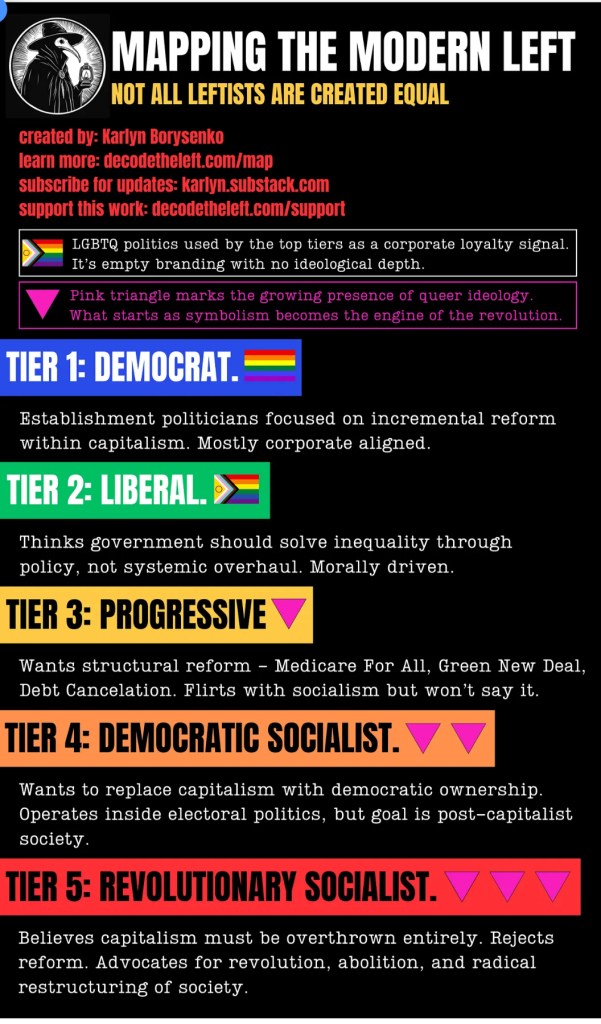


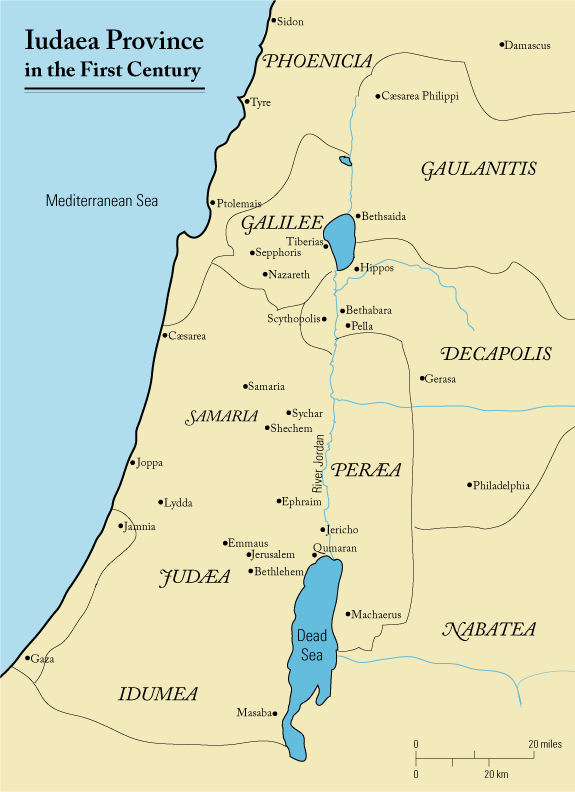


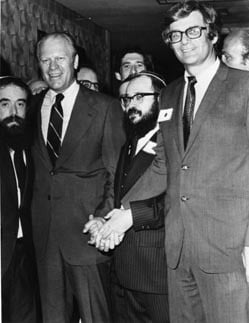
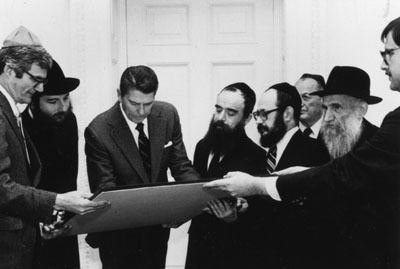


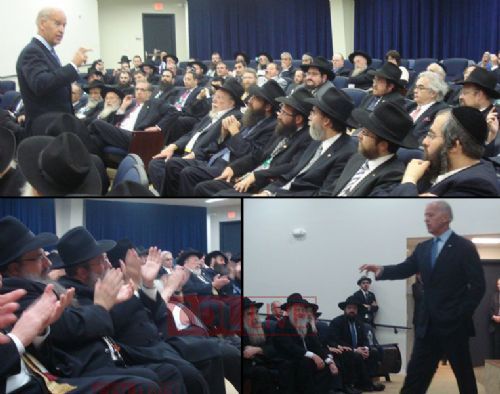


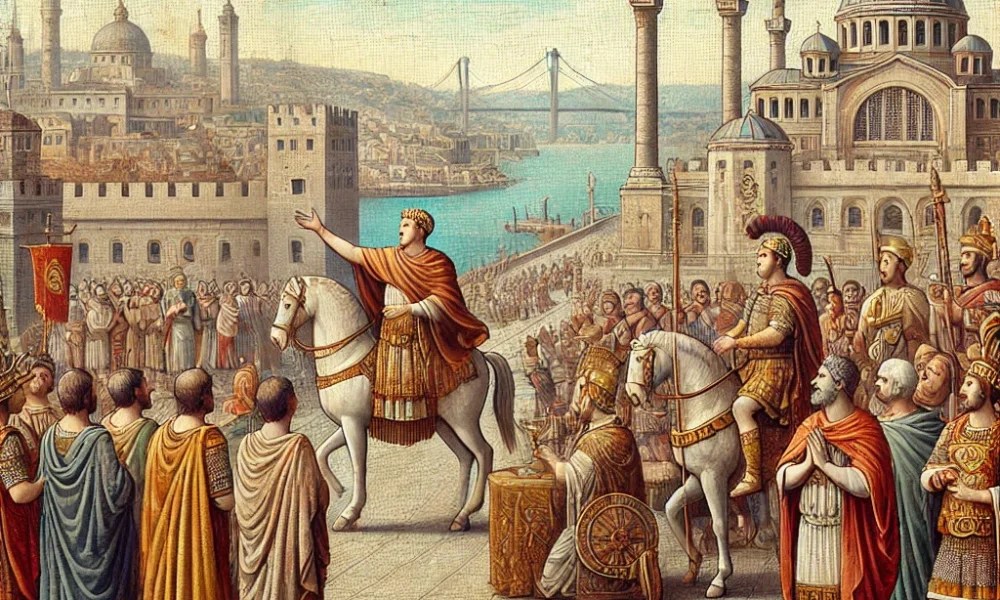



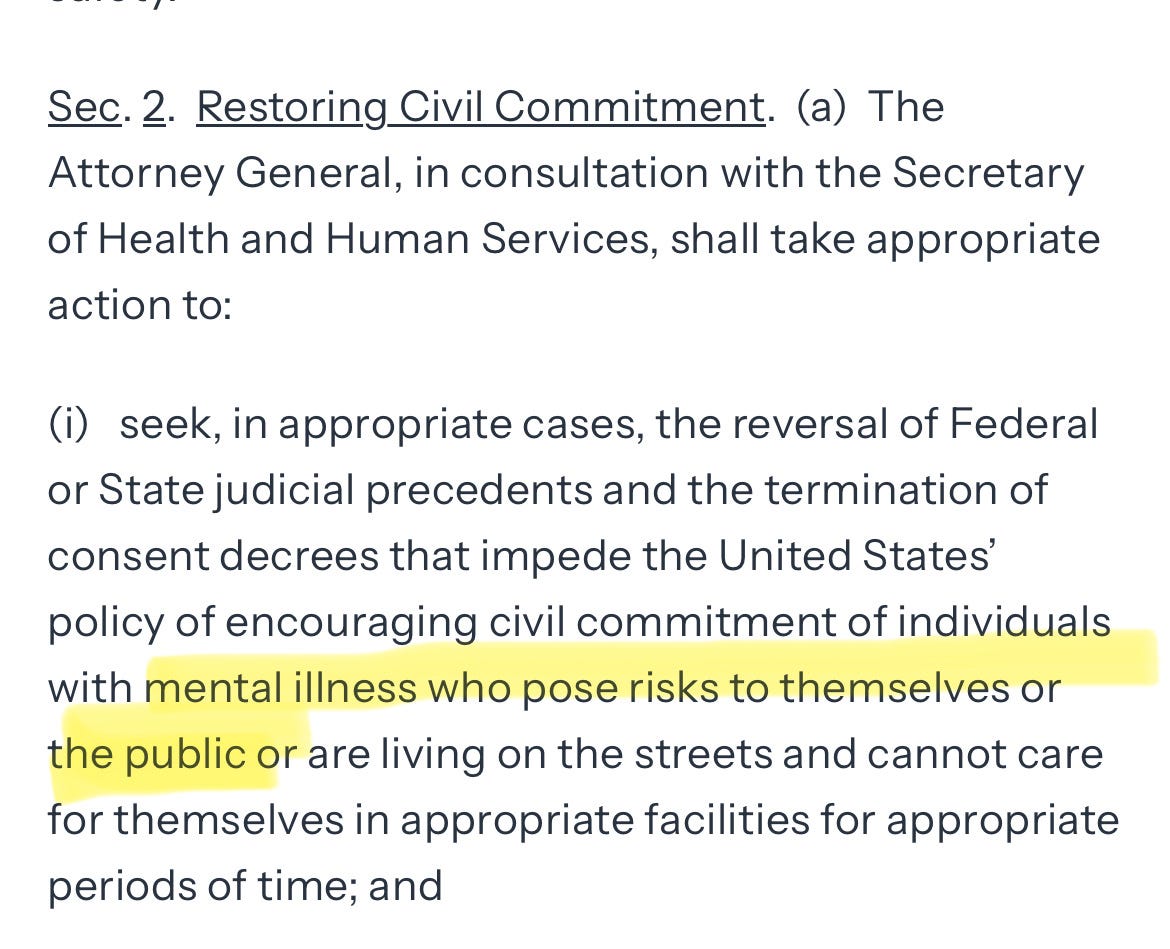


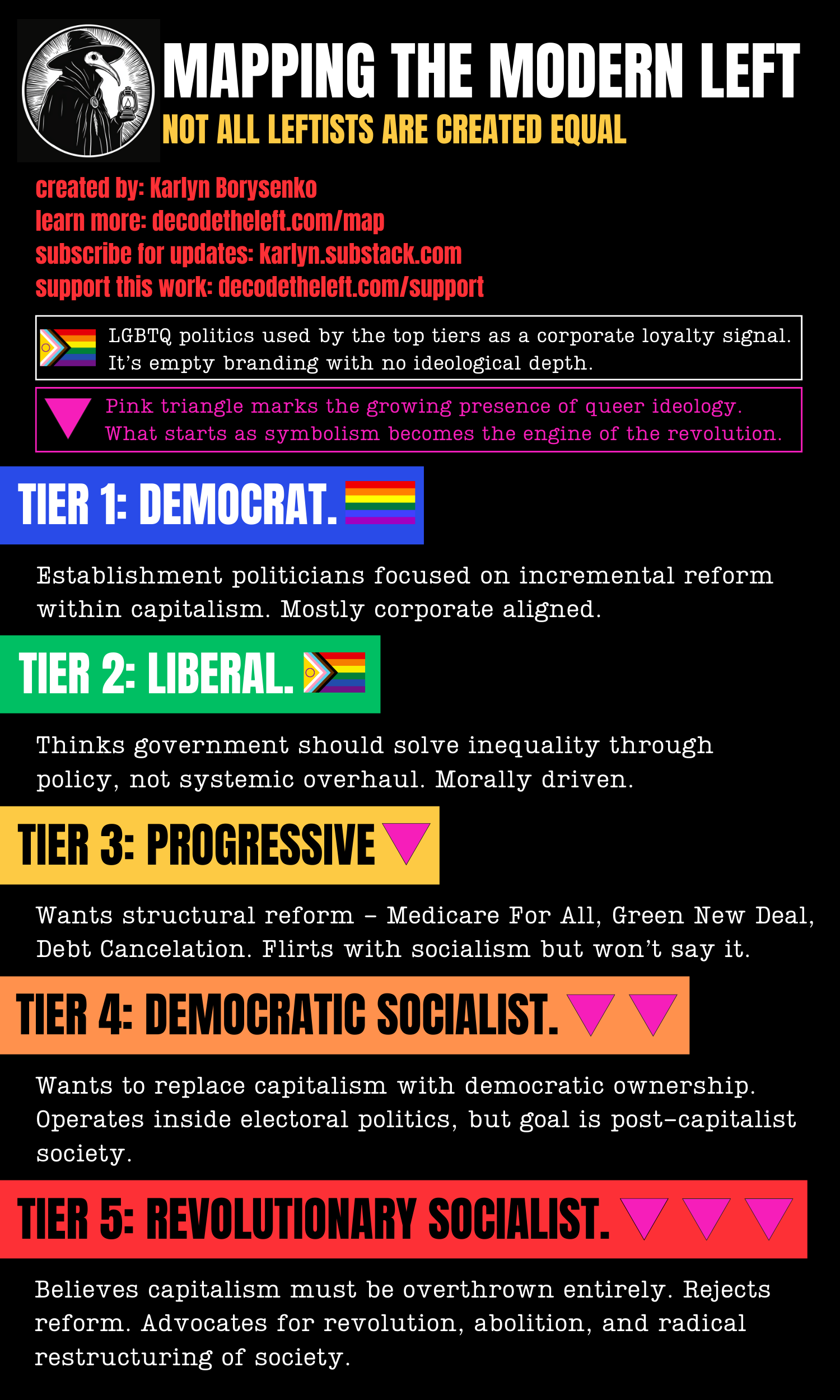

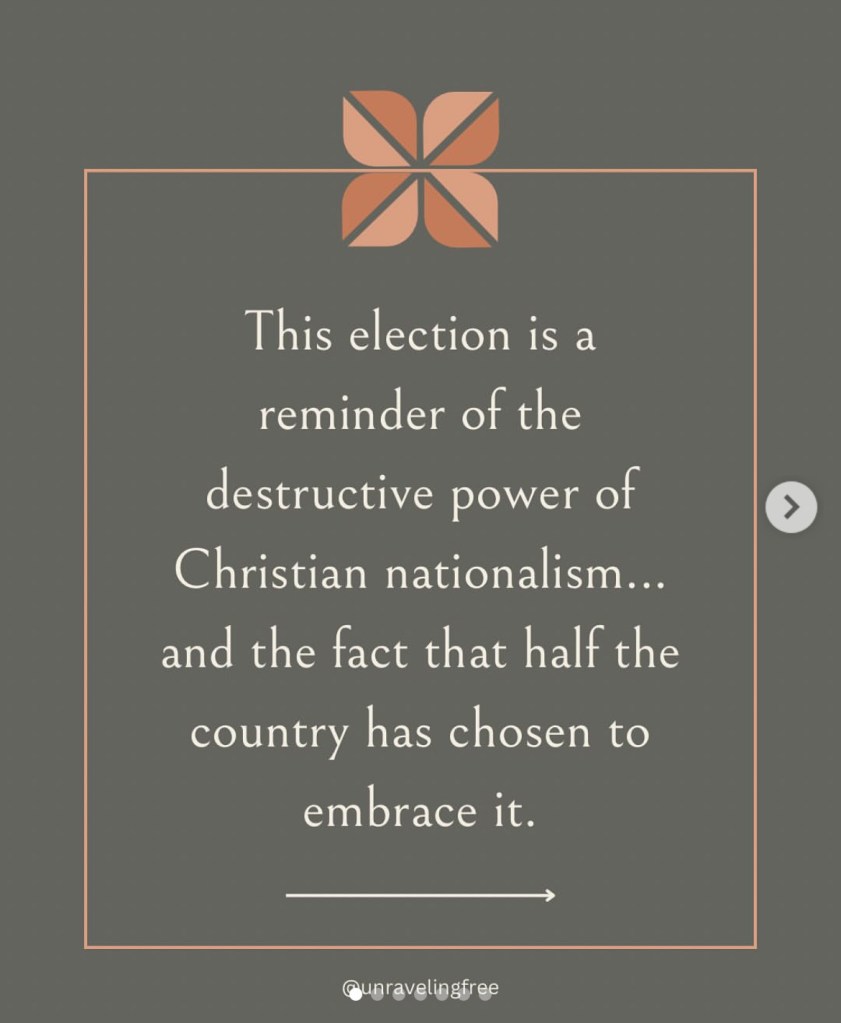
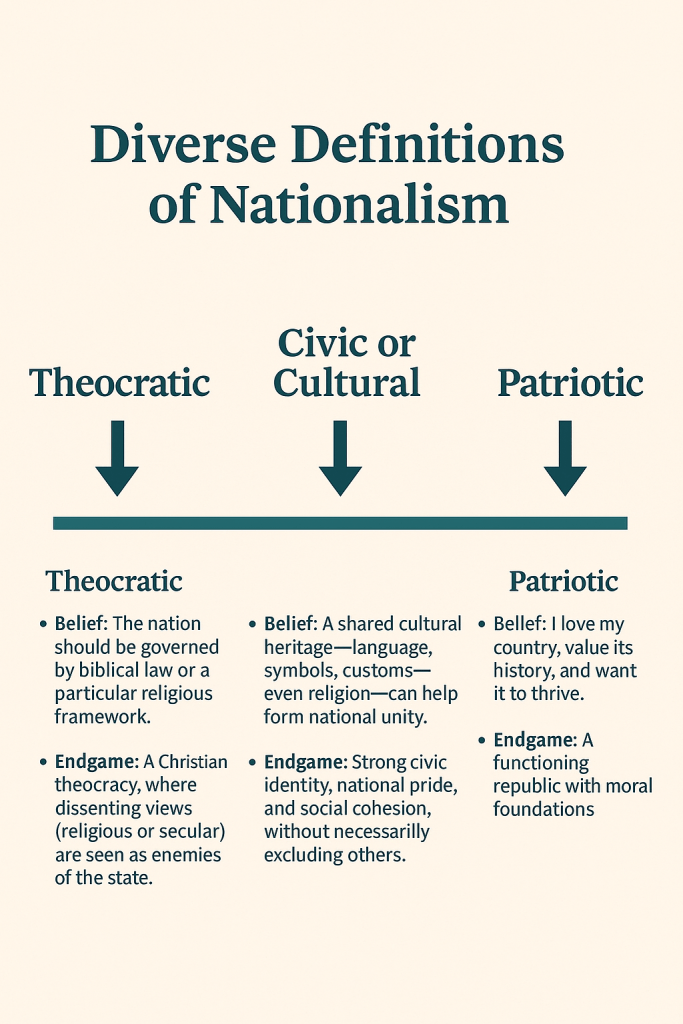




 Taste0ftruth Tuesdays