Hey everyone, welcome to the very first episode of Taste Test Thursdays! If you’re new here, this is a special bonus series where I’ll be giving you a behind-the-scenes look at the topics I didn’t get a chance to fully explore during Season 3 of Taste of Truth Tuesdays. Think of this as the leftovers—the ideas that were simmering on the back burner but never made it onto the main plate.
But this series isn’t just about what I didn’t cover. It’s about giving you a deeper look into my thought process—how I research, why I choose certain topics, and the unfiltered thoughts I don’t always include in the main episodes. Some weeks will be casual, some will be research-heavy, and some, like today, will be personal.
Because for this first episode, I want to start with a topic I’ve touched on but never fully shared: my own experience with chronic pain and how it shaped not only my fitness journey but my entire approach to health and resilience.
The Story Behind My Chronic Pain & Fitness Journey
Let’s rewind a bit. Growing up, I was always active, but I never saw fitness as something I’d build my life around. That changed when I started dealing with chronic pain. At first, it was subtle—nagging aches, stiffness that didn’t go away. But then it became something more. Pain wasn’t just an inconvenience; it dictated what I could and couldn’t do. Doctors didn’t always have clear answers, and at times, it felt like I was being dismissed.
That frustration pushed me to start researching on my own-diving into biomechanics, nutrition, corrective exercise, and the ways the nervous system and pain are intertwined. I wasn’t just looking for relief; I was trying to understand why my body was responding this way. And what I found changed everything.
A while back, I wrote a blog post about this—one that really captures my experience in a way that feels raw and honest. And instead of just summarizing it, I want to share it with you here. So, here’s that piece, in its entirety.
This experience didn’t just lead me into fitness; it redefined how I approach movement altogether. It made me realize that pain isn’t just a physical experience—it’s emotional, neurological, and deeply personal. It’s why I’m so passionate about evidence-based approaches to health and why I push back against a lot of the oversimplified fitness narratives out there.
I’ve seen firsthand how the right training, nutrition, and mindset shifts can change the way someone interacts with their own body. And I’ve also seen the damage of quick-fix culture—where people are told they just need more discipline, or worse, that their pain is all in their head.
What I Wish More People Knew About Chronic Pain & Fitness
One of the biggest misconceptions I had to unlearn is that pain automatically means damage. That’s something I wish more people understood. Pain is real, but it’s also complex—it can be influenced by stress, trauma, movement patterns, and even the stories we tell ourselves about our bodies. Learning that was a game changer for me.
Another thing? There is no one-size-fits-all approach. Healing, strength, and movement look different for everyone, and that’s okay.
What to Expect From Taste Test Thursdays
So, that’s today’s leftover—a topic I didn’t get to fully explore in Season 3 but felt like now was the right time to share. But Taste Test Thursdays won’t always be this personal. Some weeks, I’ll take you inside my research process—breaking down how I fact-check, where I find sources, and the information I don’t trust. Other weeks, I’ll revisit ideas I didn’t have time for, explore unfiltered takes, or answer your burning questions.
Next week, we’ll be talking about how I put together my episodes—how I decide on topics, what I look for in sources, and some of the biggest red flags I watch out for when researching.
I’d love to hear from you—what’s been your experience with pain and fitness? Have you ever had to unlearn things about your own body? Let me know over on Instagram or in the comments if you’re listening somewhere that allows it.
Thanks for being here, and as always—maintain your curiosity, embrace skepticism, and keep tuning in!
If you had asked me a year ago why my body hurt so much—why my hips ached, my calves tightened with every step, or why even walking on the treadmill felt like a chore—I would have said it was from overtraining or poor posture. What I couldn’t articulate then was that my pain wasn’t just physical. It was a complex dance involving my nervous system, my fascia, and my body’s attempt to protect itself after years of unresolved trauma.
Our nervous system plays a fundamental role in chronic pain. When we experience physical or emotional trauma, our body reacts by creating a heightened state of alertness. Over time, these experiences are encoded in the nervous system as neurotags—clusters of physical, emotional, and cognitive memories that influence how we react to stress and pain. Chronic pain, I’ve learned, is often an echo of this activation. It’s not just about tight muscles or structural imbalances—it’s a survival mechanism trying to make sense of and respond to past trauma.
This is the story of how I’ve started to untangle it all, and how chronic pain, emotional wounds, and trauma are all intricately tied together in ways I never imagined.
The Connection Between Chronic Pain and Trauma
For years, I treated my body like a machine. During my bodybuilding days, I pushed through discomfort, ignored signs of overtraining, and celebrated soreness as a badge of honor. But what I didn’t understand then was how my nervous system was quietly keeping score.
Chronic pain, I’ve learned, isn’t just about tight muscles or structural imbalances—it’s a survival strategy. When we experience trauma, whether from overtraining, stress, or emotional wounds, our nervous system can get stuck in a heightened state of alertness. It’s like a smoke alarm that keeps going off, long after the fire has been extinguished.
Fascia, the connective tissue that surrounds every muscle and organ in our body, plays a fascinating role in this process. Fascia isn’t just structural—it’s sensory. It’s packed with nerve endings that communicate directly with the brain. When the body perceives danger (even subconsciously), the fascia can tighten, creating patterns of tension that mirror emotional or physical trauma. In my case, that tension showed up in my psoas muscles, my calves, and my lower back—all areas associated with safety and movement.
The more I explored these connections, the more I began to see that pain wasn’t random—it was a message from my body. And it was asking me to listen.
The Power of Neurotags: How Pain and Trauma Intersect
One of the most eye-opening concepts I’ve come across in my journey is the idea of neurotags—a term used to describe the brain’s way of organizing and processing sensory, emotional, and cognitive information. Neurotags are like maps of experiences that are built over time, creating an interconnected network of physical sensations, emotions, and thoughts that work together to form a response to stimuli.
Here’s the kicker: Chronic pain is often stored in these neurotags. When trauma occurs—whether physical, emotional, or psychological—it gets encoded in the nervous system as a pattern. These patterns are not just about the physical experience of pain, but also the emotions and thoughts tied to that experience.
When trauma is stored in the nervous system, it doesn’t just affect how we feel physically; it affects our entire emotional and cognitive landscape. For example, someone who has experienced physical trauma may also experience emotional flashbacks or cognitive distortions that are linked to that experience. These flashbacks are like sudden replays of past trauma, but they don’t just exist in the mind—they can show up physically in the body.
Neurotags, Emotional Flashbacks, and Chronic Pain
Think about it this way: When we experience a traumatic event, our nervous system reacts by encoding that event into a neurotag. This neurotag includes not only the physical sensations (like tightness, pain, or discomfort), but also the emotions (fear, anger, sadness) and cognitive patterns (thoughts like “I am unsafe” or “I am weak”).
Emotional flashbacks happen when the brain reactivates these neurotags, causing the body to respond as if the trauma is happening again. This is why someone with chronic pain may experience intense emotions that seem disproportionate to the physical sensations they’re feeling. The pain can trigger a flashback—a sudden, overwhelming re-experience of trauma that isn’t just mental but is felt deeply in the body.
In my case, the tension I experienced in my hips and lower back was a reflection of both the physical trauma of overtraining and the emotional trauma I had internalized from years of pushing myself too hard and ignoring my body’s signals. When my nervous system encountered stress, it activated these neurotags, making the tension and pain feel more intense and more pervasive. The more I resisted this pain or ignored the emotional connection to it, the worse it became.
How I’m Healing: Creating New Neurotags and Engaging the Vagus Nerve
Understanding neurotags has been revolutionary in how I approach my healing process. The key to healing, I’ve learned, is not simply “fixing” the physical pain but reprogramming the neurotags. This involves creating new patterns that support healing, safety, and relaxation.
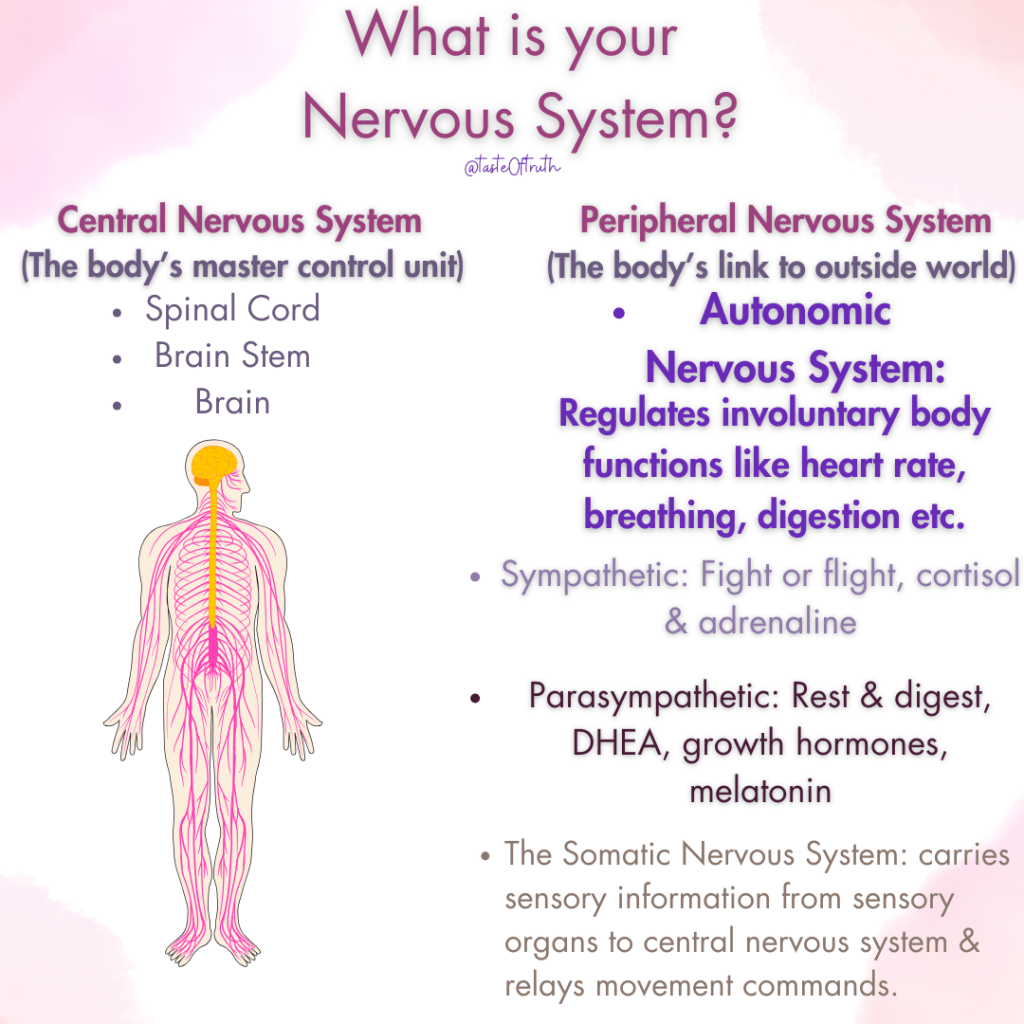
One powerful way I’m rewiring my nervous system is by engaging the vagus nerve, the longest cranial nerve that plays a critical role in regulating the parasympathetic nervous system. The vagus nerve is like the body’s “brakes,” helping to turn off the fight-or-flight response and return the body to a state of calm. When activated, it encourages relaxation, emotional regulation, and recovery—exactly what my body needs as I untangle the tension stored in my fascia and nervous system.
Here’s how I’m starting to rewire my system:
Reconnecting with Joyful Movement: I’ve reintroduced activities that make me feel alive, like walking in the garden or playing with my pets. These moments remind me that movement isn’t just about strength—it’s about freedom. By incorporating joyful, non-stressful activities, I’m helping to reinforce new neurotags that associate movement with pleasure and ease.
Reclaiming Safety Through Movement: Instead of high-intensity workouts, I’ve shifted to gentle, functional exercises that strengthen my core and glutes while supporting my nervous system. Slow, mindful movements like glute bridges, bird dogs, and pelvic tilts have become my new best friends. These exercises not only build strength but signal to my nervous system that it’s safe to move.
Releasing Fascia with Love: I’ve embraced somatic practices like gentle rocking, diaphragmatic breathing, and fascia-focused stretches to help release tension. These practices aren’t just physical—they’re a way of telling my body, “You’re safe now.” They help reprogram the neurotags associated with stress and trauma by sending a message of relaxation and calm.
Vagus Nerve Activation: To support my nervous system’s recovery, I’ve incorporated practices that stimulate the vagus nerve, such as slow, deep belly breathing and humming. Breathing deeply into my diaphragm (focusing on long exhales) has been especially helpful in calming my body and signaling to my nervous system that it’s okay to relax. By consciously engaging my vagus nerve, I’m helping shift from the fight-or-flight response into a restorative state.
Rewriting Emotional Patterns: Rewiring my nervous system also means rewriting my emotional patterns. This involves acknowledging the emotional flashbacks that arise when pain triggers old neurotags and consciously choosing to respond with compassion and self-care. Instead of reacting with fear or frustration, I’m learning to pause, breathe, and remind myself that I’m safe now.
What Chronic Pain Has Taught Me
Chronic pain has been a tough teacher, but it’s taught me lessons I wouldn’t trade for anything:
Your body is always on your side. Pain is a signal, not a punishment.
Healing isn’t linear. Some days, progress looks like resting instead of pushing.
Movement is medicine, but only when done with intention and love.
I share this journey because I know I’m not alone. So many of us carry the weight of trauma—both emotional and physical—in our bodies. And while the road to healing isn’t easy, it’s worth it.
If you’re navigating chronic pain, I want you to know this: Your body isn’t broken, and you don’t have to fight it. With the right tools, patience, and self-compassion, you can create safety, release tension, and rediscover the joy of movement.
I’m still on this journey, and I’d love to hear about yours. What has chronic pain taught you? How are you learning to trust your body again? Let’s keep this conversation going—because healing happens when we feel safe enough to share.
🎙️ Welcome back to Taste of Truth Tuesdays! This week, we’re diving deep into the fascinating and impactful world of body image and social media, guided by two incredible guests who bring evidence-based insights and a passion for accessibility in mental health research.
🧠 First, let me introduce Dr. Hannah Jarman, Ph.D., a trailblazer in psychology whose work sheds light on how we perceive ourselves in the digital age. Alongside her is the brilliant Ms. Claudia Liu, a Ph.D. candidate whose research explores the intersection of social media and body image. These two share a common mission: making complex research not just understandable but applicable in everyday life
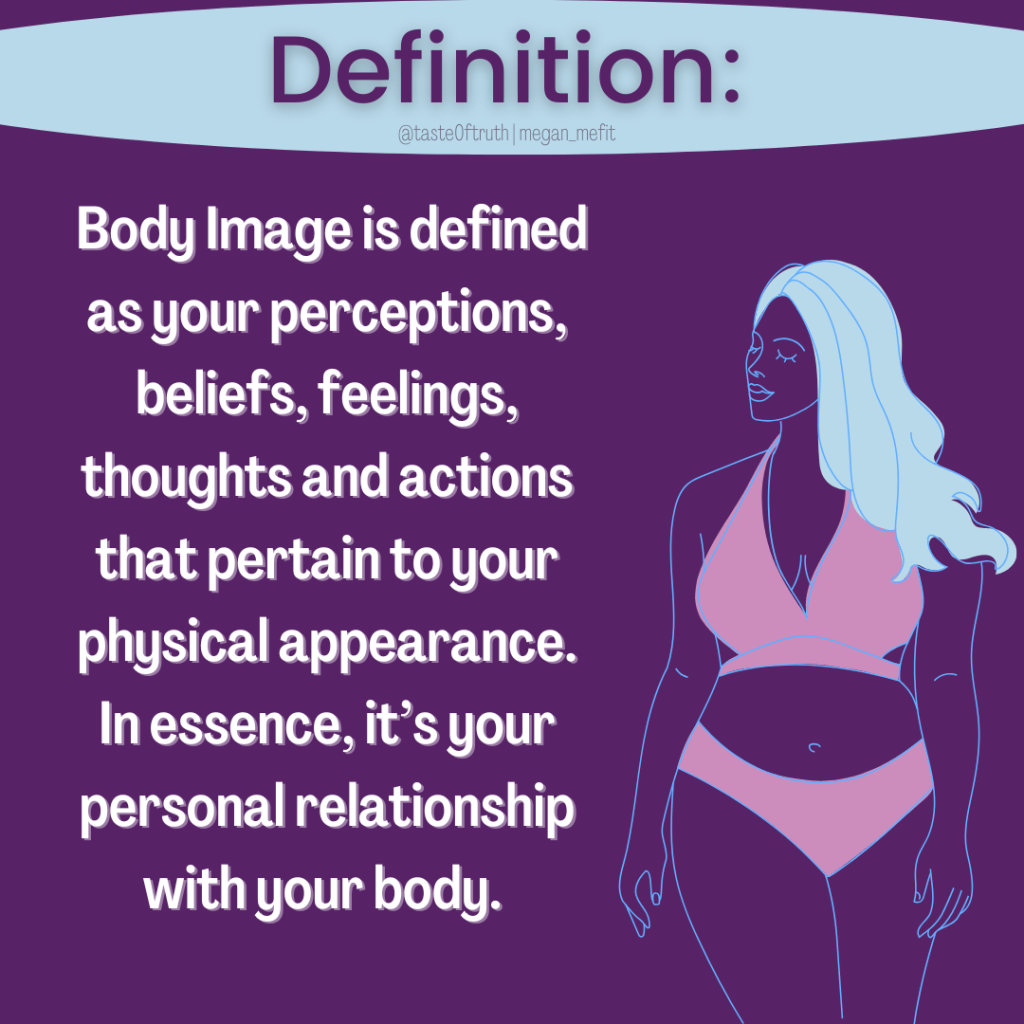
Body image—it’s a term we hear often, but what does it really mean? At its core, body image is your perceptions, beliefs, feelings, thoughts, and actions related to your physical appearance. Think of it as your personal relationship with your body. Sounds simple, but in a world shaped by curated social media feeds and fitspiration photos, it’s anything but.
To ground our discussion, we’ll be exploring the four components of body image, starting with Perceptual Body Image—how you see yourself. Here’s the catch: the way you see your body often doesn’t match reality. It’s a perception distorted by negative self-talk and societal pressures. But awareness is the first step. Interrupting that loop of negative talk can help shift your perception toward something healthier.
Next, there’s Affective Body Image, which reflects how you feel about your body—your likes and dislikes. These feelings are deeply influenced by the media we consume, from TV and movies to social media trends like “fitspiration.” Here’s the thing: hating your body is not a prerequisite for change. Dissatisfaction and acceptance can coexist. Making intentional choices about what media you engage with can profoundly impact how you feel about yourself.
Then we have Cognitive Body Image, or the thoughts and beliefs you hold about your body. Ever heard someone say, “I’ll be happy when I hit my goal weight”? It’s a dangerous trap because happiness isn’t tied to a number on the scale. Chasing an external solution for an internal problem often leads to harmful patterns and a cycle of discontent.
2018: My leanest physique post-bodybuilding competitions. I sat here feeling self-conscious, convinced I looked ‘fat.’ It’s wild to look back and realize how much my mind distorted my reality.
When I look back at photos of myself at my leanest—whether it was during my bodybuilding competitions or soon after—I remember how uncomfortable I felt in my body even then. This always reminds me that body image isn’t actually about how your body looks; it’s about your relationship with your body and, ultimately, with yourself.
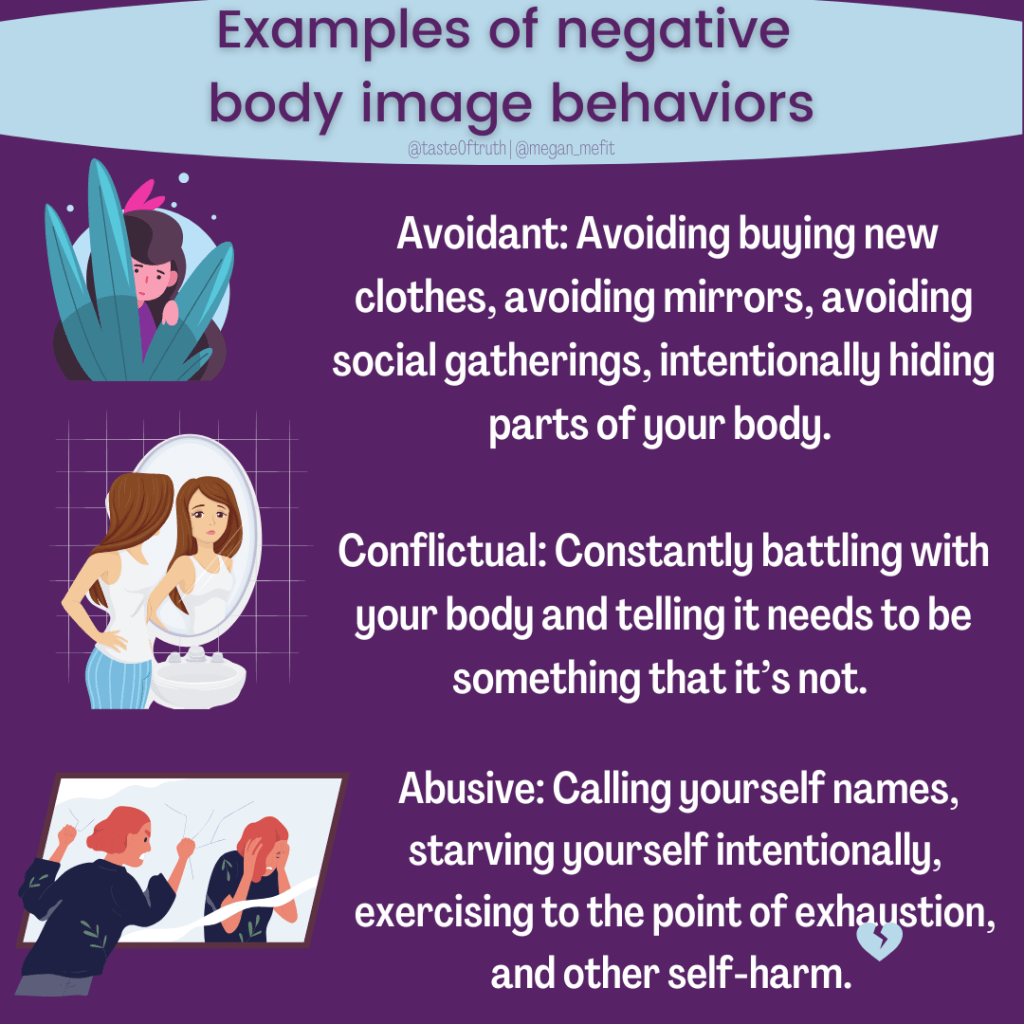
Finally, Behavioral Body Image—the actions we take based on our perceptions, feelings, and beliefs. When someone struggles with negative body image, they might engage in destructive behaviors like over-exercising, disordered eating, or social withdrawal.
Today, we’ll unpack these components with Dr. Jarman and Ms. Liu and dive into their groundbreaking research on the impact of social media and fitspiration on our body image. We’ll also share actionable tips to help you reshape your relationship with your body and your digital environment.
Get ready for an enlightening and empowering conversation. Let’s go!
Dr. Hannah Jarman, a research fellow at Deakin University in Melbourne, Australia, who specializes in body image, eating disorders, and the influence of media. Dr. Jarman’s interest in this field began when a young child in her life, around 5 or 6 years old, started expressing distress about her body, saying things like “I’m fat, I need to lose weight.” This was concerning not only because of the child’s age, but also because her family had a history of eating disorders. Recognizing the red flags, Dr. Jarman sought advice from a lecturer specializing in body image, which sparked her passion for research and intervention.
This led to her work on body image interventions in schools and later, a PhD on the impact of social media on adolescent body image and well-being. Dr. Jarman’s work continues to explore the critical intersection between media influence and body dissatisfaction, aiming to identify predictors and create effective prevention strategies for eating disorders.
Claudia, a final-year PhD candidate in Psychology at Melbourne University. Claudia’s research focuses on disordered eating, body image, and digital health—an emerging area in the field. Her passion for this work stems from her own personal experiences with disordered eating and negative body image during her younger years. Growing up in Southeast Asia, where thin ideals were heavily glorified, Claudia internalized these societal pressures, which led to unhealthy behaviors. Fortunately, she overcame these challenges, and this journey inspired her to pursue a PhD, hoping her research can provide insights and support for others facing similar struggles.
I’ve also seen in the data that children as young as 5 are struggling with negative body image, and I can really relate to Claudia’s experience. I, too, have struggled with disordered eating. I’ve enrolled in eating disorder therapy and have been given some of the most extreme programs, like having to eat the same meal plan six times a day for 12 weeks. The strictness of it led to binges, and it was clear that something wasn’t working.
Thank you to all the researchers out there, because while I don’t have a PhD, I did pursue a psychology certification as part of my continuing education for personal trainers. The more I worked with clients, the more I realized the connection between psychology and nutrition. Many of my clients came to me wanting to “lose weight”, but before we could even start thinking about that, we had to address underlying issues like under-eating, yo-yo dieting, and inconsistency. I had to teach them that they had to earn their right to diet, which was a difficult but crucial concept to stress. That’s when I knew I needed to learn more about psychology—it wasn’t just about the physical aspect but the mental and emotional work that had to come first.
Dr. Jarman adds, it’s so ingrained in our society, these ideals and these pressures and dieting. If you think about the people around you, how many—probably the majority, particularly of females, but also a lot of males—struggle with these issues and have unhealthy relationships with food or exercise or whatever it may be. These perfect ideals are supposedly so easy, and they should all be achieving them. But that’s absolutely right.
Men do have the pressure as well, like this big masculine look or the negative term of ‘dad bod.’ Men are also getting objectified or judged. So much of what the fitness industry sells is a psy-op. They’re just trying to sell you the idea that you can control this. It’s like in the religious world, where we have something called the prosperity gospel—‘If you do this, you’ll get God’s blessing.’ Diet culture plays the same tune: ‘If you do this, you’ll get that.’ It’s a deep psychological hook, tapping into our need for control. This need triggers dopamine, which reinforces these behaviors. Whether it’s following rigid fitness plans or religious dogma, it’s the dopamine hit that keeps us hooked. I appreciate you guys getting on here.
A little bit off-mic, season 2 was exploring breaking free from diet culture, body-neutral fitness, and focusing on performance-based goals. While you might see some changes in aesthetics, that’s just a bonus. The real focus is on getting stronger, improving blood markers, or simply walking every day. I’ve learned as a personal trainer that even when clients achieve their weight loss goals, it doesn’t always lead to a better body image or happiness. So, what is body appreciation, and why is it so crucial for mental well-being?
Body Appreciation
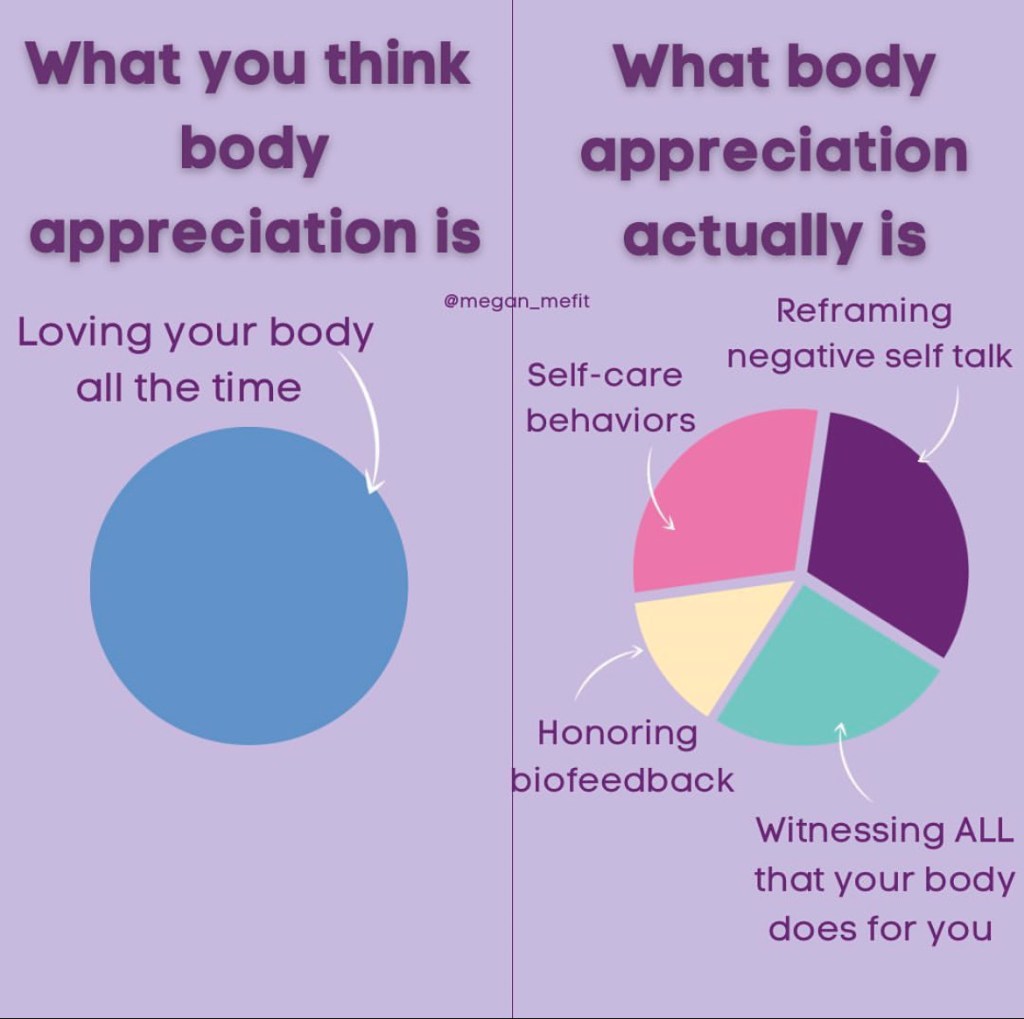
Claudia: “Yeah, I can take that one. So, body appreciation is basically a key or core positive body image concept that involves recognizing, valuing, and respecting the body for its functional capacity and its health, rather than how it looks. I know you mentioned that earlier on. So, it’s really about shifting the focus away from aesthetics and towards its functional capacity and functionality. Over the past 10 years, there’s been a surge in research showing that greater body appreciation is associated with a number of psychological outcomes—such as improved self-esteem, better quality of life, and overall emotional and physical well-being. Studies also show that body appreciation encourages people to adopt healthier, more flexible eating patterns, like intuitive eating. For these reasons, it’s been proposed as a potential protective factor against issues like body dissatisfaction, symptoms of disordered eating, and building resilience against societal pressures to fit unrealistic beauty standards. So, that’s kind of my interpretation of body appreciation and why it’s so important.”
Dr. Jarman: “I guess just adding to that briefly as well, I think the focus really is understanding that our bodies are wonderful. They do so much for us, and we get so caught up in how they look and the expectations in that area, that we forget how lucky we are to have a functioning body. OK, maybe you don’t like your arms or think they’re flabby, but you can hug your child or do all these incredible things that we just get so caught up in and forget. It’s about being able to take a step back and really think about and appreciate and value those things.”
You: “And also, I think body appreciation can go a level deeper for those who might be disabled or have lost certain abilities—maybe weren’t born with them, but have lost the ability to move in certain ways. That can be really difficult, because… But you can still find ways to appreciate the small things, like the sun on your skin. Or, maybe you can’t walk or hug your child like you once could, but there are still ways to appreciate the vessel that you dwell in, and that helps you interact with the world. That’s why I like body appreciation. It strips away a lot of those pressures and ideal body standards. And I think for fitness, it really… I don’t know what happened, if it’s always been poison, but wellness culture became so focused on looks. I was raised in the ‘90s—Jessica Simpson was considered fat. That slim, hair-thin ideal was pushed. And now, I’m almost 40—just crazy, that’s what I was raised with. The low-rise jeans…”
Hannah: “They’re back now, maybe just in Australia, but they’re back!”
You: “No, no thanks!” (laughter)
How Social Media Shapes Body Image and Eating Behaviors: Understanding Its Impact on Mental Health and Well-Being
Social media has become a double-edged sword in terms of its influence on our body image and eating behaviors, especially among young women. Dr. Hannah Jarman, a research expert in the field, sheds light on the complexities of this issue, drawing from the latest findings in the field.
Research consistently shows that social media tends to worsen our body image. It often leads to comparisons, where we measure ourselves against the seemingly “perfect” lives and bodies of others. This sense of inadequacy can drive us to want to change our appearance, often through unhealthy means, believing that losing weight or attaining a certain body ideal will bring happiness.
Dr. Jarman explains that while time spent online used to be the primary focus of research, recent studies have shown that the content we engage with plays a more significant role in shaping our mental health. Specifically, appearance-focused content—such as photo edits, filters, and comparison-driven posts—are more harmful than we might realize.
Interestingly, content that is perceived as “inspirational” can also contribute to this negative cycle. Instead of motivating positive behaviors, it can lead to feelings of pressure and shame, pushing individuals further away from the very practices meant to improve their well-being. Instead of encouraging exercise or body appreciation, these idealized portrayals often result in a sense of failure, making it harder to engage in self-care.
So, what can we do to become more aware of the impact social media has on our mental well-being? Dr. Jarman suggests that the first step is reflection. Being mindful of what we follow and consume online is essential. Are the accounts and content we engage with making us feel better or worse about ourselves? By being selective in our media consumption and actively avoiding harmful content, we can better protect our body image and mental health from the negative influences of social media.
Taking Control: How to Curate Your Social Media Feed for Better Body Image and Mental Health
While social media algorithms have a strong influence over the content we see, Dr. Jarman emphasizes that we do have some control over our feeds. The key lies in curating what we consume. If you find yourself comparing or feeling bad about your body after viewing certain content, it’s time to take action. Don’t hesitate to unfollow, hide, or block accounts that negatively affect your mental well-being. Instead, fill your feed with content that lifts you up—whether that’s accounts that make you laugh, reflect your hobbies, or celebrate your personal interests.
Another vital tool in reducing the harm of social media is social media literacy. Dr. Jarman encourages us to critically evaluate what we see: Who is posting this content, and why? Are they promoting a product or idea, and how realistic is what’s being presented? Developing these critical skills can help you navigate the often-misleading nature of social media, empowering you to consume content that truly adds value to your life, rather than contributing to unrealistic standards and comparisons.
By being intentional about what we engage with, we can protect ourselves from the detrimental effects of social media on body image and mental health.
Mindfulness in Social Media Consumption: A Personal Approach to Authenticity
Mindfulness is key when engaging with social media. As Dr. Jarman mentioned, it’s not just about the time we spend online, but how we feel when interacting with certain content. When consuming posts, take a moment to check in with yourself: How do you feel after reading this? Does it leave you feeling inspired, or does it trigger negative comparisons? Recognizing your emotional response is an essential step toward curating a healthier online experience.
Personally, I’ve chosen to operate from a place of transparency. I don’t monetize my content, push affiliate links, or promote products for profit. For me, it’s not about selling anything; it’s about sharing information and offering genuine value. I even make my strength training guide available for free to anyone who asks. Why? Because I want to be seen as an expert, but also as a normal, imperfect human. It’s about finding the balance between encouraging people to be open with their own journeys while demonstrating that vulnerability and authenticity are part of what makes us all human.
Dr. Hannah Jarman emphasizes that while fitspiration content can appear motivating, it may unintentionally harm individuals by focusing on unattainable ideals. She notes that before-and-after images, for instance, can imply that the person in the “before” image is unworthy, while the “after” version suddenly seems perfect. Instead, she suggests shifting the focus to how individuals feel, highlighting personal performance or other non-aesthetic milestones.
In response, I throughout the suggestion of fitness coaches adding cover photos to before-and-after images, which could serve as a “trigger warning” for those scrolling through. This small change could offer viewers the opportunity to engage more thoughtfully, especially if they have a tendency to be triggered by such comparisons.
Dr. Jarman agrees, emphasizing the importance of showcasing the entire journey—ups, downs, and all. She advocates for content that highlights authenticity, as it’s often a longer, non-linear process. By focusing on emotional growth, feelings of self-worth, and overall well-being, the goal shifts away from just numbers and aesthetics, promoting healthier perspectives on body image and wellness.
Claudia shares her personal journey with body image and disordered eating, revealing how following fitness influencers who idealized a specific body type negatively impacted her mental health. She explains how curating her social media feed by unfollowing these influencers and instead following those who emphasize strength and science-based training was transformative. This shift helped her focus on performance and appreciation for her body rather than aesthetics or calorie-burning, leading to a healthier and more sustainable approach to fitness and nutrition.
To wrap up, Dr. Hannah highlights the importance of accessible information and shares a resource for listeners: their social media accounts on Instagram and TikTok, The Well-Being Doctors (@the.well.being.doctors), which focus on making research on wellness and mental health easy to understand and implement. She encourages listeners to follow their content for practical tips and evidence-based guidance.
✨Let’s anchor in this transformative message: Your body is an instrument, not an ornament. Positive body image isn’t believing your body looks good; it’s knowing your body is good, regardless of how it looks. This quote from More Than a Body beautifully captures the essence of what we’ve explored today.
💡 The fitness industry often sets standards based on bodybuilding gurus and extreme aesthetics—standards appraised by critical judges or an audience that values visual perfection. But let’s be honest: the behind-the-scenes reality of preparing for these aesthetic ideals often includes extreme measures—severe dehydration, malnutrition, laxative and stimulant abuse, and emergency-level exhaustion. No legitimate doctor would ever recommend these tactics for health. They’re the opposite of health-promoting.
💪 Instead, let’s focus on experience and benefit, not being ornaments to be admired. Metabolic health, strength, and stamina are far more meaningful indicators of well-being than achieving a “perfect” appearance. When we prioritize function over aesthetics, we open the door to a new, more effective, and empowering way to experience health and fitness.
🚨 At first, the idea of letting go of weight goals or aesthetic ideals might feel like giving up on your body or your health. But the reality is, letting go of these pressures frees you to reconnect with your body in a way that truly serves you.
🌟 Your body is how you live, love, and experience the world. It’s the way you savor delicious food, dance to your favorite songs, feel the rain on your skin, and embrace the people you love. By focusing on what your body can do rather than how it looks, you can deepen your relationship with it and rediscover what health and fitness really mean for you.
🎙️ So, let’s commit to shifting our focus. Set goals rooted in function, experience, and well-being—not in unrealistic aesthetic ideals. Because when you change the way you think about your body, you’ll find the freedom to live more fully in it.













 Taste0ftruth Tuesdays