Overcoming Negativity: The Power of Gratitude

Thanksgiving marks a season of reflection, yet gratitude isn’t always easy to come by—especially after an election year, when cognitive overload and societal stress dominate our attention. This isn’t just a personal struggle; neuroscience suggests our brains are wired to focus on negativity, a phenomenon called negativity bias. This tendency, coupled with cultural norms emphasizing individual success and the relentless comparisons driven by social media, makes practicing gratitude a skill we must consciously develop.

In my work as a coach and host of Taste of Truth Tuesdays, I often explore how habits—like fitness, nutrition, or mindfulness—shape not just our bodies, but our minds. Gratitude operates the same way: it’s not a passive feeling, but an active practice. According to Dr. Monica Johnson, gratitude has the power to rewire your brain, reducing stress and boosting resilience. Here’s why it can be so hard—and how you can overcome those challenges.

Why Gratitude Feels So Hard

  • 1. Negativity Bias

Our brains are wired to prioritize threats and negative experiences over positive ones. This evolutionary survival mechanism can make it harder to notice or appreciate the good in our lives.

  • 2. High Expectations and Comparisons

Social media amplifies the pressure to compare our lives to others, often creating unrealistic standards. When our focus shifts to what we lack, gratitude takes a backseat.

  • 3. Cognitive Overload and Stress

Life moves fast, and our schedules are packed. Reflecting on what we’re thankful for requires slowing down—a luxury stress and busyness don’t easily allow.

  • 4. Cultural and Social Conditioning

In cultures that prize personal achievement and material success, gratitude can feel secondary. Celebrating milestones and accomplishments may overshadow smaller, everyday joys.

  • 5. Mental Health Challenges

Depression, anxiety, and trauma can make it difficult to recognize and appreciate the positives in life. These conditions often shift focus to worries, fears, or a sense of helplessness.

  • 6. Entitlement Mindset

When we feel entitled to certain comforts or successes, it diminishes our ability to see them as gifts, fostering dissatisfaction instead of gratitude.

  • 7. Lack of Practice

Gratitude is a skill, not just an attitude. Without consistent effort, it’s easy for this muscle to weaken.

The Science of Gratitude: Three Proven Strategies

Fortunately, research provides powerful tools to strengthen gratitude. These practices are straightforward, effective, and supported by science.

1. Gratitude Journaling

One of the simplest and most effective methods is keeping a gratitude journal. Regularly writing down three to five things you’re thankful for has been shown to boost emotional well-being and reduce stress.

As a gardener and homesteader, I’ve found parallels here: journaling is like planting seeds of positivity. With time, those seeds grow into a garden of resilience and contentment.

Why it works:

A study by Dr. Robert Emmons, a leading researcher on gratitude, found that journaling helps rewire the brain by reinforcing positive experiences. This practice shifts focus away from what’s missing in your life toward what’s already there.

How to do it:

  • Spend five minutes each evening listing specific things you’re grateful for.
  • Be detailed—rather than “I’m grateful for my family,” write, “I’m grateful for the family dinner we had tonight where everyone laughed together.”

2. Gratitude Letters or Visits

Writing a heartfelt letter to someone who has positively impacted your life is another effective practice. Even better? Deliver the letter in person or send it to them.

Why it works:

Research highlighted by Dr. Monica Johnson of The Savvy Psychologist shows that thanking someone you’ve never properly appreciated increases happiness immediately and for up to a month afterward. The act deepens relationships and reinforces a sense of connection.

How to do it:

  • Reflect on someone who has helped or supported you in a meaningful way.
  • Write a sincere letter describing what they did and why it mattered.
  • Deliver it, either in person, through a video call, or via mail.

For me, this practice reminds me of the people who’ve supported my journey—from launching my podcast to building a small homestead.

3. Mental Subtraction of Positive Events

Instead of focusing on what you’re grateful for, imagine your life without certain positive aspects. This “mental subtraction” technique can powerfully enhance your appreciation for what you have.

Why it works:

A study published in the Journal of Positive Psychology revealed that imagining life without key blessings intensifies gratitude by showing how much worse life could be. This perspective shift cultivates appreciation even for things we take for granted.

How to do it:

  • Think about a cherished relationship, opportunity, or moment in your life.
  • Reflect on how your life would be without it.
  • Let this realization deepen your gratitude for that aspect of your life.

I often reflect on what life would be like without the small joys I’ve cultivated—like watching our garden grow or exploring life with my 3 dogs. It’s a powerful way to deepen appreciation for the present.

Gratitude is a Skill Worth Building

Gratitude might not come naturally, but with consistent practice, it can become a cornerstone of emotional resilience and happiness. By journaling, expressing thanks to others, and practicing mental subtraction, you can train your brain to focus on the good—even amidst life’s challenges.

Gratitude isn’t just a feel-good emotion—it’s a powerful mental tool that rewires your brain for better health and happiness. Through neuroplasticity, gratitude practices such as journaling or simply expressing thanks, strengthen neural pathways linked to positive emotions and weaken those associated with stress or negativity. This results in reduced anxiety, lower cortisol (the stress hormone), and improved mood​​

But the benefits don’t stop at mental health. Gratitude is also linked to better heart health, stronger immune function, and improved sleep quality. By calming the nervous system, gratitude promotes relaxation and a sense of well-being. Plus, it enhances emotional intelligence, fostering empathy, compassion, and stronger social connections​

As Dr. Monica Johnson reminds us, gratitude is like a muscle: it grows stronger the more you use it. This Thanksgiving, and in the year ahead, let’s commit to cultivating gratitude as a daily habit. The rewards—a brighter perspective, deeper connections, and greater joy—are well worth the effort.

Gratitude isn’t about ignoring pain or hardship—it’s about recognizing the value in the journey. Whether you’re navigating personal struggles, cultural pressures, or simply a stressful holiday season, gratitude offers a way to stay curious, grounded, and resilient.
For more information on the 365 Easy Challenge for 2025, click here!

Which gratitude strategy will you try first? Let me know in the comments!

For a deeper exploration of the science of gratitude, you can check out these insightful resources:

Books:

  1. The Gratitude Diaries by Janice Kaplan – This book blends personal storytelling with scientific research on the power of gratitude in transforming daily life.
  2. Thanks! How the New Science of Gratitude Can Make You Happier by Robert Emmons – Emmons, one of the leading researchers in the field, explores the science behind gratitude and how practicing it can improve physical and mental health.
  3. The Happiness Advantage by Shawn Achor – Achor discusses how happiness, including gratitude, can lead to success in work and life by creating a positive mindset.

Studies and Articles:

  1. Gratitude and Well-being (Greater Good Science Center) – A collection of studies demonstrating that gratitude can improve overall well-being, reduce stress, and enhance relationships​Greater Good.
  2. A study published in Psychology of Well-Being found that practicing gratitude regularly can help reduce negative emotions and promote a greater sense of life satisfaction​Greater Good.

TED Talks:

  1. “The Power of Vulnerability” by Brené Brown – Brown explores how embracing vulnerability, along with gratitude, leads to a deeper connection with others and personal well-being.
  2. “What’s So Funny About Gratitude?” by Robyn Stratton-Berkessel – In this talk, Stratton-Berkessel discusses the profound impact that asking about positive experiences can have on fostering gratitude in everyday life​ PositivePsychology.com.
  3. “The Secret to Happiness is Helping Others” by Mike Robbins – Robbins highlights how gratitude, especially when expressed towards others, can create a ripple effect of kindness and well-being​PositivePsychology.com.

These resources provide a rich blend of personal, scientific, and practical perspectives on how gratitude can enhance our lives.


🔥 365 Easy Challenge: MASTER THE BASICS for 2025 🔥

Forget extreme diets, gimmicky regimens, and complicated rules. 2025 is the year we master the basics and build a lifestyle that actually lasts. All you need? A simple plan, a sprinkle of consistency, and a whole lotta patience. Here are the 6 core habits you’ll need to crush 2025:

1. Brain Reframe 🧠
Your body doesn’t need a “reset” — your brain does! Shift the focus to what you’re adding, not subtracting. More protein, more fruits & veggies, more movement. It’s all about progress, not perfection.

2. Stress Management (and your mindset around stress) 😤
Stress is the silent killer of self-control and health. Managing stress isn’t just about chill vibes, it’s about understanding your stress and handling it like the boss you are.

3. Sleep Consistently 😴
The most underrated (yet most important) aspect of health? SLEEP. If you’re aiming for aesthetic goals, consistent sleep should be at the top of your priority list.

4. Digestive Health 🥦
Your body doesn’t thrive off what you eat, but off what you can digest and absorb. So, let’s get those healthy poops on track and optimize your digestion for real transformation.

5. Adequate Nutrition 🍏
Under-eating doesn’t get you anywhere good. Let’s focus on fueling your metabolism, building muscle, and living your life — so when the time comes for fat loss, it’s smoother and healthier than ever.

6. Gratitude Practice 🙏
Meditation, prayer, and focusing on gratitude are more than just buzzwords. Science shows they can actually help you stay on track with your diet and exercise goals. Yes, really!


💥 The First Step: Awareness 💥

Before you can make any changes, you’ve got to know what needs changing. You can’t improve what you don’t know needs improvement. Motivation? It’s a tricky beast. And we’ll talk more about that in an upcoming podcast episode (stay tuned!) where we’ll get into intrinsic vs. extrinsic motivation and why neither is enough on its own.

But here’s the TL;DR: Motivation is a lot like a campfire. You have to keep stoking the fire to keep it burning. Don’t wait for external motivation to light you up — take control!


The REAL Problem: Unrealistic Goals 🚫

Challenges like 75 Hard or Whole 30 aren’t the issue. It’s the unrealistic expectations that trip us up. Discipline isn’t about being lazy; it’s about setting goals that actually fit your life and personality. Instead of following what others are doing, ask yourself: What do I need?

Let’s be real: consistency and routine are the game-changers. They build habits, and habits lead to long-lasting results. So let’s ditch the all-or-nothing mentality and start building a routine that works for YOU.


Let’s be clear: Motivation is unreliable. We need to normalize the idea that motivation doesn’t last forever. The secret is: keep the fire alive and keep working on your goals, even when motivation flickers.

As a personal trainer, I’d tailor every plan to fit each person’s season of life — newly married, starting a new job, planning for a baby — because that’s how real results happen. It’s about what works for YOU.

So, let’s leave the restrictive diets and quick fixes behind and focus on mastering the basics for 2025. Who’s in?


Ready to start your journey? Let’s get it, 365 Easy Challenge style! 🔥

Kangen Water: Science or Scam?

Let’s talk about Kangen Water—a glorified water filter that’s convinced half the wellness community it can practically save the world. Kangen is often presented as the “it” product that will cleanse your body, raise your pH, and cure whatever ails you. From detoxification to slowing the aging process, the claims are endless. But does it actually do any of this, or is it just one expensive bottle of hype?

As someone who loves to blog about wellness trends and help people navigate the often confusing and sometimes downright misleading claims in the wellness industry, I’m here to cut through the noise. It’s time to stop buying into pseudoscience that preys on our desire for easy fixes. The wellness world is filled with products promising miracle results—products that are often built on shaky science or worse, none at all. Kangen Water is no exception.

Let’s break down whether this water really deserves its pedestal, or if it’s just another trend feeding into a culture of overpriced wellness gimmicks.

Water: Neutral, Alkaline, and Misleading Marketing

Water (H2O) typically has a neutral pH, sitting around 7, but it naturally dissociates into hydrogen (H) and hydroxide (OH) ions. The more hydrogen ions in water, the more acidic it becomes, while the more OH ions, the more basic (alkaline) it gets. In pure water, these ions are present in a small amount, and they tend to balance out by reforming into H2O. So, what is alkaline water, and what’s in it?

Real alkaline water contains something to make it basic—often baking soda. Some products claim to alkalinize water electrically, but here’s the catch: any ions in the water will eventually neutralize each other. In the end, pure water will always strive for a pH of 7. The idea that you can “alkalinize” water and benefit your body is where the pseudoscience comes in.

The claim is that when the body becomes “too acidic,” it can lead to a slew of health issues, and drinking alkaline water can balance things out. But here’s the truth: The body works tirelessly to maintain a very narrow pH range—7 to 7.4—in the blood and tissues. Any fluctuation outside this range is potentially dangerous, which is why the body has mechanisms to keep pH in check, like regulating breathing to balance CO2 levels and adjusting urine acidity.

Put simply, the idea that drinking alkaline water will “balance” your body’s pH is misleading. The body is already equipped with efficient systems for managing pH balance, and consuming regular food or liquids, regardless of their pH, won’t disrupt this delicate equilibrium. That’s right—your body’s pH is mostly unaffected by alkaline or acidic foods and beverages. This is why the whole alkaline diet and water movement is rooted in pseudoscience.

While some studies have tried to link an alkaline diet or water to benefits like preventing cancer or osteoporosis, they fail to provide solid evidence. A 2016 systematic review found no proof that alkaline water prevents or treats cancer. A 2011 review similarly found no support for an alkaline diet’s protective effects on bone health. So why do people keep buying into it? The answer lies in clever marketing, celebrity endorsements, and the placebo effect.

In reality, the only plausible benefit of alkaline water may be for those suffering from acid reflux, where it could act as a temporary antacid. But even this is not proven, and established treatments for acid reflux are far more effective.

So, the next time you’re thinking about splurging on Kangen Water or an expensive alkaline water machine, ask yourself: “Am I really buying science—or am I buying into pseudoscience wrapped in a fancy bottle?”

First off, let’s clear up a few things. The Kangen machine has only a single filter, and it’s inadequate for dealing with many of the toxins found in tap water. In fact, because of shortcomings with the filter, the Kangen machine just might change your life—for the worse. The filter in the Kangen machine doesn’t reduce levels of heavy metals or salt, meaning that if you’re relying on it for purity, you’re still drinking some of the same contaminants that you started with.

The Claim: Alkaline Water = Health Savior

Kangen Water’s marketing suggests that its alkaline properties can balance your body’s pH, improve health, and even slow aging. And while this sounds great, there’s a big problem: our stomach acid has an essential job to do, and it does not care about alkaline water. The stomach is a pH powerhouse, designed to digest food with an acidity of around 1.5 to 3.5, which is harsh enough to break down whatever you eat. So, if you’re gulping down alkaline water thinking it’s going to go in and “balance your body’s pH,” hate to break it to you, but it’s being neutralized by stomach acid in a matter of seconds.

The Antioxidant Claims: A Splash of Misleading Science

Another claim is that Kangen Water provides a “high antioxidant” effect by adding molecular hydrogen (H₂) to the water. Real antioxidants like vitamins C and E are absorbed into the bloodstream, where they tackle free radicals directly. But hydrogen’s benefits may not even survive digestion—our stomach acid can neutralize hydrogen molecules before they’re absorbed. While a few small studies suggest hydrogen-rich water might offer some benefits, there’s little robust evidence to back Kangen Water’s lofty promises.

Bottom line? Real antioxidants from food and supplements are a safer, cheaper bet than a pricey filter.

Science Says: Um, No Thanks

There’s simply no solid science to back the idea that alkaline water has sweeping health benefits. Hydration? Absolutely important. But a magic pH fix? Not really. The idea that our bodies need “detoxing” is an incredibly popular concept in the wellness space. If you spend any time on social media or browsing health blogs, you’ve likely come across expensive detox programs, supplements, or special teas that promise to cleanse your body of “toxins.” But here’s the reality: the body has its own built-in detox systems that do an exceptional job of keeping things running smoothly—without the need for any pricey detox gimmicks.

The Body’s Built-In Detox Systems

Our liver and kidneys are the real detox heroes of the body. These organs are specifically designed to filter out harmful substances and waste products, ensuring that our body remains balanced and healthy. The liver plays a central role in detoxifying harmful chemicals by metabolizing them into safer substances, which are then either excreted through bile or filtered through the blood to the kidneys for excretion via urine. These processes are efficient, effective, and happen continuously, without you having to do anything.

Liver: The liver acts like a sophisticated chemical processing plant. It filters out toxins, breaks down fats, proteins, and carbohydrates, and even helps with the digestion of food by producing bile. It’s constantly at work, breaking down substances like alcohol, medications, and other chemicals in the body, rendering them safe or neutral for excretion.

Kidneys: The kidneys are in charge of filtering waste products and excess substances (such as water, salt, and waste metabolites) from the bloodstream, which are then eliminated as urine. They also regulate the body’s fluid balance, keeping things like electrolyte levels in check, which helps maintain overall homeostasis.

These systems work synergistically to maintain a delicate balance in your body. They don’t need the help of a fancy detox program or juice cleanse—they do the job perfectly well on their own.

Why Detox Products Are Mostly a Marketing Scam

So why are detox products so popular, and why are they sold for high prices? A big part of the appeal is that these products promise to make people feel “cleaner” or “lighter” by removing toxins. But many of the ingredients in these products (whether it’s activated charcoal, herbal supplements, or teas) often lack scientific support for their detox claims. For instance, while some herbal teas might have mild diuretic effects, they don’t actually enhance the body’s ability to remove toxins in a meaningful way. In fact, some detox teas have been found to contain dangerous substances, including laxatives that can lead to dehydration and an imbalance in electrolytes.

It’s also important to note that the idea of “toxins” is often used very broadly and vaguely in the wellness industry. Toxins, in the sense that they are often described in detox marketing, are not necessarily specific substances that we need to rid ourselves of. In fact, the body regularly processes and neutralizes “toxins” naturally. The idea of a “toxic overload” is rarely grounded in scientific fact—unless, of course, you’re dealing with something like heavy metal poisoning or an actual overdose, which are medical conditions requiring professional treatment.

The Myth of Quick Fixes

The idea of quick detoxes or cleanses may also play into the human desire for immediate results. People want easy answers and fast solutions for things like weight loss, clearer skin, or improved energy. While it may be tempting to buy into the myth that you can “flush out” all your health problems in a few days, the reality is that lasting health comes from a balanced, sustainable lifestyle, not a quick cleanse. Regular hydration, a well-rounded diet, and sufficient sleep go a lot further toward maintaining your body’s natural detox processes than any supplement or fad.

Real Health Practices vs. Detox Scams

The best thing you can do to support your liver, kidneys, and overall health is to maintain a lifestyle that supports them. This means:

  • Drinking plenty of water (which helps kidneys function properly)
  • Eating a balanced diet with a variety of whole foods (rich in antioxidants, vitamins, and minerals)
  • Exercising regularly (to boost circulation and support liver health)
  • Avoiding excessive alcohol or toxins (to prevent overworking your detox systems)
  • Getting plenty of sleep (for cellular repair and recovery)

These practices help maintain the natural detox processes your body already does efficiently. Instead of spending money on detox products that may only leave you feeling deprived or temporarily lighter, focus on these sustainable habits that provide long-term benefits. Your body doesn’t need a detoxing break—it needs consistent support to keep running at its best.

In short, while the wellness industry promotes detox products as if they are a magic solution, the truth is that your liver, kidneys, and body as a whole have been doing the job perfectly all along.

The Role of Metabolism in Detoxification and Health

The real question you should be asking is whether your metabolic function is optimal. If it’s not, detox programs and restrictive diets are just band aids, suppressing symptoms like weight gain or chronic inflammation without addressing the root cause. And that root cause is often poor metabolic health.

What is metabolism?

  • It’s how efficiently and effectively your body uses energy to perform essential functions. Your metabolism impacts everything from how your cells function, to hormone production, and even the detox systems themselves.
  • Metabolism affects key functions such as:
    • Detoxification (liver, kidneys, skin)
    • Digestion
    • Hormonal output (thyroid, adrenals, insulin)
    • Inflammation and immune response
    • Menstrual cycles and reproductive health

When you focus on optimizing your metabolism through a well-rounded lifestyle—eating enough, managing stress, moving regularly, and prioritizing sleep—you support all of these systems, including detoxification. Restrictive detox diets that promise to “reset” your body do the opposite, often exacerbating metabolic imbalances.

How to Support Your Metabolism (and Detox Naturally)

Instead of relying on trendy detoxes, consider nurturing your body’s natural processes with these foundational practices:

  • Nourish your body rather than restricting it.
  • Eat a balance of protein, carbs, and healthy fats at regular intervals.
  • Breathe deeply to manage your nervous system.
  • Prioritize stress reduction and downtime (yes, even doing nothing is important).
  • Eat consistently, don’t skip meals.
  • Prioritize sleep—it’s essential for metabolic repair.
  • Increase daily movement—move more throughout the day!

A healthy metabolism is the foundation of a healthier body—when you heal your metabolism, you heal your whole self.

In conclusion, skip the detox fads, focus on metabolic health, and support your body’s natural detoxing systems. Your body is incredibly capable, and all it really needs is consistent care and support. 🍑

The Price Tag: Prepare to Be Shocked

Kangen Water machines range from $1,280 to almost $6,000. That’s right—almost six grand for a fancy filter. For comparison, you could buy a lifetime supply of high-quality bottled water, a well-reviewed filtration system, or even invest in a small swimming pool. And while Kangen distributors might tell you it’s an investment in your health, what they really mean is it’s an investment in their commission check.\

The Catch: Welcome to the MLM Trap

Kangen Water’s parent company, Enagic, operates through a multi-level marketing (MLM) model. That means a good chunk of their “sales” come from distributors who are also customers, encouraged to buy machines to qualify for commissions. It’s not so much about the water’s life-changing properties as it is about recruiting new people to buy machines, who then recruit others, and so on. Each sale pays up to 8 people in the “upline,” making it more about building a downline than actually selling to customers 

How to Avoid the Hype

If you’re really concerned about hydration and wellness, stick to filtered water. A quality filtration system can be a great investment without the price tag or the questionable promises. If you want to experiment with pH, try adding lemon to your water. Despite its acidity, lemon can actually have an alkalizing effect on the body once metabolized, and it costs about 50 cents.

Bottom Line: Don’t Drink the Kool-Aid

Wellness should be about making informed, evidence-based choices, not falling for fancy (and pricey) illusions. Kangen Water is marketed as a wellness must-have, but a good filtration system will do the job just as well—without the cult-like MLM tactics. So next time someone tells you alkaline water is the answer, just remember: your body is already handling things perfectly well, and it doesn’t need a $5,000 machine to do its job.


Resources: 

Here are some top resources to explore the science (or lack thereof) behind alkaline water and other wellness claims:

Books

  • 1. “Bad Science” by Ben Goldacre – Critiques pseudoscientific health claims, with sections on the wellness industry.
  • 2. “Trick or Treatment: The Undeniable Facts about Alternative Medicine” by Simon Singh & Edzard Ernst – Examines popular health trends and evaluates evidence behind them.

Articles

Videos

  • 1. Science Vs. (Podcast by Wendy Zukerman) – Covers alkaline water in various episodes, debunking wellness trends.
  • 2. “Alkaline Diets: Fact or Fiction?” by Dr. Mike Hansen on YouTube – A medical professional’s take on alkaline water and diets, with easy-to-understand explanations.

These resources give a broad perspective on why certain wellness claims, like those around alkaline water, often lack scientific support.

Two highly regarded resources targeting MLMs like Kangen Water, are:

1. YouTube Channels: Anti-MLM content creators on YouTube, such as Illuminaughtii and
Always Marco offer thorough, engaging analyses on MLMs, including Kangen Water’s practices and claims. These creators debunk misleading promises of financial success and health benefits promoted by MLM companies, providing evidence-backed critiques and personal accounts from former members.

2. The Anti-MLM Coalition: This website hosts a wide array of articles, lists, and YouTube recommendations that critique various MLMs. They detail many companies, including Enagic (the manufacturer of Kangen Water systems), breaking down why these structures are problematic. The coalition’s articles dissect business tactics, income claims, and legal actions, helping potential recruits or current distributors understand the reality behind MLM promises.

These resources offer educational, factual content to help audiences critically evaluate MLMs and make informed decisions.

Unlocking the Power of Hope Molecules: How Movement Transforms Mind and Body

Did you know your body can help your brain feel more hopeful through movement?

In our fast-paced world, finding effective ways to boost our mental and physical well-being is more crucial than ever. Recent research highlights an exciting phenomenon: our muscles aren’t just for movement; they act as endocrine organs, secreting beneficial substances known as hope molecules. These molecules, or myokines, have a profound impact on our brain, body, and mood, offering a natural and powerful way to enhance our overall health.

What Are Hope Molecules?

Hope molecules are proteins released into the bloodstream from our muscles during movement. These myokines play a vital role in:

  • Protecting against depression, PTSD, and chronic stress
  • Increasing neuroplasticity, which helps our brain adapt and grow
  • Altering the hippocampus, a brain region crucial for stress resilience
  • Boosting brain-derived neurotrophic factor (BDNF), which enhances our ability to manage stress and difficult emotions

Dr. Kelly McGonigal succinctly puts it: “Every time we move our muscles, we are giving ourselves an intravenous dose of hope.” This means that even a short burst of movement can significantly impact our mental health, providing an antidepressant effect that enhances resilience to stress and trauma.

For instance, a short walk or a quick workout doesn’t just get the blood pumping; it also triggers the release of these mood-enhancing chemicals. This phenomenon is sometimes referred to as an “antidepressant effect,” where the physical act of moving your body leads to the release of neurotransmitters that can lift your spirits and combat feelings of depression.

Moreover, this boost in mood and resilience isn’t just about the immediate effects. Regular short bursts of exercise contribute to long-term mental health benefits, enhancing your ability to cope with stress and trauma. By incorporating even small amounts of movement into your daily routine, you can help your body produce more hope molecules, thereby strengthening your mental health and emotional resilience.

So, the next time you’re feeling low, remember that a little movement might just be the key to unlocking your body’s natural antidepressants and enhancing your capacity to handle life’s challenges. 🚶‍♀️💪🌟

The Mind-Body Connection: Insights from the “Mind Over Milkshake” Study

To deepen our understanding of how movement and mindset intersect, consider the fascinating findings from the study titled “Mind Over Milkshake: Mindsets, Not Just Nutrients, Determine Ghrelin Response.” This research explores how our beliefs about the food we consume can alter physiological responses, such as hunger and energy regulation.

Participants in the study were given milkshakes with differing calorie information, but their physiological responses varied based on their expectations. The study demonstrated that our mindset about what we consume can impact hormonal and physiological reactions, revealing the powerful connection between belief and bodily responses.

Similarly, our mindset towards exercise can greatly influence the benefits we derive from it. Viewing exercise not merely as a physical task but as a source of hope and well-being can amplify its positive effects on our mental health.

Why Movement Matters More Than We Think

Understanding that hope molecules and our mindset play a critical role in our health highlights the multifaceted benefits of exercise. It’s not just about weight loss or physical fitness; it’s about enhancing:

  • Happiness and life satisfaction
  • Resilience to stress and anxiety
  • A sense of purpose and social connection

Emerging research suggests that when exercised, our muscles essentially become a “pharmacy” for our physical and mental health. This perspective shifts the focus from restrictive exercise goals to a more holistic view of movement as a tool for improving our quality of life.

Applying Hope Molecules to Recovery from High-Control Environments

For those recovering from high-control environments, such as strict religious or ideological communities, the concept of hope molecules is particularly relevant:

  • Resilience and Recovery: Engaging in regular movement can help mitigate the effects of chronic stress and trauma often associated with high-control environments. The release of myokines (hope molecules) during physical activity supports brain health and emotional resilience, aiding in the recovery process.
  • Regaining Control: Movement and exercise can be empowering for those who have felt controlled or restricted. It offers a way to regain a sense of agency and control over one’s body and mind, promoting healing and personal autonomy.
  • Restoring Mental Health: For individuals recovering from harmful environments, exercise can provide a natural antidepressant effect. Regular physical activity enhances mood, reduces symptoms of depression, and supports overall mental health, which is crucial for those rebuilding their lives and self-esteem.

Practical Tips for Integrating Movement into Recovery

  1. Start Small: Incorporate any form of movement into your routine, even if it’s just a few minutes each day. Studies indicate that as little as 3 minutes of exercise can have positive impacts.
  2. Adopt a Positive Mindset: Frame your physical activity as an opportunity for mental and emotional growth, not just a chore. This mindset can enhance the benefits you receive.
  3. Enjoy the Process: Find activities you enjoy and that make you feel good. The more you enjoy your movement, the more likely you are to stick with it.
  4. Build a Routine: Establishing a consistent movement routine can support long-term recovery and well-being. Integrate movement into your daily life in a way that feels sustainable and rewarding.
  5. Connect with Community: Movement can also foster social connections. Engaging in group activities or fitness communities can provide additional support and a sense of belonging, which is valuable for those recovering from isolating environments.

Hacking Consistency: Your Path to Achieving Health Goals

In my 20 years as a personal trainer, I’ve seen one common thread that holds people back from achieving their health and fitness goals: consistency. For many, the journey to better health is fraught with the misconception that it must be difficult. If you resonate with this, I want you to know that I understand how intimidating change can be. It can feel like a long road ahead, but I’m here to share some tips to help you hack consistency and make your health journey not only achievable but also enjoyable.

1. Habit Stacking: Start Small

The first strategy to develop consistency is habit stacking. Focus on one or two small habits that you can easily commit to. Once you’ve established these, you can begin to build additional habits on top of them.

For example:

  • Starting Habit 1: A 5-minute morning walk. This quick stroll can boost your mood and energy levels, providing an immediate sense of accomplishment.
  • Starting Habit 2: A one-minute breathing exercise. Before your walk, try a simple box breathing technique: inhale for 4 seconds, hold for 4 seconds, exhale for 4 seconds, and hold again for 4 seconds. This practice can reduce stress and help center your mind.

Once you have these foundational habits in place, you can stack additional practices:

  • Post-Walk Habit: After your 5-minute walk, add 2-3 minutes of gentle stretching. Focus on your neck, shoulders, and legs to release tension and enhance the mental health benefits of movement.
  • Post-Breathing Habit: After your breathing exercise, incorporate a quick moment of gratitude. Name one thing you’re grateful for to reinforce positive thinking and cultivate a hopeful mindset. This simple act can help you recover from emotional strain and improve overall well-being.

Starting small with these habits allows you to create a consistent and sustainable routine.

2. Focus on Addition, Not Restriction

The second tip for hacking consistency is to concentrate on what you can add to your life rather than what you need to take away. This could involve increasing your movement, enhancing your awareness, practicing breathwork, or incorporating more protein, fruits, and vegetables into your meals. When you focus on adding positive elements, it becomes easier to embrace change and maintain consistency.

3. Find Personal Meaning

Your journey to feeling better should be tied to personal meaning and intrinsic motivation. This means tapping into your internal drive to pursue these changes. Reflect on why you want to achieve your health goals and let that guide your actions. When you find personal significance in your journey, it becomes a source of motivation rather than a chore.

4. Build Self-Efficacy

Self-efficacy is crucial in creating a sustainable lifestyle. It’s about building belief in yourself over time and understanding that consistency is the key to lasting results. Instead of thinking in terms of short-term challenges, consider how you can develop habits that last long-term. Routines created from consistent habits lead to sustainable success.

Building on habits is what creates a routine. A routine is what creates consistency and consistency is what creates results.

Awareness is the first step in bridging the gap between your goals and the actions you need to take. While you may have aspirations, it’s consistent behaviors and actions that make them a reality.

Mindset Matters

Remember, if you’re struggling to maintain consistency, it’s not a reflection of your willpower or determination; it could be a sign that your approach needs adjustment. Your mindset is vital in this journey. Frame your movement as an opportunity to boost your brain and body rather than a chore or punishment.

By implementing these strategies, you can transform your health journey into a rewarding experience. Consistency is everything. Embrace the process, celebrate your achievements, and watch as you progress toward your goals!

Broader Implications for Personal Development

The principles of hope molecules tie into broader themes of personal development, critical thinking, and spirituality:

  • Challenging Limiting Beliefs: Movement and exercise can challenge limiting beliefs about oneself and one’s capabilities. This aligns with the focus on critical thinking and questioning restrictive ideologies.
  • Embracing New Perspectives: Seeing movement as a tool for embracing new perspectives and opportunities for growth is crucial for those redefining their lives after leaving high-control environments.

In conclusion, the science of hope molecules reveals that our muscles do much more than move us; they create hope and enhance our mental well-being. By embracing movement and adopting a positive mindset, we can unlock these powerful benefits and cultivate a more resilient, fulfilling life.

Embrace the power of hope molecules and experience the transformative effects on your mental and physical health.

RESOURCES:

For a comprehensive understanding of the role of hope molecules (myokines) and their impact on mental and physical health, the following studies and sources are highly relevant:

Key Studies and Sources

  1. Myokines and Mental Health
    • Pedersen, B. K., & Febbraio, M. A. (2012). “Muscle as an endocrine organ: Focus on muscle-derived cytokines as potential pharmacological targets.” Diabetologia, 55(10), 2975-2985. Link to Study
      This review discusses how muscle-derived cytokines (myokines) are involved in various physiological processes and their potential therapeutic effects on metabolic diseases, inflammation, and mental health.
  2. Exercise, Hope Molecules, and Brain Health
    • Gordon, B. A., & Herring, M. P. (2014). “The effect of exercise on depression: A review of meta-analyses.” Journal of Clinical Psychiatry, 75(2), 156-161. Link to Study
      This meta-analysis reviews the impact of exercise on depression, highlighting how physical activity influences mental health through various mechanisms, including the release of beneficial myokines.
  3. Hope Molecules and Neuroplasticity
    • Hogan, M. C., & Durcan, J. M. (2018). “Exercise and neuroplasticity: A review of the role of physical activity in promoting brain health and cognitive function.” Journal of Clinical Neurology, 14(3), 342-350. Link to Study
      This review examines how exercise-induced myokines contribute to neuroplasticity, cognitive function, and overall brain health.
  4. Mindset and Physiological Responses
    • Crum, A. J., & Langer, E. J. (2015). “Mindset matters: Exercise and the placebo effect.” Psychological Science, 26(4), 663-670. Link to Study
      This study explores how individuals’ beliefs and mindsets about exercise can influence their physiological responses and overall effectiveness of physical activity.
  5. Exercise, Stress Resilience, and Mental Health
    • McGonigal, K. (2015). “The Upside of Stress: Why Stress Is Good for You, and How to Get Good at It.” Penguin Books.
      While not a study, this book by Dr. Kelly McGonigal provides insights into how stress, when managed effectively, can be beneficial. It complements research on how exercise and movement can positively influence mental health through stress resilience.
  6. “Mind Over Milkshake” Study
    • Elder, R., & Croyle, R. T. (2011). “The role of expectations in health behavior: Mindset and health.” Health Psychology Review, 5(1), 2-12. Link to Study
      This study investigates how people’s expectations about what they consume affect their physiological responses, illustrating the influence of mindset on health outcomes.

Combatting Amygdala Hijack: Strategies for Emotional Control and Recovery

What is Amygdala Hijacking?

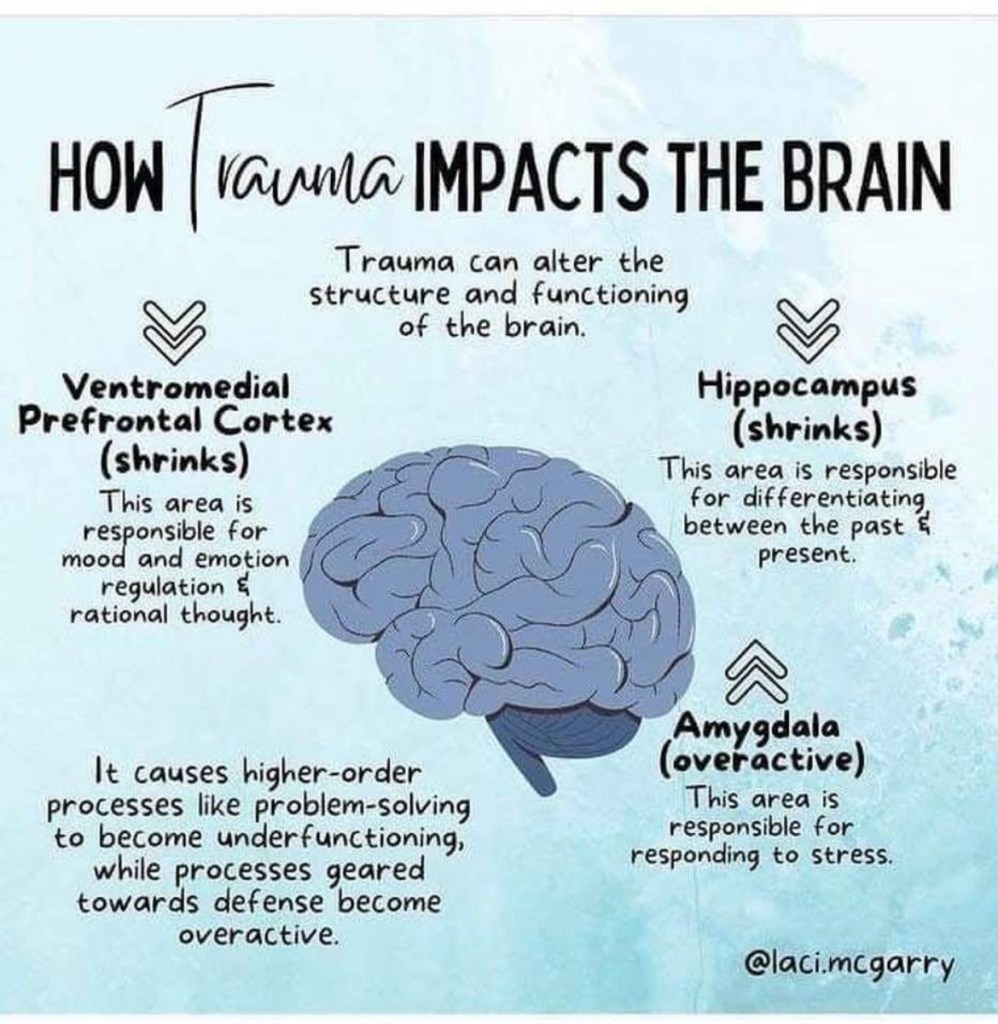
Amygdala hijacking refers to an emotional response where the amygdala, a part of the brain responsible for processing emotions like fear and anger, overrides the more rational prefrontal cortex. This results in an immediate, intense emotional reaction that may not align with the actual situation or its demands. It’s a term popularized by Daniel Goleman in his book Emotional Intelligence.

The Science Behind It

  • Amygdala Activation: When we perceive a threat, the amygdala activates and triggers the “fight-or-flight” response. This can lead to rapid and intense emotional reactions.
  • Cortex Override: The prefrontal cortex, responsible for higher-order thinking and decision-making, is temporarily bypassed during this process. This can result in impulsive actions or responses that we later regret.
  • Biological Basis: This mechanism is rooted in our evolutionary past, where quick reactions to potential dangers were crucial for survival.

The amygdala is the part of the brain responsible for processing emotions like fear and anger, and it can override the more rational prefrontal cortex. This results in an immediate, intense emotional reaction that may not align with the actual situation or its demands.

Interesting Facts

  • Evolutionary Perspective: Amygdala hijacking is an adaptive response from our ancestors who needed to react swiftly to threats. However, in modern contexts, it can lead to overreactions in situations where a calm, rational response would be more appropriate.
  • Stress Impact: Chronic stress can heighten the likelihood of amygdala hijacking, leading to more frequent emotional outbursts and difficulty managing stress effectively.

Amygdala Hijack in Dogmatic Communities

  • Fear-Based Teachings: Constant fear in these environments keeps people in a perpetual state of alertness, reducing rational thought.
  • Groupthink: Heightened emotions can suppress dissent and reinforce dogmatic beliefs.
  • Manipulation: Leaders might exploit these reactions to maintain control and keep members emotionally aroused and manipulable.

Understanding Emotional Hijacking & Complex PTSD

In the book📘Complex PTSD: From Surviving to Thriving by Pete Walker, it sheds light on what Goleman refers to as “amygdala hijacking”—an intense, overwhelming emotional regression that pulls us back to the states of fear, shame, and depression we experienced in childhood.

How Do You Know If You’re in an Amygdala Hijack? 🤔

Here are some signs that you’re in the midst of one:

  1. Intense Emotional Response: If you’re feeling an overwhelming emotion like rage, panic, or intense frustration, that seems to come out of nowhere, this could be a sign of an amygdala hijack.
  2. Tunnel Vision: When your focus narrows, and it feels like all you can see or think about is the source of your stress or anger, your brain’s rational thinking process is being overridden.
  3. Physical Reactions: Notice if your body is responding—heart racing, palms sweating, muscles tensing. These physical signs often accompany an amygdala hijack as your body prepares for ‘fight or flight.’
  4. Impulsive Behavior: Acting without thinking, like shouting, making rash decisions, or storming out of a room, can be a clear indicator that your amygdala has taken over.
  5. Regret or Embarrassment Later: If you find yourself feeling regretful or embarrassed about your reaction after the fact, it’s likely that your prefrontal cortex (responsible for reasoning) was bypassed during the moment.

Recognizing these signs in the moment can be challenging, but it’s the first step toward managing and mitigating their impact.

How this impacts you:

While in a stressed out, sympathetic state, our decision making will be impulsive, emotional and geared towards instant gratification.

In this state, the vagus nerve (our body’s master control switch) can impact everything from immune function to gut health, all the way to how we behave in social settings.

Research: It takes time for your brain to recover from this stress response, but mindfulness and cognitive strategies can help manage it.

Want 13 Tips for Managing Amygdala Hijacks?

We all experience these intense emotional responses, but the good news is there are strategies to help you regain control and respond more calmly.

In this week’s podcast episode, we break down these 13 actionable tips to help you navigate these moments with greater awareness and poise. Whether it’s learning how to pause before reacting or practicing mindfulness techniques, we’ve got you covered.

The amygdala hijack is a powerful brain response that can override our rational thinking, especially in high-stress or dogmatic environments. However, understanding its mechanisms and the role of nutrition in emotional regulation can help us manage our responses more effectively.

RESOURCES:

Breaking Free: Escaping the Diet Culture Trap

Welcome back to Taste0ftruth Tuesdays Wellness Warriors, Health Detectives, Nutrition Ninjas and Truth Seekers! ⛓️‍💥 In this blog and podcast episode, we’re breaking free from the chains of diet culture and diving into the refreshing waters of body-neutral fitness! 🚫🍔➡️🏋️‍♀️

  • 👟 Embracing Performance Goals: Discover how focusing on what your body can do, rather than how it looks, can revolutionize your fitness journey.
  • 🌿Body-Neutral Bliss: Learn how to find peace with your body through a body-neutral approach to exercise, celebrating movement for movement’s sake.
  • 🎯 From Rules to Freedom: Say goodbye to restrictive diets and hello to intuitive eating and joyful movement.

🎧 Tune in as we unpack the myths of diet culture and celebrate the liberating path to body-neutral fitness! 💪✨Remember, you’re not just dropping out of diet culture—you’re leveling up to a healthier, happier you! 🌟

Listen 🎧

Raise your hand if you’ve ever felt the pressure to change your body to fit into society’s standards of beauty. 🙋‍♀️ Well, you’re not alone! For years, I found myself trapped in a cycle of dieting and exercising, all in pursuit of the elusive “perfect” body.

But no matter how hard I tried, I just couldn’t seem to make any lasting progress. Sound familiar? That’s because we’ve been sold a lie – the idea that our worth is tied to the number on the scale or the size of our jeans. But guess what? It’s time to break free from that toxic mindset and embrace a new approach to fitness and nutrition. 

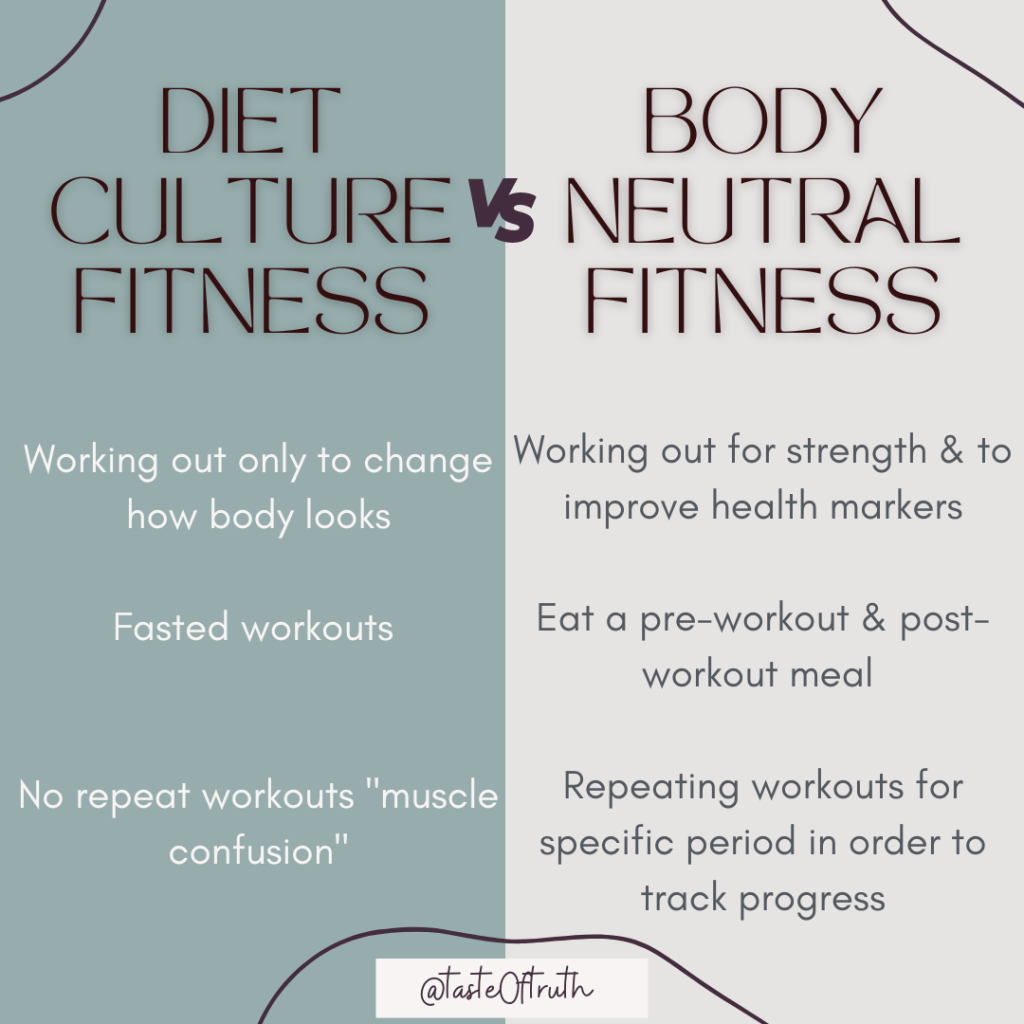
I want to go over common trends I see that I refer to as “diet culture fitness” and then we will compare it with what I recommend “body neutral fitness” ….

Diet culture places value on our weight and size over our health. it promotes messaging that tells us what foods “good” & what foods are “bad.” it glorifies restriction & willpower and ignores our wellbeing.⁣

Diet culture is supported by a multi-billion-dollar industry that pushes weight loss through every medium possible.⁣ Diet culture tells all of us that we are not small enough, strong enough, or lean enough. ⁣

DIET CULTURE IS HARD TO IGNORE.⁣

So, how can one be against diet culture but fine with a diet?⁣ it starts with terminology >>⁣

A DIET merely refers to the foods & drinks we habitually consume. a diet can be a specific, structured way of eating or just our normal daily intake.⁣

The term “DIETING,” is often where the idea of weight loss comes into play. Dieting is (usually) used to describe eating with the purpose of losing weight, which requires a calorie deficit.⁣

>> I am anti-diet culture because i believe that food is not meant to be associated with guilt and shame.

>>I am anti-diet culture because i do not believe that reaching a specific weight, shape or size is ever more important than our physical or mental wellbeing. ⁣

⁣However, I do believe that it is ok to want to change your diet.⁣

⁣It is ok to have aesthetic goals, especially when we can learn to work towards them in a healthy & sustainable manner. ⁣It’s about wanting to shift from old negative eating patterns and thoughts to new behaviors that leave you fueled and healthy.⁣

I believe that it is ok to want to look & feel your best & addressing your nutrition and relationship with food is often the best way to do so.⁣ Your diet is not bad. restriction, shame, guilt, & obsession are

So, what’s the secret to lasting change? It all starts with shifting our focus from aesthetics to performance. Instead of obsessing over how our bodies look, let’s celebrate what they can do! Whether it’s mastering a new yoga pose, hitting a new personal record at the gym, or simply feeling more energized and alive, performance-based goals are where it’s at.

This ultimately means changing the values and the why behind your goal setting:

  • Instead of: “I want to lose the cellulite off my legs.”
  • Try: “I’d like to improve my technique and increase my strength in squats, leg press and deadlifts.”

The intention behind Body Neutral Fitness movement is:

  • Enhance strength & overall performance
  • Boost confidence & find purpose
  • Build stamina for effortless hiking
  • Improve balance, coordination, & mood
  • Enhance health & blood markers

So, WHAT’S THE BOTTOM LINE?

Body neutral fitness is so much more fun, and having fun gets more done! An approach that emphasizes setting and achieving performance goals works better for cultivating a healthy mindset towards fitness which is more sustainable over the long term than an approach that emphasizes aesthetics only.

Whatever your performance may be, shifting the focus changes your mind about your body, which can then remove the limits around what your current body/self can experience.

So, let’s get back to those trends:

What is biofeedback and why is it so important?

This refers to the physiological responses that will bring awareness to our bodily processes and internal health. Sleep, hunger, stress, energy, stress, cravings, recovery, etc. Because optimal health is so much more than just physical! If we track these markers, we can begin to see some underlying causes or maybe issues on why your workout program may not be properly supporting you.

😐Stress: How are your stress levels? How do you manage them?

😋Hunger: Do you wake up hungry? Are you always thinking about food?

💩Digestion: Do you experience painful bloats? do you have regular bowel movements?

😴Sleep: How much sleep are you getting? Do you sleep through the night? How many hours? Do you wake up feeling rested? Does your energy dip mid-afternoon?

🛋️Recovery: Are you taking adequate rest days? Do you feel sore for days after your workouts?

🌀Menstrual Health: Are you missing your period? Do you experience painful cramps or any other PMS symptoms?

🍴Cravings: Do you find yourself struggling with these?

Oftentimes, clients that are experience negative biofeedback, there is an underlying cause that needs to be addressed, BEFORE we can actually focus on a physical transformation goal.

  • 💤Improper sleep or stress management can lead to hormone imbalances that inhibit recovery.
  • 😖Digestive issues can be a sign of chronic stress, low stomach acid and food intolerances.
  • 🥺Mood, focus and libido changes may be linked to under-eating, hormonal imbalances, gut issues, etc.

One of the many variables within fitness program creation is “training volume” (How much you’re doing in a specific time. That can be per workout and within the program like per week/per month). In order to properly prescribe this, a coach needs to understand their clients: fitness level, goals, age, work capacity, recoverability, nutritional status, injury history and life stress. If your coach or fitness trainer didn’t ask you any of these things, that may be something worth looking into.

While physical changes are often used to measure progress, monitoring how you FEEL in response to your nutrition and exercise program is also important. It provides insights to how your metabolism is performing and which possible variables to manipulate in order to see improvements. 💪

🩺NOTE: Assessing biofeedback does NOT replace the need for lab work or medical attention.

ALL-OR-NOTHING Mindset

🧠Diet culture thrives on the All-or-Nothing-mentality. I think this is one of the hardest habits to become aware of and try to replace. I don’t know if anyone else can relate to needing a brain reframe, but typically when clients come to me, they say: “I want a body reset!” and I try to tell them: “You know what, it’s probably your brain that needs the reframe. There are more tips and mindset tricks I want to share with you over the course of season 2.

I want to close say that perfectionism is a TRAP, that so many of us that will get caught up in, within spiritually, and diet and nutrition. And when we slip up, which will always happen, it will feel easier to throw in the towel when we are stuck in all or nothing mentally, on the whole shebang. I think this is one of the most common self-sabotaging behaviors that I see, and this is what I hope to continue the conversations on in this season.

Thank you again for listening/reading and I am looking forward to next’s week’s episode!  Until then, maintain your curiosity, embrace skepticism, and keep tuning in! 🎙️🔒

#podcast#fitness#nutrition#dietculturedropout#dietculture#deconstruction#deconstructingfaith#diet#bodypositive#bodyneutrality#performancegoals#fitnessgoals#bodyimage#dogma

Beyond Dogma: Wellness & Religion’s Striking Parallels

Welcome back to Taste0ftruth Tuesdays Wellness Warriors and truth seekers!

Listen here 🎧

Fundamentalist thinking doesn’t just reside in religious circles—it also permeates wellness and healing spaces. Just as high-control religions exploit human vulnerability, so does diet culture.

I’ve had my share of blindly following extreme health regimens recommended by practitioners, ignoring my own discomfort along the way. It became clear that fundamentalism can crop up in various aspects of life, and part of healing is about recognizing and addressing these tendencies within us.

High control religion and diet culture both capitalize on the brain’s tendency to interpret things in a binary black-and-white manner by presenting clear-cut rules, guidelines, and belief systems that simplify complex issues into easy-to-follow directives.

Clear Rules and Regulations:

  • High Control Religion: Provides rigid doctrines, moral codes, and commandments that delineate right from wrong, good from evil, and righteous from sinful.
  • Diet Culture: Promotes strict dietary regimes, cleanses, and “good” vs. “bad” foods, categorizing eating behaviors as virtuous or detrimental.

In both of these contexts, this black-and-white thinking oversimplifies complex issues related to spirituality and health, offering a sense of clarity and control in exchange for individual autonomy and critical thinking. 

I used to be fixated on healing, always chasing the next fix. When I later dove into a high-control religion, this perpetual quest for self-improvement morphed into the religious ritual of sanctification—an equally exhausting endeavor.

Healing should be about presence, connection, and truly living—not an endless pursuit of perfection.

Have you noticed this shift in your own or others’ healing journeys?

Here are some examples of fundamentalist thinking and behaviors found in both high-control religions and wellness/healing spaces:

AspectHigh-Control ReligionWellness Spaces
Strict Rules and RegulationsRigid doctrines and moral codes with severe consequencesStrict dietary regimes or detox plans with inflexible guidelines, labeling deviations as harmful or sinful
Authority FiguresCentralized figures with unquestionable teachingsGurus or practitioners whose advice is taken as absolute truth
Us vs. Them MentalityClear divisions between the “righteous” and “sinful” outsidersLabeling foods, behaviors, or people as “clean” or “toxic,” fostering an in-group/out-group mentality
Fear-Based TacticsFear of damnation or punishment to maintain controlInstilling fear of illness or toxins to enforce adherence to wellness practices
Exclusive Truth ClaimsBelief that their interpretation of faith is the only truthClaiming their diet or lifestyle is the only path to true health and well-being
Shame and GuiltUsing shame and guilt to enforce complianceShaming individuals for not adhering to specific diets or wellness protocols
Community PressureIntense pressure to conform within the communitySocial pressure to adhere to specific wellness practices, with fear of ostracism for non-compliance
Promised RewardsPromises of spiritual rewards or salvation for adherencePromises of optimal health or purity through strict adherence to wellness practices
Fundamentalist thinking and behaviors found in both

    Seeking Clarity during Stress

    Gravitating towards fundamentalism after experiencing hyper-charismatic or new age movements can seem understandable. The strict rules and structure provide a perceived sense of safety. Particularly during times of stress and uncertainty, we can gravitate towards the need for a sense of control & structure. However, this rigidity and extreme control often lead to increased trauma over time.

    As I deconstruct from the Christian faith, I am re-evaluating beliefs, questioning long-held doctrines, and confronting the challenges faced within spiritually abusive environments. 

    Fundamentalism’s rigid adherence to traditional beliefs and practices can create significant challenges, fostering environments that can stifle personal freedom, promote division, and sometimes lead to conflict and violence. We also see intolerance towards individuals or groups who hold different beliefs or lifestyles, leading to discrimination, ostracism, or even violence towards perceived “outsiders” or “heretics.”

    This is due to the dogmatism, this fundamentalist ideology tends to promote rigid, inflexible interpretations of religious or ideological principles, discouraging questioning or exploration of ANY alternative viewpoints.

    Fundamentalists are often resistant to change and innovation within religious doctrine or practice, viewing such developments as departures from true faith.

    I recently shared a post on Instagram, reflecting on my journey of deconstruction and exploring progressive spaces, I’ve noticed a concerning trend: the lack of nuance and the prevalence of an ‘us vs. them’ mentality.

    Even within progressive Christianity, there’s pressure to conform to certain social norms and ethical behaviors. Disagreement is often met with resistance, and group identity politics can dominate discussions.

    Please review this blog for more information and resources: Understanding Fundamentalism: Rigid Beliefs, Division, and Psychological Impact I am hoping these resources provide comprehensive insights into the dangers of fundamentalism, illustrating its potential to foster intolerance, social division, and conflict

    Understanding these parallels helps us recognize and challenge fundamentalist thinking in all areas of life, promoting a more balanced and critical approach to wellness and healing, and JUST EXISTING!

    Let’s move away from the dualistic thinking and judgment that these ideologies promote, and instead, embrace a more holistic and compassionate path forward.

    That’s all I have for you today folks! Thanks again for listening/reading. Next week, we will continue the conversation breaking from Diet Culture and for future episodes:

    •Dr. Mark Gregory Karris, author of The Diabiological Trinity Healing Religious Trauma from a Wrathful God, Tormenting Hell & a Sinful Self, Religious Refugees: (De)Constructing Toward Spiritual and Emotional Healing and more
    @neilyvanneily is a philosopher and cognitive scientist known for his work in the intersection of religion, cognition, and culture. He holds a Ph.D. in philosophy from Princeton University. We will be discussing his new book- “Religion as Make-Believe,” which offers a thought-provoking analysis of the nature of religious belief and its role in human societies.

    @mburtwrites To discuss Biblical Counseling & a little bit of the evolution of Christian parenting, along with Kelsey McGinnis, they offer a comprehensive exploration of the historical, cultural, ideological, political, and social factors that have influenced Christian parenting over time.

    @carielmoore to discuss Franciscan theology: which focuses on simplicity, poverty, and love for all. Inspired by Saint Francis, it’s about imitating Christ and caring for the marginalized. 🌿 she also explores parenting through the lens of spirituality, theology, and childhood liberation ✨

    and MORE! Until then, maintain your curiosity, embrace skepticism, and keep tuning in! 🎙️🔒

    Have a great week!

    🙏 Please help this podcast reach a larger audience in hope to encourage others! To do so: leave a 5⭐️ review and send it to a friend! Thank you for listening! I’d love to hear from you, find me on Instagram!⁠⁠⁠⁠⁠ @taste0ftruth⁠⁠⁠⁠⁠ or⁠⁠⁠⁠⁠ Pinterest!

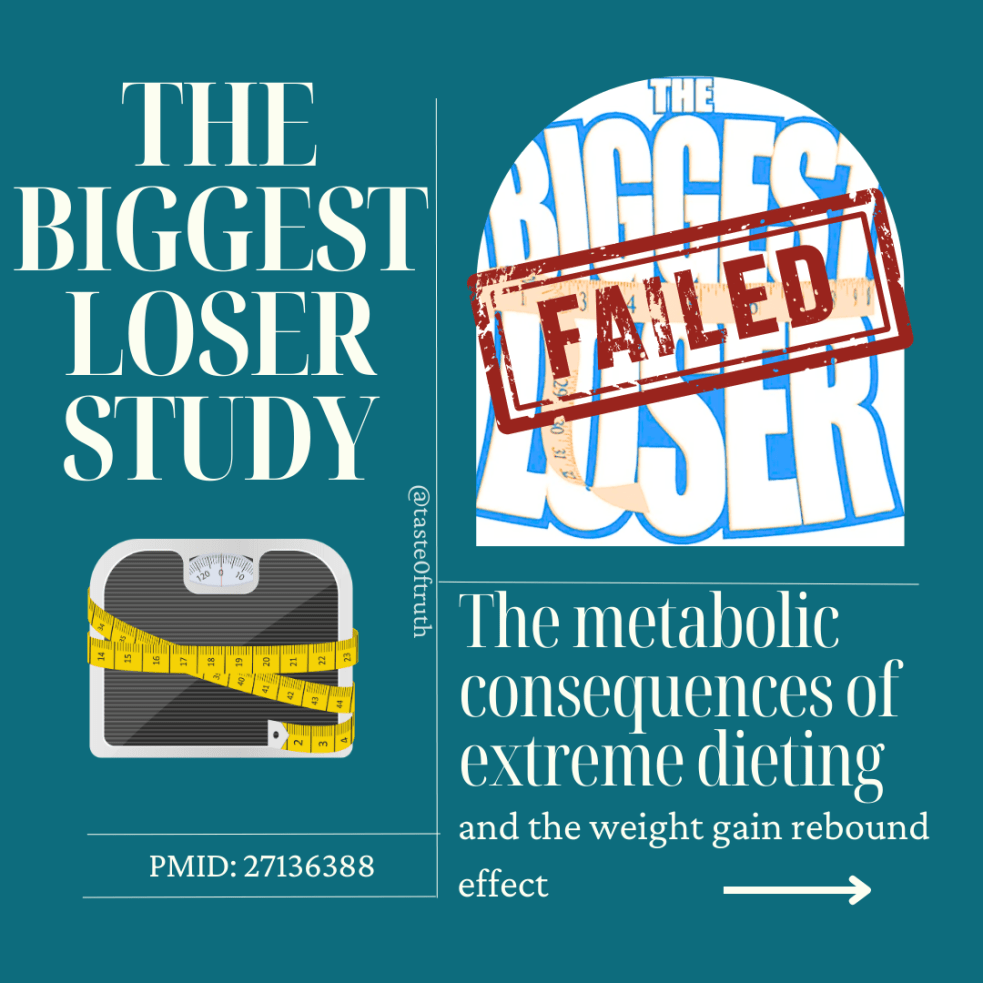
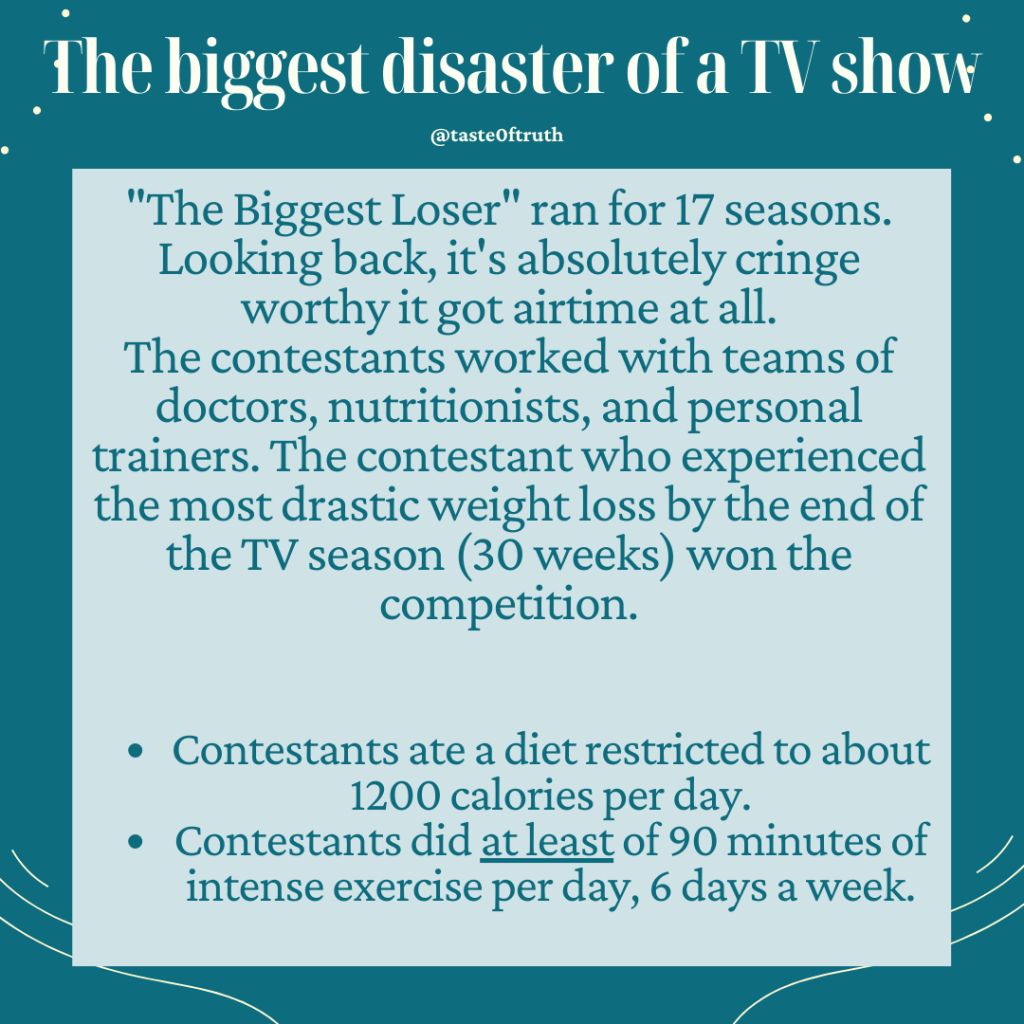
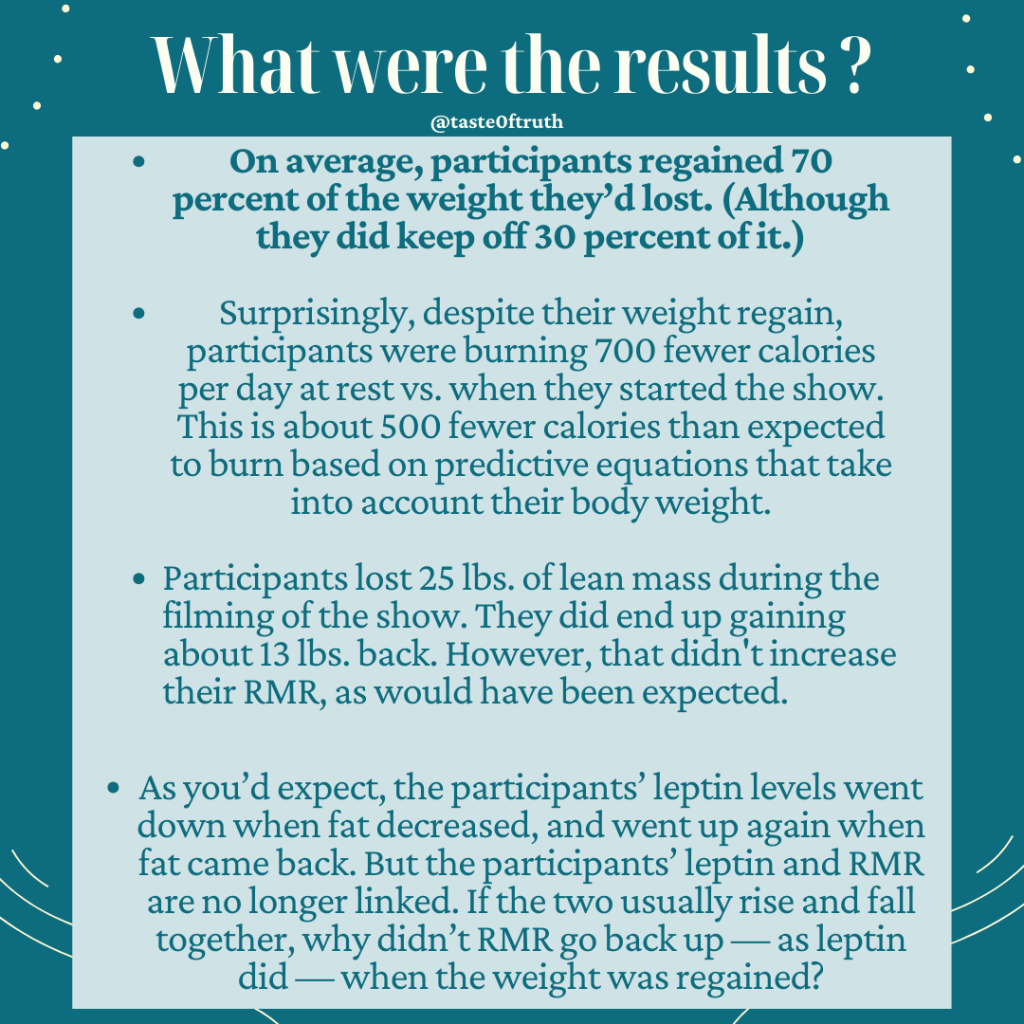
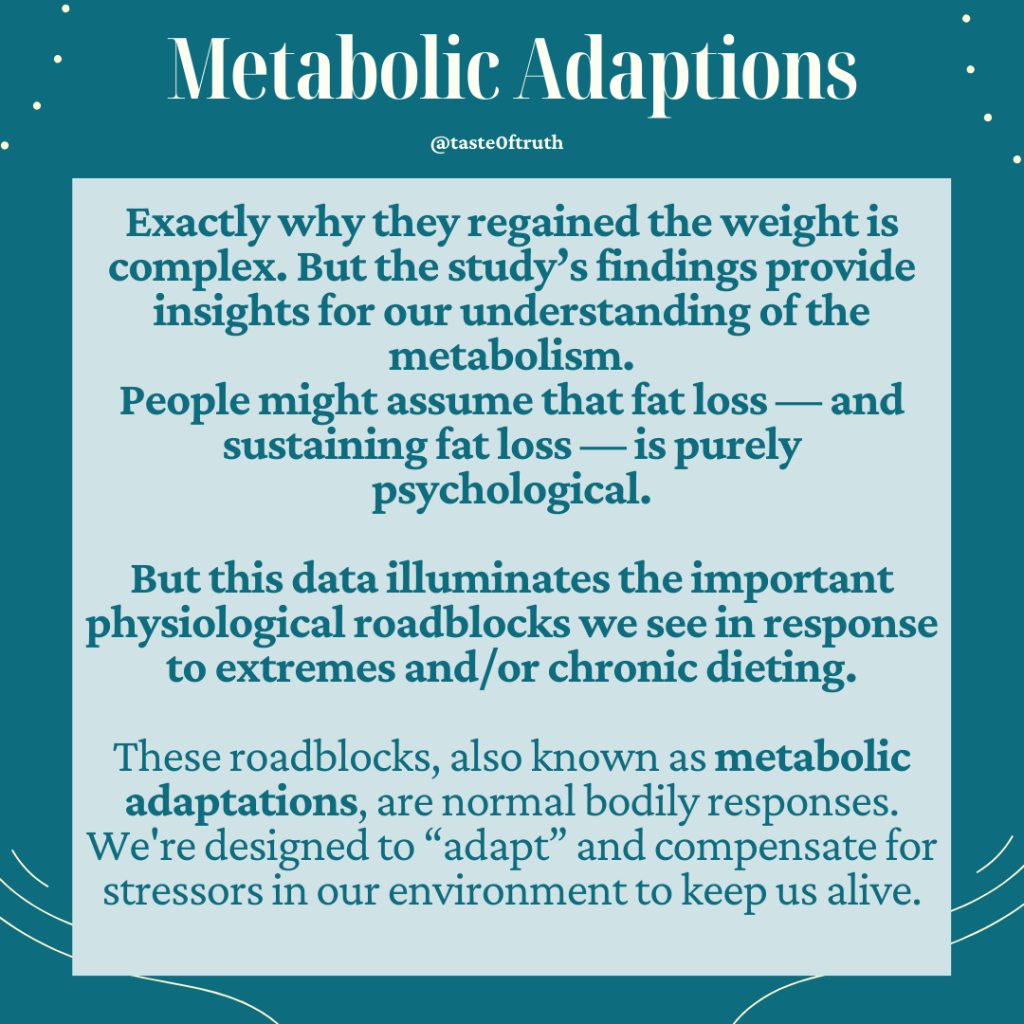
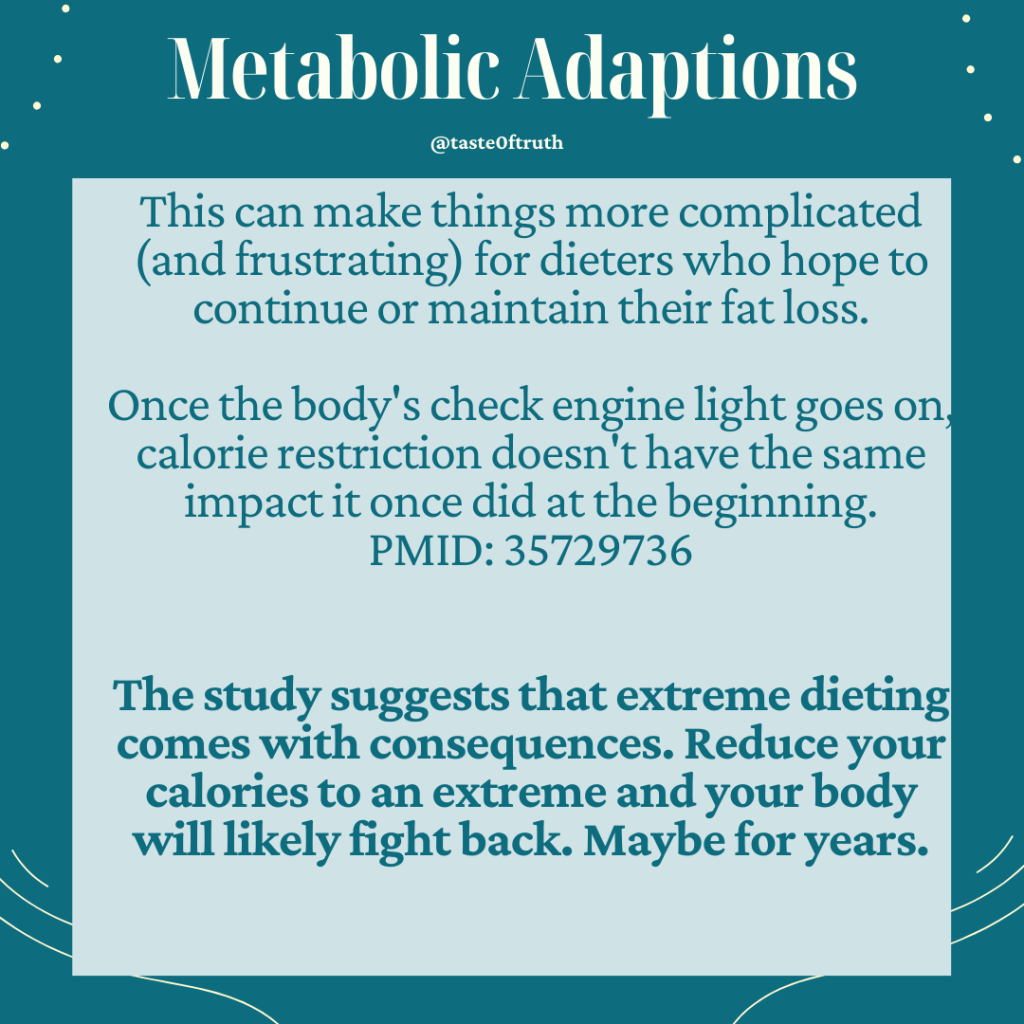
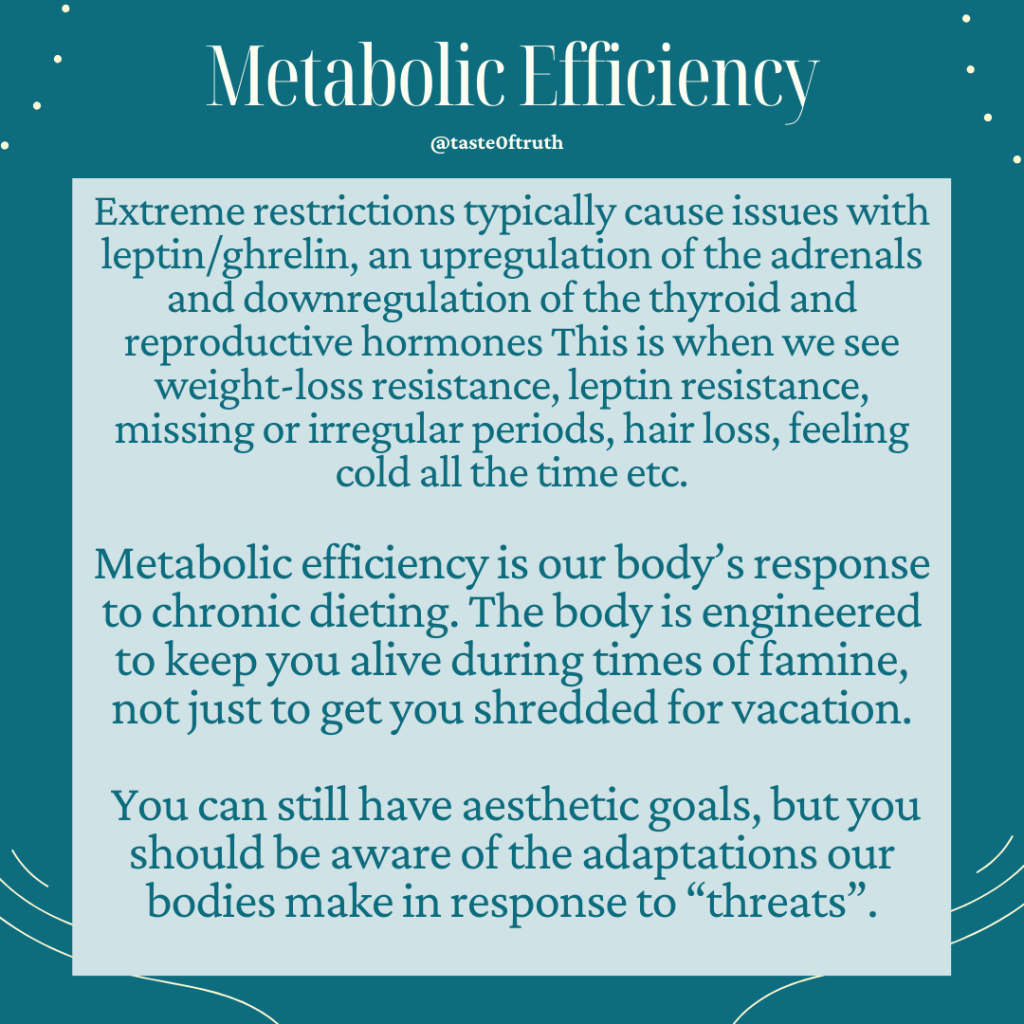
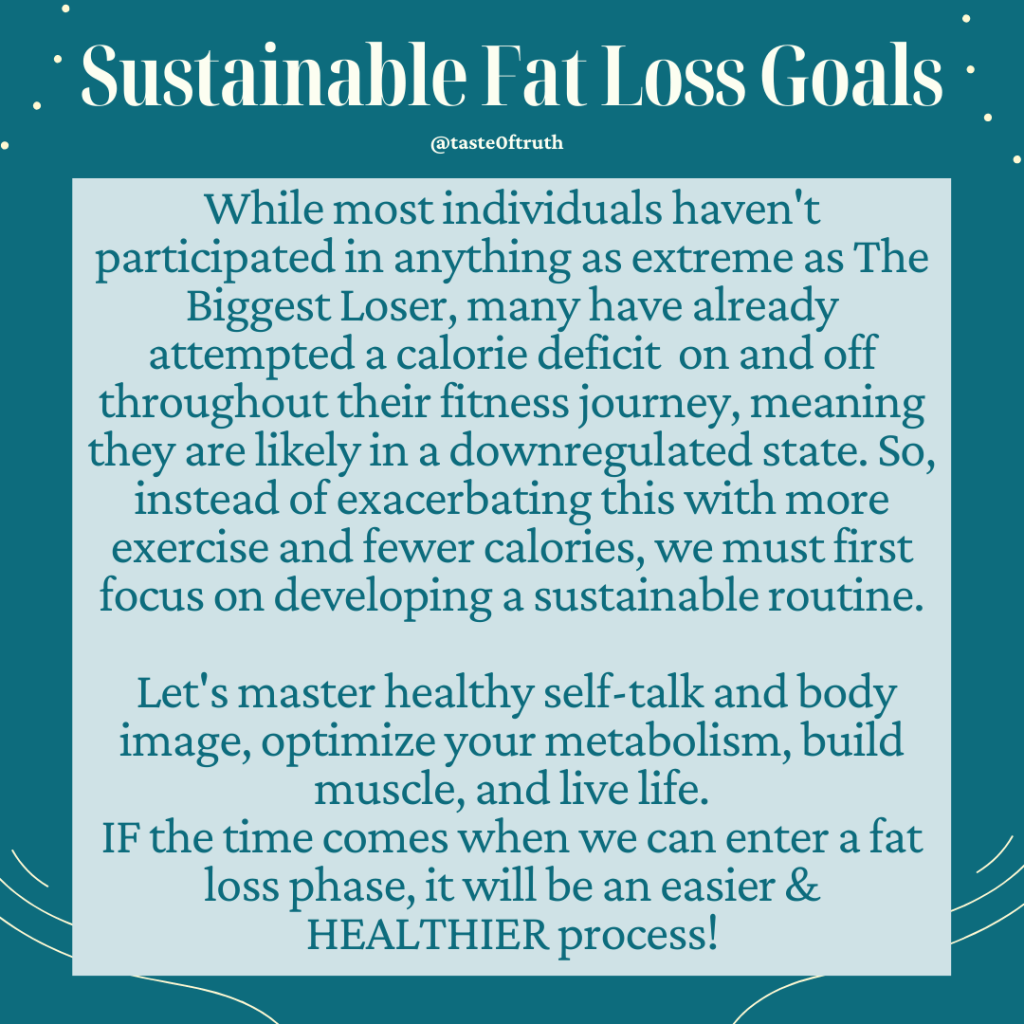
    The Biggest Loser Study-The metabolic consequences of extreme dieting & the weight gain rebound effect

    🎙️ On this week’s podcast with @chewsfoodwisely, we explore the common question: Is your metabolism broken or adapted? An interesting study that showcases BOTH metabolic adaptation & metabolic efficiency is The Biggest Loser study!


    👉🏻SWIPE👉🏻
    Our guest, Nicole, a renowned nutrition expert, helps us navigate through the complexities of metabolism and offers insights into understanding how our bodies respond to various factors such as diet, exercise, and lifestyle.

    We discuss the differences between a “broken” metabolism and one that has adapted to environmental influences, as well as practical tips for optimizing metabolic health.

    Tune in to our latest podcast episode where we’ll be sharing expert insights, tips, and strategies to revitalize your metabolism and get back on track.


    Let’s reclaim your health and crush those goals together! 💪🔥

    #BrokenMetabolism #FitnessJourney #HealthGoals #biggestloser #weightlossjourney #christianpodcast #christianblogger #faith #faithbasedwellness #wellness #dietculturedropout