Living Franciscan Spirituality: Embracing Love, Compassion, and Purposeful Living

Are you ready to unravel the layers of reality, challenge the narratives we’ve been fed, and embrace the journey toward deeper understanding? Welcome to this week’s episode of Taste of Truth Tuesdays, where curiosity is your compass and skepticism your guide. Our wonderful guest, Carie Moore, dives into the profound wisdom of St. Francis of Assisi, exploring how his teachings not only resonate with modern challenges but also empower us to live with intention, compassion, and an unyielding quest for truth.

Buckle up, because we’re about to explore a spiritual path that’s as relevant today as it was centuries ago.

In a world filled with complexity and challenges, finding a spiritual path that resonates with both ancient wisdom and modern realities can be a profound journey. The teachings of St. Francis of Assisi offer a unique perspective that blends a deep reverence for nature with a compassionate approach to faith, making Franciscan principles a valuable guide for our spiritual growth today. Let’s explore how these timeless ideas can address some of the pressing issues we face and enrich our spiritual lives.

Scripture as a Living Guide

Franciscan theology views scripture not merely as a static set of rules but as a dynamic, living guide that evolves with our understanding and experiences. This perspective encourages a more flexible and personal approach to faith, where scripture becomes a tool for reflection and growth rather than a rigid doctrine. By seeing scripture as alive, Franciscan wisdom invites us to continually engage with it, allowing its teachings to shape our journey in a way that is relevant to our current challenges and questions.

Nature as a Reflection of God’s Beauty

St. Francis is renowned for his deep connection to nature, seeing all of creation as a reflection of God’s beauty. This reverence for the natural world resonates strongly in today’s context, where environmental concerns and the pursuit of sustainable living are increasingly important. Gardening, growing our own food, and nurturing our health can be seen as spiritual practices in the Franciscan tradition, ways of honoring the divine in the everyday world around us. By cultivating a mindful relationship with nature, we align ourselves with the Franciscan view of creation as a sacred gift.

Embracing Original Goodness

In mainstream Western Christianity, the doctrine of Original Sin is a cornerstone of theological understanding. This belief, rooted in the Genesis account of Adam and Eve’s disobedience in the Garden of Eden, posits that humanity inherited a fallen, sinful nature as a result of this first transgression. According to this view, Original Sin not only taints every human being but also separates them from God. This inherent flaw necessitates redemption and salvation through Jesus Christ, emphasizing a view of human nature that is fundamentally flawed and in need of divine intervention for reconciliation with God.

This perspective on Original Sin often frames human beings as inherently imperfect and prone to moral failings, which can create a backdrop of guilt and shame. It underscores the need for a savior and reinforces a narrative of human inadequacy that is to be addressed through faith, repentance, and adherence to divine commands.

In contrast, Franciscan theology offers a refreshing and radically different perspective. St. Francis of Assisi and his followers emphasize the concept of Original Goodness rather than Original Sin. This approach reinterprets the story of humanity’s beginnings not as a tale of inherent sinfulness but as one that highlights the fundamental goodness with which humanity was created. According to Franciscan thought, while humanity has the capacity for error, it is fundamentally good and created in the image of God. This view shifts the focus from a narrative of inherent guilt and sinfulness to one of intrinsic worth and potential.

By embracing the idea of Original Goodness, Franciscan theology challenges us to view ourselves and others through a lens of inherent dignity and potential rather than judgment and condemnation. This perspective fosters a more compassionate and hopeful outlook on human nature. It encourages us to see beyond our flaws and recognize the divine spark within ourselves and others, promoting a mindset of acceptance and love rather than guilt and shame.

In a world often dominated by negativity, judgment, and the harshness of modern life, adopting the Franciscan view of Original Goodness can be profoundly liberating. It allows for deeper self-acceptance and a more loving approach to our interactions with others. By acknowledging the fundamental goodness in every person, we can cultivate a more nurturing and supportive environment, both within ourselves and in our relationships.

Thus, while mainstream Christianity’s focus on Original Sin highlights human imperfection and the need for redemption, Franciscan theology invites us to celebrate the inherent goodness in each person, leading to a more compassionate and hopeful approach to life and faith.

The Incarnation as a Divine Choice

The Incarnation: A Tale of Two Theologies

The Incarnation—the belief that God became human in the person of Jesus Christ—is a central doctrine in Christianity, but its interpretation can vary significantly between mainstream Western Christianity and Franciscan theology. Understanding these differences can offer profound insights into how we relate to God and perceive our own sense of purpose.

Mainstream Western Christianity: The Response to Sin

In mainstream Western Christianity, particularly within traditions influenced by Augustine and later theological developments, the Incarnation is often framed primarily as a response to the problem of sin. According to this view, God became human because humanity’s original sin created a chasm between God and creation. The divine act of becoming incarnate is seen as a necessary step to address and rectify this separation.

Here, the focus tends to be on Jesus’s role as the savior who redeems humanity from the consequences of sin and reconciles them with God. The Incarnation is thus viewed through the lens of necessity and redemption—a divine remedy to the human flaw of Original Sin. This perspective underscores the idea that the primary purpose of Christ’s coming was to offer salvation and atonement, highlighting human sinfulness and the need for divine intervention.

Franciscan Theology: A Choice of Love and Closeness

In contrast, Franciscan theology offers a more nuanced and profoundly relational interpretation of the Incarnation. According to Franciscan thought, the Incarnation was not merely a response to sin but a free and loving choice by God. This perspective emphasizes that God’s decision to become human was motivated by a deep desire to be intimately close to humanity, rather than solely to address the problem of sin.

St. Francis of Assisi and his followers believed that God’s incarnation represented an expression of divine love and a way to embrace the human experience fully. In this view, the Incarnation is seen as a gift of presence, revealing God’s profound love and willingness to share in human suffering, joy, and daily life. It is an act of divine solidarity that highlights the inherent worth and dignity of human life.

Implications for Our Relationship with God and Sense of Purpose

Understanding the Incarnation through the Franciscan lens can have significant implications for our personal relationship with God and our sense of purpose:

  1. A Loving Relationship: Viewing the Incarnation as an expression of God’s love rather than a mere solution to sin fosters a relationship with God that is centered on intimacy and mutual connection. It emphasizes that God’s presence in our lives is rooted in love and closeness, rather than just as a response to our shortcomings. This understanding can make our relationship with God feel more personal and nurturing, focusing on divine companionship rather than just divine intervention.
  2. Embracing Human Experience: Recognizing that God chose to become human and share in our experiences encourages us to embrace our own lives with a sense of purpose and dignity. It suggests that our daily experiences, struggles, and joys are deeply valued by God. This perspective can inspire us to live more fully and authentically, knowing that our human lives are part of a divine narrative of love and connection.
  3. Redefining Redemption: While redemption remains a crucial aspect of Christian faith, understanding it through the lens of God’s loving choice rather than solely as a response to sin can shift the focus from guilt and atonement to a broader view of spiritual growth and transformation. It invites us to see redemption as an ongoing process of deepening our relationship with God and living out the love and presence that the Incarnation signifies.
  4. Purposeful Living: Finally, this understanding of the Incarnation encourages us to find purpose in embodying the love and closeness that God demonstrated through becoming human. It inspires us to act with compassion, to engage with others in meaningful ways, and to approach life with a sense of divine purpose and connection.

By reflecting on the Franciscan view of the Incarnation, we gain a richer appreciation of God’s relationship with humanity and how that relationship can shape our own lives. It reminds us that our faith is not just about addressing sin but about embracing a profound and loving connection with the divine.

Walking in Christ’s Footsteps

Walking in the Footsteps of Christ: Franciscan Spirituality vs. Mainstream Christianity

In the heart of Franciscan spirituality lies a profound call to embody the teachings and life of Jesus Christ. St. Francis of Assisi’s invitation to ā€œwalk in the footsteps of Christā€ is not just about personal piety or theological correctness; it’s about a holistic approach to living out one’s faith in every aspect of life. This call for transformative living extends beyond personal spiritual growth to include how we engage with and impact the world around us.

Franciscan Spirituality: Embodying Love and Compassion

For St. Francis and his followers, walking in Christ’s footsteps means living a life marked by radical love, compassion, and humility. This journey is deeply intertwined with how one interacts with others and the world:

  1. Acts of Service: Central to Franciscan spirituality is the practice of serving others selflessly. This involves reaching out to those in need, whether through direct acts of charity, social justice efforts, or simply offering a listening ear and a helping hand. By prioritizing service, Franciscans aim to mirror the compassion of Christ, who served and cared for the marginalized and downtrodden.
  2. Care for the Environment: St. Francis is famously known for his deep connection to nature, seeing all of creation as a reflection of God’s beauty. Walking in Christ’s footsteps, from a Franciscan perspective, involves stewardship of the environment. This includes advocating for sustainable practices, respecting the natural world, and recognizing the interconnectedness of all life. The care for creation reflects a commitment to honoring the divine gift of the world.
  3. Being Present with Others: Franciscan spirituality emphasizes being fully present with others, practicing active listening, and fostering genuine relationships. This presence is an expression of love and respect, reflecting the way Christ engaged with people during his ministry. By valuing and investing in personal relationships, Franciscans strive to embody the love and empathy exemplified by Christ.

Mainstream Christianity: Focus on Belief and Salvation

In contrast, mainstream Western Christianity often places significant emphasis on doctrinal correctness and salvation. This focus manifests in various ways:

  1. Protecting from Hell: A central concern in mainstream Christianity is ensuring that individuals are saved from eternal damnation. This focus often leads to a preoccupation with adherence to specific beliefs, confessions, and rituals designed to secure one’s place in heaven. The emphasis is on right belief and confession as the primary means of salvation.
  2. Belief and Confession: Theological correctness and confession of faith can become central to the Christian experience, sometimes overshadowing the practical aspects of living out one’s faith. There is a strong emphasis on believing the right things and making the correct confessions, which can lead to a focus on doctrinal purity rather than living out the teachings of Christ in daily life.

Carie Moore’s Insight: The Living Faith vs. Theoretical Faith

Carie Moore’s observation highlights a critical distinction between these approaches. While mainstream Christianity often focuses on ensuring that people hold the correct beliefs and are protected from hell, Franciscan spirituality challenges believers to focus on living like Christ. This living faith involves:

  • Authentic Application: Instead of merely adhering to doctrinal statements, Franciscan spirituality calls for the practical application of Christ’s teachings. This means living a life of love, humility, and service, embodying Christ’s example in tangible ways.
  • Transformational Living: Franciscan spirituality emphasizes that the true measure of faith is not just in correct beliefs but in how those beliefs translate into actions. It’s about personal transformation that leads to meaningful engagement with the world and others.
  • Holistic Faith: The Franciscan approach integrates spiritual beliefs with everyday actions, suggesting that a genuine walk with Christ involves living out one’s faith in all aspects of life—through service, environmental care, and compassionate presence.

Conclusion

In summary, while mainstream Christianity often emphasizes correct belief and salvation as its primary focus, Franciscan spirituality invites a broader and more integrated approach to faith. Walking in the footsteps of Christ, according to Franciscan teachings, is about embodying love, compassion, and humility in every action and interaction. Carie Moore’s insight points to a profound shift from a focus on theoretical correctness to a lived experience of faith, encouraging a holistic and impactful approach to embodying the teachings of Christ in our daily lives.

How does this call shape your spiritual journey and your interactions with the world?

The wisdom of St. Francis offers a rich and nuanced approach to spirituality that is deeply relevant to the challenges we face today. By embracing Franciscan principles, we can find new ways to grow spiritually, nurture our connection to nature, and engage with our faith in a dynamic and meaningful way. As you reflect on these questions, consider how Franciscan wisdom might illuminate your own spiritual path and inspire you to live with greater purpose and compassion.

To dive deeper into Franciscan spirituality, a variety of resources can provide valuable insights into the teachings and practices associated with St. Francis of Assisi and his followers. Here are some highly regarded books, articles, and online resources to help you explore Franciscan spirituality:

Books

  1. “The Little Flowers of St. Francis” by St. Francis of Assisi
    • This classic work offers a collection of stories about the life and teachings of St. Francis, providing a glimpse into his spiritual practices and his approach to living a Christ-like life.
  2. “Francis of Assisi: A Revolutionary Life” by Adrian House
    • A comprehensive biography that explores the life of St. Francis, his spiritual journey, and the impact of his teachings.
  3. “St. Francis and the Foolishness of God” by Richard Rohr
    • Richard Rohr, a contemporary Franciscan friar, provides a modern interpretation of St. Francis’s spirituality and its relevance to today’s world.
  4. “The Franciscan Journey: A Guide to Franciscan Spirituality” by Thomas of Celano
    • This book offers insights into Franciscan spiritual practices and the historical context of St. Francis’s life.
  5. “Daily Devotions with St. Francis of Assisi” by Susan Helen Wallace
    • A practical guide for integrating Franciscan spirituality into daily life through devotions and reflections.

Articles and Journals

  1. “Franciscan Spirituality and Its Influence” by William Short
    • An article exploring the historical development and impact of Franciscan spirituality within the Christian tradition.
  2. “The Spirituality of St. Francis of Assisi” by Richard Rohr
    • An article by Richard Rohr that delves into the key elements of Franciscan spirituality and how they can be applied to contemporary life.
  3. “Franciscan Spirituality: A Historical and Theological Overview” in the Journal of Franciscan Studies
    • Academic articles providing scholarly analysis of Franciscan spirituality and its theological implications.

Online Resources

  1. Franciscan Media (franciscanmedia.org)
    • A website dedicated to sharing information about Franciscan spirituality, including articles, podcasts, and resources related to St. Francis and his teachings.
  2. The Order of Friars Minor (OFM) (ofm.org)
    • The official website of the Franciscan Order provides resources on Franciscan spirituality, history, and contemporary practices.
  3. Richard Rohr’s Center for Action and Contemplation (cac.org)
    • Richard Rohr’s organization offers various resources, including articles, podcasts, and online courses on Franciscan spirituality and contemplative practices.
  4. St. Francis of Assisi Parish (stfrancisassisi.org)
    • Many parish websites include resources on Franciscan spirituality, including spiritual reflections, teachings, and community activities.
  5. Franciscan Spirituality on YouTube
    • Search for video resources and talks on Franciscan spirituality. Channels such as Franciscan Friars of the Renewal often provide videos on St. Francis and Franciscan practices.

These resources will help you gain a comprehensive understanding of Franciscan spirituality, its historical context, and its application to modern life.

#FranciscanWisdom #SpiritualGrowth #NatureAndFaith #TheologicalExploration #podcast

The Impact of Biblical Counseling on Scrupulosity and Mental Health in Religious Contexts

Did you know that nearly one in five adults in the U.S. experiences mental health issues each year, with many of these individuals deeply embedded in religious communities? Unfortunately, within certain religious contexts, these struggles are often misunderstood or outright dismissed, leading to significant harm.

This week on the podcast, our guest explains more about Scrupulosity, a form of religious OCD, is particularly prevalent in such environments. Its debilitating effects are often compounded by biblical counseling practices that prioritize doctrinal purity over psychological well-being. This issue is glaringly evident in the teachings of influential figures like John MacArthur, whose views on mental health have had a profound and dangerous impact on his followers.

šŸŽ§Listen here!

Understanding Scrupulosity

Definition: Scrupulosity is a psychological condition where an individual experiences obsessive concerns about sin and moral behavior, often leading to compulsive religious rituals. It’s a form of OCD that is frequently misunderstood as heightened piety rather than a serious mental health issue.

Impact on Individuals: The emotional and psychological toll of scrupulosity can be devastating. Individuals suffering from this condition often live in constant fear of divine punishment, leading to extreme anxiety and depression. Marissa Burt shared harrowing stories of people trapped in this cycle, where every thought and action is scrutinized under the weight of perceived sinfulness, leaving them isolated and in despair.

The Role of Biblical Counseling

Biblical counseling is a form of therapy that relies solely on Scripture to address psychological issues, often rejecting modern psychological practices. Unlike secular mental health care, which is based on scientific research and evidence-based practices, biblical counseling assumes that all mental health issues stem from spiritual problems.

The Harmful Impact of Spiritually Abusive Counseling and Complementarianism

Section 1: The Dangers of Spiritually Abusive Counseling Programs

The spiritually abusive counseling program I was part of advocated for trusting in God and walking in the Spirit, based on Ephesians 4:22-24. While this approach may seem pious, it dangerously neglected real mental health needs and suggested that faith alone could ā€˜cure’ conditions like borderline personality disorder (BPD).

The Reality of Mental Health Needs

BPD is a serious mental health condition requiring professional treatment. While faith can offer support, it is not a substitute for evidence-based therapy. The notion that BPD is merely a result of not being ā€˜Christ-like’ enough not only invalidates legitimate mental health struggles but also manipulates individuals into believing their worth is contingent on religious compliance.

The Damage of Biblical Counseling

Biblical counseling, particularly when practiced by organizations like the Association of Certified Biblical Counselors (ACBC), can be profoundly damaging. This approach often lacks nuance and sensitivity, especially in cases of marital abuse. Instead of addressing abusive behaviors, it focuses on wives’ submission, perpetuating harm and failing to uphold biblical principles of love and justice.

Research indicates that frequent causes of women’s anger include:

  • Feelings of helplessness
  • Not being listened to
  • Injustice
  • Irresponsibility on the parts of others
  • The inability to make desired changes

The Flaws in ACBC’s Approach

ACBC’s counseling model relies on flawed interpretations of biblical passages and neglects psychological insights. It is authoritarian and has the potential for spiritual abuse, lacking accountability and sensitivity. The emphasis on traditional female gender norms that prioritize tenderness over assertiveness further hinders women’s ability to address unfair treatment effectively.

Complementarianism and Gender Equality

The conservative church promotes dangerous ideologies through Complementarianism, which emphasizes women’s submission to men. Historical analysis reveals that contemporary teachings about women’s roles often misinterpret or selectively use biblical passages to justify patriarchal structures rather than promoting equality and mutual respect. Critics argue that these teachings reflect human power structures more than the true message of Christ.

Critique of Biblical Counseling in Cases of Scrupulosity

This approach can be particularly harmful in cases of scrupulosity, where the condition is often mistaken for a lack of faith or moral failure. Instead of providing relief, biblical counseling can exacerbate the problem by reinforcing the idea that the sufferer must simply pray harder, read the Bible more, or repent more sincerely. Insights from Marissa Burt into these counseling sessions reveal a troubling pattern: individuals are often led deeper into their condition, with no recognition of the need for professional mental health care.

Towards Equality and Liberation

Achieving gender equality and women’s liberation is crucial for building a more prosperous and harmonious world. By examining church history and contemporary interpretations, we can challenge and move beyond outdated beliefs, advocating for a more equitable and respectful understanding of biblical teachings.

Real-Life Examples: Marissa shared examples of people who, after years of biblical counseling, found themselves more entrenched in their fear and anxiety. Instead of receiving the help they needed, they were told that their mental struggles were a sign of spiritual weakness, further alienating them from any form of relief.

John MacArthur’s Controversial Views

Introduction to MacArthur’s Views: John MacArthur, a prominent evangelical leader, has long been a vocal critic of psychological diagnoses and treatments, dismissing them as unbiblical. He argues that mental health issues are primarily spiritual problems that should be addressed through Scripture, prayer, and repentance.

Impact on Followers: MacArthur’s teachings have had a profound influence on his followers, many of whom reject necessary mental health care in favor of biblical counseling. This can lead to the worsening of conditions like scrupulosity, as individuals are discouraged from seeking professional help. Marissa Burt’s experiences highlight the real harm caused by these teachings, as people are led to believe that their suffering is a result of sin rather than a treatable mental health condition.

Marissa’s Insights: Marissa shared that within biblical counseling settings influenced by MacArthur’s teachings, there is little room for acknowledging the validity of psychological science. Instead, individuals are pushed to conform to a narrow view of spirituality, often at the expense of their mental health. This rigid approach can have devastating consequences, leaving individuals trapped in a cycle of guilt, fear, and spiritual abuse.

The Intersection of Faith and Mental Health

The Struggle for Balance: Many individuals find themselves torn between their faith and the need for mental health care. The struggle to reconcile these two aspects of their lives can be overwhelming, particularly when religious leaders like MacArthur promote the idea that mental health issues are purely spiritual.

Call for Change: It’s time for religious communities to adopt a more compassionate and informed approach to mental health. Psychological science and faith need not be at odds; in fact, they can complement each other in helping individuals achieve overall well-being. Recognizing the validity of mental health issues and seeking appropriate care is not a sign of weak faith but of a holistic approach to human flourishing.

Conclusion

Scrupulosity is a serious mental health condition that can be exacerbated by the teachings of biblical counseling and figures like John MacArthur. The dismissal of psychological science in favor of a purely scriptural approach can lead to significant harm, trapping individuals in cycles of guilt and fear.

If you or someone you know is struggling with mental health issues, it’s crucial to seek out appropriate care. Be cautious of religious teachings that diminish the importance of psychological well-being. Remember, it’s possible to maintain your faith while also taking care of your mental health.

Sources:

https://mburtwrites.substack.com/p/the-stranglehold-of-christian-scrupulosity

The statistic about nearly one in five adults in the U.S. experiencing mental health issues annually is based on general findings from sources like the National Institute of Mental Health (NIMH) or the Centers for Disease Control and Prevention (CDC). For example, the NIMH often reports that about 20% of adults experience some form of mental health disorder each year.

  • National Institute of Mental Health (NIMH): They provide comprehensive data on mental health statistics. NIMH Statistics
  • Centers for Disease Control and Prevention (CDC): They offer data on mental health prevalence and its impact. CDC Mental Health

Books

  • “The Doubting Disease: Help for Scrupulosity and Religious Compulsions” by Joseph W. Ciarrocchi: A classic resource that offers a mix of psychological and spiritual guidance for those dealing with scrupulosity and religious OCD.

Articles & Guides

  • International OCD Foundation (IOCDF) Guide on Scrupulosity: Provides a thorough overview of scrupulosity, including treatment options and practical tips. IOCDF Guide
  • “Understanding Scrupulosity” by Dr. Gregory Bottaro: Offers insights from a clinical psychologist who integrates faith and psychology, providing both professional and spiritual perspectives.

Online Communities & Forums

  • Reddit’s r/scrupulosity: A supportive online community where individuals share experiences, resources, and support related to scrupulosity. Reddit r/scrupulosity
  • OCD Action Forum: Contains specific sections for religious and moral OCD, allowing individuals to connect and share experiences. OCD Action Forum

Therapy & Counseling

  • Cognitive Behavioral Therapy (CBT) with Exposure and Response Prevention (ERP): This is the gold standard for treating scrupulosity. Finding a therapist who specializes in CBT and ERP can be particularly effective.
  • Faith-Based Counseling: For those seeking to integrate their faith into therapy, it’s important to find a counselor who understands both OCD and the individual’s religious background.

Non-Christian Sources

  • National Alliance on Mental Illness (NAMI): Provides general mental health resources and information on how different settings, including religious ones, can impact mental well-being. NAMI Website
  • Pew Research Center: Offers reports and data on the intersection of religion and mental health. Pew Research Center Religion & Public Life
  • American Psychological Association (APA): Publishes research and articles on mental health, including impacts of religious environments. APA Website
  • Secular Therapy Project: Connects individuals with secular therapists sensitive to the impact of religious settings on mental health. Secular Therapy Project

These resources should offer a well-rounded approach to understanding and managing scrupulosity, catering to a variety of needs and perspectives for anyone navigating the complexities of scrupulosity.

The Illusion of Control: Neuroscience of Fundamentalism and Diet Culture

Welcome back Wellness Warriors, and truth seekers!

As we have been discussing all of Season 2, Fundamentalist thinking doesn’t just reside in religious circles—it also permeates wellness and healing spaces. Just as high-control religions exploit human vulnerability, so does diet culture.

I’ve had my share of blindly following extreme health regimens recommended by practitioners, ignoring my own discomfort along the way. It became clear that fundamentalism can crop up in various aspects of life, and part of healing is about recognizing and addressing these tendencies within us.

We have discussed how high control religion and diet culture both capitalize on the brain’s tendency to interpret things in a binary black-and-white manner by presenting clear-cut rules, guidelines, and belief systems that simplify complex issues into easy-to-follow directives.

In this post, we’ll exploring deeper into how the brain’s craving for control and the dopamine boost it triggers can explain why people may transition into high-control environments or swing from one extreme to another. Such as moving from a loose, permissive belief system to a strict, rule-bound one, or from an unrestricted eating pattern to a rigid diet.

The Illusion of Control and Dopamine

The concept of the “illusion of control” ties deeply into our brain’s reward system, particularly through dopamine, a neurotransmitter crucial for motivation and learning. When individuals believe they have control over situations, even when that control is illusory, their brains can release dopamine. This release can provide a rewarding feeling, reinforcing the behavior or belief that leads to this sense of control.

The brain’s craving for control plays a crucial role in how individuals respond to structured systems, be it in religion, diet culture, or Multi-Level Marketing (MLM) schemes. When we encounter a belief system or set of teachings that offers clear, structured guidance, it triggers a sense of control, even if that control is illusory. This perceived control is neurologically rewarding because it leads to the release of dopamine, a neurotransmitter associated with motivation and the reinforcement of behaviors of control over one’s body and health, triggering dopamine release and creating a feedback loop that encourages continued adherence. Similarly, religious fundamentalism often offers clear-cut guidelines on how to live, providing the same sense of security and control, thus reinforcing the behavior.

This perspective not only sheds light on why people might gravitate towards fundamentalism or diet culture but also opens up a discussion on the broader implications of how our brains can be influenced by the promise of control, even when that control is more perceived than real.

What Causes the Illusion of Control

The illusion of control is driven by several factors and provides psychological benefits.

In health and wellness, people often adhere to strict diets or exercise routines, believing they control their weight or fitness, even though genetics and other factors also play a role. This illusion of control can be comforting and encourage adherence.

Similarly, in religion, individuals may follow rigid rules or rituals, thinking they control their spiritual outcomes or moral status, which provides a sense of security and boosts self-esteem.

When did the concept of the illusion of control originate?

The concept, first described by psychologist Ellen Langer in 1975, was initially seen as a way to maintain self-esteem by attributing success to oneself and distancing from failure. Recent research suggests it results from misjudged causality, where people’s sense of control is distorted by their actions rather than actual influence.

Fundamentalism and Structured Belief Systems

Fundamentalism, with its rigid doctrines and absolute truths, can offer a powerful sense of control, especially for those who have previously encountered ambiguity or lack of structure. These rules provide a clear framework for living, reducing the anxiety that comes with uncertainty, and delivering a dopamine-driven sense of reward that reinforces their commitment to the system. This appeal to control can be understood through several key aspects:

1. Structure and Certainty

Fundamentalism provides a clear and structured framework for understanding the world and one’s place within it. This structured approach often includes strict rules, definitive answers, and a well-defined moral code. For individuals who have experienced the fluidity and unpredictability of hyper-charismatic or New Age movements, the stability offered by fundamentalist systems can be particularly attractive.

In fundamentalist belief systems, every aspect of life is often governed by established doctrines. This comprehensive structure can reduce the anxiety associated with uncertainty and ambiguity, offering a predictable environment where individuals feel they know the correct course of action. This sense of predictability can be a significant source of comfort, as it replaces the confusion and complexity of previous experiences with clear-cut answers.

2. The Illusion of Control and Dopamine

The dopamine-driven reward system plays a crucial role in why fundamentalism is appealing. When individuals adhere to the strict rules and guidelines of fundamentalism, their brain releases dopamine, providing a sense of satisfaction and reinforcement. This dopamine release occurs because the rigid structure of fundamentalism offers a perceived sense of control over one’s life and environment.

This sense of control, even if illusory, can be neurologically rewarding. The anticipation and experience of control lead to the release of dopamine, which reinforces the behavior and belief that adherence to fundamentalist teachings is beneficial. Over time, this feedback loop strengthens individuals’ commitment to the belief system, as the dopamine-driven rewards make the structured environment feel more gratifying and secure.

3. Regaining a Sense of Agency

For those coming from less structured or more ambiguous belief systems, fundamentalism can represent a way to regain a sense of agency and direction. After experiencing a lack of clarity or guidance, individuals may find the definitive answers and rules provided by fundamentalism to be reassuring. The shift towards a more structured belief system can be seen as an effort to reassert control over one’s life and decisions.

Fundamentalism’s clear boundaries and absolute truths provide a stark contrast to the uncertainty that may have characterized previous experiences. This transition can be particularly appealing for individuals seeking to regain stability and predictability. The rigid nature of fundamentalism offers a form of control that feels tangible and dependable, even if it is ultimately based on a set of beliefs rather than empirical evidence.

4. Community and Belonging

Fundamentalist communities often emphasize conformity and collective adherence to their doctrines. This communal aspect can further reinforce the illusion of control by providing social validation and support. Being part of a group that shares the same rigid beliefs can enhance the sense of belonging and reinforce the perceived control individuals feel.

The social reinforcement within fundamentalist groups contributes to the illusion of control by making individuals feel supported and validated in their adherence to the teachings. This communal validation can strengthen their commitment to the belief system, as the positive feedback from the group further activates the brain’s reward system.

5. Cognitive Dissonance and Commitment

Once individuals have invested significant time and energy into a fundamentalist belief system, cognitive dissonance can make it challenging to question or abandon their beliefs. The discrepancy between their initial expectations and any potential contradictions or failures within the system can lead them to double down on their commitment.

The illusion of control provided by fundamentalism makes it psychologically difficult to admit that the system may not offer the promised stability or certainty. This cognitive dissonance drives individuals to reinforce their adherence to the system, as admitting any flaws would undermine the very control and certainty they sought to obtain.

The Illusion of Control in Multi-Level Marketing (MLM) Schemes

Similarly to fundamentalist belief systems, MLMs leverage the illusion of control by presenting themselves as opportunities for individuals to take charge of their own success. Participants are led to believe that their efforts directly determine their earnings and advancement within the company. This illusion can be highly appealing, giving people a sense that their hard work and decisions will lead to tangible rewards.

The prospect of achieving success and the belief that one’s actions are under their control can trigger dopamine release in the brain. When individuals see small successes or receive positive feedback, it reinforces their belief in their ability to control their destiny, making them more likely to continue participating despite setbacks.

MLMs often provide structured guidelines, training, and motivational materials that create a sense of control. Participants are given specific strategies to follow, which can make them feel like they have a roadmap to success. This structure reinforces the illusion that they are in control of their outcomes, even when success largely depends on recruitment and team performance.

MLMs frequently emphasize personal responsibility and self-improvement. They promote the idea that success is a result of individual effort and perseverance, subtly shifting blame for any failures onto the individual rather than the system itself. This reinforces the illusion of control by making participants believe that if they follow the system closely enough, they will succeed.

The social aspect of MLMs, including group meetings, motivational events, and social media communities, can amplify the illusion of control. Participants often see others achieving success and feel motivated by their peers, which can strengthen their belief in their own ability to control their outcomes.

Once individuals have invested time, money, and effort into an MLM, the illusion of control can make it difficult for them to step away. The cognitive dissonance created by the gap between their expectations and reality can lead them to double down on their commitment, further reinforcing their belief in their control over their situation.

The Role of Power in the Illusion of Control

Powerful individuals—including CEOs, politicians, religious leaders, and MLM leaders—often overestimate their control over events beyond their expertise. This inflated sense of control can lead to hubris, risky decisions, and an all-or-nothing approach. For example, a wellness guru who believes they can control all aspects of health through strict regimens may push extreme diets or unproven supplements, driven by the illusion of control. Similarly, a religious leader might impose rigid doctrines, believing they can control or influence every aspect of followers’ lives. This overconfidence and all-or-nothing mindset can result in extreme actions and decisions, as seen when individuals adopt overly restrictive health practices or dogmatic religious rules, ultimately leading them to lose touch with reality.

Appeal to Vulnerable Groups

Studies suggest that no one is immune to the illusion of control—under certain circumstances. Research shows that those who are personally involved in actions are among those most likely to overestimate their influence on the outcome. In addition, the behavior of pathological gamblers is driven by the belief that they can beat the odds of what is demonstrably determined purely by chance.

There are people known to be at low risk of susceptibility to illusory control: those who are depressed. Numerous studies show that depressed people are virtually invulnerable to the illusion of control. They have been found to have less distorted views than the non-depressed across a wide array of perceptions and judgments‑a state of mind that has been labeled depressive realism. They are more likely to see the futility of taking action to influence outcomes. When vulnerable individuals meet a group that offers definitive answers provides the certainty and structure these individuals crave, making them more likely to adopt and adhere to the teachings.

Effects of the Illusion of Control

A sense of control is an adaptive trait linked to better health outcomes, including reduced risk of mortality and diseases, improved physical and cognitive function, and higher life satisfaction. It promotes positive behaviors like exercise and good sleep and enhances optimism and a sense of purpose.

However, the illusion of control can also lead to magical thinking, poor decision-making, and risky behaviors such as gambling, as it may encourage unrealistic beliefs and prevent thorough analysis of situations.

In Summary

Reflect on how the illusion of control might be influencing their own choices and beliefs. Consider whether a sense of control is driving your decisions in areas like health, religion, or business ventures. Understanding this psychological mechanism can empower you to make more informed choices and break free from patterns that may not truly serve your well-being. Share your thoughts and experiences in the comments or join the conversation on our social media channels to explore these ideas further.

Plus, join us this week on the podcast, as we talk withĀ @mburtwritesĀ a talented author and advocate in children’s literature, about faith, parenting styles, and mental wellness. Share your thoughts or join the conversation—let’s explore the impact of the illusion of control together! šŸ’­

šŸŽ§here

RESOURCES:

Books:

  1. “The Illusion of Control: Why We Overestimate Our Ability to Control Events” by Ellen J. Langer
    • A foundational text by the psychologist who first described the illusion of control.
  2. “Thinking, Fast and Slow” by Daniel Kahneman
    • This book delves into various cognitive biases and heuristics, including the illusion of control.
  3. “The Power of Habit: Why We Do What We Do in Life and Business” by Charles Duhigg
    • Explores how habits form and the role of dopamine in reinforcing behaviors.
  4. “The Dopamine Diet: The Complete Guide to Lose Weight, Boost Your Energy, and Live a Happier Life by Rebalancing Your Brain Chemistry” by Neil W. Dhingra
    • Focuses on how diet impacts dopamine levels and overall well-being.

Articles and Papers:

  1. “Illusion of Control” | Psychology Today
    • An overview of the illusion of control and its psychological underpinnings. Read here
  2. “The Truth About Dopamine and Your Brain” | Psychology Today
    • Explains dopamine’s role in motivation and reinforcement. Read here
  3. “Biology of Motivation, Dopamine, and Brain Circuits That Mediate Pleasure” | SpringerLink
    • A scientific paper detailing dopamine’s role in motivation and reward. Read here
  4. “The Illusion of Control in the Financial Markets” by E. J. Langer
    • Examines how the illusion of control affects decision-making in financial contexts. Read here

Online Resources:

  1. TED Talks
    • Search for TED Talks on cognitive biases and the role of dopamine for accessible explanations and examples.
  2. Coursera and edX
    • Look for courses on psychology, neuroscience, and behavioral economics that cover these topics in depth.
  3. YouTube Channels
    • Channels like CrashCourse and Khan Academy often have videos on psychology and neuroscience that touch on related concepts.

These resources should provide a comprehensive understanding of how the illusion of control and dopamine influence behavior across different contexts.

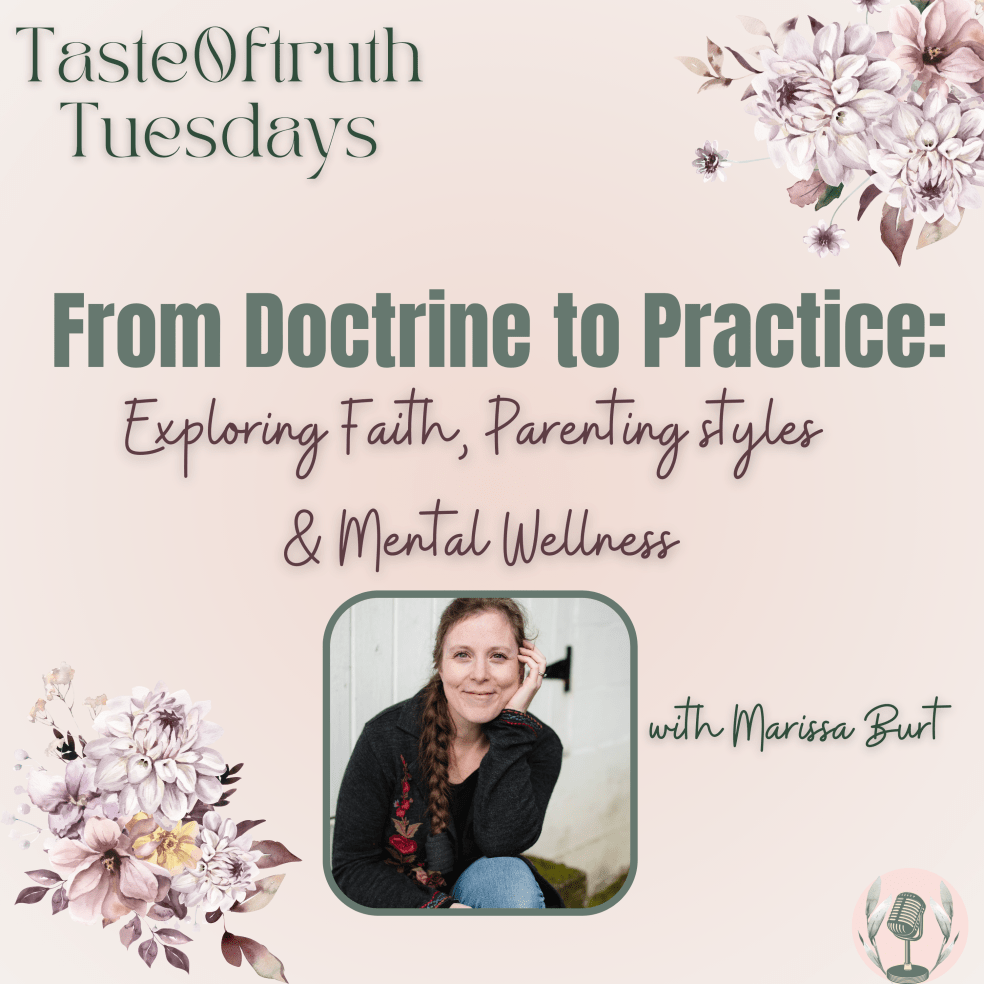
From Doctrine to Practice: Exploring Faith, Parenting, & Mental Wellness

Welcome back to Taste0fTruth Tuesdays! 🌟 New Episode Alert! 🌟

Join us as we sit down with the brilliant @mburtwrites , a leading voice in children’s literature. This week, we tackle some tough but vital topics:

🧠 John MacArthur’s controversial views on mental health and biblical counseling.

šŸ‘¶ The impact of Tedd Tripp’s ā€˜Shepherding a Child’s Heart’ on parenting.

šŸ’” Sensitive approaches to childhood trauma and effective support strategies.

šŸ™ The psychological toll of Christian scrupulosity and ways to raise awareness.

šŸ—£ļø My personal experience with abusive biblical counseling and its effects.

Gain valuable insights on faith, parenting, and mental health from Marissa’s unique perspective. Tune in now and let’s navigate these challenges together!

I am grateful for this conversation, I hope it blesses you too! šŸ•Šļø

⁠Current Projects (marissaburt.com) ⁠

⁠Analysis of Popular Christian Parenting Teaching – YouTube⁠

⁠Instagram⁠ & ⁠Her linktree

šŸŽ§Listen here!

šŸ™ Please help this podcast reach a larger audience in hope to edify & encourage others! To do so: leave a 5ā­ļø review and send it to a friend! Thank you for listening! I’d love to hear from you, find me on Instagram!⁠⁠⁠⁠ @taste0ftruth⁠⁠⁠⁠ or⁠⁠⁠⁠ Pinterest! ⁠⁠ ⁠⁠⁠ ā