Projection, Power, and the Pagan Revival

When Belief Becomes Control

This episode isn’t about religion versus religion.
It’s about power, fear, and what happens inside belief systems when conformity becomes more important than honesty.

In this conversation, I’m joined by Sigrin, founder of Universal Pagan Temple.

She’s a practicing Pagan, a witch, a public educator, and someone who speaks openly about leaving Christianity after experiencing fear-based theology, spiritual control, and shame. I want to pause here, because even as an agnostic, when I hear the word witch, my brain still flashes to the cartoon villain version. Green. Ugly. Evil. That image didn’t come from nowhere. It was taught.

One of the things we get into in this conversation is how morality actually functions in Pagan traditions, and how different that framework is from what most people assume.

She describes leaving Christianity not as rebellion, but as self-preservation. And what pushed her out wasn’t God. It was other Christians.

For many people, Christianity isn’t learned from scripture.
It’s learned from other Christians.

The judgment.
The constant monitoring.
The fear of being seen as wrong, dangerous, or spiritually compromised.

In high-control Christian environments, conformity equals safety. Questioning creates anxiety. And the fear of social punishment often becomes stronger than belief itself.

When belonging is conditional, faith turns into survival.


What We Cover in This Conversation:

Paganism Beyond Aesthetics

A lot of people hear “Paganism” and immediately picture vibes, trends, or cosplay. We spend time breaking that assumption apart.

  • Sigrin explains that many beginners jump straight into ritual without actually invoking or dedicating to the divine.
  • She talks about the difference between aesthetic practice and intentional practice.
  • For people who don’t yet feel connected to a specific god or goddess, she offers grounded guidance on how to approach devotion without forcing it.
  • We talk about the transition she experienced moving from Christianity, to atheism, to polytheism.
  • We explore the role of myth, story, and symbolism in spiritual life.
  • She shares her experience of feeling an energy she couldn’t deny, even after rejecting belief entirely.
  • We touch on the wide range of ways Pagans relate to pantheons, including devotional, symbolic, ancestral, and experiential approaches.

The takeaway here isn’t “believe this.”
It’s that Paganism isn’t shallow, trendy, or uniform. It’s relational.


No Holy Book, No Central Authority

One of the most misunderstood aspects of Paganism is the absence of a single text or governing authority.

  • Sigrin references a line she often uses: “If you get 20 witches in a room, you’ll have 40 different beliefs.”
  • We talk about how Pagan traditions don’t operate under enforced doctrine or centralized belief.
  • She brings up the 42 Negative Confessions from ancient Egyptian tradition as an example of ethical self-statements rather than commandments.
  • These function more like reflections on character than laws imposed from above.
  • We compare this to moral storytelling across different myth traditions rather than rigid rule-following.
  • She emphasizes intuition and empathy as core tools for ethical decision-making.
  • I add the role of self-reflection and introspection in systems without external enforcement.

This raises an important question: without a script, responsibility shifts inward.

Why This Can Be Hard After Christianity
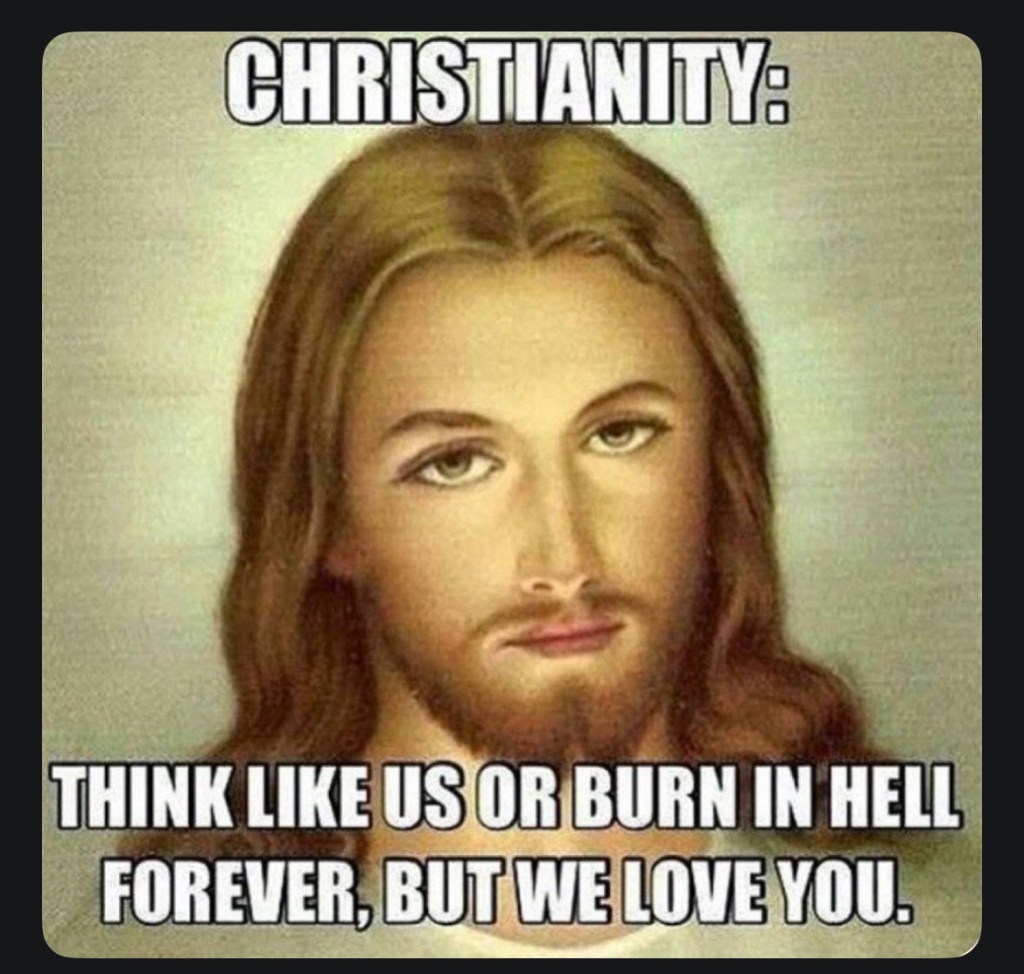
We also talk honestly about why this freedom can be uncomfortable, especially for people leaving authoritarian religion.

  • Sigrin notes how difficult it can be to release belief in hell, even after leaving Christianity.
  • Fear doesn’t disappear just because belief changes.
  • When morality was once externally enforced, internal trust has to be rebuilt.
  • Pagan paths often require learning how to sit with uncertainty rather than replacing one authority with another.

This isn’t easier.
It’s quieter.
And it asks more of the individual.

That backdrop matters, because it shapes how Paganism gets misunderstood, misrepresented, and framed as dangerous.


The “Pagan Threat” Narrative

One of the reasons Pagan Threat has gained attention and sparked controversy is not just its content, but whose voice it carries and how it’s framed at the outset.

  • The book was written by Pastor Lucas Miles, a senior director with Turning Point USA Faith and author of other conservative religious critiques. The project is positioned as a warning about what Miles sees as threats to the church and American society. The foreword was written by Charlie Kirk, founder of Turning Point USA. His introduction positions the book as urgent for Christians to read.

From there, the book makes a striking claim:

  • It describes Christianity as a religion of freedom, while framing Paganism as operating under a hive mind or collective groupthink.

A key problem is which Paganism the book is actually engaging.

  • The examples Miles focuses on overwhelmingly reflect liberal, online, or activist-adjacent Pagan spaces, particularly those aligned with progressive identity politics.
  • That narrow focus gets treated as representative of Paganism as a whole.
  • Conservative Pagans, reconstructionist traditions, land-based practices, and sovereignty-focused communities are largely ignored.

As a result, “wokeness” becomes a kind of explanatory shortcut.

  • Modern political anxieties get mapped onto Paganism.
  • Gender ideology, progressive activism, and left-leaning culture get blamed on an ancient and diverse spiritual category.
  • Paganism becomes a convenient container for everything the author already opposes.

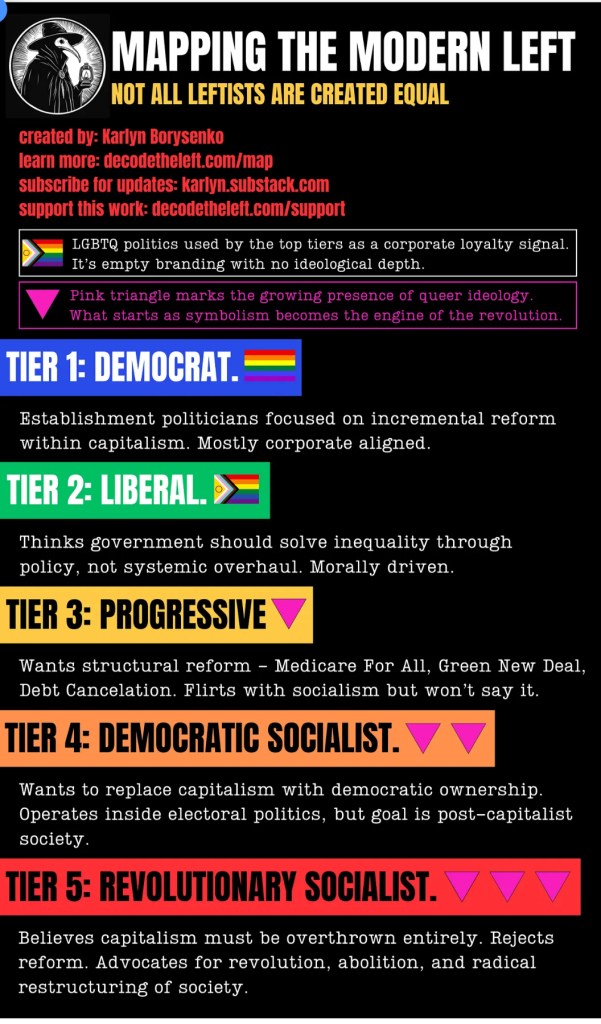
We also talk openly about political realignment, and why neither of us fits cleanly into the right/left binary anymore. I raise the importance of actually understanding Queer Theory, rather than using “queer” as a vague identity umbrella.

To help visualize this, I reference a chart breaking down five tiers of the far left, which I’ll include here for listeners who want context.
Next, in our conversation, Sigrin explains why the groupthink accusation feels completely inverted to anyone who has actually practiced Paganism.

  • Pagan traditions lack central authority, universal doctrine, or an enforcement mechanism.
  • Diversity of belief isn’t a flaw. It’s a defining feature.
  • Pagan communities often openly disagree, practice differently, and resist uniformity by design.

The “hive mind” label ignores that reality and instead relies on a caricature built from a narrow and selective sample.

 “Trotter and Le Bon concluded that the group mind does not think in the restricted sense of the word. In place of thoughts, it has impulses, habits, and emotions. Lacking an independent mind, its first impulse is usually to follow the example of a trusted leader. This is one of the most firmly established principles of mass psychology.”  Propaganda by Edward L. Bernays

We contrast this with Christian systems that rely on shared creeds, orthodoxy, and social enforcement to maintain cohesion.

Accusations of groupthink, in that context, often function as projection from environments where conformity is tied to spiritual safety.

In those systems, agreement is often equated with faithfulness and deviation with danger.

Globalism, Centralization, and Historical Irony

We end the conversation by stepping back and looking at the bigger historical picture.

  • The book positions Christianity as the antidote to globalism.
  • At the same time, it advocates coordinated religious unification, political mobilization, and cultural enforcement.
  • That contradiction becomes hard to ignore once you zoom out historically.

Sigrin points out that pre-Christian Pagan worlds were not monolithic.

  • Ancient polytheist societies were highly localized.
  • City-states and regions had their own gods, rituals, myths, and customs.
  • Religious life varied widely from place to place, even within the same broader culture.

I reference The Darkening Age by Catherine Nixey, which documents this diversity in detail.

  • Pagan societies weren’t unified under a single doctrine.
  • There was no universal creed to enforce across regions.
  • Difference wasn’t a problem to be solved. It was normal.

Christianity, by contrast, became one of the first truly globalizing religious systems.

  • A single truth claim.
  • A centralized authority structure.
  • A mandate to replace local traditions rather than coexist with them.

That history makes the book’s framing ironic.

  • Paganism gets labeled “globalist,” despite being inherently local and decentralized.
  • Christianity gets framed as anti-globalist, while proposing further consolidation of belief, power, and authority.

What This Is Actually About

This isn’t about attacking Christians as people.
And it’s not about defending Paganism as a brand.

It is a critique of how certain forms of Christianity function when belief hardens into certainty and certainty turns into control.

Fear-based religion and fear-based ideology share the same problem.
They promise safety.
They demand conformity.
And they struggle with humility.

That doesn’t describe every Christian.
But it does describe systems that rely on fear, surveillance, and moral enforcement to survive.

What I appreciate about this conversation is the reminder that spirituality doesn’t have to look like domination, hierarchy, or a battle plan.

It can be rooted. Local. Embodied.

It can ask something of you without erasing you.

And whether someone lands in Paganism, Christianity, or somewhere else entirely, the question isn’t “Which side are you on?”

It’s whether your beliefs make you more honest, more grounded, and more responsible for how you live.

That’s what I hope people sit with after listening.

Ways to Support Universal Pagan Temple 

Every bit of support helps keep the temple lights on, create more free content, and maintain our community altar. Thank you from the bottom of my heart! 

🖤
☕

 Buy me a coffee (one-time support)  
https://www.buymeacoffee.com/UniversalPaganTemple

💝

 Make a direct donation to the temple  
https://www.paypal.com/donate?hosted_button_id=6TMJ4KYHXB36U

🌟

 Become a Patreon/Subscribestar member (monthly perks & exclusive content)  
https://www.patreon.com/universalpagantemple
https://www.subscribestar.com/the-pagan-prepper

📜

 Join our Substack community (articles, rituals & updates)  
https://universalpagantemple.substack.com

🔮

 Book a Rune or Tarot reading (Etsy)  
https://www.etsy.com/shop/RunicGifts

📚

Grab our books on Amazon  
 •Wicca & Magick: Complete Beginner’s Guide  
https://www.amazon.com/Wicca-Magick-Complete-Beginners-Guide-ebook/dp/B019MZN8LQ

* Runes: Healing and Diet by Sigrún and Freya Aswynn
https://www.amazon.com/dp/B08FP25KH4#averageCustomerReviewsAnchor

• The Egyptian Gods and Goddesses for Beginners  
https://www.amazon.com/Egyptian-Gods-Goddesses-Beginners-Worshiping/dp/1537100092

Even just watching, liking, commenting, and sharing is a huge help!  
Blessed be 

🌀

The Older Story Beneath Christmas

A History of Yule and Cultural Amnesia

Every December, the same argument erupts like clockwork.

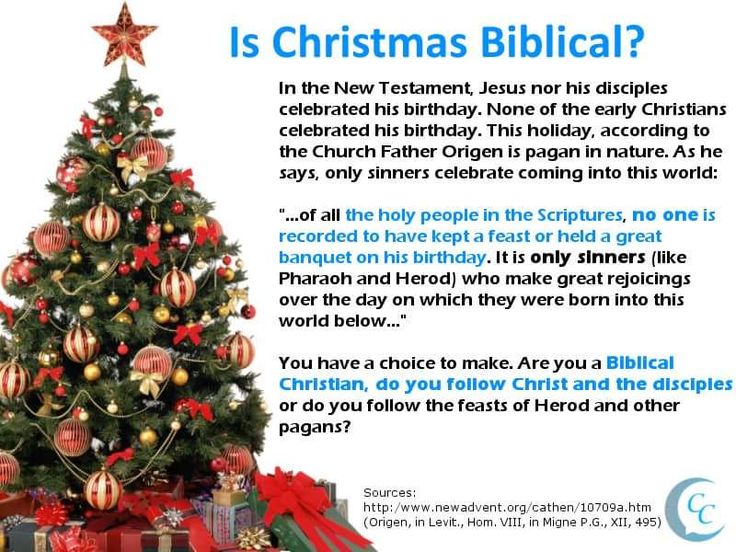
“Christmas is pagan.”
“No it isn’t, stop lying.”
“Actually, it’s Saturnalia.”
“Actually, it’s Jesus’ birthday.”

Christian Calling others out 😮

And honestly, the argument itself is the least interesting part.

Because Christmas didn’t replace older solstice traditions.
It grew out of them.

Long before doctrine, people were already gathering at midwinter. Lighting fires. Sharing food. Hanging evergreens. Leaving offerings. Watching the sun closely. Trying to survive the longest night of the year.

Most of what we now call “Christmas spirit” (the lights, the feasting, the greenery, the warmth, even the winter gift-giver) is older than Christian theology by centuries.

And yet, when I converted to Christianity in 2022, none of that felt magical.

It felt dangerous.


My First Christian Christmas: Panic, Purging, and Fear

I was only a few months into my short-lived Christian phase when December arrived, and I suddenly found myself terrified that Christmas was pagan, demonic, or spiritually contaminated.

I burned books.
I threw away crystals.
I cleaned my home like I was preparing for divine inspection.
I interrogated every decoration like it might open a portal.

I’m not exaggerating. I recently found an old document I wrote during that time, and reading it now is unsettling. It reads like I took an entire bucket of fundamentalist talking points, sprinkled in some Wikipedia conspiracies, and shook it like a snow globe.

Here are real lines I wrote in 2022:

“Christmas is a religious holiday. But it’s not Christian.”
“Christmas is the birthday of the sun god Tammuz.”
“Mistletoe came from druids who used it for demonic occult powers.”
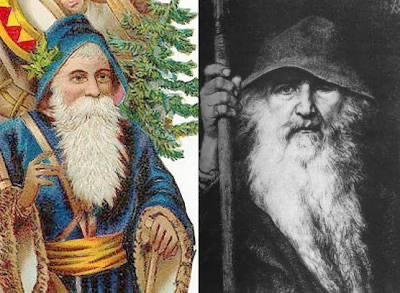
“Santa Claus is based on Odin and meant to deceive children.”
“Jesus does not want you to celebrate Christmas.”

I believed every word of it.

Because fear-based Christianity works by shrinking your imagination.
It makes symbols dangerous.
History suspicious.
The world a spiritual minefield.

That was my first clue this wasn’t JUST about theology. It was about fear.
And the inability to hold layered meaning.


Why Winter Was Sacred Long Before Religion

For pre-industrial people, winter wasn’t cozy.

It wasn’t aesthetic. It wasn’t symbolic. It was dangerous.

Food stores ran low. Animals died. Illness spread. Darkness swallowed the day.

When the sun disappeared, it wasn’t metaphorical. It was existential.

That’s why midwinter mattered everywhere, not because cultures shared gods, but because they shared bodies, seasons, and risk.

Homes were built from thick logs, stone, and earth. Materials with thermal mass that held heat long after the fire dimmed. Hearths weren’t decorative. They were survival technology. Families and animals gathered together because warmth meant life.

This wasn’t primitive living. It was skilled living. And it shaped belief.

Seasonal rites weren’t abstract spirituality.
They were instructions for how to endure.


This Isn’t Just Capitalism — It’s Cultural Amnesia

It’s tempting to blame modern capitalism for the way winter has been flattened into noise, urgency, and forced cheer. And capitalism absolutely accelerated the problem.

But that explanation skips a much older rupture.

Pre-Christian seasonal traditions already honored limits. Rest. Darkness. Slowness. Winter was understood as a time of contraction, not productivity. You didn’t push harder in December. You pulled inward. You conserved. You waited.

Those rhythms were disrupted long before department stores and advertising campaigns.

First came religious overwrite… seasonal intelligence reframed into theological narratives that demanded certainty and transcendence over embodiment. Then came industrialization, which severed daily life from land, daylight, and season entirely. Artificial light erased night. Clocks replaced the sun. Productivity became moral.

By the time capitalism arrived in its modern form, much of the damage was already done. Capitalism didn’t invent our disconnection from seasonal limits. It inherited it.

What we’re really dealing with isn’t just exploitation.

It’s amnesia.

We forgot how winter works. We forgot how rest works. We forgot how darkness functions as part of a healthy cycle. And once that memory was gone, it became easy to sell us endless brightness in the darkest part of the year.


What Yule Actually Was. Before Christianity Rewrote It

This is where the history gets interesting….

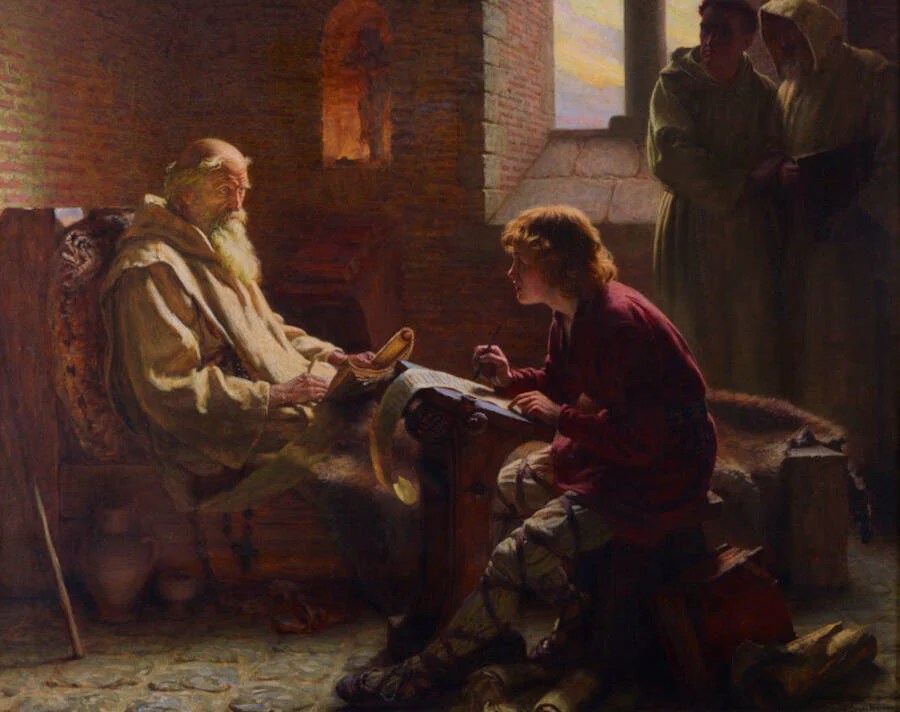
The earliest surviving written reference to Yule comes from the 8th century, recorded by the Christian monk Bede. Like much of what we know about pre-Christian traditions, it was documented after conversion had already begun. The traditions themselves are older, but the written record is fragmentary and filtered.

The Venerable Bede, an English monk and missionary, was among the earliest writers to record the existence of Yule.

That timing matters.

Like much of what we know about pre-Christian Europe, Yule was documented after conversion had already begun. Earlier traditions were primarily oral, and many were actively suppressed or destroyed, which means the written record is incomplete and filtered through Christian authors.

That does not mean the traditions were new.

It means Christianity arrived late to write them down.

Later sources, such as Snorri Sturluson in Heimskringla (12th–13th century), describe Yule as a midwinter feast involving communal drinking, oath-making, ceremonial meals, ancestor honoring, and celebrations lasting multiple days, often twelve. By the time Snorri was writing, Christianity had already reshaped much of Nordic life, yet the seasonal patterns he records remain strikingly consistent.

The record is not pristine. But it is consistent enough to tell us this:
Yule was a land-based, seasonal response to winter, practiced long before Christianity and remembered imperfectly afterward.

So, when people talk about the “Twelve Days of Christmas,” they’re unintentionally echoing Yule, not the Gospels.


Yule Was Never One Thing — or One Date

There was never a single Yule and never a single calendar.

Some communities marked the solstice itself. Others observed the days before it.
Others celebrated after, once the sun’s return was perceptible.

Yule could last days or weeks, depending on latitude, climate, and local conditions. This diversity wasn’t confusion. It was responsiveness.

Seasonal traditions bent to land, not doctrine.
And that flexibility is one reason they survived so long.


Ancestors, Offerings, and the Household

Yule wasn’t only about gods. It was about the dead.

Midwinter was understood as a liminal time when ancestors drew near. The boundary between worlds thinned. Homes became places of hospitality not just for the living, but for those who came before.

Offerings were left. Food. Drink. Light. We still do this…. even if we pretend it’s just for children.

Milk and cookies for Santa didn’t come out of nowhere.
They echo something far older: leaving nourishment overnight, acknowledging unseen visitors, participating in reciprocity.

The modern story makes it cute.
The older story makes it sacred.


Before Santa, the Sky Was Crowded

Across Northern and Eastern Europe, winter solstice was associated with feminine figures of light, fertility, and renewal— many of whom traveled the sky.

In Baltic traditions, Saule carried the sun across the heavens. Among the Sámi, Beiwe rode through the winter sky in a sleigh pulled by reindeer, restoring fertility to the frozen land.

Darkness wasn’t evil. It was gestational.

The womb is dark. Seeds germinate underground.
Transformation happens unseen. That imagery didn’t disappear.

It migrated.


When Christmas Was Once Illegal

Here’s a part of the story that tends to surprise people.

Christmas was not always embraced by Christianity in America.
In fact, it was once illegal.

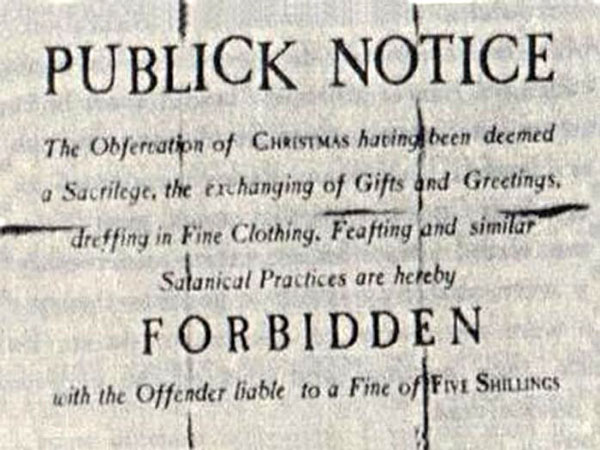
In the mid-1600s, Puritan leaders in New England viewed Christmas as pagan, Catholic, and morally corrupt. Everything associated with it raised suspicion.

Evergreens were considered pagan.
Feasting was considered pagan.
Dancing, games, and excess were condemned.
Even taking the day off work was seen as spiritually dangerous.

In 1659, the Massachusetts Bay Colony passed a law banning the celebration of Christmas outright. The statute read:

“Whosoever shall be found observing any such day as Christmas or the like, either by forbearing labour, feasting, or any other way… every such person so offending shall pay for every such offence five shillings.”

Celebrating Christmas was a finable offense.

The ban remained in effect until 1681. And even after it was repealed, many New England towns treated December 25th as an ordinary workday well into the 1700s.

Early American Christianity didn’t preserve Christmas.

It rejected it.

And yet, winter rituals have a way of surviving rejection.


How Christmas Quietly Returned

Christmas didn’t re-enter American life through theology or church decree.

It returned through households.

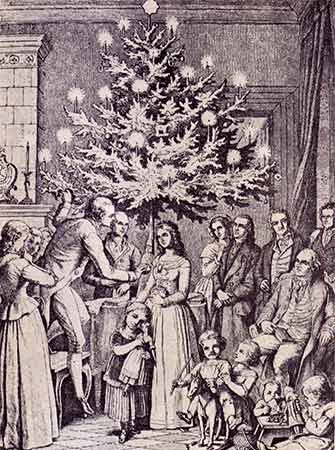
Throughout the 1700s and early 1800s, winter customs persisted in small, domestic ways. Evergreen branches were brought indoors. Candles were lit in windows. Food was shared. Stories of winter figures and gift-givers circulated quietly within families.

These practices weren’t organized or ideological. They were inherited.

Passed down the way people pass down recipes, songs, and seasonal habits, especially in communities tied to land, season, and home.

They survived because they worked.

They made winter bearable.
They gave rhythm to darkness.
They anchored people to memory and place.

Over time, these household customs accumulated. By the mid-1800s, Christmas re-emerged into public culture, not as a restored Christian holy day, but as a reassembled seasonal festival shaped by folklore, family practice, and winter necessity.

Only later was it fully absorbed, standardized, and commercialized.

That shift, from household memory to mass reproduction…. changed everything.


Santa Claus, Commercialism, and My Mom’s Coca-Cola Bathroom

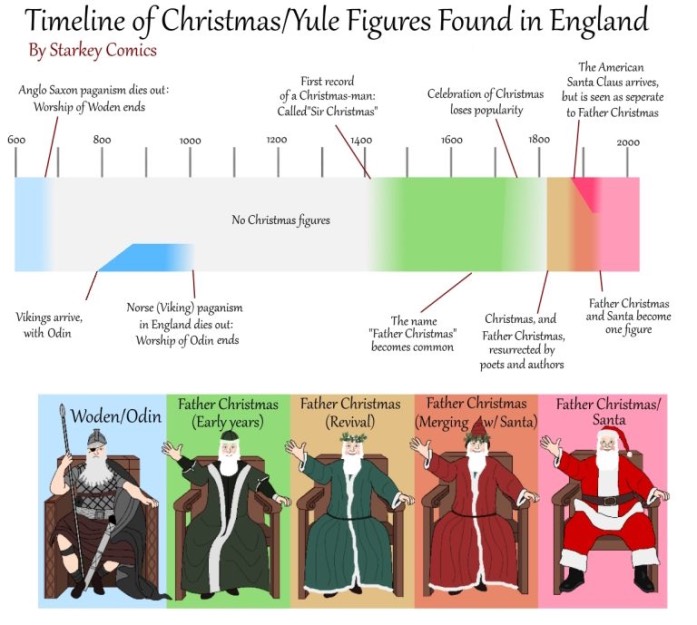
Santa is one of the clearest examples of what happens when household tradition gives way to mass culture. Early versions of Santa look nothing like the modern mascot. Long robes. Staffs. Hoods. Sometimes thin. Sometimes eerie. Often dressed in green, brown, or deep red.

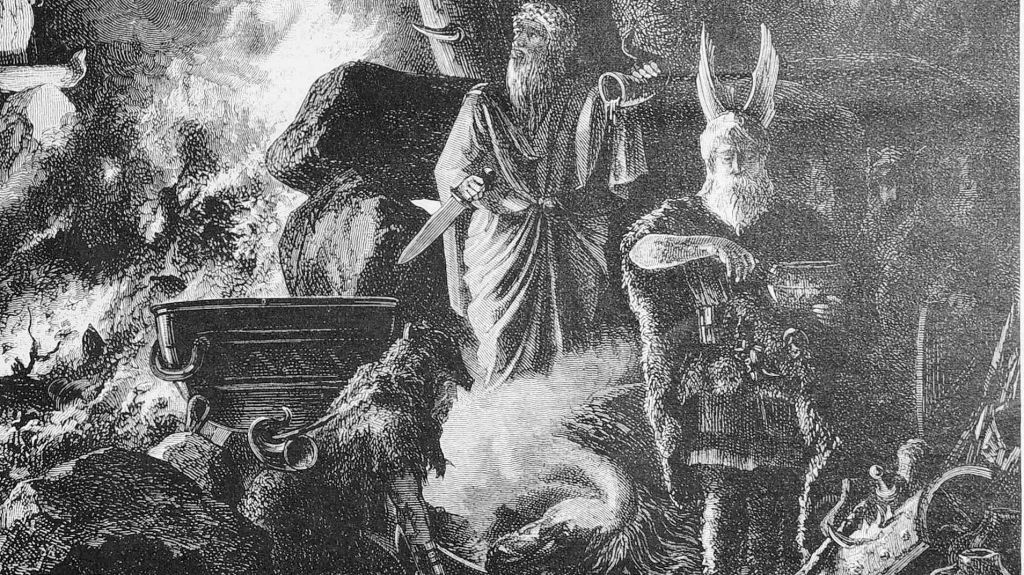
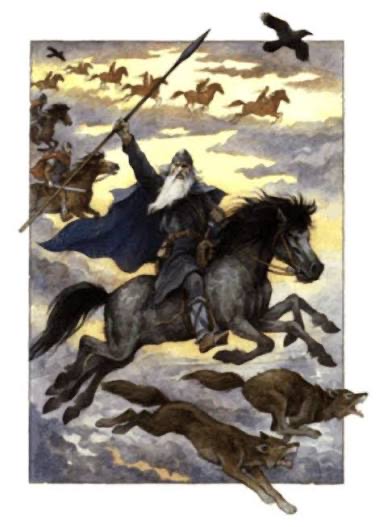
These figures echo older winter travelers. Odin riding the sky, spirits roaming during Yule, ancestors moving close. This transformation accelerated in the 1800s, when American illustrators and writers began merging European folklore with newly invented holiday imagery.

By then, Santa took shape again.

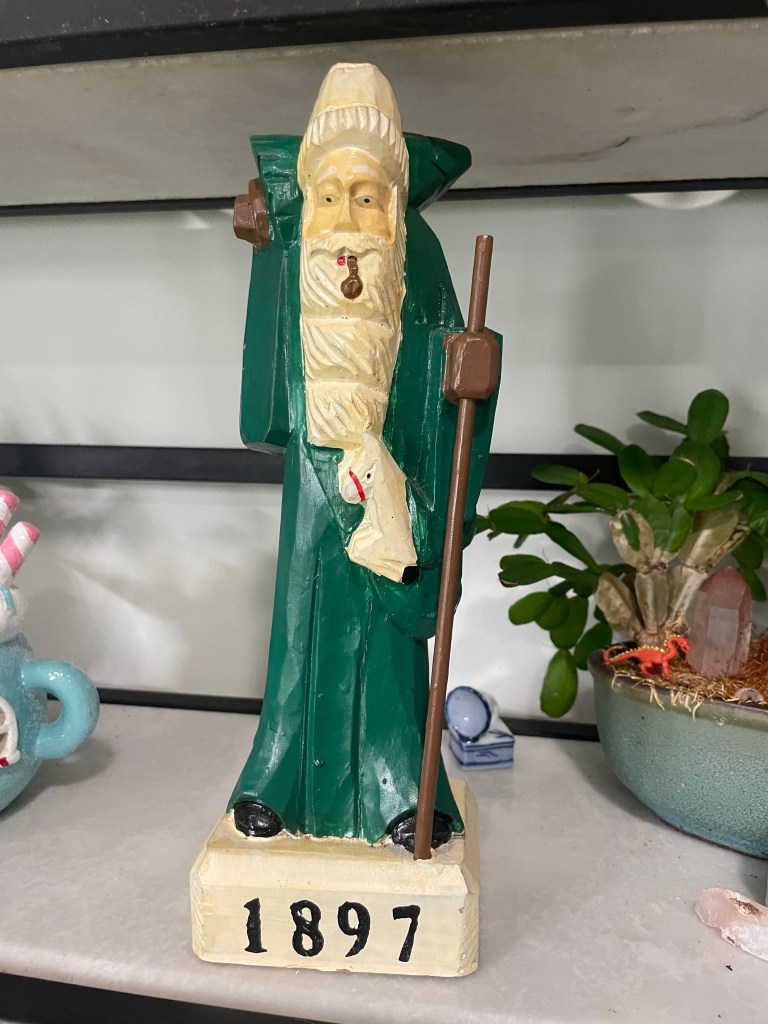
My husband and I recently found a reproduction Santa figure based on an 1897 illustration. He’s dressed in a long green robe with a staff in hand. This style was common in the 1800s, especially in Germanic and Scandinavian traditions where the winter gift-giver was closer to a folkloric spirit than a cozy grandfather. Seeing him in that deep forest green, with that hooded, old-world posture, makes it obvious how far the modern Santa has drifted from his roots.


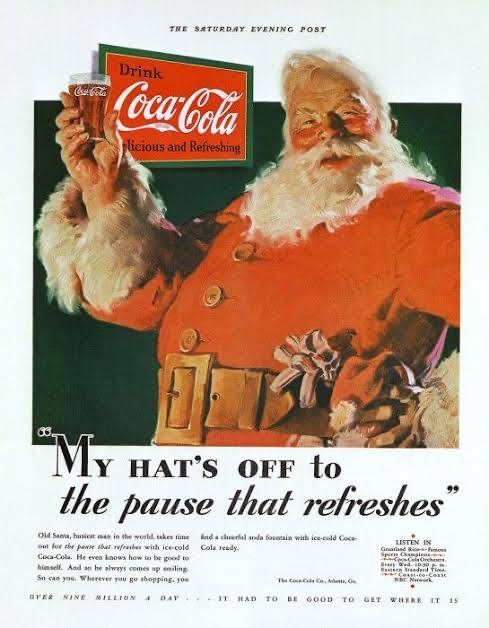
By the 1900s, Coca-Cola standardized him. Red suit. White trim. Jolly. Brand-safe. Growing up, this wasn’t abstract for me.

My mom worked for Coca-Cola when the company was based in Richmond, Virginia, in the early 1980s. My first word was “Coke.” Coca-Cola wasn’t just a brand in our house, it was part of the atmosphere.

My mom loved Coca-Cola décor. We had Coca-Cola signs, collectibles, and even a full Coca-Cola bathroom. At the time, it just felt normal. Cozy, even. Americana. Tradition.

I didn’t realize until much later how completely my sense of “holiday spirit” had been shaped by corporate nostalgia rather than ancestral memory. What I thought of as timeless wasn’t old at all. It was manufactured, standardized, and sold back to us as heritage.

That doesn’t make it evil. But it does matter.

Because when branding replaces ritual, something gets flattened. The symbols remain, but the relationship is gone. What was once seasonal, local, and embodied becomes aesthetic. Consumable. Safe.

And for many of us, that’s the only version of winter we were ever given.

That’s not a judgment. It’s just reality. Most of us weren’t raised with ritual.
We were raised with branding.

What was lost in that transformation wasn’t belief. It was relationship— to land, to season, to memory.

And the people who held onto that relationship longest were already labeled for it.


Why “Heathen” Never Meant Godless

The word heathen never originally meant immoral or evil.

It meant rural.

Its earliest known form, haithno, is feminine and means “woman of the heath” — the open, uncultivated land beyond cities and roads. From there it spread through Germanic languages: Anglo-Saxon hǣþen, Old Norse heidinn, Old High German heidan.

Clergy used heathen to describe those who kept ancestral customs while cities converted. The 8th-century monk Paulus Diaconus wrote of heidenin commane (the rural people) calling them “the wild heathen.”

Offerings to trees, springs, and stones were condemned as sacrilege. Over time, heathen merged with Latin paganus, meaning “rural dweller,” and gentilis, meaning “of another tribe.”

What began as a description of people who would not leave the wild became a moral accusation.

Later, the same language was exported outward… applied to colonized lands as uncivilized or heathen.

The fear was never really about gods. It was about land that refused to be controlled.

What Actually Happened, and Why the Old Ways Are Calling Back

The same patterns repeat across centuries: suppression, survival, absorption, and forgetting.

But we need to be honest about what that suppression looked like.

This was not a gentle handoff.
It was not mutual exchange.
It was not respectful evolution.

Christianity did not simply reinterpret older traditions.
It destroyed them where it could.

This is not rhetoric. It is history.

Historian Catherine Nixey documents this process in The Darkening Age. Early Christianity treated pagan traditions not as ancestors, but as enemies. Temples were smashed. Statues were defaced. Sacred groves were cut down. Libraries were burned. Seasonal rites that had structured life for centuries were criminalized.

This destruction was not hidden or accidental. It was celebrated.

Christian writers praised the demolition of temples. They mocked the old gods as demons. Beauty, pleasure, ritual, and joy were reframed as moral danger. Festivals became obscene. Feasting became gluttony. The body itself became suspect.

What could not be eradicated outright was stripped, renamed, and absorbed, while its origins were denied.

The solstice became Christ’s birth.
The returning sun became metaphor.
Evergreens became safe symbols.
Ancestor offerings were reduced to children’s fantasy.

This was not borrowing. It was conquest, followed by selective inheritance.

When that conquest met resistance in rural places, in households, and in women’s hands, it adapted. It waited. It layered itself over what remained.

That is why the seams still show. That is why Christmas has always felt haunted.
Layered. Conflicted. Unstable.

What survived did so despite institutional Christianity, not because of it.

It survived in kitchens and hearths. In fields and forests.
In winter nights and quiet ritual.
In land-based people who refused to forget how the seasons worked.

Centuries later, capitalism finished what religion began. What remained was flattened into nostalgia, branding, and spectacle.

Not because the old ways were weak.
But because they were powerful.


Why the Call Feels Loud Again

The pull people feel now toward solstice, ancestors, darkness, rest, and land is not aesthetic.

It is memory.

It is the body remembering rhythms it was trained to forget.
It is the psyche rejecting constant light, constant productivity, constant cheer.
It is old intelligence resurfacing after centuries of suppression.

The old gods were never gone. They were buried. Winter has a way of thawing buried things.

If something in you responds to the fire, the darkness, the offering, or the pause, that does not mean you are rejecting modern life or indulging fantasy.

It means you are responding to a pattern older than doctrine.
Older than empire. Older than the fear that tried to erase it.

What was destroyed is stirring. What was taken is being remembered.

In a few days, I’ll be sitting down with Universal Pagan Temple for a conversation on pagan culture, ritual, history, and lived practice, with Sigrún Gregerson, Pagan priestess and educator. If this piece brought up questions for you, about Yule, Mother’s Night, ancestor work, or what reclaiming these traditions actually looks like, I’d love to carry them into that conversation. Feel free to leave your questions in the comments or send them my way.

This is how the old ways return.
Quietly. Carefully. Through memory, practice, and conversation.

My Mother’s Night Altar 12.20.25

When Morality Binds and Blinds: Lessons from Charlie Kirk’s Death

Hey hey my friends, welcome back to Taste of Truth Tuesdays. Today’s episode is going to be heavier than usual, because I want to process something that has been shaking me to my core over the past week, the brutal death of Charlie Kirk.

Now, I need to start here: I did not agree with Charlie on everything, especially not his theology. You know me, I don’t subscribe to the idea that morality begins and ends with the Abrahamic scriptures. That’s a hard pass. But I also can’t deny the impact Charlie had on me. I spent years watching him debate, learning from the way he sharpened his arguments and stayed composed with people he deeply disagreed with. He’s one of the people who actually inspired me to study the Constitution, socialism, and to pay more attention to what’s happening politically.

So when I heard he was brutally murdered, I cried. It was horrific. And then, when I looked online and saw people celebrating his death? Saying he deserved it because he was a white, conservative, Christian man? That was gutting. Not just emotionally but morally. 

In fact, let me show you a comment I received. This person told me she couldn’t believe I was mourning the death of a Trump supporter, that he had ‘spewed so much,’ and then announced she was unfollowing and blocking me.

That’s the climate we’re in. Not just disagreement, but outright dehumanization.

That kind of reaction, the dancing-on-the-grave energy, it’s not just tasteless. It’s a reflection of how far moral tribalism has gone. She is a perfect example of what I saw when I was navigating ex-Christian and ex-evangelical spaces. It is the same trend there: conservatives painted as villains, ridiculed, dismissed, treated as less-than. 

Folks in my parasocial networks would send me podcasts or Instagram pages that were just openly disrespectful and overgeneralizing, like mocking anyone who leaned right was simply part of the healing process. And I remember sitting there thinking… how are you even friends with me if you despise people like me so much?

It’s like the hatred is so baked into the zeitgeist, people don’t even notice they’re doing it.

I’ve already done an episode on the radical left and why I left the left in 2020. Back then I saw the extremism ramping up with Black Lives Matter, with pandemic policies, and yes, with those shocking poll results in 2022, where a significant portion of Democrats said they believed unvaccinated people should have their kids taken away or even be put into camps. 

https://www.rasmussenreports.com/public_content/politics/partner_surveys/jan_2022/covid_19_democratic_voters_support_harsh_measures_against_unvaccinated?

That was the moment I realized this wasn’t just about public health.  It was about authoritarianism cloaked in moral righteousness.

And I want to tie that moment to this moment. Because what we’re seeing with Charlie Kirk’s death is the exact same kind of moral righteousness, just flipped.

This is where Jonathan Haidt’s book The Righteous Mind comes in and yall know I bring this book up a lot, but today it’s essential. 

Haidt’s big idea is that morality isn’t one single thing. It’s made up of six different foundations, like taste buds of the moral sense. Let me walk you through them:

  1. Care vs. Harm – the instinct to protect others from suffering. Progressives tend to emphasize this one the most.
  2. Fairness vs. Cheating – concern for justice, reciprocity, equal treatment. Again, heavily weighted on the left.
  3. Loyalty vs. Betrayal – valuing group solidarity, patriotism, belonging. This resonates more on the right.
  4. Authority vs. Subversion – respect for tradition, leadership, order. Again, more prominent for conservatives.
  5. Sanctity vs. Degradation – ideas of purity, sacredness, things that must not be defiled. Religion is one form, but health and nature can trigger it too. Conservatives score higher here, but you see progressives activate it around food purity or environmentalism.
  6. Liberty vs. Oppression – the drive to resist domination and protect freedom. This one cuts across both sides but is framed differently, the right fears big government, the left fears corporate or systemic oppression.

Now, how does this help us explain what we’re seeing?

Progressives, whose moral taste buds are dominated by Care and Fairness, look at Charlie Kirk and say, ‘He caused harm to marginalized groups, he propped up unfair systems.’ So when he died, they felt justified in celebrating. Their moral taste buds told them: this is justice.

Conservatives, on the other hand, lean more heavily on Loyalty, Authority, and Sanctity. Charlie embodied loyalty to the nation, respect for conservative traditions, and yes, defense of the sacred. So his death wasn’t just tragic, it was an attack on everything sacred to them. That’s why you’re seeing these martyrdom narratives, even AI videos of Charlie in heaven with other ‘heroes of the faith.’ It’s moral psychology in action.

👉 And this is also the perfect moment to point out the formula behind Psy-Ops. Because these martyrdom narratives aren’t just spontaneous. They follow a pattern of influence:

(Stimulus + Feeling) – Conscious Awareness × Repetition = Belief.

That’s the formula. You feed people a stimulus, in this case, AI imagery of Charlie Kirk as a martyr. You attach it to a strong feeling: grief, anger, hope. By doing so, conscious awareness is bypassed, people aren’t stopping to analyze, they’re in raw emotion. And then you repeat it over and over. Before long, it’s not just an image, it’s a belief. This is why these videos are so powerful, they’re not just content, they’re psychological conditioning.

In the book Free Your Mind, which we discussed in our previous podcast episode, Chapter 9 emphasizes the importance of getting ideas in writing—but it also highlights the unique power of images. As the book notes:

“An image tells a thousand words, and seeing is believing. You tend to be more easily persuaded by images than by words, and video is even more persuasive. On the other hand, reading leaves more breathing room for critical thinking.”

Images can define ideas and stick in our minds in ways words alone often cannot. A single powerful metaphor or visual statement can leave a lasting impression. Take Donald Trump’s political career, for example: it wasn’t only shaped by complex and abstract immigration policies, but also by concrete, visual symbols—a border wall, or the image of him standing with his fist raised, signaling defiance after the attempted assassination. Mental images grab our attention and viscerally anchor themselves in our minds. They’re persuasive tools that can move political movements forward.

Psychologists agree. This phenomenon is known as the picture superiority effect: images are far more memorable than words. In one study, participants were shown a mix of 612 images and words for six seconds each. When asked later which they recognized, 98% of the pictures were remembered, compared to just 90% of the words. Another study of news broadcasts found that only 16% of stories were remembered when heard over the radio, versus 34% when watched on television.

The takeaway? Images are not just memorable-they shape perception.

Seeing really is believing.

And here’s Haidt’s main takeaway: morality binds and blinds. Both sides feel righteous, but both sides are blinded. The left is blinded to the humanity of someone they disagreed with, so they cheer for his death. The right is blinded to pluralism and nuance, so they sanctify him and risk sliding into Christian authoritarianism.

And let’s pause here…because this rise in religious fervor is deeply concerning to me. I used to push back when people warned about Christian nationalism. I thought it was overblown. But watching Gen Z churn out martyr videos of Charlie Kirk, watching this wave of revivalist passion roll in, I can’t deny the potential for backlash anymore.

It’s not just reverence – it’s symbolism, its revivalism, its identity politics wrapped in scripture. And that’s where my alarm starts.

Take the Noahide Laws movement. People often describe it as returning to a universal moral code. On its face, sure, that sounds appealing. But when morality is rooted in a particular scripture or identity, it often becomes a tool to say: ‘these norms are non-negotiable, and dissent or spiritual alternatives are forbidden’ That’s when spirituality crosses into political power-building.

Listen to this clip from Ben Shapero on the Daily Wire.

And we’re already seeing it creep into policy. 

The administration just passed an executive order on ‘Eradicating Anti-Christian Bias.’ Protecting religious freedom is vital, yes. But there’s a difference between protecting believers from discrimination and making laws where Christian sentiment is immune from critique or satire. 

The White House posted a video mourning Charlie Kirk concluding with:

“1 Corinthians 5 and 15 provide compelling evidence (not only intrabiblical but also extrabiblical) that Jesus Christ was a real historical figure. He lived a perfect life, was crucified, rose on the third day, and is Lord and God.”

If you still don’t see how Christianity and faith in Jesus, a figure who probably never existed—is both holding this country back and enabling Zionism, it’s time to wake up.

We’ve already seen new laws against so-called antisemitism that start to look a lot like blasphemy laws. How long before similar protections are extended to Christian sentiment?

This matters because young people might get swept into this revivalist Christian / Abrahamic framework without realizing it. 

It reduces room for spiritual alternatives, for pluralism, for traditions like panpsychism or animism, worldviews that see all of reality as alive, interconnected, and worthy of respect. That feels more universal to me. Less tied to tribal texts, less prone to turning spirituality into a weapon of the state.

History has shown us that religious revivalism mixed with nationalism and state power is a dangerous cocktail. It binds, but it also blinds. And that’s why I can’t jump on board with this new wave of Abrahamic revivalism being fueled by Charlie’s death. My skepticism sharpens right here.

So here’s where I land: I grieve. I grieve for a man who influenced me. I grieve the way his life was taken. But I also grieve the way his death is being used  by some to celebrate evil, by others to canonize him into sainthood. Both sides reveal how morality binds and blinds. And if we don’t wake up to that, we’ll keep swinging between authoritarian extremes.

And I want to close with a reminder from Jonathan Haidt himself. He wrote:

“Social scientists have identified at least 3 major forces that collectively bind together successful democracies: social capital (extensive social networks with high levels of trust), strong institutions, and shared stories. We are now at the greatest level of political polarization since the 1860s. It’s more necessary than ever to return to these 3 forces in every way we can, individually and as a society.”

That’s where I want us to go. Beyond tribal stories of vengeance or martyrdom, back toward trust, strong institutions, and stories that unite rather than divide.

One of my new favorite YouTubers https://youtu.be/UQ02zhLmkTM?si=96o2gTReXl-nvClS

So, maintain your curiosity, embrace skepticism, and keep tuning in.

Further Reading & Sources