Understanding the Evolution of Witch Hunts

Welcome to Taste of Truth Tuesdays, where we unravel the strange, the mysterious, and today—the terrifying. This post delves into one of history’s darkest chapters: the witch hunts. We’ll explore how fear, superstition, and control shaped centuries of persecution and how these patterns are still evident in the modern world. Witch hunts aren’t just a thing of the past—they’ve evolved.

The European Witch Hunts – Early Modern Europe

Let’s start in early modern Europe. Scholar Peter Maxwell-Stuart illuminates the rise of demonology, where the fear of magic and the devil became a weapon of control for those in power. Beginning in the 1500s, political and religious leaders manipulated entire populations by tapping into their deep-rooted fears of ‘evil forces.’ The Church, in particular, weaponized these beliefs, positioning itself as the protector against witches—women (and sometimes men) believed to consort with devils or conjure dark forces. As the idea took hold that witches could be behind every famine, illness, or death, this created a perfect storm of paranoia.

Stuart argues that demonology texts—many sanctioned by the Church—fueled mass hysteria, feeding the narrative that witches were not just local troublemakers but cosmic agents of Satan, hell-bent on destroying Christendom. Ordinary people lived in constant fear of betrayal by their neighbors, leading to accusations that could swiftly escalate into brutal trials, with the accused often tortured into confessing their ‘diabolical’ crimes.

To understand how demonology in Europe gained such traction, we need to go back to Augustine of Hippo. We have mentioned him before in previous episodes, whose writings in the 4th and 5th centuries laid the foundation for Christian perceptions of the devil and demons. Augustine’s ideas, especially in City of God, emphasized the constant spiritual warfare between good and evil, casting demons as agents of Satan working tirelessly to undermine God’s plan. He argued that humans were caught in this cosmic battle, susceptible to the devil’s temptations and tricks.
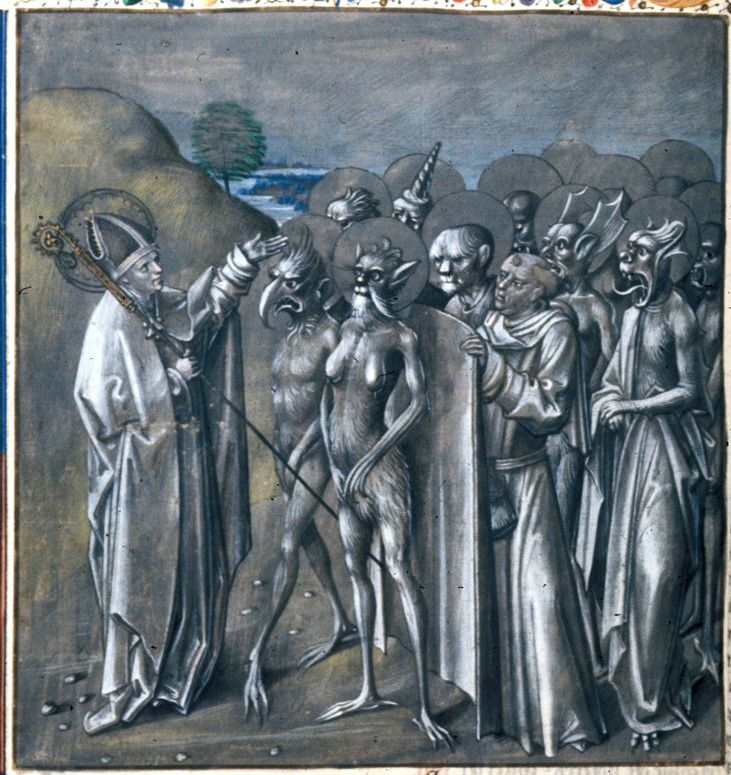
‘Augustine before a group of demons’, from ‘De civitate Dei’ by Augustine, trans. by Raoul de Presles, late 15th Century

Augustine’s Doctrine of Demons

According to Augustine, demons were fallen angels who had rebelled and now sought to deceive and destroy humanity. While Augustine didn’t explicitly discuss witches, his interpretation of demons helped fuel the belief that humans could be manipulated by evil spirits—whether through pacts, possession, or magical practices. This idea later influenced medieval and early modern European demonology.

Augustine’s views on original sin—that humanity is inherently flawed and in need of salvation—also intensified fears that people, especially women (who were seen as ‘weaker’ spiritually), were more vulnerable to the devil’s influence.

SIDE NOTE: We have discussed the theological concept of original sin in previous episodes: Franciscan wisdom navigating spiritual growth and challenges with Carrie Moore, we specifically spun the doctrine of original sin on its head and then also Unpacking Religious Trauma: Navigating the Dynamics of Faith Deconstruction with Doctor Mark Karris.

In the centuries that followed, these ideas were weaponized to justify witch hunts. Augustine’s legacy is evident in how later theologians and demonologists, such as Heinrich Kramer (author of the infamous Malleus Maleficarum), built upon his ideas of demonic interference to condemn witchcraft as a real, existential threat to Christian society.

Maxwell-Stuart reveals that the creation of demonology wasn’t just religious but deeply political. Kings and clergy alike realized they could consolidate power by stoking the flames of fear, casting witches and sorcerers as a common enemy. The trials served a dual purpose: they reinforced the Church’s supremacy over the spiritual realm and gave ruling elites a tool for maintaining social order. Accusing someone of witchcraft was an effective way to silence dissent or settle personal scores.

Fear as a Tool of Control

Fear wasn’t just manufactured by rulers—it was deeply ingrained in the societal, religious, and legal systems of the time. Scholar Sophie Page reveals how beliefs in magic and the supernatural were not fringe ideas but core components of medieval and early modern life. Magic wasn’t merely a mysterious force; it was a pervasive explanation for any calamity. Failed harvests, plagues, or unexplained illnesses were often attributed to witches or the devil, creating a society constantly on edge, where supernatural forces were believed to lurk behind every misfortune.

By embedding these beliefs into legal codes, authorities could target suspected witches or sorcerers under the guise of protecting the community. Page’s work illustrates how rituals once seen as protective or healing gradually became demonized. Harmless folk practices and herbal remedies, used for centuries, began to be recast as witchcraft, especially when things went wrong. People, particularly those in rural areas, were vulnerable to this thinking because religion and superstition were inseparable from daily life.

Partisan scholars have long debated whether Catholics or Protestants were the “real” witch hunters, but they’ve made little headway. One important change in Christian morality, as discussed by John Bossie, occurred between the 14th and 16th centuries. The moral focus shifted from the Seven Deadly Sins—pride, greed, lust, envy, gluttony, anger, and sloth—to the Ten Commandments. This change, influenced by reform movements that shaped the Protestant Reformation, prioritized sins against God over those against the community. Idolatry and the worship of false gods became viewed as the gravest offenses.

This redefinition of witchcraft followed suit. Instead of being seen as harmful actions toward neighbors, witchcraft was now linked directly to devil worship and regarded as serious heresy. Scholars and church leaders began merging various forms of folk magic and healing into this new narrative, suggesting that practitioners were either knowingly or unknowingly making deals with the devil. Confessions of pacts or attendance at “witch gatherings” were shaped to highlight community failings, like envy and resentment. Consequently, educated society began to see witchcraft as a real threat rather than mere superstition. While traditional beliefs about magic still existed, they were overshadowed by fears of violent backlash from reformers.

The Power of Dualistic Thinking

This dualistic thinking, influenced by St. Augustine, gave rise to a semi-Manichean worldview, where the struggle between good and evil became more pronounced. Manichaeism, an ancient belief system, viewed the world as a battleground between equal forces of good and evil. Although orthodox Christianity rejected this dualism, the focus on the devil’s role in everyday life blurred those lines for many people. By emphasizing the devil’s pervasive influence, religious leaders inadvertently created a belief system in which evil seemed as powerful as good.
In this semi-Manichean view, the devil was not just a tempter of individuals but a corrupting force within communities and even within political and religious practices deemed heretical. Fears of devil-worshipping conspiracies became intertwined with anxieties about witchcraft and moral decay. Reformers, particularly in Protestant movements, fueled these fears by branding idolatry, Catholic rituals, and even folk healing as dangerous openings for the devil’s influence. This perspective transformed witchcraft from a local issue into a broader threat against God and society.

The result was a potent mix of dualistic thinking and an intense focus on spiritual warfare. This not only intensified the persecution of supposed witches but also reinforced the obsession with eliminating anything considered “satanic.” The ideological shift redefined witchcraft as a communal danger, turning innocent healing practices into accusations of demonic pacts.

Every village had its own ‘cunning folk’—individuals skilled in healing and folk magic—yet these very people could easily become scapegoats when something went wrong. The legal structures played a vital role in perpetuating this cycle of fear. Church courts, bolstered by theologians and demonologists, were empowered to try individuals accused of witchcraft, and the accusations quickly spiraled into mass hysteria. Trials often relied on tortured confessions, reinforcing the belief that witches and the devil were real and tangible threats to society. This institutionalized paranoia was a perfect storm of religion, fear, and control.

The Rise of Organized Witch Hunts

Beginning in the late 15th century, witch trials escalated into full-blown hunts, particularly after the publication of the Malleus Maleficarum in 1487. This infamous witch-hunting manual, written by Heinrich Kramer and endorsed by the Pope, offered legal and theological justifications for hunting down witches. It encouraged harsh interrogations and set guidelines for identifying witches based on superficial evidence like birthmarks, behaviors, and confessions extracted under torture. The legal system, which had already started to turn against folk healers, now had a codified method for persecuting them.

In regions like Germany, Scotland, and Switzerland, these legal trials turned into widespread witch hunts. Hundreds, even thousands, of individuals—predominantly women—were accused and executed. What’s particularly fascinating is that these witch hunts often peaked during periods of societal or economic instability when fear and uncertainty made people more susceptible to attributing their misfortunes to external, supernatural forces.

By institutionalizing the persecution of witches, rulers and religious leaders could manage social unrest and solidify their authority. The trials often reinforced the power structures by demonstrating that anyone perceived as a threat to societal order—whether through suspected witchcraft or merely social nonconformity—could be eradicated.

Witch Hunts and Gender

The scapegoating of women played a crucial role in these witch hunts. Owen Davies’ work reveals how the demonization of witches intersected with misogyny, turning the hunts into a gendered form of control. Midwives, healers, or outspoken women were more likely to be targeted, reinforcing patriarchal authority. The very skills that had once been valued, such as healing and midwifery, were redefined as dangerous and linked to dark powers.

As witch hunts spread, the legal frameworks across Europe became more refined and institutionalized, creating a climate where fear of witches and demonic possession became the norm. The trials’ obsession with confessions—often coerced under brutal conditions—further fueled public paranoia, as the more people confessed to witchcraft, the more tangible the ‘threat’ seemed.

The Modern Echoes of Witch Hunts

Fast forward to today, and we find that the legacy of witch hunts lingers. The tactics of fear-mongering, scapegoating, and social control can still be observed in modern contexts. Contemporary movements often mirror historical witch hunts, targeting marginalized groups through accusations and public shaming. Just as witch hunts flourished in times of societal uncertainty, modern societies can succumb to similar dynamics.

In the age of social media, legal accusations spread like wildfire, and the court of public opinion often acts faster than the courts themselves. Political enemies are dragged through the mud with allegations that may or may not have a basis in fact.

The case of Michael Jackson serves as a poignant example of how media narratives can distort reality. The beloved pop icon faced multiple allegations of child molestation, with the most notable case occurring in 2005 during a highly publicized trial. Accusers claimed that Jackson had abused them, yet the defense presented compelling counterarguments, including challenges to the credibility of the witnesses and highlighting inconsistencies in their testimonies. After a lengthy trial, Jackson was acquitted of all charges, but the media frenzy surrounding the case fueled public debate and sensationalism, earning him the derogatory nickname “Wacko Jacko.” This smear campaign perpetuated false narratives about his character and actions. Behind the scenes, Jackson was embroiled in a lawsuit against Sony Music, a battle he was reportedly winning at the time of these allegations. Furthermore, his controversial doctor, Conrad Murray, who administered drugs to Jackson, faced serious legal consequences for his role in the singer’s death, including manslaughter charges. The intersection of these legal battles and the media frenzy created a complex narrative that ultimately tarnished Jackson’s legacy, and that’s what truly breaks my heart.

By the time these individuals have the chance to clear their names, their reputations—and often their careers—are already in ruins. Davies’ research shows us that while modern witch hunts don’t involve burning at the stake, they do involve trial by media and mob justice.

And we can’t talk about modern-day witch hunts without bringing the CIA into the conversation. Since its inception, the CIA has been at the heart of international political manipulations—using covert methods to shape public perception, interfere in foreign governments, and even influence elections here in the United States. In the 1960s, the agency coined the term ‘conspiracy theorist’ to discredit anyone who questioned the official narratives surrounding events like the assassination of JFK. Those who didn’t toe the line were labeled as ‘paranoid’ or ‘dangerous.’ It was the modern version of labeling someone a witch—turning them into a social outcast, not to be trusted.

Fast forward to today: we see similar tactics used against whistleblowers, journalists, and activists who challenge the powerful. Think about Edward Snowden, Julian Assange, and even political figures targeted by intelligence communities. The second they start exposing uncomfortable truths, they are vilified. Whether through leaks, smear campaigns, or selective legal action, these modern-day ‘witches’ face an onslaught of accusations, designed to discredit them before they can fully tell their story.
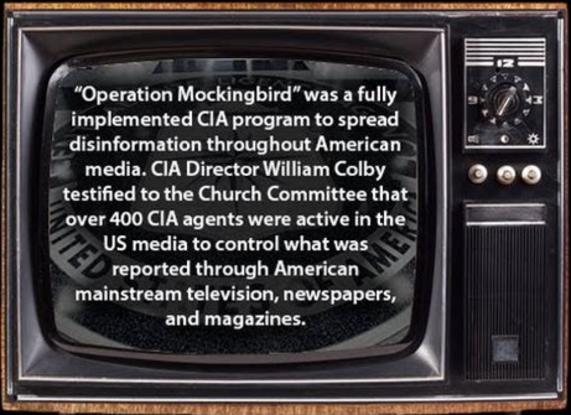
In many cases, the evidence behind these accusations is shaky at best. The CIA’s involvement in manipulating public perception goes all the way back to Operation Mockingbird, a secret program to influence media narratives, which showed that controlling information was one of the most powerful tools they had. During the Cold War, the United States engaged in a concerted effort to influence and control media narratives to align with its interests, which involved recruiting journalists and establishing relationships with major media outlets.

Edward Bernays, often referred to as the father of public relations, played a pivotal role in these discussions on media manipulation. Working with several major companies, including Procter & Gamble, General Electric, and the American Tobacco Company, Bernays was instrumental in promoting the cigarette brand Lucky Strike, famously linking it to the women’s liberation movement. His connections extend to notable figures like Sigmund Freud, who was Bernays’ uncle, Freud’s psychoanalytic theories significantly shaped Bernays’ PR strategies. Throughout his career, Bernays leveraged media to influence public perception and political leaders, raising profound questions about the power dynamics of media and its capacity to shape societal narratives. (If you’re intrigued by the intricate interplay of media and propaganda, this is a rabbit hole worth exploring!)

Today, that same fear-mongering tactic is played out on a much larger scale. Accusations, whether of conspiracy, treason, or subversion, become tools to silence anyone questioning the status quo. Just as witches in the past were seen as ‘different’ and thus dangerous, today’s targets are often people who challenge the system.

And while throughout the 1300-1600s, there was no due process for the accused witches, today, we see something similar in the digital realm. There’s no real accountability or fairness in the court of public opinion. All it takes is a viral accusation—a tweet, a blog post, or a video—and the person’s career, family, and mental health can be obliterated overnight. No evidence required, no trial, no defense.

So, what can we learn from this history? From the witch hunts of early modern Europe to today’s viral accusations and political fearmongering, there’s one key lesson: fear remains one of the most dangerous tools of control. When we allow fear to dictate our actions—whether it’s fear of witches, outsiders, or anyone who doesn’t fit into the mold—we lose sight of reason and humanity.

In closing, I’d like to examine the phenomenon of witch hunts through the lens of amygdala hijacking, a topic we discussed in a previous episode. This term refers to the brain’s immediate response to perceived threats, where the amygdala—the emotional center of the brain—takes control, often resulting in irrational and impulsive actions.
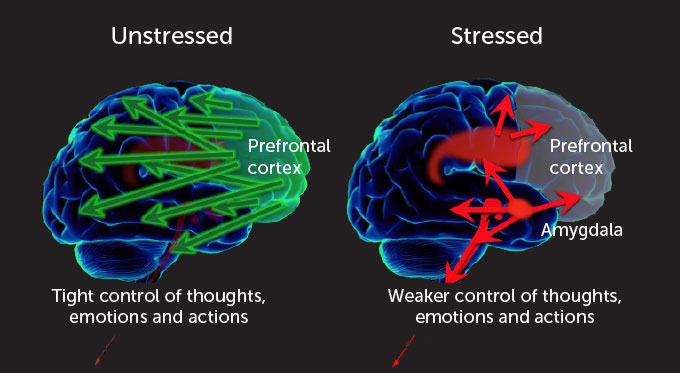
During the witch hunts, communities gripped by fear of the unknown succumbed to a mob mentality whenever someone fell ill or misfortune struck. The amygdala triggered a fight-or-flight response, compelling individuals to find scapegoats, with cunning folk and those deviating from societal norms becoming prime targets. As accusations spiraled, fear dominated decision-making instead of rational thought. Today, we observe similar patterns in how social media can incite panic, leading to modern witch hunts. When fear takes over, reason often fades, resulting in unjust vilification—echoing the dark lessons of history.

As we navigate our modern world, let’s remain vigilant against the echoes of this history, seeking truth and questioning the narratives that shape our beliefs. Fear may be powerful, but curiosity and critical thinking are our greatest allies in maintaining our autonomy and humanity.

Resources:

Briggs, Robin. Witches and Neighbors: The Social and Cultural Context of European Witchcraft. Oxford University Press, 1996.

  • This book provides a comprehensive exploration of the social dynamics surrounding witch hunts in early modern Europe, highlighting the interplay of fear, community, and cultural beliefs.

Maxwell-Stuart, Peter G.Witchcraft in Europe, 1100-1700: A Sourcebook. Palgrave Macmillan, 2010.

  • This sourcebook compiles essential documents related to the history of witchcraft in Europe, providing insights into how fear and persecution were constructed and justified.

Page, Sophie.Magic in the Middle Ages. Cambridge University Press, 2005.

  • This book offers an analysis of the cultural and religious practices surrounding magic during the medieval period, emphasizing how these beliefs shaped societal attitudes toward witchcraft.

Bossy, John.Christianity in the West, 1400-1700. Oxford University Press, 1985.

  • Bossy examines the transformation of Christian morality during the Reformation, providing context for the changing perceptions of witchcraft and heresy.

Davies, Owen. Popular Magic: Cunning Folk in English History. Continuum, 2007.

  • This work explores the role of cunning folk—those who practiced folk magic—and how their practices were perceived within the broader context of witchcraft accusations.

Baroja, J. C. Witches and Witchcraft. University of California Press, 1990.

  • Baroja’s work examines the historical and cultural significance of witchcraft, providing insights into the social conditions that fueled witch hunts and the cultural implications of these beliefs.

The first use of the term “conspiracy theory” is much earlier — and more interesting — than historians have thought.

Conspiracy Chronicles: From Ancient Plots to Modern Mind Games 🕵️‍♂️

Hey there, truth seekers! Welcome back to “Taste of Truth Tuesdays.” I’m Megan Leigh, and today, we’re diving deep into the intricate web of conspiracies surrounding one of the most impactful dates in modern history—September 11th.

As we mark the anniversary of 9/11, it’s a poignant time for reflection. The events of that day not only changed the course of history but also ignited a flurry of conspiracy theories that continue to captivate and divide us. From questions about how the attacks unfolded to speculations about who might have had a hand in orchestrating them, 9/11 has become a focal point for debates about truth, power, and hidden motives.

But why focus on conspiracies now? As we unravel these theories, we’ll also explore the broader context—how and why such theories emerge, their impact on public perception, and what they reveal about our quest for truth in a complex world.

Let’s embark on this journey by traveling back in time, where conspiracies were as intriguing and dangerous as they are today.

Ancient Conspiracies: Drama in the Palace and the Senate

Ancient Egypt, 12th Century BCE
One of the earliest documented conspiracies took place in Ancient Egypt: the plot against Pharaoh Ramesses III, infamously known as the “Harem Conspiracy.” Members of the royal court, including one of his wives, orchestrated an assassination attempt to place her son on the throne. Palace intrigue at its finest!

Ancient Rome, 44 BCE
Conspiracies became almost a sport in Ancient Rome. The Ides of March, March 15, 44 BCE, saw the assassination of Julius Caesar, orchestrated by Roman senators including Brutus and Cassius. Motivated by personal grievances and political concerns, they believed killing Caesar would restore the Roman Republic. Instead, it led to the rise of the Roman Empire and became a symbol of betrayal and political intrigue.

These early examples remind us that the fear of hidden plots and secret agendas has been deeply embedded in human societies for millennia.

18th Century: The Dawn of Modern Conspiracies

Fast forward to the 18th century, where conspiracies continued to shape historical events. In 1774, mesmerism—a practice of hypnosis popularized by Franz Mesmer—captivated European society. Mesmer’s techniques, which involved using “animal magnetism” to cure ailments, were scrutinized in a high-profile examination before the French king. This scrutiny led to the development of clinical trials, reflecting society’s deep fascination with the supernatural and emerging experimental science.

Another noteworthy example is the Bavarian Illuminati, founded in 1776. Although short-lived, the Illuminati’s existence and the fears surrounding its potential influence contributed to later conspiracy theories about secret societies controlling global events. The suspicion surrounding such groups highlights historical anxieties about covert power and influence.

19th Century: Spiritualism, Cults, and Social Upheaval

As we move into the 19th century, spiritism and occultism gained popularity. Figures like Allan Kardec and movements like Spiritualism influenced both spiritual and scientific discussions. This period also saw the rise of new religious cults like Jehovah’s Witnesses, Mormonism, and Seventh-day Adventism. These movements arose during significant social and spiritual upheaval, often accompanied by conspiracy theories about divine revelations and hidden truths.

20th Century: The Era of Political Paranoia and Corporate Influence

The 20th century saw conspiracies evolve with significant impact. The Second Industrial Revolution brought rapid technological and social changes, but also laid the groundwork for modern conspiracies. Events like the Fletcher Report, the invention of Crisco, and the flawed research by Ancel Keys on dietary fat and heart disease were all influenced by corporate interests, payoffs, and lobbying efforts. These events shaped public health policies that continue to affect us today.

The era of McCarthyism in the 1950s set a precedent for political paranoia. Led by Senator Joseph McCarthy, this period was marked by aggressive investigations and accusations against alleged communists within the US government and other institutions. The intense anti-communist sentiment of the time foreshadowed the broader conspiracies of the Cold War and reflects current political polarization.

Operation Mindfuck and the CIA: Blurring the Lines Between Reality and Absurdity

Let’s take a detour and explore the absurd yet thought-provoking world of Operation Mindfuck and the infamous shenanigans of the CIA. Get ready to have your minds blown!

Operation Mindfuck, a philosophy associated with the Discordian movement, aimed to challenge conventional thinking and societal norms through humor, satire, and unconventional means. The Discordians created elaborate and absurd narratives, sometimes mixing them with elements of truth, to highlight the gullibility of people and the sensationalism of the media. Their goal was to provoke critical thinking and make people question the validity of the information presented to them.

Some of their greatest hits? Oh, you’re going to love these:

  1. The “JFK was killed by a rogue banana” theory: Yep, you heard that right. According to this theory, President John F. Kennedy was assassinated by a cabal of bananas seeking revenge for their brethren being consumed by humans.
  2. The “Moon landing was staged on a soundstage” theory: This one claimed that the Apollo moon landings were elaborate hoaxes filmed on Earth to deceive the public. Sounds familiar, right?
  3. The “Illuminati control the world through mind-controlling cheese” theory: Picture a secret society of cheese-loving elites manipulating global events using mind-altering dairy products.
  4. The “Paul is dead” conspiracy: This classic alleged that Paul McCartney of The Beatles had died and been replaced by a lookalike.

These theories were never meant to be taken seriously. They were crafted to challenge conventional thinking and highlight the absurdity of some widely believed conspiracy theories. And get this – they even placed articles in Playboy magazine.

Switching gears, the CIA has been involved in some seriously shady activities over the years. For example, the agency explored the idea that the human brain and body might function as a “liquid crystal,” capable of generating and controlling biofields. Research such as G. Sergeyev’s The Magic Crystal suggested that the brain’s dynamic structure could create electromagnetic fields, potentially leading to phenomena like superconductivity. This reflects the deep interest of both the US and the Soviet Union in exploring and potentially weaponizing psychic phenomena.

While mainstream science has largely dismissed these ideas, there remains a niche interest in psychic phenomena and fringe science. This is evident in popular media and speculative research, showing an ongoing quest to harness advanced technologies for strategic and experimental purposes.

This is evident in popular media and speculative research, showing an ongoing quest to harness advanced technologies for strategic and experimental purposes.

But that’s just the tip of the iceberg. The CIA’s history is full of documented instances of wrongdoing. Here are a few gems:

  1. MKUltra: This covert program in the 1950s and 1960s involved experimenting with techniques to manipulate human behavior, including drug administration, often without the subjects’ knowledge or consent.
  2. Assassination attempts: The CIA has been implicated in several attempted assassinations of foreign leaders, including Fidel Castro of Cuba and Patrice Lumumba of the Democratic Republic of the Congo.
  3. Overthrowing governments: The CIA has been involved in orchestrating coups or supporting regime change operations in various countries, such as Iran in 1953 and Chile in 1973.
  4. Illegal surveillance: The CIA has engaged in domestic surveillance activities that have sometimes exceeded its legal authority, leading to controversies over violations of civil liberties.

These are just a few examples, but there have been plenty of other instances where the CIA’s actions have been criticized for overstepping legal and ethical boundaries, and I feel like I can’t move on without a quick tangent on the Watergate Scandal….

Watergate, Hunter Biden’s Laptop, and the Ongoing Battle for Truth

The Watergate scandal of the 1970s fundamentally altered public trust in government and set a precedent for investigating political corruption and misconduct. It highlighted the lengths to which those in power might go to maintain their authority and manipulate information.

Fast forward to the controversy surrounding Hunter Biden’s laptop during the 2020 U.S. presidential election. Meta’s Censorship:

Meta and other social media platforms justified their actions by citing concerns over misinformation and the potential for the spread of unverified or misleading content. The situation highlighted ongoing debates about the role of social media in moderating content and the impact of such moderation on public discourse and election integrity.

During the 2020 election cycle, there were claims that social media platforms, particularly Facebook (now Meta), censored or restricted the dissemination of information related to Hunter Biden’s laptop. The platform’s moderation policies and actions drew criticism from various political figures and commentators, who argued that the suppression was politically motivated and aimed at influencing the election outcome.

The parallels between these events highlight the persistent challenges in managing and understanding political information in a rapidly evolving media landscape.

Circling Back to 9/11: Theories and Questions That Still Linger

Let’s circle back to 9/11, an event that has spawned numerous conspiracy theories.

Key Issues Surrounding 9/11

  1. Intelligence Failures:
    • Significant lapses in intelligence-sharing and coordination between agencies like the CIA and FBI contributed to the inability to prevent the attacks. This led to major reforms aimed at improving intelligence operations.
  2. Pre-9/11 Warnings:
    • There were several warnings and intelligence reports about potential terrorist activities that were not acted upon effectively, highlighting gaps in preventive measures.
  3. Security Lapses:
    • Major security failures at airports and within the airline industry allowed the hijackers to board the planes. This prompted extensive changes in aviation security procedures.
  4. Collapse of WTC 7:
    • The collapse of World Trade Center Building 7 (WTC 7), not directly hit by an aircraft, has been investigated and attributed to fire damage. The National Institute of Standards and Technology (NIST) provided a detailed explanation to address concerns.
  5. Financial Transactions:
    • Unusual financial activity, such as increased put options on airline stocks before the attacks, led to speculation. Investigations found no evidence of insider trading related to the attacks.

Summary

These issues reveal real shortcomings in intelligence, security, and emergency response that were exposed by the 9/11 attacks. While many conspiracy theories have been debunked, the acknowledged problems led to significant policy changes and reforms.

The proven aspects of Russian interference in the Brexit referendum and the 2016 U.S. presidential election highlight the role of social media manipulation, hacking, and attempts at political influence. 

These events of the past have led to heightened awareness and scrutiny of the integrity of democratic processes and the need for improved measures to combat foreign interference and safeguard election security which I’m very concerned about for this upcoming election process. 

And OUR FINAL TOPIC OF THE DAY is:

COVID-19 Pandemic Conspiracy Theories

The COVID-19 pandemic has been marked by a surge in conspiracy theories concerning the virus’s origins, vaccine safety, and governmental responses. (Refer back to episode 5 for more!)

Key Theories and Issues:

  • Lab Leak Theory: One prominent theory suggests that the virus may have accidentally escaped from a laboratory rather than originating naturally, with ongoing investigations and debates about its validity.
  • Vaccine Safety: Doubts have been raised about the safety and efficacy of COVID-19 vaccines, with some questioning whether they were as thoroughly tested as initially claimed, we unpacked this a bit more when we discussed Dr. Stanley Plotkin, a prominent figure in vaccinology, and some of his colleagues recently published an article that has drawn significant attention. The article acknowledges that vaccines are not as thoroughly studied as previously claimed, particularly in terms of safety, both before and after they are licensed. This has raised concerns among critics, who argue that for decades, the public was assured that vaccines underwent rigorous safety testing. 
  • Lockdowns and Economic Impact: The effectiveness of lockdown measures has been questioned, with critiques focusing on their impact on the economy and their ability to prevent virus transmission.

These theories have deeply influenced public behavior and trust in scientific and governmental institutions, highlighting the challenges in navigating misinformation and its effects on pandemic management.

From ancient plots to modern-day schemes, these secretive plans have shaped our history and continue to influence our world.

Discerning whether a conspiracy theory has any basis in reality can be challenging. Here are some key signs and red flags to watch out for:

  • 1. Lack of Evidence: Genuine conspiracies are typically backed by verifiable evidence. Conspiracy theories often lack concrete evidence and rely on speculative connections or anecdotal information.
  • 2. Over-reliance on Secrecy: Theories that depend heavily on the idea that a small group of people are able to keep massive secrets from the general public are often dubious. Large-scale secrets are difficult to maintain over time without leaks or whistleblowers.
  • 3. Complex Explanations for Simple Events: Conspiracy theories often provide overly complex and far-reaching explanations for events that have simpler, more straightforward causes.
  • 4. Appeals to Emotion: These theories frequently use fear, anger, or distrust to persuade people rather than logical argumentation and factual evidence.
  • 5. Unfalsifiable Claims: If a theory is structured in such a way that it cannot be disproven, no matter what evidence is presented, it’s a sign of a conspiracy theory. Genuine claims can be tested and potentially disproven.
  • 6. Mistrust of Authorities and Experts: While healthy skepticism is important, outright rejection of all official accounts, expert opinions, and credible sources in favor of unverified or dubious sources is a hallmark of conspiracy theories.
  • 7. Pattern Recognition: Conspiracy theories often rely on seeing patterns or connections where none exist. This is sometimes referred to as “apophenia” or “patternicity.”
  • 8. Cognitive Dissonance: If the theory insists on holding onto beliefs despite contradictory evidence, it’s likely a conspiracy theory. The theory should adapt or be abandoned in the face of new, credible information.
  • 9. Ideological Bias: Many conspiracy theories align closely with specific ideological or political viewpoints, suggesting they may be driven by bias rather than objective truth-seeking.
  • 10. Echo Chambers: These theories often proliferate in closed communities where dissenting opinions are not tolerated, and the same ideas are repeatedly reinforced without critical examination.

Overall, conspiracies have played a significant role in shaping modern history, influencing events, public perception, and institutional trust in profound ways. And as we peel back the layers of these narratives, we must scrutinize the evidence and examine what they tell us about our collective anxieties and the pursuit of hidden truths.

So, truth seekers, stay curious, embrace skepticism, and keep tuning in!

FOR FURTHER TRUTHSEEKING:

1. Ancient and Historical Conspiracies

  • Books:
    • The Assassination of Julius Caesar: A People’s History of Ancient Rome by Michael Parenti – A deep dive into the political machinations of Ancient Rome and the conspiracy behind Caesar’s death.
    • The Secret History of the World by Mark Booth – This book provides a comprehensive look at secret societies and conspiracies throughout history.
  • Documentaries:
    • The Men Who Killed Kennedy (1988) – Though focused on the JFK assassination, it provides insight into the role of conspiracies in shaping historical narratives.
  • Articles:
    • The Harem Conspiracy Against Ramses III – A detailed exploration available on JSTOR or various Egyptology journals.
    • The Illuminati: Facts & Fiction – An informative article from Live Science that separates myth from reality regarding secret societies.

2. 18th & 19th Century Occultism and Spiritualism

  • Books:
    • Occult America: The Secret History of How Mysticism Shaped Our Nation by Mitch Horowitz – This book traces the origins of various occult movements in the U.S.
    • The Spirits Book by Allan Kardec – A foundational text of Spiritism, available for free online.
  • Podcasts:
    • The History of Spiritualism – A series that explores the rise of spiritualist movements in the 19th century.
  • Documentaries:
    • Séance: Spiritualism, Science and the Afterlife – A BBC documentary that dives into the rise of spiritualism during the 19th century.

3. 20th Century Corporate Influence and Political Conspiracies

  • Books:
    • The Big Fat Surprise by Nina Teicholz – Investigates the flawed research and corporate influence that shaped dietary guidelines, including Ancel Keys’ role.
    • All the President’s Men by Bob Woodward and Carl Bernstein – A classic account of the Watergate scandal and the investigative journalism that uncovered it.
  • Podcasts:
    • American Scandal – This podcast covers various political scandals, including Watergate, and provides in-depth analysis.
    • Freakonomics Radio – Offers episodes that discuss the intersections of corporate influence, government, and public health.
  • Documentaries:
    • The Men Who Built America – Chronicles the rise of industrial giants and the corporate influence over politics and society.
    • The Social Dilemma – Explores modern-day corporate influence on information and public perception.
  • Other:

4. Operation Mindfuck and CIA Psychic Research

  • Books:
    • The Men Who Stare at Goats by Jon Ronson – A humorous yet insightful look into the U.S. military’s exploration of psychic phenomena.
    • The Stargate Chronicles by Joseph McMoneagle – Chronicles the U.S. government’s remote viewing program and its implications.
  • Articles:
    • CIA’s Psychic Spying Efforts – Available through the National Security Archive, this collection of declassified documents provides a deep dive into the CIA’s psychic research.
    • Operation Mindfuck: Discordianism and the Conspiratorial Absurd – Available on JSTOR, this article explores the roots and impact of Operation Mindfuck.
  • Documentaries:
    • Third Eye Spies – A documentary that delves into the history of psychic spying and the CIA’s involvement.
    • The Phenomenon – A broader exploration of fringe science and paranormal research, touching on themes explored by the CIA.

5. 9/11 Conspiracies and Investigations

  • Books:
    • The 9/11 Commission Report: Final Report of the National Commission on Terrorist Attacks Upon the United States – The official government report, useful for understanding the official narrative.
    • The Looming Tower: Al-Qaeda and the Road to 9/11 by Lawrence Wright – A Pulitzer Prize-winning account of the events leading up to 9/11.
    • The New Pearl Harbor by David Ray Griffin – A detailed exploration of the many conspiracy theories surrounding 9/11.
  • Podcasts:
    • Blowback – A series that explores the political fallout of 9/11 and the subsequent wars.
    • Truth and Lies: 9/11 – A podcast series dedicated to unraveling the complex narratives around 9/11.
  • Documentaries:
    • 9/11: Press for Truth – A documentary focused on the questions and inconsistencies raised by the families of 9/11 victims.
    • Loose Change – A widely viewed but controversial documentary that presents an alternative perspective on the events of 9/11.
  • Websites:
    • Architects & Engineers for 9/11 Truth – A non-profit organization of building professionals that challenges the official explanations of 9/11.
    • The 9/11 Consensus Panel – Provides peer-reviewed research and analysis of the 9/11 attacks.

6. Hunter Biden’s Laptop Controversy

  • Books:
    • Laptop from Hell: Hunter Biden, Big Tech, and the Dirty Secrets the President Tried to Hide by Miranda Devine – A detailed exploration of the laptop controversy.
  • Podcasts:
    • The Joe Rogan Experience – Includes episodes discussing the media’s role in the laptop controversy and broader implications.
    • Breaking Points – Hosted by Krystal Ball and Saagar Enjeti, the show often covers political controversies like Hunter Biden’s laptop.
  • Articles:
    • The Hunter Biden Laptop and Media Misinformation – Articles in The New York Times and Politico explore the controversy and its media implications.
  • Documentaries:
    • The Real Story Behind Hunter Biden’s Laptop – A documentary-style investigation available on streaming platforms that covers the allegations and media coverage.

Here are some valuable resources on the dangers of conspiracy theories and their historical context:
Books

  • “A Culture of Conspiracy: Apocalyptic Visions in Contemporary America” by Michael Barkun
  • Explores the history and impact of conspiracy theories in American culture.
  • “Conspiracy Theories and the People Who Believe Them” edited by Joseph E. Uscinski
  • A comprehensive collection of essays by experts examining the causes, consequences, and contexts of conspiracy theories.
  • “Voodoo Histories: The Role of the Conspiracy Theory in Shaping Modern History” by David Aaronovitch
  • Investigates various conspiracy theories throughout history and their influence on society.
  • “The Paranoid Style in American Politics” by Richard Hofstadter
  • A classic work that analyzes the impact of conspiracy theories on American politics.


Articles

  • “The Psychology of Conspiracy Theories” by Karen M. Douglas, Robbie M. Sutton, and Aleksandra Cichocka
  • Published in Current Directions in Psychological Science, this article explores the psychological mechanisms behind conspiracy belief.
  • “How Conspiracy Theories Emerge—and How Their Storylines Fall Apart” by Sara Gorman and Jack Gorman
  • Published in Scientific American, this piece discusses the development and debunking of conspiracy theories.
  • “The Real Dangers of Fake News” by Maria Konnikova
  • Published in The New Yorker, this article delves into how conspiracy theories and fake news can influence public opinion and behavior.

For a deeper understanding of brainwashing and related psychological manipulation techniques, you can explore a variety of resources spanning books, academic papers, and credible online articles. Here are some notable recommendations:

Books

  • 1. “Thought Reform and the Psychology of Totalism” by Robert Jay Lifton: This seminal work offers a detailed examination of brainwashing techniques used during the Chinese thought reform programs.
  • 2. “Cults in Our Midst: The Hidden Menace in Our Everyday Lives” by Margaret Thaler Singer and Janja Lalich**: This book provides insights into the psychological mechanisms of cults and brainwashing.
  • 3. “Influence: The Psychology of Persuasion” by Robert B. Cialdini**: While not exclusively about brainwashing, this book explores the principles of influence and manipulation.
  • 4. “Combatting Cult Mind Control” by Steven Hassan: This book by a former cult member and mental health counselor offers practical advice and personal insights into the process of mind control and how to counter it.

Academic Articles

  • 1. “Brainwashing: The Science of Thought Control” by Kathleen Taylor: This article, and the book of the same name, delve into the scientific basis of brainwashing and its effects on the brain.
  • 2. “Psychological Coercion and Human Rights: Exploring the Notion of Brainwashing”: Various academic journals explore the intersection of psychological coercion and human rights, providing theoretical and empirical insights.

Online Resources

  • 1. The International Cultic Studies Association (ICSA): Their website offers a wealth of articles, research papers, and resources on brainwashing, mind control, and cultic studies.
  • 2. APA PsycNet: The American Psychological Association’s database provides access to numerous scholarly articles on brainwashing and related topics.
  • 3. TED Talks and Documentaries: Several TED Talks and documentaries explore the impact of psychological manipulation and brainwashing, offering both expert insights and personal stories.

By exploring these resources, you can gain a comprehensive understanding of the mechanisms, effects, and countermeasures related to brainwashing.