When Morality Binds and Blinds: Lessons from Charlie Kirk’s Death

Hey hey my friends, welcome back to Taste of Truth Tuesdays. Today’s episode is going to be heavier than usual, because I want to process something that has been shaking me to my core over the past week, the brutal death of Charlie Kirk.

Now, I need to start here: I did not agree with Charlie on everything, especially not his theology. You know me, I don’t subscribe to the idea that morality begins and ends with the Abrahamic scriptures. That’s a hard pass. But I also can’t deny the impact Charlie had on me. I spent years watching him debate, learning from the way he sharpened his arguments and stayed composed with people he deeply disagreed with. He’s one of the people who actually inspired me to study the Constitution, socialism, and to pay more attention to what’s happening politically.

So when I heard he was brutally murdered, I cried. It was horrific. And then, when I looked online and saw people celebrating his death? Saying he deserved it because he was a white, conservative, Christian man? That was gutting. Not just emotionally but morally. 

In fact, let me show you a comment I received. This person told me she couldn’t believe I was mourning the death of a Trump supporter, that he had ‘spewed so much,’ and then announced she was unfollowing and blocking me.

That’s the climate we’re in. Not just disagreement, but outright dehumanization.

That kind of reaction, the dancing-on-the-grave energy, it’s not just tasteless. It’s a reflection of how far moral tribalism has gone. She is a perfect example of what I saw when I was navigating ex-Christian and ex-evangelical spaces. It is the same trend there: conservatives painted as villains, ridiculed, dismissed, treated as less-than. 

Folks in my parasocial networks would send me podcasts or Instagram pages that were just openly disrespectful and overgeneralizing, like mocking anyone who leaned right was simply part of the healing process. And I remember sitting there thinking… how are you even friends with me if you despise people like me so much?

It’s like the hatred is so baked into the zeitgeist, people don’t even notice they’re doing it.

I’ve already done an episode on the radical left and why I left the left in 2020. Back then I saw the extremism ramping up with Black Lives Matter, with pandemic policies, and yes, with those shocking poll results in 2022, where a significant portion of Democrats said they believed unvaccinated people should have their kids taken away or even be put into camps. 

https://www.rasmussenreports.com/public_content/politics/partner_surveys/jan_2022/covid_19_democratic_voters_support_harsh_measures_against_unvaccinated?

That was the moment I realized this wasn’t just about public health.  It was about authoritarianism cloaked in moral righteousness.

And I want to tie that moment to this moment. Because what we’re seeing with Charlie Kirk’s death is the exact same kind of moral righteousness, just flipped.

This is where Jonathan Haidt’s book The Righteous Mind comes in and yall know I bring this book up a lot, but today it’s essential. 

Haidt’s big idea is that morality isn’t one single thing. It’s made up of six different foundations, like taste buds of the moral sense. Let me walk you through them:

  1. Care vs. Harm – the instinct to protect others from suffering. Progressives tend to emphasize this one the most.
  2. Fairness vs. Cheating – concern for justice, reciprocity, equal treatment. Again, heavily weighted on the left.
  3. Loyalty vs. Betrayal – valuing group solidarity, patriotism, belonging. This resonates more on the right.
  4. Authority vs. Subversion – respect for tradition, leadership, order. Again, more prominent for conservatives.
  5. Sanctity vs. Degradation – ideas of purity, sacredness, things that must not be defiled. Religion is one form, but health and nature can trigger it too. Conservatives score higher here, but you see progressives activate it around food purity or environmentalism.
  6. Liberty vs. Oppression – the drive to resist domination and protect freedom. This one cuts across both sides but is framed differently, the right fears big government, the left fears corporate or systemic oppression.

Now, how does this help us explain what we’re seeing?

Progressives, whose moral taste buds are dominated by Care and Fairness, look at Charlie Kirk and say, ‘He caused harm to marginalized groups, he propped up unfair systems.’ So when he died, they felt justified in celebrating. Their moral taste buds told them: this is justice.

Conservatives, on the other hand, lean more heavily on Loyalty, Authority, and Sanctity. Charlie embodied loyalty to the nation, respect for conservative traditions, and yes, defense of the sacred. So his death wasn’t just tragic, it was an attack on everything sacred to them. That’s why you’re seeing these martyrdom narratives, even AI videos of Charlie in heaven with other ‘heroes of the faith.’ It’s moral psychology in action.

👉 And this is also the perfect moment to point out the formula behind Psy-Ops. Because these martyrdom narratives aren’t just spontaneous. They follow a pattern of influence:

(Stimulus + Feeling) – Conscious Awareness × Repetition = Belief.

That’s the formula. You feed people a stimulus, in this case, AI imagery of Charlie Kirk as a martyr. You attach it to a strong feeling: grief, anger, hope. By doing so, conscious awareness is bypassed, people aren’t stopping to analyze, they’re in raw emotion. And then you repeat it over and over. Before long, it’s not just an image, it’s a belief. This is why these videos are so powerful, they’re not just content, they’re psychological conditioning.

In the book Free Your Mind, which we discussed in our previous podcast episode, Chapter 9 emphasizes the importance of getting ideas in writing—but it also highlights the unique power of images. As the book notes:

“An image tells a thousand words, and seeing is believing. You tend to be more easily persuaded by images than by words, and video is even more persuasive. On the other hand, reading leaves more breathing room for critical thinking.”

Images can define ideas and stick in our minds in ways words alone often cannot. A single powerful metaphor or visual statement can leave a lasting impression. Take Donald Trump’s political career, for example: it wasn’t only shaped by complex and abstract immigration policies, but also by concrete, visual symbols—a border wall, or the image of him standing with his fist raised, signaling defiance after the attempted assassination. Mental images grab our attention and viscerally anchor themselves in our minds. They’re persuasive tools that can move political movements forward.

Psychologists agree. This phenomenon is known as the picture superiority effect: images are far more memorable than words. In one study, participants were shown a mix of 612 images and words for six seconds each. When asked later which they recognized, 98% of the pictures were remembered, compared to just 90% of the words. Another study of news broadcasts found that only 16% of stories were remembered when heard over the radio, versus 34% when watched on television.

The takeaway? Images are not just memorable-they shape perception.

Seeing really is believing.

And here’s Haidt’s main takeaway: morality binds and blinds. Both sides feel righteous, but both sides are blinded. The left is blinded to the humanity of someone they disagreed with, so they cheer for his death. The right is blinded to pluralism and nuance, so they sanctify him and risk sliding into Christian authoritarianism.

And let’s pause here…because this rise in religious fervor is deeply concerning to me. I used to push back when people warned about Christian nationalism. I thought it was overblown. But watching Gen Z churn out martyr videos of Charlie Kirk, watching this wave of revivalist passion roll in, I can’t deny the potential for backlash anymore.

It’s not just reverence – it’s symbolism, its revivalism, its identity politics wrapped in scripture. And that’s where my alarm starts.

Take the Noahide Laws movement. People often describe it as returning to a universal moral code. On its face, sure, that sounds appealing. But when morality is rooted in a particular scripture or identity, it often becomes a tool to say: ‘these norms are non-negotiable, and dissent or spiritual alternatives are forbidden’ That’s when spirituality crosses into political power-building.

Listen to this clip from Ben Shapero on the Daily Wire.

And we’re already seeing it creep into policy. 

The administration just passed an executive order on ‘Eradicating Anti-Christian Bias.’ Protecting religious freedom is vital, yes. But there’s a difference between protecting believers from discrimination and making laws where Christian sentiment is immune from critique or satire. 

The White House posted a video mourning Charlie Kirk concluding with:

“1 Corinthians 5 and 15 provide compelling evidence (not only intrabiblical but also extrabiblical) that Jesus Christ was a real historical figure. He lived a perfect life, was crucified, rose on the third day, and is Lord and God.”

If you still don’t see how Christianity and faith in Jesus, a figure who probably never existed—is both holding this country back and enabling Zionism, it’s time to wake up.

We’ve already seen new laws against so-called antisemitism that start to look a lot like blasphemy laws. How long before similar protections are extended to Christian sentiment?

This matters because young people might get swept into this revivalist Christian / Abrahamic framework without realizing it. 

It reduces room for spiritual alternatives, for pluralism, for traditions like panpsychism or animism, worldviews that see all of reality as alive, interconnected, and worthy of respect. That feels more universal to me. Less tied to tribal texts, less prone to turning spirituality into a weapon of the state.

History has shown us that religious revivalism mixed with nationalism and state power is a dangerous cocktail. It binds, but it also blinds. And that’s why I can’t jump on board with this new wave of Abrahamic revivalism being fueled by Charlie’s death. My skepticism sharpens right here.

So here’s where I land: I grieve. I grieve for a man who influenced me. I grieve the way his life was taken. But I also grieve the way his death is being used  by some to celebrate evil, by others to canonize him into sainthood. Both sides reveal how morality binds and blinds. And if we don’t wake up to that, we’ll keep swinging between authoritarian extremes.

And I want to close with a reminder from Jonathan Haidt himself. He wrote:

“Social scientists have identified at least 3 major forces that collectively bind together successful democracies: social capital (extensive social networks with high levels of trust), strong institutions, and shared stories. We are now at the greatest level of political polarization since the 1860s. It’s more necessary than ever to return to these 3 forces in every way we can, individually and as a society.”

That’s where I want us to go. Beyond tribal stories of vengeance or martyrdom, back toward trust, strong institutions, and stories that unite rather than divide.

One of my new favorite YouTubers https://youtu.be/UQ02zhLmkTM?si=96o2gTReXl-nvClS

So, maintain your curiosity, embrace skepticism, and keep tuning in.

Further Reading & Sources

Reclaiming Critical Thinking in an Age of Narrative Warfare

How Media Manipulation and Pseudo-Intellectualism Are Undermining Independent Thought

In today’s episode of Taste of Truth Tuesdays, I sit down with Franklin O’Kanu, also known as The Alchemik Pharmacist, to unpack one of the most pressing issues of our time: the erosion of critical thinking. Franklin, founder of Unorthodoxy, brings a unique perspective that bridges science, spirituality, and philosophy. Together, we explore how media narratives, pseudo-intellectualism, and societal conditioning have trained people to ignore their inner “Divine BS meter” and simply accept what they’re told.

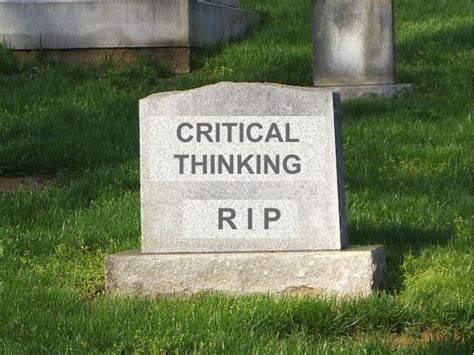
The Death of Critical Thinking

As Franklin points out, we’ve lost the ability to thoughtfully absorb and analyze information. The past few years have conditioned individuals to disregard anything that doesn’t align with mainstream sources, experts, or consensus. Instead of engaging with information critically, many have been taught to dismiss it outright. The result? A culture that values conformity over curiosity and blind acceptance over intellectual rigor.

We discuss how this shift has been accelerated by media bombardment, especially during the pandemic. The New York Times even published an article on critical thinking, but instead of encouraging intellectual engagement, it suggested that questioning mainstream narratives is dangerous. This is narrative warfare at its finest—manipulating public perception to ensure that only “approved” ideas are given legitimacy.

The Power of Narratives: How Ideological Echo Chambers Shape Reality

Franklin O’Kanu often cites James Corbett’s work on media’s role in shaping public perception as a major inspiration behind his Substack. Corbett’s central thesis is simple: narratives build realities—and whoever controls the dominant narrative controls public thought. Nowhere is this clearer than in the nihilistic messaging that dominates left-leaning social media platforms like Meta. The idea that humans are an irredeemable blight on the planet has been mainstreamed, despite evidence to the contrary.

This same unquestioning adherence to an ideological narrative played out during the pandemic with phrases like “Trust the science” and “Don’t do your own research.” I explored this trend in my Substack, particularly through the lens of so-called ‘cult expert’ Steven Hassan. Hassan built his career exposing ideological manipulation, branding himself as the foremost authority on cult mind control. But here’s the irony: while he calls out high-control religious groups, he seems completely blind to the cult-like tactics within his own political ideology.

Information Control: Censoring ‘Dangerous’ Ideas

Hassan’s BITE model—which stands for Behavior, Information, Thought, and Emotional control—is designed to help people recognize manipulation.

In cults, leaders dictate what information followers can access. The extreme left does the same.

  • Censorship of Opposing Views – Deplatforming, banning books, firing professors—if an idea threatens the ideology, it’s labeled “harmful” and shut down.
  • Historical Revisionism – Complex events are reframed to fit simplistic oppression narratives, ignoring inconvenient facts.
  • Selective Science – Only research that supports the ideology gets funding and visibility. Studies on biological sex differences, IQ variations, or alternative climate models? Silenced or retracted—not because they’re disproven, but because they’re inconvenient.
  • Discouraging Exposure to Counterarguments – Followers are taught that listening to the other side is “platforming hate” or “giving oxygen to fascism.”

This is exactly what happened when Franklin challenged the mainstream climate change narrative. The moment he questioned NetZero policies, he wasn’t just hit with the usual accusations: “climate denier,” “science denier,” and the ever-expanding list of ideological insults meant to discredit rather than debate, but he was blocked. This is how bad ideas survive—by shutting down the people who challenge them.

Franklin warns that if you’re not careful, these narratives can take you down a dark rabbit hole built on lies. Once an ideological framework is built around selective truth, it becomes a self-reinforcing system—one that punishes dissent and rewards conformity. And once you let someone else dictate what information is “safe” for you to consume, you’re already in the first stages of ideological capture.

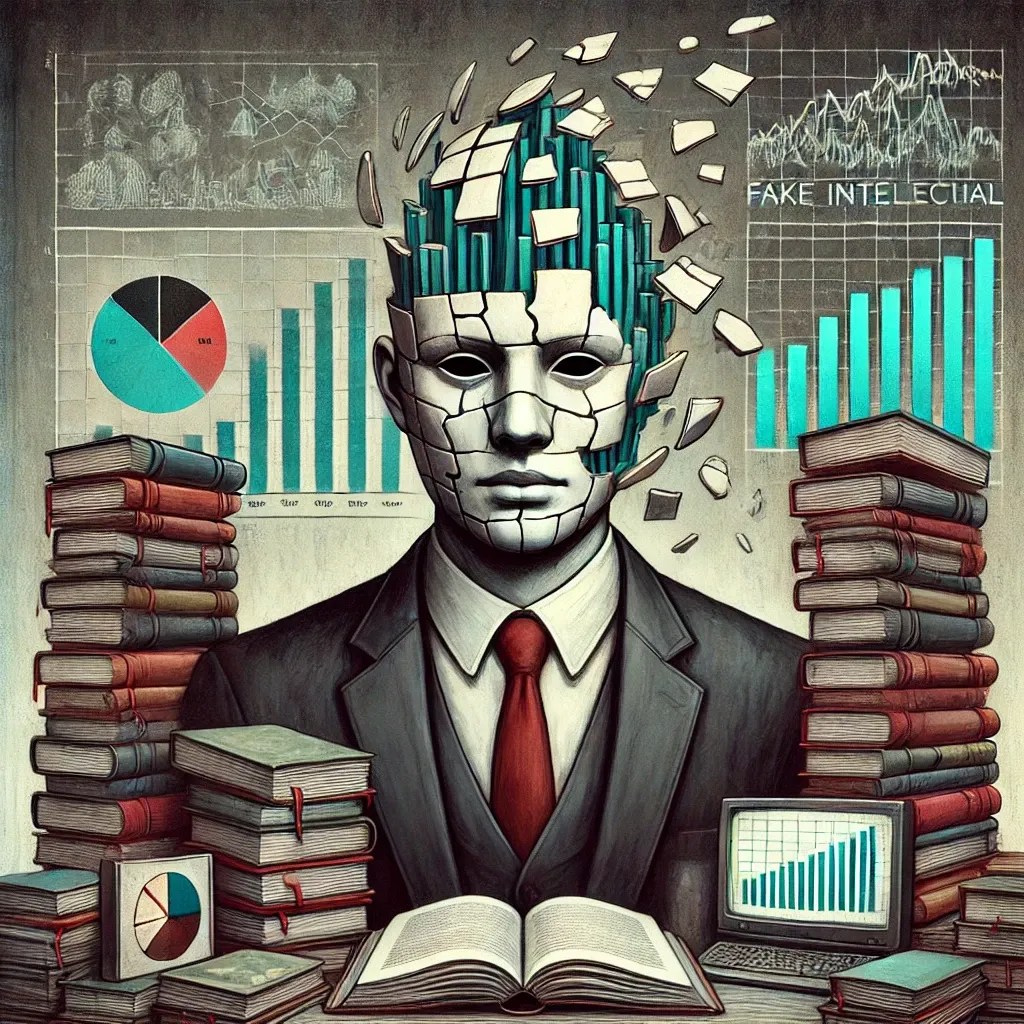
The Rise of the Fake Intellectual

Platforms like Facebook/Instagram/YouTube have perfected the illusion of intellectual discourse while actively suppressing opposing voices. This has led to what Franklin calls the fake intellectual—individuals or organizations that present themselves as champions of knowledge but ultimately serve to shut down real dialogue.

Fake intellectuals don’t invite discussion; they police it. They rely on appeals to authority, groupthink, and censorship to maintain an illusion of correctness. True intellectualism, on the other hand, is rooted in curiosity, openness, and the willingness to engage with challenging perspectives.

Reclaiming Intellectual Integrity

One of the most powerful insights from our discussion is the role belief plays in shaping our world. Franklin warns that when we accept narratives without scrutiny, we risk being deceived. This applies across industries—medicine, science, finance, and even religion. These systems function because people believe in them, often without verifying their claims. But if we fail to question these narratives, we become passive participants in a game where only a select few control the rules.

So, how do we resist narrative warfare and reclaim critical thinking? Franklin suggests:

  • Cultivating intellectual humility—being open to the possibility that we might be wrong.
  • Recognizing media manipulation—understanding how information is curated to shape public perception.
  • Engaging with diverse perspectives—actively seeking out voices that challenge our beliefs.
  • Trusting our own discernment—developing the confidence to think independently instead of outsourcing our opinions to authority figures.

Franklin expands on this in his writings, particularly in his two articles, How to See the World and How to Train Your Mind. As he puts it, “We all have these voices in our heads. Philosophy is really just understanding the reality of the world, and there’s a principle in philosophy—keep things as simple as possible.” He breaks it down like this:

  • You are a soul. That’s the foundation. If every child grew up knowing this, it would change the way we see ourselves.
  • You have a body. Your body exists to experience the physical reality of the world.
  • You have a mind. Your mind is an information processor that collects input from your senses. But it also generates thoughts—sometimes helpful, sometimes misleading.

Franklin uses a simple example: Is my craving for ice cream coming from my body, my mind, or my soul? That question highlights the need to discern where our impulses originate. He extends this concept to online interactions: How many thoughts do we have just from seeing something online? How many narratives do we construct before our soul even has a chance to process reality?

Online spaces, Franklin argues, give rise to what he calls the “inner troll.”🧌 He connects this to the spiritual concept of demons—forces that seek to provoke, enrage, and divide. “Think about the term ‘troll,’” he says. “What is that, really? It’s an inner demon that gets let loose online. The internet makes it easy for our worst instincts to take over.”

So, what’s the antidote? Franklin emphasizes the importance of the pause. Before reacting to something online, before getting swept into outrage, take a step back. Ask: What is happening here? What am I feeling? Is this a real threat, or is my mind generating a reaction?

“It’s extremely hard to do online,” Franklin admits. “But when we practice stepping back, we can respond more humanely—more divinely. That’s the key to reclaiming critical thinking in a world that thrives on emotional manipulation.”

The digital age bombards us with narratives designed to capture our attention, manipulate our emotions, and direct our beliefs. But we are not powerless.

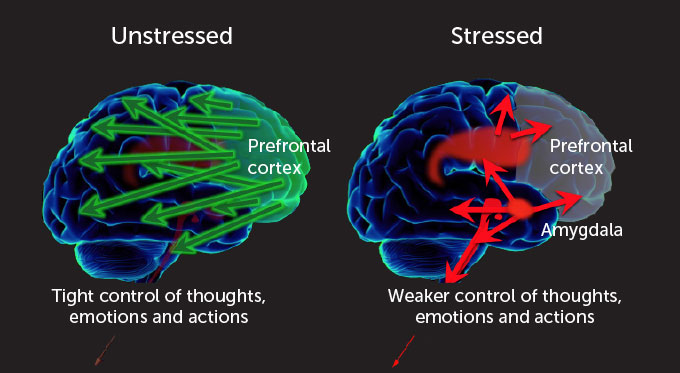
On an episode last season, we discussed a concept I learned from Dr. Greg Karris—something he calls narcissistic rage in fundamentalist ideologies. It helped me understand why people react so viscerally when their beliefs are challenged. My friend Jay described a similar idea as emotional hijacks, tying it to the amygdala’s response. This concept also appears in Emotional Intelligence 2.0 by Daniel Goleman and is expanded upon in Pete Walker’s Complex PTSD.

When the amygdala gets triggered—exactly what Franklin was describing—we have to learn to recognize the physical sensations that come with it. Elevated heart rate. Sweaty palms. That’s your body sounding the alarm. But in that moment, your prefrontal cortex—the part responsible for logic and rational thinking—is offline. Your biology is overriding your soul’s intention. And that’s why taking a step back is so crucial.

The best way to get your higher reasoning back online? Create space. Pause. Let the emotional surge settle before you engage. As simple as it sounds, it’s one of the hardest things to do. But in a world where reactionary thinking is the default, practicing this skill is an act of rebellion—and a path to reclaiming our intellectual and emotional sovereignty.


Next, Franklin and I dive into a pressing issue: The Coddling of the Mind in society—a theme I’ve explored numerous times on the podcast and in my blogs. Franklin brings up a fascinating point, saying, “One thing that’s happened with COVID, though it started before, is the softening of humanity. We’ve become so soft that you can’t say anything anymore. And what that’s done is pushed away true intellectual rigor. We used to be able to sit and share ideas, but now we’re obsessed with safe spaces. And this started on college campuses.”

Franklin’s observation taps into a broader cultural shift that has eroded the foundations of intellectual engagement. In the past, people could engage in discussions where the goal wasn’t necessarily to convince others, but to explore ideas, challenge assumptions, and learn. The push for safe spaces—often an attempt to shield individuals from discomfort or offense—has inadvertently led to the silencing of open debate. In this environment, people have become more focused on avoiding offense than on confronting difficult ideas or engaging in intellectual rigor. This dynamic, Franklin argues, has stripped away the very essence of what it means to debate, discuss, and learn.

This idea echoes themes explored in Gad Saad’s The Parasitic Mind, where Saad delves into how certain ideologies undermine intellectual diversity and critical thinking. Franklin builds on this, urging that true intellectual growth comes from understanding where someone is coming from, even if their views differ from your own. “Learn what happened to individuals to understand how they arrived at their conclusions,” he says. “Remove personal bias and avoid attacks. Only then can you critique the point effectively, offering counterpoints that strengthen both arguments and allow experiences from both sides to shine.” This approach, Franklin explains, fosters a more nuanced understanding of each other’s perspectives, allowing both sides to learn and grow rather than simply entrenched in opposing views.

This fragility encourages echo chambers and groupthink, where dissent is silenced, and alternative perspectives are rejected outright. Ironically, in the pursuit of empathy, freedom, and inclusivity, movements like deconstruction can end up mirroring the same intellectual and moral rigidity they sought to escape.

I could continue typing out the entire conversation, or you could just listen. 🙂

In an age where the appearance of truth is often prioritized over truth itself, our ability to think critically is more important than ever. This episode is an invitation to break free from intellectual complacency and reclaim the power of questioning.


Article mentioned in the interview:

Escaping Dogma or Trading It? The Risks of Deconstruction Culture

For many, the term “deconstruction” has come to represent a deeply personal process of questioning inherited beliefs, especially in the context of religion. While there’s no official “deconstruction community,” it has become a popular buzzword online, flourishing in spaces like Instagram, TikTok, and podcasts. (The New Evangelicals, Dr. Pete Enns (The Bible for Normal People), Eve was framed, Jesus Unfollower, Dr. Laura Anderson just to name a few.) These platforms provide room to question everything and dismantle rigid systems of belief—at least in theory.

But what happens when these communities become echo chambers of their own? Instead of fostering true intellectual freedom, the deconstruction movement often serves as a pipeline into new forms of dogma. Rather than encouraging critical thinking, it frequently replicates the same tribalism and groupthink that so many participants are trying to escape.

This is not growth. It’s trading one set of chains for another.


From Evangelicalism to Progressive Extremism

It’s ironic: people leave far-right evangelical Christianity believing they’ve found freedom, only to stumble into another extreme—progressive leftist ideologies. Why does this happen?

To understand this, we need to step back and look at human nature. Political scientists have found that public opinion is shaped far more by group identity than by self-interest. As Jonathan Haidt explains in The Righteous Mind, politics is deeply tribal. We’re hardwired to align with groups, not necessarily because they offer truth, but because they provide belonging.

This tribal impulse is magnified in the context of deconstruction. Many who leave evangelical Christianity are grappling with disillusionment, loss, and a hunger for community. For some, the progressive left offers a sense of safety and a clear moral framework, mirroring what they once found in their faith. The partisan brain, already trained to see the world in “us versus them” terms, naturally clings to another tribe rather than embracing the discomfort of uncertainty.

Research even suggests that extreme partisanship may be addictive. Our brains are rewarded for performing the mental gymnastics that protect us from beliefs we don’t want to confront. This dynamic—coupled with the fear of being ostracized by a new community—creates an environment where dissenting voices are silenced, and ideological purity becomes the new gospel.

Woke Ideology as a Secular Faith: A Closer Look

John McWhorter argues that wokeism functions like a full-fledged religion. It provides a moral framework that mirrors traditional religious beliefs. Instead of concepts like original sin, wokeism offers “privilege,” positioning those with it as morally compromised. In place of rituals like prayer, adherents perform acts like confessing their biases. And, similar to the salvation promised in traditional religions, salvation in wokeism comes through activism and striving for societal change. For McWhorter, this structure offers a sense of moral clarity and purpose, but the movement’s refusal to tolerate dissent makes it dangerous. He suggests, “What we’re seeing isn’t a quest for justice but a demand for unquestioning orthodoxy.”

Keep your eyes 👀out for that blog post, for it will be coming soon, and it will be called “Oh Woke night, The Sacred Beliefs of the Left”


Fragility and the “Three Great Untruths”

The allure of the deconstruction space isn’t just about leaving religion; it’s about embracing a new narrative. But narratives, like dogmas, can distort reality when they’re based on false premises. Greg Lukianoff and Jonathan Haidt explore this in their book The Coddling of the American Mind, identifying three “Great Untruths” that have come to dominate cultural discourse:

  1. “What doesn’t kill you makes you weaker.”
  2. “Always trust your feelings.”
  3. “Life is a battle between good people and evil people.”

These untruths encourage fragility, discourage critical thinking, and foster an “us versus them” mentality. They create a world where discomfort is seen as harmful, emotions override evidence, and disagreement is equated with moral failure.

Sound familiar? For anyone who grew up in evangelical circles, these patterns mirror the same rigidity and moral absolutism they left behind. And yet, these same traits are now pervasive in parts of the deconstruction space. This creates an ironic cycle: people flee one form of oppression, only to adopt another, packaged in new language but rooted in the same fear-based thinking.

For a deeper dive into the 3 Untruths check out this post/podcast: How the Quest for Truth Became a New form of Dogma


Reason Isn’t the Savior We Think It Is

One of the most seductive ideas in the deconstruction movement is the belief in reason as the ultimate guide to truth. On the surface, this sounds like an antidote to dogma. But here’s the catch: reason isn’t the unbiased tool we like to imagine.

French cognitive scientists Hugo Mercier and Dan Sperber argue that reasoning didn’t evolve to help us discover truth. Instead, it evolved for argumentation—to persuade others and protect our own beliefs. This explains why confirmation bias isn’t just a quirk of human psychology; it’s a feature of our argumentative minds.

As individuals, we’re not wired to produce open-minded, truth-seeking reasoning—especially when our identity or reputation is on the line. This is why intellectual and ideological diversity is so important in any truth-seeking community. Without it, reasoning becomes a tool for reinforcing tribal loyalty, not uncovering deeper truths.

The philosopher John Stuart Mill captured this in On Liberty, arguing that free speech and open debate are essential for discovering truth. Mill believed that truth isn’t static or simple; it emerges when differing perspectives clash, forcing ideas to be tested, refined, and strengthened. Worshiping reason as an infallible guide is, in itself, a kind of faith—one as flawed and potentially dangerous as religious dogmatism.


The Rise of the Fake Intellectual

2020 and the pandemic didn’t just disrupt our lives; it disrupted how we think about authority and expertise. Franklin O’Kanu, in his Substack UNORTHODOXY, describes the emergence of a new archetype: the “fake intellectual.”

These individuals position themselves as ultimate authorities, wielding data and studies to validate their perspectives. But often, their arguments lack intellectual rigor. They cherry-pick evidence, appeal to emotion, and create the illusion of expertise without true depth.

In the realm of public health and pharmaceuticals, there’s a well-documented phenomenon known as the “revolving door” between regulatory agencies and the pharmaceutical industry. This term refers to the cyclical movement of personnel between roles as regulators or policymakers and positions within the industries they oversee.

What Is the Revolving Door?

The revolving door concept highlights a pattern where high-ranking officials from organizations such as the CDC (Centers for Disease Control and Prevention) and the FDA (Food and Drug Administration) transition into influential roles within pharmaceutical companies, and vice versa. This fluid movement raises critical questions about the integrity and impartiality of regulatory oversight.

The deconstruction space is fertile ground for this phenomenon. Disillusioned individuals, hungry for guidance, are particularly vulnerable to voices that seem authoritative. But the rise of fake intellectuals doesn’t just mislead; it stifles genuine curiosity and critical thinking, replacing one form of blind faith with another.


A Call for Intellectual Diversity

If the goal of deconstruction is freedom, then it must embrace intellectual diversity. True growth happens when we allow our ideas to be challenged—when we resist the urge to label dissenters as enemies and instead engage with them in good faith.

This is why Mill’s defense of free speech is more important than ever. Truth isn’t found in the safety of ideological purity; it’s forged in the discomfort of debate. Communities that discourage dissent are not liberating—they’re suffocating.


Conclusion: Toward True Freedom

Deconstruction should be a crossroads, not a pipeline. It’s an opportunity to question everything—including the ideologies we’re tempted to adopt in place of the ones we’ve left behind.

To truly grow, we must embrace complexity, engage with opposing perspectives, and remain humble in the face of our own limitations. The path to freedom isn’t about finding the “right” tribe—it’s about stepping beyond tribes altogether and seeking truth with courage, curiosity, and an open mind.

Understanding Trump Derangement Syndrome (TDS)

Forget your zombie apocalypse fantasies — the real outbreak is Trump Derangement Syndrome (TDS), where rational thinking flies out the window the moment “Orange Man” is mentioned. TDS has become a modern-day fever that sends reasonable minds into a frenzy. If you’ve seen this around you, you’re not alone. But let me just say, I get it! I used to be there. When Trump won in 2016, I cried. I felt the devastation, the outrage, the “what’s happening to our country?!” moment that so many others experienced. I believed the media narratives without question and wore that emotional turmoil like a badge. But then, something clicked. I started researching more carefully, looking into primary sources, seeking out independent media, and asking myself what I was really feeling about the issues rather than just repeating the party line. Over time, I saw the layers of complexity, nuance, and even hypocrisy that I’d never realized before.

Now, let’s take a deeper look at each of the TDS symptoms:

Symptoms of TDS: Diagnosing the Outrage

1. “Fascist! Racist! Sexist!”

If you so much as mention Trump in a positive light, brace yourself for the onslaught: you’re suddenly a fascist, racist, sexist, homophobic, xenophobic, bigoted conspiracy theorist out to destroy democracy. The irony? This mob is so quick to throw every name in the book that the words have lost all meaning. Their logic: if you disagree, you’re evil. How convenient.

2. Family? Friends? Disposable!

TDS has reached the point where people are cutting off family members over their voting history. Imagine tossing a lifelong friendship because Uncle Joe wore a MAGA hat. For some with TDS, Thanksgiving isn’t a holiday; it’s a battleground. It’s not just about politics anymore — it’s a moral crusade where every dissenting opinion is a betrayal. Call it selective outrage syndrome.

3. Corporate Parrot Mode Activated

When TDS takes over, suddenly the most “anti-establishment” folks turn into the establishment’s biggest fans. They unironically parrot lines from Big Pharma, media conglomerates, tech giants, intelligence agencies, the military-industrial complex, and yes, even the World Economic Forum. In their minds, anything outside these sources? A dangerous conspiracy. “Think for yourself” only applies as long as you’re thinking exactly what they’re thinking.

4. Cancel Culture Gone Wild

Got a book that challenges the status quo? Banned. Statue of a historical figure? Torn down. Art that doesn’t align with the current narrative. Erased. For TDS-ers, history is only as valid as its alignment with their worldview. It’s a never-ending purge of anything that might cause them the slightest discomfort. The new motto? If it offends, it ends.

5. Segregation 2.0

In the wild world of TDS, segregation is back — but now it’s “progressive.” We’re talking division by race, medical status, and whatever category might boost moral superiority. They claim to champion equality, but at every turn, it’s “us versus them.” TDS has transformed inclusivity into a new, hyper-policed form of exclusivity.

6. Piercings, Tattoos, Hair Colors Galore

Extreme individuality, TDS-style: where everyone rebels in exactly the same way. TDS-driven defiance usually manifests in whatever new trend they’re convinced will “stick it to the man”. Just like TDS itself, this uniform has turned rebellion into a team sport. Black masks, blue hair — it’s the official TDS fashion statement. Strut your stuff with the same look as every other anti-establishment warrior on the block. For a movement obsessed with individuality, TDS sure has a strict dress code.

7. “Reproductive Justice” with Selective Amnesia

TDS champions “reproductive rights” but often glosses over the darker history of eugenics behind some early advocates. They’ll celebrate organizations without ever acknowledging where they came from. Bring up Margaret Sanger’s disturbing past, and watch them squirm — or, more likely, accuse you of “attacking reproductive freedom.”

8. Riot, Loot, and Celebrate Criminality (but Take Away the Guns)

TDS folks will tell you that looting and burning buildings are “mostly peaceful.” They cheer on criminality as “expression” but demand that law-abiding citizens be disarmed. In their perfect world, the government holds all the power, while citizens are stripped of their rights. Because nothing says “justice” like leaving the people defenseless.

9. Senile Man Isn’t Senile (and Don’t You Dare Say Otherwise)

Exhibit A of TDS reality distortion: insisting that “Senile Man” is sharp, focused, and totally not slipping. TDS defenders will rationalize every stutter, stumble, and lapse as just “endearing quirks.” They’ve become professional apologists for a guy who can barely string a sentence together without a script.

10. Open Borders Good, Secure Borders Bad

In the TDS worldview, open borders are a humanitarian triumph, and peace negotiations are…dangerous? They cheer escalating tensions and possible war, insisting it’s good for democracy. But God forbid someone suggests security at the borders. That’s “xenophobic” — unless they need walls and fences around their own neighborhoods.

11. MAGA and Russia: The Root of All Evil

To the TDS-affected, MAGA and Russia are the villains of every story. Whatever the issue, it’s their fault. Rising costs, climate disasters, bad sports scores? It’s all “MAGA” or Putin. It’s like a never-ending game of political Mad Libs, where every blank is filled with the same two villains.

12. January 6 is the New 9/11

The narrative: January 6 was on par with Pearl Harbor and 9/11. For TDS followers, a chaotic day at the Capitol has somehow become a world-altering tragedy on par with historic attacks on America. The comparison is absurd, but TDS won’t let it go. Any criticism? Clearly you’re downplaying “the darkest day in history.”

13. Blind Obedience Rebranded as “Saving Democracy”

TDS logic: the only way to “save democracy” is by silencing dissent, canceling opinions, and obeying government orders without question. It’s like a self-contradictory campaign slogan: “Destroy freedom to protect it!” And somehow, they think they’re the enlightened ones.

14. Buzzword Bingo

TDS rhetoric is powered by slogans that sound deep but are emptier than a plastic grocery bag in a windstorm. You’ll hear phrases like “destroy democracy to save it,” “compliance is justice,” and “love wins,” even when they’re trampling over their own definitions. It’s a language of feel-good contradictions — because if it sounds right, who cares if it is right?

TDS Prognosis: From Reason to Rage

Unfortunately, TDS seems to be getting worse, not better. Studies suggest that heavy doses of mainstream media, academic echo chambers, and social media influencers are turning normal folks into a rage-fueled army of identical outrage. And when you throw in teachers’ unions, college admin, and some politicians adding fuel to the fire, it’s no wonder we’re seeing otherwise smart, decent people morph into full-time outrage machines.

In the end, TDS has turned the political landscape into a circus of contradictions, hysterics, and nonsensical slogans. If you’re ready for an apocalypse, you might not need zombies — TDS has already created an army of the enraged, who follow the leader without question, convinced they’re fighting the good fight by shutting down everything they disagree with.

Treatment: A Cure for TDS?

Can you reason with someone deep in TDS? Sometimes it feels impossible, but it’s worth trying. A demoralized person is hard to reach, but most cases of TDS aren’t terminal. Many of those “80 million” Biden voters are reasonable, everyday people who just might be open to a conversation. Looking at the 2024 election landscape, Trump and the GOP have undeniably tapped into a broader, more diverse demographic. Today’s Republican candidates come from various backgrounds, with f igures like Tulsi Gabbard and Vivek Ramaswamy, representing unique perspectives, which is a first for the party on this scale. This diverse mix shows that the party’s focus is evolving—centered not just on identity but on a broader range of ideas​.POLITICO.

Let’s resist the divisive forces that are feeding TDS and bring civility back into the mix.

So, here’s the prescription:

  1. Step Away from MSM: The first step is to lower their dose of mainstream media. It’s like a detox.
  2. Upgrade the Information Diet: Guide them toward new, independent sources of information. Look for voices that don’t just echo the usual talking points.
  3. Watch The Coddling of the American Mind: This documentary challenges the ideas that have cultivated TDS and offers perspective on resilience and openness.
  4. Take a Walk Outside: Nature is good for the soul. Sometimes, the answer is as simple as fresh air, sunshine, and a reminder that the world is bigger than our screens.
  5. Hit the Gym: Physical exercise has been shown to reduce anxiety and improve mental clarity. Plus, it’s hard to hold onto bitterness when you’re in the zone.
  6. And Most Importantly, Laugh: Humor can bridge divides faster than any debate. Remember, we can disagree and still respect each other.

Let’s turn down the heat and work on genuine conversations—who knows, maybe one by one, we can cure TDS for good.

But on the real though, breaking through what’s commonly called Trump Derangement Syndrome (TDS) requires understanding why these deeply polarizing reactions arise and how to gently engage people in constructive, open-minded discussions. Here are some insightful resources and strategies to help you navigate TDS, improve communication, and potentially help those caught in it see multiple perspectives more clearly.

1. Books on Political Polarization and Media Influence

  • “The Coddling of the American Mind” by Jonathan Haidt and Greg Lukianoff
    This book explores why younger generations are more anxious and polarized, linking it to trends in education, media, and social conditioning. It discusses the impact of overprotection and “safetyism” on mental resilience, which can feed into extreme reactions to political figures like Trump.
  • “Righteous Mind: Why Good People Are Divided by Politics and Religion” by Jonathan Haidt
    Haidt’s book explains the moral psychology behind political divides, providing insight into why people demonize others for their beliefs. It’s a resource that encourages empathy and offers tools to understand why certain people feel so strongly about political figures.
  • “Hate, Inc.” by Matt Taibbi
    This book takes a deep dive into how the media creates division, rage, and fear to keep audiences engaged. Taibbi argues that both sides of the political spectrum are manipulated by media tactics, which can lead to knee-jerk reactions and a lack of critical thinking.
  • “Thinking, Fast and Slow” by Daniel Kahneman
    Kahneman’s insights into the psychology of decision-making and biases are incredibly valuable for understanding how snap judgments form. This is essential for recognizing why some people react so viscerally to certain public figures and how they might break out of these biases.

2. Documentaries and Videos

  • “The Social Dilemma”
    This documentary shows how social media platforms amplify outrage and division. It explains how algorithms reward extreme views and reinforce confirmation biases. Viewing this can help someone understand how media exposure may fuel polarized reactions.
  • Interviews and Talks by Jonathan Haidt
    Haidt’s lectures on YouTube about political polarization and moral psychology provide easily digestible explanations for why people become entrenched in their beliefs and hostile toward others. His work emphasizes empathy and understanding, which are key in bridging divides.
  • Interviews with Matt Taibbi on Media Influence
    Journalist Matt Taibbi frequently discusses media’s role in inflaming division and mistrust. Hearing his perspective on how media drives certain narratives can help someone rethink their news consumption.

3. Podcasts and Alternative Media Outlets

  • The Joe Rogan Experience
    Rogan’s podcast often features diverse viewpoints, including from figures who challenge mainstream narratives. Rogan’s open-minded, questioning style can encourage listeners to think independently.
  • Breaking Points with Krystal and Saagar
    This independent news show is known for covering both left-wing and right-wing perspectives critically, making it valuable for people seeking balanced information. Hosts Krystal Ball and Saagar Enjeti offer nuanced discussions that don’t fall into mainstream narratives.
  • The Glenn Greenwald Podcast
    Greenwald, a journalist and political commentator, is known for challenging establishment narratives. His independent reporting encourages critical thinking and skepticism, which can help break through one-sided views.

4. Online Resources

  • AllSides.com
    This news aggregator presents articles from the left, center, and right, helping people see how the same story can be framed differently depending on the outlet. Regularly reading across the spectrum can help break the habit of ideological echo chambers.
  • Media Bias/Fact Check
    This site is useful for assessing the political leanings and reliability of different media outlets. People with TDS often trust only certain sources; this tool can provide insight into the biases of those sources, helping individuals diversify their information diet.

5. Therapeutic and Self-Awareness Tools

  • Mindfulness Practices
    Practicing mindfulness or meditation can help people become more self-aware and less reactive, making it easier to engage in rational conversations without emotional bias.
  • Cognitive Behavioral Therapy (CBT) Techniques
    CBT exercises help people examine the roots of their thoughts and emotions. While this isn’t TDS-specific, understanding thought patterns and challenging automatic, often emotional, responses can reduce irrational thinking related to political issues.

6. Constructive Engagement Tips

  • Ask Open-Ended Questions
    Instead of directly challenging someone’s beliefs, ask them questions that make them think deeper: “What made you come to that conclusion?” or “Have you ever looked into other perspectives on this?”
  • Seek Common Ground
    Finding points of agreement before delving into differences can make conversations less confrontational and more constructive.
  • Limit Media Consumption Together
    If you’re close to someone who seems highly affected by TDS, suggest a “news detox” where both of you take a break from mainstream media. Instead, engage in activities like reading books, listening to long-form discussions, or spending time in nature.
  • Use Humor
    Humor can lighten intense topics and make them more approachable. It’s easier to discuss differences when the conversation doesn’t feel like a battle.
  • Encourage Journaling or Writing
    Writing can help people clarify their beliefs and analyze their emotions. It encourages self-reflection, which is helpful for overcoming rigid political opinions.

Breaking the cycle of TDS is more about cultivating open-mindedness, empathy, and critical thinking than directly trying to “change minds.” These resources and strategies can help create a space where productive conversations can happen.