
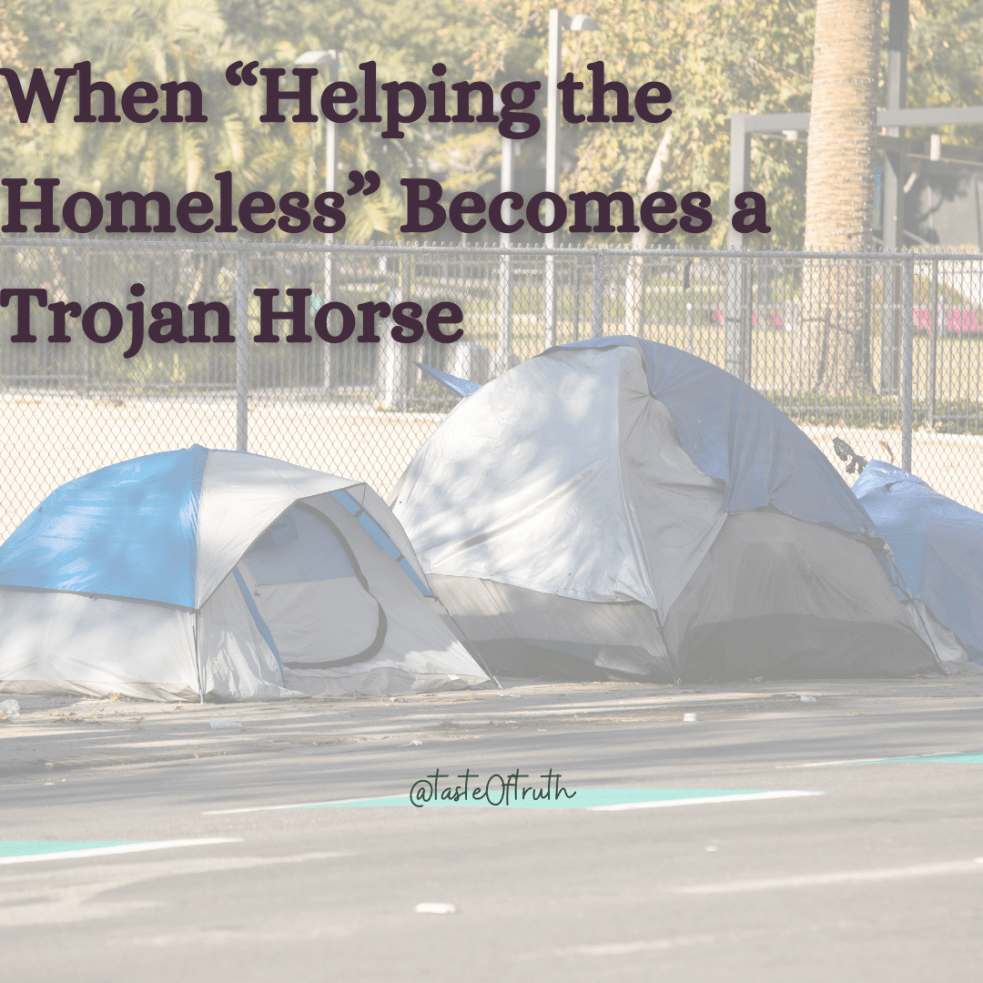
Why Trump’s new executive order deserves close scrutiny
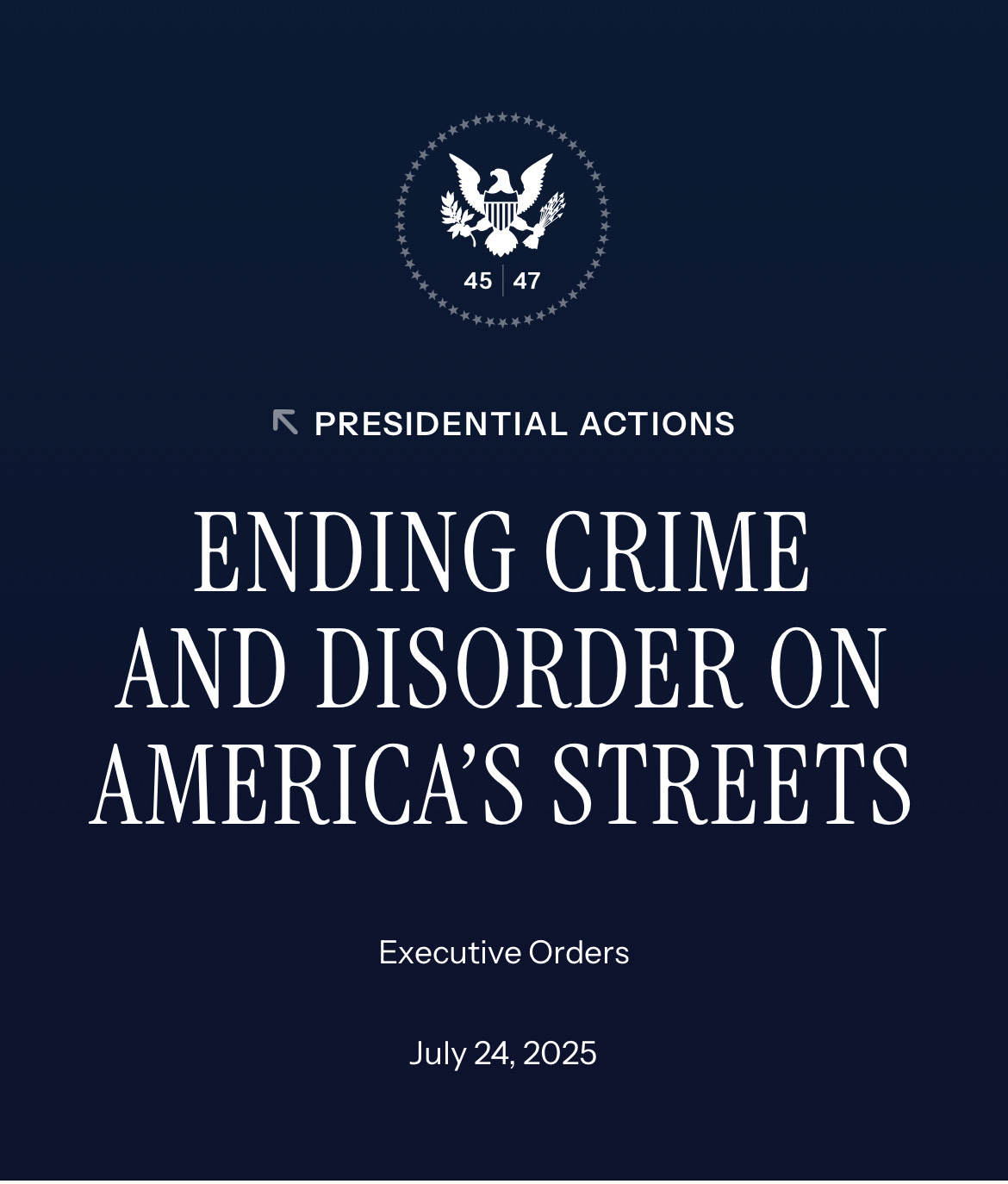
President Trump signed an executive order on July 24, 2025, calling on states and cities to clear homeless encampments and expand involuntary psychiatric treatment, framed as a move to improve public safety and compassion
At first glance, it seems reasoned: address the homelessness crisis in many progressive cities, restore order, & help those with severe mental illness. But when I read it closely, and the language….phrases like “untreated mental illness,” “public nuisance,” and “at risk of harm”is vague enough, subjective enough, and feels ripe for misuse 😳
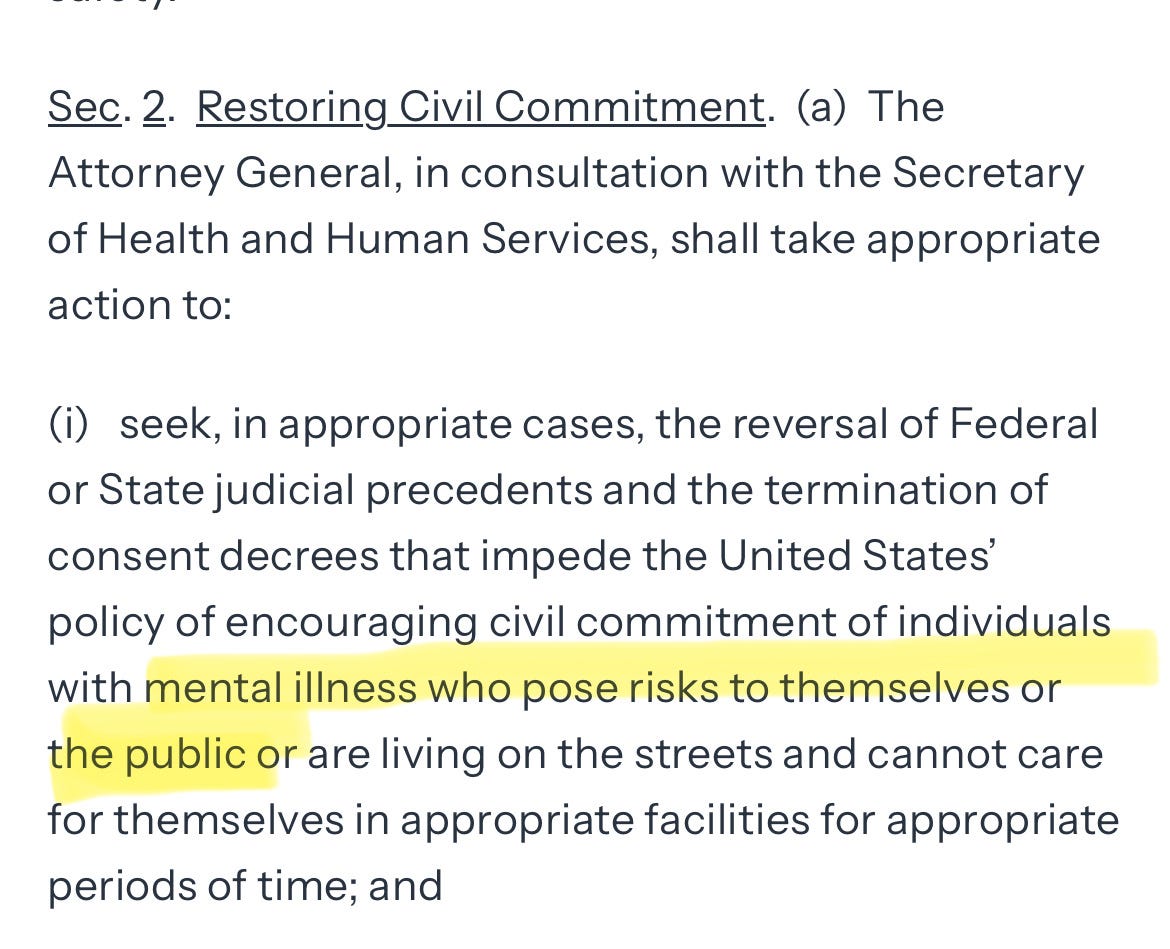
This goes beyond homelessness. It marks a shift toward normalizing forced institutionalization, a trend with deep roots in American psychiatric history.
We explored this dark legacy in a recent episode, Beneath the White Coats 🥼 and if you listened to that episode, you’ll know that
compulsory commitment isn’t new.
Historically, psychiatric institutions in the U.S. served not just medical needs but social control. Early 20th-century asylums housed the poor, the racially marginalized, and anyone deemed “unfit.”

The eugenics movement wasn’t a fringe ideology….it was supported by mainstream medical groups, state law, and psychiatry. Forced sterilization, indefinite confinement, and ambiguous diagnoses like “moral defectiveness” were justified under the guise of public health.
Now, an executive order gives local governments incentives (and of course funding 💰 is always tied to compliance) to loosen involuntary commitment laws and redirect funding to those enforcing anti-camping and drug-use ordinances instead of harm reduction programs
Once states rewrite their laws to align with the order’s push toward involuntary treatment and if “public nuisance” or “mental instability” are to be interpreted broadly…
Now, you don’t have to be homeless to be at risk. A public disturbance, a call from a neighbor, even a refusal to comply with treatment may trigger involuntary confinement.
Is it just me, or does this feel like history is repeating?
We’ve seen where badly defined psychiatric authority leads: disproportionate targeting, loss of civil rights, and institutionalization justified as compassion. Today’s executive order could enable a similar expansion of psychiatric control.
So.. what do you think? Is this just a homelessness policy? or is it another slippery slope?
 Taste0ftruth Tuesdays