Uncover how MLMs and high-control religions exploit narratives to control and isolate you

Have you been noticing the trend this week on how MLMs and high-control religions are like two peas in a pod? 🤔Both are pros at narrative control and emotional manipulation to keep you hooked and hush any objections. 🧠💥

By boosting group identity, crafting slick stories to tackle doubts, and giving dissenters the cold shoulder, they shut down critical thinking faster than you can say “independent thought.” 🚫💭

Both MLM companies and high-control religions use sophisticated methods of narrative control and emotional manipulation to maintain adherence and deflect objections.

In this post, we’ll explore these tactics in detail, shedding light on the parallels between the two and their impact on individuals.

MLM Companies

Training on Objection Handling:

  1. Preemptive Framing:
    • Narrative: MLM companies often train recruits to preemptively frame any criticism as coming from those who don’t understand the business model or are jealous of the potential success.
    • Example: “People who criticize MLMs just don’t understand how it works. They’re stuck in the traditional 9-to-5 mindset.”
  2. Repetition of Success Stories:
    • Narrative: Recruits are encouraged to repeatedly share and focus on success stories within the MLM to create a positive and hopeful group identity.
    • Example: “Look at how much [successful person] has achieved! You can do it too if you follow the system.”
  3. Us vs. Them Mentality:
    • Narrative: Critics are often labeled as ‘negative’ or ‘toxic,’ the idea that only those within the MLM understand and support each other.
    • Example: “Don’t listen to the naysayers; they don’t want you to succeed like we do.”
  4. Deflection Techniques:
    • Narrative: Recruits are taught to deflect objections by changing the subject or asking questions to steer the conversation back to the positive aspects of the MLM.
    • Example: “I understand your concern, but let me ask you this: Don’t you want more financial freedom?”

High-Control Religions (Apologetics Tactics)

Thought-Stopping Techniques:

  1. Scriptural Rebuttal:
    • Technique: Apologists use specific scriptures to counter objections, often discouraging further questioning by framing it as a lack of faith or understanding.
    • Example: “The Bible says to lean not on our own understanding. Trust in God’s plan.”
  2. Repetition of Doctrinal Stories:
    • Technique: Similar to MLM success stories, these religions emphasize repetitive storytelling of faith miracles or doctrinal teachings to strengthen group identity.
    • Example: “Remember how [biblical figure] overcame doubt by trusting in God. We must do the same.”
  3. Isolation of Dissenters:
    • Technique: Those who question or criticize are often isolated or labeled as spiritually weak or rebellious, reinforcing conformity.
    • Example: “Anyone who causes division is not acting in love. Avoid such people.”
  4. Deflection and Redirection:
    • Technique: Apologists often deflect challenging questions by redirecting the conversation to more familiar or comfortable topics within the faith.
    • Example: “That’s an interesting question, but let’s focus on how much God loves us and has a plan for our lives.”

Comparison

Common Elements:

  1. Group Identity Reinforcement:
    • Both MLMs and high-control religions heavily rely on creating a strong sense of group identity to foster loyalty and discourage dissent.
  2. Narrative Control:
    • Both systems use pre-defined narratives to handle objections and maintain control over the beliefs and behaviors of their members.
  3. Us vs. Them Mentality:
    • By framing outsiders or critics as ‘misinformed’ or ‘negative,’ both MLMs and high-control religions create a protective barrier against external critique.
  4. Emotional Manipulation:
    • Both systems use emotional stories (success stories in MLMs, faith miracles in religions) to inspire and motivate adherence, often at the expense of critical thinking.

Conclusion

Both MLM companies and high-control religions use sophisticated methods of narrative control and emotional manipulation to maintain adherence and deflect objections. By reinforcing group identity, employing specific narratives to handle objections, and isolating dissenters, they create environments where questioning and critical thinking are discouraged. Understanding these parallels can help in identifying and addressing the underlying tactics used to exert control in both contexts.

Want the juicy details? 🍿🎧 Tune into this week’s podcast episode to get the full scoop and learn how to spot these tactics in action. 🎙️✨

#TasteOfTruthTuesdays#PodcastEpisode#MLMs#HighControlReligions#CriticalThinking#NarrativeControl#EmotionalManipulation
#radicalization#narrative#language#cult#cultawareness#igotout#deconstructingfaith#deconstruction#podcast#brainwashing#indoctrination#mlmsuccess

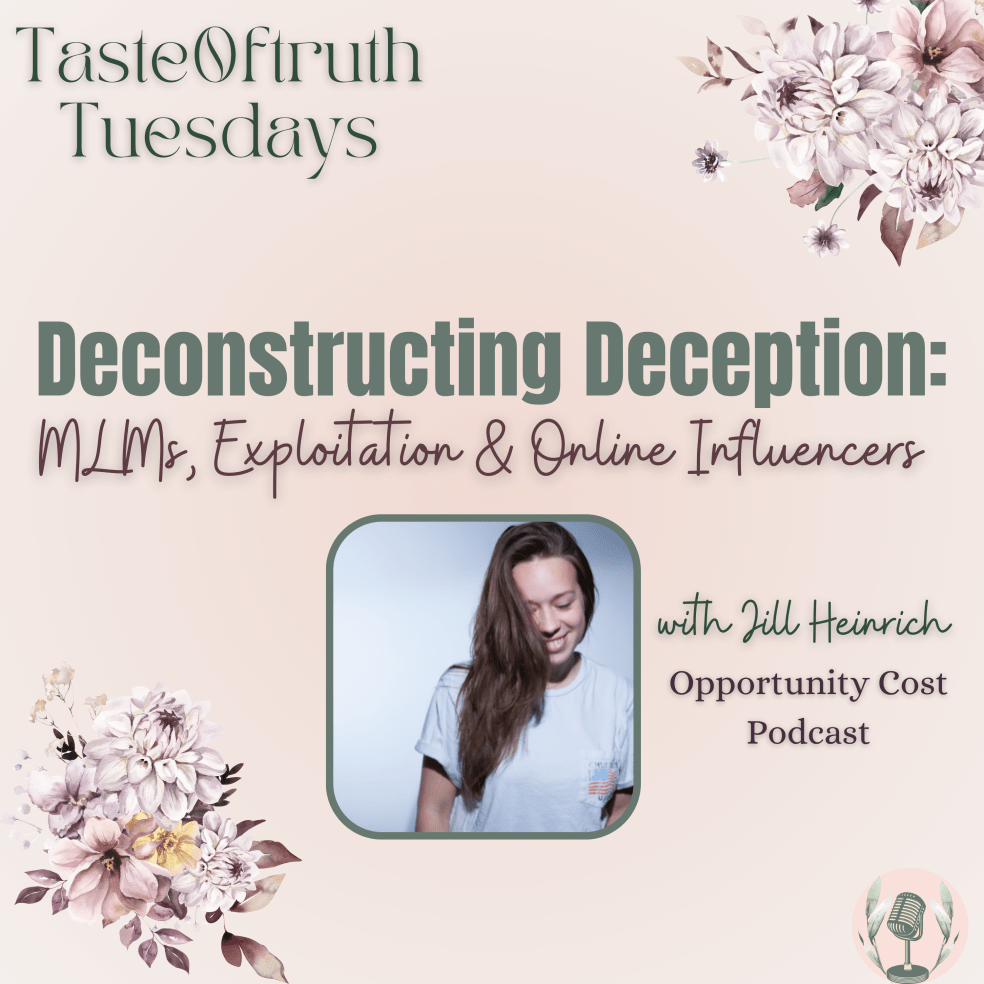
Deconstructing Deception: MLMs, Exploitation & Online Influencers

This week, we’re diving deep into the murky waters of high-control groups like MLMs, conspiracies, and evangelicalism. 💥✨

🚨 Exploitation Alert 🚨

Tune in to explore the shady side of:

  • Lobbyism & Amway – How lobbying shapes the MLM landscape.
  • Enagic’s Kangen Water Scandal – Uncover the dangerous misinformation and financial exploitation by MLMs like Enagic.
  • Faith and Finance – Why are Christian women particularly vulnerable to MLM schemes? Learn to spot the red flags.
  • Influencers and Ideologies – How influencers like Girl Defined hide harmful beliefs behind appealing facades.
  • Podcasting Insights – Hear about the joys and challenges of podcasting, from trusting your instincts to finding joy in the creative process.

Join us for an eye-opening episode that tackles the intersections of gender, culture, business, and control. Don’t miss out on these compelling insights! 🚀✨

Beyond the IBLP: Unveiling the Shared Roots of Evangelicalism & Spiritual Trauma

The Institute in Basic Life Principles was founded by Bill Gothard, is known for its strict, authoritarian teachings on Christian living and family roles, often leading to significant emotional harm.

In the deconstruction space, there’s a troubling tendency to focus exclusively on extreme cases of spiritual abuse, such as those from the Institute in Basic Life Principles (IBLP). While it’s crucial to address and understand these severe experiences, it’s equally important to recognize that spiritual and religious trauma can manifest in many forms beyond such high-profile examples.

While IBLP is a notable example of spiritual abuse, its practices reflect broader trends within evangelical Christianity that also emphasize control, guilt, and fear.

Unveiling the Shared Roots

The roots of evangelical Christianity are deeply entwined with guilt, fear, coercion, and deception, a legacy that can permeate all levels of faith practice. This issue isn’t confined to one group or doctrine; rather, it echoes through the broader history of evangelicalism, including the violent and tumultuous period of the Protestant Reformation.

Guilt and Fear: Evangelical teachings often emphasize human sinfulness and the need for constant repentance, creating an environment where guilt and fear become central. The pressure to meet unattainable moral standards can lead to chronic anxiety and self-doubt. Believers may struggle with feelings of inadequacy and unworthiness, which can erode self-esteem and lead to long-term psychological trauma.

Coercion: Many evangelical doctrines employ coercive tactics to ensure conformity and compliance. This can include manipulating believers through promises of divine favor or threats of divine punishment. Such coercion often pressures individuals into adhering to strict beliefs and behaviors, stifling personal autonomy and fostering a sense of control and manipulation.

Deception: The evangelical tradition can sometimes perpetuate deceptive teachings, presenting religious doctrines in a way that omits or distorts critical truths. This can include selective scriptural interpretations or misleading teachings about the nature of God and salvation. When individuals later confront these deceptions, they may experience profound disillusionment and betrayal, further contributing to their trauma.

Historical Context: The Protestant Reformation, a pivotal event in evangelical history, was marked by violent conflict and intense upheaval. The brutality and extremism of this period set a precedent for how religious movements can become entangled in aggression and intolerance. This historical backdrop adds another layer to understanding how evangelical Christianity, in its various forms, can inflict spiritual harm.

By acknowledging this broader context, we can better address the diverse experiences of trauma within the Christian faith and work towards healing that encompasses all who have been affected.\

Let’s look at the parallels:

1. Control and Authority:

  •     Evangelical Teachings: Evangelical groups often emphasize strict adherence to biblical authority and teachings, which can lead to high levels of control over personal beliefs and behavior.
  •    IBLP: The IBLP, founded by Bill Gothard, is known for its rigid set of rules and teachings that govern nearly every aspect of life, including family dynamics, education, and personal conduct.

2. Use of Guilt and Fear:

  •     Evangelical Teachings: Evangelicals may use guilt and fear of eternal damnation to enforce moral behavior and adherence to religious practices.
  •     IBLP: The IBLP uses fear of divine punishment and guilt to maintain control, emphasizing strict obedience to its principles and teachings.

3. Isolation from Dissenting Views:

  •     Evangelical Teachings: Evangelical communities might discourage or isolate members who question or deviate from core beliefs, often labeling dissent as dangerous or sinful.
  •     IBLP: The IBLP isolates its members from outside influences and encourages avoidance of those who criticize or question its teachings.

4. Emphasis on Obedience:

  •     Evangelical Teachings: Emphasis is placed on obedience to God’s commands and church teachings, which can sometimes discourage critical thinking and personal questioning.
  •     IBLP: stresses strict obedience to its guidelines as a sign of faithfulness, often at the expense of personal autonomy and critical reflection.

5. Authoritarian Structure:

  •     Evangelical Teachings: Many evangelical groups have a hierarchical structure where church leaders wield significant authority over members’ beliefs and practices.
  •     IBLP: The IBLP has a centralized authority with Bill Gothard’s teachings at the core, and his directives are followed unquestioningly by adherents.

6. Focus on Family Roles:

  •     Evangelical Teachings: Traditional evangelical teachings often emphasize distinct roles within the family, typically with a strong patriarchal structure.
  •     IBLP: The IBLP advocates for a strict family hierarchy where the father is the ultimate authority, and family roles are rigidly defined.

7. Handling of Dissent and Criticism:

  •     Evangelical Teachings: In many evangelical communities, dissent or criticism of church doctrine or practices can lead to significant social and spiritual consequences. Those who voice doubts may be labeled as troublemakers or heretics, and their concerns are often dismissed or invalidated.
  •     IBLP: The IBLP is known for its strong stance against criticism. Those who question or criticize its teachings are often ostracized or labeled as spiritually immature or rebellious. This approach helps to maintain a homogenous and compliant membership base.

8. Emphasis on Personal Purity and Moral Behavior:

  •     Evangelical Teachings: Evangelical teachings often place a high value on personal purity and moral behavior, with a strong focus on abstaining from behaviors deemed sinful, such as premarital sex, substance abuse, or other forms of moral failing. This emphasis can create a culture of judgment and fear of falling short.
  •     IBLP: The IBLP emphasizes extreme standards of moral behavior and personal purity, with detailed guidelines on how members should conduct themselves in all areas of life. The focus on maintaining high moral standards can lead to guilt and self-policing among members.

9. Economic and Social Expectations:

  •     Evangelical Teachings: Some evangelical communities have specific expectations regarding financial contributions to the church and adherence to tithing practices. Members may be encouraged to prioritize church-related financial support over other expenses.
  •      IBLP: The IBLP also has expectations regarding financial and social behavior, including guidelines on how families should manage their finances and interactions. Members are often encouraged to support the organization financially and align their social activities with its teachings.

10. Role of Testimonies and Personal Experiences:

  •      Evangelical Teachings: Evangelical communities often emphasize personal testimonies and experiences as evidence of spiritual truth. Individuals are encouraged to share their personal stories of conversion or miracles as validation of their faith.
  •      IBLP: The IBLP similarly relies on personal testimonies and experiences to validate its teachings. Success stories and positive outcomes are used to promote the effectiveness of its principles, while negative experiences are often dismissed or attributed to a lack of adherence.

11. Intervention in Personal Choices:

  •      Evangelical Teachings: Evangelical teachings may extend into personal choices such as dating, marriage, and career decisions. Members might receive guidance or pressure to make choices that align with church teachings or leadership directives.
  •     IBLP: The IBLP provides detailed guidance on personal choices, including dating and marriage, often imposing strict rules on how these aspects of life should be approached. Members are expected to follow these guidelines closely, with deviations viewed as problematic.

12. Cultural and Social Isolation:

  •      Evangelical Teachings: Evangelical communities may promote cultural and social isolation from secular society, encouraging members to avoid influences that are seen as contrary to their faith. This can include limiting exposure to secular media, secular education, or interfaith interactions.
  •      IBLP: The IBLP promotes a high degree of cultural and social isolation, encouraging members to avoid secular influences and limit interactions with those outside the organization. This isolation helps to reinforce adherence to IBLP teachings and prevents exposure to alternative viewpoints.

13. Psychological and Emotional Impact:

  •     – Evangelical Teachings: The pressure to conform to strict religious standards can lead to psychological and emotional stress, including anxiety, guilt, and fear of failure or condemnation. Members may struggle with self-esteem and mental health issues as a result of these pressures.
  •     – IBLP: The IBLP’s emphasis on strict adherence to its principles can also have significant psychological and emotional impacts, including stress, guilt, and fear of not measuring up to its standards. This can lead to long-term emotional and psychological difficulties for members.

In examining the similarities between evangelical teachings and the Institute in Basic Life Principles (IBLP), it becomes clear that both systems employ similar methods of control and influence.

Evangelicalism often emphasizes strict adherence to biblical authority, use of guilt and fear, and isolation of dissenting views, which can significantly impact personal beliefs and behavior.

Similarly, IBLP’s rigid rules and central authority exert profound control over its members, using fear and guilt to enforce compliance. Both systems focus on obedience and maintain hierarchical structures that can suppress critical thinking and personal autonomy.

Understanding these parallels sheds light on the broader patterns of spiritual trauma that can arise within high-control religious environments.

Whether within the confines of IBLP or the wider evangelical world, the use of control, guilt, and isolation can have lasting effects on individuals.

Recognizing these patterns is crucial for fostering awareness and support for those affected by such environments. As we continue to explore and address these issues, it is essential to advocate for more compassionate and open approaches to faith and personal growth, free from undue control and fear.

Unveiling Evangelicalism: From High-Control Practices to Spiritual Trauma

Challenging the Narrow View: Understanding Spiritual Trauma Beyond the IBLP

In the deconstruction space, there’s a troubling tendency to focus exclusively on extreme cases of spiritual abuse, such as those from the Institute in Basic Life Principles (IBLP). While it’s crucial to address and understand these severe experiences, it’s equally important to recognize that spiritual and religious trauma can manifest in many forms beyond such high-profile examples.

The roots of evangelical Christianity are deeply entwined with guilt, fear, coercion, and deception, a legacy that can permeate all levels of faith practice. This issue isn’t confined to one group or doctrine; rather, it echoes through the broader history of evangelicalism, including the violent and tumultuous period of the Protestant Reformation.

Guilt and Fear: Evangelical teachings often emphasize human sinfulness and the need for constant repentance, creating an environment where guilt and fear become central. The pressure to meet unattainable moral standards can lead to chronic anxiety and self-doubt. Believers may struggle with feelings of inadequacy and unworthiness, which can erode self-esteem and lead to long-term psychological trauma.

Coercion: Many evangelical doctrines employ coercive tactics to ensure conformity and compliance. This can include manipulating believers through promises of divine favor or threats of divine punishment. Such coercion often pressures individuals into adhering to strict beliefs and behaviors, stifling personal autonomy and fostering a sense of control and manipulation.

Deception: The evangelical tradition can sometimes perpetuate deceptive teachings, presenting religious doctrines in a way that omits or distorts critical truths. This can include selective scriptural interpretations or misleading teachings about the nature of God and salvation. When individuals later confront these deceptions, they may experience profound disillusionment and betrayal, further contributing to their trauma.

Historical Context: The Protestant Reformation, a pivotal event in evangelical history, was marked by violent conflict and intense upheaval. The brutality and extremism of this period set a precedent for how religious movements can become entangled in aggression and intolerance. This historical backdrop adds another layer to understanding how evangelical Christianity, in its various forms, can inflict spiritual harm.

By acknowledging this broader context, we can better address the diverse experiences of trauma within the Christian faith and work towards healing that encompasses all who have been affected.

⛓️Evangelicalism is the opposite of freedom. ⛓️

A high-control religion is a religious group that exercises significant control over its members’ lives, including their beliefs, behaviors, relationships, and access to information.

Evangelical Christianity often exerts high levels of control over its members by demanding strict adherence to its interpretations of the Bible.

Members may be expected to attend multiple church services and small group meetings each week, adhere to moral codes regarding sexuality, substance use, and entertainment, and prioritize church activities over other aspects of life.

The lie of penal substitutionary atonement theory, original sin, fear of hell and eternal damnation is frequently used to enforce compliance and discourage questioning.

Evangelical communities may also encourage social isolation from non-believers, creating an insular environment where dissenting views are discouraged and conformity is enforced.

These practices and teachings illustrate how Christianity, particularly in its more conservative and fundamentalist forms, exhibits the characteristics of a high-control religion.

#exvangelical#exchristian#exvangelicals#highcontrol#cult#cultawareness#indoctrination#brainwashing#dogma#protestant#reformedtheology#reformed#christianity

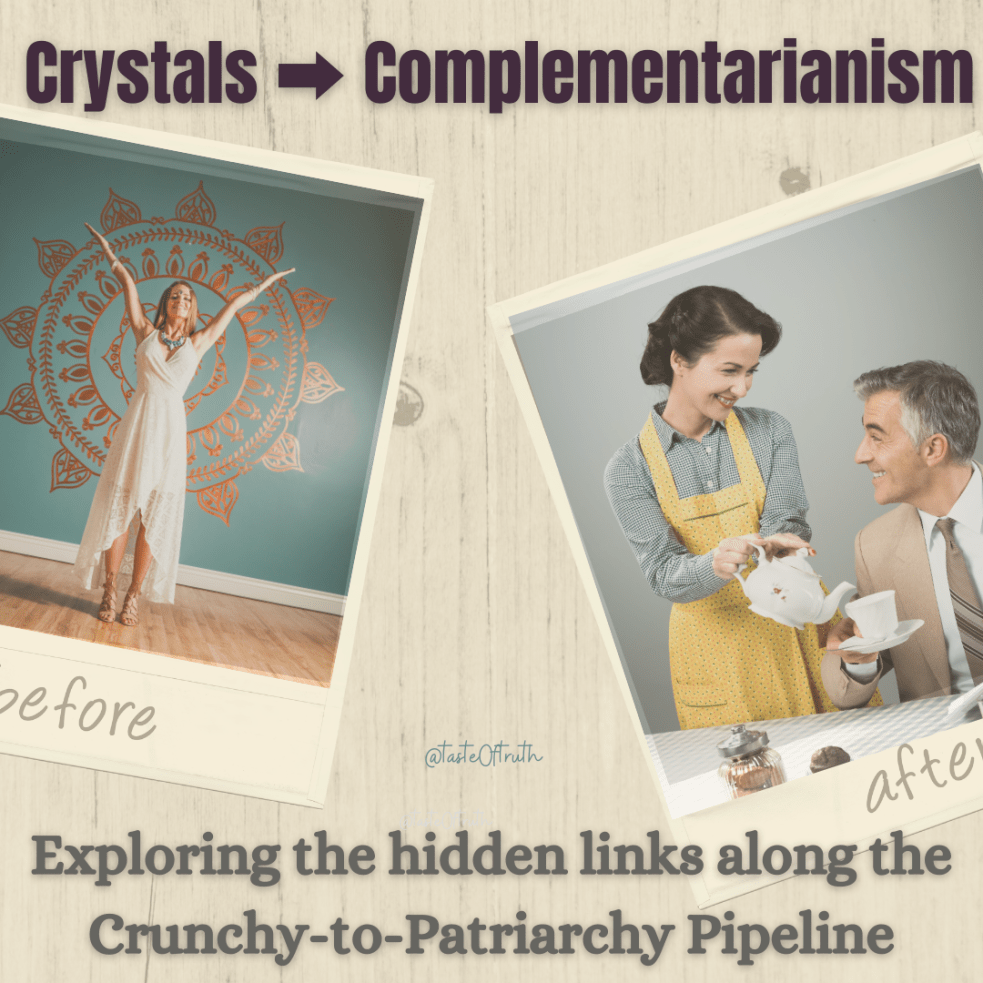
Crystals ➡️ Complementarianism: Exploring the hidden links along the Crunchy-to-Patriarchy Pipeline

Navigating the Intersection of Wellness and Ideology

Have you noticed this social trend New Age lifestyles to Jesus testimonies embracing far-right ideologies?

It’s a phenomenon influenced by social media algorithms and influencers who blend wellness with conspiracy theories and extreme views. What starts as an interest in yoga and herbal remedies can subtly transition into something much darker.

Understanding the Trad Wife and Stay-at-Home Girlfriend Movements

Enter the Trad Wife and Stay-at-Home Girlfriend movements—cultural trends advocating for traditional gender roles within relationships. Followers prioritize homemaking, submission to husbands, and nurturing domestic skills. This intersects with the Crunchy to Alt-Right Pipeline when online narratives blend wellness with conservative ideologies, portraying traditional roles as spiritual ideals.

Motivations Behind the Movements

  1. Embracing Traditional Values: Supporters cite a desire to uphold stability and traditional family roles, believing in the importance of creating a nurturing home environment and supporting their partners as leaders of the household.
  2. Rejecting Modern Feminism: Many within these movements view modern feminism as promoting anti-family agendas and undermining traditional values, preferring roles they see as empowering and fulfilling.
  3. Cultural and Religious Influences: Cultural and religious beliefs play a significant role, with some viewing traditional roles as rooted in religious teachings or cultural heritage, finding validation in communities that promote these values.

Understanding Fear Tactics and Cultural Influences

Fear tactics are prevalent in online content that combines wellness with extreme ideologies. These tactics manipulate users into adopting the group’s beliefs by promoting fear of worldly dangers, apocalyptic scenarios, or spiritual consequences. For example, narratives within the “culture wars” often lead to anti-LGBTQ and anti-feminist sentiments. Influencers may use fear of societal collapse or moral decay to urge followers towards conservative values, portraying them as a defense against perceived threats to traditional lifestyles.

Historical Precedents: Satanic Panic and Moral Panics

Historically, movements like the “Satanic Panic” in the 1980s and ’90s stoked fears of occult influences on children and communities, leading to widespread moral panic. Similarly, today’s online narratives can exaggerate or fabricate threats to bolster ideological adherence. The fear of cultural shifts, such as evolving attitudes towards gender roles or LGBTQ rights, fuels narratives that paint progressive changes as morally corrupt or spiritually dangerous.

Example: Evangelical Fears and Pop Culture In recent years, evangelical communities have expressed fears over pop culture icons like Taylor Swift, attributing spiritual significance to her lyrics and persona. This illustrates how fear can be used to mobilize against perceived threats to traditional values, even in seemingly innocuous contexts.

Examples:

  1. Harry Potter and Witchcraft: The “Harry Potter” book and film series sparked concerns among some evangelical groups who viewed the portrayal of magic and witchcraft as promoting occult practices and undermining Christian values. This led to debates and even bans on the series in some communities.
  2. Rock and Roll Music: Throughout history, evangelical circles have expressed fears over the influence of rock and roll music on youth, believing it promotes rebellion, promiscuity, and anti-Christian values. This fear was particularly pronounced during the rise of rock music in the 1950s and continues in various forms today.
  3. Secularization of Media: Evangelical fears often extend to broader secular media, with concerns over its perceived influence on moral values and religious beliefs. For instance, certain movies, TV shows, and music artists are scrutinized for their content and perceived impact on cultural norms.
  4. Celebrity Influence: Pop culture icons like Taylor Swift, Lady Gaga, or Madonna have been subjects of evangelical concern due to their lyrics, imagery, or public personas, which some interpret as promoting values contrary to traditional Christian teachings. These concerns reflect broader anxieties about the influence of celebrity culture on moral standards.

Navigating Complexity

While these movements resonate with some as empowering choices, they also perpetuate outdated stereotypes and limit opportunities for autonomy and self-fulfillment outside traditional roles. Some narratives oversimplify complex societal issues, promoting a binary worldview of good versus evil and omitting nuances and alternative perspectives. It’s essential to critically evaluate such content and consider its broader implications on personal beliefs and societal attitudes.

Understanding the motivations and concerns behind these movements fosters dialogue about gender, family, and cultural norms in contemporary society.

Let’s discuss: Have you observed or encountered these dynamics in your online experiences? What are your thoughts on their impact on societal norms?