Women, Terror, and Freedom: How the West Enables Radical Ideologies

Breaking Free: A Conversation with Yasmine Mohammed on Radical Islam, Empowerment, and the West’s Blind Spots

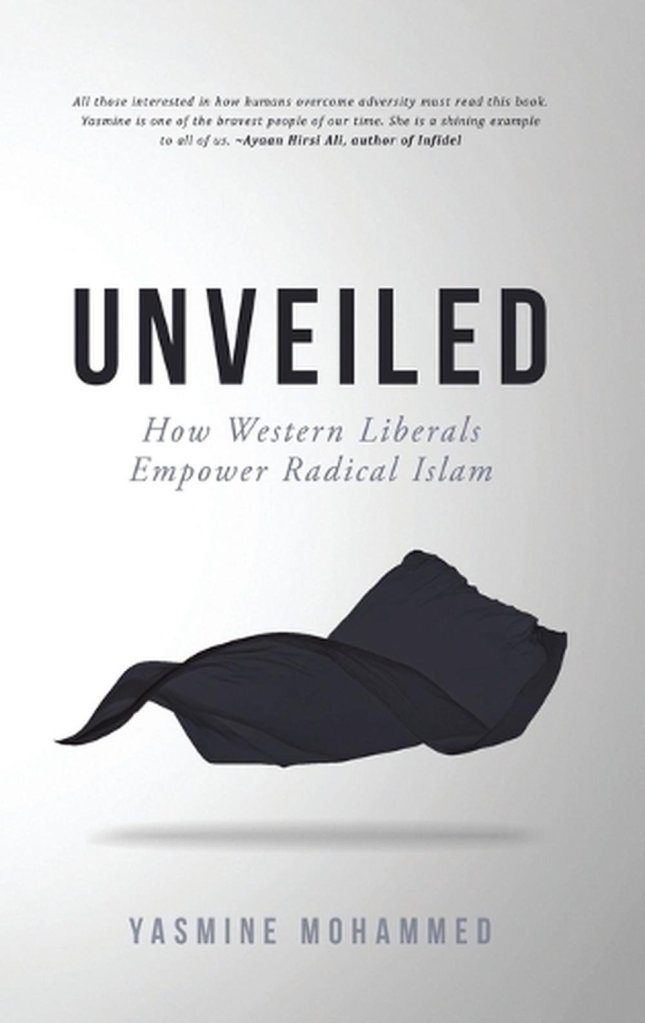
In a world where ideology often blinds us to reality, Yasmine Mohammed’s story is a testament to the power of courage and critical thinking. As a survivor of a forced marriage to an Al-Qaeda operative and author of the groundbreaking book Unveiled: How Western Liberals Empower Radical Islam, Yasmine has dedicated her life to advocating for women’s rights and challenging oppressive ideologies. In this blog, we’ll explore her journey, the insights she’s gained, and the challenges of addressing extremism in today’s political and cultural climate.

Why Yasmine Wrote Unveiled

When asked what motivated her to write Unveiled, Yasmine shared that it was born out of a deep desire to shed light on her personal journey and the broader systemic issues that keep women trapped in cycles of oppression. “I wanted to expose the realities of radical Islam and its impact on women, but also to empower others to think critically and challenge these systems,” she explained. For Yasmine, the book is not just a memoir; it’s a call to action, a tool for education, and a beacon of hope for those seeking to break free.

Since its publication five years ago, much has changed. Yasmine reflected on her personal growth and evolving perspectives. “The fight for women’s rights continues, but I’ve also learned to navigate the complexities of cultural relativism and political correctness in the West,” she said. These challenges have only deepened her resolve to speak out.


The Psychological Toll of Leaving Islam

In Unveiled, Yasmine recounts the harrowing experience of escaping her marriage and the lingering fear of her ex-husband, even imagining him in “heaven” (p. 186). These fears aren’t just remnants of her past but a reflection of the psychological toll of leaving Islam. “It’s not just about leaving a religion; it’s about disentangling yourself from a worldview that dictated every aspect of your life,” she said.

Her advice for those leaving strict religious environments? “Be patient with yourself. Fear-based tactics are designed to keep you compliant, but over time, as you rebuild your confidence, those fears begin to fade.” Yasmine emphasized the importance of finding supportive communities and nurturing critical thinking skills to counteract deeply ingrained beliefs.


Challenging Radical Islam and Western Enablers

One of the most provocative aspects of Yasmine’s work is her critique of Western liberals who inadvertently enable radical Islam. “By prioritizing cultural relativism over universal human rights, they’re complicit in perpetuating oppression,” she argued. For women in particular, this dynamic is devastating. “When Western feminists turn a blind eye to practices like forced marriages or honor killings, they’re betraying the very values they claim to uphold.”

What’s the solution? “We need to have honest conversations about the realities of radical Islam without fear of being labeled intolerant. It’s not about vilifying a group; it’s about protecting fundamental human rights,” Yasmine said. She also highlighted the importance of education, both in Muslim-majority countries and in the West, to dismantle misconceptions and foster real change.


Final Thoughts

Looking back on her journey, Yasmine’s advice to those deconstructing a belief system is simple but profound: “You are not alone. There is life beyond fear and isolation, and there are communities and resources ready to support you.” For those seeking to educate themselves on these issues, she cautioned against falling into the trap of political tribalism. “Stay curious, ask questions, and prioritize truth over ideology.”

Yasmine Mohammed’s story is more than a tale of survival; it’s a roadmap for empowerment and a challenge to the complacency that allows radical ideologies to thrive. As we navigate a world increasingly polarized by political and cultural divisions, her insights remind us of the urgency of standing up for universal human rights and fostering critical, open-minded discussions.


Further Reading and Resources

🙏 Please help this podcast reach a larger audience in hope to edify & encourage others! To do so: leave a 5⭐️ review and send it to a friend! Thank you for listening! I’d love to hear from you, find me on Instagram!⁠⁠⁠ @taste0ftruth⁠⁠⁠ , @megan_mefit , ⁠⁠⁠ Pinterest! ⁠⁠ ⁠ Substack and on X! 

Escaping Dogma or Trading It? The Risks of Deconstruction Culture

For many, the term “deconstruction” has come to represent a deeply personal process of questioning inherited beliefs, especially in the context of religion. While there’s no official “deconstruction community,” it has become a popular buzzword online, flourishing in spaces like Instagram, TikTok, and podcasts. (The New Evangelicals, Dr. Pete Enns (The Bible for Normal People), Eve was framed, Jesus Unfollower, Dr. Laura Anderson just to name a few.) These platforms provide room to question everything and dismantle rigid systems of belief—at least in theory.

But what happens when these communities become echo chambers of their own? Instead of fostering true intellectual freedom, the deconstruction movement often serves as a pipeline into new forms of dogma. Rather than encouraging critical thinking, it frequently replicates the same tribalism and groupthink that so many participants are trying to escape.

This is not growth. It’s trading one set of chains for another.


From Evangelicalism to Progressive Extremism

It’s ironic: people leave far-right evangelical Christianity believing they’ve found freedom, only to stumble into another extreme—progressive leftist ideologies. Why does this happen?

To understand this, we need to step back and look at human nature. Political scientists have found that public opinion is shaped far more by group identity than by self-interest. As Jonathan Haidt explains in The Righteous Mind, politics is deeply tribal. We’re hardwired to align with groups, not necessarily because they offer truth, but because they provide belonging.

This tribal impulse is magnified in the context of deconstruction. Many who leave evangelical Christianity are grappling with disillusionment, loss, and a hunger for community. For some, the progressive left offers a sense of safety and a clear moral framework, mirroring what they once found in their faith. The partisan brain, already trained to see the world in “us versus them” terms, naturally clings to another tribe rather than embracing the discomfort of uncertainty.

Research even suggests that extreme partisanship may be addictive. Our brains are rewarded for performing the mental gymnastics that protect us from beliefs we don’t want to confront. This dynamic—coupled with the fear of being ostracized by a new community—creates an environment where dissenting voices are silenced, and ideological purity becomes the new gospel.

Woke Ideology as a Secular Faith: A Closer Look

John McWhorter argues that wokeism functions like a full-fledged religion. It provides a moral framework that mirrors traditional religious beliefs. Instead of concepts like original sin, wokeism offers “privilege,” positioning those with it as morally compromised. In place of rituals like prayer, adherents perform acts like confessing their biases. And, similar to the salvation promised in traditional religions, salvation in wokeism comes through activism and striving for societal change. For McWhorter, this structure offers a sense of moral clarity and purpose, but the movement’s refusal to tolerate dissent makes it dangerous. He suggests, “What we’re seeing isn’t a quest for justice but a demand for unquestioning orthodoxy.”

Keep your eyes 👀out for that blog post, for it will be coming soon, and it will be called “Oh Woke night, The Sacred Beliefs of the Left”


Fragility and the “Three Great Untruths”

The allure of the deconstruction space isn’t just about leaving religion; it’s about embracing a new narrative. But narratives, like dogmas, can distort reality when they’re based on false premises. Greg Lukianoff and Jonathan Haidt explore this in their book The Coddling of the American Mind, identifying three “Great Untruths” that have come to dominate cultural discourse:

  1. “What doesn’t kill you makes you weaker.”
  2. “Always trust your feelings.”
  3. “Life is a battle between good people and evil people.”

These untruths encourage fragility, discourage critical thinking, and foster an “us versus them” mentality. They create a world where discomfort is seen as harmful, emotions override evidence, and disagreement is equated with moral failure.

Sound familiar? For anyone who grew up in evangelical circles, these patterns mirror the same rigidity and moral absolutism they left behind. And yet, these same traits are now pervasive in parts of the deconstruction space. This creates an ironic cycle: people flee one form of oppression, only to adopt another, packaged in new language but rooted in the same fear-based thinking.

For a deeper dive into the 3 Untruths check out this post/podcast: How the Quest for Truth Became a New form of Dogma


Reason Isn’t the Savior We Think It Is

One of the most seductive ideas in the deconstruction movement is the belief in reason as the ultimate guide to truth. On the surface, this sounds like an antidote to dogma. But here’s the catch: reason isn’t the unbiased tool we like to imagine.

French cognitive scientists Hugo Mercier and Dan Sperber argue that reasoning didn’t evolve to help us discover truth. Instead, it evolved for argumentation—to persuade others and protect our own beliefs. This explains why confirmation bias isn’t just a quirk of human psychology; it’s a feature of our argumentative minds.

As individuals, we’re not wired to produce open-minded, truth-seeking reasoning—especially when our identity or reputation is on the line. This is why intellectual and ideological diversity is so important in any truth-seeking community. Without it, reasoning becomes a tool for reinforcing tribal loyalty, not uncovering deeper truths.

The philosopher John Stuart Mill captured this in On Liberty, arguing that free speech and open debate are essential for discovering truth. Mill believed that truth isn’t static or simple; it emerges when differing perspectives clash, forcing ideas to be tested, refined, and strengthened. Worshiping reason as an infallible guide is, in itself, a kind of faith—one as flawed and potentially dangerous as religious dogmatism.


The Rise of the Fake Intellectual

2020 and the pandemic didn’t just disrupt our lives; it disrupted how we think about authority and expertise. Franklin O’Kanu, in his Substack UNORTHODOXY, describes the emergence of a new archetype: the “fake intellectual.”

These individuals position themselves as ultimate authorities, wielding data and studies to validate their perspectives. But often, their arguments lack intellectual rigor. They cherry-pick evidence, appeal to emotion, and create the illusion of expertise without true depth.

In the realm of public health and pharmaceuticals, there’s a well-documented phenomenon known as the “revolving door” between regulatory agencies and the pharmaceutical industry. This term refers to the cyclical movement of personnel between roles as regulators or policymakers and positions within the industries they oversee.

What Is the Revolving Door?

The revolving door concept highlights a pattern where high-ranking officials from organizations such as the CDC (Centers for Disease Control and Prevention) and the FDA (Food and Drug Administration) transition into influential roles within pharmaceutical companies, and vice versa. This fluid movement raises critical questions about the integrity and impartiality of regulatory oversight.

The deconstruction space is fertile ground for this phenomenon. Disillusioned individuals, hungry for guidance, are particularly vulnerable to voices that seem authoritative. But the rise of fake intellectuals doesn’t just mislead; it stifles genuine curiosity and critical thinking, replacing one form of blind faith with another.


A Call for Intellectual Diversity

If the goal of deconstruction is freedom, then it must embrace intellectual diversity. True growth happens when we allow our ideas to be challenged—when we resist the urge to label dissenters as enemies and instead engage with them in good faith.

This is why Mill’s defense of free speech is more important than ever. Truth isn’t found in the safety of ideological purity; it’s forged in the discomfort of debate. Communities that discourage dissent are not liberating—they’re suffocating.


Conclusion: Toward True Freedom

Deconstruction should be a crossroads, not a pipeline. It’s an opportunity to question everything—including the ideologies we’re tempted to adopt in place of the ones we’ve left behind.

To truly grow, we must embrace complexity, engage with opposing perspectives, and remain humble in the face of our own limitations. The path to freedom isn’t about finding the “right” tribe—it’s about stepping beyond tribes altogether and seeking truth with courage, curiosity, and an open mind.