

As Election Day nears, political posts and talking points become increasingly prominent, urging voters to support particular candidates based on curated narratives. Recently, I encountered a post advocating for Kamala Harris that presented a series of arguments while sidestepping deeper context and misrepresenting the records of her and other candidates. Instead of providing accurate, nuanced information, the post relied on sensational claims, oversimplifications, and misinformation. Here’s a breakdown to help you navigate the facts and understand why informed decision-making is essential.


For example, relying on polls to create urgency without diving into each candidate’s strengths and weaknesses feels more like fearmongering than honest discussion. Voters deserve transparency and facts, not tactics to pressure them into a specific choice. Here’s a breakdown of some problematic points from a recent post urging support for Kamala Harris—and why we should be cautious of these tactics.
1. Misleading Use of Project 2025
A key part of the post references Project 2025, presenting it as if it’s Trump’s official policy agenda. However, this isn’t accurate. Project 2025 is a proposal from a conservative think tank, the Heritage Foundation, designed to outline a vision for a future administration that aligns with its goals. It’s not an official platform, nor has Trump explicitly committed to implementing it. Misrepresenting this proposal as Trump’s policy can create confusion among voters and detracts from a real understanding of each candidate’s agenda. Informed voting hinges on focusing on what candidates have actually endorsed and outlined rather than speculative proposals, allowing voters to evaluate their commitments.
2. Economic Claims and Inflation
One of the contentions in recent political discourse is the characterization of inflation and economic performance during Donald Trump’s presidency. Some critics argue that the lower prices experienced during Trump’s tenure can be attributed solely to a “regular economic cycle,” suggesting that his policies had little to no meaningful impact on inflation levels. This perspective oversimplifies a complex economic landscape shaped by multiple interacting factors.
The Complexity of Economic Influences
To understand the dynamics of inflation and economic health, it’s essential to consider the various elements at play:
- Global Markets: Fluctuations in international markets can significantly influence domestic prices. Changes in demand and supply chains due to global events—such as trade disputes or natural disasters—can create ripples that affect the cost of goods and services.
- Supply Chain Dynamics: The intricate web of global supply chains has a profound impact on inflation. Disruptions, whether from natural disasters, pandemics, or geopolitical tensions, can lead to shortages and increased prices, regardless of domestic policy.
- Federal Monetary Policies: The role of the Federal Reserve in managing interest rates and money supply is crucial. Monetary policies can stimulate or slow down economic growth, directly affecting inflation rates.
- External Events: Economic cycles are indeed one part of the equation, but they are often influenced by external events. Historical precedents show that natural disasters, international conflicts, or pandemics (like COVID-19) can drastically alter economic trajectories.
Reducing the conversation about inflation to mere “economic cycles” ignores the multifaceted nature of economic health and the implications of policy decisions. Voters deserve a comprehensive understanding of how each candidate’s proposals could shape the economy.
Kamala Harris’s Role in Current Inflationary Trends
As the current Vice President, Kamala Harris is intricately linked to the Biden administration’s policies, which have faced significant criticism regarding inflation. Many argue that the administration’s approach has exacerbated economic challenges rather than alleviating them:
- Spending Policies: The Biden administration has implemented extensive spending programs, which, while aimed at stimulating the economy, have drawn criticism for contributing to rising inflation. Critics assert that such fiscal policies, coupled with pandemic-related stimulus measures, have flooded the market with cash, driving demand without sufficient supply.
- Regulatory Measures: Harris, as part of the administration, has supported regulatory frameworks that some argue have hindered economic recovery. Increased regulations on energy production, for instance, have been linked to rising fuel prices, further impacting household budgets.
- Border Policies: The current administration’s handling of immigration and border security has also been scrutinized. Critics contend that a lack of effective border management has led to disruptions in labor supply, further contributing to inflationary pressures in various sectors.
The Need for Informed Decision-Making
To make informed decisions, voters must critically evaluate the economic proposals put forth by each candidate. Understanding the interplay between inflation, job growth, and the average household budget is crucial. The stakes are high, and voters deserve clarity on how proposed policies may directly impact their lives.
By engaging with these complex economic realities, voters can hold candidates accountable for their roles in shaping economic outcomes. The conversation should not be reduced to simplistic narratives about cycles; instead, it should encompass a thorough examination of policies, their implications, and the broader economic context.
Complexity > Simplification
In an era of heightened economic anxiety, it’s vital for voters to seek out nuanced discussions about inflation and economic health. As we navigate the complexities of the current economic landscape, we must hold our leaders accountable for their policy decisions and strive for a deeper understanding of how these choices affect our everyday lives. The responsibility lies with both voters and candidates to engage in meaningful discourse, ensuring that the electorate is equipped to make informed choices that reflect their values and priorities.
3. Reproductive Rights and Personal Stories
The post suggests that voting for Harris is vital for preserving reproductive freedoms, referencing tragic stories of women denied abortion care due to restrictive laws.
The Impact of Restrictive Abortion Laws on Women’s Health Care
In the wake of the Supreme Court’s decision to overturn Roe v. Wade, many states have enacted strict abortion bans, igniting a heated debate about the implications for women’s health care. A recurring claim amidst this discourse is that these restrictions prevent women from receiving life-saving medical treatment. However, the reality is complex and often misrepresented.
Organizations like the Family Research Council argue that the narrative surrounding abortion and necessary medical care is exaggerated. They contend that medical emergencies can often be addressed without resorting to abortion, framing the conversation around the need for compassionate care that doesn’t solely rely on abortion as a solution.
The nuances of this issue highlight the importance of access to comprehensive reproductive health care. While some advocates for restrictive laws argue for alternatives to abortion in managing pregnancies, studies indicate that these restrictions can lead to detrimental health outcomes for women. The Guttmacher Institute emphasizes that the relationship between abortion access and maternal health is complex, noting that various factors, including socioeconomic status and healthcare access, play significant roles.
It’s important to consider that some studies may have methodological limitations, which can affect the conclusions drawn. Critics point out that data on maternal health can be incomplete and that different studies may use varying methodologies, leading to conflicting results. This highlights the need for a nuanced approach when evaluating the impacts of restrictive abortion laws.
The conversation around abortion laws and women’s health is not just about the legality of the procedure; it’s about the overall quality of care that women receive. True accountability and safety in health care require an environment where medical professionals can make decisions based on the best interests of their patients, free from the constraints of legal penalties.
For a deeper understanding of the complexities surrounding abortion restrictions and their effects on women’s health, you can explore articles from reputable sources such as the Johns Hopkins Bloomberg School of Public Health and the Guttmacher Institute. The dialogue surrounding this issue must remain grounded in factual evidence and empathetic care to ensure that women’s health is prioritized amidst the legal and political debates.
References
• Johns Hopkins Bloomberg School of Public Health
• Guttmacher Institute
4. Childcare and Family Support
Childcare and Family Support: A Critical Examination of Policy Proposals
In the ongoing discourse surrounding childcare policies, proposals such as Kamala Harris’s aim to cap childcare costs at 7% of a family’s income have sparked heated debate. While the intent to alleviate the financial burden of childcare is commendable, it is crucial to critically evaluate the implications of such proposals, particularly regarding concerns about government overreach and the potential shift towards collectivist ideologies that some may label as “communist.”
The Promise of Capping Childcare Costs
Capping childcare costs presents a viable solution to a pressing issue for many families. The skyrocketing costs of childcare can significantly strain household budgets, often consuming a large portion of income. Limiting these costs to 7% of income could offer financial relief to families, making childcare more affordable and allowing them to allocate funds to other essentials.
Feasibility of Implementation
Despite its appeal, the practicality of enforcing such a cap raises critical questions. How would this cap be uniformly applied across different states, each with unique economic conditions, childcare costs, and regulations? Critics argue that enforcing a national cap could lead to unintended consequences, such as diminished quality of care if providers are unable to sustain their businesses under the new financial constraints.
Funding Mechanisms: The Economic Debate
A significant concern surrounding the proposal is its funding. Capping costs at 7% of income necessitates a robust financial framework to support childcare providers, ensuring they can deliver quality care while remaining financially viable.
- Government Intervention vs. Free Market: Opponents argue that such policies reflect a move toward increased government intervention in private markets, which can lead to inefficiencies and a decline in quality. By capping prices, the government essentially dictates what providers can charge, potentially stifling innovation and competitiveness in the childcare sector.
- Economic Impact on Providers: The implications for childcare providers are profound. If they cannot charge sustainable rates, many may close their doors, leading to a reduced availability of care options. This could particularly impact smaller providers who lack the resources to absorb financial losses, leading to a monopoly of larger, less personalized care facilities.
Risks of Overreach: A Slippery Slope
The notion that capping childcare costs aligns with socialist or communist ideologies is a significant concern for many. Critics of such policies argue that they reflect a broader trend toward government overreach, where the state increasingly intervenes in personal financial matters.
- Individual Freedom: Policies that regulate prices in this manner can be viewed as a step away from individual freedom and choice in the marketplace. Parents should have the right to choose childcare based on their needs and preferences, rather than having their options limited by government mandates.
- Dependency on Government Programs: Furthermore, creating a system where families rely on government caps and subsidies can foster dependency, diminishing the personal responsibility and entrepreneurial spirit that drives innovation in the childcare sector.
Examining Accessibility and Quality
While capping costs is intended to increase accessibility, it must be paired with a thorough assessment of quality. The overarching goal should not only be to make childcare affordable but also to ensure that families have access to high-quality services.
- Quality Assurance: Simply capping costs does not guarantee that childcare facilities will maintain high standards of care. If financial pressures mount, some providers may cut corners, potentially compromising the quality of care for children.
- Regional Disparities: The implementation of such a cap could exacerbate regional disparities in childcare availability. Urban areas may still struggle with long waitlists and high demand, while rural regions may lack access to quality facilities altogether.
A Call for Informed and Nuanced Discussion
In discussing childcare policies, it is essential to engage in a nuanced analysis that considers not only the benefits but also the potential drawbacks and broader implications. Voters need clear, comprehensive information about the proposals being put forth, including their feasibility, funding mechanisms, and the potential impact on families and providers.
- Informed Electorate: An informed electorate is crucial for holding elected officials accountable. Families deserve policies that truly support them without sacrificing their autonomy or the quality of care available to their children.
- Alternative Solutions: Alongside the conversation on capping costs, it’s vital to explore alternative solutions that promote affordability without compromising individual freedoms or the integrity of the childcare market. Options such as universal pre-kindergarten, direct subsidies based on income, and encouraging workplace support can provide meaningful relief without the risks associated with broad price controls.
By fostering an environment of informed discussion and critically examining the implications of childcare policies, we can move towards solutions that genuinely support families and children while safeguarding individual freedoms and economic vitality.
5. Taxes and Tariffs
Tax Policies: Trump’s Tariffs vs. Harris’s Wealth Tax
The discussion surrounding tax policies has become increasingly polarized in the current political landscape. Proponents of both Donald Trump and Kamala Harris present arguments that aim to persuade voters of the efficacy of their respective approaches. While critiques of Trump’s tariff plans suggest that they will inevitably drive-up prices for consumers, Harris’s proposal to impose higher taxes on the wealthy is frequently lauded as a pathway to funding essential social programs. However, the reality of these tax policies is much more nuanced and requires a thorough examination.
The Role of Tariffs in Trade Policy
Trump’s administration embraced a strategy of implementing tariffs as a means to address perceived unfair trade practices, particularly with countries like China. Critics argue that such tariffs ultimately burden consumers through increased prices on imported goods. However, this perspective oversimplifies the potential benefits of tariffs as negotiation tools within trade disputes.
- Tariffs as Leverage: Tariffs can be leveraged in negotiations to compel trading partners to modify their practices, potentially leading to more favorable trade agreements. In this light, tariffs are not merely a tax on consumers but a strategic economic policy aimed at achieving broader trade objectives.
- Contextual Impact: The impact of tariffs is not uniform; their effectiveness and consequences are contingent on various factors, including the economic context, the specific goods affected, and the resilience of domestic supply chains. In some instances, tariffs might incentivize domestic production, leading to job creation and economic growth.
- Supply Chains and Global Markets: Tariffs can disrupt existing supply chains, leading to increased costs in the short term. However, over time, the market may adapt, finding new suppliers or innovating to mitigate these costs. Understanding the dynamic nature of global markets is essential in evaluating the long-term effects of tariff policies.
Harris’s Tax Proposals: Funding vs. Economic Growth
In contrast, Kamala Harris advocates for increasing taxes on the wealthy as a means to fund social programs and address income inequality. While this approach may resonate with many voters seeking social equity, it also raises critical questions about its broader economic implications.
- Impact on Job Creation: Increased taxes on higher income brackets can have significant effects on investment behaviors. Wealthier individuals often reinvest their capital in businesses, startups, and job creation. Higher taxes could deter investment, leading to slower job growth and innovation, ultimately harming the very economic dynamism that drives prosperity.
- Investment and Economic Growth: The long-term economic impact of Harris’s tax proposals must consider potential disincentives for investment. If capital is taxed at higher rates, wealthy individuals may choose to divert their resources elsewhere, potentially stifling growth in sectors that rely on private investment.
- Funding Social Programs: While the revenue generated from higher taxes on the wealthy could fund essential social programs—such as education, healthcare, and infrastructure—it’s essential to assess how effectively these programs translate into measurable economic benefits. A well-structured social program can enhance workforce productivity and overall economic health, but poorly implemented initiatives can lead to inefficiencies and wasted resources.
The Need for Comprehensive Discussion
To truly understand the impact of tax policies, a nuanced discussion is imperative—one that goes beyond one-sided arguments and considers the broader economic implications of each candidate’s proposals.
- Holistic Evaluation: Voters should assess not only how these policies aim to address immediate needs but also how they will shape the economic landscape in the years to come. This includes considering the interplay between taxation, investment, and job creation.
- Informed Decision-Making: As voters navigate the complexities of tax policies, it is crucial to evaluate both sides critically. Understanding the potential trade-offs between funding essential programs and encouraging economic growth will empower voters to make informed decisions that align with their values and priorities.
The Complexity of Economic Policies
The discourse around tax policies, tariffs, and their impacts on the economy is multifaceted. As voters engage in this critical dialogue, it is essential to look beyond simplistic narratives. Both Trump’s tariff strategies and Harris’s tax proposals have their merits and drawbacks, and a comprehensive understanding of these issues will lead to more informed electoral choices. Only through careful consideration of the broader economic implications can we hope to achieve a balanced approach to taxation and economic policy that serves the interests of all Americans.
6. Social Security and Economic Sustainability
The debate surrounding Social Security’s future has become increasingly contentious in the political arena, with claims suggesting that Trump’s economic plans could drain Social Security funds within a mere six years. This assertion stems from a particular study’s projections, yet it represents a simplistic view of a complex issue that demands thorough investigation.
Understanding the Context of Social Security
Social Security serves as a vital safety net for millions of Americans, providing financial support to retirees, the disabled, and survivors of deceased workers. The sustainability of this program is of paramount importance, and discussions regarding its future should not be reduced to alarmist rhetoric or one-dimensional analyses.
- Complexity of Funding: The Social Security Administration is funded through payroll taxes collected from workers and their employers. Over the years, changes in demographics, such as an aging population and a declining birthrate, have contributed to the program’s financial pressures. Understanding these dynamics is essential when evaluating any candidate’s economic proposals.
- Future Projections: While it’s accurate that certain projections indicate potential shortfalls in Social Security funding in the coming years, these forecasts often rely on assumptions that can change based on policy adjustments, economic growth, and workforce participation rates. A comprehensive examination of these projections should factor in various scenarios rather than solely focusing on worst-case outcomes.
Evaluating Candidates’ Proposals
In discussing the sustainability of Social Security, it is essential to analyze each candidate’s plans for securing the program’s future. Here’s how this evaluation can be approached:
- Trump’s Approach: While critics may argue that Trump’s economic policies could jeopardize Social Security funding, it’s important to assess what specific measures he proposes to address these concerns. This could include tax reforms, adjustments to benefits, or initiatives aimed at boosting economic growth, which could, in turn, increase payroll tax revenues.
- Harris’s Plan: Similarly, Kamala Harris should be scrutinized regarding her strategies for ensuring the longevity of Social Security. This includes exploring her proposals for increased funding, reforms aimed at expanding benefits, or addressing the broader economic conditions that impact the program.
- Bipartisan Solutions: The sustainability of Social Security is not solely a partisan issue. There is a growing consensus among some lawmakers that bipartisan efforts are necessary to secure the program’s future. Any serious analysis should consider proposals from both parties and explore avenues for cooperation in reforming Social Security.
The Importance of Informed Discussions
As voters prepare for upcoming elections, understanding the policies that directly impact Social Security is crucial. Here are some key points for informed discussion:
- Impact on Beneficiaries: It’s vital to analyze how each candidate’s proposals will affect current and future beneficiaries of Social Security. This includes assessing potential changes to benefit structures, eligibility criteria, and the overall funding mechanisms that underpin the program.
- Long-Term Viability: An informed discussion should not only highlight immediate concerns about funding but also explore long-term strategies for ensuring the viability of Social Security. This might involve discussions around economic growth, employment rates, and the importance of maintaining a robust workforce.
- Equipping Voters: Ultimately, voters need a clear understanding of how different candidates’ policies may influence their financial security and the future of social safety nets. Engaging in comprehensive discussions about Social Security allows voters to make choices that align with their values and needs.
A Call for Thoughtful Engagement
In conclusion, the discourse surrounding Social Security and economic policies requires careful examination and a balanced perspective. By moving beyond alarmist claims and engaging in substantive discussions, voters can better navigate the complexities of each candidate’s proposals. A thorough evaluation of Trump’s economic plans, Harris’s policy approaches, and the broader context of Social Security will empower voters to make informed decisions that impact their lives and the future of this essential program.
7. Gun Violence and Safety
The Impact of Gun Laws on Law-Abiding Citizens
In the ongoing debate about gun reform, the narrative often positions Kamala Harris as a champion of stricter gun laws, while Donald Trump is portrayed as favoring unrestricted access to firearms. This dichotomy oversimplifies a multifaceted issue that requires a deeper exploration of how proposed policies may affect both public safety and individual rights.
The Reality of Gun Violence
Gun violence in America is a complex phenomenon influenced by various factors, including socioeconomic conditions, mental health issues, and criminal activity. It is essential to understand that simply enacting more gun laws does not automatically translate into reduced violence. Here are some key points to consider:
- Law Abiding vs. Criminal Behavior: Stricter gun laws primarily impact law-abiding citizens who follow the rules. Those intent on committing crimes or engaging in violence often disregard the law entirely. Criminals typically obtain firearms through illegal means, such as theft or the black market. Consequently, imposing stricter regulations may leave responsible gun owners without the means to defend themselves, while failing to deter those who are already breaking the law.
- Universal Background Checks: While proposals for universal background checks are presented as common-sense reforms, their effectiveness remains a topic of debate. Proponents argue that they could help prevent firearms from falling into the hands of individuals with criminal backgrounds or mental health issues. However, opponents raise concerns about the potential for these measures to create barriers for law-abiding citizens seeking to purchase firearms legally, without significantly impacting those determined to engage in violent acts.
- Mental Health and Crime Rates: Trump’s focus on addressing mental health and crime rates highlights another critical dimension of the gun violence discussion. Understanding that many mass shootings are perpetrated by individuals with underlying mental health issues suggests that a comprehensive approach should include mental health support and early intervention, rather than solely focusing on restricting access to firearms. Effective mental health initiatives could address some of the root causes of gun violence, ultimately benefiting society at large.
The Nuanced Discussion on Gun Reform
Engaging in a comprehensive analysis of both candidates’ proposals is vital for voters to understand the broader implications of gun reform policies:
- Harris’s Approach: While Harris advocates for gun reform measures, it is important to scrutinize how these laws would realistically play out. Will they genuinely contribute to public safety, or do they risk alienating responsible gun owners without addressing the root causes of violence?
- Trump’s Perspective: Trump’s approach emphasizes the need to focus on crime prevention and mental health care as crucial components of reducing gun violence. This perspective acknowledges that simply adding laws does not address the complexities behind the issue, and instead advocates for a multifaceted strategy that encompasses various societal factors.
- Understanding Consequences: Voters should consider the potential consequences of gun laws, including how they might affect individual rights, self-defense capabilities, and overall public safety. An informed electorate needs to analyze not just the intentions behind proposed legislation but also its actual impact on crime rates and societal behavior.
A Call for Informed Engagement
In conclusion, the debate over gun reform requires a nuanced understanding of how laws affect different segments of society. While advocating for more stringent regulations may resonate with some, it is essential to recognize that such measures often disproportionately impact law-abiding citizens without addressing the underlying causes of gun violence. Engaging in thoughtful discussions about the candidates’ positions can empower voters to make informed choices about how best to address gun violence in America.
8. The Character Argument
Kamala Harris: A Critical Examination of Character and Integrity
Kamala Harris, the Vice President of the United States, has faced significant scrutiny regarding her character and integrity, particularly concerning the early stages of her career. Many argue that her rise to prominence was not solely based on merit but was influenced by her controversial personal choices, including her relationship with former married San Francisco Mayor Willie Brown.
Controversial Beginnings: The Willie Brown Affair
A Relationship Built on Compromise: Harris’s political career began amid controversy when she became romantically involved with Willie Brown, a powerful and married politician, in the 1990s. Critics argue that this relationship raises serious ethical questions about her rise in California politics. Many see it as emblematic of a troubling trend where personal relationships, rather than qualifications or experience, can dictate career advancement.
- Perceived Opportunism: The nature of Harris’s relationship with Brown has led to accusations of opportunism. Detractors argue that her ascent in political circles was facilitated by this connection rather than through hard work or public service. This perception has tainted her image, leading many to view her as someone who leveraged personal relationships for political gain rather than as a principled leader.
Inconsistent Political Stances
Shifting Ideologies: Harris has often altered her positions on key issues, leading to further skepticism about her authenticity. Her transformation from a tough-on-crime prosecutor to a progressive advocate for criminal justice reform raises questions about whether her beliefs are genuine or simply tailored to fit political currents.
- Voter Discontent: This inconsistency has alienated potential supporters who seek a candidate with a clear, unwavering commitment to their principles. Many voters find it difficult to trust a leader who appears to change their beliefs based on political expediency, undermining Harris’s credibility.
Failed Leadership and Governance
Inability to Address Key Issues: As Vice President, Harris has been assigned critical responsibilities, particularly regarding immigration and economic policy. Her handling of these issues has often been criticized as ineffective, leading to a perception of incompetence.
- Disconnection from Reality: Critics argue that her approach lacks the urgency and clarity necessary to address the pressing challenges facing Americans today. This disconnection between her rhetoric and the realities of governance further tarnishes her image and raises doubts about her leadership abilities.
Character Attacks and Public Perception
A Focus on Character in Politics: Harris’s past, particularly her relationship with Brown, has become a focal point for critics. Many see her as emblematic of a political culture that prioritizes personal ambition over integrity, making her an unworthy role model.
- Erosion of Trust: The combination of her controversial personal life and her shifting political stances has eroded trust among voters. Many are hesitant to support a candidate whose character appears questionable, leading to significant challenges as she navigates her political career.
The Case Against Kamala Harris
Kamala Harris’s character, shaped by a controversial past and inconsistent political positions, raises serious questions about her suitability as a leader. Critics argue that her rise in politics was influenced by personal relationships rather than merit, making her a questionable figure in the realm of public service. As she continues in her role as Vice President, the narrative surrounding her character remains a significant hurdle—can she rise above the perception of opportunism and prove herself as a credible leader, or will her past continue to overshadow her future?
9. Border Security and National Safety
The situation at the U.S.-Mexico border has spiraled into a national crisis, marked by rampant sex trafficking and an unprecedented fentanyl epidemic. Under the leadership of Vice President Kamala Harris and President Joe Biden, policies have failed to address these pressing issues, allowing organized crime and drug cartels to thrive while leaving vulnerable populations exposed to exploitation and danger.
Sex Trafficking: An Epidemic at the Border
A Dire Human Rights Issue: The border has become a major corridor for human trafficking, especially sex trafficking, during the Biden administration. Vulnerable individuals, including women and children fleeing violence and poverty, are preyed upon by traffickers who exploit their desperation. The lax enforcement of border policies under Harris and Biden has created an environment ripe for such abuses.
- Cartel Involvement: Cartels have capitalized on the chaos at the border, using it as a pipeline for smuggling individuals into a life of sexual exploitation. With increased trafficking, they undermine community safety and contribute to a culture of violence, all while the administration turns a blind eye.
Government Inaction: Critics argue that Harris and Biden have not done nearly enough to combat sex trafficking. While there are some initiatives in place, the administration’s approach lacks the urgency and resources necessary to dismantle trafficking networks and protect vulnerable populations. This failure to act is allowing the crisis to deepen.
Fentanyl Crisis: A Public Health Emergency
The Surge of Synthetic Opioids: The fentanyl crisis has reached alarming levels, with the drug flooding into the U.S. from Mexico. Under the Biden administration, fentanyl-related overdose deaths have skyrocketed, exposing a critical failure in border enforcement and drug control policies.
- Cartel Profiteering: Drug cartels are profiting immensely from the fentanyl trade, which has become their most lucrative business. The Biden administration’s ineffective policies have allowed these cartels to establish themselves as dominant players in the drug trade, leading to devastating consequences for American communities.
Government Apathy: The Harris and Biden administration’s response to the fentanyl crisis has been criticized as insufficient. Many argue that the administration is aware of the extent of the problem yet continues to allow cartels to operate with little interference. This inaction directly contributes to the rising death toll from overdoses and addiction.
The Cartel’s Growing Power
A Profitable Business Model: The cartels’ success in controlling both drug and human trafficking operations is alarming. The Biden administration’s policies have created a power vacuum at the border, allowing cartels to thrive and expand their influence, which poses a direct threat to national security.
- Community Impact: The influence of cartels extends beyond the border, infiltrating American neighborhoods and contributing to a surge in violence and drug-related crime. The Harris-Biden administration’s failure to act against these criminal organizations is endangering lives and destabilizing communities across the country.
Calls for Action
Demand for Accountability: There is an urgent need for the Harris and Biden administration to take decisive action against the ongoing crises at the border. Comprehensive border security measures must be implemented to combat trafficking and protect vulnerable individuals from exploitation.
- Bipartisan Solutions: Addressing these crises should transcend party lines, as they affect all Americans. A unified approach that includes stricter border enforcement, increased support for victims of trafficking, and investments in drug prevention and treatment programs is essential for tackling these multifaceted issues.
A Call for Urgent Reform
The crises of sex trafficking and the fentanyl epidemic at the U.S.-Mexico border represent a national disaster exacerbated by the failures of Vice President Kamala Harris and President Joe Biden. Their administration’s ineffective policies and lack of urgency must be addressed to protect vulnerable populations and safeguard public health. Without significant reforms and a renewed commitment to border security, the situation will only continue to deteriorate, endangering countless lives.
10. Crime Rate Discrepancies
Crime Rate Discrepancies: The Impact of Immigration
The discussion surrounding crime rates has intensified, particularly concerning the implications of immigration on public safety. Former President Donald Trump’s assertion that the FBI misrepresented crime rates opened a debate rooted in evidence suggesting a significant rise in violent crime. This conversation necessitates a closer look at the data, the influence of illegal immigration, and the broader consequences for public policy.
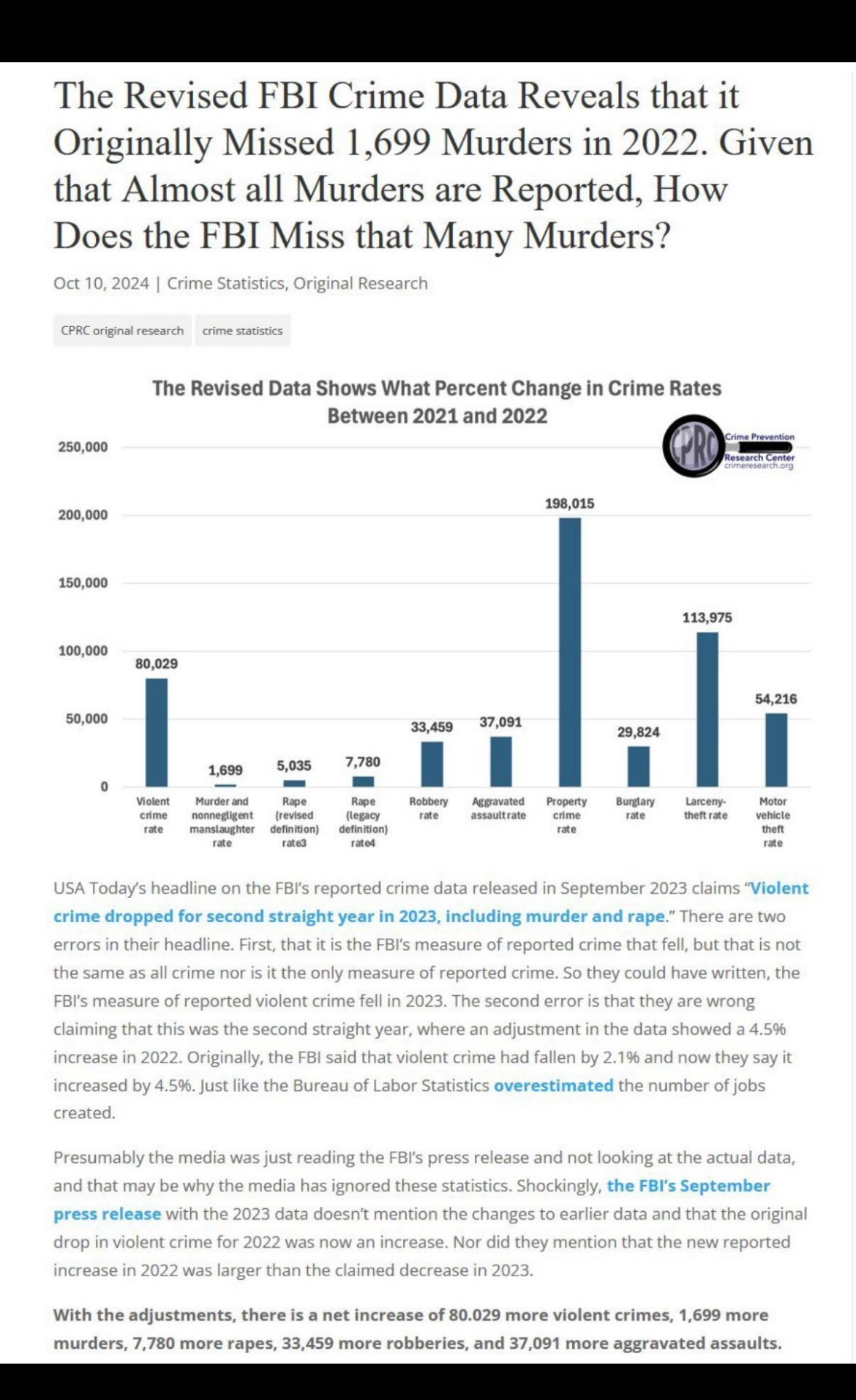
Rising Violent Crime and Its Correlation with Immigration
Recent data indicates a troubling surge in violent crime across the United States, especially in urban areas governed by progressive policies. This increase includes various violent offenses such as homicides, assaults, and robberies. While multiple factors contribute to this rise—including socio-economic challenges and changes in policing—the argument persists that illegal immigration plays a significant role.
Advocates for stricter immigration enforcement highlight that illegal immigrants disproportionately contribute to crime, particularly in cities with high rates of illegal crossings. The chaos at the southern border has allowed criminal elements, including drug cartels and gangs, to flourish, leading to more violence and crime in American communities. This reality is particularly evident in cities governed by progressive administrations, where policies that prioritize leniency toward illegal immigration have failed to safeguard public safety.
Media Representation and Data Transparency
The media often presents a skewed view of crime statistics, focusing on isolated incidents while neglecting to report on the broader trends associated with illegal immigration. When significant revisions to crime data occur, the relationship between illegal immigration and rising crime rates is frequently overlooked, creating a false narrative about public safety.
With the transition to the National Incident-Based Reporting System (NIBRS), crime reporting has become more detailed, yet the media’s failure to provide context leaves the public misinformed. The absence of honest discussions about crime rates in connection with immigration fosters confusion and fear among voters.
Political Accountability: Candidates’ Positions on Immigration and Crime
As the electorate evaluates candidates’ stances on crime and immigration, it’s crucial to scrutinize their proposed policies and track records:
- Trump’s Approach: Trump has consistently advocated for a tough-on-crime stance, directly linking rising crime rates to illegal immigration. His focus on securing the border and enforcing immigration laws reflects a commitment to restoring safety in American communities.
- Biden’s Perspective: The Biden administration has often been criticized for promoting policies perceived as permissive, leading to an environment where criminal behavior is inadvertently encouraged. Under Biden’s leadership, progressive cities have embraced softer approaches to crime, including decreased penalties for certain offenses, which critics argue contributes to a rise in theft and other crimes. The perception that stealing has been legalized in many areas undermines public trust in law enforcement and exacerbates the challenges of maintaining safety.
Voters must consider how these contrasting approaches impact crime rates and community safety.
The Implications for Voter Decision-Making
The discourse surrounding crime and immigration plays a pivotal role in shaping voter sentiment. Misinformation or incomplete narratives can skew public perception, leading voters to make decisions based on fear rather than factual analysis.
To combat this, it’s essential for the public to demand reliable data and engage in informed discussions about the implications of crime statistics and immigration. By fostering transparency and accountability, we can empower voters to make choices that reflect their values and priorities.
The Call for Clarity and Accountability
As we confront the complexities of crime rate discrepancies, the influence of immigration, and the failures of progressive policies in urban governance, the need for accurate reporting and transparency is paramount. An informed electorate is vital for a functioning democracy, and access to reliable crime data is critical in understanding the relationship between immigration and public safety. By insisting on accountability from our leaders and engaging in informed discussions, we can ensure that the safety of our communities remains a top priority in political discourse.
In summary:
In conclusion, the debate surrounding Kamala Harris’s candidacy and the broader electoral landscape demands a nuanced understanding of how policies affect different segments of society.
Ironically, Emily Amick, in her post “Convincing Someone to Vote for Harris Today,” positions herself as a representative of democracy while peddling misinformation and propaganda through one-sided talking points. Posts that focus on convincing rather than informing can lead to polarization and misinformation. A truly informed choice means seeing both the strengths and limitations of each candidate’s platform. Instead of relying on one-sided narratives, we should strive for transparency, facts, and a full understanding of what’s at stake. Voters deserve to engage with nuanced discussions as they approach Election Day, enabling them to make choices rooted in understanding rather than manipulation.
Further Reading:
Kamala Harris
- Harris’ Political History
- The New York Times – “Kamala Harris, the Vice President Who Made History”
Link to article - CNN – “Kamala Harris: A Timeline of Her Political Career”
Link to article
- The New York Times – “Kamala Harris, the Vice President Who Made History”
- Criticism of Harris’ Career
- Politico – “Kamala Harris: A Political Biography”
Link to article - The Federalist – “Kamala Harris’s Path to Power Is Marked by Corruption”
Link to article
- Politico – “Kamala Harris: A Political Biography”
Border Issues
- Border Crisis Overview
- Migration Policy Institute – “Immigration in the Biden Era”
Link to article - The Center for Immigration Studies – “The 2021 Border Crisis: Causes and Consequences”
Link to report
- Migration Policy Institute – “Immigration in the Biden Era”
- Sex Trafficking and Human Trafficking
- U.S. Department of State – “Trafficking in Persons Report”
Link to report - Polaris Project – “Human Trafficking Statistics”
Link to report
- U.S. Department of State – “Trafficking in Persons Report”
Fentanyl Crisis
- Fentanyl Crisis Analysis
- Centers for Disease Control and Prevention (CDC) – “Opioid Overdose”
Link to report - National Institute on Drug Abuse (NIDA) – “Fentanyl”
Link to article
- Centers for Disease Control and Prevention (CDC) – “Opioid Overdose”
- Investigative Reporting on Fentanyl and Drug Trafficking
- The Wall Street Journal – “Fentanyl: The Deadly Opioid Crisis”
Link to articles
- The Wall Street Journal – “Fentanyl: The Deadly Opioid Crisis”
Think Tanks and Political Influences
- Heritage Foundation
- Heritage Foundation – “Policy Studies”
Link to studies - The Hill – “Heritage Foundation: The Conservative Influence on American Politics”
Link to article
- Heritage Foundation – “Policy Studies”
- Influence on Democratic Policies
- Brookings Institution – “The Legacy of Conservative Think Tanks”
Link to article - The New Republic – “How the Heritage Foundation is Shaping the Democratic Agenda”
Link to article
- Brookings Institution – “The Legacy of Conservative Think Tanks”
General Analysis
- Biden Administration Policies
- The Atlantic – “The Biden Administration’s Approach to Immigration”
Link to article - Reuters – “Biden’s Border Policies: A Comprehensive Review”
Link to article
- The Atlantic – “The Biden Administration’s Approach to Immigration”
- Broader Socioeconomic Impacts
- Pew Research Center – “The Public’s Views on Immigration”
Link to report - The Urban Institute – “The Impact of Immigration Policies on Families”
Link to report
- Pew Research Center – “The Public’s Views on Immigration”
Investigative and News Reporting
- National Public Radio (NPR) – Coverage on Border Issues and Policies
Link to NPR - The New York Times and The Washington Post – Regular articles covering ongoing border issues, trafficking, and drug crises.
Link to NYT
Link to Washington Postg
#politics #emilyamrick #democracyinretrograde #misinformation #election2024 #harris #teamblue #propaganda #maga2024 #trump2024 #harriswaltz2024
 Taste0ftruth Tuesdays