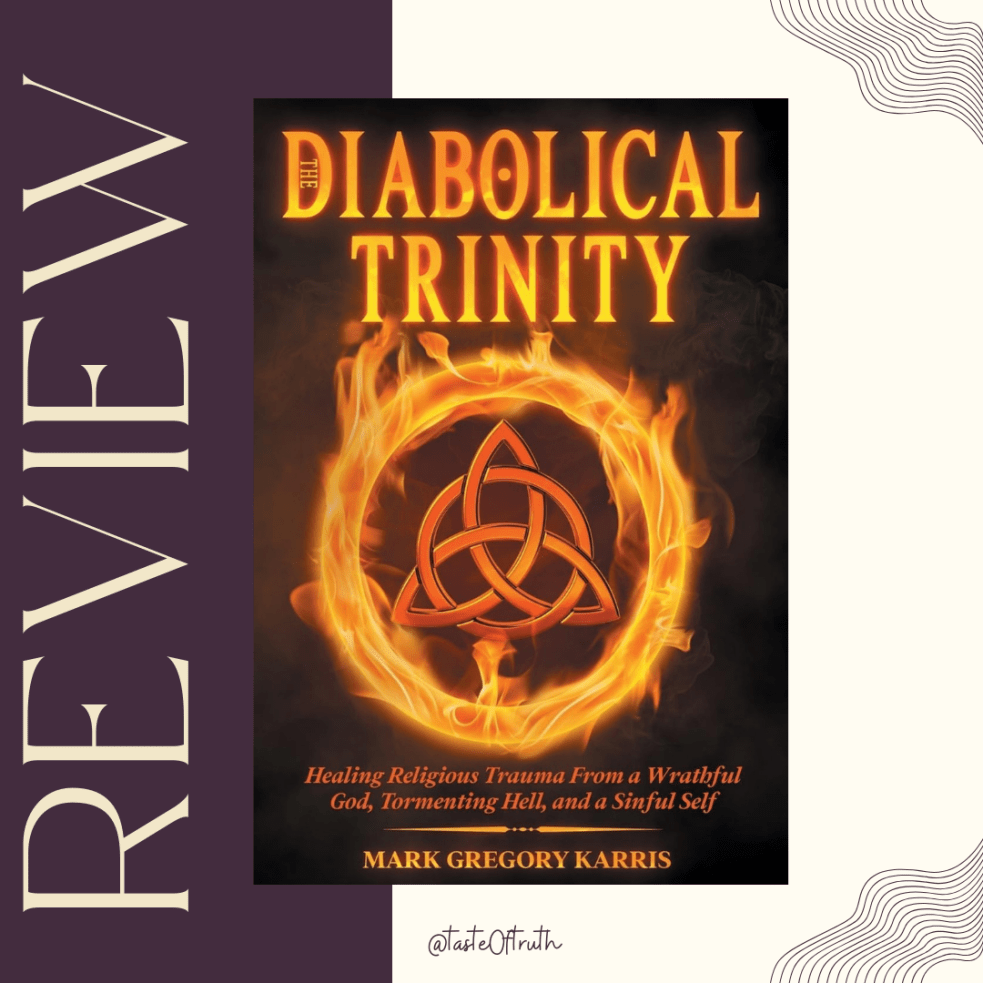
🌟 Book Review Alert! 🌟 This week’s podcast guest, Dr. Mark Gregory Karris, dives deep into religious trauma with his eye-opening book, “The Diabolical Trinity: Healing Religious Trauma from Original Sin, a Wrathful God, and Tormenting Hell.” 📚✨
Struggling with the remnants of religious fear and guilt? Dr. Karris’s insights are a game-changer. Swipe ➡️ to uncover why this book is a must-read for anyone on a healing journey.
Don’t miss our discussion on the podcast—catch up now before the next episode drops! 🎧💬
Tune in, transform, and take back your peace. 🙌
Listen here! 🎧
Dr. Mark Gregory Karris’s “The Diabolical Trinity: Healing Religious Trauma from a Wrathful God, Tormenting Hell, and Sinful Self” is a groundbreaking exploration of the psychological and emotional toll of harmful religious doctrines. Drawing from his extensive experience as a licensed therapist and ordained pastor, Karris skillfully dissects the “Diabolical Trinity”—the doctrines of a wrathful God, eternal torment in hell, and pervasive self-condemnation.
A Fresh Perspective on Religious Trauma
Dr. Mark’s has a compassionate and insightful approach to a topic often shrouded in silence and stigma. His work is praised for providing a fresh perspective on religious trauma, moving beyond mere critique to offer tangible steps toward healing. Karris’s ability to blend scholarly rigor with heartfelt empathy makes the book accessible to both academic and general audiences.
Empowering & Transformative
One of the most celebrated aspects of “The Diabolical Trinity” is Karris’s focus on empowerment. Critics have highlighted how the book not only identifies the sources of trauma but also provides practical tools for recovery. Karris’s therapeutic techniques and exercises are designed to help readers reclaim their sense of self-worth and foster a healthier, more compassionate spiritual outlook.
Critique & Redemption
While Karris does not shy away from critiquing harmful religious doctrines, he does so with a redemptive vision. He challenges readers to rethink their understanding of God, hell, and sin, offering an alternative that is both theologically sound and psychologically healing. This balanced approach has been particularly praised by critics who value both the deconstruction and reconstruction of faith.
Engaging & Accessible
The book’s engaging narrative style has also been a point of praise. Karris weaves personal anecdotes with clinical case studies, creating a compelling and relatable read. His clear and concise writing ensures that complex theological and psychological concepts are easily understood, making the book suitable for a wide audience.
Conclusion
In “The Diabolical Trinity,” Dr. Mark Gregory Karris offers a powerful and necessary contribution to the conversation on religious trauma. His work stands out for its depth of insight, practical guidance, and hopeful vision for healing. For anyone grappling with the damaging effects of rigid religious doctrines, this book provides a beacon of light and a path toward wholeness.
Anger itself isn’t fundamentally a sin; it’s a normal human emotion. However, as many of you know, I experienced spiritual abuse through ACBC Biblical counseling, also known as Nouthetic Counseling. This form of counseling, frequently used by the high-control religion I was part of, often employs various tactics to manipulate individuals into suppressing their anger.
High control religions often manipulate individuals against feeling anger by employing several tactics: 1. **Guilt and Shame**: They teach that anger is sinful or a sign of personal weakness, inducing guilt and shame in individuals who feel it.
2. **Doctrine and Indoctrination**: They emphasize doctrines that label anger as negative or spiritually harmful, encouraging followers to suppress it.
3. **Surveillance and Confession**: Constant surveillance and confession practices make individuals self-police their emotions, including anger.
4. **Isolation**: Isolating individuals from outside influences that might validate their feelings, keeping them within an echo chamber that reinforces the group’s views.
5. **Emotional Suppression**: Promoting emotional suppression as a virtue, advocating for calmness and forgiveness in all situations, often to the detriment of the individual’s mental health.
These methods can deeply impact personal autonomy and emotional well-being, making it difficult for individuals to express or even recognize their anger.
In many religious and philosophical traditions, it’s acknowledged that feeling anger is a normal part of human experience. What can make anger sinful or morally problematic is how one responds to it and the actions it provokes.
The philosopher Aristotle described anger as a passion that, when experienced and expressed appropriately, can be virtuous.
The key is to be angry for the right reasons and in the right way.
Anger is understood as a normal emotional response to perceived threats or injustices. It’s part of the body’s natural fight-or-flight response and can be constructive when it motivates problem-solving and assertiveness.
Yet, High control religions often manipulate feelings of anger by framing them as sinful or spiritually harmful. They may discourage members from expressing anger or dissent, promoting instead the idea of forgiveness and submission to authority. Additionally, they may use guilt or shame to suppress anger, portraying it as a sign of weakness or lack of faith.
In extreme cases, anger may be labeled as a tool of the devil or a hindrance to spiritual growth, further reinforcing control over members’ emotions.
Suppressing anger can lead to negative health effects and mental distress, while constructive expression of anger can lead to positive change and resolution of conflicts.
Gender Roles & Expectations
Boys: Anger is often viewed as a more acceptable and natural response. They are frequently socialized to see anger as a sign of strength or assertiveness.
This can lead to a normalization of more aggressive behaviors and a lack of encouragement to explore other emotional responses.
Girls: In contrast, girls are often discouraged from expressing anger and are instead encouraged to use “nicer voices” or to remain calm and composed.
This reinforces traditional gender roles that value submissiveness, agreeableness, and emotional labor from women.
From a young age, girls are socialized to prioritize the needs of others and maintain harmony in relationships. Being assertive or expressing anger can be seen as disruptive to these social expectations.
Boys, on the other hand, might not receive the same level of guidance on emotional regulation, particularly concerning emotions like vulnerability or sadness, which are often socially discouraged in males.
From a young age, girls are socialized to prioritize the needs of others and maintain harmony in relationships. Being assertive or expressing anger can be seen as disruptive to these social expectations.
Boys, on the other hand, might not receive the same level of guidance on emotional regulation, particularly concerning emotions like vulnerability or sadness, which are often socially discouraged in males.
Long-term Consequences:
The reinforcement of these gender roles can perpetuate a cycle where men and women struggle with different aspects of emotional health. Men might face challenges in expressing vulnerability, while women might struggle with assertiveness and setting boundaries.
In professional and personal relationships, these dynamics can lead to power imbalances and communication issues, affecting everything from career advancement to personal satisfaction.
The way anger and other emotions are socially regulated based on gender reinforces traditional gender roles and affects the emotional development of individuals.
Recognizing and addressing these biases can lead to healthier emotional expressions and relationships for both men and women.
Exploring how religion suppresses emotions involves examining religious teachings, cultural practices, and the interpretation of sacred texts. Here are some resources that delve into this topic from various perspectives:
Books:
“The Will to Change: Men, Masculinity, and Love” by bell hooks
This book discusses how cultural norms, often influenced by religious teachings, shape the emotional lives of men, encouraging the suppression of vulnerability and emotional expression.
“Emotion and Religion: A Critical Assessment and Annotated Bibliography” by John Corrigan
This comprehensive work explores the complex relationship between emotion and religion, providing both theoretical discussions and annotated references for further research.
“Holy Tears: Weeping in the Religious Imagination” edited by Kimberley Christine Patton and John Stratton Hawley
This collection of essays examines the role of tears and emotional expression in various religious traditions, offering insights into how certain emotions are both encouraged and suppressed.
“The Varieties of Religious Experience” by William James
Although an older text, James’ exploration of religious experiences includes discussions on how different religions view and handle emotions, including suppression.
Articles:
“Emotion Regulation in Religious Contexts” by Edward R. Canda in the Journal of Religion and Health
This article examines how religious contexts influence emotional regulation, including both the suppression and expression of emotions.
“Religious Influences on Emotion Regulation” by Richard S. Lazarus in the book “Handbook of Emotions”
This chapter discusses how different religious traditions guide the regulation of emotions, often promoting certain emotions while suppressing others.
“Religiosity and Emotion Regulation” by Charlotte van Schie and Michiel van Elk in Frontiers in Psychology
This research article explores how religiosity influences emotional regulation strategies, including suppression.
Academic Papers and Theses:
“Emotion Suppression in Religion: A Study of Christian, Jewish, and Muslim Communities”
This thesis (or dissertation) might be found through university libraries and explores how different religious communities approach emotion suppression.
“The Role of Religion in Emotion Regulation: Insights from a Psychological Perspective” by Kevin L. Ladd and Bernard Spilka in the International Journal for the Psychology of Religion
This paper provides a psychological perspective on how religious beliefs and practices affect emotional regulation, including suppression.
Online Resources:
Pew Research Center: Religion & Public Life
Pew Research often publishes studies and reports on the intersection of religion and various aspects of life, including emotional health and expression.
Psychology Today: Religion and Spirituality
This section of the Psychology Today website features articles on how religion impacts emotional well-being, including the suppression of emotions.
The Stanford Encyclopedia of Philosophy: “Emotion in Christian Philosophy”
This entry explores how Christian philosophy has historically viewed emotions and their expression or suppression.
These resources offer a broad overview of how different religious traditions and interpretations can influence the suppression of emotions. They provide insights from psychological, sociological, and theological perspectives.



 Taste0ftruth Tuesdays