
On family memory, moral inheritance, and the cost of belonging
This is Part Three of a series that began with a question about participation: what have we lost by becoming spectators to experiences our ancestors once entered with their whole bodies? From there, the question became more personal. Part Two followed my own hunger for belonging through the communities, identities, and belief systems I had tried to make myself at home inside, and eventually toward something I have had to learn the hard way: belonging is not worth very much if I have to disappear in order to keep it.
I ended that essay writing about the ability to remain rooted when someone disagrees with me, to listen without disappearing, and to belong without surrendering conscience. At the time, those words felt like a conclusion drawn from everything I had already lived through.
I did not realize I was about to be tested on them in probably the most intense way possible.
All of this started in January of this year when I ordered an Ancestry DNA kit.
And, of course, after submitting my saliva, I had an absolute panic moment where I immediately regretted handing over my genetic data to who knows what private equity firm that is going to share it with whatever transhumanist agenda is out there.
Too late. The spit was already in the mail.
I also had absolutely no reason to expect the results would rearrange the story I had been told about myself.
My entire life, I understood my ancestry to be largely English, Scottish, and Irish. I grew up surrounded by the visual language that came with it too—green clovers, Irish imagery, fairies, Celtic-looking decorations, all the little symbols that become so ordinary in childhood that you stop noticing they are teaching you something about who you are.
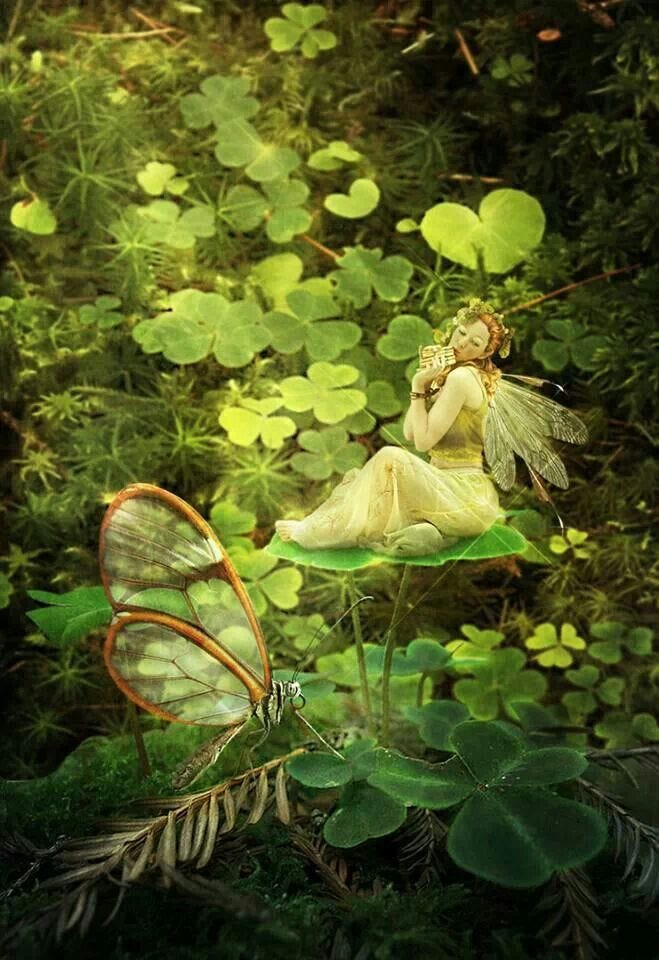
That was simply where I came from. Or at least I thought it was.
So, when the results came back and said 50% Italian, I was absolutely shocked. Flabbergasted. Bewildered. Confused. Quite destabilized.
This meant something much more immediate: the man I had believed was my father could not be my biological father.
The matches made that difficult to deny. I recognized people on my mother’s side, and those relationships appeared exactly where they should.
But the paternal side was something else entirely.
That realization did more than change a percentage on an ancestry report. It made the story of my own origins suddenly unstable. The family line I had assumed was mine biologically wasn’t mine at all. The ancestry I had casually claimed my whole life, the family medical history I had repeated at doctors’ offices, the names and stories I understood as part of my inheritance—half of it had just fallen away in an afternoon.
There had always been a strange story around my conception. In 2016, while drunk, my mother admitted to me that she had felt guilty for all the times she had cheated on my dad while he was in prison. I had grown up hearing some convoluted explanation about being conceived when he was temporarily out because of good behavior, something involving a wedding, maybe a conjugal visit. Honestly, I don’t even know anymore. The timeline never completely made sense, but I never pushed very hard.
My family has always had something of a motto:
The past is the past. Let’s not talk about it.
Well…. DNA apparently did not get that memo.
Suddenly I had questions I had never expected to be asking at this point in my life. Who was my biological father? Who were these Italian people showing up in my matches? What was my actual paternal medical history? Had an entire family existed beside mine this whole time without me knowing it?
And there was another, stranger layer underneath all of that. If ancestry is one of the ways we orient ourselves in the world (through names, stories, land, family memory, inherited symbols) what happens when you discover that half of the map you were given was wrong?
And somewhere underneath the absurdity of that sentence was a much more unsettling question.
Who, then, were my people?
There was something intensely nauseating about reaching my forties and discovering that a foundational fact about my own identity had simply never been true.
My mother, predictably, denied everything at first and acted completely shocked. It took seven months of what I experienced as denial, contradictions, coping, and avoidance before she finally admitted that she had been in a relationship with an Italian man who ran a restaurant called the North Pole. The restaurant just happened to be on the route my mother traveled when she went to visit the man I had believed was my father while he was in prison.
He had gone to prison for dealing cocaine.
I would eventually learn that my newly discovered biological father’s world was also heavily entangled with cocaine.
My mother really knows how to choose them, huh?
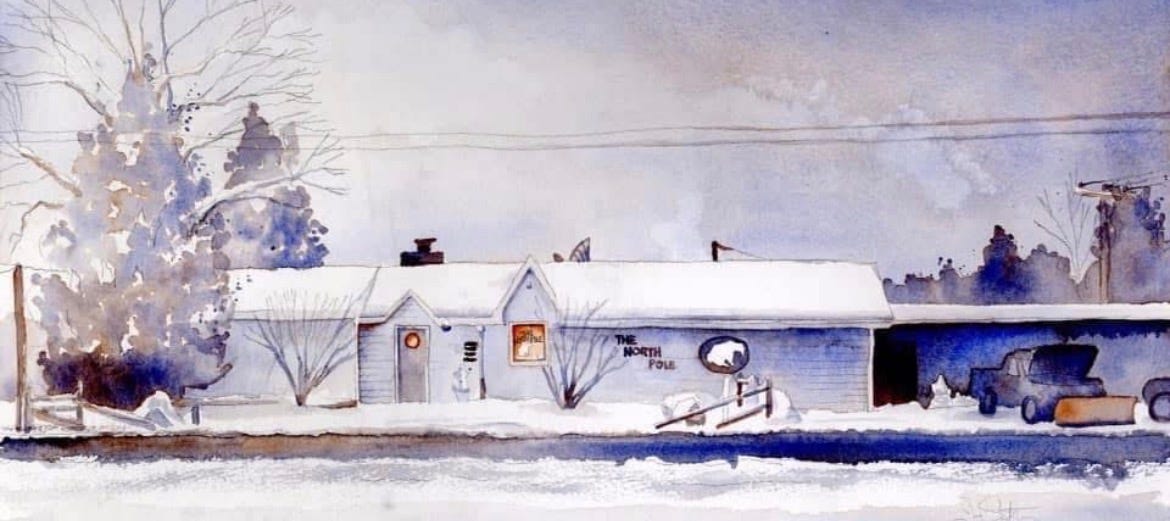
Once I finally had his name, a family friend found an entire Facebook group dedicated to him and the North Pole. I started scrolling through years of photographs, stories, memories from old employees, people reminiscing about the restaurant and talking about how much they loved working for him. It sounded like he had built this iconic little world that people genuinely missed. He seemed charismatic and funny and generous. I learned that he died in a car accident in 2010, which meant that by the time I finally discovered who he was, I had already missed any possibility of ever meeting him.
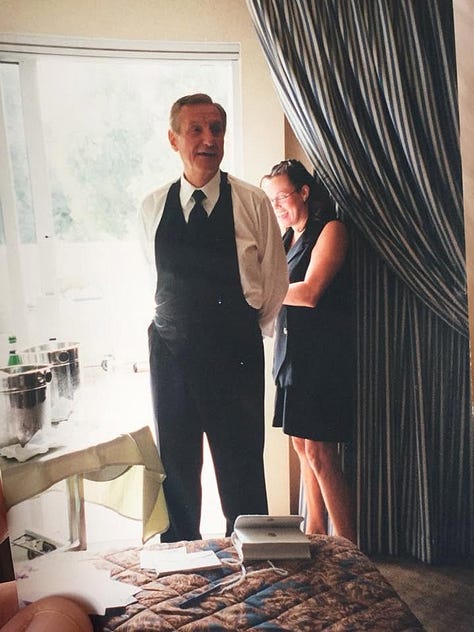
And this is where my imagination started doing something I did not understand at the time.
I started building a family before I actually met one.
There were half-siblings, nieces and nephews, an entire network of people whose DNA overlapped with mine but whose lives had gone on for decades without me. I started thinking, Wow, what if this is it? What if this explains why I have always felt so disconnected from my own family? Maybe I had missed out on this warm, close Italian family I was actually supposed to have. Maybe these were the people who were finally going to understand me. Maybe I would have Christmases I actually looked forward to again. Maybe I would walk into a room full of relatives and experience some strange recognition that had always been missing.
Maybe everything was finally going to make sense.
Well…no. It did not.
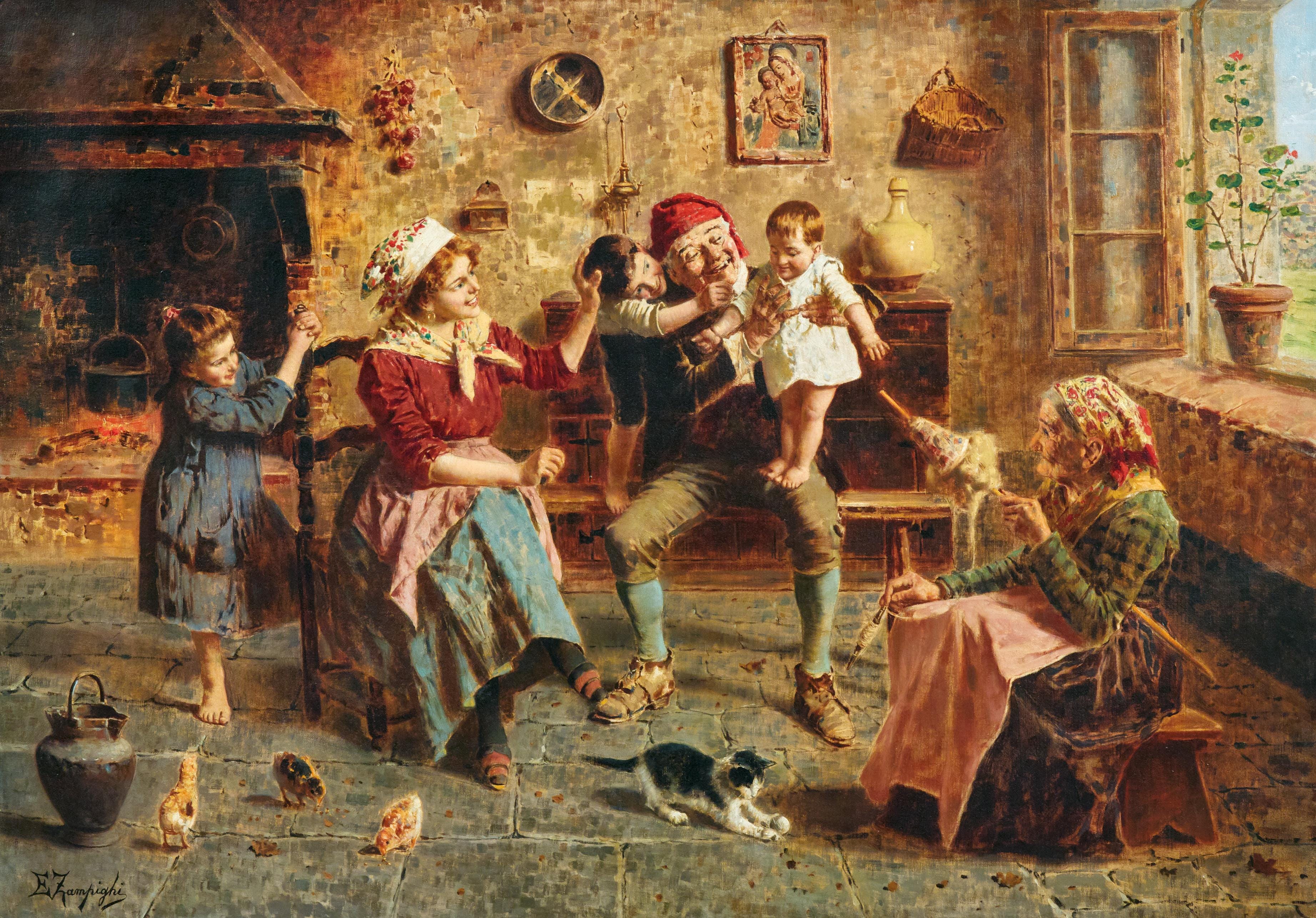
The Family I Invented Before I Met Them
One particularly sad day, when I was feeling incredibly lonely and isolated, I took the gamble and reached out to the woman who managed the Facebook group. I had a suspicion that she was one of my half-sisters.
She responded within about ten minutes.
She told me that she had known about me my entire life. She said she had been waiting and praying to hear from me, and apparently there may even be another half-sister somewhere out there that neither of us knows. Immediately I was getting information that contradicted things my mother had told me, which by that point was hardly surprising.
What did surprise me was how positively she spoke about my mother. She told me how much she had adored her, how happy my mother had made her dad, how she had wanted them to get married. She would have been around fifteen at the time, so I tried to keep in mind that I was hearing the rose-tinted recollection of a teenage girl who had encountered a very specific version of my mother.
Still, it made me feel nauseated.
I have a lifetime of experiences with my mother that bear very little resemblance to the woman being described to me, and I have been estranged from her because of the dysfunction within my family. Sitting there listening to someone speak almost lovingly about her while I was already trying to absorb the fact that she had hidden my biological father from me for forty years felt surreal. But I tried not to immediately judge any of it. Two people can experience the same person very differently. I knew that. I wanted to be open.
Eventually Patrick and I went to meet my half-sister at a river house where she was staying.
When we first arrived, I was impressed. This was a gorgeous property, worth somewhere around two million dollars, and for a moment I was looking around thinking, Wait, is this our family money? Is this her money? What exactly did I just stumble into? I later realized that it belonged to her soon to be ex-husband, but at the time I knew almost nothing about any of these people.
Anyone who knows me also knows that I am hypervigilant as fuck. I walk into a room and notice approximately a thousand things immediately. Body language, tone, smells, identity markers, animals, exits, mess, tension, who seems uncomfortable, who seems too comfortable. I wish I could turn it off, but I cannot.
I had been very communicative about what time we would arrive, so she knew exactly when we were coming. When she opened the door, she looked like she had just gotten out of the pool, wrapped in a towel. Fine. Whatever. It was summer and people swim. But then we spent the next thirty minutes in the kitchen and she kept saying she was going to go change, only to become distracted by another story, then another, then five more.
The house was a disaster. I want to be fair about that because she was going through a divorce and moving out, and people going through a crisis are allowed to have messy houses. The mess by itself was not the issue. It was the totality of everything happening at once. Half-eaten food, trash and cups everywhere. Flies. She was smoking her cigarettes inside. Air conditioning blasting while the windows were open. She was buzzing around the kitchen, constantly adjusting her towel, starting one story and abandoning it halfway through to launch into another. I had brought her flowers and at some point, I found myself wandering around trying to locate something to put them in because she could not stay focused on one thing long enough to deal with them.
I remember being profoundly relieved that my husband had come with me, because I needed another person in the room who could later tell me that I had not imagined how uncomfortable the whole thing felt.
The property itself was one of the nicest places I had been to in a long time. Yet, the energy inside that house was some of the most destabilizing I had experienced in years.
I don’t know what was happening with her psychologically or medically. Patrick wondered afterward whether medication or something else had been involved, and I had my own questions, especially because she later spoke casually about cocaine use. But I cannot diagnose somebody based on spending one afternoon with her and I don’t need to. The observable experience was enough. My nervous system was screaming at me that something was off.
What troubled me even more was how little curiosity I felt coming toward me.
This woman had supposedly known I existed my entire life and had been praying for me to appear. I had just discovered that half of my biological identity was not what I thought it was. I had spent months trying to learn who my father was, discovered he was already dead, and then walked into a house filled with photographs, stories and memories belonging to people whose blood I shared but whose lives I knew absolutely nothing about.
I had an entire fucking life too.
Yet I kept feeling like there was plenty of room for me to absorb her stories, her family history, her understanding of everyone involved, her healing journey, her perspective on my mother and our father, but much less room for me whenever my own interpretation differed from hers.
At one point I tried to offer a different perspective during a conversation and the interaction escalated badly enough that she started yelling and I nearly walked out. Afterward it was brushed away with something along the lines of, That’s just Italians. That’s how we fight.
But I wasn’t raised in this family. I do not have some reservoir of childhood affection that turns being screamed at into charming cultural familiarity. To me, it just felt like being screamed at.
There wasn’t much of an apology or an attempt to understand why the interaction bothered me. That feeling would become important later.
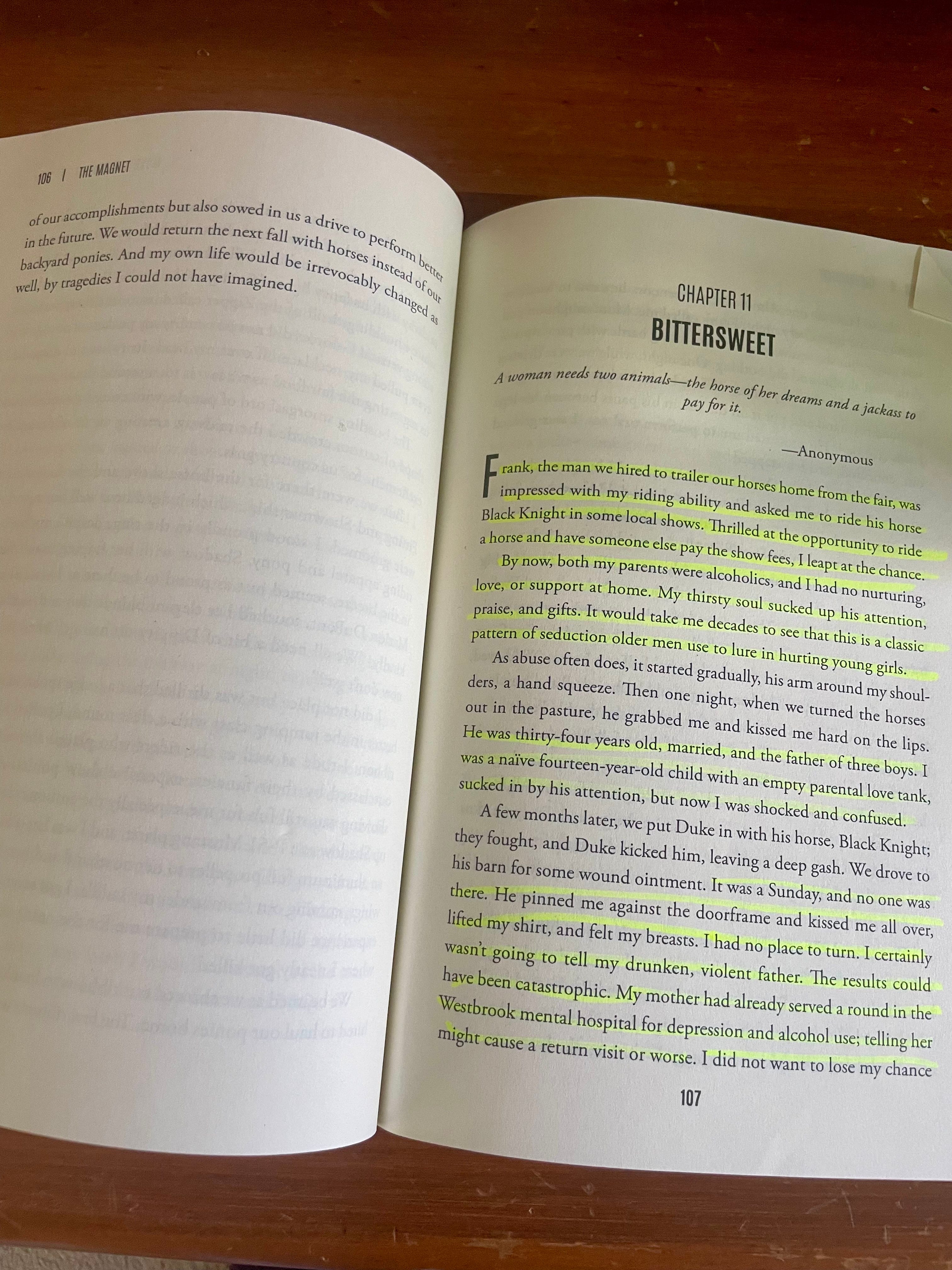
Bittersweet
The most disturbing thing I learned during this period involved our biological father.
I found out that when he was in his thirties, he had sexually exploited a teenage girl. She eventually wrote about the experience in a memoir, and a week or two after meeting my half-sister I got a copy of the book.
I will admit that I skimmed most of it because the author had become a born-again Protestant Christian and there is enough Abrahamic worldview running through the thing to make my eye twitch. But then I reached Chapter Eleven, titled “Bittersweet,” and stopped skimming.
She describes herself at fourteen as a child living with alcoholic parents, receiving very little nurturing or stability at home. My biological father was thirty-four years old, married, and already a father. He entered her world through horses. He helped her ride, bought her things, took her places, fed her, praised her and gave her attention at a time when the adults responsible for her were failing badly.
Then, according to her own account, that relationship became sexual.
Looking back as an adult, she describes recognizing a pattern she could not recognize when she was fourteen: an older man exploiting the vulnerability of a hurting girl. She writes about feeling trapped and confused. She describes being pressured sexually and unable to tell her parents what was happening because her own home was so unstable. At one point she summarizes what remained afterward as “virginity stolen, trust violated.”
That was enough for me.
I remember my half-sister telling me about this and saying, “You know Catholic men, always wanting those virginal women…” I was truly disgusted. I told her how horrific it was, and she said, “Well, we all have good and bad parts in us.” Then came Ram Dass and some New Age copium, as if that could soften what she had just shared with me.
I did not need to spiritualize it. I did not need to search for the hidden blessing. I did not need to tell myself that complicated people contain light and darkness and therefore no moral judgment is ever appropriate. I did not need to forgive a man I had never met simply because half of my DNA came from him.
A thirty-four-year-old man pursuing and sexually exploiting a fourteen-year-old child is abuse.
And that man was my biological father.
This realization was especially disorienting because I had already spent weeks immersed in the Facebook memorial group, where he existed almost entirely through warm collective memory: the funny restaurant owner, the beloved boss, the larger-than-life personality, the guy who made people laugh and created a place they still remembered decades later.
Those memories did not necessarily become lies because I read the memoir.
That is part of what made this harder.
People who do terrible things are rarely terrible every second of every day. A person can be generous to an employee and predatory toward somebody else. He could have made people laugh. He could have been adored by his daughter. He could have created an environment that people genuinely remember with enormous affection.
Human beings are inconvenient like that.
But once I read this woman’s account, another voice entered the family story.
And the prettier memories could no longer be allowed to swallow hers.
That is where I started thinking about memory differently.
A family is partly made out of the stories it agrees to repeat. Certain stories become funny. Certain names become beloved. Certain things are excused, certain things are hidden, and certain things become things “we don’t talk about.” Over time, those repetitions harden into an identity.
I know something about that because I came from a family whose motto was essentially the past is the past.
But the past does not disappear because people become uncomfortable when somebody names it.
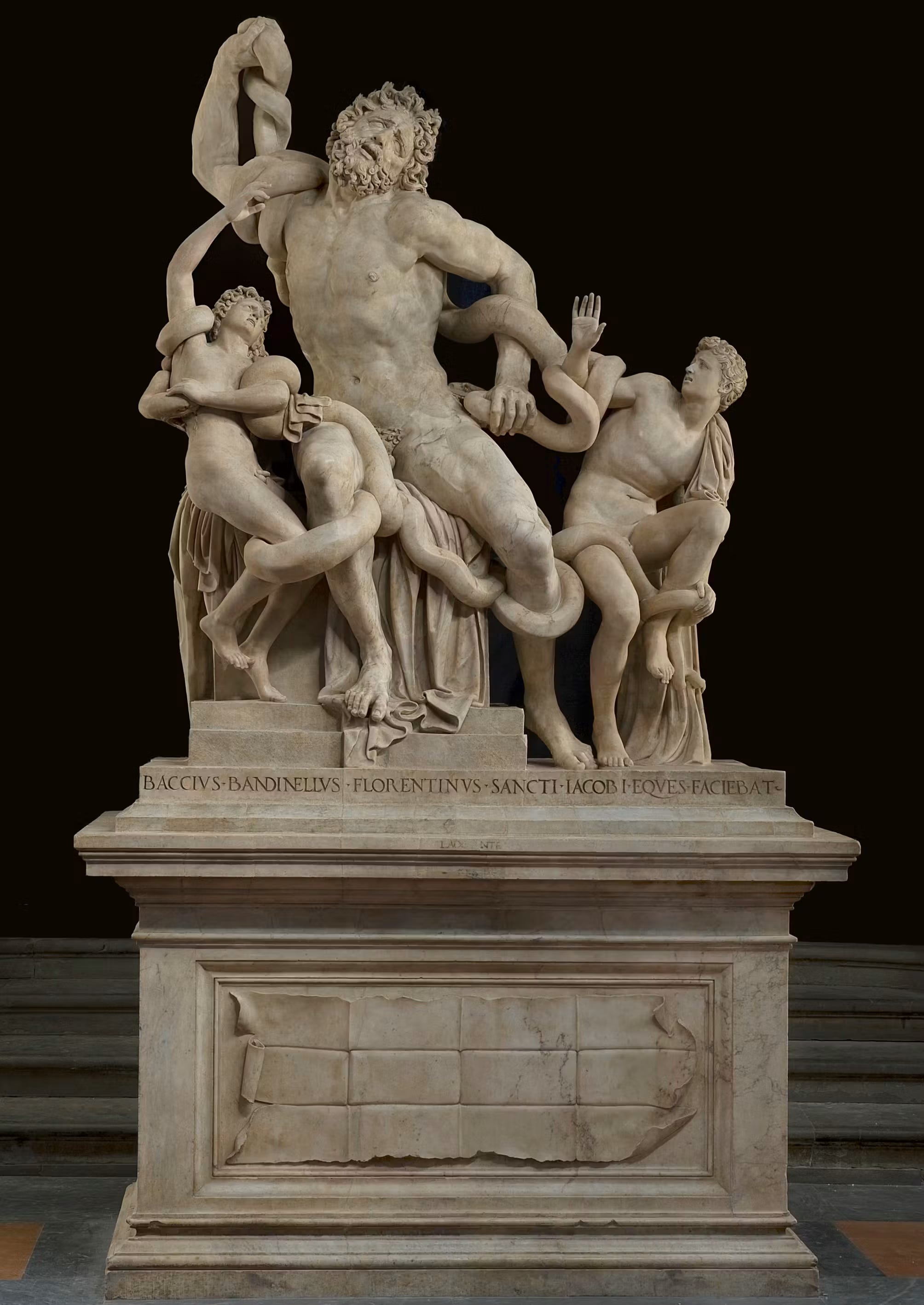
What My Body Already Knew
There was more information I struggled with during that visit. My half-sister spoke very casually about cocaine and told me that it had been “always snowing at the North Pole,” meaning cocaine was apparently everywhere around the restaurant. I was learning that my biological father had also dealt cocaine, which meant that both men occupying the category of father in my life (the man who raised me and the biological father I had just discovered) had been cocaine dealers.
Again, apparently, my mother had a type.
(Sometimes dark humor is the only way I know how to metabolize information that would otherwise make me want to scream.)
The day after meeting my half-sister, I felt sick. I kept replaying everything. Patrick and I talked about how uncomfortable the visit had been, and he agreed that we should have left much earlier. It seemed like almost every story I had heard contained another piece of information that I wished I had never learned.
Still, I did not want to make a harsh decision too quickly. She was going through a divorce. Finding a biological sibling in middle age was obviously going to be emotionally strange. Maybe I had simply become overloaded. Maybe my hypervigilance was getting ahead of me. Maybe I should give her another chance.
Very shortly after I read the chapter in the memoir, she invited me back to the river house one last time so that I could meet her daughter—my newly discovered niece.
Even though I did not really want to go, I agreed.
And then my body had other plans.
The day before the visit I developed a wicked migraine that continued through the entire day I was supposed to see her. I physically couldn’t endure the long drive and social stimulation.
And staying home gave me something I had not really had since this entire discovery began: enough distance to hear myself think.
As the adrenaline wore off, I had to admit that I did not want this relationship. I did not want to go back to the river house. I did not want birthday parties and photographs and nieces and nephews suddenly being folded into my life because DNA had revealed that technically these people belonged to categories called sister and family.
I did not feel closer. I wanted distance.
Coming to this conclusion hurt because I had wanted this discovery to mean something else entirely. I had let myself imagine that biological family might finally provide some missing form of belonging. Instead, I found myself confronting a question I had already been writing about.
In The Death of the Performed Self, I wrote about transformation as something deeper than simply adopting a new vocabulary or worldview. Real transformation shows up as discernment, self-command, courage, and to stand firmly without requiring everyone around you to reassure you that you are standing in exactly the right place.
Apparently life decided I needed an immediate practical examination.
Because suddenly the thing being offered wasn’t an abstract community or ideology.
It was blood.
Two biological sisters. Nieces and nephews. An Italian lineage. Photographs of a father whose face might contain some clue about mine. An entire family story I had briefly believed could explain why I had spent so much of my life feeling disconnected.
And maintaining access to that fantasy would have required me to begin overriding myself almost immediately.
I would have needed to ignore how uncomfortable I had been. Explain away the yelling. Explain away the instability. Keep reminding myself that she was going through a hard time. Swallow my moral reaction to what I had learned about our father. Keep accepting photos and birthday invitations. Meet the niece. Smile. Try harder. Be open-minded. Do not hurt anybody’s feelings.
Most importantly: do not risk losing belonging.
I know that woman. I know the version of myself who would have done exactly that and called it compassion.
She has existed inside churches, relationships, political communities, spiritual worlds, friendships and my own family. She is very good at learning the correct vocabulary. She can figure out what everyone around her needs her to believe. She can abandon her own perception and call it humility. She can disappear inside belonging and convince herself she has finally been loved.
I have spent years trying to let that performed self die.
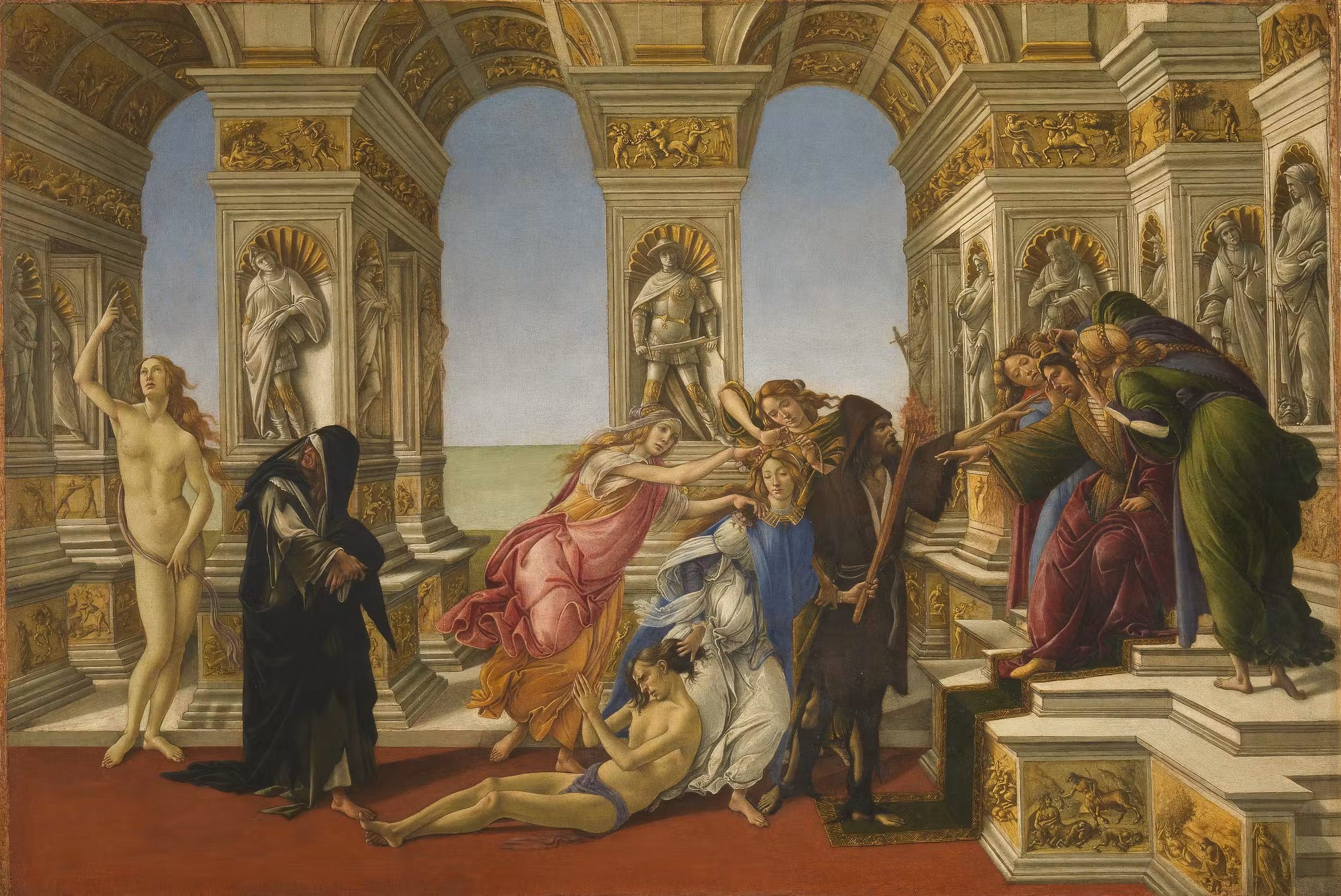
When Truth Costs Something
Eventually I sent my half-sister a boundary message.
It took me days to write because I was trying so hard not to be cruel. I told her the experience had been overwhelming and destabilizing. I explained that learning what I had learned about our biological father had deeply disturbed me and that I had struggled with what I perceived as attempts to soften or rationalize his behavior. I told her that I did not want to build a relationship and that I needed distance.
Her response illuminated almost everything my intuition had been trying to tell me since the river house. She sent me nine or ten messages in a flurry.
She told me that she had forgiven our father and framed that forgiveness as part of healing.
Then there was another Ram Dass quote….of fucking course there was a Ram Dass quote.
Her telling me that she had forgiven him would not have bothered me by itself. That is her relationship to her father. She knew him. She loved him. She can make whatever peace with his memory she needs to make. I am not the sovereign authority over her conscience.
But neither is she the sovereign authority over mine.
What bothered me was the way forgiveness became evidence of healing, because suddenly there was an implied hierarchy between us. She had reached the spiritually mature interpretation, while my anger, disgust and refusal to forgive were positioned as something I had yet to work through.
And there it was again: the exact same sensation I had felt in the river house.
I was not merely being offered another way of seeing the situation.
I felt like I was being told which interpretation was the evolved one.
This is why I have become so suspicious of spiritual bypassing. Forgiveness can be meaningful and healing for someone personally, but the word becomes dangerous when it is turned into a moral cudgel. Anger becomes pathology. Disgust becomes evidence that you have not “done the work.” Moral judgment becomes something unenlightened people cling to because they have not yet transcended their ego.
No.
A friend, Torna Braggison, recently wrote about hamingja as a kind of luck or power strengthened through honorable action. One idea from that piece has stayed with me: anger can be a signal that something has crossed a line and needs a response. I don’t think every surge of anger is a flawless instruction. Mine can distort things too. But I also don’t want to treat anger as automatic proof that I am sick, stuck, or failing to heal.
Sometimes something really has violated your moral order. Sometimes disgust is appropriate. Sometimes refusing to forgive someone you never knew is not a wound begging to be healed.
And I absolutely refuse the idea that moral clarity is an illness from which I need to recover.
The conversation escalated after that. I eventually said things harshly. I told her that I had experienced our time together as profoundly unstable, that I had not felt much curiosity from her about my life or what any of this had done to me, and that I felt as though she wanted to control what I was allowed to think, say and feel.
Those words did not arrive serenely after a breathwork session.
I was pissed. I was hurt. I was activated.
Could I have phrased some of it differently once the adrenaline left my body? Absolutely.
But one of the hardest lessons of my life has been learning that regretting the sharpness of a statement does not automatically mean the truth underneath it was wrong.
That distinction matters when you have spent years interpreting every conflict as evidence that you must have failed.
Sometimes a boundary comes out ugly because the gentler versions did not work.
Sometimes your hands shake while you type it.
Sometimes you cry afterward.
Sometimes the truth does not sound enlightened.
Ond, Words in the Well, and Blood That Is Not an Oath
This is where Ond has started to become far more than an interesting Heathen concept to me.
Ond is the sacred breath, the vital breath of life. In the Heathen material I have been studying, speech is intimately connected to it because words quite literally ride upon breath. We take something that exists privately within us and breathe it outward into relationship, community and memory.
That idea has been sitting differently with me after this experience.
Truth is very easy when nobody has anything to lose.
Integrity becomes harder when speaking honestly threatens belonging.
It is one thing to sit alone at a desk writing about the importance of remaining rooted. It is another thing to have a newly discovered biological sister standing on the other side of the sentence.
At some point truth has to move from inside the body to outside it.
You have to breathe. Then you have to speak.
There is another Heathen idea I have been thinking about throughout all of this: words placed into the well. Not all words carry equal weight. What we say casually to a stranger is not the same as what we say to family, friends or community. Words spoken within relationships become part of shared memory. They influence reputation, identity, trust, inheritance.
When I think about this now, I cannot stop thinking about that Facebook group.
It was, in its own strange modern form, a well of memory.
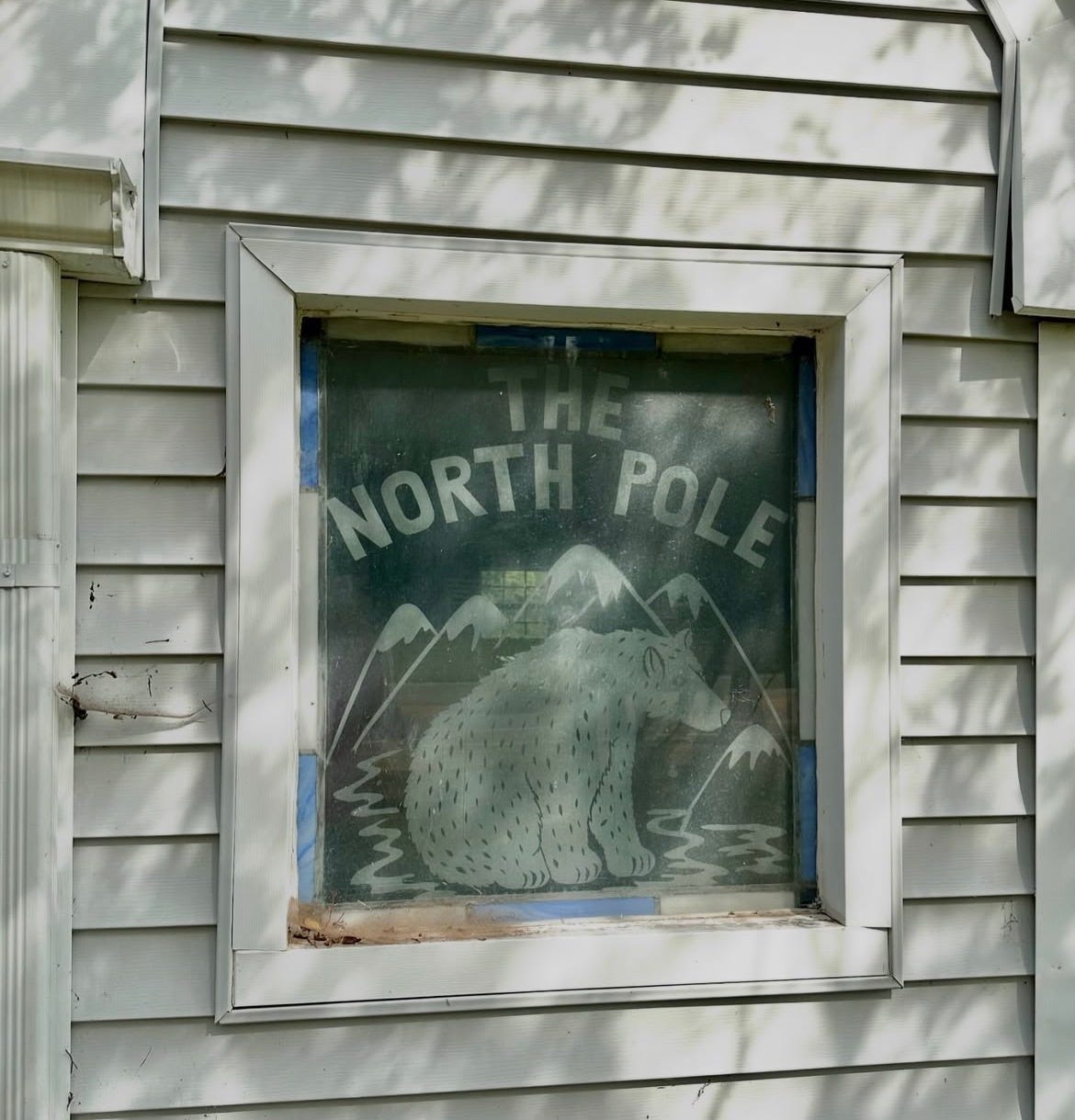
Photograph after photograph, story after story, people placing memories of my biological father into a common space. The restaurant everyone loved. The funny boss. The friend. The father. The charismatic guy who made people feel good and created something people missed decades later.
And then I opened a memoir. Another voice entered the well.
A fourteen-year-old girl’s. Her story does not erase everybody else’s.
But neither should their nostalgia erase hers.
That, to me, is where honor becomes different from reputation. Reputation can be built by repeating the most flattering stories. Honor requires making room for what is true even when the truth injures the story we would prefer to preserve.
Torna’s article gave me another way to think about the family part of this. He describes hamingja as something shaped by action and connected outward through family and community, like rings in a web.
“Acting with blatant dishonor is the worst thing you could do to your spiritual self. Not only would you have a lack of spiritual power and potency, it could also take your family generations to rectify your misdeeds causing your descendants to bear your shameful actions through no fault of their own.” —Torna Braggison
What one person does can become part of what the people around them have to carry, and the stories a family repeats help determine what gets passed along. That girl’s account belongs in the web too. So does my choice about whether I help cover it over.
That web also means I cannot simply declare myself separate and walk away untouched. The damage created by dishonorable action is called ohamingja—a negative inheritance that can move through a family and into its descendants. So, I can reject my biological father’s conduct and remain estranged from a mother whose actions I consider deeply dishonorable, but distance does not erase what their choices set in motion. I am still living with consequences I did not choose. The responsibility for what comes next belongs to me. I can live more honorably, tell the truth, keep my word and rebuild my own hamingja rather than passing the same secrecy, chaos and moral cowardice forward.
And this entire experience has made me think about blood differently too.
Blood is not an oath.
DNA can reveal biological relationship, but it cannot manufacture intimacy. It cannot command loyalty. It cannot obligate me to defend somebody I never knew. I share half of my DNA with my biological father, but I do not inherit his degeneracy or his excuses. I do not inherit anyone else’s nostalgia. I do not have to repeat my mother’s secrecy, and I do not inherit my half-sister’s forgiveness.
Biology can tell me where I came from. It cannot decide what I owe.
Kinship, at least in any meaningful sense, still has to be enacted through reciprocity, trust, words, deeds, character and time.
Relationship is something built. Not something detected in saliva.
This may be the greatest gift buried inside what has otherwise been one of the most disturbing years of my life.
For a brief period I really believed discovering my biological family might heal something ancient in me. I imagined the Italian family before I met them. I imagined Christmases with a full house, warmth, a family who had always wanted me, nieces and nephews, people who might somehow recognize me in a way my own family never had.
I am grieving that imagined family now too.
And maybe this is what standing rooted really means—not demanding that reality conform itself to the story I hoped would save me.
When I look backward at the hardest parts of my life now, I can see something I could not see while I was living through them. I know my vulnerabilities better. I know how badly I have wanted belonging. I know how susceptible I have been to charismatic people, authoritative belief systems, communities with one single permitted interpretation, people who speak with such certainty that I begin distrusting my own perception.
I know the seduction of being told, This is what healing looks like.
This is what being good looks like.
This is what being spiritually mature looks like.
This is what a good daughter looks like.
This is what a good Christian looks like.
This is what an enlightened person believes.
I have played that game before. Many times.
And this time, when the same dynamic appeared wearing an entirely different costume, I recognized it.
Not instantly. But sooner. And to me, that is a win.
Standing rooted does not mean I believe I am always right. Hypervigilance, trauma and anger can distort perception. I need people who challenge me, and I need the capacity to admit when evidence shows me that I am wrong. A tree that cannot move at all breaks in the wind. Roots are not rigidity. Roots make movement possible without losing the ground underneath you.
For a long time I thought honor had mostly to do with reputation—whether other people considered you good, whether you behaved properly, whether you were liked.
I understand it differently now.
Honor has something to do with whether your speech and your actions actually belong to the same person. Whether what leaves your mouth remains connected to what you know and believe inside yourself. Whether you can be trusted.
Especially by yourself.
That is why Ond has become such a powerful image for me. Breath originates inside the body and speech rides outward upon it. There should be some continuity between the two. Not perfection. Not impulsively saying every thought that passes through our minds. Not using “I’m just being honest” as permission for cruelty.
Continuity.
I do not want my mouth saying yes while every other part of me is screaming no.
I do not want to write publicly about integrity while living privately through appeasement.
I do not want to talk about truth and honor and then abandon both the moment they threaten to cost me something.
I’m beginning to believe that healing is much less glamorous than I used to think.
It is not pretending everything happens for a reason or turning every horrific thing into a lesson about love.
It is noticing the old pattern sooner. Leaving sooner.
Sending the difficult message.
Crying afterward because you genuinely wished the story had ended differently.
Grieving the family, you imagined without forcing yourself to belong to the family you actually found.
Maybe healing is being able to feel that ancient hunger for belonging rise inside you and still recognize when the price being asked is too high.
Biology can reveal my blood, but it cannot command my conscience.
And I can be more careful about what I place into the well.
These words are significant to me because they are carried on my own breath. They are part of the story I am choosing to leave behind me, and after a lifetime of learning how easily I could give my voice away in exchange for love, safety, certainty or belonging, I want the words I breathe into this world to actually belong to me.
Even when my voice shakes.
Even when telling the prettier story would have been so much easier.
Thank you so much for reading or listening! The audio always includes a few extra nuggets that aren’t in the written version, so give it a listen when you can. I’d love to hear your thoughts in the comments!
The Ancient Hunger Beneath Modern Life (Pt.1)
·
Jul 30
The Death of the Performed Self (Pt 2)
·
Aug 18
Articles that influenced this series:
the World of GroovinMeGzz: Is That a Hula-HoOp?? (A story of a hooper…)

