

What You Need to Know About Risk and Bias
If you’ve ever been confused by conflicting diet headlines, you’re not alone! Nutrition research aims to help us understand how different foods impact our health, but the process isn’t always straightforward. From small sample sizes to biases and misinterpreted data, the field is full of challenges that can lead to mixed messages. Today, we’re breaking down the complex world of nutrition research, unpacking what it really tells us, what it doesn’t, and how we can read between the lines to make sense of it all.
This is a complex topic, especially when it comes to understanding terms like absolute and relative risk, which can often be confusing without a visual, so be sure to scroll along as you listen!
Let’s dive in!

I recently sat down with Jacqui, a passionate advocate for empowering women to understand and support their bodies at every life stage. Our conversation was deeply insightful, particularly as Jacqui highlighted the importance of critically assessing nutrition research, an area she’s worked in for years. From her early love for nutrition labels to her background in bio-nutritional statistics and clinical trials, Jacqui’s journey has led her to focus on prenatal research and nutrition that fosters development.
Throughout our interview, Jacqui stressed the need for a more nuanced approach when it comes to nutrition science, pointing out how certain research methodologies and common misinterpretations can lead us astray.

1. The Pitfalls of Food Frequency Questionnaires (FFQs)
One of Jacqui’s key points was the reliability—or lack thereof—of Food Frequency Questionnaires (FFQs), a tool frequently used to assess dietary habits. FFQs often rely on participants’ memory, which can be imprecise and subjective.
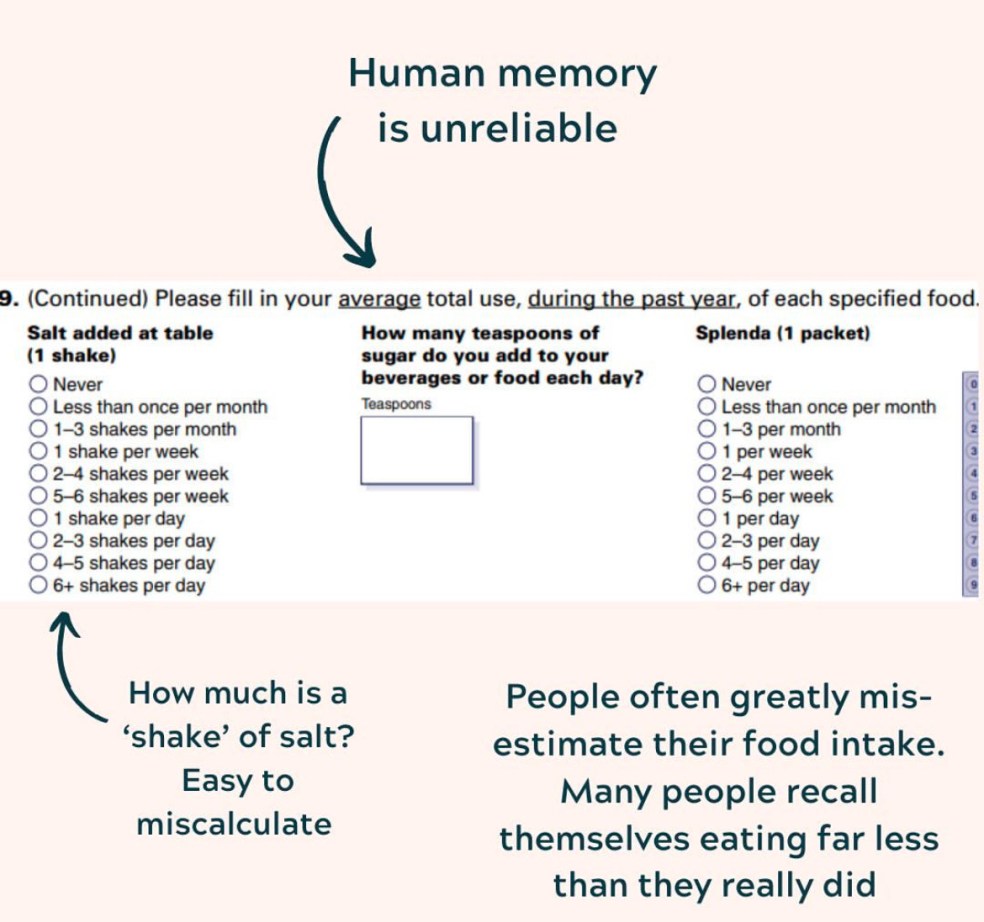
Jacqui shared her firsthand experience collecting FFQ data and witnessing how confused participants often were when asked to recall what they ate. This variability in data collection can significantly impact the accuracy of nutritional studies, making it difficult to draw reliable conclusions about diet and health.
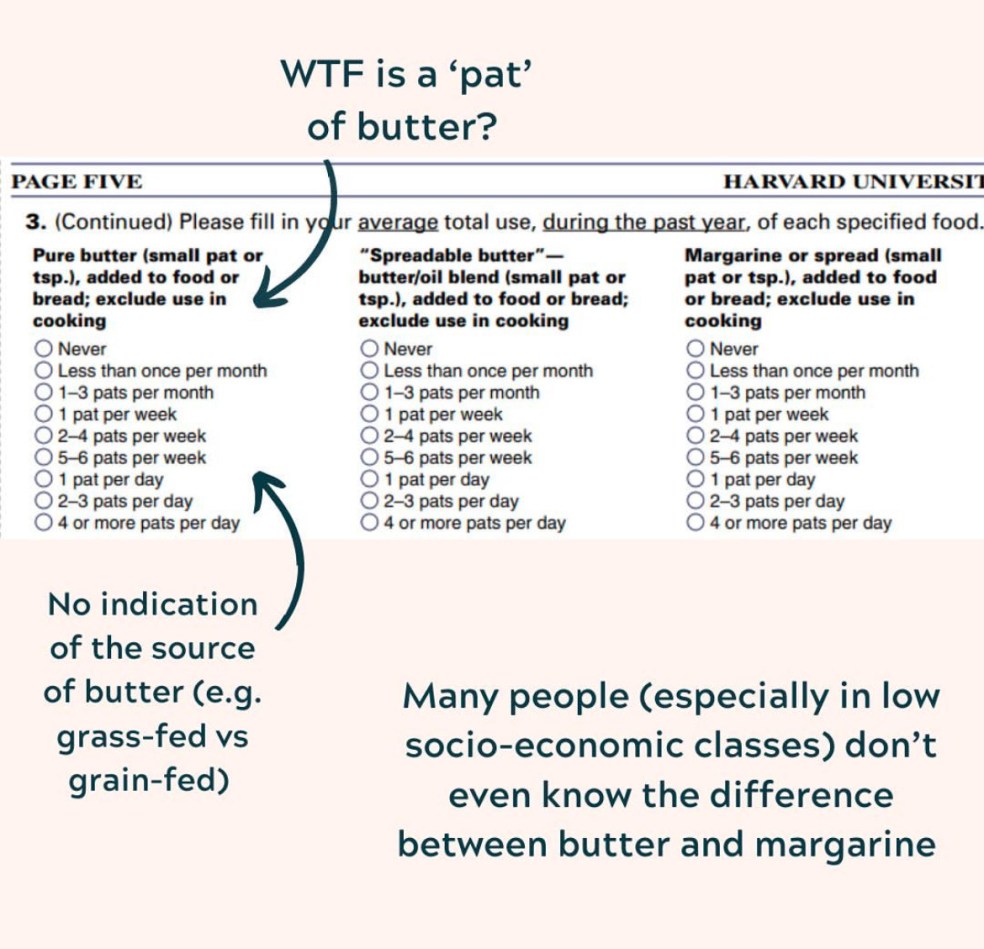
FFQs, though commonly used in research, often do not capture the full complexity of individual diets. This leads to inaccuracies in studies that can misguide dietary guidelines and public health advice. Jacqui emphasized that this is a critical issue because it directly affects how we understand nutrition and the effectiveness of dietary recommendations.
2. Understanding Relative Risk vs. Absolute Risk in Nutrition Headlines
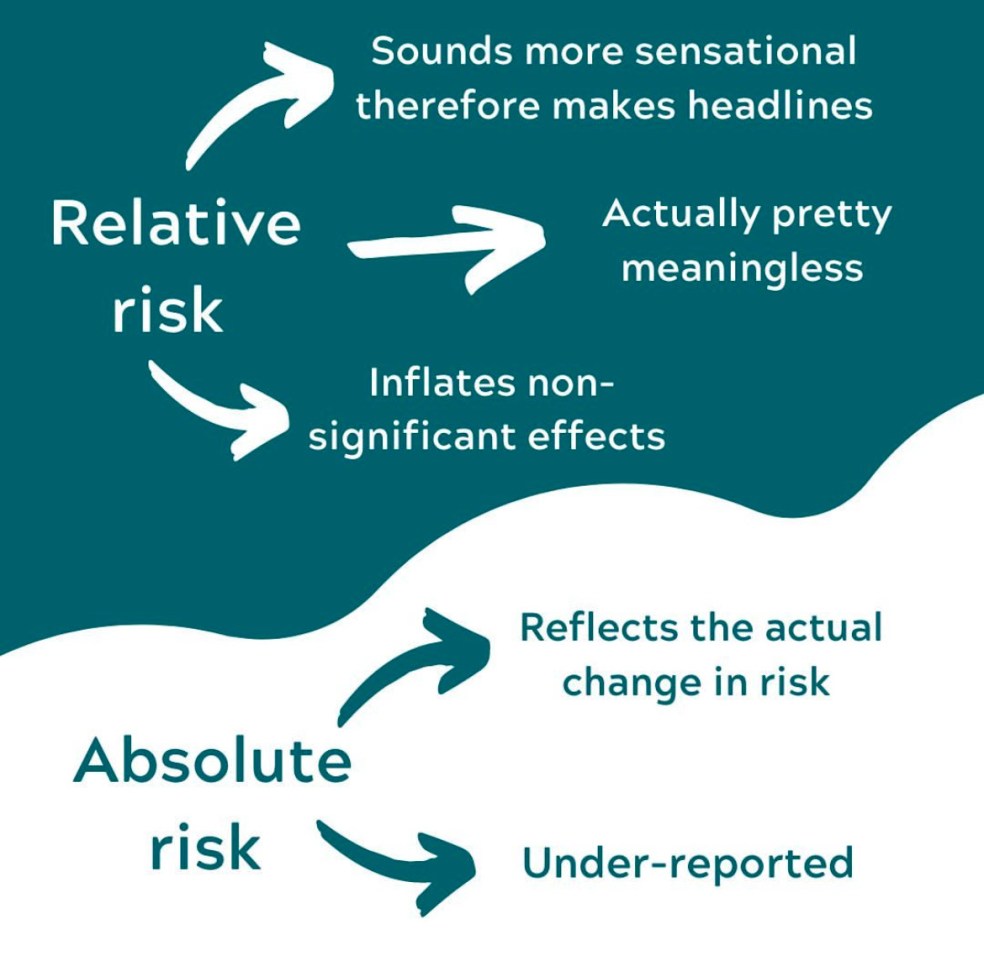
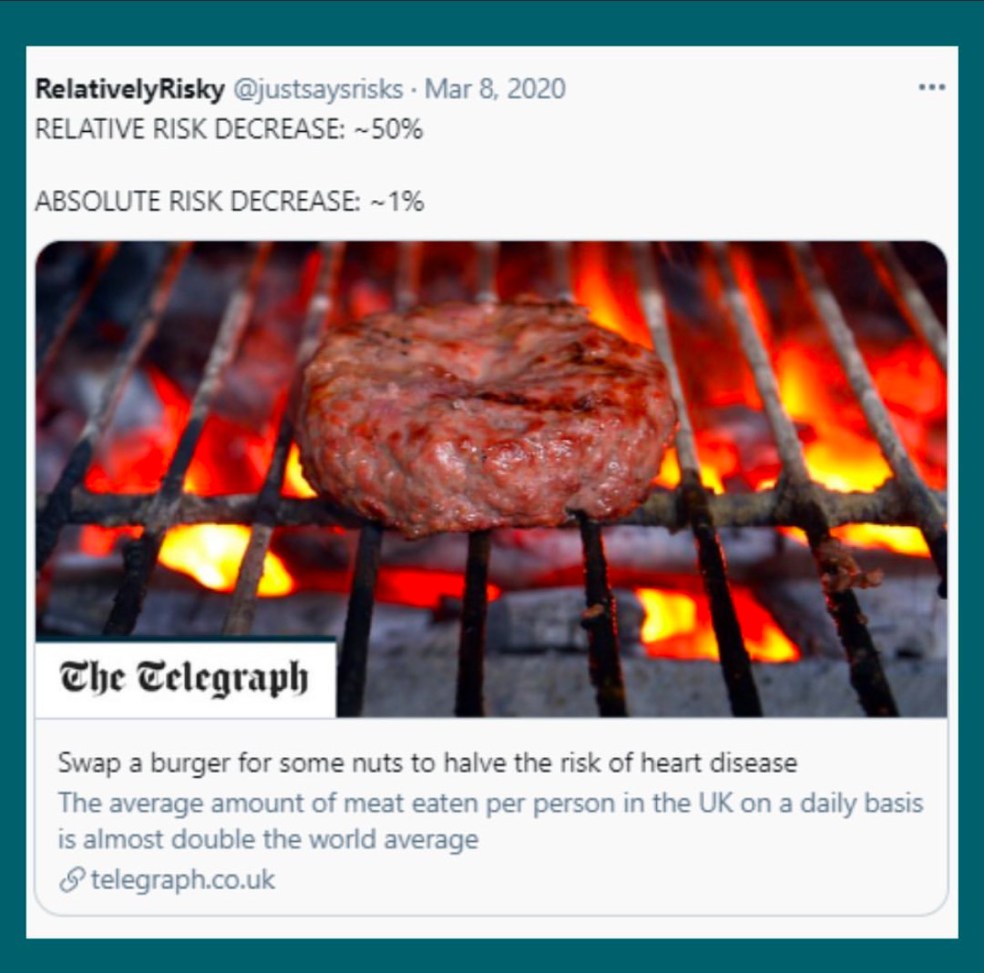
Nutrition studies often grab attention with sensational headlines, particularly when they report relative risks. Jacqui explained how a “33% increase in risk” can sound alarming, but in many cases, it doesn’t reflect the real picture. The key issue here is the difference between relative risk and absolute risk.
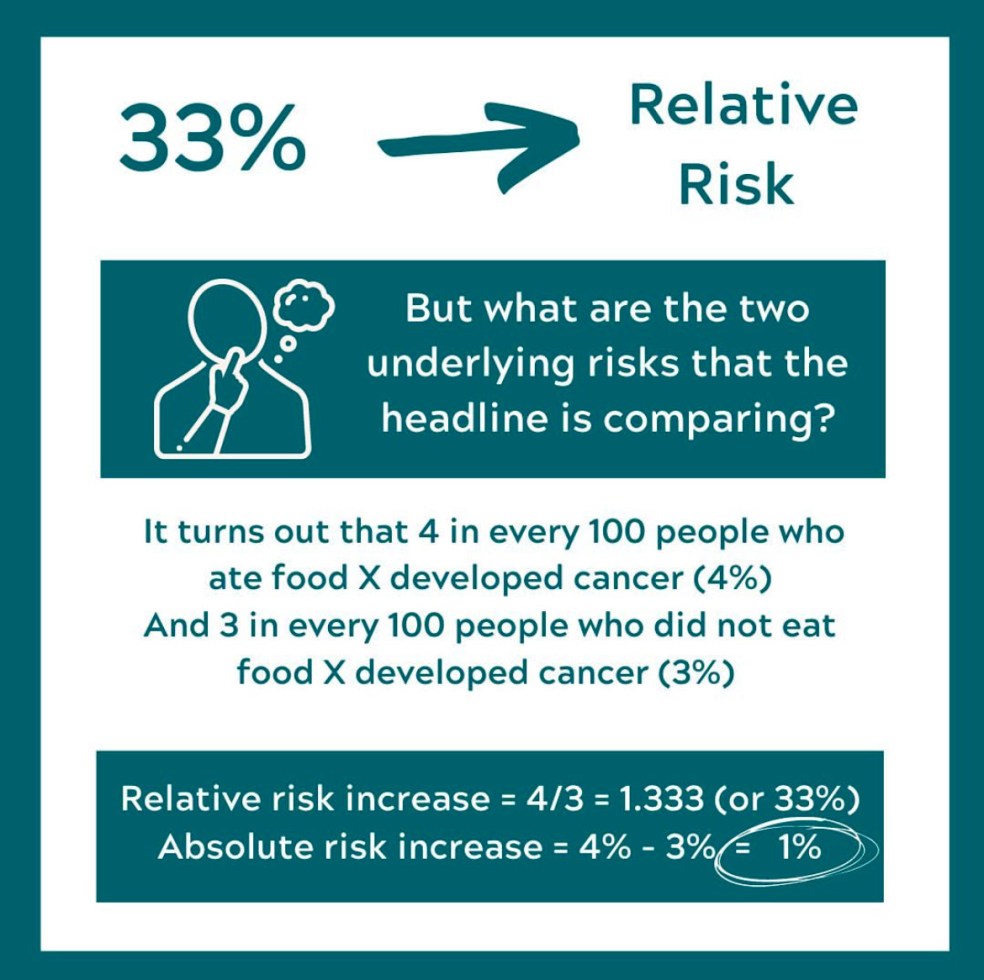
- Relative risk refers to the increased risk of a particular outcome in one group compared to another. While this sounds important, it can be misleading without context. For example, a small increase in relative risk might not translate to a significant increase in your actual chance of experiencing that outcome.
- Absolute risk, on the other hand, tells us the actual probability of an event happening.
Jacqui stressed the importance of recognizing this distinction when reading nutrition headlines.
A 33% increase in relative risk might sound alarming, but when we examine the absolute risk, the actual impact could be much less significant. Understanding this distinction helps consumers interpret research with greater accuracy, preventing them from falling for misleading headlines.

Review Jacqui post here to learn more!
3. The Problem with ‘Statistically Significant’ Results
The term “statistically significant” often sounds impressive, but Jacqui warned that it’s not always a reliable indicator of a meaningful finding. In nutritional research, a statistically significant result means that the data supports a specific conclusion beyond what could be expected by chance. However, Jacqui compared this to winning a small lottery: just because the result is statistically significant doesn’t necessarily mean it’s practically important.
In many cases, results that are statistically significant may not have a meaningful or clinically significant impact on real-world outcomes. For example, a study might show a statistically significant difference in health markers between two groups, but the actual difference might be so small that it doesn’t matter in terms of improving health.
When encountering results labeled as statistically significant, Jacqui advised readers to take a step back and ask: Is this result meaningful in the real world, or is it just a statistical fluke?
4. Why Nutritional Research Seems Contradictory
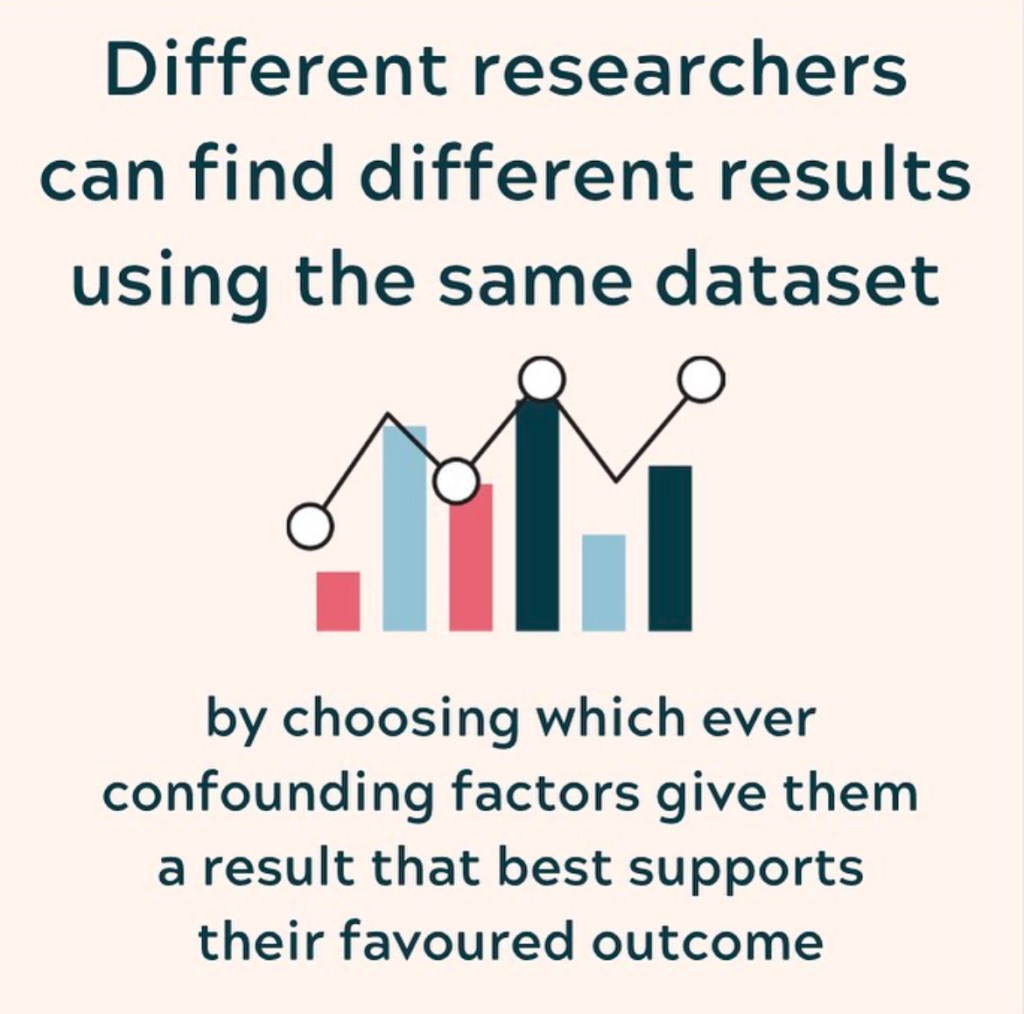
Another fascinating part of our conversation focused on the reasons why nutritional research can often feel contradictory. Jacqui pointed out that factors like small sample sizes, observational study designs, and various biases can skew the outcomes of studies. These variables contribute to conflicting opinions and conclusions in the field of nutrition.
Moreover, biases—whether financial or ideological—can shape the results of studies and the way findings are interpreted. For instance, when a study is funded by a food company, the results might be more favorable toward the products of that company, consciously or unconsciously.
Jacqui encouraged listeners to develop a critical eye when reading nutrition studies. Instead of accepting conclusions at face value, she suggested asking questions like: What’s the sample size? Who funded the study? What biases could influence the results?

5. How to Approach Nutrition Research as an Informed Consumer
So, how should we navigate the sea of nutrition research to make informed decisions about our food? Jacqui’s advice is simple yet powerful: approach nutrition research with a critical mindset.
Here’s how to do it:
- Look beyond the headlines: Understand the difference between relative and absolute risk and question whether the findings are clinically significant.
- Question study design: Be wary of studies with small sample sizes or those that rely on self-reported data, like FFQs. Also, consider the biases that may influence results.
- Seek balanced perspectives: Look for research that examines multiple viewpoints and is not influenced by financial or ideological pressures.
Jacqui’s passion for empowering women through nutrition, particularly prenatal research, shines through in her work. By shedding light on the limitations and complexities of nutrition research, she offers us a much-needed roadmap to make informed decisions about our health. Whether you’re navigating the confusion of wellness trends or simply trying to understand what’s truly healthy, Jacqui’s insights can help us all approach nutrition with more clarity and skepticism.
Want more insights from Jacqui? Follow her on Instagram, where she shares practical advice and challenges the latest trends in wellness.
Work with Jacqui: https://www.wellnesswithjacqui.co.za/contact
The lazy cookbook https://www.wellnesswithjacqui.co.za/product-page/the-lazy-cookbook
Women’s health course: https://cominghometoyourself.thinkific.com/courses/coming-home-to-yourself
Stay curious, embrace skepticism, and keep tuning in!
 Taste0ftruth Tuesdays