
Let’s discuss what Tucker Carlson, Nick Fuentes, & The New Jerusalem Reveal About Power and Media
Hey Hey Welcome back to Taste of Truth Tuesdays.
At the end of last month, we started unpacking a big question: where does real power sit in our country? And how does understanding history & theology change the way we see what’s happening today?
Well, the timing couldn’t be more perfect, because right now there’s a viral clash unfolding that brings all those threads together in real time.
I just finished reading the book The New Jerusalem by Michael Collins Piper, which was written way back in 2004 and it discussed a lot of the same individuals and key information that Fuentes said during this 2-part attack on Tucker. The book is a deep dive into decades of political and financial influence shaping America. As I’m reading it, this public duel emerges between two of the loudest voices in the alt-right media: Tucker Carlson and Nick Fuentes. And I really appreciated what Ian Carroll had to say about the subject while he reminded us why these kinds of debates aren’t just entertainment: they’re essential for discussing the truth & the health of our nation.
This isn’t gossip or drama. It’s about understanding the invisible lines drawn around what we’re allowed to talk about, what gets filtered out, and what’s shut down. If we pay attention, this moment could help move the conversation forward in ways we desperately need.
The New Jerusalem: Mapping Influence Behind the Scenes
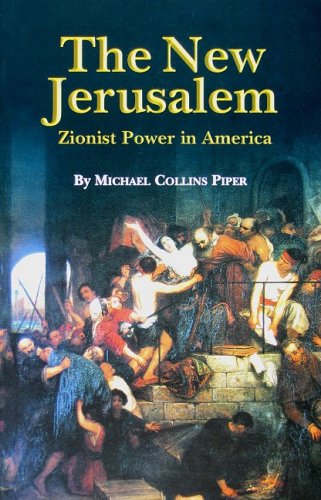
In our previous episode, I mentioned how I truly believe that we have been an occupied nation since 1960s and Michael Piper (author of The New Jerusalem) totally agrees. He wrote a 768 page book called The Final Judgment The missing link in the JFK Assassination Conspiracy and so that is just a whole nother rabbithole.
He also wrote a book called The High Priest of War which was the first full length work examining the little known history of the hardline pro Israel neoconservative movement which Nick Fuentes was really breaking down for us in his part two series (in particular).
It is starting to make so much sense… So I’m just trying to point you guys into resources not to propose myself as someone who can connect all the dots like Michael Collins Piper can. He traces the networks, deals, and consolidations of power that have shaped the American political and financial landscape over the last century.
It’s definitely a lot shorter and more entertaining than Whitney’s Webs books Nation Under Blackmail I couldn’t get through them to be honest with you they were so dry so if you read them mad props to you.
So, for me, what stands out is the gradual centralization of influence: from banking to media to government appointments. These connections have profound effects on policy, public opinion, and international alliances.
You know you can say connecting the dots is anti-Semitic
The esteemed Websters dictionary has now broadened the definition of antisemitism to include: “opposition to Zionism” which is definitely a lot of what I speak about and “sympathy for the opponents of Israel”.
Those two categories alone would probably include literally billions of people across the face of this planet. We need to understand that when people label folks as “white-supremacists”, “Nazi”, “antisemitic”…. you know cancel culture is over so if y’all aren’t picking up on that like do you need to go to primary sources and listen specifically to what people were saying try to read books try to listen to different sides of the story so you can grasp the truth (if you can).
This isn’t wild conspiracy. It’s a careful look at decades of patterns and documented facts (most of the sources were from Jewish resources). Our current political reality didn’t just appear by chance. It’s the product of generations of social engineering, strategic moves and powerful leverage.
Without this historical lens, it’s easy to see today’s media as an organic mess of voices. But with it, you realize just how much of what we hear (and don’t hear) is carefully shaped, and rarely talked about openly.
Tucker Carlson vs. Nick Fuentes: A Public Clash Over Boundaries
What kicked all of this off was an interview on August 1st, 2025, when Tucker Carlson sat down with Candace Owens. During that 15-minute segment, they launched a personal character attack on Nick Fuentes. The spark? Tucker claimed he didn’t know his dad was in the CIA until after his father’s death in March 2025 — a claim most of us know was a blatant lie.
That lie set off a firestorm. In response, Nick Fuentes dropped a two-part viral series on Rumble, calling out Tucker for being dishonest and, more importantly, for not pushing far enough on certain topics. Fuentes argues there are clear lines Tucker won’t cross — and those lines shape what millions of people get to hear.
Whether you agree with Fuentes or not, this public clash is rare. Usually, these kinds of disputes stay behind the scenes or get smoothed over. But this time, it’s happening in front of us, giving the audience a rare look at the invisible boundaries of public discourse — the unspoken rules about what topics are “safe” and which ones are off limits.
Once you notice those lines, it’s natural to ask: who drew them? And why?
If you want to see the full exchange and judge for yourself, Nick Fuentes’ two-part response is available on Rumble:
- Exposing Tucker Carlson’s CIA Connections — Part 1
- VIRAL Response America First — Ep. 1548 — Part 2Starts at 1 hour 40 min mark
Watching these gives a clearer picture of why this clash has grabbed so much attention and why the boundaries of public discourse matter now more than ever.
Now, this ties into something I’ve been noticing from some corners of the conversation: people who’ve moved away from Protestant Church and embraced Orthodox Christianity, rightly pushing back against things like Zionism and dispensationalism.
On our last episode, I talked about how it’s not just dispensationalism or the Schofield Bible fueling this whole machine — it’s that Christianity itself is built on Jewish roots.
“Inside ever Christian is a Jew” —Pope Francis (June 16, 2014)
Reading from The Jesus Hoax:
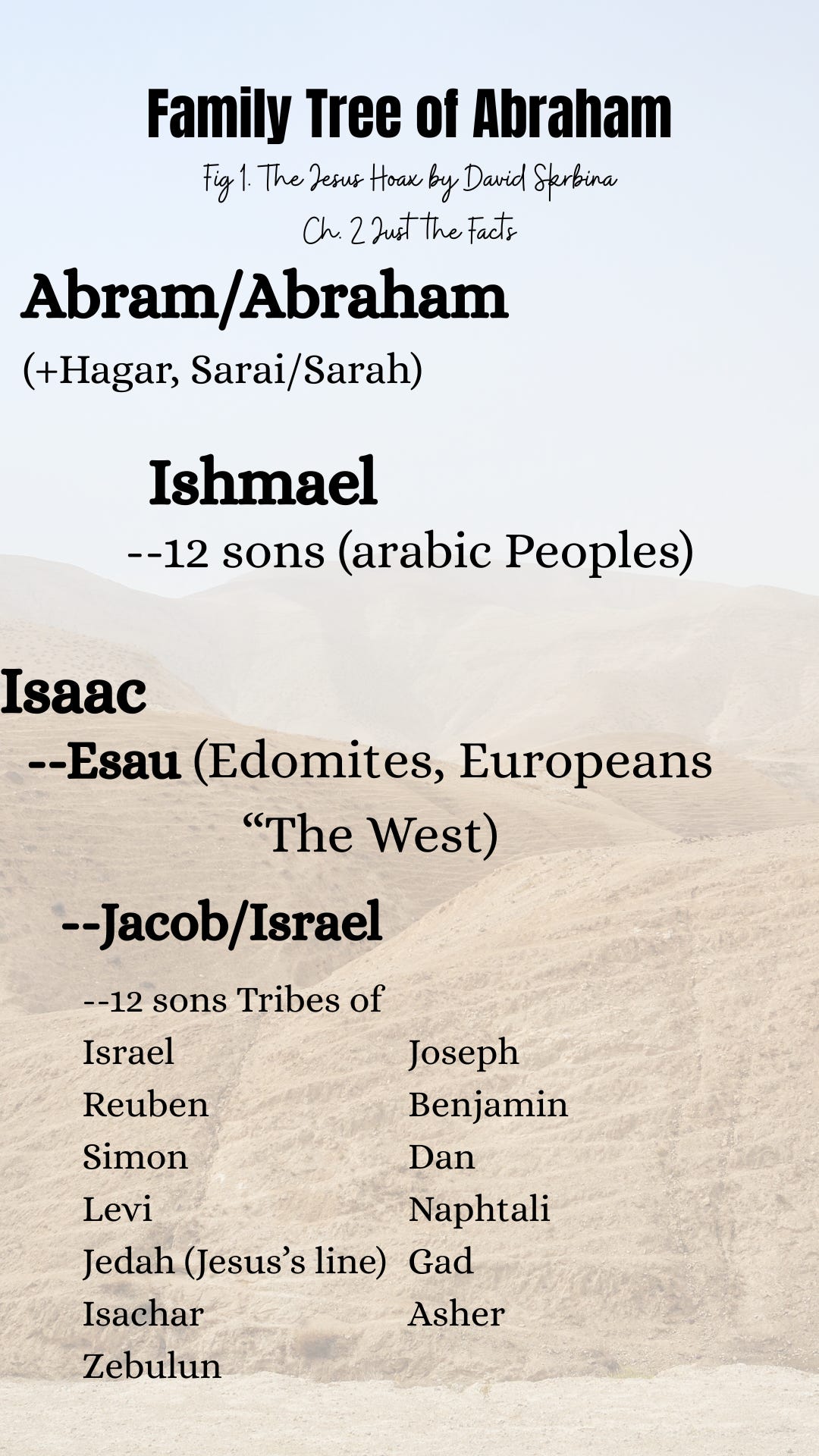
Consider, first of all, the ancient origins of Judaism and the corresponding events of the Old Testament (OT) otherwise known as the Jewish (or Hebrew Bible). The original Patriarch, Abraham, (originally called ‘Abram’—strange how so many people in the Bible have two names), allegedly lived sometime between 1800 and 1500 BC; he was the traditional father of not only Judaism and thus Christianity but centuries later, of Islam as well. Thus, one sometimes reads that Judaism, Christianity and Islam are all viewed as the “Abrahamic” religions.
Simply put: Christians believe in a Jewish God, read Jewish Scriptures, and worship a Jewish rabbi. If you take those origin stories as literal history, you’re often reinforcing the very narratives that prop up modern Zionism.
But here’s where my beef 🥩comes in: In a recent clip, one such voice claimed that Jesus wasn’t really a Jew — just ‘an Israelite from Judah’ — as if that somehow changes His identity or the core of the faith. Here is the clip:
That’s a common but misleading narrative.
Reading from The Jesus Hoax:
What’s in a Name: Hebrew, Israelite or Jew?
This is a good point to take a short detour to explain some very relevant terminology Much confusion exists around three apparently interchangeable terms Hebrew Israelite and Jew. In the book of Genesis 14:13 Abram/Abraham is the first referred to as the “Hebrew”—a term of ambiguous origin and no clear meaning. Regardless, Abraham was the original “Hebrew”, and this designation came to be attached to his son Isaac (but not Ishmael) and to Isaac’s son Jacob (but not Esau) and to Jacob’s 12th sons and their descendants—all of whom would be called “Hebrews”
The term “Israel” as noted above, has been in existence since at least 1200 BC. In Hebrew language, “Israel” means ‘he who strives with God’, and thus is a term of honor. It first appears in the BIble in Genesis 32:28 when Jacob is renamed Israel. Therefore, Jacob and his 12 sons and all their heirs are called Israelites.
But what about ‘Jew’? We See above that one of Jacob’s 12 sons was Judah-or in Hebrew, Jehudah. Judah was Jacob/Israel’s 4th son, but as it turns out, the first three (Reuben, Simeon and Levi) ended up in his disfavor and so Judah takes a leading role. Speaking to his sons, Jacob says: Genesis 49:10
8 Judah,b your brothers shall praise you.
Your hand shall be on the necks of your enemies;
your father’s sons shall bow down to you.
9Judah is a young lion—
my son, you return from the prey.
Like a lion he crouches and lies down;
like a lioness, who dares to rouse him?
10The scepter will not depart from Judah,
nor the staff from between his feet,c
until Shilohd comes
This idea that Jesus wasn’t a Jew feels more like a way to cope or sidestep with the uncomfortable historical and theological realities than a true insight. And it’s important to recognize when narratives intended to clarify actually end up muddying the waters…..
Any case, as the 12 tribes and their descendants became established in Palestine, the 10 northern-most tribes became known as ‘Israel’ and the southern-most two, as ‘Judah.’ At some point, the ‘man of Judah’ or descendant of Judah’ became a Yehudia Jew.
After the Babylonian exile and return (597 to 538 BC), the 12 tribes became known collectively as both ‘Israel’ and ‘men of Judah’ or Yehu-dim. We see a variation on this term appear on a coin minted around 120 BC, with the word Hayehudim (“of Judah” or “of the Jews”). Yehudi, or plural Yehudim, appear several times in the OT; typically this is translated into English as ‘Jew’ or ‘Jews’., although sometimes as ‘man of Judah’
The first appearance is in 2 Kings (16:6 and 25:25), and then several times later in Ezra, Nehemiah, Esther, Jeremiah, Daniel (twice), and Zecharia (8:23). ‘Jew’ is not in the first five books (Pentateuch) like He-brew’ and ‘Israel’ are, which suggests that it is not quite as ancient within Jewish culture; but still, its presence throughout the remainder of the OT shows its importance to the Jewish authors, who, of course, were writing strictly to a Jewish audience. When Jews were writing to their fellow Jews, they had no compunction about using the word ‘Jew.’
As the OT spread into Greek and (later) Latin culture, Yehudi became translated as Ioudaios and Iudaeus, respectively. The Latin term lost its ‘d’ when moving into the region of modern-day France, and the people there created a contracted version, giu. This then worked its way into Old English around the year 1000, where it took a variety of forms:
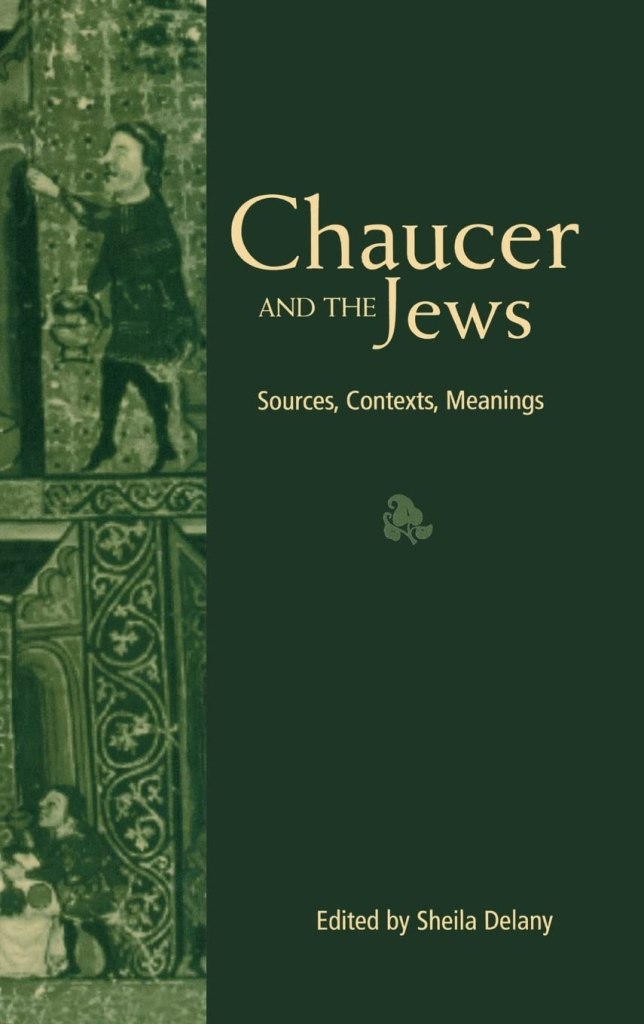
Gyu, Giu, lew, luu, and so on. By the late 1300s, Chaucer was using the word Jewes. And by the late 1500s, playwrights like Marlowe and Shakespeare were writing, simply, ‘Jews.’
So, the 12 tribes became the nation of Israel, but after exile and time, the term “Jew” came to specifically mean someone from the tribe of Judah or the people of that southern kingdom.
Let’s set the record straight: The Orthodox tradition affirms that Jesus was Jewish by both lineage and practice. For example, the OrthodoxWiki notes that Jesus is the Messiah prophesied by Jewish prophets, and the Gospel of Matthew is written especially for a Jewish audience, emphasizing His fulfillment of Jewish prophecy.
The Orthodox Church in America points out that Jesus was the long-awaited Jewish Messiah, who lived fully within the Jewish covenant community — even though some of His contemporaries refused to recognize Him as such. Orthodox catechism reminds us that Jesus’ divine incarnation took place in a fully human, Jewish context.
Historical records in the Gospels show Jesus was born of the tribe of Judah, descended from David, circumcised according to Jewish law, and faithfully observed Jewish festivals and customs. He taught in synagogues and affirmed the Torah and the Prophets (Luke 4:16; John 7:2, 10; Matthew 5:17–18).
That’s why I’m bringing on Dr. David Skrbina, author of The Jesus Hoax, in an upcoming episode. Because when you start questioning who Jesus really was — beyond the narratives handed down or pushed by certain agendas — you begin to see how much history, theology, and culture have been carefully shaped. And as with political power and media, the truth often lives just beyond the boundaries we’re allowed to explore.
Why This Moment Matters
This isn’t just about one book, or two media figures, or a particular platform. It’s a rare opening — a crack in the matrix — that lets us see where conversation gets shut down, and maybe even push those limits back.
Agree or disagree with Piper, Fuentes, or Carlson… that’s your right. But the bigger question remains: who decides what’s okay to say? And if those decisions are made without our awareness, how free are we really?
That question feels especially urgent today, as laws around hate speech and anti-Semitism shape what can be discussed publicly — in ways that limit honest dialogue. Efforts like DEI programs aimed at protecting Jewish students completely contradict how most conservatives feel about identity politics.
My hope is that we take this moment seriously. We stop treating these boundaries as natural or unchangeable. We start asking who benefits from keeping the conversation so tightly controlled — and whether that control is helping or harming our society.
Because once you see where the conversation ends, you realize how much more there is beyond — and often, that’s where the truth really lives.
 Taste0ftruth Tuesdays