
Exploring the Gray Area
The distinction between cults and high-control groups can be somewhat nuanced, as both share many characteristics related to manipulation, authoritarianism, and the exertion of control over members.
Exploring the gray area between cults and high-control environments can be challenging due to several factors.
Firstly, defining what constitutes a cult or a high-control environment can be subjective and complex, as there is no universally agreed-upon definition. This ambiguity can make it difficult to draw clear boundaries between the two.
Secondly, both cults and high-control environments often use subtle tactics of manipulation and influence, making it challenging to recognize when individuals are being subjected to undue influence or coercion.
Additionally, individuals within these environments may be deeply invested emotionally, financially, or socially, which can cloud their perception and make it challenging to acknowledge the extent of control exerted over them.
Furthermore, there may be societal stigma or shame associated with admitting involvement in a cult or high-control environment, which can deter individuals from seeking help or speaking out about their experiences.
Here are some key signs of a high control group to look out for:
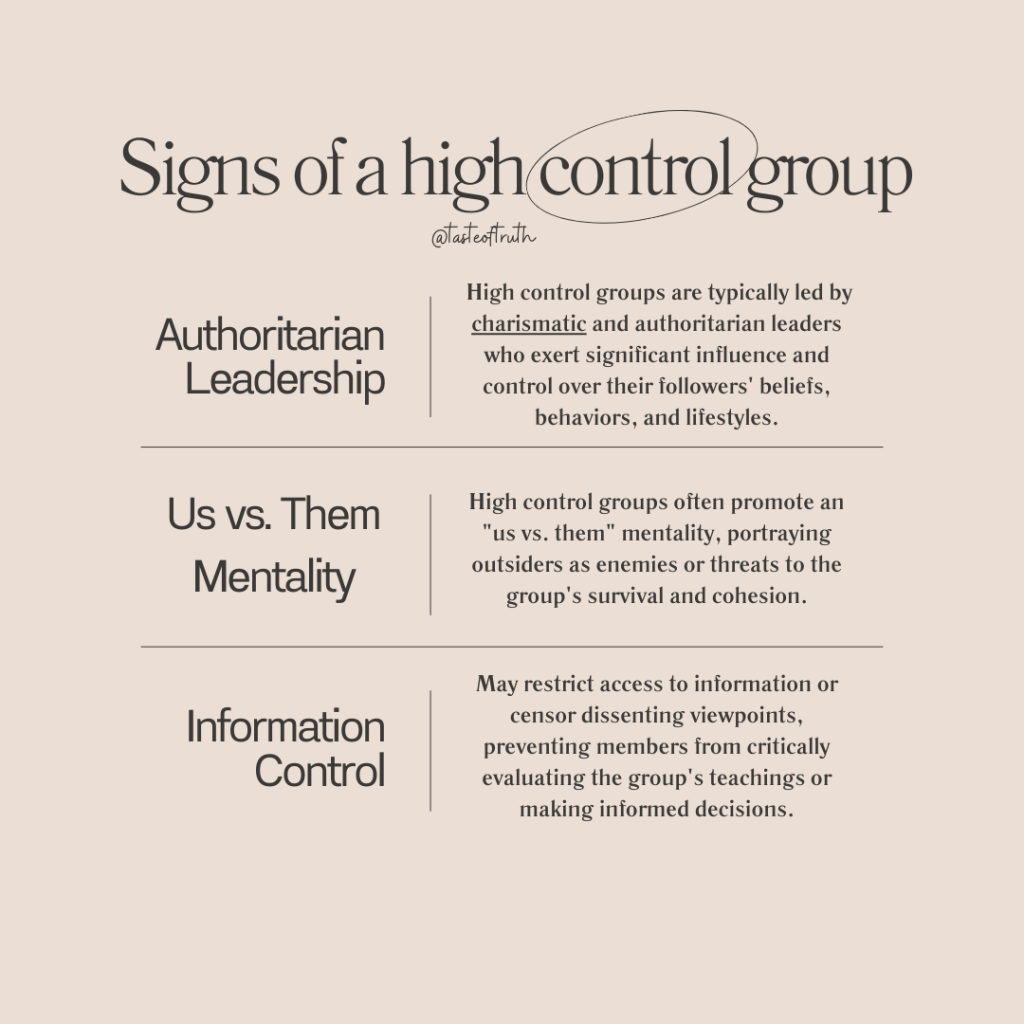
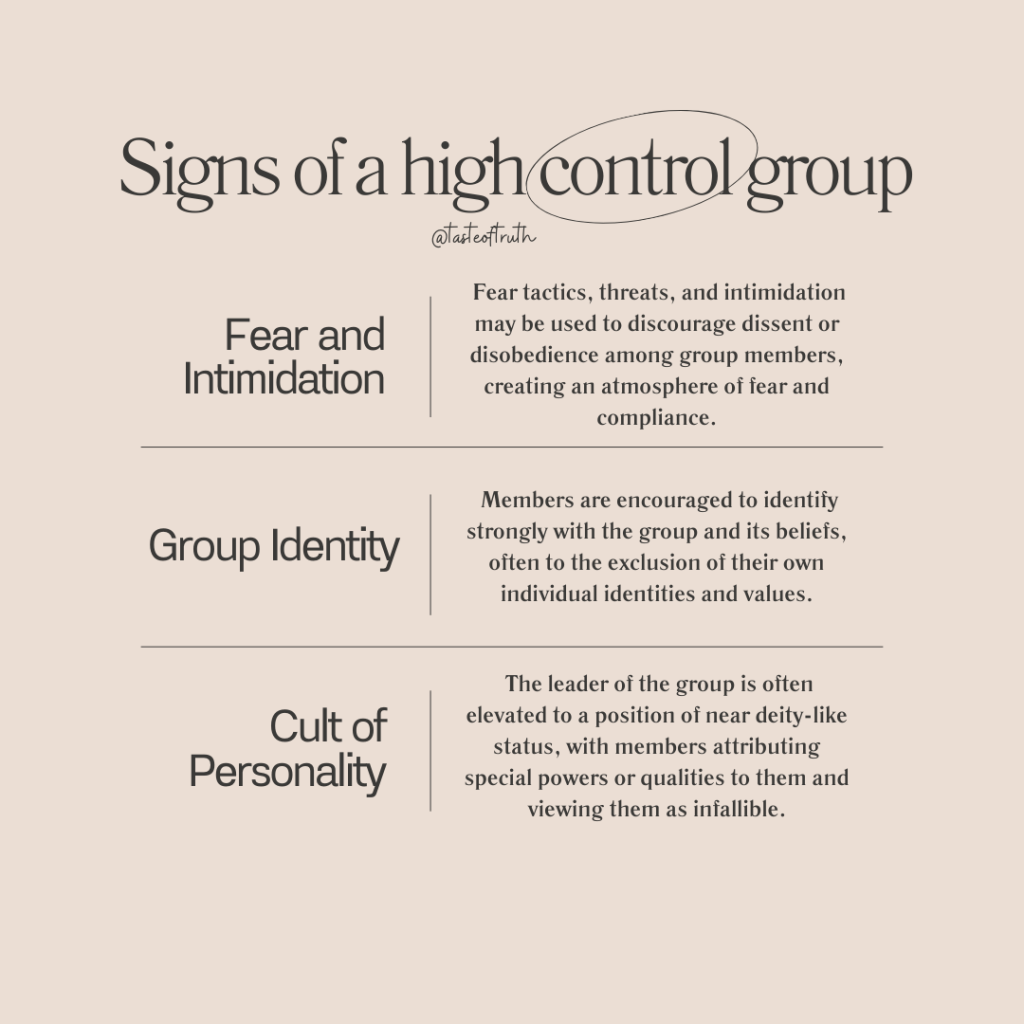
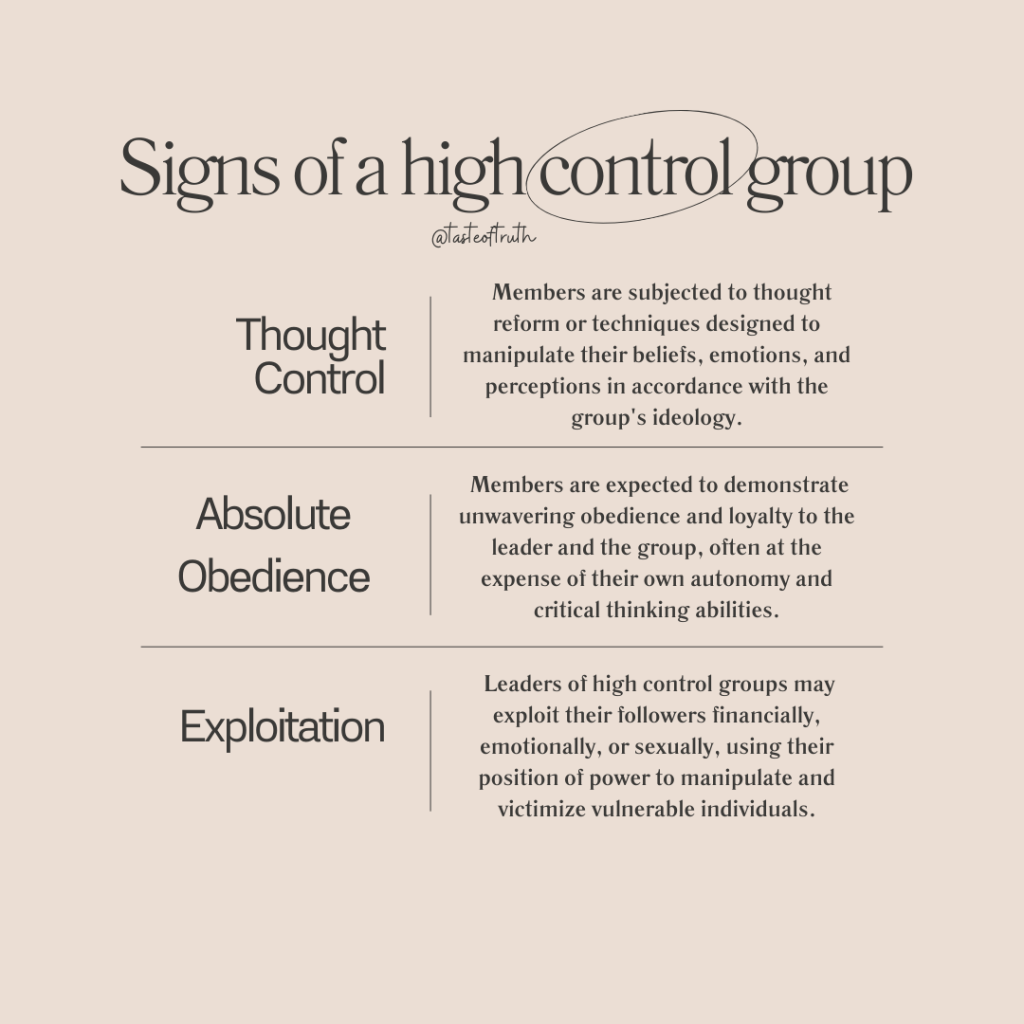
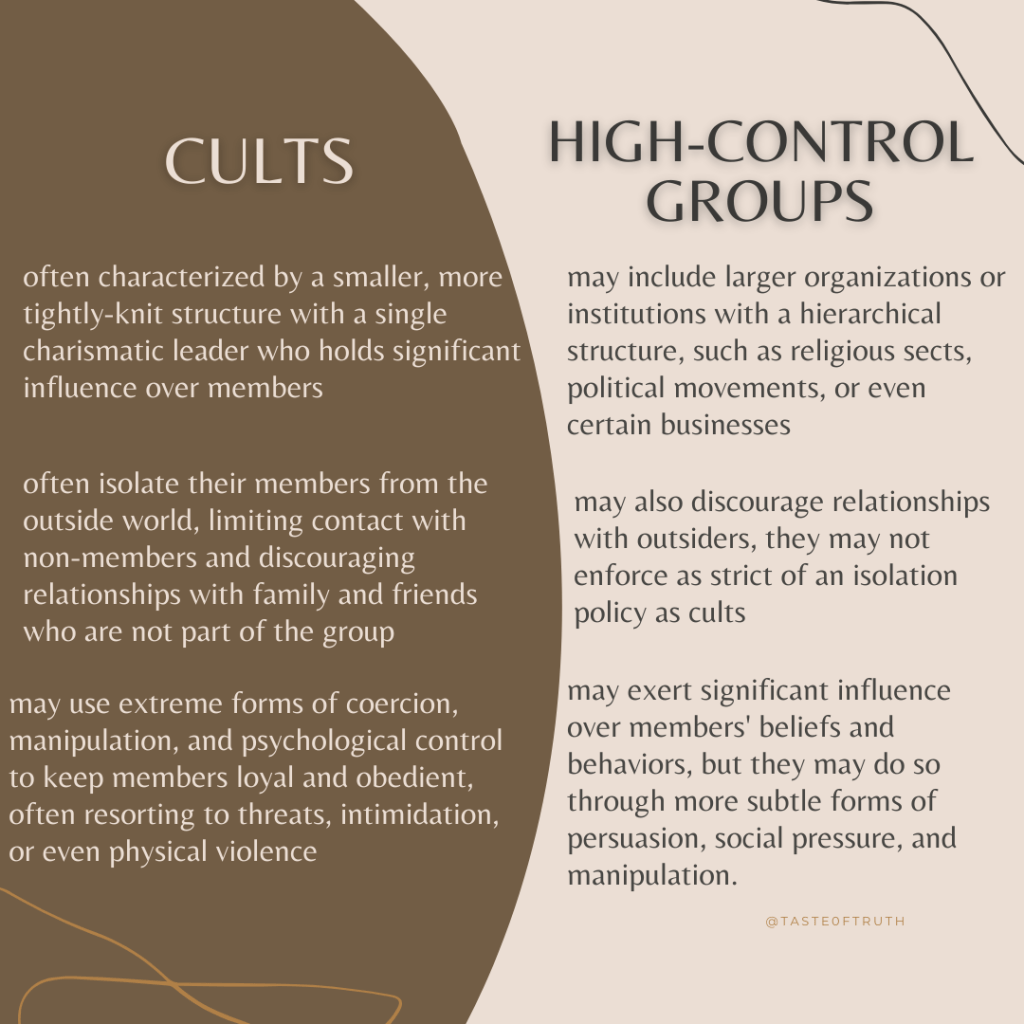
Navigating the gray area between cults and high-control environments requires careful consideration, empathy, and an understanding of the nuanced dynamics at play. Here is a side-by-side graphic to help demonstrate the similarities and differences:

Understanding high-control environments and the differences between cults is important for several reasons:
- Protecting Individuals: High-control environments can exert significant influence over individuals, potentially leading to exploitation, abuse, and manipulation. By understanding the characteristics of these environments, individuals can recognize warning signs and protect themselves and others from harm.
- Promoting Awareness: Many people may not realize when they are in a high-control environment or may be hesitant to label their experiences as cult-like. Educating the public about the traits and tactics used in these environments can increase awareness and empower individuals to identify and address problematic situations.
- Supporting Recovery: For those who have been involved in high-control environments or cults, understanding the dynamics at play can be crucial for recovery and healing. Recognizing that their experiences were part of a larger pattern of manipulation can validate survivors’ experiences and provide a framework for processing their trauma.
- Preventing Recruitment: By raising awareness about the tactics used in high-control environments and cults, communities can work to prevent vulnerable individuals from being recruited or radicalized. This includes providing education and support to those at risk and promoting critical thinking skills to resist manipulation tactics.
- Protecting Democratic Values: High-control environments and cults can pose a threat to democratic values such as individual autonomy, freedom of thought, and diversity of belief. Understanding these dynamics is essential for safeguarding democratic principles and promoting social cohesion.
Overall, understanding high-control environments and the differences between cults is essential for protecting individuals, promoting awareness, supporting recovery, preventing recruitment, and safeguarding democratic values.
 Taste0ftruth Tuesdays
Pingback: Faith Unbound: Navigating the Process of Disentanglement – Taste0ftruth Tuesdays