The story of intellectual destruction hidden behind the narrative of salvation
Hey Hey, welcome back to Taste of Truth Tuesdays! Except today…it’s Thursday, which means it’s my bonus edition: Taste Test Thursday. Why a bonus? Because the comment sections lately have been overflowing with so much brain-dead apologetics, I had to dedicate an entire post just to unpack the anti-intellectual tricks Christians trot out like clockwork.
Last week I interviewed David Fitzgerald. On one hand, I was navigating a man who built his career dismantling Christian dogma. On the other, I found myself running headfirst into his own political certainties— rigid, unyielding, and just as unquestioned as the ideas he critiques. The irony wasn’t lost on me, especially as a moderate: the ex-Christian deconstruction space can be just as inhospitable to nuance as the faith it once rejected.
But what really matters here isn’t politics. It’s the dogma that never changes. Every time I debate the historicity of Jesus or the so-called “intellectual foundations” of Christianity, it feels like stepping into a twilight zone where facts and evidence are optional, and certainty always gets the last word.
Apologetics didn’t grow out of some noble pursuit of truth; it grew out of power struggles, suppression, and centuries of treating curiosity and inquiry as threats.
What gets labeled today as “defending the faith” has roots far older, far more political, and far more violent than most Christians realize. And understanding that history changes the way you engage with believers now— especially when they parrot the same canned responses that have been circulating (in one form or another) for almost 1,500 years.
And that’s what today’s episode is all about… to trace where this all actually came from….
Ancient Roots: When Apologetics Became a Tool of Power
For early Christians, defending their faith wasn’t just about theology, but survival in a world built on pluralism and reason. Thinkers like Justin Martyr, Origen, and Tertullian weren’t arguing from positions of power. Quite the opposite: they came from largely disenfranchised, low‑status communities— often slaves, women, and the poor— who were dismissed by Greco-Roman society. Early critics like Celsus, sneered that Christians were “only slaves, women, and little children … led by woolworkers, cobblers, and the most illiterate.”
But Christians were also up against a far more entrenched cultural reality: in the Greco-Roman world, it was normal (even comfortable) for people to participate in a number of cults simultaneously. Polytheistic religion meant multiple gods, multiple rituals, and no single institution claiming total authority. According to Charles Freeman, the intertwining of authority and Christianity was profoundly revolutionary: where one could previously be devoted to several deities at once, Christianity insisted that allegiance to one truth meant rejecting all others.
Early on, some of the Church Father’s work was intellectually sincere. They were trying to show Christianity wasn’t irrational. But as Charles Freeman points out, reason in theology faces a structural problem: unlike math or empirical science, it lacks universally accepted axioms. You can prove Pythagoras’ theorem because everyone agrees on what a right-angled triangle is. You can do inductive reasoning with empirical evidence because everyone can test and observe it. Theology? There are no such universal starting points. Revelations can be claimed by anyone, scripture can be interpreted in multiple ways, and even the most careful theologians disagreed on what counted as a “self-evident” truth.
The early Church quickly ran into this problem. Different communities drew on different texts, emphasized different letters of Paul, or debated competing visions of Jesus’ nature. The Montanists, for instance, were sidelined and crushed because their claims to divine revelation conflicted with what became orthodoxy. Even Thomas Aquinas, one of Europe’s “greatest rational thinkers”, had to suspend reason when it collided with doctrinal authority.
The point isn’t that Christians ignored reason — they didn’t. The point is that reason alone could never achieve consensus in matters of theology. Unlike other spiritual movements in the ancient world, Christianity insisted on a centralized authority, a single orthodoxy enforced across an empire of diverse cultures. That insistence on uniformity was revolutionary, and it set the stage for apologetics to evolve into a tool not just for defending belief, but for controlling it.
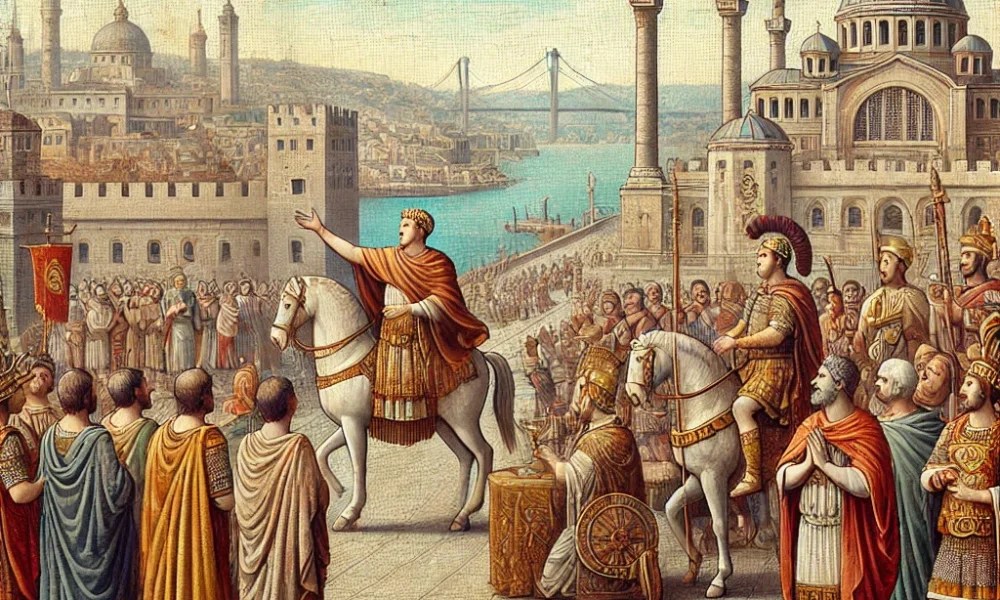
Once Christianity fused with political power (especially after Constantine) apologetics shifted again. It wasn’t enough to argue for the faith intellectually; it became a method of asserting authority, suppressing dissent, and standardizing scripture. Defending the faith became synonymous with maintaining control. What started as reasoning with skeptics gradually transformed into a mechanism to enforce orthodoxy across the Christian world.
It stopped being “Here’s why I believe” and became “Here’s why everyone must.”
As imperial authority was crumbling in the west, this is when the bishops of Rome gained political backing, apologetics morphed into:
A tool for defining orthodoxy
A justification for suppressing dissent
A way to control access to scripture
A mechanism of dominance rather than debate
This shift marks the beginning of Christianity’s long relationship with enforcing belief rather than exploring truth — a pattern that shapes the modern faith more than its followers realize.
The Darkening Age: When Suppressing Ideas Became Holy Work
The Triumph of Christianity Over Paganism, by Tommaso Laureti 1585
Christian doctrine and its alliance with political power didn’t just close off types of questioning— it restructured the very social fabric of religious life. In effect, early Christians weren’t only claiming a new faith — they were demanding a new kind of loyalty built around a singular, authoritative orthodoxy. Catherine Nixey’s The Darkening Age doesn’t sugarcoat this period. Christianity’s rise didn’t just change the spiritual landscape; it also reshaped the intellectual world through force. At its heart, the book is a painful reminder of just how much was lost due to zealotry and religious dogma.
Nixey challenges the conventional narrative of Christianity “saving” Western civilization by exposing the far darker story: philosophers beaten, tortured, interrogated, exiled; their beliefs forbidden; intellectual traditions silenced. As the historian John Pollini observes, modern scholarship has often downplayed or overlooked these attacks, even presenting Christian desecration in a positive light.
Between the fourth and sixth centuries:
Pagan temples were smashed or repurposed
Statues were mutilated
Philosophical schools were closed
Entire libraries and works of classical literature were burned or erased
The destruction wasn’t without precedent. As I reflected in my notes for an upcoming episode on The Darkening Age, Christianity, emerging from a Jewish context, carried forward a zeal for nullifying rival religious objects and practices. Deuteronomy explicitly commands:
“You shall overthrow their altars, break their pillars, burn their growth with fire… and destroy the names of their gods out of that place.”
Early Christians, many of them ethnic Jews, others European converts, obliterated traditional art — especially works venerating ancestors…in ways strikingly similar to this Torah mandate. The Talmud codifies the principle: defacing an idol: cutting off a nose, fingertip, or ear was a method to revoke its divine status. Once damaged intentionally, the object lost its sacred standing.
Germanicus Caesar Germanicus’s nose has been mutilated and a cross has been carved in his forehead–perhaps an attempt to “baptize” and neutralize any possible demons within
“As the Church Father Basil explained, such ecclesiastical censorship was not illiberal; it was loving. Just as Augustine advocated the beating of heretics with rods out of fatherly care, so Basil advocated the removal of great tracts of classical canon as an act of ‘great care’ to ensure the soul was safely guarded.” Catherine Nixey, The Darkening Age the Christian Destruction of the Classical World
The primary sources are shocking. Some Christians didn’t just accept violence as a duty— they enjoyed it. Saint Augustine reportedly saw throwing down temples, idols, and groves as proof of abhorring paganism. Benedict of Nursia, revered as the founder of Western monasticism, was also celebrated as a destroyer of antiquities. John Chrysostom writes in The Homilies, On the Statues that punishing the pagan “sinner” (flogging, beating, even murder) was not harming them but saving them from the ultimate punishment. Murder in service of God was framed as prayer.
Reading this evokes deep visceral sadness. The destruction of creative thought, science, and philosophical inquiry is staggering. It’s impossible not to notice the echo in modern Christianity: when someone converts, they’re often asked to discard books, crystals, or other personal items that represent “pagan” or non-Christian influences. In some ways, the impulse to erase ideas, objects, and independent thought persists today.
ARCHIMEDES PALIMPSEST, C. IOTH-I3TH CENTURY
A tenth-century copy of Archimedes chalf Mechanical Theorems. In it, Archimedes had ingeniously applied mechanical laws, such as the law cl the lever, to find the volume and area of geometric shapes. Two thousand years before Newton, he had come tantalizingly close to deriving calculus. However, in the thirteenth century this work was scraped off and overwritten with a prayer book.
This isn’t apologetics as debate by any means. It was apologetics as a sledgehammer, operating under the conviction that only one worldview deserved to survive. Nixey’s work is enraging, tragic, and illuminating. It shows that while Christianity has morphed and evolved over centuries, the strategies of control, suppression, and moral justification remain recognizable today.
Closing of the Western Mind: When Faith Shut Down Reason
“By the fifth century, not only has rational thought been suppressed, but there has been a substitution for it of ‘mystery, magic and authority’ …” — Charles Freeman, The Closing of the Western Mind: The Rise of Faith & the Fall of Reason
Charles Freeman’s The Closing of the Western Mind explains how Christianity, once in power, didn’t just defend itself; it fundamentally transformed the intellectual landscape of the West.
Greek philosophy, still vibrant in the early centuries, was gradually co-opted and subordinated to Christian authority. Faith, not reason, became the foundation of legitimacy. Independent philosophical traditions, especially those that didn’t align with Christian doctrine, were suppressed. Thought, inquiry, and debate were no longer neutral tools — they were potential threats
“Faith … involves some kind of acquiescence in what cannot be proved by rational thought.” — Charles Freeman, The Closing of the Western Mind: The Rise of Faith & the Fall of Reason
The combination of church and imperial authority enforced orthodoxy across the empire.
“This ‘desire for control… of taxes and contributions’ was a corrosive feature of church politics. This linking of access to resources with orthodoxy was bound to lead to nasty rivalries when doctrine was so fluid.” Charles Freeman, The Closing of the Western Mind: The Rise of Faith & the Fall of Reason
Freeman shows that this wasn’t simply an unfortunate side effect of religion gaining power.
“It was a mark of Constantine’s political genius … that he realized it was better to utilize a religion … that already had a well‑established structure of authority … rather than exclude it as a hindrance.” Charles Freeman, The Closing of the Western Mind: The Rise of Faith & the Fall of Reason
It was a structural choice: intellectual freedom was sacrificed for doctrinal control. The centuries that followed were marked by a persistent tension between reason and religion, one that would only begin to loosen with the reintroduction of Aristotle in the 13th century.
In other words, modern apologetics, the slick, defensive arguments Christians use today, didn’t appear in a vacuum. They are built on a foundation laid over centuries: a system where questioning authority was discouraged, curiosity was suspect, and dissent could be dangerous. Understanding this context changes the conversation entirely.
When we debate Christians today about history, scripture, or reason, we aren’t just dealing with modern arguments…we’re confronting a legacy of intellectual suppression stretching back over a millennium.
Modern Apologetics: A Thought‑Stopping System Dressed Up as Intellectualism
Fast‑forward to today, and the patterns from history are still painfully familiar. Modern apologists like Lee Strobel or Josh McDowell often present themselves as investigators, journalists, or historians. But underlying that veneer of investigation is something much more defensive: their method isn’t really about seeking truth — it’s about creating an insulated echo chamber in which questioning feels unsafe.
You’ll notice how in their approach:
Doubt is pathologized
Questions are reframed as attacks
“Answers” come prepackaged
Evidence is curated selectively
Authority is invoked instead of demonstrated
This isn’t accidental. It’s the legacy of a system built not to evaluate claims, but to preserve credence.
To underscore that, let’s look at a couple of real voices:
Lee Strobel, in The Case for Christ, has described the evidence for Jesus like this:
“I picture the evidence for the deity of Jesus to be like the fast-moving current in a river. To deny the data would be like swimming upstream against the current … What’s logical, based on the strength of the case for Christ, is to swim in the same direction the evidence is pointing …”
On the surface, that sounds rational. But it’s also subtly coercive — it frames belief as a natural, almost inevitable conclusion. If you resist, you’re not just wrong; you’re swimming against the current. That metaphor doesn’t invite open inquiry; it discourages it.
Robert M. Price, in The Case Against the Case for Christ, goes even further. He accuses Strobel of building his “investigation” on a very narrow foundation:
“His true intention becomes clear by the choice of people he interviewed: every one of them a conservative apologist!”
He also critiques the entire enterprise as a “long exercise in applying the fallacy of informal logic known as ‘the appeal to authority.’” By highlighting that Strobel only interviews like-minded evangelical scholars, Price argues that Strobel never really engages with real skepticism or dissent. Instead, he reinforces what his audience already believes— with authority, not argument.
Why This Matters
Thought-stopping by design. Strobel’s river metaphor isn’t an invitation to inquire — it’s a mental funnel. It teaches you to treat questions as temptations and answers as preselected. That’s classic thought-stopping: reframe uncertainty as spiritual danger, and the search ends before it begins.
Selection bias on display. Price highlights how most “investigations” in apologetics aren’t investigations at all. They’re confirmation exercises. The conclusions are fixed, and the evidence is hand-picked to match. Doubt gets pathologized; alternative explanations get caricatured; and any data that threatens the thesis gets quietly dismissed as “liberal scholarship.”
Authority over evidence. A hallmark of thought-stopping systems is the outsourcing of your epistemic agency. Rather than wrestling with contradictory ideas, you’re told to trust select authorities who have already “done the work” for you. The message is subtle but effective: Don’t think — defer. And the more you defer, the easier it becomes to confuse loyalty with truth.
Identity first, truth second. when belief is woven into group identity, truth loses priority. In that ecosystem, bad arguments don’t weaken the faith — they strengthen belonging. The goal shifts from discovering what’s true to protecting who we are. And that’s why apologetics so often functions as thought-stopping: it reinforces identity boundaries rather than expanding understanding.
Modern apologetics doesn’t just argue— it fortifies. And once you see it for what it is, it’s easier to call out the patterns and not fall back into the same historical traps of intellectual control.
Mark Noll and the Scandal Christians Don’t Want to Acknowledge
Mark Noll famously wrote: “The scandal of the evangelical mind is that there is not much of an evangelical mind.”
And Noll’s critique isn’t just an evangelical problem. He’s describing a deep pattern that Christianity carried for centuries. Long before Darwin, before fundamentalism, before American politics ever touched a pulpit, Christians had already built an intellectual culture that favored:
authority over investigation
doctrine over open debate
preservation over exploration
Noll shows how early Christian communities learned to treat intellectual life as something to be “managed” rather than expanded. Church leaders policed ideas to protect unity. Questioning official teaching wasn’t framed as curiosity — it was framed as disloyalty.
That instinct hardened over time. Through the medieval church, the Reformation, and the rise of Protestant denominations, Christians inherited the same reflex: the safest mind is the obedient mind.
By the time evangelicalism appears in America, the pattern is already set. What looks like modern “anti-intellectualism” is really just the latest expression of something older: a tradition that trained generations to fear the consequences of independent thought.
Seen through Noll’s lens, apologetics suddenly makes perfect sense. It’s not an attempt to think freely — it’s an attempt to stabilize belief. It functions exactly the way a system built on centuries of intellectual gatekeeping would function— it’s functioning exactly the way it was designed to.
Credence vs. Belief: Why Arguments About Jesus Go Nowhere
One of the most clarifying concepts for understanding why Christian apologetics often feels impervious to evidence comes from Neil Van Leeuwen’s work on religious credence. He distinguishes between factual beliefs (which hold across all contexts and guide our actions consistently) and religious credence, which function more like imaginative or conditional assumptions tied to specific social and ritual settings.
Factual beliefs remain operative regardless of context. If you imagine your bed is a boat floating down stream, the reality of your bed remains unchanged. Stage actors, for instance, can fully inhabit the world of Hamlet while still acting according to the real physics of a stage. Religious credence, in contrast, are activated by particular experiences: rituals, rites of passage, confrontations with mortality, or challenges to identity.
Consider a church that rents a local gymnasium for Sunday service: everyone knows they’re sitting on bleachers in a multipurpose building, yet within that context, the space becomes sacred. The credence imposed by ritual and communal belief transforms ordinary surroundings into objects of spiritual significance, even while factual reality remains unchanged.
This distinction helps explain why apologetics doesn’t behave like fact-checking. Modern Christian arguments are not primarily designed to persuade with evidence; they are structured to maintain credence. Doubt is framed as dangerous, questions are answered with prepackaged responses, and rituals, narratives, and appeals to authority reinforce the believer’s identity and group loyalty. In other words, apologetics isn’t just defending a claim — it’s protecting a cognitive system that operates independently of factual reality.
In fact, as Neil Van Leeuwen puts it:
“When a belief is rooted in somebody’s group identity, truth often takes the back seat if a certain kind of attitude is playing a role in defining or constituting a group identity. Truth is not as important, and in fact they might do this better if they’re not true.”
This gets to the heart of why modern apologetics is less about investigation and more about protection. Doubt isn’t just unwelcome— it threatens the social and cognitive structures that support identity. Prepackaged answers, appeals to authority, and ritual reinforcement aren’t failures of reasoning; they are deliberate mechanisms to safeguard credence, keeping the believer anchored in a worldview that serves the group, not necessarily the facts.
This is why arguments about Jesus’ historicity feel like Groundhog Day. You’re not dealing with beliefs designed to track reality… you’re dealing with identity-protecting narratives designed to resist reality.
In closing:
This isn’t about dunking on individuals. It’s about recognizing what you’re actually interacting with.
Understanding this history gives you clarity:
You’re not debating a modern argument; you’re confronting 1,500 years of institutional thought management.
The frustration you feel isn’t personal— it’s structural.
The “answers” you hear aren’t original. They’re part of a system designed to be immune to evidence.
And most importantly: Apologetics doesn’t function to seek truth. It functions to protect credence.
Which means the biblical Jesus, the “case for Christ,” and the endless spiral of apologetic books aren’t neutral intellectual exercises. They’re artifacts of a culture built on suppressing alternative ideas, discouraging inquiry, and elevating belief above accuracy.
Once you trace the lineage, from temple-burning zealotry and doctrinal power struggles to modern thought-stopping scripts, the pattern is unmistakable. What appears as reasoned debate is often a carefully maintained system of intellectual control. Understanding that history doesn’t just explain the past; it equips you to see how apologetics functions today and why challenging it can feel like swimming upstream.
Ultimately, the story isn’t just about one book, one belief, or one faith. It’s about recognizing the enduring architecture of authority, credence, and control while reclaiming the space for curiosity, evidence, and honest questioning.





 Taste0ftruth Tuesdays