
How Myths, Consciousness, and Integration Teach Us to Grow
Welcome back to Taste of Truth Tuesdays, where curiosity meets skepticism and we dig beneath the surface of what we think we know. This week, I had the pleasure of talking with Melissa Monte, host of Mind Love. If you’ve ever tuned into her show, you know she brings a rare combination of depth, practicality, and playfulness. Navigating the hard stuff of spirituality without floating above it.
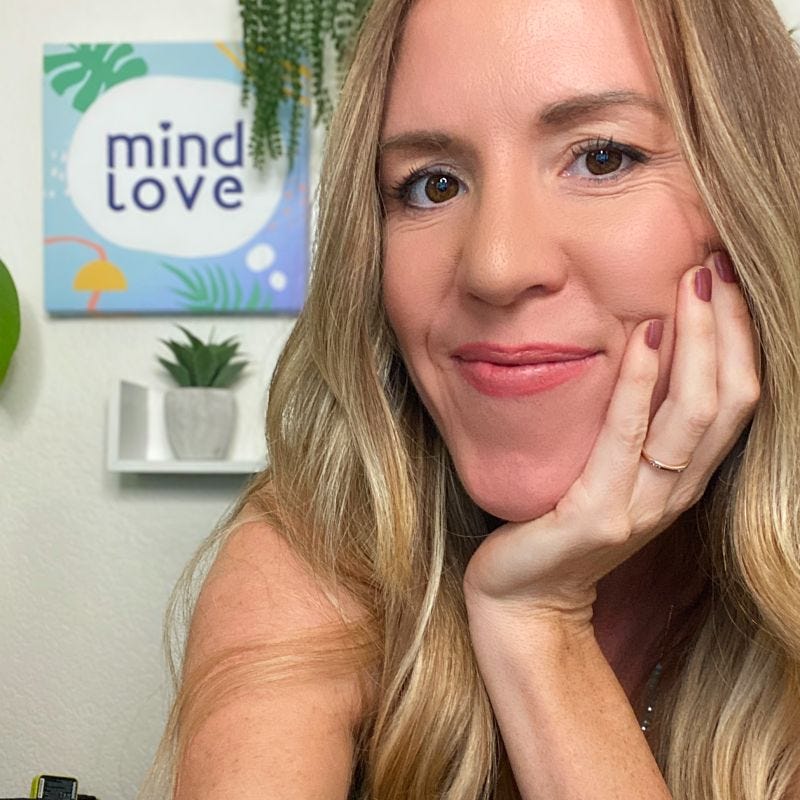
We explored three big ideas during our conversation: how to read your worst moments as sacred curriculum, why the same myths appear across cultures, and the difference between spiritual bypassing and true integration. These topics naturally overlap psychology, consciousness, and meaning-making, and the conversation got real, and deeply human: full of laughs, a few tears, and plenty of insights.
Turning Chaos into Consciousness Medicine
We started by digging into Melissa’s concept of “sacred curriculum”: the idea that our worst moments can be transformed into lessons if we approach them consciously. I asked her how this works in practice, because let’s be honest: chaos often makes people cling to control. We reach for belief systems, strict rules, or ideologies because the alternative… facing the rawness of life… is unbearable.
Melissa explained that the antidote isn’t control; it’s meaning. People who build coherent narratives of their lives tend to have better mental health and a deeper sense of agency. She emphasized the first step is awareness. Noticing the meanings we unconsciously assign to our mistakes, conflicts, and hardships. By stepping back and observing without judgment, we start to move out of victim consciousness and see the lessons hidden in our experiences.
She shared her seven-step framework, inspired by The Hero’s Journey, for turning life into personal medicine. It’s not about fast fixes or inspirational slogans; it’s about inch-by-inch integration. The framework encourages seeing yourself as the hero of your story and using your life as a mirror to identify what needs learning, growth, and healing.
We also talked about the line between transforming pain and just telling a story that makes it tolerable. Melissa reminded me that wisdom can’t come from a wound you’re still pretending doesn’t hurt, and the slow work of reframing chaos is where real growth happens.
Why the Same Myths Appear Across Cultures
Next, we moved into myth and the patterns of consciousness. Melissa described her view that consciousness leaves identical fingerprints wherever it evolves. This led to a fascinating discussion about her deconstruction of Christianity. Trauma, early adulthood experiences, and a world religion class opened her eyes to how cultural narratives shape spirituality. She referenced Joseph Campbell and the idea that the “hero’s journey” shows up across cultures because humans are wired to process chaos in similar ways.
We explored how many Genesis stories, like the flood or creation, come from older Mesopotamian myths. Yahweh began as a regional tribal deity and was later elevated through political adaptation. Christianity borrowed heavily from prior traditions too (resurrection figures, virgin births, and mystery cult rituals are echoes of older spiritual systems). Carl Jung’s notion of the collective unconscious came up here, suggesting that stories and archetypal patterns emerge naturally from the human psyche. In essence, consciousness may be “teaching itself” through narrative, disguised as entertainment or sacred history.
Melissa believes that much of this deeper knowledge has been stripped from mainstream culture, leaving us disconnected from the ways myths were intended to guide awareness. We also talked about Rupert Sheldrake’s morphic resonance theory. The idea that learning and memory may be transmitted across space and time– as a modern way of understanding how patterns persist culturally and neurologically.
Her journey out of faith involved anxiety and questioning the nature of God. Reading authors like Bart D. Ehrman helped her untangle the layers of teaching, belief, and mythic narrative, while gnostic texts like the Gospel of Thomas inspired her to integrate lessons from many paths without needing certainty. As she put it, the only real certainty is moving understanding from the external into the internal.
Spiritual Bypassing vs. True Integration
Finally, we explored the difference between bypassing and integration. Melissa explained that spiritual bypassing happens when we try to “vibe higher” instead of feeling deeper. It’s common in both high-control religions and some New Age communities, where transcendence can mask repression or avoid accountability. Integration, by contrast, involves metabolizing your story so it no longer unconsciously dictates your life.
We discussed the importance of holding space for the full spectrum of human emotion (anger, grief, confusion) because skipping over these experiences with a mantra or a positive thought is denial dressed in incense. Integration feels like returning to wholeness, aligning with the living world rather than escaping it. This mirrors older, animistic approaches to healing, where connection to the earth and embodied experience were central.
Melissa emphasized that this work is slow, intentional, and ongoing. True growth comes from confronting reality rather than avoiding it. Consciousness expands not by fleeing from life but by learning to navigate it with awareness, reflection, and compassion.
Wrapping Up
Throughout our conversation, three themes kept looping back: sacred pain, mythic meaning, and integration. In different ways, all three point to the same lesson: consciousness evolves through engagement with reality, not through avoidance or superficial transcendence.
Melissa Monte’s work reminds us that suffering, storytelling, and self-awareness are inseparable — and that chaos, when approached intentionally, becomes a teacher rather than a curse. For anyone feeling lost, stuck, or overwhelmed, her framework offers a path to transform personal chaos into meaningful growth.
You can find Melissa’s work here
Her Instagram
As always, keep questioning, stay curious, and continue to build meaning through awareness, responsib
 Taste0ftruth Tuesdays